

Walz in the hot seat as critics’ predictions on his controversial new law come true: ‘Concerning trends’
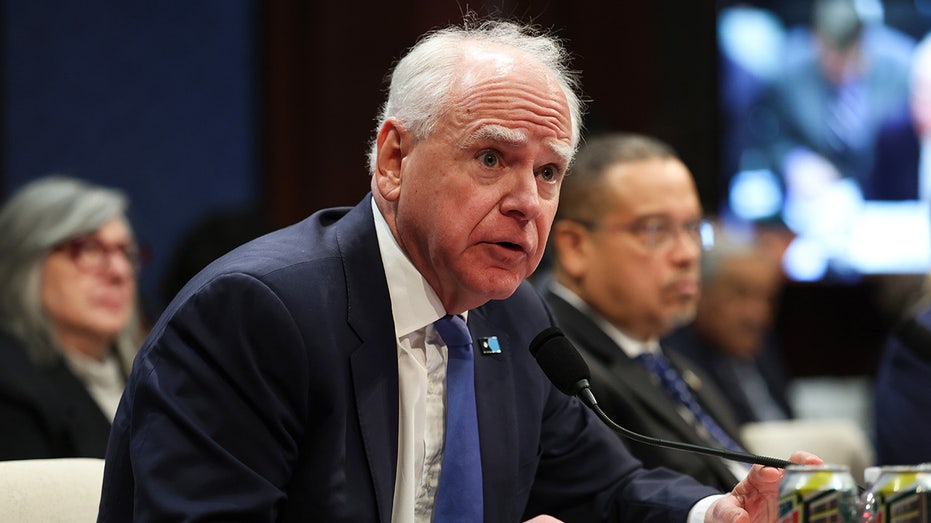
As Minnesota’s fraud scandal continues to make headlines, signature legislation signed by Gov. Tim Walz extending the amount of paid leave available to Minnesota workers is already causing major headaches and concerns from critics worried about potential abuse of even more dollars. The legislation, which took effect on January 1, allows Minnesota workers up to 12 weeks a year off with partial pay to care for a newborn or a sick family member, and up to 12 weeks to recover from their own serious illness. Benefits are capped at 20 weeks a year for employees who take advantage of both. Two months in, the legislation is already receiving pushback, including from the state’s largest, non-partisan business advocacy organization. “Beyond just anti-fraud sentiments, employers are reporting a few concerning trends,” Lauryn Schothorst from the Minnesota Chamber of Commerce told Fox 9 Minneapolis. TAFOYA RIPS WALZ ‘DODGING’ ACCOUNTABILITY IN HEARING, UNVEILS PLAN TO FIGHT FRAUD: ‘FULL WEIGHT OF THE LAW’ “Providers are being pressured by patients for the full 12 weeks of leave, even if their condition does not require it. A number of respondents have shared that their employees are making more on paid leave than the wage replacement thresholds in law. Employees are going on vacation or to music festivals while supposedly on leave. These anecdotes don’t necessarily reveal fraud or a lack of oversight by the department. They highlight concerns with the broad eligibility and limited employer recourse elements of the law. To employers, overuse is abuse.” Two Republican lawmakers who spoke to Fox News Digital agreed with that assessment. “The chamber is right,” State Sen. Michael Holmstrom said. “Minnesota is not a business-friendly state. Employers were already offering this benefit and then the state got in between employers and their employees, which it has no business doing.” Holmstrom says a major employer in his district has seen a 700% increase in paid leave usage since the law took effect and the company is unable to backfill those positions with skilled workers to compensate. The result, Holmstrom explained, is carrying on with business as usual without replacements and providing a lower level of service. State Sen. Mark Koran told Fox News Digital he also agreed with the chamber and suggested fraud concerns are valid, saying there will be “no real enforcement” because the “state removed the employer from the oversight and administration of the program.” GOP LAWMAKER UNVEILS WALZ ACT AFTER BILLIONS LOST IN MINNESOTA FRAUD SCANDAL Koran explained: “The program isn’t being used as intended, which Republicans predicted. It was sold as a replacement for short and long-term leave replacement. Now it’s a complex sick leave program with the effective date on day one, not the traditional seventh day of injury or illness.” “The liberal use guidelines mean employees can take a day off every week, or every Monday and Friday for a long weekend. It’s a huge negative impact on employers’ ability to find substitute labor and puts Minnesota in the bottom tier of business competitiveness.” Ultimately, Koran says the law will result in fewer jobs, lower pay, decreased benefits and a “continued exodus of business creation and expansion out of Minnesota.” On social media, critics have echoed similar sentiments, with some pointing out that most businesses in Minnesota already offered paid leave, making state interference unnecessary. “No way,” Brian McClung, former spokesperson for former Republican Minnesota Gov. Tim Pawlenty, posted on X. “I am shocked – shocked! If only someone had warned the MN Democrat trifecta that creating an expensive, cumbersome, bureaucratic system might go badly (when the vast majority of businesses already offered paid leave without a mandate).” Fox News Digital reached out to Walz’s office for comment. The new state paid leave program is being enforced by a new government division within the Minnesota Department of Employment and Economic Development with more than 400 full-time employees overseeing the process, causing uneasiness from some given the multiple state agency bureaucracies that oversaw the massive fraud scandal. Earlier this year, when the law was about to take effect, Fox News Digital reported on concerns that the bill could open the door up for even more fraud, with Bill Glahn, a policy fellow at the Center of the American Experiment, describing the legislation at the time as the “next billion-dollar fraud.” “When you build a multibillion-dollar state benefit program with weak oversight, fraudsters line up,” Townhall columnist and Minnesota resident Dustin Grage, told Fox News Digital in January. “We’ve already seen what happens in Minnesota. The paid family leave system will be a magnet for abuse.” In a statement to Fox News Digital, a spokesperson for the Minnesota Department of Employment and Economic Development defended the program. “Minnesota is not unique in enacting a state paid family and medical leave program – we are one of 13 states, plus the District of Columbia, that have done so. The United States is an outlier – it’s one of only seven countries worldwide that lacks a national paid family and medical leave program. The federal Bureau of Labor Statistics noted in 2023 that 73% of American civilian workers lack access to paid family leave,” the statement said. “We recognize that Paid Leave is a big change for Minnesota employers. That’s why we’ve worked closely with employers around the state, plus many employer advocacy groups, to develop tools and materials to make administering Paid Leave as smooth as possible. We have received positive feedback from many employers, and we are consistently improving service offerings.” The spokesperson added that the department “takes program integrity seriously.” “While the Minnesota Chamber of Commerce has not shared the underlying data from its survey, the Chamber has presented its objections to paid family and medical leave programs for years at the Minnesota Legislature. Despite these objections, the Chamber has been a good partner in helping educate employers about Paid Leave.”
6 US service members aboard refueling aircraft after mid-air collision causes crash in Iraq
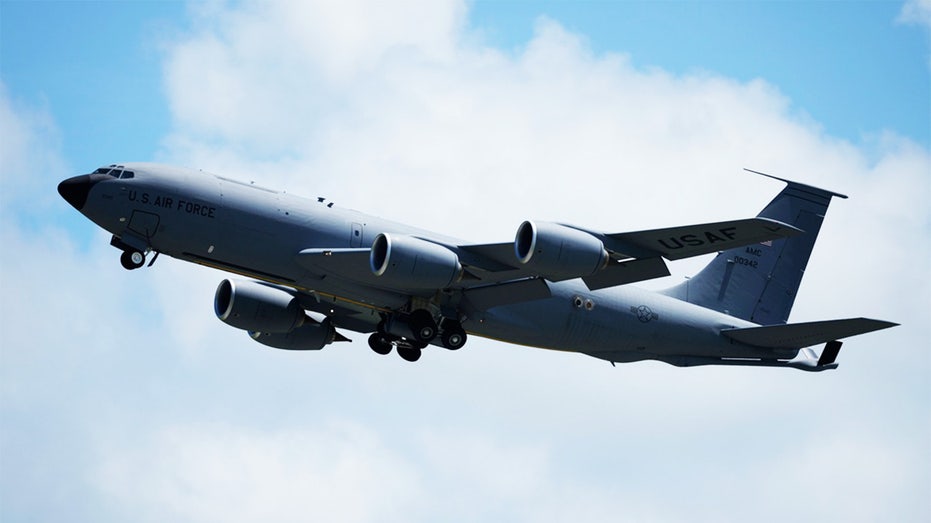
Six U.S. service members were killed when a KC-135 refueling aircraft crashed in western Iraq Thursday afternoon after a mid-air incident with a second aircraft, officials confirmed. A U.S. KC-135 refueling aircraft went down in western Iraq around 2 p.m. ET, U.S. Central Command confirmed early Friday. All six crew members aboard the aircraft have been confirmed dead. The other aircraft involved in the incident landed safely, CENTCOM said. Officials said the loss of the aircraft was not the result of hostile fire or friendly fire. The identities of the service members are being withheld pending notification of next of kin and will be released 24 hours after those notifications are complete. FORMER TOPGUN PILOT DECLARES IRAN MILITARY ‘OVER WITH’ AMID US AIR SUPERIORITY, BUT WARNS OF ANOTHER DANGER The circumstances surrounding the incident remain under investigation. The KC-135 Stratotanker is a U.S. Air Force aircraft that refuels other planes midair, allowing them to fly longer missions without landing. It can also be configured for medical evacuations and surveillance, according to the Air Force. Based on the Boeing 707 design, the KC-135 has been in service for more than 60 years, supporting the Air Force, Navy, Marine Corps and allied aircraft. The Air Force is gradually replacing the aging fleet with next-generation KC-46A Pegasus tankers. Despite upgrades, concerns have been raised about the durability of the older aircraft. The Congressional Research Service reported that the Air Force operated 376 KC-135s last year across active duty, the Air National Guard and the Air Force Reserve. IRAN PROXIES WAGE WAR ON ISRAEL, THREATEN US INTERESTS AS IRAQ SLAMMED FOR NOT DISARMING THEM A standard crew includes a pilot, co-pilot and boom operator, who controls the refueling boom from the rear of the aircraft. Some KC-135s are also equipped with wing-mounted pods and can carry cargo or passengers when needed. A second US official said another KC-135 was involved in the incident and landed safely in Israel, according to Israel’s ambassador to the United States. The crash follows last week’s mistaken downing of three US F-15E fighter jets by friendly Kuwaiti fire. Refueling tankers could become increasingly important if the conflict with Iran continues, as US aircraft may need to fly longer missions deeper into the region.
Why an unverified Iran drone tip prompted FBI alerts to California law enforcement

An FBI advisory referencing an unverified tip about a potential Iranian drone concept off the California coast circulated to multiple California law enforcement agencies — only to be forcefully downplayed by the White House hours later. The advisory, distributed through federal security channels, referenced intelligence suggesting Iran had “aspired” to launch unmanned aerial systems from a vessel offshore. The email did not identify specific targets, dates or operational details. The advisory was shared with California state officials and forwarded to local law enforcement agencies, according to reporting by the San Francisco Chronicle, including police departments in San Francisco, Oakland, San Jose and Berkeley. Local officials emphasized there was no indication of a specific or imminent threat but confirmed they were coordinating with federal partners. DHS SHUTDOWN MAY DELAY US TERROR RESPONSE AMID IRAN CONFLICT, EXPERT WARNS FBI spokesperson Ben Williamson posted the alert to X Thursday, which he said went to joint terrorism task force partners. “We recently acquired unverified information that as of early February 2026, Iran allegedly aspired to conduct a surprise attack using unmanned aerial vehicles (UAVs) from an unidentified vessel off the coast of the United States, specifically against unspecified targets in California, in the event of U.S. strikes on Iran,” the alert said, according to Williamson. “We have no additional information.” After reports about the advisory surfaced publicly, White House press secretary Karoline Leavitt sharply criticized the coverage. “This post and story should be immediately retracted by ABC News for providing false information to intentionally alarm the American people,” Leavitt wrote. She said the reporting was based on “one email that was sent to local law enforcement in California about a single, unverified tip,” adding: “No such threat from Iran to our homeland exists, and it never did.” California Gov. Gavin Newsom similarly said there was no verified threat to the state and that officials remained in communication with federal authorities as a precaution. Former Department of Homeland Security official Tom Warrick said the wording of the advisory suggests the intelligence likely reflected aspirational discussion rather than operational planning. FBI RAISES COUNTERTERROR TEAMS TO HIGH ALERT AMID IRAN TENSIONS “When you see the word ‘unverified,’ that generally means this is aspirational,” Warrick said. He emphasized that advisories of this kind are not routine occurrences, but during periods of heightened tensions — particularly involving Iran — federal authorities may err on the side of caution. “It’s not a regular occurrence,” Warrick said. “But given the war with Iran, and given Iran’s known tendencies, it’s only prudent for the FBI to put out a notice to local law enforcement to be aware that this is what we know — but this is all we know.” Warrick said such reporting often stems from intercepted communications in which foreign actors discuss potential attack concepts without evidence of capability or follow-through. “Somehow the United States picked up information of Iranians talking to each other — who probably have some affiliation to the Islamic Revolutionary Guards Corps, Quds Force — talking about, ‘Wouldn’t it be nice to launch a drone attack on California?’” Warrick said, describing what he believes likely triggered the alert. “That’s where we are.” He stressed that distributing such intelligence allows local authorities to connect suspicious activity — such as unusual drone purchases or maritime behavior — with broader federal reporting. NATIONAL SECURITY EXPERT URGES DHS TO RAISE TERROR THREAT LEVEL, WARNS OF SLEEPER CELL RISKS IN US At the same time, Warrick drew a distinction between large-scale military drone strikes and smaller improvised threats. “We’re not talking about launching Shaheds at California. That’s not feasible,” he said. “Using small-scale hobby drones to carry out a terrorist attack has always been a concern of homeland security,” he added. “That threat already exists.” Current federal law limits the authority to actively disable or intercept drones to specific federal agencies, including the Department of War and Department of Homeland Security. State and local law enforcement agencies generally lack independent authority to jam or seize unmanned aerial systems without federal coordination. Some state and local officials have in recent years pushed Congress to expand counter-drone authority beyond federal agencies, arguing that the proliferation of small drones has outpaced existing legal frameworks. IRAN’S DRONE SWARMS CHALLENGE US AIR DEFENSES AS TROOPS IN MIDDLE EAST FACE RISING THREATS While Warrick framed the advisory as precautionary, Iran specialists say the broader concept referenced in the alert is not entirely imaginary — though executing such an operation would be complex. Michael Eisenstadt, a senior fellow at the Washington Institute for Near East Policy, said Iran has experimented with sea-based launch concepts in the past, including containerized missile systems deployed from modified merchant vessels. “The idea is something they’ve clearly thought about,” Eisenstadt said. “They’ve demonstrated elements of this concept before.” However, he cautioned that projecting such capability across the globe and positioning assets close enough to the U.S. coastline to make an operational difference would be difficult. “To get it across the globe and close enough off the coast of California to make a difference — I’m pretty sure we track pretty closely ships coming out of Iran,” he said, adding that such an operation would likely be “a little too complicated for them to do at this point.” Eisenstadt agreed that describing the advisory as aspirational was likely accurate. “I think that’s probably correct,” he said. He also questioned whether a direct drone strike on U.S. territory would align with Iran’s historical escalation patterns. “If they were to retaliate on the homeland, it would more likely involve inspired or commissioned attacks,” he said, rather than a complex maritime drone launch. Drone-related activity has drawn scrutiny along the West Coast in recent years, though analysts caution against drawing a direct connection between prior incidents and the unverified tip referenced in the advisory. In 2019, multiple U.S. Navy destroyers operating near the Channel Islands off the coast of California reported encounters with groups of unidentified unmanned aerial systems during training operations. Navy documents later released
Illegal immigrant accused of assaulting NJ teen could be released under sanctuary policies, ICE warns

A criminal illegal immigrant accused of sexually assaulting a teenage girl in New Jersey could soon be released under the state’s sanctuary policies, prompting federal immigration officials to issue a warning to local leaders. Gerardo Garcia Gonzalez, a criminal illegal immigrant from Mexico, was arrested by the Ocean County Sheriff’s Office on charges of sexual assault of a victim between 13 and 15 years old, criminal sexual contact and sexual assault by force or coercion. After illegally entering the U.S. in 2001, Gonzalez was returned to Mexico and later re-entered the country at an unknown time, according to the Department of Homeland Security (DHS). “This pedophile should NEVER have been in our country and able to prey on children in the first place,” Deputy Assistant Secretary Lauren Bis said in a statement. “We are calling on New Jersey sanctuary politicians to NOT release this predator charged with sexually assaulting a child from jail into New Jersey neighborhoods.” ICE SWEEPS UP CONVICTED PEDOPHILES, TRAFFICKERS IN MASSIVE HOLIDAY WEEKEND STING: ‘WORST OF THE WORST’ Bis continued, “This is the exact reason we need sanctuary jurisdictions to work with us. No one should want this sicko to be on our streets.” U.S. Immigration and Customs Enforcement (ICE) requested that Gonzalez not be released under the state’s sanctuary policies. DHS said the request follows proposals by New Jersey politicians for legislation and executive orders “designed to demonize our brave ICE law enforcement.” CALIFORNIA SANCTUARY POLICIES BLAMED AFTER ICE ARRESTS 9 SEX OFFENDERS IN LOS ANGELES Last month, two state Democratic assembly members introduced the F—ICE Act, formally known as the Fight Unlawful Conduct and Keep Individuals and Communities Empowered Act. The legislation would permit civil action for alleged violations of the U.S. Constitution related to immigration enforcement. The bill was drafted after a Democratic Socialist councilman was confronted by a federal agent after arriving at the scene of a raid on the Hudson-Bergen Light Rail, where an agent told him, “I don’t need a warrant, bro.” DHS SAYS ANTI-ICE AGITATORS HELPED CHILD RAPISTS, GANG MEMBERS EVADE DEPORTATION “This is a disgusting bill just meant to demonize our officers who are experiencing a highly coordinated campaign of violence against our law enforcement,” Bis previously told Fox News Digital. Shortly after taking office in January, New Jersey Gov. Mikie Sherrill signed Executive Order 12, which restricts ICE activities on state property and creates a portal for residents to report immigration enforcement activity in their communities. The Justice Department filed a lawsuit last month against New Jersey and Sherrill, accusing the state of expanding its sanctuary policies and obstructing federal immigration enforcement through the executive order. DHS said the actions come as law enforcement officers face a 1,300% increase in assaults and an 8,000% increase in death threats. Fox News Digital reached out to Sherrill’s office and the New Jersey Attorney General’s Office for comment. Fox News Digital’s Charles Creitz and Michael Dorgan contributed to this report.
Afghanistan accuses Pakistan of air attacks on homes in Kabul, Kandahar

Women and children were among those killed in the attacks, according to the Taliban. Listen to this article Listen to this article | 2 mins info Published On 13 Mar 202613 Mar 2026 Click here to share on social media share2 Share plus2googleAdd Al Jazeera on Googleinfo Afghanistan’s Taliban government has accused Pakistan of targeting civilian homes in overnight air attacks in the capital Kabul and the southern province of Kandahar, as fighting between the two neighbours entered its third week, overshadowed by the United States-Israel war on Iran igniting the middle East. Women and children were among those killed in the attacks, according to the Taliban. Recommended Stories list of 3 itemsend of list Government spokesman Zabihullah Mujahid said on X Friday that Pakistan’s aircraft also struck fuel depots belonging to the private airline Kam Air near Kandahar airport. There was no immediate comment from Pakistan’s military or government. Calls for restraint from the international community have gone unheeded by both sides. On Thursday, the Taliban government said four members of the same family, including two children, were killed by Pakistani artillery and mortar fire in eastern Afghanistan. The deaths reported on Thursday brought the toll to seven people killed in Afghanistan since Tuesday in cross-border clashes, according to authorities in Kabul. That could rise with the latest attacks on Friday. Fighting between the two countries intensified on February 26 when Afghanistan launched an offensive along their shared border in retaliation for earlier Pakistani air attacks on the Pakistan Taliban, just two days before the US and Israel attacked Iran, starting a sprawling regional war. Pakistan maintains that it does not target civilians, and casualty claims from both sides are difficult to verify independently. Advertisement Islamabad accuses Kabul of harbouring fighters from the Pakistan Taliban, which has claimed responsibility for a series of deadly attacks inside Pakistan, and from the ISIS (ISIL) affiliate in Khorasan province. Afghan authorities deny the charge. The United Nations mission in Afghanistan has said 56 civilians have been killed there, including 24 children, by Pakistani military operations from February 26 to March 5. Pakistani officials have confirmed about 12 soldiers were killed and 27 wounded in the latest bout of fighting, while the Taliban claims to have killed more than 150. About 115,000 people have been forced to leave their homes, according to the UN. Adblock test (Why?)
How Israel-US war on Iran puts $50bn in Indian remittances at risk

As the United States-Israeli war on Iran completes two weeks, it has triggered a global energy crisis, even as Iran’s retaliation threatens to pull the rest of the Middle East into the conflict. The Strait of Hormuz, through which some 20 to 30 percent of global crude and liquefied natural gas (LNG) pass, has effectively been closed because of the conflict, sending crude prices soaring and disrupting oil and gas supplies. Recommended Stories list of 4 itemsend of list From Southeast Asia to Pakistan, the ripple effects of the war are being felt across Asia and beyond. But one country in particular could face a double whammy if the conflict intensifies: India, the world’s fourth-largest economy, depends on the Gulf for its energy needs and also for remittances sent by a vast workforce resident in the Middle East. We unpack how the war is bleeding India’s economy. Energy shortage More than 80 percent of India’s gas and up to 60 percent of its oil pass through the Strait of Hormuz, which connects the Gulf to the Gulf of Oman and the Arabian Sea and is currently at the centre of retaliatory tactics Iran is deploying against the US and Israel. By threatening all shipping coming through, Iran has effectively closed the strait – leaving Gulf oil producers with no sea route by which to deliver oil and LNG. Most shipping insurers have cancelled war risk coverage for tankers in the strait. Then on Wednesday, a Thai ship heading to India was attacked, drawing criticism from India. Hotels and restaurants in India are already weighing closure and people are queueing to stock up on LPG (cooking gas) cylinders amid fears of a shortage, even though the government assures the public it has approximately one month’s supply in storage. Such is the panic, however, that the government has gone as far as to invoke emergency measures to discourage hoarding, urging people to remain calm. Advertisement Iran has invoked the right to self-defence to justify the retaliatory attacks and has used the strait as leverage in an attempt to end the war. More than 1,300 civilians have been killed and properties have been damaged across Iran amid the US-Israeli attacks. Iran’s tactics seem to be working, as stocks have plunged and oil prices have spiked, reaching nearly $120 a barrel on Sunday before settling at about $100 this week, which is still about $40 more than before the war began. This week, Iran’s Islamic Revolutionary Guard Corps (IRGC) said it would not allow “one litre of oil” to pass the strait, and warned the world to expect oil to reach $200 per barrel. The International Energy Agency’s (IEA) move on Wednesday to release a record 400 million barrels of crude oil has failed to stabilise oil prices. “India’s energy security will be impacted significantly, as it relies on the Middle East for a substantial portion of its energy requirements,” said Harsh V Pant, vice president of the Observer Research Foundation think tank in New Delhi. “Energy markets are already volatile and costs are rising, which could eventually translate into broader economic and inflationary pressures,” he said. Indian expats in the Gulf India is also worried for some 9.1 million of its citizens who work in the Gulf Cooperation Council (GCC) countries – the United Arab Emirates, Saudi Arabia, Qatar, Oman, Kuwait and Bahrain. They send some $50bn in annual remittances back home. If the war is prolonged, Pant says, “it will result in the loss of remittances … part of that also helps in balancing the trade balance”. “It will hurt the wider economic robustness of the Indian economy. India’s hope of continuing to have a high rate of growth will suffer,” Pant said. “It’s not simply a question of energy security – it is also a question of economic security.” Several Indian blue-collar workers and professionals across the Gulf have told Al Jazeera they fear potentially losing jobs if the war escalates further. Several oil and gas firms have shut operations amid the Iranian attacks. “I hope this does not prolong as I support my family with this job,” an Indian construction worker, who chose to remain anonymous, told Al Jazeera. “Every Indian who works in the Gulf supports at least four to five people back home. Forty to 50 million Indians directly benefit from their employment in the Gulf,” Talmiz Ahmad, a former Indian ambassador to Saudi Arabia, told Al Jazeera. Another concern is the physical safety of people amid expanding Iranian attacks. Several Asian workers, including Indians, are among those killed in the Iranian attacks across the Gulf. Indian nationals Ram Krishna, who works on his laptop, and his wife Vijian Lakshmi at a government provided shelter for people living near the US Navy Base during Iranian drone attacks, at Ghazi Al Gosaibi Secondary Girls School in Hamad Town, Bahrain, March 4, 2026 [Hamad I Mohammed/Reuters] Can India evacuate nine million citizens? If the war escalates beyond control, India could be faced with the huge challenge of evacuating its people, who form the largest expatriate community in most Gulf nations. Advertisement Thousands of Western expats have already left or been evacuated by their countries, but the sheer scale of Indian population makes it a logistical nightmare. Some 35 million expats live in the Gulf countries, which have emerged as major economic and aviation hub in addition to the oil wealth. Of them, 9.1 million are from India – almost double the 4.9 million Pakistanis who come in second place. Ahmad, the former Indian ambassador, said that “there is no way, in a war situation, any country, including India, can evacuate nine or 10 million people”. His message to Indians in the region: “We have been shoulder to shoulder with our Gulf brethren in the good times; we will be shoulder to shoulder with them in the bad times.” Ahmad, however, pointed out that India had successfully evacuated nationals in past conflicts, including the 1991 Gulf War, when he was India’s
Iran war: What is happening on day 14 of US-Israel attacks?
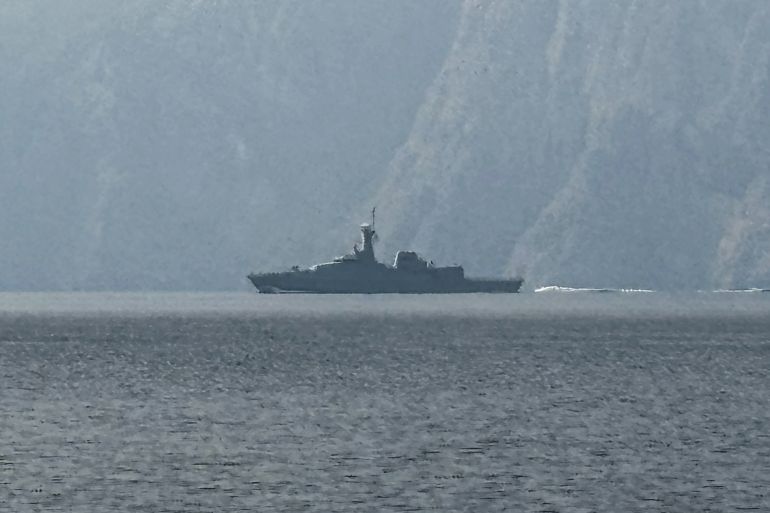
Listen to this article Listen to this article | 6 mins info Heavy Israeli strikes have hit Tehran, Iran, as its allies launch attacks across Gulf states, and shipping through the Strait of Hormuz has been severely disrupted, sending global oil prices soaring. Meanwhile, political pressure is mounting in Washington as the conflict spreads across the region. Recommended Stories list of 1 itemend of list Here is what we know about what has been happening in the past 24 hours: In Iran Supreme leader speaks: Appointed last week following the assassination of his father, Iran’s new Supreme Leader Mojtaba Khamenei has issued his first statement, warning that attacks on Israel and US military assets and infrastructure in the Middle East will continue unless bases hosting US forces in the region are closed. Heavy strikes on Tehran: The Israeli military has launched a new “extensive wave” of air attacks on Iran’s capital, Tehran, leaving the city covered in thick smoke on Friday morning. Strait of Hormuz closure and surging oil prices: The Strait of Hormuz, which connects the Gulf to the Gulf of Oman, is closed, causing Brent crude oil prices to surge past $100 per barrel. The strait, which falls into the territorial waters of Iran and Oman, is the only waterway to the open sea available to oil and gas producers in the Gulf. Iran has stated that the strait is under Iranian control and US-and Israel-linked ships are banned. Other vessels must receive Iranian permission to pass. Civilian casualties: Iran’s ambassador to the United Nations, Amir Saeid Iravani, said at least 1,348 civilians have been killed, with victims ranging in age from eight months to 88 years old. A navy vessel is seen sailing in the Strait of Hormuz [Sahar Al Attar/AFP] In Gulf countries Regional retaliation and attacks: Iran has launched waves of drones and missiles towards Gulf countries that host US military assets and troops, and has targeted oil tankers and facilities. Advertisement Bahrain: The nation has reported intercepting 114 missiles and 190 drones since the war began on February 28. Saudi Arabia: The country intercepted 10 drones over its eastern region and later destroyed an additional 28 drones that breached its airspace. Attacks on the UAE: The country has strongly condemned Iranian strikes on the region, and said they have hit Dubai International Airport and some hotels. Evacuations: Australia has ordered all “non-essential” officials to leave the United Arab Emirates and Israel, and urged its citizens to evacuate the Middle East while it is still safe to do so Qatar’s response: Qatar’s airspace is officially closed, but Qatar Airways has scheduled more than 140 special flights to help repatriate stranded residents and citizens. Qatar has strongly rejected Israeli media claims that it intentionally paused liquefied natural gas (LNG) production to manipulate US energy prices; officials clarified that the suspension was actually forced by an Iranian drone attack. A view of the damaged part of the Dubai Creek Harbour tower after it was hit by an Iranian drone attack in Dubai, United Arab Emirates [EPA] In the US Trump claims war moving ‘rapidly’: US President Donald Trump told reporters the war against Iran was moving “very rapidly”. “It’s doing very well, our military is unsurpassed,” he said at the White House, not directly responding to the latest comments from Iran’s new supreme leader. Domestic opposition: More than 250 US organisations have signed a letter calling on Congress to halt funding for the war. They argue the $11.3bn spent in the first six days of the conflict is diverting crucial funds from urgent domestic needs, such as food benefits. No ‘need’ for ground troops in Iran: US Senator Lindsey Graham has played down the possibility of US troops being deployed to Iran, but suggested the war could continue for some time. “I don’t see this conflict ending today,” the Republican senator told reporters in Washington, DC. In Israel New missile wave launched at Israel: The Israeli military said early on Friday that Iran had fired a new barrage of missiles towards Israel, and instructed people in affected areas to head to shelters. Israel strikes Basij force: Israel’s military said it had struck checkpoints set up in Tehran by the Basij force of Iran’s Revolutionary Guards as part of efforts to undermine control by the authorities. Regime change: Israeli Prime Minister Benjamin Netanyahu said Israel can create conditions for regime change, but it is up to Iran’s people to take to the streets. He also said Israel is aiming to stop Iran from moving nuclear and ballistic projects underground. Advertisement In Lebanon, Iraq Downed US aircraft: A US KC-135 refuelling aircraft crashed in western Iraq. While the Islamic Resistance in Iraq claimed it shot the aircraft down using air defence systems, US Central Command (CENTCOM) stated the aircraft went down in “friendly airspace” and was not the result of hostile fire. Iraqi port closures: Iraq has shut its port operations after an Indian crew member was killed during an attack on a US-owned oil tanker in Iraqi waters. Six French soldiers hurt: A drone attack wounded six French soldiers in Erbil, in Iraq’s autonomous Kurdish region, President Emmanuel Macron said on Thursday. Deadly attacks in southern Lebanon: Israeli bombardments continue on southern towns and villages. A strike on the village of Arki, near Sidon, killed nine people, including five children. Mounting death toll and mass displacement: Lebanese officials have reported that at least 687 people have been killed in Israeli attacks on Lebanon since last Monday, including 98 children. The intense bombardments have displaced an estimated 700,000 to 750,000 people from their homes. Adblock test (Why?)
Surviving a deadly shooting: An Austin mother and daughter learn how trauma lingers

Seven months after escaping the Target shooting, an Austin mother and daughter navigate trauma, fear and unexpected growth.
Dallas Democrats drop lawsuit seeking to count primary ballots cast during extended voting hours

Dallas and Williamson counties switched from centralized voting sites to neighborhood precincts in the primary, confusing voters and prompting lower courts to extend some polling site hours.
“God is nonbinary”: GOP activates over Talarico’s past comments characterizing him as too radical for Texas

Talarico has suggested he would communicate some of his views differently today, but stood by the principles behind the comments Republicans are using to tar him as an extreme liberal.