

Dems vote to keep DHS closed despite airport chaos, Iranian sleeper cell threat
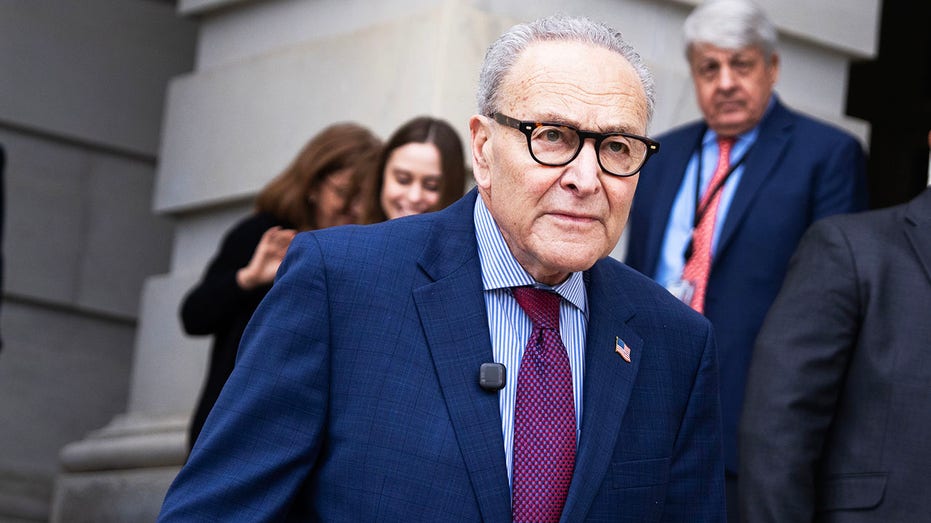
Senate Republicans are accusing Senate Democrats of trying to rip apart the Department of Homeland Security (DHS) piece by piece after again blocking a bid to reopen the agency. Little has changed in the stalemate over the last 27 days of the partial shutdown, and communication breakdowns are dominating what could be opportunities for negotiations. Senate Minority Leader Chuck Schumer, D-N.Y., and his caucus are still demanding stringent reforms to Immigration and Customs Enforcement, while Senate Republicans are dug in against their top demands. ‘YOU CAN CRY ABOUT IT’: TEMPERS FLARE IN SENATE AS DHS SHUTDOWN DEBATE ERUPTS, STALEMATE DIGS DEEPER Throughout the day, Senate Democrats tried to offer individual bills to fund pieces and parts of DHS. A fired-up Senate Majority Whip John Barrasso, R-Wyo., accused Senate Democrats of trying to rip the agency apart at a moment it was designed for, as the war in Iran has spurred threats of retaliation in the U.S. by sleeper cells. “And that’s at a time when our homeland is under attack, all warning lights are flashing red, and they want to peel apart, piece by piece, the Department of Homeland Security, the comprehensive department of our government to protect the American people, because they want to stand with illegal immigrant criminals,” Barrasso said. Schumer declared that Senate Democrats would continue to provide piecemeal funding bills to reopen certain portions of the agency, like the Transportation Security Administration (TSA) and the Federal Emergency Management Agency (FEMA), while negotiations continued. Both sides are far apart from finding a compromise, as many lawmakers have acknowledged in the ongoing fight to reopen the agency, but Democrats believe that carving out ICE funding could be a palatable option for Republicans, given that immigration operations were funded with President Donald Trump’s “One Big, Beautiful Bill.” KATIE BRITT BLASTS DEMOCRATS FOR PLAYING ‘POLITICAL GAMES’ WITH SHUTDOWN AMID AIRPORT CHAOS “We don’t have to tie that disagreement up and use people at the airports and American citizens as hostages,” Schumer said. Sen. Katie Britt, R-Ala., argued that doing so would effectively return Congress to the “defund the police” era and drew a sharp red line against any kind of carveout proposal from Senate Democrats. Sen. Patty Murray, D-Wash., who has offered a DHS funding bill without ICE or Customs and Border Patrol, told Fox News Digital that criticism was “not true.” “It was funded by the [‘One Big, Beautiful Bill,’] and we have told them they’re not going to fund ICE until there are reforms to ICE,” Murray said. “We have made that clear. We put them out there, and they are pretending to just ignore that.” KRISTI NOEM’S FIRING FAILS TO SWAY DEMOCRATS AS DHS SHUTDOWN DRAGS ON Senate Majority Leader John Thune, R-S.D., shot back that Republicans have tried on several occasions to temporarily fund the agency with short-term, two-week continuing resolutions (CRs) that Democrats have blocked. “I assume the Democrat leader is aware of the fact that we have tried repeatedly to fund everything temporarily to allow the negotiations over the ICE budget to continue,” Thune said. While several attempts from both sides were made to either fund the agency in chunks or reopen it temporarily, each was blocked. Sen. Jacky Rosen, D-Nev., who tried to force a vote on a standalone funding bill for TSA as lines at airports around the country swell while security agents go without pay, told Fox News Digital that Republicans’ move to block her bill showed they “don’t care about their constituents, the traveling public, and the folks who work there who are not part of this discussion or this argument.” “It says the Republican priorities are just for Donald Trump and no one else,” Rosen said.
Pentagon estimates Iran war cost $11.3B in the first six days in closed-door congressional hearing: report

Pentagon officials on Tuesday told legislators during a closed-door briefing that they estimated that the cost of the Iran war was more than $11.3 billion during the initial six days of the conflict, the New York Times reported, citing three unnamed individuals familiar with the briefing. That estimate did not encompass many expenses tied to the effort, such as buildup of military assets and personnel prior to the first strikes, the outlet added. Other reports indicate that the briefing involved senators. A Senate Armed Services Committee staffer, who noted that he could only speak for the minority staff and Ranking Member Sen. Jack Reed, D-R.I., referred Fox News Digital to a March 10 letter that the senator sent to Secretary of War Pete Hegseth, pressing for information about the costs of the war. US DESTROYS AGING IRANIAN WARPLANES, VIDEO SHOWS “Since the initial strikes on February 28, 2026, how much has the Department spent on these operations? How much are the daily costs of these operations? What are the costs to readiness? How much funding does the Department need to replenish munitions and aircraft combat losses?” Reed asked in part of the letter. No comment was provided by the GOP side of the Senate Armed Services Committee. Fox News Digital also reached out to the Department of War and the House Armed Services Committee Republican communications office on Thursday. The war-related outlays come as the ever-expanding U.S. national debt nears the $39 trillion mark. And while President Donald Trump has been waging the costly war in conjunction with Israel, a key U.S. ally in the Middle East, Americans have been seeing a significant surge in gas prices at home. “The United States is the largest Oil Producer in the World, by far, so when oil prices go up, we make a lot of money. BUT, of far greater interest and importance to me, as President, is stoping [sic] an evil Empire, Iran, from having Nuclear Weapons, and destroying the Middle East and, indeed, the World. I won’t ever let that happen!” Trump said in a Thursday Truth Social post.
Trump-backed affordable housing overhaul clears Senate, while House GOP raises red flags
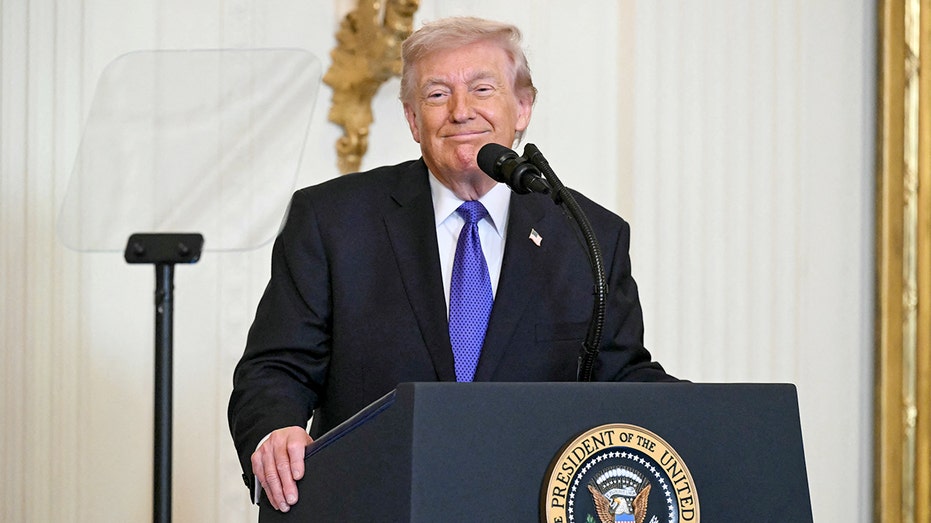
A massive bipartisan swell advanced a Trump-backed affordable housing package out of the Senate on Thursday, but its fate in the House is up in the air. The bill, renamed the 21st Century ROAD to Housing Act to incorporate a previous Senate housing bill that stalled last year, easily sailed through the upper chamber, given that many lawmakers support the wide-ranging slate of measures designed to increase the supply of affordable housing. In its original form, the legislation was primarily intended to help first-time homebuyers and lower-income Americans enter the housing market or gain access to more affordable housing options. BIPARTISAN HOUSING PUSH ADVANCES, BUT TRUMP-BACKED INVESTOR BAN FACES RESISTANCE The Senate tweaked the legislation, adding a ban on institutional investors sought by President Donald Trump, who earlier this year signed an executive order barring the practice. During his State of the Union address last month, Trump urged Congress to codify the ban and said, “We want homes for people, not for corporations.” That provision gave some heartburn, notably to Sen. Brian Schatz, D-Hawaii, and several industry groups, who warned that the way it was designed — forcing owners of 350 or more units to sell after seven years — would kneecap the build-to-rent market and harm the supply of rentals throughout the country. That was not enough to slow the bill down in the Senate, but Trump’s declaration that he wouldn’t sign any bills unless the Senate passed voter ID legislation, along with House Republicans grumbling over changes to the bill, could spell trouble ahead. Rep. Mike Flood, R-Neb., co-lead of the House’s version of the bill, told Fox News Digital, “It seems to me that there are outstanding concerns with the Senate’s housing bill as currently drafted.” HOUSE PASSES BIPARTISAN HOUSING BILL AS TRUMP ZEROES IN ON AFFORDABILITY CRISIS He echoed Schatz’s concern about the build-to-rent supply consequences and added that the bill was “intended to cut costs, but the Senate removed important bipartisan House provisions that would have slashed barriers to building more homes.” “Their process is still ongoing, and I am holding out hope for some fixes, but time runs short,” Flood said. “Given the bill’s current state, I think a conference may be the most viable path forward.” Senate Majority Leader John Thune, R-S.D., said he believes that once the bill makes it through the Senate, “the White House will be wanting to work with our House counterparts to try and get it passed over there and get it on the President’s desk.” BIPARTISAN PLAN AIMS TO MAKE THE AMERICAN DREAM AFFORDABLE AGAIN FOR MILLIONS OF FIRST-TIME HOMEBUYERS “We know we’ve added some things to the bill here in the Senate that were designed to make it more palatable to the House. I know there are other issues they would like to address in it, some of the banking issues too, but I think this is, by and large, a housing bill.” “So, we think we have really put together a strong bill,” Thune continued. “It’s something that hasn’t been done in over a decade.” It’s a product of negotiations between Sen. Tim Scott, R-S.C., the chair of the Senate Banking, Housing and Urban Affairs Committee, and Sen. Elizabeth Warren, D-Mass., its top Democrat. The pair argued that the changes made should make the legislation more palatable to their House counterparts. “The package includes the vast majority of the Senate’s unanimously supported ROAD to Housing Act, incorporates bipartisan ideas from the House, and takes a good first step to rein in corporate landlords that are squeezing families out of homeownership,” Warren said earlier this month. “Congress should pass this package and continue working on further legislation to combat our nation’s housing crisis.”
Clyburn, 85, bucks Democrat generational revolt with bid for 18th term in Congress

Longtime Democratic Rep. Jim Clyburn of South Carolina announced Thursday that he would run this year for an 18th two-year term in Congress. “In a few minutes, I am going to sign the paperwork that’s necessary in order to qualify for the Democratic nomination to run again,” the 85-year-old Clyburn said at an event in Columbia, South Carolina. The move by Clyburn, who was first elected to the House in 1992, bucks a push for generational change — fueled by serious questions over then-President Joe Biden’s physical and mental stability that led to his dropping his 2024 re-election bid that has seen other older congressional Democrats retire. LONGTIME HOUSE DEMOCRAT SWATS DOWN AD FROM MILLENIAL CHALLENGER Clyburn served for nearly two decades as the number three House Democrat in leadership, alongside 85-year-old former House Speaker Nancy Pelosi of California and 86-year-old former House Majority Leader Steny Hoyer of Maryland. Pelosi and Hoyer are retiring at the end of 2026 rather than run for re-election. ANOTHER DEMOCRAT DROPS OUT OF 2026 RACE AS PARTY FACES GENERATIONAL RECKONING Addressing his age, Clyburn said he will soon “celebrate the 47th anniversary of my 39th birthday.” “If I were not up to it, I would not do it,” Clyburn said. “My health has been good.” Nearly a dozen House Democrats in their 70s and 80s are retiring when the 119th Congress concludes at the end of the year, but others are seeking another term. Republican Rep. Hal Rogers of Kentucky, 88, and Democratic Rep. Maxine Waters of California, 87 — who are the oldest current members of Congress — are both seeking re-election. Clyburn long has been considered one of the most prominent Black political leaders in the nation, and a kingmaker among South Carolina Democrats. And thanks to South Carolina’s position for nearly a half century as the first southern primary in the race for the White House, Clyburn has played an influential role in the Democratic presidential nomination process. Clyburn’s support of Biden in the 2020 South Carolina primary helped boost the then-former vice president to a landside victory, which propelled Biden to the Democratic nomination and later, the White House.
ICE busts human smuggling ring that kidnapped family, sexually assaulted pregnant woman

U.S. Immigration and Customs Enforcement agents busted a South Texas human smuggling ring, resulting in the arrests and sentencing of gangbangers who kidnapped a family and sexually assaulted a pregnant mother. Rodolfo Daniel De Hoyos, 22, a human smuggler who goes by the nickname “Rufles,” was sentenced to more than 14 years in prison on Monday for conspiracy to harbor illegal aliens, causing serious bodily injury and placing lives in jeopardy. The sentencing was announced by the U.S. Attorney’s Office for the Western District of Texas on Tuesday. De Hoyos is the fifth of nine human smugglers arrested in Kinney County, Texas, as a result of an investigation by ICE Homeland Security Investigations (HSI) with the cooperation of the Texas Department of Public Safety and several other law enforcement agencies. The investigation is part of the Trump administration’s Operation Take Back America. According to the U.S. Attorney’s Office, De Hoyos was involved in the kidnapping and attempted extortion of a family of illegal immigrants, consisting of a man, a pregnant woman and a seven-year-old child. The office said the smugglers sexually assaulted the pregnant woman and held the family for ransom. They obtained at least $1,000 from a relative and further threatened to kill the seven-year-old child and sell the unborn baby if additional payments were not made. ILLEGAL IMMIGRANT’S TWO DECADES OF UNLAWFUL VOTES EXPOSE THE REAL ‘THREAT’ TO DEMOCRACY: EXPERTS De Hoyos was first arrested in 2021 by a Texas Department of Public Safety trooper who observed him transporting three passengers wearing dirty clothing, hiking boots and camouflage backpacks. At the time, De Hoyos admitted the three passengers were illegal aliens and that he was being paid $1,500 to transport them to Del Rio. He was arrested again in August 2023 in relation to the kidnapping of the family. Besides De Hoyos, four others have been sentenced. Texas man Juan Antonio Flores, 36, was sentenced to more than 17 years for his role in coordinating the smuggling trips. Two other co-conspirators, Tomas Estrada-Torres, 47, and Nelson Abilio Castro-Zelaya, received sentences of more than 12 years and 15 years, respectively. Meanwhile, a 23-year-old Guatemalan national, Edwin Alfredo Barrientos-Mateo, nicknamed “Waches,” was sentenced to 30 years in prison in connection with the smuggling ring. According to Simmons’ office, four other co-conspirators — Ambar Obregon, Pedro Ruiz Gonzalez, Armando Garcia-Martinez and Anthony Ballones Jr. — have pleaded guilty and are awaiting sentencing. EXCLUSIVE: ICE SAYS EL PASO DETENTION FACILITY WILL STAY OPEN UNDER NEW CONTRACTOR AFTER $1.2B DEAL SCRAPPED Besides ICE HSI and the Texas Department of Public Safety, U.S. Border Patrol, the Eagle Pass Police Department, the Austin Police Department, the Houston Police Department, and the Comal County Sheriff’s Office also assisted with the investigation. In a word of caution to would-be illegal aliens, U.S. Attorney for the Western District of Texas Justin Simmons said that “alien smuggling organizations care nothing about the hopes and dreams of those they smuggle.” “When they look at an illegal alien, all they see is a dollar sign,” he went on, adding, “Do not trust them with your life because the only life they really care about is their own.” This week, Simmons’ office also announced that 36-year-old Mexican national Pedro Luis Martinez-Jaquez was sentenced to more than 30 years in prison for his leadership role in a conspiracy to transport hundreds of illegal aliens, resulting in at least one death. Simmons called Martinez-Jaquez “one of the most prolific facilitators of alien smuggling in the last decade.” He said that over the course of an 18-month operation, Martinez-Jaquez made hundreds of thousands of dollars transporting illegal aliens into the U.S. BORDER PATROL CHIEF BOVINO SAYS CHICAGO EFFORTS ‘VINDICATED’ AFTER COURT REVERSES ORDER RESTRICTING OPERATIONS Both stings were the result of Operation Take Back America, a nationwide initiative launched by the Trump administration last year to “achieve total elimination of cartels and transnational criminal organizations.”
US military ‘not ready’ to escort oil ships through Hormuz, official says

Listen to this article Listen to this article | 4 mins info The United States military is “not ready” to accompany oil ships through the Strait of Hormuz, a top official in President Donald Trump’s administration says as Iran continues to block the strategic waterway. US Energy Secretary Chris Wright told the CNBC business news channel on Thursday that the markets are experiencing a “short-term disruption”, predicting that the war would go on for “weeks, not months”. Recommended Stories list of 3 itemsend of list Despite Trump’s repeated threats, Iran has largely succeeded in shutting down the strait, which links the Gulf to the Indian Ocean. The closure has sent oil prices soaring. Wright described the effects of the crisis as “short-term pain for long-term gain”, arguing that the US is “destroying” Iran’s ability to threaten the energy market. Last week, Trump suggested that the US Navy would escort ships through the Gulf, but Wright said on Thursday that the move “can’t happen now”. “We’re simply not ready. All of our military assets right now are focused on destroying Iran’s offensive capabilities and the manufacturing industry that supplies their offensive capabilities,” the energy secretary said. “We don’t want this to be a brush-off for a year or two. We want to permanently destroy their ability to build missiles, to build roads, to have a nuclear programme.” His comments came as Iran’s new supreme leader, Mojtaba Khamenei, affirmed in his first public comment since being selected to succeed his assassinated father, Ali Khamenei, that the Strait of Hormuz should remain closed during the war. Advertisement “The will of the people is to continue effective and deterrent defence,” Khamenei said in a written statement. “The tactic of closing the Strait of Hormuz must also continue to be used.” The Iranian military has said it would “welcome” the US Navy escorting oil ships, suggesting it is prepared to strike US forces in the narrow waterway. On Wednesday, three commercial vessels were attacked near the strait. Wright announced earlier this week on social media that the US Navy had escorted an oil ship through the strait, then quickly deleted the post. The White House subsequently confirmed that the claim was not true. It is not clear why the statement was released and then retracted. Assurances by US officials that Washington would open the strait have temporarily calmed markets, only for prices to spike again. The price of a barrel of oil peaked at about $120 on Sunday, up from about $70 before the US and Israel launched the war on February 28. It has been yo-yoing between $80 and $100 for the past few days. In addition to the marine blockade, Iran has targeted oil installations across the Gulf. As one of the world’s largest oil producers, the US is largely self-sufficient. But possible shortages in Asia and Europe have put a strain on prices globally. According to data from the American Automobile Association, the average price of one gallon (3.78 litres) of petrol in the US is now $3.60, up from $2.94 last month. Rising energy prices could fuel inflation and affect the cost of basic goods, including food. But Trump suggested on Thursday that the US is benefitting from skyrocketing oil prices. “The United States is the largest Oil Producer in the World, by far, so when oil prices go up, we make a lot of money,” the US president wrote in a social media post. “BUT, of far greater interest and importance to me, as President, is stopping an evil Empire, Iran, from having Nuclear Weapons, and destroying the Middle East and, indeed, the World.” Iran denies seeking a nuclear weapon, and Trump reiterated for months before the current conflict that US strikes against Iranian facilities in June had “obliterated” the country’s nuclear programme. Adblock test (Why?)
Iran’s new supreme leader issues first statement
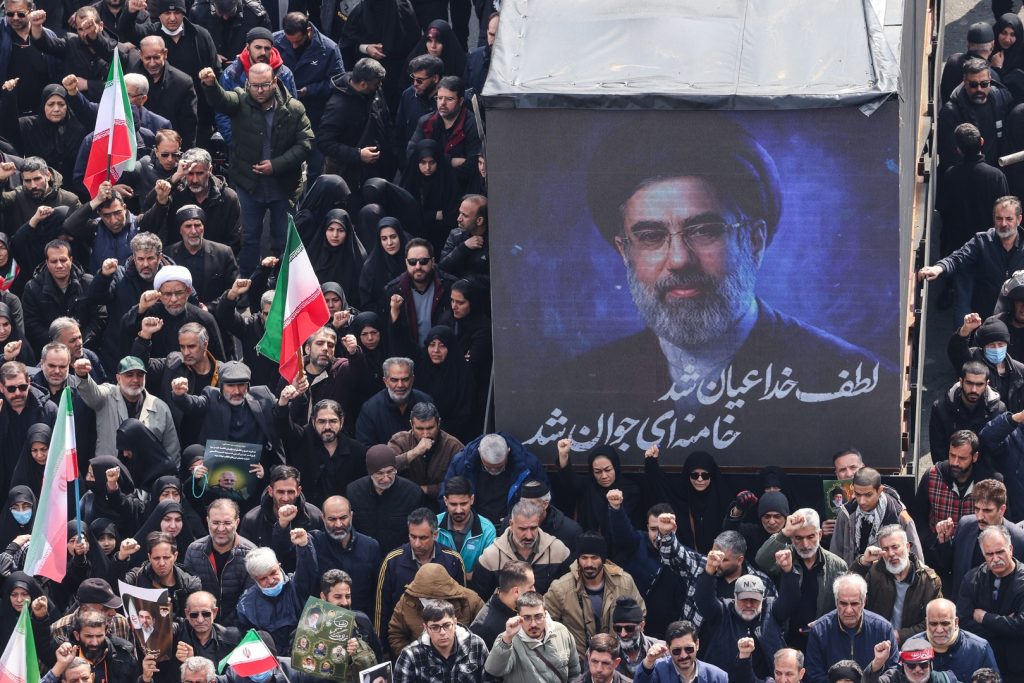
NewsFeed Iranian Supreme Leader Mojtaba Khamenei has issued his first statement since being appointed, stating that the Strait of Hormuz will continue to be closed and threatening to open new fronts should the US and Israel continue the war. Published On 12 Mar 202612 Mar 2026 Click here to share on social media share2 Share plus2googleAdd Al Jazeera on Googleinfo Adblock test (Why?)
Iran’s president sets terms to end the war: Is an off-ramp in sight?
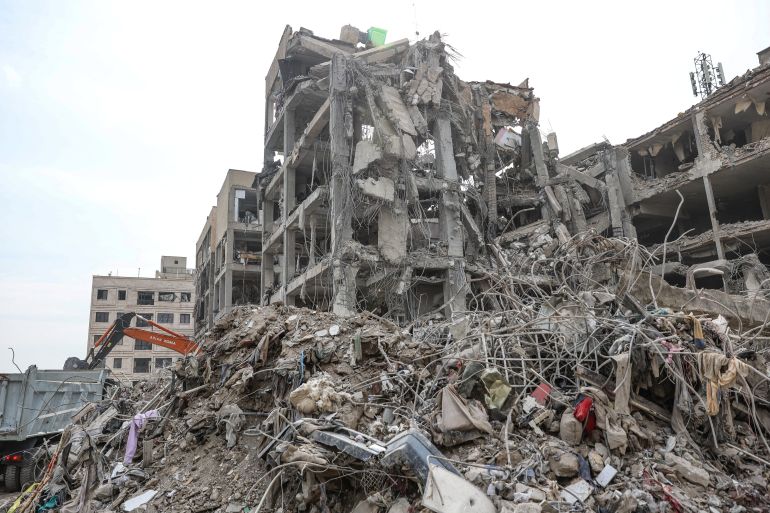
Iranian President Masoud Pezeshkian has laid out terms for ending the war with the United States and Israel in what analysts say is a possible sign of de-escalation from Tehran as the US-Israel war on Iran entered its 13th day on Thursday. In a post on Wednesday on social site X, Pezeshkian said he had spoken to his counterparts in Russia and Pakistan, and that he had confirmed “Iran’s commitment to peace”. Recommended Stories list of 4 itemsend of list “The only way to end this war – ignited by the Zionist regime & US – is recognizing Iran’s legitimate rights, payment of reparations, and firm int’l guarantees against future aggression,” Pezeshkian wrote. This is a rare posture from Tehran, which has maintained a defiant stance and initially rejected any possibility of negotiations or a ceasefire when war broke out nearly two weeks ago. Pezeshkian’s statement comes as pressure mounts on the US to halt what has become a very costly mission. Analysts say speculation from Washington that Iran would quickly submit after the killing of Supreme Leader Ayatollah Ali Khamenei were misguided. Tehran is likely going to determine the end of this war, not the US or Israel, because of its ability to inflict economic pain broadly, they say. Amid a military pummelling by the US and Israel, Iran has launched heavy retaliatory strikes at US assets and other critical infrastructure in Gulf countries, upsetting global supplies. It has also adopted what analysts call “asymmetric” tactics – such as disrupting the critical Strait of Hormuz and threatening US banking-linked entities – to inflict as much economic pain on the region and wider world as it can. Advertisement This is what we know about Pezeshkian’s stance and what the pressures are on both sides to draw the conflict to a close, quickly. A building lies in ruins after a strike, amid the US-Israeli conflict with Iran, in Tehran, Iran, on March 12, 2026 [Majid Asgaripour/WANA (West Asia News Agency) via Reuters] What has the war cost so far? Economically, both sides have weaponised energy. Israel first targeted Iran’s oil facilities in Tehran on March 8, prompting an outcry from global health experts over the potential risk of air and water pollution. Iran has, meanwhile, tightened its chokehold on the Strait of Hormuz shipping route – the only route to open sea for oil producers in the Gulf – with its military promising on Wednesday that it has the capabilities to wage a long war that could “destroy” the world economy. Attacks on ships in the strait, through which about 20 percent of global oil and gas traffic normally passes, have effectively closed the route. Oil prices rocketed above $100 per barrel late last week, up from around $65 before the war, with ordinary buyers feeling the increases at pumps in the US, Europe and parts of Africa. On Wednesday, Iran upped the ante, saying it would not allow “a litre of oil” to pass through the strait and warned the world to expect a $200-per-barrel price tag. “We don’t know how quickly it’ll revert back,” Freya Beamish, chief economist at GlobalData TS Lombard, told Al Jazeera. “We do think it’ll revert back to $80 in due course, but the ball is to some degree in Iran’s court,” she said, adding that because Iran needs oil revenue, the price hikes are expected to be time-limited. The International Energy Agency agreed on Wednesday to release 400 million barrels from the emergency reserves of several member states but it is not yet clear what impact that will have, nor how quickly this quantity of oil can be released. Tehran has also been accused of directly attacking oil facilities in neighbouring countries this week. Iraq shut all its oil port operations on Thursday after explosive-laden Iranian “drone” boats appeared to have attacked two fuel tankers in Iraqi waters, setting them ablaze and killing one crew member. A drone was filmed striking Oman’s Salalah oil port on Wednesday, although Tehran has denied involvement. What are Iranian officials saying about ending the war? There has been conflicting messaging from the Iranian leadership. Iran’s elite army unit and parallel armed force, the Islamic Revolutionary Guard Corps (IRGC), continues to show defiance, issuing threats and launching attacks on Israel and US military assets and infrastructure in neighbouring Gulf countries. Advertisement However, the political leadership has appeared more inclined towards diplomacy, analysts say. On Wednesday, President Pezeshkian said that ending the war would take the US and Israel recognising Iran’s rights, paying Iran reparations – although it’s unclear how much is being asked for – and providing strong guarantees that a future war will not be waged. In a video recording last week, he also apologised to neighbouring countries for the strikes and promised that Iran would stop hitting its neighbours as long as they do not allow the US to launch attacks from their territory. “I personally apologise to the neighbouring countries that were affected by Iran’s actions,” the president said, adding that Tehran was not looking for confrontations with its neighbours. However, it is not known how much sway the political leadership has over the IRGC. Hours after the president’s apology last week, air defence sirens went off in Saudi Arabia, Qatar, the UAE and Bahrain, as strikes continued on the Gulf. So, what is Iran’s actual position? “Iran wants to go to the end to make sure that the United States and Israel never attack Iran again … so this has to be the final battle,” Al Jazeera’s Resul Serdar Atas explained. Indeed, the IRGC sees this as an existential war, but the timing of Pezeshkian’s statement about ending the conflict also shows Tehran is pressured economically, politically and militarily, Zeidon Alkinani of Qatar’s Georgetown University told Al Jazeera. “These differences and divisions [between IRGC and political leaders] always existed even prior to this war but we may notice it now more, given the fact that the IRGC believes that it has the right to
A plan to get more electricity to West Texas may come undone
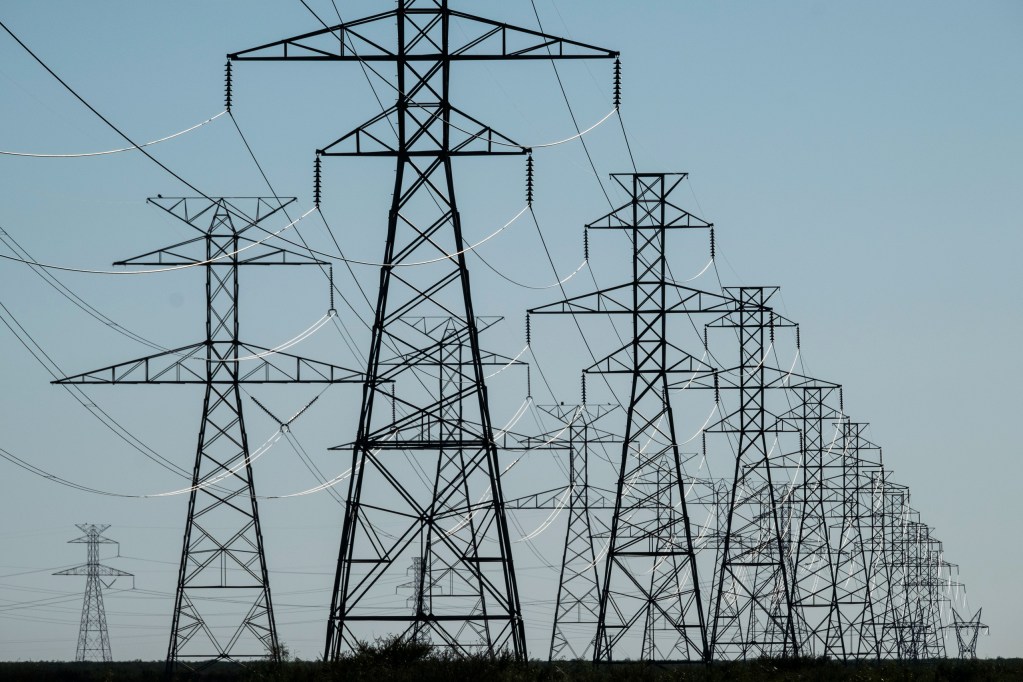
Oil and gas companies have said the region needs more power. Environmentalists and a conservative think tank worry the state is moving too fast — and ratepayers will see the costs in their bills.
Chip Roy faces Mayes Middleton’s millions in Texas attorney general GOP runoff

Middleton gave almost $14 million to his own campaign, helping propel him into first place on election night.