

Strategic oil release may calm markets but cannot fix Hormuz disruption
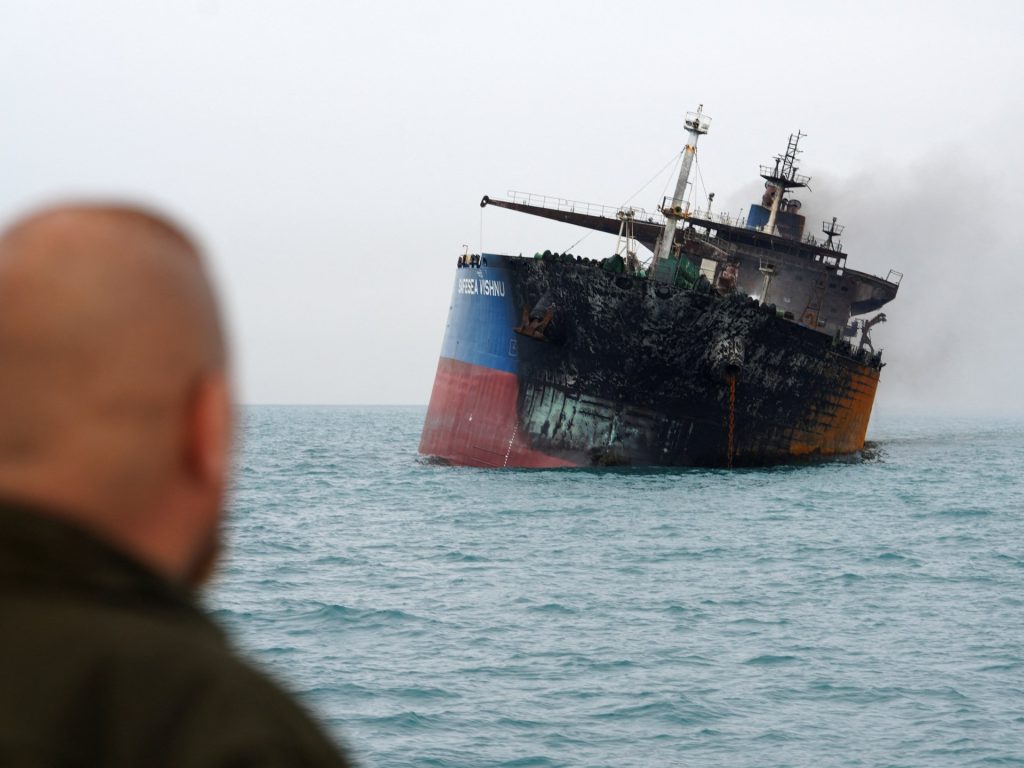
Hundreds of tankers sit idle on both sides of the Strait of Hormuz as Iran has effectively closed the waterway, pushing oil prices above $100 – the highest since 2022, after the start of the Russia-Ukraine war. Oil tanker traffic in the strait, through which one-fifth of global oil passes, has plunged after Israel and the United States launched attacks on Tehran on February 28. Asian countries, including India, China and Japan, as well as some European countries, source large portions of their energy needs from the Gulf. A disruption in supply will rattle the global economy. With an aim to cushion from the shock, the International Energy Agency (IEA) has decided to release 400 million barrels of oil from emergency reserves, the largest coordinated drawdown in the agency’s history. But it has failed to push the prices down. The agency had released about 182 million barrels after Russia’s invasion of Ukraine to stablise the oil prices. According to the agency, oil shipments through the strategic waterway have fallen to less than 10 percent of pre-war levels, threatening one of the most critical arteries in the global energy system. IEA members collectively hold about 1.25 billion barrels in government-controlled emergency reserves, alongside roughly 600 million barrels in industry stocks tied to government obligations. A large number in a massive market The figure may appear vast, but it shrinks quickly against the scale of global energy demand. “This feels like a small bandage on a large wound,” energy strategist Naif Aldandeni said, describing the world’s largest coordinated emergency oil release as governments scramble to steady markets shaken by war. Advertisement The US Energy Information Administration (EIA) estimates world consumption of petroleum and other liquids will average 105.17 million barrels per day in 2026. At that rate, 400 million barrels would theoretically cover just four days of global consumption. Even when compared with normal traffic through the Strait of Hormuz – around 20 million barrels per day – the released oil equals only about 20 days of typical flows. Aldandeni told Al Jazeera that emergency reserves can calm panic in markets but cannot replace the lost function of a disrupted shipping corridor. “The release may soften the shock and calm nerves temporarily,” he said, “but it will remain limited as long as the fundamental problem — the freedom of supply and tanker movement through Hormuz – remains unresolved.” Oil prices reflect those anxieties. Brent crude ended trading on Friday at $103.14 per barrel, after surging to nearly $120 earlier as fears of disrupted production and shipping intensified. Geopolitical risk premium Oil expert Nabil al-Marsoumi said the price surge cannot be explained by supply fundamentals alone. “The closure of the Strait of Hormuz added roughly $40 per barrel as a geopolitical risk premium above what market fundamentals would normally dictate,” he told Al Jazeera. From that perspective, releasing strategic reserves serves primarily as a temporary tool to dampen that premium rather than fundamentally rebalance the market. Prices above $100 per barrel are uncomfortable for major consuming economies already struggling to curb inflation and protect economic growth. Recent EIA projections suggest global demand has not yet declined significantly because of the war, remaining close to 105 million barrels per day. The market pressure, therefore, stems less from falling consumption and more from fears of supply shortages and delays in deliveries to refineries and consumers. Threats to oil infrastructure The latest escalation could deepen those fears. United States President Donald Trump said on Friday that the US Central Command (CENTCOM) had “executed one of the most powerful bombing raids in the History of the Middle East and totally obliterated every MILITARY target in Iran’s crown jewel, Kharg Island”. He added that “for reasons of decency” he had “chosen NOT to wipe out the Oil Infrastructure on the Island”, but warned Washington could reconsider that restraint if Iran continues to disrupt shipping through the Strait of Hormuz. CENTCOM confirmed the operation, stating US forces had struck “more than 90 Iranian military targets on Kharg Island, while preserving the oil infrastructure”. Advertisement Iranian officials have meanwhile warned they would target energy facilities linked to the US across the region if Iranian oil infrastructure comes under direct attack. Kharg Island is not simply a military location. It serves as the primary export terminal for Iranian crude, making it a critical node in the country’s oil supply network. If attacks move from obstructing shipping to targeting export infrastructure itself, the crisis could shift from a chokepoint disruption scenario to one involving direct losses of production and export capacity. In such circumstances, the oil released from emergency reserves would act only as a temporary bridge rather than a lasting solution to lost supply. Major oil companies such as QatarEnergy, the world’s largest producer of liquefied natural gas (LNG), Kuwait Petroleum Corporation and Bahrain state oil company Bapco have shut production and declared force majeure, while Saudi Aramco, the world’s largest oil producer, and UAE state oil company ADNOC have shut down their refineries. Limits of emergency reserves Even under a less severe scenario – where maritime disruption persists but infrastructure remains intact — the ability of strategic reserves to stabilise markets remains constrained by logistics. The US Department of Energy said the US Strategic Petroleum Reserve held 415.4 million barrels as of 18 February 2026. Its maximum drawdown capacity is 4.4 million barrels per day, and oil requires about 13 days to reach US markets after a presidential release order. That means even the world’s largest emergency stockpile cannot flood the market with crude immediately. The release must move through pipelines, shipping networks and refining capacity before reaching consumers. Aldandeni said the current intervention would likely produce only a temporary stabilising effect, while al-Marsoumi warned that prolonged disruption in the Strait of Hormuz – or the spread of threats to other chokepoints such as the Bab al-Mandeb Strait in the Red Sea could quickly send prices further higher. Adblock test (Why?)
Pakistani terrorist killed in Jammu and Kashmir’s Uri; Indian army, J&K police foil infiltration attempt
A Pakistani terrorist was killed in a joint operation of the Indian Army & Jammu and Kashmir Police in the Uri’s Buchhar area, as ANI reported.
West Bengal, Assam, Tamil Nadu, Keralam election dates to be announced today, EC to hold press conference at 4 pm
Election Commission of India to announce assembly poll dates of four states, Assam, West Bengal, Tamil Nadu, Keralam and Union Territory of Puducherry today in the press conference, scheduled at 4 PM.
Hyderabad Horror: HIV-positive man injects infected blood into woman after wedding called off

A 24-year-old man was arrested for allegedly injecting HIV-infected blood into a 22-year-old woman after her family cancelled their marriage due to his HIV-positive status.
Gurugram-Faridabad metro to run on Namo Bharat train track, 18 stations to be developed; check details here

The metro stations will be integrated with the Namo Bharat train at key locations, including Ifco Chowk, where a major interchange station is proposed.
EC announces poll dates for West Bengal, Tamil Nadu, Keralam, Assam and Puducherry; Check schedule from voting to results

With the announcement of the high-voltage elections in these four states and one Union Territory, the model code of conduct will come into force, meaning that no political party can now make any announcement to woo voters.
West Bengal CM Mamata Banerjee announces DA benefits to state govt employees, pensioners ahead of election, here’s all you need to know

The West Bengal CM said, “the employees will start receiving their ROPA 2009 DA” arrears from March 2026 onwards, as per the modalities detailed out in the notifications issued by the Finance Department.
Delhi CM Rekha Gupta announces AIIMS-style integrated institute, says ‘super medical hub’ planned

According to the Chief Minister’s Office (CMO), at the same time, the Institute of Human Behaviour and Allied Sciences (IHBAS) will be developed in the future as NIMHANS-2, a major national centre for mental health and neurosciences.
Airline CEOs torch lawmakers for turning air travel into a ‘political football’

Airline industry leaders blasted lawmakers Sunday over the effects of the latest government shutdown, warning that federal aviation workers are being left unpaid as air travel demand surges. In an open letter, airline CEOs said air travel has once again become “the political football” in a shutdown fight, urging Congress to immediately fund the Department of Homeland Security (DHS) and permanently protect key aviation employees from future pay disruptions. The DHS shutdown, which began Feb. 14, has now stretched on for a month. The latest revelation comes as war in the Middle East drags on, heightening concerns over domestic sleeper cell threats and threatening to further disrupt global energy flows, driving up jet fuel prices and increasing costs for airlines. DEMS VOTE TO KEEP DHS CLOSED DESPITE AIRPORT CHAOS, IRANIAN SLEEPER CELL THREAT “This problem is solvable, and there are solutions on the table. Now it’s up to you, Congress, to move forward on bipartisan proposals that will get federal aviation workers—including TSA officers, U.S. Customs clearance officers at airports and air traffic controllers—paid during shutdowns,” wrote executives from American Airlines, United, Delta, JetBlue, Southwest and Alaska Air Group, as well as airfreight titans Atlas Air Worldwide, UPS and FedEx. The group called on lawmakers to pass several pending measures, including the Aviation Funding Solvency Act, the Aviation Funding Stability Act and the Keep America Flying Act, which would ensure that air traffic controllers and TSA officers continue to be paid regardless of the government’s funding status. They pointed to the immediate toll on frontline workers, noting that TSA officers “just received $0 paychecks” and arguing that it is “simply unacceptable” for employees responsible for national travel security to go without pay. The letter also underscored the broader consequences for travelers and the economy. TRAVEL IS ABOUT TO GET MORE EXPENSIVE AS IRAN CONFLICT SPARKS JET FUEL CRUNCH “With spring break travel in full swing, FIFA World Cup 2026 right around the corner and celebrations for America’s 250th birthday throughout the year, the stakes are especially high,” the executives wrote, adding that the pressure on the aviation system is mounting. Airlines are expecting a record 171 million passengers this spring, they said, but travelers are already facing checkpoint delays of two, three and even four hours. Airlines said they are trying to reduce the disruption by holding flights for delayed passengers and rebooking others, but warned that Congress must act to keep the aviation system functioning smoothly and safely. “It’s past time for the government to make sure that TSA officers, U.S. Customs clearance officers at airports and air traffic controllers are paid for the job they do.”
Rising gas prices from Iran conflict put GOP on defense after previous Biden attacks
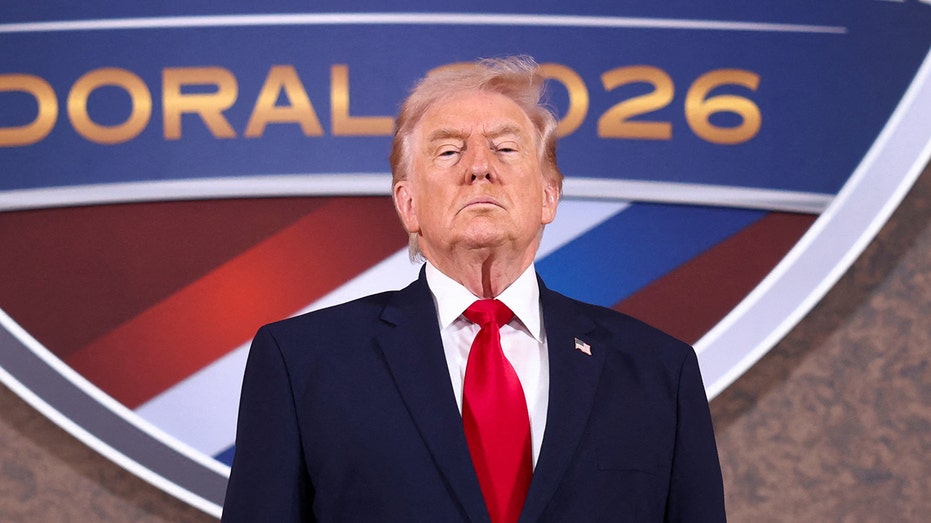
Republicans sharply criticized former President Joe Biden over rising prices at the gas pump, but a spike in energy prices amid the U.S.-Israeli conflict in Iran threatens to scramble the party’s affordability messaging. The Iran conflict has led to a surge in gas prices for Americans, leading to an average 50 cents a gallon increase since Operation Epic Fury began on Feb. 28. The average price of gas reached $3.63 per gallon on Friday, according to AAA. Diesel prices have also risen to $4.89 per gallon. The increases have been mostly fueled by volatility in oil prices, which closed above $100 per barrel Thursday for the first time since 2022 as the Strait of Hormuz remained effectively shuttered from the conflict. The president characterized the gas price hike amid the Iran conflict as “a very small price to pay” in a Truth Social post Sunday. THE WAR HITS HOME: WHY FINANCIAL PAIN AND ECONOMIC UNCERTAINTY THREATEN TRUMP’S DRIVE TO TOPPLE IRAN’S REGIME That statement represented a sharp break with Trump’s typical messaging touting low gas prices prior to Operation Epic Fury. “Gasoline, which reached a peak of over $6 a gallon in some states under my predecessor — it was quite honestly a disaster — is now below $2.30 a gallon in most states. And in some places, $1.99 a gallon,” President Donald Trump said during his Feb. 27 State of the Union address. “And when I visited the great state of Iowa just a few weeks ago, I even saw $1.85 a gallon for gasoline.” The surge in gas and diesel prices threatens to undermine the economic message of President Trump and congressional Republicans, who have touted low gas prices as a major win in the lead-up to November’s midterm elections. Cost of living issues are expected to be a key concern among voters as both parties claim to be laser-focused on making everyday life more affordable. Trump directed the Strategic Petroleum Reserve to release 172 million gallons of crude oil Wednesday in an effort to lower oil prices. “I filled it up once, and I’ll fill it up again, but right now, we’ll reduce it a little bit, and that brings the prices down,” Trump told Cincinnati news station WKRC. During the 2024 presidential contest, Trump frequently campaigned on ending Biden’s “war on American energy” and pledged to reverse a surge in gas prices that occurred under his predecessor’s tenure. Gas prices averaged $3.45 per gallon across all fuel grades during Biden’s four-year term, surging to a record high of more than $5 per gallon in June 2022 after the outbreak of the Russia-Ukraine war, according to the U.S. Energy Information Administration. “Starting on Day 1, we will drive down prices and make America affordable again,” Trump said during a speech at the Republican National Committee convention in July 2024. “People can’t live like this.” Democrats have seized on rising prices at the pump amid the conflict in Iran. “I wish the administration thought about this before they started this unnecessary war,” Sen. Angus King, I-Maine, who caucuses with Democrats, said Monday when asked about the gas price hike. “Donald Trump’s war has sent gas prices skyrocketing through the roof,” Senate Minority Leader Chuck Schumer, D-N.Y., wrote on social media Monday. “What contempt. What cluelessness.” TANKERS TO RESUME NORMAL MOVEMENT IN MIDDLE EAST IN ‘A FEW WEEKS’ AT WORST, ENERGY SEC SAYS, ENDING OIL SURGE Republicans have voiced confidence that the rise in gas prices would be temporary. GOP lawmakers have frequently cited their efforts to roll back Biden-era energy regulations and boost domestic production as evidence that their policies are working to lower energy prices. “It’s going to be probably volatile for a period of time. I think what’s going to be key is ensuring we can get safe access to the Strait of Hormuz,” Sen. Steve Daines, R-Mont., said Monday, adding that he was confident the disruption would be short-lived. Daines, who abruptly suspended his re-election campaign last week, highlighted that average gas prices were under $3 per gallon prior to Trump’s State of the Union speech. “That’s an important win for the American people,” the retiring Montana lawmaker said. “Something you’re reminded of usually weekly when you’re gassing up your vehicle.” Some Republicans and Trump administration officials are also arguing that a defeated Iran will ultimately spur lower gas prices, even if there is pain in the short run. White House press secretary Karoline Leavitt characterized the recent increase in oil and gas prices as “temporary” during a briefing Tuesday. “Once the national security objectives of Operation Epic Fury are fully achieved, Americans will see oil and gas prices drop rapidly, potentially even lower than they were prior to the start of the operation,” Leavitt said. “At the end of the day, we’re going to destroy this regime, and their ability to disrupt oil is going to be less, and we’re going to have more production, not less,” Sen. Lindsey Graham, R-S.C., told reporters Monday. “Once you take the largest state sponsor of terrorism off the planet, who depends on oil for their revenue, that’s a more stable world.” However, some Republicans are warning that high oil and gas prices could be catastrophic for the party’s midterm prospects. “I think if you add in high gas prices, high oil prices, and if we are still bombing Iran with kinetic action … I think you’re going to see a disastrous election,” Sen. Rand Paul, R-Ky., told Fox Business’ Maria Bartiromo on Tuesday. Nearly seven in 10 Americans — including 44% of Republicans — expect gas prices to keep increasing in the coming months, according to a Reuters-Ipsos poll released Monday. Trump has threatened Iran with unprecedented force if the flow of oil through the Strait of Hormuz is further restricted. “Death, Fire, and Fury will reign upon them — But I hope, and pray, that it does not happen!” Trump wrote Monday on Truth Social.