

Somali president: Israel deal with Somaliland tied to hosting Palestinians
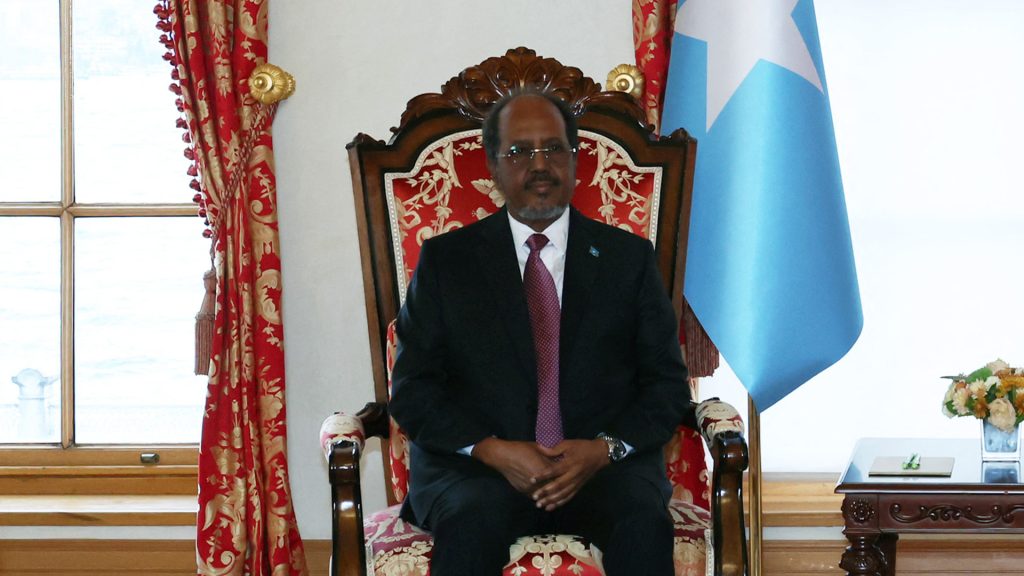
NewsFeed In an exclusive interview, Somalia’s president Hassan Sheikh Mohamud told Al Jazeera that the breakaway region of Somaliland has agreed to accept displaced Palestinians being relocated there in exchange for recognition. Somaliland officials have rejected the allegations. Published On 1 Jan 20261 Jan 2026 Click here to share on social media share2 Share Adblock test (Why?)
Gabon government sacks Aubameyang, suspends national team at AFCON 2025
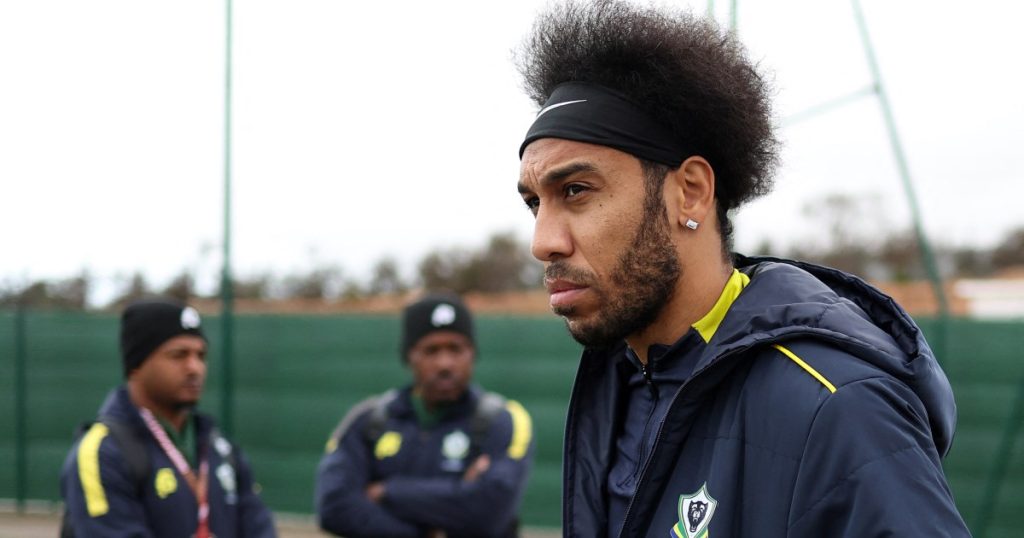
Pierre-Emerick Aubameyang and one other played banned after Gabon eliminated from Africa Cup of Nations group stage. By News Agencies Published On 1 Jan 20261 Jan 2026 Click here to share on social media share2 Share Gabon’s government has suspended the national team, sacking the coach and kicking star forward Pierre-Emerick Aubameyang off the squad in the wake of three defeats at the Africa Cup of Nations (AFCON) finals. Gabon’s acting Sports Minister Simplice-Desire Mamboula on Wednesday announced the suspension of the national team on television after they finished last in their group and were eliminated from the tournament in Morocco. Recommended Stories list of 2 itemsend of list “Given the Panthers’ disgraceful performance at the Africa Cup of Nations, the government has decided to dissolve the coaching staff, suspend the national team until further notice, and exclude players Bruno Ecuele Manga and Pierre-Emerick Aubameyang,” Mamboula said after a 3-2 loss to the Ivory Coast in Marrakesh. Gabon, coached by former defender Thierry Mouyouma, had already been eliminated after losing their opening pair of Group F fixtures to Cameroon and Mozambique, but in their final outing were 2-0 up over the defending champions before conceding three goals and going down to a second-string Ivorian lineup. Neither Aubameyang nor veteran defender Ecuele Manga played on Wednesday, with Aubameyang having returned to his French club Olympique de Marseille for treatment on a thigh injury. The former African Footballer of the Year responded on social media, saying on X: “I think the team’s problems are much deeper than the individual I am.” Aubameyang, at 36, had likely played his last game for Gabon in their defeat by Mozambique, as was also likely the case with the 37-year-old former Cardiff City defender Ecuele Manga. Advertisement Disbanding the national team used to be a common reaction in Africa to disappointing results, but since world football’s governing body FIFA has taken a hard stance against government interference in the running of football associations, it has been a rare occurrence. Adblock test (Why?)
India set to impose NEW taxes on cigarettes, tobacco products, staring from…; Here’s all you need to know

Cigarettes will become more expensive from 1 February 2026 after the government imposed additional excise duty on tobacco products. The move replaces the GST compensation cess and led to a sharp fall in shares of ITC and Godfrey Phillips following the announcement.
Indore SHOCKER : At least 8 dead, 149 hospitalised due to water contamination; government takes BIG action, suspends…

A contaminated water supply in Indore has led to at least eight deaths and the hospitalisation of over 149 people. The Madhya Pradesh government has ordered a probe, suspended officials for negligence, launched mass screenings, and announced Rs 2 lakh compensation for each victim’s family.
HIGH alert in Jammu and Kashmir: Security tightened in valley after inputs on terror threat
Security forces in Jammu and Kashmir were placed on high alert on New Year’s Day following intelligence inputs on possible terror activity. Multi-layered security, vehicle checks, search operations near the LoC and additional deployment amid rising tourist footfall aim to prevent any disruption.
Another SHOCKER from Air India? Pilot fails smell test, detained over intoxication allegations in Canada’s Vancouver; airline says, ‘zero-tolerance…’

In a shocking case, an Air India pilot was detained in Canada’s Vancouver over intoxicated allegations. As per reports, he smelled of alcohol before boarding a flight, which he was scheduled to operate to Delhi, via Austria’s Vienna.
Faridabad Horror: Rape case survivor suffers deep injuries, know 5 major updates

A 26-year-old woman who was gang-raped in Faridabad was brutally assaulted and thrown out of the moving van on the Gurugram-Faridabad Road on the intervening night of 30th and 31st December. The two accused have been arrested and produced in court on Wednesday.
India’s first Vande Bharat sleeper train to be flagged between…, has advanced safety system, world class coaches, check date, fares

India’s first Vande Bharat sleeper train will soon be launched as Prime Minister Narendra Modi will flag off the train which will run between Kolkata to Guwahati. Union Rail Minister Ashwani Vaishnaw said the launch of Vande Bharat sleeper train is expected this month.
Republic Day 2026 Parade: What’s new this January 26? Special contingent of Indian Army to mark its debut, check details
Republic Day Parade 2026 will be a spectacular and unique celebration of India’s diversity of its fauna. For the first time, an animal contingent will participate in the parade 2026. The contingent will feature two Bactrian camels, four Zanskar ponies, four raptors, and more.
China’s global aggression check: Taiwan tensions, military posturing, and US response in 2025

As 2025 ends, tensions between China and Taiwan are higher — and more overt — than at any point in recent years, fueled by expanded U.S. military support for Taipei, increasingly bold warnings from regional allies, and Chinese military drills that look less like symbolism and more like rehearsal. Beijing has spent the year steadily increasing pressure on Taiwan through large-scale military exercises, air and naval incursions, and pointed political messaging, while Washington and its allies have responded with sharper deterrence signals that China now openly labels as interference. The result is a more volatile status quo — one where the risk of miscalculation has grown, even as most analysts stop short of predicting an imminent Chinese invasion. China capped off 2025 with what it described as its largest Taiwan-focused military exercises to date, launching expansive drills in December that included live-fire elements and simulated island encirclement operations. The exercises followed a familiar pattern seen throughout the year: People’s Liberation Army aircraft and ships operating closer to Taiwan with greater frequency, reinforcing Beijing’s claim of sovereignty while testing Taipei’s response capacity. Unlike earlier shows of force, the late-year drills were widely interpreted as practice for coercive scenarios short of outright war — particularly a blockade or quarantine designed to strangle Taiwan economically and politically without triggering immediate global conflict. Chinese officials explicitly tied the escalation to Washington’s actions, pointing to a massive U.S. arms package approved in December — valued at roughly $11 billion and described as one of the largest such sales to Taiwan in years — as proof of what Beijing calls “foreign interference.” XI JINPING HAILS ‘UNSTOPPABLE’ CHINA AS TRUMP ACCUSES BEIJING OF CONSPIRING AGAINST US Chinese officials have been unusually blunt in their response. “Any external forces that attempt to intervene in the Taiwan issue or interfere in China’s internal affairs will surely smash their heads bloody against the iron walls of the Chinese People’s Liberation Army,” China’s Taiwan Affairs Office said in a Monday statement. The arms package continued the U.S. push to strengthen Taiwan’s asymmetric defenses, including missiles, drones, and systems designed to complicate a Chinese assault rather than match Beijing weapon-for-weapon. Taipei welcomed the support but remained cautious in its public response, emphasizing restraint while warning that Chinese military pressure has become routine rather than exceptional. One of the most consequential shifts in 2025 came not from Washington or Taipei, Taiwan, but from Tokyo. In November, Japanese Prime Minister Sanae Takaichi made unusually direct remarks linking a potential Taiwan contingency to Japan’s own security, suggesting that an attack on Taiwan could trigger collective self-defense considerations under Japanese law. The comments marked one of the clearest acknowledgments yet from a sitting Japanese leader that a Taiwan conflict would not remain a bilateral issue between Beijing and Taipei. China reacted angrily, accusing Japan of abandoning its post-war restraint and aligning itself with U.S. efforts to contain Beijing. The rhetoric underscored a growing Chinese concern: that any move on Taiwan would draw in a widening coalition of U.S. allies. That concern has also been reinforced by U.S. treaty commitments to the Philippines, where Chinese and Philippine vessels clashed repeatedly in the South China Sea throughout the year, raising fears of a multifront crisis. For the United States, 2025 was defined by a balancing act — reinforcing Taiwan without triggering the very conflict Washington seeks to prevent. In addition to the December arms package, U.S. officials repeatedly reaffirmed that peace and stability in the Taiwan Strait are vital U.S. interests, while avoiding any explicit shift away from long-standing strategic ambiguity. The Pentagon’s annual report on China, released late in 2025, reiterated that U.S. defense assessments see the Chinese military developing capabilities that could enable it to fight and win a war over Taiwan by 2027 — a benchmark that has increasingly shaped U.S. and allied planning. U.S. officials, however, have also cautioned that military readiness does not equal intent, warning against treating exercises or procurement timelines as a countdown clock to war. The question hanging over the region — and Washington — is whether China is moving closer to launching a full-scale invasion of Taiwan. The evidence cuts both ways. On one hand, the scale and sophistication of Chinese military activity around Taiwan has grown noticeably, with drills emphasizing joint operations, rapid mobilization and isolation of the island. Beijing’s rhetoric has also hardened, portraying reunification as increasingly urgent and framing U.S. involvement as an existential threat. On the other hand, an amphibious invasion of Taiwan would be among the most complex military operations in modern history, carrying enormous political, economic and military risks for China — whose armed forces have not fought a major war since its 1979 invasion of Vietnam. US COULD BURN THROUGH KEY MISSILES IN ‘A WEEK’ IF WAR WITH CHINA ERUPTS, TOP SECURITY EXPERT WARNS Many defense analysts argue that Beijing has strong incentives to continue applying pressure through gray-zone tactics — cyber operations, economic coercion, legal warfare, and military intimidation — rather than crossing the threshold into open war. The December drills reinforced that view, highlighting blockade-style scenarios that could test Taiwan and its partners without immediately triggering a shooting war. As 2026 approaches, the Taiwan Strait remains a flashpoint where deterrence and coercion are colliding more frequently and more visibly. The most widely held assessment among U.S. and regional officials is that while the risk of conflict is rising — particularly as China approaches its 2027 military readiness goals — an invasion is not yet the most likely near-term outcome. Instead, the danger lies in sustained pressure, miscalculation, and crisis escalation, especially as more actors — from Japan to the Philippines — become directly implicated in the Taiwan equation. For now, 2025 ends with no shots fired across the Taiwan Strait — but with fewer illusions about how close the region may be to its most serious test in decades.