

Ukraine–Russia at a crossroads: How the war evolved in 2025 and what comes next

President Donald Trump spent much of 2025 attempting what had eluded his predecessors: personally engaging both Russian President Vladimir Putin and Ukrainian President Volodymyr Zelenskyy in an effort to bring an end to the war in Ukraine. From high-profile summits to direct phone calls, the administration pushed for a negotiated settlement even as the fighting ground on and the map changed little. By year’s end, the outlines of a potential deal were clearer than they had been at any point since Russia’s full-scale invasion, with U.S. and Ukrainian officials coalescing around a revised 20-point framework addressing ceasefire terms, security guarantees and disputed territory. But 2025 also made clear why the war has proven so resistant to resolution: neither battlefield pressure, economic sanctions nor intensified diplomacy were enough to force Moscow or Kyiv into concessions they were unwilling to make. The year began with a high-profile fallout last February between President Donald Trump, Vice President JD Vance and Ukrainian President Volodymyr Zelenskyy, when the Ukrainian leader stormed out of the White House after Trump told him he did not have “any cards” to bring to negotiations with Russia. Frustrated by the pace of talks after promising to end the war on “Day One” of his presidency, Trump initially directed his ire toward Zelenskyy before later conceding that Moscow, not Kyiv, was standing in the way of progress. “I thought the Russia-Ukraine war was the easiest to stop but Putin has let me down,” Trump said in September 2025. That frustration had already surfaced publicly months earlier as Russian strikes continued despite diplomatic engagement. “He talks nice, and then he bombs everybody in the evening,” Trump said in July. Trump’s outreach to Russian President Vladimir Putin culminated in a high-profile summit in Alaska in August, though additional meetings were later called off amid a lack of progress toward a deal. ZELENSKYY ENCOURAGED BY ‘VERY GOOD’ CHRISTMAS TALKS WITH US Still, Trump struck a more optimistic tone toward the end of the year. On Sunday, after meeting Zelenskyy at Mar-a-Lago, the president said the sides were “getting a lot closer, maybe very close” to a peace agreement, while acknowledging that major obstacles remained — including the status of disputed territory such as the Donbas region, which he described as “very tough.” Trump said the meeting followed what he described as a “very positive” phone call with Putin that lasted more than two hours, underscoring the administration’s continued effort to press both sides toward a negotiated end to the war. By the end of 2025, the diplomatic track had narrowed around a more defined — but still contested — framework. U.S. officials and Ukrainian negotiators have been working from a revised 20-point proposal that outlines a potential ceasefire, security guarantees for Ukraine, and mechanisms to address disputed territory and demilitarized zones. Zelenskyy has publicly signaled openness to elements of the framework while insisting that any agreement must include robust, long-term security guarantees to deter future Russian aggression. Ukrainian officials have also made clear that questions surrounding occupied territory, including parts of the Donbas, cannot be resolved solely through ceasefire lines without broader guarantees. Russia, however, has not agreed to the proposal. Moscow has continued to insist on recognition of its territorial claims and has resisted terms that would constrain its military posture or require meaningful concessions. Russian officials have at times linked their negotiating stance to developments on the battlefield, reinforcing the Kremlin’s view that leverage — not urgency — should dictate the pace of talks. The result is a negotiation process that is more structured than earlier efforts, but still far from resolution: positions have hardened even as channels remain open, and talks continue alongside ongoing fighting rather than replacing it. Even as diplomacy intensified in 2025, the war on the ground remained defined by slow, grinding territorial pressure rather than decisive breakthroughs. Russian forces continued pushing for incremental gains in eastern and southern Ukraine, particularly along axes tied to Moscow’s long-stated objective of consolidating control over territory it claims as Russian. Russian advances were measured and costly, often unfolding village by village through artillery-heavy assaults and sustained drone use rather than sweeping offensives. While Moscow failed to capture major new cities or trigger a collapse in Ukrainian defenses, it expanded control in parts of eastern and southern Ukraine, maintaining pressure across multiple fronts and keeping territorial questions central to both the fighting and any future negotiations. Ukraine, for its part, did not mount a large-scale counteroffensive in 2025 comparable to earlier phases of the war. Ukrainian forces achieved localized tactical successes, at times reclaiming small areas or reversing specific Russian advances, but these gains were limited in scope and often temporary. None translated into a sustained territorial breakthrough capable of altering the broader balance of the front. Instead, Kyiv focused on preventing further losses, reinforcing defensive lines and imposing costs on Russian forces through precision strikes and asymmetric tactics. With decisive territorial gains out of reach, Ukraine expanded attacks against Russian energy infrastructure, targeting refineries, fuel depots and other hubs critical to sustaining Moscow’s war effort — including sites deep inside Russian territory. ZELENSKYY SAYS FRESH RUSSIAN ATTACK ON UKRAINE SHOWS PUTIN’S ‘TRUE ATTITUDE’ AHEAD OF TRUMP MEETING Russia, meanwhile, continued its own campaign against Ukraine’s energy grid, striking power and heating infrastructure as part of a broader effort to strain Ukraine’s economy, civilian resilience and air defenses. The result was a widening pattern of horizontal escalation, as both sides sought leverage beyond the front lines without achieving a decisive military outcome. The result was a battlefield stalemate with movement at the margins: Russia advanced just enough to sustain its territorial claims and domestic narrative, while Ukraine proved capable of blunting assaults and imposing costs but not of reclaiming large swaths of occupied land. The fighting underscored a central reality of 2025 — territory still mattered deeply to both sides, but neither possessed the military leverage needed to force a decisive shift. That dynamic would increasingly shape the limits of diplomacy.
What to know about new state laws in 2026 on wages, SNAP benefits and climate tax

The new year will bring changes for taxpayers as a slate of new state laws takes effect across the country, impacting Americans’ wallets through higher minimum wages, a new tourism tax in Hawaii and other cost-of-living measures. At the same time, a growing number of states are moving to restrict what food can be purchased with SNAP benefits or tighten eligibility requirements, signaling a broader push to rein in welfare spending. Here’s what you need to know. COASTAL CITY GREENLIGHTS NEW VISITOR TAX AMID WIDESPREAD OVERTOURISM TREND More than a dozen states will raise their minimum wages in 2026, with New York increasing its minimum to $17 an hour in New York City, Long Island and Westchester County, and $16 in the rest of the state. Washington’s statewide minimum wage will rise to $17.13 an hour — the highest in the U.S. — with other states, including Hawaii, Michigan and Nebraska, also boosting wages. In Hawaii, lawmakers are raising the state’s Transient Accommodations Tax from 10.25% to 11% starting Jan. 1, as part of a so-called “green fee.” The tax applies to operators of hotels and short-term rentals, as well as travel brokers, agents and tour packagers. State officials said the increase is expected to generate roughly $100 million annually to fund environmental stewardship, climate resilience and sustainable tourism projects. Several states, including Indiana, Nebraska and Iowa, will restrict what SNAP recipients can buy with benefits — limiting candy and sugary drinks starting Jan. 1, 2026. Separately, new federal SNAP rules will require more able-bodied adults to work or participate in job training for at least 80 hours a month to maintain eligibility. HOUSE REPUBLICANS UNVEIL NEW FOOD STAMP WORK REQUIREMENTS FOR TRUMP’S ‘BIG, BEAUTIFUL BILL’ Illinois will begin enforcing new rules requiring employers to disclose when artificial intelligence is used in hiring or employment decisions and barring discriminatory AI practices. Texas is also restricting how artificial intelligence can be used, making it illegal to create sexual content involving minors, collect facial or voice data without consent, or push vulnerable people toward self-harm. In Utah, courts will be able to prohibit individuals convicted of driving under the influence from purchasing alcohol. Restaurants and bars will also be required to check the identification of every customer, regardless of age, before serving or selling alcohol. Meanwhile, Washington is overhauling its DUI laws in 2026, allowing some repeat offenders a second chance to avoid conviction through treatment while letting courts consider older DUI cases when determining penalties. California is also tightening traffic safety enforcement, expanding “move over” requirements to protect roadside workers and strengthening penalties tied to dangerous driving violations.
Democrats had major election victories in 2025, but wins don’t erase party’s critical weaknesses
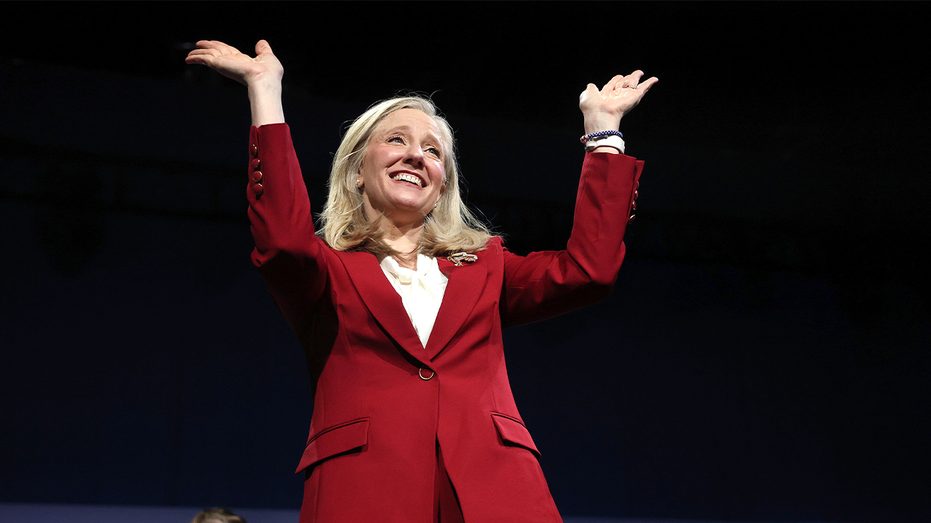
There’s no denying the Democratic Party had a very good year at the ballot box. Fueled by their laser focus on affordability amid persistent inflation, Democrats scored decisive victories in last month’s 2025 elections and overperformed throughout the year in special elections and other contests. A year after President Donald Trump and Republicans scored sweeping victories as they won back the White House and Senate and held their razor-thin House majority, Democrats were clearly the campaign trail winners in 2025. While they are energized heading into next year’s midterms, when they’ll try to win back congressional majorities from the Republicans, the Democrats’ 2025 performance at the ballot box doesn’t paper over the party’s underlying problems. SETTING THE STAGE: WHAT THE 2025 ELECTIONS MEAN FOR NEXT YEAR’S MIDTERM BATTLES From a state Senate election victory in Iowa in January, just eight days after Trump kicked off his second term in the White House, to this month’s win in Miami’s mayoral election, the party’s first in a quarter-century, Democrats had plenty to celebrate this year on the campaign trail. The Democratic National Committee (DNC), in a year-end memo, touted that “Democrats won or overperformed in 227 out of 255 key elections.” “As Democrats enter the midterm year, our party should feel buoyed by the strong results we’ve seen up and down the ballot all year long. Across red, purple, and blue states, Democrats have gotten off the mat and proven that when you organize everywhere, you can win anywhere,” the DNC emphasized. KEY TAKEAWAYS FROM THE 2025 ELECTIONS But Democrats are still staring down a brand that remains in the gutter, with historically low approval and favorable numbers. Among the most recent figures to grab headlines: Only 18% of voters questioned in a Quinnipiac University survey in December said they approved of the way congressional Democrats were handling their job, while 73% disapproved. That’s the lowest job approval rating for the Democrats in Congress since the Quinnipiac University Poll began asking this question 16 years ago. “Voters have rendered a brutal verdict on the Democrat brand — just 18 percent approval after years of Biden-era failure. Democrats have made clear that a 2026 majority would mean sham impeachment attacks and pure chaos,” Republican National Committee (RNC) national press secretary Kiersten Pels argued in a statement last week. DNC Chair Ken Martin acknowledged the “brand problem,” telling Fox News Digital this past summer that the party’s image had “hit rock bottom.” But he emphasized that “there’s only one direction to go, and that’s up, and that’s what we’re doing.” While clearly motivated following this year’s election victories, the DNC still faces a massive fundraising deficit in its campaign cash race with the rival RNC. And the party divide between progressives and moderates remains on the front-burner heading into next year’s midterms. SENATE GOP CAMPAIGN CHAIR REVEALS 2026 MIDTERM STRATEGY The Democrats overperformed in early December’s special congressional election in a GOP-dominated seat in Tennessee — losing by nine points in a district that Trump carried by 22 points just a year ago, But there were plenty of centrist Democrats who argued that state Rep. Aftyn Behn, the Democratic nominee in the race, was too far to the left for the district. Republicans repeatedly attacked Behn over her paper trail of past comments on defunding the police. And the Senate campaign launched this month in red-leaning Texas by Rep. Jasmine Crockett, a progressive champion and vocal Trump critic and foil, compounded the argument by centrists. Her entry into the race gave the GOP instant ammunition to paint Democrats as far-left extremists. And along with New York City Mayor-elect Zohran Mamdani, it handed the Republicans another far-left politician to use as a political cudgel. ‘FULL-BLOWN BATTLE’ BREWING IN DEM PARTY AS MAMDANI-STYLE CANDIDATES RISE IN KEY RACES “All across the country, what we’re seeing is Jasmine is being repeated, replicated all across the country,” National Republican Senatorial Committee Chair Sen. Tim Scott claimed in a Fox News Digital interview. “Socialism is in vogue in the Democrat Party.” But it’s not just Republicans ringing alarms. “The Democratic Party’s aspirations to win statewide in a red state like Texas simply don’t exist without a centrist Democrat who can build a winning coalition of ideologically diverse voters,” Liam Kerr, co-founder of the Welcome PAC, a group which advocates for moderate Democratic candidates, argued in a statement to Fox News Digital. And the center-left Third Way, in a memo following the Tennessee special election, argued, “If far-left groups want to help save American democracy, they should stop pushing their candidates in swing districts and costing us flippable seats.” But Martin sees a silver lining, as he pointed to “the great breadth of our party.” “We have conservative Democrats, we have centrist Democrats, we have progressives and we have leftists. And I’ve always said that you win elections through addition, not subtraction. You win by bringing people into your coalition and growing your party,” Martin emphasized.
Congress blocks Obamacare subsidies after shutdown fight, premiums set to surge
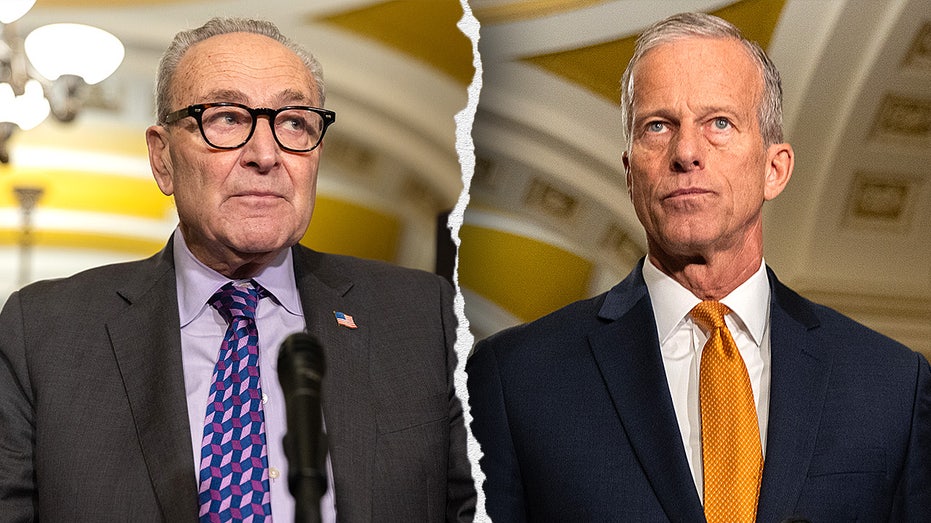
Lawmakers fought over Obamacare subsidies tooth and nail for the latter part of the year, and ultimately, neither side won. Senate Democrats thrust the government into the longest shutdown in history in an effort to refocus the narrative in Congress on healthcare, and Republicans agreed to talk about it in the open. And both Republicans and Democrats got a shot to advance their own, partisan plans. Both failed. Now, the subsidies are set to expire on Wednesday, sending price hikes across the desks of tens of millions of Americans that relied on the credits. REPUBLICANS CONSIDER USING RECONCILIATION AGAIN AFTER TRUMP’S BIGGEST LEGISLATIVE WIN When lawmakers return on the first week of January, healthcare will be front of mind for many in the Senate. But any push to either revive, or completely replace, the subsidies may, for a time, take a backseat to the government funding fight brewing ahead of the Jan. 30 deadline. When asked if he was disappointed that lawmakers were unable to, at least in the short term, solve the subsidies issue, Sen. Josh Hawley, R-Mo., was more concerned about people that would experience higher costs. “I think who it’s most disappointing for are the people whose premiums are going to go up by two, three times,” Hawley said. “So, it’s not good.” Price hikes on premium costs will be variable for the roughly 20 million Americans that rely on them, depending on age, income and other factors. Broadly, a person’s out-of-pocket cost is expected to double with the credit’s lapse, according to the Kaiser Family Foundation. The nonpartisan healthcare think tank painted a broader picture of the disparate impact on premium cost increases in a report released late last month that, based on myriad factors, including where a person lives, their age range and where they sit above the poverty line, some could see price hikes as high as 361%. SENATE QUIETLY WORKS ON BIPARTISAN OBAMACARE FIX AS HEALTHCARE CLIFF NEARS While Senate Republicans’ and Democrats’ separate plans failed to advance — despite four Republicans crossing the aisle to support Senate Minority Leader Chuck Schumer’s, D-N.Y., plan — lawmakers are working together for a solution. There are two plans with traction in the House. The GOP’s plan advanced on the floor earlier this month but doesn’t address the issue of the expiring tax credits. Then there is a bipartisan plan that calls for a three-year extension of the subsidies, similar to Senate Democrats’ plan, that is teed up for a vote. The latter option, and its bipartisan momentum, has some Democrats hopeful that a three-year extension could get a shot in the upper chamber. “I’ll also say that the glimmer of hope is if we’re searching for a bipartisan deal that can pass the Congress, we don’t need to search any further than the three-year extension of the subsidies that’s going to pass the House of Representatives,” Sen. Brian Schatz, D-Hawaii, told Fox News Digital. “We don’t need a negotiation any further. That bill can pass, if it can provide relief to the taxpayers, and it can pass, then that’s our vehicle.” SANDERS BLASTED AFTER BLOCKING BIPARTISAN KIDS’ CANCER RESEARCH BILL: ‘GRINCH,’ ‘SELFISH’ Senate Majority Leader John Thune, R-S.D., however, has maintained a deeply-rooted position against just a simple extension of the credits. He argued that a straight-up extension for three years would be “a waste of $83 billion,” and lacks any of the reforms that Republicans desire, like reinstalling an income cap, adding anti-fraud measures, and reaffirming language that would prevent taxpayer dollars from funding abortions. “I mean, I think if nothing else, depending on if the House sends something over here, there would be a new vehicle available,” Thune said. “And if there is some bipartisan agreement on a plan, then you know, it’s possible that we could — obviously it’d have to be something that we think the House could pass, and the president would sign.” “But I’m not ruling anything out, I guess is what I’m saying,” he continued. “But you know, a three-year extension of a failed program that’s rife with fraud, waste and abuse is not happening.” Senate Democrats are open to negotiating on a bipartisan plan, something that is already ongoing after Sens. Susan Collins, R-Maine, and Bernie Moreno, R-Ohio, held a meeting with lawmakers before leaving Washington, D.C., earlier this month. But Democrats are also making clear that they don’t want to budge on some of the Republicans’ demands. “Let’s put it this way, Republicans are asking to meet with me, and I’m telling them, I’ll listen, you know, I made it clear what I think is the only practical approach, and I’m certainly not going to go along with selling junk insurance,” Sen. Ron Wyden, D-Ore., said.
India issues FIRST statement after China’s claim to mediate Pakistan truce, says ‘there is no role for…’

India reiterated that there is no third party involved in the ceasefire on May 10, following Operation Sindoor, which was reached following direct talks between the Director General of Military Operations (DGMOs) of the two countries.
Raihan Vadra-Aviva Baig engagement: Where did Priyanka Gandhi’s son first meet Imran Baig, Nandita Baig’s daughter?

Recently, Aviva Baig took to her Instgram stories and uploaded a picture with Raihan Vadra, which she has now put in the ‘highlights’ section, has gone viral on the internet
BIG move by Swiggy, Zomato, Zepto amid gig workers’ strike on New Year’s Eve, offer delivery agents…

The development comes as an effort to maintain operations when delivery worker unions called a strike on December 25 and 31 over issues like pay, working conditions, and social security.
Faridabad SHOCKER: 25-year-old woman held captive, raped for hours, thrown out from moving van, gets 12 stitches in head

In a shocking case from Haryana’s Faridabad, a 25 years old woman was raped for two hours in a moving van by two men, and was later thrown out of the car in a deserted Gurgaon-Faridabad road. Both suspects have been detained by crime branch and recovered the van.
Why are Zomato, Swiggy, Zepto, other gig workers on nationwide strike today? Know reason here, their demands

Quick delivery apps Swiggy, Zomato, Blinkit and other platforms are a lifeline for those dependent on last-minute delivery. However, on New Year’s Eve, December 31, 2025, many people might have to face inconvenience as gig workers of many of these delivery ecommerce platforms and food delivery apps are on strike. The Telangana Gig and Platform Workers Union (TGPWU) and Indian Federation of App-Based Transport Workers (IFAT) will lead the strike, which is supported by multiple regional players. Worker unions from Maharashtra, Karnataka, Delhi-NCR, West Bengal and parts of Tamil Nadu have also announced the strike.
Former GOP Sen. Jon Kyl announces dementia diagnosis, steps away from public life
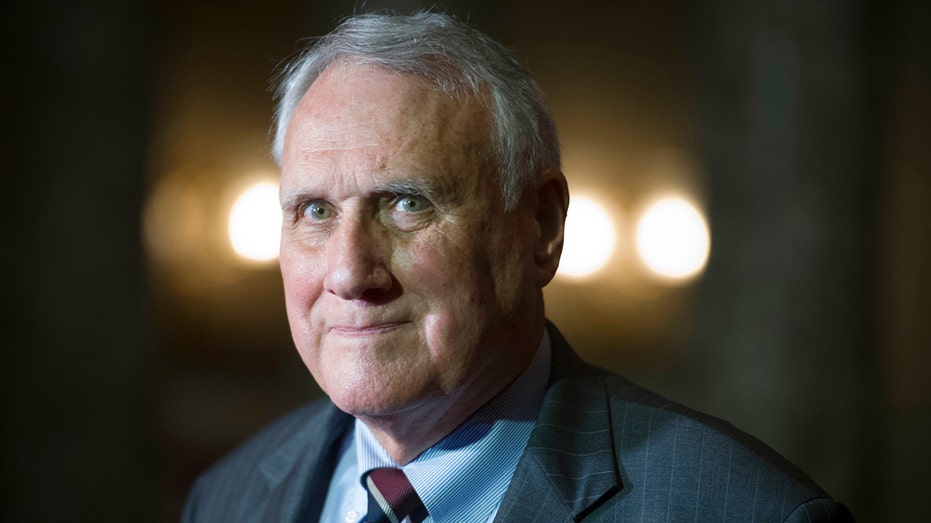
Former Republican Sen. Jon Kyl announced on Tuesday he is withdrawing from public life after being diagnosed with dementia. Kyl, 83, became one of Arizona’s most prominent Republicans during a career that spanned nearly three decades across both chambers of Congress, including a stint as Senate minority whip. “I was blessed to represent the people of Arizona in Congress and to have numerous other opportunities to contribute to the political and civic life of our nation and state,” Kyl said in a statement. “However, the time has come for me to withdraw from public life. I have been diagnosed with a neurological disease manifesting as dementia.” Kyl represented Arizona’s 4th Congressional District in the House from 1987 to 1995 before serving in the U.S. Senate from 1995 to 2013. DAVID MARCUS: BEN SASSE IS DYING, BUT HIS LETTER TO AMERICA WILL LIVE FOREVER After leaving the Senate, Kyl joined the lobbying firm Covington and Burling, before being appointed in 2018 by then-Gov. Doug Ducey to fill the vacancy caused by the death of former Sen. John McCain. Kyl held the seat for several months in the Senate before rejoining the firm in 2019, where he helped guide the confirmation of Supreme Court Justice Brett Kavanaugh. The longtime Arizona lawmaker described himself as “a very fortunate man” despite the diagnosis. FORMER COLORADO SEN. BEN NIGHTHORSE CAMPBELL DEAD AT 92 “My family and I now head down a path filled with moments of joy and increasing difficulties,” he stated. “I am grateful beyond expression for their love and support, in these coming days as in all the days of my life.” Kyl moved to Arizona as an 18-year-old freshman to attend the University of Arizona, where he met his wife. The university said Kyl devoted more than two decades to public service, leaving a lasting impact on water policy, national defense and intelligence. “His leadership, integrity, and commitment to service reflect the highest ideals of public life,” the university said in a statement. Sen. Mark Kelly, D-Ariz., said Kyl gave “decades of his life” serving Arizona, adding that he’s grateful for the former GOP senator’s “commitment to our state and country.” The Associated Press contributed to this report.