

Supreme Court’s BIG order on old diesel, petrol vehicles in Delhi-NCR, ends protection to…
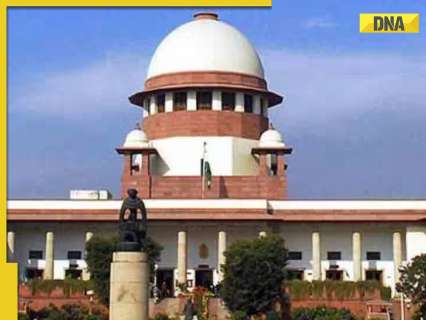
Supreme Court modified its August 12 order and ended relief for BS3 and older vehicles with poor emission standards.
‘Passengers need to pay’: Railway Minister Ashwini Vaishnaw on extra luggage on trains
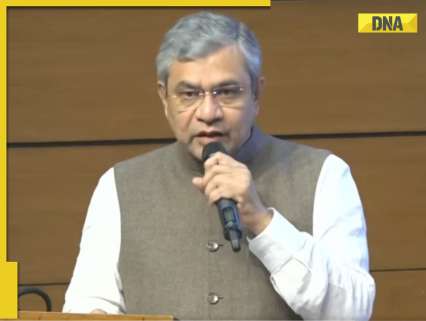
At present, class-wise maximum limit has been prescribed for carriage of luggage by the passenger along with him/her inside the compartments, the minister said.
CNG, domestic PNG prices to drop by Rs…, from January 1, know who will benefit the most, check details

The CNG and domestic PNG prices will be reduced from January 1, 2026. The new unified tariff structure will result in savings of Rs 2-3 per unit for consumers, depending on the state and applicable taxes.
Supreme Court orders closure of 9 toll plazas at Delhi borders till…, cites rising air pollution, ‘Let us think of…’, check details
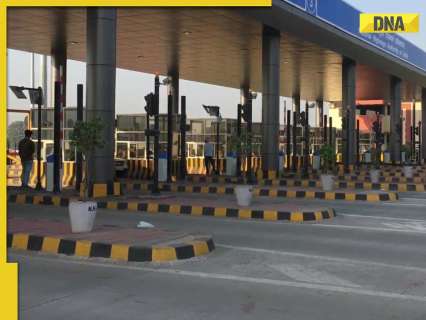
The Supreme Court on Wednesday ordered to close or relocate nine toll plazas to decongest Delhi’s border areas and reduce high levels of air pollution. The order has come amid the ongoing hearing on air pollution. The closure is temporary till January 2026.
Who is Manikrao Kokate? Maharashtra Minister faces arrest in 1995 cheating and forgery case
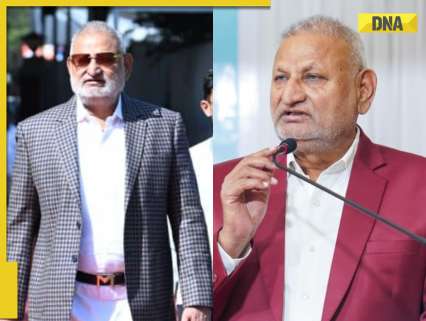
Manikrao Kokate has moved the Bombay High Court, challenging his conviction and the two-year jail term in the case.
Delhi-Dehradun Expressway to open for public soon, Nitin Gadkari reveals new inauguration date
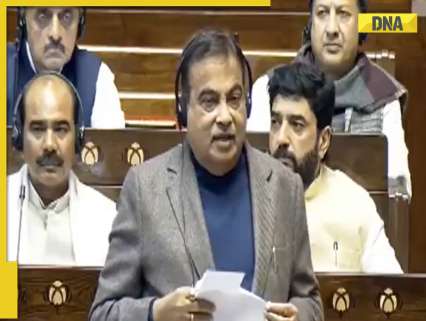
The Delhi-Dehradun expressway will reduce travel time between the two cities to two hours from the existing 6.5 hours.
Texans can use school vouchers for pre-K, but the pool of families who qualify is limited

A limited group of families with 3- and 4-year-olds who already qualify for free public pre-K can receive state funds to attend private preschool.
Texas Democrats fill every state and federal race on 2026 ballot, a first for either party
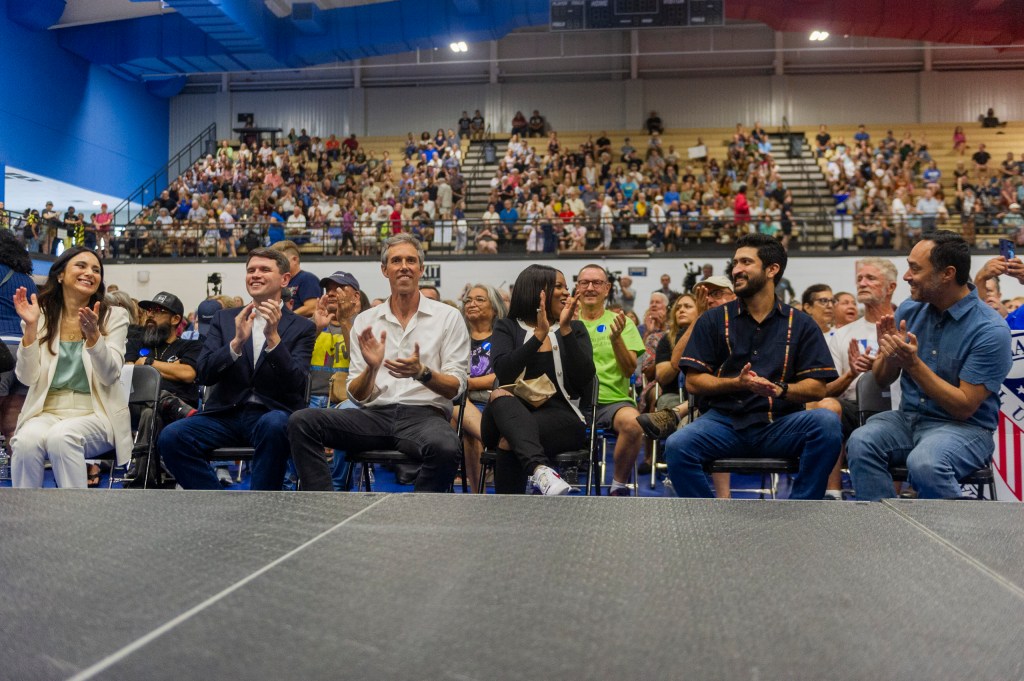
Texas Majority PAC and the Texas Democratic Party recruited 104 candidates to fill uncontested races. Gov. Greg Abbott’s strategist said it amounts to a gimmick “if they don’t back it up with serious resources.”
Blamed for the nation’s historic measles outbreak, West Texas Mennonites have hardened their views on vaccines
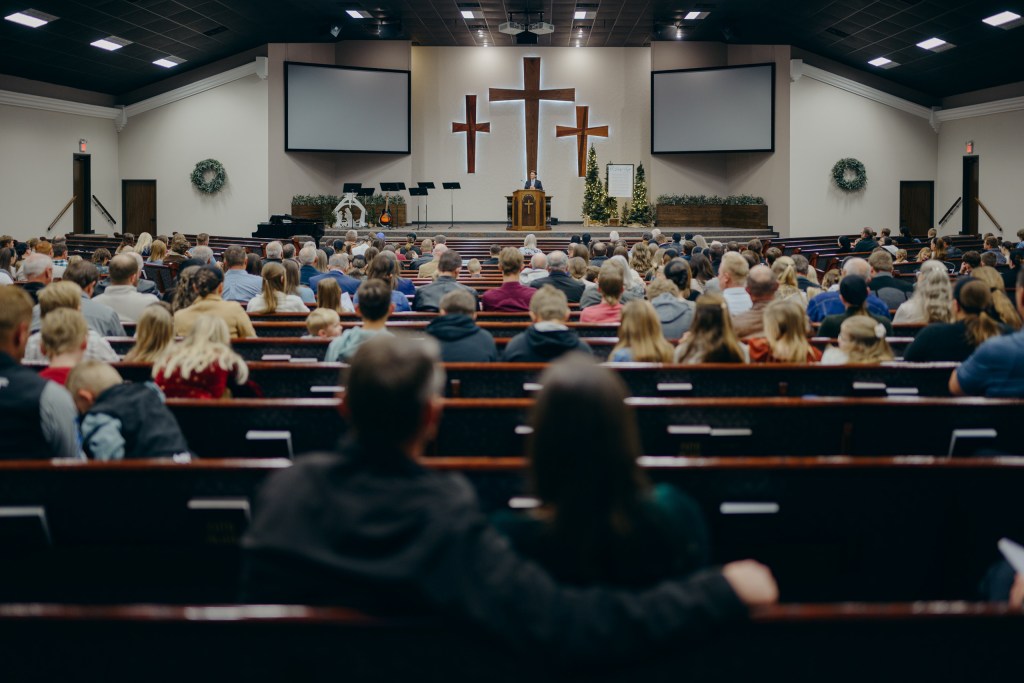
Months after public health officials say they caused the nation’s largest measles surge in 30 years, some West Texas Mennonites have grown more skeptical of the mainstream medical system.
Global wave of terror plots sparks new alarms over the West’s growing vulnerability

A terrorist assault on a Hanukkah celebration in Sydney, combined with Germany’s arrest of five suspected Islamist militants accused of plotting a Christmas-market attack, is renewing fears that Western democracies are entering a more volatile era marked by ideologically driven violence. The incidents, striking symbolic holiday gatherings on opposite sides of the world, have intensified debate across the United States and Europe over whether open societies are prepared for a resurgence of extremist threats. The sense of unease deepened further after an ISIS-affiliated gunman in Syria killed two U.S. service members and wounded an American civilian working alongside American forces. While the attack took place overseas, national security analysts say it reflects a pattern troubling Western governments: individuals able to inflict harm quickly with minimal planning, animated by broader ideological movements rather than directed by terrorist networks. TRUMP ENCOURAGES JEWISH AMERICANS TO ‘CELEBRATE PROUDLY’ DURING HANUKKAH AFTER DEADLY BONDI BEACH SHOOTING In Australia, the Bondi Beach shooting shocked a nation unaccustomed to mass-casualty attacks. Two gunmen opened fire at a public Hanukkah event known as “Chanukah by the Sea,” killing at least 15 people and injuring dozens. Police said the younger of the two attackers had previously drawn scrutiny for potential extremist ties but was not considered a current threat. Authorities recovered improvised explosive devices that failed to detonate, prompting Prime Minister Anthony Albanese to condemn the shooting as “pure evil” and declare it an antisemitic terrorist attack. Hours later, German authorities announced the arrest of five suspected militants accused of planning an attack on a Christmas market in Bavaria — a soft target with deep cultural resonance and a painful history of extremist violence. Investigators said the suspects were inspired by global jihadist movements and had progressed to advanced planning stages. And over the same weekend, federal authorities in the United States said they disrupted a credible terrorist plot of their own. The FBI arrested four alleged members of a radical pro-Palestinian extremist group accused of planning coordinated New Year’s Eve bombings across Los Angeles using improvised explosive devices. A fifth suspect was arrested in New Orleans in what officials described as a separate but ideologically aligned plot. Together with the killing of American troops in Syria, the incidents have revived a central question: Is the West prepared for a new era of diffuse extremist violence capable of erupting in multiple theaters at once — from major cities to remote patrol bases? Political pressure is mounting. Sen. Tommy Tuberville, R-Ala., said the Sydney attack underscored the consequences of permissive migration policies. “The mass migration of Islamic extremists destroyed Europe. Now, we are witnessing it destroy Australia,” he warned. “We CANNOT allow it to destroy America.” President Donald Trump has long argued that unrestricted immigration from countries with values he says conflict with the West poses a homeland security risk. During his first term, he designated chapters of the Muslim Brotherhood a foreign terrorist organization. Secretary of State Marco Rubio framed the threat as ideological rather than geographic, saying last week on Fox News: “Radical Islam has shown that their desire is not simply to occupy one part of the world … they want to expand.” Elon Musk amplified the debate further, writing: “Either the suicidal empathy of Western civilization ends or Western civilization will end.” ISRAELI KNESSET MEMBER SAYS AUSTRALIAN OFFICIALS ‘DID NOTHING’ AMID RISE OF ANTISEMITISM BEFORE SYDNEY ATTACK Extremism researchers note that the recent incidents reflect a familiar model of modern Islamist violence: attackers exploiting soft targets, acting with limited preparation, and drawing inspiration from global ideological movements even when they lack direct operational ties. The shootings in Sydney, the foiled plots in Germany and the U.S., and the gunman in Syria each demonstrated how quickly such violence can surface, even in countries with strong counterterrorism systems. Michael Makovsky, president of the Jewish Institute for National Security of America, said the Sydney, Germany and Syria incidents reflect a broader trend Western leaders have been slow to confront. “Clearly, the threat hasn’t diminished,” Makovsky said, adding that extremist networks appear more energized in the wake of recent Middle Eastern conflicts. He criticized governments that he believes underestimated the risks. “People have been warning the Australian government … there’s a spike in Islamic extremism, and they just didn’t do anything,” he said of the Sydney attack, questioning how such a large public Jewish event lacked stronger security. “I don’t know where the security was in all this and why it took the police so long to respond.” Makovsky praised the Trump administration’s efforts to confront a rise in antisemitism but warned that the U.S. may be overlooking risks inherent in its partnership with Syria’s new leader Ahmed al-Shaara, a former wanted terrorist. “The administration is very invested right now in Shaara, and seems to want to minimize that the killer was from Shaara’s security forces,” he said. “There are a lot of bad people still around Shaara.” As investigators in three countries piece together motives and networks, policymakers are confronting a possibility many had hoped was receding: that extremist violence, driven by global ideological currents rather than coordinated plots, may be entering a new phase — one that challenges assumptions Western nations have relied on to keep their citizens safe.