

New York appeals court tosses $515m civil fraud penalty against Trump
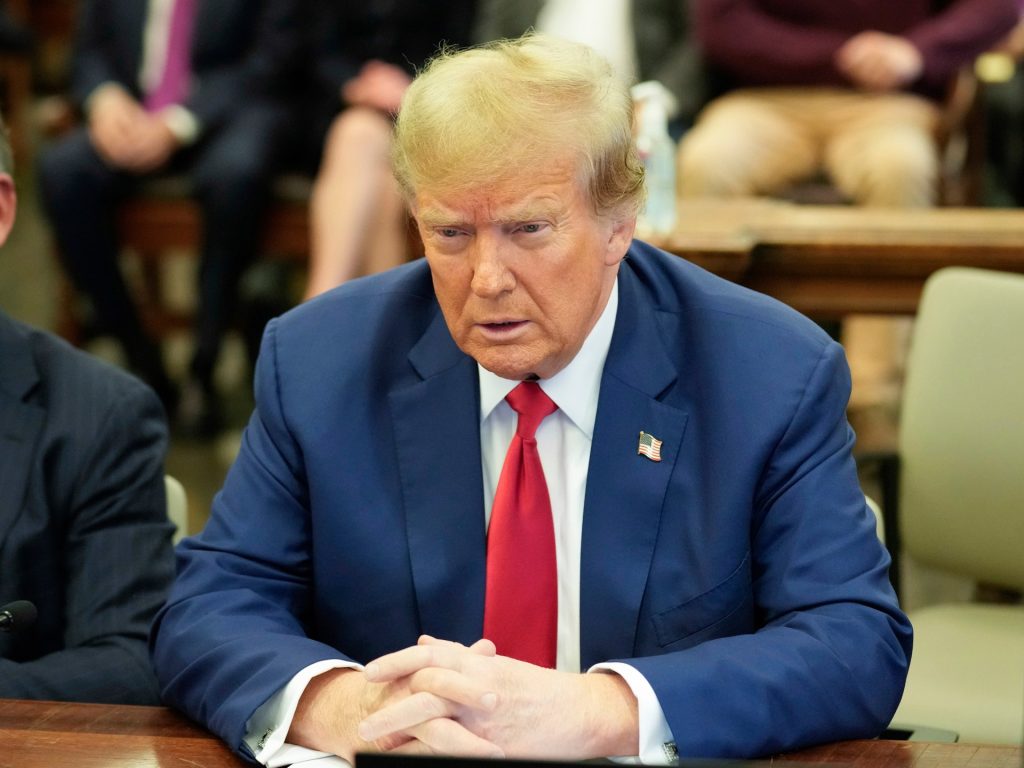
An appeals court in New York has thrown out a civil fraud penalty that would have cost United States President Donald Trump and his business associates nearly half a billion dollars, calling the fine “excessive”. On Thursday, a five-judge panel in New York’s Appellate Division rendered its decision after weighing Trump’s appeal for nearly 11 months. In its ruling, the panel cited the Eighth Amendment of the US Constitution, which prohibits the government from levying unduly harsh penalties on its citizens. The case stems from a civil suit brought by New York Attorney General Letitia James, who argued that Trump had inflated his financial records in order to secure advantages with insurance companies, banks and other financial institutions. In February 2024, a lower court had ordered Trump to pay $355m in penalties, an amount the appeals court called into question. That amount has since grown to about $515m due to accumulating interest. “While the injunctive relief ordered by the court is well crafted to curb defendants’ business culture, the court’s disgorgement order, which directs that defendants pay nearly half a billion dollars to the State of New York, is an excessive fine that violates the Eighth Amendment of the United States Constitution,” two of the panel’s judges, Dianne T Renwick and Peter H Moulton, wrote in one opinion. While the court did dismiss the penalty in its entirety, its judges were divided over the merits of the lower court’s ruling, finding that Trump and his co-defendants had misrepresented their wealth in “fraudulent ways”. Advertisement What did the lower court decide? The judge who issued that initial decision, Arthur Engoron, a Democrat, explained in his initial decision that “the frauds found here leap off the page and shock the conscience”. In his 92-page decision, Engoron expressed particular frustration over Trump’s refusal to answer questions before the court and his refusal to acknowledge the misrepresentations in his financial documents. “Their complete lack of contrition and remorse borders on pathological. They are accused only of inflating asset values to make more money. The documents prove this over and over again. This is a venial sin, not a mortal sin,” Engoron wrote. “Donald Trump is not Bernard Madoff. Yet, defendants are incapable of admitting the error of their ways.” Trump and his co-defendants — who include his sons Eric Trump and Donald Trump Jr, as well as other Trump Organization leaders — were dealt a combined financial penalty that currently totals to about $527m, including interest. While Engoron’s ruling left the Trump Organization intact, it did bar Eric Trump and Donald Trump Jr from serving in executive roles for two years. Trump, meanwhile, did not have an official role in the organization at the time. He was in the midst of his 2024 campaign for re-election, and he dismissed the fraud case as “election interference”. A slate of ongoing appeals He has repeatedly denied wrongdoing in the myriad legal cases he faced between his two terms as president. In 2023, for instance, a jury found Trump liable for sexual abuse and defamation in a case involving writer E Jean Carroll, who alleged the Republican leader raped her in a New York City department story, Bergdorf Goodman. The jury in that case awarded $5m to Carroll. A second defamation civil suit filed by Carroll resulted in an even bigger sum for damages: $83.3m. Trump continues to appeal both decisions. During that period, Trump also faced four criminal indictments, two on the state level and two on the federal level. The federal cases were dropped ahead of Trump’s second inauguration, but one of the state level cases, also in New York, resulted in Trump becoming the first president, past or present, to become a convicted felon. He was found guilty in May 2024 on 34 counts of falsifying business records. He continues to appeal that case as well, and his legal team has pushed to move the case from the state court system to the federal level, where Trump would enjoy immunity as president. Adblock test (Why?)
US senators urge Rubio to press Israel over journalist killings
The senators urged for the protection of journalists in Gaza and international media access to the territory. A group of 17 US senators has written to US Secretary of State Marco Rubio, condemning an Israeli attack last week that killed several Al Jazeera journalists, and urging the US to pressure Israel to grant foreign media access to Gaza and protect journalists there. The letter [pdf] published on Wednesday was led by Hawaii Senator Brian Schatz and signed by 16 other senators, including Massachusetts Senator Elizabeth Warren, Virginia Senator Tim Kaine and Vermont Senator Bernie Sanders, a registered independent who caucuses with the Democrats. It comes a week after an Israeli strike killed several Palestinian journalists in the besieged territory, including Al Jazeera correspondents Anas al-Sharif and Mohammed Qreiqeh, and Al Jazeera cameramen Ibrahim Zaher and Mohammed Noufal. The attack was met with international outcry and brought the number of journalists killed by Israel in Gaza since October 7, 2023, to 238, according to the Gaza Government Media Office. “Israel has not provided convincing evidence for its claim that al-Sharif was a Hamas militant,” the senators wrote. “Absent a compelling explanation of the military objective for this attack, it appears Israel is publicly admitting to targeting and killing journalists who have shown the world the scale of suffering in Gaza, which would be a violation of international law.” The group urged President Donald Trump’s administration to provide more information about the State Department’s “awareness and analysis” of the strike. State Department spokesperson Tammy Bruce told reporters last week that the department discussed al-Sharif’s killing with Israel, and reiterated Israel’s unverified claim that he may have had ties to Hamas, the Palestinian group that governs Gaza. Advertisement Al Jazeera has accused Israeli authorities of fabricating evidence to link its staff to Hamas, and denounced Israel’s military for waging a “campaign of incitement” against its journalists in the Gaza Strip, including al-Sharif. The senators called for the US to “make it clear to Israel that banning and censoring media organizations and targeting or threatening members of the press is unacceptable and must stop.” “We urge you to press the Israeli government to protect journalists in Gaza and allow international media to access the territory.” The senators’ letter also called for unrestricted and immediate access for foreign journalists to cover Israel’s ongoing assault on Gaza. While Palestinian journalists in Gaza cover Israel’s devastating war, Israel has barred international journalists from entering the Strip. The letter also voiced concern for Israel’s attacks on press freedom elsewhere. The group condemned the killings of journalists in Lebanon, Israel’s crackdown on journalists and media outlets in the occupied West Bank, harassment by Israeli soldiers of journalists in southern Syria, and the legal threats and censorship faced by Israeli journalists and media organisations. The Washington Post on Wednesday night also reported that a member of the press office for the US State Department’s Bureau of Near East Affairs, Shahed Ghoreishi, was fired after suggesting Washington offer condolences for the journalists killed in Gaza. Adblock test (Why?)
US college declines to oppose Trump travel ban after Iranian students’ plea
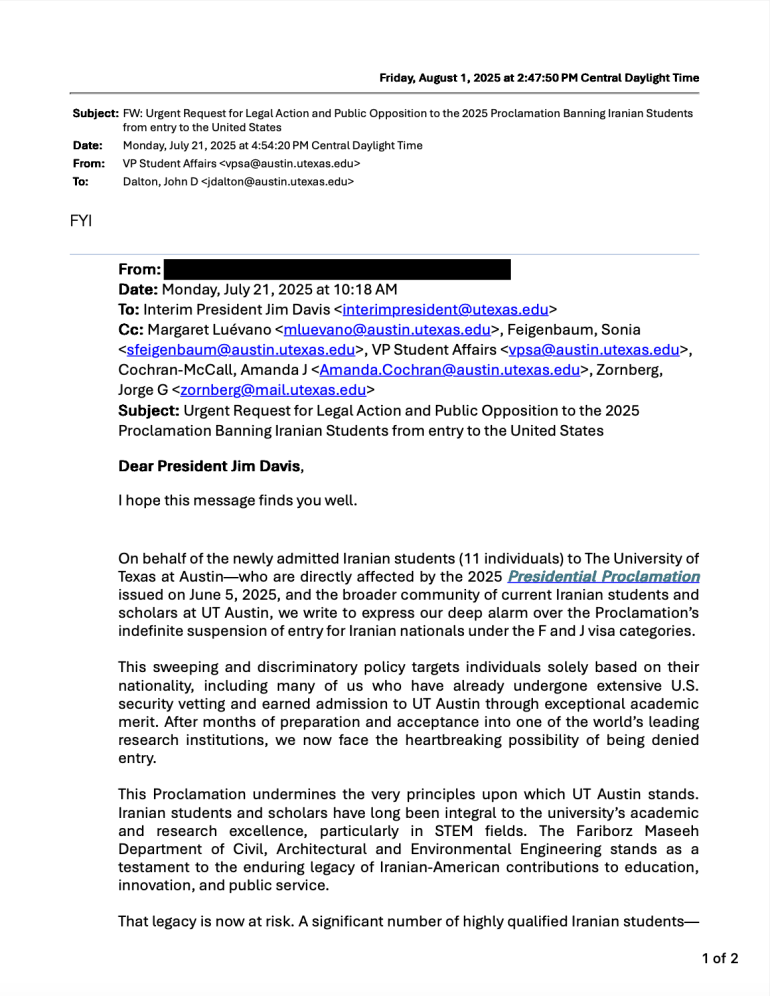
A top university in the United States has declined to oppose President Donald Trump’s travel ban on Iran after a call to action by its Iranian students. In a letter last month, the group of students called on the University of Texas at Austin to denounce Trump’s “sweeping and discriminatory” ban, take “immediate legal action” against the measure, and reaffirm support for Iranian students and scholars. The letter, authored “on behalf of the newly admitted Iranian students”, was sent to interim university President Jim Davis on July 21, weeks after Trump signed an executive order banning citizens from 12 countries, including Iran. “This Proclamation undermines the very principles upon which UT Austin stands. Iranian students and scholars have long been integral to the university’s academic and research excellence, particularly in STEM fields,” the letter said. In the letter, the group noted that the university’s department of civil, architectural and environmental engineering was named after Fariborz Maseeh, an Iranian-American entrepreneur and philanthropist, in a “testament to the enduring legacy of Iranian American contributions to education, innovation, and public service”. “This is a moment that calls for bold and principled action,” the letter said. “UT Austin has long benefited from Iranian students’ academic contributions. It must now stand in their defense. Failing to act not only jeopardizes the futures of individual students – it risks diminishing the ethical and intellectual standing of the institution itself.” Al Jazeera obtained the letter through a public records request. Advertisement Despite the students’ plea, neither the university nor Davis have made any public comment on the ban. Davis’s office did not respond to a request for comment. Last year, 81 Iranians studied at the University of Texas at Austin, according to the university’s website, almost all of whom were graduate students. The University of Texas at Austin is considered among the most prestigious tertiary institutions in the US, placing 30th in US News and World Report’s 2025 university rankings. “After months of preparation and acceptance into the world’s leading research institutions, we now face the heartbreaking possibility of being denied entry for a long time,” an Iranian student, who was involved in the letter, told Al Jazeera, requesting anonymity. The student said many members of a 1,500-person Telegram group of Iranian students that they belong to have reported being stuck in prolonged post-interview administrative processing. A few of them have been refused visas, while others have chosen to skip visa interviews on the understanding that they would be denied a visa, the student said. Prior to the ban, many of them would have already undergone extensive security vetting to obtain a student visa. Apart from Iran, Trump’s travel ban also applies to Afghanistan, Myanmar, Chad, Republic of Congo, Equatorial Guinea, Eritrea, Haiti, Libya, Somalia, Sudan, and Yemen. The student said Iranians were facing “collective punishment” by the Trump administration. “People must not be equated with their governments,” the student said. “Such blanket measures are neither reasonable nor fair, and they undermine the very principles of justice, academic freedom, and equal opportunity that the United States has long stood for.” More than 12,300 Iranian students studied in the US during the 2023-2024 academic year, up from 10,812 a year earlier, according to the US State Department. Adblock test (Why?)
What’s causing Pakistan’s deadly floods?
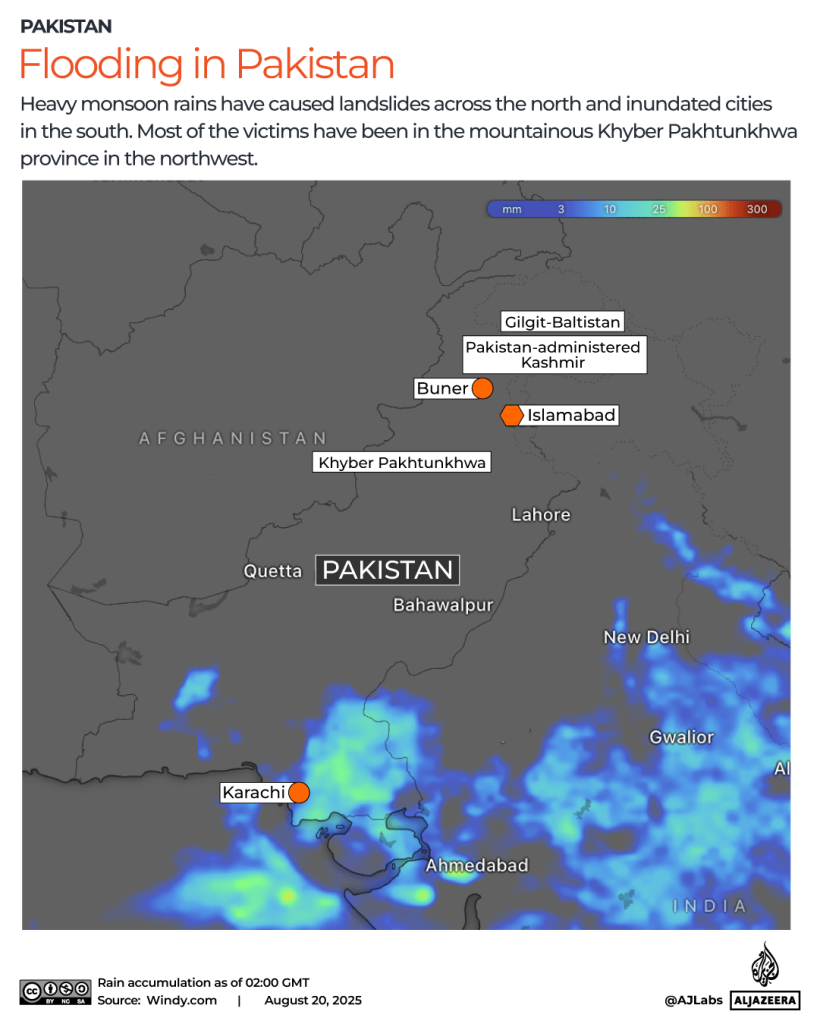
Pakistan has been reeling from flooding triggered by torrential rains, with nearly 400 people killed since August 14. On Wednesday, Karachi was inundated following a heavy downpour, paralysing the southern port city of 20 million people less than a week after deadly flash floods swept away villages in the northwestern province of Khyber Pakhtunkhwa. More than 700 people have been killed in the flooding and landslides across the South Asian nation since June, with forecasters warning of further downpours until Saturday. So why have floods in Pakistan been so intense, and what is the solution to the South Asian country’s flooding problem? Where did it flood in Pakistan? The Buner district in the Khyber Pakhtunkhwa province has been the worst hit, with more than 200 people killed and extensive damage to homes and public infrastructure across the northwestern mountainous province since August 14. The Himalayan region of Gilgit-Baltistan, as well as Pakistan-administered Kashmir, was also affected. Karachi, the capital of the southern Sindh province, was hit by floods after rainfall on Tuesday. Videos circulating on social media showed cars and motorbikes submerged in water. How many people have died in the floods? On Thursday, nine people died and 15 were injured across the country, according to the National Disaster Management Authority (NDMA). Seven of these deaths were in Khyber Pakhtunkhwa, while two were in Sindh. On Wednesday, 41 people died and 11 people were injured across the country. At least 19 of these deaths were in Khyber Pakhtunkhwa, 11 deaths were in Sindh, and 11 deaths were reported in Gilgit-Baltistan. Advertisement Some 759 people have died, including 186 children, and 993 have been injured since the onset of the monsoon season in June. More than 4,000 houses have been damaged due to flooding in the same period. What do rescue efforts look like? The head of the NDMA, Lieutenant General Inam Haider Malik, said that more than 25,000 people had been rescued from flood-hit areas, Reuters reported on Wednesday. The army and air force have also been pressed into action in rescue efforts. On Wednesday, 2,300 people were treated in 14 active medical camps in Khyber Pakhtunkhwa, according to the NDMA. Relief items have also been distributed among those affected by the floods. What is causing the floods in Pakistan? While the exact cause of the floods is yet to be determined, several factors could have contributed to the deluge. “While climate change plays a critical role in intensifying flooding events in Pakistan, other factors such as urbanisation, deforestation, inadequate infrastructure, and poor river management also contribute significantly,” Ayyoob Sharifi, a professor at Hiroshima University in Japan, told Al Jazeera. Climate change Sharifi told Al Jazeera that climate change is causing monsoon rainfall to intensify, resulting in more frequent extreme precipitation events. A study co-authored by Sharifi and published in February this year, indicates that cities such as Lahore and Faisalabad could experience increased rainfall under certain scenarios, heightening the risk of urban flooding. He added that rising temperatures allow the atmosphere to hold more moisture, leading to heavier downpours during storms. In northern Pakistan, these higher temperatures are also accelerating glacial melting, which increases the likelihood of glacial lake outburst floods (GLOFs). These are floods that occur when water is suddenly released from a glacial lake. Earlier this month, a GLOF occurred in Pakistan’s northern region of Hunza, when the Shisper Glacier swelled the Hassanabad nullah, damaging infrastructure and destroying cultivable land, Dawn reported on August 8. While Pakistan is responsible for less than 1 percent of global greenhouse gas emissions according to European Union data, the country bears the brunt of climate disaster, the country’s former Finance Minister Miftah Ismail told CNBC in 2022. Heavy rain over a short period Fahad Saeed, a climate scientist at the Berlin-based think tank, Climate Analytics, told Al Jazeera that the flooding was caused by higher-intensity rainfall. This means that there was a large amount of rain over a short period. Advertisement In Buner, more than 150mm (6 inches) of rain fell in just one hour on Friday morning. In 2022, Pakistan endured its most severe monsoon season ever recorded, resulting in at least 1,700 deaths and causing an estimated $40bn in damage. Saeed said the 2022 floods were unexpected because of the areas they hit, ravaging arid or semiarid parts of northern Sindh that usually do not experience heavy rainfall. However, rainfall this year has occurred within or around the region that normally experiences monsoon rain, he said. What is unusual this time is the sheer intensity of the rain. Soil unable to absorb the rain in rural areas Saeed explained that when there is rapid rainfall in a rural area over a short time, the soil does not get enough time to absorb the rainwater. “The rain doesn’t infiltrate into the soil, rather, it flows off the surface. It results in mudslides and soil erosion.” This applies to rural areas in the northern parts of Khyber Pakhtunkhwa and parts of Gilgit-Baltistan. “What happens is that normally, if you are living next to the rivers, your house is prone to get destroyed or inundated. But this time, what happened is that even if you are on the slopes of the mountain, the rainfall is so intense that because of the mudslide and the landslides, it destroyed the homes at the elevations,” Saeed explained. Issues with the drainage system in urban areas Karachi primarily relies on natural stormwater drains, or nullahs, for rainwater to be drained off. Research shows that Karachi generates more than 20,000 tonnes of solid waste per day, and the nullahs are clogged by this rubbish. During an event on urban flooding last year, hydrologist Sana Adnan pointed out that cleaning nullahs only before the monsoon season significantly contributes to flooded roads, emphasising that heavy rains can happen at any time of the year, not just during the monsoon, local outlet Dawn News reported. Architect and planner Arif Hasan told Dawn in 2020 that due to the absence of a sustainable
‘Moral imperative’: Hundreds of UK business leaders demand action on Israel
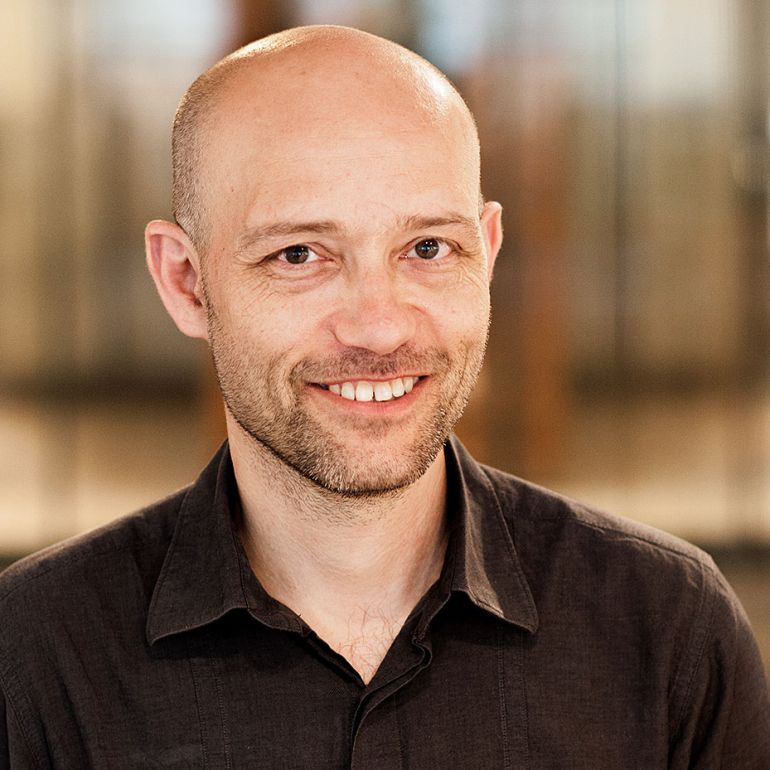
London, United Kingdom – Hundreds of business leaders in the United Kingdom – including a former adviser to the king and a sustainability consultant descended from Holocaust survivors – are calling on the government to take action against Israel as the crisis in Gaza worsens. As of Thursday morning, 762 people had signed a statement calling on Britain to cease all arms trade with Israel, sanction those accused of violating international law – ostensibly including Prime Minister Benjamin Netanyahu as he is wanted for arrest by International Criminal Court, invest in screening to stop the UK financing “complicit” companies, and enforce the United Nations’ principles on business and human rights across the UK’s economic systems. “We see this not only as a moral imperative, but as a matter of professional responsibility – consistent with our duty to act in the best interests of long-term societal and economic resilience,” the letter reads. “The UK must ensure that no business – whether through products, services, or supply chains – is contributing to these atrocities, directly or indirectly.” Among the signatories are the former royal adviser Jonathon Porritt CBE; sustainability consultant Adam Garfunkel; Frieda Gormley, the founder of the luxury interior design brand House of Hackney; the prominent philanthropist who once led Unilever, Paul Polman; and Geetie Singh-Watson MBE, an organic food entrepreneur – as well as other professionals who have been honoured with the Member of the British Empire (MBE) award. Advertisement They have pledged to support the UK government with an “ongoing process of reflection and action – reviewing our operations, supply chains, financial flows, and influence to help foster peace, uphold human rights, and strengthen respect for international law”. “Business cannot succeed in societies that are falling apart,” said Polman. “It is time for business leaders to show courage, speak out, and use our influence to uphold international law.” The number of professionals signing the letter is growing as Palestinians in the Gaza Strip face their darkest days. Israel is beginning a feared invasion into Gaza City while thousands endure hunger and famine due to the blockade of the Strip. [Courtesy of Adam Garfunkel] “We need as businesses to justify our existence and to recognise that all people everywhere deserve to be treated fairly,” Garfunkel told Al Jazeera. “My family was caught up in the Holocaust. My father was lucky enough to escape with his brother and his parents to the UK. My great grandparents were taken to the woods and shot and buried in a mass grave, and what I’ve taken from that is a strong belief that everyone matters, that everyone has human rights, that persecution on the basis of ethnic identity is always wrong, wherever it happens.” Israel’s latest war on Gaza, termed a genocide by leading rights groups, has killed more than 60,000 people in the 22 months since October 7, 2023, when Hamas led an incursion into southern Israel, during which about 1,200 were killed and 250 taken captive – “grave crimes under international law”, according to the letter. “However, the Israeli government’s ongoing military campaign amounts to an unrelenting and indefensible assault on civilians, breaching both moral boundaries and the core principles of the Geneva Conventions,” it added. Porritt, who counselled King Charles on environmental issues for 30 years when the monarch held the Prince of Wales title and has chaired a sustainable development commission set up by former Prime Minister Tony Blair, said the letter reflects the role of businesses in society at a critical time. “It’s just become so much clearer over the course of the last few months that this situation now is completely intolerable. And it constitutes very specifically a genocide against the people of Palestine, of Gaza,” he told Al Jazeera. Businesses are obliged to be supportive in “achieving and maintaining” human rights in the countries in which they’re trading, he said. “That provides a very strong steer as to why individual business leaders need to get involved at this stage.” Porritt has recently made headlines in the British media for his support of Palestine Action, a protest group that was proscribed by the UK government weeks ago as a terrorist organisation. Advertisement He was among the more than 500 citizens arrested during an August 9 rally in London, where he raised a banner reading, “I oppose genocide, I support Palestine Action.” His bail hearing is set for late October. Adblock test (Why?)
Europe must shoulder ‘lion’s share’ of Ukraine’s security, Vance says
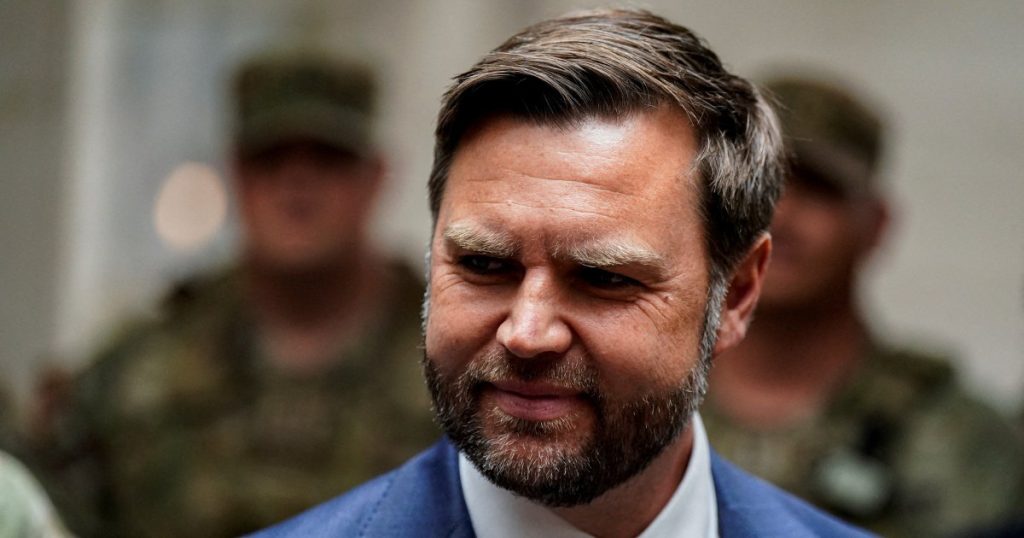
US vice president says Europe will be expected to play the ‘leading role’ in guaranteeing Kyiv’s post-war security. European countries will have to shoulder the “lion’s share” of guaranteeing Ukraine’s security in the event of a deal to end Russia’s war in the country, United States Vice President JD Vance has said. In an interview with Fox News on Wednesday, Vance said the US should not have to “carry the burden” of underpinning Kyiv’s post-war security. “I think that we should be helpful if it’s necessary to stop the war and to stop the killing. But I think that we should expect, and the president certainly expects, Europe to play the leading role here,” Vance said in an interview with Fox News host Laura Ingraham. “What he said very clearly is: Look, the United States is open to have the conversation, but we’re not going to make commitments until we figure out what is going to be necessary to stop the war in the first place.” Vance’s comments came a day after US President Donald Trump ruled out the possibility of US troops in Ukraine, while suggesting that Washington could provide support “by air”. The issue of post-war security guarantees for Ukraine has been a major question mark over Trump’s push to end the three-and-a-half-year-long conflict. After hosting Ukrainian President Volodymyr Zelenskyy and top European leaders at the White House for talks on the war on Monday, Trump said that European countries would be the “first line of defence”, but that Washington would provide “a lot of help”. While Trump has ruled out NATO membership for Ukraine, his special envoy, Steve Witkoff, and NATO Secretary-General Mark Rutte have raised the possibility of offering Kyiv a security guarantee resembling the 32-member alliance’s collective defence mandate. Advertisement Under Article 5 of the North Atlantic Treaty, an armed attack against one NATO member nation is considered an attack on all members of the alliance. While Trump has said that Russian President Vladimir Putin is open to European peacekeepers being stationed in Ukraine, Moscow has repeatedly dismissed the possibility of troops from NATO countries along its border. On Wednesday, Russian Foreign Minister Sergey Lavrov said that his country would need to be included in negotiations on security guarantees, warning that excluding Moscow would be a “road to nowhere”. “We cannot agree with the fact that now it is proposed to resolve questions of security, collective security, without the Russian Federation. This will not work,” Lavrov said. Despite the sticking points between the sides, Vance said on Wednesday that the Trump administration had made “great progress” in its efforts to end the war. “You can never say with certainty what the outcome in this situation is going to be,” Vance said. “But we now have the Russians talking to the Ukrainians; they’re talking details about what would be necessary on each side to stop the fighting, to stop the killing.” Adblock test (Why?)
Brazil’s ex-President Bolsonaro planned asylum in Argentina, police say
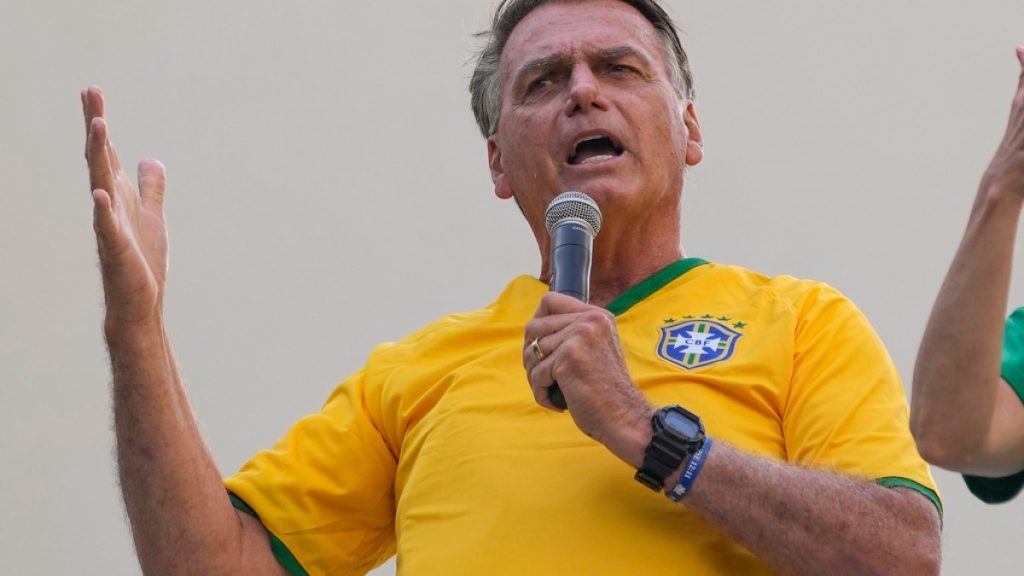
Police claim Brazil’s ex-President Jair Bolsonaro wrote letter seeking asylum in Argentina as coup investigation ramped up in 2024. Brazil’s federal police said that messages found on the mobile phone of former Brazilian President Jair Bolsonaro showed he once wanted to flee to Argentina and request political asylum from Argentinian President Javier Milei. The police said in a report released on Wednesday that the letter seeking asylum was saved on Bolsonaro’s mobile phone in February 2024, just days after the former president’s passport was seized amid an investigation of his involvement in an alleged coup plot. It was unclear whether the asylum request was sent, and the Argentinian president’s office did not immediately respond to a request for comment. The asylum request document revealed on Wednesday was part of the final police report that formally accused Bolsonaro and his United States-based son, Eduardo, of working to interfere in the ongoing legal process related to the ex-president’s forthcoming trial for allegedly plotting a coup. Bolsonaro’s trial is expected to start on September 2, in which he faces up to 40 years in prison if convicted of plotting to overthrow his democratically elected successor as president, Luiz Inacio Lula da Silva, in 2022. Police have now recommended that the ex-president and his son be charged with “coercion in the judicial process” and “abolition of the democratic law” related to interference in the coup case. The combined sentence for the two offences could reach up to 12 years in prison. Brazilian news outlet O Dia said on Wednesday that recordings were also found on a device seized during the police investigation of Bolsonaro, which indicated “attempts to intimidate authorities and impede the progress of the investigations related to the inquiry into the attack on democracy, including attempts to use external influence”. Advertisement Bolsonaro – who has been under house arrest since early August – has maintained his innocence in the coup trial, which US President Donald Trump, an ally, has called a “witch-hunt”. Bolsonaro’s son, Eduardo, stepped down from his position as a Brazilian congressman in March and moved to the US, where he is campaigning for the Trump administration to intercede on his father’s behalf. Those lobbying efforts have been successful, with the Trump administration taking punitive action against Brazil over the case, including sanctions against court officials. Trump has also imposed a massive 50 percent tariff on many Brazilian exports to the US, citing Bolsonaro’s trial. Adblock test (Why?)
Iran says moment for ‘effective’ nuclear talks with US not yet reached
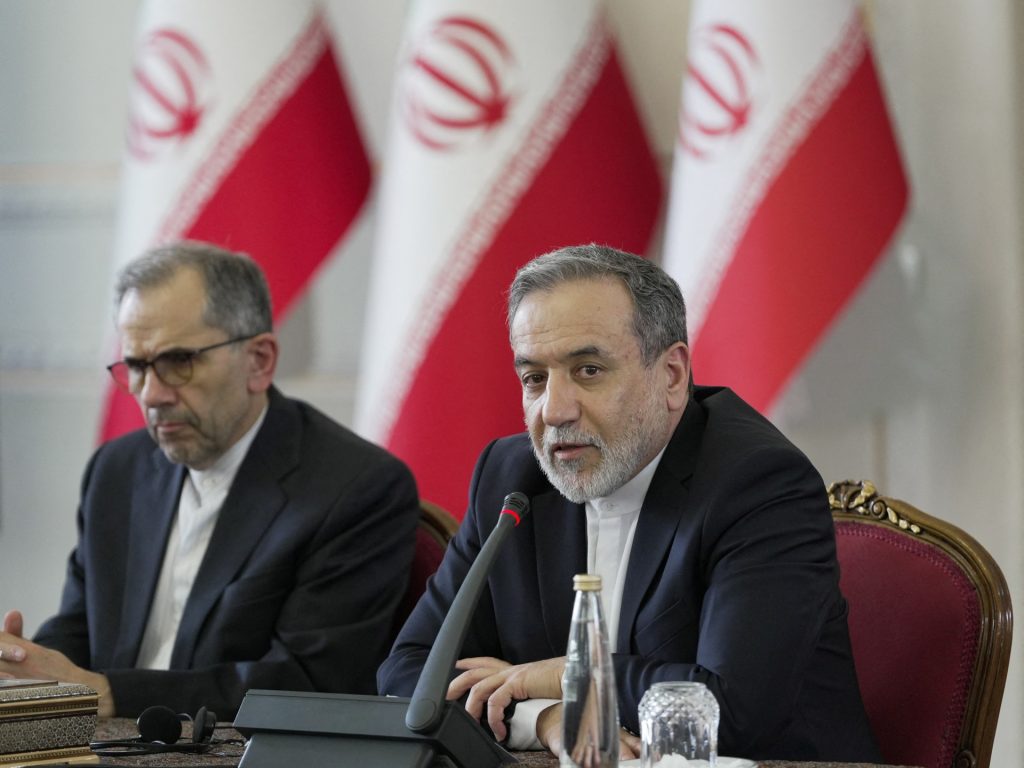
Iran’s FM sceptical about resuming talks with the US, says Iran cannot break ties with UN nuclear watchdog. Iran believes the moment for “effective” nuclear talks with the United States has not yet arrived, its top diplomat has said, adding that Tehran would not completely cut off cooperation with the United Nations nuclear watchdog. “In my opinion, we have not yet reached the point of maturity where effective negotiations with the US can take place,” Foreign Minister Abbas Araghchi said in remarks carried by state media on Wednesday. Tehran suspended negotiations with Washington, which were ostensibly aimed at curbing Iran’s nuclear ambitions, after the US and Israel struck the country with massive bombardments in June during a 12-day conflict. Since then, inspectors from the International Atomic Energy Agency (IAEA) have been unable to access Iran’s nuclear installations, despite its chief Rafael Grossi stating that inspections remain essential. US President Donald Trump and Israeli Prime Minister Benjamin Netanyahu have warned they will not hesitate to attack Iran again if it resumes enrichment of uranium, a possible pathway to developing nuclear weapons. Iran, which denies any intention to develop nuclear weapons and has long insisted its pursuits are for civilian uses, vowed a forceful response to the threats. Neither US intelligence nor the IAEA said they found any evidence earlier this year that Iran was developing atomic weapons. European powers including Britain, France and Germany have threatened to activate UN sanctions on Iran under a “snapback” mechanism if Iran does not return to the negotiation table. Advertisement Araghchi said a meeting with Europeans could take place in the coming days, though “a basis for negotiations” has not been reached. Last month, Iran’s parliament passed legislation suspending cooperation with the IAEA and stipulating that any future inspections will need a green light from Tehran’s Supreme National Security Council. The legislation came after Tehran accused the IAEA of effectively paving the way for the Israel-US attacks with a report on May 31 that led the agency’s Board of Governors to declare Iran in breach of its non-proliferation obligations. Iran’s President Masoud Pezeshkian warned the IAEA in July to abandon its “double standards” if it hopes to restore cooperation over the country’s nuclear programme, amid an acute mistrust following Israel and the US’s attacks on Iranian nuclear sites, and the UN nuclear watchdog’s refusal to condemn the strikes. Araghchi said in his remarks on Wednesday that Tehran was not cutting off all cooperation with the IAEA. “The return of inspectors will be possible based on the parliament’s law, that is, with the approval of the Supreme National Security Council … So, it is not that we say we absolutely cut cooperation with the agency.” Araghchi spoke two days after a Foreign Ministry spokesperson said Iran would continue talks with the IAEA and they would probably have another round of negotiations in the coming days. Adblock test (Why?)
China FM in Afghanistan, offers to deepen cooperation with Taliban rulers
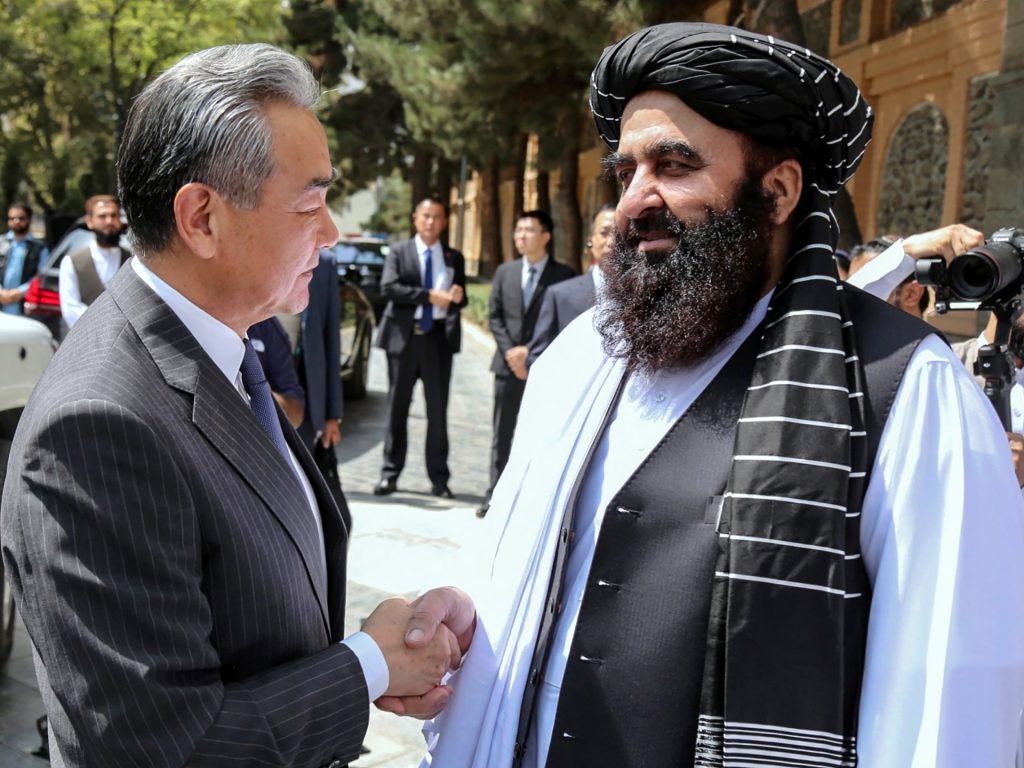
Mining, Belt and Road participation feature in trilateral meetings between China, Afghanistan and Pakistan in Kabul. China wants to explore mining in Afghanistan and have Kabul formally join its Belt and Road Initiative, a massive infrastructure plan, which is a central pillar of President Xi Jinping’s bid to expand his country’s global influence, the Afghan Taliban Ministry of Foreign Affairs has said. Chinese Foreign Minister Wang Yi is visiting Kabul and held talks with Afghanistan’s Foreign Minister Mawlawi Amir Khan Muttaqi, the ministry said in a statement on Wednesday, adding that both countries wanted to deepen ties in a number of areas. Beijing will continue to support the Afghan government to achieve long-term peace and stability, Wang told Muttaqi, according to a readout of the meeting released by China’s Ministry of Foreign Affairs. China is willing to deepen political mutual trust with Afghanistan and step up cooperation in areas including trade and agriculture, Wang said. He called on Afghanistan to combat armed groups, adding that tighter security ties would provide a guarantee to bilateral economic cooperation. “Mr Wang Yi also mentioned that China intends to initiate practical mining activities this year,” the Afghan statement said. Wang also met Afghan Prime Minister Mullah Muhammad Hassan Akhund, according to Hamdullah Fitrat, deputy spokesperson of the administration. “China has cooperated not only with Afghanistan but also with other countries around the world in their development, and it has played a constructive role,” Akhund told Wang, urging Beijing to continue its “efforts and cooperation on the international stage in support of Afghanistan’s legitimate position”. Advertisement Wang told the prime minister that China was a “sincere and steadfast” in its friendship with Afghanistan. “We fully support the Afghan people in their progress,” he said, according to Fitrat. Wang is in Kabul for trilateral meetings between China, Afghanistan and Pakistan. Neither Beijing nor Islamabad formally recognise the interim administration, but both nations have posted their ambassadors in Kabul and have received Afghan envoys in their capitals. China was the first country to appoint an ambassador to Afghanistan under the Taliban and has sought to develop its ties with the hardline group that took control of the war-torn country in 2021. The impoverished country, rich in lithium, copper and iron deposits, could offer a wealth of mineral resources to boost Beijing’s supply chain security, analysts say. Adblock test (Why?)
Confrontation between Tunisia’s General Union, President Saied escalates
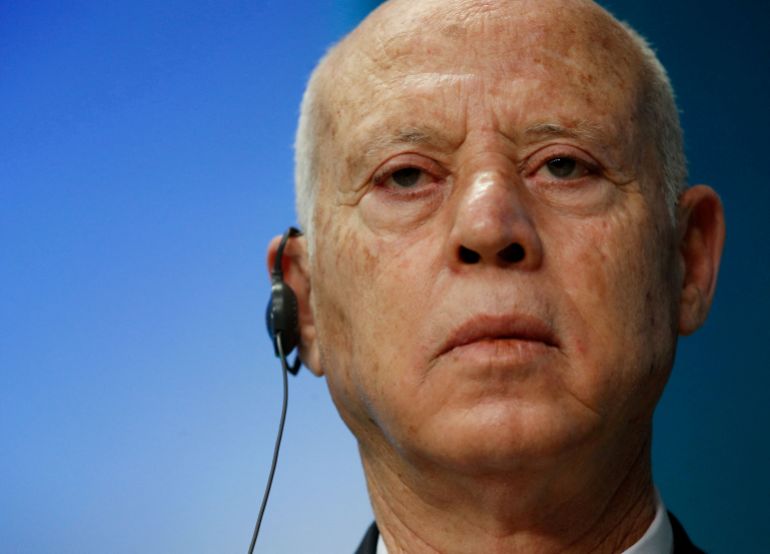
Tunisia’s General Labour Union (UGTT) is poised to take on President Kais Saied in a protest scheduled for August 21. The union called for a protest against what it says are government attempts to undermine workers’ rights, and the use of intimidation to curb strikes, referring to a three-day UGTT transport strike at the end of July. Since he seized power on July 25, 2021, Saied has radically undermined the role of parliament and political parties while granting himself vastly increased powers through a constitution revised according to his edicts. Yet the UGTT’s ability to mobilise its hundreds of thousands of members stands as one of the few remaining counters to Saied, analysts say. “The UGTT has always been more than just a trade union,” Hamza Meddeb of the Carnegie Institute, who has written extensively on the organisation, told Al Jazeera. “It was established even before Tunisian independence, and played a significant role in achieving that,” he said of Tunisia’s liberation from France in 1956. “Since then, it’s played both an economic role … as well as a political role, such as in 2015, when it was the principal force behind establishing the National Dialogue,” Meddeb continued, referring to a political crisis when the UGTT and three other civil society organisations helped prevent the collapse of Tunisia’s post-revolutionary democracy. Tunisia’s President Kais Saied [File: Johanna Geron/Pool via Reuters] Inevitable confrontation Matters reached a head between UGTT and Saied on August 7 when hundreds of Saied’s supporters rallied outside UGTT headquarters, accusing it of “corruption” and “squandering people’s money” after a three-day transport strike in late July paralysed much of the country. Advertisement The following night, Saied defended the anti-union protesters, repeating their calls for union “accountability” and stressing that, contrary to claims from both the UGTT and rights groups, his supporters had not intended violence. “There are files that must be opened because the people are demanding accountability … so that their money can be returned to them,” Saied said in a video posted on the presidency’s official Facebook page. Further confrontations between the president and the union were inevitable, but many analysts point to what they say is a union weakened by internal schisms and the threat to its decades-long monopoly on union power in Tunisia. “For the past two years, the UGTT has been silent, certainly on the political side of things,” a political analyst who remained in Tunisia told Al Jazeera, on condition of anonymity. “Saied even revised the labour code without consulting them,” they said of the May decision to change laws that affected many of UGTT’s members. “Previously, making a decision on that scale without the UGTT would have been inconceivable,” he said. UGTT supporters take to the streets in 2023. Analysts say the union’s ability to draw similar numbers to the streets has declined in the years since [Jihed Abidellaoui/Reuters] A weakened union Much of the UGTT’s relatively low profile lies in an internal rupture, prompted by its decision in 2021 to extend its board’s mandate from two to three terms, which is said to have splintered the union’s membership and undermined it. “There are many in the UGTT who see the 2021 decision as a coup d’etat of the union’s own, which has really weakened the board’s decision to do anything,” Meddeb said. “You also can’t avoid the fact that the financial situation across the country is getting much, much worse, which means that the core membership of the union – the state-dependent middle class – are also suffering, and are blaming a board they already have little faith in for that, too. “So, when Saied calls it a ‘corrupt union’ … that makes sense to much of its membership,” Meddeb said. “It’s also easy, [given its long history and close relationships with all of Tunisia’s past governments] for Saied to paint it as part of the country’s elite that has been holding its people back,” he concluded. A rival union emerges Moves to undermine the UGTT’s base are already under way. On Monday, the government announced it would halt the longstanding practice of allowing union officials to receive their government salaries while on union business, with more such moves expected. UGTT secretary-general, Noureddine Taboubi, called for a protest in response to what the union says are government attacks upon it [File: Fethi Belaid/AFP] Saied is also said to be encouraging the rival Union of Tunisian Workers (UTT), which analysts such as author Hatem Nafti say could try to take advantage of any weakening of the bond between the UGTT and its membership, to boost its standing. Advertisement How successful that would be in light of the UTT leadership’s previous convictions on corruption charges, remained to be seen, he added. That the UTT is ready to step into any breach left by the UGTT was clear last week, when it issued a statement accusing its rivals of what it said was the “defamation” of the president. Nafti said that the government might also seek to halt the practice of deducting UGTT membership fees from state employees’ salaries at source before transferring the funds to the union, which would give UTT more hope of winning members away from UGTT. “That Kais Saied would move against the UGTT was written from day one,” Nafti told Al Jazeera from Paris, where he now lives. “Populism doesn’t allow any mediator between the leader and the people, so firstly, he got rid of rival political parties, then civil society and the media. “Even the television networks that support him don’t show political programmes any more,” he said. “The UGTT was the logical next step.” Adblock test (Why?)