

Trump says Smithsonian museums only cover ‘how bad Slavery was’ in US
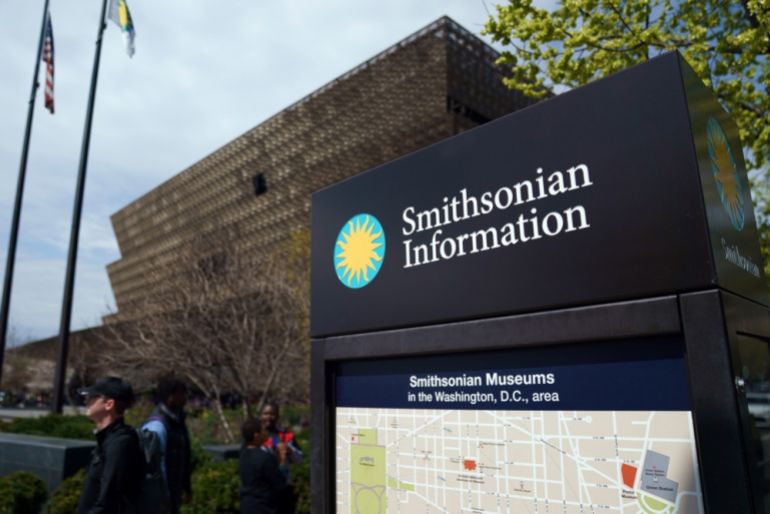
The US President says a review of the national museums will be similar to those he has ordered for universities. United States President Donald Trump has said the nation’s Smithsonian museums only discuss “horrible” topics, including “how bad Slavery was”, as his administration continues a review into the institution’s exhibits for their “Americanism”. In a post on his Truth Social platform on Tuesday, Trump said the Smithsonian is “OUT OF CONTROL, where everything discussed is how horrible our Country is”, including “how unaccomplished the downtrodden have been”. Elaborating on a review of several of the Smithsonian’s 21 museums and galleries ordered by the White House last week, Trump said he has instructed his lawyers “to go through the Museums” and “start the exact same process that has been done with Colleges and Universities where tremendous progress has been made”. “This Country cannot be WOKE, because WOKE IS BROKE,” Trump added. The Organisation of American Historians (OAH) has expressed “deep concern and dismay” at the White House’s “unprecedented” request to review the Smithsonian’s exhibits, adding that “no president has the legitimate authority to impose such a review”. The Smithsonian receives most of its budget from Congress but is independent of the government in decision-making. The OAH also said that “it is particularly distressing to see this effort of historical censorship and sanitising tied to the 250th anniversary of the nation’s founding”. The Trump administration said it ordered the review of museums in advance of next year’s milestone, which will mark 250 years since the signing of the Declaration of Independence on July 4, 1776. Advertisement It was not until decades later, on December 18, 1865, that the 13th Amendment to the US Constitution officially abolished chattel slavery nationwide, although exceptions continued. The National Museum of African American History and Culture in Washington, DC, opened in 2016 [File:Will Oliver/EPA] The National Museum of African American History and Culture, which was opened in 2016 with a ceremony led by then-President Barack Obama, is one of the museums the White House has included in its review. According to the museum’s website, visitors learn about the “richness and diversity of the African American experience” with exhibits ranging from a plantation cabin from South Carolina to Chuck Berry’s red Cadillac convertible. The freedom of expression organisation PEN America has also expressed alarm at the Trump administration’s “sweeping review” of Smithsonian exhibits. “The administration’s efforts to rewrite history are a betrayal of our democratic traditions and a deeply concerning effort to strip truth from the institutions that tell our national story,” Hadar Harris, the managing director of PEN America’s Washington, DC, office, said in a statement. Trump has made threats to cut federal funding for top US educational institutions, citing pro-Palestinian protests against US ally Israel’s war on Gaza, transgender policies, climate initiatives and diversity, equity and inclusion programmes. Last month, the government settled probes into Columbia University, which agreed to pay $221m, and Brown University, which said it would pay $50m to the government. Both institutions also accepted certain government demands, including how some topics are taught. Harvard University has sued the Trump administration to halt the freezing of $2.3bn of its federal funding. Adblock test (Why?)
Australia hits back at Netanyahu amid escalating diplomatic row over Gaza
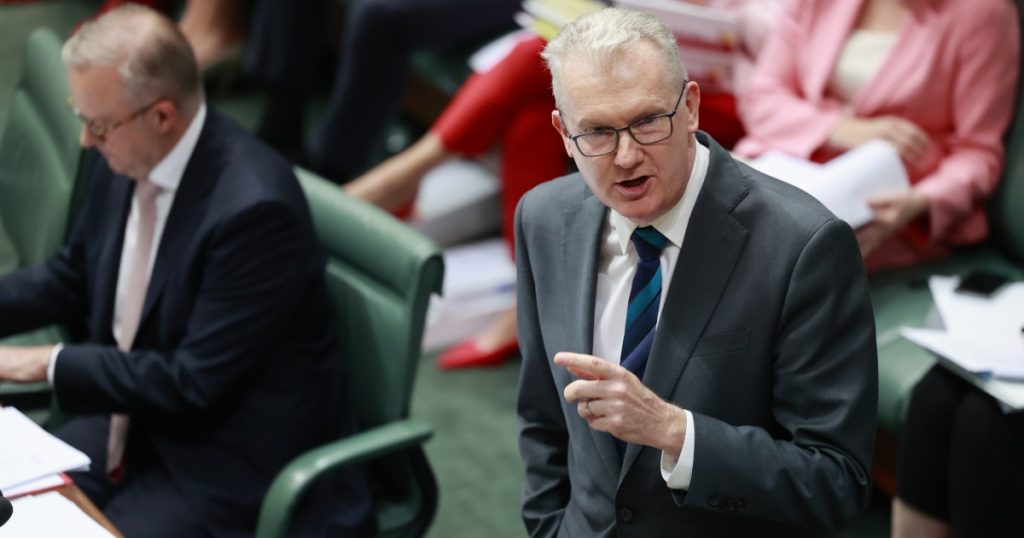
Australia’s Home Affairs minister says ‘strength is not measured by how many people you can blow up’. Australia has hit back at Israel’s Benjamin Netanyahu after he branded the country’s prime minister “weak”, with an Australian minister accusing the Israeli leader of conflating strength with killing people. In an interview with Australia’s national broadcaster on Wednesday, Minister for Home Affairs Tony Burke said that strength was not measured “by how many people you can blow up or how many children you can leave hungry”. Burke’s comments come after Netanyahu on Tuesday launched a blistering attack on Australian Prime Minister Anthony Albanese on social media, claiming he would be remembered by history as a “weak politician who betrayed Israel and abandoned Australia’s Jews”. Speaking on the ABC’s Radio National Breakfast programme, Burke characterised Netanyahu’s broadside as part of Israel’s “lashing out” at countries that have moved to recognise a Palestinian state. “Strength is much better measured by exactly what Prime Minister Anthony Albanese has done, which is when there’s a decision that we know Israel won’t like, he goes straight to Benjamin Netanyahu,” Burke said. “He has the conversation, he says exactly what we’re intending to do, and has the chance for the objections to be made person to person. And then having heard them, makes public announcement and then does what needs to be done.” Relations between Australia and Israel, traditionally close allies, have progressively soured in recent months amid tensions over the war in Gaza, but ties have become especially acrimonious since Canberra’s announcement last week that it would recognise a Palestinian state. Advertisement On Monday, Australia announced that it had cancelled a visa for Simcha Rothman, a lawmaker with Israel’s far-right Mafdal-Religious Zionism party and a member of Netanyahu’s governing coalition, amid concerns that a planned speaking tour in the country aimed to “spread division”. Hours after that decision, Israeli Minister of Foreign Affairs Gideon Saar said he had revoked the visas of Australian diplomats to the Palestinian Authority. Israel has come under growing international pressure, including from many of its traditional allies, over the level of human suffering being inflicted by its war in Gaza. More than 62,000 Palestinians have been killed by Israel since it launched its military offensive following Hamas’s October 7, 2023 attacks on Israeli communities, according to Gaza’s Ministry of Health. Adblock test (Why?)
Mali’s Choguel Maiga charged with embezzlement, remanded in custody
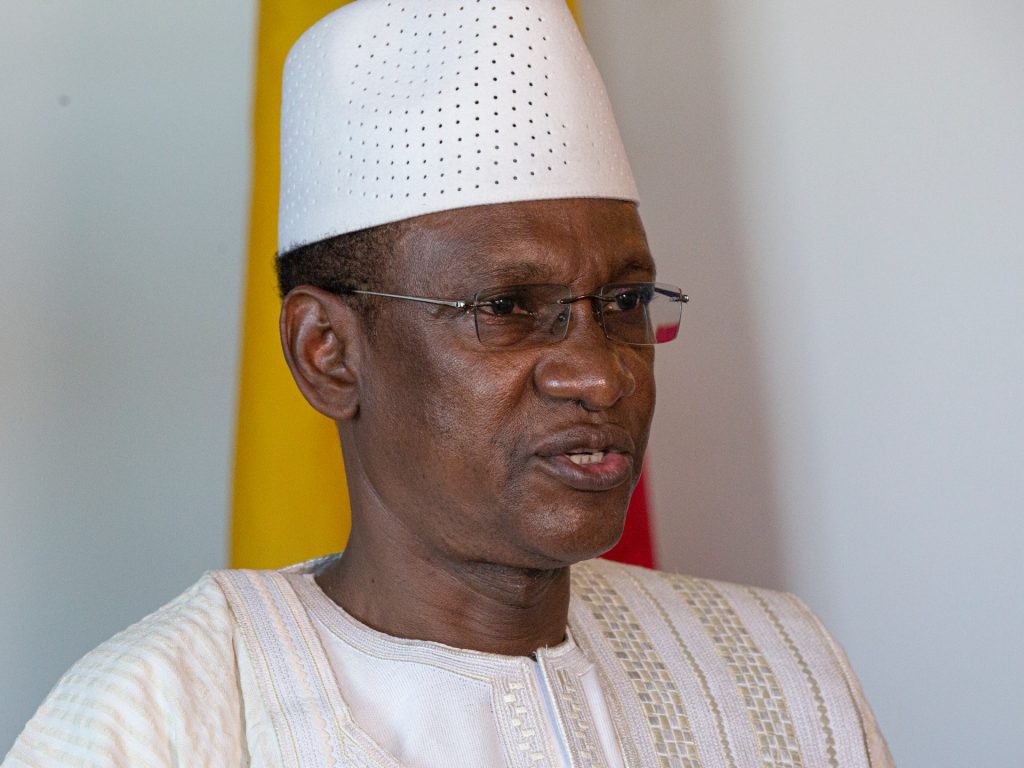
Mali’s former prime minister, Choguel Maiga, has been charged with embezzlement and remanded in custody as the West African country’s military leaders intensify a crackdown over allegations of a coup plot. The charges against Maiga were revealed on Tuesday following a hearing before Mali’s Supreme Court. Maiga, who took office after a second coup in Mali in 2021, was sacked in November 2024 after he publicly denounced the military for a lack of clarity over when it would hand over power to a civilian government. Maiga’s lawyer, Cheick Oumar Konare, told the AFP news agency that no date has yet been set for the former leader’s trial. “We believe in justice, we are calm while awaiting the trial,” Konare said, explaining that Maiga would remain in prison for the trial. A statement from the public prosecutor said the charges against Maiga involve “money laundering equal to many billions of CFA francs”, or several million US dollars. The former prime minister was arrested one week ago, according to the AFP, days after Mali’s military leaders carried out dozens of arrests to quash an alleged plot within the army’s ranks to topple the government in turn. Nine of Maiga’s colleagues from his time as prime minister also appeared before the court on Tuesday, with two being charged, some acquitted and others still awaiting their hearing, the AFP reported, citing a judicial source. Earlier this month, another former prime minister, Moussa Mara, was imprisoned after tweeting his support for jailed critics of the military. Advertisement Mali has been gripped by a security crisis since 2012, driven by violence from armed groups affiliated with al-Qaeda and the ISIL (ISIS) group, as well as local criminal gangs. The fighting has resulted in thousands of deaths, while up to 350,000 people are currently displaced, according to Human Rights Watch. The crisis set off mass protests in 2020, paving the way for the military to topple the country’s elected government in a coup. The military briefly ceded power to a transitional government but took over in a second coup in 2021. The colonel who led the two power grabs, Assimi Goita, was also sworn in as transitional president that year. Under his government, the military has reneged on pledges to hand back power to civilians by the end of March 2024, and has tightened its grip on power by dissolving all political parties, and jailing dissidents and leading civil society figures. In July, the military-appointed legislative body also passed legislation that granted Goita a five-year presidential mandate, renewable “as many times as necessary” and without elections. Maiga was one of the leaders of the protests that helped topple Mali’s civilian government in 2020, and previously said he believed the military would safeguard the country’s democracy. “We must refound the Malian state, so that no political power can ever again create the conditions for a return to an unconstitutional order!” he told Al Jazeera in an interview in 2023. Since his dismissal, however, Maiga has become one of the military’s fiercest critics, accusing it of weaponising the courts to silence dissent. Experts, meanwhile, have described Maiga’s arrest and imprisonment on Tuesday as a sign of the military government’s fragility. “If the most prominent opposition leaders are arrested and imprisoned, including Choguel, who once gave the junta credibility, then I believe today the junta credibility is greatly weakened,” said Alioune Tine, the former United Nations rapporteur on Mali to the Security Council. “Just 50km [31 miles] from Bamako, you’re still in danger. Al-Qaeda’s affiliate JNIM controls most of the territory. The only way forward now is for President Goita to change course: free political prisoners, release activists and journalists, and open a national dialogue that leads to real democratic elections,” he said. Mali’s military leaders have replaced Maiga with General Abdoulaye Maiga, who had previously served as government spokesman in the West African country. The military’s power grab in Mali helped set off a wave of coups in the Sahel region, south of the Sahara desert, including in the neighbouring Burkina Faso and Niger, which are fighting the same groups linked to al-Qaeda and ISIL. Advertisement The three countries have withdrawn from the Economic Community of West African States amid pressure from the bloc to return to civilian government. They have now banded together to form the Alliance of Sahel States (AES) and created a 5,000-strong force for joint military operations to try to drive out armed groups. Adblock test (Why?)
ISIL-backed rebels killed at least 52 people in eastern DR Congo, UN says
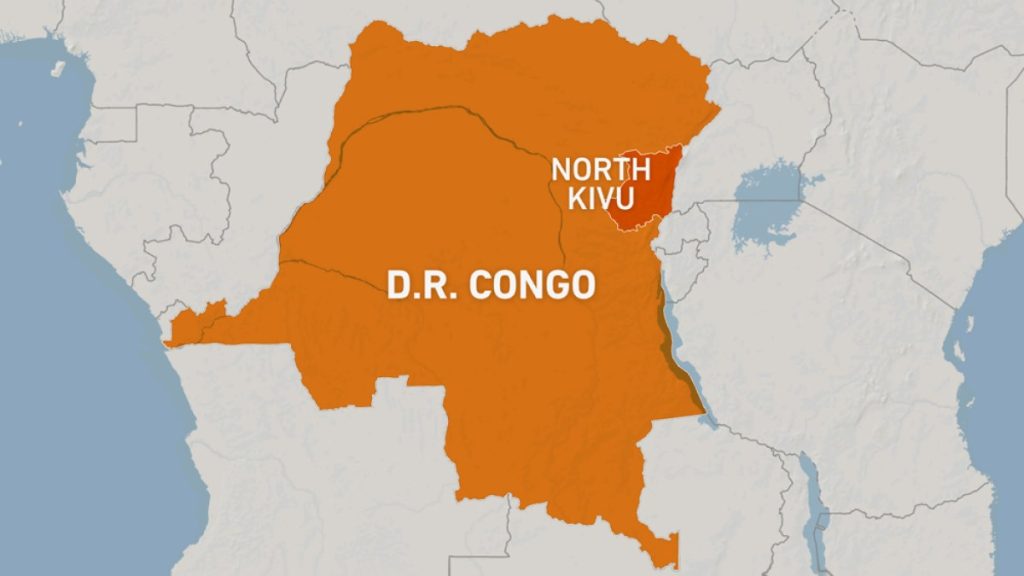
MONUSCO condemns the attacks by the ADF ‘in the strongest possible terms’, the mission’s spokesperson says. Rebels backed by ISIL (ISIS) have killed at least 52 civilians in the Democratic Republic of the Congo this month, according to the United Nations peacekeeping mission (MONUSCO) in the country, as both the DRC army and Rwandan-backed M23 rebel group accuse each other of violating a recently reached US-mediated ceasefire deal. Attacks by the Allied Democratic Forces (ADF) targeted the Beni and Lubero territories of the eastern North Kivu province between August 9 and 16, MONUSCO said on Monday, warning that the death toll could rise further. The renewed violence comes as a separate conflict between the DRC army and the M23 group continues to simmer in the east of the country, despite a series of peace treaties signed in recent months. The government and M23 had agreed to sign a permanent peace deal by August 18, but no agreement was announced on Monday. The latest ADF “violence was accompanied by kidnappings, looting, the burning of houses, vehicles, and motorcycles, as well as the destruction of property belonging to populations already facing a precarious humanitarian situation,” MONUSCO said. It condemned the attacks “in the strongest possible terms”, the mission’s spokesperson said. The ADF is among several militias wrangling over land and resources in the DRC’s mineral-rich east. Lieutenant Elongo Kyondwa Marc, a regional Congolese army spokesperson, said the ADF was taking revenge on civilians after suffering defeats by Congolese forces. “When they arrived, they first woke the residents, gathered them in one place, tied them up with ropes, and then began to massacre them with machetes and hoes,” Macaire Sivikunula, chief of Lubero’s Bapere sector, told the Reuters news agency over the weekend. Advertisement After a relative lull in recent months, authorities said the group killed nearly 40 people in Komanda city, Ituri province, last month, when it stormed a Catholic church during a vigil and fired on worshippers, including many women and children. The ADF, an armed group formed by former Ugandan rebels in the 1990s after discontent with Ugandan President Yoweri Museveni, has killed thousands of civilians and increased looting and killings in the northeastern DRC. In 2002, following military assaults by Ugandan forces, the group moved its activities to neighbouring DRC. In 2019, it pledged allegiance to ISIL. Among the 52 victims so far this month, at least nine were killed overnight from Saturday to Sunday in an attack on the town of Oicha, in North Kivu, the AFP news agency learned from security and local sources. A few days earlier, the ADF had already killed at least 40 people in several towns in the Bapere sector, also in North Kivu province, according to local and security sources. In response to the renewed attacks, MONUSCO said it had strengthened its military presence in several sectors and allowed several hundred civilians to take refuge in its base. At the end of 2021, Kampala and Kinshasa launched a joint military operation against the ADF, dubbed “Shujaa”, so far without succeeding in putting an end to their attacks. Adblock test (Why?)
Hamas agrees terms for Gaza ceasefire, source tells Al Jazeera
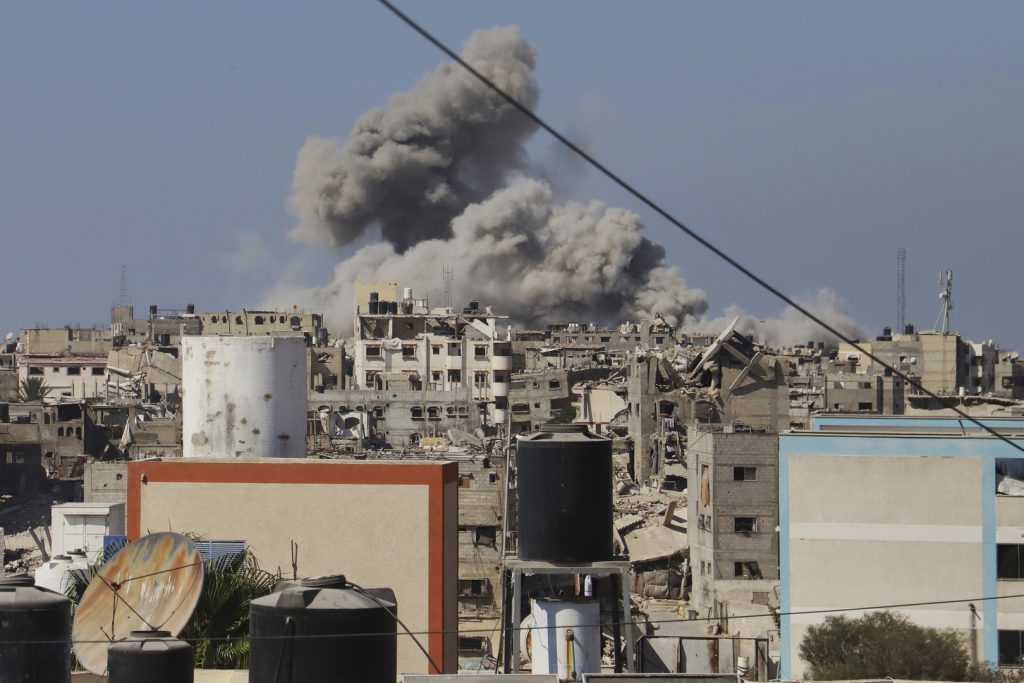
NewsFeed A Hamas source told Al Jazeera the group has agreed terms for a ceasefire in Gaza, as a step towards ending the war. The plan calls for a 60-day pause in fighting and the release of half of Israeli captives in exchange for Palestinian prisoners. Al Jazeera’s Hamda Salhut reports. Published On 18 Aug 202518 Aug 2025 Adblock test (Why?)
Trump proposes Putin-Zelenskyy summit in push to end Ukraine war
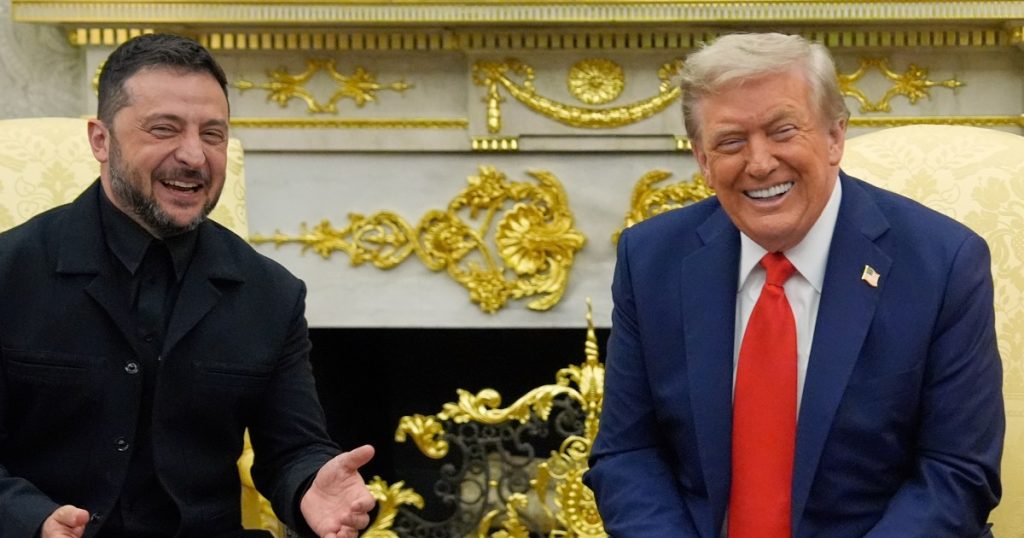
United States President Donald Trump has announced plans to convene a face-to-face summit between Russian leader Vladimir Putin and Ukrainian President Volodymyr Zelenskyy in his latest bid to end Moscow’s war in Ukraine. Trump’s proposal on Monday came as he hosted Zelenskyy and top European leaders, including French President Emmanuel Macron and UK Prime Minister Keir Starmer, at the White House for high-stakes talks on ending the conflict, which has raged since Russia’s full-scale invasion of Ukraine in February 2022. Trump said he had “begun arrangements” for the summit after speaking with Putin by phone, and that he would hold a trilateral meeting with his Russian and Ukrainian counterparts following their two-way meeting. “Again, this was a very good, early step for a War that has been going on for almost four years,” Trump said on his Truth Social platform. “Vice President JD Vance, Secretary of State Marco Rubio, and Special Envoy Steve Witkoff, are coordinating with Russia and Ukraine.” German Chancellor Friedrich Merz and NATO Secretary-General Mark Rutte separately confirmed that Putin had agreed to the bilateral meeting, but did not specify a date or location. Zelenskyy, who described his meeting with Trump as a “very good conversation,” told reporters that he was “ready” to meet the Russian leader one-on-one. Moscow did not immediately confirm that it had agreed to a summit, but Russia’s state-run TASS news agency cited presidential aide Yuri Ushakov as saying that Putin and Trump “spoke in favour of continuing direct talks” between the Russian and Ukrainian delegations. Advertisement The proposals for a summit, which would be the first meeting between Putin and Zelenskyy since Moscow’s invasion, came as the fraught issue of security guarantees for Ukraine took centre stage during the talks at the White House. The specifics of what those guarantees would look like remained unclear on Monday. Asked if the US could send peacekeepers to Ukraine, Trump said that European countries would be the “first line of defence”, but that Washington would provide “a lot of help”. “We’re going to help them out also, we’re going to be involved,” Trump said. Trump said on Truth Social later that discussions had focused on which security guarantees would be provided by European countries with “coordination” by the US. Zelenskyy said that the guarantees would be “unpacked” by Kyiv’s partners and formalised within the next week to 10 days. While Trump has ruled out NATO membership for Ukraine, his special envoy, Witkoff, said on Sunday that Putin was open to a security guarantee resembling the 32-member alliance’s collective defence mandate. Under Article 5 of the North Atlantic Treaty, an armed attack against any one NATO member nation is considered an attack on all members of the alliance. Speaking on Fox News after Monday’s talks, Rutte called Washington’s commitment to be involved in guaranteeing Ukraine’s security a “breakthrough”, but said the exact nature of that involvement would be discussed over the coming days. Rutte said the discussions had not touched on the possibility of deploying US or European troops. “What we all agree on is that if this war does come to end… it has to be definitive,” Rutte said. Konstantin Sonin, a Russian exile and Putin critic who is a professor at the University of Chicago Harris School of Public Policy, said that meaningful security guarantees for Kyiv would need to include European troops on the ground. “This is all ‘unacceptable’ to Putin, so for European leaders, it is the question how to persuade President Trump that without such guarantees, the war, even if it stops now, will start again in the near future,” Sonin told Al Jazeera. Sonin said that Ukraine had been failed by “written” guarantees for decades, including during Moscow’s 2014 invasion and occupation of Crimea. “Russia has signed many international treaties recognising Ukraine’s sovereignty and borders – including Putin himself signing one such treaty in 2004 – and still violated all of these treaties, both in 2014 and 2022,” Sonin said. “This is all to say that the sticking point is not the language in some documents,” he added. The issue of what territory Kyiv might be asked to give up in a peace deal also remained unclear after the talks at the White House. Advertisement Ahead of the meeting, Trump warned that the return to Ukraine of Russian-occupied Crimea would be off the table in any negotiated settlement. Trump has indicated that a deal to end the war would involve “some swapping, changes in land” between Russia and Ukraine. Russia controls about one-fifth of Ukraine, according to open-source estimates. Ukraine, which took control of a large swath of Russia’s Kursk region during a surprise counter-offensive last year, is not believed to hold any Russian territory at present. Speaking on Fox News, US Secretary of State Marco Rubio said both Moscow and Kyiv would have to make concessions for a deal. “Obviously, land or where you draw those lines – where the war stops – is going to be part of that conversation,” Rubio said. “And it’s not easy, and maybe it’s not even fair, but it’s what it takes in order to bring about an end to a war. And that’s been true in every war.” Zelenskyy, who has repeatedly ruled out handing over Ukrainian territory to Moscow, said on Monday that land would be an issue for him and Putin to work out between them. “We will leave the issue of territories between me and Putin,” Zelenskyy told reporters. Adblock test (Why?)
Russia pounds Ukraine, kills more civilians before White House meeting
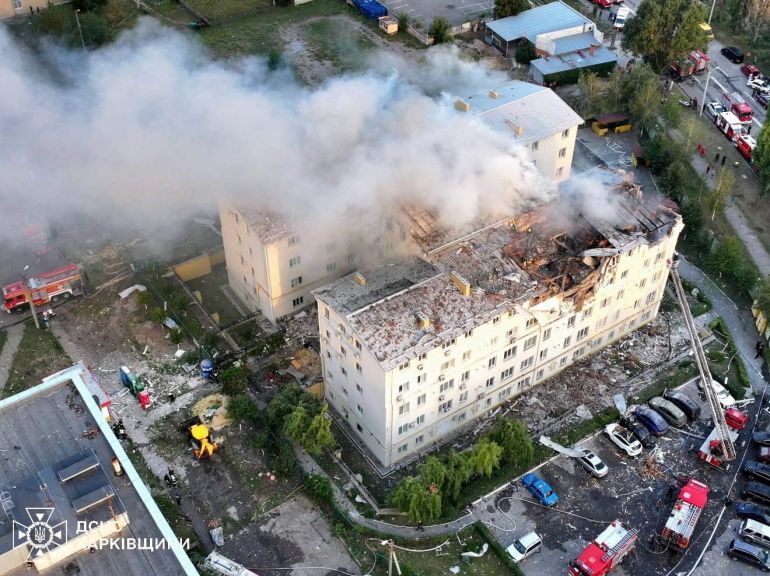
Russian attacks on major Ukrainian cities have killed at least 12 people as President Volodymyr Zelenskyy visits Washington, DC, supported by European leaders, for high-stakes peace talks with United States President Donald Trump that could determine Ukraine’s future and its fate in the war, now in its fourth year. An entire family, including a toddler and a 16-year-old, were among seven people killed in an overnight drone strike on a residential neighbourhood in the northeastern city of Kharkiv, authorities said on Monday. The attack also injured 20 people, including six children. Russian forces killed five people and injured four in attacks in eastern Ukraine’s Donetsk region, where some of the fiercest fighting on the ground rages on and where Russian President Vladimir Putin, feeling Moscow has the upper hand, seeks Ukraine’s withdrawal from the third of the region Kyiv still controls. In Zaporizhzhia, a city in the southeast, 17 people were injured in an attack, according to Governor Ivan Fedorov. Russian air raids also targeted the northeastern region of Sumy and the southern region of Odesa. Ukraine’s air force said Russian forces launched 140 drones and four missiles at Ukraine overnight, adding that 88 drones had been downed. Russia has been intensifying its fight in Ukraine. According to the United Nations monitoring mission on Ukraine, about 2,600 drone attacks were recorded in the past month, the highest rate since the beginning of the war, and more than 300 civilians were killed. The Russian drone strike on a residential neighbourhood in Kharkiv also injured 20 people, six of whom were children [Handout/State Emergency Service of Ukraine in Kharkiv via Reuters] Meanwhile, Ukraine’s military said on Monday that its drones had struck an oil-pumping station in the Tambov region, a strike 1,923km (1,195 miles) from Ukraine, leading to the suspension of supplies via the Druzhba pipeline. Advertisement “As a result of the strike, a fire broke out at the facility. Oil pumping through the Druzhba main oil pipeline was completely stopped,” the Ukrainian military’s General Staff said in a statement. In Russia’s border region of Belgorod, four people were injured in a Ukrainian drone attack while Russian officials reported shooting down hundreds of drones and munitions. Negotiating an end to the war Zelenskyy called the latest attacks on Ukraine “demonstrative and cynical”. “Putin will commit demonstrative killings to maintain pressure on Ukraine and Europe, as well as to humiliate diplomatic efforts,” he wrote on X. Al Jazeera’s Charles Stratford, reporting from Kyiv, said Zelenskyy saw the killing of civilians as a strategy aimed at giving Trump more bargaining chips with which to pressure Ukraine into accepting an unfavourable peace deal. “This shows how much pressure Zelenskyy is under as he goes into … potentially the most vital diplomatic effort to end this war,” Stratford said. Zelenskyy on Monday was expected to meet Trump for talks at the White House alongside a cadre of heavyweight European leaders, including European Commission President, Ursula von der Leyen. On the table for discussion are possible land concessions as well as NATO-like security guarantees that Ukraine requires for any peace deal with Russia. To date, Zelenskyy has refused to consider the possibility of ceding Ukrainian territory to bring about peace. It is also forbidden under the Ukrainian Constitution, The meeting comes on the heels of a summit between Trump and Russian President Vladimir Putin on Friday that ended with no clear breakthrough on the war in Ukraine. Military analyst Sean Bell said he had little hope that a peace deal would come out of the talks in Washington, DC, either. “The harsh reality is that unless Putin has achieved his objectives, he’s got no appetite for negotiations,” Bell told Al Jazeera. “If President Zelenskyy is doing all the giving, that’s in effect a surrender. Zelenskyy can’t do that,” he continued. At the same time, Bell said he did not expect Russia to accept a deal that entails NATO-like security guarantees for Ukraine. Bell said a “catalyst” was needed to bring the war to a close, the most effective of which he believed to be Trump’s stiff tariffs on buyers of Russian oil and gas, like India. The US president threatened to enact these secondary sanctions but has so far refrained from putting new pressure on Russia’s fossil fuel export revenues. “The fact that Trump has avoided doing that means the killing is going to continue,” Bell said. Advertisement Strength and safety in numbers appear to be factors in the group visit by European leaders with memories still fresh about the hostile reception Zelenskyy received in February from Trump and US Vice President JD Vance in a public White House dressing-down. They castigated the Ukrainian leader as being ungrateful and “disrespectful”. Adblock test (Why?)
UK warns Sally Rooney after novelist pledges to fund Palestine Action

The government of the United Kingdom has warned Irish novelist Sally Rooney against funding Palestine Action after she pledged support to the campaign group banned by the Labour-led government as a “terrorist” group last month. The prime minister’s office said on Monday that “support for a proscribed organisation is an offence under the Terrorism Act” and warned against backing such organisations. “There is a difference between showing support for a proscribed organisation, which is an offence under the Terrorism Act, and legitimate protest in support of a cause,” a spokesperson was quoted by PA Media. In an opinion piece in the Irish Times on Saturday, Rooney, the author of best-selling novels such as Normal People and Conversations with Friends, criticised the government’s move to ban the pro-Palestinian group. “Activists who disrupt the flow of weapons to a genocidal regime may violate petty criminal statutes, but they uphold a far greater law and a more profound human imperative: to protect a people and culture from annihilation,” she wrote in the article. Palestine Action was banned after its activists broke into a military base in central England in June and sprayed red paint on two planes in protest against the UK’s support for Israel’s war on Gaza, which has killed more than 62,000 Palestinians, more than half of them women and children. What’s Palestine Action? Since its founding in 2020, Palestine Action has disrupted the arms industry in the UK with “direct action”. It says it is “committed to ending global participation in Israel’s genocidal and apartheid regime”. Advertisement Israel has been accused of widespread abuses in its 22 months of war on Gaza. The International Court of Justice in January 2024 said Israeli actions in Gaza were plausibly genocide. Since then, multiple rights organisations have called Israel’s war a genocide. In November, the International Criminal Court issued arrest warrants against Israeli Prime Minister Benjamin Netanyahu and former Defence Minister Yoav Gallant for war crimes. Rooney said she chose the Dublin-based newspaper to publicise her intention rather than a UK one as doing so “would now be illegal” in Britain after the government banned Palestine Action. “The UK’s state broadcaster … regularly pays me residual fees. I want to be clear that I intend to use these proceeds of my work, as well as my public platform generally, to go on supporting Palestine Action and direct action against genocide in whatever way I can,” she wrote. Hundreds arrested More than 700 supporters of Palestine Action have been arrested in the UK, mostly at demonstrations, since the group was outlawed under the Terrorism Act 2000. “I feel obliged to state once more that like the hundreds of protesters arrested last weekend, I too support Palestine Action. If this makes me a ‘supporter of terror’ under UK law, so be it,” Rooney said. The spokesperson from the prime minister’s office said Palestine Action was proscribed “based on security advice following serious attacks the group has committed, following an assessment made by the Joint Terrorism Analysis Centre”. The government ban on Palestine Action came into force on July 5, days after it took responsibility for a break-in at an air force base in southern England that caused an estimated 7 million pounds ($9.3m) of damage to two aircraft. The group said its activists were responding to Britain’s indirect military support for Israel during the war in Gaza. Being a member of Palestine Action or supporting the group is now a criminal offence punishable by up to 14 years in prison. It places the campaign group on the same legal footing as ISIL (ISIS) and al-Qaeda. More than 500 people were arrested at a protest in London’s Parliament Square on August 9 for displaying placards backing the group. The number is thought to be the highest ever recorded number of detentions at a single protest in the capital. At least 60 of them are due to face prosecution, police said. Home Secretary Yvette Cooper has defended the proscription of the group, stating: “UK national security and public safety must always be our top priority.” Advertisement “The assessments are very clear – this is not a nonviolent organisation,” she said. In her article, Rooney accused the UK government of “willingly stripping its own citizens of basic rights and freedoms, including the right to express and read dissenting opinions, in order to protect its relationship with Israel”. Adblock test (Why?)
Iran’s president visits Armenia for talks on US-backed Azerbaijan corridor
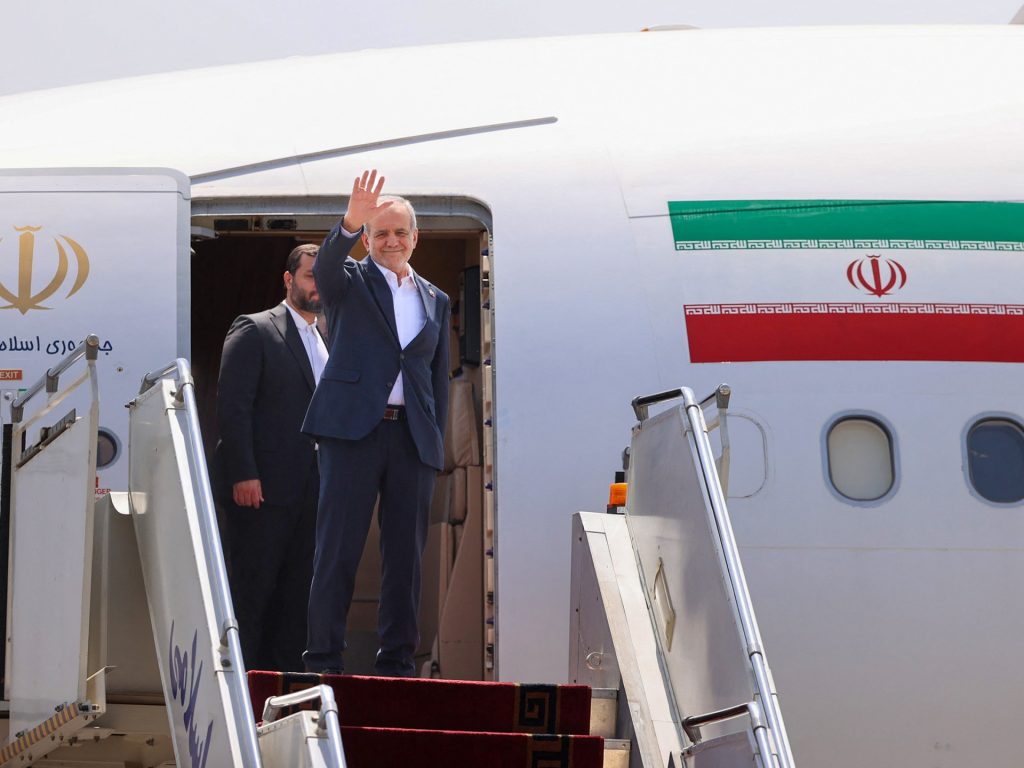
Iran rejects ‘Trump Route for International Peace and Prosperity’ (TRIPP), says the presence of American companies in the region would be ‘worrying’. Iranian President Masoud Pezeshkian is visiting Armenia for talks on a planned corridor linking Azerbaijan near the border with his country, days after Iran said it would block the project included in a United States-brokered peace accord that puts a potential Washington presence on Iran’s doorstep. The land corridor, dubbed the “Trump Route for International Peace and Prosperity” (TRIPP), is part of a deal signed earlier this month in Washington between former foes Armenia and Azerbaijan. US President Donald Trump said the deal granted the US exclusive developmental rights to the transport corridor. Washington was also signing bilateral agreements with both countries to increase cooperation in areas like energy, trade and technology, including artificial intelligence. Before departing for the Armenian capital Yerevan on Monday, Pezeshkian described the possible presence of American companies in the region as “worrying.” “We will discuss it [with Armenian officials] and express our concerns,” he told state television. The proposed route would connect Azerbaijan to its Nakhchivan exclave, passing near the Iranian border. Tehran has long opposed the planned transit route, also known as the Zangezur corridor, fearing it would cut the country off from Armenia and the rest of the Caucasus while bringing potentially hostile foreign forces close to its borders. Since the deal was signed on August 8, Iranian officials have stepped up warnings to Armenia, saying the project could be part of a US ploy “to pursue hegemonic goals in the Caucasus region”. Advertisement On Sunday, Iranian Foreign Minister Abbas Araghchi described it as a “sensitive” issue, saying Tehran’s main concern is that it could “lead to geopolitical changes in the region”. “They [Armenian officials] have assured us that no American forces … or American security companies will be present in Armenia under the pretext of this route,” he told the official IRNA news agency. The proposed corridor has been hailed as beneficial by other countries in the region including Russia, with which Iran has a strategic alliance alongside Armenia. Ali Akbar Velayati, a top adviser to Iran’s supreme leader, said Tehran would block the initiative “with or without Russia”. Trump “thinks the Caucasus is a piece of real estate he can lease for 99 years”, Velayati told state-affiliated Tasnim News soon after the deal was signed, adding that the area would become “a graveyard for Trump’s mercenaries”. Moscow cautiously welcomed the deal, saying that it supported efforts to promote stability and prosperity in the region. Similarly to Iran, however, it warned against outside intervention, arguing that lasting solutions should be developed by countries in the region. Armenia and Azerbaijan have fought a series of wars since the late 1980s when Nagorno-Karabakh, a region in Azerbaijan that had a mostly ethnic Armenian population at the time, broke away from Azerbaijan with support from Armenia. Azerbaijan Baku took control of the territory in a military operation in 2023, leading to an exodus of the ethnic Armenian population. Armenia last year agreed to return several villages to Azerbaijan in what Baku described as a “long-awaited historic event”. Adblock test (Why?)
Iraq starts mass grave excavation from ISIL (ISIS) carnage south of Mosul
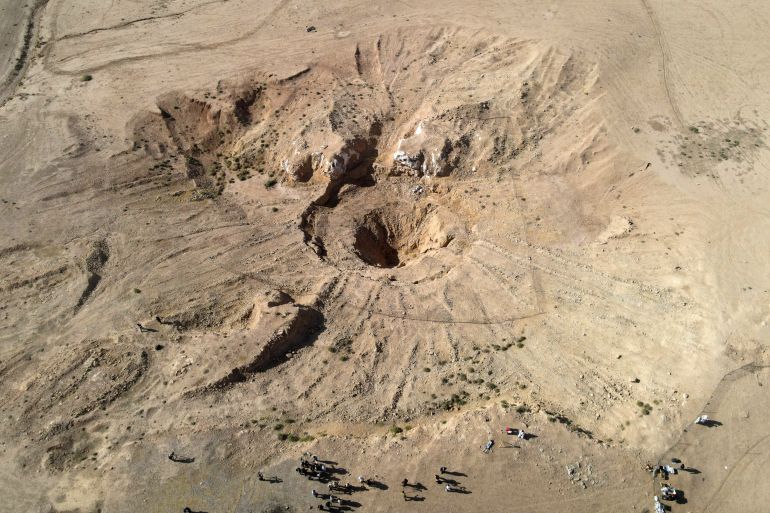
The al-Khasfa site, near Iraq’s second-largest city, could contain 4,000 remains and possibly thousands more. Iraqi officials have begun the excavation of what is believed to be a mass grave left behind by ISIL (ISIS) during its years of carnage exacted upon the civilian population after it seized large swaths of the nation from 2014 onwards, until being vanquished three years later. Local authorities were working alongside the judiciary, forensic investigators, the Iraqi Martyrs Foundation and the directorate of mass graves to carry out the excavation in al-Khafsa, south of the northern city of Mosul, the state-run Iraqi News Agency reported on Sunday. The site – a sinkhole about 150 metres (nearly 500 feet) deep and 110 metres (360 ft) wide – is believed to have been the grisly scene of some of the worst massacres committed by ISIL. Ahmad Qusay al-Asady, head of the Martyrs Foundation’s mass graves excavation department, told The Associated Press news agency that his team began work on August 9 at the request of the Nineveh province. The operation will initially be limited to gathering visible human remains and surface evidence, while preparing for a full exhumation that officials say will require international support, al-Asady said. The foundation will then build a database and start collecting DNA samples from families of suspected victims. Full exhumations can only proceed once specialised assistance is secured to navigate the site’s hazards, including sulfur water and unexploded ordnance. The water may have also eroded the human remains, complicating DNA identification. Because of the presence of these elements, al-Khafsa is “a very complicated site,” al-Asady added. Advertisement Based on unverified accounts from witnesses and families and other unofficial testimonies, authorities estimate the site could contain at least 4,000 remains, with the possibility of thousands more. The sinkhole at the al-Khasfa site could be the largest mass grave in modern Iraqi history [Zaid Al-Obeidi/AFP] Al-Khasfa is located near Mosul, Iraq’s second-largest city, where ISIL took control before being defeated in Iraq in late 2017. At its peak, ISIL ruled an area half the size of the United Kingdom, spanning across Iraq and Syria, with Raqqa in the latter being the capital of their self-declared “caliphate”. The group was notorious for its brutality. The group carried out massacres of thousands of the Yazidi people and enslaved thousands of Yazidi women. The Yazidis, a long-persecuted group whose faith is rooted in Zoroastrianism, are still recovering from the horrors of ISIL’s onslaught on their community in Iraq’s Sinjar district in 2014. Rabah Nouri Attiyah, a lawyer who has worked on more than 70 cases of missing people in Nineveh, told the AP that information points to al-Khasfa being “the largest mass grave in modern Iraqi history”. Al-Asady, however, said investigators have not yet been able to confirm its size. About 70 percent of the estimated human remains there are believed to belong to Iraqi army and police personnel, as well as other victims, including Yazidis. Interviews conducted with numerous witnesses from the area suggest ISIL fighters brought people there by bus to kill them. “Many of them were decapitated,” al-Asady said. In addition to ISIL-era mass graves, Iraqi authorities continue to unearth such sites dating to the rule of Saddam Hussein, who was toppled in a US-led invasion in 2003. Adblock test (Why?)