

Trump set to meet Ukraine’s Zelenskyy after ‘successful’ talks with Putin
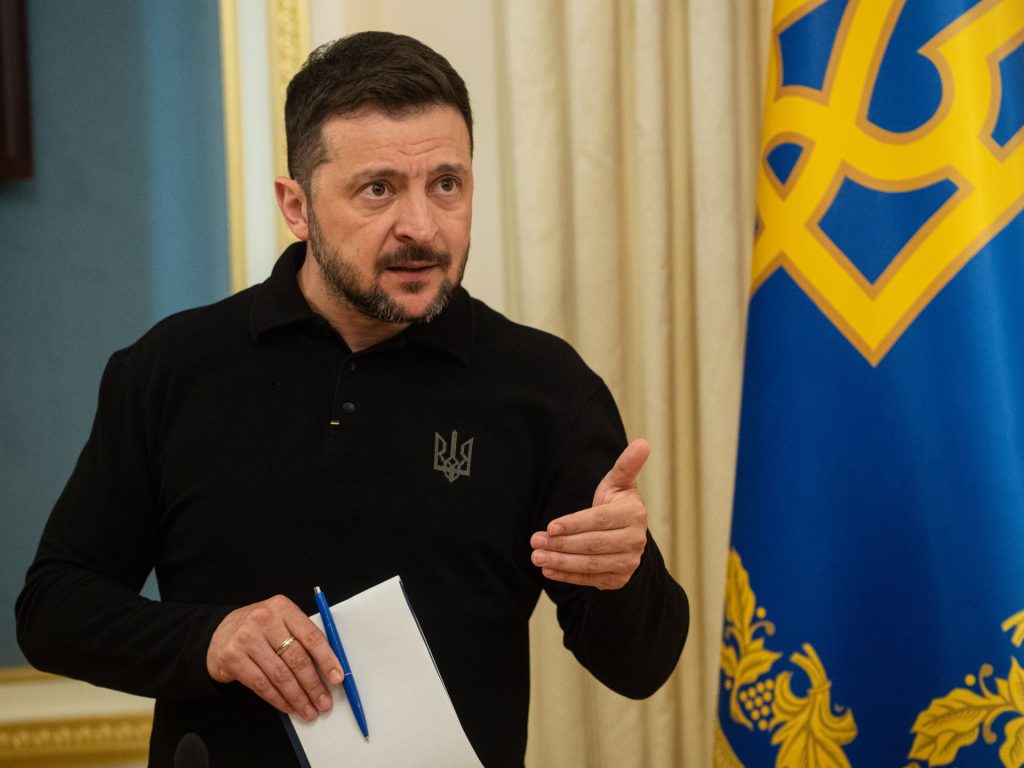
Ukrainian President Volodymyr Zelenskyy on Monday will meet US President Donald Trump in Washington to discuss an end to the more than three-year war in Ukraine, hours after Trump’s talks with Russian President Vladimir Putin in Alaska ended without a concrete deal. In a post on his Truth Social platform after holding phone conversations with European Union and NATO leaders, Trump said the talks with Putin “went very well”. “It was determined by all that the best way to end the horrific war between Russia and Ukraine is to go directly to a Peace Agreement, which would end the war, and not a mere Ceasefire Agreement, which often times do not hold up.” Trump’s pitch for the peace agreement, analysts say, came after no deal was announced in the Alaska talks. Prior to the meeting, Trump had threatened Moscow to agree to a ceasefire. Al Jazeera’s Osama Bin Javaid, reporting from Moscow, said there has been an atmosphere of success in Moscow. “Trump’s remarks on the need for a larger peace agreement fall in line with what Putin has been saying for the last few months,” he said. The Ukrainian leader and his European allies, who have been seeking a ceasefire, welcomed the Trump-Putin talks on Saturday but emphasised the need for a security guarantee for Kyiv. Zelenskyy, who was publicly berated by Trump and his officials during his last Oval Office meeting, said, “I am grateful for the invitation.” The Ukrainian leader said he had a “long and substantive conversation with Trump”. “In my conversation with President Trump, I said that sanctions should be tightened if there is no trilateral meeting or if Russia evades an honest end to the war,” the Ukrainian leader said. Advertisement He said that Ukraine needed a real, long-lasting peace and not “just another pause” between Russian invasions. “Security must be guaranteed reliably and in the long term, with the involvement of both Europe and the US,” he said on X following his call with the European leaders. Zelenskiy stressed that territorial issues can only be decided with Ukraine. Trilateral meeting In his first public comment after the Alaska talks, Zelenskyy said he supported Trump’s proposal for a trilateral meeting between Ukraine, the US, and Russia, adding that Kyiv is “ready for constructive cooperation”. “Ukraine reaffirms its readiness to work with maximum effort to achieve peace,” the Ukrainian president posted on X. But Putin’s foreign affairs adviser, Yuri Ushakov, said on Russian state television on Saturday that a potential trilateral meeting between Trump, Putin and Zelenskyy has not been raised during the US-Russia discussions. “The topic has not been touched upon yet,” Ushakov said, according to the Russian state news agency RIA Novosti. Trump rolled out the red carpet on Friday for Putin, who was in the US for the first time in a decade, but he gave little concrete detail afterwards of what was discussed. Trump said in Alaska that “there’s no deal until there’s a deal,” after Putin claimed the two leaders had hammered out an “understanding” on Ukraine and warned Europe not to “torpedo the nascent progress.” Al Jazeera’s Charles Stratford, reporting from Kyiv, said Trump has been heavily criticised by the US media over the meeting in Alaska. “They are concerned about what has been described as far more of a conciliatory tone by Trump towards Putin, without coming out of that meeting with even a ceasefire,” he said. Stratford said that the eyes are now on the meeting in Washington as Zelenskyy and Trump try to set up a trilateral meeting with Putin. “If all works out, we will then schedule a meeting with President Putin,” the US president said. During an interview with Fox News Channel after the talks, Trump insisted that the onus going forward might be on Zelenskyy “to get it done,” but said there would also be some involvement from European nations. Meanwhile, several European leaders on Saturday jointly pledged to continue support for Ukraine and maintain pressure on Russia until the war in Ukraine ends. Europe’s stance In a statement, EU leaders, including the French president and German chancellor, outlined key points in stopping the conflict. They said: “Ukraine must have ironclad security guarantees to effectively defend its sovereignty and territorial integrity”. Advertisement Russia cannot have a veto against Ukraine‘s pathway to the EU and NATO, the statement said. “It will be up to Ukraine to make decisions on its territory. International borders must not be changed by force.” Al Jazeera’s Hashem Ahelbarra, reporting from Brussels, said reaching a ceasefire in Ukraine is the priority of European leaders. “They believe that there needs to be an immediate ceasefire before reaching a comprehensive deal on the future of Ukraine,” he said. “Then they seek to provide security guarantees by deploying their own forces to make sure Russians will not violate the terms of that agreement,” our correspondent stressed, adding that European countries reject the notion of changing the borders by force. Adblock test (Why?)
A political shift ahead? What to know about Bolivia’s presidential election
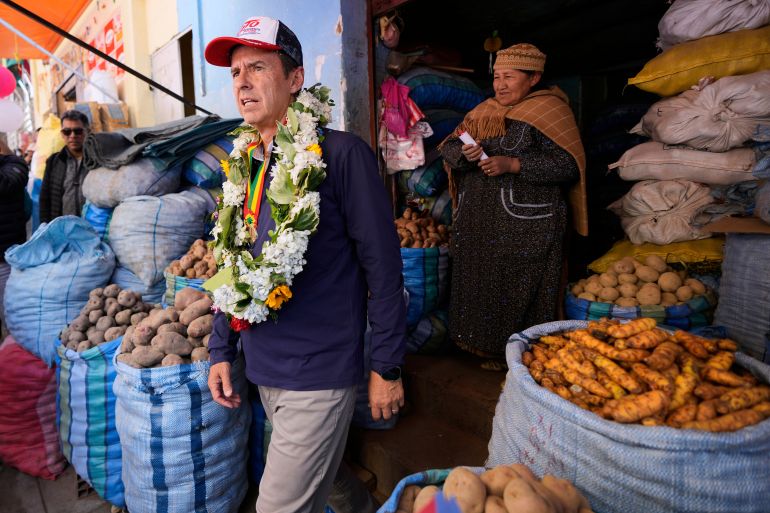
For the first time in nearly two decades, Bolivia is on the precipice of a rightward shift. Voters in the South American nation will go to the polls on August 17 to choose the next president, as well as members of Congress. But schisms within Bolivia’s long-dominant left have opened the door to a possible right-wing victory, with candidates like businessman Samuel Doria Medina and former President Jorge “Tuto” Quiroga leading the race. Bolivia has been unsettled by political and economic turmoil in recent years, including high inflation and dwindling currency reserves. That, in turn, has fuelled public dissatisfaction with the ruling Movement for Socialism (MAS) party, which has been in power almost continuously since 2006. Candidates like Medina and Quiroga are hoping to capitalise on that disillusionment to oust MAS from the presidency. But tensions in the country remain high, and polls show a close race that may not produce a clear winner in the first round of voting. Who are the figures shaping the race, what issues are top of mind for voters, and how could this election shape Bolivia? We answer those questions and more in this explainer. When is the election? The first round of voting will take place on Sunday, August 17. Will there be a second round of voting? Possibly. To avoid a run-off, the top presidential candidate must either earn more than 50 percent of the vote or garner 40 percent of the vote and have a 10-point lead over the second-place contender. But that scenario is unlikely, given the tight race between candidates like Medina and Quiroga. Advertisement The presidential race is expected to proceed to a second round of voting on October 19. Are there other races on the ballot? Yes. In addition to voting for a president and vice president, Bolivians will cast ballots for 36 Senate seats and 130 positions in the Chamber of Deputies. Bolivia has a population of approximately 12 million, of which more than seven million are eligible voters. Bolivian presidential candidate Jorge ‘Tuto’ Quiroga campaigns in La Paz, Bolivia, on August 7 [Juan Karita/AP Photo] Who are the main presidential candidates? A total of 10 presidential candidates registered to race in Sunday’s election, but so far, no single contender has decisively broken into the lead. “This is the first national election in two decades without a dominant party or a clear frontrunner,” said Glaeldys Gonzalez Calanche, an analyst with the International Crisis Group, a research nonprofit. Two closely watched candidates, however, are both conservatives who struggled to make an impression in past elections. They now appear to have a shot at success, a development that underscores the implosion of the once-formidable Bolivian left. One of the candidates is a politician and businessman named Samuel Doria Medina. An entrepreneur who made his fortune in cement, Medina now owns hotels and Burger King restaurant franchises in Bolivia. In the 1990s, he also served as a minister of planning under President Jaime Paz Zamora. The founder of the right-of-centre National Unity Front, Medina previously made three failed attempts to run for president: in 2005, 2009 and 2014. He likely faces his stiffest competition from fellow also-ran, the right-wing Jorge “Tuto” Quiroga. Like Medina, Quiroga has been a presidential candidate three times before: in 2005, 2014 and 2020. But he briefly ascended to the presidency himself after being elected as the country’s youngest vice president in 1997. He shared a ticket at the time with the country’s former military dictator Hugo Banzer, whose government in the 1970s was associated with abuses such as torture and enforced disappearances. As president, Banzer decided to leave office in 2001 after he was diagnosed with lung cancer, and Quiroga served the final year of Banzer’s term. Bolivian Senate President Andronico Rodriguez waves to supporters at a rally in La Paz, Bolivia, on May 10 [Juan Karita/AP Photo] Are there any contenders on the left? Yes, but they have not been polling as strongly as their conservative counterparts. Andronico Rodriguez is the leading left-wing candidate, running as an independent. The president of the Senate, Rodriguez boasts roots in Bolivia’s rural coca-growing regions, which tend to be strongholds for the governing MAS party. Advertisement Rodriguez, however, split from the MAS party this year as Bolivia’s leftist coalition fractured. Outgoing president and MAS member Luis Arce has been blamed for Bolivia’s slumping economy, and MAS founder Evo Morales has been locked in a feud with both Arce and Rodriguez as he seeks to regain the presidency himself. The official MAS candidate in the 2025 election, former minister Eduardo del Castillo, has barely made a ripple in the polls. What do the polls say? A poll aggregator compiled by the Americas Society/Council of the Americas shows conservatives Samuel Doria Medina and Jorge “Tuto” Quiroga vying for the lead. But the polls note that a significant number of voters are either undecided or intent upon casting null votes, adding a wild-card element to Sunday’s race. Three polls taken between early June and late July show Medina in the lead, with between 19.6 and 24.5 percent support. Quiroga, meanwhile, garnered between 16.6 percent and 22.9 percent in the polls. And Andronico Rodriguez, the left-wing candidate, earned between 6 percent and 13.7 percent support among the survey respondents. What issues are top of mind for voters? The country’s economic turbulence and cost of living crisis are among the highest-profile issues for voters this election cycle. “Bolivia is experiencing its worst economic crisis in a generation,” said Gonzalez Calanche, the analyst with the International Crisis Group. She pointed out that the national currency has lost more than half of its value. While Bolivia has vast stores of natural gas and oil, its production has tumbled, leading to an economic shortfall. The country has been forced to import fuel rather than exporting it amid shortages. A survey in May found that voters identified rising prices as their top concern, followed by other economic issues such as fuel shortages, shrinking dollar reserves and unemployment.
Hurricane Erin threatens Puerto Rico, Virgin Islands with flooding
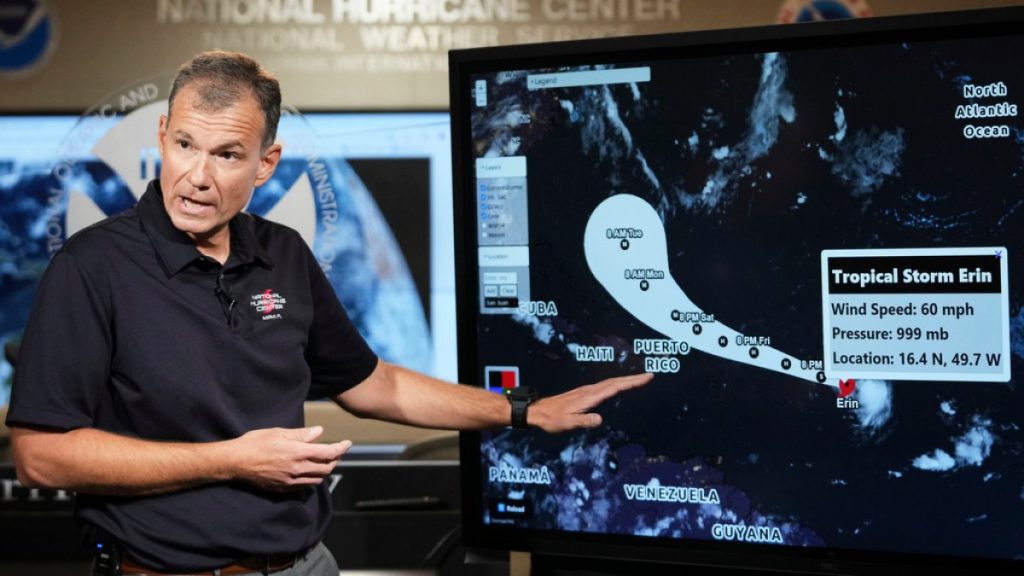
Heavy rains are forecast to start with the storm expected to become a major Category 3 storm over the weekend. Hurricane Erin has formed in the Atlantic Ocean as it approaches the northeast Caribbean, as forecasters warn of possible flooding and landslides in Puerto Rico and the Virgin Islands. The storm is expected to remain over open waters, although tropical storm watches were issued for Anguilla and Barbuda, St Martin and St Barts, Saba and St Eustatius and St Maarten. Heavy rains were forecast to start late on Friday in Antigua and Barbuda, the US and British Virgin Islands, and southern and eastern Puerto Rico. Up to 10cm (four inches) are expected, with isolated totals of up to 15cm (six inches), according to the National Hurricane Center in Miami. Forecasters also warned of dangerous swells. The storm was located about 835km (520 miles) east of the Northern Leeward Islands. It had maximum sustained winds of 110km/h (70mph) and was moving west-northwest at 28km/h (17mph). Erin is forecast to become a major Category 3 storm late this weekend. The hurricane centre noted that “there is still uncertainty about what impacts Erin may bring to portions of the Bahamas, the east coast of the United States, and Bermuda in the long range.” Fifth named storm Dangerous surf and rip currents are expected to affect the US East Coast next week, with waves reaching up to five metres (16.4 feet) along parts of the North Carolina coast that could cause beach erosion, according to Accuweather. “Erin is forecast to explode into a powerful Category 4 hurricane as it moves across very warm waters in the open Atlantic. Water temperatures at the surface and hundreds of feet deep are several degrees higher than the historical average,” Alex DaSilva, Accuweather’s lead hurricane expert, was quoted by The Associated Press news agency. Advertisement Erin is the fifth named storm of the Atlantic hurricane season, which runs from June 1 to November 30. This year’s season is once again expected to be unusually busy and potentially perilous. The forecast calls for six to 10 hurricanes, with three to five reaching major status with winds of more than 177km/h (110mph). Adblock test (Why?)
Afghans in US mark Taliban Kabul takeover amid Trump immigration crackdown
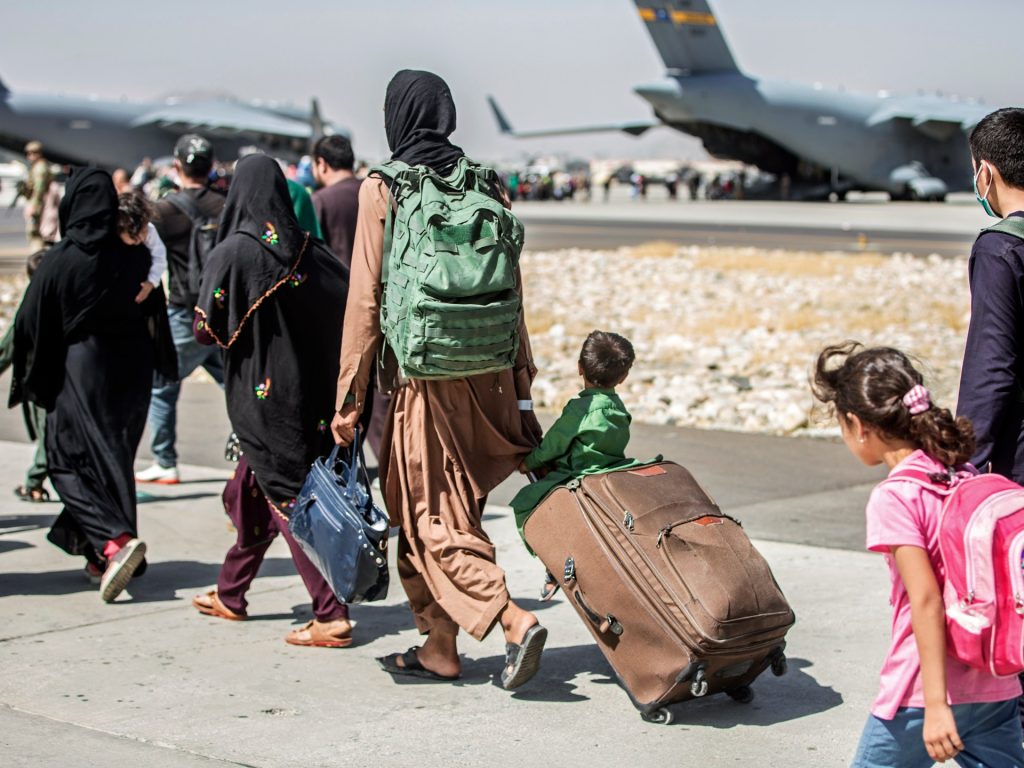
Four years have passed since Hanifa Girowal fled Afghanistan on a US evacuation flight. But every August, her mind returns to the same place. Like many Afghans evacuated amid the August 15 Taliban takeover of Kabul, Girowal, who worked in human rights under the former Afghan government, still remains stuck in “legal limbo” in the United States. She is steadfastly pursuing a more stable status in the US, even as the political landscape surrounding her, and thousands of other Afghans in similar situations, shifts. “I somehow feel like I’m still stuck in August 2021 and all the other Augusts in between, I can’t remember anything about them,” Girowal told Al Jazeera. She often recalls the mad dash amid a crush of bodies at the crowded Kabul International Airport: people shot in front of her, a week of hiding, a flight to Qatar, then Germany and then finally, the US state of Virginia. Followed by the early days of trying to begin a new life from the fragments of the old. “Everything just comes up again to the surface, and it’s like reliving that trauma we went through, and we have been trying to heal from since that day,” she said. The struggle may have become familiar, but her disquiet has been heightened since US President Donald Trump took office on January 20. His hardline immigration policies have touched nearly every immigrant community in the US, underscoring vulnerabilities for anyone on a precarious legal status. There is a feeling that anything could happen, from one day to the next. Advertisement “I have an approved asylum case, which gives a certain level of protection, but we still don’t know the future of certain policies on immigration,” Girowal said. “I am very much fearful that I can be subjected to deportation at any time.” Unheeded warnings Four years after the US withdrawal, much remains unclear about how Trump’s policies will affect Afghans who are already in the US, estimated to total about 180,000. They arrived through a tangle of different avenues, including 75,000 flown in on evacuation flights in the immediate aftermath of the withdrawal, as the administration of US President Joe Biden undertook what it dubbed “Operation Allies Welcome“. Thousands more have since sought asylum by making treacherous journeys across the world to traverse the US southern border. Some have relocated via so-called Special Immigrant Visas (SIVs), reserved for individuals who worked directly with the US military in Afghanistan, under a notoriously backlogged programme. Others have been resettled through a special State Department programme, known as Priority 1 (P1) and Priority 2 (P2), launched by the administration of President Biden, meant for Afghans who face persecution for having worked in various capacities on behalf of the US government or with a US-based organisation in Afghanistan. Adam Bates, a supervisory policy counsel at the International Refugee Assistance Programme, explained that some of those pathways, most notably the SIV and refugee programmes, provide a clear course towards US residency and, eventually, citizenship. But, he clarified, others do not – a fact that advocates have warned leaves members of the population subject to perpetual uncertainty and political whims. “A lot of the advocacy to the Biden administration officials was about finding more permanent legal pathways for Afghans,” Bates told Al Jazeera. “That was with one eye towards the potential of giving the Trump administration this opportunity to really double down and target this community.” Pressure on Afghans in the US During Trump’s new term, his administration has taken several concrete – and at times contradictory – moves that affect Afghans living in the US. It ended “temporary protected status” (TPS) for Afghans already in the country at the time of the Taliban takeover, arguing the country shows “an improved security situation” and “stabilising economy”, a claim contradicted by several human rights reports. At the same time, the Trump administration added Afghanistan to a new travel ban list, restricting visas for Afghans, saying such admissions broadly run counter to US “foreign policy, national security, and counterterrorism”. Advertisement These actions underscore that “the situation in Afghanistan seems to be whatever it needs to be, from the Trump administration’s perspective,” according to Bates. Trump has offered his contradictory messaging, criticising the Biden administration on the campaign trail for its handling of the withdrawal, and as recently as July, pledging to “save” evacuated Afghans subject to deportation from the United Arab Emirates. Meanwhile, the administration terminated a special status for those who entered the US via the CBP One app in April, potentially affecting thousands of Afghans who entered via the southern border. Advocates warn that many more Afghans may soon be facing another legal cliff. After being evacuated in 2021, tens of thousands of Afghans were granted humanitarian parole, a temporary status that allowed them to legally live and work in the US for two years, with an extension granted in 2023. That programme is soon set to end. While many granted the status have since sought other legal avenues, most often applying for asylum or SIVs, an unknown number could be rendered undocumented and subject to deportation when the extension ends. Legislation creating a clearer pathway to citizenship has languished in Congress for years. The US Citizenship and Immigration Services (USCIS) has not publicly released how many evacuated Afghans remain in the US on humanitarian parole, and did not respond to Al Jazeera’s request for the data. Evacuated Afghans’ unease has been compounded by Trump’s aggressive approach to immigration enforcement, which has increasingly seen those without criminal histories targeted for deportations and permanent residents targeted for their political advocacy. “It’s just an escalation across the board and a compounding of fear and instability in this community,” Bates said. “It’s hard to make life decisions if you aren’t sure what’s going to happen tomorrow or next week or in a year”. ‘Pulled the rug out’ Meanwhile, for the thousands of Afghans continuing to seek safety in the US from abroad, pathways have been severely constricted or have become completely
As Trump splits from India, is the US abandoning its pivot to Asia?
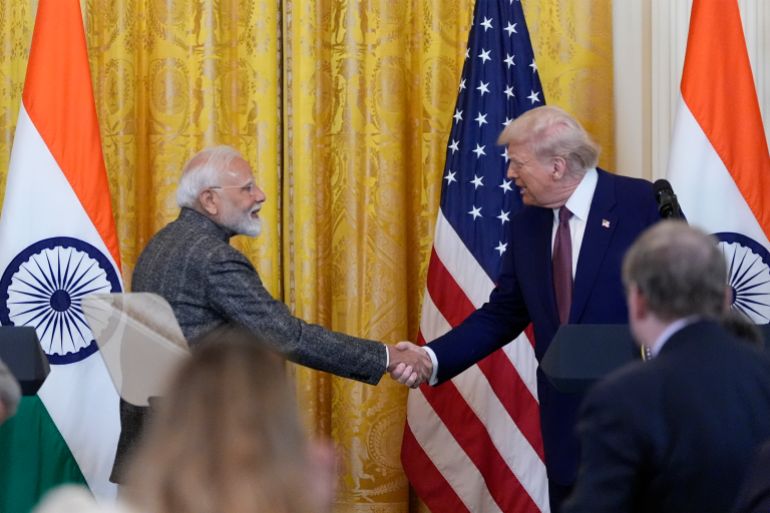
New Delhi, India – When United States President Donald Trump and his Russian counterpart Vladimir Putin meet in Alaska on Friday, their summit will be followed closely not only in both those countries, Europe and Ukraine – but also more than 10,000km (6,200 miles) away, in New Delhi. Since the end of the Cold War, India has juggled a historically strong relationship with Russia and rapidly blossoming ties with the US. New Delhi’s relations with Washington grew particularly strong under the presidencies of George W Bush and Barack Obama, and remained that way during Trump’s first term and under Joe Biden. At the heart of that US warmth towards India, say analysts, was its bet on New Delhi as a balancing force against Beijing, as China’s economic, military and strategic heft in the Asia Pacific region grew. With Soviet communism history, and China, the US’s biggest strategic rival, Washington increased its focus on Asia – including through the Quad, a grouping also including fellow democracies India, Australia and Japan. But a decade after Obama famously described the US and India as “best partners”, they appear to be anything but. Trump has imposed a 50 percent tariff on Indian imports, among the highest on any country’s products. Half of that penalty is for India’s purchases of Russian oil during its ongoing war with Ukraine – something that the Biden administration encouraged India to do to keep global crude prices under control. Meanwhile, China – which buys even more Russian oil than India – has received a reprieve from high US tariffs for now, as Washington negotiates a trade deal with New Delhi. Advertisement That contrast has prompted questions over whether Trump’s approach towards China, on the one hand, and traditional friends like India on the other, marks a broader shift away from the US pivot to Asia. President Donald Trump and India’s Prime Minister Narendra Modi shake hands during a news conference in the East Room of the White House, in Washington, DC, on Thursday, February 13, 2025 [Alex Brandon/AP Photo] Troubles for India, and Modi Since the early 2000s, successive governments in New Delhi have embraced closer ties with Washington, with its stocks rising in the US as an emerging strategic partner in security, trade and technology. Trump made that relationship personal – with Modi. During Trump’s first term, he shared the stage twice in public rallies with Modi, as they also exchanged frequent bear hugs and described each other as friends. But none of that could save New Delhi when Trump hit India with tariffs only matched by the levies issued against goods from Brazil. “The tariff moves have triggered the most serious rupture in the US-India relations in decades,” said Milan Vaishnav, the director of the South Asia Program at the Carnegie Endowment for International Peace. For months after Trump threatened tariffs on Indian imports, New Delhi tried to placate the US president, refusing to get drawn into a war of words. That has now changed, with India accusing the US of hypocrisy – pointing out that it still trades with Russia, and that Washington had previously wanted New Delhi to buy Russian crude. “One thing is clear: Trust in the United States has eroded sharply in recent days, casting a long shadow over the bilateral relationship,” Vaishnav told Al Jazeera. To Praveen Donthi, a senior analyst at the International Crisis Group, the crisis in the relationship also reflects a dramatic turn in the personal equation between Modi and Trump. The state of ties, he said, is “a result of a clash of personalities between President Trump and Prime Minister Modi”. India has previously faced the threat of US sanctions for its close friendship with Russia, when it decided to buy S-400 missile defence systems from Moscow. But in 2022, under the Biden administration, it secured a waiver from those proposed sanctions. “Not long ago, India could avoid sanctions despite purchasing S-400 weapon systems from Russia. However, now, India’s policy of multi-alignment clashes with President Trump’s transactional approach to geopolitics,” said Donthi. To be sure, he pointed out, America’s Cold War history of bonhomie with Pakistan has meant that “a certain distrust of the US is embedded in the Indian strategic firmament”. The Trump administration’s recent cosiness with Pakistan, with its army chief visiting the US this year, even getting a rare meeting with the president at the White House, will likely have amplified those concerns in New Delhi. Advertisement But through ups and downs in India-US ties over the years, a key strategic glue has held them close over the past quarter century: shared worries about the rise of China. “A certain bipartisan consensus existed in the US regarding India because of its long-term strategic importance, especially in balancing China,” said Donthi. Now, he said, “the unpredictable Trump presidency disrupted the US’s approach of ‘strategic altruism’ towards India”. It is no longer clear to Asian partners of the US, say experts, whether Washington is as focused on building alliances in their region as it once said it was. President Donald Trump and Indian Prime Minister Narendra Modi walk around NRG Stadium waving to the crowd during the ‘Howdy Modi: Shared Dreams, Bright Futures’ event in Houston, the US, September 22, 2019 [Evan Vucci/AP Photo] Turn from Asia Under the Obama administration in 2011, the US adopted what was known as the “Rebalance to Asia” policy, aimed at committing more diplomatic, economic and military resources to the Asia Pacific region, increasingly seen as the world’s economic and geopolitical centre of gravity. This meant deeper engagement with treaty allies like Japan, South Korea, and Australia, strengthening security ties with emerging partners such as India and Vietnam, and pushing forward trade initiatives like the Trans-Pacific Partnership (TPP). The idea was to shape a regional order that could balance China’s rise. During Trump’s first term, the economic leg that gave the pivot its weight hollowed out. The US withdrawal from the TPP in early 2017 removed the signature trade pillar,
Australia finds record meth, cocaine, heroin use in wastewater analysis

Australians consumed drugs with a street value of about $7.5bn, representing a 34 percent rise in annual consumption. There has been a sharp rise in drug use among Australians, with cocaine, methamphetamine and heroin consumption all hitting record levels, according to the Australian Criminal Intelligence Commission’s (ACIC) latest wastewater analysis. Published on Friday, the ACIC’s annual report revealed that Australians consumed an estimated 22.2 tonnes of methamphetamine, cocaine, heroin and MDMA (commonly known as “ecstasy”) between August 2023 and August 2024. This represents a 34 percent increase on the previous year’s findings, with marked increases in the consumption of cocaine (69 percent), MDMA (49 percent), methamphetamine (21 percent), and heroin (14 percent). The drugs had a combined estimated street value of 11.5 billion Australian dollars (about $7.5bn), according to the ACIC. Meth alone accounted for 8.9 billion Australian dollars (about $5.8bn) – or 78 percent – of that total. Wastewater analysis, the process of testing sewage water for contaminants, is a widely used tool to measure drug use within national populations. The data was collected from Australia’s capital cities and regional sites, covering some 57 percent of the country. The increase in drug consumption reflects the “recovery of these illicit drug markets following the impact of COVID-19 restrictions”, the ACIC report said. It added that “transnational and domestic serious and organised crime groups have rapidly re-established and expanded their operations” following the pandemic. ACIC chief Heather Cook said crime groups are exploiting high demand for illicit drugs in Australia, where they are “maximising profit at the expense of the community’s security and wellbeing”. Advertisement “The 2.2 tonne increase in national meth consumption is concerning because 12.8 tonnes is the highest annual level recorded by the programme and the drug causes significant community harm,” she said. “Similarly, there has been a large increase in national cocaine consumption, also to the highest annual level recorded by our wastewater programme,” Cook added. Wastewater was also tested for alcohol and nicotine – which remained the most consumed lawful drugs – as well as cannabis and ketamine. Cannabis remained the most consumed illicit drug among Australians, with higher average consumption in regional areas than in capital cities. Capital cities, however, recorded higher consumption of cocaine, MDMA, heroin and ketamine. The Northern Territory saw the highest increase in meth, cocaine and MDMA consumption, according to the report, while Tasmania recorded the highest increase in heroin. The increases in meth, cocaine and MDMA consumption are likely to continue up to 2027, according to ACIC data modelling. Adblock test (Why?)
Trump promises to ‘save’ jailed Hong Kong media tycoon Jimmy Lai
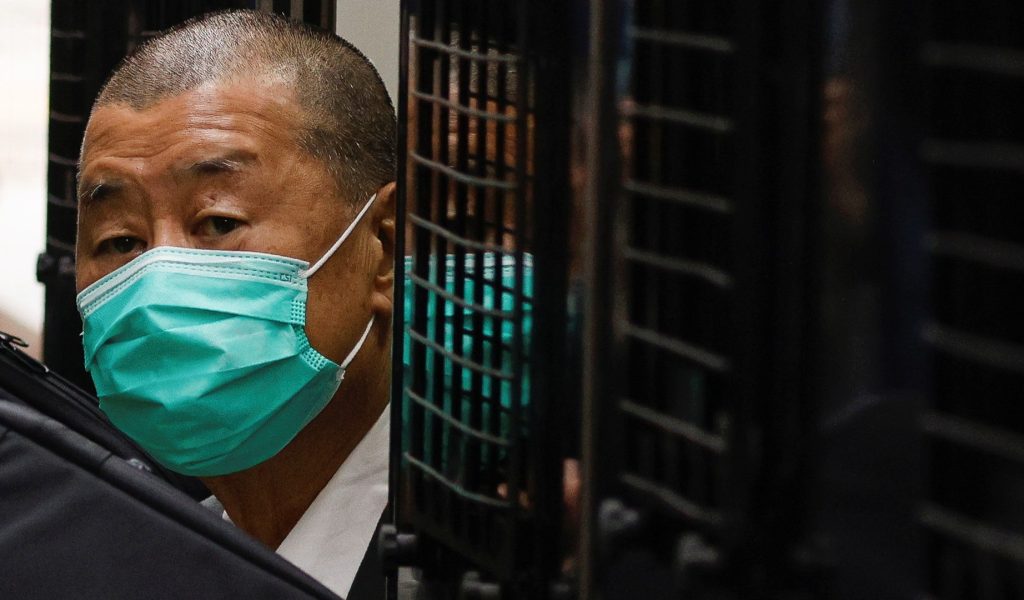
Closing arguments are due to begin in the national security trial of Jimmy Lai, 77, a fierce critic of China’s Communist Party. United States President Donald Trump has renewed his promise to “save” jailed Hong Kong tycoon Jimmy Lai, who is on trial for alleged national security crimes over his pro-democracy activism and antipathy towards China’s Communist Party. “I’m going to do everything I can to save him. I’m going to do everything … His name has already entered the circle of things that we’re talking about, and we’ll see what we can do,” Trump told Fox News Radio in the US. Trump’s remarks came as closing arguments in Lai’s high-profile trial. Closing arguments have been pushed from Friday to Monday after Lai’s lawyer said he had experienced heart palpitations. The delay marks the second in as many days, after Hong Kong courts were closed due to bad weather. Trump previously pledged to rescue Lai during an interview last October, just weeks before his election as president, and had said he would “100 percent get him out”. Lai is one of the most prominent Hong Kongers to be charged under the city’s draconian 2020 national security law, and his cause has made international headlines. The 77-year-old is a longtime opponent of China’s Communist Party thanks to his ownership of Apple Daily, a now-shuttered pro-democracy tabloid newspaper. Thank you, President Trump, for your support for Jimmy Lai at this critical time. “I’m going to do everything I can to save [Jimmy Lai]. I’m going to do everything…His name has already entered the circle of things that we’re talking about, and we’ll see what we can do. I… pic.twitter.com/EmscQHYQmX — #FreeJimmyLai (@SupportJimmyLai) August 14, 2025 Advertisement He is facing two counts of “colluding with foreign forces” and a separate charge of sedition in the long-running national security trial that began in December 2023. If found guilty, he could spend the rest of his life in prison. He has always protested his innocence. Lai was first arrested in 2020, just months after Beijing imposed the new national security law on Hong Kong, which criminalised the city’s pro-democracy movement and categorised public protests as acts of secession, subversion and terrorism. The law was later expanded in 2024 to include further crimes such as espionage and sabotage. Lai has been in detention continuously since December 2020 and is serving separate prison sentences for participating in a banned candlelight vigil and committing “fraud” on an office lease agreement. He has spent more than 1,600 days in solitary confinement, according to the United Kingdom-based Hong Kong Watch, despite his age and health complications. Lai was also denied the lawyer of his choice during trial and access to independent medical care. A verdict in his trial is expected within days. Adblock test (Why?)
The day Israeli settlers lynched two young men in the West Bank
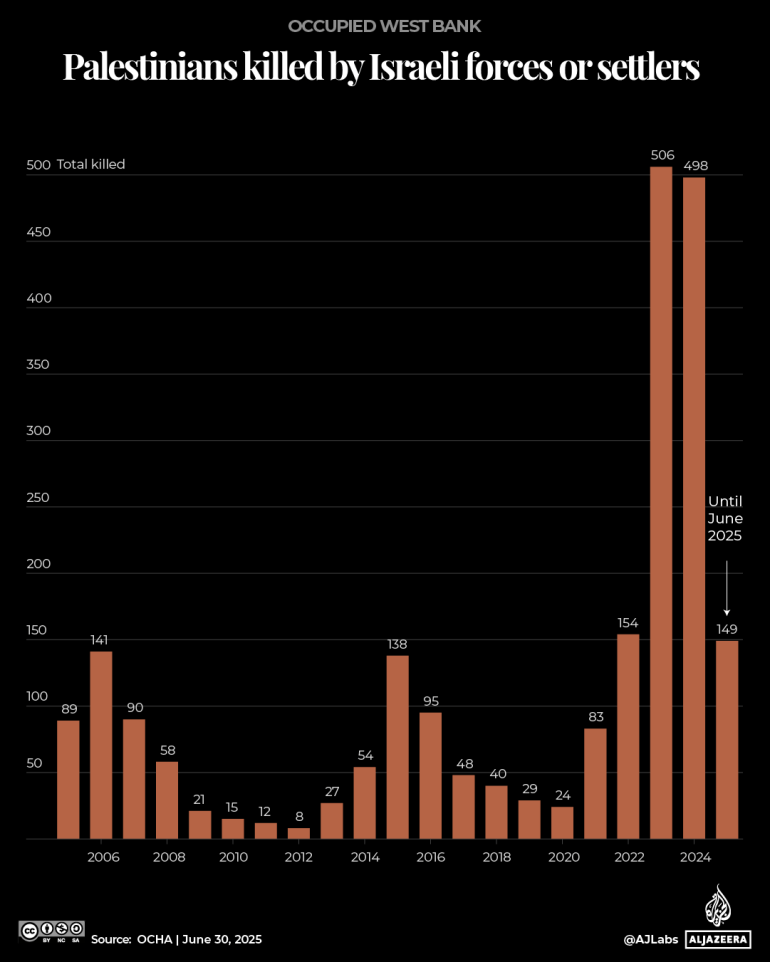
Rizik ran on. Next to him was a young man who spoke to Al Jazeera later, requesting anonymity for his safety. He said Rizik fell while jumping over a stone wall, hurting his legs, but that when they saw two boys who needed help, Rizik joined the young man in carrying them to safety. But then Rizik and his friend found themselves surrounded by settlers. They ran, but just as he dove for cover in the bushes, the friend saw a settler shoot Rizik in the chest. “The settlers started shouting: ‘Yes! I got you!’” he recalled, describing how several settlers gathered around Rizik as he lay on the ground. At about the time of the shooting, Rizik had called his family, but the family told others the call lasted only seconds, with no response from Rizik, although they heard shouts in Hebrew in the background. Rizik’s friend ran for his life down the side of the mountain, heading east. At 3:18pm, he sent a panicked voice message to local WhatsApp groups, begging for help: “Someone’s been martyred!” he beseeched. [Audio]: Witness to Muhammad Rizik al-Shalabi’s shooting, believing he’s been killed and sending a voice message calling for help. Later reconstructions estimated that Rizik may have still been alive at the time, but he was dead by the time search parties were able to access the area to look for him. Meanwhile, Saif and others were running for their lives further south, headed towards Ain al-Sarara. As family members confirmed to Al Jazeera, one of those young men was caught along the way and tied up by a gang of about nine settlers. Witnesses say the settlers repeatedly smashed the young man in the knee with their weapons, then dragged him, tied up, into a car and shot bullets all around him. Then they threw him to the ground over and over, until the young man was begging them to kill him. “They said: ‘I’m not going to kill you,’” a friend recalled on TikTok. “‘I’m going to chop off your arms and your legs and throw you on the side of the road like a dog.’” According to Sinjil activist Ayed Ghafari, among the settlers was Yahariv Mangory, reportedly the leader of the outpost builders in al-Baten, who was carrying an M16 rifle. Mangory later identified himself in an interview with Israel’s Channel 14 as the “owner” of the al-Baten outposts. Saif and the others had managed to go up a hill, but at about 3:30pm, they were met by a group of settlers coming downhill and attacked them from above, according to Ghafari, who spoke with the young men. The settlers were pelting the young men with rocks, with occasional bullets zooming past them as they made their way down the hill. A settler hit Saif square in the back with a rock, toppling him. He was instantly surrounded by a group of settlers who beat him with clubs and sticks all over, according to witnesses. Dazed, Saif staggered to his feet after the settlers stopped beating him, heading south down the hill until he came across a big oak tree where a young Palestinian man was hiding. Battered, he sank to the ground there for the next two and a half hours as the young man tried to reach out to people from Mazraa, asking for help. Saif was vomiting and struggling to breathe, his condition worsening by the minute. That was when Muhammad caught word that his big brother was in trouble. (Al Jazeera) Adblock test (Why?)
Israeli attacks on Gaza kill 23 people as four more die from malnutrition
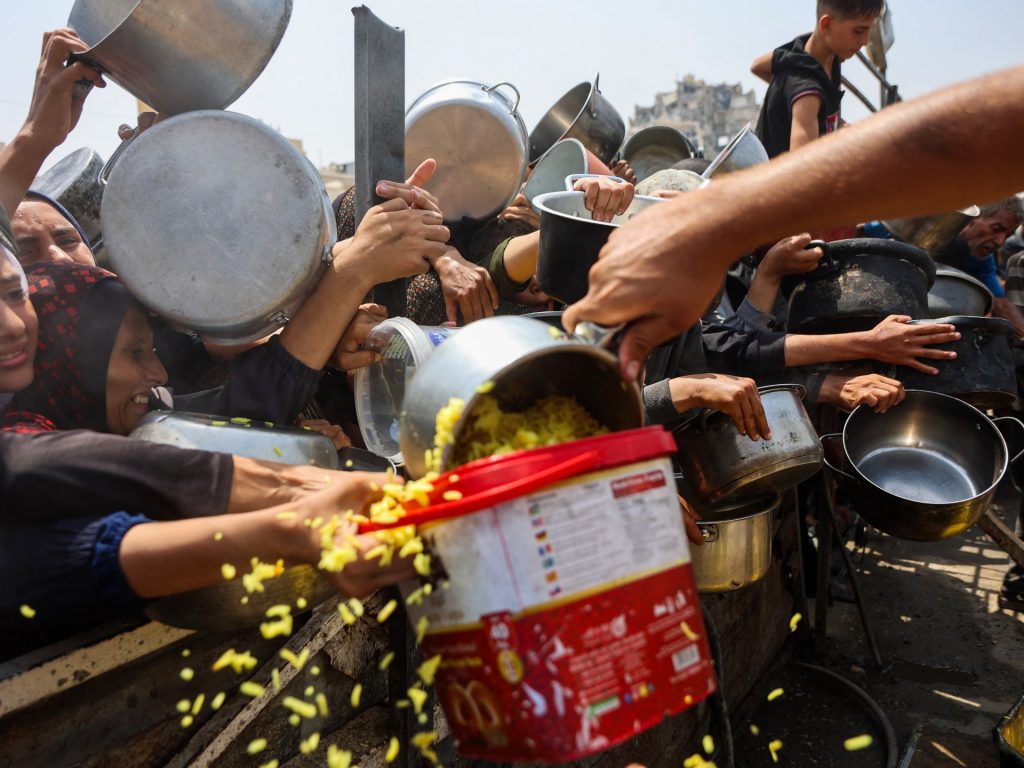
At least 23 people, including 10 seeking aid, have been killed on Thursday in Israeli attacks across Gaza, according to Palestinian health authorities, as four more people died from malnutrition amid a growing starvation crisis in the besieged territory. Hospital sources told Al Jazeera that 10 people seeking aid were among 12 people killed by Israeli forces near Rafah in southern Gaza. One person was killed and several others were wounded in an Israeli attack near an aid distribution site, the sources said. Eight people were killed in an Israeli air strike on a residential home in Gaza City in northern Gaza, medical sources said. Two other people were killed in an Israeli attack on the city’s Tuffah neighbourhood, hospital sources told Al Jazeera. The killings come as Israel escalates its attacks on Gaza City, the largest city in the enclave, after the country’s security cabinet approved plans for the military to seize the city, an operation that could forcibly displace hundreds of thousands of Palestinians to concentration zones in southern Gaza. The plan has received international condemnation from the United Nations and even dissent from within Israel’s own military. Al Jazeera correspondents reported on Thursday that large swaths of northern Gaza have been turned into “lifeless wastelands” amid the Israeli escalation. Palestinians in Gaza City have spoken of their fears of further displacement, following an Israeli forced evacuation order to areas further south, ahead of the proposed occupation. Advertisement Walaa Sobh said she had already been displaced during the war from the northern city of Beit Lahiya to Gaza City, and was unable to move again. “We’re afraid to move anywhere else, because we have nowhere to go, no income – and I am a widow,” she told Al Jazeera. “If they want to force us out, then at least find us a place, give us tents, especially for the widows, the children, and the sick. You’re not only displacing one or two people; you’re displacing millions who have nowhere to stay.” Another woman, Umm Sajed Hamdan, said she would refuse to follow the order. “I am a mother of five and the wife of a detainee. I cannot escape with my children from one place to another,” Hamdan told Al Jazeera. “I would rather face death here in Gaza City than go to al-Mawasi.” Al Jazeera’s senior political analyst Marwan Bishara said Israel’s plans to occupy Gaza City are a serious cause for concern. “It’s a terrible escalation, really,” said Bishara. “[Netanyahu] really intends to reoccupy Gaza … send the military in and just take it on again.” Truce talks As Israel continues to escalate attacks on Gaza City, Mossad spy chief David Barnea is visiting Qatar in an effort to revive talks over a Gaza ceasefire, two Israeli officials told the Reuters news agency on Thursday. The visit follows a reported expression of positivity from Hamas officials to restart ceasefire negotiations during a meeting with Egypt’s intelligence chief in Cairo earlier this week. Earlier on Thursday, Israeli Deputy Foreign Minister Sharren Haskel said that a non-Israeli, peaceful civilian administration for Gaza was among the Israeli government’s five key principles for ending the war. The other principles include the release of captives still held in Gaza, the surrender of weapons by Hamas, the full demilitarisation of Gaza, and Israel retaining overriding security control, he said. Aid still ‘a drop in the ocean’ Meanwhile, more than 100 aid groups on Thursday accused Israel of obstructing life-saving aid from entering Gaza, resulting in vast quantities of relief supplies remaining stranded in warehouses across Jordan and Egypt as more Palestinians starve. “Despite claims by Israeli authorities that there is no limit on humanitarian aid entering Gaza, most major international NGOs [nongovernmental organisations] have been unable to deliver a single truck of life-saving supplies since 2 March,” the groups said. There is aid sitting all around the boundary between Israel and Gaza that is not being allowed in, Natasha Davies, a nursing activity manager with Doctors Without Borders (MSF), told Al Jazeera. Advertisement “We’ve had a couple of trucks in [to Gaza], but really, it’s just a drop in the ocean … We run primarily a trauma surgical hospital, so every single patient has a wound of some sort that needs fixing with supplies that we are intermittently receiving,” Davies said by videolink from Gaza’s southern city of Khan Younis. “It’s just a humanitarian catastrophe. There are these GHF sites, which are slaughter masquerading as aid, which create mass casualty incidents, which create more injuries for us to treat with limited resources,” she said. The total number of aid seekers killed since May 27, when Israel introduced a new aid distribution mechanism through the US-based GHF, has reached 1,881, with more than 13,863 injured, according to Gaza’s Health Ministry. The total count of hunger-related deaths is now 239, including 106 children, the ministry records. Israel’s war on Gaza has killed at least 61,776 people and wounded 154,906. An estimated 1,139 people were killed in Israel during the October 7, 2023, attacks, and more than 200 were taken captive. Adblock test (Why?)
LA28 to be first Olympic Games to sell naming rights for venues
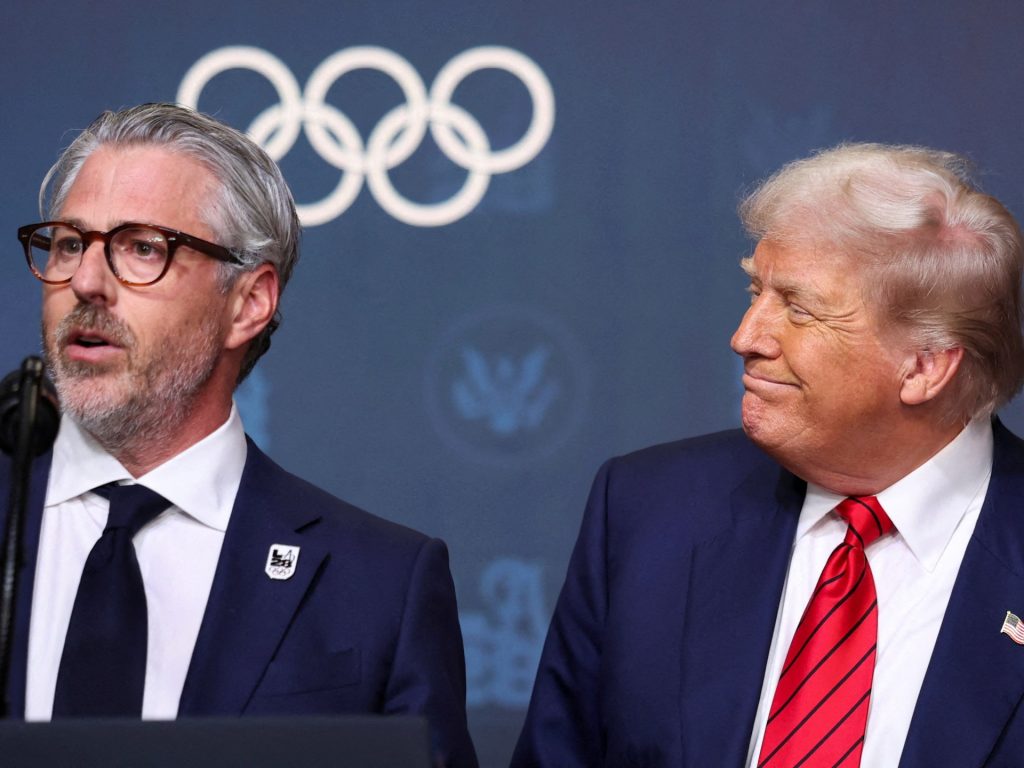
The organising committee for the Los Angeles Olympics says some deals are already in place for the 2028 Games. Organisers of the Los Angeles Olympics will sell naming rights for a handful of its venues in deals expected to bring multiple millions of dollars to the 2028 Games while breaking down the International Olympic Committee’s long-sacrosanct policy of keeping brand names off its arenas and stadiums. The organising committee announced the landmark deal Thursday, saying contracts were already in place with two of its founding partners – Honda, which already has naming rights for the arena in Anaheim that will host volleyball, and Comcast, which will have its name on the temporary venue hosting squash. LA28 chairman and CEO Casey Wasserman said revenue from the deals goes above what’s in LA’s current $6.9bn budget. He portrayed the deal as the sort of paradigm-shifting arrangement that Los Angeles needs more than other host cities because, as is typical for American-hosted Olympics, the core cost of these Games is not backed by government funding. “We’re a private enterprise responsible for delivering these games,” Wasserman said in an interview with The Associated Press. “It’s my job to push. That doesn’t mean we’re going to win every time we push, but it’s our job to always push because our context is pretty unique.” Wasserman said he also spent time explaining to IOC members how arena and stadium names are part of the lexicon in US sports. “People know ‘Crypto’ as ‘Crypto,’ they don’t know it as ‘the gymnastics arena downtown,’” Wasserman said of the home of the Lakers, Crypto.com Arena, which will host gymnastics and boxing in 2028. Advertisement Rights for up to 19 temporary venues could be available. The IOC’s biggest sponsors – called TOP sponsors – will have the first chance to get in on the deals. Wasserman said no venues will be renamed – so, for instance, if organisers do not reach a deal with SoFi (opening and closing ceremonies, swimming) or Intuit (basketball), no other sponsor can put its name on the arena. Not included in this new arrangement are the LA Coliseum, Rose Bowl and Dodger Stadium, some of the most iconic venues in a city that hosted the Games in 1932 and 1984. Organisers said IOC rules that forbid advertising on the field of play will still apply. The deal adds to a growing list of accommodations pushed through for Los Angeles, which is once again poised to reshape the Olympic brand, much the way it did in 1984. In 2017, the city was bidding for the 2024 Games against Paris, but agreed to instead host the 2028 Games. It was part of a then-unheard-of bid process that rescued the IOC from the reality that cities were becoming reluctant to absorb the cost and effort to bid for and host the Summer Games. Olympic watchers viewed the return of softball and baseball for 2028, along with the introduction of flag football, with help from the NFL, as changes that maybe only Los Angeles could have pulled off. LA will also make a major scheduling change for the Olympics Games, moving track and field to the opening week of the games and swimming to the end. Wasserman said the organising committee’s position as a private entity plays a major role in its relationship with the IOC. “We spend the time, we do the work, we make the argument, and we don’t settle for a ‘No,’ because we don’t have that luxury,” he said. Adblock test (Why?)