

Zelenskyy says Putin readying for ‘new offensive’ in Ukraine, not ceasefire
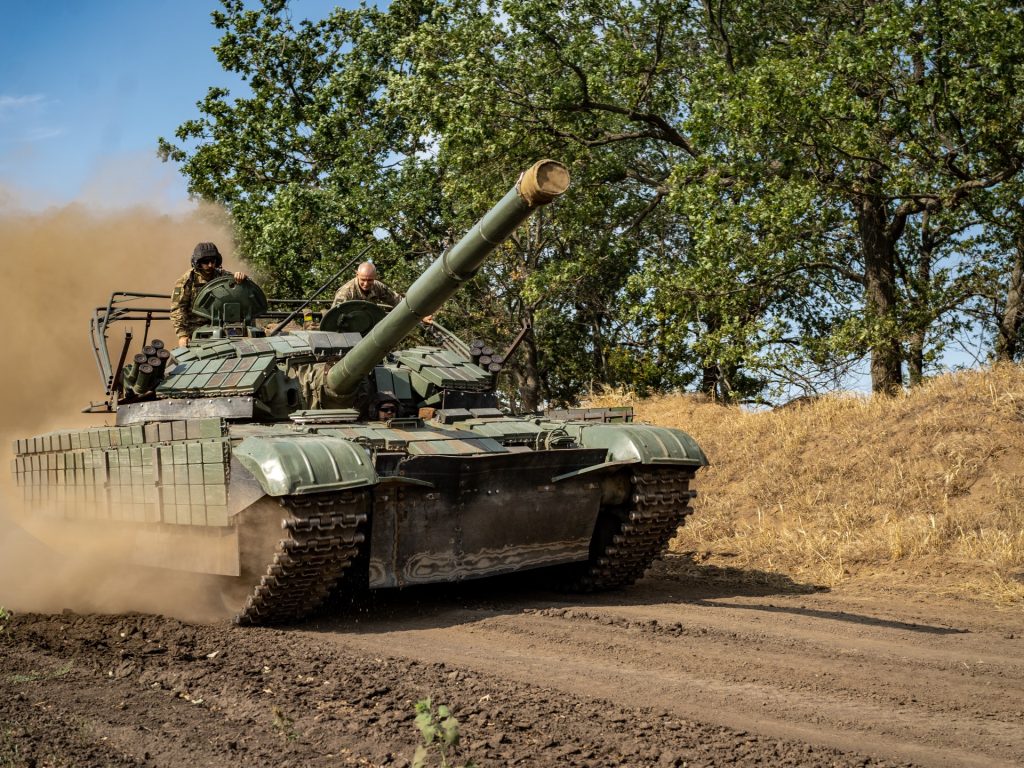
Russian President Putin ‘is definitely not preparing for a ceasefire’, says Zelenskyy, as US, and Russian leaders scheduled to meet in Alaska. Ukrainian President Volodymyr Zelenskyy said Vladimir Putin is not preparing for a ceasefire but is readying his troops for “new offensive operations” in Ukraine, even as the Russian leader is set to meet US President Donald Trump for peace talks in Alaska. Zelenskyy said reports from Ukrainian intelligence and military commanders indicate that Putin intends to present his meeting on Friday with Trump as “a personal victory and then continue acting exactly as before” in the war on Ukraine. “He is definitely not preparing for a ceasefire or an end to the war,” Zelenskyy said in a video message posted to his social media account on Monday night. “There is no indication whatsoever that the Russians have received signals to prepare for a post-war situation,” he said. “On the contrary, they are redeploying their troops and forces in ways that suggest preparations for new offensive operations. If someone is preparing for peace, this is not what he does,” he added. Today, there was a report from the intelligence and military command on what Putin is counting on and what he is actually preparing for, including military preparations. He is definitely not preparing for a ceasefire or an end to the war. Putin is determined only to present a… pic.twitter.com/T3sqQg0ltT — Volodymyr Zelenskyy / Володимир Зеленський (@ZelenskyyUa) August 11, 2025 Ukraine’s military spokesperson for the southern front-line sector, Vladyslav Voloshyn, told the Reuters news agency on Monday that Russia was moving some military units in the Zaporizhia region for further assaults. Advertisement Earlier on Monday, Zelenskyy warned that any concessions to Russia would not persuade it to stop fighting in Ukraine. “Russia refuses to stop the killings, and therefore, must not receive any rewards or benefits,” Zelenskyy wrote on X. “Concessions do not persuade a killer,” he said. The Ukrainian leader’s warnings come in advance of Trump’s scheduled meeting with Putin in Alaska on Friday, and after the US president said that Kyiv would have to cede land to end Russia’s war in Ukraine, a proposition that Ukraine has firmly rejected. “There’ll be some land swapping going on. I know that through Russia and through conversations with everybody; to the good, for the good of Ukraine. Good stuff, not bad stuff. Also, some bad stuff for both,” Trump told a news conference in Washington, DC, on Monday. Trump also said he would know “probably in the first two minutes” of meeting with Putin, whether progress was possible. “I’m going to be telling him, ‘You’ve got to end this war,’” Trump said, adding that a future meeting with Putin could include Zelenskyy. United Kingdom Prime Minister Keir Starmer and Canadian Prime Minister Mark Carney also said on Monday that a peace deal for Ukraine must involve Kyiv and not be imposed upon it. “Both leaders underscored that Ukraine’s future must be one of freedom, sovereignty, and self-determination,” a spokesperson for Starmer said. Zelenskyy also said he had spoken to Canada’s Carney and told him that the “Russians simply want to buy time, not end the war”. “The situation on the battlefield and Russia’s wicked strikes on civilian infrastructure and ordinary people prove this clearly,” Zelenskyy said in a post on social media. US-based think tank the Institute for the Study of War (ISW), which monitors the conflict in Ukraine on a daily basis, said in a recent report that Moscow does not appear to be preparing the Russian public for accepting “a settlement short of a full victory in Ukraine”. That assessment, the ISW said, was based on “the lack of change in public Kremlin messaging, in combination with ongoing speculation that Putin is looking to ‘outplay’ the West”. European leaders and Zelenskyy plan to speak with Trump in advance of his meeting with Putin as fears mount that Washington may dictate unfavourable peace terms to Ukraine after the Alaska summit. Adblock test (Why?)
Why is Trump sending US National Guard to Washington, DC?
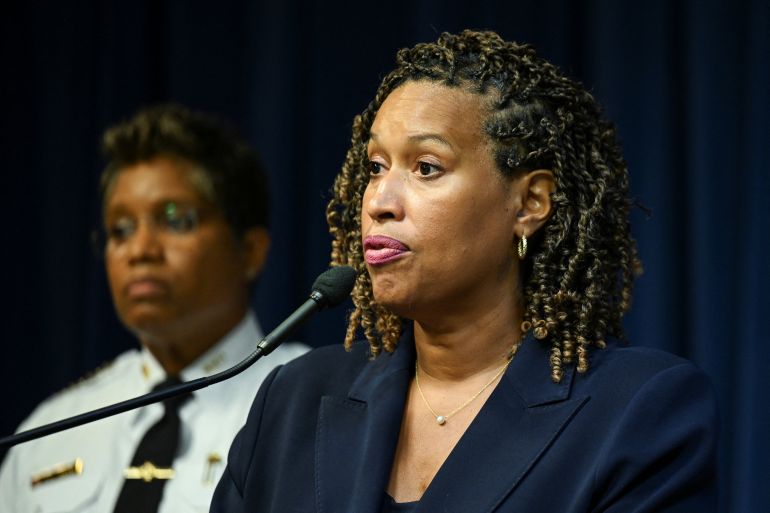
United States President Donald Trump has announced that he is temporarily taking control of the Washington, DC, police department, while deploying 800 National Guard troops to the city. Trump said his actions are needed to “rescue” the US capital from a surge in crime. While violent crime spiked in Washington, DC, in 2023, data shows it has been falling quickly since then. Here is what we know: What has Trump announced? During a 78-minute news conference, Trump announced that the federal government would take control of the District of Columbia (DC) Metropolitan Police Department to address surging crime. “I’m announcing a historic action to rescue our nation’s capital from crime, bloodshed, bedlam and squalor and worse,” Trump said during the conference in which he was joined by US Attorney General Pam Bondi, who will oversee the city’s police force while it is under federal control. “This is Liberation Day in DC, and we’re going to take our capital back. We’re taking it back,” Trump said. “Under the authorities vested in me as the President of the United States, I’m officially invoking section 740 of the District of Columbia Home Rule Act… and placing the DC Metropolitan and Police Department under direct federal control,” he said. He also announced the deployment of the National Guard. “I’m deploying the National Guard to help reestablish law, order and public safety in Washington, DC, and they’re going to be allowed to do their job properly,” he said. Trump also said that he intends to remove the capital’s homeless population, but did not provide details on how the plan would be carried out. What is the Home Rule Act of 1973? The Home Rule Act of 1973 is a US federal law that gave Washington, DC, a significant degree of self-government for the first time. Advertisement Washington, DC, is the seat of the federal government and the only US city that is not part of the 50 states. As a result, it has no voting representation in Congress. For about a century, up until 1973, the city was run by three presidentially appointed commissioners. That was until then-President Richard Nixon signed the Home Rule Act, enabling district residents to elect a mayor and city council. But the Home Rule Act also says the president can take control of the city’s police force if “special conditions of an emergency nature exist”. This is something Trump threatened to do in 2020, amid nationwide protests over the killing of George Floyd. The city’s police can be used for “federal purposes”. The president can use the DC police force for 48 hours, or up to 30 days if he notifies Congress. Trump said he plans to keep the federal takeover of the force going past the first 48 hours, and will officially inform the appropriate parties. The mayor of Washington, DC, Muriel Bowser, is adamant that the city still has control: “Let me be clear. Chief Pamela Smith is the chief of the Metropolitan Police Department, and its 3,100 members work under her direction.” “Nothing about our organisational chart has changed,” Bowser said. “And nothing in the executive order would indicate otherwise.” According to a report by the news outlet Politico, federal law enforcement officers will be tasked with protecting federal buildings and national monuments. What do we know about the National Guard deployment? According to a statement from the US Army, “between 100-200 soldiers will be supporting law enforcement at any given time”. “Their duties will include an array of tasks from administrative, logistics and physical presence in support of law enforcement,” the army said. The National Guard will operate under Title 32 status, meaning they remain under local control but are funded by the federal government. In this status, they are not bound by the Posse Comitatus Act, which bars US service members from engaging in law enforcement activities. US Secretary of Defense Pete Hegseth said that the Guard would begin flowing into DC this week. According to a report by CNN, deployed troops are not expected to openly carry rifles as they patrol the streets. Instead, they will probably keep their weapons nearby, for example, in their trucks, so they can access them if necessary for self-defence, the official said. Hegseth said the Pentagon was “prepared to bring in other National Guard units – other specialised units”, but did not offer any further details. Advertisement When asked whether the military would assist with clearing homeless people from the city, Hegseth said that the soldiers would assist local law enforcement. “Our job is to stand alongside law enforcement,” he said. Why is Trump taking these measures? In the executive order, Trump states that rising violence in the capital has become an emergency. The “rising violence in the capital now urgently endangers public servants, citizens, and tourists, disrupts safe and secure transportation and the proper functioning of the Federal Government”, the order states. “The magnitude of the violent crime crisis places the District of Columbia among the most violent jurisdictions in the United States.” It also says that the attorney general shall regularly update the president “on the status of the special conditions of an emergency nature that exist in the District of Columbia”. MAKE D.C. SAFE AGAIN 🇺🇸 pic.twitter.com/xJRIcgy4ld — The White House (@WhiteHouse) August 11, 2025 According to reports, the move seems to have been triggered by an assault involving Edward Coristine, a former Department of Government Efficiency (DOGE) staffer and protege of Elon Musk, who previously led DOGE. Police say 10 teenagers attacked the 19-year-old and his partner early on August 3. Two 15-year-olds were later arrested and charged. “If DC doesn’t get its act together, and quickly, we will have no choice but to take Federal control of the City, and run this City how it should be run,” Trump wrote on his social media platform, Truth Social, days after the attack, with an image showing a shirtless Coristine with what appeared to be blood spattered on his face, body and trousers. “Perhaps
EU holds talks amid fear that Trump-Putin meeting will sideline Ukraine
The talks come ahead of a landmark meeting between the presidents of the US and Russia in Alaska on Friday. European foreign ministers are holding emergency talks to discuss their next steps before a meeting between United States President Donald Trump and Russian President Vladimir Putin in Alaska on Friday, as Europe fears Ukraine will be excluded and forced into unacceptable territorial compromises to end the Russia-Ukraine war, now in its fourth year. In a pre-US-Russia summit push aimed at consensus, German Chancellor Friedrich Merz invited Trump, Ukrainian President Volodymyr Zelenskyy, the NATO secretary general and several European leaders to a virtual meeting on Wednesday. The European Union’s top diplomats held a meeting by video link on Monday with their Ukrainian counterpart Andrii Sybiha. “The path to peace in Ukraine cannot be decided without Ukraine,” leaders from France, Germany, Italy, Poland, Britain and Finland, and EU Commission chief Ursula von der Leyen said in a joint statement ahead of the call. Zelenskyy said on Monday that concessions to Moscow would not persuade it to stop fighting and that there was a need to ramp up pressure on the Kremlin. “Concessions do not persuade a killer,” he said. Zelenskyy insists he will never consent to any Russian annexation of Ukrainian territory nor give up his country’s bid for NATO membership. European leaders have also underscored their commitment to the idea that international borders cannot be changed by force. The EU has insisted that Kyiv and European powers should be part of any deal. The EU’s top diplomat, Kaja Kallas, said “the US has the power to force Russia to negotiate seriously”, but “any deal between the US and Russia must have Ukraine and the EU included, for it is a matter of Ukraine’s and the whole of Europe’s security.” Advertisement Polish Prime Minister Donald Tusk on Monday said that the US had pledged to consult with Europe ahead of the summit. “I will wait… for the effects of the meeting between Presidents Trump and Putin – I have many fears and a lot of hope,” he said. British Prime Minister Keir Starmer also expressed support for Trump’s efforts to end the war with Ukraine, as long as the terms for ending the war are not dictated. “Any peace must be built with Ukraine, not imposed upon it, and we will not reward aggression or compromise sovereignty. Ukraine will decide its own future, and we will support it every step of the way,” he said. Trump announced last week that he would meet Putin in Alaska on Friday to try to resolve the ongoing conflict. The meeting will be the first between a sitting US and Russian president since 2021. The US president is reportedly open to inviting Zelenskyy to Alaska, but there has been no confirmation as of yet. Putin has insisted the conditions must be right for him and the Ukrainian leader to meet in person. Aerial assaults intensifying In the meantime, aerial exchanges have intensified with diplomatic momentum to end the war in play, with Ukraine claiming to have hit a facility that produces missile components in Russia’s Nizhny Novgorod region. Local authorities said one person was killed in the attack and two were wounded. An official told Reuters that at least four drones hit the Arzamas manufacturing plant producing control systems and other components for Russian X-32 and X-101 missiles. The Russian Defence Ministry said its air defence units destroyed a total of 59 Ukrainian drones overnight, including 12 over the Tula region, as well as over the Crimean Peninsula that Russia annexed in 2014. The ministry also said its forces had taken control of the settlement of Lunacharske in the Donetsk region of eastern Ukraine, which Ukraine renamed Fedorivka in 2016. Russia carried out several deadly attacks in various Ukrainian locations over the weekend, including in the fiercely contested areas of Kherson and Zaporizhia. Adblock test (Why?)
Here are the names of the journalists Israel killed in Gaza
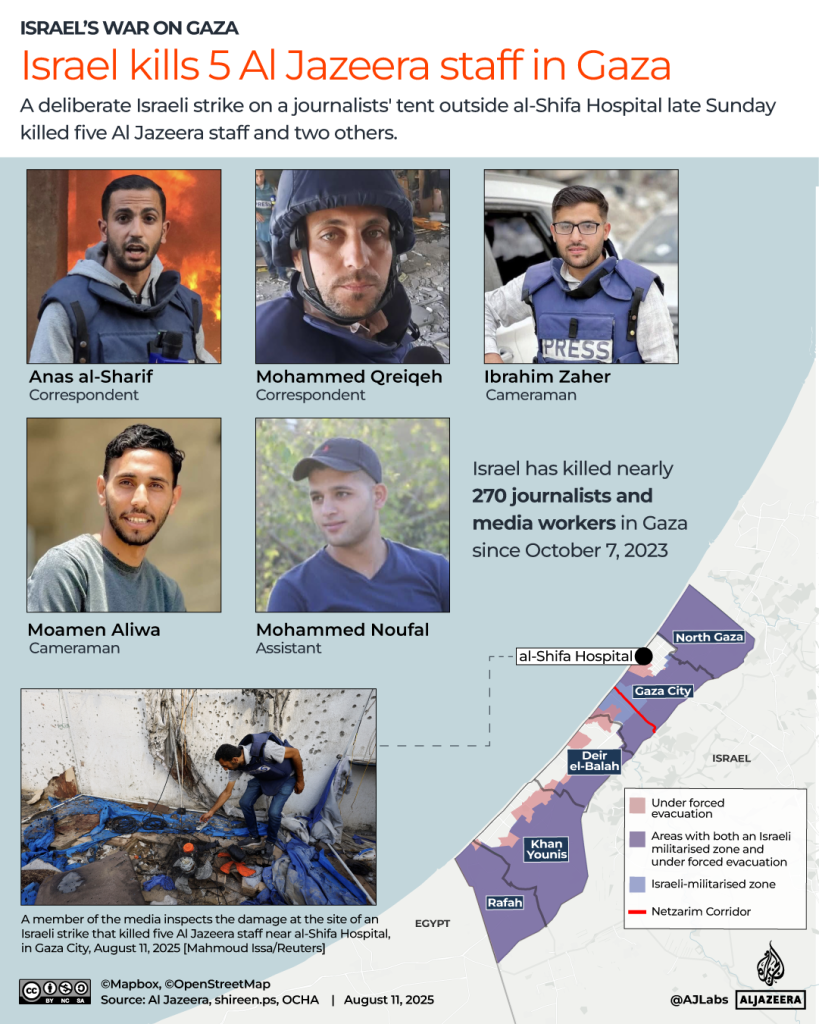
Al Jazeera journalist Anas al-Sharif, 28, has been killed along with four of his colleagues in a deliberate Israeli attack on a media tent sheltering journalists outside the main gate of Gaza City’s al-Shifa Hospital. Al Jazeera reporter Hani al-Shaer said an Israeli drone hit the tent about 11:35pm (20:35 GMT) on Sunday. In total, seven people were killed in the attack, including Al Jazeera correspondent Mohammed Qreiqeh, 33, and camera operators Ibrahim Zaher, 25; Mohammed Noufal, 29; and Moamen Aliwa, 23. [Al Jazeera] Israel deliberately kills Al Jazeera journalists This is not the first time Israel has targeted Al Jazeera journalists covering the war in Gaza. Before Sunday night’s attack, at least five Al Jazeera journalists had been killed by Israel. [Al Jazeera] On December 14, 2023, Al Jazeera cameraman Samer Abudaqa was targeted by an Israeli air strike while reporting alongside Gaza bureau chief Wael Dahdouh, who was injured in the same attack. Abudaqa was left to bleed to death at the Farhana school in Khan Younis, where they were filming, as emergency workers were blocked by the Israeli military from reaching the site. On January 7, 2024, Wael’s eldest son and fellow Al Jazeera journalist, Hamza Dahdouh, was killed in a missile strike on the vehicle he was travelling in in Khan Younis. On July 31, 2024, Ismail al-Ghoul and his cameraman Rami al-Rifi were killed in an Israeli attack on the Shati refugee camp despite their vehicle bearing clear media markings and both wearing vests identifying themselves as members of the news media. People inspect a vehicle in which Al Jazeera reporter Ismail al-Ghoul and cameraman Rami al-Rifi were killed by an Israeli strike on July 31, 2024 [Ayman Al Hassi/Reuters] On December 15, Israel killed Al Jazeera journalist Ahmed al-Louh in an air strike in central Gaza’s Nuseirat camp. Mourners attend the funeral of Ahmed al-Louh, a video journalist for Al Jazeera, and members of the Palestinian Civil Defence who were killed in an Israeli strike on a civil emergency centre in Nuseirat in the central Gaza Strip [Ramadan Abed/Reuters] On March 24, Hossam Shabat, 23, was killed in an Israeli attack in the eastern part of Beit Lahiya in northern Gaza. [Al Jazeera] Gaza: The deadliest war for journalists Israel’s war on Gaza has been the single deadliest conflict for journalists. Advertisement According to Brown University’s Costs of War project, more journalists have been killed in Gaza since the war began on October 7, 2023, than in the US Civil War, World Wars I and II, the Korean War, Vietnam War, the wars in the former Yugoslavia and the post-9/11 war in Afghanistan – combined. [Al Jazeera] According to Reporters Without Borders, known by its French acronym RSF, 2024 was the deadliest year for journalists with more than 120 killed. Since the start of this year, more than 50 journalists and media workers have been killed by Israeli attacks in Gaza. Targeting journalists is a war crime Al Jazeera has condemned the targeted killing of its correspondents as “yet another blatant and premeditated attack on press freedom”, noting that al-Sharif and his colleagues were among the last voices reporting from inside Gaza as international media remained barred by Israel. The Palestinian mission to the United Nations accused Israel of “deliberately assassinating” al-Sharif and Qreiqeh, saying they “systematically exposed and documented Israel’s genocide and starvation”. UN Secretary-General Antonio Guterres’s spokesperson called for an investigation and stressed that journalists everywhere must be allowed to work without fear of being targeted. Amnesty International condemned the killings as a war crime and honoured al-Sharif as a “brave and extraordinary” reporter, noting he received the Human Rights Defender Award in 2024 for his commitment to press freedom. Al Jazeera Media Network condemns the targeted assassination of its correspondents Anas Al Sharif and Mohammeel Qraiqea, along with photographers Ibrahim Al Thaher, and Mohamed Nofal, by Israeli forces.#JournalismIsNotACrime pic.twitter.com/F3p9PbhGZF — Al Jazeera English (@AJEnglish) August 11, 2025 Every month, 13 journalists are killed in Gaza Nearly 270 journalists and media workers have been killed by Israeli attacks in Gaza in 22 months of war – or about 13 journalists every month – according to a tally by Shireen.ps, a monitoring website named after Al Jazeera journalist Shireen Abu Akleh, who was shot and killed by Israeli forces in the occupied West Bank in 2022. What makes this statistic even more stark is that Gaza is losing voices on the ground at a time when Israel has banned international media from entering the besieged enclave. The Committee to Protect Journalists (CPJ) has said the killings of journalists and their detentions since October 7, 2023, have created a news void that will cause potential war crimes to go undocumented. Advertisement In June, the RSF, CPJ and news organisations published an open letter stating that many Palestinian journalists who have been relied on by reporters outside Gaza have faced a plethora of threats and many “face constant threats to their lives for doing their jobs: bearing witness”. The targeting of reporters has continued ever since despite international condemnation of Israel’s actions. In a statement, Amnesty International said: “Israel isn’t just assassinating journalists but attacking journalism itself by preventing the documentation of genocide.” The names of the journalists and media workers killed in Israel’s war on Gaza are listed below: [Al Jazeera] Adblock test (Why?)
Norway wealth fund divests from several Israeli companies due to Gaza war
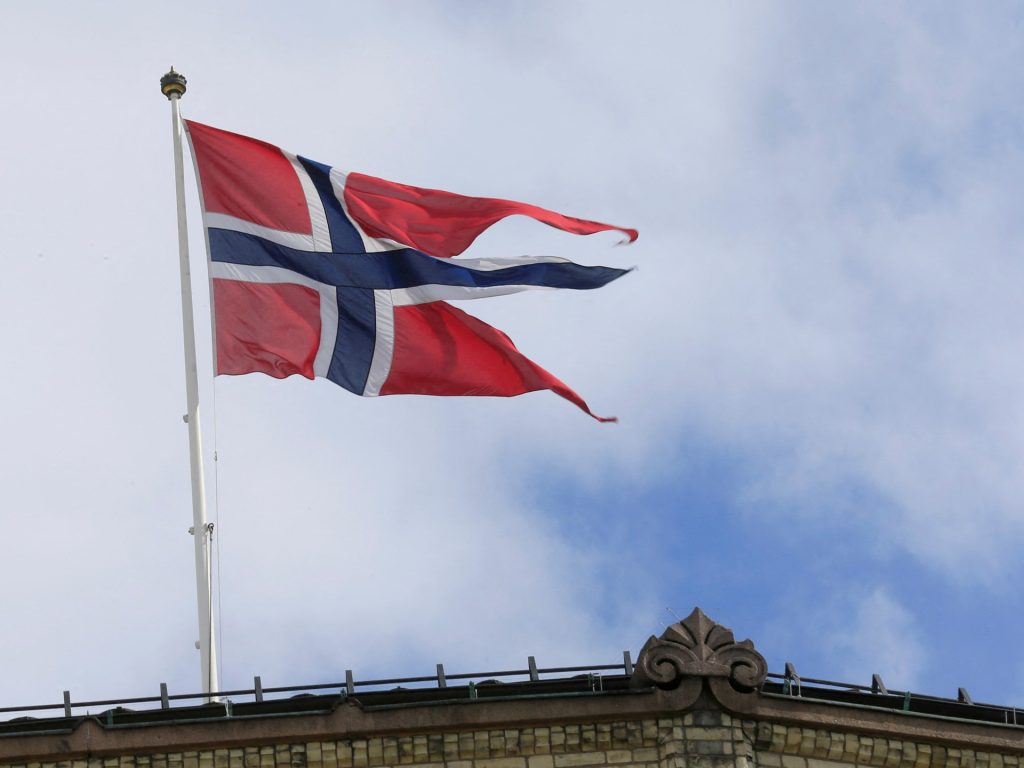
The world’s largest fund has divested its stakes in 11 Israeli companies and is reviewing more. Norway’s $2 trillion sovereign wealth fund says it is terminating all contracts with asset managers handling its Israeli investments and has divested parts of its portfolio. The announcement on Monday came after an urgent review launched last week after media reports said the fund had built a stake in an Israeli jet engine group that provides services to Israel’s military, including the maintenance of fighter jets, as Israel’s genocidal war on Gaza and the Palestinian population rages. The fund, an arm of Norway’s central bank and the world’s largest, held stakes in 61 Israeli companies as of June 30 but in recent days divested stakes in 11 of these, it said in a statement. “We have now completely sold out of these positions,” the fund said, adding that it is continuing to review Israeli companies for potential divestments. “These measures were taken in response to extraordinary circumstances. The situation in Gaza is a serious humanitarian crisis,” Nicolai Tangen, the CEO of Norges Bank Investment Management, said in a statement. “We are invested in companies that operate in a country at war, and conditions in the West Bank and Gaza have recently worsened. In response, we will further strengthen our due diligence.” The fund stated that it has “long paid particular attention to companies associated with war and conflict”. “We constantly monitor companies’ risk management related to conflict zones and respect for human rights,” it said. The Norwegian government began its review after Aftenposten, the country’s leading newspaper, revealed that the fund had a stake in Bet Shemesh Engines Ltd (BSEL), which provides parts to Israeli fighter jets that are being deployed in the war on Gaza. Advertisement Norwegian Prime Minister Jonas Gahr Store had said at the time that the investment was “worrying”. The sovereign fund, which owns stakes in 8,700 companies worldwide, has sold its stakes in an Israeli energy company and a telecommunications group in the past year. In June, Norway’s largest pension fund also decided to sever its ties with companies doing business with Israel. That same month, however, Norway’s parliament rejected a proposal for the fund to divest from all companies with activities in occupied Palestinian territory. Several of Europe’s biggest financial firms have cut back their links to Israeli companies or those with ties to the country, according to an analysis of filings by the Reuters news agency, as pressure mounts from activists and governments to end the war in Gaza. Last month, Francesca Albanese, the United Nations special rapporteur on the occupied Palestinian territory, called on countries to cut off all trade and financial ties with Israel, including a full arms embargo, and withdraw international support for what she termed an “economy of genocide”. In a report titled From Economy of Occupation to Economy of Genocide, Albanese detailed “the corporate machinery sustaining Israel’s settler-colonial project of displacement and replacement of the Palestinians in the occupied territory”. The report singled out companies – including arms manufacturers, technology giants, heavy machinery companies and financial institutions – for their “complicity” in Israel’s repression of Palestinians from sustaining Israeli expansions onto occupied land to enabling the surveillance and killings of Palestinians. Adblock test (Why?)
Nagasaki commemorates atomic bombing 80 years on
[unable to retrieve full-text content] Japan has marked 80 years since the US dropped an atomic bomb on Nagasaki.
Jordan to host meeting with Syria, US on Syrian reconstruction
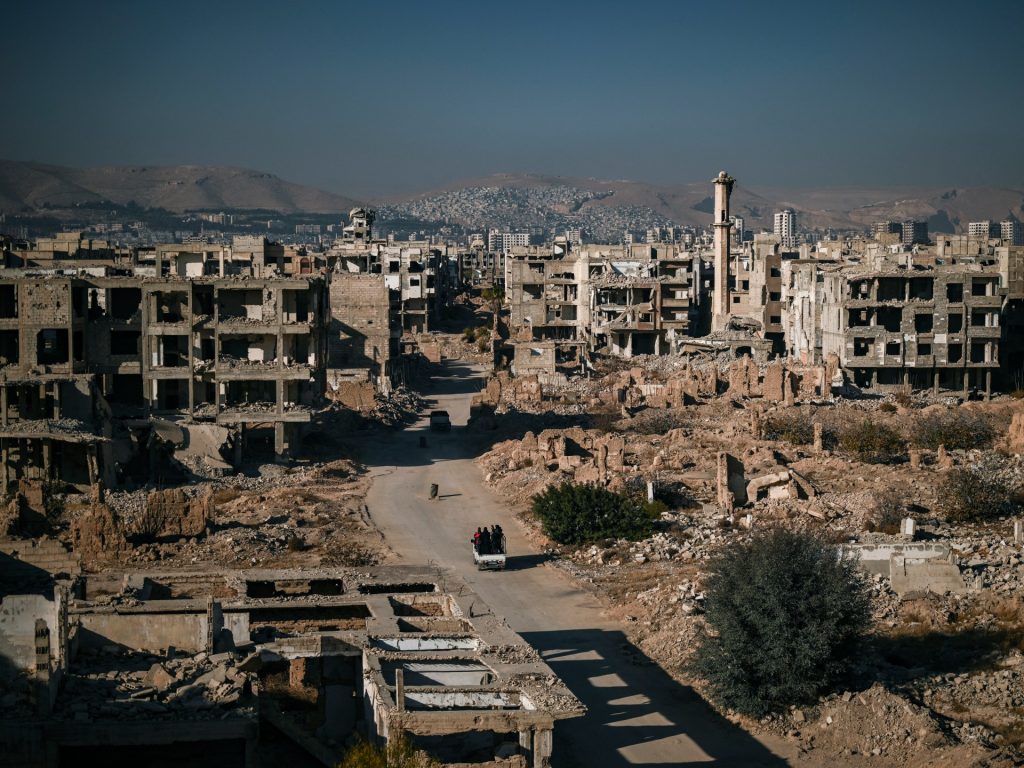
President Ahmed al-Sharaa’s new government is trying to attract foreign investment as Syria’s economy lies in ruins. Jordan will host a Jordanian-Syrian-American meeting on Tuesday to discuss ways to support the rebuilding of Syria, its Ministry of Foreign Affairs and Expatriates says, as Damascus seeks investment deals with international companies to revive its war-ravaged economy. Syrian Foreign Minister Asaad al-Shaibani and United States envoy to Syria Thomas Barrack are expected to attend, the ministry said in a statement on Sunday. Syrian President Ahmed al-Sharaa’s fledgling government has been grappling with the fallout from sectarian violence between Bedouin and Druze fighters in the southern province of Suwayda as well as Israeli strikes on Syrian soldiers and the capital, Damascus. Syria’s economy remains in tatters after nearly 14 years of war and the ouster of longtime President Bashar al-Assad in December. Jordan made its announcement after Damascus signed 12 agreements worth $14bn on Wednesday, including a $4bn agreement with Qatar’s UCC Holding to build a new airport and a $2bn deal to establish a subway in Damascus with the national investment corporation of the United Arab Emirates. The projects “will extend across Syria and represent a qualitative shift in infrastructure and economic life”, Talal al-Hilali, head of the Syrian Investment Authority, said during a ceremony at the presidential palace in Damascus. He described the agreements as “a turning point” for Syria’s future. Al-Sharaa and Barrack were both present at the signing ceremony, according to Syria’s official SANA news agency. Advertisement The United Nations has put Syria’s post-war reconstruction costs at more than $400bn. Syria’s new authorities have worked to attract investment for the reconstruction of infrastructure across the country after the US and the European Union lifted sanctions on Syria in the wake of al-Assad’s ouster. Other major developments on the investment front include the $2bn Damascus Towers project for residential high rises, signed with the Italian-based company UBAKO; a $500m deal for the Baramkeh Towers project, also in Damascus; and another $60m agreement for Baramkeh Mall. Last month, Saudi Arabia said it would invest about $3bn in real estate and infrastructure projects in Syria. In May, Damascus signed a $7bn energy deal with a consortium of Qatari, Turkish and US companies as it seeks to revive its crippled power sector. Adblock test (Why?)
Ukraine says it hit Russian oil refinery in drone exchanges; key talks loom
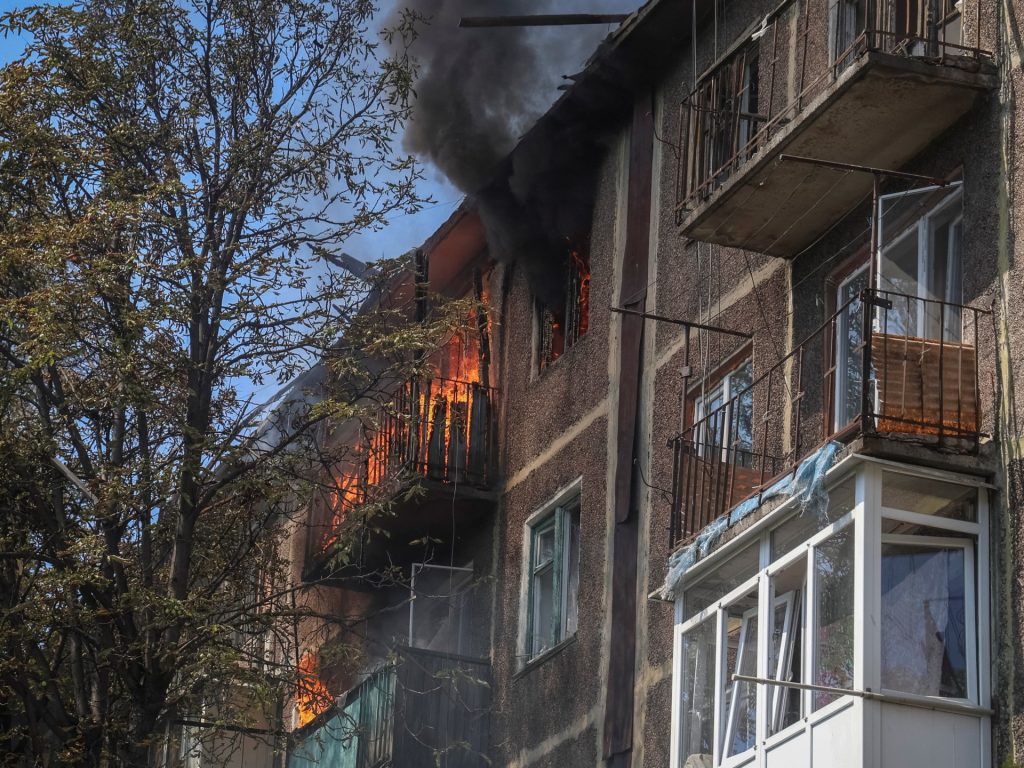
Ukraine’s military has said it struck an oil refinery in Russia’s Saratov region in an overnight drone attack, causing explosions and destruction, according to an army statement, as daily aerial exchanges intensify with diplomatic momentum to end the war in play. Saratov’s governor said on Sunday that one person was killed and several residential apartments and an industrial facility were damaged, but did not mention the oil refinery being struck. “[Ukrainian] drones are targeting … deeper into Russian territory [than] in the past, where previous attacks have been focused on the line of contact in the south and the western parts of Russia,” said Al Jazeera’s Osama Bin Javaid, reporting from Moscow. It is still unclear whether Ukraine’s claims that it hit a refinery are true, he added. Ukraine’s military also said on Sunday that it had taken back a village in the Sumy region from the Russian army, which has made significant recent gains there. Ukrainian troops have “liberated and completely cleared” Russian forces from Bezsalivka, the military general staff said in a Telegram post. It said 18 Russian troops had been “eliminated” in the fighting. Russia’s war in Ukraine is now into its fourth year, as European leaders have welcomed plans by United States President Donald Trump to hold direct talks with his Russian counterpart, Vladimir Putin, on ending the conflict. In Ukraine, three swimmers were killed by unexploded objects in the country’s southern Odesa region at two beaches where swimming has been banned, regional officials said on Sunday. The Black Sea region has long been a popular summer destination, but authorities have urged caution since Russia’s full-scale invasion left mines scattered near its coast. Advertisement “All of them were blown up by explosive objects while swimming in prohibited recreational zones,” Regional governor Oleh Kiper said in a statement. On Saturday, Russia launched a drone attack on a bus in Ukraine’s Kherson region, killing at least two people and wounding 16 others, according to Ukrainian officials. Another drone hit the bus as the police were responding to the attack, injuring three officers, the police added. Russian attacks on Ukraine’s Zaporizhia region also killed two people travelling in a car in the Bilenkivska community on Saturday, as well as a 61-year-old woman who was in her home in the Vasylivka district, a local official reported. Ukraine’s air force said it intercepted 16 of the 47 Russian drones launched overnight, while 31 drones hit targets across 15 different locations. Russia’s Defence Ministry said its air defences shot down 97 Ukrainian drones over Russia and the Black Sea overnight and 21 more on Saturday morning. Europe stresses support for Ukraine ahead of Trump-Putin talks Ukraine’s President Volodymyr Zelenskyy has rejected any suggestion of land concessions to Russia as international efforts to end the war continue. Trump, who had promised to end the war within 24 hours of reentering the White House in January, plans to meet Putin in Alaska on Friday, saying the parties were close to a deal that could resolve the conflict. Trump is reportedly open to inviting Zelenskyy to Alaska, but there has been no confirmation as of yet. Putin has insisted the conditions must be right for him and the Ukrainian leader to meet in person. The leaders of the United Kingdom, France, Germany, Italy, Poland and Finland, together with European Commission President Ursula von der Leyen, on Sunday issued a joint statement welcoming Trump’s efforts, while stressing the need to maintain support for Ukraine and pressure on Russia. “The emphasis [of the European statement was] … that this is a war that is in Ukraine, but is in Europe too, and has huge potential ramifications for European security,” said Al Jazeera’s Charles Stratford, reporting from Ukraine’s capital of Kyiv. The Wall Street Journal also reported that European officials who met US Vice President JD Vance in the UK on Saturday had presented a counterproposal for peace, which included demands that a ceasefire must take place before any other steps are taken. The proposal also said that any territory exchanges must be reciprocal, with firm security guarantees. Adblock test (Why?)
Iran rejects planned transit corridor outlined in Armenia-Azerbaijan pact
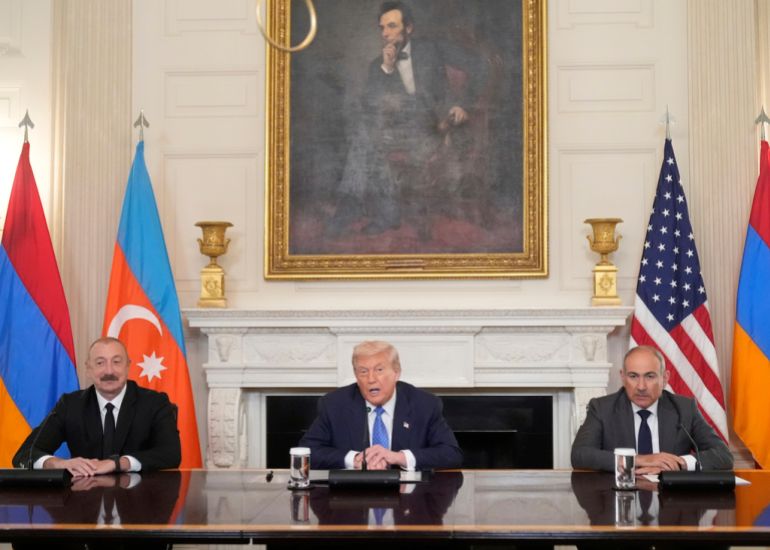
Iran has said it will block a corridor planned in the Caucasus under a United States-brokered peace accord between Azerbaijan and Armenia, which has been hailed by other countries in the region as beneficial for achieving lasting peace. Ali Akbar Velayati, a top adviser to Iran’s supreme leader, said on Saturday that Tehran would block the initiative “with or without Russia”, with which Iran has a strategic alliance alongside Armenia. US President Donald Trump “thinks the Caucasus is a piece of real estate he can lease for 99 years”, Velayati told state-affiliated Tasnim News, referring to the transport corridor included in the peace deal. “This passage will not become a gateway for Trump’s mercenaries — it will become their graveyard,” he added, describing the plan as “political treachery” aimed at undermining Armenia’s territorial integrity. The terms of the accord, which was unveiled at a signing ceremony at the White House on Friday, include exclusive US development rights to a route through Armenia that would link Azerbaijan to Nakhchivan, an Azerbaijani enclave that borders Baku’s ally Turkiye. The corridor, which would pass close to the border with Iran, would be named the Trump Route for International Peace and Prosperity, or TRIPP, and operate under Armenian law. Velayati argued that it would open the way for NATO to position itself “like a viper” between Iran and Russia. Trump, centre, brokered the deal between Azerbaijan and Armenia [File: Mark Schiefelbein/AP Photo] Separately, Iran’s foreign ministry issued a statement expressing concern about the negative consequences of any foreign intervention in the vicinity of its borders. Advertisement While it welcomed the peace deal between Armenia and Azerbaijan, the ministry said any project near Iran’s borders should be developed “with respect for national sovereignty and territorial integrity, and without foreign interference”. For its part, Russia’s Ministry of Foreign Affairs cautiously welcomed the deal, saying on Saturday that Moscow supported efforts to promote stability and prosperity in the region, including the Washington meeting. Similarly to Iran, however, it warned against outside intervention, arguing that lasting solutions should be developed by countries in the region. “The involvement of non-regional players should strengthen the peace agenda, not create new divisions,” the ministry said, adding that it hoped to avoid the “unfortunate experience” of Western-led conflict resolution in the Middle East. Meanwhile, Turkiye on Saturday said it hoped the planned transit corridor would boost exports of energy and other resources through the South Caucasus. A NATO member, Turkiye has strongly backed Azerbaijan in its conflicts with Armenia, but has pledged to restore ties with Yerevan after it signs a final peace deal with Baku. The Turkish presidency said President Recep Tayyip Erdogan discussed the peace agreement with Ilham Aliyev, his counterpart from Azerbaijan, and offered Ankara’s support in achieving lasting peace in the region. Turkish Foreign Minister Hakan Fidan also addressed the planned corridor during a visit to Egypt, saying it could “link Europe with the depths of Asia via Turkiye” and would be “a very beneficial development”. Armenia and Azerbaijan have fought a series of wars since the late 1980s when Nagorno-Karabakh, a region in Azerbaijan that had a mostly ethnic Armenian population at the time, broke away from Azerbaijan with support from Armenia. Armenia last year agreed to return several villages to Azerbaijan in what Baku described as a “long-awaited historic event”. Ahmad Shahidov, of the Azerbaijan Institute for Democracy and Human Rights, told Al Jazeera that he expected a final peace declaration between Armenia and Azerbaijan to be signed in the coming weeks. Shahidov said Friday’s US-brokered deal constituted a “roadmap” for the final agreement, which appears imminent given there are no unresolved territorial disputes between the two neighbours. Adblock test (Why?)
Can Israel have a ‘normal’ place in the Middle East?
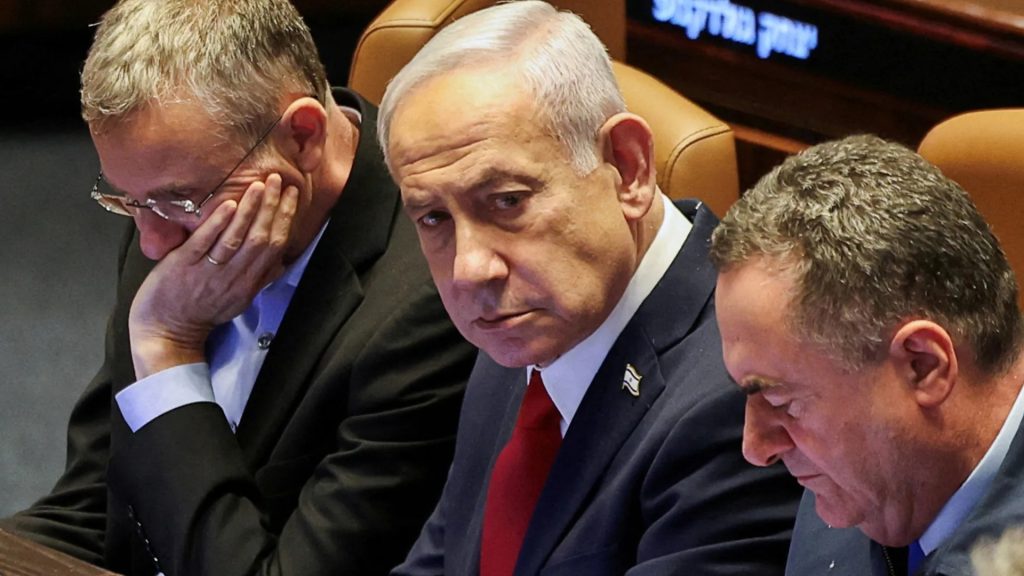
As Israel’s war on Gaza rages, chances of normalising ties with its neighbours are fading. Nearly every state in the Middle East has condemned Israel’s war on Gaza. Saudi Arabia says normalising relations with Israel hinges on a Palestinian state. Jordan, Egypt and some Gulf nations have diplomatic ties with Israel, but have criticised it publicly. In Europe, a growing number of countries are recognising Palestine and the EU is reviewing economic relations with Israel. But are words enough to make Israel stop killing and starving Palestinians? And what would it take for countries to cut ties with Israel? Presenter: James Bays Guests: Daniel Levy – President of the US/Middle East Project and a former Israeli negotiator James Moran – Former European Union ambassador to Egypt and Jordan Jawad Anani – Former deputy prime minister and former foreign minister of Jordan Adblock test (Why?)