

Trump announces 100 percent tariff on semiconductor imports

US President Donald Trump said the tariff will not impact companies if they have already invested in US facilities. United States President Donald Trump says he will impose a 100 percent tariff on foreign-made semiconductors, although exemptions will be made for companies that have invested in the US. “We’ll be putting a tariff on of approximately 100 percent on chips and semiconductors, but if you’re building in the United States of America, there’s no charge, even though you’re building and you’re not producing yet,” Trump told reporters at the Oval Office on Wednesday evening. The news came after a separate announcement that Apple would invest $600bn in the US, but it was not unexpected by US observers. Trump told CNBC on Tuesday that he planned to unveil a new tariff on semiconductors “within the next week or so” without offering further details. Details were also scant at the Oval Office about how and when the tariffs will go into effect, but Asia’s semiconductor powerhouses were quick to respond about the potential impact. Taiwan, home of the world’s largest chipmaker TSMC, said that the company would be exempt from the tariff due to its existing investments in the US. “Because Taiwan’s main exporter is TSMC, which has factories in the United States, TSMC is exempt,” National Development Council chief Liu Chin-ching told the Taiwanese legislature. In March, TSMC – which counts Apple and Nvidia as clients – said it would increase its US investment to $165bn to expand chip making and research centres in Arizona. A semiconductor wafer displayed at Touch Taiwan, an annual display exhibition in Taipei, Taiwan, on April 16, 2025 [Ann Wang/Reuters] South Korea was also quick to extinguish any concerns about its top chipmakers, Samsung and SK Hynix, which have also invested in facilities in Texas and Indiana. Advertisement Trade envoy Yeo Han-koo said South Korean companies would be exempt from the tariff and that Seoul already faced “favourable” tariffs after signing a trade deal with Washington earlier this year. TSMC, Samsung and SK Hynix are just some of the foreign tech companies that have invested in the US since 2022, when then-President Joe Biden signed the bipartisan CHIPS Act offering billions of dollars in subsidies and tax credits to re-shore investment and manufacturing. Less lucky is the Philippines, said Dan Lachica, president of Semiconductor and Electronics Industries in the Philippines Foundation. He said the tariffs will be “devastating” because semiconductors make up 70 percent of the Philippines’ exports. Trump’s latest round of blanket tariffs on US trade partners is due to go into effect on Thursday, but the White House has also targeted specific industries like steel, aluminium, automobiles and pharmaceuticals with separate tariffs. Adblock test (Why?)
Why Trump’s secondary tariffs on Russia could bite the US, its allies too

Top United States diplomatic negotiator Steve Witkoff visited Moscow on Wednesday in a last-ditch push to persuade Russian President Vladimir Putin to agree to a ceasefire with Ukraine before an August 8 deadline set by President Donald Trump. After Witkoff’s meeting with Putin, the White House said that Russia had sought a meeting with Trump. The US president, the White House said, was open to meeting both Putin and Ukrainian President Volodymyr Zelenskyy. Trump, who during his re-election campaign had promised he would be able to end the Russia-Ukraine war in 24 hours if he came to power, has so far failed to mediate a truce despite months of hectic diplomacy, direct talks between Moscow and Kyiv, and phone calls with Putin. Increasingly frustrated by Putin’s unwillingness to agree to a pause in fighting without imposing conditions unacceptable to Ukraine or the West, Trump has threatened a new wave of economic measures punishing Russia if it does not accept a ceasefire. Since Russia’s full-fledged invasion of Ukraine in February 2022, the US and its allies, including the United Kingdom and the European Union, have imposed more than 21,000 sanctions on Russia’s economy. The new tariffs Trump has threatened are unlike any of those earlier sanctions, however. They target Russia by hitting out against its trading partners, in the hope that they will stop buying from or selling to Moscow. But these secondary tariffs also carry risks for the US and its allies. What are the secondary tariffs Trump is threatening? In mid-July, as peace talks stalled despite Trump’s efforts, the US president threatened Russia with 100 percent secondary tariffs if it did not work towards a ceasefire. He gave the Kremlin a 50-day deadline to cooperate. Advertisement After Moscow suggested that it wouldn’t bow to US pressure, Trump moved up the deadline, which now expires on August 8. It is unclear if Trump’s openness to talks with Putin and Zelenskyy following Witkoff’s Moscow visit has changed that deadline. On Wednesday, Trump doubled the tariff rate on Indian imports from 25 percent – which he had announced in late July – to 50 percent, as punishment for New Delhi’s refusal to stop buying Russian oil. That makes India the country facing the highest US tariffs at present – along with Brazil. If Trump’s secondary tariffs go into effect, goods that the US imports from countries still trading with Russia would face duties of 100 percent on top of the tariffs Trump has already imposed on those nations. That would at least double the price of those products, making them less competitive in the US market. The idea behind these tariffs is to persuade Russia’s trading partners to stop buying and selling with the country, isolating its economy and depriving it of revenue it earns from exports, especially from energy. Despite the sanctions it already faces, Russia has consistently earned more than 500 million euros ($580m) a day from energy exports since 2022. That will be disrupted if countries stop buying all oil and gas from Russia. Which countries could Trump’s secondary tariffs hit? The countries most affected by such secondary tariffs would be: China: Russia’s most important ally, China is by far the largest consumer of its northern neighbour’s exports. In 2023, China bought almost a third of all Russian exports. It also bought almost half of Russia’s oil exports. India: An old friend, India has been buying up large volumes of Russian crude since 2022, including almost 40 percent of Russia’s total oil exports in 2023. That year, 17 percent of Russia’s overall exports went to India. Trump had already imposed a 25 percent tariff on Indian goods. On Wednesday, he doubled that rate as punishment for India’s continued oil purchases from Russia. Turkiye: The third-largest buyer of Russian energy, 8 percent of Russia’s exports in 2023 went to Turkiye. It is a NATO ally of the US. Turkiye isn’t the only ally that could be hit if Trump truly targets all those who trade with Russia. Could US allies be hit? Pushing back against Western threats over its ties with Russia, India has pointed to the EU’s own trade with Moscow. And while that trade has plummeted since 2022, it is still substantial. According to the EU, its total trade with Russia was worth 67.5 billion euros ($77.9bn) in 2024. India’s total trade with Russia in 2024-25, by contrast, was worth $68.7bn. Advertisement The bloc still relies heavily on Russia for its liquefied natural gas (LNG) supplies. In fact, its import of Russian LNG has been rising: In 2024, EU imports of Russian LNG were 9 percent higher than the year before. Europe has already been hit with a 15 percent tariff from Trump. Will Trump punish his closest supporters to pressure Russia to end the war? Could the US face risks, too? It is not just allies – secondary tariffs on those who trade with Russia carry risks for the US itself, too. Trump’s team is currently working on a trade deal with China, and those talks have led to a pause in a tariff war between the world’s two largest economies. That detente would break down if Trump imposes 100 percent tariffs on Chinese goods simply because Beijing also trades with Russia. China, Europe and India are all major suppliers of goods to the US: If the cost of those products – from clothes to lamps to iPhones – doubles, American consumers will feel the pinch. The US also buys chemicals, including uranium hexafluoride – used in uranium enrichment – from Russia. Will India and China stop buying Russian energy? That looks unlikely. China continues to buy oil from Iran, despite US sanctions – and Russia is arguably its closest strategic partner. India has also shown no sign of loosening its ties with Russia. Witkoff isn’t the only foreign envoy visiting Moscow at the moment. India’s national security adviser, Ajit Doval, is also in the Russian capital. India’s foreign minister, S Jaishankar, is expected to visit
US soldier charged with attempt to provide Russia with battle tank info

Lee is accused of going online and offering to assist Russian authorities in exchange for Russian citizenship. An active duty soldier has been charged with seeking to pass sensitive information about the United States Army’s main battle tank to the Russian government, the US Justice Department has announced. The suspect, Taylor Adam Lee, has been charged with “attempted transmission of national defense information to a foreign adversary and attempted export of controlled technical data without a license”, the Justice Department said in a statement on Wednesday. Lee, a 22-year-old soldier stationed at Fort Bliss in Texas, has yet to enter a plea in the charges, filed at the US District Court for the Western District of Texas. John A Eisenberg, assistant attorney general for national security, said Lee sought to “transmit sensitive national defense information to Russia” regarding the operation of the M1A2 Abrams – the main battle tank used by the US Army. In June, Lee is said to have gone online and offered assistance to Russia in exchange for Russian citizenship. In the alleged messages, Lee, who holds a top-secret security clearance, allegedly “transmitted export-controlled technical information” about the M1A2’s operation and vulnerabilities. “The USA is not happy with me for trying to expose their weaknesses,” Lee reportedly said. “At this point, I’d even volunteer to assist the Russian Federation when I’m there in any way,” he added. Roman Rozhavsky, assistant director of the FBI’s counterintelligence division, said Lee then shared a memory card containing documents and information about the tank and other US military operations during an in-person meeting in July with someone he believed to be a Russian intelligence officer. Advertisement “Today’s arrest is a message to anyone thinking about betraying the US – especially service members who have sworn to protect our homeland,” Rozhavsky said. The documents contained technical data Lee was not authorised to provide, with some marked “Controlled Unclassified Information”, according to prosecutors. “Throughout the meeting, Lee stated that the information on the SD card was sensitive and likely classified,” prosecutors said. Lee is also alleged to have attempted to provide the Russian government with a piece of hardware from the M1A2 Abrams tank at a July 31 meeting at a storage unit in El Paso, Texas. “After doing so, Lee sent a message to the individual he believed to be a representative of the Russian government stating, ‘Mission accomplished’,” according to prosecutors. Adblock test (Why?)
Ghana’s defence, environment ministers killed in helicopter crash

A helicopter crash has killed eight people including the nation’s defence and environment ministers, according to Ghana’s government. Defence Minister Edward Omane Boamah and Environment Minister Ibrahim Murtala Muhammed were among the victims of the crash in the southern Ashanti region of the country, said Julius Debrah, chief of staff to President John Mahama, on Wednesday. “The president and the government extend their condolences and solidarity to the families of our comrades and soldiers who fell in their service to the nation,” said Debrah. Also among the victims were Alhaji Mohammad Muniru Limuna, deputy national security coordinator and former minister of agriculture, and Samuel Sarpong, vice chairman of Mahama’s National Democratic Congress (NDC) party. The Ghanaian Air Force had reported earlier Wednesday that a military helicopter had disappeared from radar shortly after taking off from Accra at around 9am (local time and GMT), bound for Obuasi, northwest of the capital. Debrah announced that flags would be flown at half-mast. The presidency said that Mahama had suspended all his official activities for the day. More to come… Adblock test (Why?)
Netanyahu wants to ‘occupy Gaza’, what do Israeli people, military think?
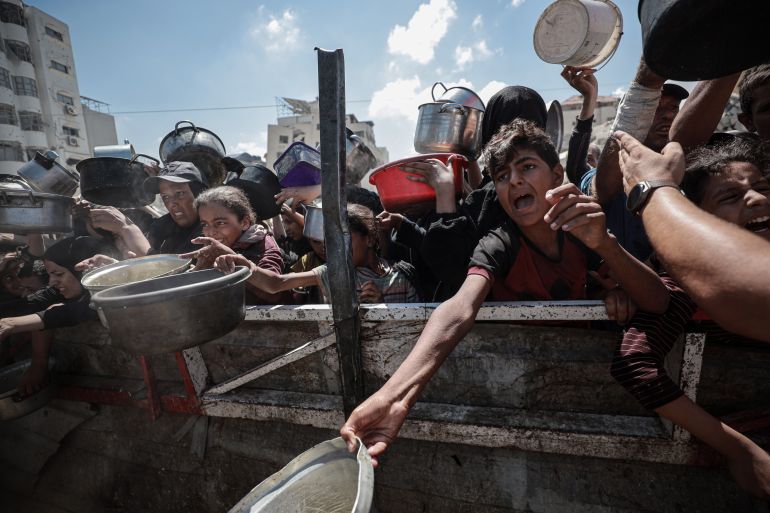
After 22 months of full-scale war, killing more than 60,000 Palestinians and forcing Gaza to the brink of famine, Israeli Prime Minister Benjamin Netanyahu is reportedly preparing to defy international, domestic and military opinion by escalating the war on Gaza still further and ordering its full occupation. “The die is cast – we are going for a full occupation of the Gaza Strip,” Israeli media cited an anonymous official, supposedly quoting Netanyahu, as saying. Meeting with senior security officials on Tuesday, Netanyahu was said to have come out in support of the military taking complete control of Gaza, even if it meant that the remaining Israeli captives there might be harmed or killed. The fate of the captives taken during the Hamas-led attack on southern Israel on October 7, 2023, has been a constant theme throughout Israel’s war on Gaza and rescuing them was one of the war aims Netanyahu claimed at its outset. However, despite the destruction of much of Gaza and the displacement and starvation of much of its population, many captives remain and the territory where they are thought to now be is outside Israeli military control. “Netanyahu wants to continue the war,” Ahron Bregman, a political scientist at King’s College London and former Israeli officer, said, echoing a widespread criticism of the prime minister. “He wants time. He wants time to maintain his coalition and time to drag out his corruption trial,” he said of the criminal charges that have dogged Netanyahu since 2019. Advertisement Motivation The specific reason for this latest potential offensive remains unclear. Some have suggested that talk of occupation is a tactic to bring Hamas back to the negotiating table. The siege Israel imposed on Gaza after breaking the last ceasefire in March has caused international outrage because of the starvation it has caused. Others have suggested it may also be a genuine attempt to eradicate Hamas and finally break whatever spirit remains in Gaza’s population and force them into “concentration zone” camps. “It could be any of them,” Israeli political analyst Nimrod Flaschenberg said. “Netanyahu has proven in the past that he doesn’t care about popular opinion or mass protest, as long as his right-wing base is happy. “We saw that in Rafah, which he destroyed, and we saw that with Iran, which he attacked. It doesn’t matter what most people think. He just needs to keep the base on side and worry about elections later. This has been the strategy for much of the last two years.” The real question is whether the army is capable of occupying all of Gaza, Flaschenberg added. Palestinians facing immense difficulties accessing food due to the blockade imposed by Israel wait to receive hot meals in Gaza on August 5, 2025 [Abdalhkem Abu Riash/Anadolu] “There’s huge fatigue within the military, extensive PTSD [post-traumatic stress disorder] and massive numbers of both overt and grey [private] refusals,” he said of what was estimated by the Israeli magazine +972 in April to be a shortfall in troops of more than 100,000. “This is not realistic at all,” former US Special Forces commander Colonel Seth Krummrich of international security firm Global Guardian said of Netanyahu’s plans to occupy Gaza. “To capture and hold terrain takes an enormous number of soldiers and resources. The Israeli population is divided on this issue, so there are domestic headwinds that will not support this level of mobilisation,” he said of widespread protests in Israel calling for an end to the war. Refuseniks Irrespective of the politics, many in the Israeli army and security services have opposed Netanyahu’s and his right-wing allies’ plans to occupy Gaza, as well as continuing with the war on the enclave more generally. Several senior Israeli military officers, including Chief of Staff Lieutenant General Eyal Zamir, are understood to oppose any further escalation in Gaza at all. On Tuesday, more than 600 former Israeli senior security officials signed an open letter calling on US President Donald Trump to use his influence to help bring the war to a close. “It is our professional judgement that Hamas no longer poses a strategic threat to Israel,” the Commanders for Israel’s Security (CIS) group said in a post on X, where it shared the open letter to President Donald Trump Advertisement CIS describes itself as “Israel’s largest group of former [Israeli military] generals and Mossad, Shin Bet, Police, and Diplomatic Corps equivalents”. “From the military point of view, [Hamas] is totally destroyed. On the other hand, as an ideology, it is getting more and more power among the Palestinian people, within the Arab street around us, and also in the world of Islam,” Ami Ayolon, the former head of Israel’s Shin Bet internal intelligence agency and one of the letter’s signatories, told the BBC. “The lack of support from the upper echelons of the military would also prove vital,” Colonel Krummrich added. “The military leadership has to ‘own’ this operation. If it fails, the military leadership gets blamed. They have to convince their soldiers that it is worth the cost, especially over the long term – potentially stretching into years,” he said. Photo taken during a controlled embed tour with the Israeli army and subsequently edited under military supervision – The Israeli army is reported to be exhausted and suffering critical shortages of reservists [File: Carlos Reyes/AFP] Why would Netanyahu push for the occupation of Gaza? Any further escalation in Gaza is also certain to prove unpopular with the public, which is already tired of the endless war, analysts said. Some polls show widespread public opposition in Israel to the war, with frustration over Netanyahu’s repeated excuses for his government’s failure to reach a ceasefire deal, which could bring the remaining captives home, tangible. Critically, in May, a poll for Israel’s Channel 12 showed that most Israelis thought Netanyahu cared more about clinging to power than he did winning the war. “When you look at the list of people who’ve come out against this, including Zamir, it begs the question
Wildfires and heatwaves grip southern Europe as evacuations ordered
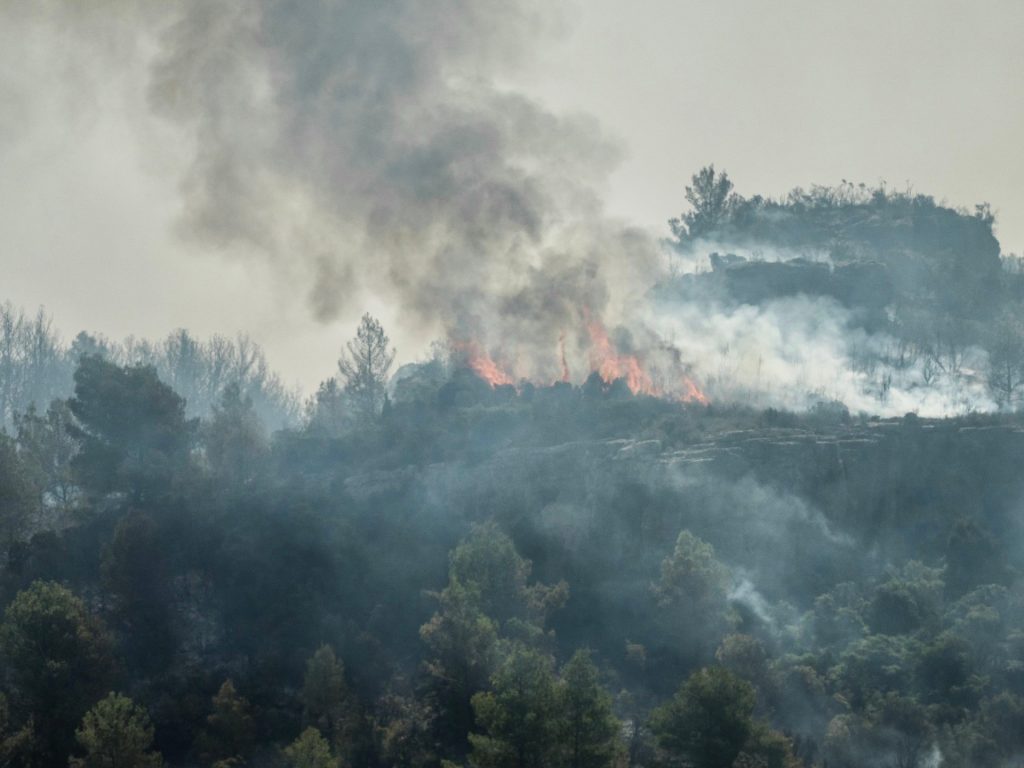
Southern Europe is battling deadly wildfires and extreme heat this week, with record temperatures and dry conditions forcing evacuations across France, Spain and Portugal. An enormous wildfire in southern France’s Aude region has killed one person, injured nine others, marking the country’s largest wildfire this season. The blaze, which erupted on Tuesday, has already scorched at least 15,000 hectares (37,000 acres) – an area larger than the city of Paris – in less than 24 hours. Fires have consumed forests, ravaged villages and damaged or destroyed at least 25 homes, with emergency officials warning that the blaze remains out of control. “All of the nation’s resources are mobilised,” President Emmanuel Macron said in a post on X, urging people to act with “the utmost caution”. More than 1,800 firefighters have been sent to battle the flames, backed by 600 vehicles and water-dropping aircraft. “We have at our disposal in the Aude department the maximum number of personnel and resources that we can have in the south of France in its entirety,” said Remi Recio, deputy prefect of Narbonne. An elderly woman who refused to evacuate was killed, while another person is missing. Two civilians were injured, including one in critical condition with burns, and seven firefighters suffered smoke inhalation. Camping grounds and at least one village were partially evacuated, and roads were closed. “I left everything behind me,” said David Cerdan, 51, who fled the village of Saint-Laurent-de-la-Cabrerisse. “I’m putting it into perspective. I only have material damage.” Advertisement Officials say the fire has already consumed as much land as all French wildfires in 2024 combined – more than double that of 2023. “The fire is advancing in an area where all the conditions are ripe for it to progress,” said fire official Roesch. “This fire will keep us busy for several days. It’s a long-term operation.” An investigation into the cause is under way. France’s environment ministry said drought conditions and dry vegetation contributed to the spread, with water restrictions already in place in the Aude region. “The risk of fire is greatest in the Mediterranean,” said climate and agriculture analyst Serge Zaka. “In France, it is the hottest and driest area. But with climate change, these fire risks are expected to become more significant during the summer.” Last month, a blaze near Marseille injured about 300 people. Scientists warn that climate change is driving more intense heat and dryness across Europe, the world’s fastest-warming continent. Spain and Portugal face heat-driven blazes In Spain, a prolonged heatwave since Sunday – with temperatures reaching 43C (109F) – has helped fan multiple wildfires across the country. The resort town of Tarifa in Andalusia saw more than 1,500 people and 5,000 vehicles evacuated after a fire broke out near La Pena, a wooded area close to the beach. The fire, believed to have started in a camper van, was rapidly spread by strong winds. “What concerns us most right now is the wind, whether it shifts between the west and east,” said Antonio Sanz, Andalusia’s interior minister. Fire crews worked through the night to keep flames away from hotels and tourist accommodation, but the blaze remains active, and residents have not been allowed to return. Elsewhere, a fire near Ponteceso in the Galicia region forced the evacuation of Corme Aldea village. In Cadiz, a blaze that erupted Tuesday led to mass evacuations, according to state broadcaster RTVE. The Spanish meteorological agency AEMET has issued orange alerts across several regions through Friday. Civil protection authorities warn of “high” or “extreme” fire risk in much of the country. Spain’s Ministry of Health reported 1,060 excess deaths linked to extreme heat in July, a 57 percent increase over the same month last year, based on data from the national mortality monitoring system. While the data does not confirm direct causation, it is widely used to estimate heat-related deaths. In neighbouring Portugal, wildfires have already burned more than 42,000 hectares (104,000 acres) in 2025 – the largest area since 2022 and eight times more than this time last year. More than half of that land was scorched in just the past two weeks. Advertisement Firefighters managed to bring a large blaze under control near Vila Real in the north on Wednesday, but others remain active. A fire in the city of Amarante continued to burn, while another in A Coruna reached emergency level 2 due to its proximity to populated areas. Lisbon declared a state of alert until August 7, with more than 100 municipalities on maximum fire risk amid soaring temperatures. Scientists say Southern Europe is on the front line of climate breakdown. Rising global temperatures are creating the conditions for longer and more destructive fire seasons. Adblock test (Why?)
US charges Chinese nationals with illegally shipping Nvidia chips to China
Prosecutors say two men ‘knowingly and willfully’ used California-based company to evade export controls on AI chips. Authorities in the United States have charged two Chinese citizens with shipping tens of millions of dollars’ worth of advanced Nvidia chips to China in breach of export controls. Chuan Geng and Shiwei Yang are alleged to have “knowingly and willfully” exported the graphic processing units (GPUs) used to power artificial intelligence without authorisation from October 2022 to July 2025, the US Department of Justice said on Tuesday. Export records indicate that Geng and Yang, both 28, organised at least 21 shipments through their El Monte, California-based company ALX Solutions Inc to companies in Singapore and Malaysia, the Justice Department said. The exports included a December 2024 shipment of Nvidia H100 GPUs – described as the most powerful chip on the market – that was “falsely labelled” and had not obtained the necessary licence from the US Department of Commerce, the Justice Department said. According to prosecutors, ALX Solutions received payments from firms in Hong Kong and China, including a $1m sum from a China-based company in January 2024, rather than the companies that accepted the shipments. Prosecutors said a search of ALX Solutions’s office and Geng and Yang’s phones last week revealed “incriminating communications”, including communications about shipping chips to China through Malaysia to evade US export restrictions. Geng and Yang face a maximum penalty of 20 years in prison if convicted under the Export Control Reform Act. Al Jazeera could not immediately locate the accused’s lawyers for comment. Advertisement Santa Clara, California-based Nvidia said the case showed that “smuggling is a nonstarter”. “We primarily sell our products to well-known partners, including OEMs [original equipment manufacturers], who help us ensure that all sales comply with US export control rules,” a company spokesperson said. “Even relatively small exporters and shipments are subject to thorough review and scrutiny, and any diverted products would have no service, support, or updates.” The US government has banned the export of the most advanced chips to China amid a heated battle for technological supremacy between Washington and Beijing. US officials have claimed that restrictions, many of which were introduced under former US President Joe Biden, are needed to safeguard national security. China, which has hit back with its own export controls against the US, has accused Washington of undermining global trade and abusing its dominance in tech. Last month, Nvidia CEO Jensen Huang announced that Washington had agreed to reverse its ban on the sale of its H20 GPU to China following discussions with US President Donald Trump. Huang said the lifting of the export ban on the H20, which was specifically designed for the Chinese market and is less powerful than the H100, would encourage “nations worldwide to choose America” for their AI models. Adblock test (Why?)
What is the chikungunya virus, how are countries such as China battling it?

United States health officials are urging travellers to remain vigilant as a mosquito-borne virus continues to circulate across parts of Asia, Africa, Europe, Latin America and the Indian Ocean. Since the beginning of 2025, there have been approximately 240,000 chikungunya virus infections and 90 deaths in 16 countries, according to the European Centre for Disease Prevention and Control (ECDC). In China, an outbreak has infected roughly 7,000 people since late June, with most cases concentrated in the city of Foshan, in Guangdong province, just north of Hong Kong. This marks the country’s largest chikungunya outbreak since the virus was first identified there in 2008. Here is what we know about the disease and how it is spreading. What is the chikungunya virus? Chikungunya is a viral disease that is spread through the bite of infected Aedes aegypti mosquitoes. These mosquitoes also carry and spread dengue, yellow fever and the Zika virus. The name, chikungunya, derives from a word in the Kimakonde language, spoken in Tanzania and Mozambique, meaning “to become contorted”. In most cases, patients will feel better within a week. In many cases, however, the joint pain can last for months or even years. There is no cure for the chikungunya virus, but deaths are rare. If an infected mosquito bites a healthy human, it injects the virus into the bloodstream. People most at risk of serious illness from chikungunya include newborns, older adults and those with existing health problems such as heart disease or diabetes. Advertisement There is no cure for the chikungunya virus, but the death rate is low, except in high-risk populations. If an infected mosquito bites a healthy human, it injects the virus into the bloodstream. If a non-infected mosquito bites a person who is already infected, it sucks the virus from that person’s blood and becomes a carrier capable of transmitting the virus to others through bites. How bad is the current spread of the virus? According to the World Health Organization (WHO), the current surge in cases began in early 2025, with major outbreaks in Indian Ocean Islands, including La Reunion, Mayotte and Mauritius. In La Reunion, more than 47,500 cases of chikungunya and 12 associated deaths were reported up to May 2025, with sustained high transmission across the island, according to the WHO. The ECDC also reports that as of July 18, there were more than 54,000 cases reported from La Reunion. This is now the most serious chikungunya outbreak in La Reunion since the 2005–2006 epidemic, which saw an estimated 244,000 to more than 300,000 cases, and prompted large-scale public health efforts to control mosquito breeding and limit transmission. The virus has also spread to other countries, including Madagascar, Somalia and Kenya, and has shown signs of epidemic-level transmission in parts of Southeast Asia, as well as India, where financial capital Mumbai has seen a surge in cases since July. The WHO has also raised concerns about the rising number of imported chikungunya cases in Europe. Since May 1, about 800 imported cases have been reported in mainland France. According to the ECDC, the Americas as a region have reported the highest number of chikungunya cases globally. As of mid-July 2025, the countries with the most cases in the region include Brazil (185,553), Bolivia (4,721), Argentina (2,836) and Peru (55). In China, infections have been reported in at least 12 cities across southern Guangdong province, in addition to Foshan. Chinese authorities said that an “imported case triggered local transmission” in July, but did not specify where the infection originated. According to experts, rising global temperatures have led to warmer and wetter weather, allowing mosquitoes to thrive. Separately, on Saturday, Hong Kong confirmed its first case of chikungunya: a 12-year-old boy who developed a fever, rash and joint pain since July 31, after visiting Foshan. This was the territory’s first case of the virus in six years. How are China and other countries fighting the spread? According to a Bloomberg news report, China has promised to take swift and decisive action to contain the spread of the chikungunya virus. Advertisement Drones are being used to find places where mosquitoes are breeding. At the same time, scientists are releasing large “elephant mosquitoes” – about 2cm (0.8 inches) long – whose larvae eat the smaller mosquitoes that spread the virus. Health experts hope these mosquito helpers will play an important role in stopping the outbreak. According to a report by the BBC, residents of affected areas in China have been ordered to eliminate standing water in and around their homes – including in flowerpots, coffee machines and empty bottles. Noncompliance may result in fines of up to 10,000 yuan (approximately $1,400), and in more serious cases, people could face criminal charges for “obstructing the prevention of infectious diseases”. Citing local sources, The New York Times said that in some instances, infected residents in Foshan are being moved to “quarantine wards”, where they are kept behind mosquito nets and screens. Some patients also say they were given no choice but to seek treatment at their own expense. In other places, such as La Reunion and Mayotte, authorities have also launched enhanced surveillance, mosquito control initiatives and targeted vaccination efforts. The Basque Country in Spain activated preventive protocols after a case was detected in Hendaye, just across the border in France. The protocols include increased surveillance in border towns and encouraging people to make reports through apps such as Mosquito Alert. How can chikungunya be prevented and treated? Health authorities advise protecting oneself against mosquito bites as the most effective strategy against the spread of chikungunya. This may involve wearing long sleeves and trousers, applying mosquito repellents, removing bodies of standing water where mosquitoes can breed, and staying in closed, air-conditioned spaces indoors or behind mosquito netting when outdoors. While there are no specific medicines to treat the virus, rest, fluids and pain relievers may help alleviate symptoms, according to the US Centers for Disease Control and Prevention (CDC). However, some pain relievers may be
Trump to host Armenia, Azerbaijan leaders for peace talks: Report

Armenia and Azerbaijan’s leaders met in the UAE last month, but no breakthrough in their decades-long conflict was reached. United States President Donald Trump will host the leaders of Armenia and Azerbaijan for peace talks at the White House, a US official said. The official told the Reuters news agency on Tuesday that there is a possibility a framework for a peace agreement could be announced at Friday’s meeting in Washington, DC. The leaders of Armenia and Azerbaijan met in Abu Dhabi, in the United Arab Emirates, for peace talks last month, but no breakthrough in the decades-old conflict was announced. [Al Jazeera] The two South Caucasus countries have been in conflict with each other since the late 1980s, when Nagorno-Karabakh broke away from Azerbaijan with support from Armenia. The region, which was claimed by both Azerbaijan and Armenia after the fall of the Russian Empire in 1917, had a mostly ethnic Armenian population at the time. Azerbaijan recaptured Nagorno-Karabakh in September 2023, prompting almost all of the territory’s 100,000 Armenians to flee to Armenia. Armenia has accused Azerbaijan of “erasing all traces” of the presence of ethnic Armenians in the contested territory, in a case before the International Court of Justice (ICJ). The case stems from the 2020 war over Nagorno-Karabakh, which left more than 6,600 people dead, one of three full-scale wars that the two countries have fought over the region. The United Nations’s top court has ordered Azerbaijan to allow ethnic Armenians who fled Nagorno-Karabakh to return. Azerbaijan says it is committed to ensuring all residents’ safety and security, regardless of national or ethnic origin, and that it has not forced ethnic Armenians, who are mostly Christian, to leave the Karabakh region. Advertisement Azerbaijan, whose inhabitants are mostly Muslim, links its historical identity to the territory, too, and has accused the Armenians of driving out Azeris who lived near the region in the 1990s. The meeting in Abu Dhabi last month between Armenian Prime Minister Nikol Pashinyan and Azerbaijani President Ilham Aliyev came after the two countries finalised a draft peace deal in March. The two leaders “agreed to continue bilateral negotiations and confidence-building measures between the two countries”, but no more concrete steps were outlined in the final statement from the talks. Ceasefire violations along the heavily militarised 1,000km (620-mile) shared Armenia-Azerbaijan border surged soon after the draft deal was announced in March, but later diminished. Adblock test (Why?)
Thousands in Sudan’s besieged el-Fasher at ‘risk of starvation’, UN warns
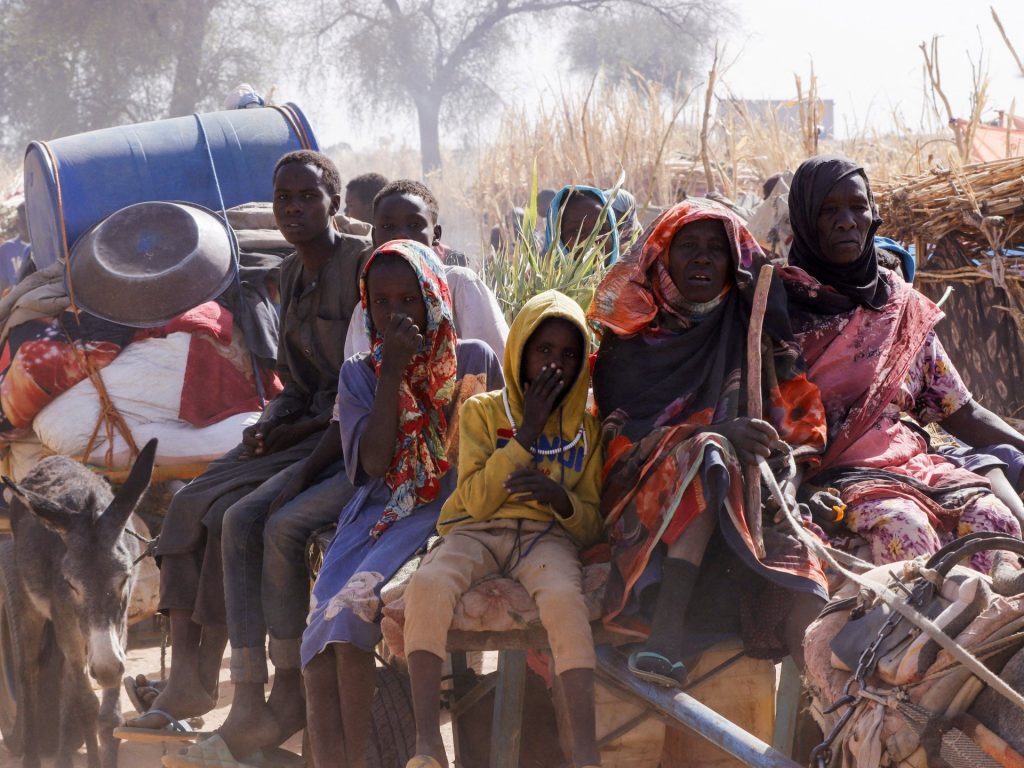
Thousands of families trapped in the besieged city of el-Fasher in western Sudan are at “risk of starvation”, the World Food Programme (WFP) warns as the country’s brutal civil war rages well into its third year. Since May last year, el-Fasher, the capital of North Darfur state, has been under siege by the paramilitary Rapid Support Forces (RSF), which has been at war with the government-aligned Sudanese armed forces (SAF) since April 2023. The RSF has encircled the city, blocking all major roads and trapping hundreds of thousands of civilians, who have dwindling food supplies and limited humanitarian access. “Everyone in el-Fasher is facing a daily struggle to survive,” said Eric Perdison, the WFP’s regional director for East and Southern Africa. “People’s coping mechanisms have been completely exhausted by over two years of war. Without immediate and sustained access, lives will be lost.” El-Fasher is the last major city in the Darfur region still held by the SAF. It has come under renewed attack by RSF fighters this year since the paramilitary was ousted from Sudan’s capital, Khartoum. A major RSF assault on the Zamzam displacement camp near el-Fasher in April forced hundreds of thousands of civilians to flee. Many have sought shelter in the state capital. According to the WFP, prices for staple foods like sorghum and wheat, used to make traditional flatbreads and porridge, are as much as 460 percent higher in el-Fasher than in other parts of Sudan. Markets and clinics have been attacked while community kitchens that once fed displaced families have largely shut down due to a lack of supplies, the United Nations agency added. Advertisement Desperate families are reportedly surviving on animal fodder and food waste while acute malnutrition is soaring, especially among children. According to the UN, nearly 40 percent of children under five in el-Fasher are now acutely malnourished, and 11 percent are suffering from severe acute malnutrition. The rainy season, which peaks in August, is further hampering efforts to reach the city as roads rapidly deteriorate. Last year, famine was first declared in Zamzam and later spread to two other nearby camps – al-Salam and Abu Shouk – and some parts of southern Sudan, according to the UN. ‘Irreversible damage’ The war has killed tens of thousands of people, displaced millions and created what the UN describes as the world’s largest displacement and hunger crises. The country in effect is split in two with the army controlling the north, east and centre of Sudan and the RSF dominating nearly all of Darfur and parts of the south. Last month, a Sudanese coalition led by the RSF announced it was establishing an alternative government in a challenge to the military-led authorities in Khartoum. The new self-proclaimed government could deepen divisions, worsen the humanitarian crisis and lead to competing institutions as the war rages. The crises are happening as UN agencies face one of their worst funding cuts in decades, compounded by decisions by the United States and other donor states to slash their foreign aid funding. Funding cuts are now driving an entire generation of children in Sudan to the brink of irreversible harm amid a scaling-back in support, UNICEF warned on Tuesday. “Children have limited access to safe water, food, healthcare. Malnutrition is rife, and many good children are reduced to just skin, bones,” Sheldon Yett, UNICEF’s representative in Sudan, said, speaking via videolink from Port Sudan. Children were being cut off from life-saving services due to funding cuts while the scale of need is staggering, UNICEF said. “With recent funding cuts, many of our partners in Khartoum and elsewhere have been forced to scale back. … We are being stretched to the limit across Sudan with children dying of hunger,” Yett said. “We are on the verge of irreversible damage being done to an entire generation of children in Sudan.” Only 23 percent of the $4.16bn global humanitarian response plan for Sudan has been funded, according to the UN Office for the Coordination of Humanitarian Affairs (OCHA). “It has been one year since famine was confirmed in Zamzam camp, and no food has reached this area. El-Fasher remains under siege. We need that access now,” Jens Laerke of OCHA said. Advertisement Meanwhile, a cholera outbreak in North Darfur has further added to the desperation of families there. Deaths due to the water-borne disease have risen to 191 in the region, according to Adam Rijal, spokesman for the General Coordination for Displaced Persons and Refugees in Darfur. At least 62 people have died from the disease in Tawila in North Darfur, Rijal said in a statement. Nearly 100 people have also died in the Kalma and Otash camps, both displacement camps located in the city of Nyala in South Darfur state. About 4,000 cases of cholera have been reported in the region, according to the statement. Adblock test (Why?)