

‘We are starving’: Bread becomes a distant dream for Palestinians in Gaza
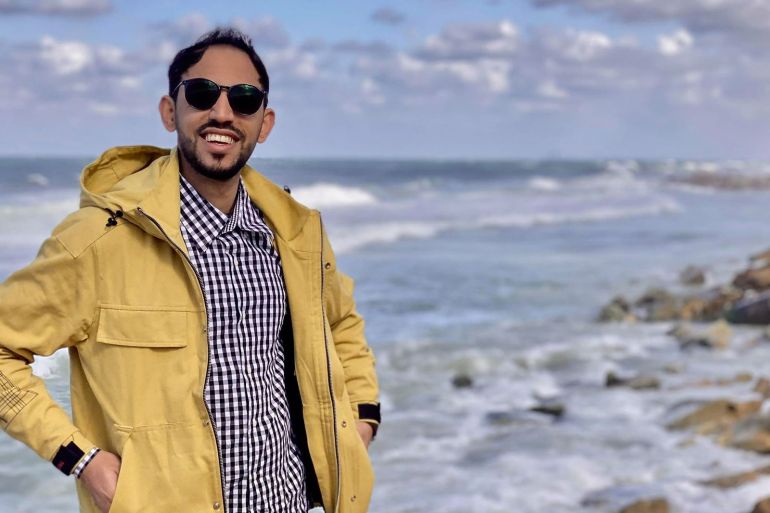
Gaza City, Gaza Strip – Hani Abu Rizq walks through Gaza City’s wrecked streets with two bricks tied against his stomach as the rope cuts into his clothes, which hang loose from the weight he has lost. The 31-year-old searches desperately for food to feed his mother and seven siblings with the bricks pressed against his belly – an ancient technique he never imagined he would need. “We’re starved,” he says, his voice hollow with exhaustion. “Even starvation as a word falls short of what we’re all feeling,” he adds, his eyes following people walking past. He adjusts the rope around his waist, a gesture that has become as routine as breathing. “I went back to what people did in ancient times, tying stones around my belly to try to quiet my hunger. This isn’t just war. It’s an intentional famine.” The fading of Gaza’s heartbeat Before October 7, 2023, and the start of Israel’s war on Gaza, food was the heartbeat of daily life in Gaza. The days in Gaza were built around communal meals – breakfasts of zaatar and glistening olive oil, lunches of layered maqlooba and musakhan that filled homes with warmth, and evenings spent around trays of rice, tender meat and seasonal salads sparkling with herbs from gardens. Abu Rizq remembers those days with the ache of someone mourning the dead. The unmarried man used to love dining and gathering with family and friends. He speaks of comfortable dining rooms where home-cooked feasts were displayed like art and evenings were filled with desserts and spiced drinks that lingered on tongues and in memory. Advertisement “Now, we buy sugar and salt by the gram,” he says, his hands gesturing towards empty market stalls that once overflowed with produce. “A tomato or cucumber is a luxury – a dream. Gaza has become more expensive than world capitals, and we have nothing.” Over nearly 22 months of the war, the amount of food in Gaza has been drastically reduced. The besieged enclave has been under the complete mercy of Israel, which has curtailed access to everything from flour to cooking gas. But since March 2, the humanitarian and essential items allowed in have plummeted to a frightening low. Israel completely blocked all food from March to May and has since permitted only minimal aid deliveries, prompting widespread international condemnation. Hani Abu Rizq on Gaza’s shores before the war [Courtesy of Hani Abu Rizq] Watching children suffer According to Gaza’s Ministry of Health, at least 159 Palestinians – 90 of whom are children and infants – have died of malnutrition and dehydration during the war as of Thursday. The World Food Programme warns of a “full-blown famine” spreading across the enclave while UNICEF reports that one in three children under five in northern Gaza suffers acute malnutrition. Fidaa Hassan, a former nurse and mother of three from Jabalia refugee camp, knows the signs of malnutrition. “I studied them,” she tells Al Jazeera from her displaced family’s shelter in western Gaza. “Now I see them in my own kids.” Her youngest child, two-year-old Hassan, wakes up every morning crying for food, asking for bread that doesn’t exist. “We celebrated each of my children’s birthdays with nice parties [before the war] – except for … Hassan. He turned two several months ago, and I couldn’t even give him a proper meal,” she says. Her 10-year-old, Firas, she adds, shows visible signs of severe malnutrition that she recognises with painful clarity. Before the war, her home buzzed with life around mealtimes. “We used to eat three or four times a day,” she recalls. “Lunch was a time to gather. Winter evenings were filled with the aroma of lentil soup. We spent spring afternoons preparing stuffed vine leaves with such care. “Now we … sleep hungry.” “There’s no flour, no bread, nothing to fill our stomachs,” she says, holding Hassan as his small body trembles. “We haven’t had a bite of bread in over two weeks. A kilo of flour costs 150 shekels [$40], and we can’t afford that.” Hassan was six months old when the bombing began. Now, at two years old, he bears little resemblance to a healthy child his age. Advertisement The United Nations has repeatedly warned that Israel’s siege and restrictions on humanitarian aid are creating man-made famine conditions. According to the UN Office for the Coordination of Humanitarian Affairs, only a fraction of the 600 truckloads of food and supplies required in Gaza daily, under normal circumstances, are coming through. The Integrated Food Security Phase Classification system has placed northern Gaza in Phase 5: catastrophe/famine. Amid a lack of security, the trickle of humanitarian aid allowed to enter Gaza is subject to gangs and looting, preventing people in need from accessing scarce supplies. Furthermore, hundreds of desperate aid seekers have been shot dead by Israeli soldiers while trying to get humanitarian aid provided by the United States- and Israeli-backed GHF since May. Abundance as a distant memory Hala Mohammed, 32, cradles three-year-old Qusai in a relative’s overcrowded shelter in Remal, a neighbourhood of Gaza City, as she describes how she has to watch him cry in hunger every morning, his little voice breaking. “There’s no flour, no sugar, no milk,” she says, her arms wrapped protectively around the child, who has known only war for most of his life. “We bake lentils like dough and cook plain pasta just to fill our stomachs. But hunger is stronger.” This is devastating for someone who grew up in Gaza’s rich culture of hospitality and generosity and had a comfortable life in the Tuffah neighbourhood. Before displacement forced her and her husband to flee west with Qusai, every milestone called for nice meals – New Year’s feasts, Mother’s Day gatherings, birthday parties for her husband, her mother-in-law and Qusai. “Many of our memories were created around shared meals. Now meals [have become the] memory,” she says. “My son asks for food and I just hold him,” she continues, her voice cracking.
Palestinian man dies in Israeli settler arson attack in occupied West Bank
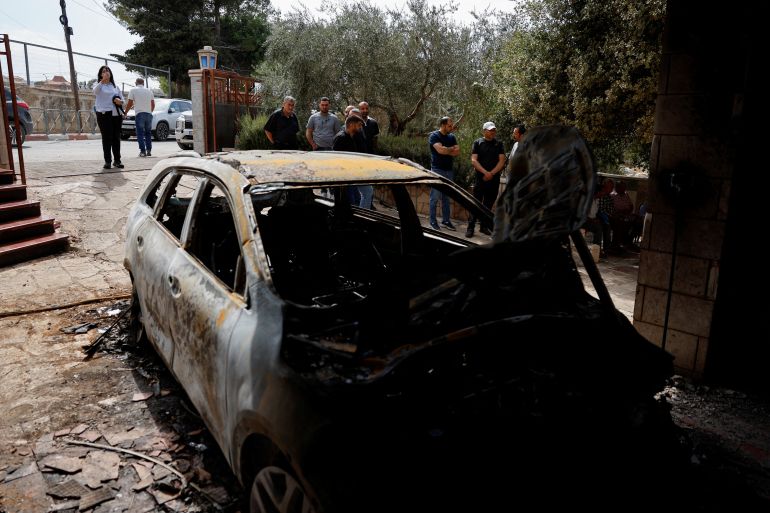
Khamis Ayyad, 40, died of smoke inhalation after settlers set fire to vehicles in town of Silwad, Health Ministry says. A Palestinian man has been killed after Israeli settlers set fire to vehicles and homes in a town in the occupied West Bank, the Palestinian Ministry of Health says. The ministry said on Thursday that Khamis Ayyad, 40, died due to smoke inhalation after settlers attacked Silwad, northeast of Ramallah, around dawn. Ayyad and others had been trying to extinguish the fires, local residents said. Palestinian news agency Wafa reported that the settlers also attacked the nearby villages of Khirbet Abu Falah and Rammun, setting fire to more vehicles. A relative of Ayyad’s, and a resident of Silwad, said they woke up at 2am (23:00 GMT) to see “flames devouring vehicles across the neighbourhood”. “The townspeople panicked and rushed to extinguish the fires engulfing the cars and buildings,” they said, explaining that Ayyad had been trying to put out a fire burning his brother’s car. Ayyad’s death comes amid burgeoning Israeli settler and military violence across the West Bank in tandem with Israel’s war on the Gaza Strip. Settlers have been attacking Palestinians and their property with impunity, backed by the Israeli army. Earlier this week, Awdah Hathaleen, a Palestinian from Masafer Yatta, the community whose resistance to Israeli settler violence was documented in the Oscar-winning film No Other Land, with which he helped, was killed by an Israeli settler. The suspect, identified as Yinon Levi, was placed under house arrest on Tuesday after a Magistrate Court in Jerusalem declined to keep him in custody. People gather next to a burned car after the Israeli settler attack in Silwad [Ammar Awad/Reuters] According to the latest data from the UN’s humanitarian office (OCHA), at least 159 Palestinians have been killed by Israeli troops in the West Bank between January 1 and July 21 of this year. Advertisement Hundreds of Israeli settler attacks against Palestinians have also been reported so far in 2025, including at least 27 incidents that resulted in casualties, property damage, or both, between July 15 and 21, OCHA said. Observers have warned that the uptick in Israeli violence aims to forcibly displace Palestinians and pave the way for Israel to formally annex the territory, as tens of thousands have been forced out of their homes in recent months across the West Bank. Earlier this month, the Israeli parliament – the Knesset – overwhelmingly voted in favour of a symbolic motion calling for Israel to annex the West Bank. On Thursday, Israeli Justice Minister Yariv Levin and Defence Minister Israel Katz said in a joint statement that “there is a moment of opportunity that must not be missed” to exert Israeli sovereignty over the West Bank, according to a Times of Israel report. “Ministers Katz and Levin have been working for many years to implement Israeli sovereignty in Judea and Samaria,” the statement said, using a term used by Israeli settlers and their supporters to refer to the occupied Palestinian territory. Haleema Ayyad holds her son’s photo after he was killed in the attack [Ammar Awad/Reuters] Back in Silwad, Raafat Hussein Hamed, a resident whose house was torched in Thursday’s attack, said that the settlers “burned whatever they could and then ran away”. Hamed told the AFP news agency that the attackers “come from an outpost”, referring to an Israeli settlement that, in addition to violating international law, is also illegal under Israeli law. The Israeli military told AFP that “several suspects … set fire to property and vehicles in the Silwad area”, but forces dispatched to the scene were unable to identify them. It added that Israeli police had launched an investigation. Adblock test (Why?)
Trump’s tariffs forge ‘feeling of big betrayal’ in Canada’s manufacturing
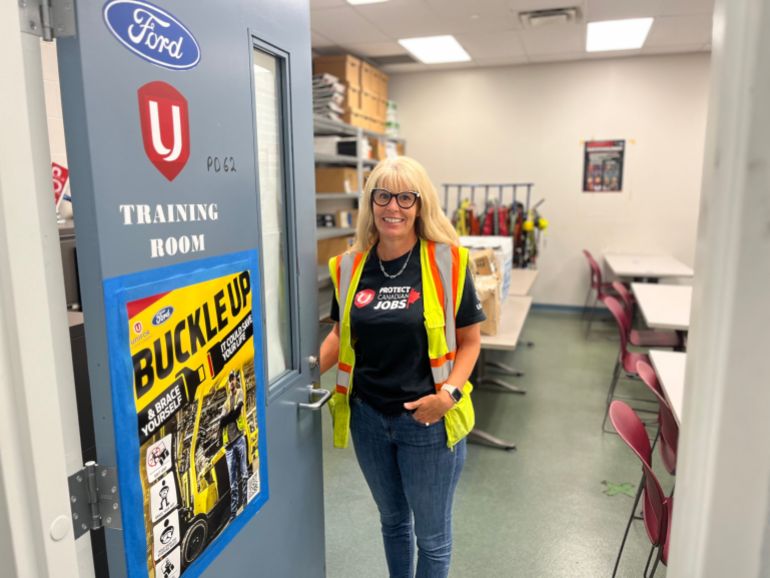
Krysten Lawton, 53, works in health and safety at Ford Motor Company of Canada’s engine plant in Windsor, Ontario — mere blocks from the Detroit River — where she has worked for 30 years. Lawton is a fourth-generation auto worker in Windsor, an industrial hub abutting Canada’s US border near Detroit. Her great-grandfather, both grandfathers and her father all worked for Ford, which employs her, her husband and their oldest son. “These are really good-paying jobs,” Lawton says of the factory, where she currently works in health and safety. “This is life-changing for people to work here.” Windsor employs more people in manufacturing jobs than in any other sector — 19 percent of its workforce. Those workers and employers in Canada’s industrial heartland are now rattled by tariff threats. In March, United States President Donald Trump imposed 25 percent tariffs on steel and aluminium, and weeks later, the same on automobiles. In June, he doubled steel and aluminium duties. And now, he is threatening to tax copper at 50 percent starting Friday. That’s Trump’s deadline for Canada’s Prime Minister Mark Carney to reach a deal or face 35 percent tariffs on all goods deemed not compliant with the 2020 US-Mexico-Canada Agreement (USMCA), atop previous duties. Last Friday, Trump threw cold water on Canadians’ hopes for reprieve. “Canada could be one where they’ll just pay tariffs,” Trump said. “It’s not really a negotiation.” Facing the same deadline, the European Union agreed on Sunday to accept 15 percent duties on most European exports. Advertisement US and Canadian manufacturers, long interconnected, are bracing for the worst — as are industry-dependent communities. “Volatility continues to be the new certainty,” said Alex Greco, senior director of manufacturing at the Canadian Chamber of Commerce. Loss of confidence Trump’s first tariffs had Lawton’s coworkers “all on edge”, she says. Her plant makes engines for factories in the US states of Kentucky, Ohio and Michigan, with some components sourced globally. “It definitely has real human impact,” she said, “especially in our region … the manufacturing hub of all Canada.” Auto workers in Canada like Krysten Lawton (pictured) are worried about their jobs because of tariffs [Photo courtesy of Krysten Lawton] Canadian manufacturers employ 1.7 million people, exceeding one-tenth of the country’s gross domestic product, and last year exported to the US 356 billion Canadian dollars ($257bn US) of goods they produced, with 530,000 manufacturing jobs directly tied to exports. Passenger vehicles and parts made up 62 billion Canadian dollars ($45bn) of that, exceeding 30,000 direct export-dependent jobs. Canada exported 13 billion Canadian dollars ($9bn) of domestically manufactured aluminium — representing nearly 10,000 jobs — and 8.4 billion Canadian dollars ($6bn) of steel and iron, nearly 6,000 jobs. Trump’s volatile approach “just creates a chill on overall investment”, Greco said, “eroding confidence in cross-border supply chains”, freezing many companies’ expansion plans. Official data lags on job impacts. But thousands have already been laid off across the automotive and metals industries this year. Canada’s gross domestic product (GDP) fell in April, mostly in manufacturing, a “significant impact already”, said Centre for Future Work director and economist Jim Stanford. “The tariffs themselves, and probably more importantly the uncertainty around the tariffs, is definitely hitting home,” he said. Trump’s tariff whims have sparked anxiety amongst workers, employers and voters — just 11 percent of whom believe Trump negotiates in “good faith”. But despite layoffs and slowdowns, the damage could be worse, said Catherine Connelly, head of McMaster University’s Centre for Research on Employment and Work. Without mass layoffs or inflationary changes, employment is actually up, she noted. “We’re in the stage of anything can happen,” said the business professor in Hamilton, Ontario. “But it’s starting to look like we’re going to have some kind of tariffs. “No business has ever wanted anything like this.” Advertisement Auto sector ‘going to hurt’ if tariffs stay Car factories by the Michigan-Ontario border are increasingly entangled since the 1965 Canada-US Auto Pact. “We had 60 years of integration,” said McGill University economics lecturer Julian Vikan Karaguesian, who worked in Canada’s finance ministry on trade issues, including in Canada’s US embassy. “If these tariffs are sustained, it’s going to hurt.” John D’Agnolo, chair of Unifor’s Auto Industry Council, notes that workers are fretting — especially younger ones with less seniority protections and rising expenses. “It’s a scary thing,” the longtime Ford employee and unionist said. “They’re worried. “They’ve got to make sure they can take care of their families.” Industry slowdowns would “ripple” across auto-dependent regions, Greco said. “Companies will have to make very tough decisions,” he said. “There’s still a threat of, potentially, a recession.” A silver lining, experts say, is exemptions for North American-made parts. “In theory, the US tariff on cars is supposed to make an adjustment for US-made content in the car,” said Stanford. “But in practice … industry are just scratching their heads.” ‘Cascading impacts’ Even for USMCA-compliant auto parts, tariffs on raw metals for cars will have “cascading impacts”, Greco said. One-quarter of imported US steel is Canadian, and over half of its imported aluminium. The US gets a quarter of its steel from Canada, and tariffs will increase prices [File: Carlos Osorio/Reuters] In Ontario, “the heart” of Canada’s metal industry, one region hosts one-third of the provincial sector’s workforce. The peninsula around Hamilton, Canada’s “steel capital”, employs nearly 12,000 people in metal manufacturing. “Hamiltonians in particular are concerned about steel; it’s a huge industry,” said Connelly. “The companies, they’re extraordinarily resilient. “But nobody ever thought that something like this would ever happen. It’s certainly quite a shock.” The United Steelworkers represent tens of thousands of metalworkers. Its national union director for Canada, Marty Warren, warns that “a whole lot is at stake” for members, who produce products “from when you’re born to caskets for your last day”. Tariffs have many of his members fearful for their futures in “great-paying jobs” that “support communities”. “It’s definitely set off some panic,” he noted. “There’s fear throughout the membership: ‘Should I be saving my
Canada will recognise Palestinian state at UN General Assembly: Carney
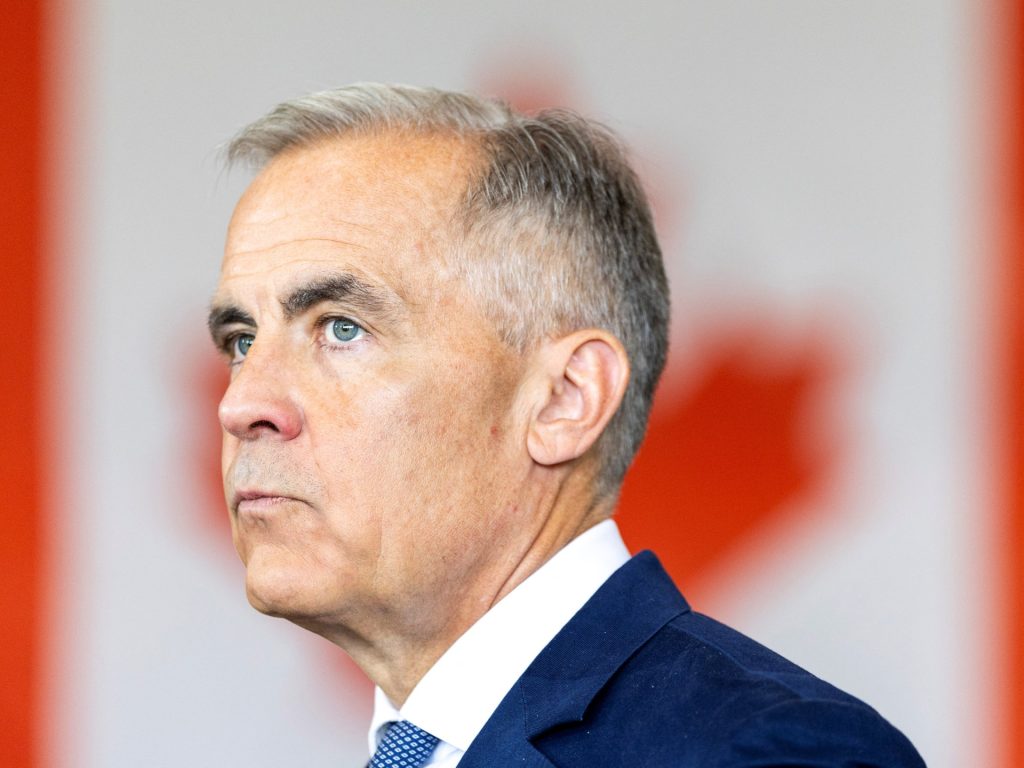
The Canadian prime minister says Hamas cannot play a role in the future of Palestine or take part in possible 2026 elections. Canada has joined several Western countries in announcing its intention to recognise a Palestinian state amid the continuing Israeli atrocities unfolding in Gaza. Canadian Prime Minister Mark Carney made the announcement on Wednesday. He explained that Ottawa had hoped that a two-state solution could be achieved through a negotiated peace process, but that approach was “no longer tenable”. “Canada intends to recognise the State of Palestine at the 80th session of the United Nations General Assembly in September 2025,” Carney told reporters. The move follows a similar announcement by the United Kingdom and France earlier this month. But it is not clear how such recognitions will impact Israel’s ongoing war in Gaza and the expansion of illegal settlements in the West Bank – the two territories that would form a Palestinian state. Carney said the recognition is predicated on promises of reform from the Palestinian Authority and President Mahmoud Abbas, as well as a commitment to hold general elections in 2026. He stressed that Hamas can play no role in the future of Palestine and would not be allowed to take part in future elections, a condition that some argue may taint any democratic process. “Preserving a two-state solution means standing with all people who choose peace over violence or terrorism,” Carney said. US rejects Palestine recognition The United States, Israel’s top ally, has rejected moves to recognise a Palestinian state, saying that the policy rewards Hamas. Earlier this month, US President Donald Trump dismissed his French counterpart, Emmanuel Macron, when the latter announced plans to acknowledge Palestine. Advertisement “What he says doesn’t matter,” Trump said of Macron. “It’s not going to change anything.” On Tuesday, he also objected to the UK’s move, saying that the issue did not come up during his meeting with British Prime Minister Keir Starmer in Scotland. “You could make the case that you’re rewarding people, that you’re rewarding Hamas if you do that. I don’t think they should be rewarded. I’m not in that camp, to be honest,” Trump said. The Trump administration has been uncompromising in its support for Israel, despite accusations by UN experts and rights groups that the US ally is committing a genocide against Palestinians. The Israeli military has killed more than 60,000 Palestinians in Gaza and flattened most of the territory since the start of the war in 2023. Calls for sanctions Last year, Canada announced that it would stop issuing new permits for weapons exports to Israel amid concerns over human rights violations. But earlier this week, a coalition of advocacy groups released a report based on Israeli tax records, revealing new details indicating that weapons have continued to be sent to Israel. The groups accused the Canadian government of constructing a “web of lies” to shield itself from criticism and called on Ottawa to cancel all existing arms export permits to Israel. On Wednesday, the National Council of Canadian Muslims welcomed Carney’s announcement but called on Canada to take other practical steps to stop Israel’s assault on Gaza. It compared Israel’s actions in Gaza to Trump’s own pressure campaign to make Canada the 51st state in the US. “Canada must continue to stand by our values to drive an independent foreign policy, particularly as the same Trump administration that backs the annexation of Gaza also threatens Canada with ideas of a 51st state,” the group said in a statement. “This means Canada must apply further sanctions on the Netanyahu government, impose a full two-way arms embargo on the [Israeli military], review the Canada-Israel Free Trade Agreement, and provide better assistance to those escaping Gaza to reunite with loved ones here in Canada.” Adblock test (Why?)
More than 70 aid seekers killed as starvation worsens in Gaza
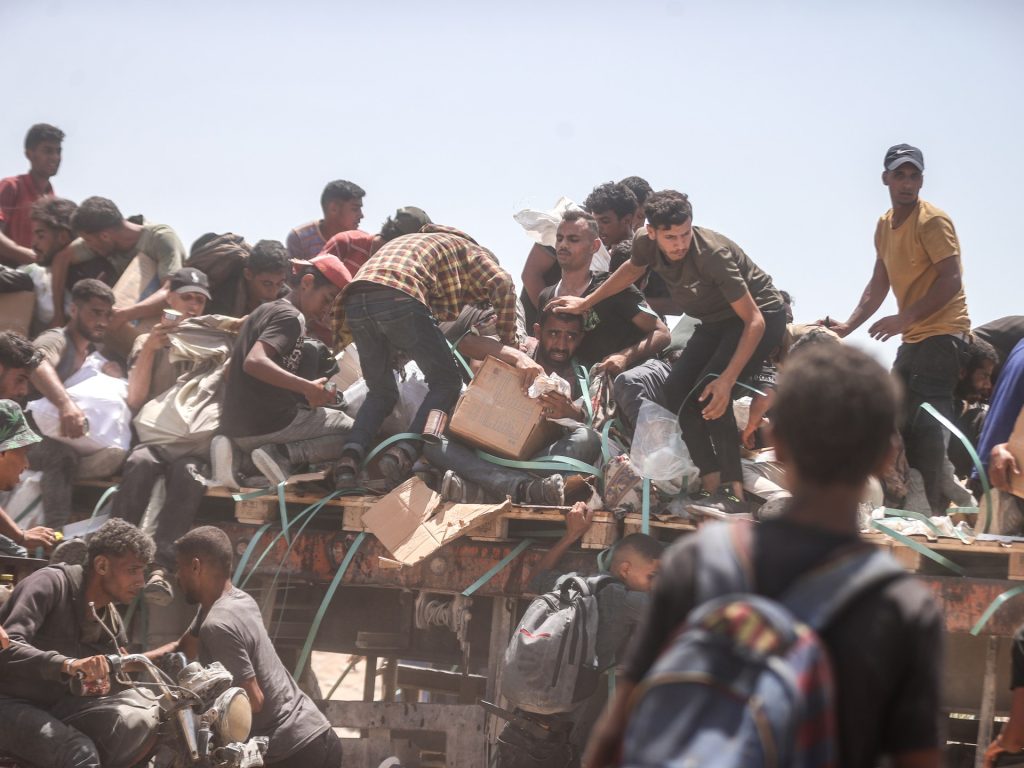
Israeli attacks have killed at least 71 Palestinians seeking humanitarian aid amid a deepening hunger crisis in Gaza, medical sources told Al Jazeera, as hospitals in the besieged territory recorded seven more deaths from famine and malnutrition. At least 51 people were killed and more than 648 others were wounded by Israeli forces on Wednesday as they were heading towards the Zikim crossing point for aid trucks entering northern Gaza, according to the Gaza Government Media Office. Another 20 people seeking aid were killed near the so-called Morag Corridor near Khan Younis in southern Gaza, the Nasser Medical Complex reported. More than 1,000 Palestinians seeking aid have been killed by Israeli forces near aid distribution sites run by the US and Israeli-backed GHF, which launched operations in late May. The GHF has been heavily criticised by the UN and other humanitarian organisations for failing to provide enough aid and for the dire security situation at and around its aid distribution sites. The attacks come as aid agencies and health officials warn of a sharp rise in starvation, particularly among children and the elderly. The Gaza Health Ministry said 154 people, including 89 children, have died of malnutrition, most in recent weeks. A global hunger monitor said on Tuesday that a famine scenario is unfolding. Among those struggling to survive is Jihan al-Quraan, a mother who spoke to Al Jazeera while holding her young daughter. “Look at her stomach! There is no flesh, just bones from the lack of food – an entire month without bread,” she said. Advertisement Al-Quraan said she tried to get food at a crowded soup kitchen, but returned empty-handed. “I only found some dry pasta shells on the floor,” she added. Despite mounting needs, aid entering Gaza remains far below required levels. Adnan Abu Hasna, a spokesman for UNRWA, the United Nations agency for Palestinian refugees, told Al Jazeera Arabic that the trickle of aid allowed into Gaza “does not reach the majority of the population”. According to the UN, Gaza needs at least 500 to 600 aid trucks per day to meet basic humanitarian needs. Yet, only 269 trucks have entered the territory over the past four days. “Most of them were looted by hungry crowds,” reported Al Jazeera’s Tareq Abu Azzoum from Gaza. “Now, looting aid is not very shocking. It has been a predictable outcome for a prolonged period of a starving population that has been denied access to water, food and medical supplies.” “People have gone days without getting any kind of food,” he added. “The number of trucks sent to the Gaza Strip falls short of meeting the needs of the population.” The Euro-Med Human Rights Monitor said it had documented the deaths of dozens of elderly people in displacement camps “due to starvation, malnutrition, or lack of treatment”. “Many of these deaths were recorded as natural causes, owing to the absence of a clear reporting mechanism within the ministry and the tendency of families to bury their loved ones immediately,” the group said in a statement on X. It added that hospitals and primary care centres have seen an “unprecedented surge” in daily deaths over the past two weeks, with hundreds of elderly people arriving in “states of extreme exhaustion, seeking nutritional fluids”. Israeli bombardment continues At least 15 other people were killed in Israeli attacks across Gaza on Wednesday, medical sources told Al Jazeera. That includes the minimum three people, including Palestinian photojournalist Ibrahim Mahmoud Hajjaj, 35, were killed in two separate Israeli air strikes in Gaza City. One strike targeted a group of people near az-Zahra School in the central Daraj neighbourhood, killing two and wounding others. A second strike in eastern Gaza City killed Hajjaj. According to the Committee to Protect Journalists, 178 journalists have been killed during Israel’s war on Gaza since October 7. Since the war began, Israeli attacks have killed at least 60,138 Palestinians and wounded more than 146,000 others, according to Gaza’s Health Ministry. An estimated 1,139 people were killed in Israel during the Hamas-led attack on October 7, and more than 200 others were taken captive. Advertisement Gaza annexation threat Meanwhile, an Israeli minister hinted at the possibility of annexing parts of Gaza – a move that could any remaining hopes of a two-state solution and further entrench Israel’s occupation in violation of international law. Accusing Hamas of trying to drag out ceasefire talks to gain Israeli concessions, security cabinet member Zeev Elkin told public broadcaster Kan that Israel may give the group an ultimatum to reach a deal before further expanding its military actions. “The most painful thing for our enemy is losing lands,” he said. “A clarification to Hamas that the moment they play games with us they will lose land that they will never get back would be a significant pressure tool.” The remarks came just days after Heritage Minister Amichai Eliyahu said the Israeli government is “advancing the destruction of Gaza”. “The government is racing ahead for Gaza to be wiped out,” Eliyahu told Haredi radio station Kol Barama. “Thank God, we are wiping out this evil. We are pushing this population that has been educated on ‘Mein Kampf’,” he said, referring to the 1925 autobiographical and political work by Adolf Hitler, the leader of Germany’s Nazi Party. Eliyahu’s comments drew widespread outrage, including from within Prime Minister Benjamin Netanyahu’s own coalition. However, Israeli media reports suggest the government is preparing a formal ultimatum to Hamas: agree to their terms of a ceasefire or face the annexation of territory. Israel’s Channel 13 reported that Israel may seek to annex land adjacent to the Gaza perimeter fence, pushing up to one kilometre inside the Strip. These threats come as negotiations continue between Hamas and Israel, with mediation from the United States, Qatar and Egypt. Channel 12 reported that Israel has proposed a 60-day ceasefire that would include a partial withdrawal of troops from Gaza, but not an end to the war. A US official confirmed that special envoy
Tsunami alert after massive earthquake east of Russia
[unable to retrieve full-text content] Tsunami alerts have been issued from Japan to the US coast after a magnitude 8.8 earthquake struck near Russia.
Trump’s approval rating in US drops to lowest level of his second term

Polls find that Americans have mixed feelings about Trump’s handling of the US economy and immigration. United States President Donald Trump‘s approval rating has dropped to 40 percent, the lowest level of his second term in office, as Americans remain concerned about his handling of the economy and immigration. The three-day poll by Reuters news agency and Ipsos, which closed on Monday, surveyed 1,023 US adults nationwide and had a margin of error of 3 percentage points. Trump had a 41% approval rating in Reuters/Ipsos’ most recent prior poll, conducted on July 15 and 16. This latest poll showed a nation deeply polarised over Trump, with 83% of Republicans and just 3% of Democrats approving of his performance. About one-third of independents approved. Trump campaigned on promises to supercharge the US economy and crack down on immigration, and the poll found that Americans gave him mixed marks on both those areas, where his administration is using aggressive tactics. The recent slippage on immigration is particularly significant because the issue was a major strength for Trump in the 2024 election. Earlier in his second term, it was also one of the few areas where he was outperforming his overall approval. In March, about half of US adults approved of his handling of immigration. Other recent polls also show growing discontent with Trump’s approach on immigration. A poll conducted by US media outlet CNN and SSRS found that 55 percent of US adults say the president has gone too far when it comes to deporting undocumented immigrants who are living in the US, an increase of 10 percentage points since February. Advertisement “I understand wanting to get rid of illegal immigrants, but the way that’s being done is very aggressive,” said Donovan Baldwin, 18, of Asheboro, North Carolina, who did not vote in the 2024 election. “And that’s why people are protesting, because it comes off as aggression. It’s not right.” Some 38 percent of respondents approved of Trump’s handling of the economy, up from 35 percent approval in the mid-July Reuters poll. The CNN poll, however, found that ratings of Trump’s handling of the economy, which were more positive during his first term, have been persistently negative in his second term. It found that few Americans think Trump’s policies have benefitted them so far. There are concerns over the negative effect that Trump’s tariffs may have at home. Even if he is not a fan of everything Trump has done so far, Brian Nichols, 58, of Albuquerque, New Mexico, is giving him the benefit of the doubt. Nichols, who voted for Trump in 2024, likes what he is seeing from the president overall, though he has his concerns both on style and substance, particularly Trump’s social media presence and his on-again, off-again tariffs. “We put him into office for a reason, and we should be trusting that he’s doing the job for the best of America,” Nichols said. Adblock test (Why?)
Turkiye’s glaciers fall victim to climate change
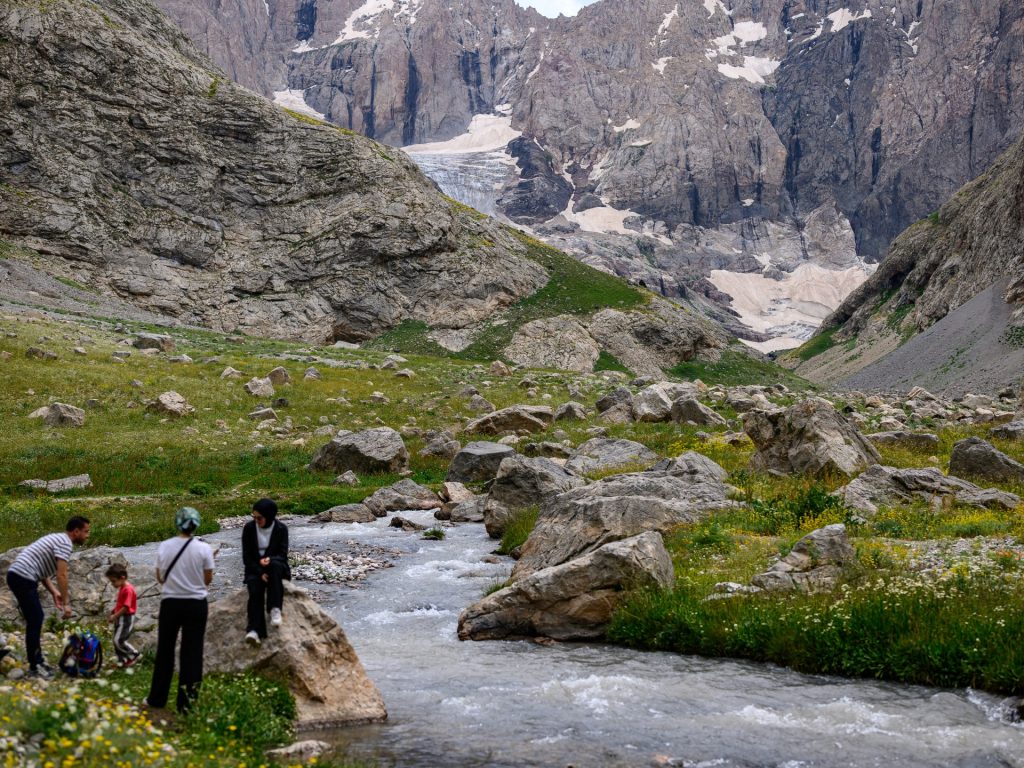
Kemal Ozdemir looked up at the bare peaks of Mount Cilo in Turkiye’s southeast: “There were glaciers 10 years ago,” he recalled under a cloudless sky. A mountain guide for 15 years, Ozdemir then turned towards the torrent carrying dozens of blocks of ice below a slope covered with grass and rocks – a sign of glacier loss being exacerbated by global warming. “You can see that there are quite a few pieces of glacier in the water right now … the reason why the waterfalls flow so lushly actually shows us how fast the ice is melting,” he said. The glaciers of Mount Cilo, which rises to 4,135 metres (13,566 feet) in the province of Hakkari on the Iraqi border, are the second largest in the country behind those of Mount Ararat (5,137 metres / 16,854 feet) – 250 kilometres (155 miles) further north. As global temperatures rise amid human-caused climate change, new sections of the mountains that were once capped in ice are melting rapidly year after year. Turkiye, which is experiencing punishing heatwaves, drought and wildlfires, even registered a record temperature of 50.5 degrees Celsius (122.9 degrees Fahrenheit) on Friday in Silopi, some 200 kilometres (124 miles) from Hakkari. “The melting process is faster than we expected. According to our research, in the last 40 years, we have lost almost 50 percent of this continuous snow and ice cover in this place,” said Onur Satir, a professor at Yuzuncu Yil University and specialist in geographical information systems in the eastern province of Van. Advertisement “Some places melt faster than others, so actually it’s showing us which places must be protected, but we have no opportunity to cover the whole ice area,” Satir said. In recent years, several glaciers in the Alps have been covered with white tarpaulins in an attempt to delay their demise. According to the United Nations, glaciers in several regions of the world will not survive the 21st century, threatening the water supply of hundreds of millions of people. The surrounding landscape is a delight for walkers, many of whom have flocked to the Hakkari mountains since the guns fell silent in recent years in the region, where fighters from the Kurdistan Workers’ Party (PKK) have long challenged the Turkish state. The ongoing peace process with the PKK, which has begun a disarmament process, suggests that tourism will accelerate in the area, which became a national park in 2020. But melting ice has made certain areas dangerous. In July 2023, two walkers were killed when they were swept away by a block that broke off from a glacier. “People should not walk on the ice,” Ozdemir warned, voicing concerns about the safety of walkers and the preservation of glaciers. “This region is 40–50 kilometres (25–31 miles) away from the city, but there was no road in the past. Now, with the construction of the road, more vehicles are coming here and the increase in the number of people coming here actually accelerates the melting a little bit,” said the 38-year-old guide. A UN report on desertification worldwide estimates that 88 percent of Turkey’s territory is at risk: rainfall is expected to decrease by 30 percent by the end of the century, while temperatures are expected to rise by 5 to 6C (9 to 10.8F) compared with averages recorded between 1961 and 1990. Adblock test (Why?)
New poll shows plunging US public support for Israel’s war on Gaza
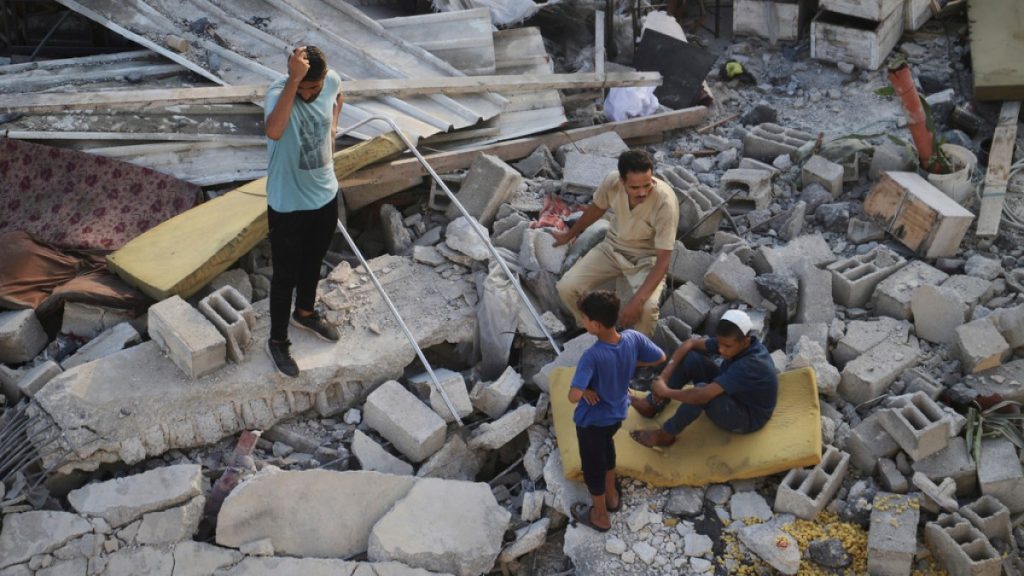
Washington, DC – A new poll from the research firm Gallup suggests that only 32 percent of Americans approve of Israel’s military action in Gaza, a 10-point drop from September 2024, as anger over atrocities against Palestinians continues to rise. The survey, released on Tuesday, also showed an enormous partisan divide over the issue. Seventy-one percent of respondents who identified as members of the Republican Party said they approve of Israel’s conduct, compared with 8 percent of Democrats. Overall, 60 percent of respondents said they disapprove of Israel’s military action in Gaza. Shibley Telhami, a professor at the University of Maryland and the director of the Critical Issues Poll, said the latest survey shows a trend of growing discontent with Israel that goes beyond the war on Gaza. “What we’re seeing here is an entrenchment of a generational paradigm among particularly young Americans – mostly Democrats and independents, but even some young Republicans – who now perceive the horror in Gaza in a way of describing the character of Israel itself,” Telhami told Al Jazeera. In Tuesday’s survey, only 9 percent of respondents under the age of 35 said they approve of Israel’s military action in Gaza, and 6 percent said they have a favourable opinion of Israeli Prime Minister Benjamin Netanyahu. The study follows an April poll from the Pew Research Center, which found a majority of respondents – including 50 percent of Republicans under 50 years old – said they had unfavourable views of Israel. Advertisement But even as public opinion in the US continues to shift, Washington’s policy of unconditional support for Israel has been unwavering. Since the start of the war on Gaza, the US has provided Israel with billions of dollars in military aid, as well as diplomatic backing at the United Nations. Both President Donald Trump and his predecessor, Joe Biden, have been uncompromising backers of the Israeli assault on Gaza, which human rights groups have described as a genocide. Israel has killed more than 60,000 Palestinians in Gaza, imposed a suffocating siege and flattened most of the enclave, reducing its buildings to rubble. The siege is credited with prompting deadly hunger: The UN on Tuesday said there was “mounting evidence of famine and widespread starvation”. Nevertheless, the US Congress also remains staunchly pro-Israel on a bipartisan basis. Earlier this month, a legislative push to block $500m in missile defence support for Israel failed in a 422-to-six vote in the House of Representatives. So, what explains the schism between the views of average Americans and the policies of their elected representatives? Telhami cited voter “priorities”. He explained that foreign policy traditionally has not been a driving factor in elections. For example, domestic issues like abortion, the economy and gun control usually dominate the electoral agenda for Democrats. He also noted the influence of pro-Israel groups, like the American Israel Public Affairs Committee (AIPAC), which have spent millions of dollars to defeat critics of the Israeli government, particularly progressives in Democratic primaries. But things are changing, according to the professor. Palestine is rising in public importance, he said, with US voters looking at the issue through the lens of “soul-searching”, as a way of questioning what they stand for. “It’s not just Gaza. It’s that we are enabling the horror in Gaza as a country – in terms of our aid or support or, even in some cases, direct collaboration,” Telhami said. “That it is actually creating a paradigmatic shift about who we are, not just about: ‘Do we support Israel? Do we support the Palestinians?’” He said the victory of Palestinian rights advocate Zohran Mamdani in New York City’s Democratic mayoral primary last month underscores that movement. “The rise of Zohran Mamdani in New York is giving people pause because he’s been able to generate excitement, not, as some people thought, despite his views on Israel-Palestine, but actually because of his views on Israel-Palestine.” Advertisement Adblock test (Why?)
Trump says Epstein ‘stole’ young women staff from his Mar-a-Lago resort
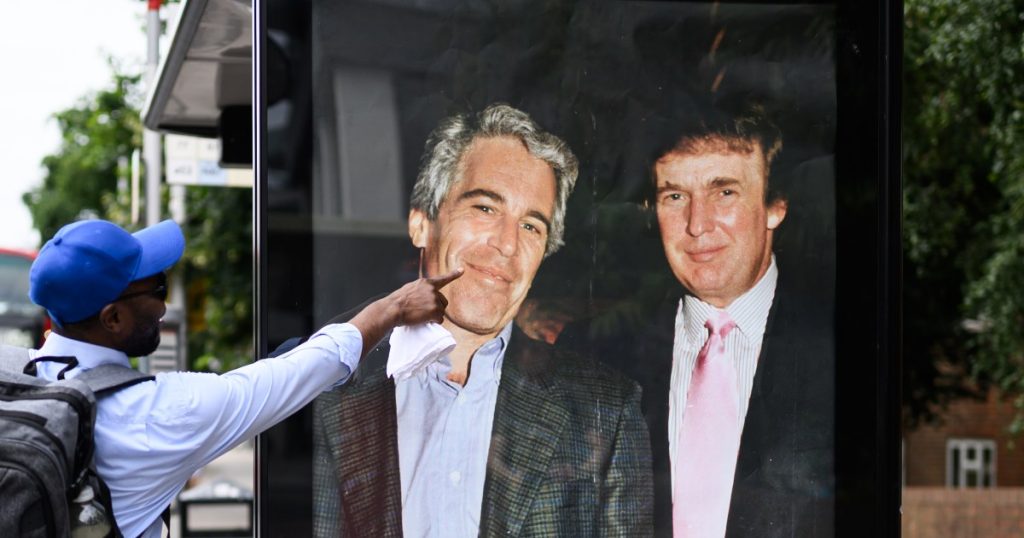
Trump says he cut off his relationship with Epstein because the sex offender poached workers from his Florida resort. United States President Donald Trump has said that he ended his relationship with disgraced financier and convicted sex abuser Jeffrey Epstein because he “stole” young female workers from Trump’s Mar-a-Lago resort. Speaking to reporters on his way home from a trip to Scotland on Tuesday, Trump alleged that one such worker was the late Virginia Giuffre, one of Epstein‘s highest-profile accusers. “People were taken out of the [Mar-a-Lago] spa, hired by him. In other words, gone,” Trump said. “When I heard about it, I told him, I said, ‘Listen, we don’t want you taking our people.’ “And then, not too long after that, he did it again. And I said, ‘Out of here.’” The US president, who had a close relationship with Epstein for years, has become increasingly defensive as he faces growing scrutiny over his administration’s refusal to release government records with information about Epstein’s abuses. Officials including Attorney General Pam Bondi have said that releasing further documents would risk disseminating victim information and child pornography collected as evidence. But Bondi’s comments have helped fuel the controversy. In a February interview with Fox News, Bondi said that Epstein’s supposed client list was “sitting on my desk right now”. Conspiracy theorists have long maintained that Epstein kept a list or book of contacts in order to coerce powerful figures in arts and politics. They also have cast doubt on Epstein’s jailhouse suicide in 2019, calling it, without proof, a cover-up. Advertisement Current members of Trump’s administration, including FBI director Kash Patel and his deputy, Dan Bongino, had played up those theories in past media appearances. But the Department of Justice and FBI later released a review concluding that there was no reason to believe such a list existed and that Epstein had died by suicide, as the government originally concluded. That assertion was met with frustration from some corners of Trump’s own far-right base, who have speculated for years about Epstein’s ties with powerful figures and the circumstances of his death. Giuffre has been a prominent figure in online conspiracy theories. She had accused Epstein of pressuring her to have sex with the powerful men in his orbit. Until her death by suicide earlier this year, Giuffre maintained that she had been approached as a teenager by Epstein’s former girlfriend, Ghislaine Maxwell, while she was working at Mar-a-Lago. Giuffre had been employed at the time as a spa attendant. Her father worked in maintenance at the resort. Maxwell, according to Giuffre, offered her money to work as a masseuse for Epstein, who then sexually abused her. She described Maxwell and Epstein as grooming her to perform sex acts for other men. Giuffre alleged that “massage” was sometimes used as a code word for sex. Giuffre ultimately filed a civil suit against Maxwell in New York. While Maxwell has denied Giuffre’s allegations, she settled the suit for an undisclosed sum. Maxwell is currently serving a 20-year prison sentence in a Florida federal prison for conspiring with Epstein to sexually abuse underage girls. If you or someone you know is at risk of suicide, these organisations may be able to help. Adblock test (Why?)