

Tsunami alerts issued for US, Japan, Philippines after massive earthquake
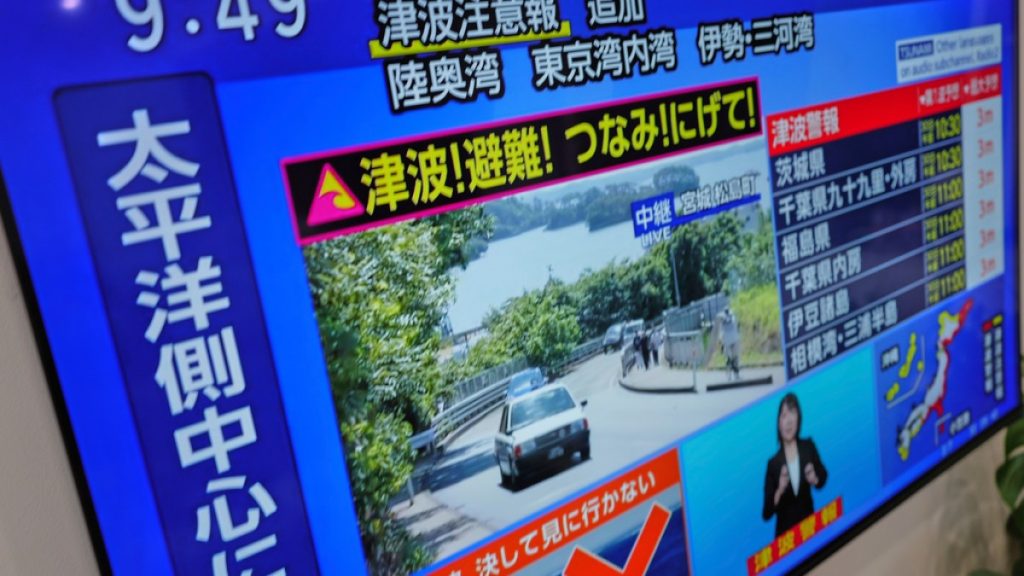
DEVELOPING STORYDEVELOPING STORY, Magnitude 8.7 quake off Russia’s east coast prompts warnings, evacuations in dozens of countries. Tsunami alerts have been issued in dozens of countries after a massive magnitude 8.8 earthquake off Russia’s east coast. Waves of up to 4 metres high (13 feet) struck Russia’s far-eastern Kamchatka region early on Wednesday, with tsunami alerts issued for the United States, Japan, the Philippines, Indonesia, Ecuador, Chile, Guatemala, Costa Rica, Peru, Mexico and numerous Pacific island states. The US National Weather Service issued tsunami “warnings” for the state of Hawaii and Alaska’s Aleutian Islands, and lower-level tsunami advisories for parts of California, including Los Angeles and Oregon, with waves expected to arrive from the late afternoon on Wednesday. Less serious tsunami watches were in place for the entire US West Coast. The Honolulu Department of Emergency Management in Hawaii urged the evacuation of residents in some coastal areas. “Take Action! Destructive tsunami waves expected,” the agency said on X. The emergency agency in Hawaii said it expected the first waves to arrive at 7:10pm local time on Tuesday (05:00 GMT, Wednesday). US President Donald Trump urged residents in Hawaii, Alaska, and along the Pacific Coast to pay attention to tsunami-related advisories. “STAY STRONG AND STAY SAFE!” Trump said in a social media post. Japanese authorities said they expected waves as high as 3 metres (9.8 ft) to hit some coastal areas. “People in coastal areas or along rivers should immediately evacuate to safe places such as high ground or evacuation buildings,” the Japan Meteorological Agency said in a statement. Advertisement “Tsunamis can strike repeatedly. Do not leave the safe location until the warning is lifted.” Footage posted on social media showed residents of some Japanese coastal communities moving to higher ground. Japanese Prime Minister Shigeru Ishiba urged the public to evacuate from areas under warning. Japanese media reported the arrival of the first waves, measuring about 30cm (1 ft) high, on the northern Japanese island of Hokkaido on Wednesday morning. In Russia, a tsunami flooded the port town of Severo-Kurilsk, forcing the evacuation of its residents, the country’s Ministry of Emergencies and Disaster Relief said. Videos posted on Russian social media appeared to show buildings in the town submerged in seawater. The US Geological Survey (USGS) said the 8.8-magnitude quake struck 136km (85 miles) east of the city of Petropavlovsk-Kamchatsky in Russia’s far east. The USGS revised the intensity of the quake up from an earlier estimate of 8.0. Kamchatka Governor Vladimir Solodov said in a video posted on Telegram that the quake was the “strongest in decades”. The regional health minister, Oleg Melnikov, told Russia’s state-run TASS news agency that several people had been injured, but none of them seriously. Subsequent quakes of magnitude 6.9 and 6.3 were recorded 147km (91 miles) and 131km (81 miles) southeast of Petropavlovsk and Vilyuchinsk, respectively, in Russia’s far east, according to the USGS. Robert Weis, a tsunami expert at Virginia Tech, said the tsunamis could potentially do serious damage. “It is correct to be worried about this one,” Weis told Al Jazeera. “Three metres is pretty destructive,” he said. Adblock test (Why?)
Why Zelenskyy tried to curb autonomy of Ukraine’s anticorruption agencies?
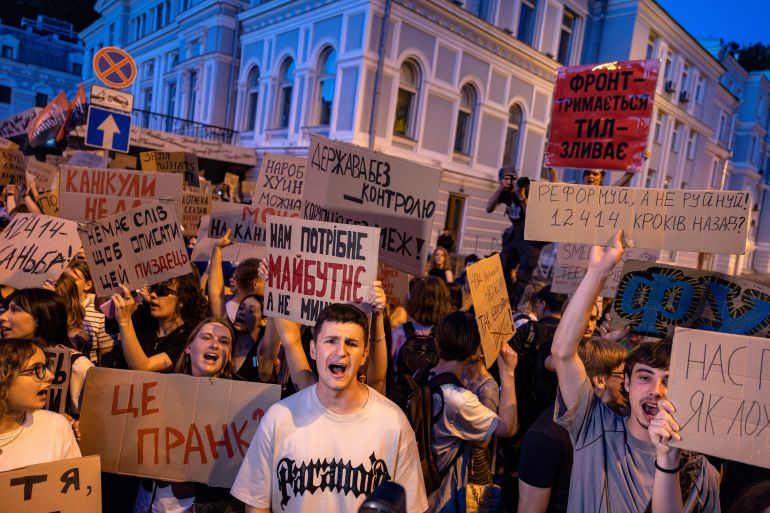
Kyiv, Ukraine – Last week, hundreds of Ukrainians rallied in several cities to protest the government’s attempt to curb the independence of anticorruption watchdogs. President Volodymyr Zelenskyy on July 22 signed a bill into law, which would revoke the autonomy of key agencies – the National Anti-Corruption Bureau of Ukraine (NABU) and the Specialized Anti-Corruption Prosecutor’s Office (SAPO). The rare protest in the war-torn country forced the Ukrainian president to introduce a new draft bill to restore the independence of NABU and SAPO, which have been established to investigate high-level corruption and are widely seen as a symbol of democratic reforms. So, why did Zelenskyy try to curb powers of the anticorruption agencies, and will his action dent public trust in the government crucial at a time of war against Russia? Ukrainians protest near the presidential office in Kyiv against a new law seen as undermining the independence of anticorruption institutions, amid Russia’s ongoing war in Ukraine [Thomas Peter/Reuters] Why are Ukrainians protesting? The nationwide protests erupted in the wake of the July 22 vote in the Verkhovna Rada, Ukraine’s lower house of parliament, to approve the bill that allows the prosecutor general to oversee the two anticorruption agencies. The prosecutor general is appointed by the president and approved by the Verkhovna Rada, where Zelenskyy’s Public Servant party holds a majority. It was seen as an attempt by the government to control the two agencies, which were created in the wake of the 2013-14 pro-democracy Euromaidan protests. Many believe it’s a setback from the years of reforms following the removal of pro-Russian President Viktor Yanukovych in 2014. Advertisement The protesters held banners with slogans reading “Sham!” “Don’t make a step back, there’s an abyss there,” and “Corruption applauds” the new bill. The rallies took place in Kyiv as well as in large cities such as the Black Sea port of Odesa and Lviv, known as Ukraine’s cultural capital. NABU has been probing a string of senior officials and lawmakers, including those within Zelenskyy’s Public Servant party. Oleksiy, who enlisted to join the army in 2022, wonders why he should keep fighting on the front lines of eastern Ukraine while officials engage in corruption. “What’s the point if I go back home and my family is surrounded by corruption everywhere,” the 42-year-old construction manager told Al Jazeera. “Judges, officials, even school teachers all say, ‘Give, give, give,’” he said, asking to withhold his last name and details of his military service, in accordance with the wartime protocol. Oleksiy, who is on a break from his service to visit his two children and ailing mother, took part in the largest antigovernment rallies in Ukraine since Russia’s full-scale invasion in 2022. Why Zelenskyy backed the bill? The new law envisaged executive control over NABU and SAPO as the prosecutor general’s office could access their information, give them binding directives, transfer cases and close down investigations. The bill “could finally destroy the independence of the anticorruption system in Ukraine”, NABU said. Rachel Denber, deputy Europe and Central Asia director at Human Rights Watch, said the new law “risks weakening Ukraine’s democratic foundations and its future integration with Europe”. She called for the repeal of the law. Zelenskyy, a former comedian and political rookie who came to power in 2019 on an anticorruption ticket, defended the law, claiming that the NABU and SAPO have to “get rid of Russian influence”. His allegation followed the arrest of two NABU staffers suspected of working for Russian intelligence, and charges against outspoken anticorruption campaigner Vitaly Shabunin. Shabunin was accused of “evading military service”, but his supporters called the charges trumped-up, and almost 60 anticorruption and nongovernmental groups signed a joint appeal in his defence. People rally in Kyiv against the implementation of the draft law that regulates the work of s Special Anti-corruption Prosecutor’s Office and the National; Anti-Corruption Bureau [Danylo Antoniuk/Anadolu] A Kyiv-based political analyst says there are two popular theories about why Zelenskyy initiated the bill. Advertisement “One is that NABU allegedly closed in on Zelenskyy’s inner circle,” Volodymyr Fesenko, head of the Penta think tank, told Al Jazeera. NABU accused Deputy Prime Minister Oleksiy Chernyshov, Zelenskyy’s closest ally and lifelong friend, of taking kickbacks worth $346,000 from a real estate developer in a deal that cost the government $24m. Zelenskyy’s press office didn’t reply to Al Jazeera’s phone calls and text messages. “Or this is an attempt to control NABU’s actions in order not to overtly politicise them, not to provoke domestic political wars during the war with Russia,” Fesenko said. “But I think it has to do with the activisation of the NABU on political issues that may have caused suspicion in Zelenskyy’s inner circle. That it wasn’t a fight against corruption but more of a political attack on Zelenskyy,” he said. The protests, an anticorruption expert told Al Jazeera, have weakened Zelenskyy’s support within domestic political circles. “There was a belief in his high and stable rating,” Tetiana Shevchuk from the Anti-Corruption Action Center, a Kyiv-based group, said. But “he no longer can demand anything from the parliament,” she said. Zelenskyy is afraid of NABU as the only law enforcement agency that won’t open or close an investigation following a phone call from his administration, she said, referring to the centralisation of power under him. “NABU is the only body that doesn’t do that,” Shevchuk said. Fesenko from the Penta think tank says the politicians “underestimated” the bill’s “negative consequences”. They “didn’t think the public response would be that harsh”. Zelenskyy has promised to submit the new bill – a move applauded by the country’s top anti-corruption investigator. Semen Kryvonos, director of NABU, however, said that corrupt actors will step up a “dirty information campaign” against the anti-graft agencies. Meanwhile, protest leaders say they would stop rallies only after the bill has been passed – tentatively, later this week. Since the 2014 pro-democracy revolution or Revolution of Dignity, attempts have been made to root out endemic corruption. Many bureaucratic procedures have been simplified
US stopover by Taiwan’s president cancelled; Trump mulls China trip: Report
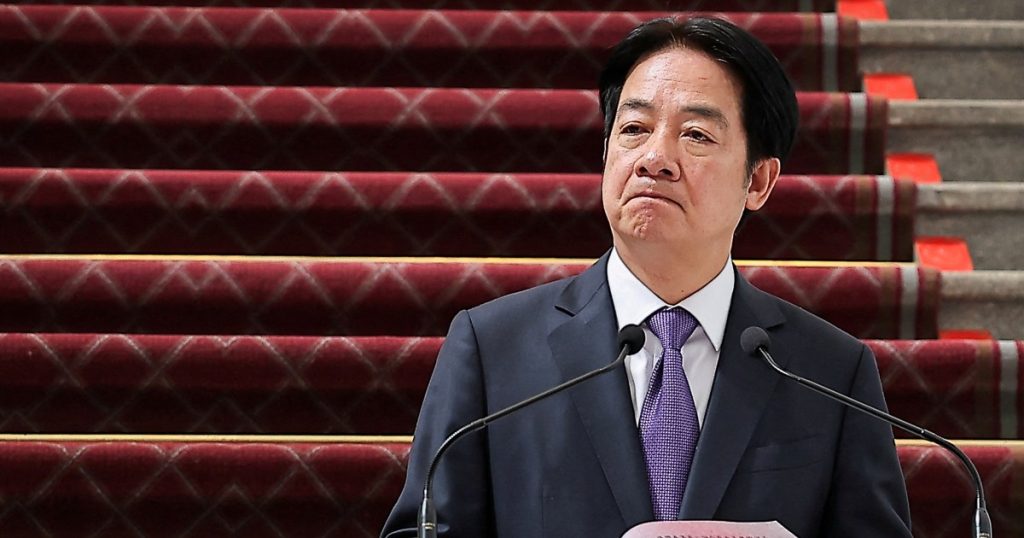
US President Donald Trump reportedly opposed a stopover in New York by Taiwan’s president, says China visit under consideration. Taiwanese President William Lai Ching-te has cancelled a trip to three allies in Central and South America after a planned stopover in the United States was reportedly nixed by his US counterpart, Donald Trump. Lai was preparing to visit Paraguay, Guatemala and Belize in early August, with stopovers planned in New York and Dallas on the first and last leg of the trip, the Financial Times reported on Tuesday. The Taiwanese leader’s trip was called off when US officials said they opposed his stop in New York, the newspaper said, citing three people close to the matter. Lai’s office had never formally announced his trip to Latin America, but on Monday, it said the president had cancelled all overseas travel to focus on tariff negotiations with the US and a cleanup operation following a typhoon in southern Taiwan. The president of Taiwan cannot officially visit the US, which does not recognise its government. But Taiwanese leaders have made use of “transit stops” in the US over the years to liaise with top administration officials outside Washington, DC. In 2023, then-Taiwanese President Tsai Ing-wen used a transit stop to visit New York and Los Angeles while Joe Biden was still the US president. Beijing, which claims democratic Taiwan as part of its territory, held military exercises in the Taiwan Strait after Tsai’s US stop-off to demonstrate its anger. Trump’s reported decision to block Lai’s stopover follows news that the US president is angling for a trip to China himself, although he said he does not want a “summit” with his Chinese counterpart, Xi Jinping. Advertisement “The Fake News is reporting that I am SEEKING a ‘Summit’ with President Xi of China. This is not correct, I am not SEEKING anything! I may go to China, but it would only be at the invitation of President Xi, which has been extended,” Trump wrote on Truth Social late Monday night. Reuters reported that Trump may be aiming to visit China around the time of the Asia-Pacific Economic Cooperation summit in South Korea, which runs from October 31 to November 1. Whether the meeting will take place will depend on the outcome of ongoing trade talks between the US and China to resolve Trump’s tariff war launched earlier this year. US and Chinese officials are in Stockholm this week to try to hammer out a tariff agreement before a “truce” expires on August 12, but they have many issues to discuss, including export controls, which could drag out talks. Adblock test (Why?)
Trump denies seeking summit with Xi, says he ‘may’ visit China
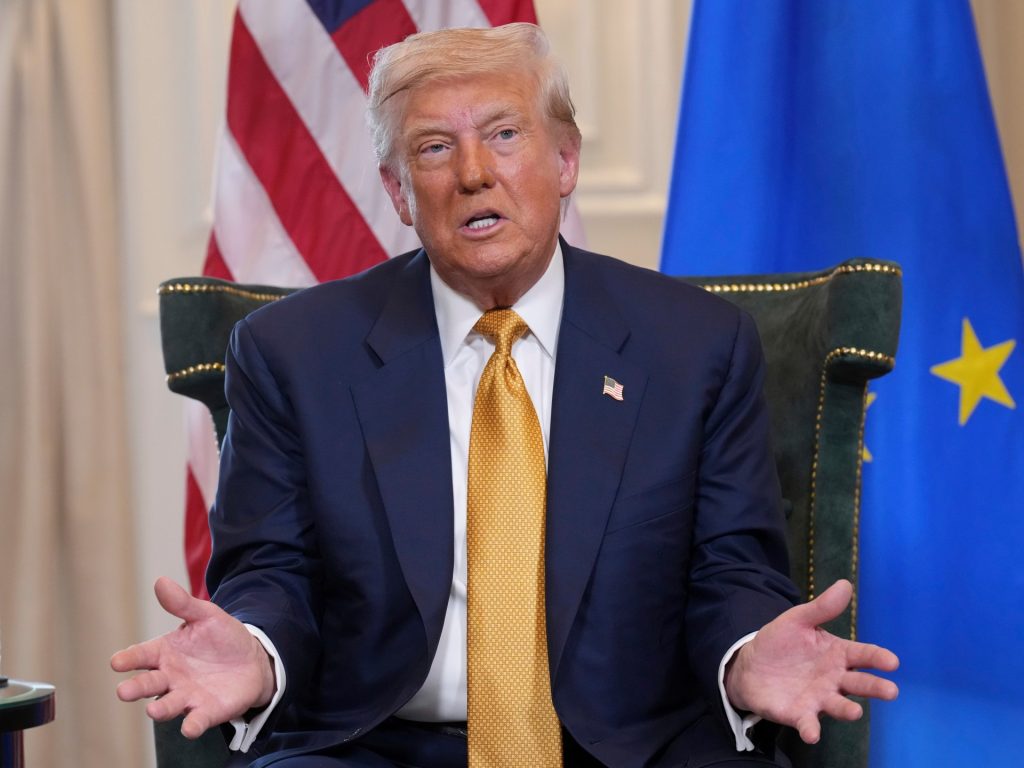
US president says he will visit China only at the invitation of Chinese leader. United States President Donald Trump has denied seeking a summit with Chinese President Xi Jinping while holding out the possibility of visiting China at his counterpart’s invitation. “The Fake News is reporting that I am SEEKING a ‘Summit’ with President Xi of China. This is not correct, I am not SEEKING anything!” Trump said in a post on his Truth Social platform on Monday. “I may go to China, but it would only be at the invitation of President Xi, which has been extended. Otherwise, no interest! Thank you for your attention to this matter.” Trump’s comments come after the Reuters news agency reported last week that aides to the two leaders have discussed a possible summit during a trip to Asia by the US president later this year. The report, which cited unnamed people familiar with the plans, said Trump and Xi could possibly meet on the sidelines of the Asia-Pacific Economic Cooperation summit taking place in South Korea from October 30 to November 1. Trump and Xi last met face-to-face in 2019 on the sidelines of the G20 summit in Osaka, Japan. The US and China are currently engaged in negotiations aimed at lowering trade tensions that have spiked since Trump rolled out his on-again, off-again tariffs on Chinese exports. On Monday, US Treasury Secretary Scott Bessent and Chinese Vice Premier He Lifeng met in Stockholm, Sweden, to kick off two days of talks focused on reaching a trade deal before the end of a 90-day tariff truce that ends on August 12. Bessent said in an interview with Bloomberg Television last week that the administration was in “a very good place with China now” and the August deadline could be extended in a “90-day increment”. Advertisement Adblock test (Why?)
Thai army accuses Cambodia of ceasefire violations
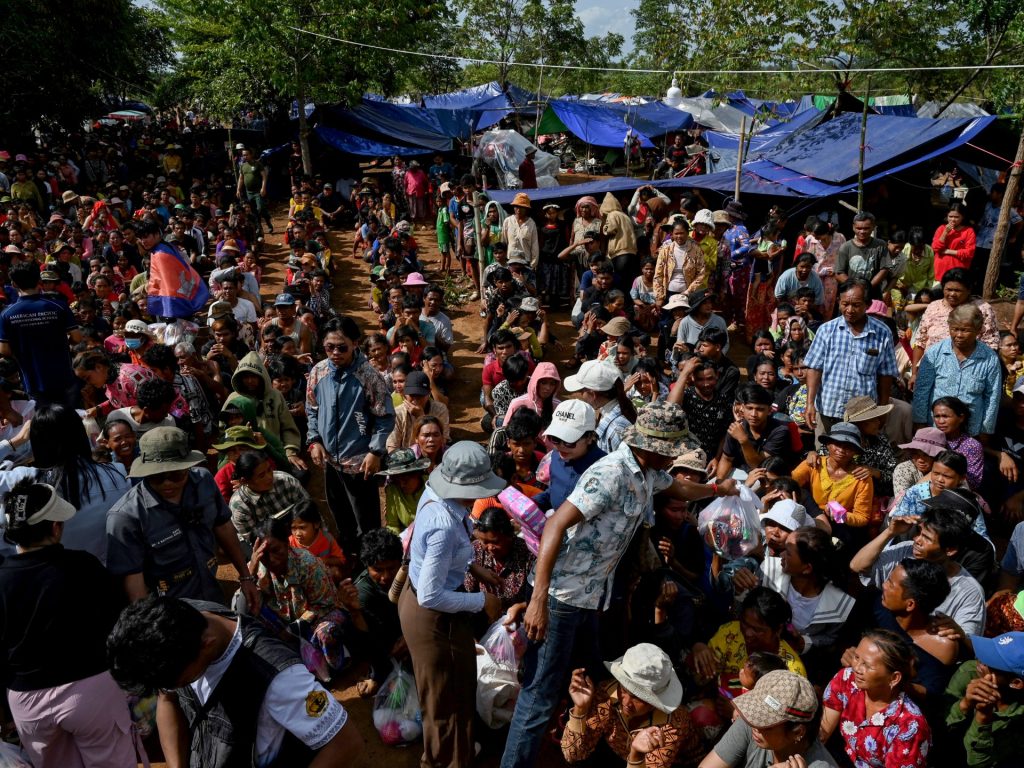
DEVELOPING STORYDEVELOPING STORY, Thai troops have retaliated ‘appropriately’ and in ‘self-defence’, Major-General Winthai Suvaree said in a statement. Thailand’s army has accused Cambodia of violating an hours-old truce, saying sporadic clashes continued despite an agreement to end the deadly fighting in the disputed border region between the two Southeast Asian countries. Thai troops have retaliated “appropriately” and in “self-defence”, Thailand’s army spokesman, Winthai Suvaree, said in a statement on Tuesday. “At the time the agreement took effect, the Thai side detected that Cambodian forces had launched armed attacks into several areas within Thai territory,” Winthai said. “This constitutes a deliberate violation of the agreement and a clear attempt to undermine mutual trust,” he added. “Thailand is compelled to respond appropriately, exercising its legitimate right to self-defence.” Following peace talks in Malaysia, both Cambodia and Thailand agreed that an unconditional ceasefire would start at midnight on Monday to end the fighting in disputed zones along their 800km (500-mile) border, which killed at least 38 people in five days of clashes and displaced nearly 300,000 more. The peace deal was set to see military commanders from both sides meet at 7am local time (00:00 GMT) on Tuesday, before a cross-border committee is convened in Cambodia to further ease tensions on August 4. A Thai army spokesman said talks between both sides are now scheduled to be held at 10am local time (03:00 GMT). Al Jazeera’s Tony Cheng, reporting from Surin province in Thailand, said the Thai military reported “a couple of clashes in several areas along the border”. Advertisement “They did issue a statement saying that the Cambodian military was not respecting the ceasefire agreement. But for the most part, it does seem to be holding,” Cheng said. In Cambodia’s Samraong city, 20km (12.4 miles) from the border with Thailand, an AFP journalist said the sound of blasts stopped in the 30 minutes leading up to midnight on Monday, with the lull continuing until dawn. “The front line has eased since the ceasefire at 12 midnight,” Cambodian Prime Minister Hun Manet said in a Tuesday morning message on Facebook. A joint statement from both countries on Monday – as well as Malaysia, which hosted the peace talks – said the ceasefire was “a vital first step towards de-escalation and the restoration of peace and security”. The flare-up in cross-border fighting has been the deadliest since violence raged sporadically from 2008 to 2011 over disputed border territory. Adblock test (Why?)
North Korea says US must accept its status as a nuclear weapons state
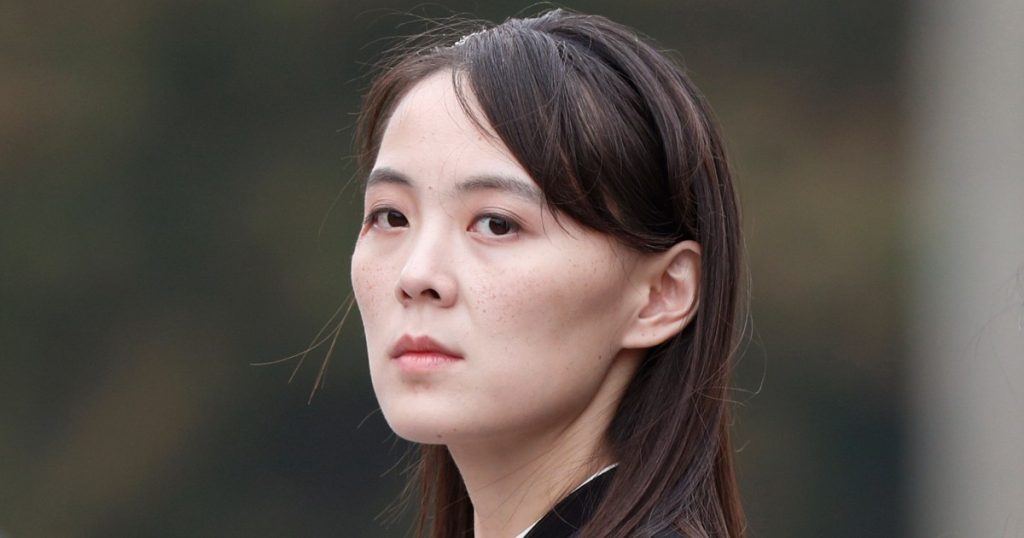
North Korean leader’s powerful sister says talks aimed at denuclearisation would be interpreted as a ‘mockery’. North Korean leader Kim Jong Un’s influential sister has called on the United States to accept North Korea’s “irreversible” status as a nuclear weapons state, warning that dialogue will never lead to its denuclearisation. In a statement carried by the state-run Korean Central News Agency on Tuesday, Kim Yo Jong said a recognition that Pyongyang’s capabilities and the geopolitical environment had “radically changed” should be a prerequisite for “everything in the future”. “Any attempt to deny the position of the DPRK as a nuclear weapons state, which was established along with the existence of a powerful nuclear deterrent and fixed by the supreme law reflecting the unanimous will of all the DPRK people, will be thoroughly rejected,” Kim said, using the acronym of North Korea’s official name, the Democratic People’s Republic of Korea. “The DPRK is open to any option in defending its present national position.” Kim Yo Jung, who oversees the propaganda operations of the ruling Workers’ Party of Korea, said that it was by “no means beneficial” for the US and North Korea to be in confrontation, and that Washington should “seek another way of contact on the basis of such new thinking.” Kim also said that while the relationship between her brother and US President Donald Trump was “not bad”, any attempt to use their personal relations to advance denuclearisation would be interpreted as a “mockery”. “If the US fails to accept the changed reality and persists in the failed past, the DPRK-US meeting will remain as a ‘hope’ of the US side,” she said. Advertisement Kim’s comments come after an unnamed White House official was quoted by South Korea’s Yonhap News Agency over the weekend as saying that Trump was open to engaging with Kim Jong Un to achieve a “fully denuclearised” North Korea. Her statement also comes a day after she dismissed South Korean President Lee Jae-myung’s efforts to mend ties with Pyongyang, including halting propaganda broadcasts at the tense inter-Korean border. Since returning to the White House in January, Trump, who held three face-to-face summits with Kim Jong Un in 2018 and 2019, has repeatedly expressed interest in resuming dialogue with Pyongyang. Last month, White House press secretary Karoline Leavitt said that Trump would like to build on the “progress” made during his 2018 summit with the North Korean leader in Singapore. While the Singapore summit marked a historic first-ever meeting between a sitting US president and the leader of North Korea, the talks, and Trump’s subsequent meetings with Kim in Vietnam and at the inter-Korean border, failed to halt the advance of Pyongyang’s nuclear weapons programmes. Jenny Town, the director of the Korea programme at the Stimson Center in Washington, DC, said Kim Yo Jong’s latest statement is consistent with recent messaging from Pyongyang. “It avoids naming Trump directly, leaving room for some kind of diplomacy in the future to still be possible, but dispels the notion that ‘denuclearisation’ talks can simply be picked up where they left off,” Town told Al Jazeera. “Too much has changed since 2019, both in terms of North Korea’s WMD [weapons of mass destruction] development, the legal and policy changes around its nuclear programme and status, and the broader geopolitical environment, for any notion of resuming talks about denuclearisation to be compelling.” “If negotiations are possible, the terms of engagement have fundamentally changed,” Town added. “It won’t be about denuclearisation, but there may be room for talks under a different framing. However, whether the US is willing to take that leap is yet to be seen.” Adblock test (Why?)
Five dead in New York city shooting, including police officer, suspect
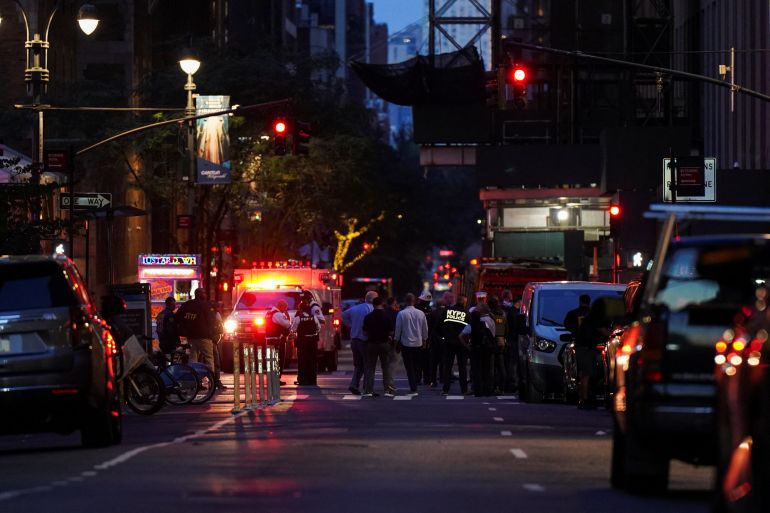
The attacker was armed with an M4 rifle when he opened fire inside a skyscraper at 345 Park Avenue, Manhattan. At least five people, including a New York City police officer and the suspected gunman, are dead after a shooting inside a Midtown Manhattan office block that houses major financial institutions and the headquarters of the National Football League, police said. The shooting, which took place at about 6pm local time (22:00 GMT) on Monday at 345 Park Avenue in Midtown Manhattan, is still under “active investigation”, New York City Police Commissioner Jessica Tisch told reporters at a press conference late on Monday. “What we know so far,” said Tisch, is that “surveillance video shows a male exit a double parked black BMW on Park Avenue between 51st and 52nd streets, carrying an M4 rifle in his right hand.” “Security camera footage shows the shooter enter the lobby, turn right and immediately open fire on an NYPD officer,” she said. The man then proceeded to shoot and kill two people on the ground floor, including a woman and a security officer before making his way to the 33rd floor where he shot and killed a man, Tisch said, adding that another victim is being treated in hospital. “The shooter is believed to be Shane Tamura, a 27-year-old male with a Las Vegas address,” Tisch said. “His motives are still under investigation,” she added. The victims included NYPD police officer Didarul Islam, 36, who was married with two young boys. “His wife is pregnant with their third child,” Tisch said. Federal agents and NYPD officers close off East 50th Street between Madison and Park Avenues, near the scene of a reported shooter situation in the Manhattan borough of New York City [Bing Guan/Reuters] Speaking at the press conference with Tisch, New York Mayor Eric Adams said that Officer Islam was an immigrant from Bangladesh, who “moved this city” and who died “saving lives” and “protecting New Yorkers”. Advertisement “We’re still unravelling what took place, and our hearts are heavy,” said Adams. “We lost four souls to another senseless act of gun violence, including a member of the New York City Police Department,” Adams said. A photo of the suspect that CNN said was shared by police showing a gunman walking into the building carrying a rifle was published by a number of major news media outlets. The skyscraper at 345 Park Avenue is home to several major firms, including Blackstone – the world’s largest hedge fund – KPMG, Deutsche Bank and the headquarters of the National Football League (NFL). It is located near Rockefeller Centre, just a few blocks south of Central Park. Three killed in Reno casino shooting Separately, earlier on Monday, an attacker armed with a pistol opened fire outside a casino in Reno, Nevada, killing three people and critically wounding two others, before being shot and seriously injured by police, authorities said. The shooting occurred just before 7:30am local time (00:30 GMT) at the valet station in the car park of the Grand Sierra Resort, a high-rise casino and hotel complex in Nevada’s third-largest city, according to police. The suspect, whose identity has not been released, was described only as an adult male. Police believe the victims were targeted at random. Police respond to a shooting outside the Grand Sierra Resort in Reno, Nevada, on Monday [Andy Barron/AP] Adblock test (Why?)
Trump: ‘Some of those kids, that’s real starvation’
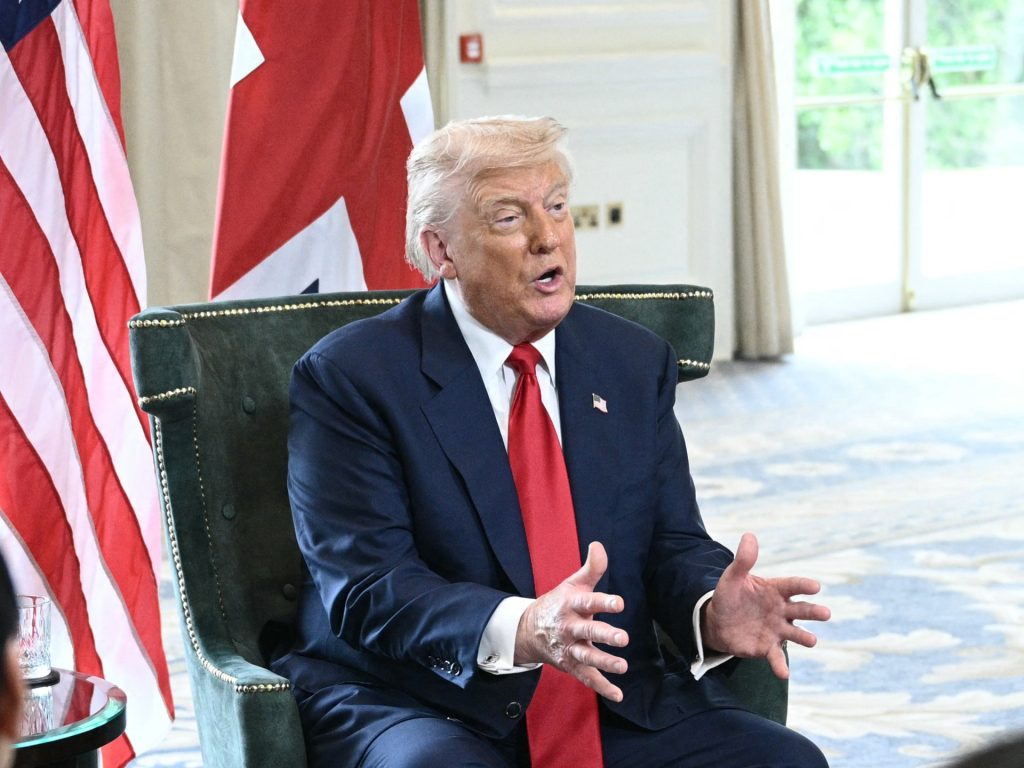
NewsFeed US President Donald Trump appeared to obliquely reject Israeli claims that no starvation is taking place in Gaza, saying images of hungry children show “real starvation” that one can’t “fake”. He also said the US would assist in setting up new food centres. Published On 28 Jul 202528 Jul 2025 Adblock test (Why?)
Baby dies from malnutrition as Trump warns of ‘real starvation’ in Gaza
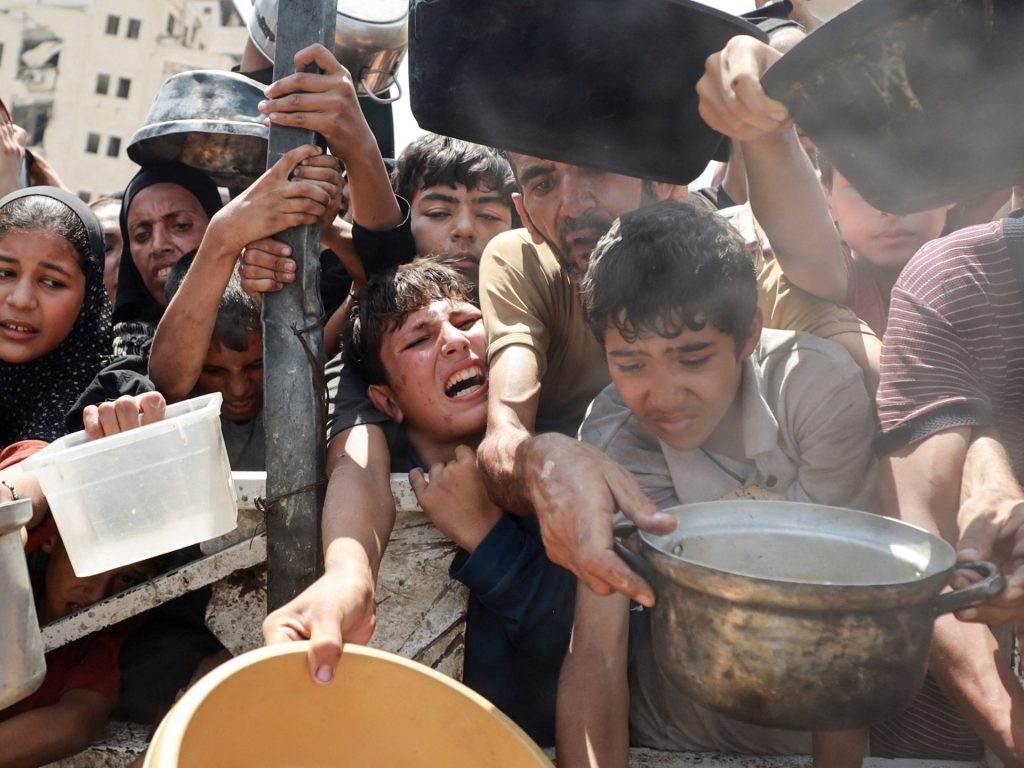
At least 14 Palestinians, including two children, have died from hunger and malnutrition in Gaza in 24 hours, according to health authorities, as United States President Donald Trump says there are signs of “real starvation” in the besieged territory. The deaths pushed the number of those who have died from malnutrition since Israel launched its war on Gaza in October 2023 to 147, including 88 children, the Ministry of Health in Gaza said on Monday. Most of the deaths have occurred in recent weeks as a hunger crisis has gripped the territory due to Israel’s severe restrictions on the entry of humanitarian aid into Gaza. Israel imposed a total blockade on the territory in March, which was partially lifted in May. But only a trickle of aid has been allowed to enter since then despite warnings from the United Nations and aid organisations of mass starvation. Before a meeting with British Prime Minister Keir Starmer in Scotland on Monday, Trump said Israel “has a lot of responsibility” for the situation in Gaza. Israeli Prime Minister Benjamin Netanyahu had denied that on Sunday, saying, “There is no policy of starvation in Gaza, and there is no starvation in Gaza.” Asked by reporters whether he agreed with Netanyahu’s remarks, Trump said, “I don’t know. I mean, based on television, I would say not particularly because those children look very hungry.” Starmer, standing next to Trump, said, “We’ve got to get that ceasefire” in Gaza and called it “a desperate situation”. Trump said among the issues he would discuss with Starmer would be the humanitarian situation in Gaza. Advertisement The comments come after the Israeli military said it would pause attacks in some parts of Gaza and authorised new corridors for humanitarian deliveries to increase the flow of badly needed aid. The decision was welcomed by the UN, but the organisation’s humanitarian chief said the deliveries need to be scaled up. Baby formula shortage The warning was made as a medical source at al-Shifa Hospital in Gaza City told Al Jazeera on Monday that an infant named Muhammad Ibrahim Adas died from malnutrition due to a shortage of baby formula. Gaza’s Government Media Office said an extreme shortage of baby formula could cause tens of thousands of malnourished infants like Muhammad to slowly die. “There are over 40,000 infants under one year old in Gaza currently at risk of slow death due to this brutal and suffocating blockade,” the office said on Monday, accusing Israel of blocking entry of the product for 150 days. “We urgently demand the immediate and unconditional opening of all crossings and the swift entry of baby formula and humanitarian aid,” it continued. ‘A drop in the ocean’ As more aid trucks entered Gaza on Monday through the Karem Abu Salem crossing (Kerem Shalom in Hebrew) and the Zikim road in the north, “devastated Palestinians jumped on these trucks and took whatever they had,” Al Jazeera’s Hind Khoudary said, reporting from Deir el-Balah in central Gaza. “When asked why they jumped on the trucks, the Palestinians said they did not have time to wait for the food. They said their children have been starving for days, and they do not have any other option than jumping on these trucks,” Khoudary said. “This shows how desperate Palestinians are and how they were deprived of their basic necessities. Now we are expecting more trucks to enter today.” Israel’s decision to allow more aid into Gaza has been welcomed by the UN, but officials warned that severe restrictions continued to block lifesaving deliveries. “This is a welcome step in the right direction,” Tom Fletcher, the UN undersecretary-general for humanitarian affairs, told Al Jazeera. “But clearly, we need to get in vast amounts of aid at a much, much greater scale than we’ve been able to do so far.” Fletcher said deliveries overall have been just “a drop in the ocean” of what is needed. “We can’t just simply turn up and drive through. That’s what we should be allowed to do, that’s what international law demands, but we’re not yet at that point,” he said, citing ongoing security risks, closed crossings, visa rejections and customs delays. As the hunger crisis deepens, Israeli forces have continued to launch attacks across Gaza, killing at least 65 people on Monday, including 23 who were seeking aid, medical sources told Al Jazeera. Advertisement More than 1,000 Palestinians seeking aid have been killed by Israeli forces near distribution sites run by the US- and Israeli-backed GHF, which launched operations in late May. The GHF has been heavily criticised by the UN and other humanitarian organisations for failing to provide enough aid and for the dire security situation at and around its aid distribution sites. Reporting from Deir el-Balah, Al Jazeera’s Tareq Abu Azzoum said: “What Israel describes as ‘humanitarian pauses’ are, in fact, limited and seen as unilateral suspensions of military activities that usually last for a few hours and are confined to select areas,” Abu Azzoum said. “These pauses, as we have seen, lack international oversight or any sort of coordination with humanitarian agencies,” he said. Rejecting international calls for a ceasefire, the Israeli army has conducted its offensive on Gaza since October 7, 2023, the day Hamas-led attacks in southern Israel killed 1,139 people and resulted in more than 200 people being taken captive. The war has since killed nearly 60,000 Palestinians, most of them women and children. Israel also faces a genocide case at the International Court of Justice in The Hague for its war on the enclave. Adblock test (Why?)
Kenya’s protests are not a symptom of failed democracy. They are democracy
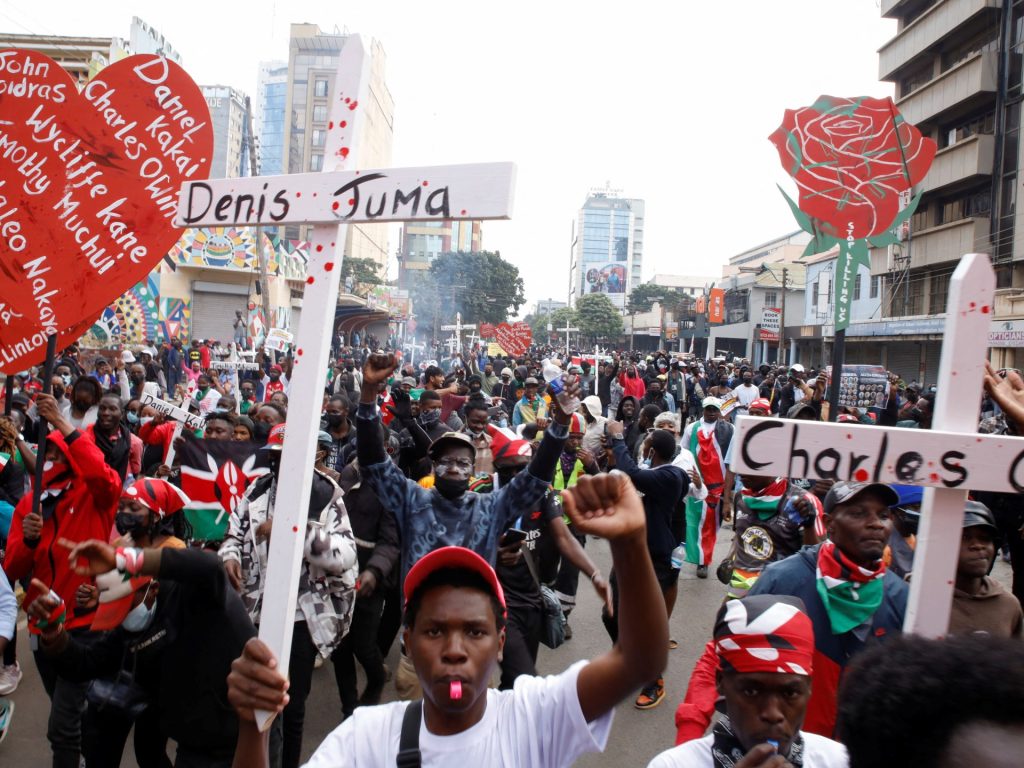
In Kenya, as in many countries across the world, street protests are often framed as the unfortunate result of political failure. As the logic goes, the inability of state institutions to translate popular sentiment into political, legislative and regulatory action to address grievances undermines trust and leaves the streets vulnerable to eruptions of popular discontent. In this telling, protests are viewed as a political problem with grievances expected to be legitimately addressed using the mechanisms – coercive or consensual – of the formal political system. Like its predecessors, the increasingly paranoid regime of Kenyan President William Ruto has also adopted this view. While generally acknowledging the constitutional right of protest, it has sought to paint the largely peaceful and sustained Generation Z demonstrations and agitation of the past 16 months, which have questioned its rule and policies, as a threat to public order and safety and to delegitimise the street as an avenue for addressing public issues. “What is going on in these streets, people think is fashionable,” Ruto declared a month ago. “They take selfies and post on social media. But I want to tell you, if we continue this way, … we will not have a country.” The killing and abductions of protesters as well as the move to charge them with “terrorism” offences, borrowing a leaf from Western governments that have similarly criminalised pro-Palestinian and antigenocide sentiments, are clear examples of the state’s preferred response. At the same time, there have been repeated calls for the protesters to enter into talks with the regime and, more recently, for an “intergenerational national conclave” to address their concerns. Advertisement But framing protests as a dangerous response to political dissatisfaction is flawed. Demonstrations are an expression of democracy, not the result of its failures. The Generation Z movement has shown that transparency, mutual aid and political consciousness can thrive outside formal institutions. Activists have made the streets and online forums sites of grievance, rigorous debate, civic education, and policy engagement. They have raised funds, provided medical and legal aid, and supported bereaved families, all without help from the state or international donors. In doing so, they have reminded the country that citizenship is not just about casting ballots every five years. It is about showing up – together, creatively and courageously – to shape the future. The Generation Z movement is in many respects a reincarnation of the reform movement of the 1990s when Kenyans waged a decadelong street-based struggle against the brutal dictatorship of President Daniel arap Moi. Today’s defiant chants of “Ruto must go” and “Wantam” – the demand that Ruto be denied a second term in the 2027 election – echo the rallying cries from 30 years ago: “Moi must go” and “Yote yawezekana bila Moi (All is possible without Moi).” Centring the struggle on Moi was a potent political strategy. It united a broad coalition, drew international attention and forced critical concessions – from the reintroduction of multiparty politics and term limits to the expansion of civil liberties and, crucially, the rights of assembly and expression. By the time Moi left office at the end of 2002, Kenya was arguably at its freest, its spirit immortalised in the Gidi Gidi Maji Maji hit I Am Unbwogable! (I Am Unshakable and Indomitable!)” But that moment of triumph also masked a deeper danger: the illusion that removing a leader was the same as transforming the system. Moi’s successor, Mwai Kibaki, hailed then as a reformist and gentleman of Kenyan politics, quickly set about reversing hard-won gains. His government blocked (then tried to subvert) constitutional reform, raided newsrooms and eventually presided over a stolen election that brought Kenya to the brink of civil war. One of his closest ministers, the late John Michuki, had in 2003 revealed the true mindset of the political class: Constitutional change to devolve the power of the presidency, he claimed, was necessary only so “one of our own could share power with Moi”. Once Moi was gone, he averred, there was no longer need for it. Due to the obstruction from the political class, it took Kenyans close to a decade after Moi’s departure to finally promulgate a new constitution. Advertisement Generation Z must avoid the trap of the transition of the 2000s. Power, in the Kenyan political imagination, has often been the prize, not the problem. But real change requires more than a reshuffling of names atop the state. It demands a refusal to treat state power as the destination and a commitment to reshaping the terrain on which that power operates. And this is where the youth should beware the machinations of a political class that is more interested in power than in change. Today’s calls for national talks and intergenerational conclaves emanating from this class should be treated with suspicion. Kenyans have seen this play out before. From the 1997 Inter-Parties Parliamentary Group talks and the negotiations brokered by former UN Secretary-General Kofi Annan after the 2007-2008 postelection violence to the infamous “handshake” between President Uhuru Kenyatta and his rival Raila Odinga and the failed Building Bridges Initiative, each of these elite pacts was presented as a way to translate popular anger into meaningful reform. Yet time and again, they only served to defuse movements, sideline dissenters and protect entrenched power. Worse still, Kenya has a long history of elevating reformers – from opposition leaders and journalists to civil society activists – into positions of state power, only for them to abandon their principles once at the top. Radical rhetoric gives way to political compromise. The goal becomes to rule and extract, not transform. Many end up defending the very systems they once opposed. “Ruto must go” is a powerful tactic for mobilisation and pressure. But it should not be seen as the end goal. That was my generation’s mistake. We forgot that we did not achieve the freedoms we enjoy – and that Ruto seeks to roll back – through engaging in the formal system’s rituals of elections and elite agreements but by imposing change on it