

Gaza ceasefire: Peace deal or political theatre?
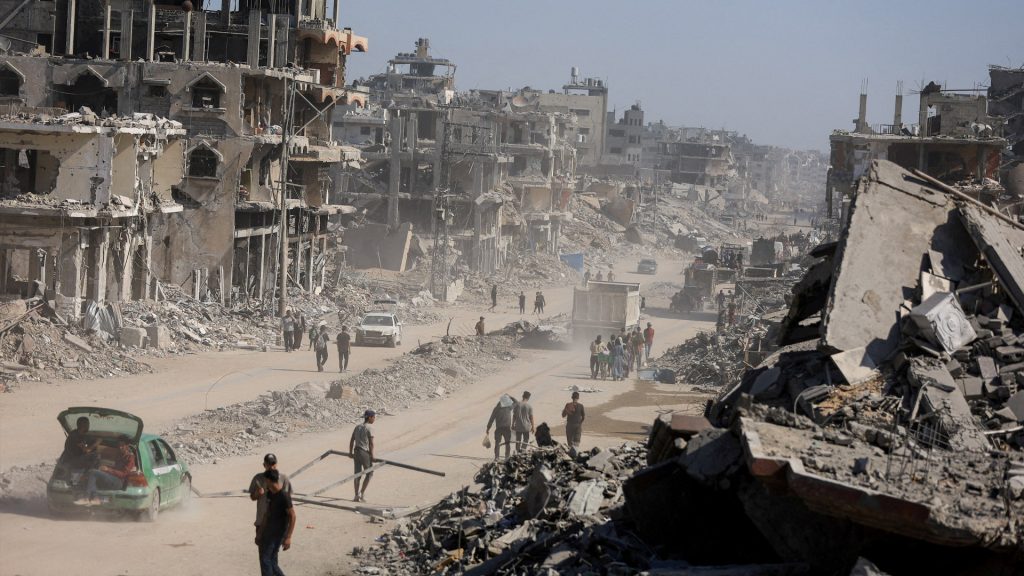
The spectacle of the Gaza deal and double standards in the coverage of the captives’ release in Israel and Gaza. As Donald Trump tries to take credit for a ceasefire in Gaza, Israel continues to kill Palestinians. And as both Israeli and Palestinian captives are released, the glaring double standards in coverage lay bare how this genocide was allowed to go on for so long. Contributors: Tahani Mustafa – Visiting Fellow, European Council on Foreign RelationsMouin Rabbani – Co-editor, JadaliyyaKenneth Roth – Former Executive Director, Human Rights WatchOren Ziv – Journalist, +972 Magazine On our radar This year’s Nobel Peace Prize winner, Maria Corina Machado, chose to dedicate her award to Donald Trump. Meenakshi Ravi reports on what motivated the Venezuelan opposition leader to pander to the United States president. All the president’s women: the rise of the ‘womanosphere’ For years, the right-wing media space has been dominated by men. But the 2024 election shone a light on a rising parallel force within Donald Trump’s MAGA movement: the so-called “womanosphere”. Across YouTube channels, social media and podcasts, conservative women are rebranding right-wing politics for a female audience. Featuring: Annie Kelly – UK Correspondent, QAA PodcastNicole Kiprilov – Republican Party strategistEviane Leidig – Author, The Women of the Far Right Published On 18 Oct 202518 Oct 2025 Click here to share on social media share2 Share Adblock test (Why?)
In the occupied West Bank, the war continues
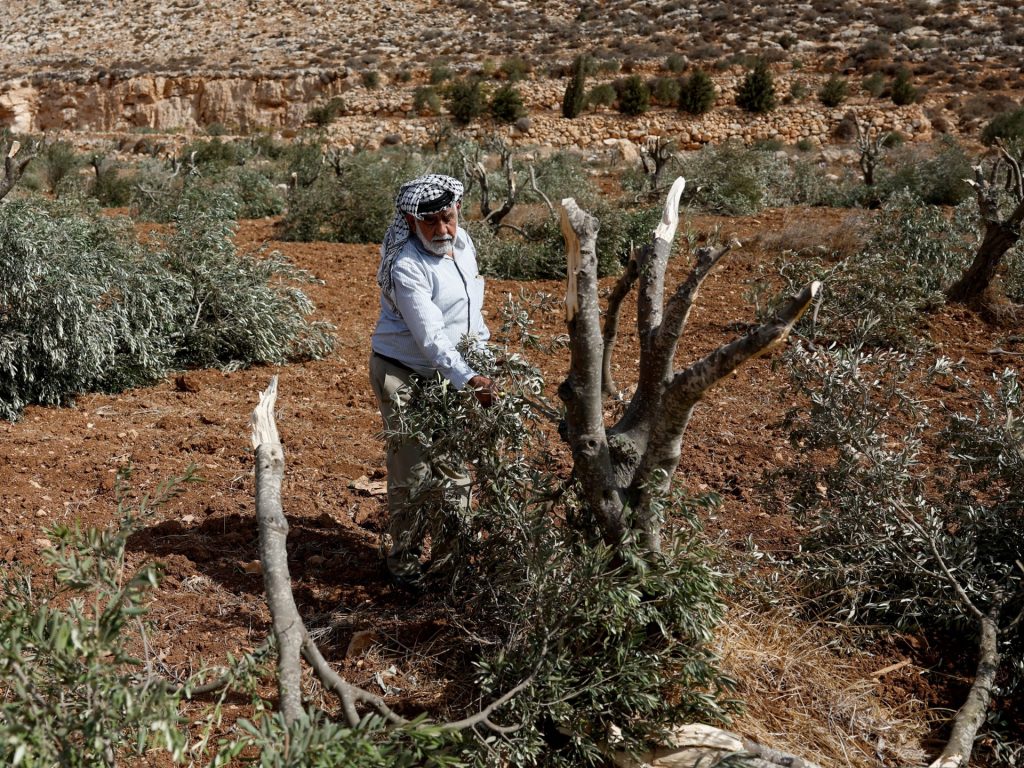
It has been a week since the ceasefire was announced in Gaza. When we heard the news in the occupied West Bank, we celebrated. We felt relief and hope that the genocide is finally over. But we also realised that there is no ceasefire for us. The daily violence we have been subjected to for decades is showing no signs of abating. Since October 7, 2023, the brutality of our occupier has only intensified. Today, life in the West Bank has become almost impossible. Violence, dispossession and paralysis After the ceasefire deal was announced, a friend’s little daughter cheered; she then asked to go with her grandparents to pick olives. He told her that it would be difficult to do, to which she responded, “Why? Isn’t the war over?” How do you explain to a child that the war ending in Gaza does not mean Palestinian families in the West Bank still can access their land to harvest olives? People still cannot reach their groves because of barriers set up by the Israeli military or they fear attacks by Israeli soldiers and settlers, or both. There are daily violent assaults on Palestinian farmers and their land. Since October 7, 2023, there have been 7,154 attacks by Israeli settlers on Palestian people and property – some of them deadly. Almost 1,000 Palestinians have been killed by the Israeli army and settler mobs, including 212 children; more than 10,000 Palestinians have been displaced. Settlers and soldiers have destroyed 37,237 olive trees since October 7, 2023. Even life in urban areas has become unbearable. Advertisement As a resident of Rawabi, a city north of Ramallah, I, too, feel the suffocation of the occupation every day. If I need to travel outside my city to run errands, shop, obtain official paperwork, or anything else, I could get stuck at a checkpoint for hours and never make it to my destination. There are four iron gates, a military tower, and a barrier between Rawabi and Ramallah; they can make the 10-minute trip between Rawabi and Ramallah last an eternity. Throughout the West Bank, there are 916 Israeli barriers, barriers and iron gates, 243 of which were constructed after October 7, 2023. These open and close at the Israeli army’s whim, meaning a Palestinian can get stuck at one barrier for hours. This disrupts every aspect of life – from family visits to urgent medical care to school attendance and transportation of goods. We have also been denied access to Jerusalem and thus our freedom of worship at Al-Aqsa Mosque and the Church of the Holy Sepulchre. Few Palestinians are given the special permits needed to enter the city. We last had access to Jerusalem more than 20 years ago. This means an entire generation of young people know nothing about the city except from the pictures and stories told by their parents and grandparents. Even at night, the Palestinians are not left alone by the occupation. Any Palestinian home may be subject to a raid by the Israeli army, with soldiers breaking the front door, terrorising the family inside and detaining without charge some of its members. Neighbours would, too, be terrorised with Israeli soldiers firing tear gas canisters for no reason, just to cause more suffering. The right to a normal life—to worship, to spend quality time with friends and family, to move freely, to access regular medical care and education —are all denied to the Palestinians in the West Bank. The spectre of annexation Over the decades since the occupation of 1967, Israel has managed to control almost half of the land of the West Bank. It has done so by constructing settlements and confiscating land from its Palestinian owners by declaring it either “state land” or “military zone”. The theft of Palestinian land accelerated after October 7; at least 12,300 acres (4,9787 hectares) were seized in two years. In many cases, confiscated land is used to establish new settlement outposts or to expand existing settlements. Settlement construction in the West Bank is not random. Rather, land is selected in a way that encircles Palestinian villages and towns, creating a settlement belt around them that prevents any form of geographical continuity between Palestinian territories, thus thwarting the dream of a future state. Advertisement To maintain these illegal settlements, Israel has also laid its hands on the West Bank’s natural resources. It has seized almost all water resources. This has ensured a massive water reservoir in the West Bank to serve the settlement expansion. For the Palestinians, this has been disastrous. They are now almost completely dependent on Israeli water company “Mekorot”, which gives very small quotas of water to densely populated Palestinian areas, while settlers receive several times the Palestinian share per capita. Every summer, when drought settles in, Palestinians are forced to buy extra water at exorbitant prices from Mekorot. Meanwhile, Palestinian wells and rain water tanks are often attacked and destroyed. Since October 7, 2023, the Israeli government has accelerated its efforts to carry out annexation. We feel that the seizure of Area C – an area established by the Oslo Accords where Israel has full civilian and security control – is imminent. This would mean razing Palestinian villages and communities and expelling people towards Area A, which constitutes just 18 percent of the West Bank. Area B will follow. The process of forced expulsion has already started with Bedouin communities in the two areas. This is our reality here in the West Bank. While peace conferences and meetings were held and peace in the Middle East is declared, we know nothing of it. Every day, every hour, every minute, we are harassed, intimidated, dispossessed and killed. For decades, Israel has rejected political solutions and pursued a policy of controlling land, people, and resources. It has continued to wage war on us even when its bombardment has stopped. The only way to achieve true peace is to acknowledge the occupation and end it. The views expressed in this article are the author’s own and do not necessarily reflect Al Jazeera’s editorial stance. Adblock test (Why?)
India: How is the ethnic conflict in Manipur affecting ordinary citizens?
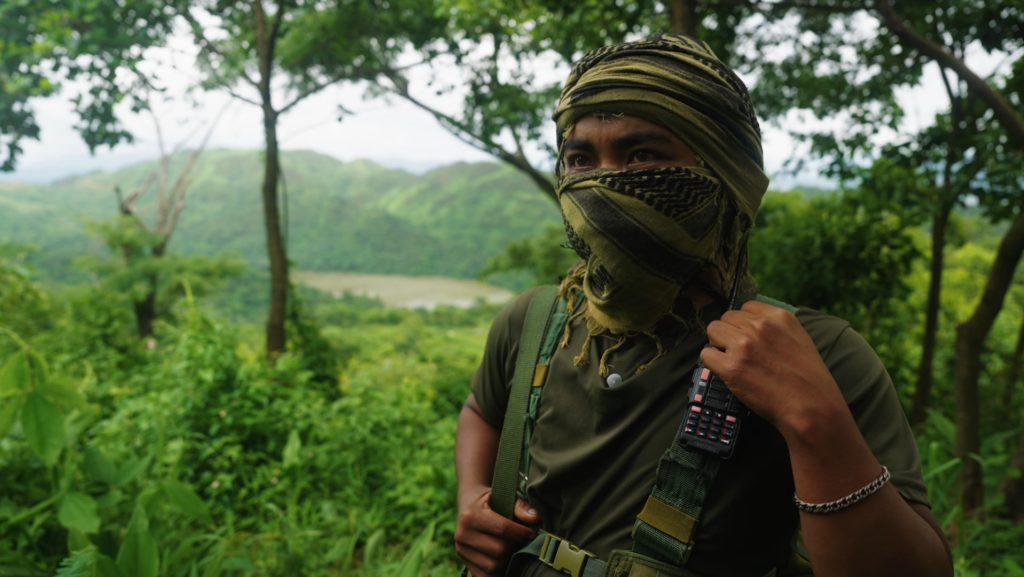
101 East travels to northeast India, where a brutal civil war has killed hundreds and displaced tens of thousands. For more than two years, India’s northeastern state of Manipur has been beset by violence between two ethnic groups, the Meitei and the Kuki-Zo. With nearly 260 people killed and about 60,000 displaced, the Indian government has taken control of the state in a bid to restore order. In what has been described as a civil war, both sides accuse the other of committing atrocities. New Delhi has pledged to disarm the warring factions and restore peace to the region. 101 East examines how the ethnic conflict in Manipur is affecting the lives of common citizens on both sides of the divide. Published On 18 Oct 202518 Oct 2025 Click here to share on social media share2 Share Adblock test (Why?)
Lebanon court orders son of late Libyan leader Gaddafi freed on $11m bail
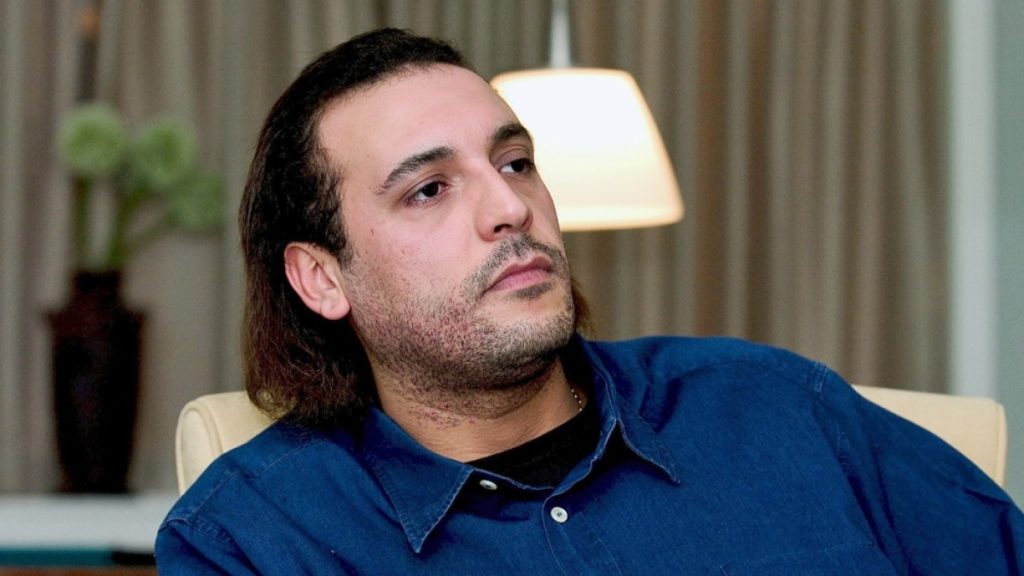
Hannibal Gaddafi, youngest son of Muammar Gaddafi, has been held for nearly a decade without trial in Lebanon. Published On 18 Oct 202518 Oct 2025 Click here to share on social media share2 Share A judge in Lebanon has ordered the release on bail and imposed a travel ban on Hannibal Gaddafi, the youngest son of the late Libyan leader Muammar Gaddafi, who has been held for nearly a decade in pre-trial detention. Lebanon’s National News Agency confirmed Gaddafi’s bail ruling on Friday in a case related to the kidnapping and disappearance of revered Lebanese Shia leader Musa al-Sadr in Libya. Recommended Stories list of 4 itemsend of list The court’s decision was greeted with ridicule by Gaddafi’s lawyer Laurent Bayon. The “release on bail is totally unacceptable in a case of arbitrary detention. We will challenge the bail,” Bayon told the AFP news agency. Bayon also said his client “is under international sanctions” and could not pay the large bail fee. “Where do you want him to find $11m?” Bayon asked. Lebanese authorities arrested Gaddafi in 2015 and accused him of withholding information about the disappearance of al-Sadr in Libya in 1978 – a case which still grips public attention in Lebanon. Al-Sadr was an iconic figure in Lebanon when he travelled to meet with then-Libyan leader Muammar Gaddafi. Founder of the Amal Movement, which is now an ally of Hezbollah, al-Sadr went missing on the visit along with an aide and a journalist, and none have been heard from since. Al-Sadr’s disappearance has sparked decades of theories and accusations of official involvement by Gaddafi – who was overthrown and killed in a 2011 uprising – and ties between the two countries have been strained since the disappearance. Lebanon’s parliament speaker, Nabih Berri, who succeeded al-Sadr at the head of the Amal Movement, has accused Libya’s new authorities of not cooperating on the issue of al-Sadr’s disappearance, an accusation Libya denies. In what many see as a means of extracting answers as to al-Sadr’s fate in Libya, Hannibal Gaddafi has been held in prison in Lebanon since 2015 without trial. Advertisement His lawyer, Bayon, has noted that his client is now 49, meaning that he was around two years old at the time that al-Sadr disappeared. After the judge’s decision on Friday, the al-Sadr family published a statement protesting the proposed release of Gaddafi and expressing their “surprise” at the bail ruling. The family also said they would “not interfere today in [the judge’s] decision to release him”. “The arrest or release of Hannibal Gaddafi is not our goal, but rather a mere legal procedure. Our primary issue is the disappearance of the imam [al-Sadr],” the family added. In August, Human Rights Watch urged Lebanon to immediately release Gaddafi, saying he had been wrongly imprisoned on “apparently unsubstantiated allegations that he was withholding information” about al-Sadr. Last week, an alarm was raised about the health of Gaddafi – who already suffers from depression – after he was hospitalised for abdominal pain. Libyan authorities in 2023 formally asked Lebanon to release Gaddafi because of his deteriorating health after he went on a hunger strike to protest his detention without trial. Libyan Prosecutor General Al-Sediq al-Sour sent the request to his Lebanese counterpart, Ghassan Oueidat, according to reports, and al-Sour reportedly said in his request that Lebanon’s cooperation in freeing Gaddafi could help reveal the truth regarding al-Sadr. Adblock test (Why?)
Kremlin envoy proposes ‘Putin-Trump tunnel’ to link Russia, US
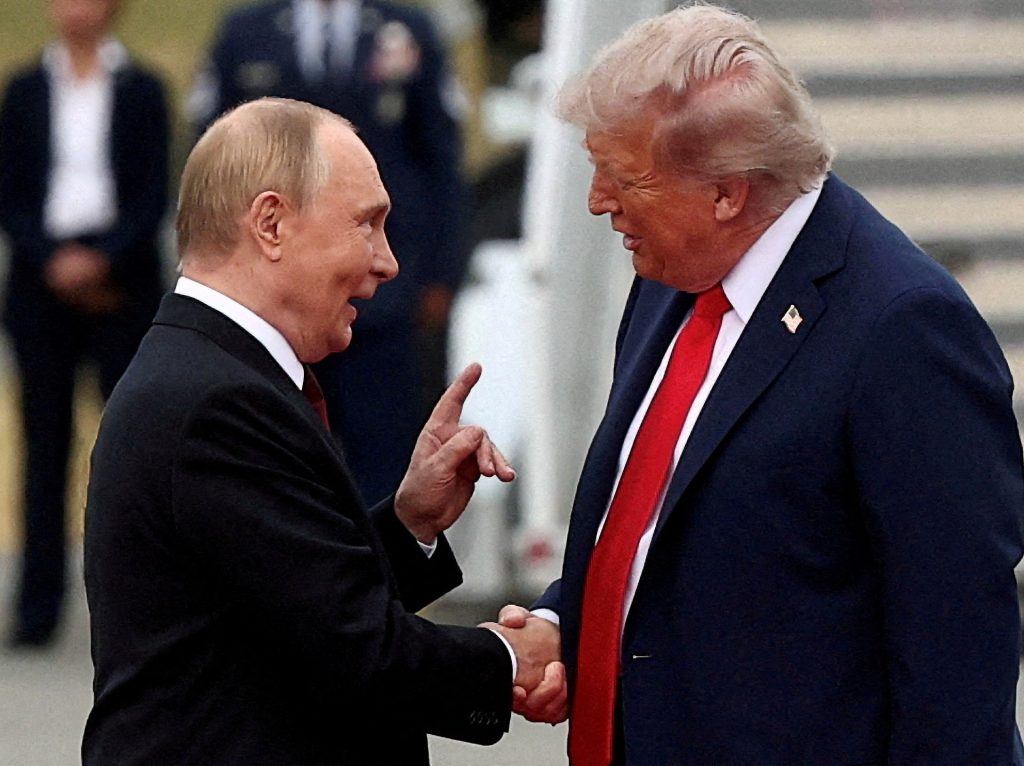
Siberia-Alaska link could ‘unlock’ resources and be built with Elon Musk’s The Boring Company, says Kirill Dmitriev. A Kremlin envoy has proposed building an undersea tunnel linking the United States and Russia, suggesting it could be built with the help of US billionaire Elon Musk’s The Boring Company. Kremlin investment envoy Kirill Dmitriev said that the 112-kilometre (70-mile) “railroad and cargo link” between Siberia and Alaska would “unlock joint resource exploration” between the two countries. Recommended Stories list of 4 itemsend of list US President Donald Trump, who has promised to “drill, baby drill” during his second term, told reporters on Friday that he thought the proposal was “interesting” during a White House meeting with Ukrainian President Volodymyr Zelenskyy. During their meeting, Trump turned to Zelenskyy, asking for his thoughts on the tunnel. The Ukrainian leader responded that he was “not happy with this idea”. Dmitriev, who is also the CEO of the Russian Direct Investment Fund, has also suggested that the US could join Russia and China in joint “hydrocarbon projects in the Arctic”, referring to expanded drilling for oil. “Certainly, Russia is eyeing the opportunity of joint Russia-China-US projects, including in the Arctic region, specifically in the energy sector,” Dmitriev said last month, according to Russia’s TASS news agency. Russia and other Arctic countries are reportedly planning to expand mining operations in the region as climate change sees polar ice receding. Dmitriev also proposed that Musk’s The Boring Company could become involved in the project, tagging Musk in a post on X, a social media platform owned by the South Africa-born billionaire. Advertisement “Let’s build a future together,” Dmitriev wrote to Musk on X, in a post also touting the project as “symbolising unity”. “Imagine connecting the US and Russia, the Americas and the Afro-Eurasia with the Putin-Trump Tunnel,” Dmitriev wrote. Musk had not publicly responded to Dmitriev’s post as of Friday evening, US time. Dmitriev’s posts promoting the tunnel project came as Trump and Putin held a two-hour call on Thursday night in advance of a planned meeting in Hungary’s capital, Budapest, which Trump says will take place within two weeks. The Kremlin has also confirmed the meeting. The Bering Strait, 82km (51 miles) wide at its narrowest point, separates Russia’s vast and sparsely populated Chukotka region from Alaska. Proposals to link them have been around for at least 150 years. The small Diomede Islands, one Russian and one belonging to the US, sit in the middle of the strait, only 4km (2.4 miles) apart. Dmitriev said a plan for a “Kennedy-Khrushchev World Peace Bridge” over the strait had been floated during the Cold War. He posted a sketch from that era of the route it might have taken, with a graphic showing the route the new tunnel could take. “The time has come to do more and connect the continents for the first time in human history,” Dmitriev said. From the Soviet JFK docs released by @RepLuna: Kennedy–Khrushchev World Peace Bridge “could and should be built between Alaska and Russia at once.” With modern @boringcompany technology this can become a Putin-Trump tunnel connecting the Eurasia and Americas for < $8 billion pic.twitter.com/c84VK75rh5 — Kirill Dmitriev (@kadmitriev) October 16, 2025 Adblock test (Why?)
Maria Corina Machado: Venezuela’s Nobel Peace laureate in hiding

Venezuela’s opposition leader on life in hiding, and her movement’s fight for transition and change. Maria Corina Machado, Venezuela’s opposition leader and now Nobel Peace Prize laureate, speaks from hiding about the cost of resistance and the hope driving millions demanding democracy. Barred from elections and under threat of arrest, she discusses the country’s deepening crisis, where nearly eight million Venezuelans have fled, and the challenge of confronting a system that has survived sanctions, protests, and global isolation. In this in-depth interview, Machado reflects on her fight for democracy. Published On 17 Oct 202517 Oct 2025 Click here to share on social media share2 Share Adblock test (Why?)
US carries out new drug boat strike in Caribbean, as admiral resigns
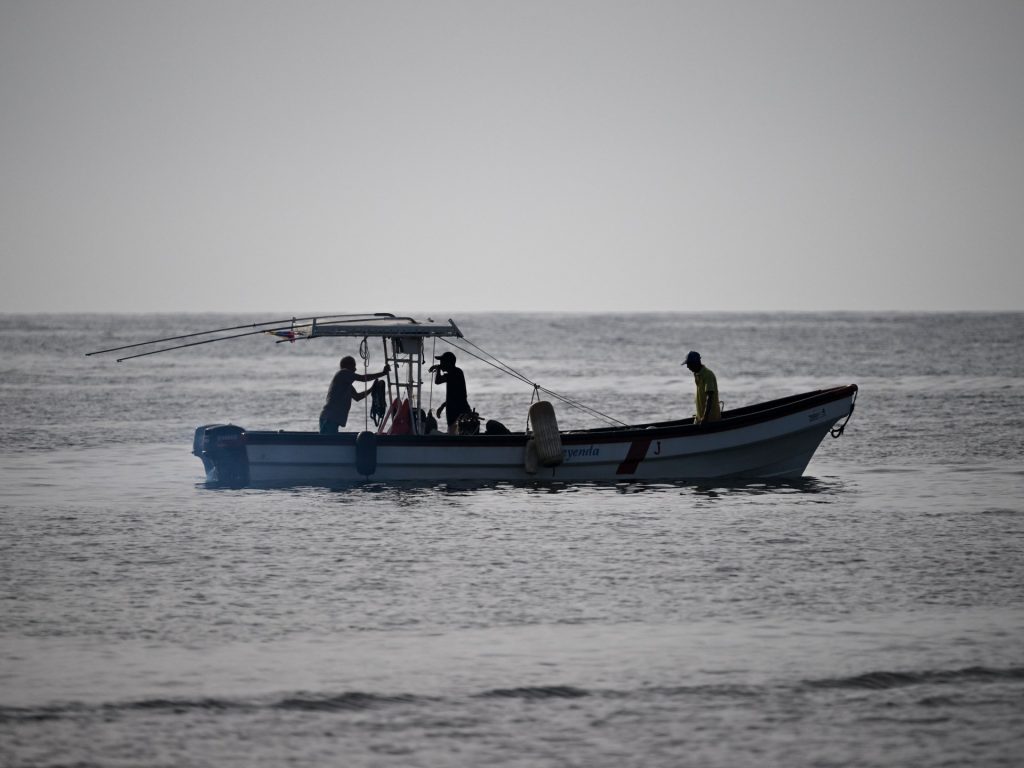
The United States military has reportedly carried out a strike on another alleged drug smuggling vessel, as the admiral overseeing the Trump administration’s controversial campaign in the Caribbean announced his shock departure. A US official, speaking on condition of anonymity, confirmed the strike on Thursday. The official said that, in what appeared to be a first, there were also survivors among the crew. Recommended Stories list of 4 itemsend of list The official did not offer additional details about the incident, which has not been previously reported. The Pentagon and US President Donald Trump are yet to publicly confirm the attack. Prior to this latest strike, the US had carried out five attacks on alleged drug smuggling vessels in the Caribbean since early September, killing at least 27 people. The strikes have drawn the condemnation of legal experts, rights groups and Democratic lawmakers, who criticise their extrajudicial nature and question whether they adhere to US and international law. The Trump administration argues the strikes are legitimate as the US is already engaged in a war with “narco-terrorist” groups from Venezuela, and drug traffickers are unlawful combatants who must be met with military force. Venezuela has repeatedly condemned the strikes, most recently on Thursday when Caracas’s ambassador to the United Nations, Samuel Moncada, called on the UN Security Council to investigate what he called the “series of assassinations”. In his speech, Moncada described an attack on a small boat in the Caribbean on Tuesday – the most recent to be confirmed by President Trump – as a “new set of extrajudicial executions”. Advertisement Six people were killed in that attack, including reportedly two fishermen from Trinidad and Tobago, whom Moncada referenced in his speech. “There is a killer prowling the Caribbean,” Moncada said, holding up local newspaper The Trinidad and Tobago Guardian, which featured a story detailing the lives of the two men. Only a couple of miles separate Venezuela and Trinidad and Tobago, with the ongoing military strikes spooking fishermen in the Caribbean island dual-nation. “People from different countries … are suffering the effects of these massacres,” he added. “There is no justification at all … They are fabricating a war.” Trinidad and Tobago’s Prime Minister Kamla Persad-Bissessar is yet to comment. Following Washington’s first strike on a vessel on September 3, she said, “I have no sympathy for traffickers; the US military should kill them all violently”. The strikes come against the backdrop of an unprecedented US military buildup in the Caribbean, as President Trump escalates a standoff with the government of Venezuelan President Nicolas Maduro. Since late August, the US has deployed guided missile destroyers, F-35 fighter jets, a nuclear submarine and about 6,500 troops to the region with the stated goal of combating drug trafficking. Trump has also floated the idea of conducting land strikes against Venezuelan cartels, while he authorised the CIA to conduct covert operations inside the country on Wednesday. Caracas has accused Washington of attempting to overthrow Maduro – whom the US accuses of leading a narco-empire and has offered a $50m reward for – to instigate regime change in the nominally socialist South American country. Speaking in a televised address following Trump’s authorisation of ground operations in Venezuela, Maduro spoke directly to the US public as he declared “no to CIA-orchestrated coups d’etat”. “No to regime change, which reminds us so much of the endless, failed wars in Afghanistan, Iraq, Libya, and so on,” he said. On behalf of the Department of War, we extend our deepest gratitude to Admiral Alvin Holsey for his more than 37 years of distinguished service to our nation as he plans to retire at year’s end. A native of Fort Valley, Georgia, Admiral Holsey has exemplified the highest… — Secretary of War Pete Hegseth (@SecWar) October 16, 2025 Also on Thursday, the US admiral overseeing the strikes in the Caribbean announced he will retire just a year into his tenure. Admiral Alvin Holsey, the head of US Southern Command that is responsible for forces operating in Central and South America, did not provide an explanation for his departure, which comes two years ahead of schedule. Advertisement “Effective 12 December 2025 I will retire from the US Navy,” Holsey said in a statement posted on Southern Command’s X account. “It’s been an honor to serve our nation, the American people and support and defend the Constitution for over 37 years,” he added. In a post on X, US Secretary of Defense Pete Hegseth praised Holsey’s career and said the admiral “demonstrated unwavering commitment to mission, people, and nation”. “His tenure as Military Deputy Commander and now Commander of United States Southern Command reflects a legacy of operational excellence and strategic vision,” he said. Adblock test (Why?)
Israeli Maccabi Tel Aviv football fans barred from Europa League game in UK

Safety advisers in Birmingham City and UK police said Israeli team fans should not attend match due to ‘risks to public safety’. Fans of the Israeli football team Maccabi Tel Aviv have been barred from attending a Europa League game against Aston Villa in the United Kingdom next month because of security concerns, the English club said. Birmingham City’s Safety Advisory Group (SAG) – the body responsible for issuing safety certificates for matches at Villa Park, where the game is to be played – informed Aston Villa that Maccabi Tel Aviv away fans will not be permitted to attend. Recommended Stories list of 4 itemsend of list Aston Villa confirmed in a statement on Thursday that the “club has been informed that no away fans may attend the UEFA Europa League match with Maccabi Tel Aviv on Thursday, November 6, following an instruction from the Safety Advisory Group”. “Police have advised the SAG that they have public safety concerns outside the stadium bowl and the ability to deal with any potential protests on the night,” the club said. Aston Villa can confirm the club has been informed that no away fans may attend the UEFA Europa League match with Maccabi Tel Aviv. — Aston Villa (@AVFCOfficial) October 16, 2025 West Midlands Police said they had classified the match as high risk based on “current intelligence and previous incidents, including violent clashes and hate crime offences that occurred during the 2024 UEFA Europa League match between Ajax and Maccabi Tel Aviv in Amsterdam”. “Based on our professional judgement, we believe this measure will help mitigate risks to public safety,” the police force said. Last year’s clashes in Amsterdam between pro-Palestinian supporters and Israeli fans of Maccabi Tel Aviv led to dozens of arrests and five people imprisoned. WMP supports Safety Advisory Group decision regarding Aston Villa vs Maccabi Tel-Aviv football match. Click for our statement 👉 https://t.co/NMLkntX08n pic.twitter.com/GgxeYvc7Xm — West Midlands Police (@WMPolice) October 16, 2025 Advertisement While accusations of anti-Semitic attacks quickly circulated following the clashes in Amsterdam on November 6 and 7, reports soon emerged of Israeli fans provoking the violence and of rampaging through the Dutch capital, assaulting residents, destroying symbols of Palestinian solidarity and chanting racist and genocidal slogans against Palestinians and Arabs. British Prime Minister Keir Starmer, Israel’s Foreign Minister Gideon Saar, and the London-based Jewish Leadership Council have all criticised the ban. Starmer said in a post on social media that the ban was “the wrong decision”. “The role of the police is to ensure all football fans can enjoy the game, without fear of violence or intimidation,” he said. This is the wrong decision. We will not tolerate antisemitism on our streets. The role of the police is to ensure all football fans can enjoy the game, without fear of violence or intimidation.https://t.co/8aBeqE4qbA — Keir Starmer (@Keir_Starmer) October 16, 2025 Israel’s Foreign Minister Saar described the ban as a “shameful decision” and called on authorities in the UK to “reverse this coward decision”. Shameful decision! I call on the UK authorities to reverse this coward decision! https://t.co/K5h32VpYa6 — Gideon Sa’ar | גדעון סער (@gidonsaar) October 16, 2025 The Jewish Leadership Council said it was “perverse that away fans should be banned from a football match because West Midlands Police can’t guarantee their safety”. “Aston Villa should face the consequences of this decision and the match should be played behind closed doors,” the organisation added in a statement. The move to ban away fans from the fixture in Birmingham comes amid growing calls to ban Israeli football teams from international competition over Israel’s genocide in Gaza. “We collected and verified extensive evidence of this systematic instrumentalisation of football culture in genocide,” Ashish Prashar, a campaign director at Game Over Israel, which has been pushing to ban Israel from FIFA and UEFA, told Al Jazeera. “This report integrates findings – from stadium racism, to assaults in Europe, to soldiers turning genocide into football propaganda – and demonstrates why Israel’s place in global sport is indefensible.” More than 30 legal experts wrote earlier this month to UEFA President Aleksander Ceferin, saying that banning Israel from competitions was “imperative”, citing a report by United Nations investigators that confirmed Israel is carrying out a genocide against Palestinians. Advertisement The signatories highlighted the damage that Israel is inflicting on the sport and athletes in Gaza. “These acts have decimated an entire generation of athletes, eroding the fabric of Palestinian sport,” the experts said. “The failure of the Israel Football Association (IFA) to challenge these violations implicates it in this system of oppression, rendering its participation in UEFA competitions untenable,” they said. “UEFA must not be complicit in sports-washing such flagrant breaches of international law, including but not limited to the act of genocide,” they added. Adblock test (Why?)
Israel’s exploding robots still terrorise Gaza neighbourhoods
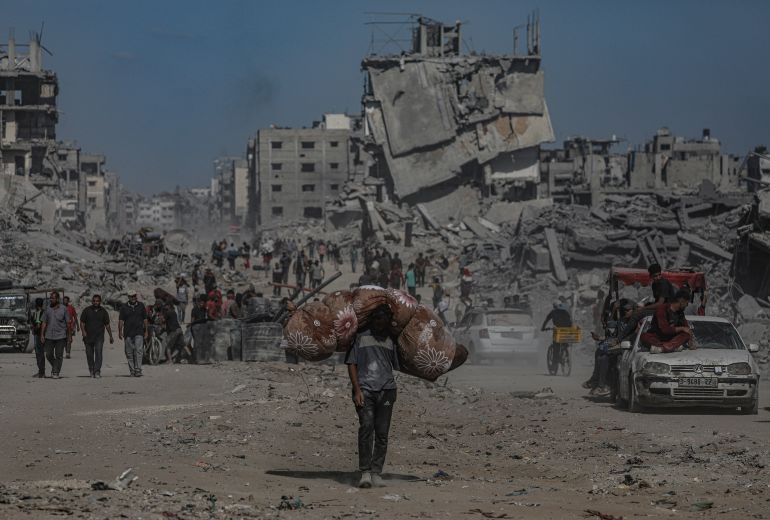
Gaza City – The ceasefire between Israel and Hamas brought thousands of people back to their homes in Gaza City, to assess the damage, see what can be salvaged, and start to rebuild. In Jabalia, Sheikh Radwan, Abu Iskandar and beyond, people returned to flattened neighbourhoods, and to the knowledge that, still among the rubble, some of the explosive robots that had caused it sat, silent and undetonated. Recommended Stories list of 3 itemsend of list People aren’t sure where all the undetonated robots lurk, nor do they know what to do if they encounter one, adding to the anguish and uncertainty that clouds this homecoming. Exploding robots The “robots” had become a common fear in northern Gaza since the Israeli army first used them on Jabalia refugee camp in May 2024. Their deployment hit an “unprecedented pace” leading up to the October ceasefire, the Euro-Med Human Rights Monitor noted in a report on September 1, adding that they were used to destroy “about 300 residential units daily in Gaza City and Jabalia”. The robots are armoured carriers that Israeli soldiers would load with explosives, then drag into place using armoured bulldozers. Once the soldiers had retreated, they would remotely detonate the booby-trapped vehicle, destroying everything around it. Not much is known about the payload – or if it was ever consistent – Gaza City Civil Defence spokesman Mahmoud Basal told Al Jazeera. However, their destructive capacity was apparent, Bassal said, describing the robots’ “kill radius” which he said extended as far as 500 metres (550 yards). Advertisement The damage to infrastructure, he added, was “staggering”. Palestinians continue returning north on the second day of the ceasefire in the Gaza Strip, with those arriving in Gaza City’s Sheikh Radwan neighbourhood finding widespread devastation after the Israeli army’s withdrawal, Gaza City, October 11 [Abdalrahman T. A. Abusalama/ Anadolu Agency] ‘Nothing remained’ Last November, Sharif Shadi realised he had not yet learned all the sounds of war. The sounds of air attacks, artillery, and rockets were etched into his memory from countless Israeli wars on Gaza since childhood. But during Israel’s brutal ground assault on northern Gaza, the 22-year-old from Jabalia refugee camp heard a new, more horrifying sound. It was the sound of the robots. Shortly after, the devices explode, swallowing entire neighbourhoods. “The explosive robot enters a complete residential block … and moments later, everything is reduced into bits of rubble,” Shadi explains of the Israeli military’s latest weapon. On that November morning, Shadi was in the street, going about the daunting daily quest of securing essentials for himself and his family of eight other members, when he saw a robot being dragged towards his neighbourhood by a D10 bulldozer. “They entered the block, and I started running away. “I ran at least 100 metres (110 yards), and suddenly found myself under rubble, the explosion was that strong. Those who were closer, nothing remained of them – not even remains or body parts.” Days later, he lost a friend. “My friend was unwell and needed to go to Kamal Adwan Hospital. I accompanied him, and on the way, we saw a robot coming in. In a moment of sheer panic and chaos, my friend and I ran in different directions. “The blast was immense and rocked the earth beneath my feet. When I went back to that same spot where I had last seen my friend … I found no trace of him. His body was completely vapourised.” According to Euro-Med’s report, these devices’ indiscriminate, widespread destruction puts them “under the category of prohibited arms, and their use in populated areas constitutes both a war crime and a crime against humanity”. Neither the Israeli military nor the government have publically acknowledged the use of these weapons, although some Israeli media outlets have reported on their use. The Israeli military has not responded to a request for comment from Al Jazeera. Toxic aftermath, respiratory crisis The effect doesn’t end with the explosion, as Dr Mohammed Abu Afash, director of the Palestinian Medical Relief Society in Gaza, explains. Advertisement The “explosive robots” leave behind toxic vapours and gases, he says, “a powerful foul smell” that lingers and causes people serious respiratory problems. “Repeated cases of suffocation and breathing difficulties have appeared, and citizens continue to suffer from these symptoms due to inhaling toxic gases believed to contain lead and dangerous chemicals,” he adds. Um Ahmed al-Dreimli, who lives in Sabra in Gaza City, described the smell as “a mixture of gunpowder and burned metal that clung to our lungs, making our breathing difficult long after the explosion”. The 50-year-old mother of three – her eldest is 10-year-old Ahmed – was with her family in her damaged childhood home when she heard neighbours’ screams from the street, alerting her to the danger. The explosions came shortly after, with Israel giving no warning or time to flee. The sound of the explosion was different, Um Ahmed said. It had a heavy metallic rumble, not like “the sounds of hovering jets or drones, nor the screech of approaching missiles, which we’ve gotten used to … and it felt as if the ground was being pulled from under our feet”, she recalls. A drone view shows Palestinian houses and buildings lying in ruins, following a ceasefire between Israel and Hamas, in Rafah in the southern Gaza Strip, January 22, 2025 [Mohammed Salem/Reuters] A prelude to invasion Mohammed Abu Tamous from the Civil Defence and Ambulance media department has seen explosive robots multiple times during fieldwork. “When planning to invade a specific area, the army uses these robots to level buildings and erase landmarks in preparation for advancing vehicles,” he adds. He says they have been used across northern Gaza, including Jabalia camp, Beit Hanoon, Tal az-Zaatar, Beit Lahiya, Tuffah neighbourhood, Shujayea, Zeitoun, Sabra, Sheikh Radwan, Abu Iskandar, and Jabalia downtown. There is no whistle of an incoming rocket or air raid siren – just the explosion, followed by huge plumes of white smoke. “Air strikes
Trump confirms covert CIA operations against Venezuela
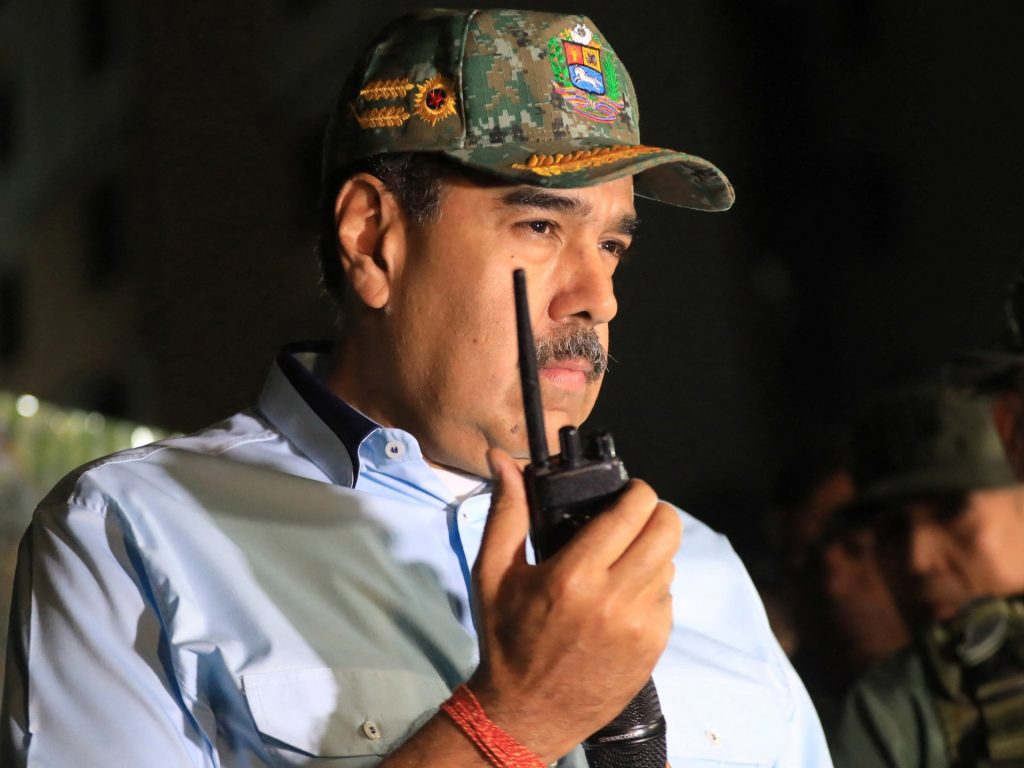
NewsFeed The US President has confirmed he has authorised the CIA to operate in Venezuela, sparking fears the US is planning a coup against the government of Nicolas Maduro. Published On 16 Oct 202516 Oct 2025 Click here to share on social media share2 Share Adblock test (Why?)