

LIVE: Barcelona vs PSG – UEFA Champions League

blinking-dotLive MatchLive Match, Follow our live build-up with full team news before our text commentary stream of the league phase encounter. Published On 1 Oct 20251 Oct 2025 Click here to share on social media share2 Share Adblock test (Why?)
Mysterious, majestic; Sudan’s Nuba Mountains

Published On 1 Oct 20251 Oct 2025 Click here to share on social media share2 Share The skyline of the vast and rugged Nuba Mountains in Sudan, stretching across the south of the country’s South Kordofan region, is defined by rocky hills and scattered huts. Constant war has put pressure on the region’s Nuba people for decades, as the government in Khartoum starved and bombed them for decades after the Sudan People’s Liberation Movement-North (SPLM-N), the rebel group in control, fought for autonomy in the mountains. More recently, ethnic cleansing campaigns by the paramilitary Rapid Support Forces (RSF) have further haunted the local population. Then, at the start of this year, the SPLM-N picked a side in the war, allying with the RSF, a group accused of genocide, war crimes and ethnic cleansing, which has battled the Sudanese Armed Forces (SAF) for control of the country since 2023. The pact stirred deep uncertainty and mixed emotions among residents of the Nuba Mountains. Some residents, scarred by past RSF abuses, regard the move with suspicion, but many are too afraid to speak openly, choosing instead to trust that their leaders’ decision will bring peace to the region. Despite lingering fear, many hope the alliance could open a path to stability and peace – something desperately needed after decades of continual wars. Conflict has brought hunger to the Nuba Mountains more than once, its spectre looming larger now that the new alliance might bring more fighting. In 2024, a year into the war, famine was declared in parts of the mountains, driven by aid blockages by the warring parties, failed harvests and locust swarms. Advertisement The local communities and the more than one million internally displaced people who have arrived in the region since the war began in 2023 survived on leaves and scraps, and continue to be food insecure. Doctors across the region report a surge in malnutrition, especially among children and pregnant women, and warn of a silent mental health crisis among the displaced. And yet, amid this devastation, a powerful spirit of solidarity endures. Communities reach across lines of faith and geography to support one another. Local communities have welcomed the internally displaced into their homes, and those who settled in camps have formed tight-knit communities that help each other. Adblock test (Why?)
A history of US government shutdowns: Every closure and how long it lasted
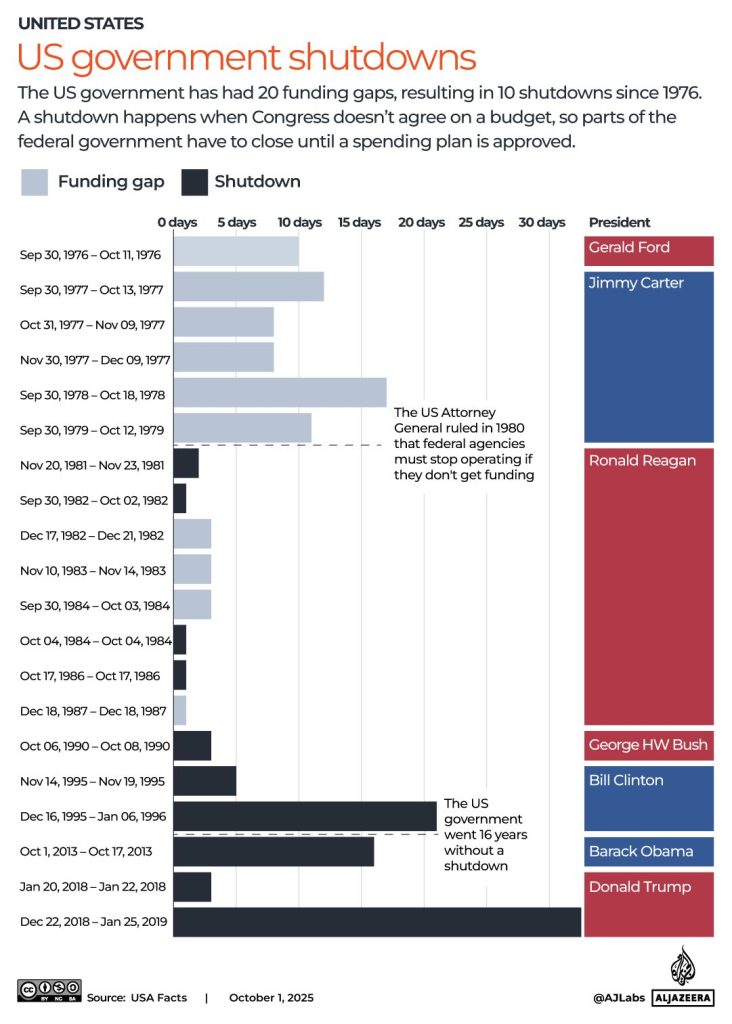
The United States federal government shut down at 12:01am East Coast time (04:01 GMT) on Wednesday after Congress failed to pass a new spending bill, forcing operations considered inessential to close. President Donald Trump has threatened to use the budget deadlock to push through mass layoffs of federal employees. Democrats and Republicans remain divided over spending priorities as Democrats push to protect healthcare, social programmes and foreign aid while Republicans demand cuts. This is not the first time Washington has faced such a standoff. The graphic below shows every US funding gap and government shutdown since 1976, including how long each lasted and under which administration it occurred. (Al Jazeera) What is a government shutdown? A government shutdown happens when Congress does not agree on a budget, so parts of the federal government have to close until a spending plan is approved. Shutdowns tend to happen in October because the government’s fiscal year runs from October 1 to September 30. How many times has the government shut down? The current budget process was established in 1976. Since then, the government has had 20 funding gaps, resulting in 10 shutdowns. A funding gap occurs whenever Congress misses the deadline to pass a budget or a stopgap spending bill (also called a continuing resolution), leaving the government without legal authority to spend money. A single shutdown can involve multiple funding gaps if temporary funding measures expire before a long-term agreement is reached. A shutdown happens only if government operations actually stop because of that funding gap. Advertisement Before the 1980s, funding gaps did not usually lead to shutdowns, and agencies kept operating, assuming funding would be restored soon. After 1980, Attorney General Benjamin Civiletti issued legal opinions stating that, under federal law, agencies may not spend money without congressional approval. Only essential services – such as national security, air traffic control and law enforcement – could continue. Since 1982, with this new legal basis in place, funding gaps have more often resulted in full or partial government shutdowns until Congress resolves the standoff. When was the last government shutdown? The last government shutdown occurred in December 2018 and January 2019 after President Donald Trump, then in his first term, and Democratic politicians hit an impasse over the president’s request for $5bn in funding for a wall on the US-Mexico border, a demand the Democrats opposed. When was the longest shutdown? The last shutdown was also the longest in US history, lasting 35 days from December 22, 2018, to January 25, 2019, when Trump announced he had reached a tentative deal with congressional leaders to reopen the government for three weeks while negotiations on the border wall continued. What happens during a shutdown? During a government shutdown, nonessential federal services are halted or reduced, and many government employees are furloughed, or placed on unpaid leave. Meanwhile, essential personnel – such as military service members, law enforcement officers and air traffic controllers – are required to keep working, often without pay until funding is restored. How are government shutdowns resolved? Shutdowns are typically resolved when Congress passes a continuing resolution, which provides short-term funding while negotiations for a longer-term budget continue. Since 1990, every shutdown has ended through the passage of a continuing resolution. Which services are halted? A shutdown primarily affects nonessential federal employees as well as people and businesses that rely on government services. The federal government is the nation’s largest employer. As of November, it had a little more than 3 million workers – about 1.9 percent of the civilian workforce – according to Bureau of Labor Statistics data reported by the Pew Research Centre. The Congressional Budget Office estimated that if funding lapses in fiscal year 2026, about 750,000 federal employees could be furloughed each day, and their lost pay would add up to about $400m daily. The exact number of furloughed workers could change over time because some agencies might increase layoffs the longer a shutdown continues while others could bring some employees back. Advertisement Past shutdowns have affected numerous services and agencies, including: National parks and monuments Federal museums Federal research projects Processing of certain government benefits IRS taxpayer services Which services are still in operation? Even during a shutdown, many core government functions remain in operation. Some continue because they are classified as essential for public safety and welfare while others are funded separately from the annual budget process through mandatory or self-sustaining programmes. Examples include: Social Security and Medicare benefits The military and federal law enforcement US Postal Service Air traffic control US Passport Agency Adblock test (Why?)
How does China’s K visa work and can it compete with the H-1B?
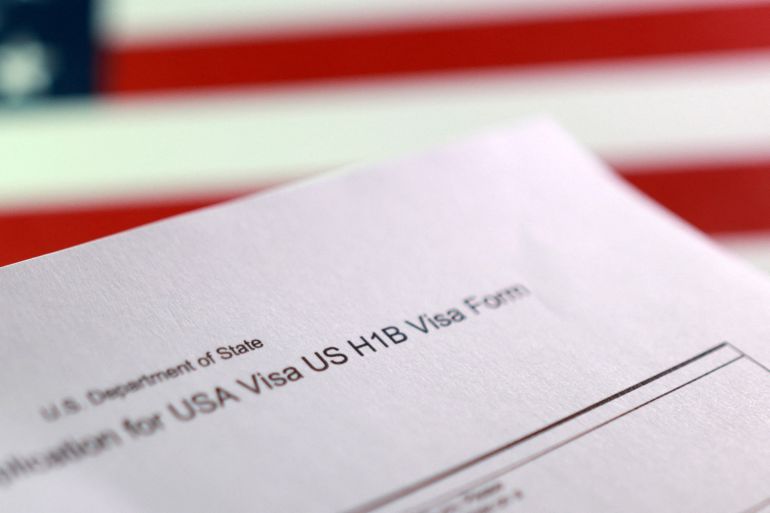
China is rolling out a new visa aimed at attracting foreign talent in the fields of science and technology. The K visa comes into effect from Wednesday, following a proclamation last month by the State Council, China’s cabinet. Recommended Stories list of 4 itemsend of list The visa has attracted particular attention in light of United States President Donald Trump’s tightening of the eligibility rules for the H-1B, which Silicon Valley heavily relies on to recruit skilled labour from overseas. What is the goal of the K visa, and how does it work? The Chinese government has cast the visa as part of its efforts to attract foreign talent to boost the country’s competitiveness in science and technology. Ministry of Foreign Affairs spokesman Guo Jiakun on Tuesday said the visa’s purpose was to “promote exchanges and cooperation” between science, technology, engineering and mathematics (STEM) talent from China and other countries. The visa is the latest in a series of recent reforms intended to make China more attractive to foreigners, including streamlined visa processing and the introduction of a redesigned permanent residency card. “From the 1980s to the 2010s, China used to lose talent to developed countries such as the United States,” Zhigang Tao, a professor of strategy and economics at Cheung Kong Graduate School of Business in Beijing, told Al Jazeera. “Now the task is to keep local talent and also attract some global talent.” Chinese officials have said the K visa, which will be open to graduates of recognised universities and young professionals engaged in STEM-related fields, will offer more flexible conditions than existing options. Advertisement The main advantage of the visa is that, unlike previous skilled migrant programmes, it does not require sponsorship by an employer. However, many key details of the visa remain unclear, including duration of stay and unspecified requirements related to age, educational background and work experience. Is the K visa likely to attract foreign talent? Edward Hu, immigration director at consultancy Newland Chase in Shanghai, said there has been strong interest in the visa, with inquiries up more than 30 percent since August. Hu said there has been particularly strong interest from prospective applicants in India, Southeast Asia, Europe, and the US. “The K visa fills a gap in China’s talent system by lowering entry barriers for younger STEM talents – complementing the existing R visa, which targets top-tier experts,” Hu told Al Jazeera, referring to the visa as a “strategic move” to position China as a top destination for early-career STEM talent. The R visa, introduced in 2013, is aimed at “high-level and professional” foreigners who are “urgently needed” by the state, and requires sponsorship by an “inviting organisation”. Still, China’s drive to expand its talent pool with the K visa faces challenges. While China has made moves to open to foreigners, the country is still far less internationalised than the US. Unlike the US, China rarely grants citizenship to foreigners. While Chinese permanent residency is more feasible to obtain, it is still only granted to a tiny fraction compared with the roughly one million non-US citizens who receive green cards each year. Chinese work environments also present a language barrier for English-speaking applicants when compared with their Silicon Valley counterparts. Michael Feller, chief strategist at Sydney-based business consultancy Geopolitical Strategy, said Chinese companies would need to offer English-language roles and “international-style” work schedules to compete with US firms. “I can’t imagine many foreign graduates interested in the ‘9-9-6’ work-life balance that many Chinese firms are known for,” Feller told Al Jazeera, referring to the 72-hour workweek famously endorsed by Alibaba founder Jack Ma. A US flag and a H-1B visa application form are displayed together on September 22, 2025 [Dado Ruvic/Reuters] What does the K visa have to do with the H-1B? While China’s drive to recruit talent has cast Trump’s crackdown on immigration in sharp relief, there is no direct link between the introduction of the K visa and his moves to rein in access to the H-1B. Advertisement Beijing officially unveiled its visa on August 7, weeks before Trump announced the introduction of a $100,000 fee on H-1B applications, sending shockwaves through the tech sector, especially in India, the source of about 70 percent of visa recipients. However, many observers have suggested that the US’s inward turn could be to the benefit of other countries seeking to attract talent, including China. “The K visa is incredible timing from China’s perspective,” Feller said. “It’s unlikely that Beijing knew that Washington was about to hike the fees for its own H-1B visa category, but it certainly gives the K visa added impetus in the global war for talent.” Hu of Newland Chase said he expected the shift in policy around the H-1B to “significantly boost” the appeal of the K visa, “positioning it as a timely alternative for affected talent”. “The K visa offers a low-cost, sponsor-free pathway – aligning with the global surge in STEM talent demand and making China a more accessible option,” he said. Adblock test (Why?)
Russia-Ukraine war: List of key events, day 1,315
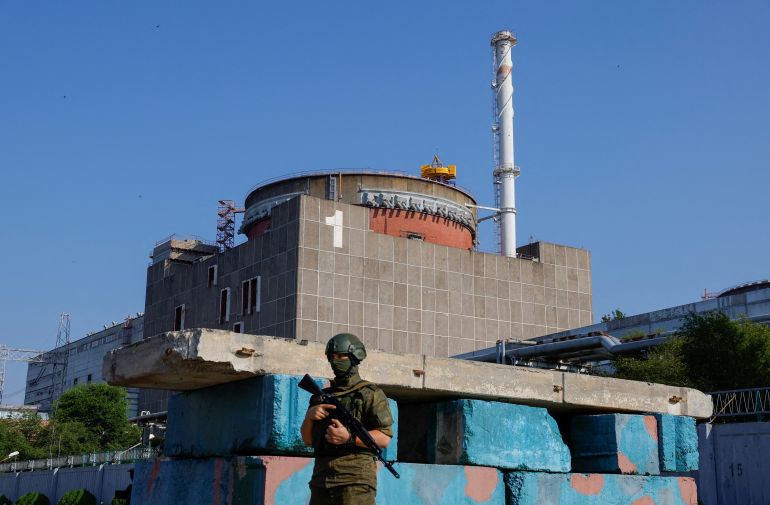
Here are the key events on day 1,315 of Russia’s war on Ukraine. Published On 1 Oct 20251 Oct 2025 Click here to share on social media share2 Share Here is how things stand on Wednesday, October 1 : Fighting Russian forces claim to have captured a village near the city of Siversk in Ukraine’s Donetsk region, the Russian Ministry of Defence said on Tuesday. The International Atomic Energy Agency (IAEA) is engaging with Russia and Ukraine to restore offsite power to Ukraine’s Zaporizhzhia nuclear power plant, as Russian shelling has prevented restoration of power needed to cool nuclear reactors and prevent a meltdown, IAEA chief Rafael Grossi said. Ukrainian President Volodymyr Zelenskyy said that Russia’s shelling around the Zaporizhzhia plant “is a threat to everyone”. “No terrorist in the world has ever dared to do with a nuclear power plant what Russia is doing now,” Zelenskyy said in his nightly address on Tuesday. A Russian soldier stands guard at a checkpoint near the Zaporizhzhia Nuclear Power Plant in Russian-controlled Ukraine [Alexander Ermochenko/Reuters] Regional security European Union leaders will discuss proposals for a “drone wall” at a summit on Wednesday in Copenhagen, following days of airspace intrusions by unidentified unmanned aircraft that forced temporary closures at Danish airports. The “drone wall” summit will also be the first opportunity for leaders of the EU’s 27 countries to debate a proposal to use Russian assets frozen in European banks to fund a loan of 140 billion euros ( $164.37bn) for Ukraine. The Kremlin said that Germany has long been indirectly involved in the war in Ukraine after German Chancellor Friedrich Merz stated that Europe is “no longer at peace” with Russia. Moscow also said that Europe would be better off seeking dialogue with Russia about security issues rather than looking to build a divisive “drone wall”. Romania is looking to quickly set up production on its territory of a plant to build defensive drones, along with Ukraine, for use domestically as well as by EU and NATO allies, the country’s foreign minister, Oana Toiu, said. The French Navy said that authorities were investigating a possible sanctions infraction by the oil tanker Boracay, a vessel suspected of belonging to the so-called “shadow fleet” involved in the transport of Russian oil. Advertisement Military aid Russian Minister of Foreign Affairs Sergey Lavrov said that Moscow did not believe that Washington had taken a final decision on supplying Tomahawk cruise missiles to Ukraine. Politics and diplomacy The Kremlin said that there were many people living in Ukraine’s Odesa and Mykolaiv regions who wanted to “link their fate to Russia” but were afraid to speak out. Russia will expel an Austrian diplomat, according to Russian state news agencies, in response to Vienna’s decision to throw out a Russian diplomat over suspicions of relaying company secrets from Austrian oil company OMV to the Kremlin. US Trade Representative Jamieson Greer said that India is starting to diversify its oil purchases away from Russia, and that the EU is trying to strengthen economic ties with India. Russia’s Lavrov said that he believed Moldova’s election on Sunday had been openly manipulated, as the pro-European governing party won a resounding victory over its Russian-leaning rival in the key parliamentary election. Adblock test (Why?)
Gaza Sumud flotilla: How Israel breaks international maritime law
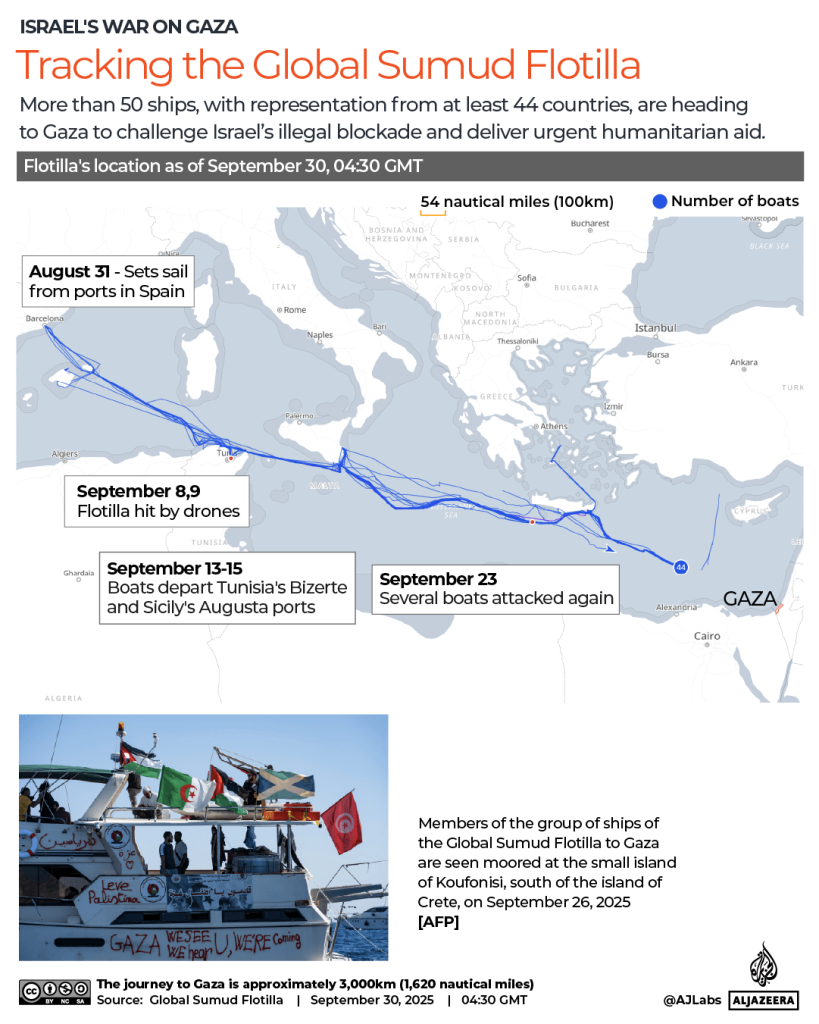
A Gaza-bound aid flotilla is currently sailing toward the enclave, entering a high-risk zone where previous missions have faced attacks and interceptions. On Wednesday, Israel’s public broadcaster Kan reported that the Israeli military is preparing to “take control” of the flotilla with naval commandos and warships. Israel wont tow all 50 vessels however and will sink some at sea, Kan said. Israel intends to detain hundreds of activists on naval ships, question them then deport them via the port of Ashdod. The Global Sumud Flotilla, which set sail from Spain on August 31, is the largest maritime mission to Gaza to date. It brings together more than 50 ships and delegations from at least 44 countries, as part of an international effort to challenge Israel’s naval blockade and deliver aid to Gaza. The map below shows the latest location before they were attacked. (Al Jazeera) So, is Israel entitled to board ships that are in international waters? The answer is no, here’s how territorial and international waters work. Which waters does a country control? Coastal countries control the waters closest to their shores, called territorial waters, which extend 12 nautical miles (22km) from the coast. In this zone, the state has full sovereignty, just like over its land. Beyond that, they have rights over up to 200 nautical miles (370 km) of ocean, including the water and seafloor. This area is called the Exclusive Economic Zone (EEZ). In the EEZ, countries can regulate activities such as fishing, mining, drilling, and other energy projects, while still allowing other countries freedom of navigation. France has the largest EEZ, covering approximately 10.7 million square kilometres (4.2 million sq miles), thanks to its overseas territories. It is followed by the US, Australia, Russia, and the UK. Advertisement Where are international waters? Covering about 64 percent of the ocean, the high seas lie beyond any country’s territorial waters and economic zones and are not controlled by a single state, with their use governed by international agreements. What are the laws of the high seas? The laws of the high seas are governed by the 1982 UN Convention on the Law of the Sea (UNCLOS). It stipulates that all states can enjoy freedom of movement of ships in the high seas and aircraft can fly freely. It also allows the laying of subsea cables and pipelines, as well as fishing, scientific research and the construction of islands. All three of which are subject to international agreements and laws. Ships that are on the high seas are subject to the jurisdiction of the flag they fly, except those conducting piracy and other unauthorised activities. Israel has attacked previous flotillas in international waters Several Freedom Flotilla vessels have attempted to break the blockade of Gaza since 2010. All were intercepted or attacked by Israel, mostly in international waters where it has no territorial rights. The most deadly occurred on May 31, 2010, when Israeli commandos raided the Mavi Marmara in international waters. The commandos killed 10 activists, most of them Turkish, and injured dozens more, sparking global outrage and severely straining Israel-Turkiye relations. The map below shows the approximate locations where prominent flotillas were stopped, some encountering deadly Israeli forces. (Al Jazeera) In 2024, amid ongoing flotilla missions delivering humanitarian aid to Gaza, UN experts stated that: “The Freedom Flotilla has the right of free passage in international waters, and Israel must not interfere with its freedom of navigation, long recognised under international law.” The Sumud Flotilla had been sailing through international waters and into Palestinian territorial waters, where it has the legal right to navigate and deliver humanitarian aid. According to Stephen Cotton, the General Secretary of the International Transport Workers’ Federation (ITF), representing more than 16.5 million transport workers globally, “The law of the sea is clear: attacking or seizing non-violent, humanitarian vessels in international waters is illegal and unacceptable.” “Such actions endanger lives and undermine the basic principles that keep the seas safe for all. This is not only about seafarers, it’s about the safety of everyone at sea, whether on a commercial ship, a humanitarian vessel, or a fishing boat. States cannot pick and choose when to respect international law. The seas must not be turned into a theatre of war.” Cotton told Al Jazeera. Advertisement According to the Freedom Flotilla Coalition, the mission is not only lawful but also protected under a comprehensive set of international legal instruments. Including: The United Nations Convention on the Law of the Sea (UNCLOS) – Guarantees freedom of navigation on the high seas San Remo Manual on International Law Applicable to Armed Conflicts at Sea – Prohibits blockades that cause starvation or disproportionate suffering and forbids the targeting of neutral humanitarian missions UN Security Council Resolutions 2720 and 2728 – These binding instruments demand unimpeded humanitarian access and the removal of all barriers to aid delivery Convention on the Prevention and Punishment of the Crime of Genocide – Includes the prevention of acts deliberately endangering civilians Fourth Geneva Convention – Imposes an obligation to permit the free passage of humanitarian aid and prohibit interference with relief operations and the targeting of civilian infrastructure Rome Statute of the International Criminal Court – Criminalises the starvation of civilians as a method of warfare and willful obstruction of humanitarian aid. Adblock test (Why?)
Why is the US government on the brink of a shutdown? What will it mean?
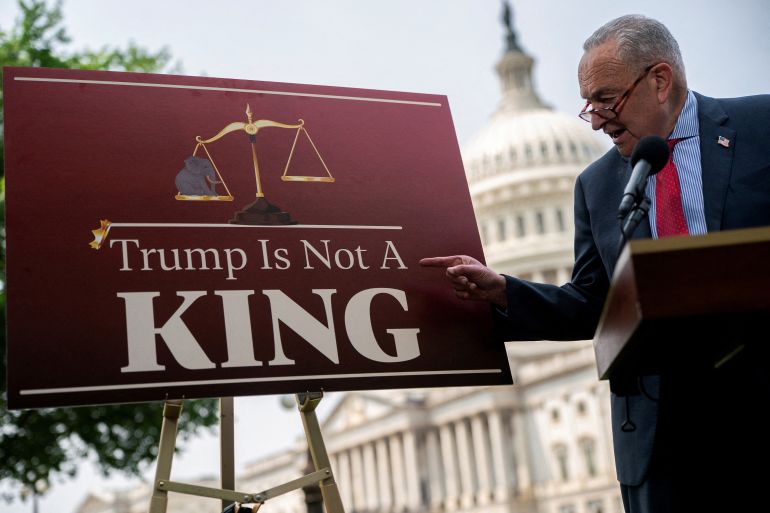
The United States government will shut down on Wednesday if Democrats and Republicans in Congress cannot reach an agreement on a vital funding bill. The shutdown could temporarily halt some US government services and put the salaries of government employees on hold – or even end them altogether. Recommended Stories list of 4 itemsend of list While it has been normal practice to place staff on “furlough” during previous government shutdowns – meaning they are reinstated and receive back pay once the government is up and running again – this time, the Trump administration is threatening to fire people permanently. Why might the government shut down? The new fiscal year for the federal government begins on October 1, but Congress has not agreed on a necessary short-term funding bill. Republicans control both chambers of Congress. In the Senate, Republicans hold 53 seats and Democrats, 47. The Republicans have fallen short of the 60 votes needed to pass legislation. The Senate majority leader is Republican John Thune, and the minority leader is Democrat Chuck Schumer. In the House of Representatives, Republicans hold 220 seats and Democrats hold 212. The House speaker is Republican Mike Johnson, the majority leader is Republican Steve Scalise, and the minority leader is Democrat Hakeem Jeffries. The disagreement is over a short-term spending bill introduced by the Republicans, lays out the funding of government operations until November 21. Without it, the government cannot function. What is the dispute about, exactly? The main stumbling block is continued funding for the Affordable Care Act, also called Obamacare, which is popular with voters and enables low-income people to access healthcare, John Owens, an emeritus professor of US government and politics at the University of Westminster in London, told Al Jazeera. Advertisement Democrats are refusing to back the Republican bill unless Republicans undo recent cuts to Medicaid enacted under Trump’s “One Big Beautiful Bill” in July. Democrats additionally want to extend special tax credits that reduce the cost of health insurance for Americans. These credits are set to expire later this year. Therefore, Senate Democrats have proposed a range of alternatives, including a seven- to 10-day funding bill, along with other possible measures that could run concurrently, two Senate Democratic sources told the Reuters news agency on Monday. Republicans have rejected these proposals, however, and, so far, neither side shows any sign of backing down. Earlier this week, US President Donald Trump cancelled talks with Democratic leaders, deeming their demands “unserious”. As a result, Congress is in limbo and is not expected to vote on anything this week. On Monday, congressional leaders left a meeting with Trump without reaching a deal. Schumer and Jeffries have blamed the Republicans for the impending shutdown. Hours after that meeting, Trump posted an AI-generated, “deepfake” video of Schumer and Jeffries with fabricated audio on his Truth Social platform. It depicts Jeffries wearing a large sombrero and sporting a handlebar moustache while Schumer says, “If we give all these illegal aliens healthcare, we might be able to get them on our side so they can vote for us.” The video has been condemned by Democrats as a racist dogwhistle alluding to Mexicans. “It’s a disgusting video and we’re gonna continue to make clear bigotry will get you nowhere,” Jeffries said. “We are fighting to protect the healthcare of the American people in the face of an unprecedented Republican assault.” US Senate Minority Leader Chuck Schumer [File: Nathan Howard/Reuters] How likely is it that there will be a government shutdown? The disagreement over healthcare funding is far from being resolved. Furthermore, Owens explained that any Senate agreement must also be approved by the House, where Trump’s party has a slim, hard-right majority closely aligned with him. However, some Republicans in the House are also fearful of the effects of the healthcare cuts in their districts. “With midterm elections due next November, there is tremendous pressure, particularly on electorally vulnerable Republican senators who are also under pressure from Trump to support his cuts,” Owens said. “Whether the current impasse results in a shutdown remains to be seen. Its effects will depend on its length and the ultimate willingness of Trump and his party, and the Congressional Democrats to reach some kind of compromise.” Advertisement Trump himself does not seem optimistic about resolving the impasse. “I just don’t know how we’re going to solve this issue,” CBS News reported, quoting him, on Sunday. US Vice President JD Vance also warned that the government is heading for a shutdown, blaming Democrats. “I think we’re headed into a shutdown because the Democrats won’t do the right thing,” Vance told reporters after the meeting on Monday. If Congress does not agree on a short-term funding bill by midnight on Tuesday (04:00 GMT on Wednesday), the shutdown will prompt federal closures at 12:01am on Wednesday (04:01 GMT). On Tuesday, the crypto-based prediction market, Polymarket, placed the odds of a government shutdown at 86 percent. What happens during a government shutdown? A government shutdown happens when a lapse in funding forces parts of the government federal agencies with non-essential functions to cease operations. Under US law, if the government shuts down, agencies are required to “furlough” – suspend or discharge – their “non-excepted” employees. Once the shutdown is over and operations resume, furloughed employees receive their backdated pay, due to a 2019 bill passed by Congress enshrining this into law. An “excepted employee” is a US federal civil service employee who “protects life and property”. While excepted employees stay on the job during a government shutdown, they do not get paid until the shutdown ends. Each agency develops its own plan for the shutdown, deciding which employees will stay and who will be furloughed. Owens estimated that about 900,000 federal workers would be laid off if the shutdown happens. Some government work continues during a shutdown. Members of the armed forces, FBI, CIA and air traffic controllers continue to work. Programmes funded by mandatory spending, such as Social Security and Medicare, also continue
Afghanistan imposes internet blackout: What has the effect been so far?
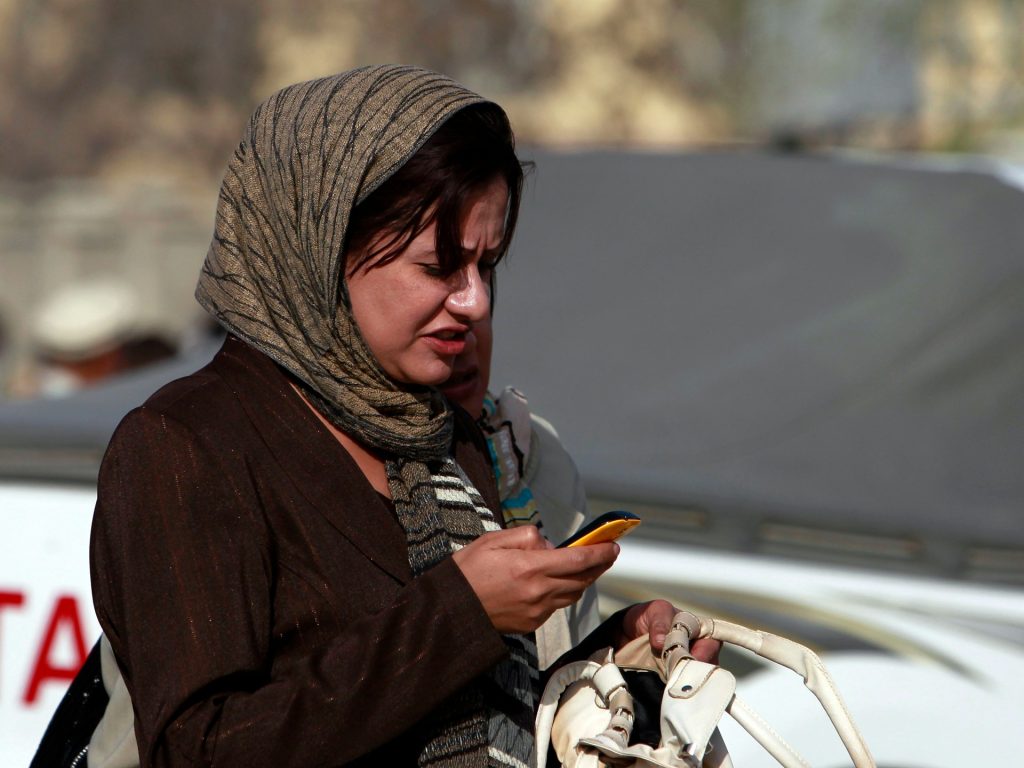
A nationwide telecoms shutdown has been imposed in Afghanistan, as part of a Taliban crackdown on “immoral activities”. Netblocks, a global internet watchdog, said on Monday that multiple networks in Afghanistan had been disconnected. Telephone services had also been limited, resulting in what Netblocks described as a “total internet blackout” in the nation of 43 million people. Recommended Stories list of 4 itemsend of list Connectivity was cut in phases on Monday, with the final stage affecting telephone services. In the past, the Taliban have voiced concern about online pornography. And earlier this month, authorities cut fibre-optic links to some provinces, with officials citing morality concerns. “The incident is likely to severely limit the public’s ability to contact the outside world,” the group added. This is the first time that the whole of Afghanistan has faced an internet blackout under the hardline Islamist government. It risks cutting off the country, which is in desperate need of humanitarian assistance, just weeks after a devastating, magnitude-6 earthquake in the east of the country. Which telecoms services are being restricted? Earlier this month, the Taliban began to close down internet services. On September 16, the Balkh provincial spokesperson stated that fibre-optic internet had been completely banned in the northern province. “This measure was taken to prevent vice,” he wrote on social media. At about the same time, restrictions were also reported in the northern provinces of Badakhshan and Takhar, as well as in Kandahar, Helmand, and Nangarhar in the south. Advertisement Cloudflare Radar – an international internet traffic monitor – said Kabul had suffered the sharpest municipal drop in internet connectivity, followed by the western city of Herat, and Kandahar in the south. On Monday, online TV channel TOLOnews reported that the authorities had set a one-week deadline for the shutdown of 3G and 4G internet services for all mobile phones, leaving only the 2G mobile network active. Telephone services have also been compromised, as they are routed over the internet and share the same fibre-optic cables. What is likely to be worst-affected? Internet and communications Tolo warned viewers of disruption to its news services and added that the shutdown would affect its own internal operations. Elsewhere, both The Associated Press (AP) and AFP news agencies said they were unable to contact their bureaus in the capital city, Kabul. On Tuesday, Al Jazeera attempted to contact people in Kunar, Jalalabad and Kabul by WhatsApp and by phone from outside Afghanistan, but no messages or calls got through. Afghan citizens living abroad, such as rights activist and journalist Nilofar Ayoubi, report that they have been unable to communicate with family members. I haven’t been able to reach my mother in Afghanistan for the past nine hours due to the internet blackout. Tonight, I feel just as hopeless and powerless as I did on the night of August 15 , 2021 .. https://t.co/yX4ycP4sMK — Nilofar Ayoubi 🇦🇫 (@NilofarAyoubi) September 29, 2025 Flights Some flights from Kabul airport have been disrupted. According to flight tracking service Flightradar24, nine flights scheduled to depart from or arrive at Kabul International Airport on Tuesday were cancelled. Other flights went ahead as planned. Even before the Taliban takeover in August 2021, the Afghan economy was fragile. Some 47 percent of the country’s population were living below the poverty line. Unemployment stood at 11.7 percent in 2020, and 34.3 percent of people with jobs were living on less than $1.90 per day, Sheela Samimy, an economist and former director in the Afghan Ministry of Finance, told Al Jazeera at the time. A telecoms shutdown could well exacerbate Afghanistan’s economic struggles. Internet platforms – such as Aseel, an online platform enabling Afghan artisans – mostly women – to sell handmade jewellery, carpets and pottery to customers around the world while setting their own prices – are expected to be badly affected by the internet blackout as vendors and customers become unable to connect to these sites. Advertisement Aseel also enabled people from overseas to donate humanitarian aid via its website. Afghans who earn a living via social media platforms such as YouTube will also be affected. Financial and healthcare services Diplomatic officials told the BBC that the internet shutdown could affect banking systems across the country, in addition to business operations and hospital services. What does the Taliban say about all this? AFP reported that a government official told it on Monday that the fibre-optic network it relies on for operations would be shut down. “Eight to nine thousand telecommunications pillars” would be shut down, he said, adding that the blackout would last “until further notice”. Since seizing power in 2021, the Taliban has imposed numerous restrictions on society in line with its strict interpretation of Islamic law. But strictures ordered by the leadership, based in Kandahar, have grown increasingly hardline recently. Authorities banned Afghan women working for the United Nations from entering its offices in September. This follows prohibitions on women in numerous jobs, while girls were prohibited from attending high school in 2021. Women are now also banned from higher education. Many women and girls have since relied on online classes provided by educators abroad or by charitable organisations. This latest clampdown on the internet means these opportunities are now also under threat. The Taliban says it respects women’s rights in line with its interpretation of Islamic law. But women’s rights activist Sanam Kabiri, an Afghan living in Pakistan, said: “The Taliban are using every tool at their disposal to suppress the people. “What else do these ignorant men of another century want from our oppressed people?” Will this hamper ongoing earthquake rescue efforts in Afghanistan? On August 31, a devastating magnitude 6.0 earthquake in eastern Afghanistan killed more than 2,200 people and injured some 3,600, according to the Taliban authorities. As rescue efforts persist, hundreds of thousands of people have been displaced. Women have remained largely absent from earthquake clear-up operations, in large part because the Taliban has barred them from working for nongovernmental organisations operating in the
Palestinians in Gaza react to Trump plan on ending Israel’s war

NewsFeed ‘They want to turn it into Trump resorts’. Palestinians in Gaza have been reacting to US President Donald Trump’s 20-point plan to bring an end to Israel’s war on the enclave. Published On 30 Sep 202530 Sep 2025 Click here to share on social media share2 Share Adblock test (Why?)
Trump’s Gaza peace plan welcomed by Arab and Islamic countries, the West
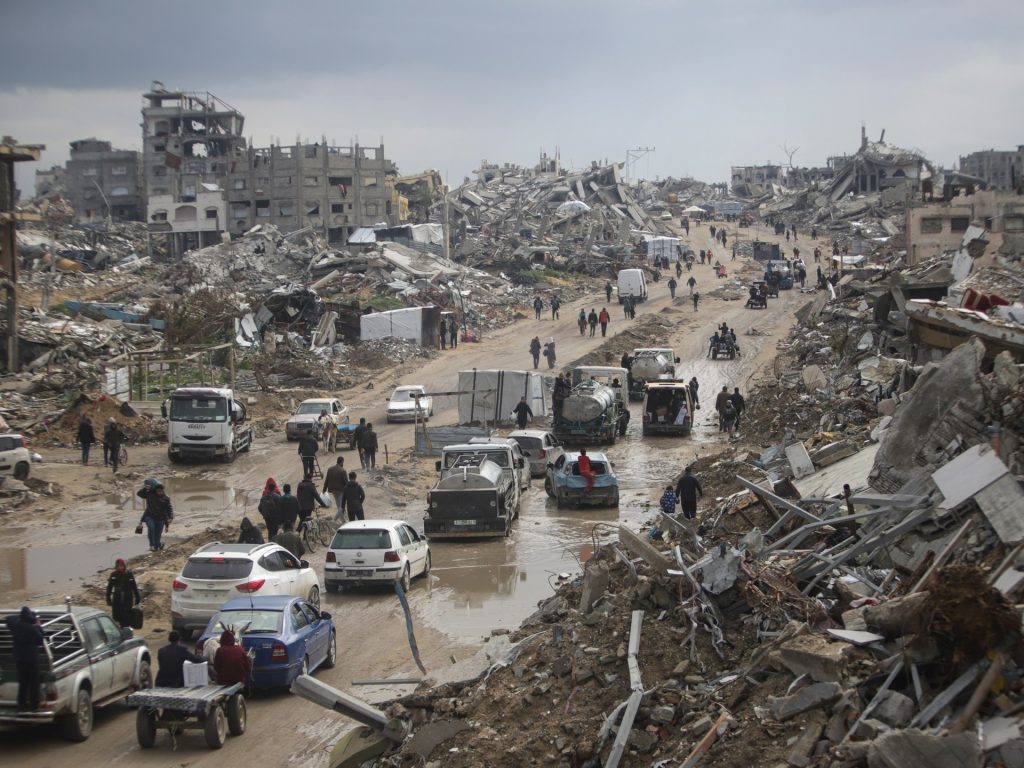
United States President Donald Trump has proposed a 20-point peace plan to end the war in Gaza after holding talks with Israeli Prime Minister Benjamin Netanyahu, who welcomed the proposal. The new proposal, which calls for the disarmament of Hamas, has been welcomed by the Palestinian Authority (PA), which governs in the occupied West Bank, along with some regional Arab countries. Recommended Stories list of 3 itemsend of list Hamas says that it is studying the US proposal “in good faith”, while the Palestinian Islamic Jihad (PIJ) group says that the plan is a “recipe to blow up the region”. Below are the reactions from regional and Western countries. Palestine The PA said that it welcomes the “sincere and tireless efforts to end the war on Gaza, and affirms its confidence in his ability to find a path to peace”. “It reiterates its shared commitment to working with the United States, regional countries, and partners to end the war on Gaza through a comprehensive agreement that guarantees the delivery of adequate humanitarian aid to Gaza, the release of hostages and prisoners,” it said in a statement published by the Palestinian afa news agency. It also called for the “establishment of mechanisms that protect the Palestinian people, ensure respect for the ceasefire and security for both parties, prevent the annexation of land and the displacement of Palestinians, halt unilateral actions that violate international law, release Palestinian tax funds, lead to a full Israeli withdrawal, and unify Palestinian land and institutions in the Gaza Strip and the West Bank, including East Jerusalem,” it said. “It also ends the occupation and paves the way for a just peace based on the two-state solution, with an independent and sovereign State of Palestine living side by side with the State of Israel in security, peace, and good neighborliness, in accordance with international law,” the statement added. Advertisement The PIJ, a Palestinian armed group fighting alongside Hamas, called Trump’s plan a “recipe for continued aggression against the Palestinian people. Through this, Israel is attempting – via the United States – to impose what it could not achieve through war,” the group said in a statement. “Therefore, we consider the American-Israeli declaration a formula for igniting the region.” Egypt, Indonesia, Jordan, Pakistan, Qatar, Saudi Arabia, Turkiye UAE The foreign ministers of the above countries released a joint statement welcoming Trump’s “sincere efforts to end the war in Gaza, and assert their confidence in his ability to find a path to peace”. “Along these lines, the ministers welcome the announcement by President Trump regarding his proposal to end the war, rebuild Gaza, prevent the displacement of the Palestinian people and advance a comprehensive peace, as well as his announcement that he will not allow the annexation of the West Bank,” the statement added. The statement went on to say that the countries are willing to work with the “United States to end the war in Gaza through a comprehensive deal that ensures unrestricted delivery of sufficient humanitarian aid to Gaza, no displacement of the Palestinians, the release of hostages, a security mechanism that guarantees the security of all sides, full Israeli withdrawal, rebuilds Gaza and creates a path for a just peace on the basis of the two state solution, under which Gaza is fully integrated with the West Bank in a Palestinian state in accordance with international law as key to achieving regional stability and security”. Turkish President Recep Tayyip Erdogan Erdogan has hailed Trump for his efforts to broker a ceasefire. “I commend US President Donald Trump’s efforts and leadership aimed at halting the bloodshed in Gaza and achieving a ceasefire,” Erdogan said in a statement. He added that Turkiye would continue to support the diplomatic process, and is committed to helping establish “a just and lasting peace acceptable to all parties”. Pakistani Prime Minister Shehbaz Sharif Sharif posted on X that he welcomed the plan. “I am also convinced that durable peace between the Palestinian people and Israel would be essential in bringing political stability and economic growth to the region,” he wrote. “It is also my firm belief that President Trump is fully prepared to assist in whatever way necessary to make this extremely important and urgent understanding to become a reality. “I laud President Trump’s leadership and the vital role played by Special Envoy Steve Witkoff in bringing an end to this war.” Advertisement He added: “I also strongly believe that the implementation of the two state proposal is essential to ensure lasting peace in the region.” Israeli opposition politician Benny Gantz Gantz said on X: “I laud President Trump’s extraordinary efforts to secure a hostage deal and safeguard Israeli security. Now is the time for initiative.” “President Trump’s plan must be implemented, our hostages brought home, Israel’s operational freedom maintained, Hamas’ terror regime in Gaza replaced and moderate Arab States instated instead as I proposed a year and a half ago. “We must not miss out on the opportunity to bring back the hostages, safeguard our security and catalyse a ‘Strategic Flip’ expanding the circles of regional normalisation,” he added. France “I expect Israel to engage resolutely on this basis. Hamas has no choice but to immediately release all hostages and follow this plan,” French President Emmanuel Macron said in a statement on X. “These elements must pave the way for in-depth discussions with all relevant partners to build a lasting peace in the region, based on the two-state solution and on the principles endorsed by 142 UN member states, at the initiative of France and Saudi Arabia.” United Kingdom Prime Minister Keir Starmer said: “We call on all sides to come together and to work with the US Administration to finalise this agreement and bring it into reality. Hamas should now agree to the plan and end the misery, by laying down their arms and releasing all remaining hostages.” The controversial former prime minister, Tony Blair, called the plan “bold and intelligent”, adding that it “can end the war, bring