

‘Hey Daddy’: How different world leaders massage Trump’s ego
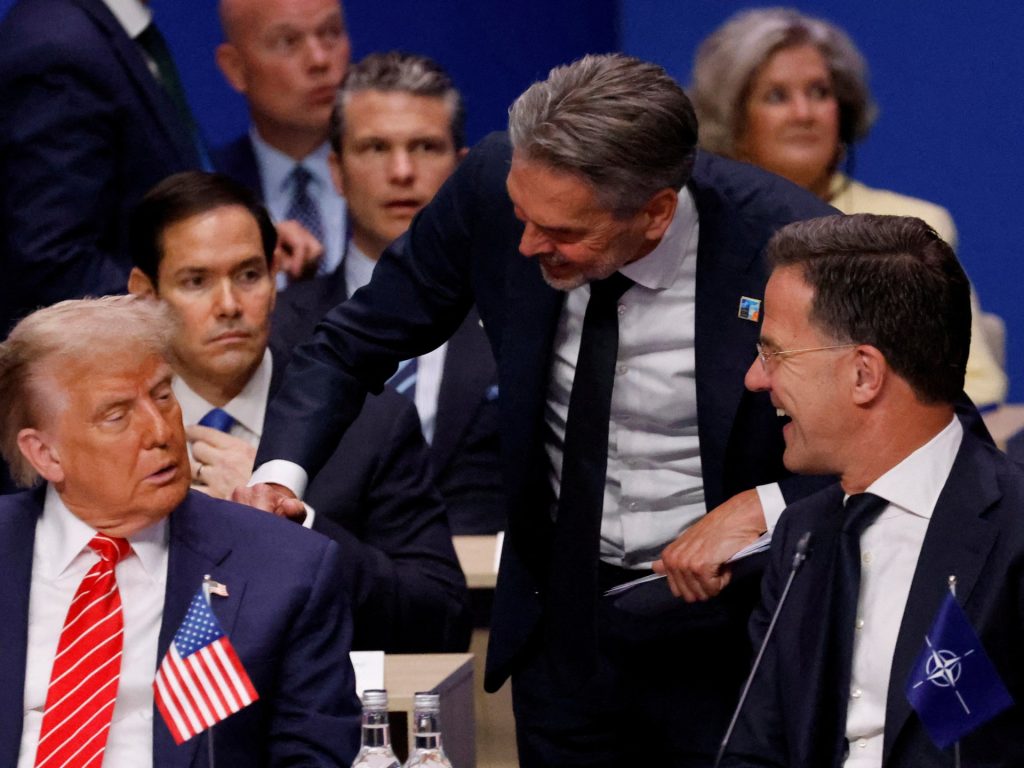
Describing Israel and Iran fighting each other at his NATO pre-summit news conference in The Hague this week, US President Donald Trump drew an analogy with children fighting in a schoolyard, who eventually had to be separated. “Daddy has to sometimes use strong language,” Mark Rutte, NATO secretary-general, chimed in. Asked about the comment after the summit, Trump said: “No, he likes me. I think he likes me. If he doesn’t I’ll let you know. I’ll come back and hit him hard, OK? He did it very affectionately. Hey Daddy. You’re my Daddy.” The White House decided Rutte was flattering the US president, and made a reel of Trump’s visit to the Netherlands, set to the music of Usher’s Hey Daddy. Rutte’s flattery of Trump didn’t stop there. On tackling the Russia-Ukraine war, Rutte told reporters before the NATO summit: “When he came in office, he started the dialogue with President Putin, and I always thought that was crucial. And there’s only one leader who could break the deadlock originally, and it had to be the American president, because he is the most powerful leader in the world.” But how sincere are world leaders’ statements about Donald Trump? Do they genuinely serve to improve bilateral relations and does flattery work? Who has handled Trump well and what have the results been? Neither Rutte, nor any other European leader, engaged in any kind of dialogue with Russian President Vladimir Putin for a long time after the summer of 2022, the year of his invasion of Ukraine, believing it pointless. Advertisement German Chancellor Olaf Scholz was severely criticised as “defeatist” for phoning Putin last November, while Hungary’s Viktor Orban and Slovakia’s Robert Fico, the only European leaders to have visited the Kremlin during the war, have been viewed as openly collaborationist. Yet when Trump started talks with Putin, many Europeans paid him the same compliment as Rutte when they made their inaugural visits to the White House after he took office in January. Keir Starmer, UK “Thank you for changing the conversation to bring about the possibility that now we can have a peace deal, and we will work with you,” said the United Kingdom’s prime minister, Keir Starmer, in the Oval Office in February. Starmer pulled a few rabbits out of hats. Knowing Trump’s fondness for the notion of hereditary power, he drew from his jacket a letter from King Charles III containing an invitation for an unprecedented second state visit to Windsor Castle. Trump was momentarily speechless. “Your country is a fantastic country, and it will be our honour to be there, thank you,” Trump said when he’d gathered himself. Starmer and Trump exchanged a few handshakes while speaking and Starmer repeatedly touched Trump’s shoulder in a sign of affection. But did all this flattery have much effect? Trump announced he was freezing military aid to Ukraine the following month, much to the outrage of the UK, along with Nordic and Baltic countries. Giorgia Meloni, Italy Both Starmer and Italy’s prime minister, Giorgia Meloni, identified Ukraine as a key issue for Trump, who has made it clear he wants to win the Nobel Peace Prize by ending international conflicts. So far, he has claimed credit for ending this month’s “12-Day War” between Israel and Iran, preventing nuclear war following the May 7 air battle between India and Pakistan, and overseeing a peace deal between the Democratic Republic of the Congo (DRC) and Rwanda. Meloni, therefore, tried a similarly flattering approach to Trump. “Together we have been defending the freedom of Ukraine. Together we can build a just and lasting peace. We support your efforts, Donald,” she said during her White House visit in April. Meloni astutely punched all of Trump’s hot-button issues in her opening remarks, saying Italy had policies to combat Fentanyl, an addictive painkiller that Trump has blamed Canada and Mexico for allowing into the country, to invest $10bn in the US economy and to control undocumented immigration. She even adapted Trump’s slogan, Make America Great Again, to Europe. “The goal for me is to Make the West Great Again. I think we can do it together,” Meloni said to a beaming Trump. Advertisement None of this has translated into a state visit by Trump to Rome, a move which would cement Meloni’s position as a major European leader, however. Mark Carney, Canada Meanwhile, newly elected Canadian Prime Minister Mark Carney was both flattering and firm with Trump last month. He complimented Trump on being “a transformational president” who had sided “with the American worker”, but also shut down Trump’s territorial ambition to annex Canada as the 51st US state. “It’s not for sale, won’t be for sale ever,” Mark Carney said. Relations seemed to have taken a turn for the better following Trump’s friction with Carney’s predecessor, Justin Trudeau. Trump called him “very dishonest and weak” at the 2018 G7 summit in Canada before storming off early. But Carney may not have had much effect at all. On Friday, Trump ended trade talks with Canada and threatened to impose additional tariffs on exports over Canada’s new digital services tax. Which meetings have gone less well? Emmanuel Macron, France There was little warmth in Trump’s White House meeting with French President Emmanuel Macron in February. Braced for confrontation with a leader who claims to lead Europe in strategic thought, Trump spoke from lengthy, defensive, scripted remarks which attempted to justify his Ukraine policy. Macron preached that peace in Ukraine must not mean surrender – a sentiment shared by many European leaders, but not expressed to Trump. Trump was cordial with Macron, but not affectionate. Meanwhile, France is holding out on any sort of capitulation to Trump in European Union trade talks. Other members of the EU want to settle for an “asymmetric” trade deal that might benefit the US more than the EU, just to get it done. What’s more, following the G7 meeting in Canada two weeks ago, it was clear no love was lost between
Teen labourers among 19 killed in horrific road collision in Egypt
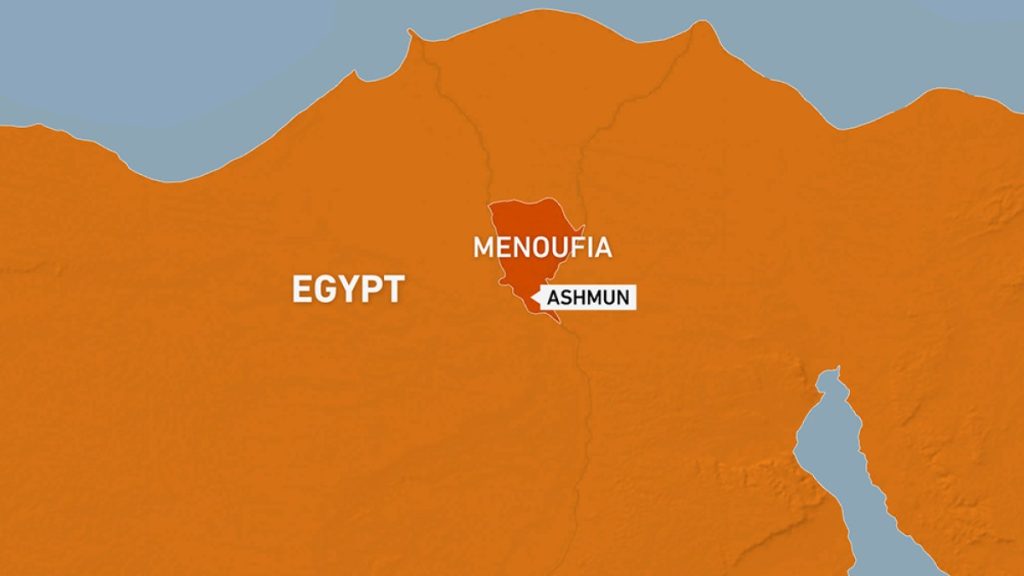
A truck collided with a minibus carrying day labourers, two of whom were 14-year-old girls, to their workplace. A truck has collided with a minibus carrying workers on a road in Egypt, killing 19 people, most of them teenage girls, according to local officials. The collision occurred as the workers were heading to work in the early hours of Friday morning on a regional road in the city of Ashmoun in the Nile Delta province of Menoufia, north of the capital Cairo. The truck collided with the minibus as it carried the labourers to their workplace from their home village of Kafr al-Sanabsa, according to the state-owned newspaper, Akhbar al-Youm. Most of the workers were teenagers – two of them just 14 – according to a list of the names and ages published by the state-owned daily, Al-Ahram. Egyptian media has dubbed the crash victims “martyrs for their daily bread”. Some 1.3 million minors are engaged in some form of child labour in Egypt, according to government figures, and accidents often involve underage labourers travelling to work in overcrowded minibuses in rural areas. Only three people survived the crash on Friday, according to a statement from Egypt’s Ministry of Labour, and they were transferred to the General Ashmoun Hospital. Egypt’s Labour Minister Mohamed Gebran has ordered authorities to compensate the families of the deceased with up to 200,000 Egyptian pounds (about $4,000) each. Each injured person will also receive 20,000 Egyptian pounds ($400). Menoufia provincial governor, Ibrahim Abu Leimon, said the cause of the crash would be investigated. Preliminary reports suggest excessive speeding may have been a key factor. Advertisement Abu Leimon also called on the country’s Ministry of Transportation to reassess safety measures on the regional road. In April, five members of a single family died in a two-car collision on the same road. Deadly traffic accidents claim thousands of lives every year across Egypt. In October 2023, 35 people were killed, at least 18 of whom burned to death, in a “horrific collision” involving a bus and several cars on the Cairo-Alexandria desert road, according to Al-Ahram. Adblock test (Why?)
Russia-Ukraine war: List of key events, day 1,220

Here are the key events on day 1,220 of Russia’s war on Ukraine. Here is how things stand on Saturday, June 28: Fighting Ukraine’s military has said it struck four Russian Su-34 warplanes at the Marinovka base outside Russia’s city of Volgograd, some 900km (550 miles) from the Ukrainian border. A Russian missile attack has killed at least five people and wounded more than 20 in Samar in Ukraine’s southeast, in the second strike on the industrial city in three days. Russian troops have captured the village of Nova Kruhlyakivka in Ukraine’s eastern Kharkiv region, Russia’s state news agency TASS reported. A Russian attack has damaged an “important power facility” in Ukraine’s southern Kherson region, causing power cuts in some settlements in the region, regional governor Oleksandr Prokudin said. A Ukrainian drone attack on Russia’s Kursk region injured a war correspondent from Chinese news outlet Phoenix TV, Russian authorities said, as they urged the United Nations to respond to the incident. Ukraine’s air force said it downed 359 out of 363 drones and six of eight missiles launched by Russia in an overnight attack. Russia’s drone production jumped by 16.9 percent in May compared with the previous month, data from a think tank close to the government showed, after President Vladimir Putin called for output to be stepped up. Ceasefire deal United States President Donald Trump said he thinks something will happen in Russia’s war in Ukraine that would get it “settled”, citing his recent call with Putin but offering no other details. Putin said relations between Russia and the US were beginning to stabilise, attributing the improvement to efforts by President Trump. Putin reiterated that he had “great respect” for the US leader and was willing to meet him. Putin also said Moscow was ready to hold a new round of peace negotiations with Ukraine, potentially in Istanbul, although the time and venue have yet to be agreed. Advertisement NATO Lithuania has notified the UN that it is leaving the treaty banning antipersonnel landmines. It joins Latvia, Estonia, Finland and Poland – all NATO and European Union members bordering Russia – in withdrawing from the treaty, citing the increased military danger from their Russian neighbour. The Kremlin said Estonia’s stated readiness to host NATO allies’ US-made F-35A stealth jets, capable of carrying nuclear weapons, posed a direct threat to Moscow. Putin said Russia was looking to cut its military expenditure from next year, contrasting that with NATO’s plan to raise its collective spending goal to 5 percent of gross domestic product (GDP) in the next 10 years. Sanctions Senator Ron Wyden, the top Senate Finance Committee Democrat, pressed US Treasury Secretary Scott Bessent to commit to enforcing Ukraine-related sanctions against Russia and to clarify comments about Russia rejoining an international bank payments network. Wyden also sought answers on how the US-Ukraine critical minerals deal and investment agreement would help improve Ukraine’s post-war security and not benefit any entity or country that aided Russia’s war effort. Ukraine plans to ask the EU to sanction Bangladeshi entities it says are importing wheat taken from Ukrainian territories occupied by Russia, after its warnings to Dhaka failed to stop the trade, a top Ukrainian diplomat in South Asia said. Adblock test (Why?)
Trump says Gaza ceasefire possible ‘within the next week’, gives no details
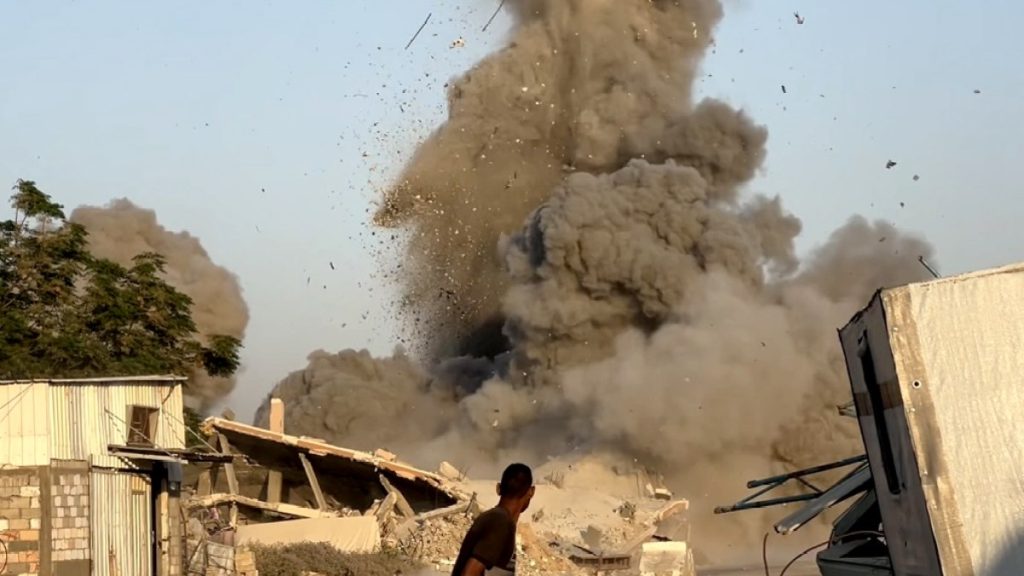
US president’s claim greeted with surprise as deaths spiral in Gaza and Israeli forces accused of more ‘war crimes’ for shooting starving people seeking food aid. United States President Donald Trump said he believes a ceasefire in Gaza between Israel and Hamas could be reached within a week. Trump came out with the surprise comment while speaking to reporters on Friday, saying he was hopeful after speaking to some of the people involved in trying to get a truce. “I think it’s close. I just spoke to some of the people involved,” Trump said. “We think within the next week we’re going to get a ceasefire,” the president said, without revealing who he had been in contact with. Al Jazeera’s Nour Odeh, reporting from Amman in Jordan, said Trump’s comment will be “welcome news” to the starved and bombed population of Gaza, but she also cautioned that there are “no negotiations at this moment happening anywhere in the region”. “What we do know is that talk of a ceasefire increased exponentially after the ceasefire between Israel and Iran. Israel does not want to talk about ending the war. In fact, the Israeli prime minister would be risking a lot if he did,” Odeh said. But, she added, there is an understanding, according to many reports, that Netanyahu would have to agree to some sort of ceasefire in exchange for normalisation deals with Arab states, which the Trump administration has promoted. Hamas, on the other hand, requires that Israel stop its war on Gaza and for the Israeli military to withdraw from areas it seized in Gaza after breaking the last ceasefire in March. “Hamas also wants US guarantees that negotiations would continue and that Israel wouldn’t break the ceasefire again if more time was needed for negotiations,” Odeh added. Advertisement Trump’s ceasefire prediction comes at a time of mounting killings by Israeli forces in Gaza and growing international condemnation of Israel’s war amid the latest revelation that soldiers said they were ordered to shoot unarmed Palestinian civilians seeking humanitarian aid in the territory. Authorities in Gaza said the report by the Haaretz media outlet that Israeli commanders ordered the deliberate shooting of starving Palestinians was further proof of Israel’s “war crimes” in the war-torn territory. While Israeli Prime Minister Benjamin Netanyahu and Defence Minister Israel Katz have rejected the report of commanders targeting civilians, Gaza’s Health Ministry has reported that almost 550 Palestinians have been killed near US- and Israel-backed aid distribution points in Gaza since late May. “People are being killed simply trying to feed themselves and their families,” United Nations Secretary-General Antonio Guterres said on Friday. “The search for food must never be a death sentence,” he said. Medical charity Doctors Without Borders (also known by its French acronym MSF) branded the situation in Gaza as “slaughter masquerading as humanitarian aid”. A spokesperson for the office of Trump’s special envoy, Steve Witkoff, said they had no information to share about a possible ceasefire breakthrough in Gaza. Witkoff helped former US President Joe Biden’s aides broker a ceasefire and captive release agreement in Gaza shortly before Trump took office in January. But the truce was broken by Israel in March when it launched a wave of surprise bombing attacks across the territory. Israeli officials said that only military action would result in the return of captives held in Gaza, and imposed a blockade on food, water, medicine and fuel entering the territory that led to widespread starvation among the 2.1 million population. Israeli Minister for Strategic Affairs Ron Dermer is scheduled to visit Washington next week for talks with Trump administration officials on Gaza, Iran and a possible White House visit by Netanyahu, according to a source familiar with the matter. Adblock test (Why?)
In an age of abundance and ceasefires, Gaza starves, and the war won’t stop
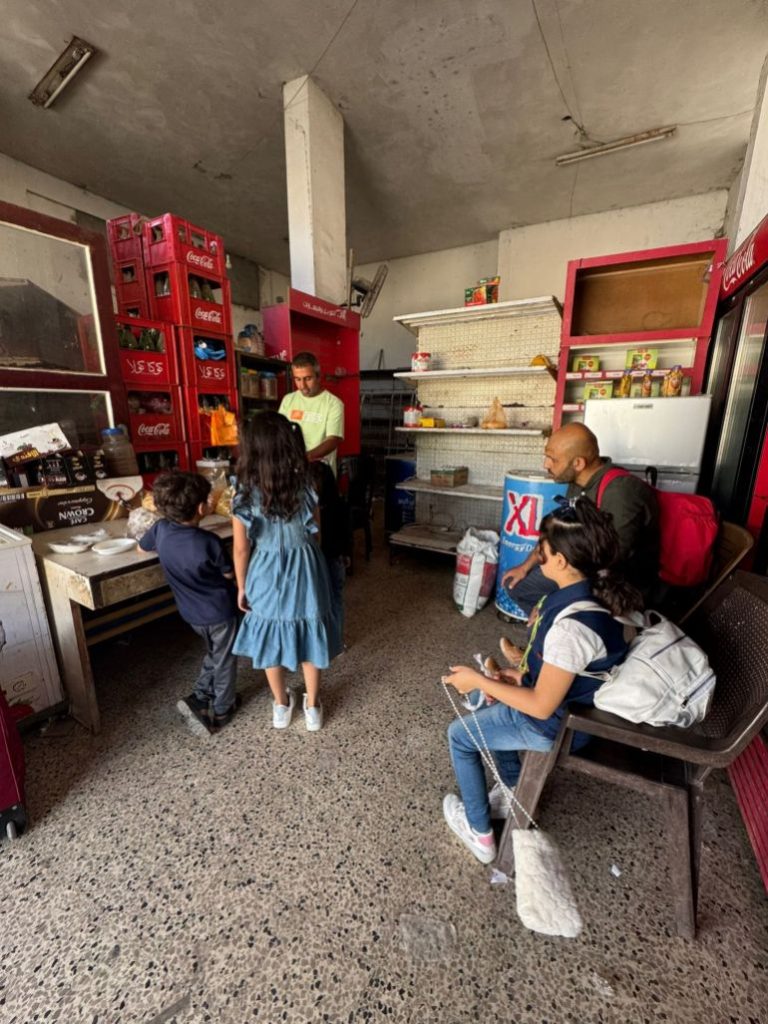
Gaza City – Israel and Iran fought for 12 days, firing bombs, drones and missiles at each other, with the United States even joining in the bombing. Then, earlier this week, it stopped. Last month, India and Pakistan attacked each other, and the world feared the outbreak of an all-out war between the two nuclear powers. But then, after four days, it stopped. In Gaza, we haven’t been so lucky. The word “ceasefire” doesn’t apply to us – even after 20 months of slaughter, death, and starvation. Instead, as wars erupt and end elsewhere, Gaza is neglected, slipping down the news agenda, and disconnected from the internet for days. World leaders that can end wars decisively can’t deliver medicine to Gaza, can’t bring in food aid without daily bloodshed. That inadequacy has left us Palestinians in Gaza isolated, abandoned, and feeling worthless. We feel humiliated and degraded, as if our dignity has been erased. We prayed that the end of the war between Israel and Iran would perhaps help end the one that is being waged on us. But we were wrong. Even as Iran’s missiles rained down on Tel Aviv, Israel never stopped bombing us. Its tanks rolled on, its evacuation orders never ceased. And the daily charade of “humanitarian aid” has continued to kill starving Palestinians as they wait in line at distribution sites. As Israel’s bombs continued to fall on us, as they have done since October 2023, we watched as Israelis wept over their own bombed hospitals, damaged cities, and disrupted lives. Advertisement “What did we do? Why are we being bombed?” they asked, at the same time as Israel continued to attack Gaza’s hospitals, kill Gaza’s children, and murder those trying to get food. Hating food In Gaza, we don’t have wishes any more. I don’t dare to dream about surviving – my heart can no longer bear the sorrow of being in this world, the absence of any future. We’re exhausted from being stories people read, videos they watch. Every minute: bombing, death, and hunger. Especially hunger. During three months of siege and starvation, Israel initially steadfastly refused to allow food in and then allowed distribution only through a shady and militarised organisation, with Israeli forces shooting in. The situation has made me come to hate food. My relationship with it has forever changed, twisted into resentment and bitterness. I crave everything. I ask myself, “What will we eat? What do we have available?” I imagine myself at a table full of delicacies, throwing everything onto the ground in protest, screaming through tears not out of hunger, but for my wounded dignity. It is this hunger and the basic human instinct to survive that drives tens of thousands of starving men, women and children to the daily slaughter that is the food distribution sites. The hunger dulls every other sense. An empty stomach means an empty mind, a failing body. It makes you do things your brain tells you not to do, to risk everything for a bag of flour, or a bag of lentils. And all of this – the starvation of 2 million people – takes place in the age of global food abundance. The age of pistachio desserts, Dubai chocolates, cheesecakes with layers of cream, gourmet burgers, pizzas, sauces, and creams. For the rest of the world, food is a phone tap away. For us, it taunts us, reminding us of our calamity. The shelves in Gaza’s shops sit almost totally empty [Maram Humaid/Al Jazeera] Taunted by the tablet Every time I open my phone to see photos, recipes, and trending desserts, I feel a pang in my heart reminding me that we are not living in the same world. My nine-year-old daugher Banias watches Instagram reels with me and says, “Mom, every chef says the ingredients are easy and found in every home … but not ours.” Her words pierce me. She says them with sorrow, not complaint. Banias never complains. She accepts the pasta or lentils I offer. But the pain is there. My children watch kids’ shows on a device I bought at great cost, with a backup battery to offset the two-year power blackout. I did it so they could have some joy, some escape. But I didn’t consider what that screen would show them. Advertisement They play songs and videos all day long about apples, bananas, strawberries, watermelon, grapes, milk, eggs, pizza, chicken, ice cream. All the things I can’t give them. The device started playing a song: “Are you hungry?” My heart can’t take it. What is this cursed screen doing? I rushed out of the kitchen, where I had just finished cooking the same pasta with canned sauce – maybe for the 50th time. I looked into my children’s eyes. Iyas, turning two this month, has never tasted any of these fruits or foods. Banias watches and casually says while eating her pasta, “See, Mama? Even the dolls get to eat fruit and grapes and yummy stuff.” Every moment here reminds me that the world lives in one reality, and we live in another. Even children’s songs aren’t made for us any more. We’ve become an exception to life. An exception to joy. Maram Humaid’s children, Banias and Iyas [Maram Humaid/Al Jazeera] The fear of what comes next And yet, we are still among the “lucky” ones, because others have run out of food entirely. I felt that growing dread last week when I opened my last kilo of rice. Fear and despair overwhelmed me. Then, it was the last spoon of milk, then lentils, chickpeas, cornstarch, halva, tomato sauce, the last cans of beans, peas, bulghur. Our stocks are vanishing. There are no replacements. Every empty shelf feels like a blow to the soul. If this famine continues, what comes next? It’s like walking step by step towards death. Every day without a solution brings us closer to a deeper mass starvation. Every trip to the market that ends empty-handed feels like
UK police arrest four after pro-Palestinian protest at military base

The arrests come after the UK government said it would proscribe Palestine Action under anti-terror laws. UK police have arrested four people in connection with a pro-Palestinian protest last week, in which military planes were vandalised at an airbase in England in an action claimed by the Palestine Action group. Two activists from Palestine Action broke into the Royal Air Force base in Brize Norton, Oxfordshire, on June 20, damaging and spraying red paint over two planes used for refuelling and transport. A woman, 29, and two men aged 36 and 24, were arrested on Friday on suspicion of the commission, preparation or instigation of acts of “terrorism”, while another woman, 41, was arrested on suspicion of assisting an offender, according to a statement by Counter Terrorism Policing South East (CTPSE). The four arrests were made in London and Berkshire, in southeastern England, it said. Palestine Action condemned the arrests, accusing the government of being “in the pocket of the weapons companies arming Israel’s war crimes”. It accused authorities of “cracking down on non-violent protests which disrupt the flow of arms to Israel during its genocide in Palestine”. The group posted footage online last Friday showing people inside the base, with one person appearing to ride an electric scooter up to an Airbus Voyager air-to-air refuelling tanker, before spraying paint into its jet engine. British Prime Minister Keir Starmer condemned the act as “disgraceful”. Home Secretary Yvette Cooper made the decision to proscribe Palestine Action following the incident, with the arrests coming just one week before the ban is set to come into force. If parliament approves the proscription, support for the group would become a criminal offence punishable by up to 14 years in prison. Advertisement Cooper has said its methods have become “more aggressive”, with its members showing a “willingness to use violence” and that “such incidents do not represent legitimate or peaceful protest”. “Proscribing Palestine Action is a political gesture to satisfy pro-Israel groups and arms companies who have been lobbying for us to be banned because we’re hitting their profits and having a real impact on Israel’s war machine,” said one of its spokespeople on X. The group also said the move was an attack on free speech and an “unhinged reaction”. The government also said last week that it was reviewing security across all British defence sites following the incident. Palestine Action has staged other demonstrations, including spraying the London offices of Allianz Insurance with red paint and vandalising US President Donald Trump’s Turnberry golf course in South Ayrshire, southern Scotland. Adblock test (Why?)
Political violence is quintessentially American
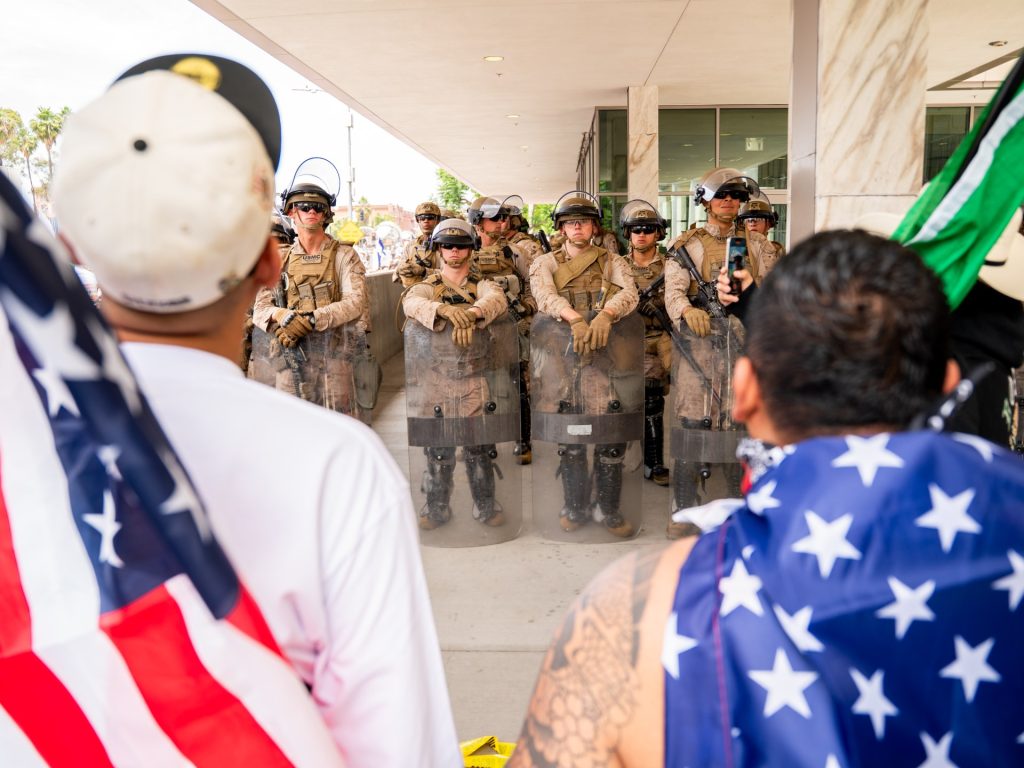
Violence begets violence, so many religions say. Americans should know. After all, the United States – a nation founded on Indigenous genocide, African enslavement and open rebellion against an imperial power to protect its wealthiest citizens – cannot help but be violent. What’s more, violence in the US is political, and the violence the country has carried out overseas over the generations has always been connected to its imperialist ambitions and racism. From the US bombing of Iran’s nuclear sites on June 21 to the everyday violence in rhetoric and reality within the US, the likes of President Donald Trump continue to stoke the violent impulses of a violence‑prone nation. The US news cycle serves as continual confirmation. In June alone, there have been several high‑profile shootings and murders. On June 14, Vance Boelter, a white male vigilante, shot and killed former Minnesota House Speaker Melissa Hortman and her husband, Mark, after critically wounding State Senator John Hoffman and his wife, Yvette. That same day, at a No Kings mass protest in Salt Lake City, Utah, peacekeepers with the 50501 Movement accidentally shot and killed Samoan fashion designer Arthur Folasa Ah Loo while attempting to take down Arturo Gamboa, who was allegedly armed with an AR‑15. On June 1, the start of Pride Month, Sigfredo Ceja Alvarez allegedly shot and murdered gay Indigenous actor Jonathan Joss in San Antonio, Texas. On June 12, Secret Service agents forcibly detained and handcuffed US Senator Alex Padilla during Homeland Security Secretary Kristi Noem’s news conference in Los Angeles. Advertisement Mass shootings, white vigilante violence, police brutality, and domestic terrorism are all normal occurrences in the United States – and all are political. Yet US leaders still react with hollow platitudes that reveal an elitist and narcissistic detachment from the nation’s violent history. “Such horrific violence will not be tolerated in the United States of America. God bless the great people of Minnesota…” said Governor Tim Walz after Boelter’s June 14 shootings. On X, Republican Representative Derrick Van Orden wrote: “Political violence has no place in America. I fully condemn this attack…” Despite these weak condemnations, the US often tolerates – and sometimes celebrates – political violence. Van Orden also tweeted, “With one horrible governor that appoints political assassins to boards. Good job, stupid,” in response to Walz’s message. Senator Mike Lee referred to the incident as “Nightmare on Waltz Street” before deleting the post. Political violence in the US is commonplace. President Trump has long fostered it – such as during a presidential debate in Philadelphia, when he falsely claimed Haitian immigrants “eat their neighbours’ pets”. This led to weeks of threats against the roughly 15,000 Haitian immigrants in Springfield, Ohio. On June 9, Trump posted on Truth Social: “IF THEY SPIT, WE WILL HIT… harder than they have ever been hit before.” That led to a federally-sanctioned wave of violence against protesters in Los Angeles attempting to end Trump’s immigration crackdowns, including Trump’s takeover and deployment of California’s National Guard in the nation’s second-largest city. But it’s not just that Trump may have a lust for political violence and is stoking such violence. The US has always been a powder keg for violence, a nation-state that cannot help itself. Political violence against elected officials in the US is too extensive to list fully. Assassins murdered Presidents Abraham Lincoln, James A Garfield, William McKinley, and John F Kennedy. In 1804, Vice‑President Aaron Burr killed Alexander Hamilton in a duel. Populist candidate Huey Long was assassinated in 1935; Robert F Kennedy in 1968; Congresswoman Gabby Giffords was wounded in 2011. Many assassins and vigilantes have targeted those fighting for social justice: Dr Martin Luther King Jr, Malcolm X, Elijah Parish Lovejoy, Marsha P. Johnson, and civil‑rights activists like Medgar Evers, James Chaney, Andrew Goodman, Michael Schwerner, Viola Liuzzo, and Fred Hampton. Jonathan Joss and Arthur Folasa Ah Loo are more recent examples of marginalised people struck down in a white‑supremacist society. Advertisement The most chilling truth of all is that, because of the violent nature of the US, there is no end in sight – domestically or overseas. The recent US bomb mission over Iran is merely the latest unprovoked preemptive attack the superpower has conducted on another nation. Trump’s unilateral use of military force was done, presumably, in support of Israel’s attacks on Iran, allegedly because of the threat Iran poses if it ever arms itself with nuclear weapons. But these are mere excuses that could also be violations of international law. It wouldn’t be the first time the US has sought to start a war based on questionable intelligence or reasons, however. The most recent example, of course, is the US invasion of Iraq in 2003, a part of George W Bush’s “preemptive war” doctrine, attacking Iraq because they supposedly had a stockpile of WMDs that they could use against the US in the future. There was never any evidence of any stockpile of chemical or biological weapons. As many as 2.4 million Iraqis have died from the resulting violence, statelessness, and civil war that the initial 2003 US invasion created. It has not gone unnoticed that the US mostly bombs and invades nation-states with majority people of colour and non-Christian populations. Malcolm X said it best, a week after Lee Harvey Oswald assassinated John F Kennedy in 1963: “Being an old farm boy myself, chickens coming home to roost never did make me sad; they’ve always made me glad.” Given that Americans consume nine billion chickens a year, that is a huge amount of retribution to consider for the nation’s history of violence. Short of repealing the Second Amendment’s right-to-bear-guns clause in the US Constitution and a real commitment towards eliminating the threat of white male supremacist terrorism, this violence will continue unabated, with repercussions that will include terrorism and revenge, domestically and internationally. A country with a history of violence, elitism, and narcissism like the US – and an individual like Trump – cannot divorce themselves from their own violent DNA, a
‘We wanted to eliminate Khamenei’: Israel’s Defence Minister Katz
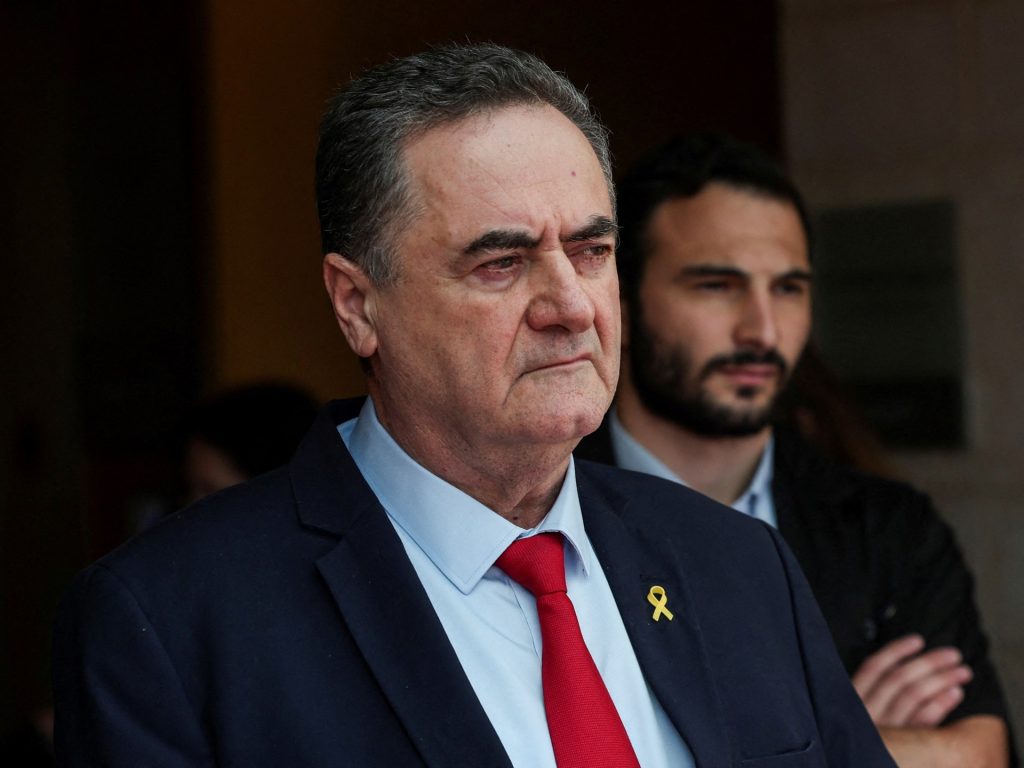
Katz says Israel has ‘green light’ from US to attack Iran again if Tehran makes ‘progress’ with its nuclear programme. Israeli Defence Minister Israel Katz has said that his country wanted to kill Iran’s Supreme Leader Ayatollah Ali Khamenei during the recent 12-day war between the two sides that ended this week with a ceasefire. Katz said on Thursday that Israel would not have needed permission from the United States to kill Khamenei, appearing to refute previous media reports that Washington vetoed the assassination. “We wanted to eliminate Khamenei, but there was no operational opportunity,” said Katz in an interview with Israel’s Channel 13. Katz claimed that Khamenei knew an attempt on his life was on the cards, and went “underground to very great depths”, breaking off contact with commanders who replaced Islamic Revolutionary Guard Corps leaders assassinated in the first wave of Israeli strikes. Khamenei released video messages during the war, and there is no evidence to confirm that he was cut off from his generals. Killing Khamenei would have been a major escalation in the conflict. Besides being the de facto head of state in Iran, the supreme leader is a top spiritual authority for millions of Shia Muslims across the world. Israeli Prime Minister Benjamin Netanyahu and US President Donald Trump had both suggested at various times that the war could spark regime change, the latter posting on social media last Sunday that the conflict could “MAKE IRAN GREAT AGAIN”. Katz’s comments came amid conflicting reports on the extent of destruction wrought on Iran’s nuclear capability, primarily as a result of the US bombing of sites at Fordow, Natanz and Isfahan. Khamenei said on Thursday that the US had “exaggerated” the impact of strikes. Advertisement The Israeli defence minister said that his country has a “green light” from Trump to launch another attack on Iran if it were deemed to be making “progress” with its nuclear programme. “I do not see a situation where Iran will restore the nuclear facilities after the attack,” he said. For his part, Netanyahu said on Thursday that the outcome of the war presented a “window of opportunity” for further formal diplomatic agreements with Arab states. The conflict ended with a US-brokered ceasefire after Iran responded to the US strikes with a missile attack on Qatar’s Al Udeid Air Base, which houses US troops. “We have fought with determination against Iran and achieved a great victory. This victory opens the path to dramatically enlarge the peace accords,” Netanyahu said in a video address, in an apparent reference to the Abraham Accords, which established official ties between Israel and several Arab countries in 2020. Iran also declared victory after the war, saying that it thwarted the Israeli objectives – namely ending Tehran’s nuclear and ballistic missile programmes – and managed to force Netanyahu to end the assault with the missile strikes that left widespread destruction in Israel. Adblock test (Why?)
UN reports uptick in preventable diseases in Gaza due to Israeli blockade
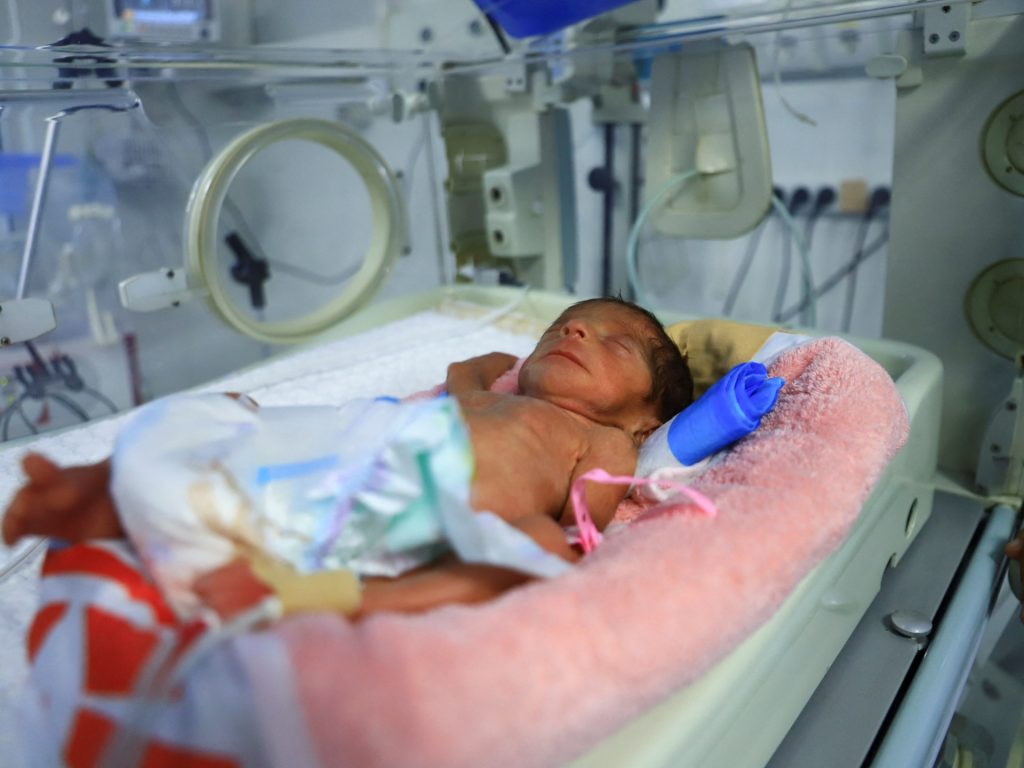
UN humanitarian agency stresses need for fuel, medical supplies and water in Palestinian territory besieged by Israel. The United Nations humanitarian agency (OCHA) has warned that preventable diseases in Gaza are on the rise and killing civilians due to the lack of desperately needed medicine and clean water. OCHA in a statement on Thursday said that in the past two weeks, “more than 19,000 cases of acute watery diarrhoea have been recorded, alongside over 200 cases each of acute jaundice syndrome and bloody diarrhoea “. “These outbreaks are directly linked to the lack of clean water and sanitation in Gaza, underscoring the urgent need for fuel, medical supplies, and water, sanitation and hygiene items to prevent further collapse of the public health system,” the agency added. Israel’s blockade on fuel entry into Gaza has paralysed the territory’s desalination plants and water system. The Israeli military has destroyed much of Gaza, displaced nearly the entire population of the territory and placed a suffocating siege on the enclave. Besides the dire humanitarian conditions, the Israeli military continues to kill dozens of Palestinians in Gaza daily. Leading rights groups and UN experts have described the Israeli campaign as a genocide. OCHA said on Thursday that more than 20 people were killed and about 70 others were injured after a strike on Deir el-Balah, central Gaza. Medical sources told Al Jazeera Arabic that Israeli attacks killed at least 71 people across Gaza on Thursday. Since Israel’s war on Gaza began in October 2023, at least 56,259 people have been killed, and 132,458 others have been wounded, according to Gaza’s Health Ministry. Advertisement After a more than two-month blockade of essential goods entering Gaza, the Israeli government announced it was allowing aid to re-enter the enclave in May. However, due to Israeli restrictions, the amount of aid entering has been minimal, with aid agencies referring to it as a “drop in the ocean”. Much of the aid allowed in has been through the United States and Israeli-backed Gaza Humanitarian Foundation (GHF), which has been condemned by aid agencies as a “weaponisation” of humanitarian goods. On Wednesday, Israeli Prime Minister Benjamin Netanyahu and his Defence Minister Israel Katz said in a video message that the army was being asked to draft a new plan to deliver aid to Gaza after unverified footage showed masked men on top of aid trucks in northern Gaza. While Israel has claimed the men were Hamas members, Palestinian clan leaders with no affiliation with the group said the masked men were protecting the truck from being looted. Multiple UN officials have refuted Israel’s claims that Hamas steals humanitarian aid. Last month, Israeli officials acknowledged arming criminal gangs linked to looting the assistance in order to rival Hamas. Adblock test (Why?)
Brazil announces compensation for dictatorship victim Vladimir Herzog
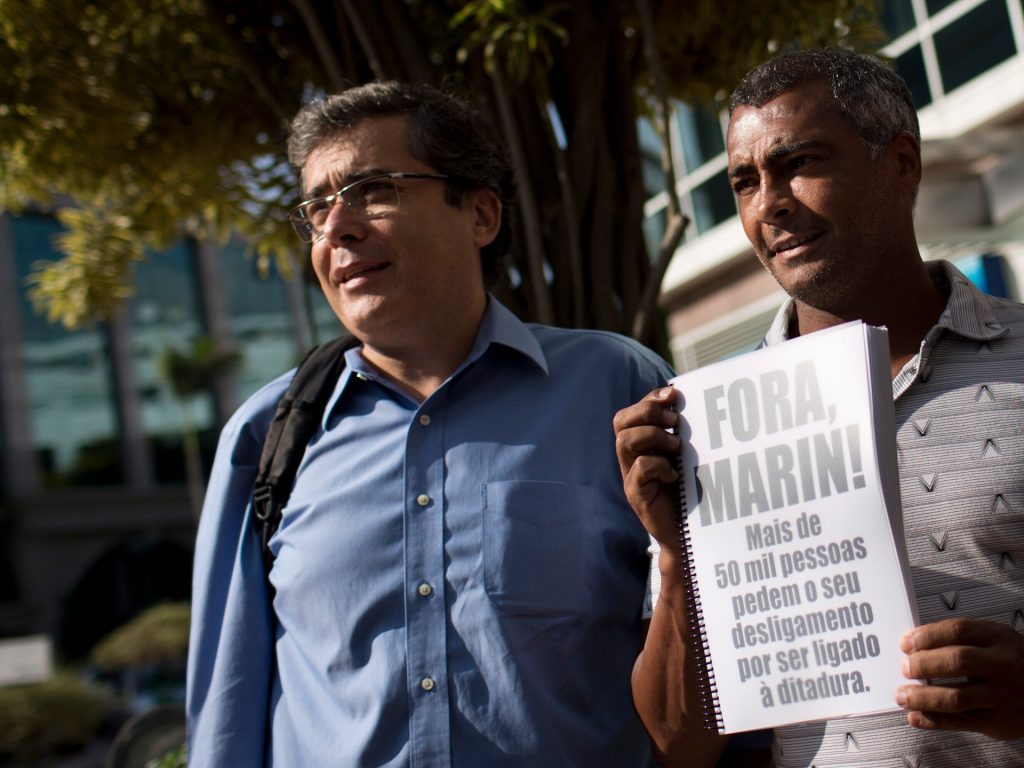
The government of Brazil has announced an agreement to acknowledge its responsibility in the murder of Vladimir Herzog, a journalist and dissident who was killed during the country’s dictatorship period. On Thursday, the government agreed to a statement of liability and a compensation package for Herzog’s family, amounting to 3 million Brazilian reais, or $544,800. The settlement also affirmed the decision of a federal court earlier this year to grant Herzog’s widow, Clarice Herzog, retroactive payments of a pension she should have received after her husband’s death, amounting to about $6,000 per month. In a statement recorded by The Associated Press news agency, Herzog’s son, Ivo Herzog, applauded the government’s decision to accept responsibility. “This apology is not merely symbolic,” Ivo said. “It is an act by the state that makes us believe the current Brazilian state doesn’t think like the Brazilian state of that time.” He added that his family’s story represented hundreds, if not thousands, of others who had their loved ones killed during the dictatorship period from 1964 to 1985. Having the government acknowledge its wrongdoing, he explained, has been a decades-long fight. “This has been a struggle not only of the Herzog family, but of all the families of the murdered and disappeared,” said Ivo, who now runs a human rights nonprofit named for his father, the Vladimir Herzog Institute. Vladimir Herzog was 38 years old at the time of his death in 1975, midway through the dictatorship period. Advertisement The Brazilian army had overthrown left-wing President Joao Goulart a decade earlier and installed a government that became known for human rights abuses, including the arbitrary arrest and torture of dissidents, students, politicians, Indigenous people and anyone else deemed to be a threat. Many went into exile. Some were killed or simply disappeared without a trace. The number of deaths is estimated to be about 500, though some experts place that figure at 10,000 or higher. Herzog was a prominent journalist, and initially, he too went into exile in the United Kingdom. But he returned to Brazil to serve as the news editor for a public television station, TV Cultura. It was in that role that, on October 24, 1975, Herzog was summoned by authorities to an army barrack. There, military officials indicated he would be asked to testify about his political connections. Herzog voluntarily left to offer his statement. But he never returned home. The military later claimed Herzog’s death was a suicide, and it released a staged photo of his body hanging from a rope. But a rabbi who later examined Herzog’s body found signs of torture. Herzog’s funeral, conducted with full religious rites, turned into a moment of reckoning for the Brazilian dictatorship, and the staged photograph became a symbol of its abuses. His son Ivo was only nine years old at the time. Earlier this year, he spoke to Al Jazeera about the release of a film called I’m Still Here that highlighted another murder committed under the dictatorship: that of Rubens Paiva, a politician. Like Herzog, Paiva voluntarily left to give testimony at the request of military officials and was never seen alive again. His body was never found. It took decades for Paiva’s family to receive a death certificate that acknowledged the military’s role in his death. Ivo praised the film I’m Still Here for raising awareness about the injustices of the dictatorship. He also told Al Jazeera that he hoped for the Brazilian government to acknowledge the harm it had done to his family and to amend the 1979 Amnesty Law that shielded many military officials from facing accountability. “What are they waiting for? For everyone connected to that period to die?” Herzog told journalist Eleonore Hughes. “Brazil has a politics of forgetfulness, and we have evolved very, very little.” On Thursday, Jorge Messias, Brazil’s federal legal counsellor, framed the agreement with the Herzog family as a step forward. “Today, we are witnessing something unprecedented: The Brazilian state formally honouring the memory of Vladimir Herzog,” he said. Advertisement He also compared the 1964 coup d’etat with the modern circumstances of Brazilian politics. On January 8, 2023, thousands of supporters of far-right President Jair Bolsonaro stormed government buildings in Brazil’s capital, after the 2022 election saw their candidate defeated. The current president, left-wing leader Luiz Inacio Lula da Silva, has compared that incident to a coup. Bolsonaro testified this month in court over charges he helped orchestrate an effort to overturn the election result. “In the 2022 election, we stood at a crossroads: Either to reaffirm democracy or move toward the closure of the Brazilian state, with all the horrors we lived through for 21 years,” Messias said, referencing the horrors of the dictatorship. Adblock test (Why?)