

US economy adds 139,000 jobs as growth slows

Employers in the United States have slowed hiring even though they added a solid 139,000 jobs in May. While that was higher than the forecast of 133,000 jobs, it was lower than the 147,000 hires in April, Labor Department data released on Friday showed. It also sharply revised downward the data for March and April by 95,000 jobs. The US Labor Department said the biggest gains were in the healthcare industry which added 62,000 jobs; followed by the leisure and hospitality sector which added 48,000, 30,000 of which were in food services. The social services sector followed suit, adding about 16,000 jobs. The federal government contracted 22,000 jobs. Industries including manufacturing, wholesale trade, retail trade, transportation and warehousing showed little change as tariff anticipation spending slowed. The unemployment rate held steady at 4.2 percent. Wages ticked up slightly. The average wage grew by 15 cents or 0.4 percent. “The job market is steadily but surely throttling back. Monthly job gains are moderating, and most telling, the gains are being consistently revised lower, and not by a little bit. Indeed, after revision, monthly job gains appear to be closing in on 100,000,” Mark Zandi, chief economist at Moody’s Analytics, told Al Jazeera. Advertisement “It [the jobs report] does signal the job market and economy are increasingly fragile as the fallout from the global trade war intensifies.” Private payrolls also tumbled this month, according to payroll firm ADP in a report on Wednesday, which showed the US economy added only 37,000 jobs, the lowest in two years. Unlike the Labor Department report which lags by a few weeks, this report is more immediate. “After a strong start to the year, hiring is losing momentum,” Nela Richardson, chief economist at ADP, said in a release. What was particularly notable about the ADP report was the set of industries with net job losses. The manufacturing sector recorded a net loss of 3,000. Natural resources and the mining industry lost 5,000. Those losses in the goods-producing sectors were offset by a job gain of 6,000 in construction. The only substantive gains were in the leisure and hospitality sector, a notoriously low-paying sector, which added 38,000, according to ADP. Financial services followed in the gains, adding 18,000 jobs. However, those gains were offset by losses, including in education and health, which cut 13,000 jobs. The trade and transportation and utilities sector cut 4,000 jobs. Last month, the ADP report showed 62,000 jobs were added, in stark contrast to the Labor Department’s 147,000, because it is considered a more immediate measure. Job openings and labour turnover On Tuesday, the job openings and labour turnover survey or JOLTS report, which captures data at a significant lag to the Labor Department and ADP, showed there were 7.4 million open jobs in April, up roughly 191,000 from the month before. Advertisement But just because jobs are open does not mean they are being filled, according to Elise Gould, senior economist at the Economic Policy Institute. “I think that reflects some cautiousness on the part of both employers and workers,” Gould told Al Jazeera. While job openings in sectors like trade, transportation and utilities increased, hiring actually decreased. This comes as major employers have implemented hiring slowdowns and freezes across sectors. American Airlines reportedly put in place a hiring freeze for flight attendants in April amid uncertainty in the travel market. The financial services company T Rowe Price slowed down its hiring. And amid a slowdown in research grants, universities have put in place hiring freezes, most recently Johns Hopkins University, which currently has 600 National Institutes of Health-funded medical research projects under way. As Al Jazeera has previously reported, small businesses said because of the looming tariffs, they’ve had to implement hiring freezes. Hiring for small businesses declined in May by 4.4 percent compared with this time last year, according to Homebase, a payroll service provider for more than 150,000 small businesses accounting for roughly 3.8 million workers. To forecast what to expect in the jobs market moving forward, EPI’s Gould suggests a close watch on key indicators including housing starts and factory orders, which indicate that manufacturers and construction companies will need to cut jobs if trends continue. “Some of the government data [like the jobs and JOLTS report] takes a lot longer to sort of see trouble to catch that turning point and you might see it in the other measures a little bit faster, but there’s also a lot of volatility in them,” Gould said. Advertisement In April, residential home construction declined by 0.9 percent, the third straight month of declines, suggesting a pullback that indicates both builders and consumers are wary about building new homes and making improvements. At the same time, orders for goods made in US factories fell by 3.7 percent in April, according to the Census Bureau. Adblock test (Why?)
Interpol red notice issued for Ghana’s former finance minister
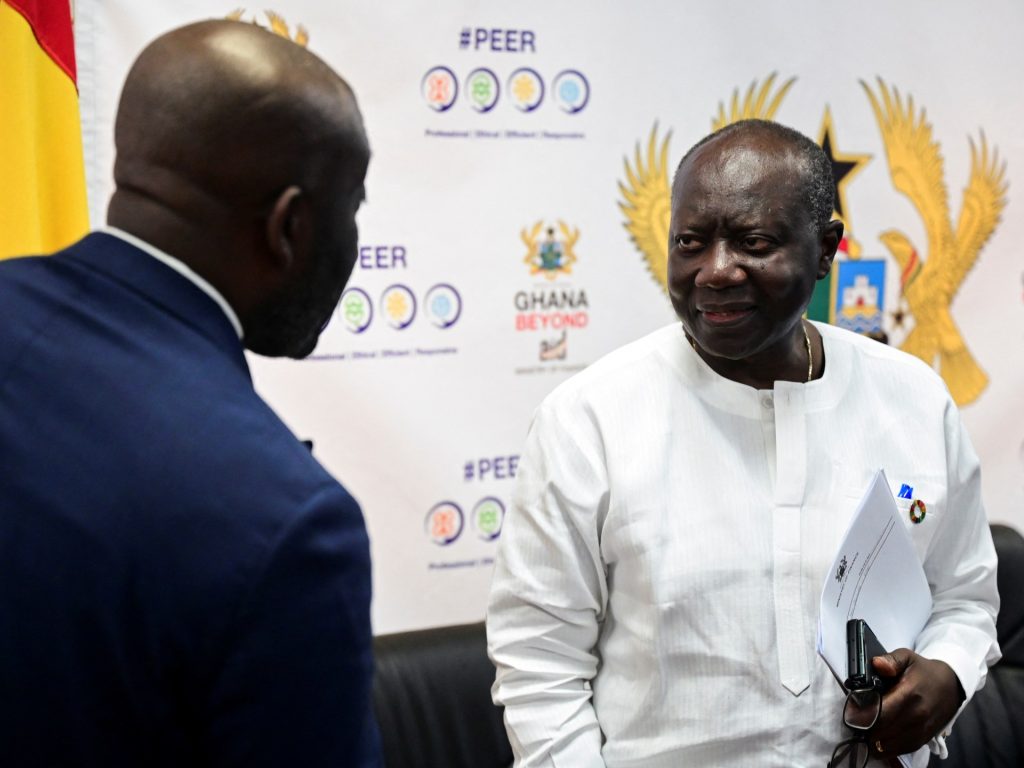
Ken Ofori-Atta skipped prosecutor summons over several corruption claims, including multimillion-dollar cathedral project. Ghana’s former finance minister, Ken Ofori-Atta, has been placed on Interpol’s red notice list after allegedly using public office for personal gain. Ofori-Atta, whose location remains unclear as he reportedly seeks medical treatment, is being investigated over a string of high-profile contracts relating to petroleum revenues, electricity supply and ambulance procurement. He is also under investigation over a controversial national cathedral project that swallowed tens of millions of dollars in public money yet remains little more than a hole in the ground. The red notice – a request to police worldwide to detain a suspect pending extradition – was issued four days after Ghana’s Office of the Special Prosecutor (OSP) re-declared the 65-year-old a wanted person after he failed to appear for a scheduled interrogation. The OSP insists Ofori-Atta must appear in person, rejecting requests from his legal team for a virtual session on medical grounds. The prosecutor’s notice, published by the state-run Ghana News Agency on Monday, stated a number of possible locations, including the United States, the United Kingdom, South Africa, Guyana, Hong Kong and the Cayman Islands. Advertisement “We will not countenance this conduct, not in this case,” Special Prosecutor Kissi Agyebeng told local media on Monday. Frank Davies, a member of Ofori-Atta’s legal team, was cited by the news agency AFP as saying medical records had been submitted “in good faith”, but that “the office has chosen to ignore them”. “The special prosecutor is not being sensitive to the issues at hand, especially knowing that Mr Ofori-Atta is unwell and receiving treatment,” said Davies on Friday. The new administration of President John Mahama has been on the heels of former government appointees to account for their tenure in office. The attorney general is currently building 33 cases of corruption and related offences against former government appointees. Ofori-Atta served as former President Nana Akufo-Addo’s finance minister for seven years. Adblock test (Why?)
Jordan celebrate reaching first World Cup after win against Oman

Jordan is celebrating the qualification of its football team for a FIFA World Cup for the first time following a decisive 3-0 victory against Oman. Huge celebrations erupted as fans drove their cars through Jordan’s capital Amman late on Thursday and into Friday, honking their horns and chanting victory while others waved the national flag in triumph. “We are all with you!” and “It’s getting closer, heroes” read messages written into the night sky in a spectacular drone light show. Jordan sealed their place on the penultimate day of Asian qualifying for the 2026 tournament, which will be played in the United States, Mexico and Canada. Ali Olwin netted a hat-trick as the 2023 Asian Cup runners-up to Qatar etched their name in the history books. They secured their spot in the World Cup when South Korea defeated Iraq, also on Thursday, 2-0. Jordan’s players Abdallah Nasib, Yazan Al-Naimat and Muhannad Abu Taha celebrate after the 2026 FIFA World Cup qualifying victory in Oman [Ameen Ahmed/NurPhoto via Getty Images] The royal court published pictures of King Abdullah II wearing a national team jersey as he watched the game from the embassy in London, where he was on a visit. Advertisement I wholeheartedly congratulate the sons and daughters of our dear people on our national football team’s qualification for the World Cup finals,” he wrote on social media platform X. “This historic qualification is well-deserved by our team, which includes stars and cadres of whom we are proud. “Special thanks go to our loyal fans who have been our support and encouragement.” His Majesty King Abdullah watches the national football team’s World Cup qualifier match against Oman, at the Jordanian embassy in London, during a working visit to Europe( Photos courtesy of Royal Court ) pic.twitter.com/CI4JMurjQu — The Jordan Times (@jordantimes) June 5, 2025 Jordan World Cup qualification ‘about time’ Sohad Idrissi, a 48-year-old housewife who watched the game with her siblings, beamed with pride as she told AFP that her side had played “a beautiful game and deserved to qualify for the World Cup”. “Today the joy is two-fold: there is the joy of Eid al-Adha, and the joy of Nashama qualifying,” she said, using a nickname for the Jordanian team. Fadi Qalanzi, a 21-year-old university student, called the win “a dream that is finally coming true”. “Our team put on a beautiful performance, and they truly deserved to qualify,” he added. Osama al-Shreeda, a 60-year-old retired civil servant, also called it a dream come true. “I’ve been following Jordanian football since 1978, and a relative of mine used to play with the national team,” he said. “It’s a great opportunity for our team and its players to be recognised globally,” he added, calling it an achievement not just for Jordan but for the wider Arab region. Advertisement “It was about time, this is a joy we’d been waiting for, for a long time,” said 55-year-old teacher Nashat Badr. Jordanians watch their national football team play against Oman on a screen in Amman, Jordan [Alaa al-Sukhni/Reuters] Uzbekistan also reach first FIFA World Cup For Uzbekistan, a 0-0 draw against the United Arab Emirates was enough to take the second automatic qualification spot in Group A behind Iran. With Asia now having eight guaranteed qualifiers – after just four for the 2022 edition in Qatar – Uzbekistan was a likely contender to step up. While most of its team plays in the domestic league, it includes a few Europe-based stars like Roma forward Eldor Shomurodov and Manchester City defender Abdukodir Khusanov. Jordan’s highest-profile player is winger Mousa Tamari at French club Rennes. Palestine and Indonesia set sights on playoffs Palestine’s 2-0 win in Kuwait kept alive their hopes of reaching their first World Cup finals. The victory, thanks to goals from Tamer Seyam and Wessam Abou Ali, means Palestine in fifth spot in Group B are one point outside the playoff qualification positions with one game to play. A win in their final match in Amman, Jordan, against Oman, who hold fourth spot and are one point ahead of Palestine, on Tuesday will see them finish above their opponents. Third and fourth positions in the three groups, in the third round of AFC qualifiers for the World Cup, progress to a fourth qualifying stage of playoffs. The top two teams from each of the three six-team groups qualify automatically for next summer’s tournament, while the teams in fifth and sixth position are eliminated. Advertisement Indonesia, meantime, remain on course for a playoff finish, and only a second appearance at a World Cup finals, following their 1-0 win against China to hold fourth spot in Group C. Adblock test (Why?)
The Netherlands to hold election on October 29 after government collapse
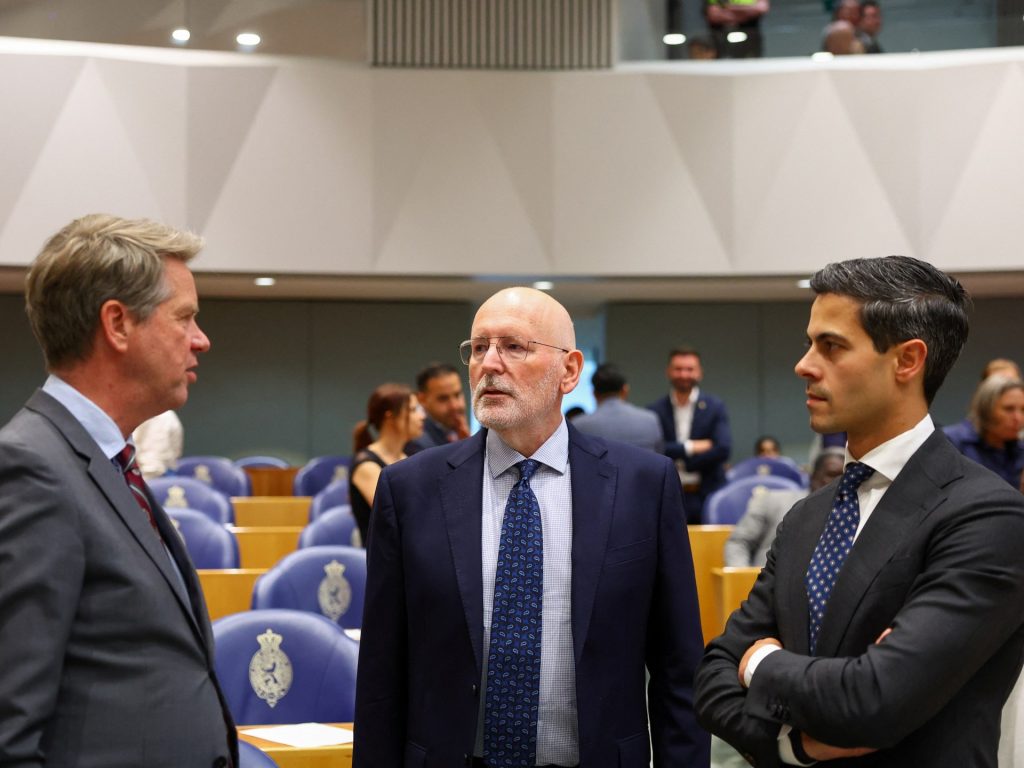
Polls indicate a close race between Dutch far-right PVV party and the Labour/Green Left alliance. Dutch voters will head to the polls on October 29 in snap elections triggered by the dramatic collapse of the right-wing ruling coalition. Interior Minister Judith Uitermark announced the election date on Friday and said she would coordinate with municipalities to ensure a smooth voting process. Polls indicate a close race between the far-right Party for Freedom (PVV), led by firebrand Geert Wilders, and the Labour/Green Left alliance, headed by former European Commission Vice President Frans Timmermans. The centre-right VVD is trailing slightly behind, suggesting a tightly contested vote. The election was called after Wilders withdrew the PVV from the governing coalition in a dispute over immigration policy, pushing Prime Minister Dick Schoof and his cabinet to resign. Wilders had accused the government of dragging its feet on implementing what was intended to be the “strictest-ever” immigration policy agreed by the four-way coalition. His decision to bring down the coalition prompted a backlash from partners, who accused him of acting out of self-interest. Advertisement “We had a right-wing majority and he’s let it all go for the sake of his ego,” said Dilan Yesilgoz, leader of the VVD, which was a coalition member. “It is irresponsible to take down the government at this point,” added Nicolien van Vroonhoven, leader of the NSC, another member of the collapsed alliance. Wilders’s PVV stunned the political establishment in November 2023 by winning 37 of the 150 seats in parliament – emerging as the largest party by a strong margin. To govern, he assembled a four-party coalition with the VVD, the farmers’ BBB party and the anticorruption NSC – but the price was to give up his ambition to become prime minister. Polling as of May 31 shows the PVV’s support has dipped slightly – from 23 percent at the time of the 2023 election to 20 percent. The Labour/Green Left alliance follows closely with 19 percent and currently holds 25 seats in the lower house of parliament, second only to the PVV. The fragmented political landscape makes the outcome difficult to predict. In the meantime, Schoof has said he and his cabinet will continue in a caretaker role until a new government is formed. Adblock test (Why?)
Trump v Musk: How did we get here?
[unable to retrieve full-text content] The US president and the world’s richest man appear to have fallen out, how did we get here?
What are ‘crypto kidnappings’ and why are they on the rise?
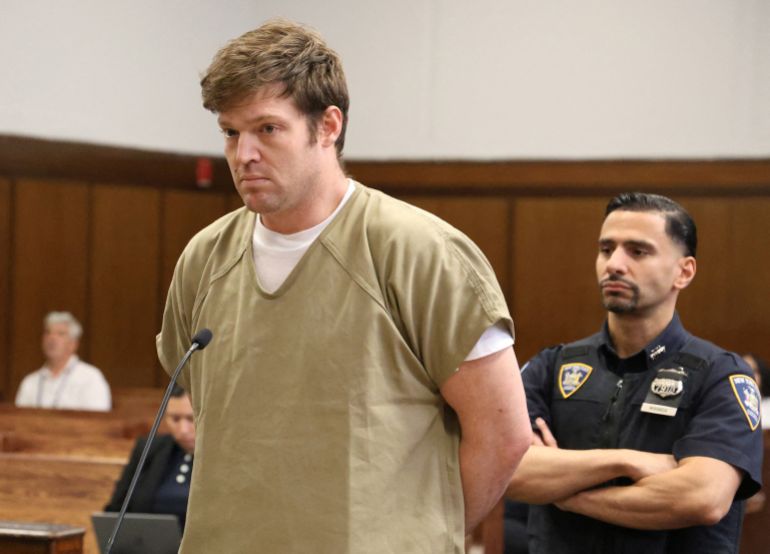
Michael Valentino Teofrasto Carturan was renting a luxury New York townhouse for $40,000 a month, enjoying the fruits of his highly lucrative investments in cryptocurrency. But in May, his 17-room Manhattan home became a torture chamber in which he was held by kidnappers for 17 days. Carturan’s captors, John Woeltz and William Duplessie, who wanted access to his cryptocurrency accounts, used brutal methods in their bid to prise open Carturan’s Bitcoin wallet, purportedly containing some $28m worth of cryptocurrency. Among other torture methods, they hung him from the building’s roof, shocked him with electrical wires and threatened him with a chainsaw. When all else failed, they forced him to smoke crack cocaine. Ultimately, they were unsuccessful. After more than two gruelling weeks, Carturan managed to escape the townhouse and Woeltz and Duplessie were subsequently arrested and charged with kidnapping and assault. William Duplessie appears in Manhattan Criminal Court as an indictment is prepared to be handed down for his involvement in a cryptocurrency kidnapping, in New York City, on May 30, 2025 [Jefferson Siegel/Pool via Reuters] Carturan’s ordeal was one of the latest in a spate of “wrench attacks”, which include so-called “crypto kidnappings”, combining high-tech cybertheft with old-fashioned thuggery and have been taking place in several countries around the world. Have arrests for crypto kidnapping attacks been made elsewhere? Yes. On May 31, 26 people were charged for several attempted kidnappings of a top figure in France’s cryptocurrency world, French prosecutors said. Advertisement It was the culmination of a police investigation into an “attempted kidnapping by an organised gang” of the daughter and grandson of the CEO of crypto firm Paymium in Paris on May 13, and “other unsuccessful plans”, a failed attempt on the same targets the day before, and another attempt near the western city of Nantes on June 2. “Eighteen people have been placed in pre-trial detention, three have requested a deferred hearing, and four have been placed under judicial supervision,” the Paris public prosecutor’s office said, concerning the Paris attack. The suspects are all aged between 16 and 23. France has been the centre of several attacks on prominent crypto entrepreneurs in recent months. But crypto-linked kidnappings have occurred in other countries, too. A woman walks her dog on Rue Pache, near the location where a masked gang attempted to kidnap the daughter and grandson of a crypto businessman in Paris, France [Gonzalo Fuentes/Reuters] Where else have crypto kidnappings taken place? In addition to the recent attempted abductions in Paris, a group of criminals kidnapped David Balland, cofounder of the cryptocurrency firm Ledger, and his wife in central France in January. In a particularly gruesome turn of events, the kidnappers cut off one of Balland’s fingers and sent the video of the mutilation to Ledger. Within two days, however, the French gendarmerie had freed both victims. Nine suspects are under criminal investigation in that case. In December 2024, the wife of crypto investor and influencer Stephane Winkel was kidnapped from the couple’s home in Belgium. She was rescued after her kidnapper crashed his car during a dramatic police chase. Advertisement Canada and Australia have also witnessed high-profile kidnappings, with crypto executives and traders abducted and forced to pay ransoms ranging from $40,000 to $1m in digital assets. It is unclear whether the recent spate of crypto kidnappings is connected in any way. What is cryptocurrency? Bitcoin, which began trading in January 2009, was the very first cryptocurrency. This form of monetary exchange allows people to bypass central banks and traditional payment methods. It is now a functioning, decentralised monetary system, with hundreds of millions of users worldwide. Bitcoin was first used in a transaction in 2009, valued at just $0.004 per Bitcoin. Yesterday, Bitcoin’s price closed at nearly $101,576 per Bitcoin – about 53 percent higher than a year ago, and nearly 2.5 trillion percentage points higher than in 2009. Initially, the digital currency was favoured by internet libertarians who were drawn to the idea that money should be free from government interference. It quickly gained more mainstream popularity, and the price has shot up. More recently, United States President Donald Trump has taken steps to mint several cryptocurrencies, meaning they would be included in a “Crypto Strategic Reserve”, boosting their price even more in the process. While cryptocurrency thefts are nothing new, they have historically involved hacking digital accounts holding large sums of the currency. In 2022, for instance, internet thieves stole an estimated $570m from Binance, the world’s largest crypto exchange. Advertisement But as Bitcoin and other digital assets continue to climb in value, criminals are shifting their efforts from online hacking to real-world extortion, via kidnappings and torture. How do criminals target victims in crypto kidnappings? Victims are not hard to find. Some crypto tycoons, many of whom are young men, have a habit of flaunting their wealth on social media or by appearing at cryptocurrency conferences, which allows criminals to easily identify targets. Many have continued to flaunt their wealth in spite of the 2016 Kim Kardashian kidnapping incident. The US reality TV star was tied up in her hotel room in Paris as robbers made off with millions of dollars worth of jewellery. The men – dubbed the “grandpa robbers” because of their ages – were later caught and sentenced to prison by a French court. That was not a crypto attack, but as more crypto tycoons have appeared, there is little to differentiate them from the fabulously wealthy like the Kardashians. Even those with large crypto wealth who are more cautious about displaying their wealth on social media and in public have been exposed to criminal activity via data breaches at cryptocurrency exchanges, however. In May 2025, Coinbase Global announced that hackers had managed to obtain personal information, including the home addresses of almost 70,000 customers in the previous few months, putting thousands at risk of attack or extortion. Besides hacking the accounts of crypto millionaires for this sort of information, criminals have also bribed insiders at crypto exchanges for
US-backed GHF says Gaza aid sites remain shut as Israeli attacks kill 22
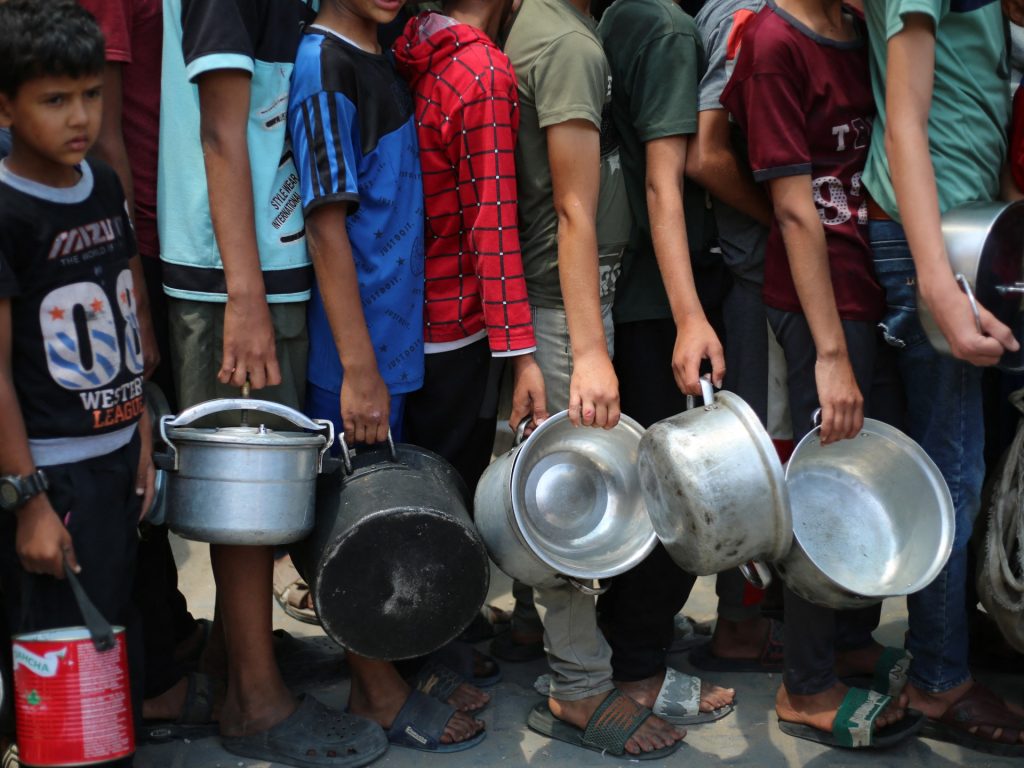
At least 22 people have been killed in Israeli attacks across Gaza, medical sources told Al Jazeera, as the US-backed group distributing aid in the Palestinian territory said all its centres were closed until further notice. In northern Gaza, at least 10 people were killed in Israeli tank fire in Jabalia, local health authorities said. At least five people were killed in Khan Younis in southern Gaza when Israeli drones struck tents housing displaced people, medical sources said. A journalist who was wounded in an Israeli strike on Ahli Hospital on Thursday succumbed to their injures, raising the number of journalists killed in Gaza since the beginning of the war to 226, Gaza’s Government Media Office said on Friday. The office called on “all journalistic bodies in all countries of the world to condemn these systematic crimes against Palestinian journalists and media professionals in the Gaza Strip”. “We also call on them to exert serious and effective pressure to stop the crime of genocide, protect journalists and media professionals in the Gaza Strip, and halt their killing,” it added. Advertisement Aid sites remain closed The attacks come as the US-backed group tasked with distributing aid in Gaza said its hubs would remain closed until further notice, despite a growing hunger crisis in the territory. Aid agencies have warned that all residents in Gaza face the threat of famine after Israel imposed a severe blockade on the territory in March, blocking the entry of food, medicine and fuel. Amid international pressure, Israel allowed some aid to enter Gaza last month, but aid groups have warned the amounts are inadequate. The Gaza Humanitarian Foundation (GHF), a previously unknown group that is overseeing the aid distribution effort, advised people to stay away from the aid distribution hubs “for their safety”. GHF, which began distributing aid last week, said in a Facebook post on Friday that details about reopening would be announced later. Operations at the group’s aid distribution hubs were halted earlier this week following several incidents of deadly violence near the sites, in which Israeli forces opened fire on Palestinian aid seekers. Only two sites distributed aid on Thursday. On Sunday, thousands of people headed towards the distribution site hours before dawn. As they approached, Israeli forces ordered them to disperse and come back later. When the crowds reached the Flag Roundabout, 1km (0.6 mile) away, at about 3am, Israeli forces opened fire, witnesses said. “There was fire from all directions, from naval warships, from tanks and drones,” said Amr Abu Teiba, who was in the crowd. Advertisement Goher Rahbour, a surgeon working in Gaza’s Khan Younis, told Al Jazeera that the bullets extracted from victims of the shooting near the aid distribution centre on Sunday were from M16 assault guns, consistent with those used by the Israeli military. “I operated on two patients and we removed M16 bullets from abdominal injuries,” Rahbour told Al Jazeera. “When I spoke to these patients, they were very clear to say they came from Israeli forces.” The surgeon also said hospitals were operating with little or no resources. “There is a lack of everything – antibiotics, swabs, surgical instruments,” he said. The GHF’s approach has been fiercely criticised by humanitarian organisations, including the United Nations. The GHF says private security contractors guarding its sites have not fired on crowds. Israel’s military has acknowledged firing warning shots on previous occasions. Israel’s war on Gaza has killed at least 54,677 Palestinians and wounded 125,530, Gaza’s Health Ministry said on Thursday. An estimated 1,139 people were killed in Israel during the Hamas-led attacks of October 7, 2023, and more than 200 were taken captive. On Thursday, mediators Qatar and Egypt announced renewed efforts to secure a ceasefire deal based on a US-backed proposal for a 60-day truce and the entry of humanitarian aid. Previous ceasefire efforts have, however, repeatedly broken down over Israel’s rejection of key terms. In past rounds of negotiations, Israel has walked back commitments related to a permanent halt to the war and a full withdrawal of its troops from Gaza. Advertisement Adblock test (Why?)
Harvard challenges Trump’s efforts to block US entry for foreign students
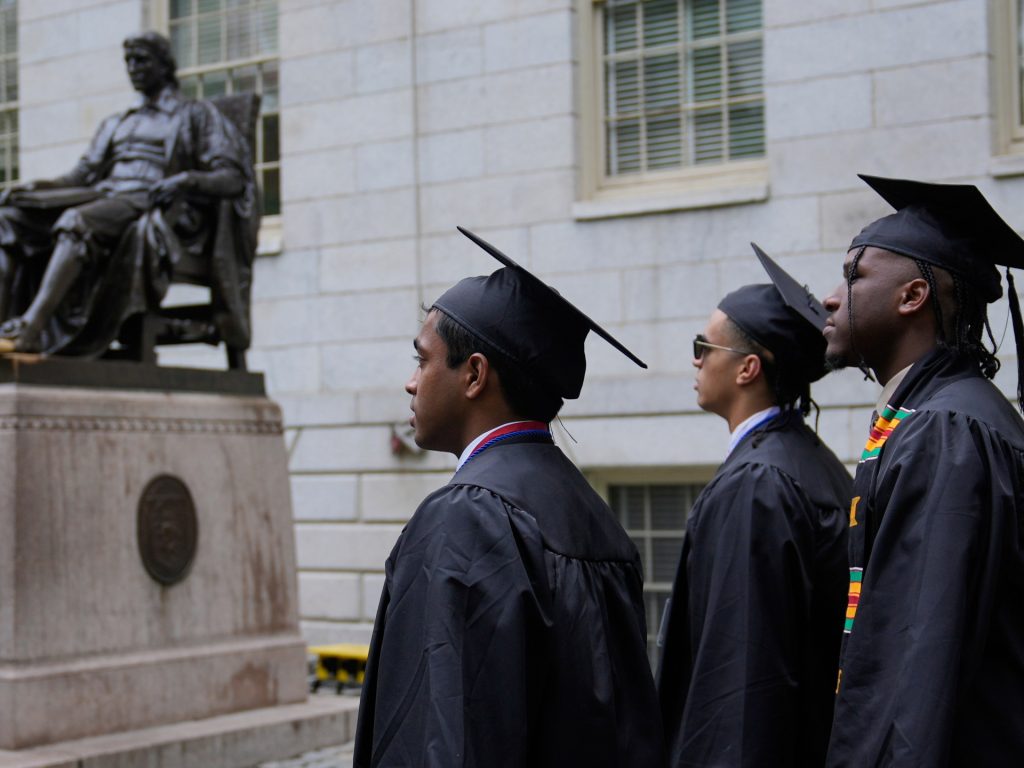
Harvard University has broadened its existing lawsuit against the administration of President Donald Trump to fight a new action that attempts to stop its international students from entering the United States. On Thursday, the prestigious Ivy League school filed an amended complaint that alleges Trump’s latest executive order violates the rights of the school and its students. Just one day earlier, Trump published an executive order claiming that “it is necessary to restrict the entry of foreign nationals who seek to enter the United States solely or principally” to attend Harvard. He called Harvard’s international students a “class of aliens” whose arrival “would be detrimental to the interests of the United States”. As a result, he said that he had the right under the Immigration and Nationality Act to deny them entry into the country. But in Thursday’s court filing, Harvard dismissed that argument as the latest salvo in Trump’s months-long campaign to harm the school. “The President’s actions thus are not undertaken to protect the ‘interests of the United States,’ but instead to pursue a government vendetta against Harvard,” the amended complaint says. Advertisement It further alleged that, by issuing a new executive order to restrict students’ entry, the Trump administration was attempting to circumvent an existing court order that blocked it from preventing Harvard’s registration of foreign students. The complaint called upon US District Judge Allison Burroughs in Massachusetts to extend her temporary restraining order to include Trump’s latest attack on Harvard’s foreign students. “Harvard’s more than 7,000 F-1 and J-1 visa holders — and their dependents — have become pawns in the government’s escalating campaign of retaliation,” Harvard wrote. Trump began his campaign against Harvard and other prominent schools earlier this year, after taking office for a second term as president. He blamed the universities for failing to take sterner action against the Palestinian solidarity protests that cropped up on their campuses in the wake of Israel’s war on Gaza. The president called the demonstrations anti-Semitic and pledged to remove foreign students from the US who participated. Protest organisers, meanwhile, have argued that their aims were non-violent and that the actions of a few have been used to tar the movement overall. Critics have also accused Trump of using the protests as leverage to exert greater control over the country’s universities, including private schools like Harvard and its fellow Ivy League school, Columbia University. In early March, Columbia — whose protest encampments were emulated at campuses across the country — saw $400m in federal funding stripped from its budget. Advertisement The school later agreed to a list of demands issued by the Trump administration, including changes to its disciplinary policies and a review of its Middle East studies programme. Harvard University was also given a list of demands to comply with. But unlike Columbia, it refused, citing concerns that the restrictions would limit its academic freedom. The Trump administration’s demands included ending Harvard’s diversity programmes and allowing the federal government to audit its hiring and admissions processes to “establish viewpoint diversity”. When those demands were not met, it proceeded to strip Harvard of its federal funding, to the tune of billions of dollars. Trump also threatened to revoke the school’s tax-exempt status and barred it from receiving future federal research grants. But the attack on Harvard’s international students has threatened to drive away tuition revenue as well. Nearly a quarter of Harvard’s overall student body is from overseas. In May, the Department of Homeland Security announced it would revoke Harvard’s access to a system, the Student Exchange Visitor Program, where it is required to log information about its foreign students. That would have forced currently enrolled Harvard students to transfer to another school, if they were in the country on a student visa. It would have also prevented Harvard from accepting any further international students. But Harvard sued the Trump administration, calling its actions “retaliatory” and “unlawful”. On May 23, Judge Burroughs granted Harvard’s emergency petition for a restraining order to stop the restriction from taking effect. But since then, the Trump administration has continued to exert pressure on Harvard and other schools. Advertisement Earlier this week, for example, the Trump administration wrote a letter to Columbia University’s accreditor, accusing the New York City school of falling short of federal civil rights laws. Adblock test (Why?)
Trump-Musk feud escalates: What happened? And what comes next?
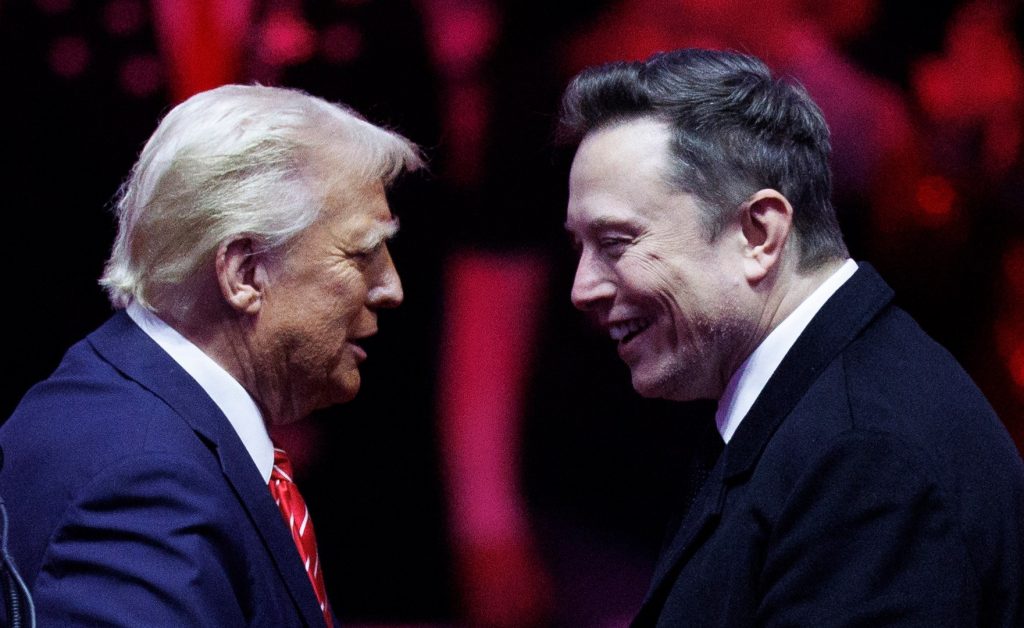
Washington, DC – The ties between United States President Donald Trump and billionaire Elon Musk have seen highs and lows throughout the years. But it all came crashing down on Thursday after months of what appeared to be an unshakable alliance in the White House. A disagreement over Trump’s massive tax bill has escalated over the past few days, with Musk going so far as to suggest that the US president should be impeached. In a series of social media posts, Musk launched personal attacks against Trump, culminating in a claim, made without evidence, that Trump is in the “Epstein files”. Those documents relate to the late sex offender Jeffrey Epstein and include travel logs and guest lists related to him and his associates. Part of the Epstein files remain secret, sparking curiosity and conspiracy theories about who might be mentioned. Trump, meanwhile, responded with a social media fusillade of his own. He claimed he asked Musk to leave his White House role and suggested cutting the government subsidies and contracts awarded to the billionaire’s companies. Advertisement So how did the partnership between Musk and Trump collapse? And what may come next for the two men often described as the world’s richest and the world’s most powerful, respectively? The honeymoon phase A few months before the war of words between Musk and Trump erupted, the two seemed like an inseparable political force. Musk had spent nearly $200m to elect Trump to a second term in 2024. Days after his successful election, Trump responded by appointing Musk to lead a newly created government cutting agency, called the Department of Government Efficiency (DOGE). Even the name of the department reflected the leeway that the billionaire investor had in Trump’s administration. The word “doge” refers to an internet meme of a dog, favoured by Musk, that became popular in 2010. In the early weeks of Trump’s second term, Musk became one of the most prominent figures in the administration – and a lightning rod for public criticism. Under his leadership, DOGE sacked thousands of federal employees and gutted various agencies, including the United States Agency for International Development (USAID). Musk appeared so powerful that some Democrats started to refer to him as “President Elon” to get under Trump’s skin. But Trump and Musk presented a united front. During a Fox News interview in February, the US president and his then-adviser appeared side by side and heaped praise on one another. “He gets it done. He’s a leader,” Trump said of Musk. “I love the president. I just want to be clear about that,” Musk said of Trump. Advertisement Musk, who is originally from South Africa, started espousing right-wing views over the past few years and grew vocally critical of Democrats and progressives. Those views became more prominent after he bought the social media platform Twitter, now X, in 2022. As he started to tilt rightward, he used the platform to bash irregular migration and efforts he believed aimed to police free speech, particularly with regards to identity politics and the COVID-19 pandemic. Even during Musk’s political realignment, however, he and Trump exchanged stern criticism. For example, in July 2022, Musk posted that Trump was getting to be “too old to be chief executive of anything”, much less the presidency. He also initially backed Trump’s Republican rival in the 2024 presidential race, Ron DeSantis, even hosting the Florida governor’s campaign launch on X. But the failed assassination attempt against Trump would cement Musk’s shift in allegiance. After a bullet grazed Trump at a rally in Butler, Pennsylvania, in July 2024, Musk announced he would “fully endorse” the Republican leader. He even joined Trump for a return to Butler in September of last year. The unravelling The cliche in politics is that there are no permanent enemies or permanent allies, only permanent interests. That appears to be the case for Trump, who has a history of firing advisers and disavowing former friends. Musk is only the latest high-profile rupture – and one that might not come as a surprise to political observers. Advertisement The unravelling of Trump’s “bromance” with Musk comes at the tail end of a rocky few months, as rumours swirled about closed-door clashes between the billionaire and the president’s inner circle. In April, Musk announced that he would be spending less time at DOGE. By that time, his role appeared to be diminishing, with the billionaire no longer dominating headlines or regularly appearing in the Oval Office. Late in May, Musk criticised the White House-backed tax and budget proposal, known as the One Big Beautiful Bill Act. “I was, like, disappointed to see the massive spending bill, frankly, which increases the budget deficit, not decrease it, and undermines the work that the DOGE team is doing,” Musk told the TV programme CBS Sunday Morning. The bill cuts electric vehicle (EV) subsidies that boost Musk’s Tesla car company. But Musk has maintained his opposition to the bill lies in its increases to the national debt and its byzantine provisions: The bill clocks in at more than 1,000 pages. The notoriously confrontational Trump, who had pinned his vision for the economy on the bill, kept his cool amid Musk’s early criticisms. He even acknowledged to reporters, “I’m not happy about certain aspects of [the bill].” The two men made a public appearance together afterwards in the Oval Office, where Trump celebrated the end of Musk’s role as a special government employee. Even then, Trump insisted that Musk was “not really leaving” his team. Once out of the government, though, Musk not only voiced discontent with the budget bill; he appeared to be lobbying against it. The bill had narrowly passed in the House of Representatives, only to face similarly steep odds in the Senate. Advertisement “I’m sorry, but I just can’t stand it anymore. This massive, outrageous, pork-filled Congressional spending bill is a disgusting abomination,” Musk wrote on X on Monday. “Shame on those who voted for it: you know you did wrong. You know
Russia-Ukraine war: List of key events, day 1,198
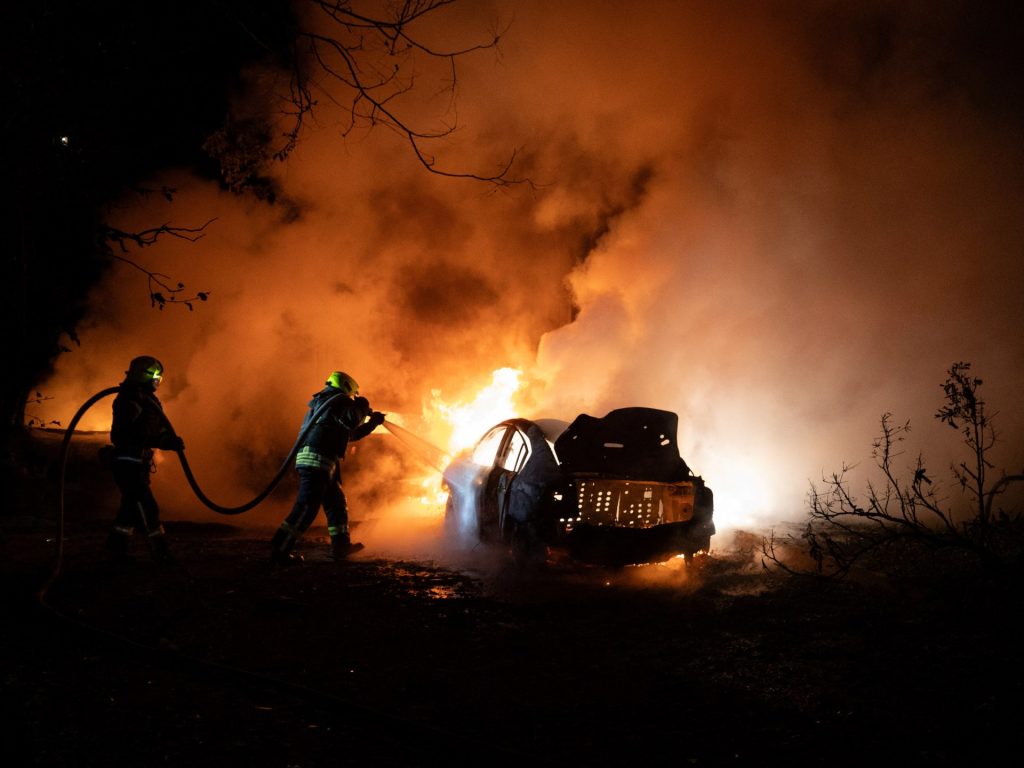
These are the key events on day 1,198 of Russia’s war on Ukraine. Here’s where things stand on Friday, June 6 : Fighting Russian drones attacked Ukraine’s capital, Kyiv, where authorities said drone fragments had fallen in at least three districts of the city. Tymur Tkachenko, head of the city’s military administration, said the strikes triggered fires in residential buildings in different parts of the city. There were no immediate reports on casualties. Air defence units were in action repelling Russian drones, according to military authorities in Kyiv, as news outlets reported a series of explosions in the city. International monitors at the Russian-held Zaporizhzhia nuclear power plant in Ukraine have reported hearing repeated rounds of gunfire that appeared to be aimed at drones apparently attacking the site’s training centre, the UN’s nuclear watchdog said. The nuclear plant’s Russian management had earlier said that Ukrainian drones landed on the roof of the training centre in “yet another attack” on the facility. The management said there had been no casualties or damage. The nuclear facility’s reactors are in shutdown mode amid the war. Russian investigators announced that they have opened a criminal case into an “act of terrorism” after a stretch of railway track in Russia’s Voronezh region was damaged in an explosion. Kremlin spokesperson Dmitry Peskov, at his daily briefing with reporters, described the latest rail attack as “nothing other than terrorism at the state level”. Russia has not yet provided evidence that Ukraine ordered the rail attacks, and Kyiv has not acknowledged responsibility. Advertisement Politics and diplomacy Russia will respond to Ukraine’s latest attacks – which have included an audacious drone attack on heavy bomber warplanes in Siberia – as and when its military sees fit, the Kremlin said, accusing Kyiv of state terrorism as US President Donald Trump downplayed prospects for an immediate peace between the countries. Speaking to reporters before his meeting with German Chancellor Friedrich Merz, Trump said he believed that “at some point” there would be peace between Russia and Ukraine. When asked if he would impose further sanctions on Russia, Trump responded, “When I see the moment where it’s not going to stop … we’ll be very, very, very tough. And it could be on both countries, to be honest. You know, it takes two to tango.” Trump also said that he had asked Russian President Vladimir Putin to not retaliate after Ukraine’s drone attacks on Russia’s airbases. North Korean leader Kim Jong Un has promised to “unconditionally support” Russia in its war in Ukraine and said he expects Moscow to emerge victorious, the country’s state media reported. Russia’s Ministry of Internal Affairs said it had put Artyom Timofeyev, a Russian citizen who was born in Ukraine, on a national wanted list on suspicion of taking part in the attacks on Russian military airfields, state news agency TASS reported. Russian media reported earlier that Timofeyev, who reportedly owns a freight forwarding company, had left Russia for Kazakhstan. Russian warplanes targeted in the June 1 drone attack were damaged but not destroyed, and they will be restored, Russian Deputy Foreign Minister Sergei Ryabkov said. The US has assessed that up to 20 warplanes were hit and around half were destroyed during the attack. Germany needs up to 60,000 additional troops under new NATO targets for weapons and personnel, the country’s Defence Minister Boris Pistorius said in advance of the meeting between Trump and Merz on Thursday. NATO is focused on building up its forces to respond to what it sees as an increased threat from Russia. The Trump administration has announced the nomination of US Air Force Lieutenant General Alexus Grynkewich as the next top US general in Europe, and said he would also assume the traditional role of Supreme Allied Commander in Europe. Russia’s Federal Security Service has accused British intelligence of using the British Council, which promotes international education and cultural relations, as a cover to undermine Russia. The security service said it had identified teachers at leading universities who cooperated with the London-based charity. The United Kingdom is now considered “enemy number one” by Russian officials, amid the intensifying conflict between Ukraine and Russia. Slovakia’s parliament, in a thinly attended session, approved a resolution calling on the government not to vote in favour of new sanctions on Russia, raising questions over the country’s future stance on European sanction packages. Advertisement Economy Ukraine’s export losses are set to reach $800m for the period June to December this year, following the expected end of free access to the European Union market, the country’s central bank deputy governor, Serhiy Nikolaichuk, said. Adblock test (Why?)