

Freedom Flotilla issues distress signal after drone circles overhead
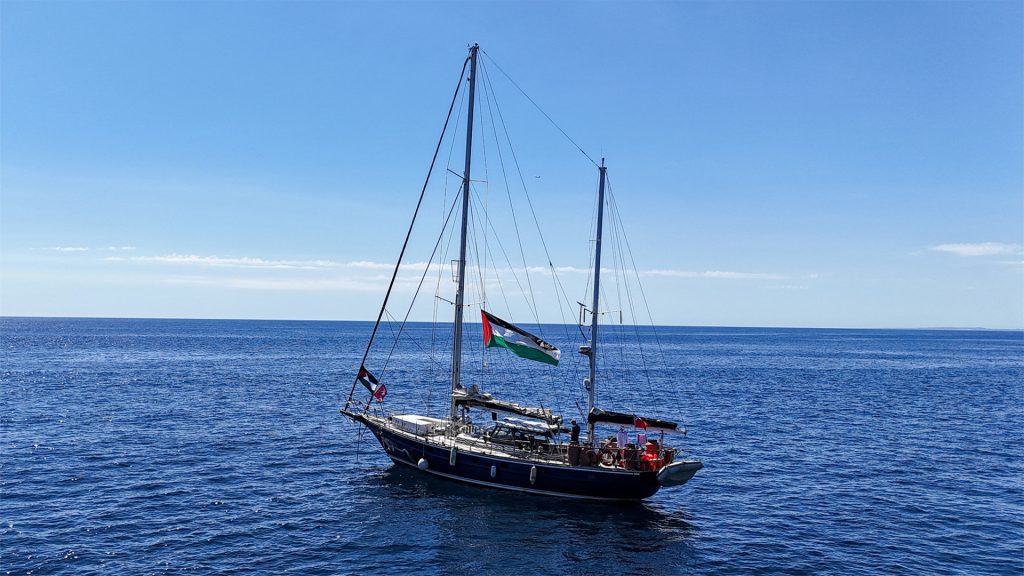
NewsFeed There was confusion and panic on the Gaza Freedom Flotilla on Tuesday night after a drone was spotted circling overhead, prompting the crew to issue a distress signal while sailing outside Greek territorial waters. The drone was later identified as belonging to the Hellenic Coastguard. The Gaza-bound mission continues undeterred, a month after another flotilla ship was bombed by a drone and set ablaze. Published On 4 Jun 20254 Jun 2025 Adblock test (Why?)
UEFA Nations League: Germany-Portugal – Start, team news, lineups, Ronaldo
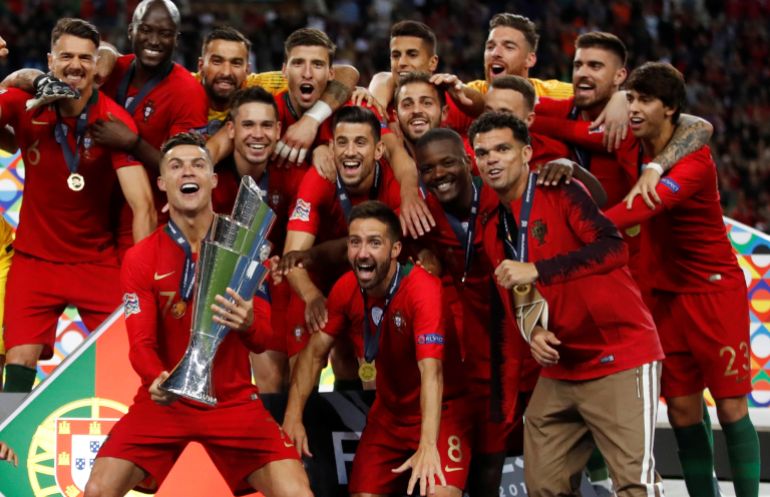
Who: Germany vs PortugalWhat: UEFA Nations League semifinalWhen: WednesdayWhere: Allianz Arena in Munich, Germany How to follow our coverage: We’ll have all the build-up from 6pm (16:00 GMT) on Al Jazeera Sport. Hosts Germany and Portugal, the winners of the 2019 inaugural edition, face off in the first of the UEFA Nations League semifinals. Holders Spain and France play in the other tie on Thursday with their match being played in Stuttgart. Al Jazeera Sport looks at the first of the games and where the tournament itself ranks: What is the UEFA Nations League? The competition was formed to give more meaning to international matches played outside the FIFA World Cup and the UEFA European Championships. Instead of a flow of international friendlies, which had become devalued by players and fans alike, nations now compete in a structured format that ends in a country being crowned Nations League champions. Does Nations League success bring World Cup qualification? The teams that finish in the top two of their World Cup qualifying groups in Europe will automatically progress to the FIFA World Cup. Advertisement The four highest placed teams from the Nations League that did not finish in the top two of their World Cup qualifying groups are then given an extra shot at reaching the global game’s showpiece event. It is an added incentive to all teams as a back-up plan should their official World Cup qualifying campaign fall flat. How is the Nations League structured? There are four groups in League A of the Nations League, four in League B and four in League C. The top two teams from each of the League A groups qualify for the knockout stages of the competition, which begins at the quarterfinals stage. Leagues B and C try to gain promotion to League A to incentivise all teams in their international match-ups and to offer the chance of reaching the final and lifting the trophy to all. Cristiano Ronaldo aiming for a second #NationsLeague title 🇵🇹🏆 pic.twitter.com/VMzf5JFEMA — UEFA EURO (@UEFAEURO) June 3, 2025 Who did Germany and Portugal beat in the quarterfinals? Germany, who finished top of Group 3 in League A, beat Italy 5-4 in their last-eight encounter over two legs. Portugal, who finished top of Group 1, beat Denmark 5-3 on aggregate in their quarterfinal. Both sides were unbeaten in the six-match group stage, which concluded in November. What is the latest on Ronaldo? Cristiano Ronaldo is to start the semifinal for Portugal despite the mystery surrounding his immediate club future – which looks likely to result in an appearance at FIFA’s Club World Cup this month. The former Manchester United and Real Madrid star posted on social media on the final day of the Saudi Pro League that his time with Saudi Arabian top-flight team Al Nassr had come to an end. Advertisement FIFA President Gianni Infantino had already revealed that talks were under way for a loan for Ronaldo to play for one of the teams competing at the competition being staged in the United States. A star performance by the 40-year-old in the semifinal and potential final of the Nations League would significantly up the stakes for his next move – and his potential late arrival as a headline act at the Club World Cup. Who did Portugal beat in the inaugural final? Portugal beat the Netherlands 1-0 in the 2019 final. The match itself was played on home soil for the Portuguese at Porto’s Estadio do Dragao, where Goncalo Guedes scored the only goal of the game in the 60th minute. Portugal’s Cristiano Ronaldo and his teammates celebrate winning the UEFA Nations League final in 2019 [File: Carl Recine/Reuters] What the managers said before the semifinal? Julian Nagelsmann, Germany coach: “The goal is to win the Nations League title. We want to perform, deliver results and win titles, and for us as a group, it’s very important. Spain proved how important this tournament can be when they won it before triumphing at Euro 2024. When I look at the faces of our players, I see motivation and excitement. I’m looking forward to the atmosphere in the stadium.” Roberto Martinez, Portugal coach: “There aren’t many opportunities in international football to win trophies, and there is nothing better than doing so. The important thing is that we are here, and the final four is where we have to be. This team have shown significant resilience over these two and a half years, and facing teams like Germany, followed by maybe Spain or France, are perfect challenges to continue preparing the team for the World Cup.” Advertisement Head-to-head This will be the 12th time that the two nations have met. Germany has won on seven occasions, and Portugal has recorded just one win. The Germans have won the last five encounters, which had all been at either FIFA World Cups or UEFA European Championships. Portugal’s last win came in the group stage of Euro 2000 with Sergio Conceicao scoring all the goals in a 3-0 victory against the then-holders, who were eliminated. The Germans have since exacted a heavy revenge on the Portuguese, including a 4-2 group stage win in their last encounter in 2021 at the delayed Euro 2020 championships. Germany’s Kai Havertz, left, scored the last time Germany played Portugal at Euro 2020 in Munich, Germany on June 19, 2021. Germany won the group match 4-2 [Federico Gambarini/Picture alliance via Getty Images] Where will the Nations League final be staged? The Allianz Arena, which is also hosting the first semifinal, will also stage the final on Sunday. Germany team news Out: Amiri, Bisseck, Havertz, Henrichs, Kleindienst, Musiala, Rudiger, Schlotterbeck, Stiller Germany have a string of injuries but do welcome back long-term absentee Marc-Andre ter Stegen in goal. Who replaces Bayern Munich’s Jamal Musiala in midfield will be one of the key questions, but the absences of Real Madrid defender Antonio Rudiger and Arsenal forward Kai Harvertz will also be heavily felt. Portugal team news Out: Cancelo
Syria says Israeli attack on Deraa causes ‘significant’ losses
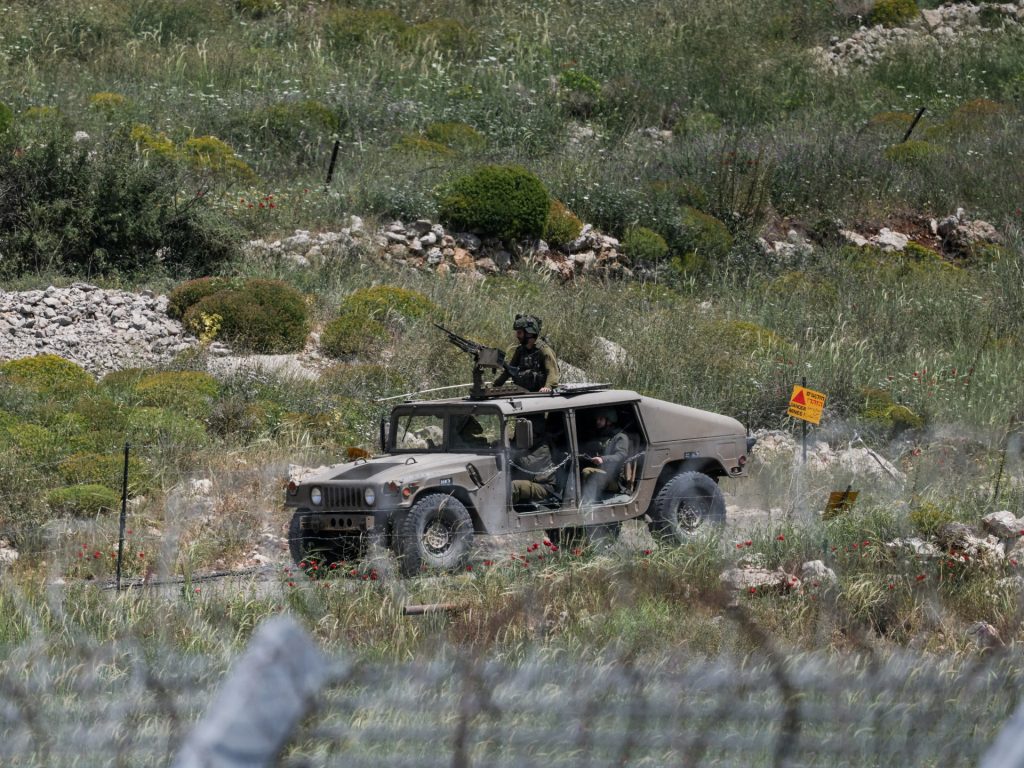
Israeli military says it shelled targets in Syria in response to a pair of projectile launches. Syria’s Ministry of Foreign Affairs has condemned an Israeli strike on the Syrian province of Deraa, saying that it caused “significant human and material losses”, the state news agency SANA reports. The strike came after the Israeli military said that two projectiles had crossed from Syria towards Israel on Tuesday, and fell in open areas in the Israel-occupied Golan Heights, though the Syrian Foreign Ministry said these were “reports that have not been verified yet”. The ministry reiterated that Syria has not and would not pose a threat to any party in the region. It was not immediately clear who was responsible for the projectiles. “We believe that there are many parties that may seek to destabilise the region to achieve their own interests,” the ministry added. Israeli Defence Minister Israel Katz said he held Syrian President Ahmed al-Sharaa responsible for the projectiles. “We consider the president of Syria directly responsible for any threat and fire towards the State of Israel, and a full response will come soon,” Katz said. Advertisement Syria and Israel have recently engaged in indirect talks to ease tensions, a significant development in relations between states that have been on opposite sides of the conflict in the Middle East for decades. Several Arab and Palestinian media outlets circulated a claim of responsibility from a little-known group named the Muhammad Deif Brigades, an apparent reference to Hamas’s military leader who was killed in an Israeli strike in 2024. The statement from the group could not be independently verified. The Israeli army said it attacked southern Syria with artillery fire after the projectiles launched at Israel. Residents said that Israeli mortars were striking the Wadi Yarmouk area, west of Deraa province, near the border with the Israeli-occupied Golan Heights. The area has witnessed increased tensions in recent weeks, including reported Israeli military incursions into nearby villages, where residents have reportedly been barred from sowing their crops. Israel has waged a campaign of aerial bombardment that has destroyed much of Syria’s military infrastructure. It has occupied the Syrian Golan Heights since the 1967 Arab-Israeli war and taken more territory in the aftermath of Syrian President Bashar al-Assad’s removal in December, citing lingering concerns over the past of the country’s new government. Around the same time that Israel reported the projectiles from Syria, the Israeli military said it intercepted a missile from Yemen. Yemen’s Iran-aligned Houthis said they targeted Israel’s Jaffa with a ballistic missile. The group has been launching attacks against Israel in what they say is in support of Palestinians during the Israeli war in Gaza. Advertisement Adblock test (Why?)
Who is Lee Jae-myung, South Korea’s new president?
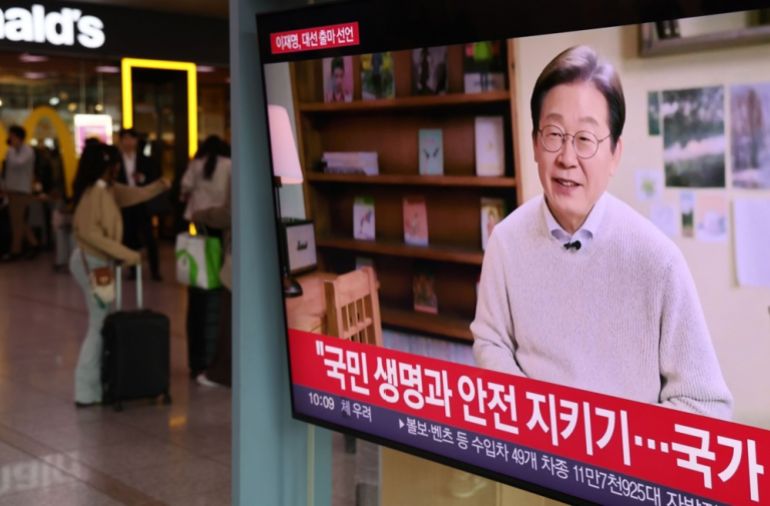
Lee Jae-myung’s hardscrabble path to the South Korean presidency mirrors his country’s stratospheric rise from grinding poverty to one of the world’s leading economies. When Lee, a scandal-prone school dropout-turned-lawyer who was elected in a landslide on Tuesday, was born in 1963, South Korea’s gross domestic product (GDP) per capita was comparable with sub-Saharan African nations. South Korea was so poor, in fact, that Lee’s exact birthday is a mystery – his parents, like many families alert to the sky-high infant mortality of the era, took about a year to register his birth. Yet even by the standards of the day, Lee’s early years were marked by deprivation and adversity, including stints as an underage factory labourer. Known for his populist and outspoken style, Lee, the standard bearer for the left-leaning Democratic Party, has often credited his humble beginnings with moulding his progressive beliefs. “Poverty is not a sin, but I was always particularly sensitive to the injustices I experienced because of poverty,” Lee said in a speech in 2022. Advertisement “The reason I am in politics now is to help those still suffering in the pit of poverty and despair that I managed to escape, by building a fair society and a world with hope.” The fifth of seven children, Lee dropped out of school in his early teens to move to Seongnam, a satellite city of Seoul, and take up employment to support his family. At age 15, Lee was injured in an accident at a factory making baseball gloves, leaving him permanently unable to straighten his left arm. Despite missing years of formal education, Lee graduated from middle and high school by studying for the exams outside of work hours. A TV screen at Seoul Station in Seoul, South Korea, shows a video of Lee Jae-myung’s announcement of his presidential bid in April, 2025 [EPA-EFE/Yonhap] In 1982, he gained admission to Chung-Ang University in Seoul to study law and went on to pass the bar exam four years later. During his law career, Lee was known for championing the rights of the underdog, including victims of industrial accidents and residents facing eviction due to urban redevelopment projects. In 2006, Lee made his first foray into politics with an unsuccessful bid for the mayorship of Seongnam, which he followed two years later with a failed run for a parliamentary seat in the city. In 2010, he finally broke into politics by winning Seongnam’s mayoral election on his second attempt and went on to earn re-election four years later. From 2018 to 2021, Lee served as governor of Gyeonggi, the country’s most populous province, which surrounds Seoul. Advertisement Both as mayor and governor, Lee attracted attention beyond his immediate electorate by rolling out a series of populist-flavoured economic policies, including a limited form of universal basic income. After stepping down as governor, Lee entered the national stage as the Democratic Party candidate in the 2022 presidential election, which he lost to Yoon Suk-yeol by 0.73 percent of the vote – the narrowest margin in South Korean history. Despite facing a slew of political and personal scandals, culminating in at least five legal cases, Lee led the Democratic Party to one of its best results in last year’s parliamentary elections, delivering it 173 seats in the 300-seat National Assembly. After Yoon’s impeachment and removal from the presidential office following his short-lived declaration of martial law in December, Lee earned his party’s nomination without serious challenge, garnering nearly 90 percent of the primary vote. “His communication style is direct and straightforward, and he is astute at recognising social and political trends, which is a rare quality among politicians of his generation in Korea,” Lee Myung-hee, an expert on South Korean politics at Michigan State University, told Al Jazeera. “However, this direct communication style can sometimes hinder his political advancement, as it may easily offend his opponents.” During his election campaign, Lee played down his progressive credentials in favour of a more pragmatic persona and a milder iteration of the populist economic agenda that powered his rise to national prominence. Advertisement In the weeks leading to the vote, Lee’s victory was rarely in doubt, with his closest competitor, Kim Moon-soo, of the conservative People Power Party, often trailing the candidate by more than 20 points in opinion polls. ‘A progressive pragmatist’ As president, Lee has pledged to prioritise the economy, proposing, among other things, a major boost in investment in artificial intelligence, the introduction of a four-and-a-half-day work week, and tax deductions for parents in proportion to the number of children they have. On foreign affairs, he has promised to mend relations with North Korea while pushing for its ultimate denuclearisation – in keeping with the traditional stance of his Democratic Party – and maintain the US-Korea security alliance without alienating China and Russia. “I would call him a progressive pragmatist. I don’t think he will stick to any consistent progressive lines or even conservative lines,” Yong-chool Ha, director of the Center for Korea Studies at the University of Washington, told Al Jazeera. “Critics call him a kind of manipulator; his supporters call him flexible,” Ha said. “I would say he is a survivor.” While Lee will enter office with the backing of a commanding majority in the National Assembly, he will take stewardship of a country that is deeply polarised and racked by divisions following Yoon’s impeachment. “The Korean political landscape remains highly polarised and confrontational, and his ability to navigate this environment will be crucial to his success,” said Lee, the Michigan State University professor. Advertisement Lee will also have to navigate a volatile international environment shaped by the wars in Gaza and Ukraine, great power rivalries, and United States President Donald Trump’s shake-up of international trade. [From left] South Korea’s presidential candidates Kim Moon-soo of the People Power Party, Kwon Young-guk of the Democratic Labor Party, Lee Jun-seok of the New Reform Party and Lee Jae-myung of the Democratic Party, pose for a photograph ahead of a televised
Russia using drones to hunt Ukrainian civilians: HRW

NGO urges Russian accountability for war crimes in targeting Ukrainians with drones. Russian forces have been using drones to hunt and attack civilians in Ukraine and continue to do so, according to Human Rights Watch (HRW). In a report released on Tuesday, HRW stated that the Russian military has repeatedly deployed unmanned drones to attack civilian targets in its more than three-year war with Ukraine. The NGO said that dozens of civilians have been killed and hundreds injured in violation of the laws of war. Referencing video from Russian drones and witnesses and survivors, the rights watchdog alleges that Russia has “deliberately or recklessly” hunted civilians and civilian objects, particularly in the southern city of Kherson, using “commercially available quadcopter drones” made domestically and in China. “Russian drone operators are able to track their targets, with high-resolution video feeds, leaving little doubt that the intent is to kill, maim, and terrify civilians,” Belkis Wille, a director on arms and conflict at HRW, said in a statement. “They exemplify why the international community needs to support all avenues of accountability for victims of Russian war crimes and crimes against humanity in Ukraine.” Advertisement The findings support reports from residents and officials in Kherson earlier this year that said Russian drone operators were training by targeting civilians in “human safaris”. HRW interviewed 36 survivors and witnesses to attacks and combed through 83 videos uploaded on Russian military-affiliated Telegram channels, as well as visual materials provided by witnesses and researchers. Overall, at least 45 “deliberate drone attacks” by Russian forces from June to December 2024 on civilians and civilian objects, including healthcare facilities, were recorded. Authorities in Kherson reported at least 30 deaths and 500 civilian injuries from drone attacks around the same period. A January 2025 report by the UN Human Rights Monitoring Mission said drone attacks accounted for 70 percent of civilian casualties in Kherson. “The attacks have the apparent purpose of instilling terror in the civilian population in Kherson, part of a widespread attack against that population,” the report said. HRW said Russia deployed commercial drones made by the Chinese companies, DJI and Autel, and by one Russian entity, Sudoplatov, which has purportedly described itself as a “volunteer organisation”. Adblock test (Why?)
Boy and baby brother pulled alive from rubble after Israeli strike
[unable to retrieve full-text content] A five-year-old boy, his baby brother, and their mother were pulled out alive after being trapped for hours
Israeli fire kills at least 27 aid seekers in Gaza: Health Ministry
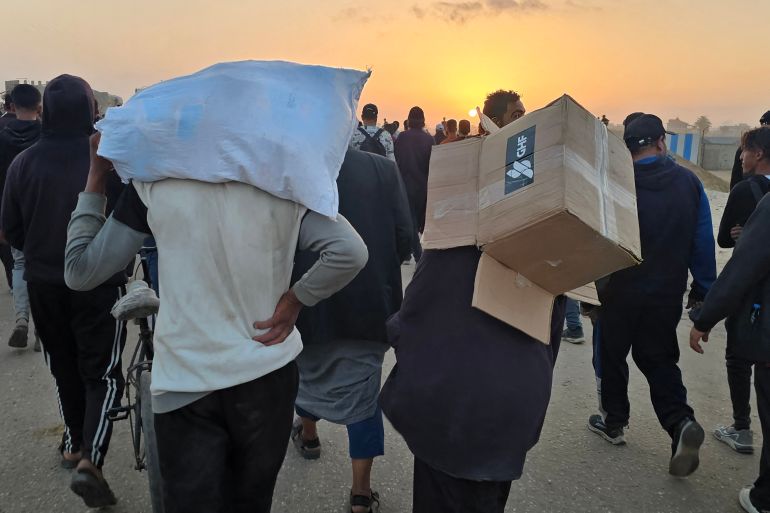
Israeli forces have killed at least 27 Palestinians and injured 90 more as they opened fire close to an aid distribution site in Rafah, according to the Ministry of Health in Gaza. The latest killings came early on Tuesday at the Flag Roundabout, near an aid hub operated by the Gaza Humanitarian Foundation (GHF). It was the third such incident around the Rafah hub in as many days. Gaza’s authorities report that more than 100 aid seekers have been killed since the United States- and Israel-backed GHF started operating in the enclave on May 27, with reports of violence, looting and chaos rife. The Israeli military said it had fired shots as “a number of suspects” deviated from the regulated routes, on which a crowd was making its way to the GHF distribution complex. The “suspects” were about 500 metres (approximately 550 yards) from the site, the military said in a statement on Telegram, adding that it was looking into reports of casualties. The death toll was confirmed by Zaher al-Waheidi, head of the Gaza Health Ministry’s records department. Advertisement A spokesperson for the International Committee of the Red Cross, Hisham Mhanna, said 184 wounded people had been taken to its field hospital in Rafah, 19 of whom were found dead on arrival, and eight others died later of their wounds. Video verified by Al Jazeera’s Sanad fact-checking agency showed the arrival of dozens of injured people at the hospital. Lured Gaza’s Government Media Office accused Israel of “a horrific, intentionally repeated crime”, saying it has been luring starving Palestinians to the GHF centres – controversially opened following an 11-week total blockade to take over most aid distribution from the United Nations and other aid agencies – and then opening fire. It said Tuesday’s death toll brought the number of aid seekers killed at aid sites in the Rafah governorate and the so-called Netzarim Corridor since GHF launched operations to 102, with 490 others injured. “We heard from witnesses that there was chaos,” Al Jazeera’s Hind Khoudary reported from Deir el-Balah in central Gaza. “The Israeli forces just opened fire randomly, shooting Palestinians … using quadcopters and live ammunition.” Health Ministry officials and doctors said most of the wounded have been hit in their chest and head, she added. The bloodshed, she continued, had unfolded in the same way as on the previous two days, amid ongoing chaos around the aid distribution centres. “There’s no process. There’s no system,” she said. “You just need to run first to be able to get the food.” ‘Either way, we will die’ Rasha al-Nahal told The Associated Press news agency that “there was gunfire from all directions”, and that she saw more than a dozen people dead and several wounded on the road. Advertisement When she finally made it to the distribution hub, there was no aid, al-Nahal said, adding that Israeli troops “fired at us as we were returning”. Another witness, Neima al-Aaraj, from Khan Younis, described the shooting as “indiscriminate”. “I won’t return,” she said. “Either way, we will die.” Gaza rescuers said Israeli gunfire killed at least 10 Palestinians and wounded more than 100 early on June 1, as thousands of people headed towards a US-backed aid distribution site [AFP] The Israeli military, in its statement on Telegram, said troops had fired warning shots as people deviated from “designated access routes” and “after the suspects failed to retreat, additional shots were directed near a few individual suspects who advanced toward the troops”. However, it denied firing on civilians or blocking them from accessing aid. This account echoes statements around similar incidents on Sunday, when 31 aid seekers were reportedly killed, and on Monday, when three more were killed. Adblock test (Why?)
UN demands probe as Israeli forces kill more people near aid site in Gaza
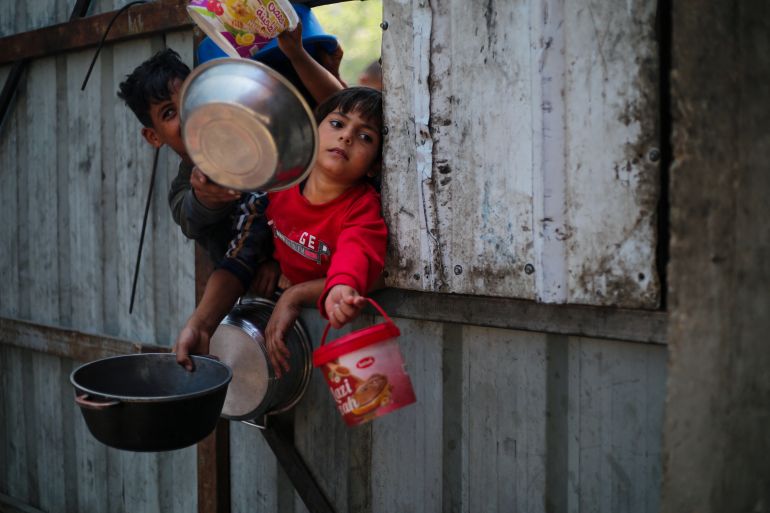
Israeli forces have opened fire again on Palestinians seeking humanitarian aid from a distribution site in Gaza, killing at least three people and injuring more than 30, as the United Nations demands an independent investigation into the repeated mass shootings of aid seekers in the strip. The shooting erupted at sunrise on Monday at the same Israeli-backed aid point in southern Gaza where soldiers had opened fire just a day earlier, according to health officials and witnesses. “The Israeli military opened fire on civilians trying to get their hands on any kind of food aid without any kind of warning,” Al Jazeera’s Tareq Abu Azzoum reported from Deir el-Balah in central Gaza. “This is a pattern that’s been widely condemned by international aid organisations because it enhances the breakdown of civil order without ensuring humanitarian relief can be received by those desperately in need.” Witnesses said Israeli snipers and quadcopter drones routinely monitor aid sites run by the Gaza Humanitarian Foundation (GHF), which is backed by Israel and the United States. Advertisement A Red Cross field hospital received about 50 people wounded in the latest shooting, including two who were dead on arrival, said Hisham Mhanna, a spokesperson for the International Committee of the Red Cross. Most had been hit by bullets or shrapnel. A third body was taken to Nasser Hospital in nearby Khan Younis. Moataz al-Feirani, 21, said he was shot in the leg while walking with thousands of others towards the food site. “We had nothing, and they [the Israeli military] were watching us,” he told The Associated Press news agency, adding that surveillance drones circled overhead. The shooting began about 5:30am (02:30 GMT) near the Flag Roundabout, he said. The pattern of deadly violence around the GHF aid distribution site has triggered mounting international outrage, and UN Secretary-General Antonio Guterres on Monday demanded an independent inquiry into the mass shooting of Palestinians. “It is unacceptable that Palestinians are risking their lives for food,” he said. “I call for an immediate and independent investigation into these events and for perpetrators to be held accountable.” The Israeli military has denied targeting civilians, claiming its soldiers fired “warning shots” at individuals who “posed a threat”. The GHF has also denied the shootings occurred although doubts about its neutrality have intensified since its founding executive director, former US marine Jake Wood, resigned before operations even began after he questioned the group’s “impartiality” and “independence”. Advertisement Critics said the group functions as a cover for Israel’s broader campaign to depopulate northern Gaza as it concentrates aid in the south while bypassing established international agencies. Aid is still barely trickling into Gaza after Israel partially lifted a total siege that for more than two months cut off food, water, fuel and medicine to more than two million people. Thousands of children are at risk of dying from hunger-related causes, the UN has previously warned. At least 51 people killed in 24 hours Elsewhere in the territory, Israeli air attacks continued to hammer residential areas. In Jabalia in northern Gaza, Israeli forces killed 14 people, including seven children, in an attack on a home, according to the Palestinian Civil Defence agency. At least 20 people remained trapped under the rubble. Two more Palestinians were killed and several wounded in another attack in Deir el-Balah, according to the Palestinian news agency Wafa, while a drone attack in Khan Younis claimed yet another life. Gaza’s Ministry of Health reported that at least 51 Palestinians have been killed and 503 injured in Israeli attacks across the territory in the latest 24-hour reporting period alone. Palestinian children wait for food at a distribution point in Nuseirat in central Gaza on June 2, 2025 [AFP] Despite growing international condemnation, Israel’s military on Monday ordered the displacement of even more civilians from parts of Khan Younis, warning it would “operate with great force”. Advertisement Roughly 80 percent of the strip is now either under Israeli military control or designated for forced evacuation, according to new data from the Financial Times, as Gaza’s 2.3 million residents are crammed into an ever-shrinking patch of land in southern Gaza near the Egyptian border. Israel has made little secret of its aim to permanently displace Gaza’s population as officials openly promote “voluntary migration” plans. The Financial Times reported that the areas Palestinians are being pushed into resemble a “desert wasteland with no running water, electricity or even hospitals”. Satellite images showed Israeli forces clearing land and setting up military infrastructure in evacuated areas. Analysts who reviewed dozens of recent forced evacuation orders said the trend has accelerated since the collapse of a truce in March. “The Israeli government has been very clear with regards to what their plan is about in Gaza,” political analyst Xavier Abu Eid told Al Jazeera. “It is about ethnic cleansing.” Adblock test (Why?)
Colorado rally attack suspect charged with federal hate crime in US
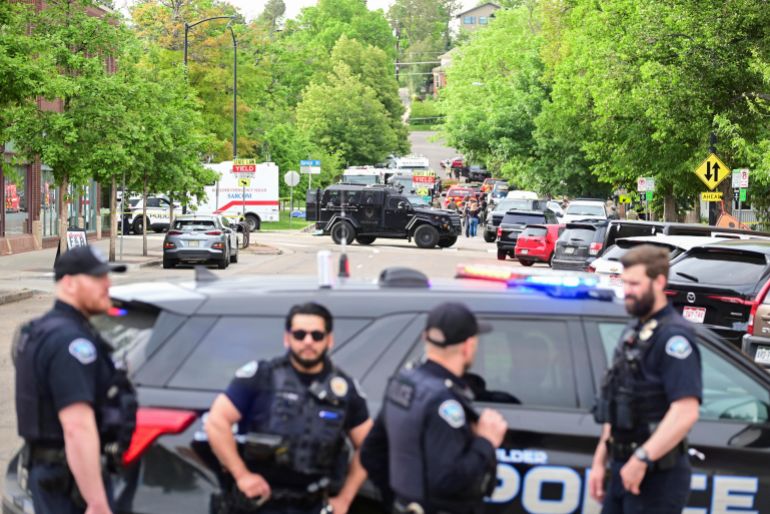
A Colorado man has been charged with a federal hate crime for his alleged role in a bomb attack on a pro-Israeli rally in Boulder that injured twelve people, according to an affidavit issued by the US Department of Justice. Mohamed Sabry Soliman was already facing an array of state charges, including attempted murder, after the attack on Sunday in the city of Boulder on a group seeking to draw attention to hostages seized in Hamas’s 2023 attack on Israel. US Attorney General Pam Bondi said the suspect would be held accountable to the fullest extent of the law for what was described as an “antisemitic terror attack”. The affidavit said Soliman, 45, had planned the attack for more than a year. Investigators found 14 Molotov cocktails filled with petrol or gasoline near where the suspect was detained. The police also found a petrol canister in his car parked nearby and a weed sprayer filled with petrol at the scene. Soliman told investigators that he had learned how to make the firebombs from YouTube. Advertisement The affidavit references a video posted on social media during the attack showing Soliman “shirtless, pacing back and forth while holding what appear to be Molotov cocktails”. The suspect, who was being detained in lieu of $10m bail, according to official records, told police he “wanted to kill all Zionist people and wished they were all dead”, the affidavit said. The burst of violence at the popular Pearl Street pedestrian mall, a four-block area in downtown Boulder, unfolded against the backdrop of Israel’s war on Gaza that continues to inflame global tensions and has contributed to a spike in anti-Semitic violence in the United States. The attack happened at the beginning of the Jewish holiday of Shavuot, which is marked with the reading of the Torah and barely a week after a man who also yelled “Free Palestine” was charged with fatally shooting two Israeli embassy staffers outside a Jewish museum in Washington. ‘Millions of individuals like this’ According to the complaint, Soliman lived with his wife and five children in Colorado Springs, a city about 161km (100 miles) south of Boulder. The affidavit says that he waited until after his daughter’s graduation to conduct the attack. Few other details were available about him. Todd Lyons, acting director of US Immigration and Customs Enforcement, said Soliman had overstayed a tourist visa and had an expired work permit. Federal documents make no reference to his nationality, but the New York Times said he was Egyptian, citing the Department of Homeland Security. Advertisement The Departments of Homeland Security and Justice did not respond to requests for comment. The Denver office of the FBI, which is handling the case, did not immediately respond to emails or phone calls seeking details in the case. Officials from the Boulder County Jail, Boulder Police and Boulder County Sheriff’s Office did not immediately respond to inquiries. “There are millions of individuals like this that we are attempting to locate from the past administration that weren’t properly screened that were allowed in,” Lyons said during a press conference in Boston. “I will tell you that’s a huge effort for ICE right now.” Police gather after an attack that injured multiple people in Boulder, Colorado, the US on June 1, 2025 [Mark Makela/Reuters] Under former US President Joe Biden, ICE prioritised arrests of serious criminals and called for officers to consider humanitarian factors when making arrests. Lyons declined to provide more information, but a Department of Homeland Security spokesperson previously said Soliman had entered the country in August 2022 and filed for asylum the following month. “The suspect, Mohamed Soliman, is illegally in our country,” the spokesperson said. President Donald Trump criticised Biden over the incident. “Yesterday’s horrific attack in Boulder, Colorado, WILL NOT BE TOLERATED in the United States of America,” Trump said on his Truth Social network, describing it as a “terrible tragedy”. He blamed “Biden’s ridiculous Open Border Policy” for allowing Soliman into the country. Advertisement “This is yet another example of why we must keep our Borders SECURE, and deport Illegal, Anti-American Radicals from our Homeland,” he wrote. Four women and four men between 52 and 88 years of age were transported to hospitals after the attack, Boulder police said. Another four victims were identified on Monday, according to authorities. The attack took place on the Pearl Street Mall, a popular pedestrian shopping district near the University of Colorado, during an event organised by Run for Their Lives, a group devoted to drawing attention to the hostages seized in the aftermath of Hamas’s 2023 attack on Israel. Rabbi Yisroel Wilhelm, the Chabad director at the University of Colorado, Boulder, told CBS Colorado that the 88-year-old victim was a Holocaust refugee who fled Europe. Sunday’s attack was not the first high-profile incident of mass violence in Boulder, a university town that attracts many young professionals and outdoor enthusiasts. In 2021, a gunman fatally shot 10 people, including an off-duty police officer, in a local supermarket. Adblock test (Why?)
What did Elon Musk get from DOGE – and what’s next?

Elon Musk resigned from his position leading the Department of Government Efficiency. What does he leave behind? Elon Musk may have resigned from the Department of Government Efficiency, but few believe he’s stepping away from power. In under a year, DOGE brought Silicon Valley-style disruption to Washington, consolidating federal data and dismantling oversight. Now, Musk is expected to channel what he gained into a private AI venture – with public systems still in reach. Adblock test (Why?)