

Texas Governor Greg Abbott signs Trump-backed redistricting bill

Texas redraw sparks gerrymandering fight nationwide, fueling voter power battles in states across the political divide. Published On 29 Aug 202529 Aug 2025 Texas Governor Greg Abbott has signed into law a bill to redraw the state’s congressional maps at the behest of President Donald Trump in an effort to flip five US House seats held by Democrats to Republicans. The Texas map, drafted in the rare mid-decade redistricting, prompted fierce protests from Democrats and sparked a gerrymandering tug-of-war for voters in states across the country. “Texas is now more red in the United States Congress,” Abbott said in a video post on social media, after signing the bill with a marker. The head of Texas’s Democratic Party criticised Abbott, saying he and Republicans “effectively surrendered Texas to Washington” with the new map. “They love to boast about how ‘Texas Tough’ they are, but when Donald Trump made one call, they bent over backwards to prioritise his politics over Texans,” state Democratic Party Chairman Kendall Scudder said in a statement. “Honestly, it’s pathetic.” The Texas map redraw has already reshaped the 2026 race, with Democratic Rep Lloyd Doggett, the dean of the state’s congressional delegation, announcing that he would not seek reelection to his Austin-based seat if the new map takes effect. Under the proposed map, Doggett’s district would overlap with that of another Democratic incumbent, Rep Greg Casar. California Governor Gavin Newsom, who has emerged as a leading adversary of Trump on redistricting and other issues, tauntingly labelled Abbott on X as the president’s “#1 lapdog” following the signing. Republicans have acknowledged they believe winning more congressional seats in Texas will help the party maintain its slim majority in the US House of Representatives in next year’s midterm elections. More states controlled by Republicans are considering similar action. California and other states where Democrats hold power vow to counter such moves. The California legislature approved a redistricting plan last week aimed at giving Democrats five more congressional seats. Advertisement The California plan must be approved by voters in November. The Texas plan does not need voter approval, but it has been challenged in court. The Texas bill was delayed for two weeks after more than 50 Democratic state House members staged a walkout that denied Republicans the legislative quorum needed. Democrats argued that the new Texas map violates federal law by diluting Hispanic and Black voting power and discriminating based on race. Texas Republicans who sponsored the bill said they redrew maps based on voting history, not race. Most Americans believe redrawing congressional lines for the sake of maximising political gain, known as gerrymandering, is bad for democracy, a Reuters/Ipsos poll found this week. Adblock test (Why?)
Top US senators arrive in Taiwan to discuss security amid China threat
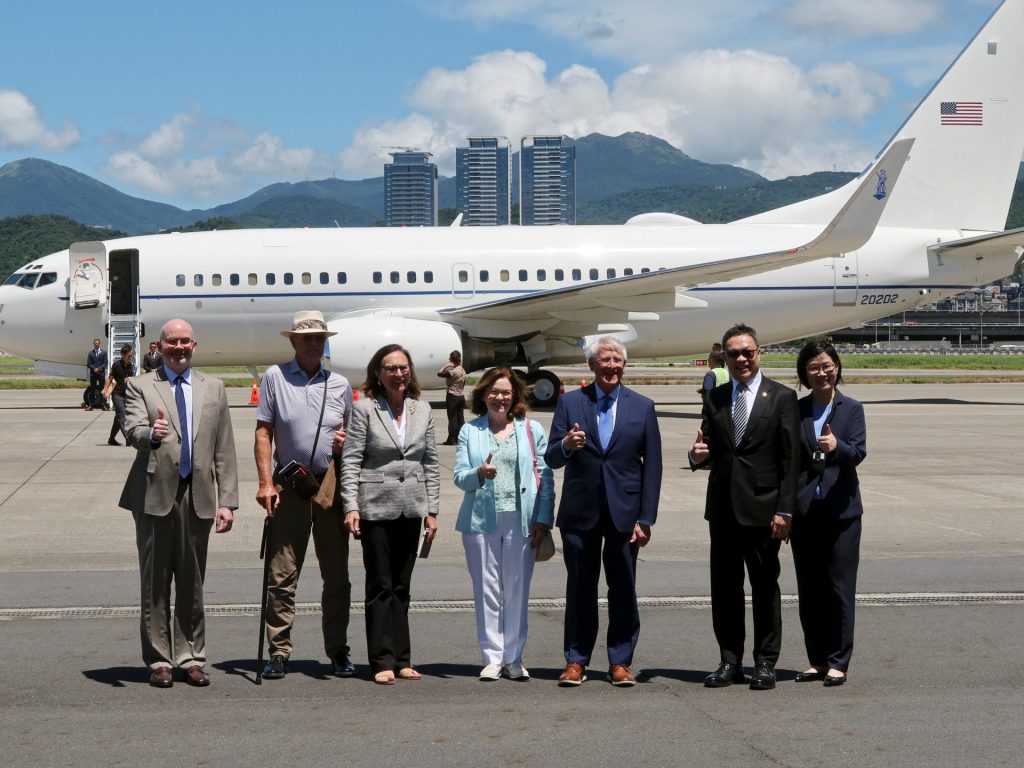
Roger Wicker, head of the powerful Senate Armed Services Committee, says trip is focused on security ties with island. Published On 29 Aug 202529 Aug 2025 Two senior Republican senators known for their strong advocacy on Taiwan have arrived in the island’s capital, Taipei, to discuss security amid a rising military threat from China. US Senator Roger Wicker, chairman of the powerful Senate Armed Services Committee, and Senator Deb Fischer said on Friday their visit was to reinforce and emphasise the “great partnership” between the United States and Taiwan. “We stand here to re-emphasise the partnership and the security, friendship agreement that the United States has had with Taiwan for some decades,” Wicker told reporters ahead of meetings with President William Lai Ching-te and other government officials. The visit comes as the US Senate is due to consider next week the National Defence Authorisation Act, or NDAA, a nearly $1 trillion bill that sets policy for US national defence. Wicker said that this year’s NDAA would “add to the provisions again” when it came to Taiwan, though he gave no details. Before the trip, Senator Fischer issued a statement, saying she looked forward to the visit “to see firsthand how we can strengthen our posture in the region in order to safeguard American interests and our allies”. Fischer is also a member of the powerful Armed Services Committee, which is responsible for legislative oversight of the US military. The Chinese embassy last month urged Wicker and other lawmakers to cancel plans to go to Taiwan. Beijing, which views the island as its own territory, regularly denounces any shows of support for Taipei from Washington. China has increased its military activities around Taiwan in recent years, including staging war games, and Beijing has never renounced the use of force to bring Taiwan under its control. Advertisement The senators’ trip also takes place as some members of Congress – both Republicans and Democrats – have expressed concern that US President Donald Trump is de-emphasising security issues as he works on negotiating a trade deal with China. The Trump administration reportedly denied permission for Taiwan’s Lai to transit in New York as part of a planned official trip to Latin America after Beijing objected. Lai reportedly then cancelled the trip. Administration officials, however, said Trump remains fully committed to Asia Pacific security matters as he pursues his trade agenda as well as a good personal relationship with Chinese President Xi Jinping. The US is Taiwan’s most important international backer and supplier of arms despite the lack of formal diplomatic ties. On Saturday, the US-based Naval News reported that the US is considering new sites in Palau and Australia for stockpiling equipment in the West Pacific to boost its military supply chains and enhance mobility across the Asia Pacific. The US also announced it is rebuilding a dock in Palau, which is one of Taiwan’s closest diplomatic allies. Adblock test (Why?)
‘Everything has been lost’: Kashmir floods, landslides kill dozens
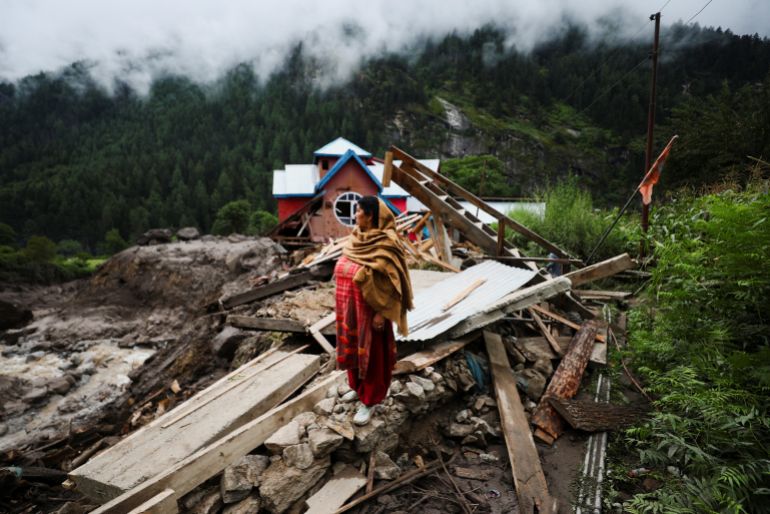
Srinagar, Indian-administered Kashmir — Forty-year-old Ruksana wails as she looks at her home, a desolate one-storey structure stripped of windows and doors next to the raging Tawi river in Jammu’s rundown neighbourhood of Gujar Nagar. A coarse coating of mud drips down the outer walls of the house. “My husband is handicapped, and I have built this home by working at people’s homes,” she wails. “I could only rescue my two children and husband. Everything else, their clothes, their books, food has been lost.” For dozens of families, the loss is even graver. At least 40 people have died and scores have been injured as torrential rains in Indian-administered Kashmir triggered major landslides this week, with flash floods sweeping away homes and knocking down telecommunication networks and powerlines. The majority of those killed were pilgrims travelling to the Vaishno Devi temple in Jammu’s Katra. The shrine, one of the most popular Hindu pilgrimage spots, is located about 60km from Jammu city. Devotees trek about 12–13km uphill from the base camp to reach it. “There was chaos. Death had never seemed [so] close. Some people are still missing,” said Rakesh Kumar, 42, who had come to Katra from Madhya Pradesh, a central Indian state. “The internet and phones were dead, which created a lot of panic.” Jammu recorded its heaviest-ever 24-hour rainfall on Tuesday – 380mm, compared with the previous record of 270.4mm in 1988 – triggering widespread devastation across the region. Some of the deceased pilgrims visiting the Vaishno Devi shrine have been identified as residents of Punjab, Delhi, Rajasthan, Madhya Pradesh, and Uttar Pradesh states. A woman stands in front of houses damaged by the deadly flood caused by sudden, heavy rain in Chasoti town of Kishtwar district, Indian-administered Kashmir, August 15, 2025 [Stringer/Reuters] ‘We hope they are alive’ Mohan Das, another devotee from the state of Uttar Pradesh, said that he was looking for five friends who were missing. “We don’t know where they are. It has been 12 hours since we last saw them,” Das said. Advertisement Jammu abuts the mountains that girdle the Kashmir Valley. The latest crisis came days after a series of flash floods in the remote regions of Kishtwar and Kathua districts killed dozens in Indian-administered Kashmir. The regional administration has set up relief camps and announced compensation for affected families. The region’s Chief Minister Omar Abdullah and the federally appointed Lieutenant Governor Manoj Sinha have toured the worst-hit areas. Prime Minister Narendra Modi has promised the central government’s assistance, and the authorities said they evacuated more than 5,000 people stranded in the floods. In Jammu, the floods surged through the city and swept away bridges on the Tawi, a major lifeline for the region. Images showed policemen in Jammu desperately trying to halt traffic approaching a damaged bridge before a side of it collapsed. Along the steep mountainous routes that trace a winding path through the craggy hills of Jammu, roads caved in under landslides, forcing the only land route from the rest of India to the region to shut temporarily. The Indian government also mobilised a fleet of military transport aircraft to fast-track the delivery of aid and other essential supplies into the region, where air traffic was closed on Tuesday before operations resumed the following day. India’s National Disaster Response Force (NDRF) and police personnel carry a dead body on a stretcher during rescue operations after flash floods in Chasoti village, Kishtwar district, Indian-administered-Kashmir, Saturday, August 16, 2025 [Channi Anand/AP Photo] ‘Waters close in on Kashmir’ Bashash Mahmood, 23, a university law student, was abruptly awakened by a midnight call while sleeping at his hotel in Srinagar. On the line was his cousin, calling from Anantnag—58 kilometres away. Floodwaters on Wednesday knocked down mobile and electricity towers and severed optical fibre cables, crippling the region’s entire telecommunications infrastructure. So Bashash could only hear a jumble of crackling words as he tried to make sense of what his cousin was saying. He finally managed to catch an urgent SOS message: floodwaters had surged outside his home in Bijbehara, Anantnag, and his family was in danger. He took his car and raced along empty roads in the middle of the night, past the Indian army garrison at Badambagh, and through the sprawling saffron fields of Pampore. When he arrived at Sangam, a canyon where two major rivers in Anantnag join, he rolled down his windows, the rain pelting against his face. “I realised that water had risen dangerously close to the embankment.” Advertisement Once he reached home, Bashash got to work and carried household items such as a fridge, furniture and utensils to the second storey of their house, emptying the ground floor. In the morning, videos went viral showing people paddling rafts through the streets, as water had submerged large parts of South Kashmir, especially Anantnag district. In Srinagar, the region’s biggest city, panic reached a crescendo on Wednesday afternoon – reinforced by public memories of apocalyptic floods that had struck in 2014. Back then, floodwaters from swollen rivers had breached the banks, burying large parts of the Kashmir valley. As Bashash recalls, when the waters finally receded 11 years ago, the floods had left two feet of sludge residue that locals scooped up with their bare hands before cleaning their homes to make them livable again. “Just the thought of how hard it was for us to defecate terrifies me. We would rather refuse to eat anything to get ourselves constipated because there were no toilets,” he says. Haunted by those memories, residents across Kashmir were seen assembling sandbags and plugging gaps to prevent breaches through which the swelling river might come. If it was the Tawi in Jammu, it was the Jhelum river – also a lifeline-turned-threat – that poses the danger in Kashmir. The river crisscrosses its way through the entire length of the Kashmir valley before crossing over into Pakistan. The floods have revived memories of the devastating floods of 2014. Here, a Kashmiri man rows
Microsoft fires four workers over protests against firm’s ties to Israel

Microsoft says the terminations followed serious breaches of company policies amid claims that its software is used by Israeli army in Gaza. Published On 29 Aug 202529 Aug 2025 Microsoft has fired four employees who participated in protests on company premises over the firm’s ties to Israel, including two who took part in a sit-in this week at the office of the company’s president. Anna Hattle and Riki Fameli received voicemails informing them that they were fired, the protest group No Azure for Apartheid said in a statement on Wednesday. It added on Thursday that two more workers, Nisreen Jaradat and Julius Shan, were also sacked. They were among demonstrators who had recently set up encampments at Microsoft headquarters to protest against the company’s support for Israel as it wages its war on Gaza. Microsoft said the terminations followed serious breaches of company policies. In its statement on Thursday, it said recent on-site demonstrations had “created significant safety concerns”. No Azure for Apartheid, whose name references Microsoft’s Azure software, has demanded that the company cut its ties to Israel and pay reparations to Palestinians. “We are here because Microsoft continues to provide Israel with the tools it needs to commit genocide while gaslighting and misdirecting its own workers about this reality,” Hattle said in a statement. Hattle and Fameli were among seven protesters who were arrested on Tuesday after occupying the office of company President Brad Smith. The other five were former Microsoft workers and people outside the company. Smith has said Microsoft respected “freedom of expression that everyone in this country enjoys as long as they do it lawfully”. Claims on Microsoft’s Azure app A joint media investigation published this month found that an Israeli military surveillance agency was making use of Microsoft’s Azure software to store a large volume of recordings of mobile phone calls made by Palestinians living in the Israeli-occupied West Bank and Gaza. Advertisement The investigation, conducted by The Guardian, +972 Magazine and Hebrew-language outlet Local Call, said Israel relied on Microsoft cloud for expansive surveillance of Palestinians. In response, Microsoft said it was turning to law firm Covington & Burling LLP to conduct a review. Other Microsoft workers have also protested against the company’s ties to Israel. In April, Microsoft AI CEO Mustafa Suleyman’s remarks were interrupted by an employee who protested against the firm’s ties with Israel during the technology company’s 50th anniversary celebration. That employee and another protesting employee were also subsequently fired. Firms and educational institutions have faced protests over ties with Israel as the humanitarian crisis in Gaza from Israel’s military assault has mounted, and images of starving Palestinians, including children, have caused global outrage. Israel has killed tens of thousands of Palestinians, caused a famine and forced the displacement of almost all of Gaza’s population since it launched its war in October 2023. Adblock test (Why?)
Elderly Palestinians starving to death under Israeli-made famine in Gaza
[unable to retrieve full-text content] An increasing number of elderly Palestinians in Gaza are dying due to the Israeli-made famine there.
UN chief slams Israel for ‘deliberate’ Gaza ‘catastrophe’
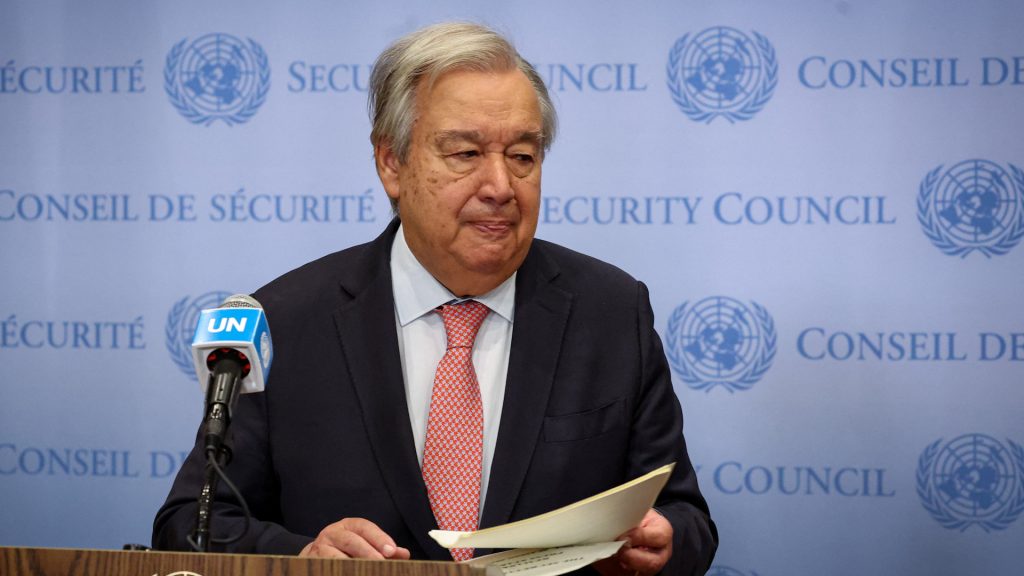
NewsFeed UN Chief Antonio Guterres accused Israel of making ‘deliberate decisions that defy basic humanity,’ saying these had produced catastrophic results in Gaza. He warned that famine was no longer a looming possibility but a present-day catastrophe. Published On 28 Aug 202528 Aug 2025 Adblock test (Why?)
Israel steps up bombardment of Gaza City, killing at least 24 people
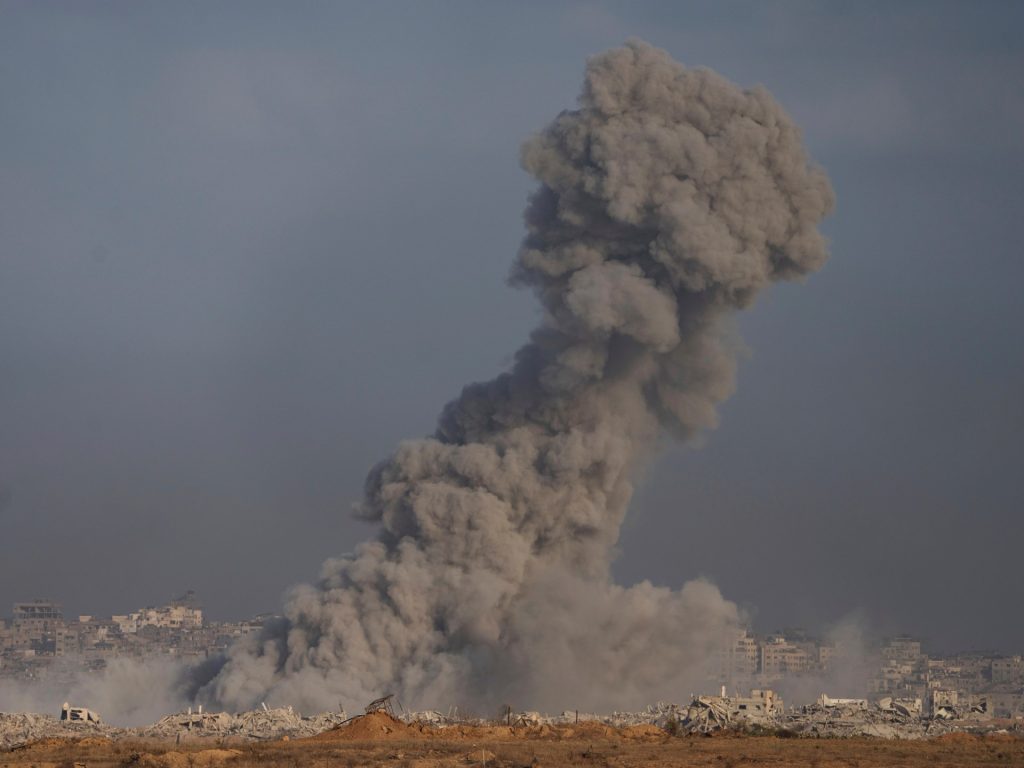
Published On 28 Aug 202528 Aug 2025 At least 24 people have been killed in Israeli attacks across Gaza since dawn on Thursday, including 12 aid seekers, medical sources told Al Jazeera, as residents report intensified military bombardment of the eastern and southern neighbourhoods of Gaza City. The Israeli military has been preparing to take Gaza City, the enclave’s largest urban centre, despite international calls to reconsider the move over fears that the operation would cause significant casualties and displace the roughly one million Palestinians sheltering there. United Nations Secretary-General Antonio Guterres was among those criticising the campaign, saying on Thursday that it “signals a new and dangerous phase” in the war. “Expanded military operations in Gaza City will have devastating consequences. Hundreds of thousands of civilians, already exhausted and traumatised, would be forced to flee yet again, pushing families into even deeper peril,” he said. “This must stop,” he said. In Gaza City, residents said families were fleeing their homes and most were heading towards the coast as Israeli forces bombarded the Shujayea, Zeitoun and Sabra neighbourhoods. No buildings remain standing in the southern part of Zeitoun as the Israeli ground operation has demolished more than 1,500 homes, according to Gaza’s Civil Defence agency. Israeli officials have described Gaza City as the last stronghold of Hamas. ‘Enforced disappearances’ The Israeli military said in a statement that it was continuing to operate throughout Gaza to target fighters and their infrastructure. Advertisement The military said on Thursday that it had killed three fighters in the past day without saying how it had identified the individuals. The Palestinian news agency Wafa reported that those killed across Gaza on Thursday included a woman and her child sheltering in a tent camp for displaced people in Khan Younis. Meanwhile, UN rights experts voiced alarm at reports of “enforced disappearances” of starving Palestinians seeking food at distribution sites run by the US- and Israeli-backed GHF, urging Israel to end the “heinous crime”. The seven independent experts said in a joint statement they had received reports that a number of individuals, including one child, had been “forcibly disappeared” after going to aid distribution sites in Rafah in southern Gaza. “Reports of enforced disappearances targeting starving civilians seeking their basic right to food is not only shocking, but amounts to torture,” said the experts, who are mandated by the UN Human Rights Council but who do not speak on behalf of the UN itself. “Using food as a tool to conduct targeted and mass disappearances needs to end now.” In response, the GHF said it had found no evidence of “enforced disappearances” at its aid sites. According to the AFP news agency, the GHF said in response to the experts’ statement: “We operate in a war zone where serious allegations exist against all parties operating outside our sites. But inside GHF facilities, there is no evidence of enforced disappearances.” New famine deaths With the enclave in the grips of a humanitarian crisis, the Gaza Ministry of Health also said on Thursday that four more people, including two children, had died of malnutrition and starvation in the enclave, raising hunger-related deaths to 317 people, including 121 children, since the war started. “The scene on the ground is quite heartbreaking,” Al Jazeera’s Tareq Abu Azzoum reported from Deir el-Balah in central Gaza. “Families are still lining up in front of soup kitchens for hours under the scorching heat, often to return to their temporary shelters empty-handed,” he said. “Others are risking their lives to travel to distribution points to seek food aid.” Israel’s military campaign has devastated the territory and displaced most of the roughly two million Palestinians there. It started after Hamas’s October 2023 attacks on Israel, which killed 1,139 people with another 251 taken captive. Most of the captives have since been released through diplomatic negotiations although 50 remain in Gaza, of whom 20 are said to be alive. Advertisement Israel, meanwhile, has not responded publicly to Hamas’s acceptance of a proposal for a ceasefire that would allow the return of some of the captives. Israeli officials have, however, insisted that they would only accept a deal that sees all of the captives released and Hamas’s surrender. More than 62,900 Palestinians, most of them women and children, have been killed by the Israeli military in Gaza, according to local health officials. Adblock test (Why?)
How rare earth shortages are stalling India’s burgeoning EV sector

In July, India’s best-selling electric scooter, Bajaj Auto’s Chetak, hit a big speed bump. A shortage of rare-earth metals had hit production plans, and the company was forced to almost halve its output. Bajaj manufactured just 10,824 units of the Chetak in July, as compared with 20,384 units during the same period last year, due to rare earth shortages. “The rare-earth magnet supply situation has been a constraint that created the risk of a sharper production dip in July,” Rakesh Sharma, executive director of Bajaj Auto, told Al Jazeera. The company has since quickly redesigned certain motors to use light rare-earth magnets and has been reworking supply chains so it can cater to its needs, Sharma said. “These changes helped us recover close to half of our planned July output for electric two-wheelers. We expect to reach around 60 percent [of output] during August and September.” The shortage that Bajaj is facing is industry-wide after China introduced restrictions on its rare earth exports on April 4, two days after United States President Donald Trump announced reciprocal tariffs on April 2. No shipment has come to India since then, putting automobile and other industries reliant on these metals in jeopardy. Vigneshwar Chittur Selvakumar, president of the Federation of Automobile Dealers Association (FADA) that counts about 15,000 automobile retailers across the country as its members, says he is “deeply concerned” about how the shortages of these metals “might have a drastic impact on the automobile sector”. Advertisement “We control around 80 percent sales of the vehicles, and any dip in production will affect our business badly,” Vigneshwar said. Rare-earth metals refer to a combination of 17 metallic elements, including dysprosium, terbium, europium, samarium, and gadolinium, that are found in abundance in China, which has the world’s largest reserves of rare-earth elements, estimated at 44 million tonnes, and dominates 90 percent of rare-earth elements processing capacity. Apart from EVs, the metals are also used in smartphones, computer screens, and other electronic devices. They are also essential for defence equipment like radar and guidance systems, as well as medical machines such as Magnetic Resonance Imaging systems. “The rare-earth elements help in making strong magnets that are used widely in electric vehicles … to maintain a stable magnetic field,” Aman Bir Singh, an EV consultant, told Al Jazeera. “Internal combustion engine (ICE) or hybrid vehicles that run on petrol, diesel and wind turbines also use them, but in a very small quantity, and the current shortage doesn’t impact them as much.” The shortage comes just as India’s EV sector was taking off with sales crossing 2 million for the first time in 2024. This was up 24 percent from 1.6 million vehicle sales in 2023. Two-wheelers lead that with sales of 1.2 million units last year. Sales of electric cars, too, are on the rise, and more than 100,000 electric cars were sold in the financial year ending March 31, 2025. Tesla, too, has joined in and launched its Model Y in the country in July. As a result, the electric car penetration has more than doubled from 1 percent to 2.6 percent during this period, and is expected to cross 7 percent by 2028, according to a July report by CareEdge Analytics & Advisory. Sales of electric cars have started picking up in India, but businesses are concerned the current rare earth shortages might drive potential customers away [File: Rafiq Maqbool/AP] Several EV companies, however, have refrained from speaking on the rare earth crisis. “The industry is still in a fledgling state and companies fear that they might lose customers and also their share value if they concede to rare earth shortage as the potential buyers might be too apprehensive to purchase the vehicles,” said Nilanjan Banik, an economics professor at Mahindra University. The shortage has also affected the television industry, where rare-earth magnets are critical in television manufacturing, particularly for speakers, due to their superior performance and compact size. Advertisement “As the country remains heavily reliant on imports for these components, this presents a clear challenge,” said Arjun Bajaj, director of Videotex – television manufacturers for various reputed brands. “We currently have adequate stocks for the current season, but our focus is also to find an alternative solution, and the industry is actively exploring alternatives like ferrite magnets, though matching the performance of rare-earth magnets will require continued research and technological upgrades,” he added. Relief for India On August 19, China announced it would ease export restrictions on fertilisers, rare earths, and tunnel-boring machines to India after talks with Indian foreign minister S Jaishankar in Beijing. Experts, however, called this a “tactical gesture”. India’s trade deficit with China hit a record $100bn in the last financial year. Beijing has also openly backed India’s archenemy Pakistan in a recent clash between New Delhi and Islamabad in May, a reminder that India’s dependence on China can be risky for it. “India’s dependence on China gives [the latter] significant leverage during crises,” pointed out Ajay Srivastava, the founder of Global Research Trade Initiative (GTRI), a trade research group. “China now supplies over 70 percent of India’s needs in several critical areas. Everyday products like laptops (80.5 percent) and flat panel displays (86 percent) are also dominated by Chinese imports. At the same time, India’s share in bilateral trade has collapsed to just 11.2 percent from 42.3 percent two decades ago, exposing the fragility of supply chains. The easing of rare earth supply is just a tactical gesture and nothing beyond,” Srivastava said. India holds the fifth-largest rare-earth elements with 8.52 million tonnes, but contributes less than 1 percent of the global rare-earth mining as it faces stiff challenges with limited infrastructure, technological issues and regulatory hurdles and environmental concerns. Vishwas Dass, a Delhi-based policy expert, told Al Jazeera that the current disruption must be used to accelerate domestic exploration and offer incentives for refining capabilities, and forging mineral alliances with trusted nations. The Geological Survey of India (GSI) has already started exploration in the states
Australia, Canada, Philippine ships hold drills in tense South China Sea

Manila says exercises with Australia, Canada in flashpoint maritime area demonstrates a ‘commitment’ to defence cooperation with ‘like-minded nations’. Published On 28 Aug 202528 Aug 2025 Australia, Canada and the Philippines have conducted joint exercises off a disputed shoal in the South China Sea claimed by Beijing, deploying three warships and military aircraft in air defence exercises. The Philippine military said on Thursday that the joint naval drills east of the Scarborough Shoal – a flashpoint for confrontations with Chinese vessels – focused on simulations to counter aerial threats “through coordinated defensive measures”. Sailing from a western Philippine province of Palawan, the Philippines’ ship Jose Rizal, Australia’s HMAS Brisbane, and Canada’s HMCS Ville de Quebec participated, the military said, adding that the drills reaffirmed “the Philippines’ commitment to advancing defence cooperation with like-minded nations”. China and the Philippines both claim the Scarborough Shoal and other islands, islets and reefs in the South China Sea, while Vietnam, Malaysia, Brunei and Taiwan also have overlapping claims in the busy waterway. China did not immediately issue any comment on the drills, The Associated Press news agency reports, but Beijing has repeatedly warned that it would defend the shoal and outlying waters, which it claims as its own territory. Video footage and photographs released by the Philippine military showed at least three warplanes taking part in the drills with the three ships, as well as at least one heavy-lift military helicopter. Exercise ALON Naval Forces Forge Stronger Cooperation As Maritime Exercises Conclude Off Bajo De Masinloc The Philippine Navy, together with the Royal Australian Navy and the Royal Canadian Navy, successfully concluded a multilateral maritime exercise east of Bajo de Masinloc on… pic.twitter.com/l6Pz4ifv1r — Armed Forces of the Philippines (@TeamAFP) August 27, 2025 Advertisement The joint naval drill marked the final activities of the largest military exercises Australia has staged with the Philippines – Exercise ALON 2025 – involving more than 3,600 military personnel taking part in 15 days of live-fire drills and manoeuvres that are due to conclude on Friday. Australian Lieutenant Colonel Andrew Raven was quoted by the Philippines Daily Inquirer as saying the exercises were “the largest airlift of Australian combat forces since the 1999 East Timor mission”, when Australia led a multinational peacekeeping force in response to a security and humanitarian crisis. “This shows we can deploy a combat-ready and combat-capable force within the Indo-Pacific to assist a security partner such as the Philippines,” Raven said, according to the Inquirer. One of the most sensitive areas in the South China Sea, the Scarborough Shoal has been closely guarded by China’s forces, and on August 11 witnessed an accidental collision between a Chinese navy ship and a Chinese coastguard vessel as they tried to block a Philippine coastguard vessel near the shoal. The Reuters news agency reported on Wednesday that the Chinese coastguard ship is now under repair at Hainan Island, the first confirmation that the badly damaged vessel made it back to port after the collision, which was caught on video by the Philippines. Satellite images provided to Reuters by Maxar Technologies show the vessel with a crushed bow flanked by tugs alongside a dry dock at the Yulin naval base near Sanya, a city on Hainan. Chinese officials have not commented on the collision, but Beijing has accused Philippine vessels of conducting “dangerous manoeuvres” without referring directly to the collision. Sovereignty over the Scarborough Shoal has never been established. A landmark 2016 ruling on the South China Sea by the Permanent Court of Arbitration in The Hague rejected Beijing’s sweeping claims to the entire maritime region, but the court was not tasked with establishing sovereignty over particular features. The court also ruled China’s blockade of the shoal violated international law and said the area was a traditional fishing ground for several countries. China rejects the ruling and continues to press its territorial claims in the sea backed up by its naval, coastguard and militia vessels. Adblock test (Why?)
US auditing Chinese involvement in cloud services, defence chief says
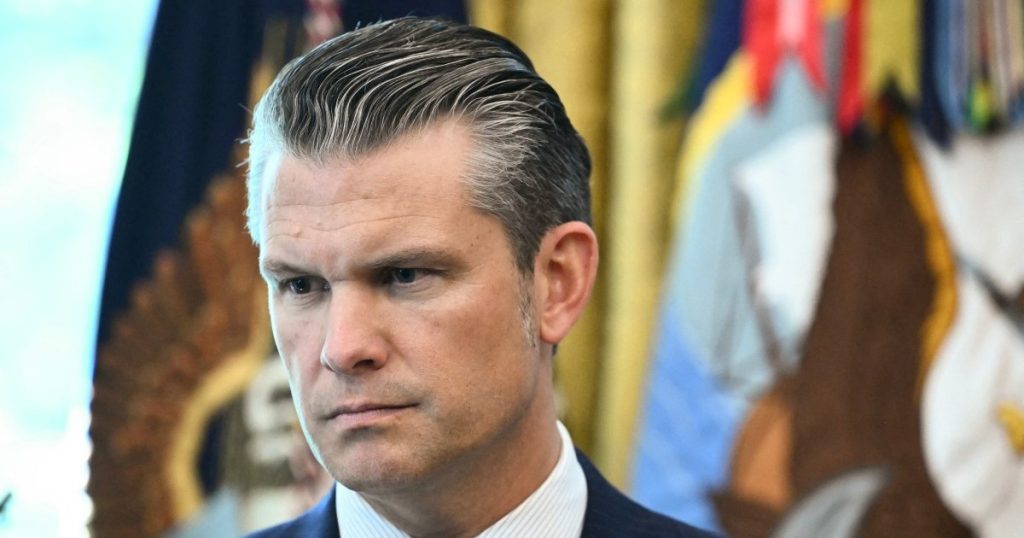
Pete Hegseth orders review after revelations Microsoft used Chinese contractors to manage sensitive cloud services. Published On 28 Aug 202528 Aug 2025 The United States has launched a review of Chinese nationals’ involvement in managing sensitive cloud services for the US military, Washington’s defence chief has said. US Secretary of Defense Pete Hegseth said on Wednesday that he had ordered an audit of Microsoft’s use of Chinese citizens to help manage sensitive cloud services to determine if any security breaches had occurred. “The use of Chinese nationals to service Department of Defense cloud environments – it’s over,” Hegseth said in a video statement. “We’ve issued a formal letter of concern to Microsoft documenting this breach of trust, and we’re requiring a third-party audit of Microsoft’s digital escort programme, including the code and the submissions by Chinese nationals.” “Did they put anything in the code that we didn’t know about? We are going to find out,” Hegseth added. Hegseth said he had also directed software providers to identify and end “any Chinese involvement in DOD systems”. Hegseth’s order comes after an investigative report by ProPublica in July documented Microsoft’s employment of contractors in China and other foreign countries to maintain the Defense Department’s cloud systems in conjunction with US-based “digital escorts”. Following the report, Microsoft announced that it would no longer use China-based technicians to support the military. Hegseth, who announced an immediate review of China’s involvement in cloud services following the ProPublica report, said excluding Chinese nationals from sensitive systems was “common sense”. Advertisement “We expect vendors doing business with the Department of Defense to protect US national security ahead of profit maximisation,” he said. Adblock test (Why?)