

Bangladesh ex-PM Hasina charged with ‘systematic attack’ as trial opens
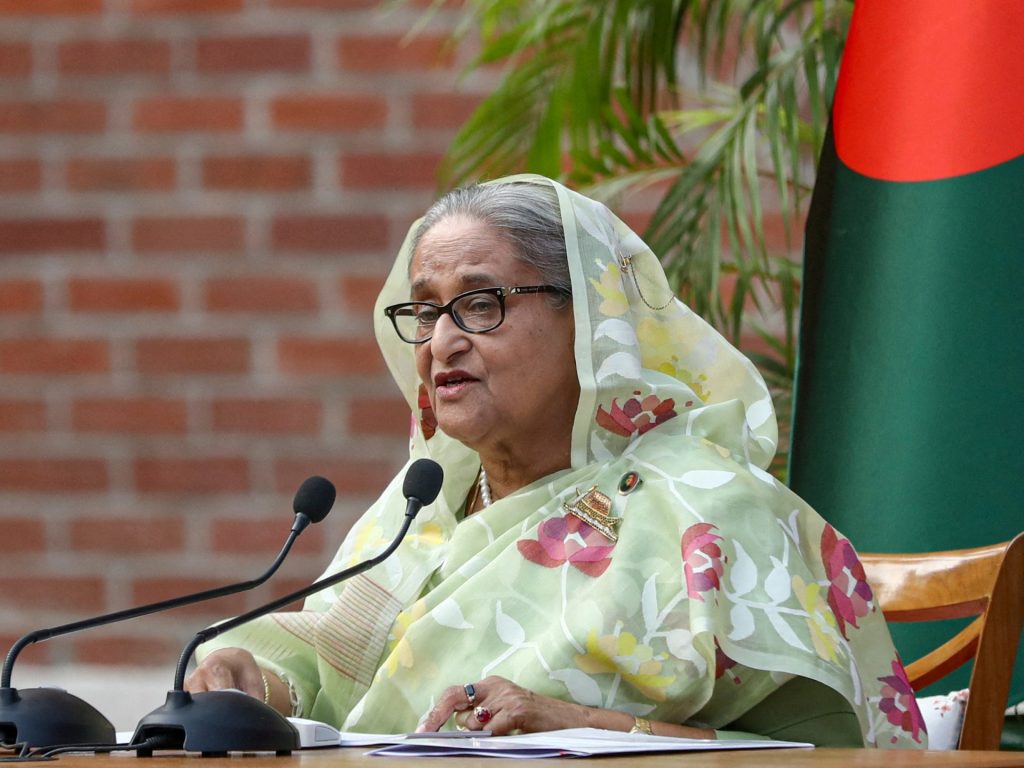
The country’s International Crimes Tribunal opens trial against the fugitive former leader for crimes against humanity. Fugitive former Prime Minister Sheikh Hasina orchestrated a “systematic attack” on protests against her government, Bangladeshi prosecutors have said at the opening of her trial over last year’s deadly crackdown. “Upon scrutinising the evidence, we reached the conclusion that it was a coordinated, widespread and systematic attack,” Mohammad Tajul Islam, chief prosecutor at Bangladesh’s domestic International Crimes Tribunal (ICT), told the court in his opening speech on Sunday. “The accused unleashed all law enforcement agencies and her armed party members to crush the uprising,” Islam said as he charged the 77-year-old former leader and two other officials of “abetment, incitement, complicity, facilitation, conspiracy, and failure to prevent mass murder” during the student-led mass uprising. The United Nations says nearly 1,400 Bangladeshis were killed between July and August 2024 when Hasina’s government launched a brutal campaign to silence the protesters. Bangladesh has charged her with crimes against humanity over the killings. Advertisement Hasina, 77 – who remains in self-imposed exile in neighbouring India, her old ally – has rejected the charges as politically motivated. She fled by helicopter to New Delhi in August last year after the nationwide protests ended her “autocratic” 15-year rule marked by allegations of repeated human rights violations, including attacks, imprisonment, and even targeted killings of opposition figures, dissenters, and critics. She has since defied an arrest warrant and extradition order to return to Dhaka. The ICT is also prosecuting former senior figures connected to the ousted government of Hasina and her now-banned Awami League party, including former Interior Minister Asaduzzaman Khan Kamal and former police chief Chowdhury Abdullah Al-Mamun. Their prosecution has been a key demand of several political parties now jostling for power. The interim government has promised to hold elections before June 2026. Prosecutors submitted their report in the case against Hasina last month, with the court expected to issue formal charges on Sunday. ICT chief prosecutor Tajul Islam said on May 12 that Hasina faces at least five charges, including “abetment, incitement, complicity, facilitation, conspiracy and failure to prevent mass murder during the July uprising”. Investigators have collected video footage, audio clips, Hasina’s phone conversations, records of helicopter and drone movements, as well as statements from victims of the crackdown as part of their probe. The ICT opened its first trial connected to the previous government on May 25. In that case, eight police officials face charges of crimes against humanity over the killing of six protesters on August 5, the day Hasina fled the country. Advertisement Four of the officers are in custody and four are being tried in absentia. The ICT was set up by Hasina in 2009 to investigate crimes committed by the Pakistani army during Bangladesh’s war for independence in 1971. It sentenced numerous prominent political opponents to death, and many saw it as a means for Hasina to eliminate rivals. Adblock test (Why?)
Why Trump and Bukele are destroying Kilmar Abrego Garcia’s life
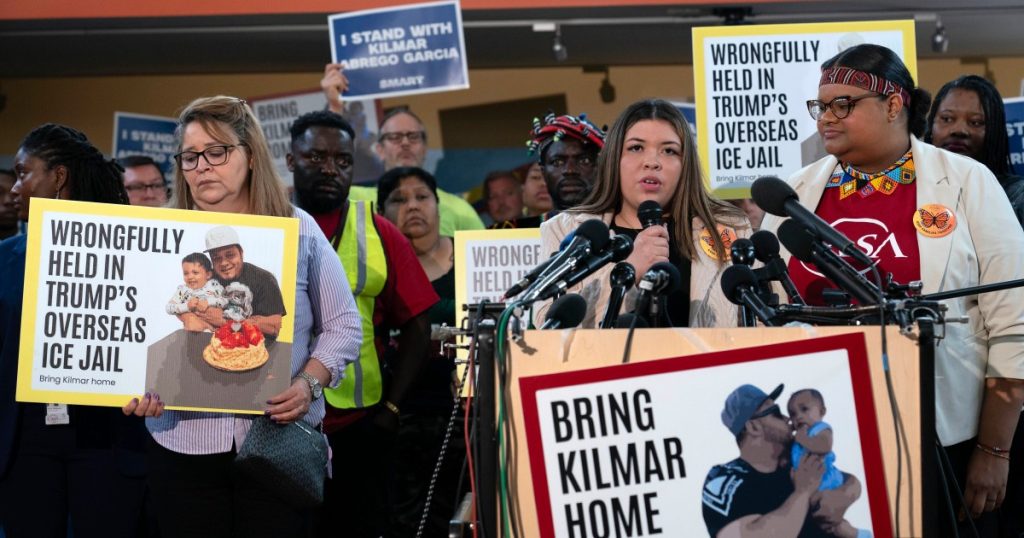
In March, the United States government deported to El Salvador 29-year-old Kilmar Abrego Garcia, a Salvadoran national who had lived and worked in the US for almost half his life. Little did he know that he would soon be the face of US President Donald Trump’s sinisterly exuberant mass deportation campaign. Married to US citizen Jennifer Vasquez Sura, Abrego Garcia was detained while driving in Maryland with the couple’s five-year-old autistic son, who got to witness his father’s capture by the US forces of law and order and has apparently been severely traumatised as a result. In a subsequent court affidavit, Vasquez Sura said her son, who cannot speak, had been “very distressed” by the “sudden disappearance of his father”, crying more than usual and “finding Kilmar’s work shirts and smelling them, to smell Kilmar’s familiar scent”. Of course, tearing families apart and traumatising children has long been par for the bipartisan course in everyone’s favourite “land of the free”, although Trump has certainly made more of a sensational spectacle out of it than his Democratic predecessors, Joe Biden and Barack Obama. Anyway, there is nothing like sowing a bunch of fear and psychological trauma in the name of national security, right? Advertisement Abrego Garcia was deported to El Salvador along with more than 200 other people, who shared the honour of serving as demonised guinea pigs in the Trump administration’s current experiments in sadistic countermigration policy. The deportees were swiftly interned in the Terrorism Confinement Center (CECOT), the notorious mega-prison built by Nayib Bukele, El Salvador’s self-described “coolest dictator in the world”. The facility houses thousands of people arrested under the nationwide “state of emergency”, which was declared in 2022 and shows no sign of abating. Under the pretence of fighting a war on gangs, Bukele has imprisoned more than 85,000 Salvadorans – over 1 percent of the country’s population – in an array of jails that often function as blackholes in terms of indefinitely disappearing human beings as well as any notion of human and legal rights. And now that incoming US funds and deportees have boosted El Salvador’s international carceral clout along with Bukele’s tough-guy image, there is even less of a rush to end the “emergency”. Meanwhile, the case of Abrego Garcia in particular has provided both Trump and Bukele with an extended opportunity to showcase their mutual passion for sociopathy and disdain for the law. As it so happens, Abrego Garcia’s deportation to El Salvador occurred in direct violation of a 2019 ruling by a US immigration judge, according to which he could not be deported to his native country on account of the dangers that such a move would pose to his life. Advertisement Indeed, Abrego Garcia fled to the US as a teenager, precisely out of fear for his life following gang threats to his family. And although the US government was quickly forced to acknowledge that his deportation in March had occurred “because of an administrative error”, the Trump-Bukele team remains determined not to rectify it. After all, this would set a dangerous precedent in suggesting that the possibility of recourse to justice does in fact exist, and that asylum seekers in the US should not have to live in terror of being spontaneously disappeared to El Salvador by “administrative error”. As per a recent New York Times article exposing the details of the debate within the Trump administration over how to manage the PR side of the Abrego Garcia blunder before it became public, officials from the US Department of Homeland Security (DHS) “discussed trying to portray Mr. Abrego Garcia as a ‘leader’ of the violent street gang MS-13, even though they could find no evidence to support the claim”. But a lack of evidence has never stopped folks who are not concerned with facts and reality in the first place. Trump officials have continued to insist on Abrego Garcia’s affiliation with MS-13, while the president himself has unabashedly invoked a doctored photograph of tattoos on the man’s knuckles. The administration has also relied heavily on the fact that, in 2019, the police department in Prince George’s County, Maryland, decided that Abrego Garcia was a gang member because he was wearing a Chicago Bulls hat, among other oh-so-incriminating behaviour. Advertisement To be sure, the frequency with which US law enforcement outfits cite Chicago Bulls merchandise as alleged proof of gang membership would be laughable given the US basketball team’s massive domestic and international fanbase – if, that is, such preposterous profiling tendencies did not directly translate into physical and psychological torment for Abrego Garcia and countless other individuals. In April, the US Supreme Court ordered the Trump administration to “facilitate” Abrego Garcia’s return to the US. In addition to thus far failing to comply with that order, the administration has gone to ludicrous lengths to defy a separate order from US District Judge Paula Xinis that it provide details about what exactly it is doing to secure Abrego Garcia’s release. Apparently irked by Judge Xinis’s pushiness, Trump administration officials then went with the good old “state secrets” excuse, which would enable the withholding of information regarding Abrego Garcia’s case in order to safeguard “national security” and the “safety of the American people”, as DHS spokeswoman Tricia McLaughlin put it. Bukele, for his part, has handled the Abrego Garcia situation with a petulant and vengeful machismo befitting the world’s “coolest dictator”, taking to X to ridicule the wrongfully abducted and imprisoned man. During an April visit to his partner in crime in the Oval Office in Washington, Bukele made clear to reporters that he would not be lifting a finger on Abrego Garcia’s behalf: “How can I smuggle a terrorist into the United States?” Advertisement Speaking of terrorism, it is worth recalling that, long before the current “state of emergency” in El Salvador, the US had an outsized hand in supporting right-wing state terror in the country, where the civil war of 1979-92 killed more than 75,000 people. The majority of wartime atrocities were committed by the US-backed Salvadoran military and allied death squads, and countless Salvadorans fled north to the US, where MS-13
India top general admits aerial ‘losses’ in recent conflict with Pakistan
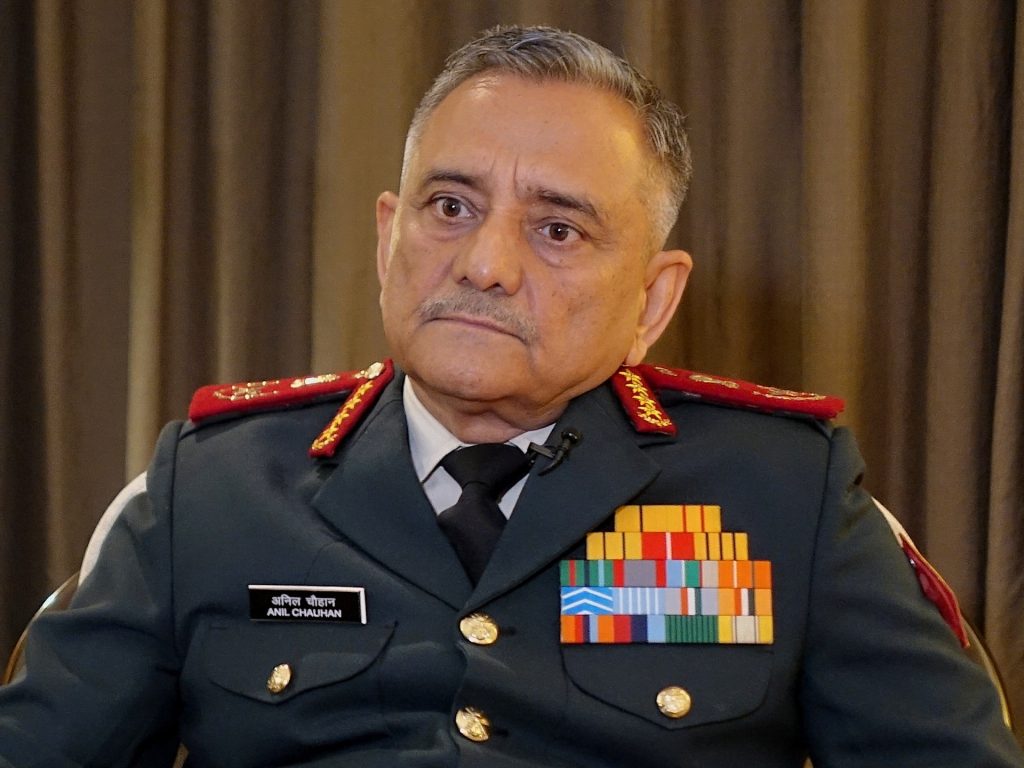
General Anil Chauhan appears to confirm India lost at least one aircraft during the brief conflict with Pakistan earlier this month. India’s chief of defence staff says the country suffered initial losses in the air during a recent military conflict with neighbouring Pakistan, but declined to give details. “What was important is, why did these losses occur, and what we will do after that,” General Anil Chauhan told the Reuters news agency on Saturday on the sidelines of the Shangri-La Dialogue security forum in Singapore. India and Pakistan were engaged in a four-day conflict this month, their worst standoff since 1999, before a ceasefire was agreed on May 10. More than 70 people were killed in missile, drone and artillery fire on both sides, but there are competing claims on the casualties. India says more than 100 “terrorists” were killed in its “precision strikes” on several “terror camps” across Pakistan, which rejects the claim, saying more than 30 Pakistani civilians were killed in the Indian attacks. New Delhi, meanwhile, says nearly two dozen civilians were killed on the Indian side, most of them in Indian-administered Kashmir, along the disputed border. Advertisement The fighting between the two nuclear powers was triggered by an attack on tourists in Pahalgam in Indian-administered Kashmir on April 22 that killed 26 people, almost all of them tourists. New Delhi blamed Pakistan for supporting the armed group behind the attack, an allegation Islamabad denied. During their conflict, Pakistan had also claimed to have downed at least five Indian military jets, including at least three Rafale fighters. But Chauhan on Saturday dismissed it as “absolutely incorrect”, confirming his country had lost at least one aircraft. “I think what is important is that, not the jet being down, but why they were being down,” he told Bloomberg TV in a separate interview in Singapore. On May 11, a day after the ceasefire, India’s Air Marshal AK Bharti told reporters in New Delhi that “all our pilots are back home”, adding that “we are in a combat scenario, and that losses are a part of combat”. Chauhan said on Saturday India switched tactics after suffering losses in the air on the first day of conflict and established a decisive advantage. “So we rectified tactics and then went back on the [May] 7th, 8th and 10th in large numbers to hit airbases deep inside Pakistan, penetrated all their air defences with impunity, carried out precision strikes,” he said. Islamabad has denied it suffered any losses of planes but has acknowledged its airbases suffered some hits, although losses were minimal. Chauhan said while the fighting had ceased, the Indian government had made it clear that it would respond “precisely and decisively should there be any further terror attacks emanating from Pakistan”. Advertisement “So that has its own dynamics as far [as] the armed forces are concerned. It will require us to be prepared 24/7,” he said. Chauhan also said that although Pakistan is closely allied with China, which borders India in the north and the northeast, there was no sign of any actual help from Beijing during the conflict. “While this was unfolding from [April] 22nd onwards, we didn’t find any unusual activity in the operational or tactical depth of our northern borders, and things were generally all right,” he told Reuters. Asked whether China may have provided any satellite imagery or other real-time intelligence to Pakistan during the conflict, Chauhan said such imagery was commercially available and could have been procured from China as well as other sources. Adblock test (Why?)
Two killed in Russian attacks on Ukraine before possible talks in Turkiye
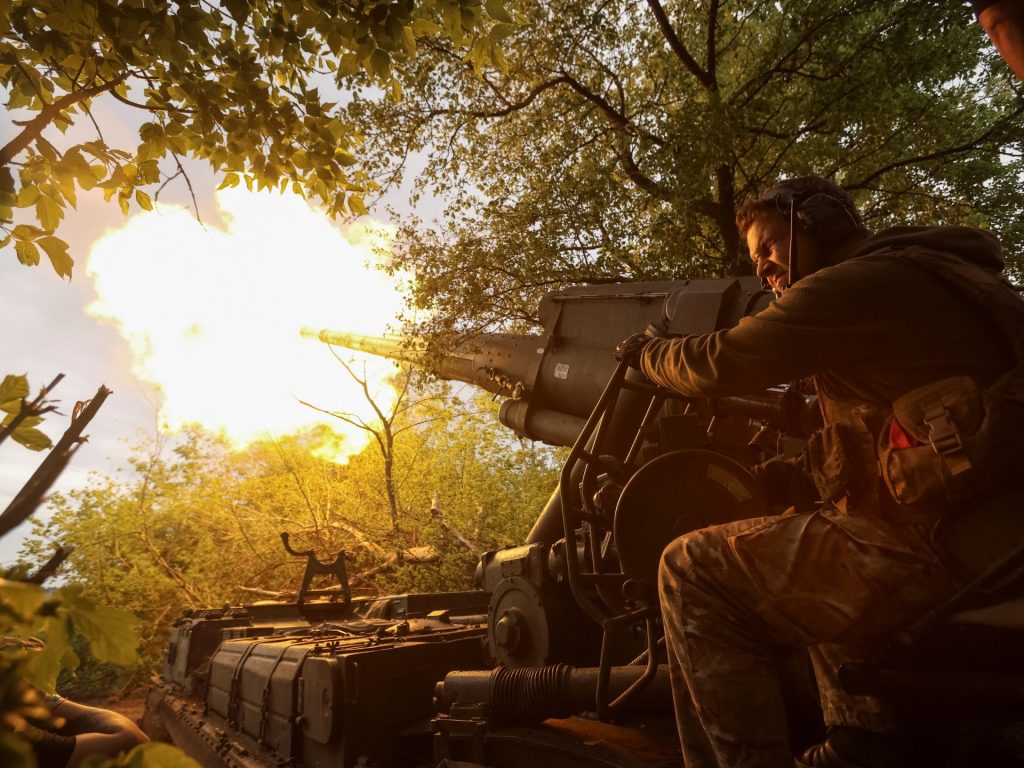
Russia has confirmed it will send a delegation to Istanbul, but Kyiv has not yet accepted the proposal. Russian drone and missile attacks on Ukraine have killed at least two people, according to officials, as Ukraine ordered the evacuation of 11 more villages in its Sumy region bordering Russia. Russian troops launched an estimated 109 drones and five missiles across Ukraine on Friday and overnight, the Ukrainian air force said on Saturday, adding that three of the missiles and 42 drones were destroyed and another 30 drones failed to reach their targets without causing damage. The attacks came amid uncertainty over whether Kyiv will take part in a new round of peace talks early next week in Istanbul. In the Russian attacks on Saturday, a child was killed in a strike on the front-line village of Dolynka in the Zaporizhia region, and another was injured, Zaporizhia’s Governor Ivan Fedorov said. “One house was destroyed. The shockwave from the blast also damaged several other houses, cars, and outbuildings,” Fedorov wrote on Telegram. A man was also killed by Russian shelling in Ukraine’s Kherson region, Governor Oleksandr Prokudin wrote on Telegram. Advertisement Moscow did not comment on either attack. Meanwhile, authorities in Ukraine’s Sumy region said they were evacuating 11 villages within a roughly 30-kilometre (19-mile) range from the Russian border. “The decision was made in view of the constant threat to civilian life as a result of shelling of border communities,” the regional administration said on social media. Ukrainian President Volodymyr Zelenskyy has said some 50,000 Russian troops have amassed in the area with the intention of launching an offensive to carve out a buffer zone inside Ukrainian territory. Ukraine’s top army chief, Oleksandr Syrskii, said on Saturday that Russian forces were focusing their main offensive efforts on Pokrovsk, Torets and Lyman in the Donetsk region, as well as the Sumy border area. Syrskii added that Ukrainian forces are still holding territory in Russia’s Kursk region – a statement Moscow has repeatedly denied. The evacuations and attacks came just two days before a possible meeting between Kyiv and Moscow in Istanbul, as Washington called on both countries to end the three-year war. Russia has confirmed it will send a delegation, but Kyiv has not yet accepted the proposal, warning the talks would not yield results unless the Kremlin provided its peace terms in advance. Zelenskyy said Saturday it was still not clear what Moscow was planning to achieve at the meeting and that so far, it did not “look very serious”. Adblock test (Why?)
Saudi Arabia says it will jointly fund Syria state salaries with Qatar
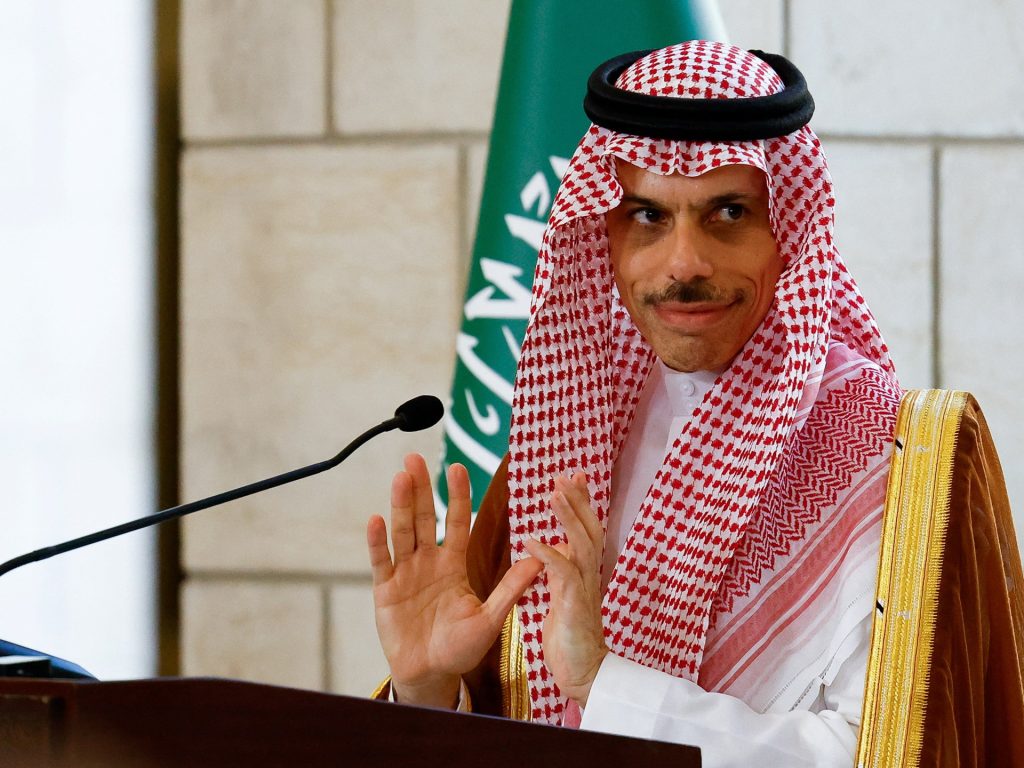
Saudi and Qatari efforts aim to stabilise Syria by funding public-sector salaries and boosting economic recovery plans. Saudi Arabia’s Foreign Minister Prince Faisal bin Farhan Al Saud has said that the kingdom and Qatar will offer joint financial support to state employees in Syria. His statements came on Saturday during a joint press conference with his Syrian counterpart Asaad al-Shibani in Damascus. The two Gulf nations have been among the most important regional supporters of Syria’s new authorities, who ousted longtime ruler Bashar al-Assad in December after nearly 14 years of war. Saturday’s statement did not provide details on the exact amount of the support for Syria’s public sector. However, it comes after Syrian Finance Minister Mohammed Yosr Bernieh said earlier in May that Qatar was going to provide Syria with $29m per month for an initial three months to pay civilian public sector worker salaries. The Reuters news agency had also reported that the United States had given its blessing to the Qatari initiative, which came a few days before President Donald Trump announced that sanctions on Syria imposed during the al-Assad regime would be lifted. The European Union has since also lifted sanctions on Syria. Advertisement Further evidence of Saudi Arabian and Qatari support came in mid-May, when it was announced that the two countries had paid off Syria’s debt to the World Bank, a sum of roughly $15m. International ties Syria’s new government, led by interim President Ahmed al-Sharaa, has sought to rebuild the country’s diplomatic ties and convince wary Western states that he has turned his back on past ties with groups such as al-Qaeda. The Syrian leader has repeatedly disavowed extremism and expressed support for minorities, but incidents of violence that has led to hundreds of deaths continue to cause international trepidation – even as the government and al-Sharaa denounce the killings. Syria’s new government has also made a concerted effort to solidify ties to Gulf Arab states who have begun to play a pivotal role in financing the reconstruction of Syria’s war-ravaged infrastructure and reviving its economy. On Tuesday, the European Union announced it had adopted legal acts lifting all economic restrictive measures on Syria except those based on security grounds. It also removed 24 entities from the EU list of those subject to the freesing of funds and economic resources, including the Central Bank of Syria. And after Saudi Arabia and Qatar cleared Syria’s debt to the World Bank, the US-based financial institution said that it would restart operations in the country following a 14-year pause. The World Bank has begun to prepare its first project in Syria, which will focus on improving electricity access – a key pillar for revitalising essential services like healthcare, education, and water supply. It also marked the start of expanded support to stabilise Syria and boost long-term growth. Advertisement Syria’s gradual re-integration into the global economy is in large part due to Trump’s dramatic shift in Washington’s policies towards the country. After announcing the lifting of US sanctions on May 13, Trump also became the first US president in 25 years to meet with a Syrian counterpart. The US had already removed a $10m reward for the capture of al-Sharaa, and the Syrian president has been able to travel internationally and meet world leaders, including in Saudi Arabia and France. Still, there is a lot to be done. A February report by the United Nations Development Programme (UNDP) estimated that at current growth rates, Syria would need more than 50 years to return to the economic level it had before the war, and it called for massive investment to accelerate the process. The UNDP study said nine out of 10 Syrians now live in poverty, one-quarter are jobless and Syria’s gross domestic product “has shrunk to less than half of its value” in 2011, the year the war began. Adblock test (Why?)
Nigeria floods death toll crosses 150 as thousands displaced
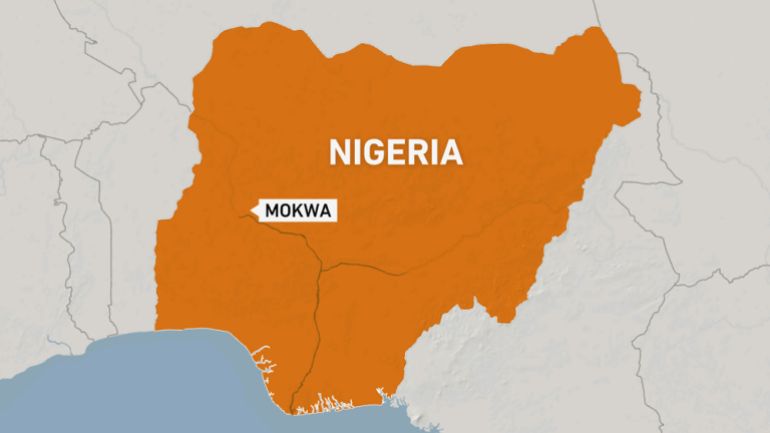
At least 3,018 people displaced and 265 houses destroyed in the floods in central Nigeria as more rains are feared. More than 150 people have been killed and thousands displaced after floods devastated parts of central Nigeria, local authorities said, as rescue teams continue to recover bodies and search for the missing. The flooding struck the rural town of Mokwa in Niger State following torrential rains that began late on Wednesday and continued into Thursday. The death toll has risen to 151 after more bodies were recovered nearly 10km (6 miles) from Mokwa, said Ibrahim Audu Husseini, a spokesman for the Niger State Emergency Management Agency (NSEMA) on Saturday. At least 3,018 people have been displaced, while 265 houses were “completely destroyed” in the floods, he said, adding that many victims were believed to have been swept down the Niger River, warning that the toll could still rise. President Bola Tinubu extended his condolences overnight and said search-and-rescue operations were ongoing with the support of Nigeria’s security forces. “Relief materials and temporary shelter assistance are being deployed without delay,” he wrote in a post on social media. Advertisement “We lost everything, the families. We don’t have anywhere else to go, the property has gone,” Mohammed Tanko, a local, told Al Jazeera. “We lost at least 15 from this house.” Another survivor said: “I escaped with only my nightdress. Right now, I can’t even identify where our home used to be.” More rains feared Meteorologists warn that more rain is expected in the coming days, raising fears of further flooding across the region. Flooding is a regular threat during Nigeria’s six-month rainy season, but experts say the frequency and severity of these disasters are increasing due to climate change, unregulated construction, and poor drainage infrastructure. “Flooding has become an annual event, between the months of April and October,” Ugonna Nkwunonwo, a flood risk analyst at the University of Nigeria, told Al Jazeera. He warned that while flood risks have long been identified, “there has not been much political power to implement this change”. “This flooding is a result of climate change, which is affecting the frequency and intensity of rainfall,” he said. “The amount of rain you expect in a year could probably come in one or two months, and people are not prepared for that kind of rainfall.” Last year, more than 1,200 people died and up to two million were displaced by similar disasters across Nigeria. “This tragic incident serves as a timely reminder of the dangers associated with building on waterways and the critical importance of keeping drainage channels and river paths clear,” the National Emergency Management Agency said in a statement. Advertisement Adblock test (Why?)
The sudden surge of genocide critique in the West
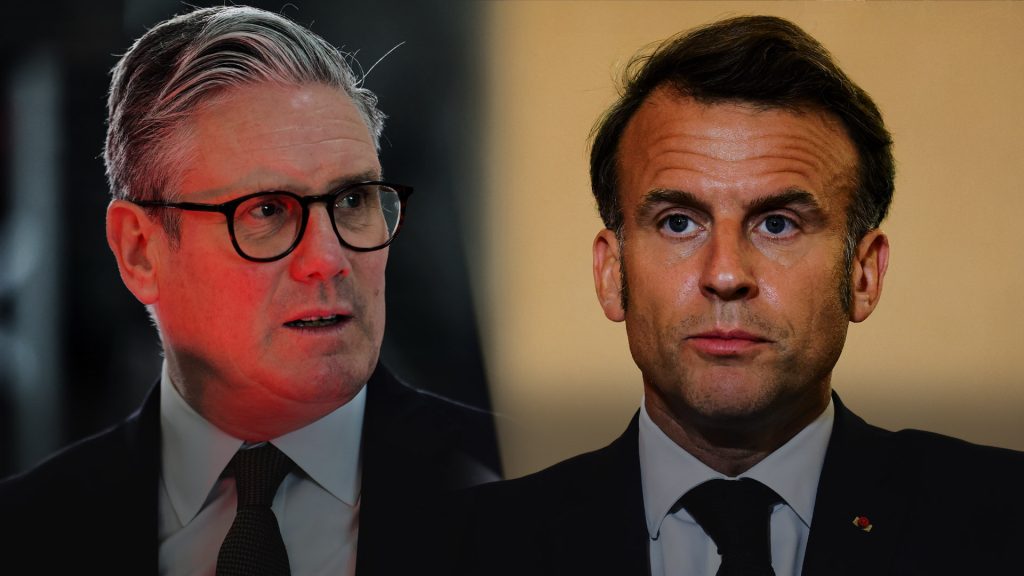
As attacks intensify and starvation in Gaza worsens, some of Israel’s allies finally start speaking up. More than 600 days into its genocidal war in Gaza, some of Israel’s closest allies have begun to condemn its actions. Alongside the changing global narrative, growing opposition in Israel to the Netanyahu government’s war methods has seeped into the media coverage – fracturing a consensus that dates back to October 7, 2023. Contributors: Yara Hawari – Co-Director, Al-ShabakaNatasha Lennard – Contributing writer, The InterceptOrly Noy – Editor, Local CallMuhammad Shehada – Visiting fellow, European Council on Foreign Relations On our radar: Over the past couple of weeks, dispatches coming out of Gaza’s hospitals have grown more and more desperate. Meenakshi Ravi reports on the healthcare workers getting the story out and filling the vacuum in the news coverage. Gaza Humanitarian Foundation: ‘Aid washing’ in the Gaza Strip Formed a matter of months ago, the Gaza Humanitarian Foundation is a United States-Israeli coalition of private military contractors that includes former CIA and military personnel. We speak with Jeremy Scahill, co-founder of Drop Site News, who has investigated the GHF, together with Palestinian journalists on the ground. Advertisement Featuring:Jeremy Scahill – Co-Founder, Drop Site News Adblock test (Why?)
Iran increases stockpile of enriched Uranium by 50 percent, IAEA says
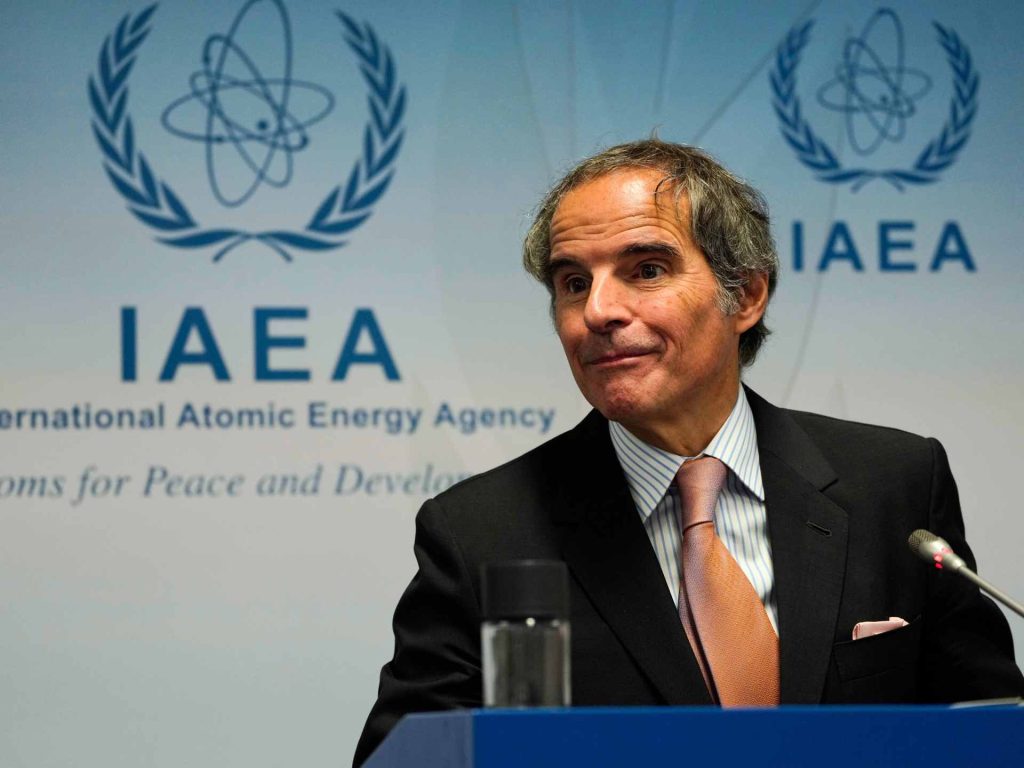
The UN nuclear watchdog warns Tehran could be close to weapons-grade enriched uranium, as negotiations with the US continue. The United Nations nuclear watchdog says Iran has increased its stockpile of highly enriched, near weapons-grade uranium by 50 percent in the last three months. The report by the International Atomic Energy Agency (IAEA) on Saturday comes as nuclear deal negotiations are under way between the United States and Iran, with Tehran insisting its nuclear programme is for peaceful purposes only. The IAEA said as of May 17, Iran had amassed 408.6kg (900.8 pounds) of uranium enriched up to 60 percent – the only non-nuclear weapon state to do so, according to the UN agency – and had increased its stockpile by almost 50 percent to 133.8kg since its last report in February. The wide-ranging, confidential report seen by several news agencies said Iran carried out secret nuclear activities with material not declared to the IAEA at three locations that have long been under investigation, calling it a “serious concern” and warning Tehran to change its course. Iranian Foreign Minister Abbas Araghchi, however, reaffirmed the country’s longstanding position, saying Tehran deems nuclear weapons “unacceptable”. Advertisement “If the issue is nuclear weapons, yes, we too consider this type of weapon unacceptable,” Araghchi, Iran’s lead negotiator in the nuclear talks with the US, said in a televised speech. “We agree with them on this issue.” ‘Both sides building leverage’ But the report, which was requested by the IAEA’s 35-nation board of governors in November, will allow for a push by the United States, Britain, France and Germany to declare Iran in violation of its non-proliferation obligations. On Friday, US President Donald Trump said Iran “cannot have a nuclear weapon”. “They don’t want to be blown up. They would rather make a deal,” Trump said, adding: “That would be a great thing that we could have a deal without bombs being dropped all over the Middle East.” In 2015, Iran reached a deal with the United Kingdom, US, Germany, France, Russia, China and the European Union, known as the Joint Comprehensive Plan of Action. It involved the lifting of some sanctions on Tehran in return for limits on its nuclear development programme. But in 2018, then US President Trump unilaterally quit the agreement and reimposed harsh sanctions. Tehran then rebuilt its stockpiles of enriched uranium. In December last year, the IAEA said Iran was rapidly enriching uranium to 60 percent purity, moving closer to the 90 percent threshold needed for weapons-grade material. Western nations say such intensive enrichment should not be part of a civilian nuclear programme, but Iran insists it is not developing weapons. Advertisement Hamed Mousavi, professor of political science at Tehran University, told Al Jazeera the IAEA findings could indicate a possible negotiation tool for Iran during its ongoing nuclear talks with the US. “I think both sides are trying to build leverage against the other side. From the Iranian perspective, an advancement in the nuclear programme is going to bring them leverage at the negotiation table with the Americans,” he said. On the other side, he said, the US could threaten more sanctions and may also refer the Iranian case to the UN Security Council for its breach of the 2006 non-proliferation agreement. However, he added that Iran has not made the “political decision” to build a possible bomb. “Enriching up to 60 percent [of uranium] – from the Iranian perspective – is a sort of leverage against the Americans to lift sanctions,” Mousavi said. Adblock test (Why?)
Russia-Ukraine war: List of key events, day 1,192
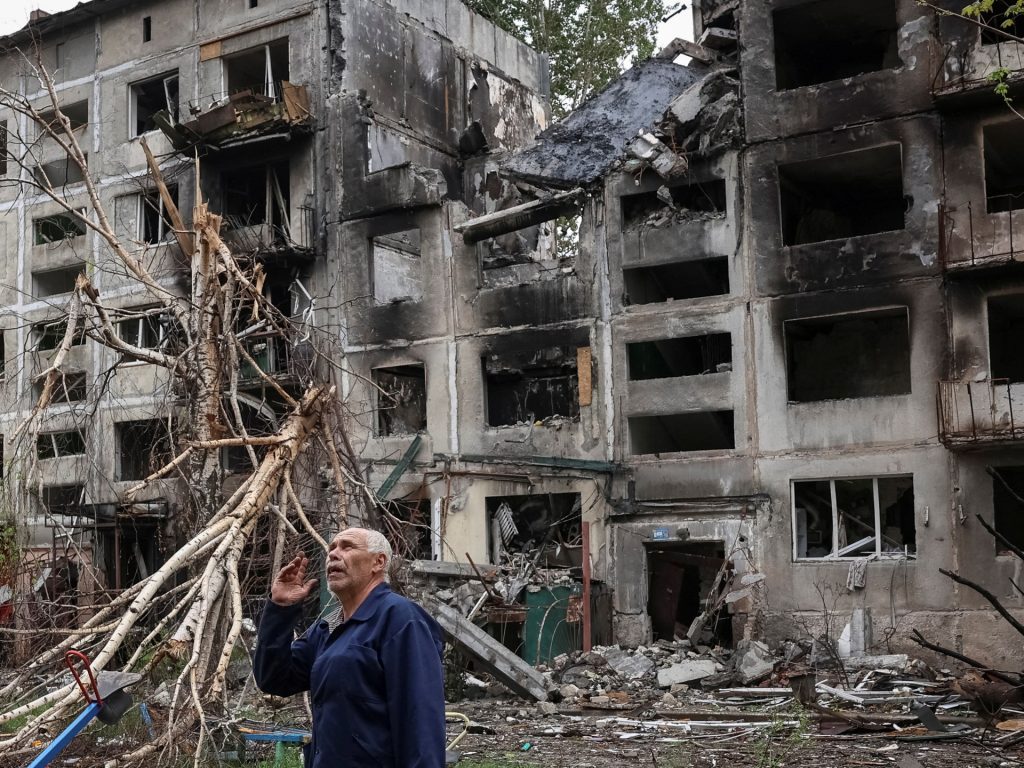
Here’s where things stand on Saturday, May 31: Fighting Eight people, including two teenagers, were injured in a Russian attack on the village of Vasyliv Khutir in Ukraine’s northeastern Kharkiv, regional Governor Oleh Syniehubov said. The Ukrainian Air Force said that Russia launched 90 drones and two ballistic missiles against Ukraine that targeted the country’s Kharkiv, Odesa and Donetsk regions. The Kharkiv region’s main city came under Russian drone attack, which targeted a trolleybus depot and injured two people, the city’s Mayor Ihor Terekhov said. He said more than 30 nearby apartment buildings were damaged, while one trolleybus was completely destroyed, and 18 others sustained varying degrees of damage. Ceasefire Ukraine has resisted US and Russian pressure to commit to attending another round of peace talks in Istanbul on Monday, saying it first needs to see Russian proposals for a ceasefire. Ukrainian President Volodymyr Zelenskyy said Russia “is doing everything it can to ensure that the next potential meeting brings no results”. Turkish President Recep Tayyip Erdogan said the planned second round of talks between Ukraine and Russia will pave the way for peace in a phone call with Zelenskyy, according to a readout issued by the Turkish presidency. Erdogan said it is important that both parties join the talks with strong delegations. Ukrainian Foreign Minister Andrii Sybiha also said Kyiv needed to see the Russian ceasefire proposals in advance for the talks to be “substantive and meaningful”, without spelling out what Kyiv would do if it did not receive the Russian document or a deadline for receiving it. Russia’s Ministry of Foreign Affairs said Kremlin aide Vladimir Medinsky will again head Russia’s delegation in Istanbul for the second round of Russia-Ukraine talks and will bring a memorandum and other ceasefire proposals to the meeting. Russia’s UN ambassador, Vassily Nebenzia, told the UN Security Council that Moscow was ready to consider a ceasefire, provided Western states stopped arming Ukraine and Kyiv stopped mobilising troops. Advertisement Influential US Republican Senator Lindsey Graham said on a visit to Kyiv that the Republican-led US Senate is expected to move ahead with a bill on sanctions against Russia next week. Graham, who met Zelenskyy in Kyiv on Friday, said he had talked with Donald Trump before his trip and the US president expects concrete actions now from Moscow. Trump told reporters that both Putin and Zelenskyy were stubborn and that he had been surprised and disappointed by the Russian bombing of Ukraine while he was trying to arrange a ceasefire. Trump’s special envoy for Ukraine, Keith Kellogg, said Russia’s concern over the eastward enlargement of NATO was fair and Washington did not want to see Ukraine in the US-led military alliance. Commenting on Kellogg’s statement, Kremlin spokesperson Dmitry Peskov said Moscow was pleased, adding that a Russian delegation would be travelling to Istanbul and ready for talks with Ukraine on Monday morning. Turkish Foreign Minister Hakan Fidan told reporters in Kyiv that the next step after talks in Istanbul would be to try to host a meeting between Trump, Putin, and Zelenskyy. Economy Ukraine’s finance ministry has announced that it would not be paying more than half a billion dollars due to holders of its GDP warrants – fixed income securities indexed to economic growth – marking the first payment default since it created the financial instruments in 2015. Ukraine owes $665m on June 2 to holders of the $3.2bn worth of warrants, based on 2023 economic performance. Advertisement Adblock test (Why?)
Trump says US will lift steel tariffs to 50 percent at Pennsylvania rally
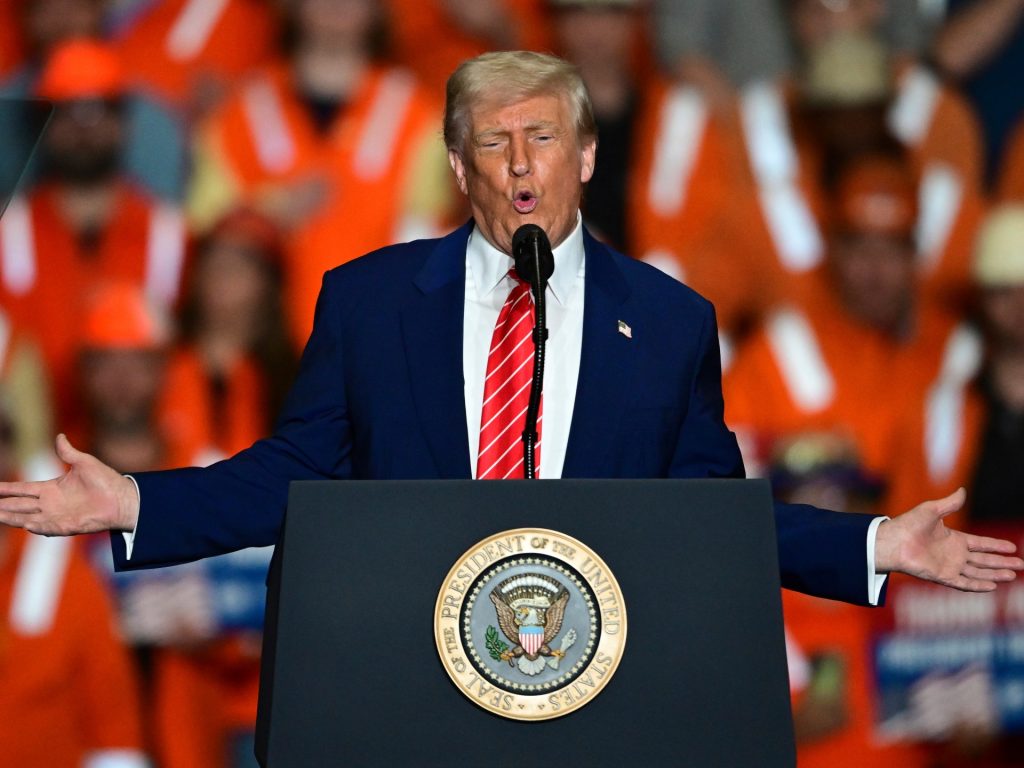
United States President Donald Trump has announced his administration is raising tariffs on steel imports from 25 percent to 50 percent. Speaking to steelworkers and supporters at a rally outside Pittsburgh, Pennsylvania, Trump framed his latest tariff increase as a boon to the domestic manufacturing industry. “We’re going to bring it from 25 percent to 50 percent, the tariffs on steel into the United States of America, which will even further secure the steel industry in the United States,” Trump told the crowd. “Nobody’s going to get around that.” How that tariff increase would affect the free-trade deal with Canada and Mexico – or a separate trade deal struck earlier this month with the United Kingdom – remains unclear. Also left ambiguous was the nature of a deal struck between Nippon Steel, the largest steel producer in Japan, and the domestic company US Steel. Still, Trump played up the partnership between the two companies as a “blockbuster agreement”. “ There’s never been a $14bn investment in the history of the steel industry in the United States of America,” Trump said of the deal. Advertisement A tariff hike on steel Friday’s rally was a return to the site of many election-season campaign events for Trump and his team. In 2024, Trump hinged his pitch for re-election on an appeal to working-class voters, including those in the Rust Belt region, a manufacturing hub that has declined in the face of the shifting industry trends and greater overseas competition. Key swing states like Pennsylvania and Michigan are located in the region, and they leaned Republican on election day, helping to propel Trump to a second term as president. Trump, in turn, has framed his “America First” agenda as a policy platform designed to bolster the domestic manufacturing industry. Tariffs and other protectionist policies have played a prominent part in that agenda. In March, for instance, Trump announced an initial slate of 25-percent tariffs on steel and aluminium, causing major trading partners like Canada to respond with retaliatory measures. The following month, he also imposed a blanket 10-percent tariff on nearly all trade partners as well as higher country-specific import taxes. Those were quickly paused amid economic shockwaves and widespread criticism, while the 10-percent tariff remained in place. Trump has argued that the tariffs are a vital negotiating tool to encourage greater investment in the US economy. But economists have warned that attempting a “hard reset” of the global economy – through dramatic tax hikes like tariffs – will likely blow back on US consumers, raising prices. Advertisement Rachel Ziemba, a senior fellow at the Center for a New American Security, said the latest tariff hike on steel also signals that negotiating trade deals with Trump may result in “limited benefits”, given the sudden shifts in his policies. Further, Friday’s announcement signals that Trump is likely to continue doubling down on tariffs, she said. “The challenge is that hiking the steel tariffs may be good for steel workers, but it is bad for manufacturing and the energy sector, among others. So overall, it is not great for the US economy and adds uncertainty to the macro outlook,” Ziemba explained. Trump’s tariff policies have also faced legal challenges in the US, where businesses, interest groups and states have all filed lawsuits to stop the tax hikes on imports. On Thursday, for instance, a federal court briefly ruled that Trump had illegally exercised emergency powers to impose his sweeping slate of international tariffs, only for an appeals court to temporarily pause that ruling a few hours later. A deal with Nippon Steel Before the tariff hike was announced, Friday’s rally in Pittsburgh was expected to focus on Nippon Steel’s proposed acquisition of US Steel, the second largest steel producer in the country. “We’re here today to celebrate a blockbuster agreement that will ensure this storied American company stays an American company,” Trump said at the outset of his speech. But the merger between Nippon Steel and US Steel had been controversial, and it was largely opposed by labour unions. Advertisement Upon returning to the White House in January, Trump initially said he would block the acquisition, mirroring a similar position taken by his predecessor, former US President Joe Biden. However, he has since pivoted his stance and backed the deal. Last week, he announced an agreement that he said would grant Nippon only “partial ownership” over US Steel. Speaking on Friday, Trump said the new deal would include Nippon making a “$14bn commitment to the future” of US Steel, although he did not provide details about how the ownership agreement would play out. “Oh, you’re gonna be happy,” Trump told the crowd of steelworkers. “There’s a lot of money coming your way.” The Republican leader also waxed poetic about the history of steel in the US, describing it as the backbone of the country’s economy. “The city of Pittsburgh used to produce more steel than most entire countries could produce, and it wasn’t even close,” he said, adding: “If you don’t have steel, you don’t have a country.” For its part, US Steel has not publicly communicated any details of a revamped deal to investors. Nippon, meanwhile, issued a statement approving the proposed “partnership”, but it also has not disclosed terms of the arrangement. The acquisition has split union workers, although the national United Steelworkers Union has been one of its leading opponents. In a statement prior to the rally, the union questioned whether the new arrangement makes “any meaningful change” from the initial proposal. Advertisement “Nippon has maintained consistently that it would only invest in US Steel’s facilities if it owned the company outright,” the union said in a statement, which noted firmer details had not yet been released. “We’ve seen nothing in the reporting over the past few days suggesting that Nippon has walked back from this position.” The rally on Friday comes as Trump has sought to reassure his base of voters following a tumultuous start to his second term. Critics point out