

Israeli attacks on Gaza kill 23 people as four more die from malnutrition
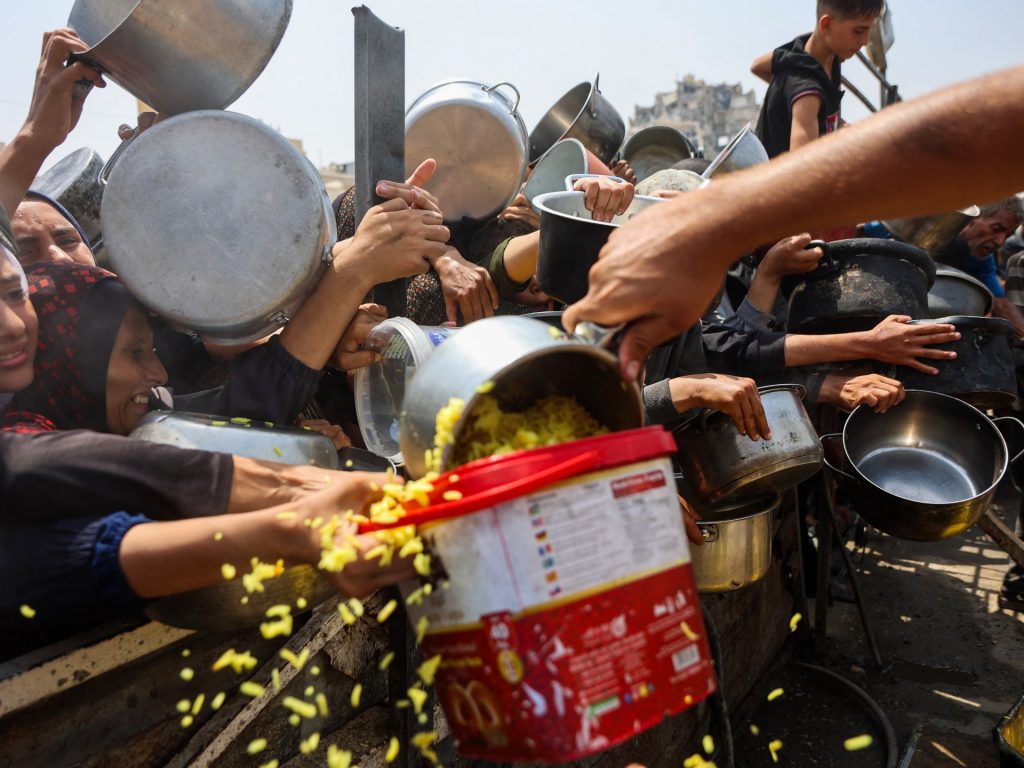
At least 23 people, including 10 seeking aid, have been killed on Thursday in Israeli attacks across Gaza, according to Palestinian health authorities, as four more people died from malnutrition amid a growing starvation crisis in the besieged territory. Hospital sources told Al Jazeera that 10 people seeking aid were among 12 people killed by Israeli forces near Rafah in southern Gaza. One person was killed and several others were wounded in an Israeli attack near an aid distribution site, the sources said. Eight people were killed in an Israeli air strike on a residential home in Gaza City in northern Gaza, medical sources said. Two other people were killed in an Israeli attack on the city’s Tuffah neighbourhood, hospital sources told Al Jazeera. The killings come as Israel escalates its attacks on Gaza City, the largest city in the enclave, after the country’s security cabinet approved plans for the military to seize the city, an operation that could forcibly displace hundreds of thousands of Palestinians to concentration zones in southern Gaza. The plan has received international condemnation from the United Nations and even dissent from within Israel’s own military. Al Jazeera correspondents reported on Thursday that large swaths of northern Gaza have been turned into “lifeless wastelands” amid the Israeli escalation. Palestinians in Gaza City have spoken of their fears of further displacement, following an Israeli forced evacuation order to areas further south, ahead of the proposed occupation. Advertisement Walaa Sobh said she had already been displaced during the war from the northern city of Beit Lahiya to Gaza City, and was unable to move again. “We’re afraid to move anywhere else, because we have nowhere to go, no income – and I am a widow,” she told Al Jazeera. “If they want to force us out, then at least find us a place, give us tents, especially for the widows, the children, and the sick. You’re not only displacing one or two people; you’re displacing millions who have nowhere to stay.” Another woman, Umm Sajed Hamdan, said she would refuse to follow the order. “I am a mother of five and the wife of a detainee. I cannot escape with my children from one place to another,” Hamdan told Al Jazeera. “I would rather face death here in Gaza City than go to al-Mawasi.” Al Jazeera’s senior political analyst Marwan Bishara said Israel’s plans to occupy Gaza City are a serious cause for concern. “It’s a terrible escalation, really,” said Bishara. “[Netanyahu] really intends to reoccupy Gaza … send the military in and just take it on again.” Truce talks As Israel continues to escalate attacks on Gaza City, Mossad spy chief David Barnea is visiting Qatar in an effort to revive talks over a Gaza ceasefire, two Israeli officials told the Reuters news agency on Thursday. The visit follows a reported expression of positivity from Hamas officials to restart ceasefire negotiations during a meeting with Egypt’s intelligence chief in Cairo earlier this week. Earlier on Thursday, Israeli Deputy Foreign Minister Sharren Haskel said that a non-Israeli, peaceful civilian administration for Gaza was among the Israeli government’s five key principles for ending the war. The other principles include the release of captives still held in Gaza, the surrender of weapons by Hamas, the full demilitarisation of Gaza, and Israel retaining overriding security control, he said. Aid still ‘a drop in the ocean’ Meanwhile, more than 100 aid groups on Thursday accused Israel of obstructing life-saving aid from entering Gaza, resulting in vast quantities of relief supplies remaining stranded in warehouses across Jordan and Egypt as more Palestinians starve. “Despite claims by Israeli authorities that there is no limit on humanitarian aid entering Gaza, most major international NGOs [nongovernmental organisations] have been unable to deliver a single truck of life-saving supplies since 2 March,” the groups said. There is aid sitting all around the boundary between Israel and Gaza that is not being allowed in, Natasha Davies, a nursing activity manager with Doctors Without Borders (MSF), told Al Jazeera. Advertisement “We’ve had a couple of trucks in [to Gaza], but really, it’s just a drop in the ocean … We run primarily a trauma surgical hospital, so every single patient has a wound of some sort that needs fixing with supplies that we are intermittently receiving,” Davies said by videolink from Gaza’s southern city of Khan Younis. “It’s just a humanitarian catastrophe. There are these GHF sites, which are slaughter masquerading as aid, which create mass casualty incidents, which create more injuries for us to treat with limited resources,” she said. The total number of aid seekers killed since May 27, when Israel introduced a new aid distribution mechanism through the US-based GHF, has reached 1,881, with more than 13,863 injured, according to Gaza’s Health Ministry. The total count of hunger-related deaths is now 239, including 106 children, the ministry records. Israel’s war on Gaza has killed at least 61,776 people and wounded 154,906. An estimated 1,139 people were killed in Israel during the October 7, 2023, attacks, and more than 200 were taken captive. Adblock test (Why?)
LA28 to be first Olympic Games to sell naming rights for venues
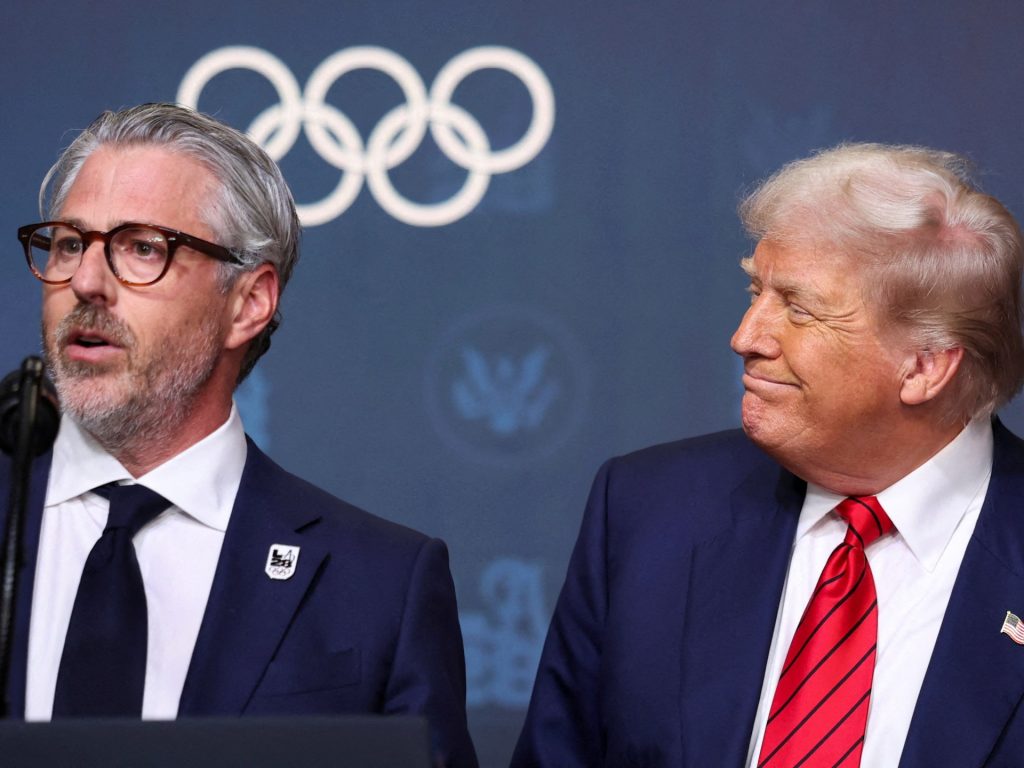
The organising committee for the Los Angeles Olympics says some deals are already in place for the 2028 Games. Organisers of the Los Angeles Olympics will sell naming rights for a handful of its venues in deals expected to bring multiple millions of dollars to the 2028 Games while breaking down the International Olympic Committee’s long-sacrosanct policy of keeping brand names off its arenas and stadiums. The organising committee announced the landmark deal Thursday, saying contracts were already in place with two of its founding partners – Honda, which already has naming rights for the arena in Anaheim that will host volleyball, and Comcast, which will have its name on the temporary venue hosting squash. LA28 chairman and CEO Casey Wasserman said revenue from the deals goes above what’s in LA’s current $6.9bn budget. He portrayed the deal as the sort of paradigm-shifting arrangement that Los Angeles needs more than other host cities because, as is typical for American-hosted Olympics, the core cost of these Games is not backed by government funding. “We’re a private enterprise responsible for delivering these games,” Wasserman said in an interview with The Associated Press. “It’s my job to push. That doesn’t mean we’re going to win every time we push, but it’s our job to always push because our context is pretty unique.” Wasserman said he also spent time explaining to IOC members how arena and stadium names are part of the lexicon in US sports. “People know ‘Crypto’ as ‘Crypto,’ they don’t know it as ‘the gymnastics arena downtown,’” Wasserman said of the home of the Lakers, Crypto.com Arena, which will host gymnastics and boxing in 2028. Advertisement Rights for up to 19 temporary venues could be available. The IOC’s biggest sponsors – called TOP sponsors – will have the first chance to get in on the deals. Wasserman said no venues will be renamed – so, for instance, if organisers do not reach a deal with SoFi (opening and closing ceremonies, swimming) or Intuit (basketball), no other sponsor can put its name on the arena. Not included in this new arrangement are the LA Coliseum, Rose Bowl and Dodger Stadium, some of the most iconic venues in a city that hosted the Games in 1932 and 1984. Organisers said IOC rules that forbid advertising on the field of play will still apply. The deal adds to a growing list of accommodations pushed through for Los Angeles, which is once again poised to reshape the Olympic brand, much the way it did in 1984. In 2017, the city was bidding for the 2024 Games against Paris, but agreed to instead host the 2028 Games. It was part of a then-unheard-of bid process that rescued the IOC from the reality that cities were becoming reluctant to absorb the cost and effort to bid for and host the Summer Games. Olympic watchers viewed the return of softball and baseball for 2028, along with the introduction of flag football, with help from the NFL, as changes that maybe only Los Angeles could have pulled off. LA will also make a major scheduling change for the Olympics Games, moving track and field to the opening week of the games and swimming to the end. Wasserman said the organising committee’s position as a private entity plays a major role in its relationship with the IOC. “We spend the time, we do the work, we make the argument, and we don’t settle for a ‘No,’ because we don’t have that luxury,” he said. Adblock test (Why?)
Trump is “waging a war on Democratic-run cities”
[unable to retrieve full-text content] “He does not like the fact that the mayor of [Washington,] DC is a Democrat and that the city is largely Democratic.”
Dozens injured in Serbia as clashes erupt at antigovernment protests

Images from the scene show government supporters throwing flares at the protesters who hurl back various objects. Clashes have erupted as opponents and supporters of the Serbian government faced off, each side staging its own demonstrations, as sustained protests against populist President Aleksandar Vucic have now gone on for more than nine months. The clashes first began on Tuesday night in Vrbas, northwest of the capital Belgrade, where riot police separated the two groups outside the governing Serbian Progressive Party offices in the town. The student-led protests in Serbia first started in November after a train station canopy collapsed in the northern city of Novi Sad, killing 16 people, triggering furious accusations of corruption in state infrastructure projects. Serbia’s president, other government officials and pro-government media have repeatedly described the protesters as “terrorists”, although protests since November have been largely peaceful. Led by university students, the protesters are demanding that Vucic call an early parliamentary election, which he has refused to do. Images from the scene showed government supporters throwing flares, rocks and bottles at the protesters, who hurled back various objects. Police said that dozens of people were injured, including 16 police officers. Similar incidents were reported at protests in other parts of the country. Police said that several people were detained in Vrbas. Police Commissioner Dragan Vasiljevic told state-run RTS television that the protesters “came to attack” the governing party’s supporters outside the party’s offices. An image taken from video shows protesters and riot police engulfed by smoke as clashes erupted at protests in Vrbas, Serbia, Tuesday, August 12, between opponents and supporters of the government [File: N1 Serbia via AP] Protesters have said that government supporters attacked them first in Vrbas and also further south in Backa Palanka and later in Novi Sad and the southern city of Nis. In Belgrade, riot police pushed away protesters who gathered in a downtown area. Advertisement Vucic said at a news conference on Wednesday with Austrian Chancellor Christian Stocker that pro-democracy protests in Serbia have been “very violent and were violent last night”. Protests have, since November, drawn hundreds of thousands of people, rattling Vucic’s long-running presidency. The Serbian leader’s supporters have recently started organising counterdemonstrations, fuelling fears of further violence. Serbia is formally seeking European Union membership, but Vucic has maintained strong ties with Russia and China, and has been accused of stifling democratic freedoms since coming to power 13 years ago. Adblock test (Why?)
Israeli Gaza attacks kill 123 in 24 hours as three children die of hunger
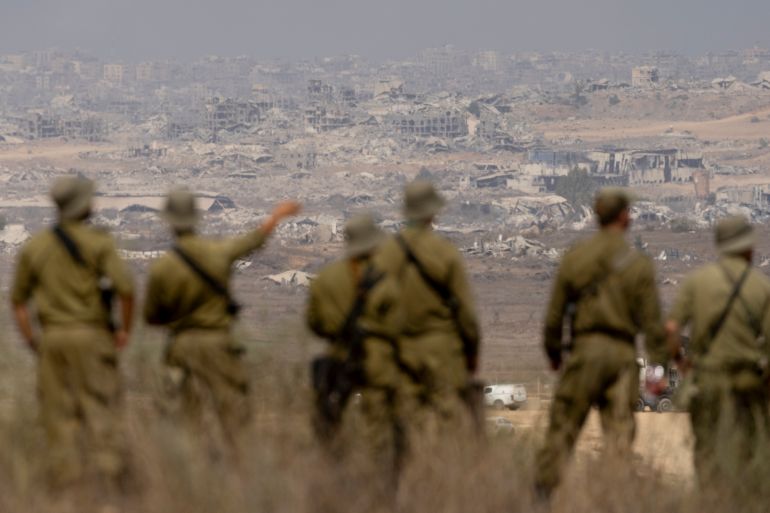
At least 123 Palestinians, including 21 people seeking aid, have been killed and 437 others were injured in Israeli attacks across Gaza in the past 24 hour reporting period, according to the Health Ministry in the besieged territory. In the same period, at least eight people, including three children, died from Israeli-imposed starvation and malnutrition, bringing the total number of hunger-related deaths since the war began in October, 2023 to 235, among them 106 children, the ministry said on Wednesday. Philippe Lazzarini, head of the UN agency for Palestinian refugees (UNRWA), described the deaths as “the latest in the war on children and childhood in Gaza”. “This is in addition to: over 40,000 children reported killed or injured due to bombardment and airstrikes, at least 17,000 unaccompanied and separated children, and one million deeply traumatised children and out of education,” he wrote in a post on X. “Children are children. No one should stay silent when children die, or are brutally deprived of a future, wherever these children are, including in Gaza.” Ceasefire talks to restart As the death toll continues to rise in Gaza, a delegation from the Palestinian group Hamas was scheduled to begin discussions in Egypt over a potential ceasefire on Wednesday. The previous round of indirect ceasefire talks in Qatar ended in deadlock in late July, after Israel and the United States withdrew their delegations hours after Hamas submitted its response to a truce proposal. The talks in Cairo will focus on ways to stop the war, deliver aid, and “end the suffering of our people in Gaza”, Hamas official Taher al-Nono said. Israeli soldiers look at destroyed buildings in the northern Gaza Strip as they stand at a viewpoint in Israel on August 13, 2025 [Amir Levy/Getty Images] A Palestinian official familiar with the negotiations told the news agency Reuters that “Hamas believes negotiation is the only way to end the war and is open to discuss any ideas that would secure an end to the war”. Advertisement A Hamas representative also told Reuters the group was willing to hand over governance of Gaza to a non-partisan committee, but would not give up its weapons before a Palestinian state is established. Israeli Prime Minister Benjamin Netanyahu has promised to continue the war until Hamas is “destroyed”. Israeli military plan to seize Gaza City Israel’s security cabinet last week approved plans to take control of Gaza City, despite international condemnation from the United Nations and dissent from within Israel’s own military. However, earlier Wednesday, the military said its chief of staff, Eyal Zamir, had signed off on the “main framework” for the operational plan during a meeting with top commanders, Shin Bet representatives and senior officers. According to the statement, Zamir “emphasised the importance of increasing troop readiness and preparedness for reserve recruitment, while conducting proficiency training and providing breathing space ahead of the upcoming missions”. Al Jazeera’s Hani Mahmoud, reporting from Gaza City, said Israeli forces appeared to be in the preparatory stage of the expanded invasion, hitting multiple neighbourhoods overnight. “Explosions [were] clearly heard from the eastern part of Gaza City, particularly near the Zeitoun neighbourhood and surrounding areas as far as the Sabra neighbourhood,” Mahmoud reported. “Seven people were reported killed overnight from a mixture of heavy artillery and air strikes targeting major residential clusters.” In the city’s Sheikh Radwan neighbourhood, three more people were reportedly killed as they fled the area. Mahmoud said the Zikim crossing, the main entry point for aid in northern Gaza, had become “deadly for Palestinians”, with limited aid trucks allowed through despite crowds of desperate people. “More people are dying there, either from deliberate Israeli military fire or from the stampede,” he said. Aid restrictions criticised Foreign ministers from 24 countries, including the United Kingdom, Canada, Australia, France and Japan, said on Tuesday the humanitarian crisis in Gaza had reached “unimaginable levels” and urged Israel to allow unrestricted aid into the enclave. A Palestinian girl cries as she tries to receive cooked meals along with others from a food distribution centre in Gaza City on August 13, 2025 [AFP] The entreaty follows months, from March until May, of Israel blockading the enclave, until eventually allowing limited aid deliveries via the controversial US-backed GHF. Amid growing international criticism over the hunger crisis, restrictions on aid supplies were further eased slightly in late July, with dozens of aid trucks entering Gaza on some days. But UNRWA says 500–600 trucks of aid are needed daily, but that aid getting into the Strip remains a fraction of that figure – while many Palestinians are killed on their way to collect aid. Advertisement Mahmoud added that there was growing international condemnation of Israel “for creating the humanitarian crisis in Gaza”, but no change on the ground. “They gave permission for some aid trucks to enter Gaza, to create a media buzz that there is food coming in,” he said. “But that has nothing to do with what’s going on … more people are still dying on a daily basis of enforced starvation. Adblock test (Why?)
Putin lauds ‘heroism’ of North Koreans in liberating Kursk, Pyongyang says
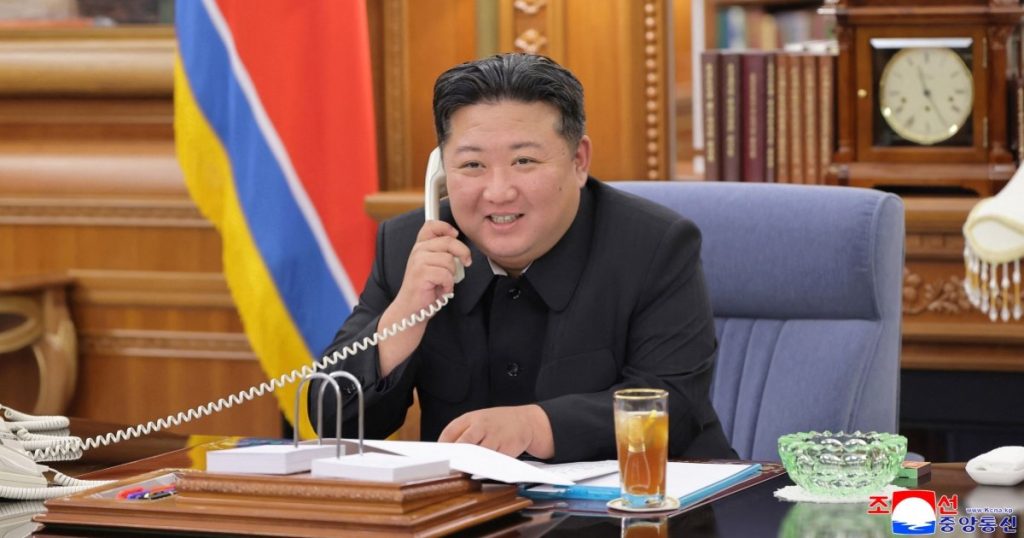
Call between the two leaders comes days ahead of US President Donald Trump’s summit with Putin in Alaska. Russian President Vladimir Putin lauded the “bravery” and “heroism” of North Korean soldiers in retaking Russia’s Kursk region from Ukrainian forces during a call with North Korean leader Kim Jong Un, North Korean state media has reported. Putin told Kim that he “highly appreciated” North Korea’s support and the “self-sacrificing spirit” displayed by its troops during the liberation of the western region, the Korean Central News Agency (KCNA) reported on Wednesday. Kim expressed his “heartfelt thanks” to Putin and said Pyongyang would “always remain faithful” to the spirit of the mutual defence treaty signed by the sides last year, as well as “fully support all measures to be taken by the Russian leadership in the future”, the KCNA said. “The heads of states of the two countries exchanged views on the issues of mutual concern,” the KCNA said. “Kim Jong Un and Putin agreed to make closer contact in the future.” The call, days before Putin is set to meet United States President Donald Trump in Alaska to discuss efforts to end the war in Ukraine, is the latest sign of strengthening ties between North Korea and Russia amid Moscow’s ostracisation on the world stage. “There are a lot of ifs still in the air, but the call suggests there’s a role for Russia, similar to the role South Korea played in 2018, in helping create an opening for US-DPRK relations,” Jenny Town, the director of the Korea programme at the Stimson Center in Washington, DC, told Al Jazeera, using the acronym for North Korea’s official name, the Democratic People’s Republic of Korea. Advertisement “It might not be a focal point of the upcoming meeting, but it is likely to be part of the conversation.” Last month, Kim told Russian Minister of Foreign Affairs Sergey Lavrov that Pyongyang would “unconditionally support” all actions taken by Moscow in Ukraine, according to North Korean state media reports. North Korea has deployed more than 10,000 troops to support Russia’s war and has drawn up plans to dispatch thousands more, according to assessments by South Korea’s National Intelligence Service. In April, Putin announced that Moscow had fully recaptured Kursk, though Ukrainian officials disputed his claim that the entire region had been brought under Russian control. At his scheduled summit with Putin on Friday, Trump is expected to press the Russian leader to agree to a peace deal. On Monday, he told reporters that he will probably know within the “first two minutes” of meeting Putin whether they can reach a deal and that any agreement would involve “some swapping, changes in land” between Moscow and Kyiv. Adblock test (Why?)
Trump admin orders Smithsonian museums to be reviewed for ‘Americanism’

The White House has ordered an extensive review of the Smithsonian museums and exhibitions in advance of next year’s 250th anniversary of the United States, with the goal of aligning the institution’s content with President Donald Trump’s interpretation of US history. In a letter sent on Tuesday to Smithsonian Institution Secretary Lonnie Bunch III, the White House laid out in detail the steps it expects the organisation to take so that museum content can be reviewed for a focus on “Americanism”. The federal government will review public-facing museum content, such as social media, exhibition text and educational materials, to “assess tone, historical framing, and alignment with American ideals”, the letter said. “This initiative aims to ensure alignment with the President’s directive to celebrate American exceptionalism, remove divisive or partisan narratives, and restore confidence in our shared cultural institutions,” the letter added. In a statement responding to the letter, the Smithsonian said it remained committed to “scholarly excellence, rigorous research, and the accurate, factual presentation of history”. “We are reviewing the letter with this commitment in mind and will continue to collaborate constructively with the White House, Congress, and our governing Board of Regents,” it said. The White House said that the review is in line with the Restoring Truth and Sanity to American History Executive Order, which Trump signed in March. At the time, the Congressional Black Caucus, made up of Black members of the US Congress, described the Trump administration’s efforts to restrict the Smithsonian Institution as “whitewashing our nation’s history”. Advertisement “Donald Trump’s idea that the National Museum of African American History and Culture is guilty of distorting our nation’s history or painting our ‘founding principles’ in a ‘negative light’ is patently ridiculous,” the caucus said in a statement. Visitors browse exhibits at the National Museum of African American History and Culture in Washington, DC, on April 29, 2025 [Jim Lo Scalzo/EPA] “Let’s be clear, Black history is American history. Any rhetoric that opposes this notion is not only factually incorrect but blatantly racist,” the caucus said. “It is the Trump Administration that bans books, words, and phrases that do not fit their narrative. It is the Trump Administration that wants to erase and retell our history,” the caucus added. The White House said the review would initially focus on the National Museum of American History, the National Museum of Natural History, the National Museum of African American History and Culture, the National Museum of the American Indian, the National Air and Space Museum, the Smithsonian American Art Museum, the National Portrait Gallery and the Hirshhorn Museum and Sculpture Garden. The museums under review are all located in Washington, DC, where the president this week ordered the deployment of the US National Guard to tackle a purported crime wave that city officials in the capital have refuted. The museums all offer free admission and attract millions of visitors each year, with the National Museum of American History alone recording 2 million in-person visits in 2024. The Smithsonian has repeatedly denied allegations that it has changed or removed exhibit details in response to pressure from the Trump administration. Recently, the institution removed references to Trump’s two impeachments from an exhibit on the US presidency. The Smithsonian Institution said that a placard was removed for reasons related to consistency and because it “blocked the view of the objects inside its case”. “We were not asked by any Administration or other government officials to remove content from the exhibit,” the Institution said. The Smithsonian Institution, which runs 21 museums and the National Zoo, said at the time that the impeachment section of the museum would be updated in the coming weeks to “reflect all impeachment proceedings in our nation’s history”. Trump was impeached in January 2021, for “incitement of insurrection”, after a mob of his supporters stormed the US Capitol on January 6, 2021. Adblock test (Why?)
Will Trump’s India tariffs shut down world’s biggest cut diamond supplier?

For Kalpesh Patel, Diwali, the festival of lights celebrated across India, might well mark lights out for his eight-year-old diamond cutting and polishing unit. The 35-year-old employs about 40 workers who transform rough diamonds into perfectly polished gems for exports at the small factory in Surat, a city located in the western Indian state of Gujarat. His business has survived multiple speed bumps in recent years. But United States President Donald Trump’s mammoth 50 percent tariffs on imports from India might be the final nail in the coffin for his unit, part of an already struggling natural diamond industry, he said. “We still have some orders for Diwali and will try to complete them,” he told Al Jazeera. Diwali, arguably India’s single biggest festival, scheduled for late October this year, usually sees domestic sales of most goods soar. “But we might have to shut the business even before the festival, as exporters might cancel the orders due to high tariffs in the US,” Patesh said. “It is becoming increasingly difficult to pay the salaries and maintain other expenses with falling orders.” He is among the 20,000-odd small and medium traders in Surat, known as the “Diamond City of India”, which together cut and polish 14 out of every 15 natural diamonds produced globally. The US is their single largest export market. According to the Gem and Jewellery Export Promotion Council (GJEPC), India’s apex body for the industry, the country exported cut and polished gems worth $4.8bn to the US in the 2024-25 financial year, which ended in March. That is more than one-third of India’s total exports of cut and polished diamonds, at $13.2bn over the same period. Advertisement Dimpal Shah, a Kolkata-based diamond exporter, told Al Jazeera that orders have already started getting cancelled. “Buyers in the US are refusing to offload the shipped products, citing high tariffs. This is the worst phase of my two-decade-old career in diamonds.” Kalpesh Patel, who runs a diamond cutting and polishing business in Surat, Gujarat, fears that he may not be able to continue his business for long, because of US tariffs on Indian imports [Photo courtesy of Kalpesh Patel] US imposes penalty A 25 percent reciprocal tariff on all Indian goods, which Trump announced on April 2, came into effect on August 7, after talks between the two countries failed to yield a trade deal by then. Negotiations are continuing. Meanwhile, on August 6, Trump announced an additional 25 percent tariff, taking the total tariff rate to 50 percent. He termed the additional tariff that would come into effect from August 27 as a penalty for India’s continued buying of Russian oil, as the US president tries to push Moscow into accepting a ceasefire in Ukraine. For the gems industry, which already faced a pre-existing 2.1 percent tariff, the effective tariff now amounts to 52.1 percent. Ajay Srivastava, the founder of Global Research Trade Initiative (GTRI), a trade research group, termed the Trump government’s additional hike as an act of “hypocrisy”, citing how the US itself continues to trade with Russia, and how China – Russia’s biggest oil buyer – faces no similar penalty. “Trump is targeting India out of frustration as it refused to toe the US line on the Russia-Ukraine conflict, and for its refusal to open its agriculture and dairy sector,” he added, referring to broader ongoing trade talks and differences over US demands for greater access to critical Indian economic sectors. Yet, whatever the reasons for Trump’s tariffs, they are hurting a diamond industry already bleeding from multiple hits. India supplies almost all of the world’s cut and polished diamonds, produced in small units across the state of Gujarat [Photo courtesy Ramesh Zilriya, president of the state’s Diamond Workers Association] Diamond sector badly hit More than 2 million people are employed in diamond polishing and cutting units in Surat, Ahmedabad and Rajkot cities in Gujarat — and many have already suffered salary cuts in recent years, first because of the COVID-19 pandemic, and then Russia’s full-scale invasion of Ukraine. “The pandemic led to economic slowdown affecting the international markets in Hong Kong and China,” Ramesh Zilriya, the president of Gujarat’s Diamond Workers Union, told Al Jazeera. The “Western ban on rough diamond imports from Russia due to the Russia-Ukraine war and the G7 ban on Russia also affected our business”, he added. Advertisement Russia has historically been a major source of raw diamonds. Zilriya claimed that 80 diamond workers have died by suicide over the past two years because of this economic crisis. “The situation in the international market led to the wages of the workers getting halved to approximately 15,000-17,000 rupees ($194) per month, which made survival difficult in the face of rising inflation,” he said. Once the Trump tariffs fully kick in, Zilriya fears that up to 200,000 people in Gujarat may lose their livelihoods. Already, more than 120,000 former diamond sector workers have applied for benefits. A 13,500-rupee ($154) allowance per child, to support their families, was promised in May by the state government to those who have lost jobs due to the tumult in the sector in recent years. But the tariffs, pandemic and war are not alone to blame for the crisis: Lab-grown diamonds are also slowly eating into the market of their natural counterparts. “Unlike natural [diamonds], the lab-grown diamonds are not mined but manufactured in specialised laboratories and priced at just 10 percent of the natural ones. It is difficult even for a seasoned jeweller to identify the natural and lab-grown with a naked eye. The taste of consumers is now shifting to lab-grown [diamonds], as they are cheap,” said Salim Daginawala, the president of the Surat Jewellers Association. A worker checks the polishing of a lab-grown diamond in Surat, India, Monday, February 5, 2024 [Ajit Solanki/AP Photo] Decline in exports In the 2024-25 financial year, India imported rough diamonds worth $10.8bn, marking a 24.27 percent decline from the $14bn imported in 2023-24, as per the statistics by the
Fact-checking Trump’s claim that crime in Washington is ‘out of control’
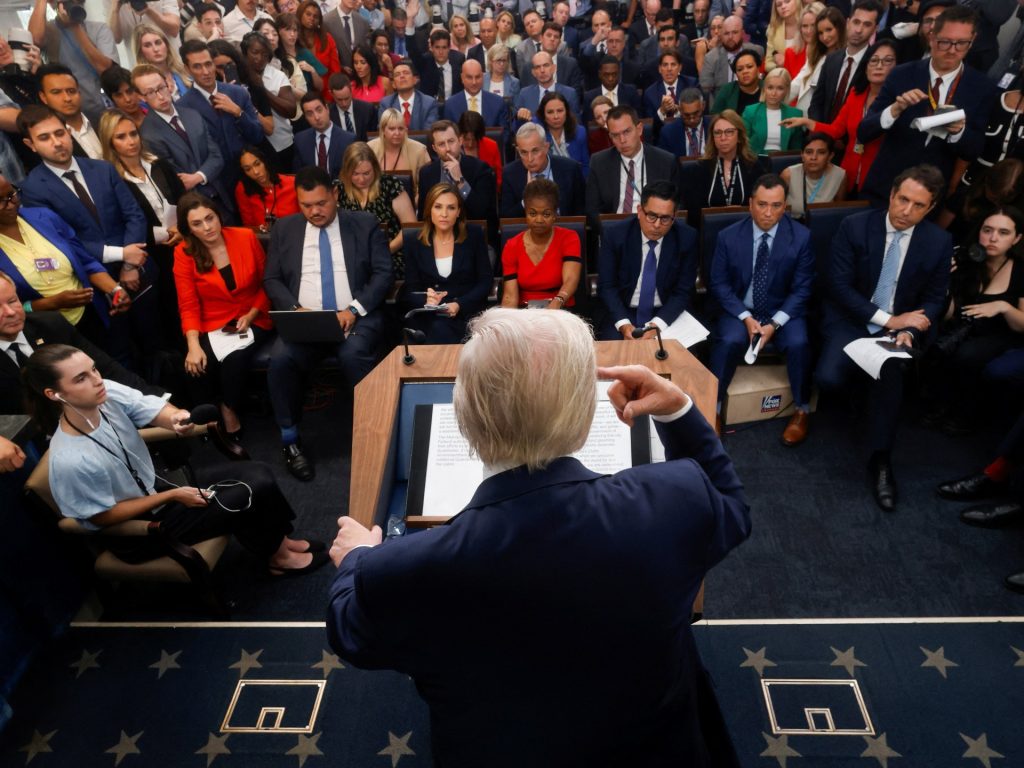
US President Donald Trump said he is deploying 800 National Guard soldiers to Washington, DC, and taking control of its police department after claiming that crime was “out of control” in the capital city. The nation’s capital is “becoming a situation of complete and total lawlessness,” Trump said at an August 11 news conference as he invoked the Home Rule Act to take federal control of the city. “Washington, DC, should be one of the safest, cleanest and most beautiful cities anywhere in the world, and we’re going to make it that.” But many of the details Trump cited do not stand up to scrutiny. Trump’s actions are a step towards making good on his threat of a federal takeover of the district after carjackers severely beat a former Department of Government Efficiency employee. In a news briefing after Trump’s announcement, Washington, DC, Mayor Muriel Bowser said the district would cooperate with the federal government and added that she speaks with Trump often about the city’s progress on crime. “In fact, my first meeting with him after he was elected the second time, we went over the crime trends; we went over how we are seeing decreases, so the president is read in on our efforts,” she said. So why did Trump decide to take DC under federal control, and did he falsely claim that the crime rate had spiked in the capital city? Can Trump invoke a federal takeover of Washington, DC, under Section 740 of DC Home Rule Act? Trump cannot take over the city without congressional approval. He is using an emergency provision to temporarily oversee the district’s police force. Advertisement The US Constitution created the District of Columbia as a seat of the federal government. In 1973, President Richard Nixon signed the Home Rule Act, enabling district residents to elect a mayor and city council. The law gives the district autonomy for local governance, but the city still answers to Congress on matters including budgetary oversight and the ability to overturn local legislation. Section 740 of the Home Rule Act allows the president to temporarily take control of the city’s police department during an emergency. In an August 11 executive order, Trump invoked Section 740, citing crime in the district as an emergency. The executive order says federal use of the district’s Metropolitan Police Department is needed to maintain law and order; protect federal buildings and monuments; and ensure “conditions necessary for the orderly functioning of the Federal Government.” Trump delegated operational control of the department to US Attorney General Pam Bondi. The emergency powers cannot extend past 48 hours, the law says, unless the president notifies Congress in writing about the reason and the time period needed. If he notifies Congress, Trump can extend the emergency for up to 30 days. Did Washington, DC, homicides reach the highest rate ever in 2023? Trump said, “Murders in 2023 reached the highest rate, probably ever. They say 25 years, but they don’t know what that means, because it just goes back 25 years. Can’t be worse.” The city’s Metropolitan Police Department data showed 274 homicides in 2023, the highest number over the past 20 years. Trump omitted that the department’s preliminary crime data shows homicides have declined 32 percent since 2023, to 187 in 2024. The homicide rate continues to decline. This year, through August 11, homicides decreased by 12 percent compared with the same time period in 2024. Jeff Asher, an analyst for AH Datalytics, told PolitiFact that the homicide rate increased substantially after 2020, peaking in 2023 at 39 per 100,000 people. That was the highest rate since 2003, but far below the 1991 peak of 81 per 100,000 people. The falling rate matches national trends, Asher said. White House spokesperson Steven Cheung said on X that the city police statistics are not as they seem. Cheung attached a July WRC-TV story about a district police commander’s May suspension after he was accused of altering crime statistics. Fraternal Order of Police Chairman Gregg Pemberton told the TV station that union members and management said the command staff want to “make sure that these classifications of these reports are adjusted over time to make sure that the overall crime stats stay down.” Advertisement A police spokesperson told PolitiFact that Commander Michael Pulliam is on administrative leave and the department can’t comment on active internal investigations. The union did not respond to our request for comment. Have violent crimes such as carjacking increased in Washington, DC? Trump said, “The number of car thefts has doubled over the past five years, and the number of carjackings has more than tripled.” Trump is correct that the number of these crimes increased, but he did not mention a recent decline in carjackings. The city’s dashboard shows carjackings rose from 2020 through 2023 before declining in 2024. This year, through August 9, there have been 188 carjackings compared with 299 during the same time period in 2024, and compared with 607 in 2023, a police spokesperson told PolitiFact. The city’s preliminary car theft data shows a 25 percent drop from 2023 to 2024, and car thefts are essentially flat year to date in 2025 compared with the same period last year. “Auto theft increased a huge amount in DC after 2020 before surging again in 2023 following the video being posted showing how to steal certain models of Kia and Hyundai cars,” Asher said. The “Kia Boyz” phenomenon happened nationwide. Overall, the city’s data shows that, through August 11 this year, compared with 2024, violent crime in the district declined by 26 percent. Washington, DC’s violent crime decrease is part of a nationwide trend in major cities. Does implementing cashless bail affect crime rates? Trump said, “The radical left City Council adopted no cash bail. By the way, every place in the country where you have no cash bail is a disaster … Somebody murders somebody, and they’re out on no cash bail before the day is out.” “No cash bail” or “cashless bail” allows certain defendants awaiting trial to be released from custody without paying bail. Even with cashless bail laws in
The last will of Anas al-Sharif
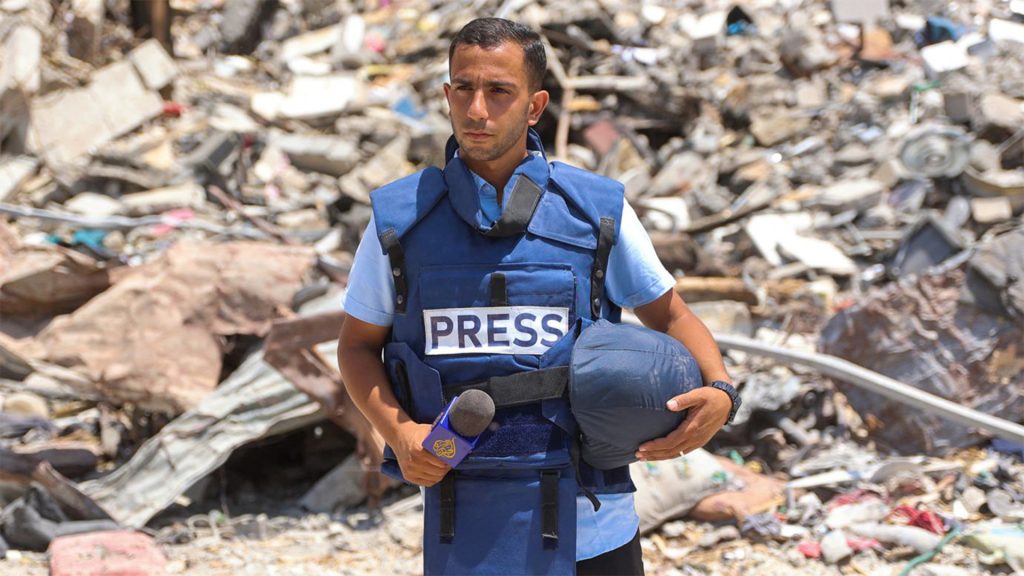
NewsFeed Before his murder by Israeli forces in Gaza, Al Jazeera reporter Anas al-Sharif wrote a final message to be shared with the world in the event of his death. These are his words, narrated by a Palestinian colleague. Published On 12 Aug 202512 Aug 2025 Adblock test (Why?)