

What can be learned from the latest conflict between India and Pakistan?
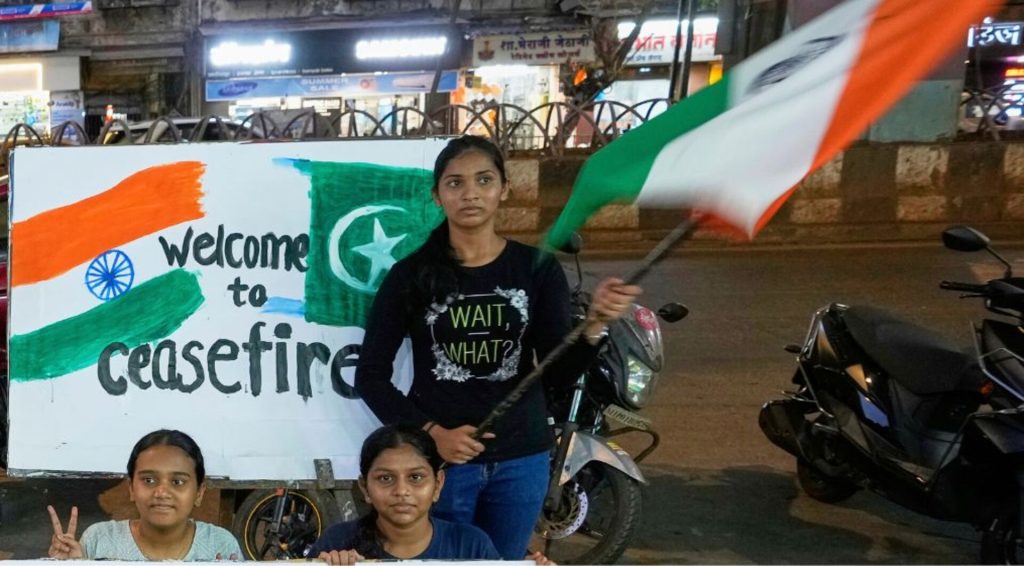
A tense ceasefire holds days after the most intense hostilities in decades. Feelings of relief and hope are sweeping India and Pakistan. The latest flare-up in hostilities that killed at least 60 people across the two countries has come to a dramatic halt after four days. Nearly 30 countries including the United States are reported to have been involved in getting the ceasefire agreed. The administration of US President Donald Trump, which announced the truce, has proposed a new round of talks at a neutral venue to try and end the bitter rivalry. A dispute over divided Kashmir, India’s accusation that Pakistan is backing terrorist attacks inside its territory, and differences over the sharing of river water are all issues that have been festering for decades. So are both sides at last ready to negotiate? Presenter: Cyril Vanier Guests: Walter Ladwig – Senior lecturer in International Relations at King’s College London Elijah Magnier – Military and political analyst Shashank Joshi – Defence editor of The Economist newspaper Adblock test (Why?)
Will the truce between India and Pakistan resolve differences over Kashmir?
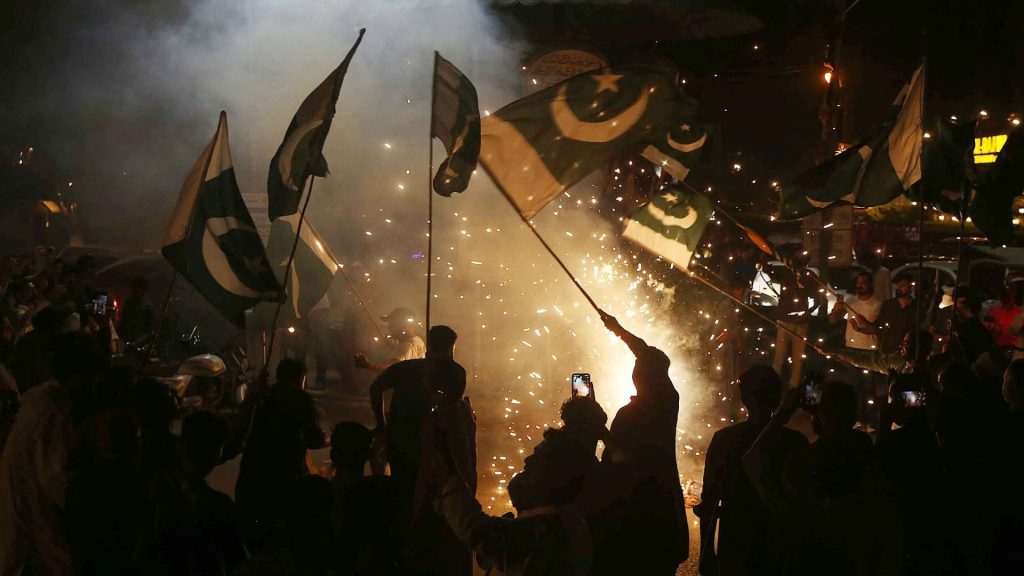
A ceasefire is agreed after four days of their most fierce military conflict in this century. Tensions soared on Tuesday when India attacked areas inside Pakistan that it claimed sheltered armed groups. That was after 26 tourists were killed in Indian-administered Kashmir last month. India has accused Pakistan of backing the fighters, a claim Islamabad denied. Why has the Kashmir region been a source of hostility between the two countries since independence from British rule in 1947? How far can colonial legacy be blamed for the conflict? And what lies ahead? Presenter: Sami Zeidan Guests: Victoria Schofield – British biographer, historian and author of books on Kashmir. Radha Kumar – Author, academic and an Indian government-appointed negotiator appointed to resolve the Kashmir crisis Ayesha Jalal – Professor at Tufts University and expert on South Asian history. Adblock test (Why?)
Putin proposes direct Russia-Ukraine talks in Istanbul on May 15
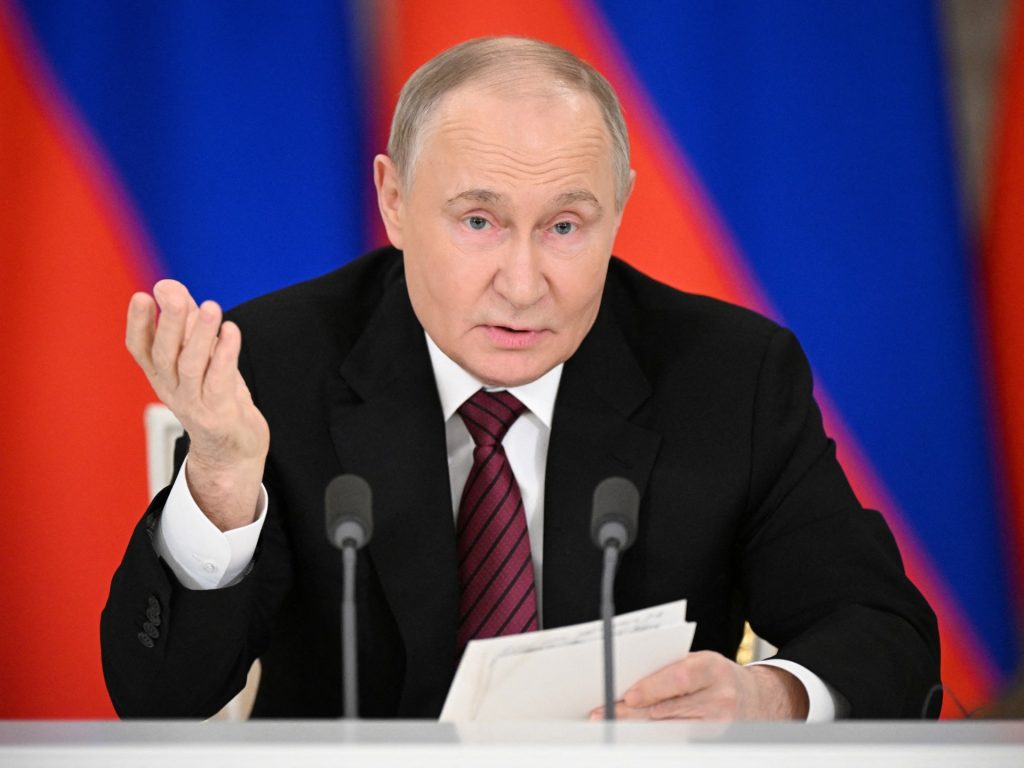
Russian President Vladimir Putin has proposed direct talks with Ukraine in Istanbul on May 15, “without preconditions” to achieve “lasting peace” and “eliminate the root causes” of the three-year conflict. The offer, delivered early on Sunday, came hours after the leaders of Ukraine, France, Germany, Poland and the United Kingdom called for an unconditional 30-day ceasefire. The leaders, who were meeting in Kyiv, said their call is backed by United States President Donald Trump and threatened “massive” new sanctions on Moscow if it did not agree with their plan. Putin, however, rejected that proposal, slamming European “ultimatums” and “anti-Russian rhetoric”, before outlining the counter-proposal for renewed Russia-Ukraine negotiations. “We are proposing that Kyiv resume direct negotiations without any preconditions,” the Russian president told reporters. “We offer the Kyiv authorities to resume negotiations already on Thursday, in Istanbul.” Putin said that he would speak to Turkish President Recep Tayyip Erdogan later on Sunday about facilitating the talks. Advertisement There was no immediate response from Ukraine to the proposal. Ukraine’s President Volodymyr Zelenskyy has previously said he was ready for peace talks, but only after a ceasefire is in place. ‘No preconditions’ Russia’s full-scale invasion of Ukraine, which began in February 2022, has left hundreds of thousands of soldiers dead and triggered the gravest confrontation between Russia and the West since the 1962 Cuban Missile Crisis. In the first weeks of the conflict, Russian and Ukrainian negotiators held direct talks in Istanbul, but failed to agree to halt the fighting. Putin said Russia was proposing restarting the talks in an attempt to “eliminate the root causes of the conflict” and “to achieve the restoration of a long-term, lasting peace” rather than simply a pause for rearmament. “We do not exclude that during these talks we will be able to agree on some new ceasefire,” he added. Putin, whose forces have advanced over the past year, has faced increased public and private pressure from Trump as well as warnings from European powers to end the war. But he has offered few concessions and has stood firm in his conditions for ending the war. In June 2024, Putin said Ukraine must officially drop its NATO ambitions and withdraw its troops from the entirety of the territory of four Ukrainian regions claimed by Russia. Russian officials have also proposed that the US recognise Russia’s control over about one-fifth of Ukraine and demanded that Ukraine remain neutral, though Moscow has said it is not opposed to Kyiv’s ambitions to join the European Union. Advertisement Putin specifically mentioned the 2022 draft deal from the talks in Istanbul. According to the Reuters news agency, that draft deal stipulated that Ukraine should agree to permanent neutrality in return for international security guarantees from the five permanent members of the United Nations Security Council: China, France, Russia, the UK and the US. “It was not Russia that broke off negotiations in 2022. It was Kyiv,” Putin said. “Russia is ready to negotiate without any preconditions.” Russia, Putin added, had proposed several ceasefires, including a moratorium on striking energy facilities, an Easter ceasefire, and most recently, the 72-hour truce during the celebrations marking 80 years since victory in World War II, but accused Ukraine of repeatedly violating the ceasefires. He said that during the May ceasefire, Ukraine had attacked Russia with 524 aerial drones, 45 sea drones, a number of Western missiles and that Russia had repelled five attacks on Russian regions. Ukraine, too, has accused Russia of repeatedly violating its own ceasefire. Trump factor Anatol Lieven, the director of the Eurasia Program at the Quincy Institute for Responsible Statecraft, told Al Jazeera that both sides were trying to blame each other for failing to agree to a ceasefire deal amid pressure from Trump to end the war. “Trump has threatened to walk away from the peace process if there isn’t some kind of settlement or agreement on a ceasefire soon. And the question is, who he blames for the failure? If he blames the Russians more, then full US aid will continue to Ukraine, and the sanctions he has threatened will be intensified,” said Lieven. Advertisement “If, however, he blames Ukraine more, then, as he’s done once before, he will suspend US aid and intelligence assistance to Ukraine, and that, of course, will drastically weaken Ukraine’s military position and strengthen that of Russia. So both sides are manoeuvring to try to throw blame for any failure onto the other.” Earlier on Saturday, the leaders of France, Germany, Poland and the UK travelled together to Ukraine for the first time, in a visit that Zelenskyy said sent “a very important signal”. The five leaders held a meeting in Kyiv and issued a statement calling for a ceasefire “lasting at least 30 days” from Monday, to make room for a diplomatic push to end the war. “An unconditional ceasefire by definition cannot be subject to any conditions. If Russia calls for such conditions, this can only be considered as an effort to prolong the war and undermine diplomacy,” the statement read. French President Emmanuel Macron said the US would take the lead in monitoring the proposed ceasefire, with support from European countries, and threatened “massive sanctions … prepared and coordinated between Europeans and Americans” should Russia violate the truce. Meanwhile, retired Lieutenant General Keith Kellogg, Trump’s special envoy to Ukraine, said on Saturday that a “comprehensive” 30-day ceasefire, covering attacks from the air, land, sea and on infrastructure, “will start the process for ending the largest and longest war in Europe since World War II”. Trump, who says he wants to be remembered as a peacemaker, has repeatedly said he wants to end the “bloodbath” of the Ukraine war, which his administration casts as a proxy war between the US and Russia. Advertisement Former US President Joe Biden, Western European leaders and Ukraine portray the invasion as an imperial-style land grab and have repeatedly pledged to defeat Russian forces. Putin meanwhile casts the war as a watershed moment in Moscow’s relations with the
Israel capitalises as Gaza fatigue sets in
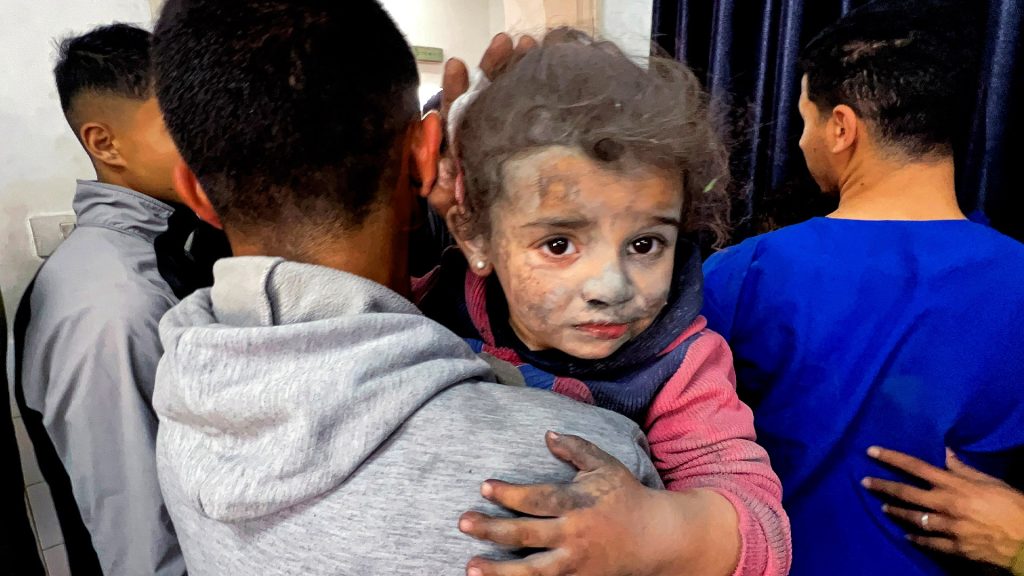
One might think that images of starving children, as political leaders withhold aid and openly call for ethnic cleansing, would be topping news agendas everywhere. In the case of Gaza, the failure of many in the international media to meet the moment has made them part of the story. Lead contributors:Chris Doyle – Director, Council for Arab-British UnderstandingDaniel Levy – President, US/Middle East ProjectMuhammad Shehada – Visiting fellow, ECFRSarah Leah Whitson – Director, DAWN On our radar: As India and Pakistan go toe-to-toe in their most intense fighting for decades, a flood of disinformation is fuelling the sense of panic on both sides. Meenakshi Ravi reports. Seeking justice on Ghana’s courtroom shows If you are dealing with something personal and painful – a broken marriage or a family dispute – you might turn to a friend. For something as serious as sexual assault, it might go to trial. But in Ghana, more and more people are turning somewhere else: live radio. The so-called “justice-style” shows promise swift, public resolutions. But they are also controversial, with critics accusing them of turning private pain into primetime theatre. Advertisement Featuring:George Sarpong – Executive secretary, National Media CommissionMenenaba – Ghanaian writerOheneni Adazoa – Host, Sompa Nkomo ShowZakaria Tanko Musah – Lecturer in media law and ethics, Journalism Institute Adblock test (Why?)
Barcelona vs Real Madrid: Ancelotti coy on future as Alonso link grows
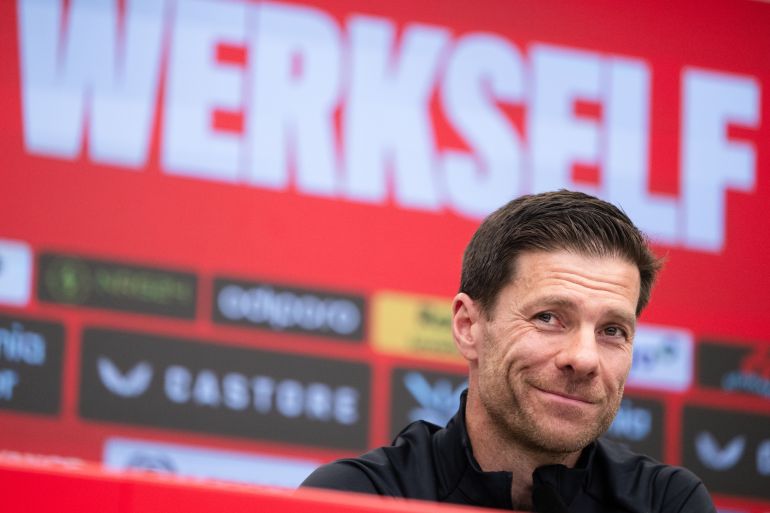
Carlo Ancelotti says Xabi Alonso has “all the doors open” for a move to a big club, with speculation building that the former Real Madrid midfielder is set to replace the Italian coach at the helm of the Spanish powerhouse. Ancelotti gave his routine pre-game news conference on Saturday, a day after Alonso announced he was leaving Bayer Leverkusen. He praised the work of Alonso, who has been widely linked to an eventual move back to Madrid after leading the German club to the Bundesliga title last season. “I read that Xabi is leaving Bayer Leverkusen, where he did a fantastic job,” Ancelotti said before Sunday’s trip to Barcelona. “He has all the doors open because he has shown that he is one of the best coaches in the world.” Xabi Alonso confirmed in a news conference on Friday that he would leave Leverkusen at the end of the season [Marius Becker/Picture Alliance via Getty Images] Ancelotti again refused to speak about his future, especially before a decisive Clasico in LaLiga. Madrid trail Barcelona by four points and need to win to keep alive their chances of winning a trophy this campaign. Advertisement But he did speak movingly about what Madrid means — and will mean — for the most successful manager in European football. For Ancelotti, his relationship with the club he has spent six seasons at in two stints is an everlasting “honeymoon”. “The honeymoon with this club never ends, it continues forever,” he said. “I think that Real Madrid, like Milan before, are the teams that stay with me, given the time I have spent here. At the beginning, there is passion, and when that fades, other feelings emerge, a sense of tender care. My honeymoon with Real Madrid will last for as long as I live.” The 65-year-old coach is under contract through the next campaign but is widely expected to leave after an underwhelming season in which the team played worse despite adding Kylian Mbappe to its squad. Brazil have been courting Ancelotti for over a year, and it appears talks are still ongoing with the veteran manager. Real Madrid must play ‘complete’ game at Barcelona With only four games remaining of the LaLiga season, only a win will realistically keep Real’s hopes of retaining the title, and for Ancelotti, they will need to get everything right to have a chance on Sunday. “In this type of game, you have to do things well. Barcelona are used to keeping the opponent in their own area, but no team is perfect,” he said. “It’s a game where there’s a lot at stake, and to win, you have to manage everything well, defend well, attack well. We have to play a complete game.” With so much at stake against their great rivals, Ancelotti will have little trouble getting his players fired up. Advertisement “It’s not difficult to motivate the players because it’s the type of match for which the players already come out motivated and with a lot of confidence,” he said. “Playing with Barcelona is special. It will be the last ‘El Clasico’ of the season because Barca are not in the Club World Cup.” Who’s scoring in #ELCLÁSICO? 🤍 pic.twitter.com/Tgx1X8cVuA — LALIGA English (@LaLigaEN) May 8, 2025 Barcelona focused despite Champions League woe Barcelona’s players have discussed last week’s Champions League elimination and are ready to put their disappointment behind them against rivals Real Madrid, manager Hansi Flick said in his news conference on Saturday. Barca suffered a 4-3 Champions League semifinal defeat by Inter Milan on Tuesday. A home win on Sunday would move Flick’s side one victory away from their 28th Spanish league title. “We’re doing well. After the defeat in Milan, everyone knows it’s not easy … but we’re doing things right. We’ve talked about what we want to do in these two weeks,” Flick told reporters. “There are four more games to go. El Clasico is important, we have to show how well we can play. We have to show confidence. The players are doing very well … We’ve been talking about what they are thinking, what they are feeling. “We had to talk about it as a group. Everyone knows that in a Clasico, you have to give 100 percent. You have to be active, intense, dominant. Real Madrid is a very good team, and we need the fans.” El Clasico – the low down Translated as “The Classic” in English, El Clasico is the name given to any football match between rival clubs Barcelona and Real Madrid. Advertisement The special matchup between these football sides was born out of a more-than-a-century-old political-historical dimension between an increasingly distinct Catalan national identity, with FC Barcelona representing Catalonia, pitched against the centralised power structures of Spain’s capital city, Madrid, and by extension, its most famous football club, Real Madrid. The first match between the two Spanish mega clubs was played on May 13, 1902. In total, 260 matches have been played. Real Madrid lead in head-to-head results with 105 wins to Barcelona’s 103, with 52 draws. Last five LaLiga matches Barcelona: W-W-W-W-D (most recent fixture first) May 3, 2025 – Real Valladolid 1-2 BarcelonaApril 22, 2025 – Barcelona 1-0 MallorcaApril 19, 2025 – Barcelona 4-3 Celta VigoApril 12, 2025 – Leganes 0-1 BarcelonaApril 5, 2025 – Barcelona 1-1 Real Betis Real Madrid: W-W-W-W-L (most recent fixture first) May 04, 2025 – Real Madrid 3-2 Celta VigoApril 23, 2025 – Getafe 0-1 Real MadridApril 20, 2025 – Real Madrid 1-0 Athletic ClubApril 13, 2025 – Alaves 0-1 Real MadridApril 5, 2025 – Real Madrid 1-2 Valencia Adblock test (Why?)
Israeli protesters in Tel Aviv demand an end to war on Gaza
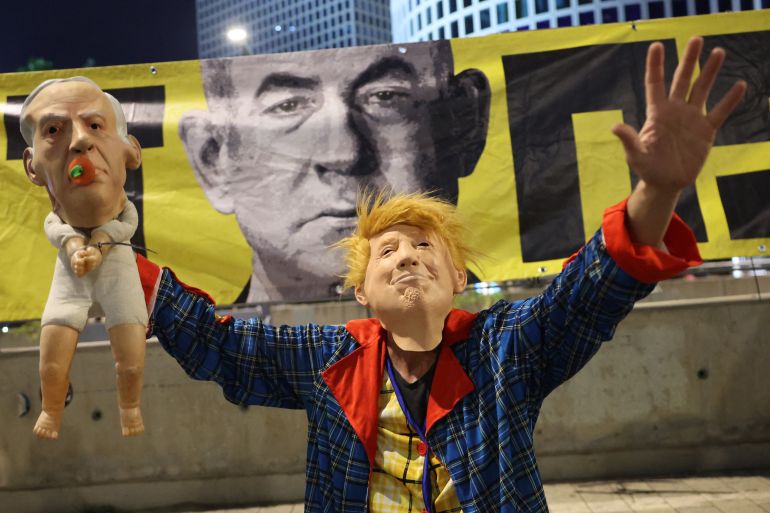
Thousands gather demanding an end to the war and the release of Israeli captives in Gaza. Thousands of Israelis rallied in central Tel Aviv, calling on the government to end the war on Gaza and secure the immediate release of Israeli captives held in the besieged Palestinian enclave. The Israeli newspaper Haaretz reported that in Tel Aviv, the Hostages and Missing Families Forum, an Israeli campaign group, held its weekly rally Saturday in “Hostages Square”, while another demonstration by families of captives is taking place outside the Israeli military headquarters. A separate antigovernment protest is also occurring at Habima Square in Tel Aviv. The Times of Israel reported that Shai Mozes, whose parents were held captive and released in separate exchange deals, told the crowd at the protest in Habima Square that Israel’s “real enemy is not Hamas, but Prime Minister Benjamin Netanyahu, who is destroying Israel as a Jewish and democratic state”. Netanyahu’s critics in Israel have accused the prime minister of extending the war for his own personal and political survival. Haaretz also reported that protests are expected in other cities, including Jerusalem, Haifa, and Beersheba, as well as at dozens of other sites and intersections across Israel. Advertisement After Netanyahu announced an expanded offensive in the Gaza Strip on Monday, the Hostages and Missing Families Forum criticised the move in a statement, saying the plan is “sacrificing” those still held in the Palestinian territory. A demonstrator wearing a mask representing US President Donald Trump and carrying a doll with a mask depicting Netanyahu at an antigovernment protest in Tel Aviv [Jack Guez/AFP] Hamas releases video of two Israeli captives alive in Gaza Hamas’s armed wing released a video on Saturday showing two Israeli captives alive in the Gaza Strip, with one of the two men calling to end the 19-month-long war. Israeli media identified the pair in the undated video as Elkana Bohbot and Yosef Haim Ohana. The three-minute video released by Hamas’s Qassam Brigades shows one of the captives, identified by media as 36-year-old Bohbot, visibly weak and lying on the floor wrapped in a blanket. Ohana, 24, speaks in Hebrew in the video, urging the Israeli government to end the war in Gaza and secure the release of all remaining captives. Bohbot and Ohana were both abducted by Palestinian fighters from the site of a music festival during Hamas’s attack on southern Israel on October 7 2023. Adblock test (Why?)
Newark mayor denies trespassing at US immigration centre following arrest
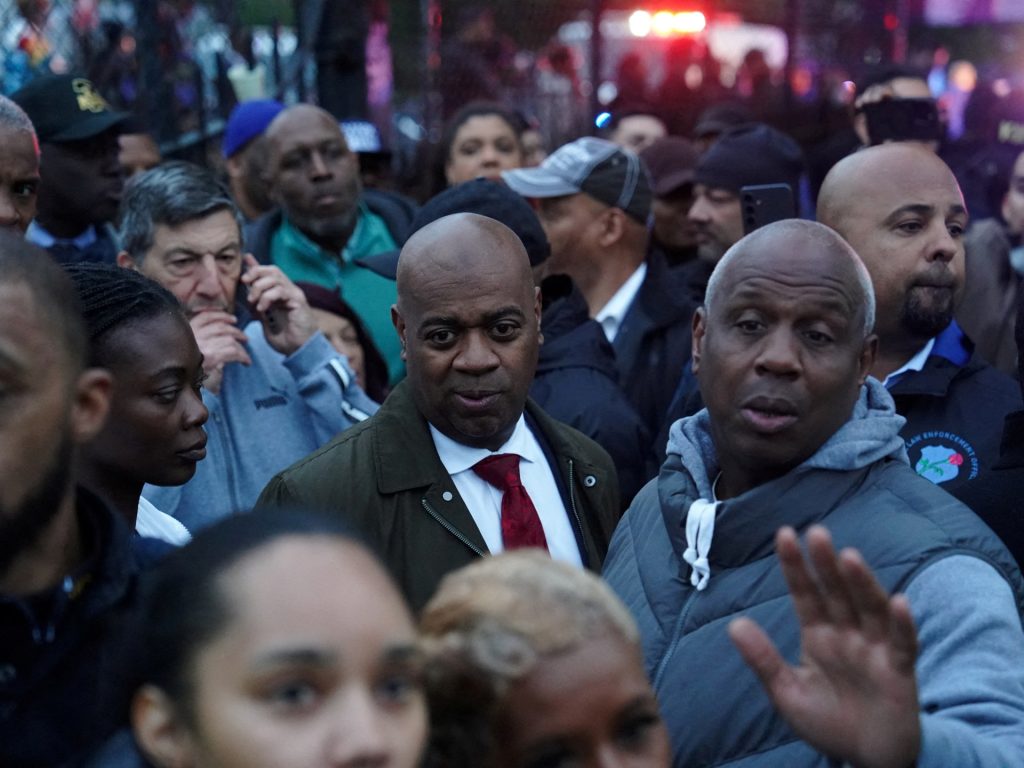
Ras Baraka denies charge against him a day after he spent several hours in police custody. Newark Mayor Ras Baraka has denied trespassing at a new United States federal immigration detention centre following his arrest and release. Baraka, who has been protesting the centre’s opening this week, denied his trespassing charge on Saturday, a day after he spent several hours in police custody. The mayor has gone head-to-head with the Trump administration over undocumented immigration, pushing back against the opening of the Delaney Hall Immigration and Customs Enforcement (ICE) 1,000-bed detention facility, arguing that it should not be allowed to open because of building permit issues. Officials accused Baraka of trespassing and ignoring warnings to leave the Delaney Hall facility in Newark, New Jersey. “I’m shocked by all the lies that were told here,” he said, adding he had been invited there for a news conference. “No one else [was] arrested, I was invited in, then they arrested me on the sidewalk.” Alina Habba, interim US Attorney for New Jersey, said on the social media platform X that Baraka trespassed at the detention facility, which is run by private prison operator Geo Group. Advertisement Habba said Baraka had “chosen to disregard the law”. Tricia McLaughlin, an assistant secretary for public affairs with the US Department of Homeland Security, said in an interview with CNN on Saturday that the investigation was ongoing and that more video from the scene would soon be released. She also accused Baraka of playing “political games”. Baraka was taken into custody by the ICE agents in a scuffle at the facility. He had joined several lawmakers at the detention centre for a demonstration on Friday. Video of the incident showed that Baraka was arrested after returning to the public side of the gate to the facility. Local elected officials swiftly condemned the federal agents’ actions, with the state’s governor, Phil Murphy, writing on X that he was “outraged by the unjust arrest”. Adblock test (Why?)
Reporting from behind shifting front lines in Myanmar’s civil war
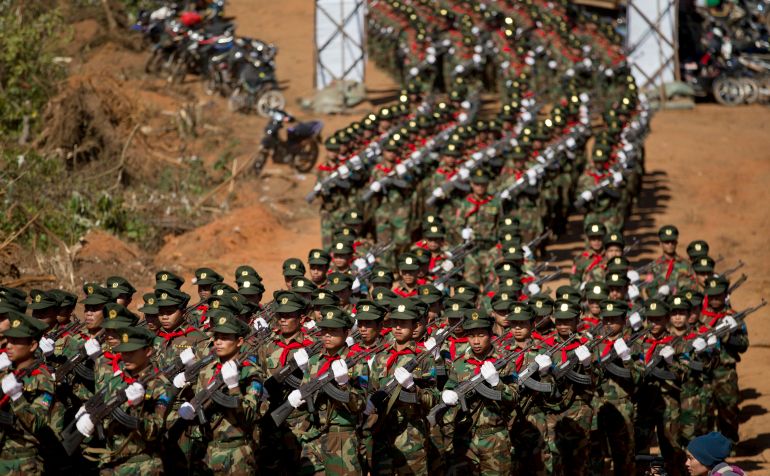
On a typical day, Mai Rupa travels through his native Shan State, in eastern Myanmar, documenting the impact of war. A video journalist with the online news outlet Shwe Phee Myay, he travels to remote towns and villages, collecting footage and conducting interviews on stories ranging from battle updates to the situation for local civilians living in a war zone. His job is fraught with risks. Roads are strewn with landmines and there are times when he has taken cover from aerial bombing and artillery shelling. “I have witnessed countless people being injured and civilians dying in front of me,” Mai Rupa said. “These heartbreaking experiences deeply affected me,” he told Al Jazeera, “at times, leading to serious emotional distress.” Mai Rupa is one of a small number of brave, independent journalists still reporting on the ground in Myanmar, where a 2021 military coup shattered the country’s fragile transition to democracy and obliterated media freedoms. Like his colleagues at Shwe Phee Myay – a name which refers to Shan State’s rich history of tea cultivation – Mai Rupa prefers to go by a pen name due to the risks of publicly identifying as a reporter with one of the last remaining independent media outlets still operating inside the country. Advertisement Most journalists fled Myanmar in the aftermath of the military’s takeover and the expanding civil war. Some continue their coverage by making cross-border trips from work bases in neighbouring Thailand and India. But staff at Shwe Phee Myay – a Burmese-language outlet, with roots in Shan State’s ethnic Ta’ang community – continue reporting from on the ground, covering a region of Myanmar where several ethnic armed groups have for decades fought against the military and at times clashed with each other. Ta’ang National Liberation army officers march during an event to mark the 52nd Ta’ang revolution day in Mar-Wong, Ta’ang self-governing area, northern Shan State, Myanmar, in 2015 [File: Gemunu Amarasinghe/AP] Fighting to keep the public informed After Myanmar’s military launched a coup in February 2021, Shwe Phee Myay’s journalists faced new risks. In March that year, two reporters with the outlet narrowly escaped arrest while covering pro-democracy protests. When soldiers and police raided their office in the Shan State capital of Lashio two months later, the entire team had already gone into hiding. That September, the military arrested the organisation’s video reporter, Lway M Phuong, for alleged incitement and dissemination of “false news”. She served nearly two years in prison. The rest of the 10-person Shwe Phee Myay team scattered following her arrest, which came amid the Myanmar military’s wider crackdown on the media. Spread out across northern Shan State in the east of the country, the news team initially struggled to continue their work. They chose to avoid urban areas where they might encounter the military. Every day was a struggle to continue reporting. Advertisement “We couldn’t travel on main roads, only back roads,” recounted Hlar Nyiem, an assistant editor with Shwe Phee Myay. “Sometimes, we lost four or five work days in a week,” she said. Police arrest Myanmar Now journalist Kay Zon Nwe in Yangon in February 2021, as protesters took part in a demonstration against the military coup [Ye Aung Thu/AFP] Despite the dangers, Shwe Phee Myay’s reporters continued with their clandestine work to keep the public informed. When a magnitude 7.7 earthquake hit central Myanmar on March 28, killing more than 3,800 people, Shwe Phee Myay’s journalists were among the few able to document the aftermath from inside the country. The military blocked most international media outlets from accessing earthquake-affected areas, citing difficulties with travel and accommodation, and the few local reporters still working secretly in the country took great risks to get information to the outside world. “These journalists continue to reveal truths and make people’s voices heard that the military regime is desperate to silence,” said Thu Thu Aung, a public policy scholar at the University of Oxford who has conducted research on Myanmar’s post-coup media landscape. Journalists with Shwe Phee Myay conduct a video interview in Shan State, Myanmar, in September 2024 [Courtesy of Shwe Phee Myay] On top of the civil war and threats posed by Myanmar’s military regime, Myanmar’s journalists have encountered a new threat. Advertisement In January, the administration of US President Donald Trump and his billionaire confidante Elon Musk’s Department of Government Efficiency (DOGE) began dismantling the United States Agency for International Development (USAID). USAID had allocated more than $268m towards supporting independent media and the free flow of information in more than 30 countries around the world – from Ukraine to Myanmar, according to journalism advocacy group Reporters Without Borders. In February, The Guardian reported on the freezing of USAID funds, creating an “existential crisis” for exiled Myanmar journalists operating from the town of Mae Sot, on the country’s border with Thailand. The situation worsened further in mid-March, when the White House declared plans for the US Agency for Global Media (USAGM) to reduce operations to the bare minimum. USAGM oversees – among others – the Voice of America and Radio Free Asia, which were both leading providers of news on Myanmar. Last week, RFA announced it was laying off 90 percent of its staff and ceasing to produce news in the Tibetan, Burmese, Uighur and Lao languages. VOA has faced a similar situation. Tin Tin Nyo, managing director of Burma News International, a network of 16 local, independent media organisations based inside and outside Myanmar, said the loss of the Burmese-language services provided by VOA and RFA created a “troubling information vacuum”. Myanmar’s independent media sector also relied heavily on international assistance, which had already been dwindling, Tin Tin Nyo said. Many local Myanmar news outlets were already “struggling to continue producing reliable information”, as a result of the USAID funding cuts brought in by Trump and executed by Musk’s DOGE, she said. Some had laid off staff, reduced their programming or suspended operations. Advertisement “The downsizing of independent media has decreased the capacity
Could India, Pakistan use nuclear weapons? Here’s what their doctrines say
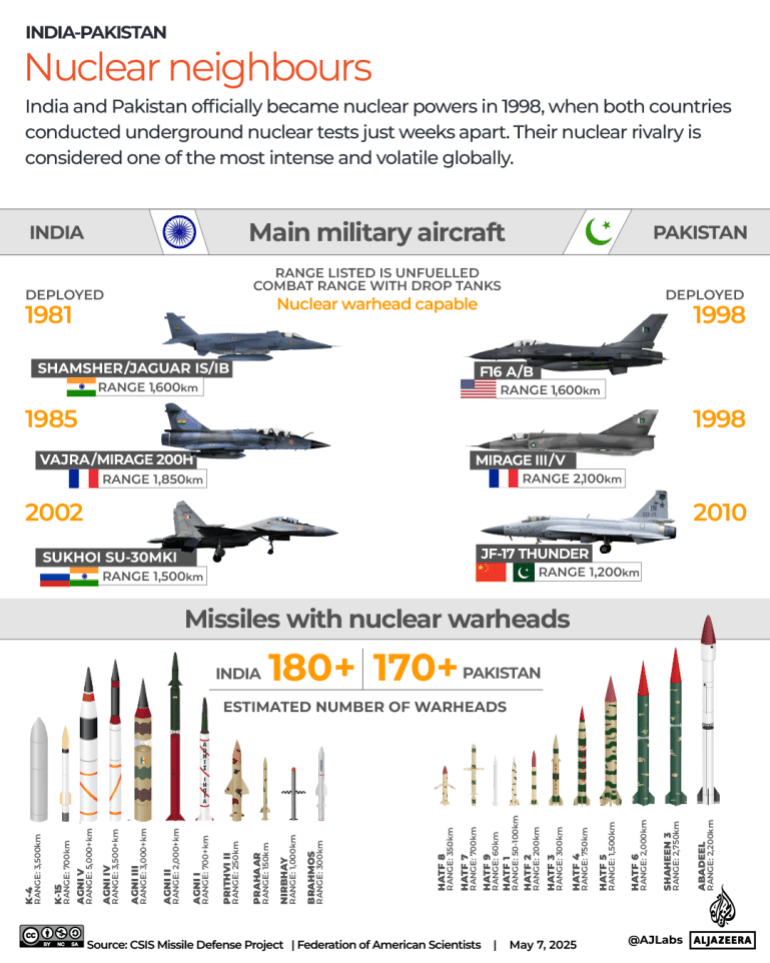
Pakistan said it struck multiple Indian military bases in the early hours of Saturday, May 10, after claiming that India had launched missiles against three Pakistani bases, marking a sharp escalation in their already soaring tensions, as the neighbours edge closer to an all-out war. Long-simmering hostilities, mostly over the disputed region of Kashmir, erupted into renewed fighting after the deadly April 22 Pahalgam attack in Indian-administered Kashmir that saw 25 tourists and a local guide killed in an armed group attack. India blamed Pakistan for the attack; Islamabad denied any role. Since then, the nations have engaged in a series of tit-for-tat moves that began with diplomatic steps but have rapidly turned into aerial military confrontation. As both sides escalate shelling and missile attacks and seem on the road to a full-scale battle, an unprecedented reality stares not just at the 1.6 billion people of India and Pakistan but at the world: An all-out war between them would be the first ever between two nuclear-armed nations. Advertisement “It would be stupid for either side to launch a nuclear attack on the other … It is way short of probable that nuclear weapons are used, but that does not mean it’s impossible,” Dan Smith, director of the Stockholm International Peace Research Institute, told Al Jazeera. So, how did we get here? What are the nuclear arsenals of India and Pakistan like? And when – according to them – might they use nuclear weapons? How tensions have spiralled since April 22 India has long accused The Resistance Front (TRF) – the armed group that initially claimed credit for the Pahalgam attack, before then distancing itself from the killings – of being a proxy for the Lashkar-e-Taiba, a Pakistan-based armed group that has repeatedly targeted India, including in the 2008 Mumbai attacks that left more than 160 people dead. New Delhi blamed Islamabad for the Pahalgam attack. Pakistan denied any role. India withdrew from a bilateral pact on water sharing, and both sides scaled back diplomatic missions and expelled each other’s citizens. Pakistan also threatened to walk out of other bilateral pacts, including the 1972 Simla Agreement that bound the neighbours to a ceasefire line in disputed Kashmir, known as the Line of Control (LoC). But on May 7, India launched a wave of missile attacks against sites in Pakistan and Pakistan-administered Kashmir. It claimed it hit “terrorist infrastructure”, but Pakistan says at least 31 civilians, including two children, were killed. On May 8, India launched drones into Pakistani airspace, reaching the country’s major cities. India claimed it was retaliating, and that Pakistan had fired missiles and drones at it. Then, for two nights in a row, cities in India and Indian-administered Kashmir reported explosions that New Delhi claimed were the result of attempted Pakistani attacks that were thwarted. Advertisement Pakistan denied sending missiles and drones into India on May 8 and May 9 – but that changed in the early hours of May 10, when Pakistan first claimed that India targeted three of its bases with missiles. Soon after, Pakistan claimed it struck at least seven Indian bases. India has not yet responded either to Pakistan’s claims that Indian bases were hit or to Islamabad’s allegation that New Delhi launched missiles at its military installations. How many nuclear warheads do India and Pakistan have? India first conducted nuclear tests in May 1974 before subsequent tests in May 1998, after which it declared itself a nuclear weapons state. Within days, Pakistan launched a series of six nuclear tests and officially became a nuclear-armed state, too. Each side has since raced to build arms and nuclear stockpiles bigger than the other, a project that has cost them billions of dollars. India is currently estimated to have more than 180 nuclear warheads. It has developed longer-range missiles and mobile land-based missiles capable of delivering them, and is working with Russia to build ship and submarine missiles, according to the Center for Strategic and International Studies (CSIS). Pakistan’s arsenal, meanwhile, consists of more than 170 warheads. The country enjoys technological support from its regional ally, China, and its stockpile includes primarily mobile short- and medium-range ballistic missiles, with enough range to hit just inside India. A motorcyclist rides past shattered windows of a restaurant outside the Rawalpindi cricket stadium after an alleged drone was shot down in Rawalpindi, Pakistan, on May 8, 2025 [Aamir Qureshi/ AFP] What’s India’s nuclear policy? India’s interest in nuclear power was initially sparked and expanded under its first prime minister, Jawaharlal Nehru, who was eager to use it to boost energy generation. However, in recent decades, the country has solidified its nuclear power status to deter its neighbours, China and Pakistan, over territorial disputes. Advertisement New Delhi’s first and only nuclear doctrine was published in 2003 and has not been formally revised. The architect of that doctrine, the late strategic analyst K Subrahmanyam, was the father of India’s current foreign minister, S Jaishankar. Only the prime minister, as head of the political council of the Nuclear Command Authority, can authorise a nuclear strike. India’s nuclear doctrine is built around four principles: No First Use (NFU): This principle means that India will not be the first to launch nuclear attacks on its enemies. It will only retaliate with nuclear weapons if it is first hit in a nuclear attack. India’s doctrine says it can launch retaliation against attacks committed on Indian soil or if nuclear weapons are used against its forces on foreign territory. India also commits to not using nuclear weapons against non-nuclear states. Credible Minimum Deterrence: India’s nuclear posture is centred around deterrence – that is, its nuclear arsenal is meant primarily to discourage other countries from launching a nuclear attack on the country. India maintains that its nuclear arsenal is insurance against such attacks. It’s one of the reasons why New Delhi is not a signatory to the Nuclear Non-Proliferation Treaty (NPT), as it maintains that all countries uniformly disarm before it does the same. Massive Retaliation:
Newark Mayor Ras Baraka arrested during ICE detention centre protest
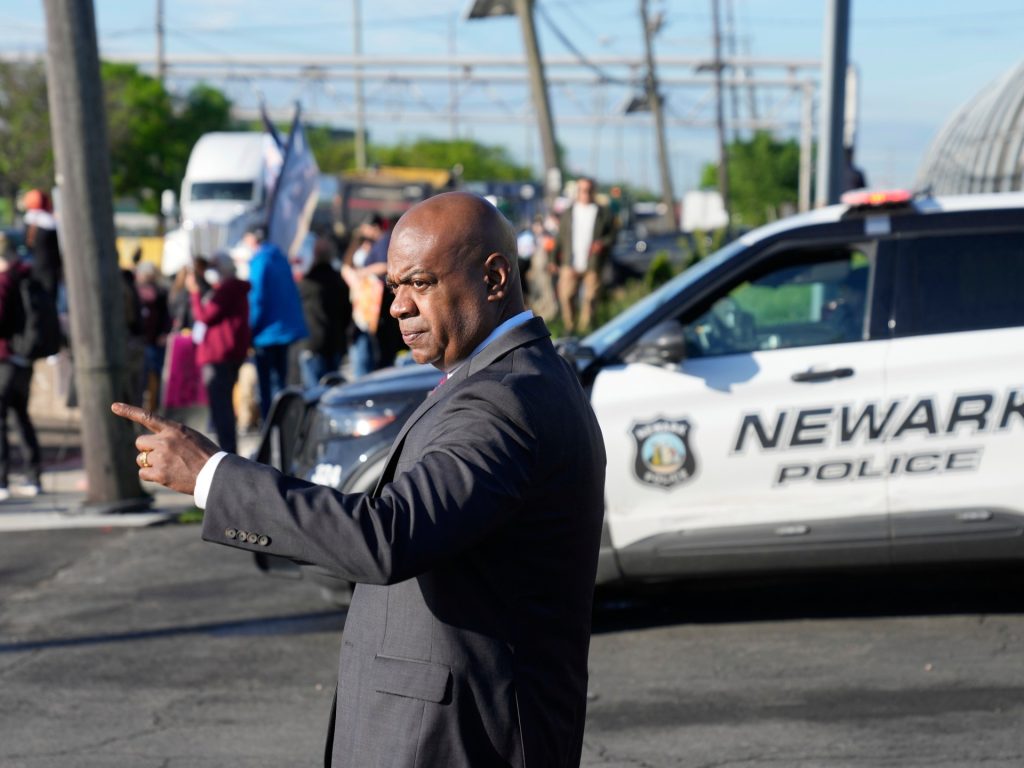
US attorney says Baraka ‘committed trespass’ during protest of facility, which he argues opened without proper permits. Rights groups and Democratic officials have decried the arrest of the mayor of Newark, New Jersey, during a protest at an immigration detention centre. Mayor Ras Baraka had joined several lawmakers at the detention centre, called Delaney Hall, for a demonstration on Friday. For weeks, he has been among those protesting the recently opened 1,000-bed centre, which critics see as a key link in President Donald Trump’s mass deportation efforts. Those in attendance said Baraka sought to enter the facility along with members of the United States Congress on Friday, but he was denied entry. A video reviewed by The Associated Press showed a federal official in a jacket with the logo for the Homeland Security Investigations unit telling Baraka he could not tour the facility because “you are not a congress member”. Baraka then left the secure area, rejoining protesters on the public side of the centre’s gate. Video showed him speaking through the gate to a man in a suit. The man said, “They’re talking about coming back to arrest you.” Advertisement “I’m not on their property. They can’t come out on the street and arrest me,” Baraka replied. Moments later, several Immigration and Customs Enforcement (ICE) agents, some wearing face coverings, surrounded the mayor and others on the public side of the gate. Baraka was dragged back through the security gate in handcuffs, while protesters yelled, “Shame!” In a subsequent post on the social media platform X, Alina Habba, Trump’s former personal lawyer and acting US attorney for New Jersey, said Baraka had “committed trespass and ignored multiple warnings” to leave. “He has willingly chosen to disregard the law. That will not stand in this state,” Habba wrote. “He has been taken into custody. NO ONE IS ABOVE THE LAW.” US Representative LaMonica McIver was also at the centre on Friday, along with Representatives Bonnie Watson Coleman and Robert Menendez Jr, to conduct what they called an “oversight inspection”. In a post on X, McIver said Baraka “did nothing wrong” and had already left the facility at the time of his arrest. “This is unacceptable,” McIver said in the video. For its part, a spokesperson for the Department of Homeland Security accused the lawmakers of “storming” the facility in a “bizarre political stunt”. Baraka has said the detention centre — located in Newark, not far from New York City — opened despite not having the proper local permits and approvals. He has launched a lawsuit to halt its operations. The GEO group, which runs the centre in coordination with ICE, has denied his claims. It entered into an agreement with the federal government in February to run the Delaney Hall facility, under a 15-year contract valued at $1bn. Advertisement ‘Unjust arrest’ Local elected officials swiftly condemned the federal agents’ actions, with the state’s governor, Phil Murphy, writing on X that he was “outraged by the unjust arrest” of Baraka. Murphy called the mayor an “exemplary public servant who has always stood up for our most vulnerable mayors” and appealed for his release. The governor noted that New Jersey had previously passed a law banning private immigration detention centres in the state, a Democratic stronghold, although it was partially struck down by a federal court in 2023. An appeal is ongoing. Baraka, who is running in next month’s Democratic primary for governor, has been an outspoken critic of the Trump administration’s immigration policies. He struck a defiant tone against the Trump administration in January, after ICE raided businesses in the city he leads. “Newark will not stand by idly while people are being unlawfully terrorised,” he said at the time. Adblock test (Why?)