

Automakers suspend financial guidance amid tariff uncertainty
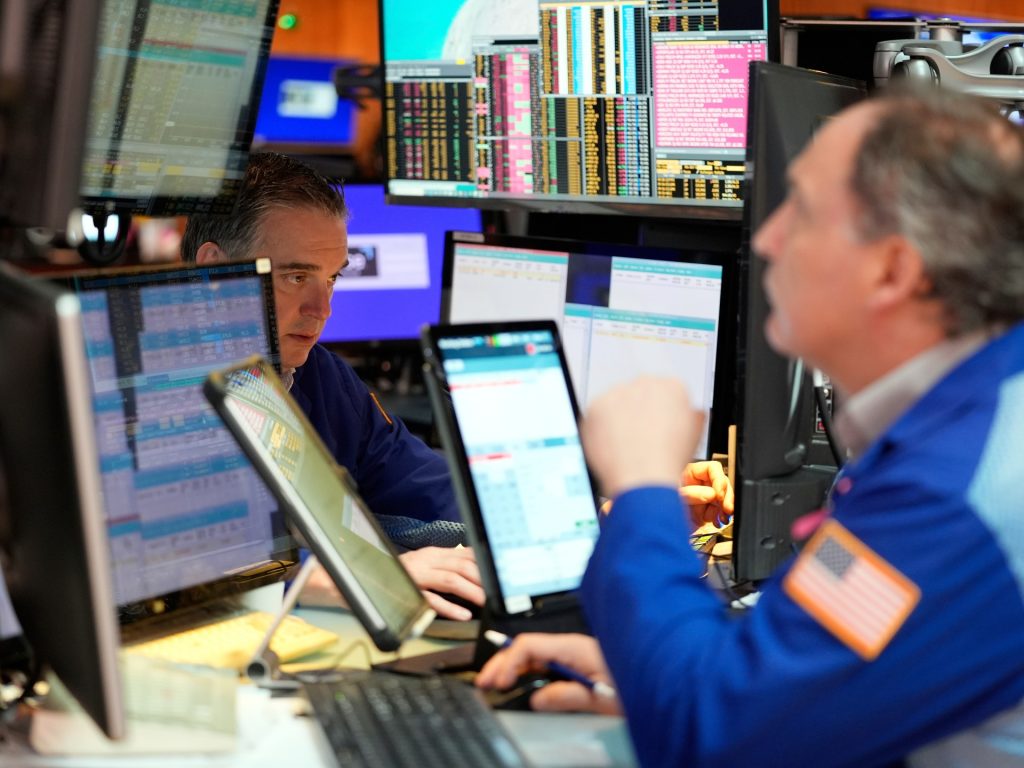
Several global automakers, including Mercedes-Benz and Stellantis, have joined Michigan-based General Motors and Volvo in suspending their respective annual financial guidance reports for investors amid growing tariff uncertainty. The announcements on Wednesday came even as US President Donald Trump signed an executive order on Tuesday to soften the blow of the auto tariffs that he had imposed earlier this month. “While we further assess the impact of the tariff policies on our North American operations, we look forward to our continued collaboration with the US administration to strengthen a competitive American auto industry and stimulate exports,” Stellantis board chairman John Elkann said in a statement. Stellantis said it was “suspending its 2025 financial guidance … due to evolving tariff policies, as well as the difficulty predicting possible impacts on market volumes and the competitive landscape.” This comes amid layoffs at Stellantis, a carmaker that houses 14 brands including Jeep, RAM Trucks, Dodge, Fiat, and Maserati. In April, it temporarily laid off 900 workers for two weeks and said at the time it was because of uncertainty about how Trump-imposed tariffs would affect its business. Advertisement Antonio Filosa, Stellantis’s chief operating officer for the Americas, said in a company-wide email that it would assess the medium- and long-term effects of these tariffs on its operations, but also have “decided to take some immediate actions”. The company reported a 14-percent drop in its first-quarter sales to $40.7bn (35.8bn euros) in its first-quarter earnings report released on Wednesday. Mercedes-Benz and Volkswagen, Europe’s biggest carmakers, reported big drops in their net profits over the same January-March period, before the US tariffs kicked in. Mercedes cited “volatility with regard to tariff policies” that meant business development could not be reliably forecast. Mercedes’s net profit plunged almost 43 percent in the first three months of the year to $1.9 bn (1.73 billion euros) Finance chief Harald Wilhelm said Mercedes still remains in a strong position, thanks to what he said was a strong position in profitable, top-end vehicles. “This, combined with a healthy balance sheet, provides a solid foundation to navigate our company through a period of geopolitical uncertainties,” he said. ‘Towards the lower end’ About 40 companies worldwide, across industries, have pulled or lowered their forward guidance in the first two weeks of the first-quarter earnings season, an analysis by the news agency Reuters showed. On Tuesday, social media giant Snap declined to offer future guidance, saying it was seeing a slowdown in ad spending and raised doubts about advertising budgets due to tariff impact, sending its stock down 15 percent on Wednesday. Advertisement Before the tariffs, European automakers were already facing slowing sales of electric cars and stiff competition from local rivals, as well as from Chinese EVs, for which it is a key market. Volkswagen, a 10-brand group that includes Audi, Skoda and Porsche, said its net profit fell 40.6 percent to $2.49bn (2.19 bn euros). For the rest of the year, the carmaker said that it expected business “towards the lower end” of its guidance, citing challenges including increased competition, more stringent emissions regulations and trade tensions. Speaking on a call for analysts and investors, Volkswagen’s finance chief Arno Antlitz said that it was “too early to say” if Volkswagen would step up manufacturing in the US to circumvent any tariffs. Volkswagen expects a profit margin of 5.5 to 6.5 percent for the coming year, but its guidance does not take into account changeable American tariffs. “It’s highly difficult to give a projection for the full year,” Antlitz said. UBS analyst Patrick Hummel wrote in a client note that the German group’s outlook did not “include any impact of US tariffs,” calling it “essentially a withdrawal of guidance”. In the United Kingdom, luxury carmaker Aston Martin Lagonda announced that it was limiting shipments to the US, but it maintained its annual guidance as it reported a 13-percent drop in first-quarter revenue. Easing some tariffs Besides a 25-percent tariff on finished imported cars, the industry has also been affected by Trump’s 25-percent tariff on steel and aluminium. Advertisement Carmakers are also set to face new tariffs on foreign auto parts expected to take effect on May 3. Trump’s new policy means that a company would not face both a 25-percent levy for an imported vehicle and 25-percent on steel or aluminium. The importer would pay the higher of the two levies, but not both, a US Commerce Department official said. The other change is that companies that import parts for vehicles assembled in the US would be able to offset 3.75 percent of a vehicle’s list price in the first year and 2.5 percent in the second year. But analysts believe that this reprieve won’t necessarily work in practice as automakers face the effect tariffs will have on their business. “While this sounds good on paper (less bad then the original auto tariff slate), a US car with all US parts made in the US is a fictional tale not possible today and many factories/production hubs could take 4-5 years to build in the US … and this speaks to the massive frustration from the industry as the rules of the US tariff game are untenable in our view,” Wedbush Securities Dan Ives said in a note on Wednesday. Adblock test (Why?)
Columbia protest leader Mohsen Mahdawi released from US custody
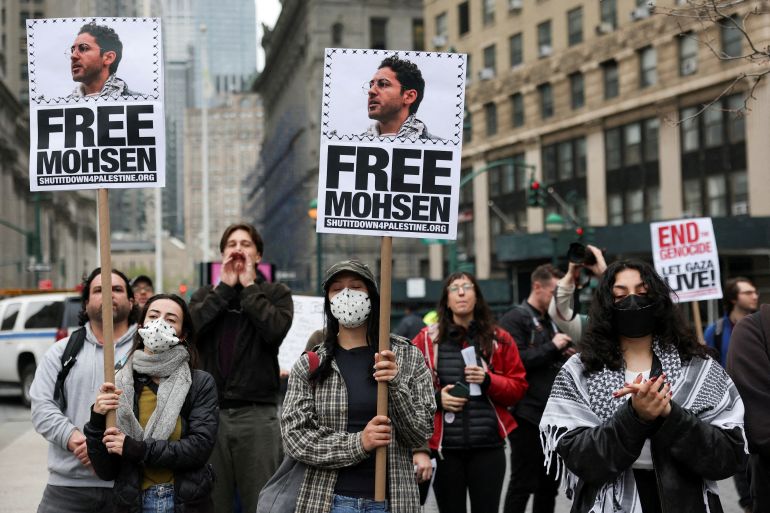
A United States judge has ordered the release of Columbia University student and pro-Palestine protester Mohsen Mahdawi as a case challenging his deportation proceeds. In Burlington, Vermont, on Wednesday, US District Judge Geoffrey Crawford ruled Mahdawi could leave the Northwest State Correctional Facility, where he had been held since immigration officials arrested him earlier this month. Mahdawi walked out of the court with both hands in the air, flashing peace signs as supporters greeted him with cheers. As he spoke, he shared a message for President Donald Trump, whose administration has led a crackdown on student protesters who have denounced Israel’s war in Gaza. “I am not afraid of you,” Mahdawi said to Trump. He also addressed the people of Palestine and sought to dispel perceptions that the student protest movement was anything but peaceful. “We are pro-peace and antiwar,” Mahdawi explained. “To my people in Palestine: I feel your pain, I see your suffering, and I see freedom, and it is very soon.” Advertisement Mahdawi, a legal US resident who had been a leader in the protests at Columbia University, was detained on April 14 while attending a citizenship interview. Video of him being led away in handcuffs spread widely across social media. His arrest came as part of a wider push by the Trump administration to target visa holders and permanent residents for their pro-Palestine advocacy. Trump has also pressured top universities to crack down on pro-Palestine protests, in the name of combating anti-Semitism. Critics, however, say that rationale is an excuse to exert greater control over academia and stifle opposing views. Mohsen Mahdawi was just released on bail by a federal judge in Vermont. pic.twitter.com/sgtNyfeYmU — Katherine Franke (@ProfKFranke) April 30, 2025 What’s in the ruling? While the immigration case against Mahdawi will proceed, Judge Crawford ruled the student activist posed no flight risk and could be released to attend his graduation next month in New York City. It is possible the US government may appeal Mahdawi’s release, but the judge’s ruling allows him to leave the state of Vermont and fight his deportation from outside a detention facility. The Trump administration, however, had opposed his release. Its lawyers argued that Mahdawi’s detention was “constitutionally valid aspect of the deportation process”. Mahdawi’s lawyers have countered that his detainment treads on his constitutional rights to free speech. “Mohsen has committed no crime, and the government’s only supposed justification for holding him in prison is the content of his speech,” Lia Ernst, a lawyer with the American Civil Liberties Union who is representing Mahdawi, said in a statement following his release. Advertisement The Trump administration has taken the broad position that constitutional speech protections only apply to US citizens, a question that could eventually be decided by the US Supreme Court. In court filings, government lawyers have cited the Immigration and Nationality Act of 1952 as the legal basis for seeking Mahdawi’s deportation. A rarely used part of the law allows the US to deport foreign nationals “whose presence or activities in the United States” gives the secretary of state “reasonable ground to believe [they] would have potentially serious adverse foreign policy consequences”. Secretary of State Marco Rubio has used that provision as the basis for seeking to deport Mahdawi and other pro-Palestinian student protesters. Israel is a critical ally of the US in the Middle East. Demonstrators in New York City carry placards that read ‘Free Mohsen’ to push for Mohsen Mahdawi’s release [File: Jeenah Moon/Reuters] Crackdown on advocacy Mahdawi was arrested weeks after fellow Columbia University student Mahmoud Khalil, also a US permanent resident. In early March, Khalil was likewise detained by immigration officials. The pair co-founded the Palestinian Student Union at the prestigious Ivy League university. Khalil has remained in immigration custody in Louisiana since his arrest outside his apartment. Earlier this month, an immigration judge ruled Khalil was indeed deportable, siding with government lawyers. In a two-page letter submitted to the court, Secretary of State Rubio had written that the 30-year-old should be removed from the US for his role in “antisemitic protests and disruptive activities, which fosters a hostile environment for Jewish students in the United States”. Advertisement The Trump administration has broadly portrayed nearly all forms of pro-Palestine advocacy as “anti-Semitic”, in what critics have called an effort to silence freedom of speech. Rubio provided no further evidence backing his claims against Khalil, and the student leader has been charged with no crime. Rubio’s letter nevertheless said that his department can revoke a permanent resident’s legal status even where their beliefs, associations or statements are “otherwise lawful”. On Tuesday, a federal judge ruled that Khalil can move forward with a legal challenge to his arrest and detainment on the grounds that he was targeted for his political views. Both Mahdawi and Khalil have parallel court cases, one seeking reprieve from deportation and the other challenging the basis for their arrests. While in detention, Mahdawi had been visited by US Senator Peter Welch, a Democrat who has denounced the student’s arrest as “unjust” and antidemocratic. “I’m staying positive by reassuring myself in the ability of justice and the deep belief of democracy,” Mahdawi said at the time, according to a video posted on Welch’s X account. “This is the reason I wanted to become a citizen of this country, because I believe in the principles of this country.” Adblock test (Why?)
After deadly attack in Kashmir, what’s next for India and Pakistan?
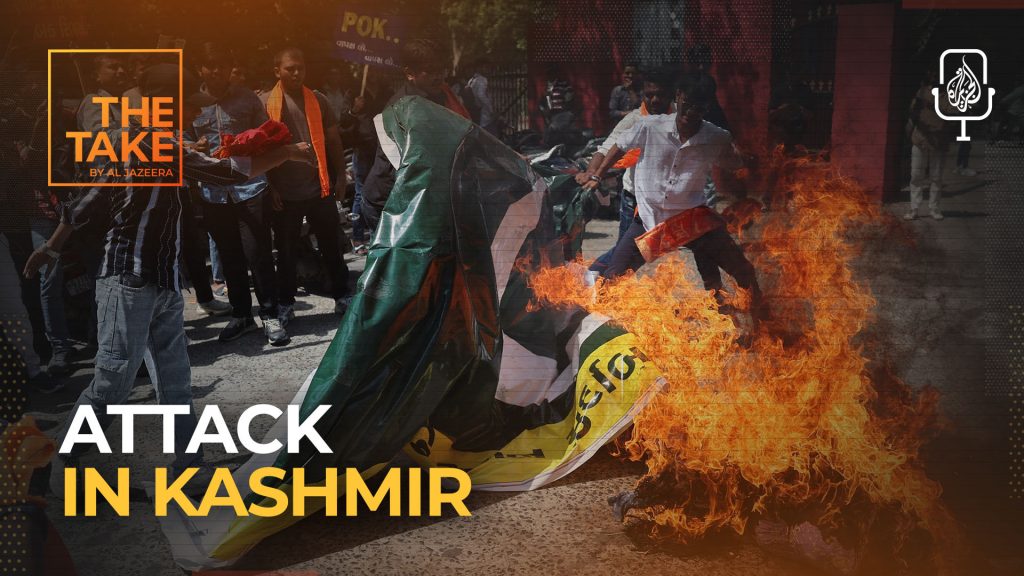
India-Pakistan tensions grow after attack on tourists in disputed region of Kashmir. Tensions are growing between India and Pakistan after an attack killed 26 people in Indian-administered Kashmir. As the exchange of accusations and gunfire continues, Kashmiris fear for what is to come. Adblock test (Why?)
Spain’s grid denies renewable energy to blame for massive blackout
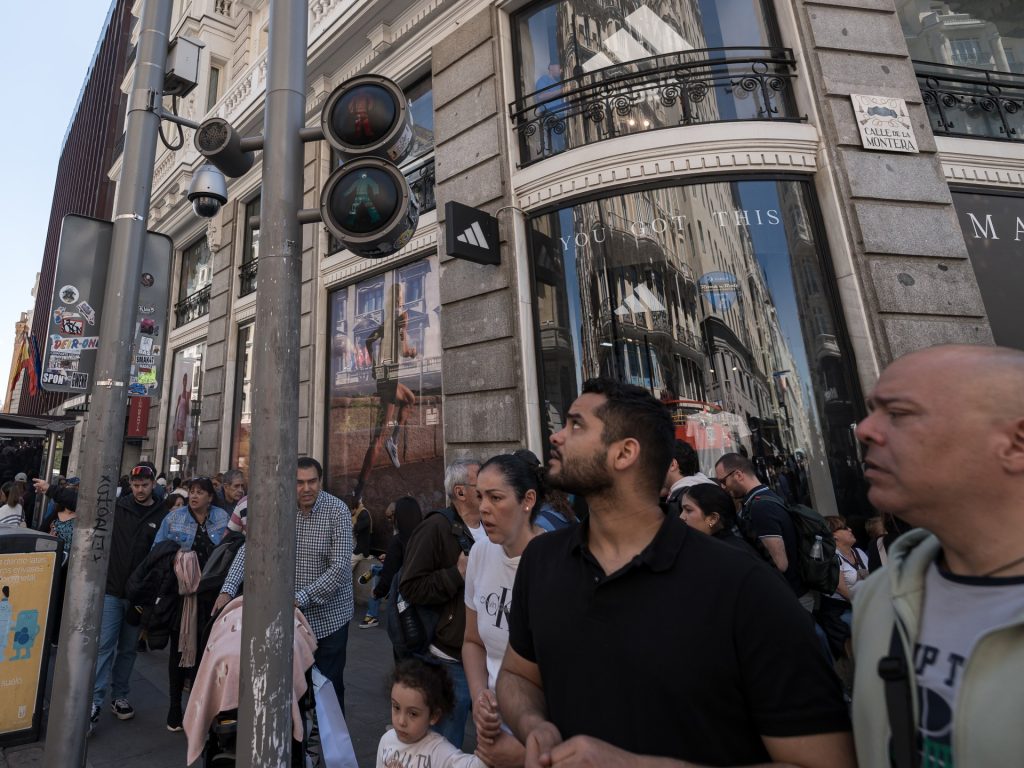
REE says the outage cannot be blamed on Spain’s high share of renewable energy, cause not clear yet. Spain’s grid operator has denied that solar power was to blame for the country’s worst blackout, as Prime Minister Pedro Sanchez faces increasing pressure to explain what went wrong. Red Electrica de Espana (REE) on Wednesday said the source of the outage had been narrowed down to two separate incidents of loss of generation in substations in southwestern Spain, but stressed that it was too early to draw conclusions, as it had yet to identify their exact location. REE’s head, former Socialist minister Beatriz Corredor, told Cadena SER radio that it was wrong to blame the outage on Spain’s high share of renewable energy. “These technologies are already stable, and they have systems that allow them to operate as a conventional generation system without any safety issues,” she said, adding she was not considering resigning. Life across the Iberian Peninsula was returning to normal after a power outage halted trains, shut airports and trapped people in lifts in Spain and Portugal on Monday. Advertisement Just before the system crashed, Spain’s solar energy accounted for 53 percent of electricity production, wind for almost 11 percent and nuclear and gas for 15 percent, according to REE data. Political opponents criticised Sanchez for taking too long to explain the blackout and suggested he was covering up for failings, after his left-wing coalition government invested in expanding the renewable energy sector. “Since REE has ruled out the possibility of a cyberattack, we can only point to the malfunctioning of REE, which has state investment and therefore its leaders are appointed by the government,” Miguel Tellado, a parliamentary spokesperson for the opposition conservative People’s Party, said in an interview on RTVE. Tellado called for an independent investigation to be conducted by Spain’s parliament rather than the government probe Sanchez has announced. The prime minister has not ruled out a cyberattack, although this has been dismissed by REE. Antonio Turiel, an energy expert at the state-owned Spanish National Research Council, told Onda Vasca radio station on Tuesday that the fundamental problem was the grid’s instability. “A lot of renewable energy has been integrated without the responsive stabilisation systems that should have been in place,” he said, adding that vulnerabilities stemmed from “the unplanned and haphazard integration of a host of renewable systems”. The government had forecast private and public investment of some 52 billion euros ($59bn) through 2030 to upgrade the power grid so it can handle the surge in demand from data centres and electric vehicles. Advertisement Adblock test (Why?)
Trump blames predecessor as US economy hit by tariff policies
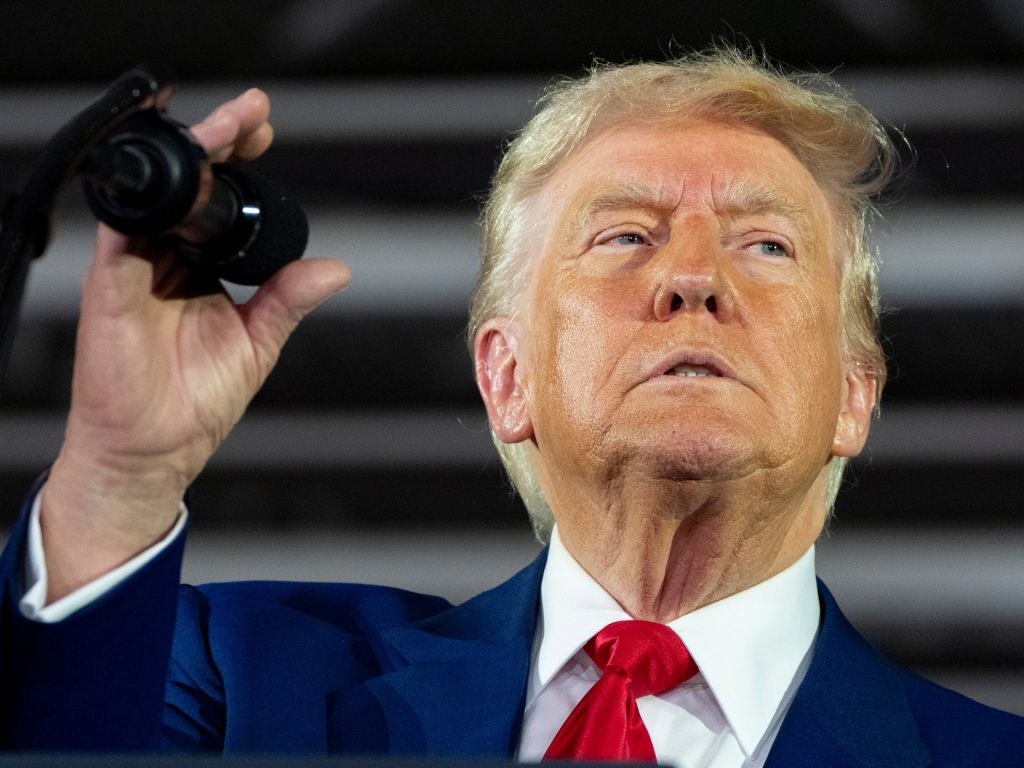
President asks for ‘patience’ as businesses react negatively to Trump’s aggressive efforts to upend global trade. United States President Donald Trump blames former president Joe Biden for the decline of key economic indicators during his first months as president, amid widespread disruptions caused by Trump’s tariff policies. The US economy contracted by 0.3 percent during the first quarter of the year, the first such drop in three years. During the last three months of 2024, the economy grew by 2.4 percent. “This is Biden’s Stock Market, not Trump’s,” Trump said in a post on his website Truth Social. “Tariffs will soon start kicking in, and companies are starting to move into the USA in record numbers. Our Country will boom, but we have to get rid of the Biden ‘Overhang.’ This will take a while, has NOTHING TO DO WITH TARIFFS, only that he left us with bad numbers, but when the boom begins, it will be like no other. BE PATIENT!!!” Since taking office, Trump’s efforts to upend the global trade system through a series of aggressive import duties have caused turmoil in financial markets amid fears of an escalating trade war and uncertainty surrounding the tariff policies. Advertisement The first quarter saw an uptick in imports, as US businesses seek to get out ahead of higher costs that could accompany future tariffs. Inflation, however, continues to ease. In March, consumer prices were 2.3 percent higher than they were a year earlier, compared with 2.5 percent in February. In a press release from the White House, press secretary Karoline Leavitt mirrored Trump’s claims that Biden was to blame for any turbulence while also stating that the Wednesday economic report showed “strong economic momentum”. “It’s no surprise the leftovers of Biden’s economic disaster have been a drag on economic growth, but the underlying numbers tell the real story of the strong momentum President Trump is delivering,” Leavitt said. Many economic analysts blame Trump’s chaotic approach to tariffs for the US’s flagging indicators. Since taking office, the S&P 500 has shrunk by about 7.3 percent. “If the blowout on trade was the result of firms pre-buying imported inputs to beat the tariffs, the decay in the trade balance will reverse in second quarter,” Carl Weinberg, chief economist at High Frequency Economics, told the news agency Reuters. “That will generate some GDP growth. However, corrosive uncertainty and higher taxes, tariffs are a tax on imports, will drag GDP growth back into the red by the end of this year.” In recent weeks, the White House has suggested that it could draw down tariffs with key US trading partners such as China, with Treasury Secretary Scott Bessent stating last week that current rates were not “sustainable”. Advertisement Adblock test (Why?)
Kashmir attack: How India might strike Pakistan – what history tells us
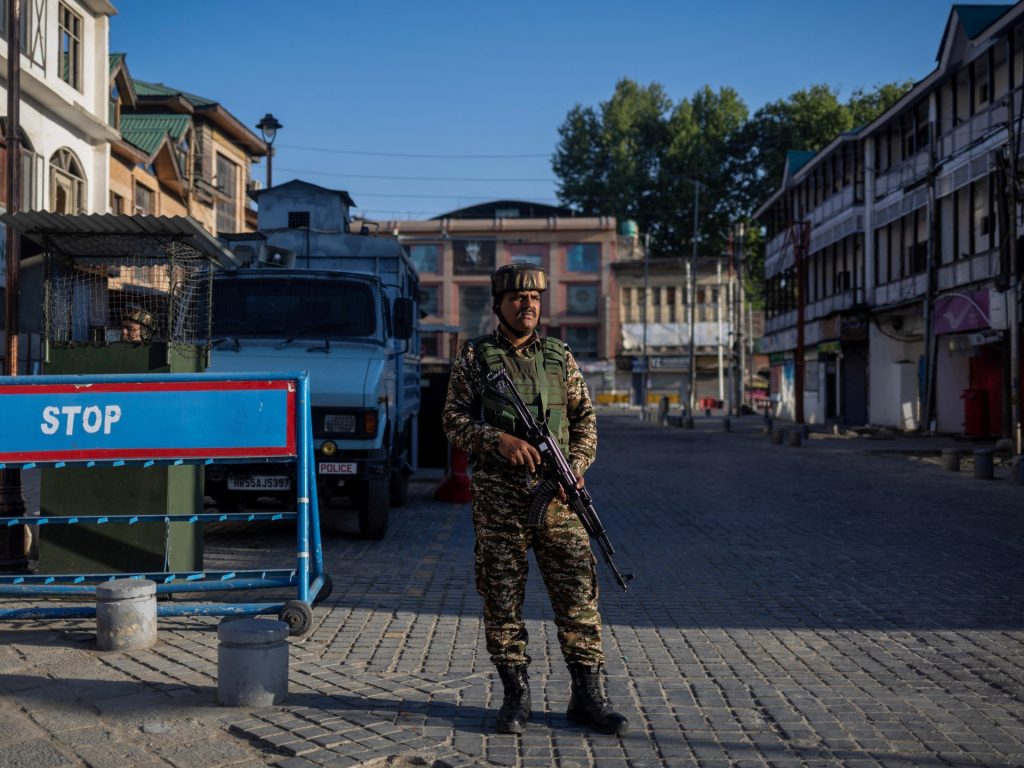
Pakistan said on Wednesday that it had “credible intelligence” that India might launch a military strike against it within the next few days. Meanwhile, Indian Prime Minister Narendra Modi led a series of security meetings on Tuesday and Wednesday, adding to speculation of an impending Indian military operation against its archrival, after the April 22 attack on tourists in Pahalgam in Indian-administered Kashmir in which 26 people were killed. Since the attack, barely existent relations between the nuclear-armed South Asian neighbours have nosedived further, with the countries scaling back diplomatic engagement, suspending their participation in bilateral treaties and effectively expelling each other’s citizens. The subcontinent is on edge. But how imminent is an Indian military response to the Pahalgam killings, and what might it look like? Here’s what history tells us: What happened? Pakistan’s Information Minister Attaullah Tarar said in a televised statement early on Wednesday that Islamabad had “credible intelligence” that India was planning to take military action against Pakistan in the “next 24 to 36 hours”. Advertisement Tarar added that this action would be India’s response on the “pretext of baseless and concocted allegations of involvement” in Pahalgam. While India has alleged Pakistan’s involvement in the Pahalgam attack, Islamabad has denied this claim. India and Pakistan each administer parts of Kashmir, but both countries claim the territory in full. Tarar’s statement came a day after Modi gave the Indian military “complete operational freedom” to respond to the Pahalgam attack in a closed-door meeting with the country’s security leaders, multiple news agencies reported, citing anonymous senior government sources. On Wednesday, Modi chaired a Cabinet Committee on Security meeting, the second such meeting since the Pahalgam attack, state-run Doordarshan television reported. Meanwhile, as the neighbours continued to exchange gunfire along the Line of Control (LoC) dividing Indian and Pakistan-administered Kashmir, other world leaders stepped up diplomacy to calm tensions. “We are reaching out to both parties, and telling … them to not escalate the situation,” a United States state department spokesperson told reporters on Tuesday, quoting US Secretary of State Marco Rubio, who is expected to speak to the foreign ministers of India and Pakistan. Also on Tuesday, the spokesperson for United Nations Secretary-General Antonio Guterres said that he had spoken to Pakistan Prime Minister Shehbaz Sharif and Indian Foreign Minister Subrahmanyam Jaishankar, offering his help in “de-escalation”. What military action could India take? While it is unclear what course of action India could take, it has in the past used a range of military tactics. Here are some of them: Advertisement Covert military operations By design, they aren’t announced – and aren’t confirmed. But over the decades, India and Pakistan have each launched multiple covert raids into territory controlled by the other, targeting military posts, killing soldiers – and on occasion beheading the enemy’s troops. These strikes are often carried out as a retaliatory step by a military unit whose personnel were themselves previously attacked, as a form of retribution. But such raids are never confirmed: The idea is to send the other country a message but not force it to respond, thereby containing the risk of escalation. Public announcements lead to domestic pressure on governments to hit back. Publicised ‘surgical strikes’ Sometimes, though, the idea is not to send subtle messages – but to embarrass the other country by making an attack public. It also doesn’t hurt politically. India has in the past carried out so-called surgical strikes against specific, chosen targets across the LoC – most recently in 2016. Then, after armed fighters killed 17 Indian soldiers in Uri, Indian-administered Kashmir, special forces of the Indian Army crossed the de facto border to attack “launch pads” from where, New Delhi alleged, “terrorists” were planning to strike India again. “The operations were basically focused to ensure that these terrorists do not succeed in their design of infiltration and carrying out destruction and endangering the lives of citizens of our country,” Lieutenant General Ranbir Singh, then the director-general of military operations for the Indian Army, said in a public statement, revealing the raid. Advertisement India claimed that the surgical strike had killed dozens of fighters, though independent analysts believe the toll was likely much lower. Aerial strikes In February 2019, a suicide bomber killed 40 Indian paramilitary soldiers in Pulwama in Indian-administered Kashmir, weeks before national elections in the country. This attack was claimed by the Jaish-e-Muhammad, an armed group based in Pakistan. Amid an outpouring of rage, the Indian Air Force launched an aerial raid into Pakistan-administered Kashmir. India claimed it had struck hideouts of “terrorists” and killed several dozen fighters. Pakistan insisted that Indian jets only hit a forested region, and did not kill any fighters. Islamabad claimed it scrambled jets that chased Indian planes back across the LoC. But a day later, Indian and Pakistani fighter jets again engaged in a dogfight – this one ending with Pakistan downing an Indian plane inside territory it controls. An Indian fighter pilot was captured, and returned a few days later. Attempts at taking over Pakistan-controlled land Over the past few years, there have been growing calls in India that New Delhi should take back Pakistan-administered Kashmir. That chorus has only sharpened in recent days after the Pahalgam attack, with even leaders of the opposition Congress Party goading the Modi government to take back that territory. While retaking Pakistan-administered Kashmir remains a policy objective of every Indian government, the closely matched military capabilities of both sides make such an endeavour unlikely. Advertisement Still, India has a track record of successfully taking disputed territory from Pakistan. In 1984, the Indian Army and Indian Air Force launched Operation Meghdoot, in which they rapidly captured the Siachen glacier in the Himalayas, blocking the Pakistan Army from accessing key passes. One of the world’s largest non-polar glaciers, Siachin has since been the planet’s highest battleground, with Indian and Pakistani military outposts positioned against each other. Naval missions In the aftermath of the Pahalgam attack, the Indian Navy announced that it had carried out
Pro-Palestinian students confront University of Manchester leadership
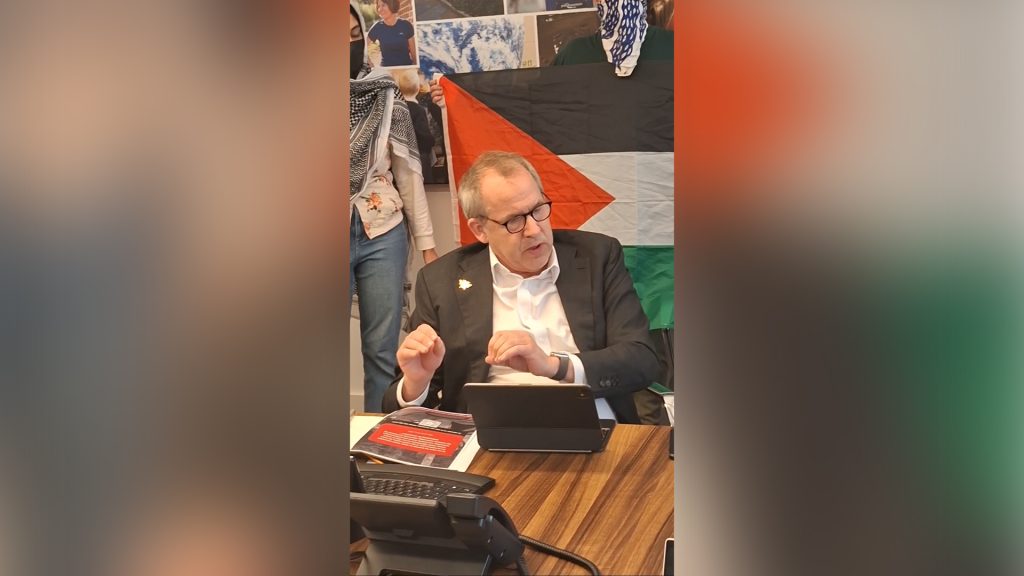
NewsFeed Video from the Youth Front for Palestine shows student activists interrupting a meeting of University of Manchester leaders to demand the school sever ties with Israel’s Tel Aviv University. The school’s leadership defended its decision to maintain ties, saying that doing so is not in support of genocide or Israel. Published On 30 Apr 202530 Apr 2025 Adblock test (Why?)
Ukraine says it is poised to sign minerals deal with the US
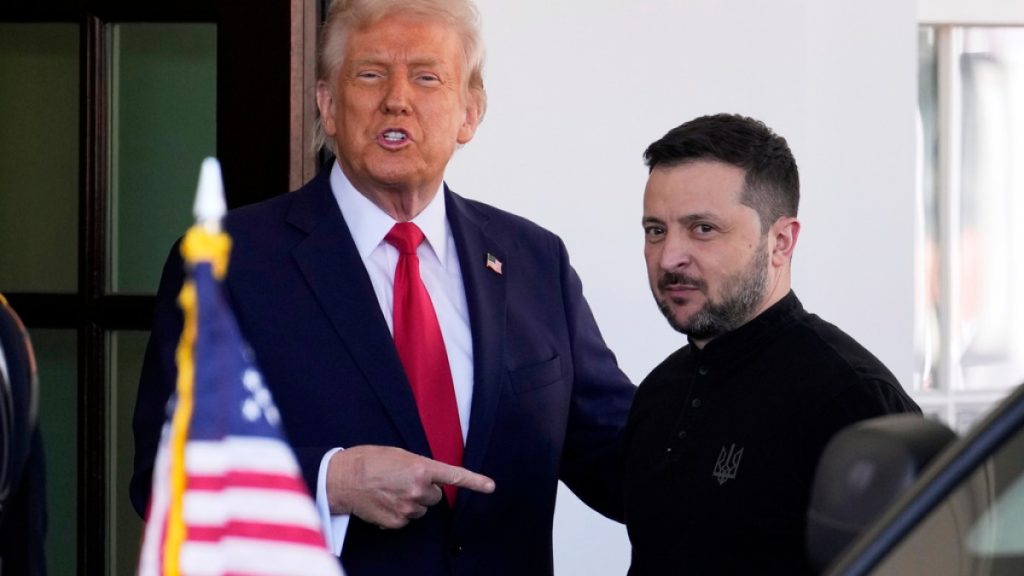
Ukraine’s PM says agreement is ‘good, equal and beneficial’, hopes it will be signed ‘within the next 24 hours’. Ukraine is poised to sign a much-anticipated minerals deal with the United State, Prime Minister Denys Shmygal has said, as both sides finalised details. The agreement would see Washington and Kyiv jointly develop Ukraine’s mineral resources, an arrangement US President Donald Trump has called “money back” for the wartime aid it has received from the United States. “This is truly a good, equal and beneficial international agreement on joint investments in the development and recovery of Ukraine,” Shmygal said on national TV on Wednesday. “I hope that the agreement will be signed in the near future, within the next 24 hours, and we will take the first step,” he added. There was no immediate comment from Washington. Ukraine and the US had planned to sign the agreement weeks ago, but a fiery clash between Trump and Ukrainian counterpart Volodymyr Zelenskyy in the White House temporarily derailed talks. Al Jazeera’s Alan Fisher, reporting from the White House, said, “It seems there are still some details to work out. But the signing of that deal is expected within the next 24 hours”. Advertisement Joint fund Ukraine has been pushing for security guarantees as part of any deal to halt Russia’s three-year invasion. The Trump administration has argued that boosting US business interests in Ukraine will help deter Russia from future aggression in the event of a ceasefire. It was not clear if the deal included any security guarantees for Ukraine. The deal will not be linked to any “debts” for previous assistance Kyiv has received, and will create a “50/50” joint fund split between Kyiv and Washington, a senior source in the Ukrainian presidency said, as cited by the AFP news agency. “It ensures the equality of the parties. An investment fund will be created to invest in reconstruction. It is envisaged that there will be contributions from us and the United States,” it added. When Washington provides new military aid, it will be counted as their contribution to the joint fund, the Reuters news agency reported, citing a draft of the agreement. However, the draft does not spell out how the joint fund’s revenues will be spent, who benefits, or who controls decisions about the spending. According to the draft, the United States, or other entities it designates, will get preferential – but not exclusive – access to new permits, licences and investment opportunities in the field of Ukrainian natural resources, according to the draft. Existing deals are not covered. Previous iterations of the deal during negotiations had said that it would include Ukrainian natural gas infrastructure, which is one of Ukraine’s most valuable assets, sources with knowledge of the matter said earlier this month. Advertisement Gas infrastructure was not covered by the draft cited by Reuters on Wednesday. Adblock test (Why?)
Russia-Ukraine war: List of key events, day 1,161
These are the key events on day 1,161 of Russia’s war on Ukraine. Here is where things stand on Wednesday, April 30: Fighting Swarms of Russian drones attacked the Ukrainian cities of Kharkiv and Dnipro late on Tuesday, killing at least one person and wounding at least 38, including two children, officials said. The Russian Ministry of Defence also said it had captured the Ukrainian village of Doroshivka in the northeastern Kharkiv region. The governor of the Ukrainian province of Sumy said Russian troops are trying to carve out a buffer zone in the northeastern region, which borders Russia’s Kursk, but have “not had any significant success”. Earlier on Tuesday, officials said Russian drone attacks overnight killed a 12-year-old girl in Ukraine’s central Dnipropetrovsk region and wounded three people in the capital, Kyiv. Ukrainian officials also ordered the evacuation of seven villages in the eastern Dnipropetrovsk region which used to be remote from the front lines but are now under threat as Russian forces close in. In Russia, a Ukrainian drone slammed into a car on a highway in the Belgorod region, which borders Ukraine, killing two people and wounding three, according to the governor there. Earlier in the day, Russia’s Defence Ministry said it destroyed 91 Ukrainian drones overnight, with 40 of them downed over the border Kursk region. Ukrainian Prime Minister Denys Shmyhal said the country lost almost half its domestic gas production during the winter due to Russian attacks, and is still making up for the shortfall through imports. Advertisement Diplomacy Ukrainian President Volodymyr Zelenskyy again called on Russia to agree to a complete and unconditional ceasefire, after Moscow declared a three-day truce, from May 8-10, to celebrate the 80th anniversary of the victory of the Soviet Union and its allies in World War II. Zelenskyy also told a summit in Warsaw that Russia was “preparing something” in Belarus this summer, using military drills as an excuse. US Secretary of State Marco Rubio warned that the United States would step back as mediator unless Russia and Ukraine delivered “concrete proposals” on ending the three-year war. A spokesperson for Rubio also said that Washington was seeking a “complete, durable ceasefire and an end to the conflict”, not a “three-day moment so you can celebrate something else”. The US has said that this week will be “critical” for peace efforts. The comments came as Russia rejected Ukraine’s proposal to extend the three-day truce to 30 days, saying it would be “difficult to enter into a long-term ceasefire” without first clearing up a number of “questions”. At the Security Council, the UN’s political affairs chief, Rosemary DiCarlo, welcomed the intensified efforts to bring the parties to negotiations, saying they “offer a glimmer of hope for progress towards a ceasefire and an eventual peaceful settlement”. France and the United Kingdom praised US mediation, while criticising Russia. Moscow rejected allegations that Russian forces had targeted civilians in Ukraine, while Kyiv said it could not accept peace at just any cost. France also accused Russia’s military intelligence of staging cyberattacks on a dozen French entities including ministries, defence firms and think tanks since 2021 in an attempt to destabilise the country. Advertisement Politics An investigation by the European nonprofit Forbidden Stories found that Ukrainian journalist Viktoriia Roshchyna, who died in Russian captivity, was tortured and had organs removed before her body was returned. A Russian military court sentenced a man to 27 years in jail for attempting to kill army pilots with poisoned alcohol and cakes at a graduation party on Ukrainian orders. Ukraine has detained defence officials suspected of supplying the army with faulty mortar shells. Latvia has sentenced one of its citizens to six years in prison for fighting for Russian forces in Ukraine, according to the Latvian prosecutor’s office. Adblock test (Why?)
US begins prosecuting migrants for breaching ‘military zone’ near border

The United States has announced its first criminal prosecutions against migrants and asylum seekers accused of crossing into a newly created military zone along the country’s border with Mexico. Court filings submitted on Monday – and reviewed by US media the following day – show that approximately 28 people have been charged with “violations of security regulations” for breaching the military zone. That charge, though a misdemeanour, carries the possibility of heightened penalties. The US Code stipulates that violations of security regulations can result in a fine of up to $100,000 for individuals or up to a year in prison – or both. Normally, the consequences for unlawful entry into the US are less severe. But as the administration of President Donald Trump ramps up its crackdown on immigration, critics warn of the growing militarisation of the southern border region neighbouring Mexico. The new charges were made possible by the establishment of the “New Mexico National Defence Area” on April 18. Advertisement The Department of Defense ordered that an Army installation called Fort Huachuca be expanded to include 109,651 acres (44,400 hectares) of federal land, previously held by the Department of the Interior. The transfer is effective for three years and turns a strip of border land adjacent to Mexico into a US military zone, where trespassing carries serious consequences. That military zone notably overlaps with routes that migrants and asylum seekers have taken to enter the US irregularly, without official paperwork. Successive presidential administrations, however, have sought to limit asylum applicants from crossing into the US outside of official ports of entry, despite US and international law that protects the right to flee persecution. The threat of increased penalties has been one of the tools used as deterrence. Defense Secretary Pete Hegseth meets with US military personnel in New Mexico on February 3 [Jose Luis Gonzalez/Reuters] Last week, Secretary of Defense Pete Hegseth visited the recently established military zone, where he touted the strip as a new line of defence against what he called an “invasion” of migrants and asylum seekers. “This is Department of Defense property. The National Defense Area, formerly known as the Fort Huachuca annex zone, is federal property. Any illegal attempting to enter that zone is entering a military base – a federal, protected area,” Hegseth said. “You can be detained. You will be detained. You will be interdicted by US troops and border patrol working together.” Advertisement Since January, the Trump administration has surged the number of US troops stationed at the border, bringing the total to an estimated 11,900 soldiers. During his visit, Hegseth revealed that he also plans to expand military zones at other sites along the US border, to add an extra line of defence against irregular migration. He played up the risks of complex criminal prosecutions and lengthy prison sentences. “If you are an illegal crossing, you will be monitored. You will be detained by US troops. You will be detained temporarily and handed over to Customs and Border Patrol,” he said. “If you have cut through a fence or jumped over a fence, that’s destruction of government property. If you have attempted to evade, that’s evading law enforcement, just like you would any other military base. You add up the charges of what you can be charged with – misdemeanours and felonies – you could be looking at up to 10 years in prison when prosecuted.” He added that New Mexico’s attorney general “can’t wait to prosecute” the first group to cross through the military zone. Groups like the American Civil Liberties Union of New Mexico have voiced opposition to the new tactic, saying that human rights are at risk when the military is deployed to address civilian offences. “The expansion of military detention powers in the ‘New Mexico National Defence Area’ – also known as the ‘border buffer zone’ – represents a dangerous erosion of the constitutional principle that the military should not be policing civilians,” said Rebecca Sheff, a senior staff lawyer for the group. Advertisement Sheff added there could be unintended consequences beyond the government’s attempts to restrict irregular migration. “We don’t want militarized zones where border residents – including U.S. citizens – face potential prosecution simply for being in the wrong place.” Adblock test (Why?)