

Why is India forcing 80 million people to justify their right to vote?

Mumbai, India – A move by India’s top election body, the Election Commission of India (ECI), to re-scrutinise nearly 80 million voters’ documents in a bid to weed out “foreign illegal immigrants” has prompted widespread fears of mass disenfranchisement and deportations in the world’s largest democracy. On June 24, the ECI announced that each of the nearly 80 million voters – equivalent to the entire population of the United Kingdom – in the eastern Indian state of Bihar will need to re-register as voters by July 26. Those unable to do so will lose their right to vote and will be reported as “suspected foreign nationals”, as per the ECI directive and could even face jail or deportation. The state’s legislative elections are expected to be held in October or November. Critics say the move is a backdoor route to implement the controversial National Register of Citizens (NRC) that Prime Minister Narendra Modi’s government has proposed in the past as a way to identify “illegal immigrants” and deport them. The move comes at a time when thousands of largely Bengali-speaking Muslims have been rounded up, and many of them have been deported from India as alleged Bangladeshi immigrants in the last few weeks. Al Jazeera sent questions to the ECI about the move, but the commission has not responded, despite reminder emails. Patna District Magistrate Thiyagarajan S M talks to voters holding the forms they are required to submit to the Electoral Commission to confirm their right to vote, in Patna, Bihar, on June 29, 2025 [Santosh Kumar/Hindustan Times via Getty Images] What is the controversy about? Bihar is India’s poorest state in terms of per capita income (PDF), and more than one-third of its population falls under the Indian government’s threshold of poverty. Advertisement But as the country’s third-most populous state, it is also one of India’s most politically important battlegrounds. Since 2005, Modi’s Hindu majoritarian Bharatiya Janata Party (BJP) has been in power in Bihar in alliance with a regional party, the Janata Dal (United) (JDU), for the most part, apart from short periods of rule by opposition-led alliances. Coming ahead of state elections, the election monitor’s move has led to confusion, panic and a scramble for documents among some of the country’s poorest communities in rural Bihar, say critics. Opposition politicians as well as civil society groups have argued that wide portions of Bihar’s population will not be able to provide citizenship documents within the short window they have to justify their right to vote, and would be left disenfranchised. India’s principal opposition party, the Indian National Congress, along with its Bihar alliance partner, the Rashtriya Janata Dal (RJD), called for a shutdown of Bihar on Wednesday, with Leader of Opposition Rahul Gandhi leading the protests in Bihar’s capital, Patna. A clutch of petitioners, including opposition leaders and civil society groups, have approached India’s Supreme Court asking for the exercise to be scrapped. The court is expected to hear these petitions on Thursday. The ruling BJP has been alleging a massive influx of Muslim immigrants from neighbouring Bangladesh and Myanmar and has backed the ECI’s move. In fact, it has demanded that the move be replicated across the country. Al Jazeera reached out to BJP’s chief spokesperson and media in-charge, Anil Baluni, through text and email for the party’s comments. He has not responded yet. But political observers and election transparency experts caution that the move carries deep implications for the future of Indian democracy and the rights of voters. Bihar Congress President Rajesh Ram, AICC Media and Publicity Chairman Pawan Khera and AICC Bihar Incharge Krishna Allavaru address the media during a briefing on the issue of the Bihar voter list revision at Indira Bhawan on July 3, 2025 in New Delhi, India [Sonu Mehta/Hindustan Times via Getty Images] What is the Election Commission’s justification for the move? The ECI’s June 24 announcement said that the exercise was meant to ensure that “no ineligible voter is included in the roll”, and cited reasons like rapid urbanisation, frequent migration, new voters, dead voters and “the inclusion of foreign illegal immigrants” in the list as reasons. The last such full revision was carried out in 2003, but since then, electoral rolls have been regularly updated and cleaned, including last year before the national elections. Advertisement According to the ECI, those voters who were on the 2003 voter list have to only re-submit voter registration forms, while those who were added later, depending on when they were added, would have to submit proof of their date of birth as well as place of birth as well, along with proofs of one or both their parents. Of the 79.6 million-odd voters in Bihar, the ECI has estimated that only 29 million voters would have to verify their credentials. But independent estimates suggest this number could be upwards of 47 million. The exercise involves ECI officials first going door-to-door and distributing enumeration forms to each registered voter. The voters are then expected to produce documents, attach these documents and submit them along with the forms to election officials, all this by July 26. The draft new electoral roll will be published on August 1, and those who have been left out will get a month more to object. Jagdeep Chhokar, from the Association of Democratic Reforms (ADR), a 25-year-old nonprofit that has been working towards electoral reforms, said the ECI’s choice to scrutinise all new voters added since 2003 casts a shadow on all the elections that the state has seen since then. “Is the ECI saying that there has been a huge scam in Bihar’s voter list since 2003? Is it saying that everyone who got elected from Bihar in these 22 years is not valid, then?” asked Chhokar. What is the criticism of this exercise? First, the timeline: to reach out to nearly 80 million at least twice, within a month, is a herculean task in itself. The ECI has appointed nearly 100,000 officers and roped in nearly 400,000 volunteers for the task. Second,
Texas mourns flood victims at vigil as search continues for dozens missing

Texans gather in Kerrville to mourn 120 flood victims and pray for more than 160 still missing. Several hundred people have gathered in Tivy Antler Stadium in Texas to mourn the many lives lost and pray for those still missing from the catastrophic flash floods that battered the state over the United States July Fourth holiday. The vigil, held on Wednesday in Kerrville – one of the worst-affected areas – brought together grieving families, local clergy, and volunteers. “Our communities were struck with tragedy literally in the darkness,” youth minister Wyatt Wentrcek told the crowd. “Middle of the night.” At least 120 people have been confirmed dead, with more than 160 still unaccounted for, making it the deadliest inland flooding in the US since 1976. No survivors have been found since Friday. Blue shirts bearing the school’s slogan, Tivy Fight Never Die, and green ribbons for Camp Mystic – a century-old all-girls Christian camp where at least 27 campers and counsellors died – were worn by many attendees. Officials said five campers and one counsellor from the camp remain unaccounted for. Ricky Pruitt of the Kerrville Church of Christ addressed the crowd, noting the emotional weight of holding the vigil at a stadium more often used to celebrate sporting triumphs. “Tonight is very different than all of those nights,” he said, as reported by The Associated Press. People attend a Catholic rosary service for the Texas flood victims at Notre Dame Catholic Church in Kerr County, Kerrville, Texas, USA, July 8, 2025 [Dustin Safranek/EPA] As mourners held each other and wiped their tears, search crews continued scouring the Guadalupe River – on foot, horseback, and by air – for those still missing. Search dogs were deployed to sniff through trees and piles of debris. Officials admitted hope of finding survivors had all but faded, with efforts now focused on giving families closure. Advertisement Worst flood in 50 years Meteorologist Bob Henson said the disaster ranks as the most lethal inland flood in nearly five decades, surpassing the 1976 Big Thompson Canyon flood in Colorado, which killed 144. Governor Greg Abbott said many of those who were in the Hill Country during the holiday were never formally registered at a camp or hotel, making it harder to account for everyone. He has faced growing criticism over the state’s flood preparedness, with many asking why warnings were delayed and evacuation measures insufficient. Kerr County Sheriff Larry Leitha assured residents that accountability would come but said the immediate priority remains to recover the missing. Abbott has urged state legislators to approve a new flood warning system and boost emergency communication networks. He is pushing for the issue to be addressed during a special legislative session already scheduled to begin on July 21. He also called for financial aid to support recovery efforts. For years, local officials have debated installing a flood siren system, but concerns over cost and noise meant the idea was shelved – a decision now under intense scrutiny. US President Donald Trump has pledged full federal support and is expected to visit the affected areas on Friday. Adblock test (Why?)
Armenia, Azerbaijan leaders meet for peace talks in UAE
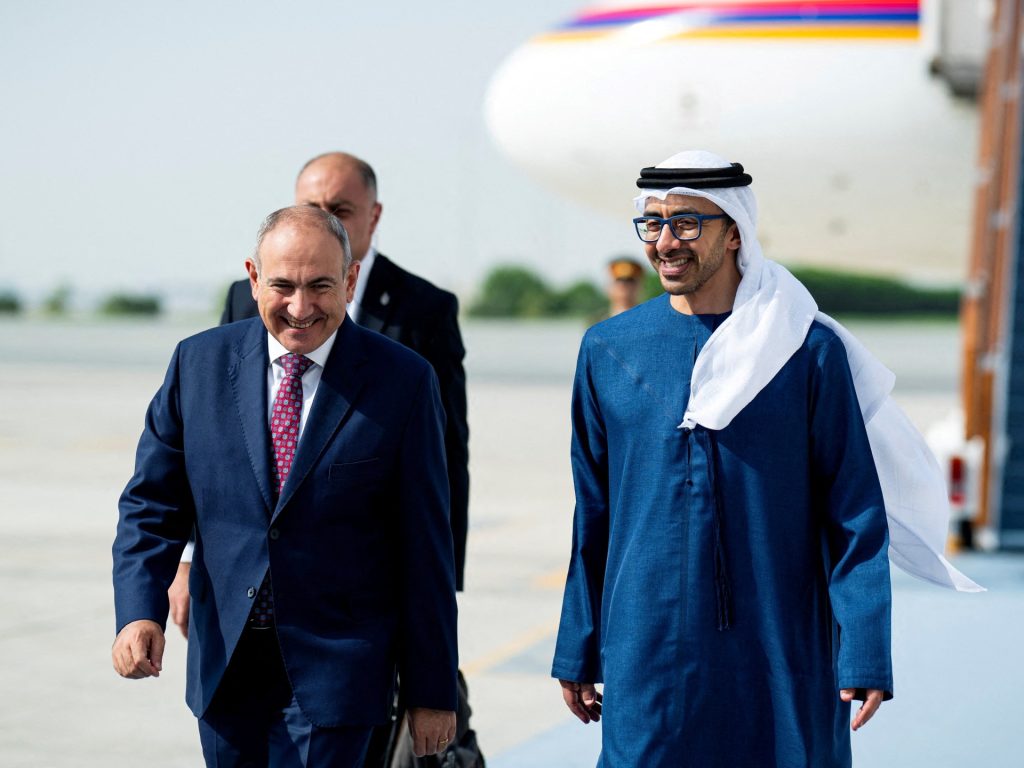
Draft deal to end bitter decades-long conflict agreed 4 months ago, but timeline for sealing it remains uncertain. The leaders of Armenia and Azerbaijan are holding peace talks in the United Arab Emirates after nearly four decades of conflict. The meeting in Abu Dhabi on Thursday between Armenian Prime Minister Nikol Pashinyan and Azerbaijani President Ilham Aliyev, confirmed by both their governments, comes after the two countries finalised a draft peace deal in March. The South Caucasus countries have fought a series of wars since the late 1980s when Nagorno-Karabakh, a region in Azerbaijan that had a mostly ethnic-Armenian population at the time, broke away from Azerbaijan with support from Armenia. Peace talks began after Azerbaijan recaptured Karabakh in a lightning offensive in September 2023, prompting a huge exodus of almost all of the territory’s 100,000 Armenians, who fled to Armenia. But the timeline for sealing a deal remains uncertain. Ceasefire violations along the heavily militarised 1,000km (620-mile) shared border surged soon after the draft deal was announced, though there have been no reported violations recently. In a potential stumbling block to a deal, Azerbaijan has said it wants Armenia to change its constitution, which it says makes implicit claims to Azerbaijani territory. Yerevan denies this, but Pashinyan has repeatedly stressed in recent months – most recently this week – that the South Caucasus country’s founding charter needs to be updated. Azerbaijan also asked for a transport corridor through Armenia, linking the bulk of its territory to Nakhchivan, an Azerbaijani enclave that borders Baku’s ally, Turkiye. Advertisement Pashinyan and Aliyev’s last encounter was in May, on the sidelines of the European Political Community summit in Tirana, Albania. In June, Pashinyan made a rare visit to Istanbul to hold talks with Turkish President Recep Tayyip Erdogan, a meeting Armenia described as a “historic” step towards regional peace. This week, United States Secretary of State Marco Rubio expressed hope for a swift peace deal between the Caucasus neighbours. The outbreak of hostilities between the two countries in the late 1980s prompted mass expulsions of hundreds of thousands of mostly Muslim Azeris from Armenia, and Armenians, who are majority Christian, from Azerbaijan. Adblock test (Why?)
Russia-Ukraine war: List of key events, day 1,232
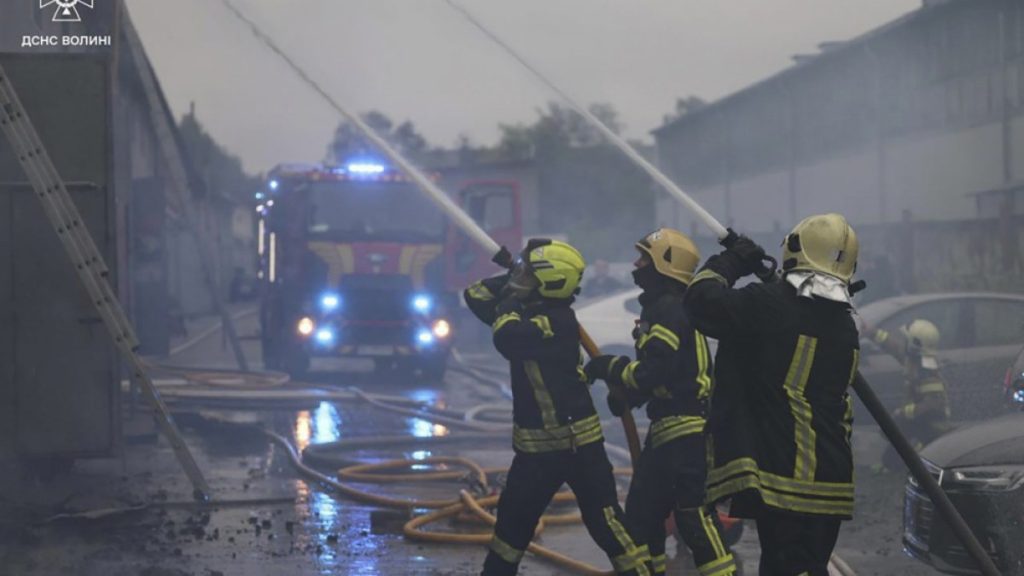
Ukrainian air defence units were defending Kyiv against Russian drones early on Thursday for the second night running, with officials reporting a fire in a city-centre apartment building and drone fragments landing in different districts. At least two people were injured in the latest attacks, according to the AFP news agency. A Russian air strike killed three people and injured one in the front-line town of Kostiantynivka in Ukraine’s east, national emergency service officials said. A post on Telegram said the strike also destroyed a one-storey administrative building. Firefighters also extinguished blazes in four buildings, according to officials. Vadym Filashkin, the governor of Ukraine’s Donetsk region, which encompasses Kostiantynivka, said on Telegram that it was time to “take a responsible decision. Evacuate to less dangerous regions of Ukraine!”, amid Russia’s latest offensive westward. A five-year-old boy died of burns sustained in a Ukrainian drone strike on a beach in the Russian city of Kursk, regional Governor Alexander Khinshtein said on Telegram, raising the death toll in the attack to four, including a member of Russia’s National Guard. Russian forces advanced at key points along the front in eastern Ukraine, defeating Ukrainian units in at least six regions, including Donetsk and Kharkiv, and using missiles and drones to strike ammunition depots and airfields, the Ministry of Defence in Moscow said. It also claimed Russia captured a village in Donetsk. Ukrainian President Volodymyr Zelenskyy said he held a “substantive” conversation with Trump’s Ukraine envoy, Keith Kellogg, in Rome shortly after Trump pledged to send more defensive weapons to Kyiv. Zelenskyy met Pope Leo at the papal summer residence of Castel Gandolfo, where the pontiff told him that the Vatican was willing to host Russia-Ukraine peace talks. It was the Ukrainian leader’s second meeting with the pope in his two-month-old papacy. Italian Prime Minister Giorgia Meloni will open the Rome conference on Ukraine on Thursday, with Zelenskyy and European Commission head Ursula von der Leyen in attendance. German Chancellor Friedrich Merz, Polish Prime Minister Donald Tusk, Dutch leader Dick Schoof and Greek Prime Minister Kyriakos Mitsotakis are also expected to attend. Merz has announced that he will make an offer of air defence systems to Ukraine during the Rome conference. Ukraine said it detained a Chinese father and son, both suspected of spying on its prized Neptune antiship missile programme, a key part of Kyiv’s growing domestic arms industry critical to its defence against Russian invaders. Kyiv has accused Beijing of helping the Kremlin’s war effort. Russian Ministry of Foreign Affairs spokesperson Maria Zakharova said the Kremlin had evidence that Ukraine has repeatedly used antipersonnel mines that have injured civilians. Ukraine in June announced its withdrawal from the Ottawa Convention banning the production and use of antipersonnel mines. Russian Minister of Foreign Affairs Sergey Lavrov will visit North Korea this weekend, the latest in a series of high-profile visits by top Moscow officials as the two countries deepen military ties, according to Zakharova. US Secretary of State Marco Rubio will meet Lavrov on Thursday on the sidelines of the ASEAN meeting in Kuala Lumpur, Malaysia, a senior US State Department official said. Adblock test (Why?)
Trump assails ex-FBI, CIA heads amid reports of criminal probe
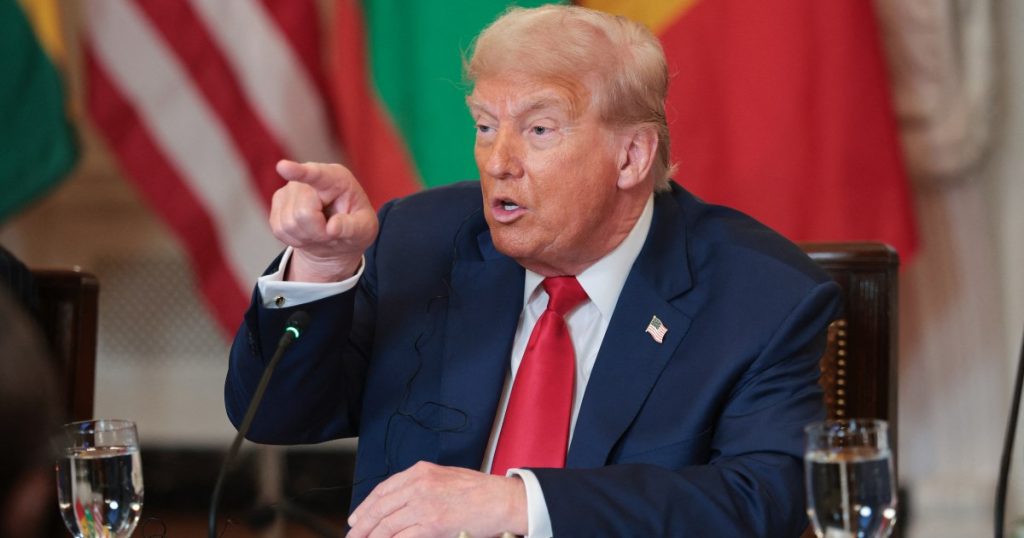
US president attacks John Brennan and James Comey amid reports two men are under investigation over Trump-Russia probe. United States President Donald Trump has suggested that former CIA director John Brennan and ex-FBI chief James Comey may have to “pay a price” amid reports that the two men are under criminal investigation. Asked about reports on Wednesday that Brennan and Comey are being investigated by the FBI, Trump said he did not know anything other than what he had read in the news, but he viewed both as “very dishonest people”. “I think they’re crooked as hell and maybe they have to pay a price for that,” Trump told reporters during a meeting with African leaders at the White House. “I believe they are truly bad people and dishonest people, so whatever happens happens.” Fox News, which first reported on the probe, said the two men were being scrutinised over unspecified “potential wrongdoing” related to investigations into the 2016 Trump campaign’s connections to Russia. Multiple other outlets, including CNN and The New York Times, confirmed the investigation. The FBI declined to comment. The US Department of Justice did not respond to a request for comment. In an interview with MSNBC, Brennan said he had not been contacted by the authorities, but any investigation was “clearly” politically biased. “I think this is, unfortunately, a very sad and tragic example of the continued politicisation of the intelligence community, of the national security process,” Brennan said. “And quite frankly, I’m really shocked that individuals are willing to sacrifice their reputations, their credibility, their decency.” Advertisement Comey did not respond to a request for comment sent through his website. Trump has repeatedly hit out at Brennan and Comey over their role in what he has dubbed the “Russia hoax”. A 2019 report released by special counsel Robert Mueller concluded that Russia interfered in the 2016 election to benefit Trump, but did not find that his campaign “conspired or coordinated” with Moscow. Adblock test (Why?)
More than 100 premature babies in Gaza at risk as hospitals run out of fuel
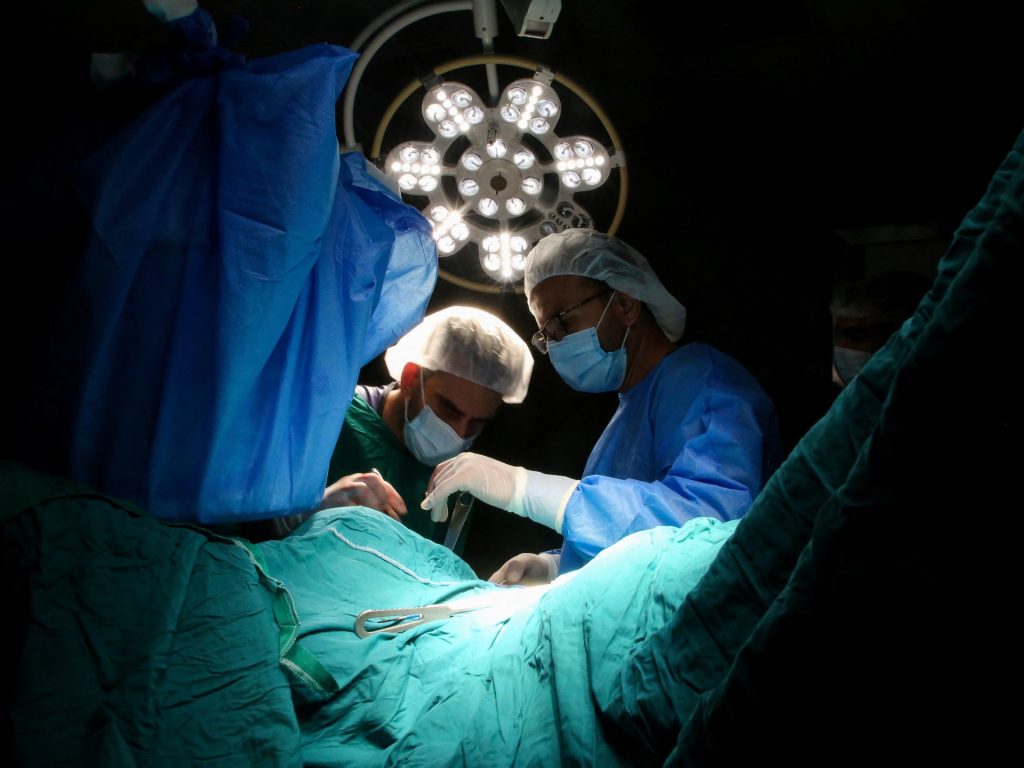
Two of Gaza’s largest hospitals have issued desperate pleas for help, warning that fuel shortages caused by Israel’s siege could soon turn the medical centres into “silent graveyards”. The warnings from al-Shifa Hospital in northern Gaza City and Nasser Hospital in southern Khan Younis came on Wednesday, as Israeli forces continued to bombard the Palestinian enclave, killing at least 74 people. Muhammad Abu Salmiyah, the director of al-Shifa Hospital, Gaza’s largest facility, told reporters that the lives of more than 100 premature babies and some 350 dialysis patients were at risk. “Oxygen stations will stop working. A hospital without oxygen is no longer a hospital. The lab and blood banks will shut down, and the blood units in the refrigerators will spoil,” Salmiyah said. “The hospital will cease to be a place of healing and will become a graveyard for those inside,” he said. Abu Salmiyah went on to accuse Israel of “trickle-feeding” fuel to Gaza’s hospitals, and said that al-Shifa’s dialysis department had already been shut down to conserve power for the intensive care unit and operating rooms, which cannot be without electricity for even a few minutes. In Khan Younis, the Nasser Medical Complex said it, too, has entered “the crucial and final hours” due to the fuel shortages. “With the fuel counter nearing zero, doctors have entered the battle to save lives in a race against time, death, and darkness,” the hospital said in a statement. “Medical teams fight to the last breath. They have only their conscience and hope in those who hear the call – save Nasser Medical Complex before it turns into a silent graveyard for patients who could have been saved.” Advertisement Mohammed Sakr, a spokesman for the hospital, told the Reuters news agency that the facility needs 4,500 litres (1,189 gallons) of fuel per day to function, but it now has only 3,000 litres (790 gallons) – enough to last 24 hours. Sakr said doctors are performing surgeries without electricity or air conditioning, and the sweat from staff is dripping into patients’ wounds, risking infection. A video from Nasser Hospital, posted on social media, shows doctors sweating profusely as they perform a surgery. “Everything is turned off here. The air conditioning is turned off. No fans,” a doctor says in the video as he demonstrates conditions in the ward. “All the staff are exhausted, they are complaining [about the] high temperature.” Israel’s relentless bombardment has decimated Gaza’s healthcare system in the 21 months since it launched its assault on the Palestinian enclave in the wake of the Hamas-led attacks of October 7, 2023. Since then, there have been more than 600 recorded attacks on health facilities in Gaza, according to the World Health Organization (WHO). As of May this year, only 19 of Gaza’s 36 hospitals remain partially operational, with 94 percent of all hospitals damaged or destroyed. Israeli forces have also killed more than 1,500 health workers in Gaza, and detained 185, according to official figures. The WHO, meanwhile, has described Gaza’s health sector as being “on its knees”, with shortages of fuel, medical supplies and frequent arrivals of mass casualties from Israeli attacks. Marwan al-Hams, the director of field hospitals in Gaza, told Al Jazeera that “hundreds” of people could die in the territory if fuel supplies are not brought in urgently. This includes “dozens” of premature babies who could die within the next two days, he said. Dialysis and intensive care patients would also lose their lives, he said, adding that the injuries of the wounded were worsening amid deteriorating conditions, while diseases like meningitis were spreading. UNICEF spokesperson James Elder, who recently returned from Gaza, said, “You can have the best hospital staff on the planet”, but if they are denied medicine and fuel, operating a health facility “becomes an impossibility”. Israel’s war on Gaza has killed at least 57,575 people and wounded 136,879, according to Gaza’s Health Ministry. An estimated 1,139 people were killed in Israel during the October 7, 2023 attacks, and more than 200 were taken captive. Adblock test (Why?)
Video: Marchers mark route of Srebrenica genocide 30 years later

NewsFeed Thirty years after the Srebrenica massacre, thousands have embarked on the annual three-day march along the same route where more than 8,000 Bosnian men and boys were executed, calling for Serb leaders to finally recognise the atrocity as a genocide. Published On 9 Jul 20259 Jul 2025 Adblock test (Why?)
Israel says it launched ‘special, targeted operations’ in southern Lebanon
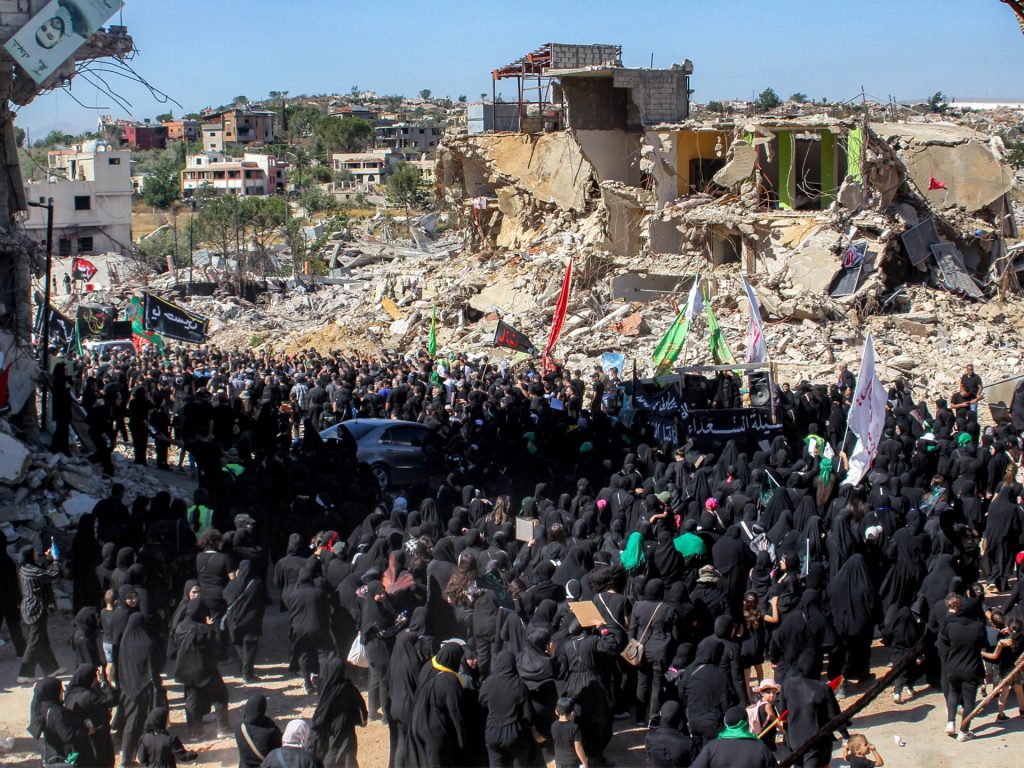
Army shares video of troops on ground in ‘targeted nighttime operation’ amid near-daily attacks against neighbour. Israeli troops have entered southern Lebanon, the military says, to dismantle infrastructure belonging to Hezbollah, in its latest near-daily violation of its November ceasefire with the Lebanese armed group. The military said in a statement on Wednesday that it had launched “special, targeted operations” to destroy Hezbollah facilities and prevent the group from “reestablishing itself in the area”. It claimed the ground incursion had been launched, acting on “intelligence information and the identification of Hezbollah weapons and terrorist infrastructure in several areas of southern Lebanon”. The army statement said the 9th Brigade was in the Labbouneh area, while troops from the 300th Brigade were operating in the Jabal Blat area further west – both within sight of the border. It shared a video captioned “footage from a targeted nighttime operation of the 9th Brigade in southern Lebanon”, troops were shown walking on the ground. The army has not commented on whether the incursion marks the first time it has operated on the ground in Lebanon since agreeing to the United States-brokered ceasefire in November 2024. Since striking the deal, which sought to end more than a year of hostilities with Hezbollah – including several months of all-out war – Israel has continued to carry out near-daily strikes across Lebanon, including multiple strikes on the capital, Beirut. Israel says it is targeting Hezbollah arms depots and fighters, but numerous civilians have been killed and wounded, and residential buildings were destroyed. Advertisement Israeli attacks across Lebanon The new operation was announced as Israel intensified its strikes in Lebanon amid Hezbollah’s weakened position, the Lebanese army staying on the sidelines and the international community’s failure to pressure Israel to abide by the truce. Lebanese President Joseph Aoun has repeatedly asked the US and Israel to rein in Israel’s attacks on the country. On Sunday, the Hezbollah leader Naim Qassem said the group remains open to peace, but it will not disarm or back down from confronting Israel until it ends its air raids and withdraws from southern Lebanon. “We cannot be asked to soften our stance or lay down arms while [Israeli] aggression continues,” Qassem told thousands of supporters gathered in Beirut’s southern suburbs for Ashura, an important day in the Shia Muslim calendar. Under the ceasefire deal, Hezbollah was to pull its fighters back north of the Litani River, about 30 kilometres (20 miles) from the Israeli border, leaving the Lebanese army and United Nations peacekeepers as the only armed parties in the region. Israel was required to fully withdraw its troops from the country, but has kept them in five locations it deems strategic to its own interests. Thomas Barrack, an adviser to US President Donald Trump who serves as Washington’s ambassador to Turkiye and special envoy for Syria, returned to Beirut on Monday, praising the Lebanese government’s response to a US proposal aimed at disarming Hezbollah amid Israel’s continued military presence in the country. Since the Gaza war started in October 2023, Israel has also carried out attacks against members of Palestinian factions that maintain a presence in various areas of Lebanon, mostly in camps for Palestinian refugees. On Tuesday, an Israeli strike on a vehicle near the northern Lebanese city of Tripoli killed at least three people and injured 13 others, according to Lebanon’s Ministry of Health. The military later announced that it had killed Mehran Mustafa Ba’jur in the strike, describing him as one of Hamas’s key commanders in Lebanon. It underscored that Israel’s assaults are being launched across the country, not just in the south. It was the first time an Israeli assassination had taken place in the area since the truce. Adblock test (Why?)
Why was Christian Horner sacked as Red Bull F1 team boss?

Christian Horner has been sacked as Red Bull team principal with immediate effect after 20 years, the Red Bull Racing Formula One team announced on Wednesday. The 51-year-old oversaw a period of dominance by the team, winning the drivers’ championship eight times – including the past four titles with Max Verstappen – and adding six constructors’ crowns. Who will replace Horner at Red Bull Racing? Horner, who has been in charge of Red Bull since the team was formed in 2005, will be replaced by the principal of sister team Racing Bulls, Laurent Mekies. A motorsport aerodynamics specialist, the French-born Mekies entered Formula One in the early 2000s and had stints working with Arrows, Minardi, Toro Rosso and Ferrari before joining Racing Bulls as team principal in 2024. “I think he has a very, very good understanding of the business, having started as an engineer and then worked at the FIA,” said Fred Vasseur, current F1 team principal at Ferrari, when Mekies left the famous Italian team in July 2023. Laurent Mekies is the new team principal of Red Bull Racing after the shock exit of Christian Horner [File: Alessio Morgese/Stefano Facchin/NurPhoto via Getty Images] No reason given for Horner sacking Horner was sacked as Red Bull’s team principal with immediate effect. The team’s official media statement, released on Wednesday, reads: “Red Bull has released Christian Horner from his operational duties with effect from today [Wednesday, July 9, 2025] and has appointed Laurent Mekies as CEO of Red Bull Racing. Oliver Mintzlaff, CEO Corporate Projects and Investments, thanked Christian Horner for his exceptional work over the last 20 years.” “We would like to thank Christian Horner for his exceptional work over the last 20 years,” said Mintzlaff. “With his tireless commitment, experience, expertise and innovative thinking, he has been instrumental in establishing Red Bull Racing as one of the most successful and attractive teams in Formula 1. Thank you for everything, Christian, and you will forever remain an important part of our team history.” Martin Brundle, an ex-F1 driver, current race commentator and friend of Horner, told Sky Sports News: Advertisement “I am due to speak to Christian later. I put a message to him saying, ‘I am sorry to read this, can we have a chat before I am due to go on TV because I want to know more about it from his point of view’. “He wasn’t able to do that. What he did say was that no reason was given to him as to why he is being released.” Horner, right, and F1 commentator Martin Brundle chat in the paddock prior to qualifying ahead of the F1 Grand Prix of Australia at Albert Park Circuit on March 23, 2024, in Melbourne, Australia [Kym Illman/Getty Images] A difficult 18 months for Horner Horner’s dismissal follows a challenging period on several fronts for the team principal. His exit from the team comes nearly a year-and-a-half after it was leaked that a female employee had accused Horner of sexual harassment and coercive, controlling behaviour. Horner was twice cleared of the claims by Red Bull headquarters, situated in Austria. At the same time, Max Verstappen’s father, Jos, called for Horner to leave his position and claimed that the Briton’s presence could tear the team apart in a March 4, 2024, interview. Jos told The Daily Mail that “there is tension while he remains in position”, referring to Horner. He added, “The team is in danger of being torn apart. It can’t go on the way it is. It will explode. He is playing the victim when he is the one causing the problems.” The early-2025 departure of Adrian Newey – the former chief technology officer of Red Bull Racing and widely considered one of the greatest motorsport designers in F1 – to rival team Aston Martin was a huge loss to the Milton Keynes-based team and to Horner personally. Newey had joined Red Bull in 2006, just months after Horner’s appointment, with the pair forming one of the most successful F1 management partnerships in history. Horner, married to former ‘Spice Girl’ popstar Geri Halliwell, right, had been accused of inappropriate behaviour by a female colleague but was twice cleared of the claims by the team’s parent company, Red Bull GmbH [James Bearne/Getty Images] How successful was Horner as Red Bull boss? Under Horner’s leadership, Red Bull won their first world championship in 2010, with German driver Sebastian Vettel taking the first of four consecutive drivers’ titles. Following a multiyear period of dominance by archrival Mercedes, Red Bull, this time with Max Verstappen of the Netherlands as their star driver, entered a second championship window, winning four more drivers’ titles consecutively from 2021 to 2024. Advertisement In 2023, Horner presided over the most dominant season in Formula One history, with the team winning 21 of 22 races, and Verstappen setting a new F1 record with 10 consecutive victories. Horner, left, celebrates winning the 2021 F1 World Drivers Championship with driver Max Verstappen at Yas Marina Circuit on December 12, 2021, in Abu Dhabi, United Arab Emirates [Bryn Lennon/Getty Images] Will Max Verstappen stay at Red Bull Racing? At the midway point of the 2025 season, Verstappen trails McLaren duo Oscar Piastri and Lando Norris in the drivers’ standings and has all but conceded the drivers’ title for this season. As far back as April 13, Verstappen was already pessimistic about the prospects of winning a fifth straight drivers’ championship. “McLaren are not my rivals right now. I am just taking part in this world championship,” Verstappen said, as quoted by nl.motorsport.com. When pressed further if he meant he doesn’t see himself competing for the 2025 drivers’ title, he replied: “No, I don’t.” In recent days, and not for the first time, Verstappen has been linked with a move to rival Mercedes, possibly as soon as next season. Brundle told Sky Sports News that Horner’s exit from Red Bull may defuse tensions, resulting in Verstappen re-signing with the only F1 team
Netanyahu discussing ‘opportunities for peace’ in Gaza with Trump
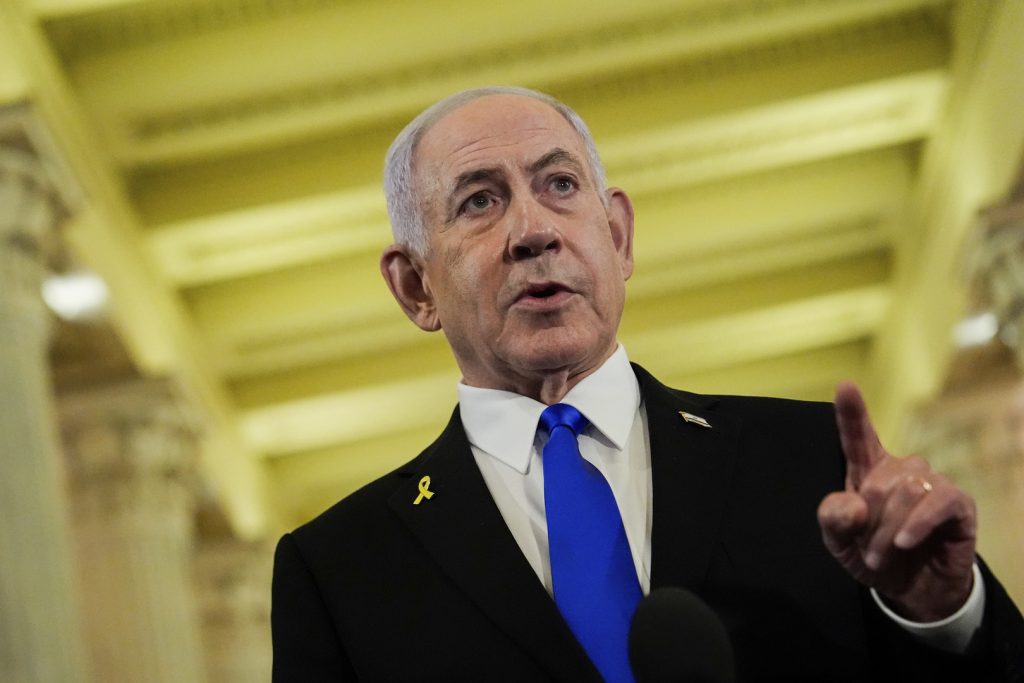
NewsFeed Israeli Prime Minister Benjamin Netanyahu said he would meet with President Trump again on Tuesday to discuss a Gaza ceasefire. He also praised Washington’s “unprecedented” military ties with Israel following a meeting with Capitol Hill lawmakers. Published On 8 Jul 20258 Jul 2025 Adblock test (Why?)