

DeepSeek transferred data without consent, South Korean watchdog says
Personal Information Protection Commission says AI model sent personal data to Beijing-based cloud service. South Korea’s data protection watchdog has accused DeepSeek, the Chinese start-up whose artificial intelligence-powered chatbot took the tech scene by storm earlier this year, of transferring personal data without users’ consent. The Personal Information Protection Commission said on Thursday that DeepSeek had been transferring information to several companies in China and the United States before its ChatGPT-like AI model was removed from app stores in February, pending a privacy review. Nam Seok, director of the commission’s investigation bureau, said during a news conference that the app had sent user prompts and device and network information to a Beijing-based cloud service called Volcano Engine. DeepSeek “acknowledged it had insufficiently considered Korea’s data protection laws” and “expressed its willingness to cooperate with the commission, and voluntarily suspended new downloads”, Nam said. DeepSeek did not immediately respond to a request for comment. Following the South Korean watchdog’s announcement, China’s Ministry of Foreign Affairs said it placed a high level of importance on data privacy and security. Advertisement “We have never – and will never – require companies or individuals to collect or store data through illegal means,” ministry spokesperson Guo Jiakun said during a regular news conference. DeepSeek’s R1 caused a sensation in January after its developers released a research paper claiming they spent less than $6m on computing power to train the model – a fraction of the multibillion-dollar AI budgets of US tech giants such as OpenAI and Google. The emergence of a Chinese startup capable of rivalling Silicon Valley’s leading players challenged assumptions about US dominance in AI and prompted scrutiny of the sky-high market valuations of companies such as Nvidia and Meta. Marc Andreessen, one of the most influential tech venture capitalists in Silicon Valley, hailed DeepSeek’s model as “AI’s Sputnik moment”. Adblock test (Why?)
China will talk trade, but US will need to make the first move, experts say
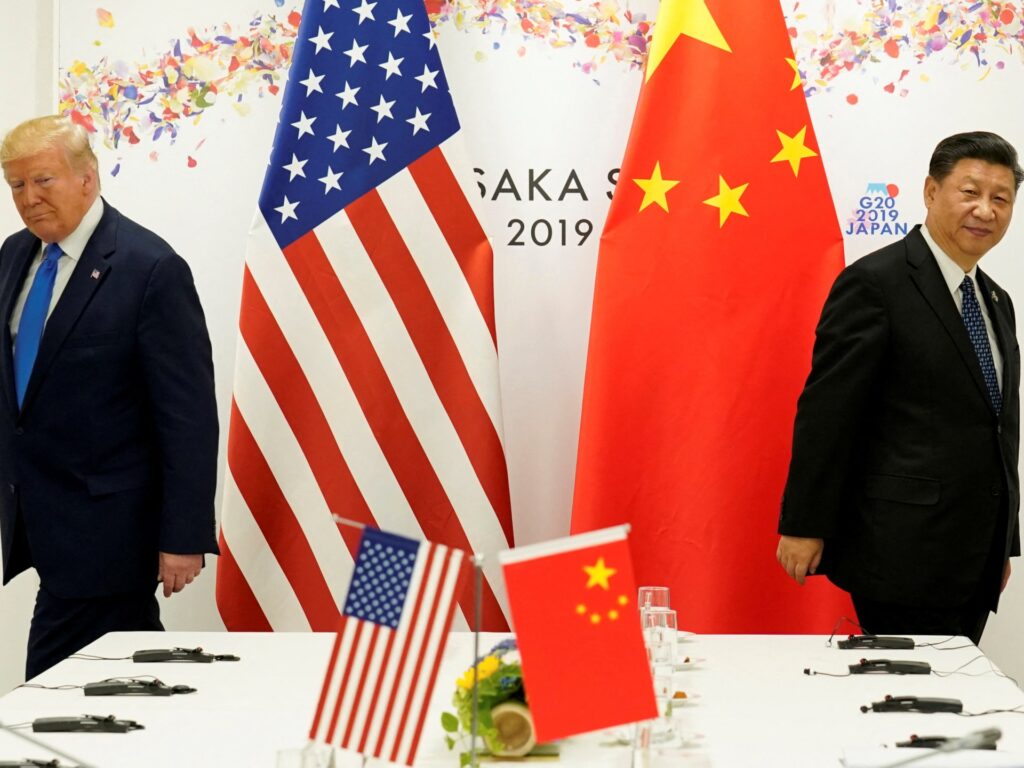
Taipei, Taiwan – As United States President Donald Trump plays up the prospects of a trade deal with China, experts say Beijing is unlikely to make the first move and may even demand preconditions before coming to the negotiating table. Trump has said he expects to see his 145 percent tariff on China “come down substantially” but that a lower rate would depend on Beijing’s next steps. “We’re going to have a fair deal with China,” Trump told reporters on Wednesday in his latest remarks, stirring hopes of a de-escalation in tensions between the sides. But given the high stakes in its standoff with the US, China “can’t afford to be the side that makes the first move because it can’t be viewed as capitulating to the Trump administration’s pressure campaign”, William Yang, a senior analyst on Northeast Asia at the International Crisis Group, told Al Jazeera. “As a result, China will firmly uphold its current position until it sees the US government make some credible concessions that can allow Beijing to consider coming to the negotiating table and claim victory.” Advertisement Beijing may even see Trump’s more optimistic rhetoric as a sign that “digging in its heels” is working, Yang said. US and Chinese officials have not formally announced the start of trade negotiations, though Trump said on Wednesday that his administration was “actively” negotiating with the Chinese side, without elaborating. On Thursday, China’s Ministry of Commerce rebuffed Trump’s remarks, saying there were no talks on trade taking place between the sides. “Any claims about the progress of China-US economic and trade negotiations are groundless and have no factual basis,” ministry spokesman He Yadong told a news conference. China has said the door is “wide open” to talks but insisted it will not shirk from a fight with the US if necessary. In contrast to Trump’s off-the-cuff remarks and vacillating statements on the possibility of relief from his tariffs, Beijing’s messaging, which has been largely communicated through the Ministry of Commerce and the Ministry of Foreign Affairs, has been tightly controlled and consistent. “I would say that, at least on the surface, China has the upper hand,” Zhiwu Chen, a professor of finance at the University of Hong Kong’s Business School, told Al Jazeera. “It’s more in control, whereas President Trump and Secretary Bessent have been signalling and doing things that further help to weaken their hand,” Chen said, referring to US Treasury Secretary Scott Bessent. “I think the statement really shows he is anxious and panicking, whereas China has been pretty quiet and muted,” Chen added, referring to Trump’s comments that he intends to lower his tariffs at some point. Advertisement China has slapped US exports with a 125 percent tariff in response to Trump’s trade salvoes, as well as announcing various other “countermeasures”, including restrictions on rare earth exports and limits on the number of Hollywood film releases in China. If tensions continue to escalate, Beijing could potentially halt cooperation on issues like controlling fentanyl exports. In theory, it could also inflict pain on the US economy by dumping its more than $760bn in US government debt – a move that economists view as unlikely given that it would have serious ramifications for the Chinese economy as well. Unlike Trump, who prefers to negotiate face-to-face with world leaders, Beijing will want to engage in preliminary meetings before any meeting between Chinese President Xi Jinping and the US president, said Tom Nunlist, an associate director of tech and data policy at Trivium China. “They will be looking to have secured a deal before the top leaders meet to confirm it. To reach out to Trump directly may look like Xi is caving to US pressure, and it also risks failure,” Nunlist told Al Jazeera. “Generally speaking, the US is the aggressor here, and China has calibrated its response to be forceful but avoid escalation,” Nunlist said. It is likely that discussions would address a wider array of concerns than just tariffs, according to analysts, especially now that Trump appears to have blinked first in the standoff. Potential areas for concessions include “tech export controls and Taiwan”, according to Dingli Shen, a Shanghai-based international relations scholar. Advertisement “Longstanding grievances about how China is treated within the global system” could be on the table, according to Marina Zhang, an associate professor at the University of Technology Sydney’s Australia-China Relations Institute. “In practice, it means no public humiliation, no unilateral ultimatums, and no compromises on four key ‘red lines’: Issues related to Taiwan, democracy and human rights, China’s political system, and its right to development,” Zhang told Al Jazeera. Zhang said US export controls on critical technology could be on the agenda, as well as the blacklisting of Chinese tech companies such as Huawei and Chinese chipmaker SMIC. “China may also push for the relaxation of investment screening rules, particularly in sensitive sectors like semiconductors, clean energy, and advanced manufacturing. Another likely ask is a degree of de-escalation over Taiwan,” she said. “While Beijing does not expect full concessions, it would welcome less overt political signalling from Washington – such as limits on high-level official visits and arms sales.” For Beijing, the wait could be worthwhile if it means achieving some of its longer-term goals, said the International Crisis Group’s Yang. “This is more than a pure trade negotiation for China at this point. It views the trajectory of this tariff standoff as a precursor to how bilateral relations with the US will develop over the next four years,” he said. “Beijing will want to see the Trump administration make the first move to reduce the tariffs imposed on imported Chinese products. The level of potential tariff reduction could potentially determine the Chinese government’s willingness to start high-level trade negotiation with the Trump administration.” Advertisement Adblock test (Why?)
Trump says lower tariffs depend on China, as US states sue over trade war
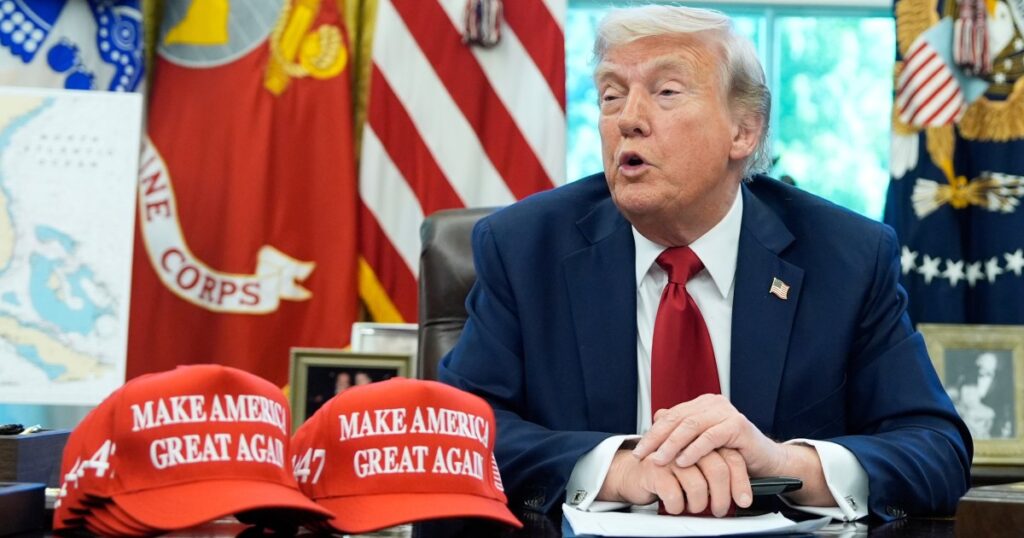
Wall Street rallies for second day on hopes of a de-escalation in trade tensions between world’s two largest economies. United States President Donald Trump has reiterated his intention to lower his crippling tariffs on China, but insisted the timeline for any relief will depend on Beijing. Speaking to reporters at the White House on Wednesday, Trump said he could announce new tariff rates on US trading partners, including China, over the next few weeks, depending on the outcome of his administration’s negotiations with other countries. “That depends on them. We have a situation where we have a very, very great place. It’s called the United States of America, and it’s been ripped off for years and years,” Trump said when asked how soon he could lower the 145 percent tariff he has imposed on most Chinese goods. “In the end, what I think is going to happen is we’re going to have great deals, and by the way, if we don’t have a deal with a company or a country, we’re going to set the tariff.” Trump said he got on “very well” with Chinese President Xi Jinping, and he hoped to see the sides reach a deal. “Otherwise, we will set a price,” Trump said. Advertisement Asked earlier on Wednesday if his administration was “actively” talking to China, Trump said: “Actively. Everything is active. Everybody wants to be a part of what we’re doing.” Trump’s comments came as Wall Street rallied for a second straight day on hopes that Washington and Beijing will de-escalate tensions that have spiralled into an effective trade embargo between the world’s two largest economies. The benchmark S&P 500 closed 1.67 percent higher on Wednesday, while the tech-heavy Nasdaq Composite finished up 2.50 percent, adding to gains the previous day spurred by US Treasury Scott Bessent’s comments that a trade with China was “unsustainable”. On Wednesday, the Wall Street Journal reported that the Trump administration was considering slashing tariffs on Chinese goods by 50-60 percent in a bid to lower tensions. The report, which cited people familiar with the matter, said that Trump was considering a number of options for easing the duties but would expect to see Beijing lower its 125 tariffs on US goods in return. On Tuesday, Trump publicly acknowledged that his 145 percent tariff on China was “very high” and said the rate would “come down substantially” at some point. China has said it opposes protectionist measures such as tariffs, but that it is prepared to “fight to the end” if the US continues to escalate its trade salvoes. “We have made it very clear that China does not look for a war, but neither are we afraid of it. We will fight, if fight we must,” Chinese Foreign Ministry spokesperson Guo Jiakun said during a regular media briefing on Wednesday. Advertisement “Our doors are open if the US wants to talk. If a negotiated solution is truly what the US wants, it should stop threatening and blackmailing China and seek dialogue based on equality, respect and mutual benefit.” The US-China trade war has raised fears of a global economic slowdown, with the International Monetary Fund earlier this week slashing its 2025 growth forecast from 3.3 percent to 2.8 percent. On Wednesday, a group of 12 US states, including Arizona, Colorado, Connecticut, Illinois and New York, filed a lawsuit challenging Trump’s authority to impose the tariffs without the approval of the US Congress. In the suit filed at the US Court of International Trade in New York, the states said that Trump had “upended the constitutional order and brought chaos to the American economy”. “President Trump’s insane tariff scheme is not only economically reckless – it is illegal,” Arizona Attorney General Kris Mayes said in a statement. “Arizona cannot afford President Trump’s massive tax increase. No matter what the White House claims, tariffs are a tax that will be passed on to Arizona consumers.” Adblock test (Why?)
Real Madrid beat Getafe to keep LaLiga leaders Barcelona in sight
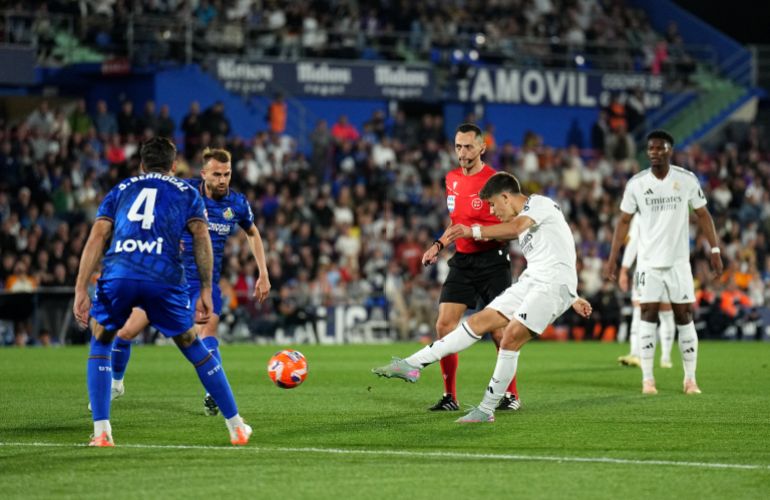
Arda Guler scores the only goal of the game as Real record crucial away win to keep title defence alive. Arda Guler struck the only goal as Real Madrid won 1-0 at Getafe to claw back to within four points of LaLiga leaders Barcelona. The young Turkey international fired in from outside the area midway through the first half on Wednesday as Carlo Ancelotti’s side stayed in title contention after Barcelona won by the same scoreline at Mallorca on Tuesday. Archrivals Madrid and Barcelona will meet in the Copa del Rey final in Seville on Saturday, with Kylian Mbappe poised to return from injury for the weekend Clasico – one of two remaining this season. In his absence on the outskirts of Madrid, 18-year-old Brazilian striker Endrick made his first league start as England international Jude Bellingham dropped to the bench. Left-back Fran Garcia twice went close for Madrid, his initial effort palmed away by David Soria before he blasted the rebound high and wide. It wasn’t long before Guler broke the deadlock after Brahim Diaz looked to have wasted the chance. Madrid worked the ball back out to Guler, whose powerful 20-yard drive flashed past Soria despite the Getafe goalkeeper getting a hand to it. Arda Guler of Real Madrid scores his team’s winning goal [Aitor Alcalde/Getty Images] Endrick thought he had scored only his second LaLiga goal after being put through by Vinicius Junior, but Soria took the sting out of his shot and Djene cleared off the line. Advertisement Getafe created opportunities of their own, the best of which fell in the second half to an unmarked Mauro Arambarri, who dragged wide with only Thibaut Courtois to beat. Courtois came to Madrid’s rescue in stoppage time as he smothered inside his six-yard box after Peter and Juanmi tried to force the ball home from close range. Getafe substitute Alvaro Rodriguez, who is on loan from Madrid, nearly snatched an equaliser at the death, but saw his low shot beaten away by Courtois. Inaki Williams fired Athletic Bilbao to a 1-0 home win over Las Palmas earlier on Wednesday to strengthen their chances of direct qualification for next season’s Champions League. The Basque side sit fourth with five games to go, eight points clear of fifth-placed Villarreal, who suffered a 3-0 defeat at Celta Vigo. Bilbao also have a Europa League semifinal against Manchester United to come, and should they win that, they will play the final in their home stadium. Five LaLiga sides qualify for the Champions League this season. Sixth-placed Betis are a point behind Villarreal ahead of their encounter with rock-bottom Valladolid on Thursday. A fifth-minute goal from the elder Williams brother after he turned a defender in the box and side-footed home with the outside of his boot was enough for all three points. Bilbao needed two sharp saves from Spain goalkeeper Unai Simon before half-time as relegation-threatened Las Palmas went down fighting. Adblock test (Why?)
What will the IMF and World Bank do in the latest economic crisis?
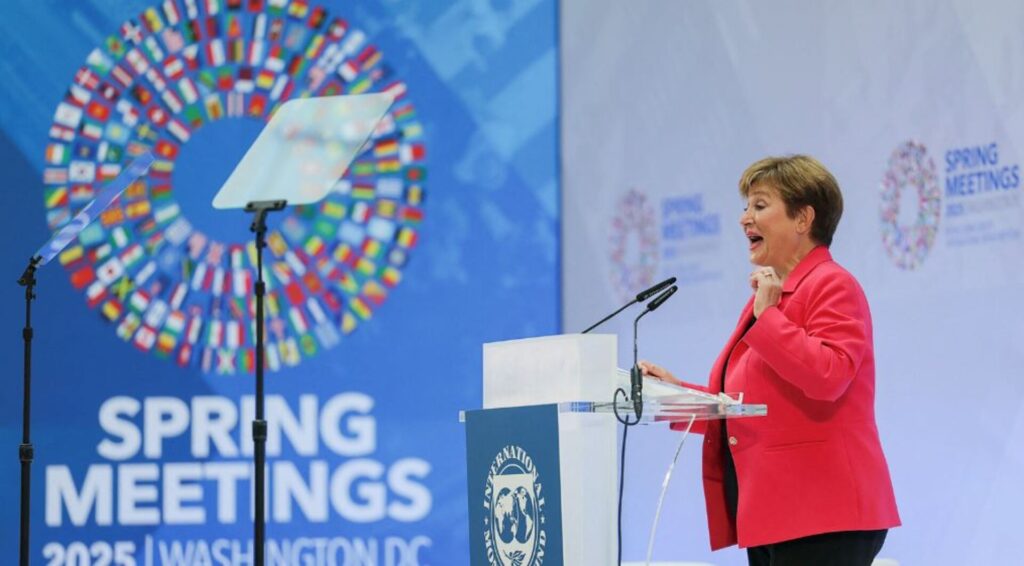
Global financial institutions meet as turmoil brings fears worldwide. Global financial turmoil tops the agenda as the International Monetary Fund and World Bank hold meetings in Washington, DC. The organisations face significant challenges, and criticism, too. Can they help vulnerable countries, or will Western interests take priority? Presenter: Nick Clark Guests: Ali Hasanain – Associate professor at the Lahore University of Management Sciences Vicky Pryce – Chief economic adviser at the Centre for Economics and Business Research Daniel Gros – Board member at the Centre for European Policy Studies Adblock test (Why?)
‘It’s about time NATO be shut down’, says Vijay Prashad
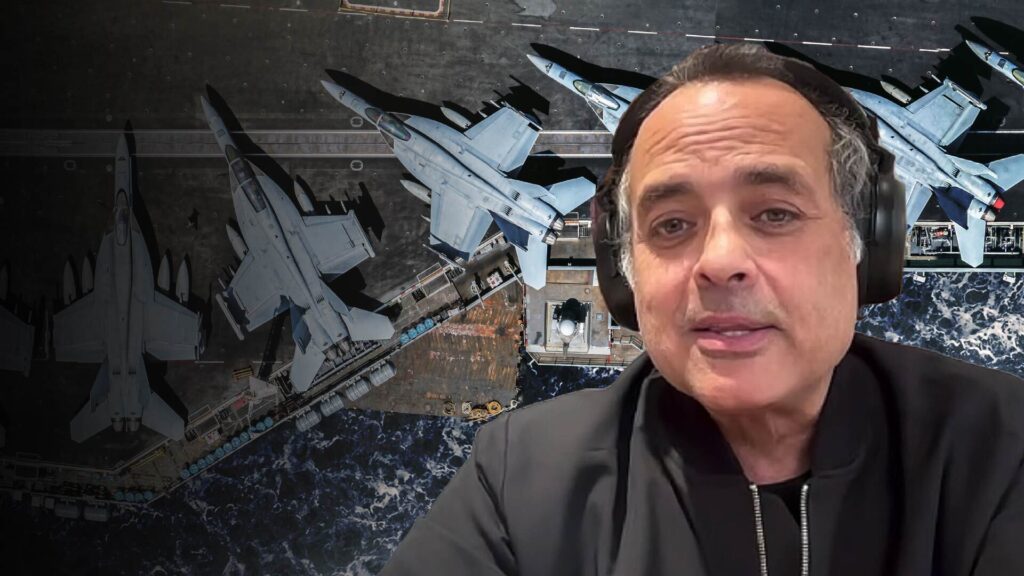
Redi Tlhabi discusses NATO’s role and relevance in today’s conflicts with historian Vijay Prashad. US President Donald Trump has repeatedly criticised NATO, casting doubt on the alliance’s role in a shifting global order. NATO has suffered major setbacks in recent years, from its inability to prevent Russia’s invasion of Ukraine to the end of a 20-year war in Afghanistan that saw the Taliban return to power. So, is NATO still relevant? Could it even stand a chance against any sort of confrontation with China? In this UpFront web extra, Redi Tlhabi sits down with historian and journalist Vijay Prashad to unpack these pressing issues. Adblock test (Why?)
US senator’s town hall turns chaotic over Trump, deportations

NewsFeed Anger flared and nearly turned into physical confrontation at a town hall hosted by US Republican Senator Chuck Grassley. Crowd members argued over the deportation of Kilmar Abrego Garcia, who the Trump administration is trying to avoid bringing back despite a court order. Published On 23 Apr 202523 Apr 2025 Adblock test (Why?)
Trump: ‘Everything’s active’ on China trade talks
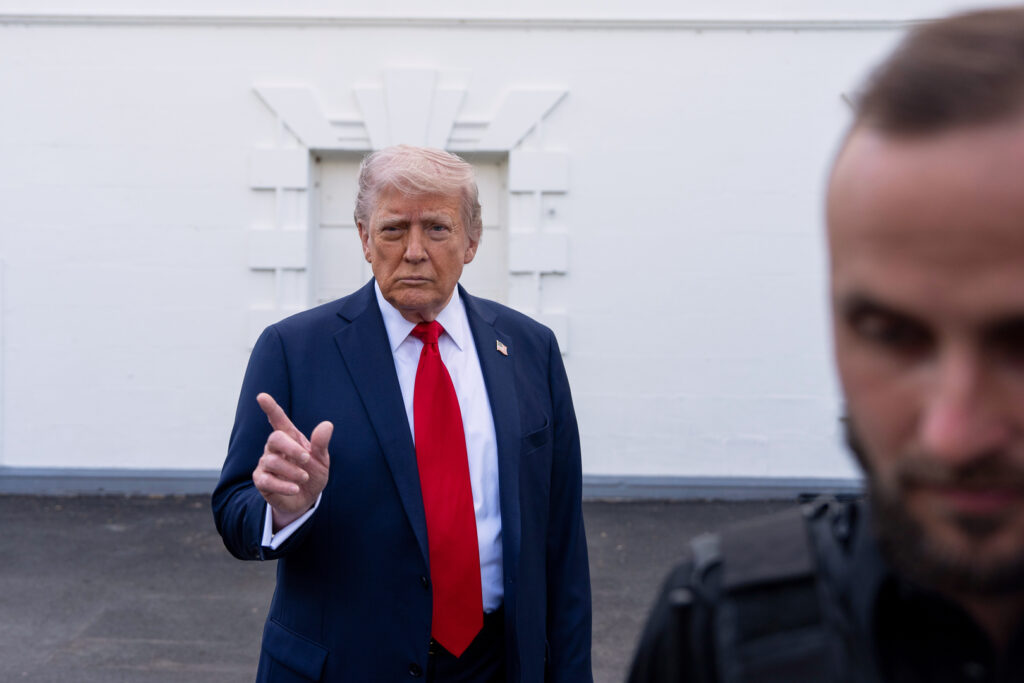
NewsFeed President Trump says “everything’s active” on China trade talks. Speaking from the White House lawn, he vowed the US will strike “a fair deal with China,” but brushed off questions about whether he’s considering lowering tariffs. Published On 23 Apr 202523 Apr 2025 Adblock test (Why?)
‘I grabbed my cat and ran’: Istanbul panics as earthquake hits

Istanbul, Turkiye – For five terrifying seconds, buildings shook, shelves toppled, and panic rippled through Istanbul, Turkiye’s cultural and economic heart. The ground beneath Istanbul trembled at 12:49pm (09:49 GMT) on Wednesday, sending millions scrambling into the streets as a magnitude 6.2 earthquake struck in the sea off the city’s western coast. Several smaller aftershocks have followed, with magnitudes of between 3.5 and 5.9. No major damage was reported according to authorities, although Istanbul Governor Davut Gul said that at least 151 people were injured after jumping from heights to escape in a panic. Many in Istanbul are worried the city will be eventually be hit with a large earthquake, as has happened in the past [Elis Gjevori/Al Jazeera] The quake, centred near Silivri in the Sea of Marmara, revived painful memories of past disasters and left residents grappling with fear over what might come next. In the upscale Nisantasi district, 69-year-old Bilge was at home when her building suddenly rattled. “People in the building screamed ‘earthquake!’ and ran outside. My hands wouldn’t stop shaking,” she told Al Jazeera, describing crowds spilling onto the sidewalks, clutching phones to check on loved ones. Advertisement Nearby, coffee shop workers rushed out into the street. “We were just calling our families,” one said, as aftershocks continued to ripple across the city. The earthquake coincided with National Sovereignty and Children’s Day, a public holiday, leading to the cancellation of events and heightened public anxiety. Parents were seen walking through the streets with their children still dressed for celebrations. “I was on the seventh floor, just about to make lunch,” said Zeynep Karatas, 41, a freelance designer from Sisli who had come to Nisantasi’s Macka Park with hundreds of others who wanted the safety of an open space. “The walls in my building cracked, the glasses clinked. I didn’t wait – I grabbed my cat and ran,” said Karatas. She joined dozens of neighbours already gathered outside. Some clutched pets, others their phones, trying to contact relatives. “We all ran out together. Strangers were helping elderly people down the stairs. I felt like crying,” she added. Some in the park are anxious, and say they will stay awake as long as possible at night. Others are planning to pack a small bag in case they need to leave their home quickly. Turkiye’s emergency authority AFAD has warned residents to stay alert, as aftershocks can continue for hours, even days. History of earthquakes While initial reports indicated little structural damage, the psychological impact was immediate. “Everyone was talking about 2023,” said Baran Demir, 62, referring to the devastating earthquake that killed more than 53,000 people in southern Turkiye, and another 6,000 people in Syria. “You could see it on people’s faces, that same fear. My building didn’t collapse then, but the memory came rushing back.” Advertisement In Nisantasi, 35-year-old cafe worker Mehmet was helping usher customers outside when the aftershocks hit. “Everyone stayed calm, but the mood shifted fast. We just kind of held our breath. We thought this was the big one we’ve been waiting for.” Residents of Istanbul have long feared a major earthquake hitting the city, as has happened in the past. Earthquakes with a magnitude greater than 7 have hit Istanbul in 1509, 1766 and 1894, causing thousands of deaths and large-scale destruction. A 1999 earthquake in Izmit, approximately 100 kilometres (62 miles) east of Istanbul, killed more than 17,000 people. The city lies near the North Anatolian Fault, a major fault line that regularly triggers earthquakes. Improved building codes in recent decades are designed to counteract the effect of earthquakes in the densely populated city, but many are still worried. “I’m scared to sleep tonight,” said Gokhan, an elderly man who lives alone. “What if there are strong aftershocks tonight, I can’t move quickly,” he says with a wry smile. “If it’s my time, it’s my time.” Adblock test (Why?)
China-US trade war: Can Trump win?
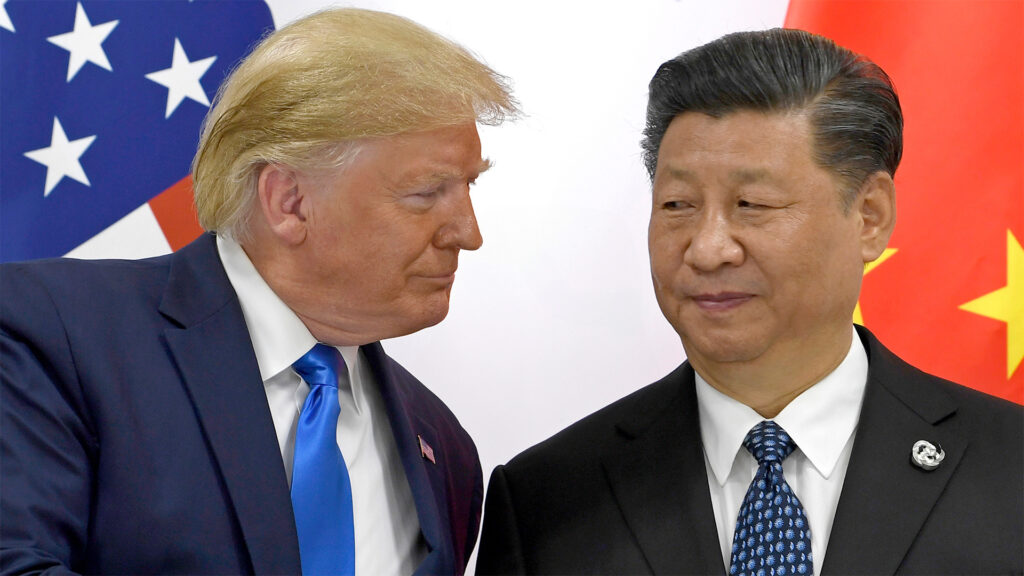
Singaporean geostrategist Kishore Mahbubani argues that China has benefitted from globalisation – but so has the United States. Veteran Singaporean diplomat Kishore Mahbubani argues that it’s “legitimate” for US President Donald Trump to be worrying about the widening gap between rich and poor in the United States, but his idea to force factory jobs back to the US is probably not going to work. Mahbubani tells host Steve Clemons that China will be damaged by the current trade war with the US, but “the Chinese are prepared to accept short-term pain for long-term gain”. The disarray in US policy is “a gift to China,” says Mahbubani. “I don’t see countries walking away from China.” Adblock test (Why?)