

Wildfires erupt across Mediterranean as heatwave worsens
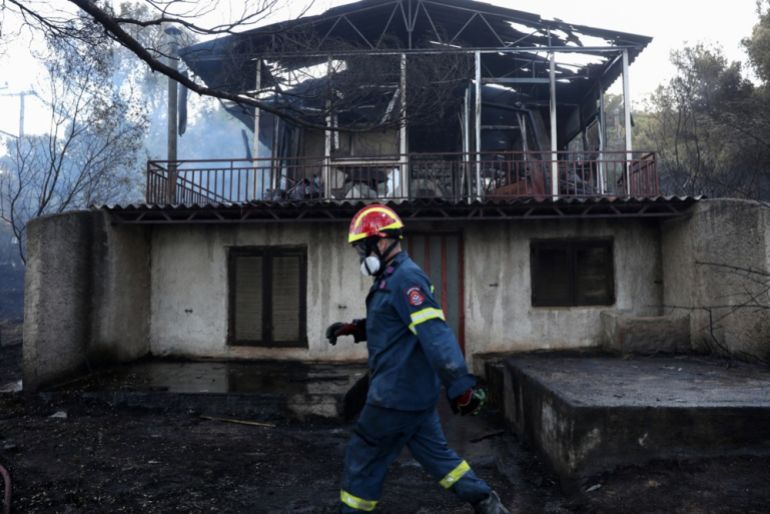
Blazes break out in France, Greece, Turkiye and Syria, with several other nations on high alert amid warnings of scorching weather. Countries across the Mediterranean are battling fast-spreading wildfires and soaring temperatures as a heatwave sweeps through Southern Europe and parts of the Middle East, prompting evacuations and emergency alerts. Blazes broke out in Greece, Turkiye, France and Syria on Sunday, with several other nations on high alert as forecasters warned that the scorching weather would intensify in the coming days. From Spain to Italy, authorities urged residents to protect vulnerable people and avoid unnecessary travel during the region’s first severe heatwave of the summer. Emergency teams and ambulances were stationed near popular tourist destinations, while meteorologists warned that extreme heat events – supercharged by climate change – are becoming more frequent and intense. A firefighter walks past a burned house in Pikermi, east of Athens, Greece, July 3, 2025 [George Vitsaras/EPA] In western Turkiye, wildfires erupted on Sunday in Izmir province, fanned by strong winds. Firefighters, supported by aircraft, fought to control the blaze. Local authorities said five neighbourhoods in the Seferihisar district were evacuated as a precaution. Authorities said firefighters have battled more than 600 fires in the drought-hit nation over the past week. Turkish authorities arrested 10 suspects in relation to wildfires that broke out across the country over the past week, Interior Minister Ali Yerlikaya said on Friday. The wildfires killed at least three people in the western coastal province of Izmir. Advertisement Firefighters were still trying to control a blaze in the southern coastal area of Dortyol in Hatay province. Meanwhile, in Greece, more than 160 firefighters, 46 fire trucks and five aircraft were deployed to combat flames in southern Evia. The blaze, which began late on Friday, burned through forested areas and forced two villages to evacuate, officials said. Fires also broke out near Athens. France also saw wildfires break out in the Corbieres region of Aude in the southwest, where temperatures soared above 40C (104F). A campsite and a historic abbey were evacuated. Meteo France placed 84 of the country’s 101 departments under orange-level heat alerts on Monday. A firefighting aircraft flies over a fire engine during efforts to contain a wildfire near Pikermi suburb, east of Athens, Greece, July 3, 2025 [George Vitsaras/EPA] In Spain, the national weather agency AEMET reported temperatures reaching 44C (111F) in parts of Extremadura and Andalusia. “I feel that the heat we’re experiencing is not normal for this time of year,” said Diego Radames, a 32-year-old photographer in Madrid, speaking to the AFP news agency. “Madrid just keeps getting hotter.” Italy placed 21 cities on red alert, including important ones, such as Rome, Milan and Naples. Emergency rooms reported a 10 percent rise in heatstroke cases, according to Mario Guarino of the Italian Society of Emergency Medicine. Portugal also faced extreme conditions, with the capital, Lisbon, under a red warning until Monday night. Two-thirds of the country was on high alert for wildfires and extreme heat. On the island of Sicily, firefighters tackled 15 blazes on Saturday alone. Scientists warn that climate change is intensifying the heat. “Heatwaves in the Mediterranean have become more frequent and more intense in recent years,” Emanuela Piervitali of Italy’s Institute for Environmental Protection and Research told AFP. “We’ll need to adapt to even higher extremes in the future.” Adblock test (Why?)
Akash, India win second cricket Test against England at Edgbaston

Deep took six wickets in the second innings as India levelled their five-match Test series against England 1-1. Akash Deep, filling in for star bowler Jasprit Bumrah, took six wickets as India crushed England by 336 runs to level the cricket series 1-1 after they bowled out the hosts for 271 to claim their first Test victory at Edgbaston. With Bumrah being rested in the second Test, Akash was the unlikely inspiration behind the visitors’ dominant, series-tying win just before tea on the final day of the second Test on Sunday. Akash claimed the first five-wicket haul of his short Test career, removing four of the top five in England’s batting order and then top-scorer Jamie Smith (88) on the way to claiming figures of 6-99. Akash finished with the bowling figures of 10-for-187 for the match. Akash Deep celebrates with India teammates after taking five wickets on the final day of the second Test against England [Alex Davidson/Getty Images] Set a world-record target of 608, England started the final day on 72-3 with a draw its only realistic hope and was all out with about two hours still to play on Sunday as India sealed a first win at Edgbaston in nine attempts. The third Test begins at Lord’s on Thursday. India recovered well after a tough defeat at Headingley last week, when England chased down 371 on day five. Bumrah was left out to preserve his fitness, but Akash was a more-than-able deputy. At age 28, he is a late bloomer – certainly at Test level, where he has played just eight matches since his debut in February last year – but looks the part already with his nagging line and length. He will likely retain his spot for the third Test. Advertisement India captain Shubman Gill was India’s other star in the second Test, making 269 in the first innings and 161 in the second innings in a record-setting performance. Jamie Smith top-scored with 88 runs for England in their second innings run chase [Paul Childs/Action Images via Reuters] Adblock test (Why?)
Israel now faces adversaries that it cannot defeat
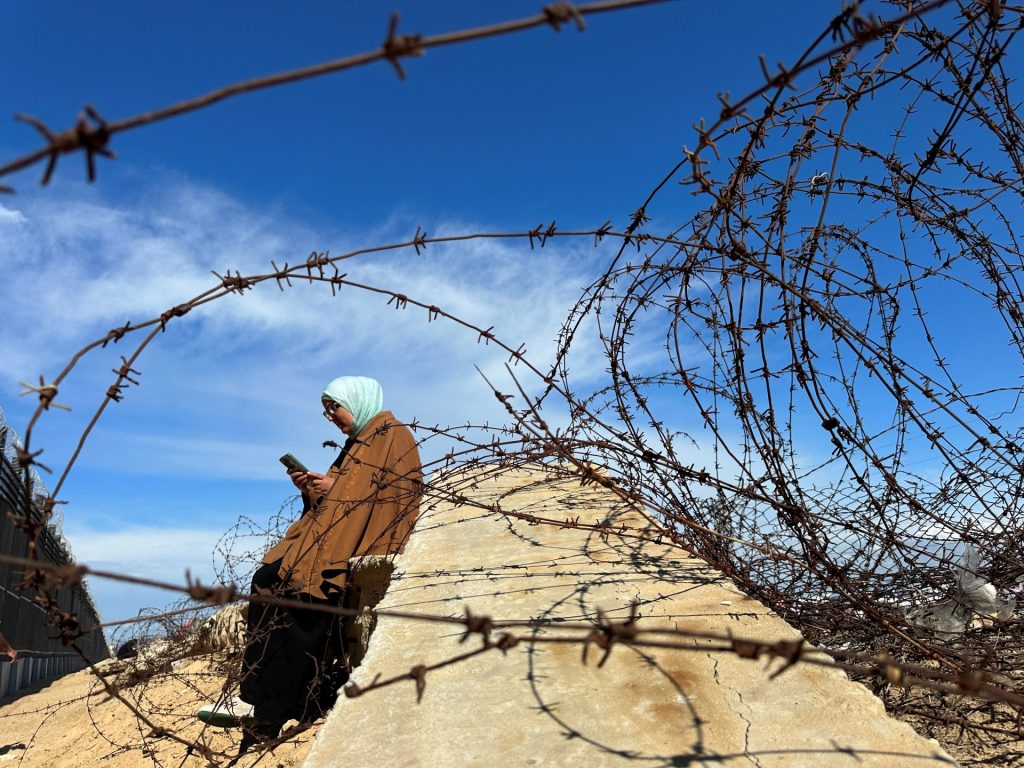
Since October 7, 2023, the war of images has eclipsed the war of weapons. From Gaza’s pulverised hospitals and starving infants to mass graves and desperate fathers digging through rubble, every pixel captured on a smartphone strikes deeper than a missile. These raw, unfiltered, and undeniable images have a far greater impact than any press conference or official speech. And for the first time in its history, Israel cannot delete them or drown them in propaganda. The horrifying images of the Israeli army massacring people at aid distribution locations prompted newspaper Haaretz’s Gideon Levy to write on June 29: “Is Israel perpetrating genocide in Gaza? […] The testimonies and images emerging from Gaza don’t leave room for many questions.” Even staunchly pro-Israel commentator and New York Times columnist Thomas Friedman no longer buys into the Israeli narrative. In a May 9 op-ed, addressed to US President Donald Trump, he declared: “This Israeli government is not our ally,” clarifying that it is “behaving in ways that threaten hard-core US interests in the region”. Once, Israel’s narrative was protected by the gates of editorial rooms and the gravity of Western guilt. But the smartphone shattered those gates. What we see now is no longer what Israel tells us — it’s what Gaza shows us. The platforms carrying these images — TikTok, WhatsApp, Instagram, X — don’t prioritise context; they prioritise virality. While older generations might look away, younger ones are glued to the stream of suffering, absorbed by every pixel, every siren, every moment of destruction. The global public is agitated, and this works against the Israeli interest. Israel is no longer just at war with its neighbours; it is at war with the lens itself. Advertisement The psychological toll of this visual war is reverberating deep inside Israeli society. For decades, Israelis were conditioned to see themselves as global narrators of trauma, not subjects of international scrutiny. But now, with videos of Israeli bombardment, flattened Gaza neighbourhoods, and emaciated children flooding every platform, many Israelis are grappling with a growing ethical predicament. There is unease, even among centrists, that these visceral images are eroding Israel’s moral high ground. For the first time, public discourse in Israeli society includes fear of the mirror: what the world now sees and what Israelis are forced to confront. Internationally, the effect has been even more destabilising for Israel’s diplomatic standing. Longstanding allies, once unconditionally supportive, now face growing domestic pressure from citizens who are not consuming official statements but TikTok’s live streams and Instagram’s image feed. Lawmakers in Europe and North America are openly questioning arms shipments, trade deals, and diplomatic cover, not because of the briefings they have on Israeli war crimes but because their inboxes are flooded with screenshots of scattered body parts and starving children. The battlefield has expanded into parliaments, campuses, city councils, and editorial rooms. This is the backlash of a war Israel cannot win with brute force. To regain control of the narrative, Israeli officials have pressured social media platforms to curb content they dislike. Yet even Israel’s most sophisticated public diplomacy efforts are struggling to keep pace with the virality of raw documentation. Behind closed doors, the Israeli military is no longer merely worried about public relations; it is concerned about prosecution. The Israeli army has admonished soldiers for taking selfies and filming themselves demolishing Palestinian homes, warning that such material is now being harvested as evidence by international human rights organisations. Footage and images from social media have already been used by activists to target Israeli servicemen abroad. In a number of cases, Israeli citizens have had to flee countries they were visiting due to war crimes complaints filed against them. In the age of smartphones, the occupation is no longer just visible — it’s indictable. In the past, Israel fought wars that it could explain. Now, it fights a battle it can only react to — often too belatedly and too clumsily. The smartphone captures what the missile conceals. Social media disseminates information that official briefings attempt to suppress. The haunting images, digitally preserved, ensure that we never forget any devastating atrocity, or act of brutality. Advertisement Images of conflict do not just convey information; they can also redefine our perceptions and influence our political positions. The powerful “Napalm Girl” photo that captured the aftermath of an attack by the US-allied South Vietnamese army on civilians during the Vietnam War had a profound impact on American society. It helped create a significant shift in public opinion regarding the war, accelerating the decision of the US government to end it. Today, in Gaza, the stream of powerful images does not stop. Despite Israel’s best efforts, the global opinion is overwhelmingly against its genocidal war. Smartphones have completely changed the nature of conflict by putting a camera in the hands of every witness. In this new era, Israel struggles to defeat the relentless, unfiltered visual record of its crimes that calls for justice. The views expressed in this article are the author’s own and do not necessarily reflect Al Jazeera’s editorial stance. Adblock test (Why?)
Gunboats target cargo vessel in Red Sea; crew abandons ship
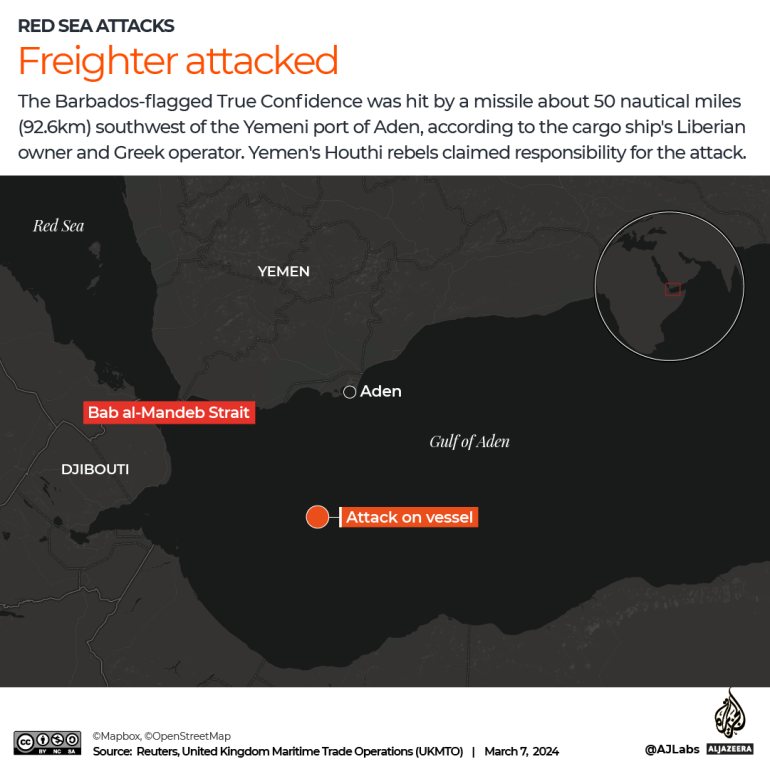
United Kingdom Maritime Trade Operations (UKMTO) reports the vessel is taking on water after being targeted with gunfire and rocket-propelled grenades. A commercial vessel in the Red Sea has come under attack after small boats fired rocket-propelled grenades and automatic weapons towards the ship. According to the organisation United Kingdom Maritime Trade Operations (UKMTO), the incident took place 94km (51 nautical miles) southwest of the Yemeni port of Hodeidah. “The vessel has been engaged by multiple small vessels who have opened fire with small arms and self-propelled grenades. [The] armed security team have returned fire and situation is ongoing,” said UKMTO, which is run by Britain’s Royal Navy. The UKMTO said the attack resulted in a fire onboard and the vessel began taking on water Sunday night as its crew prepared to abandon ship. “Authorities are investigating,” it said, adding later the ship was ablaze after being “struck by unknown projectiles”. “UKMTO has had confirmation from the Company Security Officer that the vessel is taking on water and crew are preparing to abandon ship,” a statement said. Maritime security sources added that the vessel was identified as the Liberian-flagged, Greek-owned bulk carrier Magic Seas. British maritime security firm Ambrey said in an advisory that the ship was attacked by four unmanned surface vehicles [USVs]. “Two of the USVs impacted the port side of the vessel, damaging the vessel’s cargo,” Ambrey added. While no one has claimed responsibility, Ambrey said the attack matched the “established Houthi target profile”. The Yemen-based armed group the Houthis began targeting vessels in the Red Sea shortly after Israel’s war on Gaza began in October 2023, which the Houthis say is in defence of the Palestinians living in the besieged enclave. Advertisement Since November 2023, the Houthis have launched more than 100 attacks targeting commercial vessels, disrupting global shipping and forcing firms to reroute. Their campaign has expanded to include vessels linked to the United States and the United Kingdom since the two countries initiated military strikes in January 2024. In May, the Houthis and the US agreed on a ceasefire that would see the end of attacks on US ships. But the Houthis vowed to continue to target Israeli-linked vessels. A renewed Houthi campaign against shipping could again draw in US and Western forces to the area. This comes at a sensitive moment in the Middle East as a possible ceasefire in the war on Gaza hangs in the balance, and as Iran weighs whether to restart negotiations over its nuclear programme following US air strikes targeting its most sensitive atomic sites. Adblock test (Why?)
Elon Musk launches the America Party as feud with Trump escalates
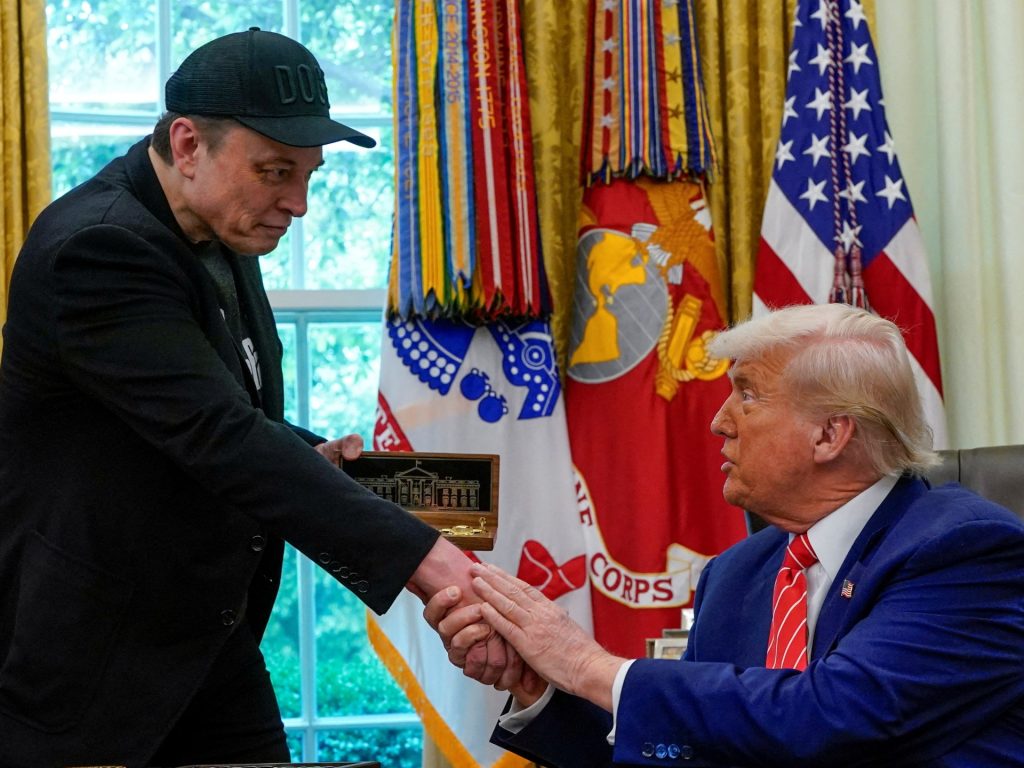
Tesla CEO says he has formed a new political party after falling out with US President Donald Trump over the ‘One Big Beautiful Bill’. Billionaire Elon Musk has followed through on his pledge to create a new political party in the United States after President Donald Trump signed his controversial budget legislation, the so-called “One Big, Beautiful Bill”, into law. Musk in a post on X on Saturday declared the formation of the “America Party“, to “give back” the people of the US their freedom and challenge what he called the nation’s “one-party system”. He cited a poll, uploaded on Friday – the US’s Independence Day – in which he asked whether respondents “want independence from the two-party (some would say uniparty) system” that has dominated US politics for some two centuries. The yes-or-no survey earned more than 1.2 million responses. “By a factor of 2 to 1, you want a new political party and you shall have it!” Musk wrote on Saturday. “When it comes to bankrupting our country with waste & graft, we live in a one-party system, not a democracy. Today, the America Party is formed to give you back your freedom,” he declared. The move comes amid a worsening of the feud between the world’s richest man and Trump over the new budget law, which the Tesla and SpaceX CEO said would bankrupt the US. Musk was Trump’s main campaign financier during the 2024 election, and led the Department of Government Efficiency from the start of the president’s second term, aimed at slashing government spending. The two have since fallen out spectacularly over disagreements about the “Big, Beautiful Bill”. Musk said previously that he would start a new political party and spend money to unseat lawmakers who supported the bill, which experts say will pile an extra $3.4 trillion over a decade onto the US deficit. Advertisement “They will lose their primary next year if it is the last thing I do on this Earth,” Musk had said. There was no immediate comment from Trump or the White House on Musk’s announcement. Trump earlier this week threatened to cut off the billions of dollars in subsidies that Musk’s companies receive from the federal government, and to deport the South African-born tycoon. “We’ll have to take a look,” the president told reporters when asked if he would consider deporting Musk, who has held US citizenship since 2002. It is not clear how much impact the new party will have on the 2026 mid-term elections, or on the presidential vote two years after that. On Friday, after posting the poll, Musk laid out a possible political battle plan to pick off vulnerable House of Representatives and Senate seats, and for the party to become “the deciding vote” on key legislation. “One way to execute on this would be to laser-focus on just 2 or 3 Senate seats and 8 to 10 House districts,” Musk posted on X. All 435 US House seats are up for grabs every two years, while about one-third of the Senate’s 100 members, who serve six-year terms, are elected every two years. Despite Musk’s deep pockets, breaking the Republican-Democratic duopoly is a tall order, given that it has dominated US political life for more than 160 years, while Trump’s approval ratings in polls in his second term have generally held firm above 40 percent, despite the president’s often divisive policies. Adblock test (Why?)
Scepticism and hope for end to Gaza war before Trump-Netanyahu meeting
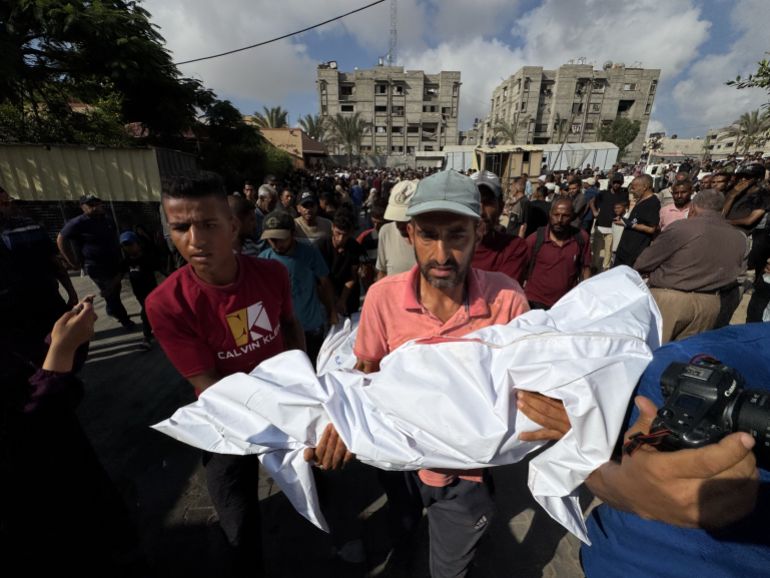
Israeli Prime Minister Benjamin Netanyahu is visiting the United States on Monday, a visit analysts expect will focus on celebrating Israel and the US’s self-anointed victory against Iran and discussing a proposal for a ceasefire in Israel’s war on Gaza. This is the third time this year Netanyahu will be meeting US President Donald Trump, who claims the US and Israel “obliterated” Iran’s nuclear programme during a 12-day war and that he would resume bombing Iran if it restarts nuclear activities. Last week, Trump said Israel had agreed to conditions for a 60-day ceasefire in Gaza, which would allow all parties to work towards an end to Israel’s 21-month-long war on the besieged enclave. On July 4, Hamas gave a “positive” response to Qatari and Egyptian mediators about the latest ceasefire proposal. Is a ceasefire realistic? On Friday, after Hamas’s response to the proposal, Trump said there could be a “deal next week” and promised to be “very firm” with Netanyahu to ensure a ceasefire. Israel has since said that Hamas has requested changes to the proposal that it found “unacceptable”, but that Israeli negotiators would be going to Qatar on Sunday to discuss the proposal. According to a leaked copy of the deal obtained by Al Jazeera, the ceasefire entails a 60-day pause in hostilities and a phased release of some of the 58 Israeli captives held in Gaza since a Hamas-led attack on Israel on October 7, 2023. Israel’s war on Gaza has killed at least 57,000 people, mostly women and children, in what United Nations experts, legal scholars and human rights groups describe as a genocide against Palestinians. Advertisement Many experts told Al Jazeera that they are not optimistic a temporary ceasefire will lead to a permanent end to the war. “The way [the ceasefire talks] are being framed leaves me sceptical,” said Omar Rahman, an expert on Israel-Palestine with the Middle East Council for Global Affairs. Rahman added that he believes Trump was focused on getting the Israeli captives released, but not on ending the war and the suffering of the people of Gaza. Trump previously promised an end to the war after pushing for a ceasefire just days before he became president in January. However, two months later, Trump did nothing when Israel unilaterally resumed its attacks on Gaza, killing thousands more people. Mairav Zonszein, an expert on Israel-Palestine for the International Crisis Group, said that could happen again. Relatives of Palestinians killed in the Israeli attack on Khan Younis receive the bodies from Nasser Hospital for funerals, in Gaza City, July 4, 2025 [Abdallah F.s. Alattar/Anadolu Agency] “It all rests on Trump and the US to sustain real pressure [on Netanyahu], but that is highly doubtful,” she told Al Jazeera. “I’m optimistic there could be some kind of ceasefire, but longevity and the terms are highly questionable,” Zonszein said. “It’s also possible we could see a ceasefire that does not last because … Israel still every so often just bombs something without repercussions [in Gaza],” she added. Yaser al-Banna, a Palestinian journalist in Gaza, said many in the Strip are divided over whether a ceasefire will end the war. While everyone prays it will, some people cannot imagine Netanyahu sticking to a deal. Netanyahu insists that the war will not end without a “total victory” over Hamas, a concept he has not defined. “About half the people in Gaza are very pessimistic… The other half believes this time could be different due to shared interests among Israel, the Palestinians, Arab states and the US to end this war,” he said. Glory and pragmatism Many analysts believe that Trump is driven by his desire to strike grandiose deals in order to boast about his achievements in global affairs. On Monday, he is likely to take credit for ostensibly dismantling Iran’s nuclear programme – even though that may not be true – and express his desire to retrieve the rest of the Israeli captives in Gaza. He also wants to get the “Gaza issue” out of the way to pursue more normalisation deals between Israel and neighbouring Arab states, said Khaled Elgindy, an expert on Israel-Palestine and a professor of Arab Studies at Georgetown University in Washington, DC. Advertisement “Trump wants to be able to say that he got back the Israeli hostages… and got a Palestinian state… Then he can call himself master of the universe, but getting those things is much harder than he thinks,” Elgindy told Al Jazeera. It’s unclear whether Netanyahu’s political calculations align with Trump’s ambitions. Israel’s next parliamentary elections have to take place before October 2026, and Netanyahu could go to the polls sooner, riding on a likely wave of popularity if he succeeds in returning the remaining captives. Like Trump, he would also tout what he terms a stunning victory against Iran to the Israeli public. Those considerations are important because it is likely that Netanyahu’s frail far-right coalition, held together by pressure to prolong the war on Gaza, would collapse if a permanent ceasefire is reached, said Hugh Lovatt, an expert on Israel-Palestine with the European Council on Foreign Relations. Israeli Prime Minister Benjamin Netanyahu attends his trial on corruption charges at the district court in Tel Aviv, Israel, March 12, 2025 [ Yair Sagi/ Reuters] “At the end of [the possible] 60-day ceasefire, [Netanyahu] could go to elections by committing to a full end to the war and collapse his coalition; or he could go back to war to keep his [far-right] coalition together should he judge the time not right for elections,” he told Al Jazeera. A possible, nearly unfathomable, outcome Staying in office is particularly important for Israel’s longest-serving prime minister, who faces several domestic legal charges of fraud and bribery. During his much-anticipated meeting with Trump, experts expect them to discuss Netanyahu’s trial, which many believe plays a large role in dictating his political calculations. Netanyahu’s position as prime minister has enabled him to undermine the Israeli judicial system by appointing loyalists to
Emergency workers battle wildfires in Syria
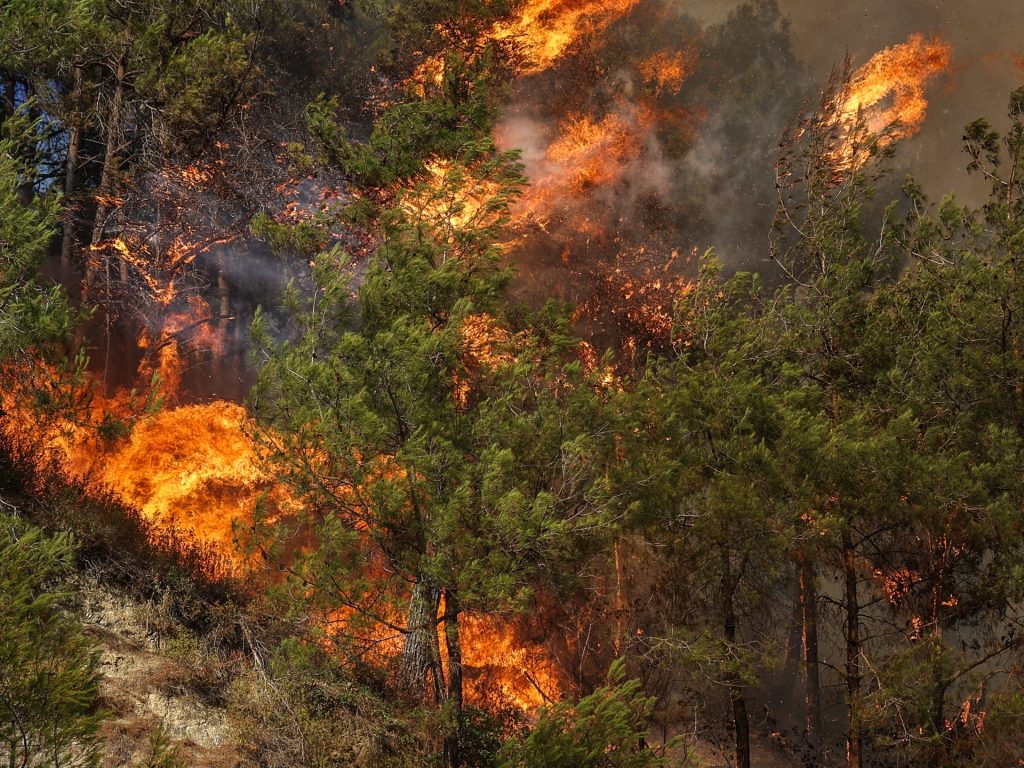
NewsFeed Syria’s Civil Defence teams are battling wildfires sweeping through northeastern Syria, with the coastal region of Latakia among the worst hit. Emergency workers expressed concerns that unexploded ordnance from the war might be contributing to the rapid spread of the flames. Published On 6 Jul 20256 Jul 2025 Adblock test (Why?)
State-sponsored Islamophobia in France encourages violence
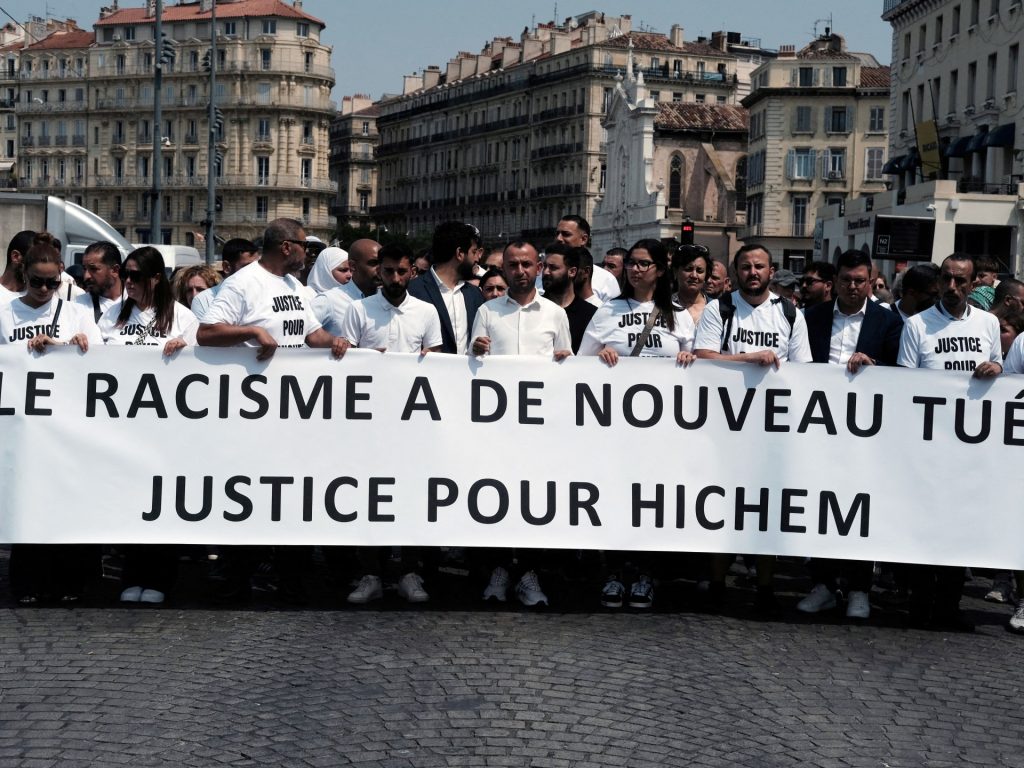
On June 27, El Hidaya Mosque in Roussillon in Southern France was attacked and vandalised. Windows were smashed and furniture overturned; the walls were plastered with racist flyers. Earlier the same month, a burned Quran was placed at the entrance of a mosque in Villeurbanne of Lyon. Unfortunately, virulent Islamophobia in France has not stopped at vandalism. On May 31, Hichem Miraoui, a Tunisian national, was shot dead by his French neighbour in a village near the French Riviera; another Muslim man was also shot but survived. A month earlier, Aboubakar Cisse, a Malian national, was stabbed to death in a mosque in the town of La Grand-Combeby by a French citizen. There has been a significant spike in Islamophobic acts in France – something the French authorities remain reluctant to publicly comment on. One report showed a 72 percent increase in such incidents between January and March 2025 compared with the same period in 2024. There are various factors that have contributed to this, but central among them is the French state’s own Islamophobic rhetoric and anti-Muslim policies. The most recent iteration of this was the release of a report titled “The Muslim Brotherhood and Political Islamism in France” by the French government. The document claims that the Muslim Brotherhood and “political Islamism” are infiltrating French institutions and threatening social cohesion and names organisations and mosques as having links to the group. The report came out just days before Miraoui was shot dead and two weeks after the French authorities raided the homes of several founding members of the Brussels-based Collective Against Islamophobia in Europe (CCIE) living in France. Advertisement With the rise of anti-Muslim attacks and discrimination in France, it is increasingly hard to believe that the obsession of the French state and government with what they call “Islamist separatism” is not, in fact, inciting violence against the French Muslim population. The idea that French Muslims are somehow threatening the French state through their identity expression has been championed by the French far right for decades. But it was in the late 2010s that it entered the mainstream by being embraced by centrist politicians and the media. In 2018, French President Emmanuel Macron, who also embraced the term “separatism”, called for the creation of a “French Islam”, a euphemism for domesticating and controlling Muslim institutions to serve the interest of the French state. At the heart of this project stood the idea of preserving “social cohesion”, which effectively meant suppressing dissent. In the following years, the French state started acting on its obsession with controlling Muslims with more and tougher policies. Between 2018 and 2020, it shut down 672 Muslim-run entities, including schools and mosques. In November 2020, the French authorities forced the Collective Against Islamophobia in France (CCIF), a nonprofit organisation documenting Islamophobia, to dissolve; the organisation then reconstituted in Brussels. In December of that year, they targeted 76 mosques, accusing them of “Islamist separatism” and threatening them with closure. In 2021, the French Parliament passed the so-called anti-separatism law, which included a variety of measures to supposedly combat “Islamist separatism”. Among them was an extension of the ban on religious symbols in the public sector, restrictions on home schooling and sports associations, new rules for organisations receiving state subsidies, more policing of places of worship, etc. By January 2022, the French government reported that it had inspected more than 24,000 Muslim organisations and businesses, shut down more than 700 and seized 46 million euros ($54m) in assets. The Muslim Brotherhood boogeyman The report released in May, like many official statements and initiatives, was not aimed to clarify policy or ensure legal precision. It was supposed to politicise Muslim identity, delegitimise political dissent and facilitate a new wave of state attacks on the Muslim civil society. The report names various Muslim organisations, accusing them of having links to the Muslim Brotherhood. It also argues that campaigning against Islamophobia is a tool of the organisation. According to the report, the Muslim Brotherhood uses anti-Islamophobia activism to discredit secular policies and portray the state as racist. Advertisement This framing is aimed to invalidate legitimate critiques of discriminatory laws and practices, and frames any public recognition of anti-Muslim racism as a covert Islamist agenda. The implication is clear: Muslim visibility and dissent are not just suspect — they are dangerous. The report also dives into the Islamo-gauchisme or Islamo-leftism conspiracy theories – the idea that “Islamists” and leftists have a strategic alliance. It claims that decolonial movement is challenneling Islamism and references the March Against Islamophobia of November 10, 2019, a mass mobilisation that drew participants from across the political spectrum, including the left. The report that was commissioned under the hardline former Interior Minister and now Justice Minister Gerald Darmanin, who back in 2021 accused far-right leader Marine Le Pen of being “too soft” on Islam. All of this – the report, the legislation, the police raids and rhetorical attacks against the French Muslim community – follows the long French colonial tradition of seeking to rule over and control Muslim populations. The French political centre has had to embrace Islamophobia to contain its falling popularity. It may help with narrow electoral victories over the rising far right, but those will be short-lived. The more lasting impact will be a sigmatised, alienated Muslim community which will increasingly face state-incited violence and hatred. The views expressed in this article are the author’s own and do not necessarily reflect Al Jazeera’s editorial stance. Adblock test (Why?)
UK re-establishing diplomatic ties with Syria as Lammy visits Damascus
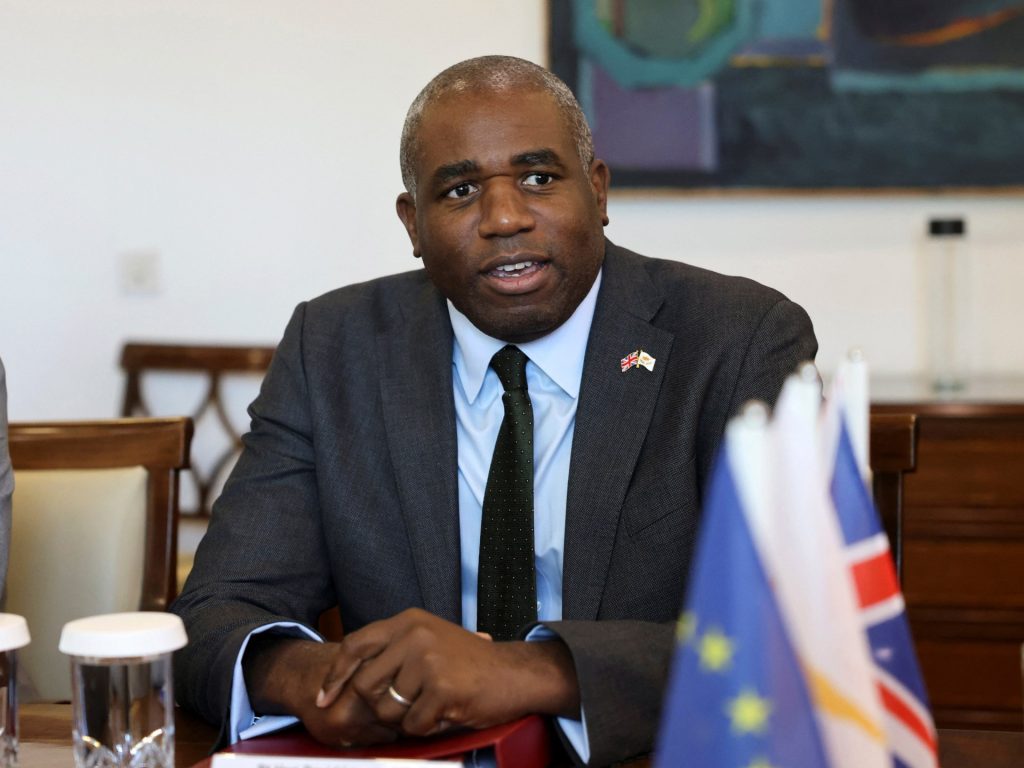
British foreign secretary pledges support for Syria’s new government after talks with interim President Ahmed al-Sharaa. The United Kingdom has announced it is formally restoring diplomatic ties with Syria as British Foreign Secretary David Lammy travelled to the capital Damascus to meet with interim Syrian President Ahmed al-Sharaa. Al-Sharaa received Lammy on Saturday alongside Syrian Foreign Minister Asaad al-Shaibani, according to photos of the meeting released by the presidency. “After over a decade of conflict, there is renewed hope for the Syrian people,” Lammy said in a statement released by his office, noting that the visit was the first by a British minister to Syria in 14 years. “The UK is re-establishing diplomatic relations because it is in our interests to support the new government to deliver their commitment to build a stable, more secure and prosperous future for all Syrians,” he said. Syria has been improving relations with Western countries after longtime President Bashar al-Assad was removed from power in December 2024 in an offensive led by al-Sharaa’s Hayat Tahrir al-Sham (HTS) armed group. In April, the British government lifted sanctions against a dozen Syrian entities, including government departments and media outlets, to help the country rebuild after al-Assad’s fall. Weeks earlier, the UK had dropped sanctions against two dozen Syrian businesses, mostly banks and oil companies. On Monday, United States President Donald Trump signed an executive order to dismantle a web of sanctions against Syria that had crippled the country’s economy under al-Assad. In a statement posted on X, al-Shaibani – the Syrian foreign minister – welcomed Trump’s decision, saying it would “open the door of long-awaited reconstruction and development”. Advertisement “It will lift the obstacle against economic recovery and open the country to the international community,” he said. Syria’s new leaders have been struggling to rebuild the country’s decimated economy and infrastructure after nearly 14 years of civil war that killed half a million people. Adblock test (Why?)
Supporters of banned Palestine Action group arrested at London protest
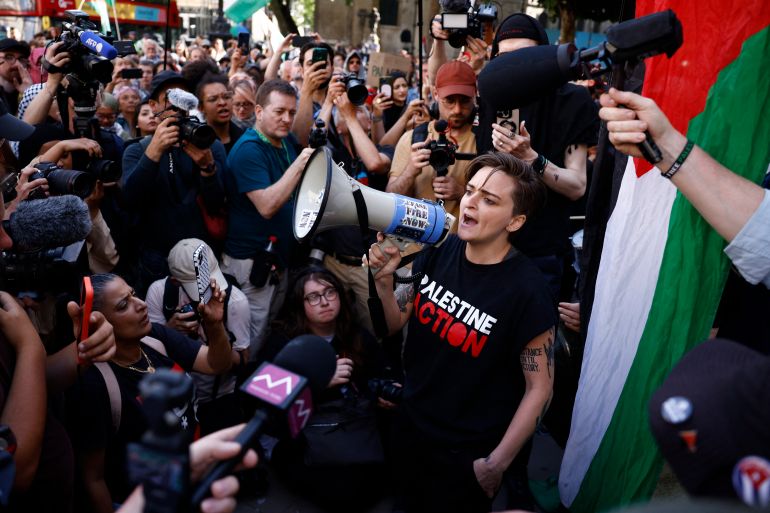
More than 25 protesters have been detained by police a day after the activist group was banned in the UK. Police have arrested protesters in London for supporting activist group Palestine Action, which was banned at midnight in the United Kingdom. “Officers have arrested more than 20 people on suspicion of offences under the Terrorism Act 2000. They have been taken into custody. Palestine Action is a proscribed group and officers will act where criminal offences are committed,” the Metropolitan Police wrote on X on Saturday. Campaign group Defend Our Juries said in a press release that 27 people, including a priest and a number of health professionals, had been arrested for offences under the Terrorism Act. They were holding cardboard signs, saying: “I oppose genocide. I support Palestine Action.” Passersby reacted to the arrests as the police intervened in the demonstration at noon. “Met Police, you are puppets of the Zionist state” and “leave them alone”, they were quoted as shouting by the Press Association, the British news agency. Other supporters, not directly involved in the Palestine Action protest, shouted: “Who do you protect? Who do you serve?” and “British police off our streets.” There were further chants of “From the river to the sea, Palestine will be free” during the incident. The ban Police warned on Friday that expressing support for Palestine Action would be a criminal offence after the ban kicked in at midnight. “This includes chanting, wearing clothing or displaying articles such as flags, signs or logos,” said the force. A spokesperson for Defend Our Juries said: “We commend the Counter Terrorism police for their decisive action in protecting the people of London from some cardboard signs opposing the genocide in Gaza and expressing support for those taking action to prevent it.” Advertisement The proscription cleared parliament on Thursday, with a court challenge to try to stop it becoming law failing on Friday. The government announced last week it would ban Palestine Action under the Terrorism Act 2000, days after activists from the group broke into an air force base in southern England. Two aircraft at the base were sprayed with red paint, causing an estimated 7 million pounds ($9.55m) in damage. Four Palestine Action activists were remanded in custody on Thursday after appearing in court over the incident. Palestine Action has condemned the proscription as an attack on free speech. The ban will make it a criminal offence to belong to or support the group, punishable by up to 14 years in prison. A Palestine Action activist speaks to supporters and members of the media on Friday [Benjamin Cremel/AFP] Adblock test (Why?)