

Russian strikes hit Ukraine after US announces weapon shipment cuts
[unable to retrieve full-text content] Russian strikes hit across Ukraine after the US announced it would halt some weapon shipments.
Hamas studying new ceasefire proposals, calls for end to Gaza war

The Palestinian group Hamas says it is studying new proposals for a temporary ceasefire in Gaza, but insisted it is seeking an agreement that would bring an end to Israel’s war. Hamas said in a statement on Wednesday that it had received proposals from the mediators and is holding talks with them to “bridge gaps” to return to the negotiating table and try to reach a ceasefire agreement. The group said it was aiming for an agreement that would end the Gaza war and ensure the withdrawal of Israeli forces from the enclave. The announcement comes a day after United States President Donald Trump said Israel had agreed to a proposal for a 60-day ceasefire in Gaza and urged Hamas to accept the deal before conditions worsen. Trump has been increasing pressure on the Israeli government and Hamas to broker a ceasefire and an agreement for the group to release the Israeli captives held in Gaza. Trump said the 60-day period would be used to work towards ending the war – something Israel says it will not accept until Hamas is defeated. Trump is due to meet with Israeli Prime Minister Benjamin Netanyahu next week. But Hamas’s announcement, which emphasised its demand that the war end, raised questions about whether the latest offer could materialise into an actual pause in fighting. Shortly after the Hamas statement, Netanyahu said “there will be no Hamas” in post-war Gaza. Israeli officials have warned that the country’s military will escalate its operations in Gaza if ceasefire negotiations do not advance soon, according to the US-based Axios news outlet. Advertisement “We’ll do to Gaza City and the central camps what we did to Rafah. Everything will turn to dust,” the outlet quoted a senior Israeli official as saying. “It’s not our preferred option, but if there’s no movement towards a hostage deal, we won’t have any other choice.” Israeli Foreign Minister Gideon Saar said any opportunity to free captives held in Gaza should not be missed, adding that there is a lot of support, both in the cabinet and within the public at large, for the US-backed proposal. The proposal, though, has not been publicly backed by National Security Minister Itamar Ben-Gvir and Finance Minister Bezalel Smotrich. Al Jazeera’s Hani Mahmoud, reporting from Gaza City, said Palestinians mistrust Trump and have been disappointed several times by mooted ceasefires that have failed to materialise. “There are headlines that are talking about a potential agreement and an end to the genocide, but what we’re seeing on the ground, the reality tells a different story. An average of 100 to 120 Palestinians are killed every single day,” he said. “So for a lot of people, there is a lot of hypocrisy going on. If you talk about a ceasefire, then you need to create the conditions that would lead to a ceasefire, not an escalation, and what we are seeing on the ground is definitely an escalation.” Hospital director killed In Gaza, Israeli forces killed at least 67 people on Wednesday, according to Palestinian health authorities. Hospital officials said four children and seven women were among the dead. Among the victims was Dr Marwan al-Sultan, director of the Indonesian Hospital, who was killed in an Israeli strike on a residential building in an area southwest of Gaza City, according to our colleagues at Al Jazeera Arabic. His wife and children were also killed in the attack. Al-Sultan was a key source of information from Gaza, reporting on the conditions of Palestinians in the north of the besieged enclave. He had repeatedly called on the international community to press for medical teams’ safety, including when the Israeli army laid siege or struck the Indonesian Hospital, the largest medical facility north of Gaza City. Israel’s war on Gaza has killed at least 56,647 people and wounded 134,105, according to Gaza’s Health Ministry. An estimated 1,139 people were killed in Israel during the Hamas-led October 7, 2023 attacks, and more than 200 were taken captive. The war has left the coastal Palestinian territory in ruins, with much of the urban landscape flattened in the fighting. More than 90 percent of Gaza’s 2.3 million population has been displaced, often multiple times. The war has caused a humanitarian crisis in Gaza, pushing hundreds of thousands of people to famine-like conditions. Advertisement Adblock test (Why?)
US university bans trans athletes under pressure from Trump administration

University of Pennsylvania erases records set by trans swimmer as part of resolution to civil rights investigation. A top university in the United States has agreed to bar transgender athletes from women’s sports and erase records set by a prominent trans swimmer following pressure from the administration of President Donald Trump. The University of Pennsylvania (UPenn) and the US Department of Education on Tuesday announced the agreement to resolve a federal civil rights investigation focused on transgender swimmer Lia Thomas. Thomas, who was born male and came out as a trans woman in 2018, won a National Collegiate Athletic Association Division I title in 2022, becoming the first trans athlete to accomplish the feat. Thomas, who began hormone replacement therapy in 2019 as part of the transition from male to female, also set UPenn records in five women’s events, including the 100-metre and 500-metre freestyle competitions. Thomas’s accomplishments became a focal point in the debate about fairness in sport, with LGBTQ campaigners hailing the swimmer’s participation as a victory for inclusion and critics, including some of Thomas’s teammates, casting it as an attack on women’s rights. Larry Jameson, UPenn’s president, said in a statement that the university recognised that some student athletes had been disadvantaged by the NCAA eligibility rules that had been in place at the time of Thomas’s participation. The NCAA changed its eligibility rules to limit participation in women’s events to female-born athletes in March, following Trump’s executive order denying funding to educational institutions that allow trans girls and women to compete. Advertisement “We recognize this and will apologize to those who experienced a competitive disadvantage or experienced anxiety because of the policies in effect at the time,” Jameson said. “We will review and update the Penn women’s swimming records set during that season to indicate who would now hold the records under current eligibility guidelines.” UPenn later on Tuesday removed Thomas from its website’s list of “All-Time School Records”, and added a note stating that Thomas set records during the 2021-22 season under “eligibility rules in effect at the time”. UPenn’s move comes after the Education Department’s Office for Civil Rights in April announced that it had determined the university to have violated Title IX by “permitting males to compete in women’s intercollegiate athletics and to occupy women-only intimate facilities”. US Education Secretary Linda McMahon called the agreement a “great victory for women and girls”. “The Department commends UPenn for rectifying its past harms against women and girls, and we will continue to fight relentlessly to restore Title IX’s proper application and enforce it to the fullest extent of the law,” McMahon said in a statement. Human Rights Campaign and GLAAD, two of the biggest LGBTQ advocacy organisations in the US, did not immediately respond to requests for comment. UPenn’s announcement is the latest in a series of moves to limit trans people’s participation in sport in the US and elsewhere since Trump returned to the White House in January. In March, World Athletics said it would require participants in women’s events to undergo DNA testing to prove their biological sex. Opinion polls have pointed to growing public opposition to trans women and girls competing against female-born athletes. In a New York Times/Ipsos poll published in January, 79 percent of Americans said that trans women should be barred from female sports, up from 62 percent in 2021. Adblock test (Why?)
US Senate passes Trump’s ‘One Big Beautiful Bill’, sending it to the House
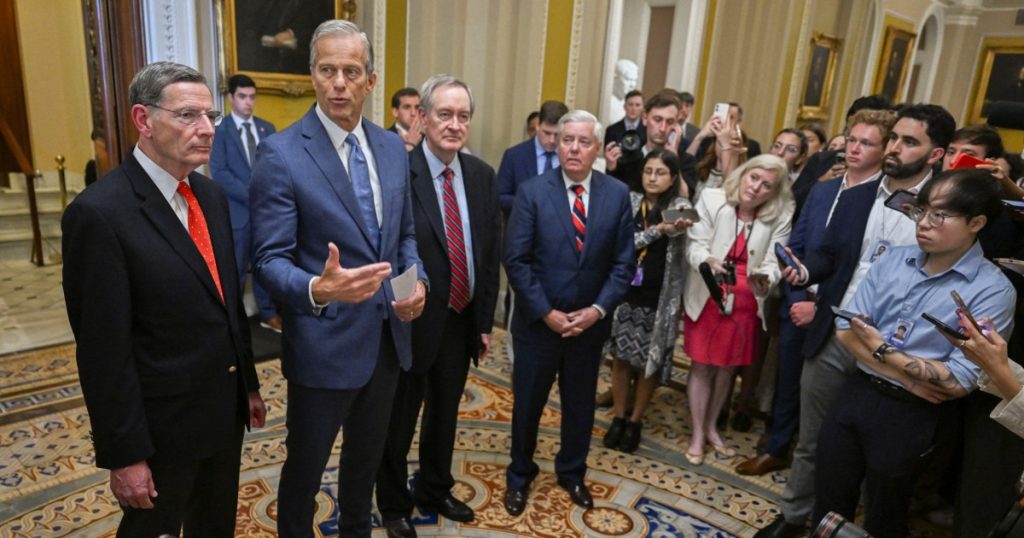
The United States Senate has passed a sweeping tax bill championed by President Donald Trump, sending the controversial legislation to the House of Representatives for what could be a final vote. Lawmakers passed the bill by a 51-to-50 vote in the Republican controlled-chamber on Tuesday, after Vice President JD Vance broke the tie. The successful vote ended what was a marathon 27 hours of debate in the upper chamber. Three Republicans joined with Democrats to vote against the bill, which would enshrine many of Trump’s signature policies, including his 2017 tax cuts, reductions for social safety net programmes, and increased spending on border enforcement and deportations. Critics on both sides of the aisle have taken aim at the estimated $3.3 trillion the bill would add to the national debt. Others have blasted reductions to programmes like Medicaid and the Supplemental Nutrition Assistance Program (SNAP). They argue that the bill takes support away from low-income families to finance tax cuts that will primarily help the wealthy. Trump, however, has pressed for the bill to be passed by July 4, the country’s Independence Day. The legislation, informally known as the “One Big Beautiful Bill”, now heads back to the House for a Wednesday vote on the updated version. The president found out about the Senate’s passage in the midst of a news conference in South Florida, where he was touting his crackdown on immigration. Despite tight odds in the House, Trump struck an optimistic tone about the upcoming vote. Advertisement “I think it’s going to go very nicely in the House,” Trump said. “Actually, I think it will be easier in the House than it was in the Senate.” The president also downplayed one of the most controversial provisions in the bill: cuts to Medicaid, a government health insurance programme for low-income families. About 11.8 million people are anticipated to lose their health coverage in the coming years if the bill becomes law. “I’m saying it’s going to be a very much smaller number than that, and that number will be all waste, fraud and abuse,” Trump said. Criticisms in the Senate Trump was not the only Republican to be celebrating the passage of the omnibus bill. In the Senate, leading Republican John Thune touted the bill as a victory for US workers. “It’s been a long road to get to today,” Thune said from the Senate floor. “Now we’re here, permanently extending tax relief for hard-working Americans.” But not all Republicans were as enthused about the bill. Three party members – Thom Tillis of North Carolina, Rand Paul of Kentucky and Susan Collins of Maine – all voted against its passage. And even a critical vote in favour, Lisa Murkowski of Alaska, appeared to express regret in the aftermath. “Do I like this bill? No,” she told a reporter for NBC News. “I know that in many parts of the country, there are Americans who are not going to be advantaged by this bill. I don’t like that.” She later took to social media to criticise the haste of its passage. “Let’s not kid ourselves. This has been an awful process – a frantic rush to meet an artificial deadline that has tested every limit of this institution.” Meanwhile, the top Democrat in the Senate, Chuck Schumer, said that Republicans had “betrayed the American people and covered the Senate in utter shame”. “In one fell swoop, Republicans passed the biggest tax break for billionaires ever seen, paid for by ripping away healthcare from millions of people,” said Schumer. Still, Schumer announced one symbolic victory on Tuesday, writing on the social media platform X that Trump’s name for the legislation, “One Big Beautiful Bill”, had been struck from its official title. Republicans currently hold a trifecta in the US government, with control of the Senate, the House and the White House, giving Democrats reduced power in legislating. But the Republicans have narrow majorities in Congress, leading to uncertainty about the bill’s fate. In the Senate, they hold 53 of the chamber’s 100 seats. In the House, where the bill heads now, they have a majority of 220 representatives to the Democrats’ 212. Advertisement ‘Not fiscal responsibility’ The bill is therefore likely to face a razor-thin margin in the House. An early version that passed on May 22 did so with just one Republican vote to spare. The House Freedom Caucus, a group of hardline conservatives, has continued to baulk at the bill’s high price tag and could push for deeper spending cuts in the coming days. “The Senate’s version adds $651 billion to the deficit – and that’s before interest costs, which nearly double the total,” the caucus wrote in a statement on Monday. “That’s not fiscal responsibility. It’s not what we agreed to.” Billionaire Elon Musk, whose endorsement and funding helped propel Trump to victory in the 2024 presidential election, has also been a vocal opponent of the bill. “What’s the point of a debt ceiling if we keep raising it?” Musk asked on social media on Tuesday. “All I’m asking is that we don’t bankrupt America.” Musk has threatened to fund primary challenges against Republicans who support the bill and even floated on Monday launching a new political party in the US. Trump, however, has brushed aside Musk’s criticism as a reaction to the elimination of tax credits for electric vehicles: The billionaire owns one of the most prominent manufacturers, Tesla. The president also threatened to use the Department of Government Efficiency (DOGE), which Musk helped to found, to strip the billionaire’s companies of their subsidies. “DOGE is the monster that might have to go back and eat Elon,” Trump said as he travelled to Florida. Reporting from Washington, DC, Al Jazeera correspondent Alan Fisher said that public support has been slipping as a clearer picture of the bill has emerged. “The longer this has been talked about and the more details that become public, the fewer Americans support him,” Fisher said. Several recent polls have shown that a majority
Russia-Ukraine war: List of key events, day 1,224

Here are the key events on day 1,224 of Russia’s war on Ukraine. Here is how things stand on Wednesday, July 2: Fighting A Ukrainian drone attack on an industrial plant in Izhevsk, in central Russia, killed three people and injured 35 others, regional Governor Alexander Brechalov said in a post on Telegram. The drone struck the Kupol Electromechanical Plant, which produces air defence systems and drones for the Russian military, an unnamed official with Ukraine’s Security Service, the SBU, told the Associated Press news agency. A Russian attack on a vehicle evacuating civilians from Pokrovsk, in Ukraine’s Donetsk region, killed one person and injured a policeman, police said. The Ministry of Defence in Moscow said that 60 Ukrainian drones were downed overnight over several regions, including 17 over Russian-occupied Crimea, 16 over Russia’s Rostov region and four over Russia’s Saratov region. Ukraine’s Air Force said on Tuesday that Russia launched 52 Shahed and decoy drones at the country overnight. The United Nations nuclear watchdog, the International Atomic Energy Agency, said on Tuesday that it has been informed of a drone attack last week near Ukraine’s Zaporizhzhia Nuclear Power Plant that damaged several vehicles near the site’s cooling pond. Weapons Ukrainian Minister of Defence Rustem Umerov announced a new joint weapons production programme with members of the Ukraine Defense Contact Group (UDCG), an alliance of about 50 countries. The programme would offer “a special legal and tax framework” to help establish new factories, “both on Ukrainian territory and abroad”, Umerov said in a post on social media. The Pentagon has reportedly halted some shipments of air defence missiles and other precision munitions to Ukraine over concerns that US stockpiles are too low, the Reuters news agency reported, citing two unnamed sources. The Pentagon did not immediately comment on the report. A Russian-British dual national appeared in a London court on Tuesday, charged with sending cryptocurrency for pro-Russian separatist militias in eastern Ukraine to buy weapons and military equipment. Advertisement Politics and diplomacy French President Emmanuel Macron called for a ceasefire in Ukraine in his first call with Russian President Vladimir Putin since 2022. A Kremlin statement said that Putin reminded Macron that “the Ukrainian conflict is a direct consequence of the policy of Western states”. Kremlin spokesman Dmitry Peskov told reporters that “no one is delaying anything here”, after US envoy Keith Kellogg accused Russia of “stall[ing] for time” on ceasefire talks, “while it bombs civilian targets in Ukraine”. Peskov added: “We are naturally in favour of achieving the goals that we are trying to achieve through the special military operation via political and diplomatic means. Therefore, we are not interested in drawing out anything.” Adblock test (Why?)
Two Chinese nationals charged for trying to recruit spies in US military
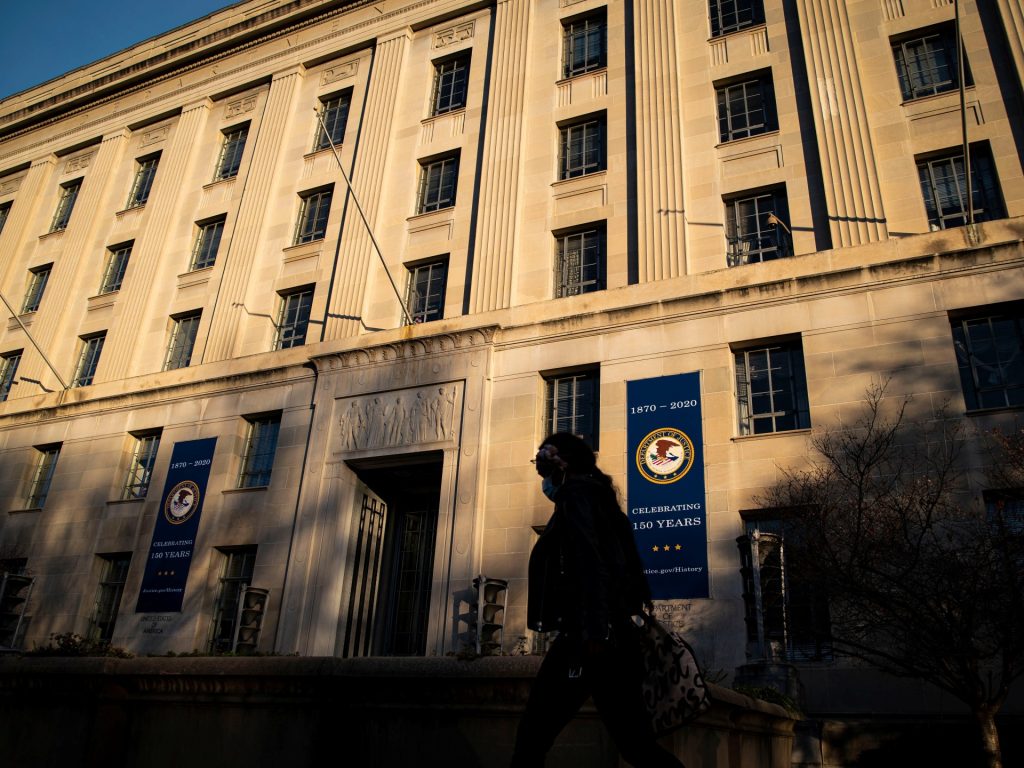
The FBI has accused the pair of working on behalf of China’s Ministry of State Security to gather naval intelligence. The United States Department of Justice has charged two Chinese citizens for spying and trying to recruit from within the country’s military ranks. According to Tuesday’s statement, Yuance Chen, 38, and Liren “Ryan” Lai, 39, are accused of working on behalf of China’s foreign intelligence arm, the Ministry of State Security (MSS). The pair allegedly carried out a range of “clandestine intelligence taskings”, including facilitating payments in exchange for national security information, gathering intelligence on Navy bases and attempting to recruit MSS assets. “This case underscores the Chinese government’s sustained and aggressive effort to infiltrate our military and undermine our national security from within,” said Attorney General Pamela Bondi. According to an affidavit from the FBI, Lai was part of an MSS network “who could travel more easily” between China and the US “to facilitate clandestine operations”. Starting around 2021, he began developing Chen, who is a legal permanent resident, into his asset. After ascertaining that Chen knew people in the US military, Lai urged him to travel abroad to discuss his connections in person, even offering to pay for the tickets, according to the affidavit. The men reportedly met with MSS agents, and in 2022, they left a backpack with $10,000 in cash in a California locker as payment to other individuals for intelligence gathering. In the years that followed, the affidavit says that Chen collected information about the Navy and sent it to Lai, while also discussing recruitment efforts directly with the MSS. Advertisement Some of that information included personal details from Navy employees. In one case, Chen travelled to San Diego, California, to meet with a Navy hire and tour the USS Abraham Lincoln, an aircraft carrier. Photos included in the affidavit show a visitor’s badge as well as Chen posing with the employee and their child on top of the aircraft carrier’s deck. The FBI says that such interactions are part of China’s campaign to extend its military’s reach. “The PRC [People’s Republic of China] government seeks blue-water naval capabilities as part of their effort to modernize their navy and establish hegemony in the South China Sea,” the affidavit reads. “Blue-water capabilities” generally refer to long-distance maritime efforts, as opposed to operations based closer to domestic shores. “As such, the PRC government tasks and deploys the MSS to surreptitiously target the US Navy and collect intelligence,” the affidavit continues. Both men were charged under the Foreign Agent Registration Act, or FARA, which requires that those working on behalf of another country register with the US government. In recent years, the US government has ramped up its use of the law in its effort to combat alleged Chinese espionage activity. Beijing typically denies such claims and has accused the US of discriminatory tactics. “These charges reflect the breadth of the efforts by our foreign adversaries to target the United States,” US Attorney Craig H Missakian said in the Justice Department statement. “We will continue to undertake counterespionage investigations and prosecutions, no matter how complex and sensitive, to disrupt attempts to weaken our national security.” Adblock test (Why?)
Tariffs 101: Why women’s products cost more

Did you know that women’s clothing and personal care products are often priced higher than men’s? It’s been that way for years and there’s even a name for it. Pink Tax. Now with Trump implementing widespread tariffs, how will this impact women’s goods and jobs? This week on Now You Know, we talk to Prachi Agarwal, a research fellow at the International Economic Development Group at ODI Global. She focuses on trade policy and women in trade, explaining how tariffs work and why they disproportionately impact women. Adblock test (Why?)
Elon Musk slams Trump’s ‘Big Beautiful Bill’, calls for new political party
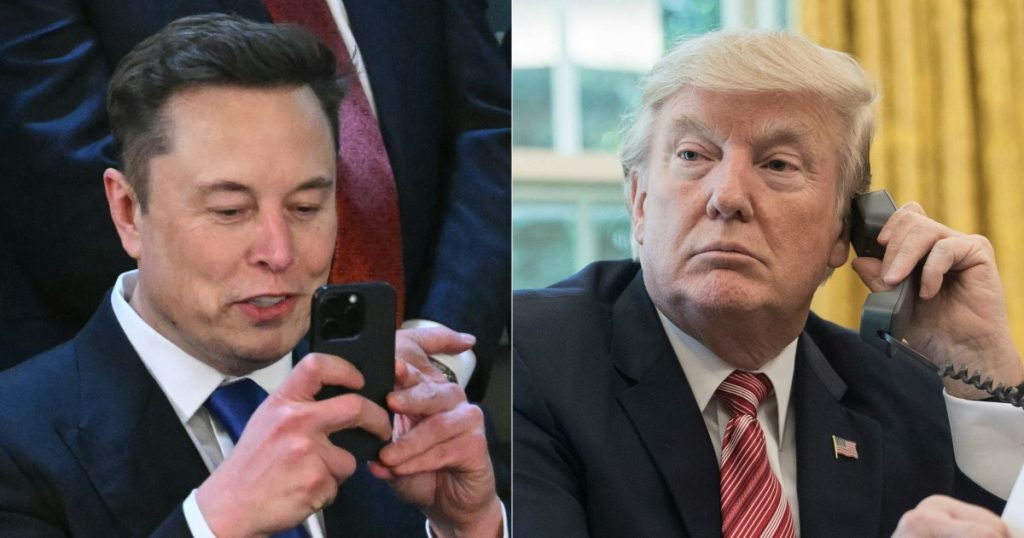
The world’s richest man and the US president have traded insults over Donald Trump’s tax cuts and spending bill. Tech billionaire Elon Musk has stepped up his criticism of United States President Donald Trump’s tax cuts and spending bill and renewed his call for a new political party. Musk’s criticism of Trump’s 940-page “Big, Beautiful Bill“, which proposes tax breaks and sweeping cuts to healthcare and food programmes, has been met with strong criticism from the Democratic Party as well as some members of Trump’s Republican Party. In early June, Musk, a major campaign donor to Trump and a former key aide, called the bill a “disgusting abomination”, leading to a public falling out with the Republican president. The two then appeared to cool tensions, with Trump telling reporters that he wished Musk well, while the latter wrote on X that he regretted having gone “too far”. But as US Senators gathered to vote on amendments to the bill on Monday, Musk ramped up his criticism once again, saying lawmakers who had campaigned on cutting spending but backed the bill “should hang their heads in shame!” “And they will lose their primary next year if it is the last thing I do on this Earth,” Musk said. The Tesla and SpaceX CEO called for a new political party, saying the bill’s massive spending indicated “that we live in a one-party country – the PORKY PIG PARTY!!” “Time for a new political party that actually cares about the people,” he wrote. Trump’s DOGE suggestion Trump hit back at Musk on Tuesday, stating that the Department of Government Efficiency (DOGE) – which Musk had previously led – should review the subsidies that Musk’s companies have received, to save the federal government “BIG” money. Advertisement “Elon may get more subsidy than any human being in history, by far, and without subsidies, Elon would probably have to close up shop and head back home to South Africa. No more Rocket launches, Satellites, or Electric Car Production, and our Country would save a FORTUNE,” Trump said in a post on his Truth Social platform. In response to Trump’s post, Musk posted on his own platform, X, saying, “I am literally saying CUT IT ALL. Now.” Hitting the debt ceiling is the only thing that will actually force the government to cut waste and fraud. That’s why the debt ceiling legislation exists! — Elon Musk (@elonmusk) July 1, 2025 It remains unclear how much sway Musk has over the US Congress or what effect his statements might have on the bill’s passage. But Republicans have expressed concern that his on-again, off-again feud with Trump could hurt their chances to protect their majority in the 2026 midterm congressional elections. Bill Schneider, a professor of public policy at George Mason University, told Al Jazeera it would likely be difficult for Musk to establish a viable political coalition consisting of the bill’s opponents. “Elon Musk is a billionaire. There are not enough billionaires to form a party in the US, even if they are unhappy with President Trump,” Schneider told Al Jazeera from Washington, DC. “Now, he has issues with Trump, who is not a very popular figure. He has a lot of opponents, a lot of critics, particularly among women in the US,” he added. “Republicans, almost all of whom are likely to support this particular bill, are very worried about how much debt it’s creating because of the huge tax cuts. Democrats are worried about the dangers to the safety net. It’s kind of hard to put those two worries, those two constituencies, together into one political party.” Adblock test (Why?)
Iran ‘needs more time’ to decide on resuming nuclear talks with US
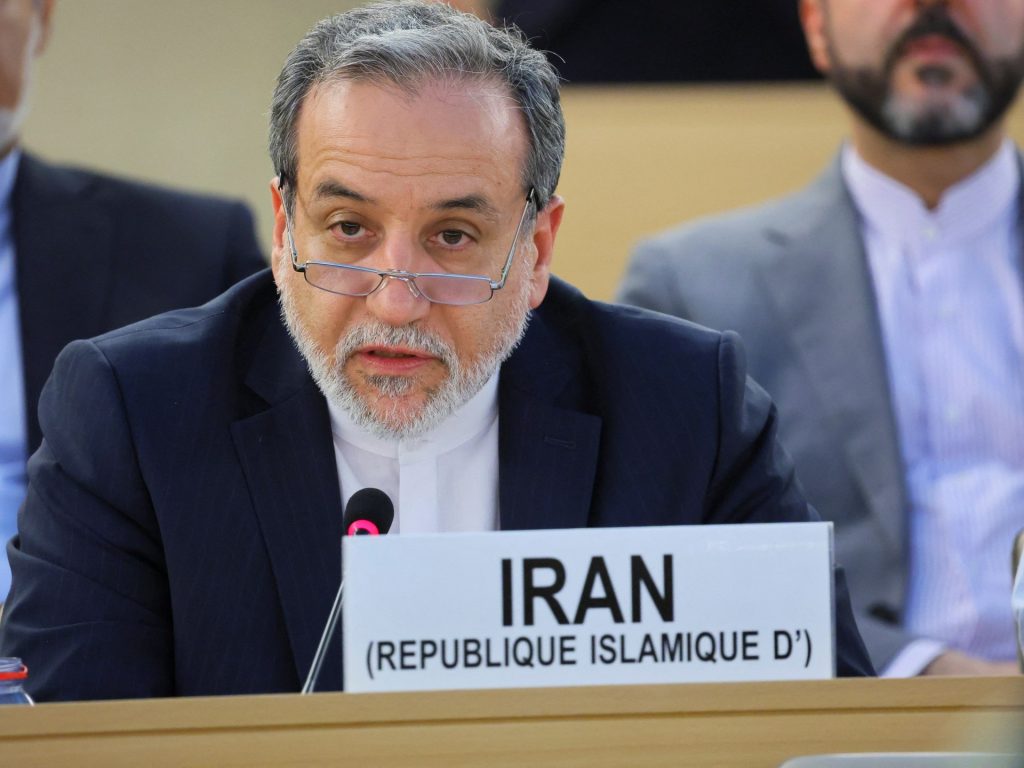
Foreign minister’s comments come as the G7 calls for negotiations on a deal to address Iran’s nuclear programme. Iranian Minister of Foreign Affairs Abbas Araghchi has ruled out a quick resumption of talks with the United States after President Donald Trump said US negotiations with Tehran could restart as early as this week. Araghchi’s comments on CBS Evening News on Monday came as the foreign ministers of the G7 issued a statement calling for dialogue on a deal to curb Iran’s nuclear programme. Iran and the US were holding talks on Tehran’s nuclear programme when Israel launched attacks on Iran’s nuclear and military infrastructure. The US later joined in Israel’s attacks, by bombing the Fordow, Natanz and Isfahan sites on June 21. Tehran insists its programme is peaceful, but the US and Israel say they want to ensure Iran cannot build a nuclear weapon. Araghchi said negotiations would not start as quickly as Trump had indicated, and that Iran first needs assurances against further attacks. “In order for us to decide to reengage, we would have to first ensure that America will not revert back to targeting us in a military attack during the negotiations,” the minister said. “I think with all these considerations, we still need more time,” he said, although “the doors of diplomacy will never slam shut”. The Trump administration is seeking talks with Iran after the US president, during his first term, abandoned an agreement his predecessor signed with Tehran in 2015, which curbed the nuclear programme in exchange for sanctions relief. Under that deal, Iran was allowed to enrich uranium below 3.67 percent purity for fuel used in commercial nuclear power plants. Advertisement After Trump ditched the deal, Iran responded by producing uranium enriched to 60 percent, above levels for civilian usage but still below weapons grade. Trump has said the US attacks had “obliterated” Iran’s nuclear sites, and senior officials said it would be almost impossible for the country to resurrect its atomic programme. Araghchi pushed back against that assertion, however. “One cannot obliterate the technology and science for enrichment through bombings,” he told CBS. “If there is this will on our part, and the will exists in order to once again make progress in this industry, we will be able to expeditiously repair the damages and make up for the lost time.” Since the US and Israeli attacks, and the ensuing ceasefire, Iran has put on hold its cooperation with the International Atomic Energy Agency (IAEA) due to what Iranian President Masoud Pezeshkian on Monday called the the agency chief’s “destructive” behaviour towards the country. Al Jazeera’s Resul Serdar, reporting from Tehran, said tensions are growing between Iran and the IAEA. “They [Iranians] are saying that they will only allow the inspectors to return once they secure the nuclear sites” that have been bombed by the US and Israel, Serdar said. Foreign ministers from the Group of Seven nations, meanwhile, said they supported the ceasefire between Iran and Israel, and urged for negotiations between Tehran and Washington to resume. “We call for the resumption of negotiations, resulting in a comprehensive, verifiable and durable agreement that addresses Iran’s nuclear program,” the G7 foreign ministers said on Monday. The ministers also urged “all parties to avoid actions that could further destabilise the region”. Adblock test (Why?)
Obama, Bush decry ‘travesty’ of Trump’s gutting of USAID on its last day
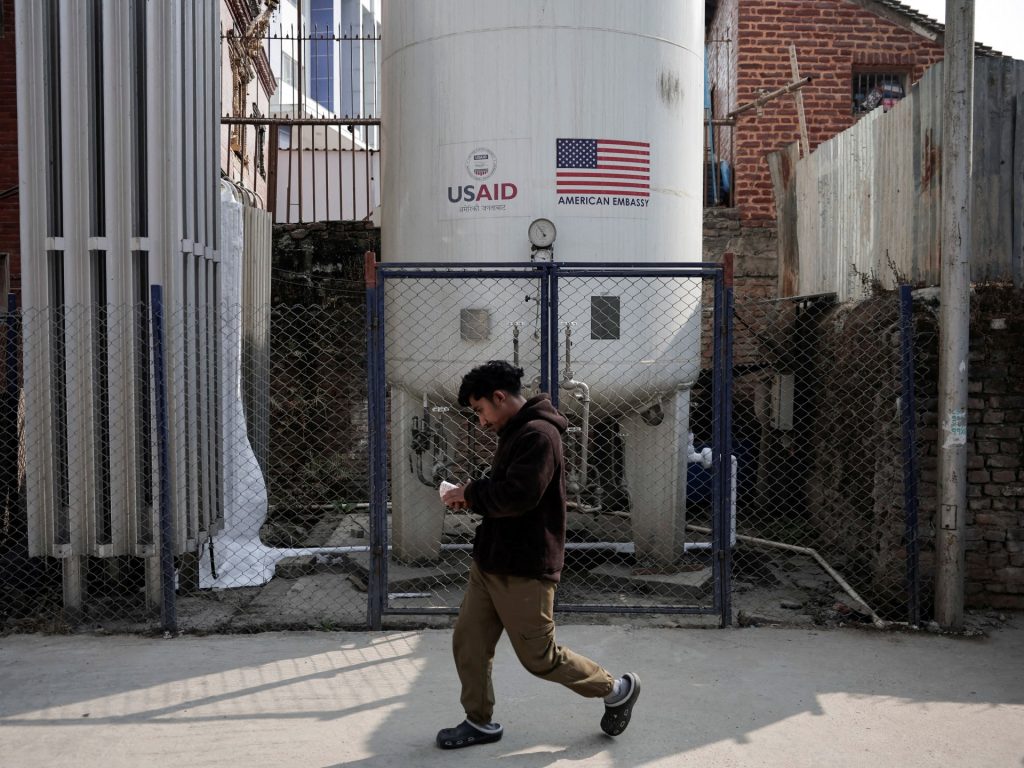
Former United States Presidents Barack Obama and George W Bush have delivered a rare open rebuke of the Donald Trump administration in an emotional video farewell with staffers of the US Agency for International Development (USAID). Obama called the Trump administration’s dismantling of USAID “a colossal mistake”. Monday was the last day as an independent agency for the six-decade-old humanitarian and development organisation, created by President John F Kennedy as a soft power, peaceful way of promoting US national security by boosting goodwill and prosperity abroad. Secretary of State Marco Rubio has ordered USAID to be absorbed into the US State Department on Tuesday. The former presidents and U2 singer Bono – who held back tears as he recited a poem – spoke with thousands in the USAID community in a videoconference, which was billed as a closed-press event. They expressed their appreciation for the thousands of USAID staffers who have lost their jobs and life’s work. Their agency was one of the first and most fiercely targeted for government cuts by Trump and his billionaire ally Elon Musk, with staffers abruptly locked out of systems and offices and terminated by mass emailing. Trump claimed the agency was run by “radical left lunatics” and rife with “tremendous fraud”. Musk called it “a criminal organisation”. Obama, speaking in a recorded statement, offered assurances to the aid and development workers, some listening from overseas. “Your work has mattered and will matter for generations to come,” he told them. Advertisement Obama has largely kept a low public profile during Trump’s second term and refrained from criticising the seismic changes that Trump has made to US programmes and priorities at home and abroad. “Gutting USAID is a travesty, and it’s a tragedy. Because it’s some of the most important work happening anywhere in the world,” Obama said. He credited USAID with not only saving lives, but being a main factor in global economic growth that has turned some aid-receiving countries into US markets and trade partners. The former Democratic president predicted that “sooner or later, leaders on both sides of the aisle will realise how much you are needed”. Asked for comment, the State Department said it would be introducing the department’s foreign assistance successor to USAID, to be called America First, this week. “The new process will ensure there is proper oversight and that every tax dollar spent will help advance our national interests,” the department said. USAID oversaw programmes around the world, providing water and life-saving food to millions uprooted by conflict in Sudan, Syria, Gaza and elsewhere, sponsoring the “Green Revolution” that revolutionised modern agriculture and curbed starvation and famine. The agency worked at preventing disease outbreaks, promoting democracy, and providing financing and development that allowed countries and people to climb out of poverty. Bush, who also spoke in a recorded message, went straight to the cuts in a landmark AIDS and HIV programme started by his Republican administration and credited with saving 25 million lives around the world. Bipartisan blowback from Congress to cutting the popular President’s Emergency Plan for AIDS Relief, known as PEPFAR, helped save significant funding for the programme. But cuts and rule changes have reduced the number getting the life-saving care. “You’ve showed the great strength of America through your work – and that is your good heart,” Bush told USAID staffers. “Is it in our national interests that 25 million people who would have died now live? I think it is, and so do you,” he said. More than 14 million of the world’s most vulnerable, a third of them young children, could die because of the Trump administration’s move, a study in the Lancet journal projected Tuesday. “For many low- and middle-income countries, the resulting shock would be comparable in scale to a global pandemic or a major armed conflict,” study co-author Davide Rasella, a researcher at the Barcelona Institute for Global Health, said in a statement. Advertisement Bono, a longtime humanitarian advocate in Africa and elsewhere, was announced as the “surprise guest”. he recited a poem he had written to the agency about its gutting. He spoke of children dying of malnutrition, a reference to millions of people who Boston University researchers and other analysts say will die because of the US cuts to funding for health and other programmes abroad. “They called you crooks,” Bono said, “when you were the best of us.” Adblock test (Why?)