

Chairman of far-right Reform UK party quits after burqa row
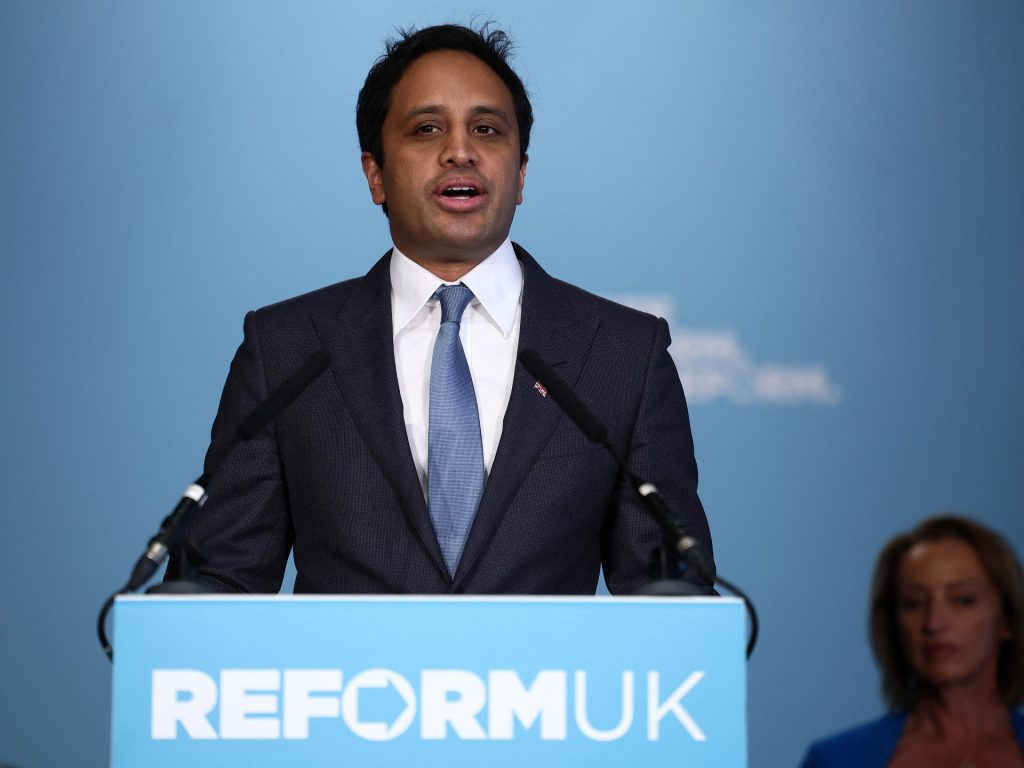
Zia Yusuf, a self-described ‘British Muslim patriot’, leaves a party accused of fuelling Islamophobia after 11 months. The Muslim chairman of the United Kingdom’s radical right-wing Reform UK party has quit after denouncing a call from within party ranks to ban the burqa as “dumb”. “I no longer believe working to get a Reform government elected is a good use of my time, and hereby resign the office,” Zia Yusuf announced on X on Thursday, hours after hitting out at Reform UK lawmaker Sarah Pochin for asking Prime Minister Keir Starmer whether his government would consider banning the burqa. Pochin won her seat in a by-election last month that saw the anti-immigration party, some of whose members have been accused of Islamophobia, make significant gains in a political landscape traditionally dominated by the governing Labour Party and the opposition Conservatives. The new lawmaker had urged Labour’s Starmer during her debut appearance at Prime Minister’s Questions on Wednesday if he would consider the move “in the interests of public safety”, according to the BBC. “I do think it’s dumb for a party to ask the PM if they would do something the party itself wouldn’t do,” Yusuf said on X amid an ensuing flare-up over whether banning the burqa should be party policy. Advertisement Yusuf, a former banker and self-described “proud British Muslim patriot”, became Reform UK chairman after last year’s general election, having jumped ship from the Conservative Party. Reform UK, led by Brexit campaigner Nigel Farage, won four parliamentary seats in a breakthrough result last year, going on to gain a fifth parliamentary seat, its first mayoralty and a number of council seats in local elections last month. It currently leads national opinion polls, ahead of the Labour Party. Farage said on X that Yusuf was “a huge factor in our success on May 1st and is an enormously talented person”. Divisions in the party’s upper ranks have been made public before. In March, Reform referred one of its lawmakers, Rupert Lowe, to police over a number of allegations, including threats of physical violence against Yusuf. Prosecutors later said they would not bring charges against Lowe, who was suspended by the party. Adblock test (Why?)
Israel launches several attacks on Beirut’s southern suburbs

A series of Israeli strikes have targeted Beirut’s southern suburbs on the eve of the Muslim Eid al-Adha holiday, almost an hour after the Israeli army issued a forced evacuation order to residents in areas that it says held underground facilities used by the Lebanese group Hezbollah for drone production. This is the fourth time Israel has attacked Beirut since a ceasefire with Hezbollah went into effect in November. It has carried out assassinations and announced strikes that it said targeted Hezbollah sites. Israel has violated the ceasefire on a near-daily basis for seven months, according to the Lebanese government led by President Joseph Aoun, Arab nations, and rights groups. Aoun has appealed to the United States and France to rein Israel in. Before the attacks on Thursday, Israeli military spokesman Avichay Adraee had ordered residents living near buildings in the neighbourhoods of Hadath, Haret Hreik and Borj el-Barajneh in the Dahiyeh suburbs to evacuate. “You are next to infrastructure belonging to Hezbollah,” Adraee said in a social media post, which included a map of the eight buildings being targeted in four different locations. The message in Arabic indicated that Israel would soon bomb the area. Advertisement After the evacuation order, Lebanese media reported the area was nearly emptied of inhabitants, who had been preparing to celebrate Eid al-Adha. It was sealed off as “warning strikes” could be heard, the reports said. Later Thursday night, the Israeli military also warned residents of the southern Lebanese village of Ain Qana to stay away from two buildings that appear set to be targeted. Ain Qana is located to the east of the coastal city of Sidon. ‘A lot of panic’ Al Jazeera’s Zeina Khodr, reporting from Beirut, in the immediate aftermath of the strikes said: “There was heavy traffic here as people were making their way out. As you can imagine, this did cause a lot of panic. This is not the first time the army has carried out air strikes in Beirut’s southern suburbs since a ceasefire came into force last November, but this is the largest attack.” Khodr said up to eight buildings were targeted in four densely populated neighbourhoods, adding that the magnitude of these air strikes, meant all the area’s residents had to flee. Analyst Rami Khouri told Al Jazeera that the attack was “no surprise”, as Israel has been assassinating people over the last three, four months. They’ve continued occupying five places in South Lebanon after the ceasefire agreement.” “The Israelis have always used military force as their main instrument to get their foes to submit to them,” he said. “But the irony is that it hasn’t worked. It has only generated great dissent, and we’ll have to see in Lebanon what it means … Hezbollah took a hit last year, and they’re obviously regrouping,” he said. “We don’t know exactly what they’re doing, but they are regrouping,” he added. Advertisement Video verified by Al Jazeera’s Sanad agency showed people hurrying away after the evacuation warning: حركة نزوح كثيفة من الضاحية الجنوبية لبيروت بعد تهديد الجيش الاسرائيلي pic.twitter.com/yuqA4giy4v — Al Jadeed News (@ALJADEEDNEWS) June 5, 2025 The Israeli military accused Hezbollah of manufacturing drones in the area in a “blatant violation of the understandings between Israel and Lebanon”. The Israeli military “will work to remove any threat to the State of Israel and its citizens and prevent any attempt to reestablish the terrorist organization Hezbollah”, the military said. “If you talk to people here, what they will tell you is that this is terrorism,” said Khodr, as “Israel warns people to leave in the middle of the night and on the eve of a major religious holiday.” The Lebanese authorities said these attacks were “blatant violations of the ceasefire,” said Khodr. Following the attacks on Beirut’s southern suburbs, the Israeli military also warned residents of a southern Lebanese village on X to evacuate ahead of strikes. Adblock test (Why?)
A ship called Madleen: Gaza’s first fisherwoman inspires solidarity mission
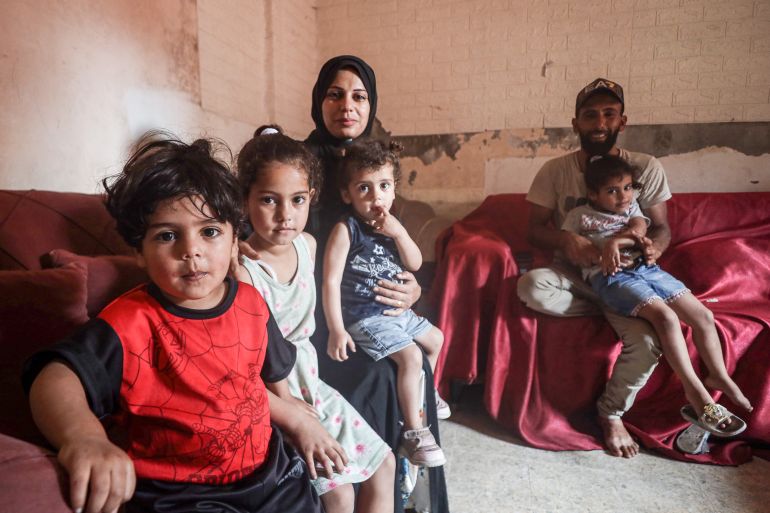
Gaza City – As the Madleen sails towards Gaza to try to deliver life-saving aid to its people, little is known about the woman the boat was named after: Madleen Kulab, Gaza’s only fisherwoman. When Al Jazeera first met Madleen Kulab (also spelled Madelyn Culab) three years ago, she had two children, was expecting her third and lived a relatively quiet life in Gaza City with her husband, Khader Bakr, 32, also a fisherman. Madleen, now 30, would sail fearlessly out as far as Israel’s gunship blockade would allow to bring back fish she could sell in a local market to support the family. When Israel’s war on Gaza began, the family was terrified, then heartbroken when Israel killed Madleen’s father in an air strike near their home in November 2023. They fled with Madleen nearly nine months pregnant to Khan Younis, then to Rafah, to Deir el-Balah and then Nuseirat. Now, they are back in what remains of their home in Gaza City, a badly damaged space they returned to when the Israeli army allowed displaced people to head back north in January. Advertisement Responsibility and pride Madleen sits on a battered sofa in her damaged living room, three of her four children sitting with her: baby Waseela, one, on her lap; five-year-old Safinaz beside her; and three-year-old Jamal – the baby she was expecting when Al Jazeera first met her – at the end. She talks about what it felt like to hear from an Irish activist friend that the ship trying to break the blockade on Gaza would be named after her. “I was deeply moved. I felt an enormous sense of responsibility and a little pride,” she says with a smile. “I’m grateful to these activists who have devoted themselves, left their lives and comforts behind, and stood with Gaza despite all the risks,” she says of the group of 12 activists, who include Swedish climate activist Greta Thunberg and Rima Hassan, a French member of the European Parliament. “This is the highest form of humanity and self-sacrifice in the face of danger.” Madleen Kulab and her husband, Khader Bakr, with their four children in their damaged Gaza City home [Abdelhakim Abu Riash/Al Jazeera] Khader sits on another sofa with six-year-old Sandy. He holds out his phone with a photo of the Madleen on it, flying the Palestinian flag. Madleen has been fishing since she was 15, a familiar figure heading out on her father’s boat, getting to know all the other fishermen and also becoming well-known to international solidarity activists. In addition to bringing home the fish, Madleen is also a skilled cook, preparing seasonal fish dishes that were so famously tasty that she had a list of clients waiting to buy them from her. Especially popular were the dishes made with Gaza’s ubiquitous sardines. Advertisement But now, she can’t fish any more and neither can Khader because Israel destroyed their boats and an entire storage room full of fishing gear during the war. “We’ve lost everything – the fruit of a lifetime,” she says. But her loss is not just about income. It’s about identity – her deep connection to the sea and fishing. It’s even about the simple joy of eating fish, which she used to enjoy “10 times a week”. “Now fish is too expensive if you can find it at all. Only a few fishermen still have any gear left, and they risk their lives just to catch a little,” she says. “Everything has changed. We now crave fish in the middle of this famine we’re living through.” The Madleen has several prominent figures on board aiming to break Israel’s siege of Gaza, including climate activist Greta Thunberg and Rima Hassan, a French member of the European Parliament [Abdelhakim Abu Riash/Al Jazeera] Sleeping on a bare floor, newborn in her arms After the air strike near the family home in November 2023, Madleen’s family’s first displacement was to Khan Younis, following Israeli army instructions that they would be safer there. After searching for shelter, they ended up in a small apartment with 40 other displaced relatives, and then Madleen went into labour. “It was a difficult, brutal birth. No pain relief, no medical care. I was forced to leave the hospital right after giving birth. There were no beds available because of the overwhelming number of wounded,” she says. When she returned to the shelter, things were just as dire. “We didn’t have a mattress or even a blanket, neither me nor the kids,” she said. Advertisement “I had to sleep on the floor with my newborn baby. It was physically exhausting.” She then had to tend to four children in an enclave where baby formula, diapers and even the most basic food items were almost impossible to find. The war, she says, has reshaped her understanding of suffering and hardship. In 2022, she and Khader were struggling to make ends meet between Israel’s gunship blockade and the frequent destruction of their boats. There was also the added burden of being a mother with small children and undertaking such physically taxing work. But now, things have gotten far worse. “There’s no such thing as ‘difficult’ any more. Nothing compares to the humiliation, hunger and horror we’ve seen in this war,” she says. A ship named Madleen Throughout the war, Madleen remained in touch with international friends and solidarity activists she had met through the years. “I would share my reality with them,” she says. “They came to understand the situation through me. They felt like family.” Her friends abroad offered both emotional and financial support, and she is grateful for them, saying they made her feel that Gaza wasn’t forgotten, that people still cared. She is also grateful for being remembered in the naming of the Madleen, but she worries that Israeli authorities will not let the ship reach Gaza, citing past attempts that were intercepted. “Intercepting the ship would be the least of it. What’s more worrying is the
Getting food in Gaza has become “like the Hunger Games”
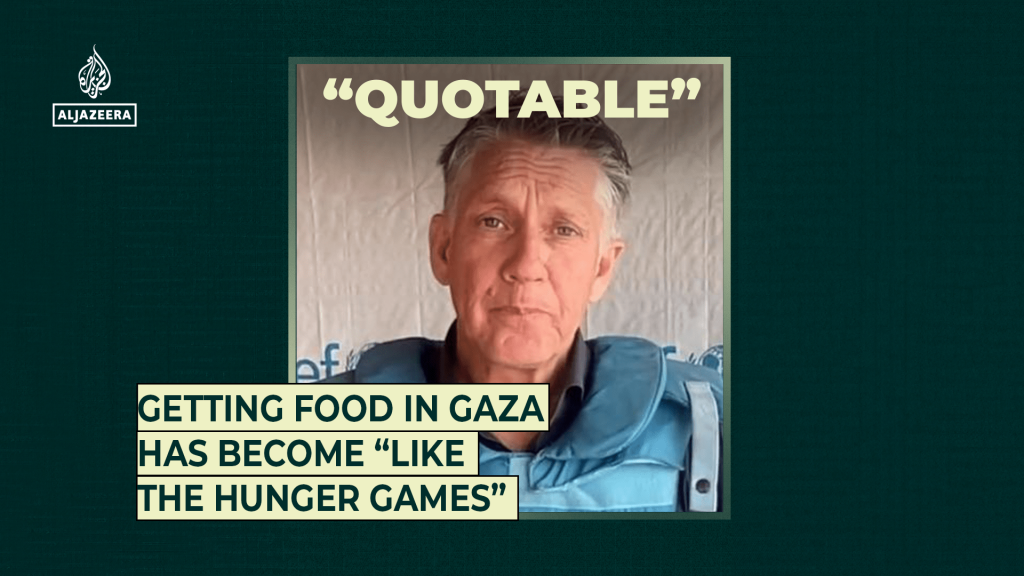
James Elder, UNICEF spokesperson, warns of deadly risks Palestinians face seeking aid in Gaza and calls for urgent safe access. James Elder, a UNICEF spokesperson for, explains the potentially deadly conditions awaiting Palestinians trying to reach aid in Gaza and the urgent need for safe aid access. Adblock test (Why?)
World reacts to Trump’s travel ban, hits several nations mired in conflict

Donald Trump has signed an executive order banning citizens from 12 countries from entering the country in a move he said was to protect the US from “foreign terrorists”, mirroring a contentious policy from his first term as United States president. As part of Trump’s intensified crackdown on immigration, a cornerstone of his previous time in the White House and on the campaign trail, he announced on Wednesday that nationals from 12 countries – Afghanistan, Myanmar, Chad, Congo, Equatorial Guinea, Eritrea, Haiti, Iran, Libya, Somalia, Sudan and Yemen – will be banned. Seven countries will also be subject to partial restrictions, which will mean they will no longer be able to apply for immigrant or non-immigrant temporary visas. However, some temporary work visas will still be allowed. Trump cited an attack in Boulder, Colorado, where a man threw a petrol bomb into a crowd of pro-Israel demonstrators, as proof of the need for immigration curbs. “The recent terror attack in Boulder, Colorado, has underscored the extreme dangers posed to our country by the entry of foreign nationals who are not properly vetted,” Trump said in a video message from the Oval Office posted on X. Advertisement “We don’t want them,” he added. On June 1, police arrested a man who threw Molotov cocktails towards a group of people attending a rally for the release of captives taken from Israel on October 7, 2023 and held in Gaza. Suspect Mohamed Sabry Soliman was charged with a federal hate crime, as well as an array of state charges, according to an affidavit by the US Department of Justice. Soliman is an Egyptian national who has also lived in Kuwait. Neither of these countries, both of which the US has strong, long-term relations with, are on Trump’s list of banned countries. This latest travel ban follows Trump’s executive order during his first term, in which he banned nationals from seven Muslim-majority countries, also known as the “Muslim ban,” in 2017. Seven of the countries on the new list of those banned also have Muslim-majority populations and several are beset by ongoing conflicts. Despite the new suspensions, the ban will not apply to existing visa holders, foreign diplomats, athletes and their teams, among other exemptions. The ban is expected to come into effect on June 9 at 12:01 am EDT (04:01 GMT). Here’s how the world has reacted to the ban. African Union The AU, which has seven of the 12 nations on the travel ban list, said the ban would harm “people-to-people ties, educational exchange, commercial engagement, and broader diplomatic relations” that were built with the US over past decades. “The African Union Commission respectfully calls upon the USadministration to consider adopting a more consultative approach and to engage in constructive dialogue with the countries concerned,” the bloc said in a statement. Advertisement Oxfam America President of Oxfam America, Abby Maxman, said the decision was not about “national security”. “It is about sowing division and vilifying communities that are seeking safety and opportunity in the United States,” Maxman said. Somalia The Somali ambassador to the US, Dahir Hassan Abdi, said in a statement that Mogadishu “values its longstanding relationship with the United States”. “[Somalia] stands ready to engage in dialogue to address the concerns raised,” Abdi said. Venezuela Interior minister Diosdado Cabello described the ban as a “great risk for anyone, not just Venezuelans”. “They persecute our countrymen, our people, for no reason,” he said. Venezuelan migrants in the US have been targeted by the Trump administration for deportation to El Salvador, many on unproven allegations of being gang members. Adblock test (Why?)
Trump speaks with China’s Xi amid trade, student visa tensions

US president previously said it was ‘hard to make a deal’ with the Chinese leader as talks continue over trade. United States President Donald Trump has spoken with Chinese President Xi Jinping by phone as the two countries continue to clash over trade relations, which Trump has sought to aggressively reshape through a series of tariffs. The Chinese state media outlet Xinhua reported that the phone call on Thursday took place at the request of the US. Trump had said the day before that reaching a deal with China was proving difficult. In the first readout of the call, Trump posted on his social media site, Truth Social, “I just concluded a very good phone call with President Xi, of China, discussing some of the intricacies of our recently made, and agreed to, Trade Deal. The call lasted approximately one and a half hours, and resulted in a very positive conclusion for both Countries.” “There should no longer be any questions respecting the complexity of Rare Earth products. Our respective teams will be meeting shortly at a location to be determined. During the conversation, President Xi graciously invited the First Lady and me to visit China, and I reciprocated,” he added. Advertisement Trump also noted the conversation was focused almost entirely on trade and that neither the Russia-Ukraine war nor the Iran nuclear talks were mentioned. On Wednesday, Trump had posted: “I like President XI of China, always have, and always will, but he is VERY TOUGH, AND EXTREMELY HARD TO MAKE A DEAL WITH!!!”. For his part, Xi was quoted by Chinese State TV as saying after the call Thursday, the two countries should strive for a win-win outcome and that dialogue and cooperation are the only right choice for both. The two sides should respect each others’ concerns, he added. Xi also stressed that the US should handle the Taiwan issue very “carefully”. China and the US reached a 90-day agreement on May 12 to bring down tariffs amid a trade war initiated by the Trump administration, but tensions have remained high since then. Washington imposed significant tariffs on Beijing, but eventually eased off amid concerns about the potential economic fallout of a sustained trade war between the world’s two largest economies. Critics have accused Trump of causing enormous disruptions in the global economy and then backing down when China or the European Union hit back forcefully. The Trump administration has also launched a crackdown on Chinese international students living in the US, threatening to revoke student visas of those associated with the Chinese Communist Party or who the government claims pose vaguely defined threats to US national security. More than 277,000 Chinese students were enrolled in US universities during the 2023-2024 academic year. Advertisement China said such steps, along with others targeting China’s technology sector, violate the temporary trade truce reached with the US in May. “These practices seriously violate the consensus,” the Ministry of Commerce in Beijing said in a recent statement. While disputes between Washington and Beijing over issues such as trade and technology have been a common feature of their relations for decades, these tensions have ratcheted up as Trump sets out to change what he sees as a global imbalance of commercial exchange between the US and other countries, including China. Adblock test (Why?)
Trump’s new travel ban: What we know
[unable to retrieve full-text content] US President Donald Trump has signed a travel ban blocking entry to the US for nationals of 12 countries.
Netherlands still backs Israeli F-35 ‘supply chain of death’: Report
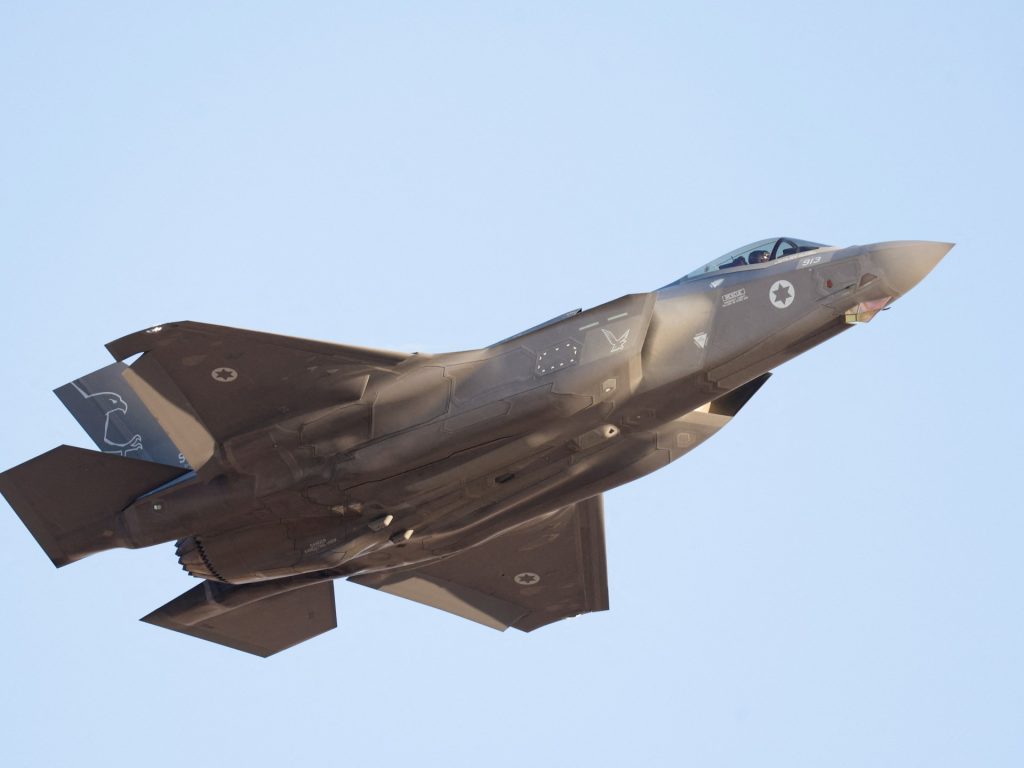
The Netherlands is still supporting the supply chain of Israel’s version of the F-35 fighter jet, more than a year after a court banned direct Dutch exports of F-35 parts to Israel, a report claims. Research by the Palestinian Youth Movement (PYM) shared with Al Jazeera shows that the port of Rotterdam is frequented by ships carrying F-35 parts for maintenance and assembly. The ships belong to the Danish shipping giant Maersk. By examining import data and shipping receipts of Maersk and Lockheed Martin – the United States weapons manufacturer that designed the F-35 – the group found that more than a dozen shipments from Israel travelled through the port of Rotterdam on their way to the US from April 2023 until early 2025. The F-35 fighter jet has been used by Israel to bomb Gaza from the air with devastating effect. Much of the Strip, where more than 50,000 people have been killed since October 2023, is in ruins. “Maersk now operates a recurring shipping cycle between Lockheed Martin’s Fort Worth facility in Texas and Israel Aerospace Industries in Israel, routed through Rotterdam,” the report stated. “In this cycle, Maersk transports pairs of empty F-35 wing containers from Houston to Ashdod, Israel, where they are loaded with completed F-35 wings. The filled containers are then shipped back to the US for final assembly or repair.” Advertisement The researchers noted that Rotterdam is a “key stopover point in this process, and shipments for this cycle have occurred beyond February of 2024”. Then, a judge at a Dutch appeals court ordered the Netherlands to stop exporting and transiting F-35 parts to Israel, saying there was a “clear risk” they were being used in “serious violations of international humanitarian law”. The Dutch state immediately lodged an appeal at the Supreme Court, but until a decision is made, it is still bound by the lower court’s ruling. “The findings in the report show that the port of Rotterdam plays an important role in sustaining the operational capacities of Israel’s F-35 fighter jets. This way, the port of Rotterdam is complicit to international law violations in Gaza,” Gerard Jonkman, director of a Dutch NGO, The Rights Forum, told Al Jazeera. The Dutch Foreign Ministry told Al Jazeera that the court had subsequently confirmed that the judgement in February 2024 applied only to the export or transit of F-35 parts from the Netherlands to Israel and that the Dutch state had implemented the judgement accordingly. A spokesperson for the port of Rotterdam told Al Jazeera that the Dutch Ministry of Foreign Affairs was responsible for issuing permits for the transhipment of military goods. Port officials check vessel compliance with environmental and safety regulations for shipping on behalf of the government and municipality of Rotterdam, they said. “The harbour master receives only limited information regarding vessel cargo. The information received mainly pertains to whether the vessel is carrying hazardous substances. Other aspects of vessel cargo are monitored by various other public authorities, such as customs.” Advertisement They said they were “aware” of the February 2024 court ruling. “All activities in the port must comply with international laws and regulations and the permits issued by the government. If we see any indication that this is not the case, the Port of Rotterdam Authority alerts the competent authority.” ‘The Netherlands is still part of the supply chain’ The Rights Forum was one of three parties, together with the Dutch affiliate of Oxfam and PAX for Peace, the largest peace organisation in the Netherlands, that sued the Dutch state over its export of F-35 parts to Israel. “In this case, there is no direct export from the Netherlands to Israel, but the Netherlands is still part of the supply chain for the Israeli F-35 programme,” Gerard Jonkman, head of the Rights Forum, said of the Palestinian Youth Movement’s findings. “This way the Netherlands facilitates the Israeli F-35 programme and might breach its obligations under international law.” PAX for Peace project leader Frank Slijper told Al Jazeera: “This indeed shows that the Netherlands is part of the F-35 supply chain.” A grassroots organisation, the Palestinian Youth Movement believes that targeting Maersk directly disrupts the flow of weapons in the “supply chain of death used to genocide Palestinians”. According to the group, Maersk has shipped the wings for every Israeli F-35 since March 2022. In November 2024, following a decision by Spain to deny docking permission to two ships carrying weapons bound for Israel, Maersk adjusted its routes. The company’s fleet now avoids Spain in favour of Rotterdam and the port of Tangier in Morocco Advertisement “Maersk has, for years, knowingly supplied the Israeli military with key weapons components used to carry out genocide in Gaza,” Aisha Nizar of the Palestinian Youth Movement told Al Jazeera. “The company has done so without hesitation, potentially violating multiple arms embargo policies across Europe.” The F-35 is considered a top-of-the-line fighter jet. The aircraft designed by Lockheed Martin costs at least $80m in its most basic configuration. Currently, 12 countries operate the jet. F-35 parts are made in the United States and several participating partner countries, giving the project the moniker Joint Strike Fighter. “It is very sad to see that Maersk is not distancing itself from Israel’s crimes against humanity in Gaza and more broadly continues lending itself to the crucial replenishment of Israel’s armed forces,” Slijper said. “Shipping military supplies for the benefit of Israel’s arms industry and the [Israeli army] risks Maersk being complicit in Israel’s crimes.” The use of the jet by Israel, the only country with its unique version of the F-35, has been scrutinised since the start of the onslaught in Gaza. Recently, campaign groups took the United Kingdom government to court in a bid to halt the exports of British-made F-35 parts to Israel. In a statement to Al Jazeera, Lockheed Martin said: “Foreign military sales are government-to-government transactions, and we closely adhere to US government policy with regard to conducting business with international partners.” Advertisement Regarding
Eid al-Adha greetings in different languages
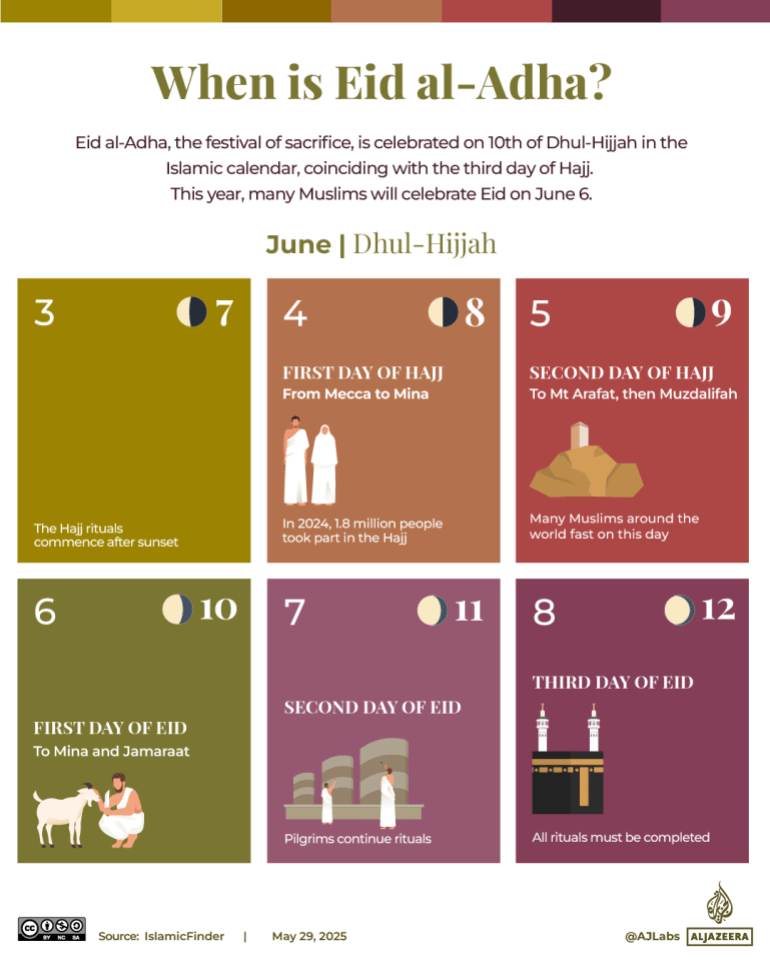
Eid al-Adha is celebrated on the third day of Hajj. Here’s how to say ‘Eid Mubarak’ in different languages. Eid al-Adha, also known as the Feast of the Sacrifice, is observed on the third day of Hajj, which falls on the 10th of Dhul-Hijja, the 12th and final month of the Islamic calendar. Eid al-Adha is the second major festival in the Islamic calendar, celebrated roughly 70 days after Eid al-Fitr, which marks the end of Ramadan, the holy month of fasting. When is Eid al-Adha? This year, the first day of Eid al-Adha falls on June 6 in Saudi Arabia and neighbouring countries, while some other countries will mark it on June 7. There are about 1.9 billion Muslims around the world, approximately 25 percent of the world population. Indonesia has the world’s highest Muslim population, with some 230 million Muslims living in the country. Pakistan is second with about 212 million Muslims, followed by India (200 million), Bangladesh (150 million) and Nigeria (100 million). What happens during Eid al-Adha? In the days leading up to Eid al-Adha, Muslims prepare by preparing their homes, buying new clothes and planning special meals for the occasion. Advertisement On the first day of Eid, those who are financially able are required to sacrifice an animal – usually a sheep, goat, cow, or camel – and distribute a portion of the meat to the less fortunate. This act commemorates the Prophet Abraham’s (Ibrahim) willingness to sacrifice his son Ishmail (Ismael) in obedience to God. The rest of the holiday is spent visiting family and friends, exchanging greetings and gifts, and sharing festive meals. Palestinians gather to celebrate alongside Muslims worldwide on the first day of the Eid al-Adha feast, at the Al-Aqsa Mosque complex in Jerusalem’s Old City, on July 20, 2021 [Ahmad Gharabli/AFP] Eid greetings in different languages The most common greeting is Eid Mubarak. The Arabic saying translates to “blessed Eid”. Here is how people say Eid Mubarak in different languages around the world. (Al Jazeera) (Al Jazeera) (Al Jazeera) (Al Jazeera) (Al Jazeera) (Al Jazeera) (Al Jazeera) (Al Jazeera) (Al Jazeera) (Al Jazeera) (Al Jazeera) (Al Jazeera) (Al Jazeera) Adblock test (Why?)
White House makes misleading claims about Democratic opposition to tax bill

In a news statement this week, the White House cherry-picked personal income tax-related elements in the “big, beautiful bill”, the wide-ranging tax and spending bill being pushed by United States President Donald Trump, and claimed that, in opposing the legislation as a whole, the Democratic Party was opposed to every individual item contained within it. Such a tactic is misleading, particularly since the White House cited measures in the bill that have been championed by Democrats to improve the lives of Americans and are not the reasons the Democrats have given for opposing the “big beautiful bill”. Here’s a fact-check of what the White House claims Democrats oppose: “They’re opposing the largest tax cut in history, which will put an extra $5,000 in their pockets with a double-digit percent decrease to their tax bills. In fact, Americans earning between $30,000 and $80,000 will pay around 15% less in taxes.” The specifics of the tax bill have not been finalised. In its current form, it would cut taxes by an average of 2.4 percent, for middle-income households, according to analysis by the Tax Policy Center. While it is a significant tax cut, it is not the biggest in history. That was under Ronald Reagan in 1981 at 2.9 percent. Advertisement It is accurate that there will be a double-digit percentage decrease in tax bills, at least in the immediate term, at a little more than 11 percent across all tax brackets. It is also true that people earning between $30,000 and $80,000 will pay 15 percent less, according to the Non-Partisan Joint Committee on Taxation. “They’re opposing NO TAX ON TIPS for the millions of Americans who work in the service industry and NO TAX ON OVERTIME for law enforcement, nurses, and more.” This is true only in their opposition to Trump’s tax and spending bill. Democrats and Republicans have supported the concept of no tax on tips. Both Donald Trump and the Democratic presidential nominee Kamala Harris pledged to do so on the campaign trail. Senate Democrats backed the No Tax on Tips Act, passed by the US Senate on May 20. The bill, authored by Republican Senator Ted Cruz of Texas, was co-sponsored by notable Democrats, including Jacky Rosen of Nevada and passed unanimously. “They’re opposing historic tax cuts for senior citizens” Outside of the “big beautiful bill”, Democrats have generally not opposed tax cuts for seniors. Many Democrats have championed legislation that would expand tax cuts for seniors. California Democrat Jimmy Panetta co-sponsored a Republican led bill that would increase the standard deduction for adults over the age of 65 by $4,000. In 2024, House Democrats introduced the “You Earned It, You Keep It Act”, which would effectively eliminate taxes on social security benefits. The bill, however, has never made it past committee. “They’re opposing a boost to the child tax credit.” Again, they are opposing Trump’s “big beautiful bill”, not objecting to the child tax credit. In fact, Democrats have long pushed to expand the child tax credit. In April, Senate Democrats, including Georgia’s Raphael Warnock and Colorado’s Michael Bennett, introduced legislation that would expand the child tax credit. The bill would increase the tax credit, from $2,000 where it currently stands, to $6,360 for newborns, $4,320 for children ages one to six and $3,600 for children six to 17, permanently. Advertisement While the “big beautiful bill” would also increase the child tax credit, it would do so only by $500. That temporary increase is meant to last through 2028 and will revert to $2,000 in 2029. “They’re opposing new savings accounts for newborns and the chance for children across America to experience the miracle of compounded growth.” In the “big beautiful bill”, House Republicans introduced new savings accounts for children. The accounts would include a $1,000 handout for every child born between January 1, 2025 and January 1, 2029. Democrats have not only been supporters of the idea for savings accounts for newborns, but prominent Democrats actually championed it. In 2018, Cory Booker of New Jersey introduced the American Opportunity Accounts Act, which would also give $1,000 to newborns and up to $2000 in annual contributions. He reintroduced the bill again in 2023. “They’re opposing expanded access to childcare for hardworking American families.” This appears to be false. The White House link refers to the Paid Family and Medical Leave Credit, not child care access. Trump’s bill offers up to 12 weeks of paid leave for employees who have worked a year and earn $57,600 or less. While that gives parents more time at home, Democrats have focused on expanding access to child care, including universal pre-K. In 2023, Republicans opposed a Democratic plan to keep child care centres open that struggled in the early days of the COVID-19 pandemic. “They’re opposing historic border security to keep their communities safe.” Last year, Trump pressured Republicans to vote against a bipartisan border security bill, a move that reportedly helped Trump’s chances of winning in November 2024. Democrats have opposed Republican plans to use US military bases for migrant detention, arguing that it misuses Department of Defense resources. Democrats have long opposed border wall funding, including during Trump’s first term. Advertisement A 2018 Stanford University analysis estimated that a border wall would reduce migration by just 0.6 percent. Despite this, the “big beautiful bill” allocates more than $50bn to complete the wall and maritime crossings, $45bn for building and maintaining detention centres, and $14bn for transportation. “They’re opposing expanded health savings accounts that give Americans greater choice and flexibility in how they spend their money.” This is sort of true. Democrats have not been huge proponents of health savings accounts. The belief is that healthcare savings accounts do not help the socioeconomically disadvantaged, who may not have the financial resources to contribute to the accounts. Democrats have also objected to other cuts to healthcare in the bill, including the potential $880bn that could be cut from essential government programmes like Medicaid. “They’re opposing scholarships that empower Americans