

Why has Trump revoked all South Sudanese visas?
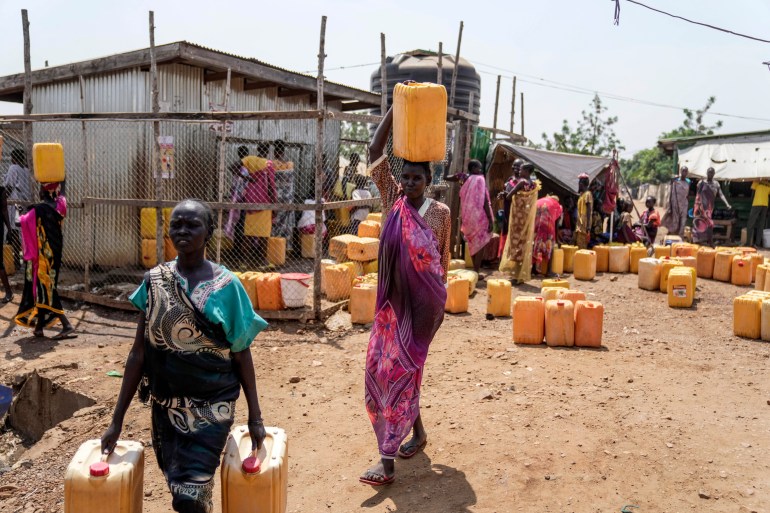
The United States government has revoked existing visas issued to all South Sudanese passport holders and barred further entries of the country’s nationals due to a failed deportation case, signalling an escalation of the Trump administration’s sweeping crackdown on immigration. In a statement on Saturday, US Secretary of State Marco Rubio blamed the transitional government of the African nation for a lack of “full cooperation” and accused South Sudan of “taking advantage” of Washington. It’s the first such blanket sanction on any country since President Donald Trump took office in January. South Sudanese officials have not reacted to the new ban. In posts on social media, however, some South Sudanese accused the US of “bullying” and using collective punishment. The East African nation, Africa’s youngest, is currently reeling from a new conflict between forces loyal to President Salva Kiir and Vice President Riek Machar. The United Nations has warned of the risk of a return to all-out civil war if tensions continue to rise. Advertisement Here’s what you need to know about why the US imposed the visa ban and how South Sudanese nationals could be affected: Displaced people fetch water inside a camp on the outskirts of Juba, South Sudan on February 13, 2025 [Brian Inganga/AP] What did the US accuse South Sudan of? Rubio implied in his statement that South Sudan’s government has refused to take back citizens who had been deported from the US. The matter, he said, involved US national security and warranted the visa revocations and ban. “Every country must accept the return of its citizens in a timely manner when another country, including the United States, seeks to remove them,” the statement read. In a more detailed account on X, also on Saturday, Deputy Secretary of State Christopher Landau alleged that South Sudan had refused to take back one person presumed to be from the African country because officials there had determined him to be Congolese after he arrived in Juba. It’s believed the country accepted several other returned people except the deportee in question. Landau claimed that the individual had, on February 13, been verified as South Sudanese by the country’s embassy in Washington, DC. He also said the embassy issued an emergency travel letter that the US relied on to send the deportee on a flight to Juba. However, upon arrival there, South Sudanese officials determined that he was not actually from the country and returned him to the US, Landau said. Let there be no mistake: the Administration of @POTUS @realDonaldTrump is committed to robust enforcement of our Nation’s immigration laws, and expects all other countries to accept repatriation of their own nationals. The Government of South Sudan has violated this obligation by… — Deputy Secretary Christopher Landau (@DeputySecState) April 5, 2025 Advertisement “Obviously, at that point, it is unacceptable and irresponsible for South Sudanese government officials to second guess the determination of their own Embassy – as far as we’re concerned, the Embassy’s certification is conclusive and the matter is closed,” Landau said in his posts. “We cannot have a repatriation system that allows foreign governments to reopen and relitigate eligibility for repatriation after those very governments had previously certified such eligibility and an individual has been repatriated,” he added. What has South Sudan said? South Sudan’s government has not publicly commented on the US actions. Local media reported that 24 South Sudanese nationals were originally deported from the US and one had been returned because he was determined not to be South Sudanese by immigration officials. In an unverified video posted on Facebook by a South Sudanese blog, Abeyeinthony Media, a man claiming to be the deportee in question is seen being interrogated by people who appeared to be South Sudanese officials, likely in Juba’s airport. The man, who claimed to be Makula Kintu from North Kivu in the Democratic Republic of the Congo (DRC), said he believed his parents were originally from Sudan but he was born in the DRC in 1977. At that time, South Sudan was still part of Sudan. It gained independence in 2011. The man said he did not choose to travel to South Sudan. “I came to South Sudan, one because I was deported against my will,” the man, who also said he was orphaned as a child and was brought up by missionaries, told officials. “There was allegation that I was being extradited by the government of South Sudan because (of) my parents.” Advertisement Who will be impacted? The conflict in South Sudan that erupted in 2011 after its independence from Sudan forced millions of people to flee the country. In 2013, the violence escalated into a full-blown civil war, sparked by tensions between Kiir and his deputy Machar. It ended in 2018 after a peace deal was reached, but sporadic violence has continued. Many South Sudanese now reside in neighbouring African countries as well as in the US, Canada and Australia. An estimated 100,000 South Sudanese were residing in the US by 2007, according to a South Sudanese official at the time. It’s unclear how many were visa holders and how many were naturalised Americans. About 133 South Sudanese were previously granted temporary protected status by former President Barack Obama’s administration in 2011 due to ongoing, sporadic conflict in the country. The categorisation grants work and residency rights to citizens of certain countries deemed unsafe due to conflict and natural disasters, including Haiti, Afghanistan, Ukraine, Cameroon and a handful of other countries. In 2023, President Joe Biden’s administration extended the status by 18 months to May 3 this year due to “violence and human rights abuses affecting civilians, as well as environmental, health, and food security concerns”. Another 140 South Sudanese nationals who’d been residing in the US since September 2023 were also eligible to apply for the protected status. Scores, if not hundreds, of South Sudanese study in US schools, many of them on scholarships. Advertisement South Sudan’s basketball team, Africa’s best rated, also has several members living and
Serbia’s President Vucic taps novice prime minister amid protest pressure
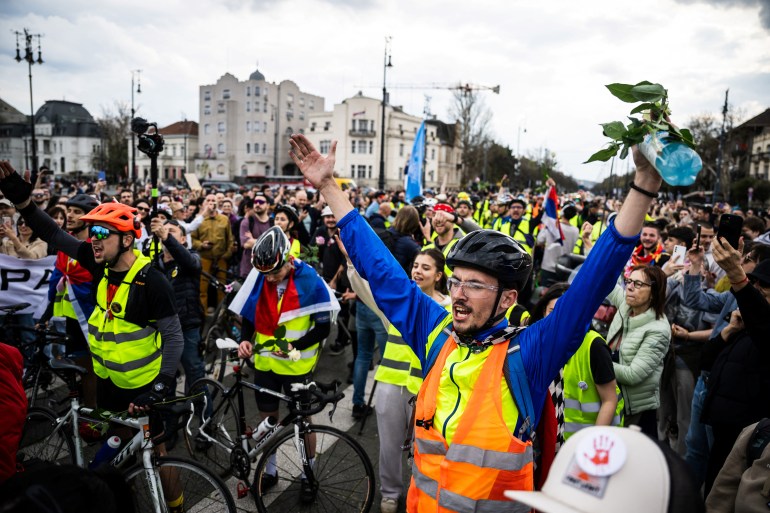
Nomination of endocrinologist Djuro Macut likely to pass parliament despite opposition fury. Serbia’s President Aleksandar Vucic has nominated a politically inexperienced endocrinologist and university professor as prime minister, amid massive ongoing protests that forced the previous premier to resign. Vucic announced the nomination of 62-year-old Djuro Macut weeks after the resignation of Milos Vucevic was approved by parliament on March 19 amid violence at the protests, which are focused on the president’s authoritarian stance and government corruption. Opposition parties were quick to reject the nomination of the Belgrade University lecturer, who had previously backed Vucic’s Serbian Progressive Party (SNS). They claimed that Macut would be beholden to directions from Vucic, who is trying to maintain his 12-year grip on power. “The prime minister-designate can be anyone or nobody as long as Vucic remains the head of the state,” said Pavle Grbovic, head of the Movement of Free Citizens party. “Knowledge about polycystic ovaries is not a reference for running the government, which requires a completely different kind of expertise,” said Boris Tadic, a former president and head of the opposition Social Democratic Party. Advertisement However, Macut is unlikely to encounter heavy resistance on his way to becoming prime minister since the SNS, which he will also formally lead, controls parliament. With the government having been run by technocrats since parliament accepted Vucevic’s resignation on March 19, Macut must now form a government and present it to the house by April 18. A swift confirmation process could signal political continuity for Vucic to both domestic and international audiences, with European Union accession talks still on the line for Serbia. However, the protests, which have spiralled since the collapse of a railway station roof in Novi Sad last November that killed 16 people, have not died down, particularly in Belgrade and Novi Sad. The tragedy was attributed to government corruption and mismanagement, leading to a public outcry and demands for accountability. Serbian authorities have occasionally used forceful tactics against protesters, but most demonstrations have proceeded without major incidents or deaths. Serbian cyclists celebrate as they arrive at their Budapest stop during their bike ride to Strasbourg aiming to raise awareness within EU institutions about months of antigovernment protests, in Budapest, Hungary, April 5, 2025 [Marton Monus/Reuters] The protests, which have seen organisers working hard to keep their distance from all political parties, have continued in varying forms. A group of about 80 Serbian university students embarked on a 1,300km (807-mile) journey from Novi Sad to Strasbourg in France on bicycles to draw EU attention to their cause. Advertisement Macut’s nomination is likely to test the mood, however, with the protesters having demanded a transitional government and for Vucic to step down. Adblock test (Why?)
Macron, Sisi call for Gaza ceasefire and release of captives
[unable to retrieve full-text content] The leaders of France, Egypt, and Jordan discussed efforts to achieve these goals at a meeting in Cairo.
Dominican Republic boosts security on border with crisis-ridden Haiti
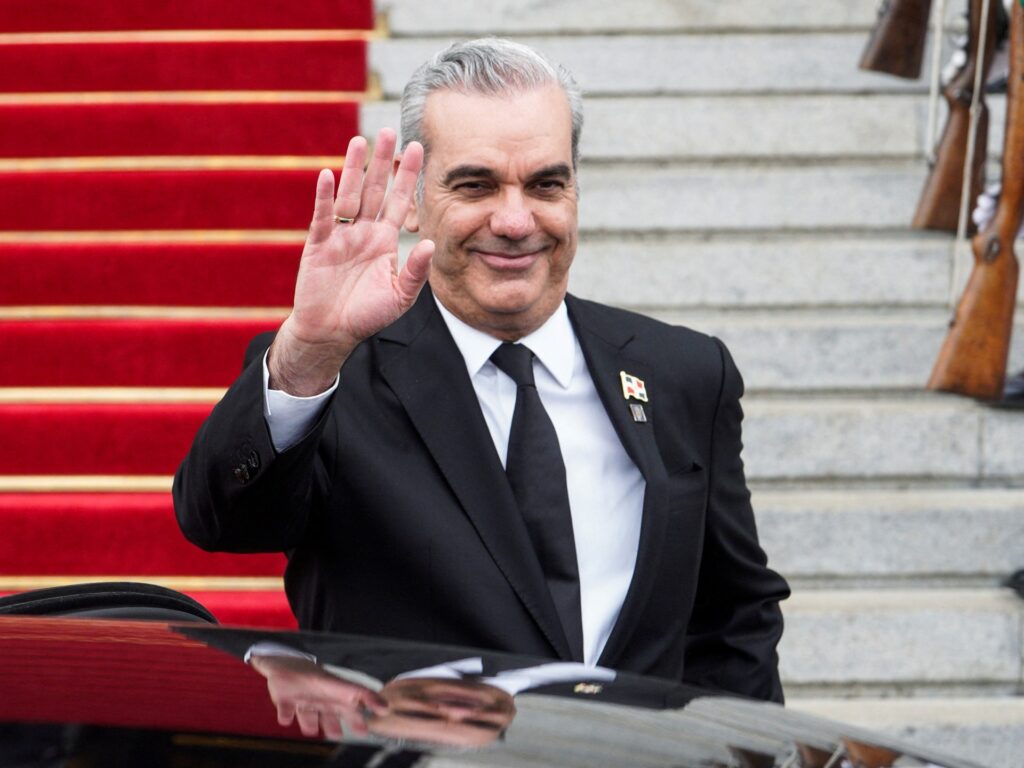
Caribbean island nation moving to extend border wall and eject migrants as violence and anarchy plague the neighbour. The Dominican Republic has announced a series of measures to bolster border security and tighten migration control in response to escalating instability in neighbouring Haiti. President Luis Abinader said on Sunday that security would be increased, despite calls for his country to ease stringent policies as Haitians seek refuge from violence wracking their country. “We will step up surveillance of the borders with 1,500 additional troops, on top of 9,500 already deployed,” the Dominican leader, re-elected last year on pledges to clamp down on immigration, said in a speech. Abinader added that he has approved the construction of a new section of a wall that separates the two countries – which share the second-largest island in the Caribbean after Cuba. The border between the two countries stretches for more than 300km (186 miles). About 54km (33 miles) of border wall has been completed. The president said his latest order would “speed up construction of the border wall” to add a further 13km (8 miles). Advertisement Legal reforms are also on the agenda, according to Abinader, with the goal of using tougher penalties to deter those who facilitate the entry and stay of immigrants into the country. Abuse The increased border measures come as the Dominican Republic eyes the deepening crisis in Haiti. Chaos took reign in the country last year as violence flared dramatically, leaving an alliance of gangs in control of most of the capital city of Port-au-Prince. Despite the efforts of a Kenyan peacekeeping force, numbering approximately 1,000, the transitional government in Haiti has been unable, or unwilling, to curtail the violence, which has seen a resurgence over the last month or so. The United Nations reports that more than 5,600 people were killed in 2024 and that over one million people have been displaced, many seeking refuge in the neighbouring Dominican Republic. The Dominican Republic has responded with stringent deportation policies, aiming to repatriate up to 10,000 Haitians per week in recent months. This has led to reports of human rights abuses, with advocates calling on countries across the Americas, especially the United States and the Dominican Republic, to halt deportations due to dire conditions awaiting people in Haiti. Abinader, who won a second term in the May 2024 election that heavily featured issues relating to Haiti, has emphasised the need for tougher border and immigration controls while also calling for international assistance. Adblock test (Why?)
Israeli strike on media tent extends journalist death toll in Gaza
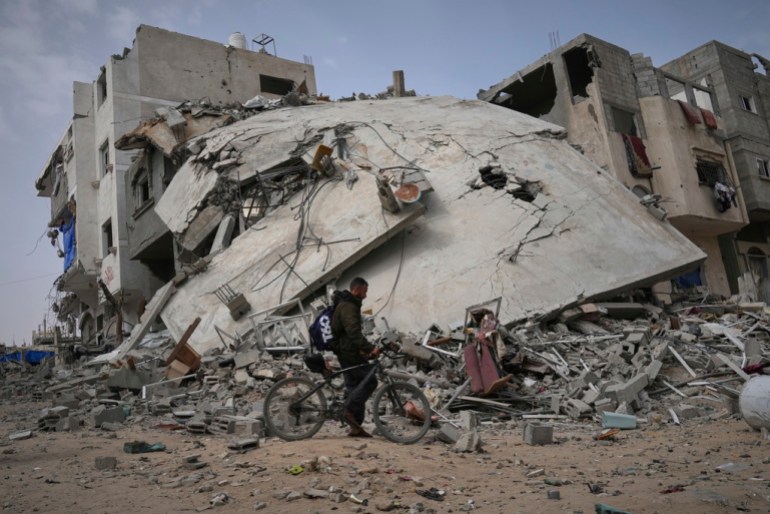
Deaths add to the casualty numbers in what has been declared the deadliest ever war for media workers. An Israeli air attack on a media tent in Gaza has killed at least two people. The bombing near the Nasser Hospital in Khan Younis early on Monday also wounded several other reporters, according to local media. The attack was just the latest to result in the casualties of journalists, with Israel having been accused of deliberately targeting the press during its war in the enclave. The strike on the tent outside the hospital in southern Gaza at about 2am set it ablaze, killing journalist Helmi al-Faqawi as well as a man named as Yousef al-Khazindar, according to Palestine’s Wafa news agency. Footage shared online by the Quds News Network showed the tent on fire. Some people in a crowd gathered outside attempted to extinguish the flames. Reports said that nine people, six of them journalists, were injured, “some seriously”, in the attack. The Quds News Network showed footage of journalists Hassan Eslaih and Ihab al-Bardini on hospital beds, the latter “struck by shrapnel in the head, which exited through his eye”. Advertisement Journalist Ahmad Mansour was reportedly fighting for his life after suffering “severe burns”. Palestinians mourn journalist Helmi al-Faq’awi who was tragically murdered in the horrific Israeli attack late last on the journalists’ tent outside Nasser Hospital in Khan Younis. pic.twitter.com/DlB5r6wpuH — Quds News Network (@QudsNen) April 7, 2025 Israeli attacks on Gaza on Monday morning killed at least 13 people, according to medical sources cited by Al Jazeera Arabic. The network reported two people were killed in the strikes on the Jabalia refugee camp and three others in the Zeitoun district of Gaza City. Wafa reported that two people were killed west of Deir el-Balah and another in the al-Jurun area north of Gaza City. Deadliest war for journalists The attack on the media tent came a day after journalist Islam Meqdad was killed along with her husband and child, increasing the casualties reported among media representatives in Gaza. The Watson Institute for International and Public Affairs has said Israel’s war on Gaza is now the deadliest ever for media workers, according to its Costs of War project. The United States-based think tank’s report released last week stated that Israeli forces have killed 232 journalists and media workers since the war in the enclave began following the October 7, 2023 attack by Hamas on southern Israel. On average, 13 reporters and media workers have been killed every week in the bombardment. The destroyed house of journalist Islam Meqdad, where she was killed along with her son and five other family members in an Israeli army attack in Khan Younis, on April 6, 2025 [Abdel Kareem Hana/AP Photo] The figures demonstrate that more journalists have been killed in the conflict than in both world wars, the Vietnam War, the wars in Yugoslavia and the US war in Afghanistan combined, the report said. Advertisement It is unclear, the think tank continued, how many journalists in Gaza have been specifically targeted and “how many were simply the victims, like tens of thousands of fellow civilians, of Israel’s bombardment”. However, it cited the documentation by Reporters Without Borders (RSF) of 35 cases to the end of 2024 in which the military likely targeted and killed journalists because of their work. Citing the Costs of War study, journalist Antony Lowenstein told Al Jazeera that Israel is engaged in “deliberate targeting of journalists” and that the number of media workers killed in the enclave is now “greater than that of all conflicts in the last 100 years combined”. Adblock test (Why?)
Musk vs Navarro: Is the Trump team divided on tariffs?
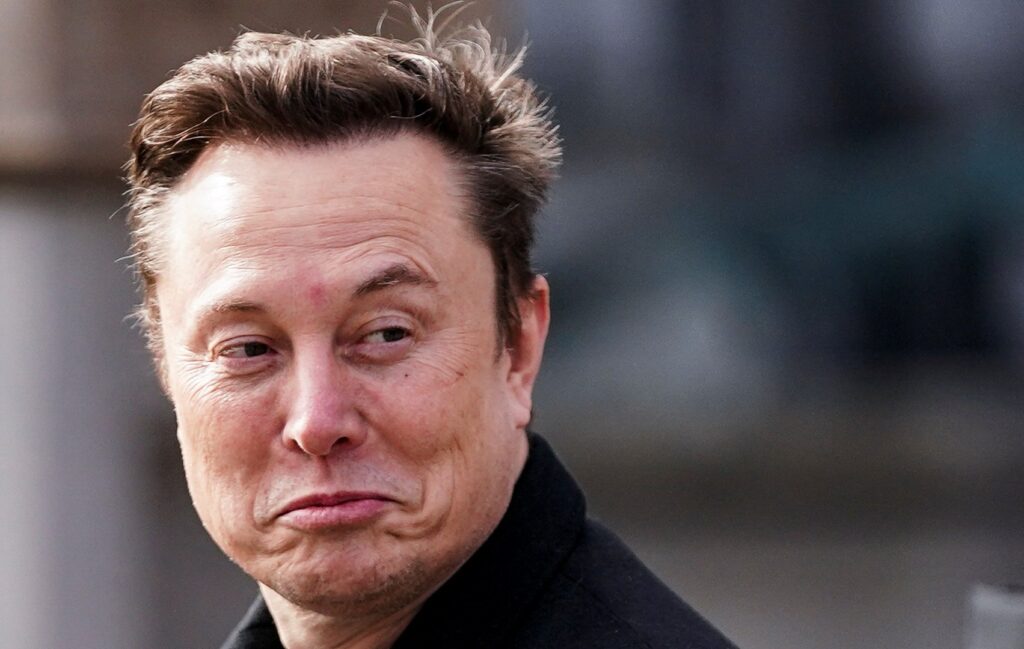
United States President Donald Trump has doubled down on his tariffs plan, even as markets crash around the world. However, signs of divisions among Trump’s aides are emerging with key ally Elon Musk publicly clashing with trade adviser Peter Navarro on Saturday. Others have also presented diverging narratives. Here is more about what has happened: What happened between Musk and Navarro? On Wednesday, Trump announced sweeping tariffs impacting most of America’s trading partners. This marked a major break from decades of US trade policy and sparked criticism and concern from economists and countries targeted by Trump’s tariffs. In the aftermath, the three major stock indices in the US – the Dow Jones Industrial Average, S&P 500 and Nasdaq – dropped by more than 5 percent over the past week. This marked the biggest stock market drop in the US since 2020 during the COVID-19 pandemic. Longtime Trump aide and the administration’s senior counsellor for trade and manufacturing, Peter Navarro, defended the tariffs in an interview with CNN on Thursday. Advertisement “The market will find a bottom. It will be soon, and from there, we’re going to have a bullish boom, and the Dow is going to hit 50,000 during Trump’s term,” Navarro said. As of Monday, the Dow Jones stood at 38,314 before the start of trading. After an X user posted a clip of Navarro speaking to CNN and alluded to the adviser’s doctorate from Harvard University, Musk hit back on the platform, which he owns. “A PhD in Econ from Harvard is a bad thing, not a good thing,” Musk posted. The first phase of the new tariffs – 10 percent levies on countries including the United Kingdom, Australia, Argentina and Saudi Arabia – came into effect on Saturday. Higher levies that Trump calls reciprocal tariffs are scheduled to come into effect on Wednesday against countries including China and India. What did Musk say about tariffs on Europe? The hit against Navarro hasn’t been Musk’s only comment on tariffs in recent days. On Saturday, Musk – who oversees the Department of Government Efficiency (DOGE), tasked by Trump to slash government spending – joined a conversation by videolink with Italian Deputy Prime Minister Matteo Salvini, the leader of the far-right League party. During this conversation, Musk voiced hopes for “a zero-tariff situation” between the US and Europe, even as Trump has imposed 20 percent tariffs on the European Union. “I hope it is agreed that both Europe and the United States should move ideally, in my view, to a zero-tariff situation, effectively creating a free-trade zone between Europe and North America,” Musk said. Advertisement Musk – the world’s richest man, who is CEO of SpaceX and Tesla and the largest shareholder of both firms – has seen his firms face setbacks in recent weeks. In Europe alone, Tesla’s sales have plunged by 49 percent in January and February when compared with the same months in 2024, according to a March 25 report published by the European Automobile Manufacturers’ Association. Tesla’s share price has also stumbled. It’s about half of what it was in December. How has Navarro responded? In a Fox News interview on Sunday, Navarro responded to Musk’s comments about the tariffs in Europe. “It was interesting to hear Elon Musk talk about a zero-tariff zone with Europe. He doesn’t understand that,” Navarro said. “The thing that I think is important about Elon to understand is he sells cars. That’s what he does,” Navarro added, suggesting that Musk’s comments on tariffs were linked to his business interests. What had Musk said earlier about tariffs? Last month, Tesla warned the US government that tariffs could harm electric vehicle companies when Trump’s tariff targets impose their own levies on American products. In an unsigned letter to US Trade Representative Jamieson Greer, Tesla said: “US exporters are inherently exposed to disproportionate impacts when other countries respond to US trade actions.” The company added: “Past trade actions by the United States have resulted in immediate reactions by the targeted countries, including increased tariffs on electric vehicles imported into those countries.” Advertisement On March 26, Trump imposed 25 percent tariffs on car imports and certain automobile parts. In response to this, Musk wrote on X: “Important to note that Tesla is NOT unscathed here. The tariff impact on Tesla is still significant.” Are there other signs of splits within Team Trump? Commerce Secretary Howard Lutnick told CBS News on Sunday that the 10 percent baseline tariffs will “stay in place for days and weeks” and the higher reciprocal tariffs would also take effect. However, on the same day, Treasury Secretary Scott Bessent told NBC’s Meet The Press that more than 50 countries had reached out to Washington for negotiations to cut the levies. “The market consistently underestimates Donald Trump,” he said in response to the market crashes. Also on Sunday, CNN anchor Jake Tapper asked Agriculture Secretary Brooke Rollins whether the tariffs are here to stay like Trump and Lutnick have said. Rollins did not directly answer this question. Adblock test (Why?)
Palestinian-US teen killed by Israeli settler in the occupied West Bank
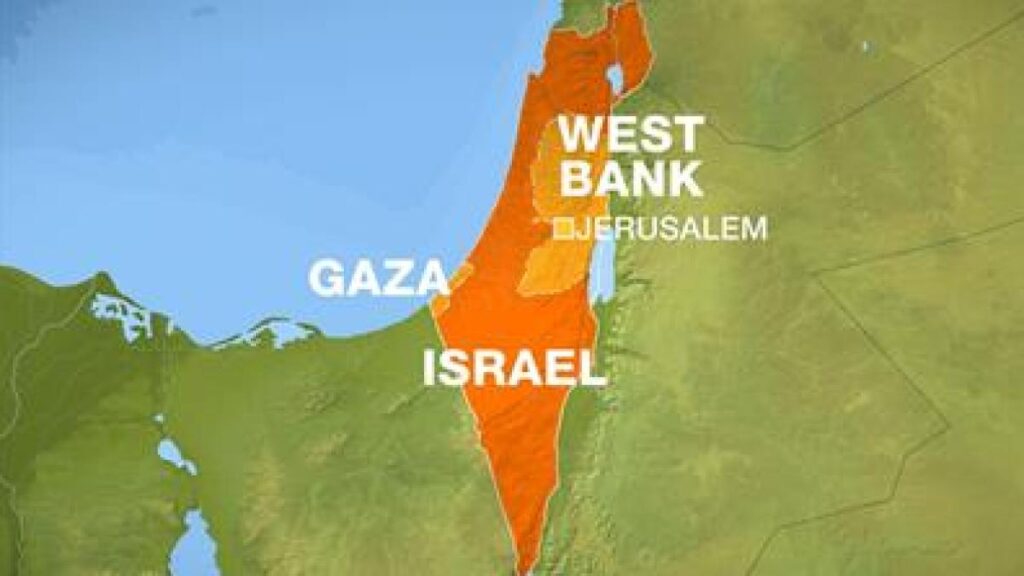
Palestinian officials identified the 14-year-old US citizen as Omar Mohammed Rabea. A Palestinian-American teenager has been shot and killed by an Israeli Jewish settler in the occupied West Bank, Palestinian authorities have said. Palestinian officials identified the 14-year-old as Omar Mohammed Rabea and said he was near a settlement in Turmus Aya when the settler opened fire. There have been sharp rises in settler violence, incursions, attacks and arson against Palestinians and their property in the territory since Israel’s war in Gaza began. The Israeli army has also been carrying out a sustained assault on the territory in various cities and towns. Rabea was shot along with two other teenagers by the settler, said the town’s Mayor Adeeb Lafi. Palestinian officials condemned the shooting. “This is yet another example of the ongoing Israeli settler violence against Palestinians, with impunity,” one official said. The victim’s family has not yet made a public statement, but they have expressed their grief over their loss. International criticism of Israeli settlement expansion and Jewish settler violence has been mounting, drawing condemnation from human rights groups worldwide. Advertisement Israeli forces have opened an investigation into the killing, but there has been no immediate comment from authorities. The Israeli military and settlers operate for the most part without fear of judicial repercussions in Palestinian areas. There have been several cases of US citizens being killed by Israelis in the occupied West Bank. In 2024, Aysenur Ezgi Eygi, a 26-year-old Turkish-American activist, was shot in the head by an Israeli soldier while protesting against illegal Israeli settlements, according to witnesses. Shireen Abu Akleh, a Palestinian-American journalist for Al Jazeera, was also killed by the Israeli military in 2022 while reporting in the occupied West Bank, despite being clearly identified as a member of the press. Adblock test (Why?)
Will anyone face justice for the Rafah ambulance convoy attack?
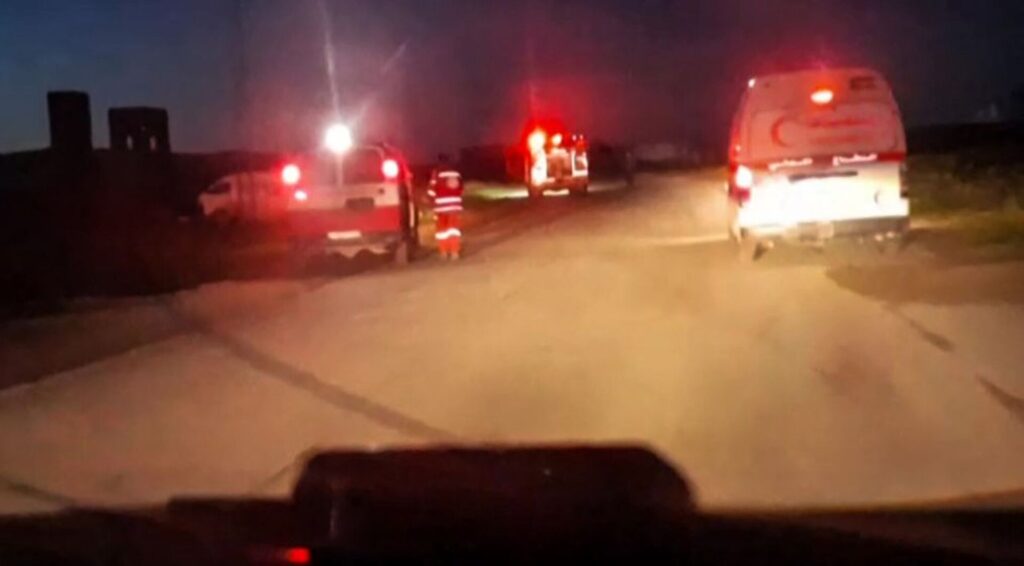
Recovered mobile phone video shows official Israeli account is false. Video from a dead victim’s phone shows how Israeli forces attacked an ambulance convoy in Gaza last month, killing 15 Palestinian emergency workers. It also shows that Israeli statements about the attack were false. Will anyone face justice? Presenter: Adrian Finighan Guests: William Schabas – professor of international law at Middlesex University Toby Cadman – international human rights lawyer Michael Mansfield – international human rights lawyer Adblock test (Why?)
Yemen’s Houthis say latest US air strikes kill at least four in Sanaa
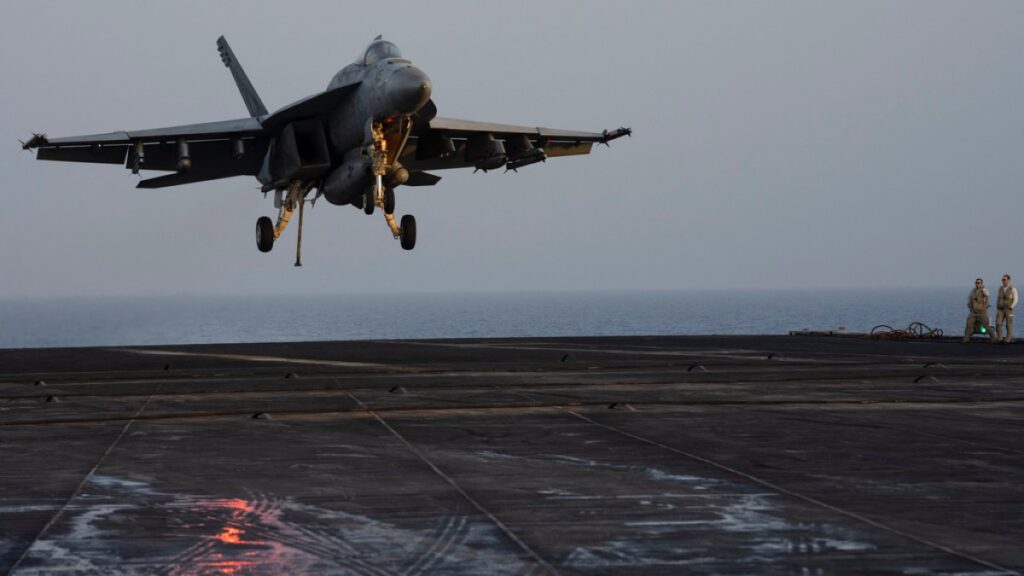
The strikes targeting the capital hit a home and wound more than 20 other people, according to Houthi authorities. United States air strikes have killed at least four people in Yemen’s Sanaa, according to the Ministry of Health. The attacks on the capital on Sunday hit a home and wounded more than 20 other people, including four women and children, according to local sources. US warplanes launched three other air strikes on the Al Jabal al Aswad area in the Bani Matar district, west of the capital. No details were available regarding casualties. Earlier, the Houthis said US air strikes killed at least two people overnight in a Houthi stronghold, Saada, and wounded nine. Footage aired by the Houthis’ Al Masirah satellite news channel showed a strike collapsing what appeared to be a two-storey building. The intense campaign of air strikes in Yemen under US President Donald Trump has targeted the Iranian-aligned group over Houthi attacks on shipping in the Red Sea. The Yemeni group has been carrying out attacks in solidarity with Palestinians during Israel’s war in Gaza. Dozens of people in Yemen have been killed in the latest US strikes since Trump ordered them to resume last month. Civilians have been targeted, families wiped out, military sites destroyed and soldiers killed. Advertisement The White House said there have been more than 200 strikes so far. The US attacks started after the Houthis said they planned to resume targeting Israeli-linked ships over Israel blocking aid entering the Gaza Strip and its subsequent resumption of the war, which ended a six-week ceasefire on March 18. The Houthis targeted more than 100 merchant vessels with missiles and drones from November 2023 until January this year. They also launched attacks targeting US warships. Adblock test (Why?)
Over 50 countries seek US trade talks after tariffs: Trump officials
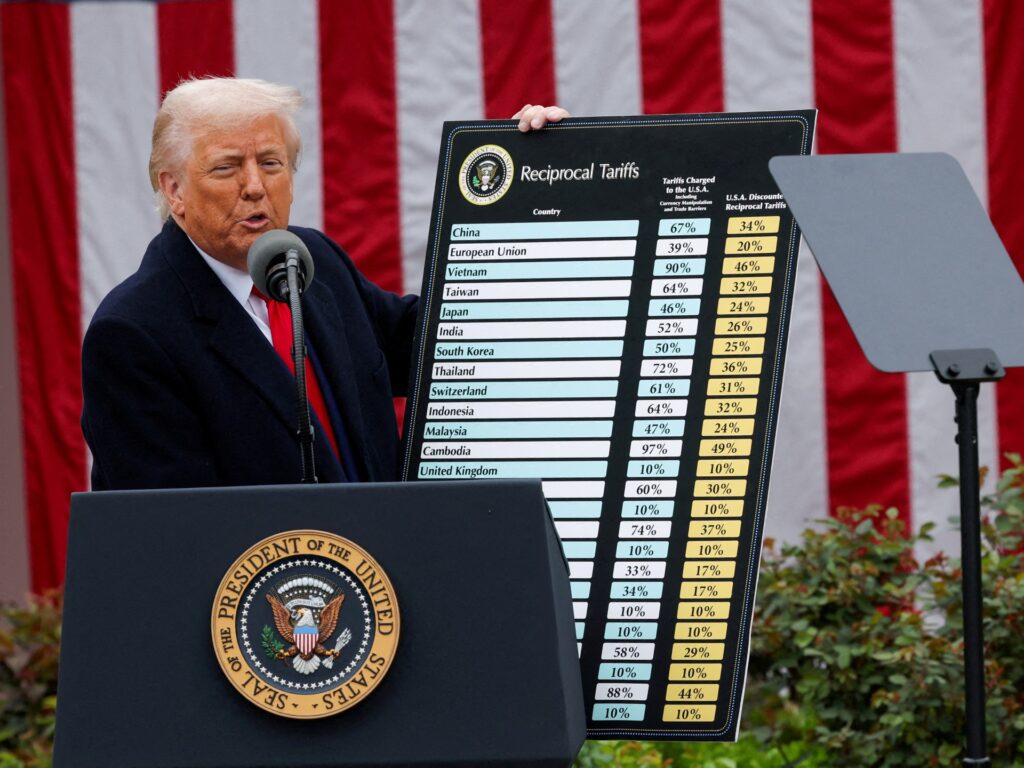
The tariffs have been widely criticised around the world for threatening to push the global economy into a recession. More than 50 countries have directly contacted the White House to initiate trade talks following US President Donald Trump’s imposition of wide-ranging punitive tariffs, administration officials have said. The tariffs, which caused a nearly $6 trillion drop in US stock values last week and battered global markets, have drawn worldwide attention and sparked fears of a potential economic downturn. But the Trump administration has downplayed that and potential further catastrophic economic fallout. In the meantime, investors nervously awaited the open of US trading after Wall Street’s selloff last week, anticipating another week of turbulence as other nations react. Asian markets will open in the coming hours and expect a rocky day. In a series of Sunday-morning talk show interviews, Trump’s top economic advisers defended the tariffs, describing them as a strategic move to strengthen the US position in global trade. Treasury Secretary Scott Bessent revealed that more than 50 nations had begun negotiations with the US since the tariffs were announced on Wednesday, but did not disclose the countries involved. Advertisement Bessent claimed the tariffs gave Trump “maximum leverage,” though their impact on the US economy remains uncertain. He dismissed concerns about a recession, citing unexpectedly strong job growth in the US. Trump’s wide-ranging tariffs came into effect on Saturday. The initial 10 percent “baseline” tariff took effect at US seaports, airports and customs warehouses, ushering in Trump’s full rejection of the post-World War II system of mutually agreed tariff rates. A decline in US GDP Despite this, economists have warned that the tariffs could lead to a decline in US gross domestic product (GDP), with JPMorgan economists revising their growth forecast from a 1.3 percent increase to a 0.3 percent decrease. The tariffs, aimed at pressuring foreign governments to make concessions, have also triggered retaliatory levies, including hefty ones from China, raising fears of a global trade war. US allies like Taiwan, Israel, India, and Italy have already expressed interest in negotiating with the US to avoid the tariffs. Taiwanese leader Lai Ching-te offered zero tariffs as the basis for talks, while Israeli Prime Minister Benjamin Netanyahu sought relief from the 17 percent tariff on Israeli goods. Meanwhile, the US continues to implement tariffs, with higher “reciprocal” duties expected to take effect on Wednesday. Critics have raised concerns over the method used to determine the tariffs, especially after they were applied to some remote, uninhabited territories. Commerce Secretary Howard Lutnick defended the strategy, claiming that it aimed to prevent countries from circumventing the tariffs with loopholes. Advertisement Adblock test (Why?)