

US citizen charged with trying to attack US embassy branch in Tel Aviv
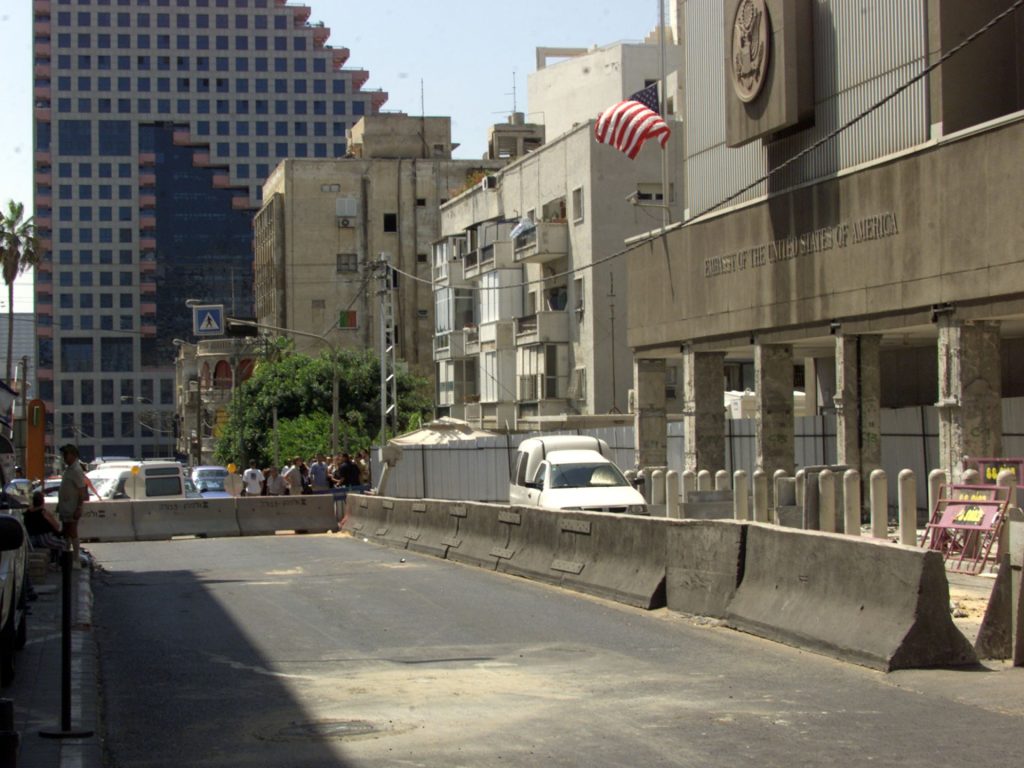
Joseph Neumeyer, who is also a German citizen, approached the building on May 19 with Molotov cocktails, officials say. A dual United States and German citizen has been arrested on charges that he travelled to Israel and attempted to firebomb the branch office of the US Embassy in Tel Aviv, federal prosecutors in New York have said. Israeli officials deported Joseph Neumeyer to New York on Saturday and he had an initial court appearance before a federal judge in Brooklyn on Sunday. His criminal complaint was unsealed on Sunday. Prosecutors say Neumeyer walked up to the embassy building on May 19 with a backpack containing Molotov cocktails, but got into a confrontation with a guard and eventually ran away, dropping his backpack as the guard tried to detain him. Law enforcement then tracked Neumeyer down to a hotel a few blocks away from the embassy and arrested him, according to a criminal complaint filed in the Eastern District of New York. “This defendant is charged with planning a devastating attack targeting our embassy in Israel, threatening death to Americans, and [US] President [Donald] Trump’s life,” US Attorney General Pam Bondi said in a statement. “The Department will not tolerate such violence and will prosecute this defendant to the fullest extent of the law.” Advertisement Neumeyer’s court-appointed attorney, Jeff Dahlberg, declined to comment. The attack took place against the backdrop of Israel’s ongoing deadly war on Gaza, now in its 19th month. Nearly 54,000 Palestinians have been killed in the blockaded enclave, where a famine is now looming as Israeli forces continue to seal vital border crossings and uphold a crippling blockade on humanitarian aid including food, medicine, and fuel. Neumeyer, 28, who is originally from Colorado and has dual US and German citizenship, had travelled from the US to Canada in early February and then arrived in Israel in late April, according to court records. He had made a series of threatening social media posts before attempting the attack, prosecutors said. During his first term, Trump recognised Jerusalem as Israel’s capital despite Palestinian objections, in a move that has not been recognised by the international community. He also moved the US Embassy to Jerusalem from Tel Aviv. Adblock test (Why?)
Russia-Ukraine war: List of key events, day 1,187
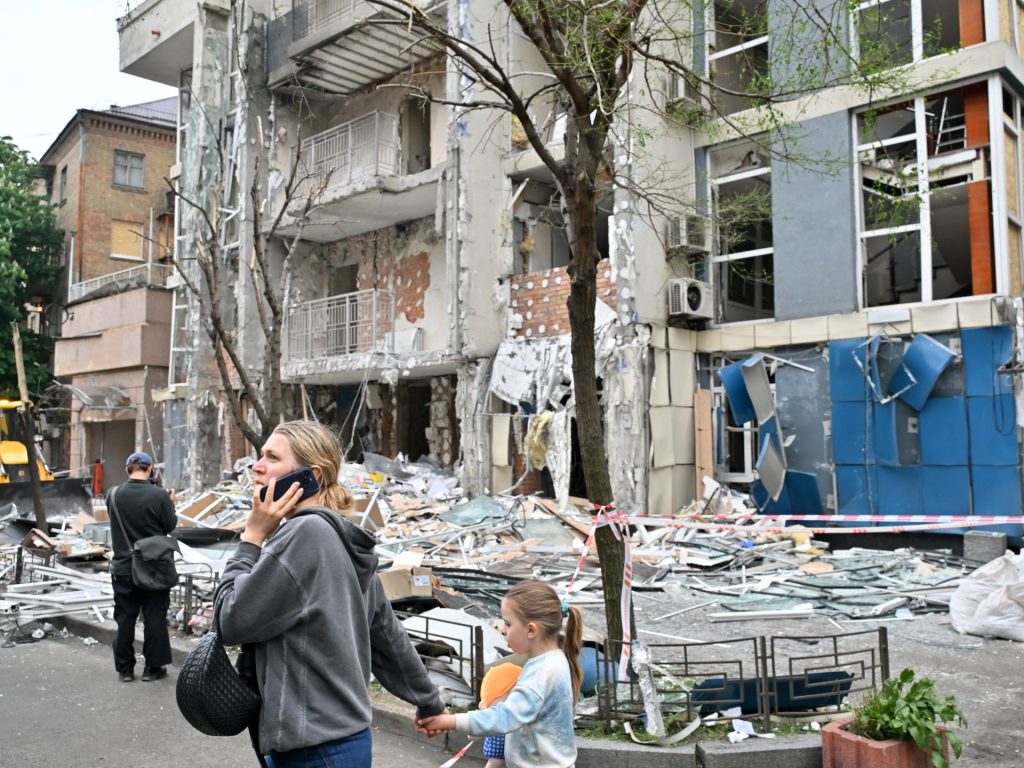
These are the key events on day 1,187 of Russia’s war on Ukraine. Here is where things stand on Monday, May 26: Fighting Ukrainian officials say the death toll from the largest Russian aerial attack on Ukraine has risen from 12 to 13, and wounded at least 60 people. The victims included three children aged eight, 12 and 17 in the northwestern region of Zhytomyr. Ukraine’s Air Force said Russia launched 298 drones and 69 missiles in its overnight assault, adding that it was able to down 266 drones and 45 missiles. The Russian Ministry of Defence said its troops had taken control of the village of Romanivka in Ukraine’s eastern Donetsk region. It also said Russian air defences intercepted 110 Ukrainian drones overnight on Sunday, including 13 over the Moscow and Tver regions. Russia and Ukraine completed a three-day exchange of 1,000 prisoners each, in the largest such swap since the war began three years ago. Politics and diplomacy United States President Donald Trump lashed out at his Russian counterpart, Vladimir Putin, following the attack, calling him “crazy” and warning that any attempt at a total takeover of Ukraine would “lead to the downfall of Russia”. Trump also raised the possibility of more punitive measures against Russia, saying he was “absolutely” considering increasing US sanctions on the country. Ukrainian President Volodymyr Zelenskyy urged international leaders to increase the pressure on Russia, saying that “the silence of America, the silence of others in the world only encourages Putin”. He also said that additional sanctions “will certainly help”. Trump also criticised Zelenskyy, saying in a post on social media that the Ukrainian leader “is doing his Country no favors by talking the way he does. Everything out of his mouth causes problems, I don’t like it, and it better stop.” Germany’s Minister for Foreign Affairs Johann Wadephul told public broadcaster ARD that Russia’s latest wave of attacks on Ukraine should be answered with additional Western sanctions. He said the weight of more sanctions on Moscow would get Putin to the negotiating table. The European Union’s top diplomat, Kaja Kallas, also called for “the strongest international pressure” on Russia to stop the war. “Devastating to see children among innocent victims harmed and killed,” she said on X. US Special Envoy to Ukraine Keith Kellogg said the latest Russian attack was “a clear violation” of the 1977 Geneva Peace Protocols, and called for an immediate ceasefire. Advertisement Military aid The Netherlands says it will send the last one of 24 promised F-16 fighter jets to Ukraine on Monday. Adblock test (Why?)
Oil riches are on the horizon as Suriname chooses its next government
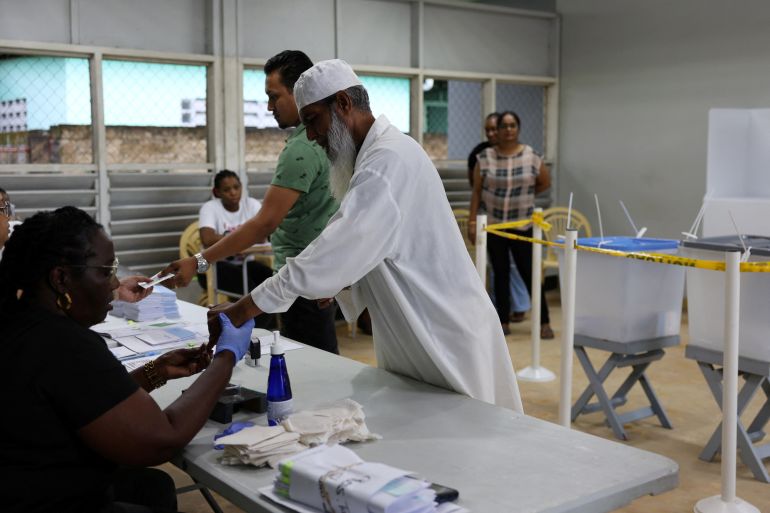
The Gran Morgu project may transform Suriname’s economy, rivalling oil-rich neighbour Guyana by 2028, officials predict. Voters in Suriname, which is on the cusp of a much anticipated oil boom, have begun to elect a new parliament, which will subsequently choose the next president of the smallest nation in South America. Sunday’s elections have already been marked by fraud allegations and have seen little debate about what the next government, which will hold power until 2030, should do with income from the offshore oil and gas Gran Morgu project. It is to begin production in 2028. Experts said Suriname, a country beset by poverty and rampant inflation, is projected to make billions of dollars in the coming decade or two from recently discovered offshore crude deposits. The project, led by TotalEnergies, is Suriname’s first major offshore effort. The former Dutch colony, independent since 1975, discovered reserves that may allow it to compete with neighbouring Guyana – whose economy grew 43.6 percent last year – as a prominent producer. “It will be a huge amount of income for the country,” President Chan Santokhi told the AFP news agency this week. “We are now able … to do more for our people, so that everyone can be part of the growth of the nation.” Advertisement Santokhi is constitutionally eligible for a second term, but with no single party in a clear lead in the elections, pollsters are not predicting the outcome. The party with the most seats will lead Suriname’s next government, likely through a coalition with smaller parties, but negotiations and the choosing of a new president are expected to take weeks. People vote during National Assembly elections in Paramaribo [Ranu Abhelakh/Reuters] Fourteen parties are taking part in the elections, including Santokhi’s centrist Progressive Reform Party and the leftist National Democratic Party of deceased former coup leader and elected President Desi Bouterse. Also in the running is the centre-left General Liberation and Development Party of Vice President Ronnie Brunswijk, a former rebel who fought against Bouterse’s government in the 1980s. Provisional results are expected by late Sunday. Suriname – a diverse country made up of descendants of people from India, Indonesia, China, the Netherlands, Indigenous groups and enslaved Africans – will mark the 50th anniversary of its independence from the Netherlands in November. Since independence, it has looked increasingly towards China as a political ally and trading partner and in 2019 became one of the first Latin American countries to join the Asian giant’s Belt and Road infrastructure drive. United States Secretary of State Marco Rubio made a stopover in Suriname in March on a regional tour aimed at countering China’s growing influence in the region. More than 90 percent of the country is covered in forest, and it is one of few in the world with a negative carbon footprint. Advertisement Santokhi insisted this status is not in danger and Suriname can use its oil windfall “for the transition towards the green energy which we need, also because we know the fossil energy is limited”. “It will be gone after 40 years.” Adblock test (Why?)
Rohingya: The art of survival

In the world’s largest refugee camp, Rohingya artists use art to preserve a culture Myanmar has long tried to silence. In Cox’s Bazar, the world’s largest refugee camp, three Rohingya artists are defying cultural erasure. Through painting, music, and photography, they preserve the memory of a people long persecuted in Myanmar. This Talk to Al Jazeera special looks beyond the headlines of displacement and genocide investigations into the creative resistance of a stateless community. As Myanmar continues to deny them recognition, these artists are fighting back with colour, sound, and story, refusing to let their heritage disappear. Adblock test (Why?)
How desperate is Iran for a deal with the US?
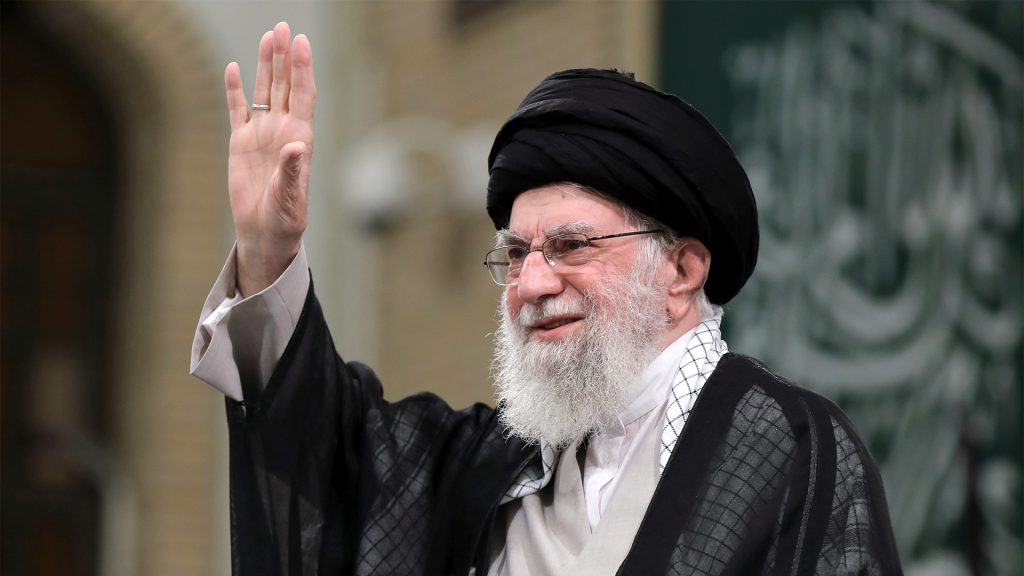
With Iran at its weakest point in decades, political scientist Vali Nasr argues that a deal with the US is imminent. With a battered economy and a restless population, Iran is as desperate as the United States to come together, Johns Hopkins University Professor Vali Nasr argues. Nasr told host Steve Clemons that US President Donald Trump’s administration is eager to reach an arms control deal with Iran, and Iran is eager to grow economically. “Both of them have arrived, after 40 some years, at a juncture where they need to change the direction of their relationship,” Nasr said. Join the conversation on Nasr’s latest book, Iran’s Grand Strategy: A Political History, which explains how Iran’s anti-Americanism “is not ideological or theological”. Adblock test (Why?)
Arsenal stun Barcelona to win the Women’s Champions League
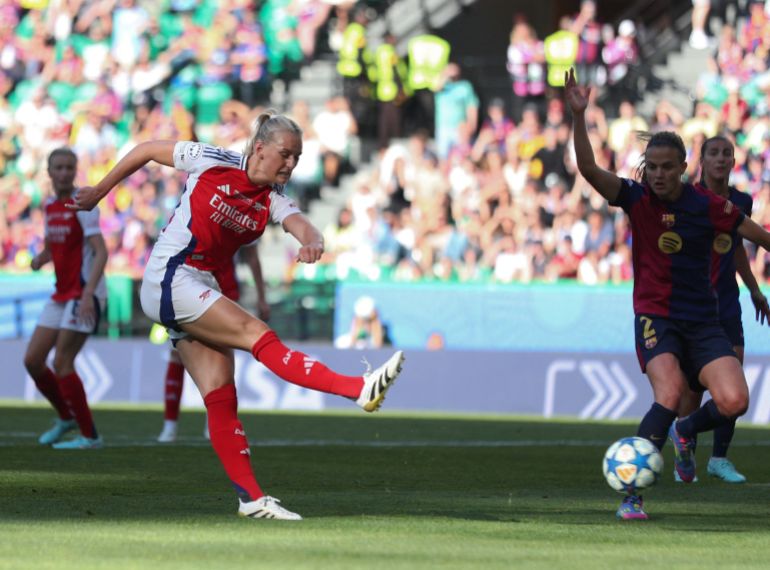
Arsenal lift the UEFA Women’s Champions League with a 1-0 win that ended Barcelona’s hopes of a three-peat. Arsenal upset defending champions Barcelona 1-0 to win the Women’s Champions League for a second time. Stina Blackstenius scored in the 75th minute after being set up by fellow second-half substitute Beth Mead in the final at the Estadio Jose Alvalade in Lisbon on Saturday. Arsenal’s title came 18 years after it became the first, and still the only, English club to win the top club title in women’s football. Arsenal’s players embraced on the final whistle and ran to celebrate in front of the red-and-white corner of the stands, which were otherwise mostly dressed in burgundy and blue. “We believed from the moment our Champions League journey started,” Arsenal striker Alessia Russo told broadcaster TNT Sports. “We knew that we had the capabilities. We knew that we could be good enough. It was just about going and doing it. And we’ve done it!” Arsenal’s Swedish striker Stina Blackstenius shoots and scores her team’s first goal [Carlos Costa/AFP] Barcelona were considered the heavy favourite. They were aiming for a fourth title in five years and to become the only team other than Lyon to win three consecutive titles. The team led by two-time Ballon d’Or winners Aitana Bonmati and Alexia Putellas won nine straight in the competition and blew out Wolfsburg and English champion Chelsea in the knockout rounds. Advertisement But Arsenal locked down in defence, except for early in the second half, and created the best chances. Only two superb saves by Barcelona goalkeeper Cata Coll to deny Frida Maanum and Blackstenius kept it scoreless, until Blackstenius finally beat her. The victory marks an incredible finish to a rocky season for Arsenal, which included coach Jonas Eidevall resigning and being replaced by assistant Renee Seglers. Since taking over, Seglers steered the team through a spectacular European campaign. Arsenal built its confidence from come-from-behind wins over Real Madrid and eight-time champion Lyon in the knockout rounds before laying low the almighty Barcelona. The loss was a huge disappointment for the large group of Barcelona fans who filled the stadium that is home to Sporting Lisbon. Blue-and-burgundy shirts and flags outnumbered the red-and-white section, but their calls of “Yes we can!” in the final minutes were not enough to inspire a comeback by the Catalan club. The closest Barcelona came to a goal was a shot by Claudia Pina that hit the crossbar just after halftime when the Spanish team had its best period. Otherwise, the game was to Arsenal’s liking. “We are very sorry for all our fans who have come to support us,” Bonmati told Catalunya Radio in the field before the award ceremony. “We will try to do it again.” Barcelona’s Aitana Bonmati looks dejected after walking past the Champions League trophy [Violeta Santos Moura/Reuters] Arsenal shook off some early jitters in defence and soon had Barcelona on the back foot. Arsenal’s pressure up the field stopped Barcelona from getting their possession game going, and Arsenal found spaces with long balls down the left flank. Advertisement England striker Russo was a rock for Arsenal, using her size to win balls and keep the attack going. Arsenal thought it went ahead in the 22nd but a video review waived off an own goal by Barcelona’s Irene Paredes when the referee spotted an offside by Frida Maanum. Maanum then went close with a long shot in the 27th that Coll did well to stretch and push over her bar. Bonmatí was the only Barcelona player who seemed to be in the flow before halftime. Her dribble moves through the middle created a few threats and kept Arsenal on guard in defence. Leah Williamson blocked her best shot deep in the box in the 12th. Barcelona came out of the restart firing. Pina hit the woodwork with her chipped shot from a sharp angle in the 49th. Bonmati forced goalie Daphne van Domselaar to get low to parry her shot, and Ona Batlle bombarded the area with three shots from long range. But Blackstenius set the tone when she had a golden chance when she stole a ball with only Cata to beat, but the goalie got her leg out to block her effort in the 72nd. The Sweden forward would not be denied a second time. Adblock test (Why?)
Ecuador’s Daniel Noboa sworn in for full term, promising a crackdown on gangs
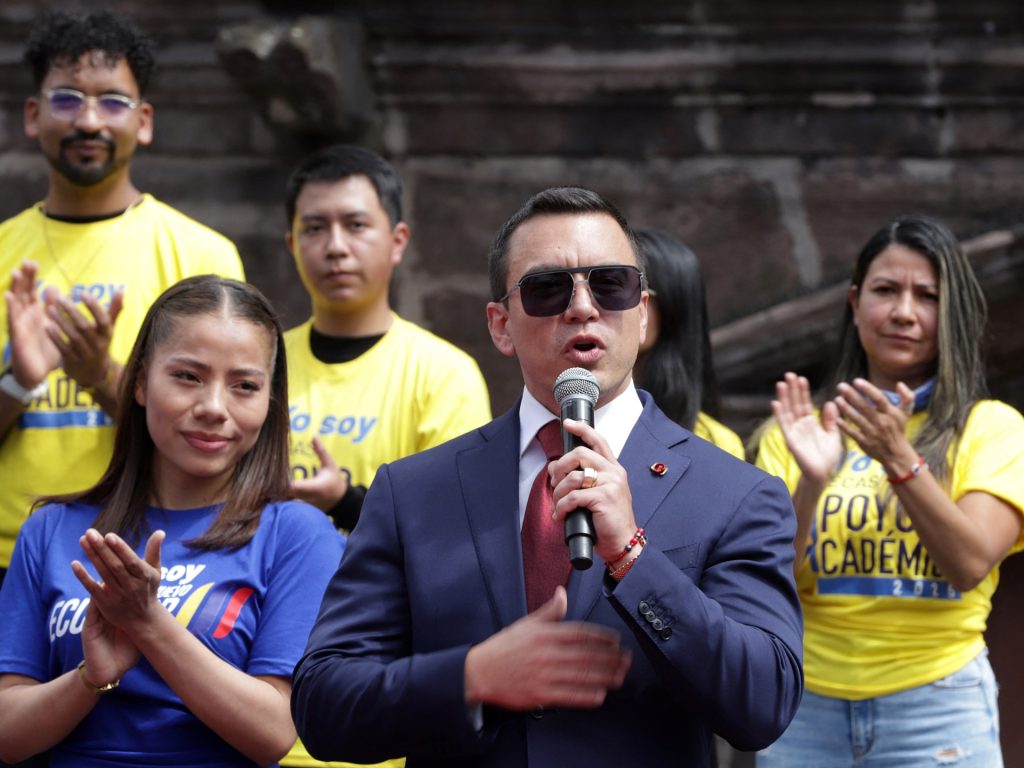
The right-wing Noboa had defeated left-wing candidate Luisa Gonzalez amid allegations of electoral fraud. Daniel Noboa, Ecuador’s youngest-ever president and heir to a prominent banana-exporting fortune, has been sworn in for his first full term in office, pledging to intensify his government’s battle against powerful drug gangs while reviving the struggling economy. In a ceremony at the National Assembly in Quito on Saturday, the right-wing president was sworn in by Assembly President Niels Olsen Peet, who draped the presidential sash across his shoulders before the two raised clasped hands in a symbolic gesture of unity. Noboa, 37, won the election in April’s, securing a new term after completing the final 18 months of his predecessor’s tenure, defeating left-wing candidate, Luisa Gonzalez, despite her allegations of electoral fraud. Speaking to lawmakers, Noboa pledged to make a sharp reduction in violent crime a cornerstone of his administration. “The progressive reduction of homicides will be a non-negotiable goal,” Noboa declared. “We will maintain our fight against drug trafficking, seize illegal weapons, ammunition, and explosives, and exercise greater control at the country’s ports.” Advertisement Ecuador, once considered one of the more stable countries in the region, has in recent years faced a sharp rise in violence, with drug cartels, including the powerful from Mexico, exploiting porous borders and weak institutions to expand their influence. Noboa has responded with militarised crackdowns, deploying the armed forces onto the streets and tightening security at key infrastructure hubs. The president’s security strategy has drawn comparisons to El Salvador’s controversial anti-gang measures, which have been praised by some for reducing crime but condemned by rights groups over mass detentions and alleged abuses. Noboa has cited El Salvador, as well as the United States and Israel, as strategic partners in Ecuador’s security overhaul. His administration has also hired Erik Prince, founder of private military contractor Blackwater, to advise Ecuadorian security forces, a move that has raised alarm among opposition politicians and human rights advocates, who warn of creeping militarisation and lack of oversight. While Noboa has claimed a 15 percent drop in violent deaths during 2024, government figures show a 58 percent increase in killings during the first four months of 2025 compared with the same period last year, with 3,094 recorded deaths. Adblock test (Why?)
Iranian film, It was Just an Accident, wins Palme D’Or at Cannes festival
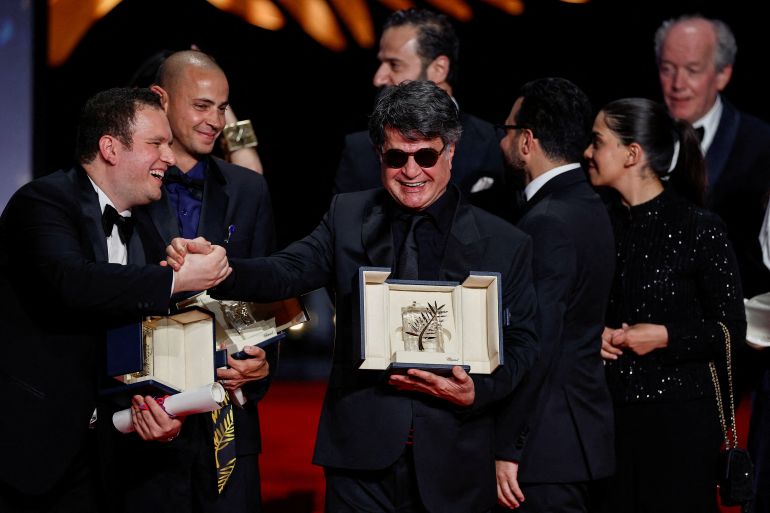
The film is inspired by dissident director Jafar Panahi’s own experience in jail. An Iranian thriller film that explores corruption and state violence in the country has won the the Palme d’Or, the coveted top prize at the Cannes Film Festival. It Was Just an Accident, directed by dissident Iranian filmmaker Jafar Panahi, was crowned at the world-famous festival on Saturday, hours after a power outage briefly threw the event off course. The festival’s crowd burst into a roaring standing ovation for Panahi, who has endured years of travel bans and prison terms in Iran due to his provocative cinema, often produced in secret. He had been banned from leaving Iran for more than 15 years. “Art mobilises the creative energy of the most precious, most alive part of us. A force that transforms darkness into forgiveness, hope and new life,” said jury president Juliette Binoche when announcing the award. On stage, Panahi said what mattered most was the future of his country. “Let us join forces,” Panahi said. “No one should tell us what kind of clothes we should wear, or what we should or shouldn’t do.” Director Jafar Panahi, Palme d’Or award winner, shakes hands with director Hasan Hadi, Camera d’Or award winner for the film, The President’s Cake, on stage during the closing ceremony of the 78th Cannes Film Festival in Cannes, France, May 24 [Benoit Tessier/Reuters] Partly inspired by Panahi’s own experience in jail, It Was Just An Accident follows a man named Vahid (played by Vahid Mobasseri), who kidnaps a man with a false leg who looks just like the one who tortured him in prison and ruined his life. Advertisement Vahid sets out to verify with other prison survivors that it is indeed their torturer, and then decide what to do with him. Critics have praised the film as a clever, symbolic exploration of justice that blends dark humour with its intense themes. Iraqi film “The President’s Cake” wins Best First Film The festival’s Grand Prix, or second prize, was awarded to Joachim Trier’s Norwegian family drama, Sentimental Value, his lauded follow-up to The Worst Person in the World. Kleber Mendonca Filho’s Brazilian political thriller, The Secret Agent, won two big awards: best director for Fihlo and best actor for Wagner Moura. The jury prize was split between two films: Oliver Laxe’s desert road trip, Sirat and Mascha Schilinski’s German, generation-spanning drama, Sound of Falling.” Best actress went to Nadia Melliti for The Little Sister, Hafsia Herzi’s French coming-of-age drama. Cannes also honoured Hasan Hadi’s The President’s Cake with a best first film award, marking the first time an Iraqi film has won an award at the festival. Director Hasan Hadi, Camera d’Or award winner for the film, The President’s Cake, and Alice Rohrwacher, president of the Camera d’Or Jury, pose after the closing ceremony of the 78th Cannes Film Festival in Cannes, France, May 24 [Sarah Meyssonnier/Reuters] The Cannes closing ceremony took place after a major power outage struck southeastern France on Saturday, knocking out traffic lights and forcing businesses to close along the main shopping street in the Alpes-Maritimes holiday region. Police suspect arson as the cause. Advertisement Geopolitical tensions were also a constant backdrop at the festival, with Russia’s invasion of Ukraine, the genocide in Gaza and US President Donald Trump’s proposal of tariffs on foreign-made films fuelling discussion. More than 900 actors and filmmakers signed an open letter denouncing the genocide in Gaza, according to the organisers. Adblock test (Why?)
Arson attack probed as Cannes and parts of southern France suffer power cut
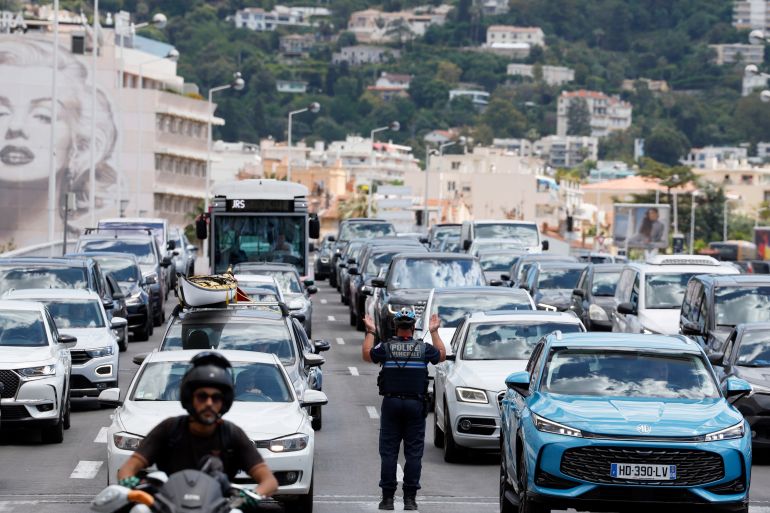
Major power outage hits the prominent film festival on its closing day and impacts 160,000 homes in the area. French police were investigating a possible arson attack as being the main cause for a power outage which hit the Alpes-Maritimes region in southern France, including Cannes which is hosting its world-famous annual film festival. “We are looking into the likelihood of a fire being started deliberately,” a spokesperson for the French national gendarmerie said on Saturday, adding that no arrests had been made at this stage. The local authority for the Alpes-Maritimes region had said earlier on Saturday that the western part of the area, which includes Cannes, was suffering from a major electricity outage and that grid operator RTE France was working on restoring power. The outage, which affected 160,000 homes, according to RTE and regional officials, started shortly after 10am local time (08:00 GMT) on Saturday. Police sources said the outage was caused by an overnight fire, probably an arson attack, at a high-voltage substation in the village of Tanneron. Traffic lights were knocked out and businesses closed on the main shopping street of the Alpes-Maritimes holiday destination. A policeman directs traffic following a power outage in southern France, May 24, 2025 [Guillaume Horcajuelo/EPA] Separate power outages swept across the Iberian Peninsula and parts of southern France on Monday, disrupting critical infrastructure and airport operations. Officials denied foul play. Advertisement While Spain and Portugal suffered blackouts last month, the French Basque Country saw brief power outages with interruptions lasting only a few minutes, according to the French electricity transmission network. The latest outage came just hours before the 78th Cannes Film Festival is due to close on Saturday evening with an award ceremony at the Palais des Festivals. Despite the power cut, festival organisers said switching to an alternative electricity power supply enabled them to “maintain the events and screenings planned for today in normal conditions, including the closing ceremony”. After a politically charged two weeks, a jury led by French actor Juliette Binoche is expected to announce the winners among 22 films competing for the Palme d’Or for best film. This year, Russia’s invasion of Ukraine, the genocide in Gaza and United States President Donald Trump were the biggest talking points at the festival. More than 900 actors and filmmakers signed an open letter denouncing the genocide in Gaza, according to the organisers. Adblock test (Why?)
Cristiano Ronaldo could play at FIFA Club World Cup: Infantino
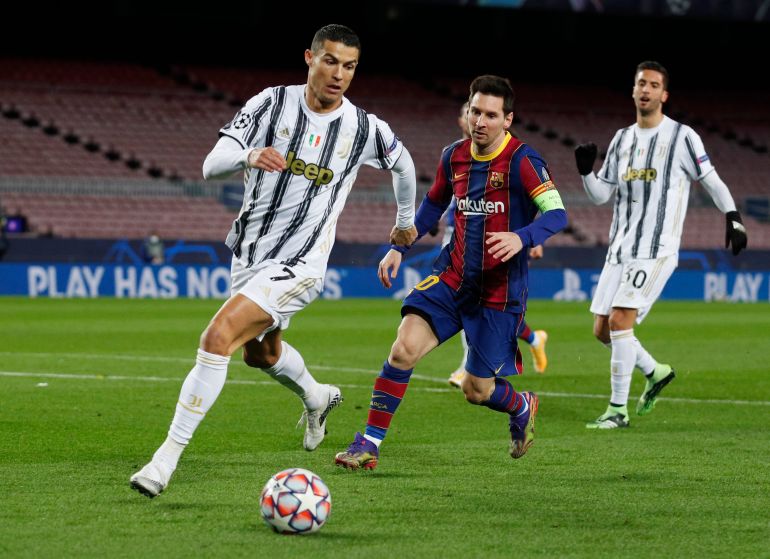
Cristiano Ronaldo is in discussions to play at FIFA’s Club World Cup in June, according to FIFA president Gianni Infantino. Cristiano Ronaldo is in “discussions” to play at FIFA’s inaugural Club World Cup this summer, according to the president of the sport’s global governing body. Gianni Infantino says the former Manchester United and Real Madrid forward might play in the tournament, which is being staged in the United States in June, because of a unique transfer window. Ronaldo’s Saudi Arabian club Al Nassr did not qualify for the tournament, but Infantino suggested that the Portugal star could switch to one of the 32 teams participating in the tournament. “Cristiano Ronaldo might play in the Club World Cup,” Infantino told online streamer IShowSpeed, whose YouTube channel has more than 39 million subscribers. “There are discussions with some clubs, so if any club is watching and is interested in hiring Ronaldo for the Club World Cup, who knows? Still a few weeks’ time, will be fun.” Barcelona’s Lionel Messi in action with Cristiano Ronaldo of Juventus during a Champions League match in 2020 [File: Albert Gea/Reuters] FIFA confirmed on Wednesday that last-minute transfer signings are open to all teams going to the tournament, which fuelled more speculation that one of them will try to sign the 40-year-old Ronaldo on a short-term deal, potentially a loan. Advertisement Such a move would be unprecedented in modern football, though it could appeal to FIFA by boosting the profile and ticket sales of an inaugural tournament being played in 11 US cities. A transfer for Ronaldo would also reunite him and Lionel Messi in the same competition for the first time since the 2022 World Cup in Qatar. Last October, FIFA invited Messi’s Inter Miami to enter the tournament in the slot that was expected to be reserved for the host nation’s champions. Inter Miami were eliminated in the MLS Cup playoffs. Speculative reports have linked Ronaldo to the one Saudi club that qualified, Al Hilal, the Brazilian club Palmeiras and Wydad of Morocco, even though that club is currently banned by FIFA from registering new signings. Transfers can be made from June 1-10 and again from June 27 to July 3, according to exceptional rules FIFA approved in October. “The objective is to encourage clubs and players whose contracts are expiring to find an appropriate solution to facilitate the players’ participation,” FIFA said in Wednesday’s statement. Adblock test (Why?)