

Ivory Coast opposition leader resigns but vows to still fight for victory
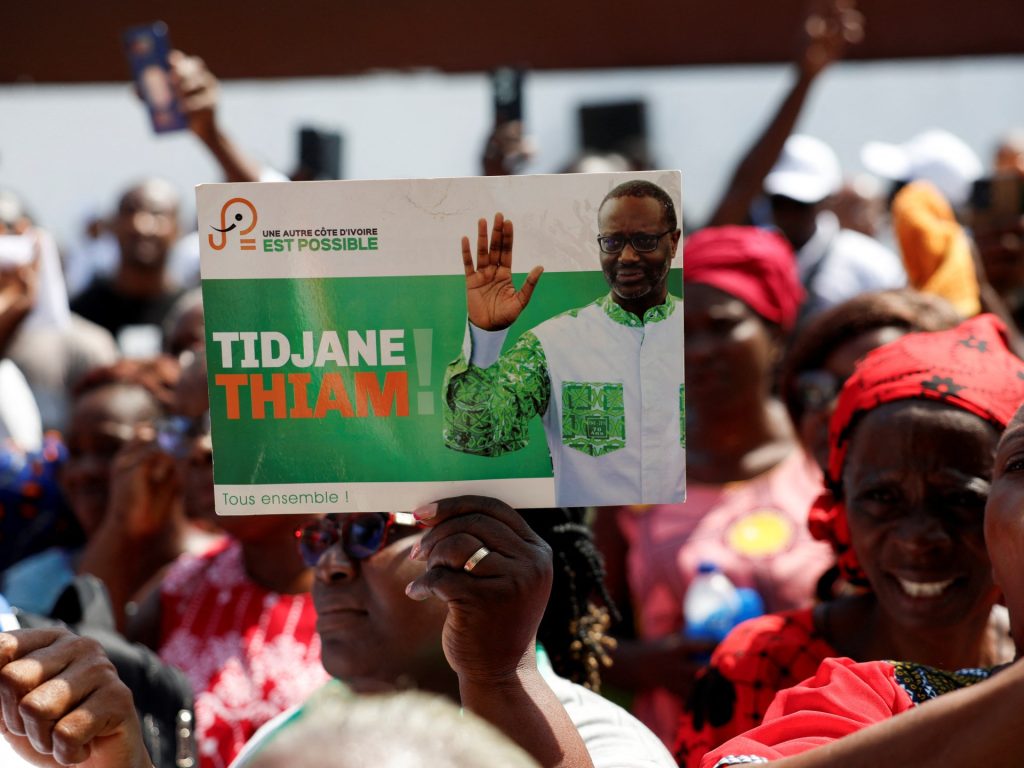
Tidjane Thiam’s campaign has been halted as presidential candidates are not allowed to hold dual citizenship. Ivory Coast’s main opposition leader has said he is resigning as party leader but would still lead the fight to win the election, after having been barred from standing in an October presidential vote. “In the interest of the party, I’ve decided to place my mandate as president of the party in your hands, the activists,” Thiam said in a speech published on social media on Monday. “This decision does not change the commitment I made in December 2023 to personally lead our party to victory in October 2025.” President Alassane Ouattara, 83, who has been in power since 2011, has yet to say whether he plans to run again but has said he is eager to “continue serving my country”. Tidjane Thiam’s campaign for the presidency of the West African country has been mired in tussles over his nationality, as presidential candidates are not allowed to hold dual citizenship. Thiam was born in the Ivory Coast and renounced his French passport in March to enable his run for the top job. However, a court in Abidjan struck him off the electoral list last month, saying the 62-year-old politician had lost Ivorian nationality when he acquired French citizenship in 1987. Advertisement Thiam also faces a legal case against his election as head of the Democratic Party of Ivory Coast–African Democratic Rally (PDCI) after a party member also contested his Ivorian nationality at the time he was chosen. PDCI deputy president Ernest N’Koumo Mobio assumed the party’s interim leadership following Thiam’s announcement. He appealed for “cohesion, serenity and discipline” and called a party meeting early Monday due to “the urgency linked to the political situation”. Three other opposition figures have also been excluded from the presidential race, including former President Laurent Gbagbo due to court convictions. Thiam alleged irregularities on Monday. “While we had the right to hope for inclusive, transparent and peaceful elections, it is clear that the unjustified removal of the PDCI candidate is part of the logic of eliminating the leaders of the main opposition parties to ensure tailor-made elections and a certain victory,” he said. The authorities regularly reject claims of any political intervention in the electoral process, saying decisions are taken by an independent judiciary. Adblock test (Why?)
Pope Leo calls for release of jailed journalists, notes their courage
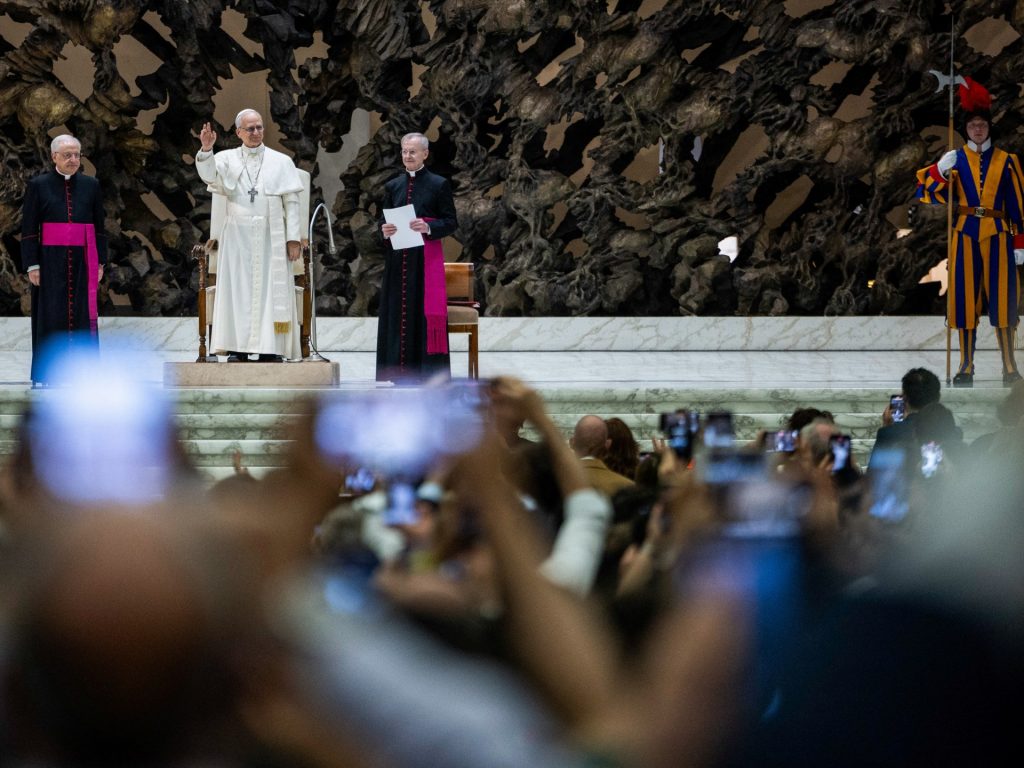
The new pontiff talks of witnesses ‘who report on war even at the cost of their lives’. Pope Leo XIV has called for the release of journalists imprisoned for doing their work while affirming free speech. Leo, who was elected pontiff on Thursday after the death of Pope Francis, gave his first news conference at the Vatican on Monday. Addressing some of the thousands of journalists who travelled to Rome to cover his election as the first American pontiff, he said journalists jailed “for seeking and reporting the truth” must be released. “The church recognises in these witnesses – I am thinking of those who report on war even at the cost of their lives – the courage of those who defend dignity, justice and the right of people to be informed because only informed individuals can make free choices,” he said. “The suffering of these imprisoned journalists challenges the conscience of nations and the international community, calling on all of us to safeguard the precious gift of free speech and of the press.” The new pope also reiterated his message of peace that he had communicated to large crowds on Sunday as well. Advertisement “Peace begins with each one of us – in the way we look at others, listen to others and speak about others,” he told assembled journalists at the Vatican’s vast Paul VI Audience Hall. “In this sense, the way we communicate is of fundamental importance. We must say ‘no’ to the war of words and images. We must reject the paradigm of war.” Leo, who was active on social media before becoming pope, cautioned against “communication of all prejudice and resentment, fanaticism and even hatred”. “Let us disarm words, and we will help to disarm the world,” he said, urging reporters to favour a path of communication for peace. During his first Sunday blessing as pontiff, Leo advocated for genuine peace in Gaza, Ukraine and elsewhere. He said he carries in his heart the “suffering of the beloved people of Ukraine” and called for an immediate ceasefire in Gaza and release of all people held by the Palestinian group Hamas in the enclave. Adblock test (Why?)
Virat Kohli announces retirement from Test cricket
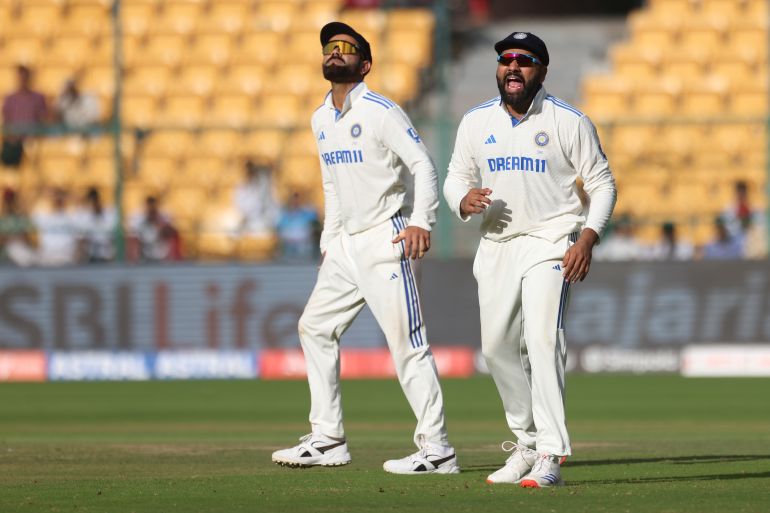
In the end of an era for Indian Test cricket, Virat Kohli follows fellow batting star Rohit Sharma into retirement. India batsman Virat Kohli announced his retirement from Test cricket, bringing down the curtain on a sparkling career in the longest format just days after captain Rohit Sharma did the same. Kohli, who made his debut in 2011 and scored 30 centuries and 9,230 runs at an average of 46.85 over 123 tests, is expected to remain available for one-day internationals. The 36-year-old quit Twenty20 International immediately after India won their second 20-over World Cup trophy in the West Indies last year. “It’s been 14 years since I first wore the baggy blue in test cricket. Honestly, I never imagined the journey this format would take me on,” Kohli posted on Instagram on Monday. “It’s tested me, shaped me, and taught me lessons I’ll carry for life. “There’s something deeply personal about playing in whites. The quiet grind, the long days, the small moments that no one sees but that stay with you forever.” The retirement of superstars Virat Kohli, left, and Rohit Sharma in the space of one week represents the end of an era in Indian Test cricket [File: Abhishek Chinnappa/Getty Images] While Kohli’s final test wrapped up a 3-1 test series defeat by Australia in January, which saw India relinquish the Border-Gavaskar Trophy for the first time in a decade, he will be remembered most for his spell as captain between 2014 and 2022. Advertisement Kohli won 40 of his 68 tests in charge of India to become the country’s most successful skipper in the format, and sits fourth in the list of captains with the most test victories. Only Graeme Smith (53), Ricky Ponting (48) and Steve Waugh (41) won more tests as captains. India suffered only 17 defeats with Kohli at the helm as he guided the side to the final of the inaugural World Test Championship in 2021, when they lost to New Zealand. He was also part of the team that lost the second World Test Championship final to Australia in 2023. “I’m walking away with a heart full of gratitude – for the game, for the people I shared the field with, and for every single person who made me feel seen along the way,” he added. “I’ll always look back at my test career with a smile.” India’s next test assignment is a five-match series in England from June 20. Virat Kohli scored 9,230 runs from 123 Test matches for India [Morgan Hancock/Cricket Australia via Getty Images] Adblock test (Why?)
PKK to disband, potentially ending decades of conflict in Turkiye
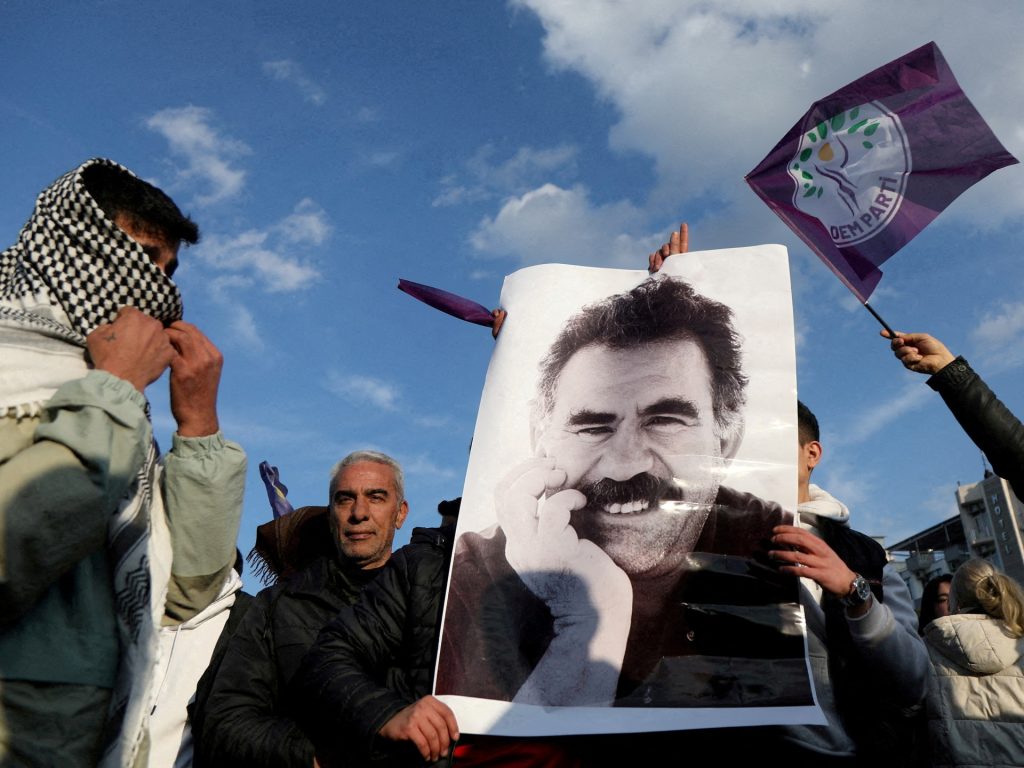
Move by Kurdish armed group follows February call by jailed leader Abdullah Ocalan to lay down arms. The Kurdistan Workers’ Party, or PKK, has announced that it plans to disband and disarm, potentially bringing decades of conflict with Turkiye to an end. The move was reported on Monday by the Firat News Agency, a media outlet close to the armed group. Part of a new peace initiative with Ankara designed to end four decades of violence, the announcement follows a call in February by jailed leader Abdullah Ocalan for the PKK to lay down its arms. Following a party congress in northern Iraq that ended on Friday, the group said it had reached “historic” decisions that would be shared with the public soon. Firat reported that a statement by Ocalan outlining his “perspectives and proposals” was read during the congress. In a statement carried by Firat on Monday, the PKK announced that its armed struggle had successfully challenged policies that sought to suppress Kurdish rights. The PKK has “completed its historical mission”, it read, and “the 12th PKK Congress has decided to dissolve the PKK’s organisational structure and end its method of armed struggle”. Advertisement “As a result, activities carried out under the name ‘PKK’ were formally terminated,” the statement said. According to Turkiye’s state news agency Anadolu, a spokesperson for Turkiye’s governing AK Party said: “If the new PKK decision is fully implemented, shutting down all PKK branches, illegal structures, it will be a turning point.” Shifting regional sands The announcement signals the potential end of a conflict that has plagued the region, spilling over into northern Iraq and Syria. In February, Ocalan – who has been in jail since 1999 – called on the group to lay down its arms and dissolve itself in a bid to end the hostilities, which have claimed tens of thousands of lives since the 1980s. The PKK, which is listed as a terrorist organisation by Turkiye and most Western states, announced a ceasefire days later, but set conditions to disband, including the establishment of a legal mechanism for peace talks. The group said the Kurdish people would embrace peace and a democratic process, and “will understand the decision to dissolve the PKK and end the armed struggle method better than anyone else”. “We believe that Kurdish political parties, democratic organisations and opinion leaders will fulfil their responsibilities in developing Kurdish democracy and ensuring the formation of a Kurdish democratic nation.” The announcement by the PKK comes against a backdrop of major changes in the region, including a new administration in Syria, the weakening of the Hezbollah armed group in Lebanon and the Israel-Hamas war in Gaza. Advertisement In recent years, the PKK had been limited to isolated attacks inside Türkiye as the military pushed its fighters across the mountainous border into Iraq. The latest peace initiative was launched in October by Turkish President Recep Tayyip Erdogan’s coalition partner, Devlet Bahceli. The far-right politician suggested that Ocalan could be granted parole if the PKK renounces violence and disbands. In late February, Erdogan described the group’s potential dissolution as a “historic opportunity to advance towards the objective of destroying the wall of terror”. The future of PKK fighters remains uncertain, including whether they may be relocated to third countries. Any concessions the PKK might obtain in exchange for its decision to disband have not been disclosed. Adblock test (Why?)
PKK to formally disband and lay down its weapons
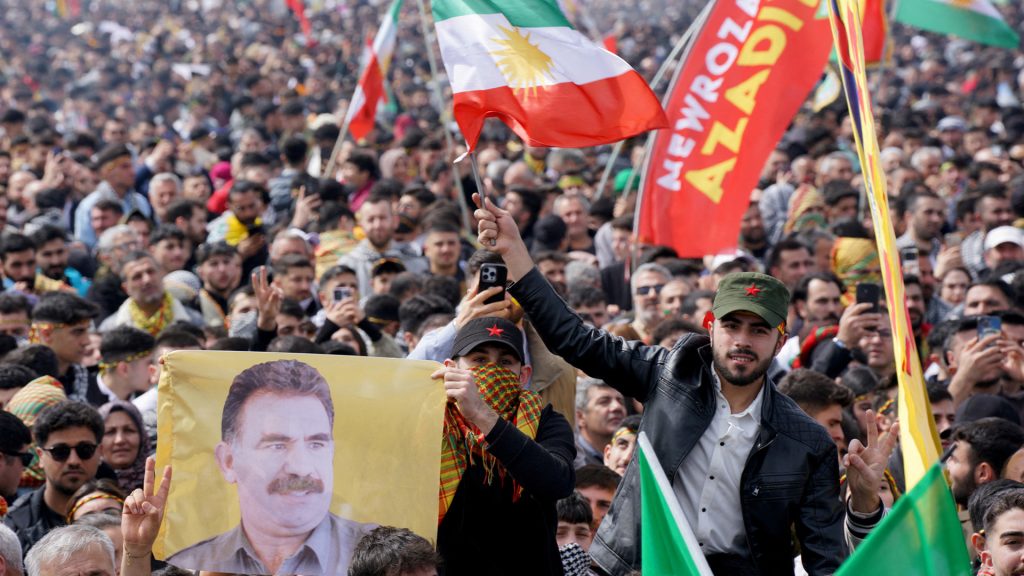
NewsFeed The Kurdistan Workers’ Party, or PKK, has announced that it plans to disband and disarm in a move promising an end to decades of conflict with Turkiye. The move was announced on Monday by the Firat News Agency, a media outlet close to the group. Published On 12 May 202512 May 2025 Adblock test (Why?)
Israel attacks Yemen’s Hodeidah, striking port areas
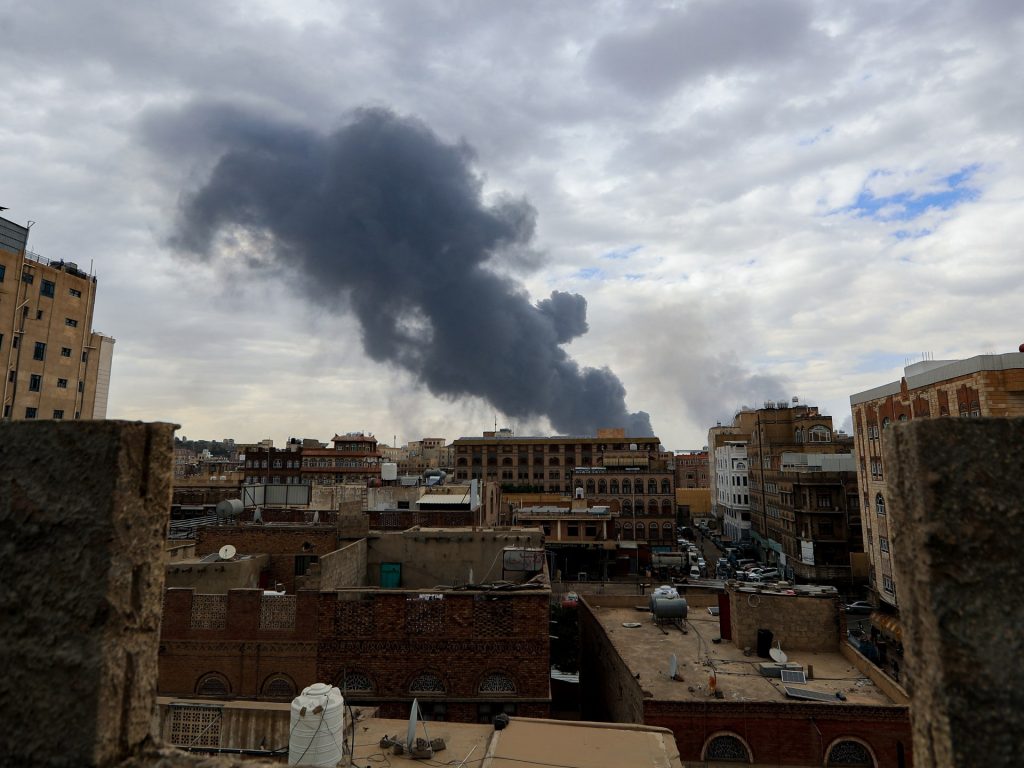
DEVELOPING STORYDEVELOPING STORY, Israel has previously bombed Hodeidah and Sanaa International Airport; Houthi missile targeted Ben Gurion Airport in Tel Aviv. Israel has launched air attacks on Yemen’s Hodeidah governorate, according to the Houthi Interior Ministry. The attack late on Sunday came after the Israeli army said it had warned those present at three Houthi-controlled ports in the area to evacuate. It was the latest salvo in exchanges between Israel and the Houthis. Israel bombed the Hodeidah port after a Houthi attack near Ben Gurion Airport in Tel Aviv earlier this month. Israeli strikes have also targeted parts of the Yemeni capital Sanaa and the main international airport there. The Houthis have been firing missiles at Israel and on Israeli targets in the Red Sea in solidarity with Palestinians under fire since the war on Gaza began 19 months ago. Israeli attacks on Gaza have killed more than 52,000 people, including 57 who starved to death due to the total Israeli siege since March 2, according to Palestinian officials. A ceasefire deal between Yemen’s Houthis and the United States does not include any operations against Israel, the group’s chief negotiator announced earlier this week. Advertisement Adblock test (Why?)
Fact-checking Trump’s claim of securing $10 trillion in investments for US
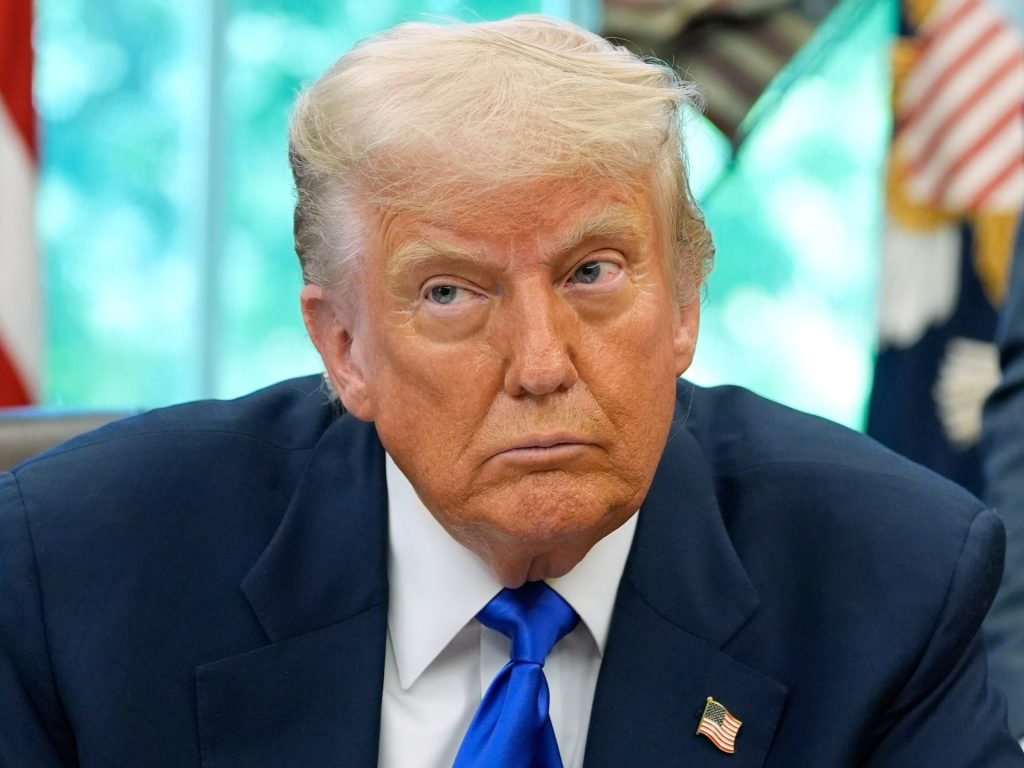
Since returning to the White House, US President Donald Trump has touted corporate and foreign US investment announcements as proof he is ushering in “the golden age of America”. On January 21, Trump said that before he’d finished the “first full business day” of his second term, the United States had “already secured nearly $3 trillion of new investments”. On April 2, he said, “It looks like we’re going to have about $6 trillion of investments”. Six days later, Trump told National Republican Congressional Committee Dinner attendees that the investment total was “now revised up to about $7 (trillion)”. During an April 30 NewsNation town hall, Trump speculated that “it could be more than $8 trillion”. On May 4, Trump told Kristen Welker, the host of the NBC News programme Meet the Press, “I think we probably have close to $9 trillion of investments coming into this country.” On May 6, Trump told reporters, “I think the real number could be $9 or $10 trillion.” Finally, on May 8, Trump said, “We have now close to $10 trillion — think of that, $10 trillion” in investments. “We’re talking about essentially two months.” Advertisement That’s far beyond the figures the White House has released publicly. We tallied the White House’s public lists of investments; they amount to $2.1 trillion in corporate investments, or at most $5.1 trillion when including promised investments from other countries. Experts cautioned that the promised corporate investments are not guaranteed to materialise in full, or during Trump’s presidency, and some of them would have occurred regardless of who was president. Trump isn’t the first to overstate new investments on his watch. Outgoing US President Joe Biden said in 2024 that his bipartisan CHIPS and Science Act had attracted $640bn in private investments; economists told PolitiFact that Biden’s numbers were based on what companies had announced, which is not the same as dollars already spent. Roman V Yampolskiy, a University of Louisville professor and a specialist in artificial intelligence, which dominates the promised investments Trump cited, said, “Historically, large-scale investment announcements often overpromise and underdeliver. There is a performative element to them, especially in politically charged contexts. They function as political theatre as much as economic commitment.” White House lists do not match Trump’s words Since Trump’s inauguration, the White House has publicised investment announcements from three countries and roughly 60 companies on its website, including in a “non-comprehensive running list”. Many of the highest-dollar corporate announcements were in March and April. Corporate announcements in the White House’s lists total approximately $2.1 trillion worth of US investment. Advertisement The White House separately has cited commitments from the United Arab Emirates to invest $1.4 trillion over the next 10 years; from Japan to “boost” its investment in the US to $1 trillion; and from Saudi Arabia to invest $600bn in the US during Trump’s presidency. Combined with the corporate announcements, these bring the total to about $5.1 trillion, $4.9 trillion short of Trump’s figure. But the $5.1 trillion total has caveats. For example, the White House said “Japan announced a $1 trillion investment in the US”, but the article it linked said in 2023, Japan’s US investment was $783.3bn and Japan would “boost” that to $1 trillion. That’s an increase of $216.7bn rather than a new $1 trillion investment. That would put the total value of newly pledged US investment at about $4.3 trillion. Trump’s second-term White House tally of US investments The White House figures can’t easily be used for apples-to-apples comparisons. Some of the investments are planned over Trump’s four-year term, others over five years or a decade. In one case – ADQ and Energy Capital Partners’ planned $25bn investment — it isn’t limited to US-based projects. The White House declined to detail additional investments. A spokesperson pointed to federal Bureau of Economic Analysis data that shows a 22 percent increase in business investment in the first quarter of 2025, calling it a historic increase. However, experts cautioned this increase was shaped by businesses stocking up on inventory before Trump’s tariffs take effect and said the increase is unlikely to be sustained. Advertisement Many of the announcements are aspirational, experts say Experts told PolitiFact that each of the five biggest investments on Trump’s list warrants some caution, because they might not reach Trump’s cited dollar amounts or were not solely prompted by Trump’s policies. “Many of these announcements, particularly those in the AI and semiconductor sectors, appear to be, at least in part, aspirational in nature,” Yampolskiy said. “They serve a signalling function: to attract investor attention, shape policy discourse, and secure favourable regulatory or funding environments.” The five largest company investments collectively account for 82 percent of the dollar value on the White House’s corporate list. Five companies accounting for the majority of new investment promises are: Stargate The Stargate Project is an artificial intelligence collaboration among OpenAI, Oracle and SoftBank, announced during a January 21 White House event. The White House values the investment at $500bn. The company’s official announcement says $100bn will be invested “immediately” and that it “intends to invest” a total of $500bn over the next four years, a goal repeated by SoftBank CEO Masayoshi Son at the White House event. “Whether that much will ultimately get spent remains to be seen,” wrote John Higgins, chief economist at Capital Economics, an international consulting firm. Enrique Dans, who studies technology and policy at Madrid’s IE Business School, said the $500bn figure is “astronomical – roughly 2 percent of US gross domestic product – and lacks clear documentation”. Advertisement At the White House event, OpenAI CEO Sam Altman said, “We wouldn’t be able to do this without you, Mr President.” But Altman had been discussing plans for a $100bn investment 10 months before Trump won his second term, The Washington Post reported, including an Abilene, Texas, data centre that began construction in summer 2024. “AI investments have been on a global trajectory driven by technological maturity and competitive pressure, especially from China,” Dans said. “Any US president would have
What can be learned from the latest conflict between India and Pakistan?
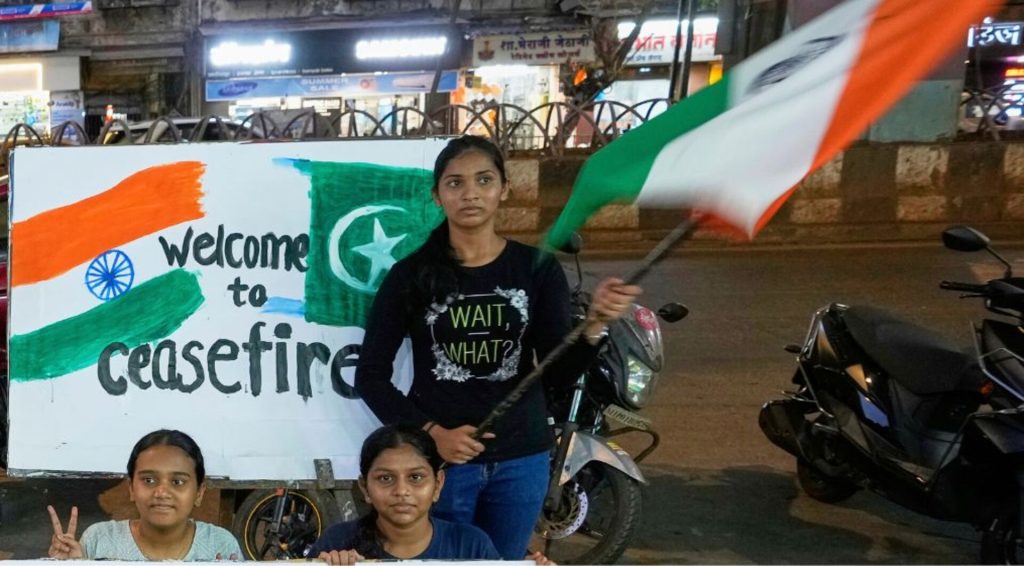
A tense ceasefire holds days after the most intense hostilities in decades. Feelings of relief and hope are sweeping India and Pakistan. The latest flare-up in hostilities that killed at least 60 people across the two countries has come to a dramatic halt after four days. Nearly 30 countries including the United States are reported to have been involved in getting the ceasefire agreed. The administration of US President Donald Trump, which announced the truce, has proposed a new round of talks at a neutral venue to try and end the bitter rivalry. A dispute over divided Kashmir, India’s accusation that Pakistan is backing terrorist attacks inside its territory, and differences over the sharing of river water are all issues that have been festering for decades. So are both sides at last ready to negotiate? Presenter: Cyril Vanier Guests: Walter Ladwig – Senior lecturer in International Relations at King’s College London Elijah Magnier – Military and political analyst Shashank Joshi – Defence editor of The Economist newspaper Adblock test (Why?)
Will the truce between India and Pakistan resolve differences over Kashmir?
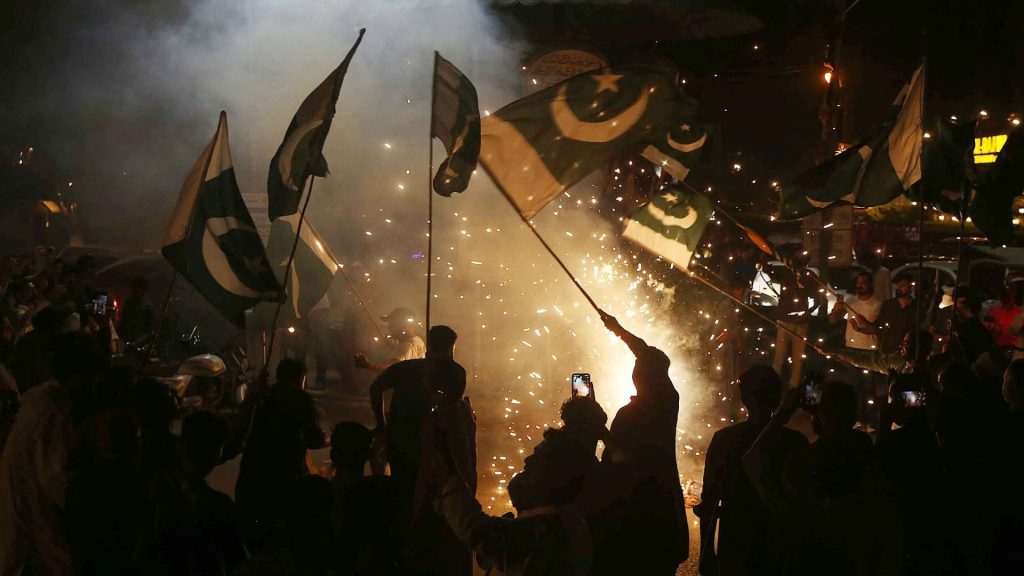
A ceasefire is agreed after four days of their most fierce military conflict in this century. Tensions soared on Tuesday when India attacked areas inside Pakistan that it claimed sheltered armed groups. That was after 26 tourists were killed in Indian-administered Kashmir last month. India has accused Pakistan of backing the fighters, a claim Islamabad denied. Why has the Kashmir region been a source of hostility between the two countries since independence from British rule in 1947? How far can colonial legacy be blamed for the conflict? And what lies ahead? Presenter: Sami Zeidan Guests: Victoria Schofield – British biographer, historian and author of books on Kashmir. Radha Kumar – Author, academic and an Indian government-appointed negotiator appointed to resolve the Kashmir crisis Ayesha Jalal – Professor at Tufts University and expert on South Asian history. Adblock test (Why?)
Putin proposes direct Russia-Ukraine talks in Istanbul on May 15
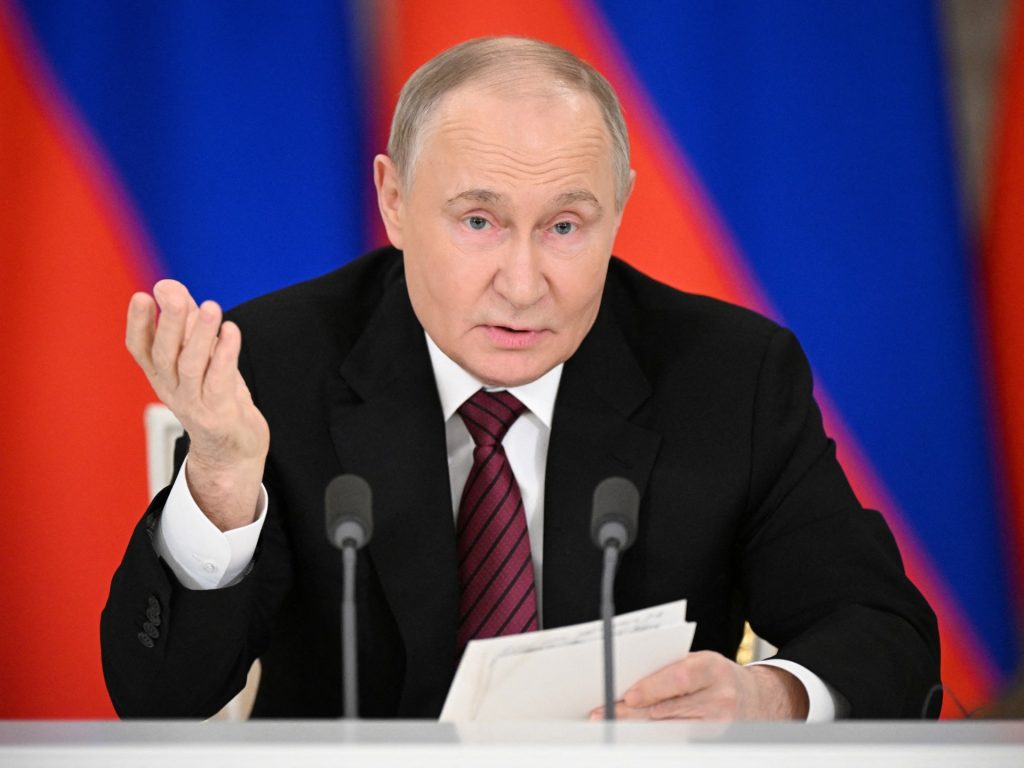
Russian President Vladimir Putin has proposed direct talks with Ukraine in Istanbul on May 15, “without preconditions” to achieve “lasting peace” and “eliminate the root causes” of the three-year conflict. The offer, delivered early on Sunday, came hours after the leaders of Ukraine, France, Germany, Poland and the United Kingdom called for an unconditional 30-day ceasefire. The leaders, who were meeting in Kyiv, said their call is backed by United States President Donald Trump and threatened “massive” new sanctions on Moscow if it did not agree with their plan. Putin, however, rejected that proposal, slamming European “ultimatums” and “anti-Russian rhetoric”, before outlining the counter-proposal for renewed Russia-Ukraine negotiations. “We are proposing that Kyiv resume direct negotiations without any preconditions,” the Russian president told reporters. “We offer the Kyiv authorities to resume negotiations already on Thursday, in Istanbul.” Putin said that he would speak to Turkish President Recep Tayyip Erdogan later on Sunday about facilitating the talks. Advertisement There was no immediate response from Ukraine to the proposal. Ukraine’s President Volodymyr Zelenskyy has previously said he was ready for peace talks, but only after a ceasefire is in place. ‘No preconditions’ Russia’s full-scale invasion of Ukraine, which began in February 2022, has left hundreds of thousands of soldiers dead and triggered the gravest confrontation between Russia and the West since the 1962 Cuban Missile Crisis. In the first weeks of the conflict, Russian and Ukrainian negotiators held direct talks in Istanbul, but failed to agree to halt the fighting. Putin said Russia was proposing restarting the talks in an attempt to “eliminate the root causes of the conflict” and “to achieve the restoration of a long-term, lasting peace” rather than simply a pause for rearmament. “We do not exclude that during these talks we will be able to agree on some new ceasefire,” he added. Putin, whose forces have advanced over the past year, has faced increased public and private pressure from Trump as well as warnings from European powers to end the war. But he has offered few concessions and has stood firm in his conditions for ending the war. In June 2024, Putin said Ukraine must officially drop its NATO ambitions and withdraw its troops from the entirety of the territory of four Ukrainian regions claimed by Russia. Russian officials have also proposed that the US recognise Russia’s control over about one-fifth of Ukraine and demanded that Ukraine remain neutral, though Moscow has said it is not opposed to Kyiv’s ambitions to join the European Union. Advertisement Putin specifically mentioned the 2022 draft deal from the talks in Istanbul. According to the Reuters news agency, that draft deal stipulated that Ukraine should agree to permanent neutrality in return for international security guarantees from the five permanent members of the United Nations Security Council: China, France, Russia, the UK and the US. “It was not Russia that broke off negotiations in 2022. It was Kyiv,” Putin said. “Russia is ready to negotiate without any preconditions.” Russia, Putin added, had proposed several ceasefires, including a moratorium on striking energy facilities, an Easter ceasefire, and most recently, the 72-hour truce during the celebrations marking 80 years since victory in World War II, but accused Ukraine of repeatedly violating the ceasefires. He said that during the May ceasefire, Ukraine had attacked Russia with 524 aerial drones, 45 sea drones, a number of Western missiles and that Russia had repelled five attacks on Russian regions. Ukraine, too, has accused Russia of repeatedly violating its own ceasefire. Trump factor Anatol Lieven, the director of the Eurasia Program at the Quincy Institute for Responsible Statecraft, told Al Jazeera that both sides were trying to blame each other for failing to agree to a ceasefire deal amid pressure from Trump to end the war. “Trump has threatened to walk away from the peace process if there isn’t some kind of settlement or agreement on a ceasefire soon. And the question is, who he blames for the failure? If he blames the Russians more, then full US aid will continue to Ukraine, and the sanctions he has threatened will be intensified,” said Lieven. Advertisement “If, however, he blames Ukraine more, then, as he’s done once before, he will suspend US aid and intelligence assistance to Ukraine, and that, of course, will drastically weaken Ukraine’s military position and strengthen that of Russia. So both sides are manoeuvring to try to throw blame for any failure onto the other.” Earlier on Saturday, the leaders of France, Germany, Poland and the UK travelled together to Ukraine for the first time, in a visit that Zelenskyy said sent “a very important signal”. The five leaders held a meeting in Kyiv and issued a statement calling for a ceasefire “lasting at least 30 days” from Monday, to make room for a diplomatic push to end the war. “An unconditional ceasefire by definition cannot be subject to any conditions. If Russia calls for such conditions, this can only be considered as an effort to prolong the war and undermine diplomacy,” the statement read. French President Emmanuel Macron said the US would take the lead in monitoring the proposed ceasefire, with support from European countries, and threatened “massive sanctions … prepared and coordinated between Europeans and Americans” should Russia violate the truce. Meanwhile, retired Lieutenant General Keith Kellogg, Trump’s special envoy to Ukraine, said on Saturday that a “comprehensive” 30-day ceasefire, covering attacks from the air, land, sea and on infrastructure, “will start the process for ending the largest and longest war in Europe since World War II”. Trump, who says he wants to be remembered as a peacemaker, has repeatedly said he wants to end the “bloodbath” of the Ukraine war, which his administration casts as a proxy war between the US and Russia. Advertisement Former US President Joe Biden, Western European leaders and Ukraine portray the invasion as an imperial-style land grab and have repeatedly pledged to defeat Russian forces. Putin meanwhile casts the war as a watershed moment in Moscow’s relations with the