

US jury acquits three Memphis police officers in Tyre Nichols beating death
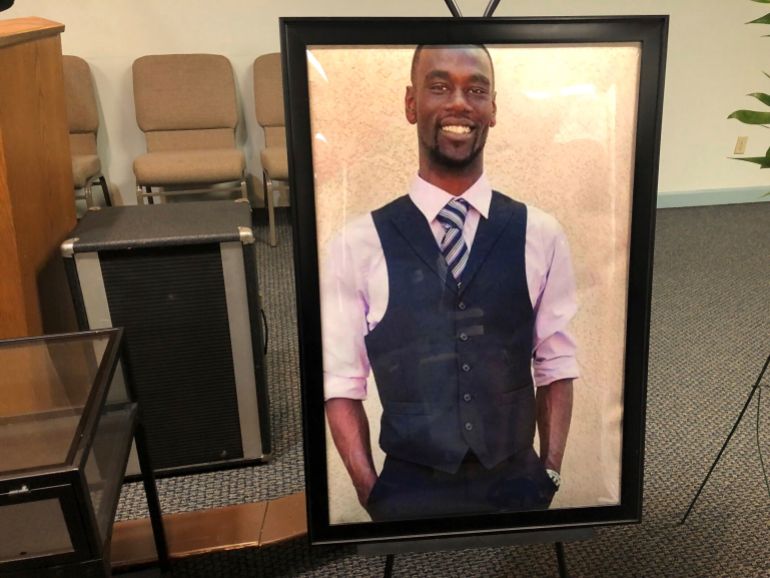
A jury in the United States has acquitted three former police officers in the controversial beating death of Tyre Nichols, a 29-year-old father who was killed after a traffic stop in Memphis, Tennessee. On Wednesday, former officers Tadarrius Bean, Demetrius Haley and Justin Smith were found not guilty in a state-level case that included charges of second-degree murder, aggravated assault, aggravated kidnapping, official misconduct and official oppression. This was their second criminal trial, after facing federal charges for Nichols’s death as well. In that case, the three officers were also acquitted of the most serious charges they faced, though they were found guilty of witness tampering for allegedly attempting to cover up the beating. There were five police officers in total involved in the Nichols killing, which took place on January 7, 2023. As video of the beating spread online, Nichols’s death reignited the debate over law enforcement violence and the over-policing of Black communities. Advertisement In the wake of the verdict, Memphis District Attorney Steve Mulroy told reporters that Nichols’s family was “devastated” and “outraged”. “We can understand why they would be outraged, given the evidence,” Mulroy said. “Was I surprised that there wasn’t a single guilty verdict on any of the counts or any of the lesser-included offences, given the overwhelming evidence that we presented? Yes, I was surprised,” he added. “Do I have an explanation for it? No.” A portrait of Tyre Nichols is displayed at his memorial service on January 17, 2023, in Memphis, Tennessee [Adrian Sainz/AP Photo] All five police officers involved in the beating were members of the Memphis Police Department’s SCORPION unit, a now-defunct squad that focused on alleged crime hotspots in the city. The outcry after Nichols’s death led to it being disbanded. On the day of his killing, Nichols was pulled over for allegedly driving recklessly, though prosecutors have cast doubt on that motive, pointing out that police body cameras show no evidence of wrongdoing. Officers pulled Nichols from his car and tased him while he was on the ground. Nichols then attempted to flee. He ran into a residential neighbourhood not far from where his mother lived, where the five police officers wrestled him to the ground and proceeded to kick, punch and beat him with a baton. Cameras captured Nichols crying out to his mother for help. He died three days later in hospital. An autopsy identified his cause of death as blunt force trauma to the head. Advertisement Two of the police officers involved – Desmond Mills Jr and Emmitt Martin – had avoided trial by striking deals with federal prosecutors in exchange for guilty pleas. The two reportedly took plea deals related to the state charges as well. Wednesday’s verdict was the culmination of a nine-day-long trial for the other three officers. The defence team for the three sought to shift the blame to the other officers for the bulk of the violence. It also accused Nichols of resisting arrest and not complying with police orders, leaving the officers fearful for their safety. “This is Emmitt Martin’s and Tyre Nichols’s doing,” said Martin Zummach, a defence lawyer for Smith, one of the three officers. Zummach also alleged that credit and debit cards not belonging to Nichols were found in his car after his beating. That, he told the jury, could explain Nichols’s decision to flee the scene. RowVaughn Wells, the mother of Tyre Nichols, attends the state trial of former police officers Tadarrius Bean, Demetrius Haley and Justin Smith Jr on May 7 [Chris Day/Commercial Appeal/USA Today Network via AP, Pool] But prosecutors in the case argued that Nichols fled out of fear for his life. They also said the officers had a responsibility to stop the beating, which caused tears and bleeding in Nichols’s brain. Video of the beating was also shown to the jury from different angles, as the prosecutors tried to convey the violence of Nichols’s final moments. The trial, which saw seven days of hearings and two days of jury deliberations, took place in Hamilton County, a majority white area in Tennessee. A judge had previously ordered the court proceedings be moved away from Shelby County, where Memphis is located, for fear of that the public scrutiny could bias the jury pool. Advertisement Civil rights lawyer Ben Crump, who represented the Nichols family, released a statement after Wednesday’s decision denouncing the outcome. “Today’s verdicts are a devastating miscarriage of justice,” the statement reads. “The world watched as Tyre Nichols was beaten to death by those sworn to protect and serve.” Adblock test (Why?)
What are India and Pakistan’s military and nuclear capabilities?
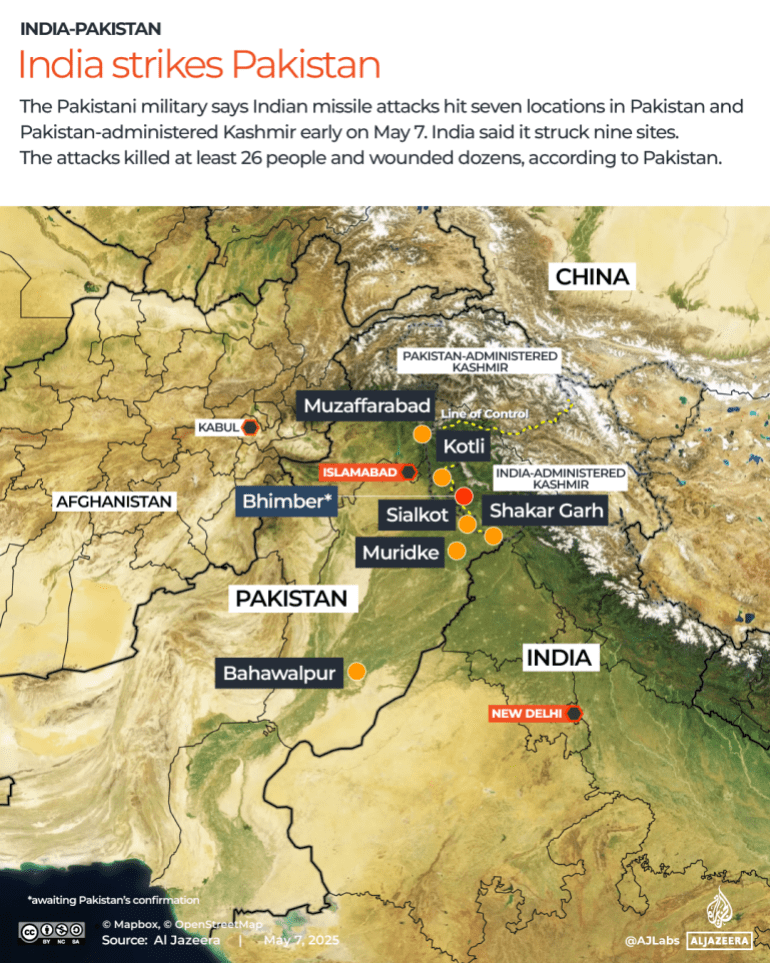
On Wednesday morning, India carried out multiple missile attacks on parts of Pakistan and Pakistan-administered Kashmir, in which at least 26 people were killed, including a three-year-old child. India has claimed its Operation Sindoor targeted nine sites with “terrorist infrastructure”. In response, Pakistan has claimed it has brought down five Indian planes – but India has not commented on this claim. At least 10 civilians have been killed in Indian-administered Kashmir due to Pakistani fire since Wednesday morning, according to local officials. Al Jazeera visualises what has happened so far and the military capabilities of both countries. Why did India attack Pakistan? On Wednesday morning, Pakistan’s armed forces said Indian missiles struck six locations, including four places in Punjab province – the first time that India has hit Pakistan’s most populous state since the 1971 war between the neighbours. The remaining two places targeted were Muzaffarabad and Kotli, both in Pakistan-administered Kashmir. Advertisement India claims that it also struck a seventh location – Bhimber, also located in Pakistan-administered Kashmir. The attacks are India’s response to a deadly attack on tourists on April 22, in which gunmen killed 25 tourists and a local pony rider in the scenic town of Pahalgam, in Indian-administered Kashmir. According to multiple witness accounts, the attackers separated the men from the women and tried to pick non-Muslims as their targets. The gunmen subsequently escaped, and Indian security forces are yet to find them 16 days later. (Al Jazeera) India and Pakistan tensions at a glance In 1947, the British colonial rulers drew a line of partition, dividing the Indian subcontinent into Muslim-majority Pakistan and Hindu-majority India. What followed was one of the largest – and, perhaps, bloodiest – migrations in human history. Seventy-eight years on, the two nations remain bitter foes. But now they have nuclear arms. The tension between India and Pakistan has escalated sharply once again after the Pahalgam attack. The Muslim-majority Kashmir region, a former princely state, has been in dispute since the partition of India. India, Pakistan and China each control a part of Kashmir. India claims all of it, while Pakistan claims the part administered by India. The two countries have gone to war four times, and there have been numerous cross-border skirmishes and escalations, including one in 2019 after at least 40 Indian soldiers were killed in a suicide attack claimed by the Pakistan-based armed group, Jaish-e-Muhammad. Advertisement In retaliation, India launched air strikes in Balakot, Khyber Pakhtunkhwa later that month, claiming that its jets had struck “terrorist” bases, killing many fighters. Many independent analysts have questioned whether India actually struck bases of armed groups and whether it killed as many fighters as it claims it did. What are the military capabilities of India and Pakistan? According to Global Firepower’s 2025 military strength rankings, India is the fourth-strongest military power in the world, and Pakistan is ranked as the 12th strongest. India is the fifth-largest spender in the world on military. In 2024, it spent $86bn on its military, or 2.3 percent of its gross domestic product (GDP), according to the Stockholm International Peace Research Institute (SIPRI), a leading defence and armaments think tank. In comparison, Pakistan spent $10.2bn, or 2.7 percent of its GDP, on the military in 2024. India’s total military strength is 5,137,550 personnel, which is almost three times larger than Pakistan’s 1,704,000. Neither country has mandatory conscription. India possesses 2,229 military aircraft, compared with Pakistan’s 1,399. India has 3,151 combat tanks, compared with Pakistan’s 1,839. Pakistan’s navy covers its 1,046 kilometre-long (650-mile) southern coastal borders in the Arabian Sea and possesses 121 naval assets, while India’s mainland coast covers nearly 6,100km (3,800 miles) with 293 naval assets. India and Pakistan’s nuclear arms race According to the International Campaign to Abolish Nuclear Weapons (ICANW), a global coalition to ban nuclear weapons, in 2023, countries spent an estimated $91.4bn on nuclear weapons, with India spending $2.7bn and Pakistan $1bn. Advertisement India carried out its first nuclear test in May 1974, and in May 1998, conducted another five tests, declaring itself a nuclear weapons state. Pakistan carried out its first nuclear tests shortly after India’s in 1998, officially becoming a nuclear weapons state. Since then, the two born together, star-crossed nations have been engaged in an arms race that has cost them billions of dollars. According to the Center for Strategic and International Studies’ (CSIS) Missile Defence Project, New Delhi nuclear deterrents are mainly aimed at rivals Pakistan and China. India has developed longer range missiles and mobile land-based missiles. In conjunction with Russia, it is in the developing stages for ship and submarine missiles. The CSIS also states that Pakistan’s arsenal consists primarily of mobile short- and medium-range ballistic missiles, which have enough of a range to target India. China’s significant technical assistance on its nuclear and missile programmes has helped Pakistan in recent years. Who supplies arms to India and Pakistan? According to SIPRI, the cross-border tensions between the two nations fuel arms imports by both countries. India was the second-largest arms importer from 2020-2024, after Ukraine, bearing an 8.3 percent share of global imports. The majority of India’s imports come from Russia, although it has been shifting its arms sourcing to France, Israel and the United States. Across the border, Pakistan’s arms and weapons imports increased by 61 percent between 2015–19 and 2020–24 as it started to receive deliveries, including combat aircraft and warships. On a global scale, Pakistan is the fifth-largest arms importer with 4.6 percent imports in 2020–24. Advertisement Since 1990, Pakistan’s main supplier has been China. China supplied 81 percent of Pakistan’s arms imports in 2020–24; Russia supplied 36 percent of India’s arms during the same period. Adblock test (Why?)
How Israel’s ‘plan’ for Gaza could turbocharge ethnic cleansing
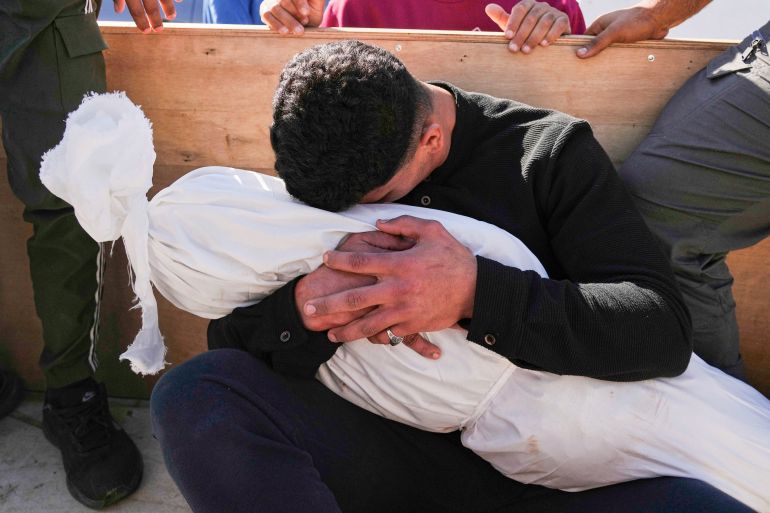
Israel’s far-right government has approved a “plan” to carve up and ethnically cleanse Gaza, analysts told Al Jazeera. Israeli Prime Minister Benjamin Netanyahu announced the plan, couching it in claims that its goal is to dismantle Hamas and retrieve the 24 or so living captives taken from Israel on October 7, 2023. Asserting that the “powerful operation in Gaza” was necessary, he went on to emphasise that “there will be a movement of the population to protect it.” Here’s what you need to know: What is this ‘plan’? Israel will expel hundreds of thousands of hungry Palestinians from the north of Gaza and confine them in six encampments. It says food will be provided to the Palestinians in these encampments, and that it will allow aid groups and private security contractors to distribute it. Palestinians will be forced to move – or starve. Some 5,000 to 6,000 families will be pushed into each camp, according to The Washington Post. Each household will send someone to trek miles to pick up a weekly food parcel from what the Norwegian Refugee Council’s Jan Egeland called “concentration hubs”. Advertisement It is unclear how the rest of the population – possibly some 1.5 million people – will eat. Israel says it will use facial recognition to identify people picking up food parcels, to deny aid to “Hamas” – yet Israel treats every fighting-age male as a Hamas operative. The private security companies from the United States would also guard within the designated areas. Experts and UN agencies are decrying the plan as impractical and inhumane. What does this mean for the people of Gaza? Israel’s genocidal war on Gaza continues, and Palestinians will continue to suffer. Since Israel began its war on Gaza on October 7, 2023, it has cloaked its mass expulsions in what it claims are humane “advance warnings” in which families have mere hours to pack their belongings and flee to a zone Israel determines. Israel often bombs those safe zones anyway. “If you are viewing this plan through aid distribution, it makes no sense,” Diana Buttu, legal scholar and former adviser to the Palestine Liberation Organization, told Al Jazeera. A Palestinian man embraces the body of his five-year-old son, Adam Namrouti, who Israel killed in an overnight air raid on a UN school used as a shelter, at Al-Aqsa Hospital in Deir al-Balah, Gaza on May 7, 2025 [Abdel Kareem Hana/AP] “If you view it through a political project, which is ethnic cleansing and cantonisation by using food as a weapon of war, then this plan does make sense,” she said, adding that the “plan” is consistent with Israel’s aim of carrying out a genocide in Gaza. Advertisement What did the people of Gaza say? That they are afraid, and starving, after two months of Israel blocking all aid and regular shipments of food. “If there is a plan to expand the war and reoccupy Gaza and repeat the displacement, why were we allowed to return to the north again?” Noor Ayash, 31, asks. “What more does Netanyahu want? We’re dying in every way.” Mahmoud al-Nabahin, 77, who has been displaced for the past 18 months, says Netanyahu’s threats are meaningless. He has lost everything; Israel killed his wife and daughter in a raid months ago, and their home and farm are gone. “[This] means nothing but our annihilation. We’ve lost all hope. Let him do whatever he wants,” he says from his tent in Deir el-Balah. “We don’t have weapons. We’re civilians left in the wind. People will refuse displacement, but will be forced by the army.” What does Israel want? They want to finish their genocide under the guise of facilitating food aid and rescuing Israeli captives, Omar Rahman, an expert on Israel-Palestine for the Middle East Council on Global Affairs, said. “Israel has been telegraphing its real intentions from the start of this campaign: Destroy Gaza and eliminate its population both by starvation and mass killing,” he said. Israel’s “plan” signals its intent to starve Palestinians who resist being expelled from north Gaza, said Heidi Matthews, a legal scholar at York University, Canada. “It is inconceivable that the population can be adequately provided for … whilst being crowded into southern Gaza,” she said. Advertisement “This indicates the genocidal intent to inflict on the Palestinian population of Gaza conditions of life calculated to bring about its physical destruction in whole or in part.” Can Israel even manage this? Not clear. Israel plans to hire two US private security firms, Safe Reach Solutions and UG Solutions, to provide security and possibly help with food distribution. The first is headed by Phil Riley, a former CIA intelligence officer. The second is run by Jameson Govoni, a former member of the US Army Special Forces. These companies could give Israel plausible deniability if abuses or atrocities occur, said Mairav Zonszein, an expert on Israel-Palestine for the International Crisis Group. A morgue worker places the body of a child among the bodies of other victims killed in at least two separate Israeli army attacks, before of a burial ceremony outside al-Shifa Hospital in Gaza City, Monday, May 5, 2025 [AP Photo/Jehad Alshrafi] (AP) She added that Israel will also call up thousands of reservists to maintain a physical occupation over northern Gaza, despite many soldiers being fatigued by war and financial troubles. “There is definitely a lower … turnout among reservists than at the start of the war. But that doesn’t mean there is actually a manpower shortage,” Zonszein told Al Jazeera. In addition, she noted, despite Israeli society opposing expanding the war on Gaza without first retrieving the captives, Netanyahu is more concerned with appeasing far-right ministers in his coalition by fighting on. Advertisement Netanyahu risks losing power and standing trial for corruption charges if the coalition collapses. Are aid agencies on board? Not UN agencies. A UN spokesman said Secretary-General Antonio Guterres was “alarmed” by Israel’s plan and that it will “inevitably lead to countless more civilians killed and the
Eastern Europe bets on Trump – but at what cost?
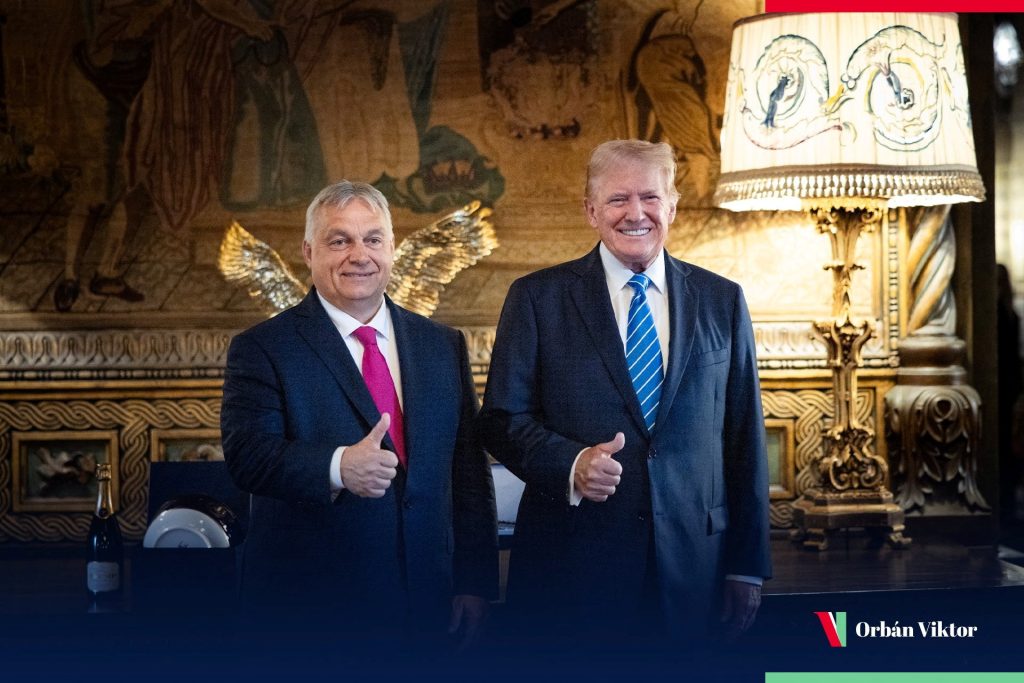
OPINIONOPINION, Eastern Europe’s love affair with Trump runs deep – but economic fallout may soon cool the romance. Despite Donald Trump’s fraying popularity at home, there is a corner of the globe where his brand remains remarkably resilient: Eastern Europe. Last Sunday, the Trump-loving far-right populist George Simion topped the first round of Romania’s presidential elections, securing over 40 percent of the vote and a realistic path to the top office. Echoing Trump’s pledge to “Make America Great Again,” Simion promises to “give back to the Romanian people what was taken from them”. He is not an outlier. In neighbouring Hungary, Prime Minister Viktor Orban openly embraces the mantle of Trump’s European standard-bearer. Trumpworld’s influence in the region extends beyond politics. Jared Kushner is spearheading a real estate venture in downtown Belgrade, and Donald Trump Jr has recently completed his second tour in months of Serbia, Romania and Bulgaria, rubbing shoulders with politicians, business elites and crypto entrepreneurs eager to forge ties with the Trump family. Eastern Europe’s fascination with the “America First” president is fuelled by both ideological alignment and hard-nosed pragmatism. The MAGA message resonates widely across the post-communist landscape. A recent Gallup poll ahead of the 2024 United States election showed that 49 percent of respondents in Bulgaria and Hungary – and a staggering 59 percent in Serbia – preferred Trump over Kamala Harris. This is no coincidence. From the AfD supporters in former East Germany to the ruling Georgian Dream party in Tbilisi, illiberal actors across the region are rallying against the liberal democratic consensus. Their views on issues like LGBTQ rights, race, gender, multiculturalism, vaccines and Ukraine mirror those of Trump’s base. Trump’s friendliness towards Vladimir Putin has further enhanced his appeal in Russia-friendly nations like Serbia. Advertisement There is also a transnational dimension. Eastern European diasporas in the US tend to favour Trump, drawn by social conservatism or competition with other ethnic and racial groups. Their counterparts in Western Europe are similarly inclined, even as they benefit from the very open-border policies they often deride. In Romania’s recent election, 60 percent of Romanians living in the European Union and the United Kingdom voted for Simion. Many had previously backed Calin Georgescu, a far-right figure publicly defended by US Vice President JD Vance at the Munich Security Conference. At home, elites see in Trump a potential enabler. A powerful friend in Washington who overlooks corruption and democratic backsliding could prove advantageous both domestically and internationally. The prospect of US foreign policy becoming indistinguishable from the Trump Organization’s business agenda is attractive in a region rife with opaque sectors like infrastructure, energy and mining. The recent US-Ukraine critical minerals deal is seen as a blueprint for currying favour with a transactional White House. This relationship is already yielding dividends. In April, the Trump administration reversed sanctions on Antal Rogan, a close Orban ally, originally imposed under the Global Magnitsky Act by the Biden administration. The move has raised hopes elsewhere: in Bulgaria, tycoon and political heavyweight Delyan Peevski – also sanctioned under Magnitsky – is reportedly eyeing a similar reprieve. Yet Eastern Europe’s Trump infatuation may prove fragile. Ironically, Trump’s economic nationalism threatens to undercut the very economies governed by his ideological allies. Hungary and Slovakia, both heavily reliant on automotive exports, stand to suffer under US tariffs. Slovakia’s car industry alone accounts for nearly 30 percent of national exports and employs 10 percent of the workforce. Even a modest 10 percent tariff could decimate jobs in Central Europe’s industrial belt. Advertisement Such economic fallout would have political consequences. In the Czech Republic, it might boost populist Andrej Babis, a Trump-like businessman. But in Hungary, Orban already faces a serious challenge from Peter Magyar, with elections looming next year. In Slovakia, Robert Fico governs with a slim majority and increasing public dissent – his long-term survival is uncertain. Trumpism has already proven a liability for right-wing allies in Canada and Australia. While Eastern Europe remains more receptive, the region is not immune to the risks of over-identification with a movement that pits itself against the European Union, liberal values and global economic integration. The MAGA revolution may still fire up crowds in Bucharest and Belgrade – but its contradictions could just as easily burn those who embrace it. The views expressed in this article are the author’s own and do not necessarily reflect Al Jazeera’s editorial stance. Adblock test (Why?)
What we know about new India-Pakistan military confrontation
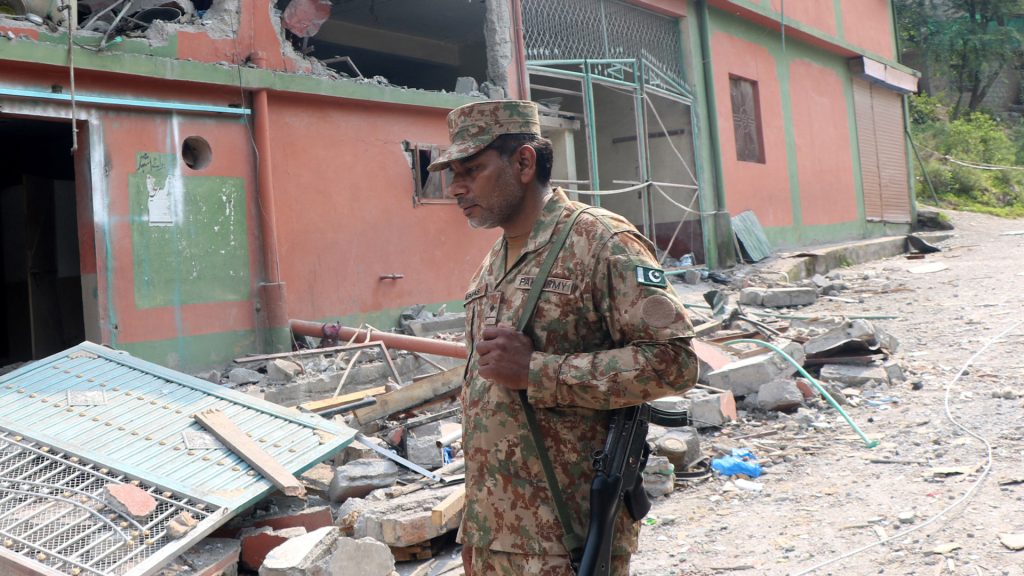
NewsFeed Indian and Pakistani forces have been attacking across the contested frontier between Indian- and Pakistan-administered Kashmir, after India launched overnight strikes into Pakistan. Several people have been reported killed. Here’s what we know so far. Published On 7 May 20257 May 2025 Adblock test (Why?)
Indian military strikes Pakistan, Pakistan-administered Kashmir
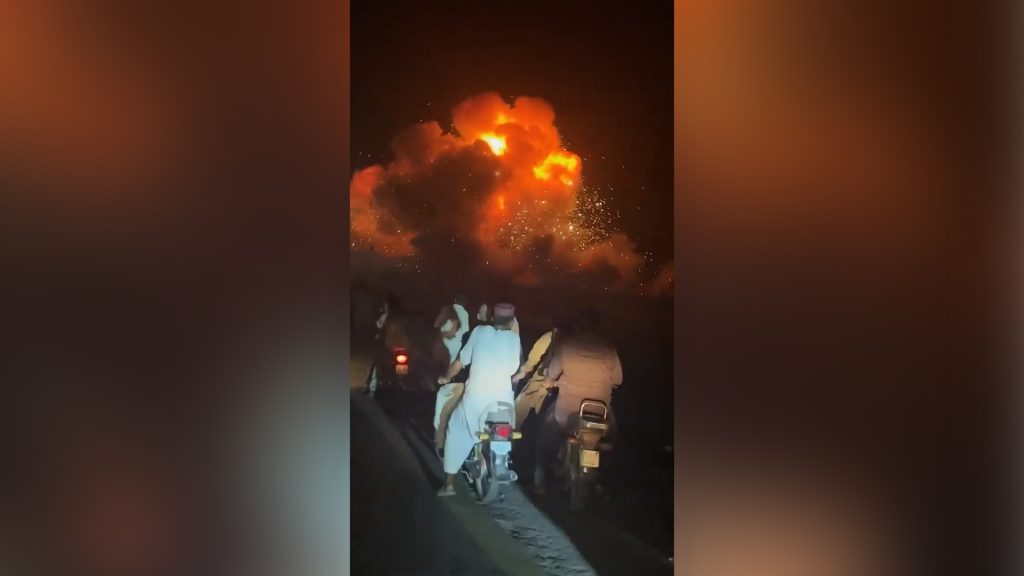
NewsFeed Video captured the moment of an Indian military strike in Bahawalpur, Pakistan. The Indian Ministry of Defence says it struck multiple sites in what it calls “Operation Sindoor.” Pakistan’s military says at least 2 people were killed in the strikes. India has blamed Pakistan for an attack that killed 26 people last month in Pahalgam. Published On 6 May 20256 May 2025 Adblock test (Why?)
US Supreme Court allows ban on transgender troops to take effect
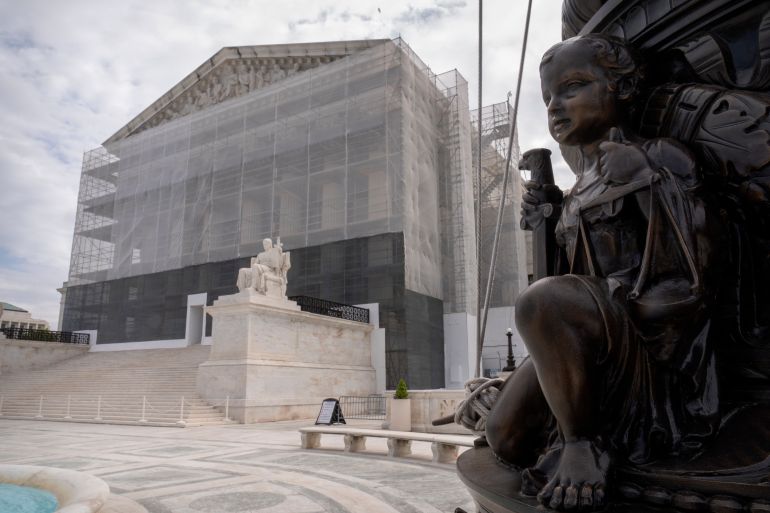
The United States Supreme Court has allowed a ban on transgender military members to take effect while legal challenges over the restriction continue. On Tuesday, the court’s conservative majority issued an unsigned order lifting a lower court’s injunction that had blocked the ban from taking effect. The order also indicated that the Supreme Court’s three left-leaning judges – Sonia Sotomayor, Elena Kagan and Ketanji Brown Jackson – sought to deny the emergency request to lift the injunction. Since taking office for a second term on January 20, President Donald Trump has sought to curtail the rights and visibility of transgender people in the US, including through restrictions on military service. On his first day in office, Trump signed an executive order declaring that his administration would only “recognise two sexes, male and female”. That same day, he rescinded an order from his predecessor, Democrat Joe Biden, that allowed transgender troops to serve in the military. Then, on January 27, he unveiled a new directive, called “Prioritizing Military Excellence and Readiness”. It compared being transgender with adopting a “‘false’ gender identity”. Advertisement Such an identity, the order added, was not compatible with the “rigorous standards necessary for military service”. “Adoption of a gender identity inconsistent with an individual’s sex conflicts with a soldier’s commitment to an honorable, truthful, and disciplined lifestyle, even in one’s personal life,” the executive order said. “A man’s assertion that he is a woman, and his requirement that others honor this falsehood, is not consistent with the humility and selflessness required of a service member.” That executive order sparked a slew of legal challenges, including the one at the centre of Tuesday’s Supreme Court order. In that case, seven active-duty service members – as well as a civil rights organisation and another person hoping to enlist – argued that a ban on their transgender identity was discriminatory and unconstitutional. Advocates for the group point out that the seven have together earned more than 70 medals for their service. The lead plaintiff, Commander Emily Shilling, had spent nearly two decades in the Navy, flying 60 missions as a combat pilot. Her lawyers estimate that nearly $20m has been invested in her training during that time. But the Trump administration has argued that the presence of transgender troops is a liability for the military. “Another MASSIVE victory in the Supreme Court!” White House Press Secretary Karoline Leavitt posted on social media following Tuesday’s order. “President Trump and [Defense Secretary Pete Hegseth] are restoring a military that is focused on readiness and lethality.” Advertisement Hegseth also posted a short message, using an acronym for the Department of Defence: “No More Trans @ DoD.” The Supreme Court issued an unsigned order allowing the ban on transgender troops to take effect [Mark Schiefelbein/AP Photo] This is not the first time Trump has attempted to exclude transgender people from the armed forces. In July 2017, shortly after taking office for his first term, Trump announced a similar policy on the social media platform Twitter, now known as X. “After consultation with my Generals and military experts, please be advised that the United States Government will not accept or allow Transgender individuals to serve in any capacity in the U.S. Military,” Trump wrote in consecutive posts, divided by ellipses. Similarly, in 2019, the Supreme Court allowed that ban to take effect. Then, in 2021, Biden’s executive order nullified it. The Trump administration pointed to its past success at the Supreme Court in its emergency appeal to lift the lower court’s injunction blocking its latest ban on transgender troops. That temporary injunction was the decision of a US district court judge in Tacoma, Washington: Benjamin Settle. Himself a former army captain, Settle was named to his position under former President George W Bush, a Republican. In March, Settle blocked the ban on transgender troops, saying that – while the government made reference to “military judgement” in its filings – its arguments showed an “absence of any evidence” that the restriction had to do with military matters. Advertisement “The government’s arguments are not persuasive, and it is not an especially close question on this record,” he wrote. Other judges have likewise issued injunctions, including District Judge Ana Reyes in Washington, DC. She ruled in a case where 14 transgender service members sued against Trump’s ban, citing the right to equal protection under the law, enshrined in the Constitution’s Fifth Amendment. “The cruel irony is that thousands of transgender servicemembers have sacrificed – some risking their lives – to ensure for others the very equal protection rights the military ban seeks to deny them,” Reyes wrote in her decision, issued shortly before Settle’s in March. Of the more than 2.1 million troops serving in the US military, less than 1 percent are estimated to be transgender. One senior official estimated last year that there are only about 4,200 transgender service members on active duty, though advocates say that number could be an undercount, given the risk of violence and discrimination associated with being openly transgender. The human rights groups Lambda Legal and the Human Rights Campaign Foundation have been among those supporting transgender service members in their fight against Trump’s ban. The two organisations issued a joint statement on Tuesday denouncing the high court’s decision. “By allowing this discriminatory ban to take effect while our challenge continues, the court has temporarily sanctioned a policy that has nothing to do with military readiness and everything to do with prejudice,” they wrote. Advertisement “We remain steadfast in our belief that this ban violates constitutional guarantees of equal protection and will ultimately be struck down.” Adblock test (Why?)
Inter defeat Barcelona by equalling Champions League semifinal record
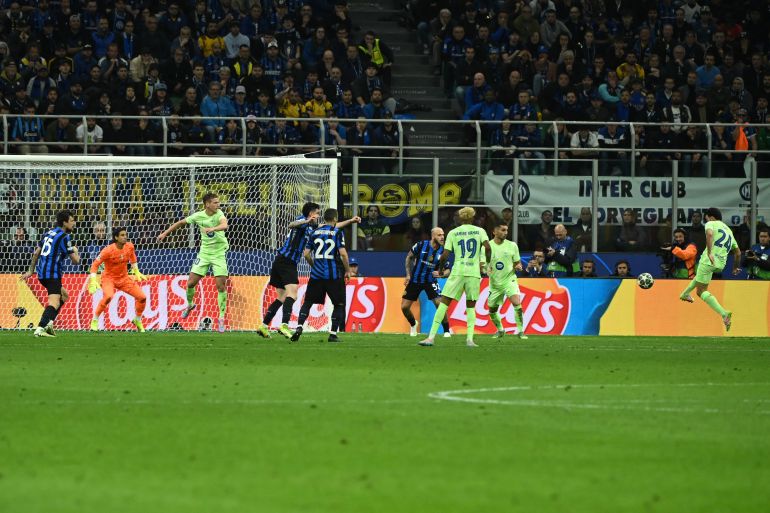
Inter Milan take their Champions League semifinal in record-equalling 7-6 aggregate score against Barcelona at San Siro. Inter Milan substitute Davide Frattesi struck an extra-time winner to send his side into the Champions League final following a barnstorming 4-3 victory over Barcelona after Francesco Acerbi had rescued them from the brink of elimination with a stunning equaliser deep in added time. Frattesi’s goal and a string of stunning saves by goalkeeper Yann Sommer secured Inter a rip-roaring and record-equalling 7-6 aggregate victory in a semifinal for the ages, which finished with the Italian side reaching the Munich final. They will later this month face either Paris St Germain or Arsenal, who meet on Wednesday. It was a tale of two halves as Inter dominated the first 45 minutes and opened a two-goal lead thanks to a Lautaro Martinez goal on the counter in the 21st minute, before Hakan Calhanoglu extended the lead with a penalty right before the break. However, Barca woke up in the second half with Eric Garcia and Dani Olmo netting within six minutes to level the scoring and, even though Sommer worked his magic to help keep the hosts alive, the Catalans thought they had scored the winner through Raphinha who struck from close range in the 87th minute. Advertisement But as Inter made a desperate run for an equaliser, Denzel Dumfries found 37-year-old Acerbi inside the box, who fired a first-time effort into the net to score his first European goal in his 20th season and take the game to extra time. In the 99th minute, Marcus Thuram made a brilliant run from the right and played the ball into the area for Frattesi, who set himself up before neatly guiding a curling shot into the bottom corner to send the delighted home fans into raptures. Barcelona’s Spanish defender, Eric Garcia, right, scores his team’s first goal with the pick of the seven goals on the night [Piero Cruciatti/AFP] Sommer made two world-class saves from teenager Lamine Yamal to secure the hard-fought win for Inter, who will bid to claim their fourth Champions League title and their first in 15 years after losing to Manchester City in the final two years ago. “I’m lucky to have finished the game. I screamed so much that I saw everything black,” Frattesi told Sky Sport. “I have to thank the physiotherapists because, in recent days, I was not well, I dedicate the victory to them. It’s incredible, I don’t know what to say. Tonight, the incredible happened.” Barcelona, who were chasing a treble after winning the Copa del Rey by beating Real Madrid in extra-time, will now have to focus on LaLiga, where on Sunday, they host their old rivals who are in second place and trail them by four points. “Football has been very cruel to us,” Barca defender Eric Garcia told Movistar Plus. “We were down 2-0 again, and the character this team showed was remarkable. “We are a team full of young players and this has been a great year. We still have the [Spanish] league to play for.” Advertisement The previous standalone record score for a semifinal was Liverpool’s 7-6 aggregate win against Roma during the 2017-2018 season. Adblock test (Why?)
India launches attacks on several sites in Pakistan

India has launched missiles at several locations in Pakistan and Pakistan-administred Kashmir, the government said, and Pakistan promised to respond to the attacks. Several explosions were heard in the city of Muzaffarabad, the capital of Pakistan-administered Kashmir, the Reuters news agency reported on Tuesday. “A little while ago, the Indian armed forces launched ‘OPERATION SINDOOR’, hitting terrorist infrastructure in Pakistan and Pakistan-occupied Jammu and Kashmir from where terrorist attacks against India have been planned and directed,” the Indian government said in a statement. “Our actions have been focused, measured and non-escalatory in nature. No Pakistani military facilities have been targeted. India has demonstrated considerable restraint in selection of targets and method of execution,” it said. A Pakistani military spokesman told broadcaster Geo that Pakistan’s response was under way, without providing details. The spokesman said five places were hit including two mosques. Advertisement Meanwhile, Pakistan’s military said two people have been killed and 12 others injured. Al Jazeera’s Kamal Hyder, reporting from Islamabad, said among the targets that were hit were the cities of Muzaffarabad and Kotli. Pakistan has said that if it is attacked, that it will “respond in force”, Hyder said, adding that the situation remains “quite fluid”. The development comes amid heightened tensions between the nuclear-armed neighbours in the aftermath of an attack on Hindu tourists in Pahalgam in Indian-administered Kashmir last month. India blamed Pakistan for the violence in which 26 men were killed and vowed to respond. Pakistan denied that it had anything to do with the killings. After India’s strikes, the Indian army said in a post on X early on Wednesday: “Justice is served.” More to come… Adblock test (Why?)
Key takeaways from Donald Trump’s meeting with Canada’s PM Mark Carney
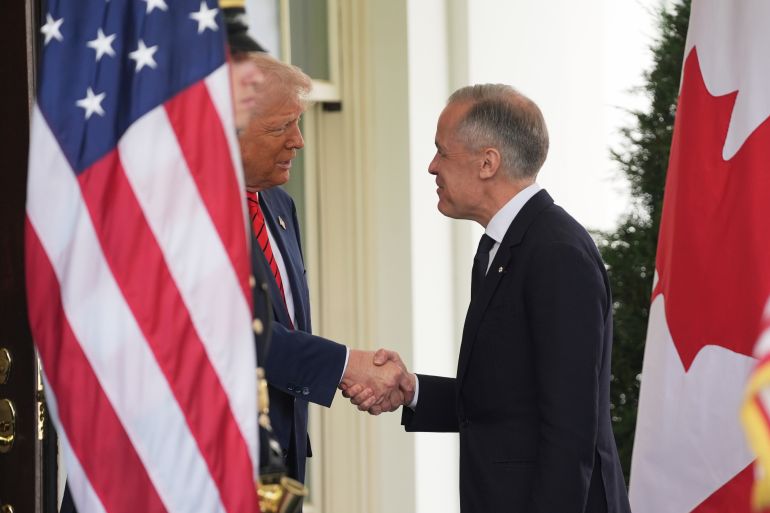
Canadian Prime Minister Mark Carney has made his much-anticipated first visit to the White House, as his country and the United States continue to spar over trade, tariffs and the prospect of reimagining their shared borders. Seated across from Carney in the Oval Office on Tuesday, US President Donald Trump continued to advocate for Canada becoming part of its southern neighbour. But Carney reiterated his firm commitment to defending Canadian sovereignty, in one of the few moments he interjected during his half-hour public appearance with Trump in the Oval Office. “As you know from real estate, there are some places that are never for sale,” Carney told Trump, in a gesture to the president’s background as a real-estate developer. He then referenced his mandate from Canada’s recent federal elections, which reflected growing anti-Trump sentiment among Canadian voters. “Having met with the owners of Canada over the course of the campaign these last several months, it’s not for sale — won’t be for sale — ever,” Carney said of his country. Advertisement Overall, however, the meeting was cordial, with the two leaders exchanging warm words — and Trump teasing upcoming breakthroughs with armed groups like the Houthis in Yemen. Here are the key takeaways from their meeting. President Donald Trump greets Canadian Prime Minister Mark Carney outside the White House on May 6 [Evan Vucci/AP Photo] Trump weighs in on Canada’s election Carney’s appearance at the White House comes just over a week after his country’s federal elections on April 28, which saw Trump emerge as a defining force. While the research firm Ipsos found that affordability and the cost of living topped the list of voter concerns in Canada, 24 percent of respondents in April identified Canada’s increasingly fractious relationship with the US as a leading issue in the race. A separate Ipsos poll found that more voters trusted Carney to handle Trump than any other candidate. Carney’s Liberal Party has also seen renewed public support, buoying it to a fourth consecutive victory in the federal elections. The centre-left Liberals won 169 seats out of 343, enough to form a minority government — and enough for Carney, a political newcomer, to remain Canada’s prime minister. The backlash to the Trump presidency began in earnest in January, when Trump took office for a second term. His remarks about Canada becoming the US’s 51st state and his aggressive tariff policy alienated many Canadians, who felt their country’s close ties with the US had soured. Some voters even feared that Canada’s Conservative Party — which had previously been considered the frontrunner in the elections — might capitulate to Trump’s demands, a sentiment that helped propel the Liberal resurgence. As Trump opened his sit-down with Carney, he gave a nod to the Liberals’ come-from-behind victory, joking that he took partial credit for the party’s electoral success. Advertisement “I think I was probably the greatest thing that happened to him,” Trump told the journalists assembled in the Oval Office, gently ribbing Carney. “But I can’t take full credit. His party was losing by a lot. And he ended up winning. So I really want to congratulate him. It was probably one of the greatest comebacks in the history of politics. Maybe even greater than mine.” Reporters gather to ask Carney and Trump questions about the future of US-Canada relations [Evan Vucci/AP Photo] Trump and Carney exchange praise Trump proceeded to shower Carney with praise, calling him a “very good” and “very talented person” with whom he had “a lot of things in common”. By contrast, the US president launched a quick barb at Carney’s predecessor, fellow Liberal Justin Trudeau, who served as Canada’s prime minister from 2015 until March of this year. “I didn’t like his predecessor,” Trump said shortly. He also hinted at other tense relationships with other world leaders, including Ukrainian President Volodymyr Zelenskyy, with whom he had an Oval Office shouting match in February. “ This is very friendly. This is not gonna be like we had another little blow-up with somebody else. It was a much different. This is a very friendly conversation,” Trump said. Carney, for his part, responded with compliments of his own for Trump. “You’re a transformational president,” Carney said at the outset, praising the US president’s “relentless focus on the American worker”. He also drew a parallel between Trump’s leadership and his own, saying he had been elected “to transform Canada, with a similar focus on the economy” and “securing our borders”. Advertisement “The history of Canada and the US is we’re stronger when we work together, and there are many opportunities to work together,” Carney said. “I look forward to addressing some of those issues that we have, but also finding those areas of mutual cooperation so we can go forward.” Carney: Canada is ‘not for sale’ The two leaders’ conversation, however, quickly shifted to one of the most contentious issues facing their respective countries: Trump’s threats to make Canada part of the US. Since December, Trump has made regular remarks to the effect that Canada should be absorbed into the US as its 51st state, owing to an imbalance of trade across the two countries’ borders. According to the US government, Canada is the largest destination for US exports and one of its top three sources for imports. But Canada exports more to the US than it imports, creating a deficit of $63.3bn in Canada’s favour. Experts say trade deficits are not necessarily a bad thing: They can indicate a stronger consumer base or differences in currency value. But Trump has repeatedly framed the US’s trade deficit with Canada as a “subsidy” that keeps the country afloat economically. In the lead-up to Tuesday’s meeting, the US president pledged to broach the issue of statehood with Carney. “I’ll always talk about that,” he told the TV news programme Meet the Press on Saturday. But during the public portion of their meeting, Trump took a more subdued approach, saying that, while he believed statehood to be a boon