

Inside Gaza after Israel’s last captive is found
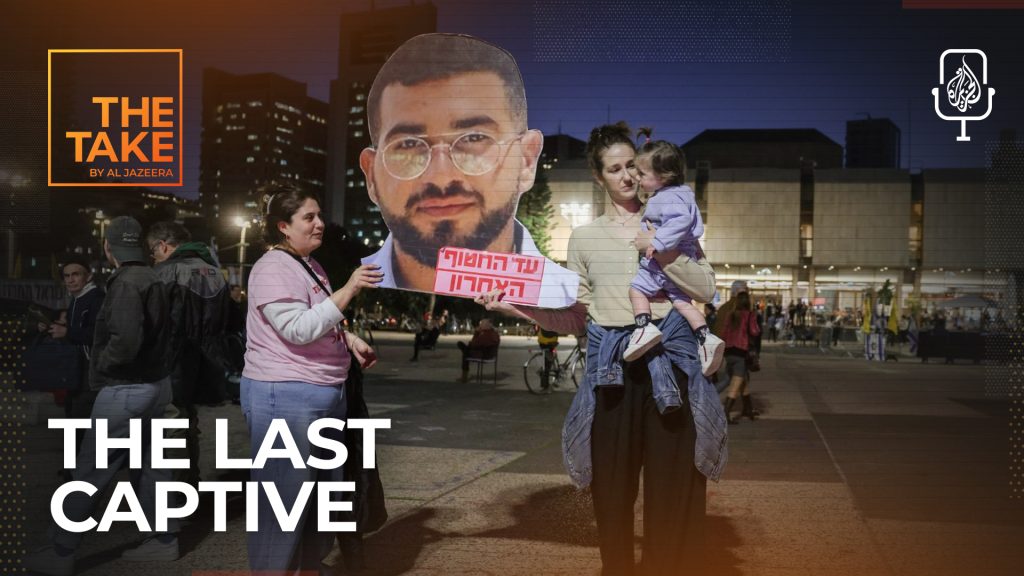
With the final Israeli captive returned, Palestinians are waiting to see if Israel will now implement a true ceasefire. The remains of the final Israeli captive have been returned from Gaza. For months, the Israeli government has cited the remaining bodies of captives as a reason for limiting crossings, delaying aid deliveries and slowing the implementation of the agreed ceasefire. With this justification now gone, what will change for Palestinians in Gaza? In this episode: Episode credits: This episode was produced by Sarí el-Khalili and Melanie Marich, with Tamara Khandaker, Tuleen Barakat, and our host, Malika Bilal. It was edited by Alexandra Locke. Our sound designer is Alex Roldan. Our video editors are Hisham Abu Salah and Mohannad al-Melhemm. Alexandra Locke is The Take’s executive producer. Ney Alvarez is Al Jazeera’s head of audio. Connect with us: @AJEPodcasts on X, Instagram, Facebook, and YouTube Published On 29 Jan 202629 Jan 2026 Click here to share on social media share2 Share Adblock test (Why?)
Quebec mosque attack anniversary renews call to end anti-Muslim hate
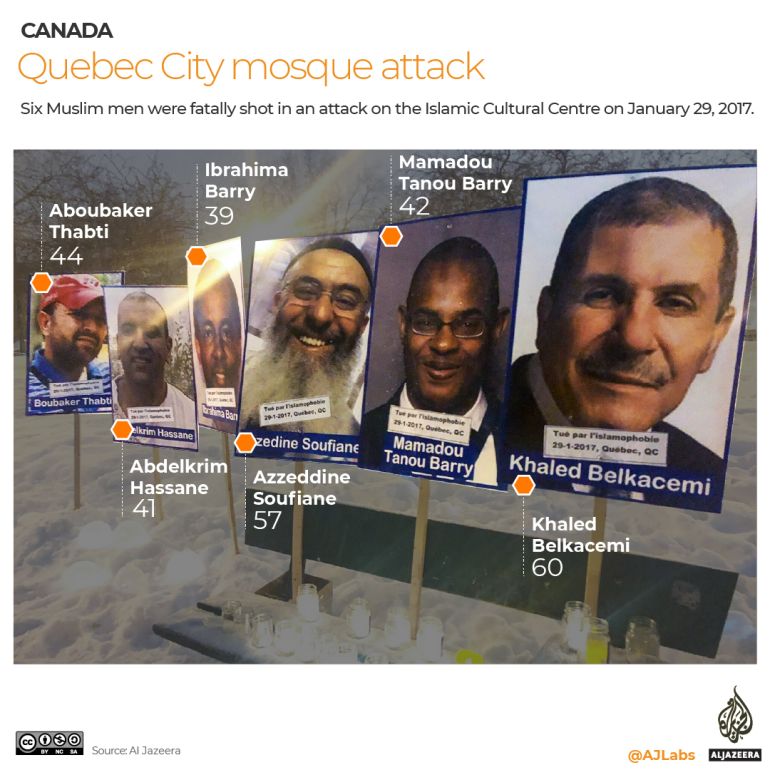
Montreal, Quebec, Canada – Canadian Muslim leaders are calling for an end to Islamophobic rhetoric and fearmongering, as the country prepares to mark the nine-year anniversary of a deadly attack on a mosque in the province of Quebec. Stephen Brown, CEO of the National Council of Canadian Muslims (NCCM), said Thursday’s anniversary is a reminder that Islamophobia in Canada “is not benign”. Recommended Stories list of 3 itemsend of list “It’s something that unfortunately kills people,” Brown told Al Jazeera. “[The anniversary] forces us to remember that there’s real consequences to hatred.” Six Muslim men were killed when a gunman opened fire at the Quebec Islamic Cultural Centre in Quebec City on January 29, 2017, marking the deadliest attack on a house of worship in Canadian history. The assault left Quebec City’s tight-knit Muslim community deeply shaken, spurred vigils and condemnation across Canada, and shone a spotlight on a global rise in anti-Muslim hate and radicalisation. The Canadian government denounced the shooting as a “terrorist attack” against Muslims and pledged to tackle the underlying issues. In 2021, it announced it was designating January 29 as the National Day of Remembrance of the Quebec City Mosque Attack and Action against Islamophobia. But Brown said he was not sure whether the lessons learned after what happened in Quebec City were being fully remembered today, nearly a decade later. “Right after the Quebec City mosque massacre, there really was a desire in society to try to mend some of the wounds and build some bridges,” he said. Advertisement “Unfortunately, what a lot of people are seeing [now] – and especially for Muslims that live in Quebec – … is a massive return to using Islamophobia and spreading fear of Muslims for political gain.” [Al Jazeera] Laws and rhetoric Brown pointed to a series of measures put forward by Quebec’s right-wing Coalition Avenir Quebec (CAQ) government that human rights groups say target Muslim Quebecers. In power since 2018, the CAQ passed a law in 2019 to bar some public servants from wearing religious symbols on the job, including headscarves worn by Muslim women, Sikh turbans and Jewish yarmulkes. The government justified the law, known as Bill 21, as being part of its push to protect secularism in the province, which in the 1960s underwent a so-called “Quiet Revolution” to break the Catholic Church’s influence over state institutions. But rights advocates said Bill 21 discriminated against religious minorities and would have a disproportionately harmful effect on Muslim women, in particular. As the CAQ’s popularity has plummeted in recent months, it has passed and put forward more legislation to strengthen its so-called “state secularism” model in advance of a looming provincial election later this year. Most recently, in late November, the CAQ introduced a bill that would extend the religious symbols prohibition to daycares and private schools, among other places. Bill 9 also bars schools from offering meals based exclusively on religious dietary requirements – such as kosher or halal lunches – and outlaws “collective religious practices, notably prayer” in public. The attack on Quebec City’s largest mosque lasted less than two minutes [File: Jillian Kestler-D’Amours/Al Jazeera] “Quebec has adopted its own model of state secularism,” said the provincial minister responsible for secularism, Jean-Francois Roberge. Roberge has rejected the idea that the bill was targeting Muslim or Jewish Quebecers, telling reporters during a news conference on November 27 that the “same rules apply to everybody”. But the Canadian Civil Liberties Association (CCLA) – which is involved in a lawsuit against Bill 21 that will be heard by the Supreme Court of Canada later this year – said Bill 9 “masks discrimination as secularism”. “These harmful bans disproportionately target and marginalize religious and racialized minorities, especially Muslim women,” Harini Sivalingam, director of the CCLA’s equality programme, said in a statement. According to Brown at NCCM, the Quebec government’s moves have sent “the message to society that there’s something inherently dangerous or wrong with being a visible, practising Muslim”. Advertisement He warned that, when people in positions of authority use anti-Muslim rhetoric to try to score political points, “it gives licence to those who already hold a lot of these Islamophobic views or hateful views to actually take it out on people”. ‘Hate continues to threaten’ At the federal level, Amira Elghawaby, Canada’s special representative on combating Islamophobia, said the Canadian government has shown a continued commitment to tackling the problem. That includes through an Action Plan on Combatting Hate, launched in 2024, which has devoted millions of dollars to community groups, antifascism programmes and other initiatives. But Elghawaby told Al Jazeera that Islamophobia has nevertheless been rising in Canada, “whether it’s through police-reported hate crimes [or] whether it’s Canadians sharing that they’re experiencing discrimination at work [and] at school”. Three black stone plinths stand in a memorial to the victims of the attack, outside the Quebec City mosque, in 2022 [File: Jillian Kestler-D’Amours/Al Jazeera] According to Statistics Canada, 211 anti-Muslim hate crimes were reported to police in 2023 – a 102-percent jump compared with the previous year. There was a slight increase in 2024 – the most recent year for which the data is available – with 229 incidents reported. Elghawaby, whose office was established after another anti-Muslim attack killed four members of a single family in London, Ontario, in 2021, said the figures underscore “that hate continues to threaten Canadians”. “Canada, despite a global reputation of being a country that welcomes people from around the world, does struggle with division, with polarisation, with the rise of extremist narratives,” she said, adding that remembering the Quebec City mosque attack remains critical. “[The families of the men killed] don’t want the loss of their loved ones to be in vain. They want Canadians to continue to stand with them, to continue to stand against Islamophobia, and to do their part in their own circles to help promote understanding,” Elghawaby said. “History can sadly repeat itself if we don’t learn from the lessons of the past.” Adblock test
Mourinho’s Benfica drag Real Madrid with them to Champions League playoffs
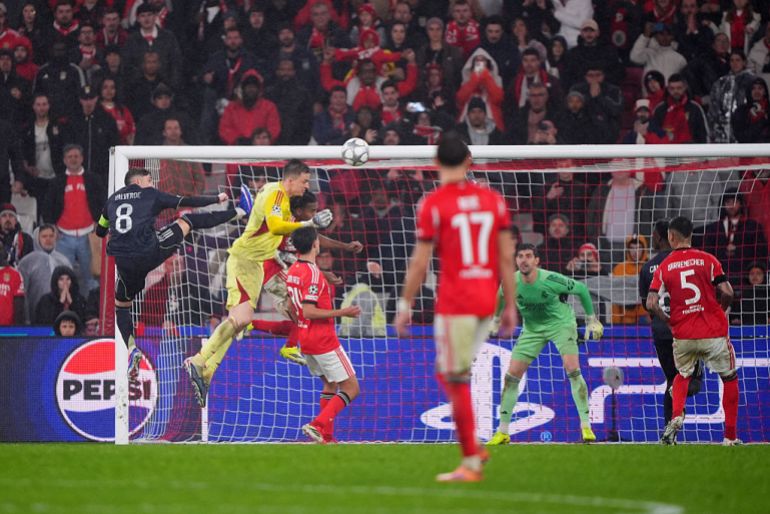
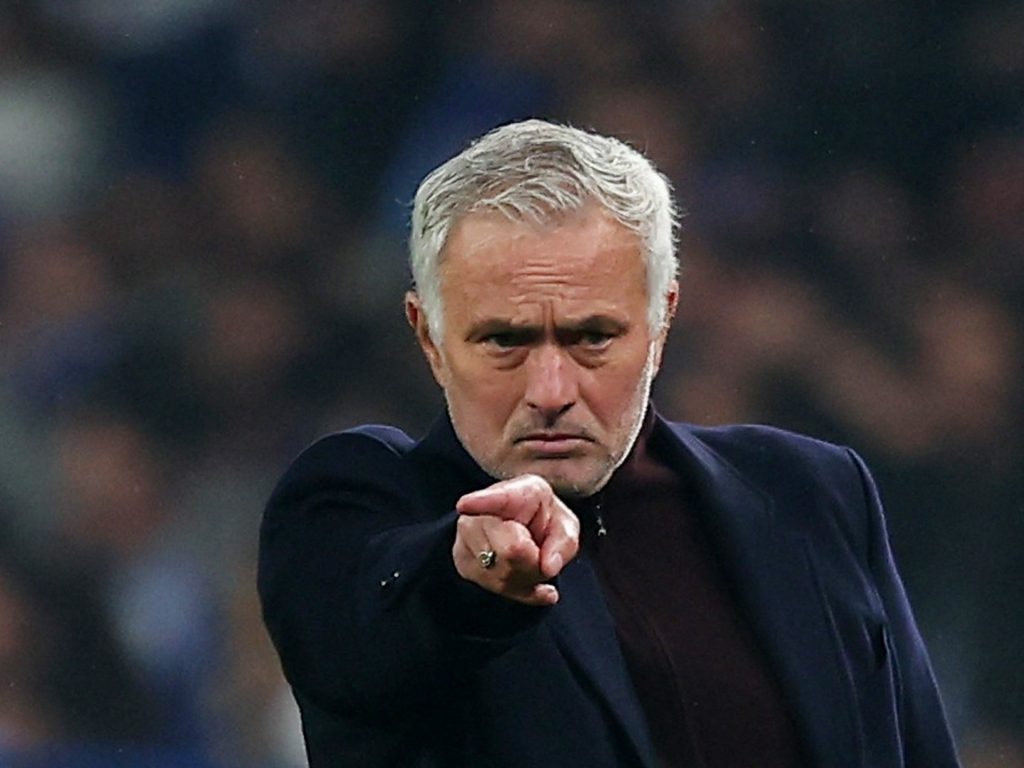
Benfica beat Real 4-2 which sends both teams into Champions League playoffs, as Madrid miss out on top eight. Published On 28 Jan 202628 Jan 2026 Click here to share on social media share2 Share Goalkeeper Anatoliy Trubin scored an astonishing 98th-minute header as Benfica beat Real Madrid 4-2 to keep themselves in the Champions League and deny their illustrious opponents an automatic spot in the last 16. In an extraordinary finale on Wednesday, the Portuguese side were heading out despite leading 3-2 with seconds of stoppage time remaining before Trubin came forward for a free kick to score the goal needed to sneak into the playoff round on goal difference. Recommended Stories list of 4 itemsend of list That sparked wild celebrations from Benfica players, fans and their charismatic coach Jose Mourinho – a former manager of Real Madrid – at the Stadium of Light in Lisbon. The Spaniards had hoped to finish in the top eight and go straight into the last 16, but their 15 points from eight games were not enough, and they finished the match with nine men as Raul Asencio and Rodrygo were sent off. Andreas Schjelderup scored two goals for Benfica and Vangelis Pavlidis netted from the penalty spot, while Kylian Mbappe netted twice for Real in a hugely entertaining, end-to-end contest. Benfica advance at the expense of Marseille, who lost 3-0 at Club Brugge. The giant screen in the stadium in Belgium congratulated both teams for advancing to the next stage, but that proved premature as Trubin turned the tables. Both Benfica and Real needed a goal for different reasons going into the final minutes, and it is a vindication of the competition’s format that a single goal could have such a dramatic effect on the table. Goalkeeper Anatoliy Trubin of Benfica scores his team’s fourth goal with a header [Jose Manuel Alvarez Rey/Getty Images] Benfica were denied two strong early penalty shots, and Real took the lead on 30 minutes against the run of play when Asencio’s cross to the back post was headed in by Mbappe. Advertisement The home side drew level six minutes later when Asencio’s slip in the wet conditions allowed Pavlidis to provide a perfect cross for Schjelderup to head into the net. Benfica were awarded a penalty in first-half added time when Aurelien Tchouameni was adjudged to have hauled Nicolas Otamendi to the floor, and Pavlidis buried his spot-kick. Schjelderup scored his second of the game from Pavlidis’s perfect pass to make it 3-1, before Mbappe swept home his second, too – his 36th goal of the season in all competitions. Benfica were still outside the top 24 when they were awarded a free kick with virtually the final play, and Fredrik Aursnes’s delivery was headed in by Trubin to complete a night of high drama in Lisbon. Adblock test (Why?)
Barcelona claim Champions League last-16 spot, but its the playoffs for PSG
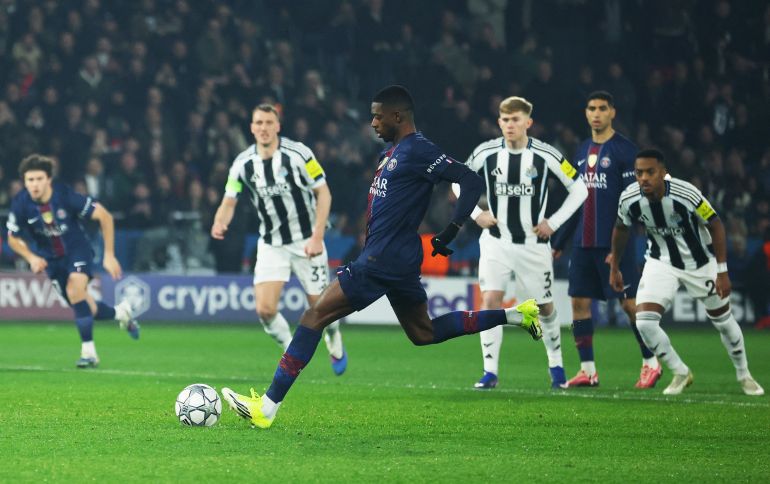
Barcelona leap into Champions League automatic qualifying positions with win in Copenhagen, but PSG face playoffs. Barcelona stormed back in the second half to claim a 4-1 victory over Copenhagen at the Camp Nou, sealing a top-eight finish and direct qualification for the last 16 of the Champions League. Goals from Robert Lewandowski, Lamine Yamal, Raphinha and Marcus Rashford on Wednesday ensured the Catalans finished fifth in the standings on 16 points, level with Manchester City, Chelsea and Sporting but ahead on goal difference. Recommended Stories list of 4 itemsend of list Copenhagen shocked the hosts early when 17-year-old Viktor Dadason slotted the opener past Joan Garcia in the fourth minute, but the second half began with a Barcelona fightback. Yamal set up Lewandowski to equalise in the 48th minute, before scoring himself in the 60th with a deflected effort that left Copenhagen keeper Dominik Kotarski helpless. Raphinha made it 3-1 from the penalty spot after Lewandowski was fouled, and Rashford added a fourth with a free kick in the 85th minute. “We all came here tonight thinking about getting into the top eight. We’re very happy with the win,” 18-year-old Yamal told Movistar Plus. “When you concede a goal in the Champions League, it’s very difficult to come back, but the team was very resilient and managed to turn it around. With the number of matches we play in a season, having two fewer matches leaves you feeling much better.” Despite the comfortable final result, Barcelona endured a frustrating first half, during which Copenhagen took a shock lead. Dadason stunned the home crowd after Mohamed Elyounoussi delivered a defence-splitting pass, allowing Dadason to outrun Barca’s high defensive line before rifling a low shot past keeper Garcia. Advertisement Clearly unsettled, Barcelona were wasteful in attack during the opening 45 minutes. Raphinha and Lewandowski spurned opportunities to equalise, while Eric Garcia came closest to levelling when his driven effort struck the crossbar in the 33rd minute. The second half, however, saw a completely transformed Barcelona. Barely three minutes after the restart, Yamal burst forward on a counterattack, darting past Copenhagen defenders before unselfishly squaring the ball for Lewandowski to slot into an empty net. The hosts seized control and upped the tempo, pinning Copenhagen deep inside their own half, and Barca took the lead on the hour mark through Yamal, whose deflected shot from inside the box looped over a stranded Kotarski and nestled into the far corner. Raphinha made it 3-1 from the penalty spot in the 69th minute after Lewandowski was brought down inside the area while attempting to shoot, and substitute Rashford wrapped up the scoring. Although Barcelona delivered a clinical attacking display, questions remain about their defensive organisation. They completed the league phase without a clean sheet and finished with the worst defence among the top 13 teams. Paris Saint-Germain’s Ousmane Dembele has his penalty saved by Newcastle United’s Nick Pope [Sarah Meyssonnier/Reuters] Dembele’s penalty miss costs PSG in 1-1 draw with Newcastle Ballon d’Or winner Ousmane Dembele had a night to forget, missing an early penalty and a golden chance from close range as defending champion Paris Saint-Germain drew 1-1 with Newcastle in the Champions League. The draw meant both sides finished out of the top eight places in the league table and failed to qualify automatically for the last 16. They will enter the playoffs instead. PSG was awarded an early penalty when Bradley Barcola got behind the defence down the left wing with less than one minute played. The ball hit Barcola’s arm following a tackle from a defender coming across, and then flew onto the arm of Lewis Miley right behind him. Miley seemed unsighted, and the handball appeared accidental, but referee Slavko Vincic awarded the spot kick following a short video review. Dembele aimed for the bottom right corner, but goalkeeper Nick Pope made a brilliant save. Pope was beaten in the eighth minute when Vitinha curled a shot into the same corner after being set up by Khvicha Kvaratskhelia on the edge of the penalty area. Dembele, who scored 35 goals overall last season, scooped the ball well over the crossbar from 10 metres out in the 40th minute when meeting a cross from the left. Advertisement Joe Willock equalised for the visitors in first-half stoppage time, and substitute Harvey Barnes missed a chance to win it for the visitors with moments left. Adblock test (Why?)
At least three people killed in Russian attacks on Ukraine
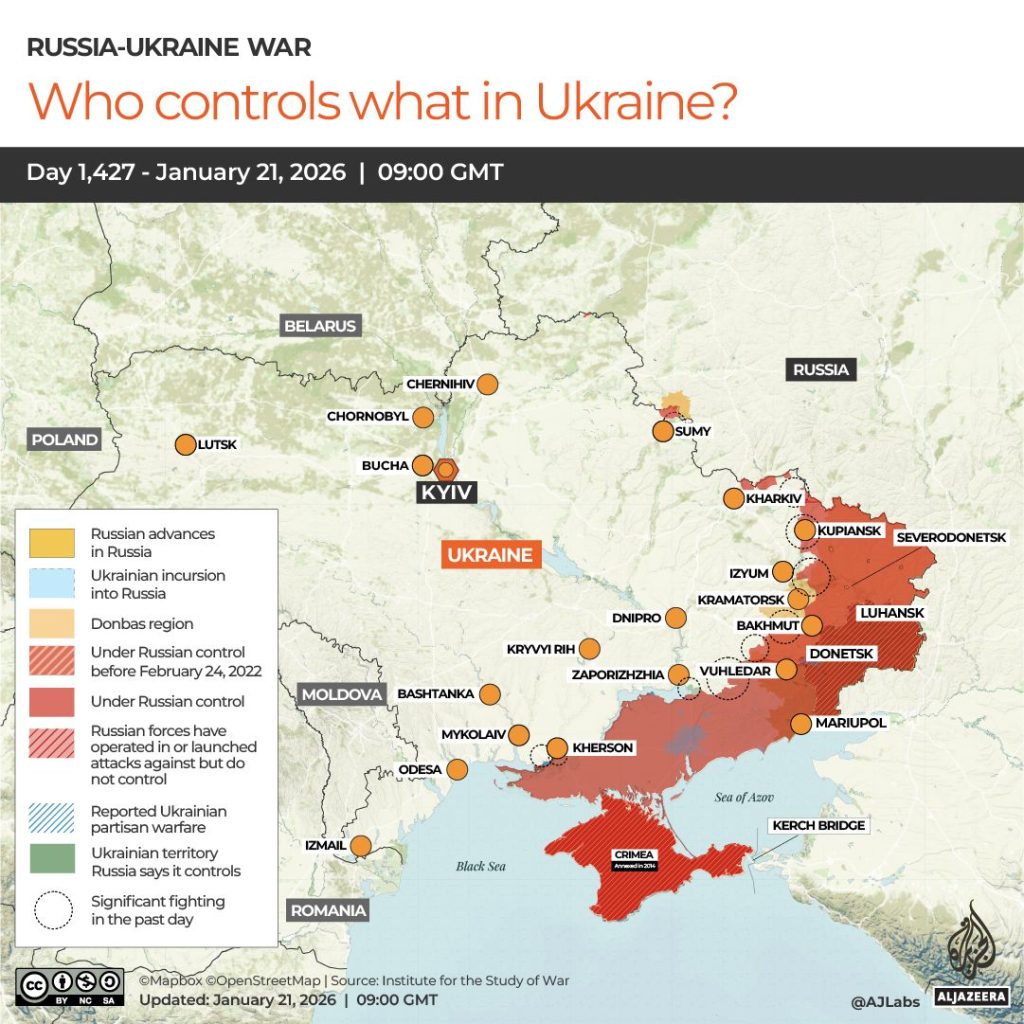
Russia used an Iskander-M ballistic missile and 146 drones in its attacks, according to Ukraine’s air force. By News Agencies Published On 28 Jan 202628 Jan 2026 Click here to share on social media share2 Share A Russian air attack has killed two people in Kyiv region’s Bilohorodska community, and a drone attack killed another person in central Ukraine’s Dnipropetrovsk region, according to local authorities. The deadly attacks came overnight on Wednesday, just hours after a deadly drone attack on a commuter train in northeastern Ukraine’s Kharkiv – an incident denounced as “terrorism” by President Volodymyr Zelenskyy. Recommended Stories list of 3 itemsend of list Also on Wednesday, three people were injured in a Russian drone attack on port infrastructure in the southern region of Odesa, according to Governor Oleh Kiper. In the capital, Kyiv, a 17-storey residential building was hit, causing minor damage to the roof and damaging windows on the upper floors, emergency services said. Several residential buildings in Kyiv remain without power due to earlier Russian attacks on the country’s energy grid. Russia attacked Ukraine overnight with an Iskander-M ballistic missile and 146 drones – 103 of them neutralised by air defences, Ukraine’s air force said. On Tuesday night, five people were confirmed dead and several others injured after a Russian drone hit a passenger train near Kharkiv city, Al Jazeera’s Audrey Macalpine said, reporting from Kyiv. “This attack has struck fears among Ukrainians,” Macalpine said, noting that the train was carrying about 100 passengers. “With the country’s airspace closed, people rely heavily on trains as a means of moving around the country,” she said. “And this is a culmination of weeks of threats on the security of the train system.” Advertisement In a statement, Zelenskyy said the attack in Kharkiv undermined peace efforts and urged allies to step up pressure on Moscow to end the war. “In any country, a drone strike on a civilian train would be viewed the same way – exclusively as terrorism,” Zelenskyy said on his Telegram channel. “The Russians have significantly increased their ability to kill, their ability to terrorise,” he said, while rallying the international community to put more “pressure” on Moscow to halt its deadly offensive amid ongoing negotiations for a ceasefire. “Russia must be held responsible for what it is doing,” Zelenskyy said. The attacks that have left many Ukrainians without power in freezing winter temperatures come after Russian and Ukrainian negotiators met in the United Arab Emirates last week for United States-brokered talks aimed at ending the conflict. The next round is expected to take place on February 1, according to Zelenskyy. Ukraine is asking partners, particularly the US, for strong security guarantees in the event of a peace deal that would prevent Russia from attacking again. A source familiar with internal discussions told the Reuters news agency on Tuesday that Washington has told Ukraine it must sign a peace deal with Russia to get US security guarantees. Adblock test (Why?)
Israel’s attacks on Gaza fertility clinics shatter dreams of parenthood
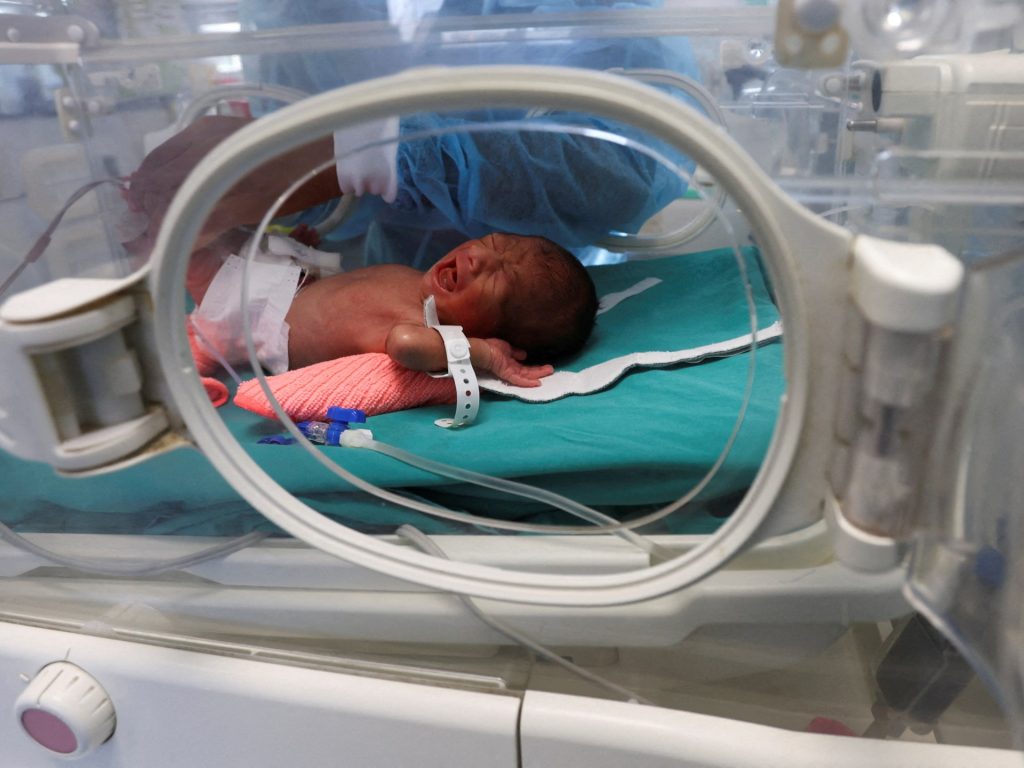
Israel’s war has devastated the enclave’s reproductive health system; advocates call it a genocidal measure. Gaza City – Maysera al-Kafarna, a Palestinian woman in Gaza, sorts through blue baby overalls brought for the child she was supposed to have. But her dreams of motherhood have been dashed by Israel’s genocidal war on Gaza, which ravaged the enclave’s healthcare system that saves lives, as well as the fertility centres that plan them. Recommended Stories list of 3 itemsend of list After years of trying, al-Kafarna and her husband turned to in-vitro fertilisation (IVF). Their embryos were frozen in a fertility centre, waiting for the war to end, but the clinic was attacked by Israel. “We had four viable embryos stored there in the first months of the war. We were shocked to learn they had been destroyed when the clinic was attacked,” al-Kafarna told Al Jazeera. “It was deeply painful. We felt like we had lost a part of ourselves. We were waiting for a chance to have our baby.” Medical officials in Gaza say Israel has destroyed nine out of 10 fertility clinics in the territory. In addition, embryos that remain are still in danger, despite the ceasefire, due to fuel shortages and a lack of liquid nitrogen to keep them at the required temperature. Rights advocates say Israel’s attacks on reproductive health in Gaza are a textbook implementation of genocidal policies, as defined by the United Nations. Last year, UN investigators concluded that Israeli attacks on fertility clinics and maternity wards were part of Israel’s push to destroy the Palestinian people. The 1948 UN Convention lists “imposing measures intended to prevent births within the group” as one of five acts it classified as genocidal. Advertisement In September 2024, a UN Commission of Inquiry found that Israel had engaged in four of the five acts during its war on Gaza, including efforts to prevent births. “Attacks on healthcare facilities, including those offering sexual and reproductive healthcare and services, have affected about 545,000 women and girls who are of reproductive age in Gaza,” the UN investigators wrote in their report. They specifically reviewed an Israeli attack on Al-Basma IVF clinic in Gaza City in December 2023 that destroyed thousands of embryos, sperm samples and other reproductive material. “The commission found that the Israeli authorities knew that the medical centre was a fertility clinic and that they intended to destroy it,” the UN inquiry said. “Therefore, the Commission concluded that the destruction of the Al-Basma IVF clinic was a measure intended to prevent births among Palestinians in Gaza.” The Gaza Ministry of Health reported a 41 percent decrease in births in Gaza in the first half of 2025 compared with the previous three years. Beyond the direct attacks on reproductive healthcare facilities, Israel’s blockade on medical supplies and food has further harmed newborns and birth rates. “Inability to access medical care and proper nutrition harmed reproductive capacity by causing infertility, miscarriage, complications, and maternal death for women, as well as poor health outcomes for newborns,” a study by Physicians for Human Rights said. Despite the dire conditions that persist, fertility doctor Abdel Nasser al-Kalhout said he hopes to resume his work as soon as conditions allow it. “We hope that after the war ends, we can start again, restoring hope for people who lost their embryos and for the couples whose treatment began but couldn’t continue because of the war,” al-Kalhout told Al Jazeera. Adblock test (Why?)
Tech giant ASML announces record orders in boost for AI boom

Dutch firm says it expects strong growth in 2026, countering fears of an investment bubble. Tech giant ASML has reported a quarterly record in orders of its chip-making equipment, boosting hopes for the sustainability of the artificial intelligence boom and countering fears of an investment bubble. The Dutch firm said on Wednesday that it booked orders worth 13.2 billion euros ($15.8bn) in the final quarter of 2025, more than half of which were for its most advanced extreme ultraviolet (EUV) lithography machines. Recommended Stories list of 4 itemsend of list ASML logged orders worth 7 million euros during the same period the previous year. Net sales came to 9.7 billion euros in the October-December period, ASML said, taking sales for all of 2025 to 32.7 billion euros. Net profit for the year was 9.6 billion euros, up from 7.6 billion euros in 2024. The Veldhoven-based company forecast net sales of between 34 billion euros and 39 billion euros in 2026. ASML Chief Executive Officer Christophe Fouquet said the company’s chip-making customers had conveyed a “notably more positive assessment” of the market situation in the medium term based on expectations of strong AI-related demand. “This is reflected in a marked step-up in their medium-term capacity plans and in our record order intake,” Fouquet said in a statement. “Therefore, we expect 2026 to be another growth year for ASML’s business, largely driven by a significant increase in EUV sales and growth in our installed base business sales.” Fouquet also said the company would cut about 1,700 jobs, most of them at the leadership level, amid concerns work processes had become “less agile”. Advertisement “Engineers in particular have expressed their desire to focus their time on engineering, without being hampered by slow process flows, and restore the fast-moving culture that has made us so successful,” Fouquet said. The proposed cuts, which would affect positions in the Netherlands and the United States, represent about 4 percent of ASML’s 44,000-strong global workforce. ASML holds an effective monopoly on the production of machinery used by TSMC, Samsung Electronics, and Intel to make the most advanced AI chips. The company sells only about 50 of its extreme ultraviolet (EUV) lithography machines each year, with each unit costing about 250 million euros. ASML’s share price surged on Wednesday, with its stock up nearly 6 percent as of 9.30am local time. “ASML’s latest results suggest the AI boom is still in full swing, with strong orders and a bullish outlook,” said Russ Mould, investment director at AJ Bell. “However, job cuts in the business would suggest it is not getting carried away with the strength of current trading.” ASML’s restructuring “looks like a sharper focus on efficiencies and different ways of working, rather than saying there isn’t enough work for existing staff to do,” Mould added. “Nonetheless, it’s a sign that the AI craze might be trying to catch its breath.” Tech giants such as Meta, OpenAI, Nvidia and Oracle have poured billions of dollars into AI in the expectation that the technology will deliver dramatic changes to how people work and live. Global AI-related spending is forecast to hit $2.53 trillion in 2026 and $3.33 trillion in 2027, according to projections by technology insights firm Gartner. The investment boom has propelled the US stock market to record highs, stoking concerns about the sustainability of huge spending on a technology whose promise remains largely unrealised. Adblock test (Why?)
Meet Hamza Al-Rubaie, one of Gaza’s 17,000 orphaned children
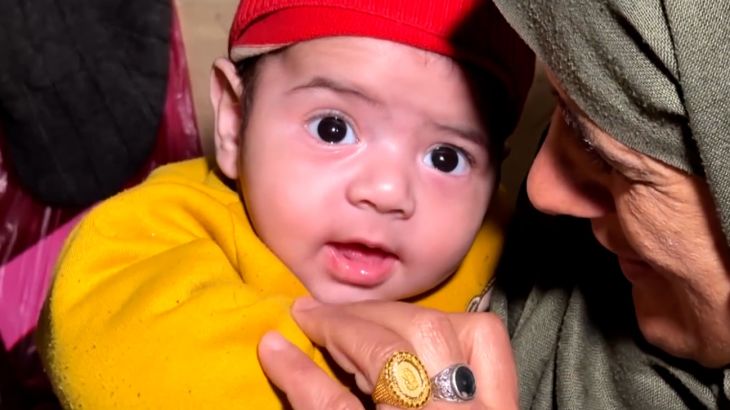
Toggle Play Meet Hamza Al-Rubaie, one of Gaza’s 17,000 orphaned children NewsFeed Hamza Al-Rubaie is one of at least 17,000 children to have lost both parents in Israel’s genocidal war on Gaza, but his tragedy doesn’t end there. His three siblings were also killed, leaving an aunt to raise the young boy. Al Jazeera’s Moath al-Kahlout has their story. Published On 27 Jan 202627 Jan 2026 Click here to share on social media share2 Share Adblock test (Why?)
Gauff blasts broadcasters over privacy after Australian Open racket smash
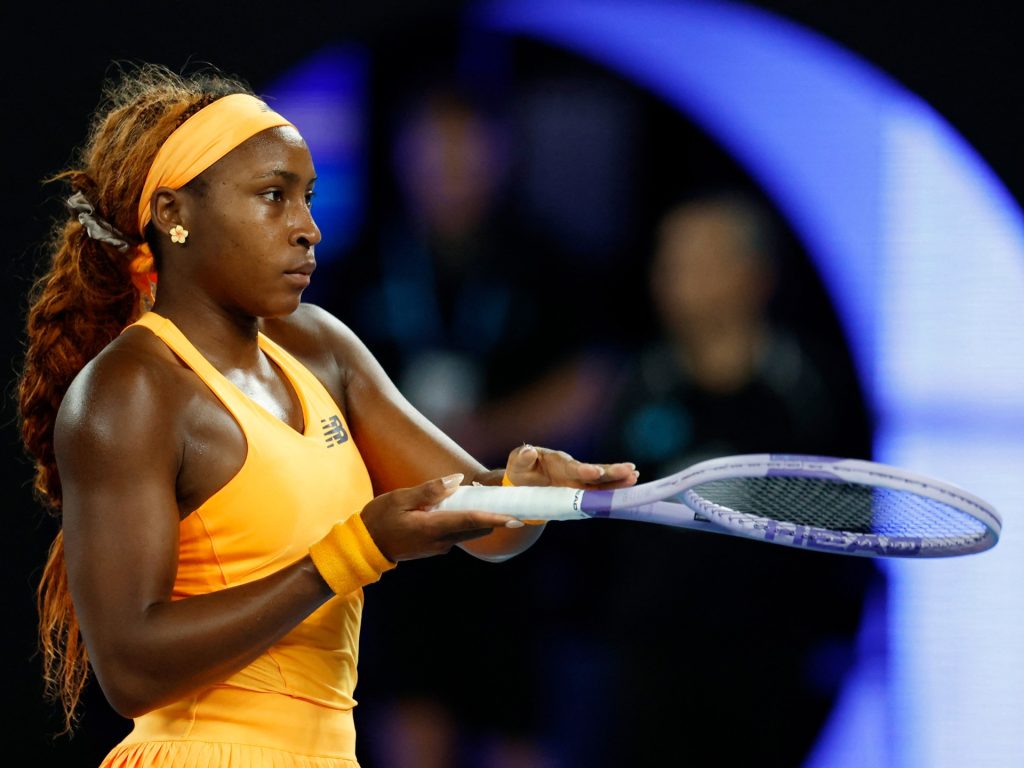
Coco Gauff, who lost to Elina Svitolina in the quarterfinals of the Australian Open, was filmed smashing her racket. Published On 27 Jan 202627 Jan 2026 Click here to share on social media share2 Share Coco Gauff looked for a place without cameras to channel her frustration after a straight-sets loss to Elina Svitolina in the Australian Open quarterfinals, but was unhappy to find out that a video of her smashing her tennis racket on the floor was broadcast to viewers worldwide. Twice Grand Slam winner Gauff was visibly upset with her performance on Tuesday, as she committed 26 unforced errors and lost the match 6-1 6-2 in 59 minutes. Recommended Stories list of 4 itemsend of list The American third seed went behind a wall near the match call area inside the venue, where a camera caught her hitting the racket repeatedly against the floor. “I tried to go somewhere where there were no cameras,” the 21-year-old told reporters. “I kind of have a thing with the broadcast. I feel like certain moments – the same thing happened to Aryna [Sabalenka] after I played her in the final of the US Open – I feel like they don’t need to broadcast.” World number one Sabalenka, who will take on Svitolina in the semifinals, had smashed her racket in a training area after losing to Gauff in the 2023 US Open final, and video of the incident was also made public. “I tried to go somewhere where they wouldn’t broadcast it, but obviously they did. Maybe some conversations can be had, because I feel like at this tournament the only private place we have is the locker room,” Gauff added. “I think for me, I know myself, and I don’t want to lash out on my team. They’re good people. They don’t deserve that, and I know I’m emotional,” Gauff said. “I just took the minute to go and do that. I don’t think it’s a bad thing. Like I said, I don’t try to do it on court in front of kids and things like that, but I do know I need to let out that emotion. Advertisement “Otherwise, I’m just going to be snappy with the people around me, and I don’t want to do that, because like I said, they don’t deserve it. They did their best. I did mine. Just need to let the frustration out.” Adblock test (Why?)
Real Madrid visit Benfica: UEFA Champions League – all to know
Who: Benfica vs Real MadridWhat: UEFA Champions LeagueWhere: Estadio da Luz, Lisbon, PortugalWhen: Wednesday, January 27 at 8pm (20:00 GMT)How to follow: We’ll have all the buildup on Al Jazeera Sport from 17:00 GMT in advance of our text commentary stream. The league phase of this season’s UEFA Champions League (UCL) reaches its finale on Wednesday with some of Europe’s biggest names facing crunch ties – no bigger perhaps than Jose Mourinho leading Benfica against his former club Real Madrid. Recommended Stories list of 4 itemsend of list Both sides are in need of a win if they are achieve their contrasting aims at this stage, with Benfica facing elimination from competing on the continent this season. Al Jazeera Sport takes a look at a tie that has so much riding on it, including some small personal pride for one of Real’s most successful coaches. What are Real Madrid’s Champions League chances? Real have endured a turbulent season, with their coach Xabi Alonso sacked after only seven months in charge, but a serious challenge can still be mounted for a Spanish and European double. Los Blancos find themselves hot on the heels of Barcelona in La Liga, having briefly claimed top spot when they beat Villarreal on Saturday, only for their rivals to reclaim the summit on Sunday. In the Champions League, a draw may be enough to secure their automatic passage to the last 16, but only a win will guarantee it. What are Benfica’s Champions League chances? A win is an absolute must for Benfica, but it may not be enough to secure a place in the playoffs given the Portuguese giant’s rough run this season. Advertisement The Lisbon-based club currently sit in 29th position, out of the 36 competing teams, two points from claiming one of the 16 playoff spots. A minus four goal difference will also hamper Benfica as they seek to climb above five teams to avoid elimination from the competition. The domestic league season has seen them go unbeaten to date, but they have drawn six more games than leaders Porto, who are 10 points clear and similarly unbeaten. How does Champions League qualification work from the league phase? The top eight teams automatically qualify for the round of 16; the following 16 teams enter two-legged playoffs. The bottom 12 teams, of which Benfica are currently one, drop out of all continental competition this season. Real are currently third with 15 points, but the 10 teams immediately below them all have the chance to reach 16 points – which could see Los Blancos slide dramatically if they lose, while a draw will leave them sweating on other results. When was Jose Mourinho manager of Real Madrid? The former Chelsea, Inter Milan and Manchester United manager was in charge at Real for three seasons following his appointment in May 2010. It followed huge success at Porto, Chelsea and Inter Milan, where he won the Champions League with the former and the latter, while also securing a first top-flight title in 40 years for Chelsea. Mourinho only took over at Benfica in September, replacing Bruno Lage as manager after a slow start to the season. What was Jose Mourinho’s record at Real Madrid and what did he win? Mourinho finished second to Barcelona in his first season in charge, despite Cristiano Ronaldo leading the La Liga scoring charts with 40 goals that season. Lionel Messi smashed in 50 goals the following season, but it was Real’s Portuguese pair that emerged smiling with Real’s first league title in three years – Barca claimed the crown in each of those seasons. Mourinho’s stint at Bernabeu came to an end the following season when Barcelona won the title by 15 points – it remains the biggest winning margin in the competition’s history. How many times have Real Madrid and Benfica won the Champions League? Real are the record winners of Europe’s premier club competition with 15 titles to their name. The last coming in 2024. Benfica have lifted the trophy on two occasions, and both of those came in consecutive years. In what was regarded as Benfica’s golden era, Portuguese legend Eusebio helped the team to wins against Barcelona in 1961, and Real Madrid in 1962. A hat-trick from Hungary’s finest export, Ferenc Puskas, could not save Real, with Benfica running out 5-3 winners – which included a double from Eusebio. Advertisement When did Real Madrid last face Benfica in the Champions League? The two European giants have not met since March 17, 1965, when Real won 2-1 in Madrid. It was not enough to overturn their knockout tie after Benfica claimed the first leg 5-1 in Lisbon three weeks earlier. Head-to-head This is staggeringly only the fourth meeting between two of the biggest clubs from Spain and Portugal. Benfica edge the matches 2-1, with the first meeting between the clubs coming in the final in May 1962. Benfica team news Alexander Bah, Samuel Soares, Dodi Lukebakio and Henrique Araujo all remain absent through injury. Richard Rios is close to a return, but this match may come too soon. Sidny Lopes Cabral and Rafa Silva, who both arrived in the January transfer window, are ineligible to feature. Benfica predicted starting lineup (4-2-3-1) Trubin; Dedic, Araujo, Otamendi, Dahl; Aursnes, Barrenechea; Prestianni, Barreiro, Sudakov; Pavlidis Real Madrid team news Real Madrid welcome back Aurelien Tchouameni, who sat out Saturday’s win against Villarreal due to suspension. Trent Alexander-Arnold’s thigh, Antonio Rudiger’s knee, and Eder Militao and Ferland Mendy’s hamstrings mean the Spaniards are light across the backline. Real Madrid predicted starting lineup (4-3-3) Courtois; Valverde, Asencio, Huijsen, Carreras; Tchouameni, Bellingham, Guler; Mastantuono, Mbappe, Vinicius Adblock test (Why?)