

Russia-Ukraine war: List of key events, day 1,431
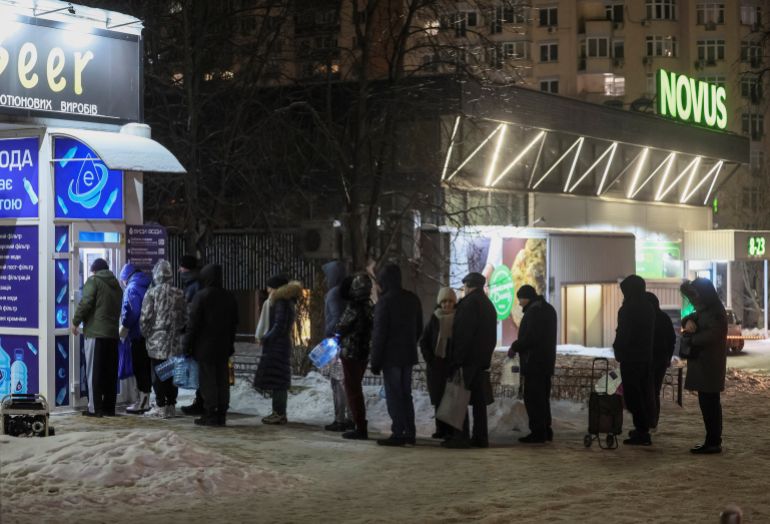
These are the key developments from day 1,431 of Russia’s war on Ukraine. By News Agencies Published On 25 Jan 202625 Jan 2026 Click here to share on social media share2 Share Here is where things stand on Sunday, January 25: Fighting Russian forces launched another major attack on Ukraine overnight on Saturday, killing at least one person and wounding four in the capital, Kyiv, and leaving 1.2 million properties without power nationwide, according to officials. Kyiv’s military administration reported strikes in at least four districts in the capital and said a medical facility was among the buildings damaged. Ukrainian Prime Minister Yulia Svyrydenko said Russia targeted the capital and four regions in the country’s north and east. Kyiv Mayor Vitali Klitschko said the worst-affected in the capital was the northeastern suburb of Troyeshchyna, where 600 buildings were without power, water and heat. Ukraine’s Air Force said Russia unleashed 375 drones and 21 missiles, including two of its rarely deployed Tsirkon ballistic missiles. At least 30 people, including a child, were also wounded during the same attack in the country’s second-largest city of Kharkiv. Mayor Ihor Terekhov said 25 drones had hit several districts in the city. Among those struck was a dormitory for displaced people and two medical facilities, including a maternity hospital, Terekhov wrote on Telegram. Ukrainian Minister of Energy Denys Shmyhal wrote on Telegram late on Saturday that more than 800,000 Kyiv households were still without power, as were a further 400,000 in the Chernihiv region, north of the capital. Deputy Prime Minister Oleksii Kuleba said more than 3,200 buildings in Kyiv remained without heating in the late evening, down from 6,000 in the morning. Night-time temperatures were hovering around -10 degrees Celsius (14 degrees Fahrenheit). Ukrainian Minister of Foreign Affairs Andrii Sybiha denounced the attack as “barbaric” in a statement posted on X. He accused Russian President Vladimir Putin of acting “cynically” for launching the attack amid United States-led trilateral talks on the war in the United Arab Emirates. In Russia, Ukrainian forces launched a “massive” attack on the border region of Belgorod on Saturday, damaging energy infrastructure, but causing no casualties. Regional Governor Vyacheslav Gladkov described the incident as “the most massive shelling of the town of Belgorod”. Gladkov said the attack damaged “energy sites” and that fragments of a downed drone triggered a fire in a courtyard of a building. Reports from the area also said the shelling and sounds of explosions had gone on for some time. The Russian Ministry of Defence said its forces had completed the takeover of the village of Starytsya in Ukraine’s northeastern Kharkiv region, close to the border with Russia. The General Staff of Ukraine’s military said Russian forces had launched six attacks on an area including Starytsya. But it made no acknowledgement that the village had been captured by Russian forces. Diplomacy Advertisement Ukraine and Russia ended their second day of US-brokered talks in Abu Dhabi without a peace deal, with more talks expected next weekend, amid the massive Russian strikes across Ukraine. Ukrainian President Volodymyr Zelenskyy wrote on X following the meeting that “the central focus” of the discussions was “the possible parameters for ending the war”, but he did not say if the negotiators were close to a deal. More discussions are expected next Sunday in Abu Dhabi, according to a US official who spoke to reporters immediately after the talks. The official, who requested anonymity, said negotiators “saw a lot of respect” during the discussions, “because they were really looking to find solutions”. The US official also voiced hopes for further talks, possibly in Moscow or Kyiv, beyond next week’s discussions in Abu Dhabi, adding that the next step would be a possible bilateral discussion between Putin and Zelenskyy, or a trilateral meeting that includes US President Donald Trump. An unnamed UAE government spokesperson told the Reuters news agency that there was face-to-face engagement between Ukraine and Russia in Abu Dhabi – rare in the almost four-year-old war triggered by Russia’s full-scale invasion – and said negotiators tackled “outstanding elements” of Trump’s peace framework. The Russian Ministry of Foreign Affairs also hinted at the prospects of additional talks with Ukrainian delegations in Istanbul after negotiations in Abu Dhabi, adding that Moscow remains open to a continuation of dialogue, the Russian state RIA news agency reported. Residents stand in line to fill bottles with drinking water, during a power blackout after critical civil infrastructure was hit by Russian missile and drone attacks in the Ukrainian capital, Kyiv [Gleb Garanich/Reuters] Adblock test (Why?)
Myanmar holds final election round, military-backed party set to win
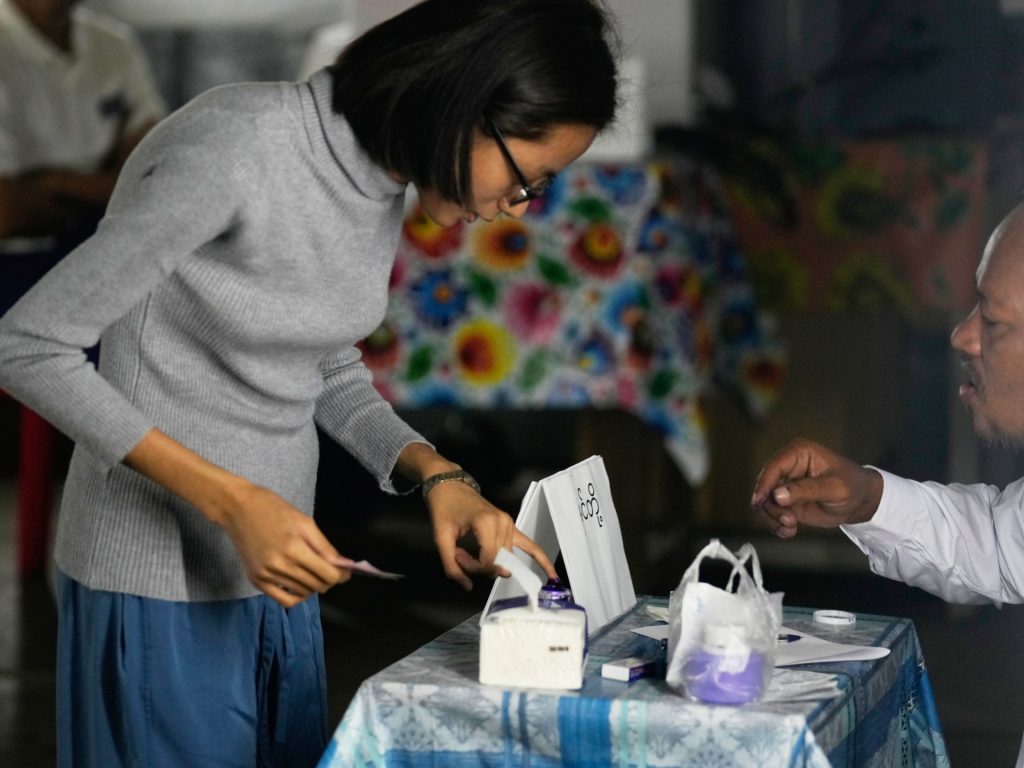
Polls have opened in Myanmar for the third and final round of a controversial general election, with a military-backed party on course for a landslide win amid a raging civil war. Voting began in 60 townships, including in the cities of Yangon and Mandalay, at 6am local time on Sunday (23:30 GMT, Saturday). Recommended Stories list of 3 itemsend of list Critics say the polls are neither free nor fair, and are designed to legitimise military rule in Myanmar, nearly five years after the country’s generals ousted the elected government of Aung San Suu Kyi, leading to a civil war that has killed thousands and displaced more than 3.5 million people. Aung San Suu Kyi remains in detention and, like several other opposition groups, her National League for Democracy (NLD) has been dissolved, tilting the political playing field in favour of the military-backed Union Solidarity and Development Party (USDP), which is leading in the polls. So far, the USDP has secured 193 out of 209 seats in the lower house, and 52 out of 78 seats in the upper house, according to the election commission. That means that along with the military, which is allocated 166 seats, the two already hold just under 400 seats, comfortably surpassing the 294 needed to come to power. Seventeen other parties have won a small number of seats in the legislature, ranging from one to 10, according to the election commission. Senior General Min Aung Hlaing, who heads the current military government, is widely expected by both supporters and opponents to assume the presidency when the new parliament meets. Advertisement The military has announced that the parliament will be convened in March, and the new government will take up its duties in April. While the military has pledged that the election will return power to the people, rights monitors said the run-up was beset with coercion and the crushing of dissent, warning that the vote will only tighten the military’s grip on power. A new Election Protection Law imposed harsh penalties for most public criticism of the polls, with the authorities charging more than 400 people recently for activities such as leafleting or online activity. Ahead of the third round of voting, Tom Andrews, the UN special rapporteur on human rights in Myanmar, also called for the rejection of its outcome, calling it “fraudulent”. “Only an illegitimate government can emerge from an illegitimate election,” he wrote on X on Saturday. “As Myanmar’s election ends, the world must reject it as fraudulent while rejecting what follows as simply military rule in civilian clothing.” Malaysian Minister of Foreign Affairs Mohamad Hasan told Parliament on Tuesday that the Association of Southeast Asian Nations (ASEAN), of which Myanmar is a member, did not send observers and would not certify the election, citing concerns over the lack of inclusive and free participation. His comments were the first clear statement that the 11-member regional bloc will not recognise the election results. In Myanmar’s second city of Mandalay, Zaw Ko Ko Myint, a 53-year-old teacher, cast his vote at a high school around dawn. “Although I do not expect much, we want to see a better country,” he told the AFP news agency. “I feel relieved after voting, as if I fulfilled my duty.” The previous two phases of the election have been marked by low voter turnout of about 55 percent, well below the turnout of about 70 percent recorded in Myanmar’s 2020 and 2015 general elections. Official results are expected late this week, but the USDP could claim victory as soon as Monday. Aung San Suu Kyi’s NLD thrashed the USDP in the last elections in 2020, before the military seized power on February 1, 2021. According to the Assistance Association for Political Prisoners, which monitors human rights abuses in the country, at least 7,705 people have been killed since the outbreak of the civil war, while 22,745 remain detained. But the Armed Conflict Location & Event Data Project, a monitoring group that tallies media reports of violence, estimates more than 90,000 have been killed on all sides of the conflict. Advertisement Adblock test (Why?)
Iran rejects UN rights resolution condemning protest killings
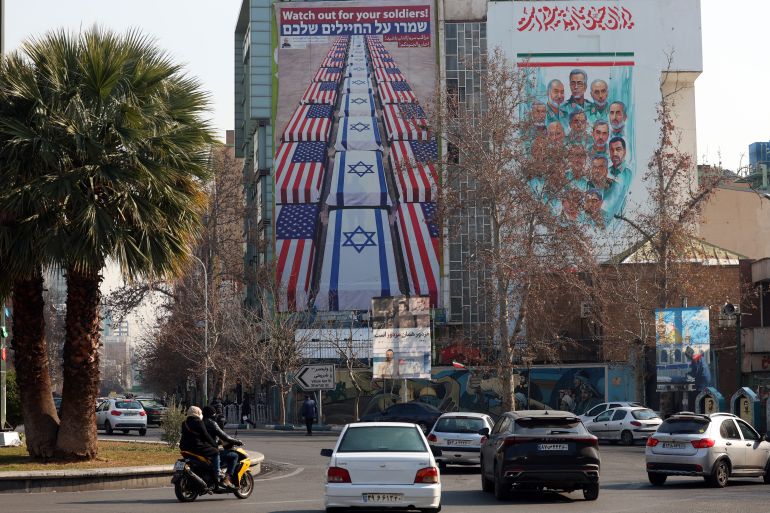
Tehran, Iran – The Iranian state has rejected a resolution by the United Nations’ Human Rights Council that strongly condemned the “violent crackdown on peaceful protests” by security forces that left thousands dead. After a detailed meeting and discussions in Geneva on Friday, 25 members of the council, including France, Japan and South Korea, voted in favour of the censure resolution. Recommended Stories list of 3 itemsend of list Seven votes against, including from China, India and Pakistan, as well as 14 abstentions, among others from Qatar and South Africa, failed to stop the resolution. The human rights council called on Iran to stop the arrests of people in connection with the protests, and to take steps to “prevent extrajudicial killing, other forms of arbitrary deprivation of life, enforced disappearance, sexual and gender-based violence” and other actions violating its human rights obligations. Iran said that the Western-led sponsors of the emergency meeting on Friday had never genuinely cared for human rights in Iran, or else they would not have imposed sanctions that have devastated the Iranian population over the past decade. Ali Bahreini, Iran’s envoy in the meeting, reiterated the state’s claim that 3,117 people were killed during the unrest, 2,427 of whom were killed by “terrorists” armed and funded by the United States, Israel and their allies. “It was ironic that states whose history was stained with genocide and war crimes now attempted to lecture Iran on social governance and human rights,” he said. The US-based Human Rights Activists News Agency (HRANA) says it has confirmed at least 5,137 deaths during the protests, and is investigating 12,904 others. Advertisement UN special rapporteur on Iran, Mai Sato, has said the death toll could reach 20,000 or more as reports from doctors from inside Iran emerge. Al Jazeera has been unable to independently verify the figures. UN human rights chief Volker Turk told the council that “the brutality in Iran continued, creating conditions for further human rights violations, instability and bloodshed” weeks after the killings on January 8 and January 9, when a communications blackout was also enforced. Turk pointed out that executions for murder, drug-related and other charges continue across Iran, with the state executing at least 1,500 people in 2025, marking an enormous 50 percent increase compared with the year before. Payam Akhavan, a professor and former UN prosecutor of Iranian-Canadian nationality who was at Friday’s meeting as a civil society representative, called the killings “the worst mass-murder in the contemporary history of Iran”. He said as a prosecutor at the International Criminal Tribunal in the Hague, he had helped draft the indictment for the Srebrenica genocide in which some 8,000 Bosniaks were killed in July 1995. “By comparison, at least twice that number had been killed in Iran in half the time. This was an extermination,” he said. The adopted UN council resolution also extended the mandate of the special rapporteur for another year, while adding two more years to the mandate of the independent fact-finding mission that was formed to investigate killings and rights abuses during Iran’s nationwide protests in 2022 and 2023. More videos emerge despite internet blackout Meanwhile, the internet blackout continues to be enforced amid growing frustration and anger from the public and businesses alike. Global internet observatory Netblocks reported that international internet remained effectively blocked on Saturday despite brief moments of connectivity. Some users have been able to overcome the digital blackout over recent days for short periods of time using a variety of proxies and virtual private networks (VPNs). The limited number of users who have managed to get online, whether by using a combination of circumvention tools or leaving the country’s borders, continue to upload horrifying footage of killings during the protests. International human rights bodies like Amnesty International and Human Rights Watch have attested that many of the reviewed videos show state forces firing live ammunition at protesters, including from heavy machineguns. The state rejects all such accounts, claiming that security forces only fired at “terrorists” and “rioters” who attacked government offices and burned public property. Advertisement Threat of war looms The back and forth over one of Iran’s bloodiest chapters since its 1979 revolution continues as the threat of war looms large over the embattled 90-million-strong nation once again. US President Donald Trump has repeatedly threatened to intervene in Iran if it kills protesters. Washington is moving the USS Abraham Lincoln supercarrier, along with its strike group of supporting vessels, towards the Middle East in a move that has raised fears of more US strikes on Iran in the aftermath of the 12-day war with Israel in June. More US military aircraft, including fighter jets, have also been deployed to the region despite interventions from regional powers in an attempt to prevent an escalation. Iranians drive near an anti-US and Israel banner hanging at the Palestine square in Tehran, Iran, January 24, 2026 [Abedin Taherkenareh/EPA] Top Iranian authorities continue to send defiant messages to US President Donald Trump amid the rapid military buildup. “He [Trump] certainly says many things,” Majid Mousavi, the new aerospace chief of the Islamic Revolutionary Guard Corps (IRGC), told state television on Saturday. “He can be certain that we will respond to him in the field of battle”. “He can say better things even if he is trying to escape the wishes of others who want to impose things on him,” said Ali Shamkhani, a top security official and representative of Supreme Leader Ayatollah Ali Khamenei in the newly formed Supreme Defence Council. One of Iran’s top judicial authorities also shot back at Trump after the US president last week called for the end of Khamenei’s 37-year-rule in the country. “These acts of insolence and audacity are, in our view, tantamount to a declaration of all-out war, and based on this approach, in the event of any aggression, US interests around the world will be exposed to threat by supporters of the Islamic Republic of Iran,” said Mohammad Movahedi, the hardline cleric who heads
Bangladesh out of T20 World Cup after ICC’s refusal to change venues
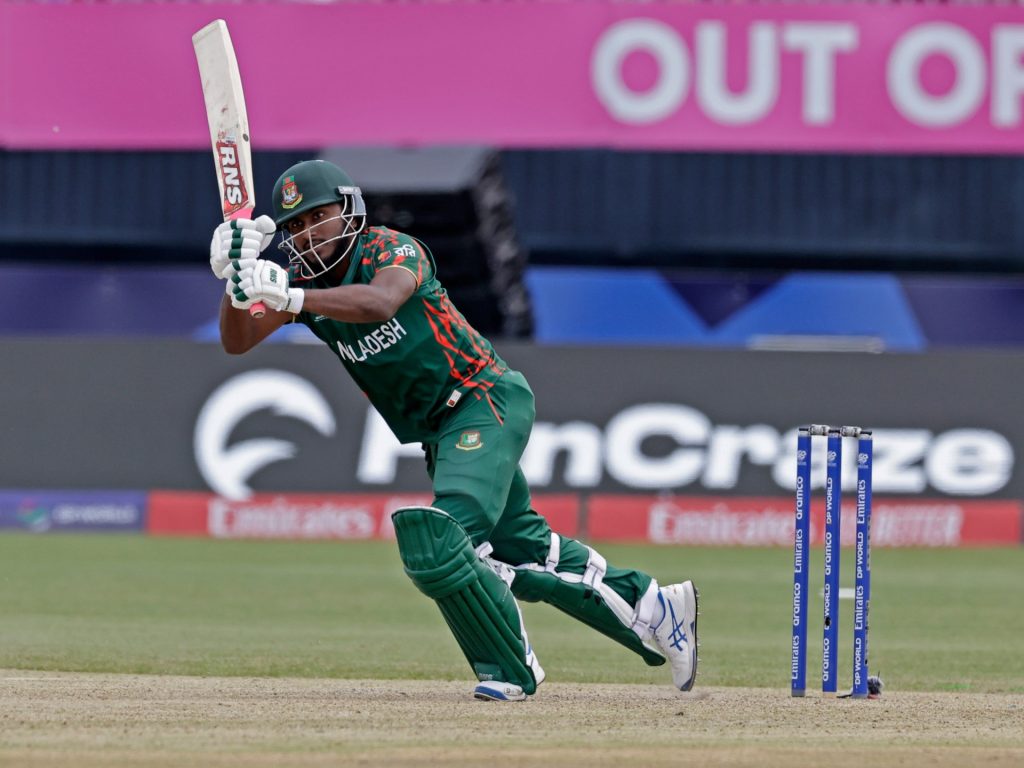
Scotland replace Bangladesh after the BCB’s request to relocate its games from India is turned down by the ICC. The International Cricket Council (ICC) has kicked Bangladesh out of the upcoming T20 World Cup and replaced them with Scotland because of an impasse over security concerns that Bangladesh had raised about playing in India. Following weeks of deliberation and dialogue, the ICC said on Saturday that Bangladesh will be replaced in Group C of the tournament. Recommended Stories list of 4 itemsend of list “Scotland will replace Bangladesh in the ICC Men’s T20 World Cup 2026 after the Bangladesh Cricket Board (BCB) refused to participate in the tournament per the published match schedule,” the ICC said in its statement. “The ICC, in the absence of any credible or verifiable security threat to the Bangladesh national team in India, rejected the BCB’s demand to move its matches from India to Sri Lanka,” it added. The tournament, which is due to begin on February 7, is being co-hosted by India and Sri Lanka, but all of Bangladesh’s group fixtures were allocated to venues in India. The Tigers were scheduled to play on the opening day of the tournament, on February 7, when they would have faced the West Indies at Eden Gardens, Kolkata. They were set to play two other group-stage games at the same venue before their final Group C fixture against Nepal at the Wankhede Stadium in Mumbai. However, the BCB requested the ICC, on January 4, move their fixtures out of India. The move followed the abrupt removal of star fast bowler Mustafizur Rahman from the Indian Premier League (IPL) upon instructions from the Board of Control for Cricket in India (BCCI), due to the ongoing political tensions between the two nations. Advertisement The ICC said its decision followed “an extensive process to address concerns raised by the BCB regarding the hosting of its scheduled matches in India”. “Over a period of more than three weeks, the ICC engaged with the BCB through multiple rounds of dialogue conducted in a transparent and constructive manner, including meetings held both via video conference and in-person,” the ICC’s statement went on to add. “As part of this process, the ICC reviewed the concerns cited by the BCB, commissioned and considered independent security assessments from internal and external experts, and shared detailed security and operational plans covering federal and state arrangements, as well as enhanced and escalating security protocols for the event. These assurances were reiterated at several stages, including during discussions involving the ICC Business Corporation (IBC) Board.” The game’s governing body said its assessments concluded that there was “no credible or verifiable security threat to the Bangladesh national team, officials or supporters in India”. “In light of these findings, and after careful consideration of the broader implications, the ICC determined that it was not appropriate to amend the published event schedule. The ICC also noted the importance of preserving the integrity and sanctity of the tournament schedule, safeguarding the interests of all participating teams and fans, and avoiding the establishment of precedents that could undermine the neutrality and fairness of ICC events.” The ICC’s decision comes two days after the BCB reiterated its stance on not travelling to India for its group matches. The ICC asked the BCB to review its decision with the Bangladeshi government and give a response within a day, following which a final decision would be made. “Following its meeting on Wednesday, the IBC Board requested the BCB to confirm, within a 24-hour timeframe, whether Bangladesh would participate in the tournament as scheduled,” the ICC said. “As no confirmation was received within the stipulated deadline, the ICC proceeded in line with its established governance and qualification processes to identify a replacement team.” Scotland will now play in the T20 World Cup as they are the highest-ranked T20I side not to originally qualify for the tournament. “We want to play the World Cup, but we won’t play in India. We will keep fighting,” BCB President Aminul Islam told reporters. The BCB chief said the ICC would stand to lose if Bangladesh were expelled from the tournament. Advertisement “The ICC will miss out on 200 million people watching the World Cup,” he said. Adblock test (Why?)
Trump threatens 100 percent tariff on Canada over China deal
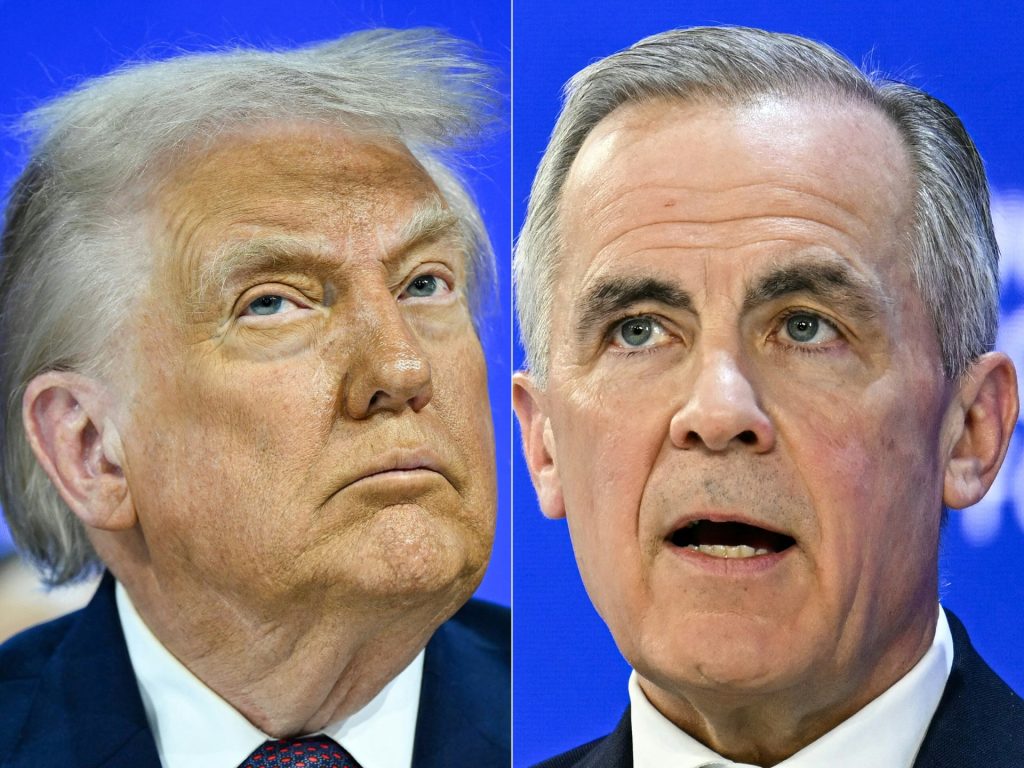
Donald Trump’s threat comes after Canada reached deal with China last week on trade of agriproducts, electric vehicles. Montreal, Canada – United States President Donald Trump has threatened to impose a 100 percent tariff against Canada if Canadian Prime Minister Mark Carney moves ahead with an announced trade deal with China. In a statement shared on Truth Social on Saturday morning, Trump said Carney is “sorely mistaken” if he thinks Canada can become a “‘Drop Off Port’ for China to send goods and products into the United States”. Recommended Stories list of 3 itemsend of list “If Canada makes a deal with China, it will immediately be hit with a 100% Tariff against all Canadian goods and products coming into the U.S.A,” Trump wrote in the post, which referred to Carney as “governor” instead of prime minister. Carney’s office did not immediately respond to Al Jazeera’s request for comment on Trump’s remarks. The threat comes as tensions mounted between Canada and the US this week after Carney delivered an address at the World Economic Forum in Davos, Switzerland, that was widely seen as a rebuke of the Trump administration’s policies. “We are in the midst of a rupture, not a transition,” Carney said in the speech, urging the world’s “middle powers” to deepen cooperation in the face of coercion and threats. The prime minister’s remarks drew the ire of Trump, who responded by saying that “Canada lives because of the United States”. “Remember that, Mark, the next time you make your statements,” he said in Davos. Trump also revoked an invitation for Carney to join his so-called “Board of Peace” this week. The US president has been threatening to impose steep levies on Canadian goods since before he formally came into office in January 2025, while he has repeatedly said he wants Canada to become the US’s “51st state”. Advertisement That has plunged ties between the North American neighbours to historic lows, and pushed Carney in recent months to seek out new economic partnerships, including with China, the European Union and Qatar. “This is all part of Mr Carney’s goal to lessen [Canada’s] reliance on the United States,” Asa McKercher, a professor at St Francis Xavier University in Nova Scotia specialised in Canada-US relations, told Al Jazeera after the Davos speech. “He’s a banker, so any sort of ‘diversified portfolio’ lessens our risk to certain shocks. That’s the way a banker would probably see it,” McKercher said. “[Carney] senses the US is a risky trade and security partner, which is not a bad assessment given that Donald Trump is threatening a trade war against America’s closest allies.” Last week, the Canadian government announced a “new strategic partnership” with China after Carney travelled to the country for talks with Chinese leaders. The deal would see Beijing lower tariffs on canola and other agriproducts from Canada in exchange for Ottawa allowing as many as 49,000 Chinese electric vehicles into the Canadian market. “At its best, the Canada-China relationship has created massive opportunities for both our peoples,” Carney said in a statement after the announcement. Adblock test (Why?)
Russian ‘shadow fleet’ tanker diverted to French port by naval forces

French prosecutors say Russia-linked tanker ‘Grinch’ under investigation after interception in western Mediterranean. Published On 24 Jan 202624 Jan 2026 Click here to share on social media share2 Share The French navy has diverted an oil tanker, suspected of being part of Russia’s sanctions-busting “shadow fleet”, towards the port of Marseille-Fos for further investigation, according to reports. The office of the prosecutor in the southern French city of Marseille, which handles matters related to maritime law and is investigating the case, said on Friday that the ship had been diverted, but did not specify where to. Recommended Stories list of 4 itemsend of list A source close to the case told the AFP news agency that the tanker is expected to arrive on Saturday morning at the port of Marseille-Fos in southern France. The ‘Grinch ‘ tanker was intercepted by French naval forces on Thursday while on the high seas in the western Mediterranean, between the southern coast of Spain and the northern coast of Morocco, France’s maritime police said in a statement. It added that navies of other countries, including Britain, supported the operation. Video footage released by the French military of the operation showed a unit of soldiers descending from a helicopter onto the deck of the Russia-linked ship. The boarding of the vessel involved a navy boat and two navy helicopters, according to reports. The Grinch, which was sailing under a Comoros flag, left the Russian Arctic port of Murmansk in early January and is suspected of operating under a false flag and of belonging to the secretive fleet of ships that enables Russia to export oil around the world despite international sanctions due to Moscow’s war on Ukraine. The AFP news agency reported that a ship called “Grinch” is under United Kingdom sanctions, while another named “Carl” – with the same registration number – is sanctioned by the United States and European Union. Advertisement Prosecutors in Marseille said they were investigating the ship’s alleged failure to confirm its nationality. The EU has imposed 19 packages of sanctions against Russia, but Moscow has adapted to most measures and continues to sell millions of barrels of oil to countries such as India and China, typically at discounted prices. Much of the oil, which is key to financing its war in Ukraine, is carried by what is known as a shadow fleet of vessels operating outside of Western maritime industry regulations. In October, France detained another Russian-linked sanctioned tanker, the Boracay, off its west coast and released it after a few days. The Boracay’s Chinese captain is to stand trial in France in February over the crew’s alleged refusal to cooperate with investigators, according to French judicial authorities. This aerial picture taken on October 1, 2025, off the coast of western France shows French soldiers on board a tanker from Russia’s so-called ‘shadow fleet’. Named the Pushpa or Boracay, the Benin-flagged vessel is blacklisted by the European Union [Damien Meyer/AFP] Adblock test (Why?)
Russia-Ukraine war: List of key events, day 1,430

These are the key developments from day 1,430 of Russia’s war on Ukraine. Published On 23 Jan 202623 Jan 2026 Click here to share on social media share2 Share Here is where things stand on Saturday, January 24: Fighting Four people were killed and five were injured in Russian attacks on Cherkasy, in an area of Ukraine’s Donetsk region that is still controlled by Ukraine, Governor Vadym Filashkin said on the Telegram messaging app. Filashkin said that Russian forces shelled settlements in the Donetsk region 10 times over the past day, and that 109 people, including 17 children, were evacuated. Russian forces attacked the village of Komyshuvakha in Ukraine’s Zaporizhia region with glide bombs and other weapons, killing one person, regional Governor Ivan Fedorov said. Russian forces launched drones at Kherson city and several villages in the Kherson region over the past day, killing one person and injuring two others, the regional military administration said. Russian forces killed a 72-year-old man and injured two others, including a child, in Ukraine’s Dnipropetrovsk region, the head of the regional military administration, Oleksandr Hanzha, said. Ukraine’s Air Force said it shot down 76 Russian drones of 101 launched towards Ukraine over the past day. Several people were injured in Ukrainian attacks across front-line Russian areas and Russian-occupied areas of Ukraine, including five people injured on a bus in Russia’s Belgorod region, according to Russia’s TASS state news agency. The General Staff of Ukraine’s military claimed that Ukrainian forces hit a fuel depot and radar facilities, causing a fire, at the Penzanefteproduct fuel depot in Russia’s Penza region. The Russian Ministry of Defence said that its forces captured the village of Symynivka, situated about 47km (29 miles) northeast of Kharkiv, Ukraine’s second-largest city. Ukraine-Russia-US talks Advertisement The first day of trilateral talks involving negotiators from the United States, Russia and Ukraine in Abu Dhabi concluded late on Friday night, the Ukrainian presidency said in a post on X, adding that talks would continue on Saturday. Ukraine’s President Volodymyr Zelenskyy issued a statement after Friday’s talks, saying “it is still too early to draw conclusions” about the substance of the negotiations. “By now, our team should already have at least some answers from Russia,” said Zelenskyy. “We will see how the conversation develops tomorrow and what results it produces,” he added. Ukraine’s chief negotiator, Rustem Umerov, said on X that the meeting had “focused on the parameters for ending Russia’s war and the further logic of the negotiation process aimed at advancing towards a dignified and lasting peace”. The United Arab Emirates Ministry of Foreign Affairs said on Friday that the talks were scheduled to last for two days “as part of ongoing efforts to promote dialogue and identify political solutions to the crisis”. Kremlin aide Yury Ushakov told reporters that talks between US and Russian officials on the eve of the Abu Dhabi meeting were “substantive, constructive and very frank”. Ushakov said that Russian Admiral Igor Kostyukov would be leading Moscow’s team in Abu Dhabi, and investment envoy Kirill Dmitriev would meet separately on economic issues with Steve Witkoff, the envoy of US President Donald Trump. Energy Crisis Maxim Timchenko, the head of Ukraine’s top private power producer DTEK, told the Reuters news agency that the energy situation in Ukraine was nearing a “humanitarian catastrophe” following repeated Russian attacks on Ukrainian energy infrastructure. Ukrenergo, Ukraine’s state grid operator, says there are emergency power outages in most regions of the country following Russia’s latest aerial attacks. Regional Security The Swedish Air Force said on Friday that it “intercepted two Su-35S escorting a Tu-22M [Russian military aircraft] over the Baltic Sea” on Thursday. France’s navy redirected the oil tanker “Grinch” to the port of Marseille-Fos for inspection, suspecting it is part of a “shadow fleet” of vessels Russia uses to export sanctioned oil, according to Reuters. Adblock test (Why?)
Turkiye’s FM Fidan says Israel ‘looking for opportunity’ to attack Iran

Turkish Foreign Minister Hakan Fidan says he has conveyed concerns of possible Israeli attack to leadership in Tehran. Published On 24 Jan 202624 Jan 2026 Click here to share on social media share2 Share Turkish Foreign Minister Hakan Fidan said there were signs that Israel was seeking an opportunity to attack Iran, warning such a move could further destabilise the region. “I hope they find a different path, but the reality is that Israel, in particular, is looking for an opportunity to strike Iran,” Fidan told Turkish broadcaster NTV in an interview broadcast on Friday. Recommended Stories list of 4 itemsend of list Asked specifically whether this assessment applied to both the United States and Israel, Fidan stated that Israel, in particular, was seeking such an opportunity, the Turkiye Today news outlet reported. The foreign minister added that he had conveyed concerns directly to Iranian officials during a recent visit to the country. “When I went to Tehran in recent days, I told them everything about the process as their friend,” Fidan said. “And you know, a friend speaks bitter truths,” he said, according to Turkiye Today. Fidan’s warning followed after Turkish President Recep Tayyip Erdogan told his Iranian counterpart Masoud Pezeshkian in a phone call on Thursday that Turkiye was opposed to any foreign interventions in Iran and that it valued its neighbour’s peace and stability. A senior Iranian official told the Reuters news agency on Friday that Tehran would treat any attack by its enemies “as an all-out war against us” – the latest sabre-rattling in an escalating war of words between Washington and the Iranian leadership. On Thursday, US President Donald Trump said that he had sent an “armada” of naval ships towards the Gulf region with Iran in its sights, once again ramping up rhetoric against Tehran after cooling his comments last week after apparently backing away from threats to attack Iran amid widespread antigovernment protests. Advertisement “If the Americans violate Iran’s sovereignty and territorial integrity, we will respond,” the senior Iranian official told Reuters. “This military buildup – we hope it is not intended for real confrontation – but our military is ready for the worst-case scenario. This is why everything is on high alert in Iran,” the official said. “This time we will treat any attack – limited, unlimited, surgical, kinetic, whatever they call it – as an all-out war against us, and we will respond in the hardest way possible to settle this,” the official added. “A country under constant military threat from the United States has no option but to ensure that everything at its disposal can be used to push back and, if possible, restore balance against anyone who dares to attack Iran.” US media has reported that the USS Abraham Lincoln aircraft carrier and its strike group of vessels have diverted from the South China Sea to the Middle East and are expected to arrive in the Gulf region in the coming days. The US military last staged a major buildup of naval forces in June 2024 in support of Israel’s 12-day war on Iran and in advance of US attacks on Iran’s nuclear programme. Adblock test (Why?)
US officers detain 5-year-old boy as Minnesota immigration raids continue
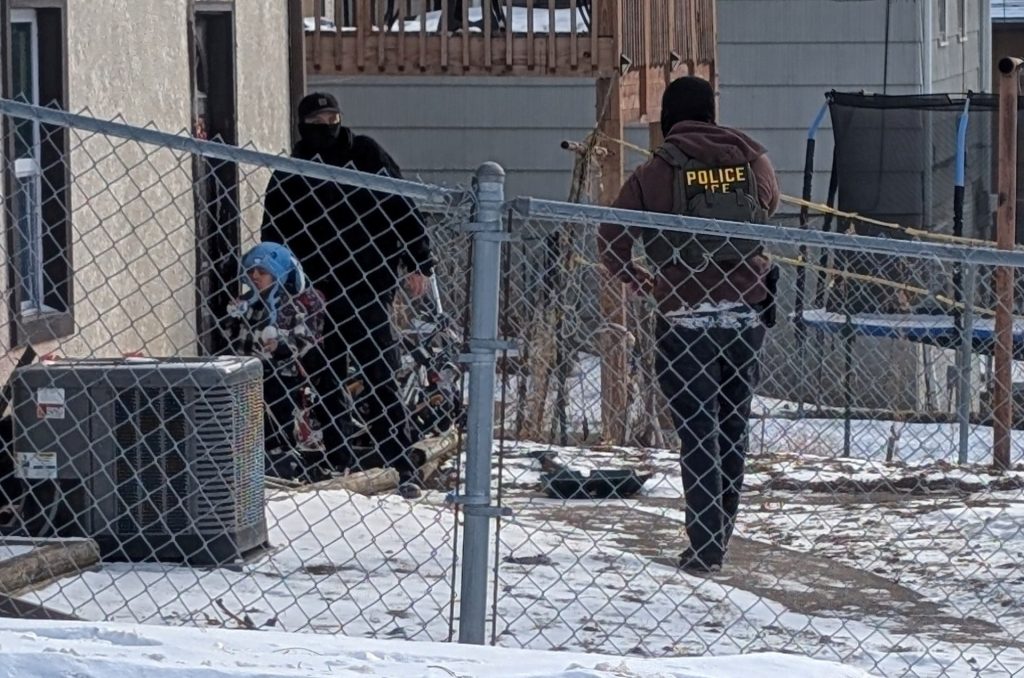
School official says the child, Liam Conejo Ramos, was ‘essentially’ used ‘as bait to apprehend his father, who is seeking asylum in the US. US Immigration and Customs Enforcement (ICE) officers have detained a five-year-old boy arriving home from preschool in Minnesota, after allegedly using him “as bait” to apprehend his father, who has a pending asylum case. Federal agents took the child, Liam Conejo Ramos, from a running car while it was in the family’s driveway on Tuesday afternoon, Columbia Heights Public Schools Superintendent Zena Stenvik said during a news conference on Wednesday. Recommended Stories list of 4 itemsend of list The officers then told the child to knock on the door to his home to see if other people were inside, “essentially using a five-year-old as bait”, Stenvik said. Stenvik said the family, who came to the United States in 2024, has an active asylum case and had not been ordered to leave the country. “Why detain a five-year-old?” she asked. “You cannot tell me that this child is going to be classified as a violent criminal.” Department of Homeland Security spokesperson Tricia McLaughlin said in a statement that “ICE did NOT target a child”. She said ICE was conducting an operation to arrest the child’s father, Adrian Alexander Conejo Arias, who McLaughlin said is from Ecuador. “For the child’s safety, one of our ICE officers remained with the child while the other officers apprehended Conejo Arias,” McLaughlin said, adding that parents are given the choice to be removed with their children or have them placed with a person of their choosing. Liam is the fourth student from Columbia Heights Public Schools who has been detained by ICE in recent weeks, said Stenvik. A 17-year-old student was taken on Tuesday while heading to school, and a 10-year-old and a 17-year-old have also been taken, she said. Advertisement The family’s lawyer, Marc Prokosch, said on Thursday that Liam and his father were taken to an immigration lockup in Dilley, Texas, and that he assumes they were being held in a family holding cell. “We’re looking at our legal options to see if we can free them either through some legal mechanisms or moral pressure,” he said at a news conference. A lawyer who visited the Dilley detention facility last week, as part of an ongoing lawsuit to ensure the safekeeping of immigrant children in federal custody, said conditions were deteriorating. “The conditions were worse than ever,” said Leecia Welch, chief legal counsellor at the advocacy group Children’s Rights. “The number of children had skyrocketed, and significant numbers of children had been detained for over 100 days,” Welch said. “Nearly every child we spoke to was sick – and it seemed there was an epidemic of illnesses going around. Families reported that their children were malnourished, extremely ill, and suffering profoundly from prolonged detention,” Welch said. During a visit to Minneapolis on Thursday, US Vice President JD Vance said he heard the “terrible story” about Liam, but said he was not sure what the federal agents could have done differently. “Well, what are they supposed to do? Are they supposed to let a five-year-old child freeze to death? Are they not supposed to arrest an illegal alien in the United States of America?” said Vance, noting that he was also the parent of a five-year-old. US federal agents have arrested some 3,000 people in immigration raids across Minnesota in recent weeks, according to Greg Bovino, a US Customs and Border Protection official. Julia Decker, policy director at the Immigrant Law Center of Minnesota, said advocates have no way of knowing whether the government’s arrest numbers and descriptions of the people in custody are accurate. Also on Thursday, US Attorney General Pam Bondi said that three people have been arrested in Minneapolis after they protested at Cities Church in St Paul, where they alleged one of the pastors, David Easterwood, was the acting field director for the St Paul ICE field office. Those arrested included Minneapolis civil rights activist Nekima Levy Armstrong and St Paul school board member Chauntyll Louisa Allen, according to the Minnesota Star Tribune newspaper. In a post on X, Bondi said that Armstrong had played a “key role” in organising the protest on Sunday. Adblock test (Why?)
Trump says US still ‘watching Iran‘ as ‘massive’ fleet heads to Gulf region

US president says ‘big force going towards Iran’, but he would ‘rather not see anything happen’ as tension with Tehran ratchets up. Published On 23 Jan 202623 Jan 2026 Click here to share on social media share2 Share United States President Donald Trump said a US naval “armada” was heading towards the Gulf region, with Iran being the focus, as officials said an aircraft carrier strike group and other assets would arrive in the Middle East in the coming days. “We’re watching Iran,” Trump told reporters on Air Force One on Thursday as he flew back from the World Economic Forum in Davos, Switzerland. Recommended Stories list of 4 itemsend of list “We have a big force going towards Iran,” Trump said. “I’d rather not see anything happen, but we’re watching them very closely,” he said. “And maybe we won’t have to use it … we have a lot of ships going that direction, just in case, we have a big flotilla going in that direction, and we’ll see what happens,” he added. Trump’s announcement on the US naval buildup comes after he appeared to back-pedal last week on his threats of military action against Iran after, he said, receiving assurances that no executions of protesters would be carried out by Tehran. Trump’s confirmation of continuing military preparations in the region follows after US media reports in the past week that the USS Abraham Lincoln aircraft carrier and its strike group of vessels were ordered to divert from manoeuvres in the South China Sea to the Middle East. Speaking on Thursday, Trump reiterated that his earlier threats to use force against Tehran had stopped authorities in Iran from executing more than 800 protesters, and he again said he was open to talking with the country’s leadership. Iranian officials have denied plans to execute people who had taken part in the widespread antigovernment protests that began in late December and which Iranian state media said left 3,117 people dead, including 2,427 civilians and members of the security forces. Advertisement Speaking to US broadcaster CNBC on Wednesday, Trump said he hoped there would not be further US military action against Iran, but also said the US would act if Tehran resumed its nuclear programme. “They can’t do the nuclear,” Trump told CNBC in an interview in Davos. “If they do it, it’s going to happen again,” the president said, referring to US air strikes on Iran’s nuclear facilities in June 2025 when Washington joined Israel’s 12-day war on the country. Washington last ordered a major military build-up in the Middle East in advance of its attacks in June, and officials later boasted about how it had kept its intention to strike Tehran’s nuclear programme a secret at the time. Writing in the Wall Street Journal newspaper on Tuesday, Iranian Foreign Minister Abbas Araghchi warned the US that Tehran will be “firing back with everything we have” if attacked. “Our powerful armed forces have no qualms about firing back with everything we have if we come under renewed attack,” the minister wrote. Araghchi said his warning was not a threat, “but a reality I feel I need to convey explicitly, because as a diplomat and a veteran, I abhor war”. “An all-out confrontation will certainly be ferocious and drag on far, far longer than the fantasy timelines that Israel and its proxies are trying to peddle to the White House,” he said. “It will certainly engulf the wider region and have an impact on ordinary people around the globe,” he added. Adblock test (Why?)