

Thousands join ‘Hands off Greenland’ protests amid Trump’s takeover threats
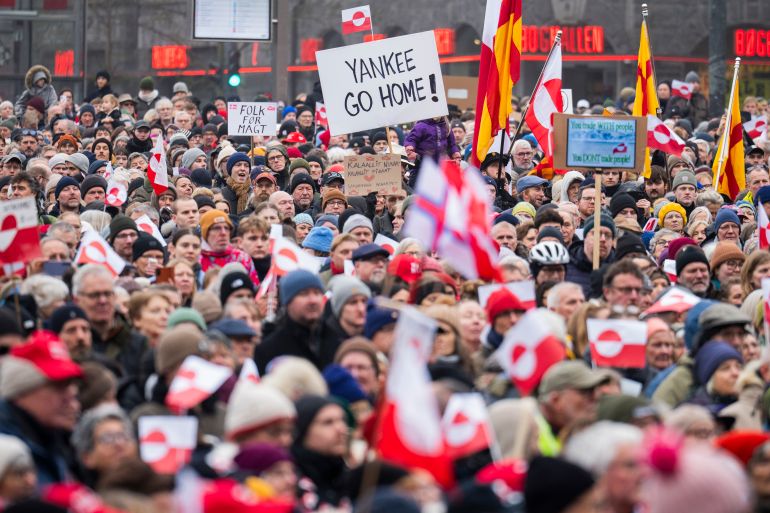
Thousands of protesters have taken to the streets of Denmark to show support for Greenland and reject United States President Donald Trump’s repeated threats to take control of the self-governing Danish territory. Waving the flags of Denmark and Greenland, the protesters formed a sea of red and white outside Copenhagen city hall on Saturday, chanting “Kalaallit Nunaat” – the Arctic island’s name in Greenlandic. Recommended Stories list of 3 itemsend of list Rallies were also organised throughout the day in the Danish cities of Aarhus, Aalborg and Odense, as well as in Greenland’s capital, Nuuk. “I am very grateful for the huge support we as Greenlanders receive … We are also sending a message to the world that you all must wake up,” said Julie Rademacher, chair of Uagut, an organisation for Greenlanders in Denmark. “Greenland and the Greenlanders have involuntarily become the front in the fight for democracy and human rights,” she added. The demonstrations come as Trump said 10 percent tariffs would be imposed on several European allies opposing US control of Greenland from February 1, hitting Denmark, Finland, France, Germany, Norway, Sweden, the Netherlands and the United Kingdom. The US president, who says the move is critical for his country’s interests, added those tariffs would rise to 25 percent on June 1 and would continue until an agreement is reached for the US to purchase Greenland. Protesters rally in support of Greenland in the Danish capital, Copenhagen, on January 17, 2026 [Martin Sylvest Andersen/Getty Images] While Greenland and Denmark have rejected the idea of the island being “owned” by the US, efforts to get the US administration to change its stance have so far appeared to fail. Advertisement The foreign ministers of Denmark and Greenland left a meeting with US Secretary of State Marco Rubio in Washington, DC, this week, saying that they “didn’t manage to change the American position”. “It’s clear that the president has this wish of conquering over Greenland,” Danish Foreign Minister Lars Lokke Rasmussen told reporters. According to the latest poll published in January of last year, 85 percent of Greenlanders oppose the territory joining the US, while only 6 percent were in favour. Reporting from Nuuk, the Greenlandic capital, Al Jazeera’s Rory Challands said Saturday’s rally is expected to be a large one. “This is … the capital city, but [home to] only about 19-20,000 people. Everyone we spoke to yesterday said that they were going to be coming out and marching today,” Challands said. “This essentially is Danes and Greenlanders coming together. Everyone here believes that at some point, there should be some form of independence [for Greenland],” he added. “But for the moment, Denmark and Greenland are saying that their best way out of this crisis is to remain united.” Some US lawmakers – including members of Trump’s own Republican Party – also have raised opposition to the president’s push to take control of Greenland, saying it threatens global stability and the US commitment to NATO. A bipartisan group of US Congress members travelled to Denmark on Friday, led by Democratic Senator Chris Coons, who said there was no security threat to Greenland to justify the Trump administration’s stance. “Greenland is a part of Denmark. Denmark is our NATO ally. That should be the end of this discussion, in my view,” Coons told reporters in Copenhagen. Trump has repeatedly accused Denmark of failing to do enough to secure Greenland’s territorial waters in the Arctic. European NATO members are deploying troops in Greenland for a military exercise designed to show that they will “defend [their] sovereignty”, French armed forces minister Alice Rufo said this week. Britain, Finland, France, Germany, the Netherlands, Norway and Sweden have announced they are sending small numbers of military personnel to prepare for future exercises in the Arctic. Adblock test (Why?)
Senegal hope Morocco final will not be Mane’s AFCON farewell
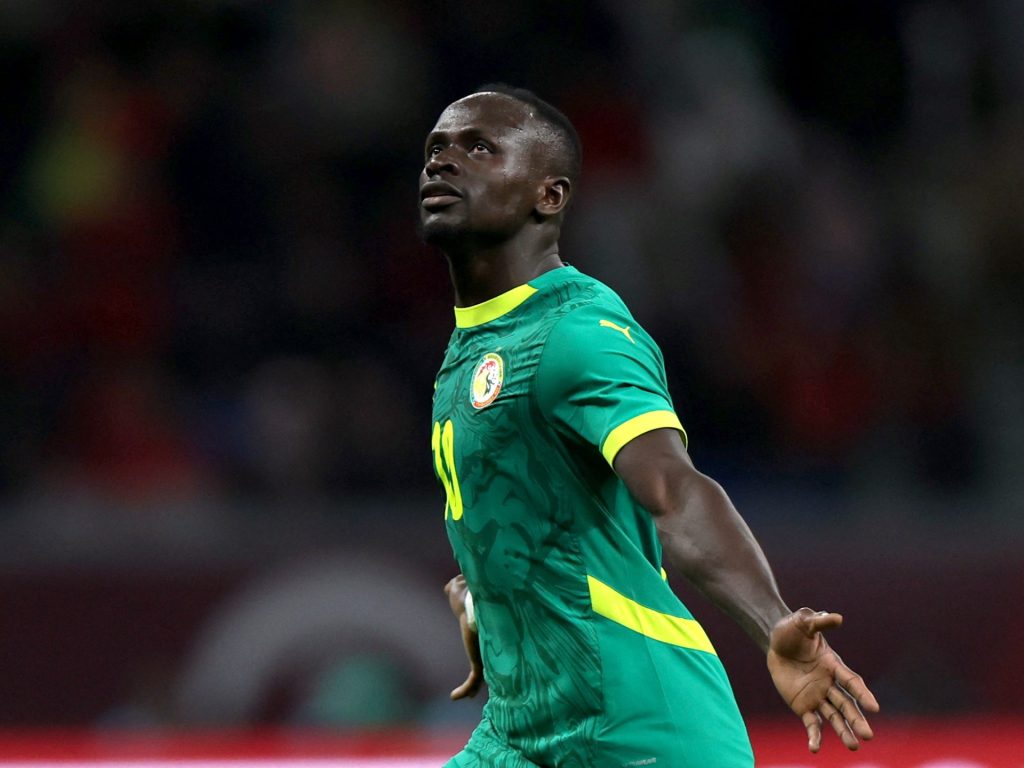
Former Liverpool forward Sadio Mane announced after the semifinal that he would not appear at another AFCON for Senegal. Senegal coach Pape Thiaw says he hoped the Africa Cup of Nations final against Morocco would not be Sadio Mane’s last game at the tournament, insisting the former Liverpool forward could reconsider walking away from the team. “His decision is no longer up to him. There is a whole people behind him, too, and they would like to see him continue,” Thiaw told reporters in Rabat on the eve of the final against the host nation. Recommended Stories list of 4 itemsend of list Mane, 33, said after Wednesday’s semifinal against Egypt, in which he scored the winner, that he would not play at another AFCON. His comments indicated that he may retire from international football altogether following the World Cup in North America in June and July, by which time he will be 34. The next Cup of Nations is due to take place in 2027 in Kenya, Tanzania and Uganda, while the 2029 edition is being brought forward to 2028. “I think he made his decision in the heat of the moment and the country does not agree, and I, as coach of the national team, do not agree at all,” said Thiaw. “We would like to keep him for as long as possible.” Mane helped Senegal win the Cup of Nations for the first time in their history in 2022, scoring the winning penalty in the shootout in the final against Egypt. The two-time winner of the African player of the year prize also played in the side that lost the 2019 final to Algeria – Sunday’s match will be Senegal’s third final in four editions of AFCON. “Sadio is an exceptional player who would have deserved to win a Ballon d’Or. Above all, he is just an incredible man,” said defender Moussa Niakhate. Advertisement “He doesn’t have a big ego. He just works hard and loves his country – the fact this is his sixth AFCON shows his longevity and consistency.” Thiaw reiterates Senegal’s AFCON complaint against Morocco Meanwhile, the Senegal coach expressed anger at the welcome his team received on arriving in the Moroccan capital on Friday. The Lions of Teranga travelled to Rabat, having been based in the northern port city of Tangiers since the start of the competition. The Senegalese Football Federation released a statement early on Saturday complaining about “serious concerns” including a “lack of adequate security” for the team’s arrival “which put the players and staff at risk”. It also complained about the hotel offered to the delegation, about the number of tickets given to their supporters for the final, and said they were not happy at being offered a training pitch at the Moroccan team’s base. “What happened yesterday was not normal,” insisted Thiaw. “Given the number there, anything could have happened. My players could have been in danger. “That type of thing should not happen between two brother countries.” Morocco ready for ‘hardest’ step against Senegal The final brings together the top two teams in Africa according to the FIFA rankings, with Morocco hoping to make the most of home advantage to take the AFCON title for the first time in 50 years. There is, however, enormous pressure on the 2022 World Cup semifinalists to take the trophy. “We dreamt of being here and now we are, but the last step will be the hardest one,” said Morocco coach Walid Regragui. “Senegal are a great side and this is their third final out of four, but it is great for African football to have a final between the two best teams.” He added: “How we handle the emotion of the occasion will be important. We can’t put too much pressure on ourselves. “The final is 50/50 but maybe it will be 51 percent in our favour with the crowd behind us.” Adblock test (Why?)
‘Inevitably difficult’: Inside a family’s fight against the US boat strikes

A call for justice As part of the petition to the Inter-American Commission on Human Rights, the Carranza family is seeking compensation and a stop to the US strikes. But the commission’s powers are limited. It can investigate alleged violations, determine state responsibility and provide recommendations, but its decisions are non-binding, meaning that the US is not obligated to comply. “It can provide a measure of justice, in that it would be a regional human rights body saying that the victims are right and deserve to be compensated,” said Pappier. “But it would not immediately deliver reparations or full-fledged accountability.” Bringing the case before a US court could ultimately be more productive, Pappier added, but it would also be significantly more challenging. Kovalik, the family’s lawyer, told Al Jazeera he is currently weighing those challenges. The fact that the alleged crime took place outside of US territory could be a barrier to litigation, he explained. So too could be the legal protections granted to the US government and top officials. The US government enjoys sovereign immunity in most cases, and the Supreme Court ruled in 2024 that the president enjoys “presumptive immunity” for any “official acts” he engages in. “We are still considering a possible court action,” Kovalik said. Another challenge is that the US has shown no willingness to investigate the strikes or release information that would help others do so. In a statement to Al Jazeera, the Colombian Attorney General’s Office confirmed that it has opened an inquiry into the US bombings, but experts warn that restricted access to information could limit its investigation. Colombia would need insight into US decisions about the strikes to determine criminal responsibility, said Schuller, the expert from the European Center for Constitutional and Human Rights. Without US cooperation, however, “it’s impossible to get the information necessary to say who could be put on trial for such a strike”, he explained. For now, Kovalik said that the Carranza family takes some comfort in knowing that “at least something is being done”. Since Carranza’s disappearance, relatives have been unable to hold a funeral without the fisherman’s remains. His family also is struggling financially because Carranza was the household’s breadwinner, and his wife has a disability that limits her ability to work. Vega said that, if Carranza had been suspected of smuggling drugs, US authorities had a responsibility to arrest him, not kill him. The burden of proof, he added, should be on the US government, not the family. “Alejandro was one of our fishermen. He will not stop being one unless proven otherwise.” Adblock test (Why?)
Palestinian child shot dead by Israeli troops in occupied West Bank

Rights group says Palestinian children are ‘;increasingly targets’, as Israeli military and settler violence soars. Published On 16 Jan 202616 Jan 2026 Click here to share on social media share2 Share Israeli troops have shot and killed a Palestinian child in the occupied West Bank, as a wave of intensified Israeli military and settler violence across the territory continues. Mohammed Naasan, 14, was killed on Friday after Israeli forces stormed and opened fire in the village of al-Mughayyir, near Ramallah, assaulting residents. Recommended Stories list of 3 itemsend of list Naasan was shot in the back and chest, the Palestinian news agency Wafa reported. The Israeli military said in a statement that troops fatally shot Naasan because he was “running towards them carrying a rock”. The killing came after Israeli settlers, under the protection of the Israeli army, had earlier on Friday stormed an area south of al-Mughayyir and fired live rounds, according to Wafa. Palestinians across the West Bank have faced a wave of intensified Israeli military and settler violence in the shadow of Israel’s genocidal war against Palestinians in the Gaza Strip, which has killed more than 71,000 people since October 2023. Experts say the violence, which is taking place amid a push by far-right Israeli politicians to formally annex the West Bank, aims to force Palestinians out of their homes and communities. According to United Nations figures, at least 240 Palestinians, including 55 children, were killed by Israeli forces or settlers last year alone. The UN’s humanitarian office (OCHA) said more than 1,800 settler attacks that resulted in casualties or property damage were also recorded in 2025 – an average of about five incidents per day. Advertisement That is the highest average since OCHA began tracking settler violence in 2006, it said. Israel’s army routinely fires live ammunition, tear gas, stun grenades and other weapons at Palestinians in the occupied territory, and it often justifies the assaults by claiming that stones were being thrown. Israeli human rights group BTselem has said the military employs an “open-fire policy” that allows for an “unjustified use of lethal force” and “conveys Israel’s deep disregard for the lives of Palestinians”. Rights advocates also have documented how Palestinian children in the West Bank, in particular, have been at heightened risk of Israeli violence under the shadow of the Gaza war. “Decades of systemic impunity has created a situation where Israeli forces shoot to kill without limit,” Defence for Children International-Palestine (DCI-P) said last month after a 16-year-old Palestinian boy was killed by Israeli forces in the northern West Bank. “As Palestinian children are increasingly targets in the West Bank, Israeli forces’ rules of engagement seemingly allow direct targeting of Palestinian children where no threat exists to justify the use of intentional lethal force.” Adblock test (Why?)
Trump threatens tariffs over Greenland, calls it vital for security

US delegation seeks to lower US-Denmark-Greenland tensions amid Trump’s threats of tariffs and control claims. Published On 16 Jan 202616 Jan 2026 Click here to share on social media share2 Share US President Donald Trump says he may impose tariffs on countries that don’t back the US’s claim to control Greenland, a message that came as a bipartisan Congressional delegation sought to lower tensions in the Danish capital. Since Trump returned to the White House in January, he has repeatedly insisted that the US control Greenland, a semiautonomous territory of NATO ally Denmark, and said earlier this week that anything less than the Arctic island being in US hands would be “unacceptable.” Recommended Stories list of 3 itemsend of list During an unrelated event at the White House about rural health care, he recounted on Friday how he had threatened European allies with tariffs on pharmaceuticals. “I may do that for Greenland too,” Trump said. “I may put a tariff on countries if they don’t go along with Greenland, because we need Greenland for national security. So I may do that,” he said. Trump has said Greenland is vital to US security because of its strategic location and large supply of minerals, and has not ruled out the use of force to take it. He had not previously mentioned using tariffs to try to force the issue. Earlier this week, the foreign ministers of Denmark and Greenland met in Washington this week with US Vice President JD Vance and Secretary of State Marco Rubio. That encounter didn’t resolve the big differences, but did produce an agreement to set up a working group — on whose purpose Denmark and the White House then offered sharply diverging public views. European leaders have insisted that only Denmark and Greenland can decide matters concerning the territory, and Denmark said this week that it was increasing its military presence in Greenland in cooperation with allies. A bipartisan delegation of US lawmakers met the leaders of Denmark and Greenland in Copenhagen on Friday, seeking to “lower the temperature” with assurances of congressional support after President Donald Trump’s threats to seize the Arctic island. Advertisement European nations this week sent small numbers of military personnel to the island at Denmark’s request. The 11-member US delegation, led by Democratic Senator Chris Coons, met Danish Prime Minister Mette Frederiksen and her Greenlandic counterpart Jens-Frederik Nielsen, as well as Danish and Greenlandic parliamentarians. “There’s a lot of rhetoric, but there’s not a lot of reality in the current discussion in Washington,” Coons told reporters following the meetings, saying the lawmakers would seek to “lower the temperature” on returning home. Looking for a deal Trump’s special envoy to Greenland also said on Friday he plans to visit the Danish territory in March and believes a deal can be made. “I do believe that there’s a deal that should and will be made once this plays out,” Jeff Landry told Fox News in an interview on Friday as a bipartisan delegation of US lawmakers was set to meet leaders of Greenland and Denmark. “The president is serious. I think he’s laid the markers down. He’s told Denmark what he’s looking for, and now it’s a matter of having Secretary [of State Marco] Rubio and Vice President JD Vance make a deal.” Adblock test (Why?)
What lies ahead for Venezuelan opposition leader Maria Corina Machado?
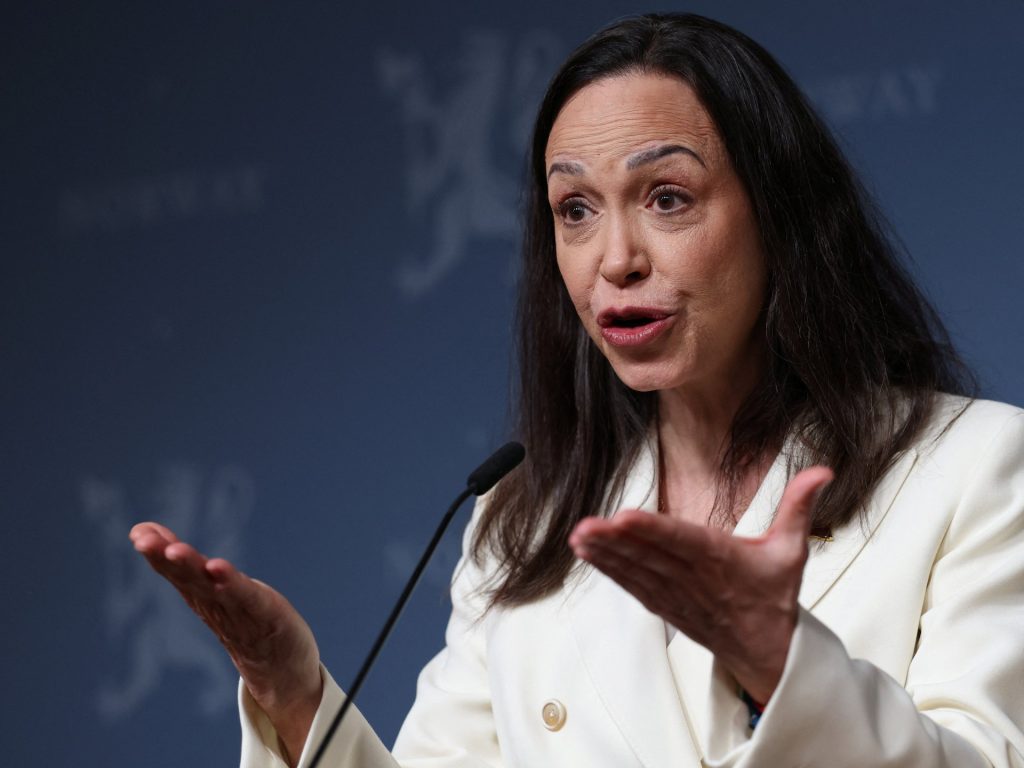
Prioritising stability Questions about Machado’s role in Venezuelan politics emerged within hours of the US operation to remove Maduro, a leader accused of violently suppressing dissent. Machado, 58, had been living in hiding for months after the 2024 election, for fear of facing arrest. But that changed in December, when she escaped abroad to accept the 2025 Nobel Peace Prize for her efforts to advance Venezuelan democracy. Given her longstanding public opposition to Maduro, Machado was widely viewed as a favourite to replace him, should his government ever fall. But when Trump announced the US military operation to remove Maduro, he quickly quashed the prospect of Machado stepping into Venezuela’s presidency. “I think it would be very tough for her to be the leader. She doesn’t have the support within or the respect within the country,” Trump said at a news conference hours after the attack. Rather than work with Machado, Trump announced plans to cooperate with Delcy Rodriguez, Maduro’s vice president. She has since been sworn in as interim president. “She’s essentially willing to do what we think is necessary to make Venezuela great again,” Trump said of Rodriguez. Maduro, who has long been accused of human rights violations, has been charged alongside his wife Cilia Flores with being part of a conspiracy to traffic drugs into the US. While Trump’s decision to topple Maduro has sparked jubilation among Venezuelans in exile, his military intervention — and quick dismissal of Machado — have raised concerns about his respect for Venezuelan sovereignty and international law. “I think [the Trump administration] basically bet on what they consider to be the most stable transition possible,” said Freddy Guevara Cortez, a former opposition member in Venezuela’s National Assembly. “They think that they can convince the same members of the Maduro regime to dismantle themselves.” Guevera Cortez, who has lived in exile in the US since 2021, emphasised that he supports Trump’s actions in Venezuela. “Obviously, we would have preferred something else, but we also understand how complex the situation is,” he said. Adblock test (Why?)
Fifteen former NCAA players charged in US-China basketball rigging case

Former players among those charged in alleged scheme to rig basketball games in US and China. Published On 15 Jan 202615 Jan 2026 Click here to share on social media share2 Share Federal prosecutors in the United States have charged 20 people, including 15 former college basketball players, in what they call a betting scheme to rig National Collegiate Athletic Association (NCAA) and Chinese Basketball Association (CBA) games. Of the defendants, 15 played basketball for Division 1 NCAA schools as recently as the 2024-2025 season. Recommended Stories list of 4 itemsend of list The other five defendants were described by authorities as fixers. They include two men who prosecutors said on Thursday worked in the training and development of basketball players. Another was a trainer and former coach, one was a former NCAA player and two were described as gamblers, influencers and sports handicappers. Some individuals were previously charged in an NBA-related gambling probe. The charges, including bribery in sporting contests and conspiracy to commit wire fraud, were unsealed by federal prosecutors in Philadelphia. They accuse the defendants of conspiring to fix games from about September 2022 through February 2025. During the 2022-2023 CBA season, the individuals sought to “fix” men’s basketball games by “point shaving”, prosecutors alleged in the documents filed in the US District Court for the Eastern District of Pennsylvania. Point shaving is a form of cheating in which individuals try to manipulate the margin of victory. Some of those charged allegedly sought to target games at Nicholls State University, Tulane University, Northwestern State University, La Salle University, DePaul University, Robert Morris University, University of Southern Mississippi and North Carolina A&T State University. Advertisement Players at Kennesaw State University, Coppin State University, University of New Orleans, Abilene Christian University, Eastern Michigan and Alabama State University were also targeted as part of the scheme, according to the indictment. In the 70-page indictment, authorities said the fixers recruited the college basketball players with “bribe payments” usually ranging from $10,000 to $30,000 per game. The indictment follows a series of NCAA investigations that led to at least 10 players receiving lifetime bans this year for bets that sometimes involved their own teams and their own performances. And the NCAA has said at least 30 players have been investigated over gambling allegations. More than 30 people were also charged in last year’s sprawling federal takedown of illegal gambling operations linked to professional basketball. Adblock test (Why?)
Timeline of Israel’s genocide on Gaza
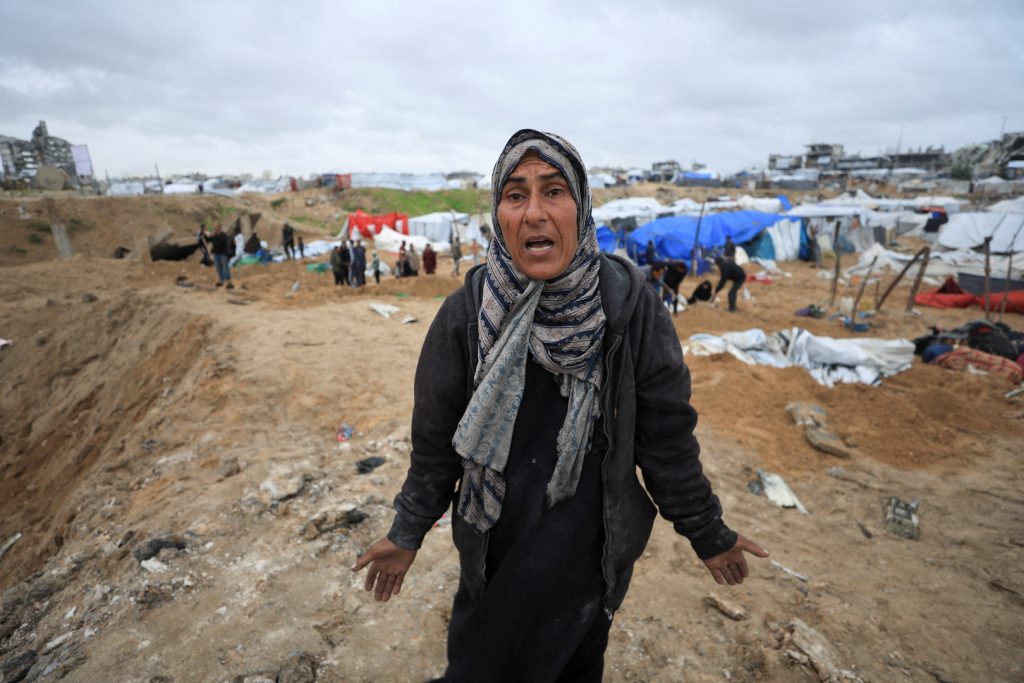
NewsFeed The Trump administration has announced its ceasefire plan for Gaza is now in ‘Phase Two’, following 27 months of death, displacement and destruction in Israel’s genocide. Published On 15 Jan 202615 Jan 2026 Click here to share on social media share2 Share Adblock test (Why?)
Canada’s Mark Carney seeks reset on pivotal trip to China
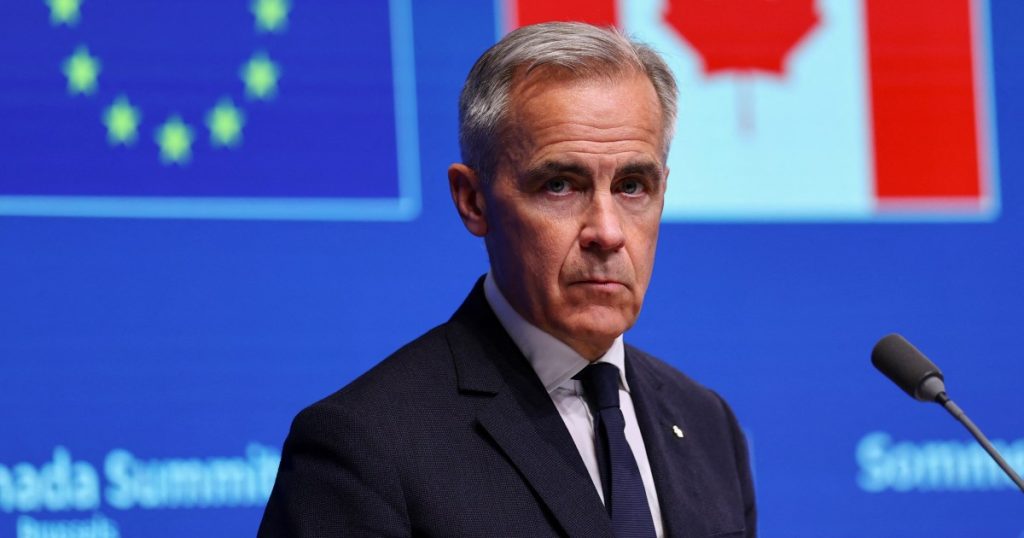
Canadian Prime Minister Mark Carney has arrived in China for a visit that comes at a pivotal moment in relations between the two countries. Carney, the first Canadian leader to visit China since 2017, is set to meet with Chinese President Xi Jinping and Chinese Premier Li Qiang. Recommended Stories list of 4 itemsend of list Relations between Canada and China plunged into a deep freeze after Canadian authorities arrested a key official of Chinese telecommunications firm Huawei as she was transitioning through the Vancouver international airport in December 2018. China retaliated against the arrest of Meng Wanzhou, which was carried out at the request of authorities in the United States, by detaining two Canadians. Relations have continued to face challenges. In 2024, Ottawa, following a line set by Washington, slapped Chinese electric vehicles with 100 percent tariffs, prompting Beijing to impose tariffs on certain Canadian agricultural goods, including canola. Ottawa has also accused China of political interference. Against that backdrop, Carney’s visit “marks a recalibration and change in tone and signals Canada’s desire to improve relations”, said Vina Nadjibulla, vice president of research and strategy at the Asia Pacific Foundation of Canada. “This is probably Prime Minister Carney’s second-most challenging trip after his first visit to the White House,” Nadjibulla told Al Jazeera. Carney is keen to diversify the Canadian economy and reduce its dependence on the US, the destination for nearly 80 percent of Canadian exports. While Canada has historically been among the US’s closest allies, the relationship has gone south since Donald Trump’s return to the White House. Advertisement Trump has slapped Canada with a 35 percent across-the-board tariff and separate duties on steel, aluminium and lumber, while repeatedly threatening to make the country the 51st US state. Carney has travelled extensively, including to the European Union and the Gulf – he heads to Qatar after Beijing – to find new markets and investors for the economy. The Canadian leader has said he wants to double Canada’s non-US trade in the next decade. In a first step towards a thaw with China, Carney met Xi in South Korea during the Asia-Pacific Economic Cooperation Summit in October. “The Prime Minister is being pragmatic, and his trip will focus on specific economic deals – selling Canadian energy and agriculture products,” Nadjibulla said, adding that she did not expect to see the full lifting of tariffs between the sides. The trip, as a review of the trade agreement between the US, Mexico and Canada, is under way. The USMCA has allowed Canadian and Mexican goods that are covered under the agreement to enter the US tariff-free. In Canada’s case, that means about 86 percent of US imports from Canada and Mexico are compliant, making the effective tariff rate on Canadian goods about 6 percent, Tony Stillo, director of Canada Economics at Oxford Economics, said in a note on Wednesday. While Canada clearly would benefit from USMCA continuing, Trump, as recently as Tuesday, said the trade agreement was “irrelevant” to the US. But if an agreement to extend or modify the USMCA is not reached, it will enter a period of mandatory annual reviews until 2036, after which it would expire, resulting in a “prolonged period of trade policy uncertainty”, Stillo said. “If the North American trade agreement eventually disintegrates, the three parties could return to bilateral trade agreements to maintain market access to one another, but this would impose costs on North American trade and investments.” ‘Political and narrative win’ While Carney is keenly aware of the stakes, the visit holds significance for China, too. Beijing is not only on the lookout for new export markets and the removal of trade restrictions, such as the electric vehicle tariff, but a “political and narrative win” as well, Nadjibulla said. China has often criticised Canada for following the US too closely and will portray Carney’s visit, and any policy changes that may follow, as Ottawa “trying to correct mistakes of the past,” she said. Beijing’s ultimate hope would be compliance from Canada on sensitive issues like Taiwan and the South China Sea. Earlier this week, two Canadian MPs from Carney’s Liberal Party wrapped up a visit to self-governing Taiwan, which Beijing claims as its territory, ahead of schedule on the advice of the government. Advertisement The lawmakers cited the need to avoid “confusion” in Canada’s foreign policy ahead of Carney’s visit. Nadjibulla said it was a “worrying” development, adding that Canada would face a “very difficult balancing act” with China. Adblock test (Why?)
Russian attacks cause energy emergency in freezing Ukraine, says Zelenskyy

Ukraine struggles to restore heat, electricity as temperatures plummet to -19 degrees Celsius. Published On 15 Jan 202615 Jan 2026 Click here to share on social media share2 Share Ukrainian President Volodymyr Zelenskyy has said that a state of emergency is being declared for Ukraine’s energy sector, as repeated Russian attacks have left thousands of homes without heat and electricity amid freezing winter conditions. Zelenskyy’s announcement came as temperatures dropped to -19 degrees Celsius (-2.2 Fahrenheit) in Ukraine’s capital Kyiv, where hundreds of apartment buildings remain without heat following a massive Russian attack last week. Recommended Stories list of 4 itemsend of list “The consequences of Russian strikes and deteriorating weather conditions are severe,” said Zelenskyy in a post on X late on Wednesday, adding that “repair crews, energy companies, municipal services, and the State Emergency Service of Ukraine continue to work around the clock to restore electricity and heating”. Zelenskyy also said he had asked his government to review curfew restrictions during “this extremely cold weather” and that the country was working to increase its electricity imports to try to alleviate the dire situation. In Ukraine’s capital Kyiv, 471 apartment buildings remained without heat on Wednesday, almost a week after a Russian attack left thousands of apartments without heat, electricity and water, according to city officials. Electricians carry out emergency repairs on a power pole after a transformer burned out due to a voltage surge caused by regular Russian attacks on the country’s energy infrastructure in the Kyiv region, Ukraine, on Wednesday [Dan Bashakov/AP Photo] The attack, which began last Thursday night, prompted Kyiv’s Mayor Vitali Klitschko to urge people to leave the city, saying that “half of apartment buildings in Kyiv – nearly 6,000 – are currently without heating because the capital’s critical infrastructure was damaged by the enemy’s massive attack”. Advertisement Energy supply has been a frequent target during Russia’s war on Ukraine, with Moscow and Kyiv launching attacks on oil refineries, gas pipelines, pumping stations and nuclear and thermal power stations, which are powered by coal, oil and gas. Russian-appointed local official Yevhen Balitsky said on Telegram on Wednesday that a Ukrainian attack had left more than 3,000 people without electricity in Russian-occupied areas of Zaporizhia. A screen displays a temperature of -14C in Kyiv on Wednesday [Sergei Gapon/AFP] Black Sea attacks The frequent attacks on energy supply during Russia’s war with Ukraine have also expanded beyond both countries’ borders, including to oil tankers in the Black Sea. In recent months, a number of oil tankers have come under attack from drones in the Black Sea, prompting concerns from neighbouring countries, including Turkiye and Kazakhstan. On Tuesday, drones struck two oil tankers in the Black Sea, chartered by United States oil giant Chevron, according to the companies involved. The ships were sailing towards a terminal on the Russian coast, with the Russian Ministry of Foreign Affairs on Wednesday blaming the attacks on Ukraine, which had yet to publicly comment. Kazakhstan’s Foreign Ministry said in a statement on Wednesday that three oil tankers were hit in the attack and that they were heading to a Caspian Pipeline Consortium (CPC) terminal, where an oil pipeline from the central Asian country ends. The ministry urged the US and Europe to help secure the transport of oil. “The increasing frequency of such incidents highlights the growing risks to the functioning of international energy infrastructure,” it said. Adblock test (Why?)