

Chaotic crowds complicate third Israel-Hamas exchange
[unable to retrieve full-text content] Israel and Palestinian armed groups led by Hamas completed a tense third exchange of captives for prisoners.
What are the risks of violence in the eastern DRC spreading regionally?
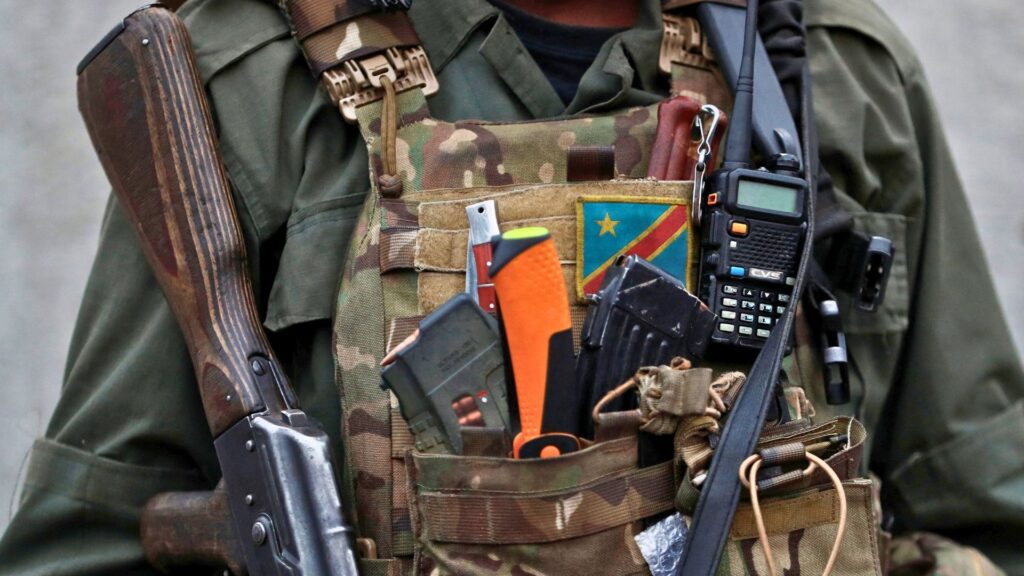
M23 rebels have taken control of Goma, capital of North Kivu province in eastern DRC. Since re-emerging just more than three years ago, Rwanda-backed rebels have advanced steadily through the eastern Democratic Republic of Congo, seizing towns and villages, and forcing people from their homes. M23 is just one of hundreds of rebel groups in the country and has been fighting the army for years. But the latest escalation could mark a major shift, with serious implications for regional stability. So, does diplomacy stand a chance to defuse the escalating tensions? Presenter: Elizabeth Puranam Guests: Vava Tampa – Founder and chief campaigner of Save the Congo, a grassroots campaign group Richard Moncrieff – Project director for the Great Lakes region at the International Crisis Group Kambale Musavuli – Spokesperson for the advocacy organisation, Friends of the Congo Adblock test (Why?)
Key takeaways from Tulsi Gabbard’s US Senate confirmation hearing
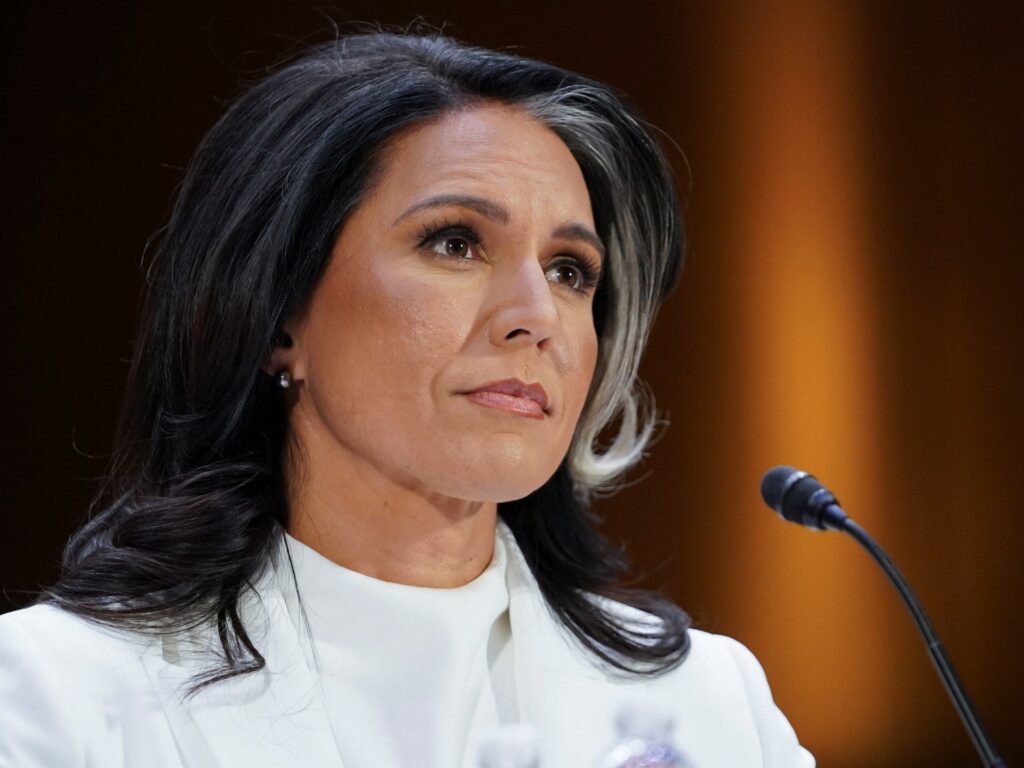
Washington, DC – Tulsi Gabbard, President Donald Trump’s nominee for director of national intelligence, has faced tough questions from United States lawmakers over her past positions, including her support for whistleblower Edward Snowden. At a confirmation hearing on Thursday, senators also grilled Gabbard over a 2017 visit to Syria, where she met with then-President Bashar al-Assad. A former Democratic congresswoman from Hawaii, Gabbard has been outspoken against interventionist foreign policy. She unsuccessfully ran for president in 2020, and two years later, she quit the Democratic Party, decrying it as an “elitist cabal of warmongers”. She subsequently started campaigning for Republican candidates, including Trump. If confirmed, Gabbard would become the chief of the US intelligence community, which is composed of several agencies, including the FBI and CIA. She would also brief and advise the president on security matters. Gabbard is one of many controversial nominees Trump has appointed to key positions. Advertisement But with a 53-seat majority in the 100-member Senate, Republicans are expected to confirm all of Trump’s picks. Gabbard faced her first test as a nominee in front of sceptical lawmakers on the Senate Intelligence Committee on Thursday. Below are some key takeaways from the hearing. Snowden, Snowden, Snowden Several Democrats and even some Republicans on the panel invoked Gabbard’s past statements backing Snowden, a former National Security Agency contractor who leaked documents about mass surveillance programmes in the US government. In 2020, a US court found that the surveillance exposed by Snowden, including collecting phone records, was illegal. Snowden, who initially fled to Hong Kong, was granted asylum in Russia after the US government revoked his passport. Gabard previously called Snowden a “brave” whistleblower, and in 2020, she co-sponsored a House resolution urging the US government to drop all charges against Snowden. On Thursday, Gabbard was questioned aggressively about that position. Democratic Senator Michael Bennet asked her several times whether she considers Snowden a traitor. The former congresswoman refused to do so. She walked a fine-line by stressing that Snowden broke the law and that she does not agree with his actions, while not fully condemning him. “The fact is, he also — even as he broke the law — released information that exposed egregious, illegal and unconstitutional programmes,” she said. Gabbard, who served in the US military and remains an army reservist, also stressed that she herself has never leaked secret information. Advertisement Earlier on Thursday, Snowden suggested that Gabbard should disavow him to secure her confirmation. “Tell them I harmed national security and the sweet, soft feelings of staff,” he wrote in a social media post. “In DC, that’s what passes for the pledge of allegiance.” Tulsi Gabbard will be required to disown all prior support for whistleblowers as a condition of confirmation today. I encourage her to do so. Tell them I harmed national security and the sweet, soft feelings of staff. In D.C., that’s what passes for the pledge of allegiance. pic.twitter.com/Z1OmOHgvdU — Edward Snowden (@Snowden) January 30, 2025 Al-Assad meeting Another issue that kept resurfacing during the hearing was Gabbard’s 2017 trip to Syria and Lebanon. Gabbard met with al-Assad at a time when the US was calling on him to step down over the atrocities committed by his government. “I asked him tough questions about his own regime’s actions, the use of chemical weapons and the brutal tactics that were being used against his own people,” she said. Gabbard also denied meeting with any Hezbollah officials while in Lebanon. When asked whether meeting with al-Assad was good judgement, Gabbard said yes. “I believe that leaders — whether you be in Congress or the president of the United States — can benefit greatly by going and engaging boots on the ground, learning and listening and meeting directly with people, whether they be adversaries or friends,” she said. Gabbard said her main concern has been “extremist” Syrian rebels. Advertisement The former congresswoman also slammed Syria’s new leadership, composed of former rebels who toppled al-Assad’s government in December. She described the fall of al-Assad as “the sudden takeover of Syria by Islamist extremists”. Hayat Tahrir al-Sham (HTS), the main rebel group that captured Damascus last year, had past ties to al-Qaeda. HTS leader Ahmed al-Sharaa is now the transitional president of Syria. The US previously offered a reward for capturing al-Sharaa, but it was revoked after US officials visited him in Damascus in December. Pro-Trump message In her opening remarks, Gabbard paid a nod to the president who nominated her, Trump, amplifying his claims that he was targeted by intelligence officials for political reasons. She invoked the foreign surveillance warrant that authorities used to surveil a Trump aide ahead of the 2016 elections, as they investigated possible ties between the campaign and Russia. “The American people elected Donald Trump as their president, not once, but twice,” she said. “Yet, the FBI and intelligence agencies were politicised by his opponents to undermine his presidency and falsely portray him as a puppet of Putin.” She pledged to deliver “unbiased” findings to Trump, saying that “weaponised” intelligence can lead to terrible consequences. Gabbard cited the 2003 US-led invasion of Iraq, which was based on false reports that the country had weapons of mass destruction. “This disastrous decision led to the deaths of tens of thousands of American soldiers, millions of people in the Middle East, mass migration, destabilisation and undermining of the security and stability of our European allies, the rise of ISIS, strengthening of al-Qaeda and other Islamist jihadist groups and strengthening Iran,” she said. Advertisement Adblock test (Why?)
Video shows moment US passenger plane collides with helicopter
[unable to retrieve full-text content] Video captured by a web camera shows the moment a US passenger plane collided with a military helicopter.
Rohingya refugees’ boat runs aground in Indonesia’s Aceh province
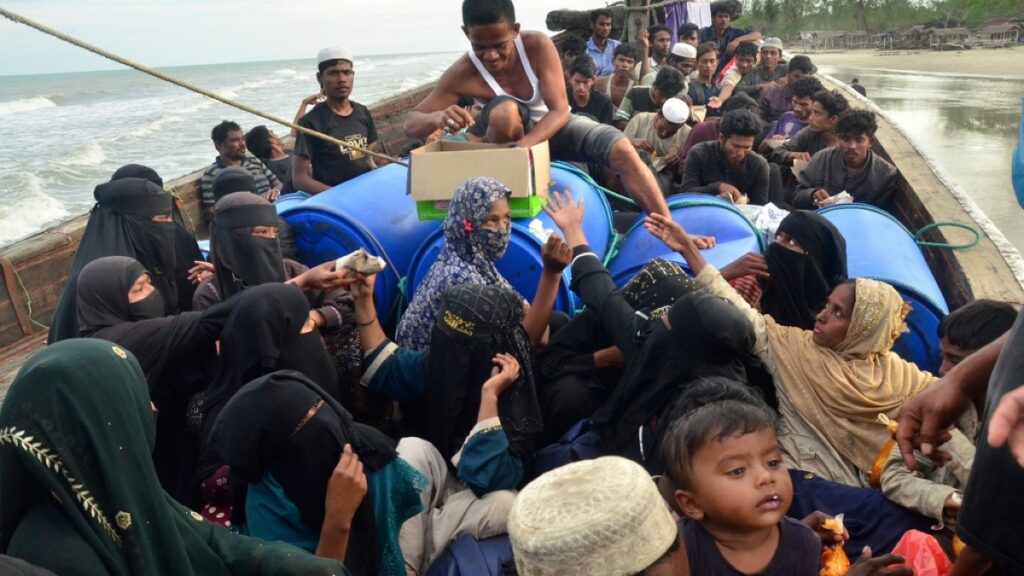
Refugees were initially blocked by local residents from landing, but have now been taken to temporary shelters. More than 70 Rohingya refugees fleeing persecution in Myanmar have arrived at a tourist beach in Indonesia’s Aceh province. Local police chief Nova Suryandaru said a wooden boat carrying 40 men, 32 women and four children ran aground in Pereulak region in East Aceh on Wednesday after its engine broke down. Nova said the refugees were taken to temporary shelters and that authorities were collecting information about their identities. The boat had arrived at the beach in the afternoon but was blocked from landing by locals until about 8pm (13:00 GMT). The police chief said police negotiated with residents, explaining that the boat had been “deliberately damaged” and that it was “impossible” for the boat to operate again. He said many suspected illegal traffickers had damaged the boat, which reportedly set off from Cox’s Bazar in Bangladesh in the hope of reaching Malaysia. According to the United Nations, more than 2,000 Rohingya arrived in Indonesia in 2023 – higher than the combined total of arrivals in the previous four years. Advertisement In the past year alone, more than 600 Rohingya refugees have landed in East Aceh. Earlier this month, more than 260 people – mostly women and children – landed in Pereulak in two boats. About one million Rohingya, who are predominantly Muslim, are currently in camps in Bangladesh after leaving Myanmar. They include about 740,000 who fled a brutal “clearance campaign” in 2017 by Myanmar’s security forces, who were accused of committing mass rapes and killings. The Rohingya minority face widespread discrimination in Myanmar and most are denied citizenship. Adblock test (Why?)
Israeli female soldier released in Gaza as part of ceasefire deal

BREAKINGBREAKING, In return, Israel is due to release 110 Palestinians held in Israeli prisons later today. An Israeli female soldier held in Gaza has been released in the third phase of a ceasefire and captive exchange deal between Israel and Hamas. The release of Agam Berger took place on Thursday as she emerged from under the rubble at the Jabalia refugee camp in Gaza that has repeatedly been targeted by Israeli forces since it launched its war on Gaza in October 2023. Berger was the first of eight captives due to be released today, including five Thai nationals. The release of captives on Thursday will be taking place at locations across Gaza, including outside what used to be the house of former Hamas political chief Yahya Sinwar in the southern city of Khan Younis. For all the latest on the release and what’s happening in Gaza, you can follow our live coverage here. In return, Israel is due to release 110 Palestinians held in Israeli prisons later today. Last Saturday, Hamas released four female Israeli soldiers held in Gaza and 200 Palestinians were released from Israeli jails as part of the agreement that halted more than 15 months of war. More to come … Adblock test (Why?)
‘Gulf of America’: Mexico lodging complaint over Google Maps change
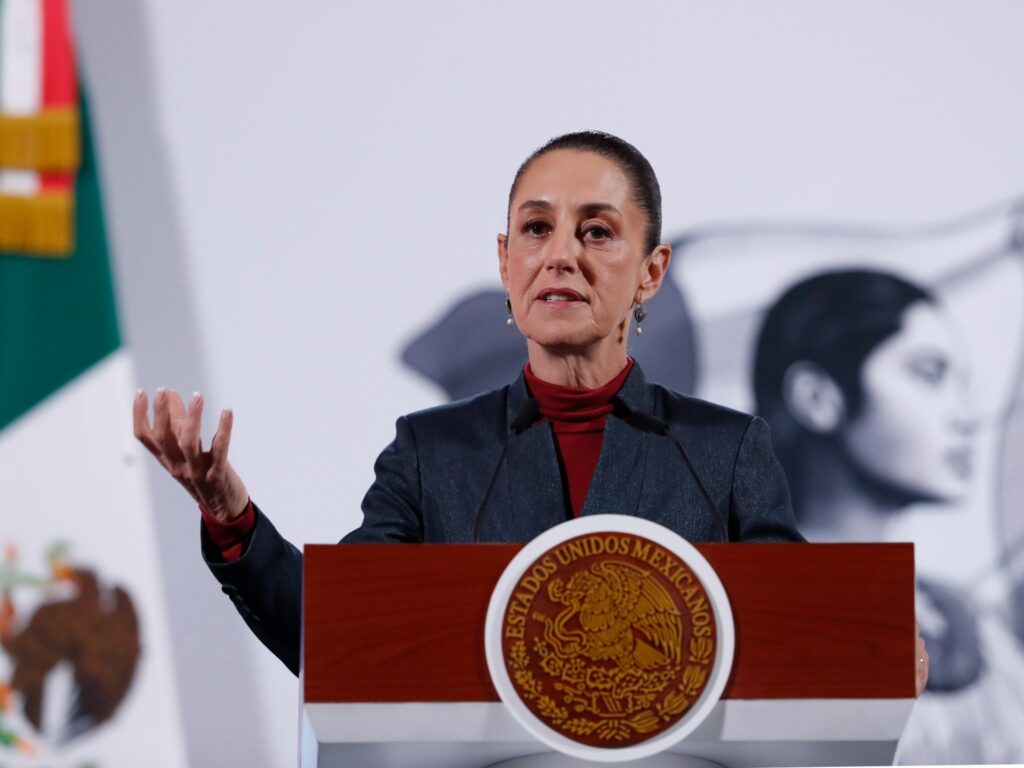
NewsFeed Mexico’s president said her government will lodge a complaint with Google after the tech giant changed “Gulf of Mexico” to “Gulf of America” for US users of its map service. She added that they will request to rename North America as Mexican America. Published On 29 Jan 202529 Jan 2025 Adblock test (Why?)
Israel says eight captives to be released Thursday under Gaza truce deal

Five Thai citizens and three Israeli people held captive by Palestinian armed groups in Gaza are set to be released on Thursday under the Israel-Hamas ceasefire agreement, Israeli Prime Minister Benjamin Netanyahu has said. Netanyahu’s office on Wednesday said Arbel Yehud, Agam Berger and Gadi Moses would be released on Thursday along with five Thai nationals, whose names were not released. The ceasefire agreement between Israel and Hamas that took effect on January 19 hinges on the exchange of Israeli captives held by Palestinian groups in Gaza for Palestinians held in Israeli jails. Hamas has so far released seven captives, with 290 Palestinian prisoners freed in exchange. Bittersweet homecoming In northern Gaza, thousands of displaced Palestinians continued to return to their homes on Wednesday. More than 500,000 Palestinians have made the journey to northern Gaza in the past 72 hours after Israel’s military opened crossing points under the ceasefire agreement, Gaza’s Government Media Office said. Advertisement “I’m happy to be back at my home,” Saif al-Din Qazaat, who returned to northern Gaza but had to sleep in a tent next to the ruins of his house, told the AFP news agency. Mona Abu Aathra managed to travel from central Gaza to Gaza City, though she has yet to assess the full extent of the war’s impact on her home. “We returned to Gaza City with nothing, and there’s no drinking water. Most streets are still blocked by the rubble of destroyed homes,” said the 20-year-old. Abu Aathra expressed relief at being reunited with her family. “It’s the first night we’re together again, me, my mother and my father. Last night, we gathered with my three brothers who were here in Gaza City.” Reporting from Gaza City, Al Jazeera’s Hani Mahmoud said that many families returned to homes that were seriously damaged. “The joy of returning to northern Gaza has faded away in the face of the massive heartbreak and disappointment.” “There are no lifelines [in northern Gaza]. Water and food are only available in very limited quantities, not enough [to provide for the] large number of people making their way back to their destroyed homes,” he added. Aid accusations Since the ceasefire took effect, truckloads of aid have also been allowed by Israel into war-ravaged Gaza. But two senior Hamas officials have accused Israel of slowing down aid deliveries, with one citing items key to Gaza’s recovery such as fuel, tents, heavy machinery and other equipment. “According to the agreement, these materials were supposed to enter during the first week of the ceasefire,” one official said. Advertisement An Israeli spokesperson for the Coordinator of Government Activities in the Territories, the defence ministry body that oversees civil affairs in the Palestinian territories, said Hamas’s accusations are “totally fake news”. Between Sunday and Wednesday, “3,000 trucks entered Gaza”, the spokesperson said. “The agreement says it should be 4,200 in seven days.” A Turkish ship arrived at Egypt’s El Arish port according to the AFP news agency, containing 871 tonnes of humanitarian aid, 300 power generators, 20 portable toilets, 10,460 tents and 14,350 blankets. While the supplies add to hundreds of truckloads of aid that have entered Gaza during the ceasefire, aid workers say it is still far short of meeting the needs of the war-torn population. Meanwhile, Israel is set to implement a ban on the operations of the UN aid agency for Palestinian refugees (UNRWA) in Israel on Thursday. UNRWA’s offices and staff in Israel play a major role in the provision of healthcare and education to Palestinians, including those living in Gaza. Reporting from Amman, Jordan, Al Jazeera’s Laura Khan said the ban could have a “devastating” impact on the agency’s operations in Gaza. “According to the analysts, the most devastating consequences will be in Gaza. They already have more than a million tonnes of aid waiting outside Gaza to be sent into the Gaza Strip,” she said. Within Gaza, UNRWA offers free primary and secondary education to 294,086 children in Gaza, or half of all students in the enclave. Advertisement The UN agency also offers free primary healthcare, and maternal and child health services to 1.2 million people in Gaza – more than half of the population and provides food for 1.13 million people in the enclave. Adblock test (Why?)
Syria’s Ahmed al-Sharaa named president for transitional period
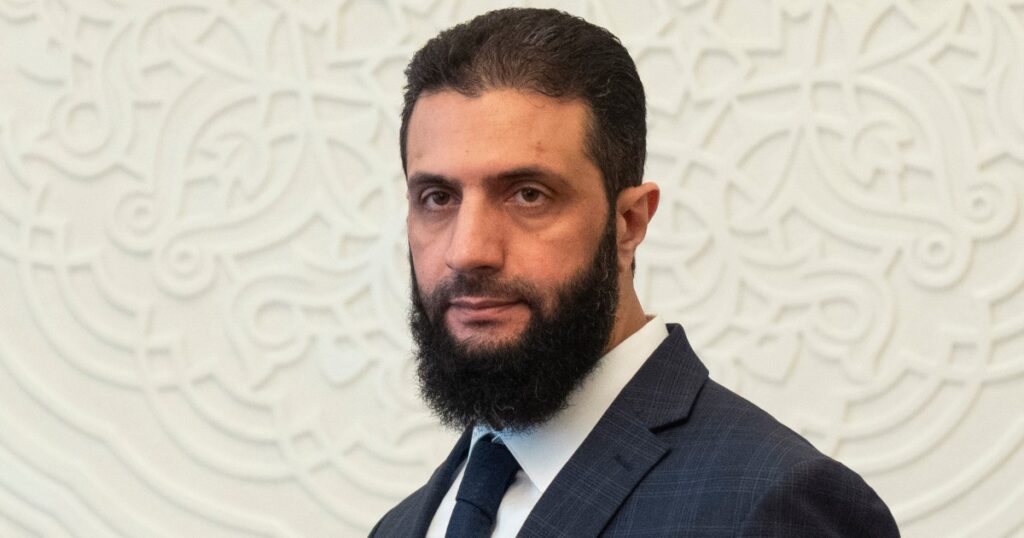
Al-Sharaa was also authorised to form a temporary legislative council for the transitional phase, state media reports. Syria’s de facto leader Ahmed al-Sharaa has been named president for a transitional period, the Syrian state news agency (SANA) has reported. Al-Sharaa was also authorised to form a temporary legislative council for the transitional phase which will carry out its task until a new constitution is adopted, SANA reported on Wednesday, citing military official Hassan Abdel Ghani. Al-Sharaa is the leader of Hayat Tahrir al-Sham (HTS), a former opposition armed group that led the lightning offensive that toppled President Bashar al-Assad last month. Since Assad’s removal, HTS has become the de facto ruling party and has set up an interim government largely composed of officials from the local government it previously ran in rebel-held Idlib province. Abdel Ghani also announced the dissolution of the armed factions in the country, which he said would be absorbed into state institutions. “All military factions are dissolved… and integrated into state institutions,” state news agency SANA quoted Abdel Ghani as saying, and also announcing “the dissolution of the defunct regime’s army” and security agencies, as well as the Baath party, which ruled Syria for decades. Advertisement The announcements emerged during a Damascus meeting of armed factions that fought alongside HTS in the offensive. The gathering was also attended by ministers from the HTS-installed interim government appointed in December. Al-Sharaa, whose group was once an al-Qaeda affiliate, has pledged to embark on a political transition including a national conference, an inclusive government, and eventual elections, which he has said could take up to four years to hold. He has also called for the creation of a new unified national army and security forces, but questions loom over how the interim administration can bring together a patchwork of former rebel groups, each with their own leaders and ideology. Adblock test (Why?)
Russia-Ukraine war: List of key events – day 1,070
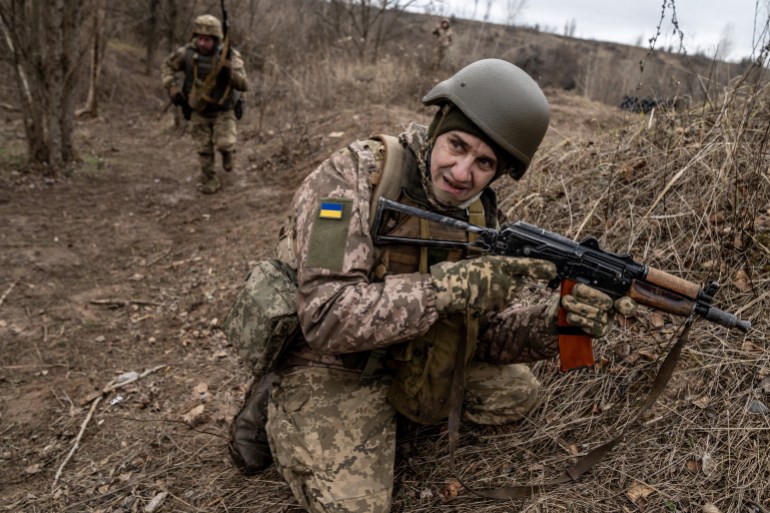
Here are the key developments on the 1,070th day of Russia’s full-scale invasion of Ukraine. Here is the situation on Wednesday, January 29: Fighting Ukraine’s military said it has shot down 65 out of 100 drones launched at Ukraine from Russia overnight. According to the military, 28 drones failed to reach their targets, two returned towards Russia and Belarus, while one remained in Ukrainian air space. Russia’s Defence Ministry claimed its forces captured the Dvorichna settlement in eastern Ukraine’s Kharkiv region. The village was under Russian occupation in 2022 but was reclaimed by Kyiv months later. Russian officials and media outlets reported a barrage of Ukrainian drone attacks targeting oil and power facilities in western Russia. No casualties were reported. Debris from a downed drone sparked a fire at an industrial facility in Kstovo, Nizhny Novgorod, the region’s governor said. Vasily Anokhin, the governor of the Smolensk region in western Russia, said Russian air defence systems destroyed a Ukrainian drone attempting to attack a nuclear power facility in the region. No casualties or damage were reported. Advertisement Military Russian prosecutors began legal proceedings to recover the alleged embezzlement of nearly $33m of funds originally allocated for the defence of western Kursk. The lawsuit names the head of Kursk Region Development Corporation, his deputies and several businessmen as defendants. Ukrainian soldiers of the 28th Infantry Brigade take part in tactical training exercises in a rural area of Ukraine [Jose Colon/Anadolu Agenc] Reuters news agency reported that Ukraine’s government sacked Rustem Umerov, deputy defence minister in charge of weapons purchases, amid infighting over procurement. The move also comes after Umerov criticised Ukraine’s arms procurement efforts saying it failed to deliver results for front-line troops. According to the Ukrainian Anti-Corruption Bureau’s press service, a criminal investigation was opened against Umerov regarding the procurement dispute. The bureau said the probe was launched following an appeal by a civil society watchdog. United States media reports suggest that Washington sent some 90 patriot missiles to Ukraine from Israel via Poland. Russian oil and gas A Kremlin spokesperson said Russia is interested in resuming gas transit via Ukraine. This follows the European Commission’s statement announcing plans to continue talks with Ukraine on natural gas supplies to Europe. Humanitarian aid Ukraine’s President Volodymyr Zelenskyy said humanitarian projects in Ukraine suspended operations due to the US putting a hold on foreign aid. He also said Kyiv would partially replace the funds via public financing for the most critical projects. Advertisement Politics and diplomacy Russia’s President Vladimir Putin said there is a legal pathway for Ukraine to negotiate with Russia, but that Moscow sees no willingness on Kyiv’s part. Putin also said talks would not be possible with Zelenskyy, branding the Kyiv leader’s authority “illegitimate”. Putin also said Moscow’s war with Kyiv could end in two months or less if the West stopped supporting Ukraine. “They will not exist for a month if the money and, in a broad sense, the bullets run out,” he said. Zelenskyy responded to Putin and said the Kremlin leader feared strong leaders and engaging in negotiations to end the war. He also accused Putin of doing everything possible to prolong the war. The European Union proposed to add tariffs on additional farm products from Russia and Belarus while sparing agricultural goods bound for third countries. The implementation of these measures is subject to approval from EU member states and the bloc’s parliament. Adblock test (Why?)