

Iraq: 5 big ISIL bombs found hidden in Mosul’s al-Nuri Mosque
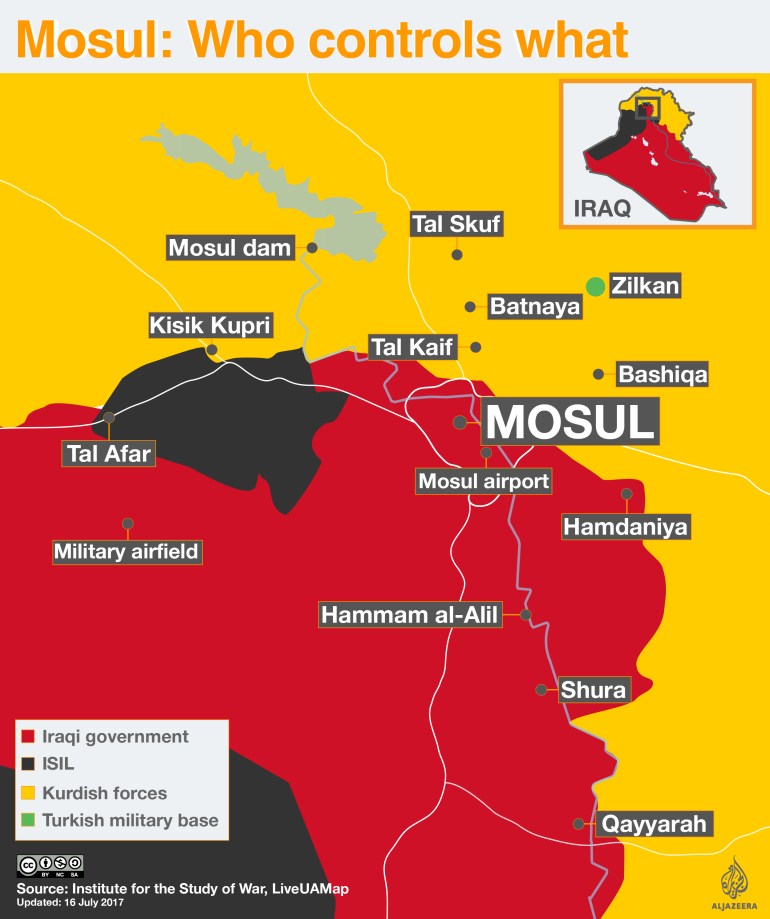
Iraqi authorities requested UNESCO halt all reconstruction operations at al-Nuri Mosque and evacuate the entire complex until the devices are disarmed. Five large bombs were discovered hidden in the walls of the historic al-Nuri Mosque in the city of Mosul in northern Iraq, a remnant of the armed group ISIL’s (ISIS’s) rule over the region. The mosque – famous for its 12th-century leaning minaret – was destroyed by ISIL in 2017 and has been a focal point of the UN cultural agency UNESCO’s restoration efforts since 2020. The UN agency said five large-scale explosive devices, designed for significant destruction, were found inside the southern wall of the Prayer Hall on Tuesday. “These explosive devices were concealed within a specially rebuilt section of the wall,” a UNESCO statement said on Saturday. “Iraqi authorities were promptly notified, secured the area, and the situation is now fully under control. One bomb has been defused and removed while the remaining four are interconnected and will be safely disposed of in the coming days.” Iraqi authorities requested UNESCO halt all reconstruction operations at al-Nuri Mosque and evacuate the entire complex until the devices are disarmed. ISIL leader Abu Bakr al-Baghdadi declared “a caliphate” from the mosque a decade ago on June 29, 2014, leading to its destruction when fighters blew it up during the battle to liberate Mosul in 2017. Mosul remains in ruins The discovery of the bombs underscores ongoing challenges in clearing Mosul of explosives and revitalising its devastated urban areas. International efforts, supported by the United Nations, focus on mine clearance and aiding in the city’s recovery. Despite progress, much of Mosul’s old city remains in ruins, marked by minefield warning signs, highlighting the complexity of post-conflict reconstruction. UNESCO aims to complete the full reconstruction of al-Nuri Mosque by December, “finally erasing the stigma of the Daesh occupation,” the statement said, using the Arabic acronym for ISIL’s name. A decade after the armed group declared its caliphate in large parts of Iraq and Syria, ISIL no longer controls any land, lost many prominent leaders, and is mostly out of the news headlines. Still, the group continues to recruit members and claim responsibility for deadly attacks around the world, including lethal operations in Iran and Russia earlier this year that left many dead. Adblock test (Why?)
March for Nahel Merzouk a year after his killing by French police
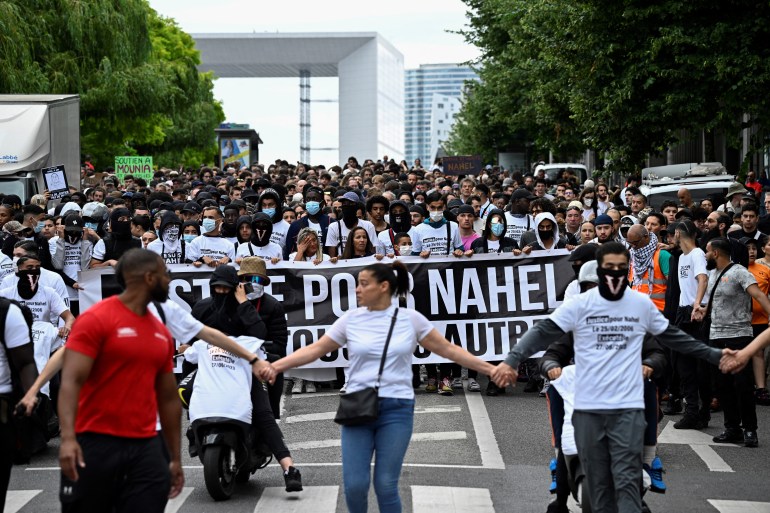
Honourary rally comes a day before France heads to the polls in the first round of the snap elections with racism taking centrestage in the vote. A year after a French teenager with North African roots was killed by a policeman, his mother led a march to pay homage to her son that ended at the scene where he was gunned down without provocation. Several hundred family members, friends, and supporters gathered in the Paris suburb of Nanterre on Saturday to remember Nahel Merzouk, 17, who was shot dead at point-blank range by a police officer at a traffic stop on June 27, 2023 – a killing that sparked shock and days of rioting across France. His mother, Mounia, spoke to the crowd, then broke away in tears. Friends wore white T-shirts with Merzouk’s photo and residents of his housing project held a banner reading “Justice for Nahel”. The march ended at the spot where he was killed and an imam sang and read a prayer. While there was no visible police presence, organisers recruited guards to ensure security for the event. The procession came at a politically fraught time when hate speech blights campaigning for snap parliamentary elections on Sunday. And when an anti-immigration party – that wants to boost police powers to use their weapons and has historical ties to racism and anti-Semitism – is leading in the polls. Merzouk’s mother asked politicians to stay away from the march to avoid tensions. “I don’t have Nahel any more. I just want justice for my son,” she told the crowd. Assa Traore, 39, who has fought for justice since her brother, Adama, died in police custody in 2016, said, “This march is a powerful symbol”. “It means that history can’t write itself without us. We, from the working-class neighbourhoods, are the firsthand victims of these elections. We realised from an early stage the National Rally and far-right parties were a danger for our country and will weaken it,” said Traore, who has roots in Mali. People take part in the march in Nanterre in honour of Nahel Merzouk [Julien de Rosa/AFP] ‘Racial profiling is our daily life’ Reporting from Nanterre, Al Jazeera’s Bernard Smith noted: “Nahel’s death fed a narrative that French police use excessive force and get away with it. The office of the UN Commissioner for Human Rights said the shooting was a ‘moment for the country to seriously address the deep issue of racism and racial discrimination in law enforcement’.” On Sunday, French voters head to the polls in the first round of voting for the National Assembly, the lower house of parliament, which could lead to the country’s first far-right government since the World War II Nazi occupation. Citing “security concerns”, notably in housing projects and other impoverished areas in French suburbs – or “banlieues” – the far-right National Rally (RN) party wants to give a specific new legal status to police. If police officers use weapons during an intervention, they would be “presumed” to have acted in self-defence. Currently, police officers share the same legal status as all French citizens, and must prove they acted in self-defence after discharging a firearm. Meanwhile, the left-wing coalition New Popular Front wants to ban the use of some police weapons and dismantle a notoriously violent police unit. “People fear a victory of the RN party. People from working-class neighbourhoods are afraid every day that our sons, brothers, or husbands will be killed. Racism and racial profiling are our daily life,” Traore said. ‘Conflicting loyalties’ On Friday, the RN faced new accusations of racism with a senior parliamentarian declaring a former education minister of Moroccan descent should never have got the job because of her origins. Lawmaker Roger Chudeau declared that Najat Vallaud-Belkacem’s appointment to the education portfolio in 2014 was “not a good thing” for France, saying her French and Moroccan citizenship meant she had “conflicting loyalties”. The incidents have done little to dent the popularity of the National Rally, however. Opinion polls suggest the RN party could dominate the next parliament after the July 7 second round of voting and secure the prime minister’s position. In that scenario, Macron would retain the presidency until 2027 but in a sharply weakened role. Adblock test (Why?)
At least 12 killed during spate of Russian attacks on Ukraine
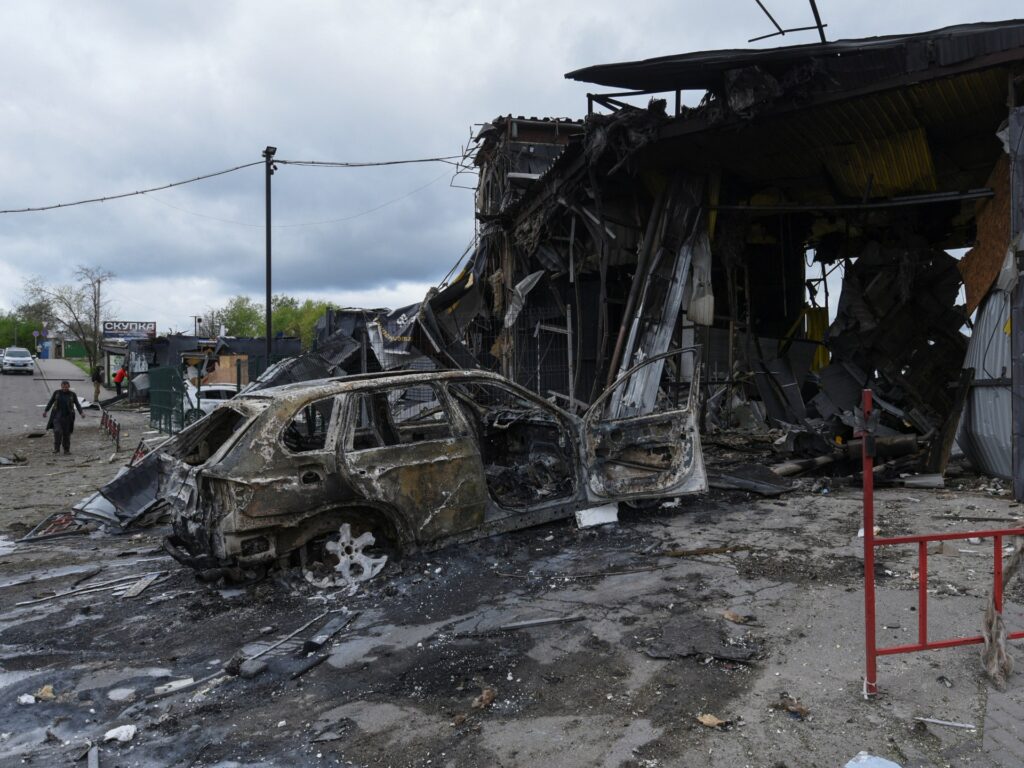
Deadly attacks come as Russia continues to stretch out Ukrainian forces in areas along the eastern front. Russian attacks across Ukraine killed at least 12 people, including four children, as fighting intensifies during a series of offensives into several regions of the war-battered country. Ukrainian President Volodymyr Zelenskyy warned on Saturday the death toll in the village of Vilniansk – near the regional hub of Zaporizhzhia – may increase. “Seven people, including two children, have been killed by a Russian missile strike in the Zaporizhzhia region,” Zelenskyy said on social media, calling for his Western allies to speed up weapons deliveries. “Any delay in decisions in this war means the loss of human lives.” Ukraine’s Interior Minister Igor Klimenko said 18 people – including four children – were also wounded in Vilniansk, 30km (18 miles) from the main city of Zaporizhzhia. The attack occurred “in broad daylight on a weekend in a place where people were spending their leisure time downtown – without any military infrastructure”, Governor Ivan Fedorov said. Ukrainian officials reported attacks on Saturday killed four people and injured 23 in eastern villages, while rescuers in the central city of Dnipro dug through rubble after an attack ripped through a nine-storey residential building, leaving one dead and 12 wounded. The heavy attacks on Saturday come as Russia continues to stretch out Ukrainian forces in several areas along the 1,000km (600 mile) front. Moscow has stepped up air raids in a bid to drain Ukraine’s resources, often targeting energy facilities and other vital infrastructure. Ukraine’s military said, “The total number of hostile attacks along the entire front line has now risen to 90.” Eastern Donetsk’s regional Governor Vadym Filashkin said Russian forces shelled populated areas 13 times over the past 24 hours. Seven people, including two children, were killed by a Russian missile strike in the Zaporizhzhia region. At the moment, we know about eleven injured people, three of them are children. Unfortunately, the number of casualties may still increase. Our cities and communities suffer… pic.twitter.com/dbKQT8KTZK — Volodymyr Zelenskyy / Володимир Зеленський (@ZelenskyyUa) June 29, 2024 Zelenskyy said the Dnipro attack was a reminder to Ukraine’s allies the country needs more air defence systems. “This is why we constantly remind all of our partners: only a sufficient amount of high-quality air defence systems, only a sufficient amount of determination from the world at large can stop Russian terror,” he said. Fighting in Ukraine has intensified in several directions after Russia launched offensives from several directions, taking advantage of Ukraine being on the back foot militarily. Russian officials also reported Ukrainian attacks with a drone attack killing at least five people in Russia’s Kursk region. Two children were among the victims in the village of Gorodishche on the Russian-Ukrainian border, Governor Alexey Smirnov said on social media. Adblock test (Why?)
India vs South Africa: ICC Men’s T20 World Cup 2024 final Barbados
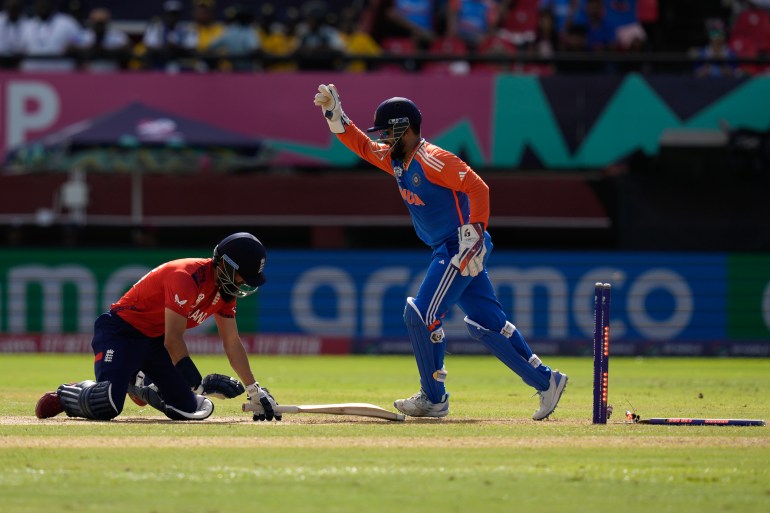
Bridgetown, Barbados – And then there were two. India and South Africa have made it to the T20 World Cup Final, each side undefeated through the group stage, the Super Eights and the semifinals. Both teams arrived in Barbados on Thursday night ahead of Saturday’s final, such is the hectic – even shambolic – nature of the congested fixtures. South Africa waited all day at the airport for a delayed charter flight from Trinidad. India flew after their semifinal win over England in Guyana, eventually landing around midnight. But both teams have been on far longer journeys, and faced greater obstacles than logistics, to reach this point at Kensington Oval. India have met and overpowered two nemeses. They banished the sour memories of last year’s defeat by Australia in the World Cup Final at Ahmedabad. They blew away England, the defending champions who blasted them out of the 2022 T20 World Cup in the semifinal in Adelaide, with a semifinal reversal in Georgetown. Nine players from the 2023 one-day squad are in Barbados – and yet, this looks like a wholly different India team. They have no discernible weakness and, while their victories have not all been easy, they have never looked like losing. India’s wicketkeeper Rishabh Pant, right, celebrates after stumping out England’s Moeen Ali, left, during their comprehensive victory in the second T20 World Cup semifinal [File: Ramon Espinosa/AP Photo] In the US and the Caribbean, there has not been the same wall-to-wall television and print coverage of their every movement. The crowds and the travelling press pack have often been sparse compared with those that followed them last year in India. It has perhaps unburdened them to play away from the stifling pressure of expectation in a home World Cup. A day before the final, there was no sign of them at Kensington Oval. No news conference, no training, no inspection of the pitch, no external forces bearing down on them. Rohit embodies India’s T20 World Cup endeavour Their captain has embodied their newfound mindset. Sharma’s batting has been brave and aggressive, never more so than in India’s last two matches against Australia and England. His 92 off 41 in Saint Lucia was an extraordinary display of fearlessness and power, and his half-century in the semifinal set the tone for India’s domination. Ahead of the England match, he spoke of the change in approach India has attempted but only really mastered in this tournament. “We’ve tried to play with very free minds in the last two or three years that we’ve played our T20 cricket and even the ODI cricket,” Sharma said in Guyana. “So not a lot has changed as such. We saw throughout this tournament, the conditions had its own challenges. And we want to do that, we want to be a smart cricket team, we want to assess and play. The moment we realise it’s a good pitch, we want to play the way we play. “I have tried and kept things very simple for myself personally and also for the team because … these guys have played a lot of cricket, a lot of high-pressure games. You’ve got to try to give them the role clarity, which I think we have done pretty well. And then obviously, we want to rely on them making good decisions on the field. “You have to have an open mind when you want to do things, but as much as the team is concerned and I’m concerned, our priority was to keep things very simple and give them the freedom that you all want playing this format.” South Africa’s David Miller with former player Dale Steyn [File: Ash Allen/Reuters] While South Africa do not carry the same burden of more than a billion people’s expectations, the current players have broken free of the millstone that weighed down even the greats of the past in becoming the first men’s team to win a semifinal. Of the 2023 World Cup squad, 11 have returned for this tournament, carrying painful memories of a three-wicket defeat by Australia in the semifinal. But unlike India, their albatross is intergenerational; they have gone where the likes of AB de Villiers, Dale Steyn, Jacques Kallis, and Allen Donald all failed to go. Their path to the final has been more fraught, mostly marked by tight finishes and near misses, the sort of scenarios that have seen off better sides. But, according to their captain, the difference is that this team has won the key moments and maintained calm under pressure. “There’s been close moments in games that would have probably affected the result and we managed to win those moments,” Aiden Markram said in his pre-match news conference. “To have done them two, three, maybe four times throughout the competition so far has given the team the belief that you can win from any position, which I think is quite important for a team to have. “We’ve been together now for quite a few years as a white-ball squad and guys finally really understand their roles within the team. I think that’s starting to help us win those small margins and those knife-edge moments. “There’s a really strong will to win. I don’t think it’s on the level of desperation, but it’s an extreme hunger to win games of cricket, and we haven’t achieved ideally on the world stage what we would have liked to and I think that gets the juices going a bit for the boys to finally achieve it. “You’ve seen it in the close results, probably have not played some of our best cricket in certain games, but that will to win sort of drives you to, by hook or by crook, get the job done. That’s probably one thing that’s really stood out for me in this group.” South Africa receive ‘a lot of support’ ahead of India showdown These players have all shared the pain of South Africa’s knockout history, as either a player or a fan. Markram
Preliminary election results show Mongolian People’s Party in the lead
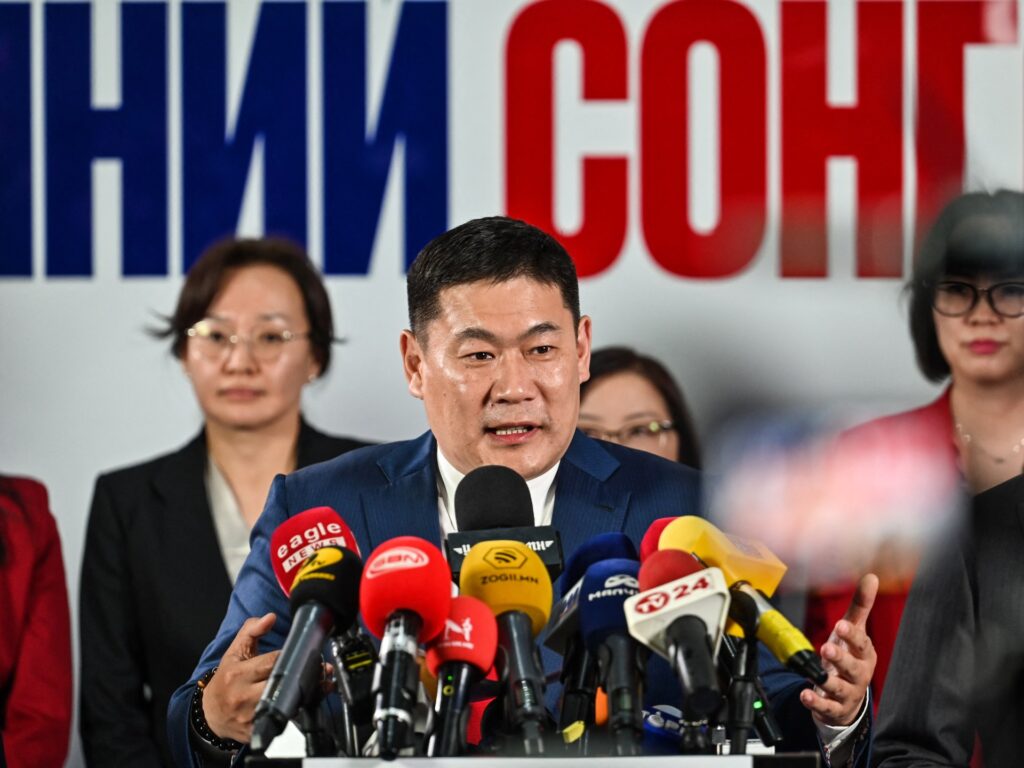
Prime Minister Luvsannamsrain Oyun-Erdene declares victory in the country’s parliamentary elections but the opposition makes significant gains. The governing Mongolian People’s Party retained a slim majority in the country’s parliament with the opposition Democratic Party making major gains, according to preliminary results reported early Saturday. Mongolia’s Prime Minister Luvsannamsrain Oyun-Erdene declared early victory in parliamentary elections dominated by deepening public anger over corruption and the state of the economy. The prime minister told a news conference in the capital, Ulaanbaatar, his governing party won a majority in the 126-seat body. “According to the pre-results, the Mongolian People’s Party [MPP] has 68 to 70 seats,” he said. With 99 percent of the vote counted, tallies by Mongolian media indicate the opposition Democratic Party won about 40 seats – a big jump from 2020. The results indicate opposition parties have been able to capitalise on voter discontent and eat into the governing party’s majority. “Through this election, people gave their evaluation on the past policy mistakes of the ruling party,” said Democratic Party leader Gantumur Luvsannyam. The MPP is the successor to the communist party that ruled Mongolia with an iron grip for almost 70 years. It remains popular – particularly among rural, older voters – and commands a sprawling, nationwide campaign apparatus. Meanwhile, results tallied by local media outlet Ikon showed the minor anticorruption HUN party won eight seats. The votes will be counted by hand on Saturday to ensure accuracy, after which an official result is expected. ‘New page in democracy’ On Friday, people across the vast, sparsely populated nation of 3.4 million, sandwiched between China and Russia, voted to elect 126 members of the State Great Khural. The streets of Ulaanbaatar, home to almost half of Mongolia’s population, were decked out with colourful campaign posters touting candidates from across the political spectrum, from populist businessmen to nationalists, environmentalists and socialists. Long lines snaked around corridors at a polling station in a school in downtown Ulaanbaatar, with many voters wearing traditional clothing. Tsagaantsooj Dulamsuren, a 36-year-old cashier pregnant with her fourth child, said the election offered her a chance to “give power to the candidates” she really wanted to support. “I want lawmakers to provide more infrastructure development … and more jobs in the manufacturing industry for young people,” she said outside a polling station at a hospital near the capital. Corruption scandals have eroded confidence in the government and political parties. Besides the centre-right Democratic Party, the HUN Party emerged as a potential third force. In addition to corruption, major issues for voters included unemployment and inflation in an economy rocked first by the COVID-19 pandemic and then by the fallout from the war in Ukraine. [embedded content] Many younger voters, however, expressed disappointment with the governing party and said they chose younger candidates who they hoped would bring change. “I am very disappointed in the result,” said Shijir Batchuluun, 35, a marketing manager in Ulaanbaatar, suggesting the younger generation had not turned out to vote. “It’s all the same thing again. Singers, wrestlers, businessmen won.” The prime minister thanked even those who did not vote for his party, saying that, for the first time, five to six parties had been elected to the parliament reflecting a “new page” in Mongolian democracy. “Having diverse and contrasting opinions is the essence of democracy. Your criticisms will be reflected in our actions,” he said. Adblock test (Why?)
Nike stock plunges on surprise forecast of drop in sales
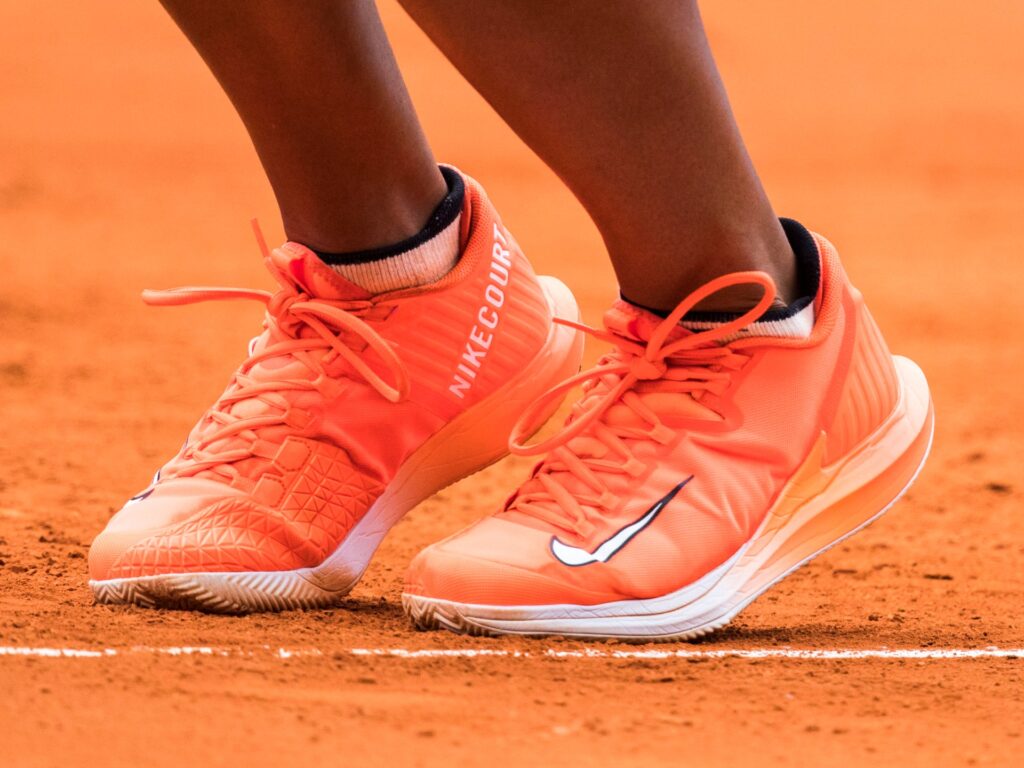
It was the worst day ever for the stock with losses wiping out $28.4bn from Nike’s market valuation. Nike’s stock has plunged as a forecast for a surprise drop in annual sales amplified investor concerns about the pace of the sportswear giant’s efforts to stem market share losses to upstart brands such as On and Hoka. It was the worst day ever for the stock, which slumped 20 percent on Friday, with the losses wiping out $28.41bn from the company’s market valuation. On Thursday, the company had projected a mid-single-digit percentage fall in fiscal 2025 revenue, compared with analysts’ estimates of a near 1 percent rise. “Nike is at a point where they want to put out the most conservative guidance they can, such that they’re setting the bar low for themselves and hopefully it’s a bar they can beat,” said Art Hogan, chief market strategist at B Riley Wealth. Its forecast dragged shares of rivals and sportswear retailers across Europe, the United Kingdom and the United States on Friday. British sportswear retailer JD Sports lost 5.4 percent at Friday’s close, while Germany’s Puma fell 1 percent. Adidas’s shares were up marginally. “Nike’s been under pressure for a couple of years now. I certainly think they have an opportunity now that the valuation’s been reset extremely low to start getting some sponsorship, but it’s just not going to happen today or this week,” Hogan added. The company’s US market share in the sports footwear category fell to 34.97 percent in 2023 from 35.37 percent in 2022, and 35.4 percent in 2021, according to GlobalData. Meanwhile, other sporting goods brands such as Hoka, Asics, New Balance and On accounted for 35 percent of the global market share in 2023 compared with the 20 percent held over the 2013-2020 period, according to a June RBC research report. To curb a worsening sales decline, Nike has cut back on oversupplied brands including Air Force 1, as part of a $2bn cost-cutting plan launched late last year. The sportswear giant is also tweaking its product lineup to roll out new $100-and-under sneakers in countries around the world to appeal to price-conscious consumers. It will also roll out this year an Air Max version and Pegasus 41 with a full-length foam midsole made from ReactX to boost sustainability. “This is still Nike, and we expect their size and scale to prove a long-term competitive advantage, but the burden of proof [is] on management execution at this point,” said BMO Capital Markets analyst Simeon Siegel. Management shakeout? The underperformance over the past year has led to some Wall Street analysts raising the possibility of a management shake-up ahead of the company’s investor day this fall. “In retail, if you have two bad quarters, you’re usually out the door,” said Jessica Ramirez, senior analyst at Jane Hali & Associates. “I think it [a leadership change] is very much needed.” CEO John Donahoe is in his fourth year of a five-year commitment as Nike’s top boss. The former eBay CEO, who succeeded Mark Parker, was hired to focus on strengthening the company’s digital channel sales. “I have seen Nike’s plans for the future, and wholeheartedly believe in them. I am optimistic in Nike’s future, and John Donahoe has my unwavering confidence and full support,” Phil Knight, co-founder and chairman emeritus, said in a statement. At least six brokerages downgraded the stock, and 15 cut their price targets. Adblock test (Why?)
Kenya protests simmer after deadly week of demonstrations

Hundreds gathered for the funeral of a teenage demonstrator killed during Kenya’s antigovernment protests as the death toll from days of unrest rose to 27. Three more protesters died overnight Friday as police continued a violent crackdown with the Kenyan High Court ordering security forces to halt the firing of live rounds, rubber-coated metal bullets, tear gas and water cannon into crowds. The turmoil unfolded as young activists successfully forced the government to shelve $2.7bn in tax hikes this week, and now focus on ending years of what they see as endemic corruption and shoddy governance. Protesters say the finance bill that President William Ruto abandoned on Wednesday was only a symptom of the problems plaguing a country, where many young people have few job prospects despite strong economic growth. After pledging to scrap the tax plan, Ruto now faces growing pressure to resign. The High Court ruled in favour of a petition submitted by a lawyer representing the political opposition and human rights groups demanding a halt to the use of potentially deadly weaponry by police against protesters. It also ordered police to refrain from “extrajudicial killing, abduction, and torture” against the antitax demonstrators. Demas Kiprono, acting executive director of the Kenyan Section International Commission of Jurists, told Al Jazeera the move by the High Court to ban violent police tactics shows an acknowledgement that “something has gone wrong”. “The petition claims the weapons and tactics used by police during the protests were egregious and violated a raft of human rights from expression, assembly, to the right to life,” said Kiprono. But he noted the court does not have any mechanism to ensure police comply with the ruling. “So it is upon other instruments of government – the national police service commission, the executive – to respect this order.” ‘We want better living conditions’ Writer and activist Nanjala Nyabola said most of those involved in the recent protests were motivated by legitimate, strong grievances against the government. “Until those grievances are addressed, it’s unlikely that they’re going to be willing to make concessions.” How the diffuse and leaderless movement, which largely organised via social media, pursues its objectives remains an open question – and a source of internal debate. Christine Odera, co-chair of the Kenya Coalition on Youth, Peace and Security, a civil society organisation, said it needed to formalise its structures to advance young people’s interests and speak to the government. “If we go organically then we might lose the whole conversation,” said Odera, who participated in the protests. “The president has said we need to have conversations. All of us cannot sit in a stadium and have a conversation.” Others disagree. Ojango Omondi of the Social Justice Centres Working Group, a community activist group in a poor district of Nairobi, said establishing structures and national representatives could allow the movement to be corrupted by politicians. “We don’t need to negotiate anything,” he said. “All we want is better living conditions. All we want is the leaders to stop using our resources … to sponsor their lavish lifestyle.” Another moment to watch for could be the government’s next proposal to raise revenues. Some protesters suspect it will still try to ram tax rises through. In a country where protest has traditionally been driven by ethnic affinities, the current youth-driven demonstrations have stood out for building unity around common grievances. ‘Class and wealth disparity’ But cracks are already emerging. Despite Ruto’s U-turn on the tax hikes, some protesters called for a planned march on his residence to go ahead on Thursday in an attempt to remove him from power. Others rejected the idea as a dangerous gambit. In the end, there were smaller protests in several cities. In Ruto’s hometown and political stronghold of Eldoret – where thousands from different ethnic groups took to the streets on Tuesday – a human rights activist said some tensions resurfaced since the president withdrew the tax bill. Nicholas Omito, CEO of the Centre for Human Rights and Mediation, said demonstrators from Ruto’s Kalenjin ethnic group argued protests should end now, while ethnic Kikuyus insist they should continue until Ruto resigns. Protesters posting on social media accused local politicians of trying to incite trouble to undermine the movement. Nyabola, the writer, said she did not think that ethnic divisions posed a risk to a movement that distinguished itself with its sense of national purpose. “You’re never going to get rid of it completely,” she said. “But for now, the class and wealth disparity between politicians and ordinary people has been the focus.” Adblock test (Why?)
How Rob Walter helped South Africa reach the ICC T20 World Cup 2024 final

After years of suffering the pain of late tournament knockouts, South Africa stand on the brink history and glory in their first ever ICC Men’s Cricket World Cup final. And after several terms of high-profile international coaches, it is the relatively unknown Rob Walter who has brought them here. The Proteas booked their place in the final of the ICC Men’s T20 World Cup 2024 with a brutal defenestration of Afghanistan and will now face India in Barbados on Saturday. Walter is the antithesis of high-profile coaches – he was never a star player, he stays resolutely grounded in interviews and if he is prone to outbursts of raw emotion he does not put them on public display. Just one journalist attended his news conference before South Africa’s semifinal on Wednesday. 🟡🟢 FINAL BOUND | #SAvAFG The dream continues, South Africa! ✨🇿🇦🚀 📖 For the first time in history, the Proteas are through to the ICC T20 World Cup Final. See you in Barbados! 🏟️#WozaNawe #BePartOfIt#OutOfThisWorld #T20WorldCup pic.twitter.com/yW7n6vgyrI — Proteas Men (@ProteasMenCSA) June 27, 2024 Monkey off the back The previous 12 South African white-ball coaches include storied names such as Mike Procter, Bob Woolmer, Mickey Arthur and Mark Boucher and yet it is the 48-year-old Walter who has succeeded in shaking off the chokers’ tag that dogged a side that could reach semifinals, but no further. Walter said he believed the team had already overcome their biggest psychological hurdle. “Getting through the semifinal, not having done that before, came with its own pressure,” he told the AFP news agency. “Now that they’ve done that I’m just hoping the guys will go out, play freely and express themselves.” Up until now, South Africa’s results in the knockout stages of a men’s ICC World Cup made for woeful reading. The Proteas played in six 50-over World Cup finals and lost all of them, in a combination of cruel and comical circumstances. In the T20 version, they were knocked out at the last-four stage twice, in 2009 and 2014. While South Africa will be relieved to have the semifinal monkey off their backs, their former players and fans will be hoping their team can deliver the ultimate prize on Saturday. Former fast bowler Dale Steyn, who is on the tournament’s experts’ panel, was seen on the sidelines after South Africa’s win over Afghanistan. The speedster was on the losing side of South Africa’s last two semifinals, at the 50-over World Cup in 2015 against New Zealand and the 2014 T20 World Cup against India. Steyn was visibly emotional as he embraced the South African players and later admitted in a social media post: It’s emotional down here.We’re into a final — Dale Steyn (@DaleSteyn62) June 27, 2024 If they win, it will be a significant triumph for Walter, whose playing career peaked at schoolboy provincial level and who had only been involved in coaching at age-group level before becoming South Africa’s strength and conditioning coach in 2009, a position he held until 2013. The recommendation of previous national coach Gary Kirsten helped Walter land a job as head coach of the Titans, South Africa’s most successful franchise. The team won three titles in three seasons, leading to head coach positions with Otago and Central Districts in New Zealand. He was appointed South African white-ball coach in January 2023 and has brought a calm to the dressing room, although he admits that outward appearances do not tell the whole tale. “I wouldn’t say there aren’t emotions deep inside, but there’s a calmness required on the side of the field,” he said. “Our job as coaches is to prepare the guys beforehand and make sure that everything’s in place before the first ball is bowled. “Once that happens we try to stay in communication with the captain, but basically, it’s over to the players. “I try not to get too emotionally attached to the result, more to concentrate on how we prepare.” Dale Steyn bowled the last ball that saw South Africa go out of the Cricket World Cup in 2015 [File: Anthony Phelps/Reuters] Dale Steyn embraces South Africa batter David Miller after their semifinal win over Afghanistan [Ash Allen/Reuters] ‘Very level-headed, very calm’ The results, though, have all gone South Africa’s way with eight successive wins, several of them nail-bitingly close. The only truly comprehensive win was against Afghanistan in the semifinal in Trinidad on Wednesday where the Proteas romped to a nine-wicket win after bowling out their opponents for just 56. Walter has high praise for captain Aiden Markram, who he describes as “very level-headed, very calm,” with a tactical astuteness that has enabled him to make crucial decisions under intense pressure. Given that his team have played on atypical and unpredictable pitches, Walter said they would not have any preconceived ideas about what to expect in Barbados. But Walter is confident they will be able to rise to the occasion if conditions in Barbados are more favourable for batsmen, as suggested by earlier results. “The batters have all contributed at different times. We’ve had two decent wickets for batsmen which in eight games is not a lot. “The bowling unit has been unbelievably good, but the batters I am sure are looking forward to better conditions.” If South Africa succeed on Saturday, there can be little doubt that Walter’s low profile may not stay that way for much longer. Ricky Ponting has some words of wisdom for the Proteas before the all-important #T20WorldCup 2024 Final 🙌#SAvIND | More ➡️ https://t.co/QNBX3PKpKJ pic.twitter.com/EHQ9teXoHM — T20 World Cup (@T20WorldCup) June 28, 2024 Adblock test (Why?)
Tension and stand-offs as South Africa struggles to launch coalition gov’t

Johannesburg, South Africa – Nearly a month since landmark national elections saw the African National Congress (ANC) lose its majority for the first time, forcing it to form a coalition to govern South Africa, a deadlock stemming from the allocation of cabinet positions threatened to topple the whole house of cards. Tense negotiations, mainly between the ANC and the Democratic Alliance (DA), the two biggest parties in the coalition, led to delays this week of President Cyril Ramaphosa announcing his cabinet in the Government of National Unity (GNU). Fears were heightened and markets reacted badly to news of DA leader John Steenhuisen threatening to withdraw from the coalition amid leaks of letters between the two parties’ leaders showing them at loggerheads. But by Friday, as Ramaphosa was due to meet Steenhuisen, the political bartering that characterised the last two weeks of talks showed signs of an imminent agreement. The rand – which fell amid news of the discord – strengthened following indications that a cabinet announcement was pending and that the government would include the market-friendly, right-leaning DA. Political analyst Khaya Sithole said markets were in favour of the DA being part of the GNU – a multiparty coalition – because the party is unlikely to demand radical shifts in economic policy. “A GNU with the DA gives the perception that there will be continuity in economic policy because the ANC will maintain the trajectory it was on,” Sithole told Al Jazeera. He said the DA – which holds 87 parliamentary seats compared with the ANC’s 159 – would not demand new policies or have sufficient political muscle to push through radical changes. “Markets are buying into the continuation of government policies and programmes,” Sithole said, adding that, “an ANC partnership with the DA does not upend the script.” He said markets adversely reacted to fears that the DA may pull out of the GNU because the alternative – a possible allegiance between the ANC, the left-wing Economic Freedom Fighters (EFF) and other smaller parties – represented uncertainty. ANC supporters hold placards protesting against partnering with the DA [Siphiwe Sibeko/Reuters] Leaked letters The negotiations between parties in the GNU over cabinet positions were marked by a flurry of meetings and correspondence between Ramaphosa and party leaders. During talks, the DA’s demands for specific powerful ministerial positions prompted a stern warning by Ramaphosa in a letter, leaked to the media, that the “DA has jeopardised the foundation of setting up a Government of National Unity by moving the goalposts”. The DA began negotiations with a long list of demands which included 11 cabinet minister posts, a dozen deputy minister positions – including the deputy finance post – and other changes in governance legislation. The party first demanded the deputy president position but conceded when ANC negotiators pushed back. The ANC labelled the initial demands from the DA as “outrageous” and sought to negotiate with other parties as a backup. A subsequent meeting between Ramaphosa and Steenhuisen appeared to have settled differences and calmed tensions. However, after agreeing to six positions in the cabinet, the DA dug in. Steenhuisen – in a letter to Ramaphosa – threatened to withdraw from their coalition agreement if Ramaphosa did not award the party eight ministerial positions. “On a pure proportional basis, out of a Cabinet of 30, the DA’s share of support within the GNU translates to nine positions rather than the six that are currently on the table. Similarly, we cannot see the rationale for reducing the number of DA Deputy Ministries to only four,” Steenhuisen said in a letter to Ramaphosa dated June 24. Democratic Alliance (DA) party leader John Steenhuisen [Nic Bothma/Reuters] Ramaphosa took a hardline response, giving the DA a take-it or leave-it offer, after refusing to increase the number of positions offered to the DA. “I must advise that we are continuing to hold discussions with other parties over the portfolios they could occupy as we seek to finalise the agreement on the GNU. I need to advise that the task of setting up government is quite urgent as we cannot continue with this paralysis,” Ramaphosa wrote in a letter dated June 25 that was leaked to the media. The DA has 21 percent of electoral support compared with the ANC’s 40 percent. The other parties who have signed a declaration of intent make up 8.5 percent of combined electoral support. ‘Almost done’ On Friday, media reports quoting DA officials said the party is still committed to working out a deal with Ramaphosa. Meanwhile, Fikile Mbalula, the ANC secretary-general, posted on X that parties were “almost done with GNU discussions … It will be done as promised.” Good morning South Africa almost done with GNU discussions,In the best interest of all south africans . It will be done as promised. — ANC SECRETARY GENERAL | Fikile Mbalula (@MbalulaFikile) June 28, 2024 Also on Friday, Ramaphosa announced that the opening of the new parliament would take place on July 18. The 71-year-old leader was re-elected for a second full term after the ANC’s unprecedented loss of support in the May 29 election – the first time since the end of apartheid in 1994 that the party got less than a 50 percent majority. In the aftermath, the ANC opted to form a coalition government. But they decided against a firm grand coalition with the DA, and opened up negotiations with the smaller parties represented in government to be part of the GNU. The GNU now comprises 10 parties, including the nationalist Inkatha Freedom Party (IFP), right-wing populist Patriotic Alliance (PA), and the Pan Africanist Congress (PAC), among others. Political analyst and commentator Lukhona Mnguni said the DA’s demands proved that their participation in government alongside the ANC remained “an absolute gamble for them”. “They want enough insulation from the ANC and they want to prove that they have enough isolation from the ANC,” Mnguni told Al Jazeera. He said the DA fears being swallowed by the ANC in the GNU
Trump calls Biden a ‘bad Palestinian’ in presidential debate

NewsFeed Donald Trump accused US President Joe Biden of being soft on Hamas and Biden defended his support for Israel during the first presidential debate of this year’s election campaign. Published On 28 Jun 202428 Jun 2024 Adblock test (Why?)