

Why Egypt backed South Africa’s genocide case against Israel in the ICJ

As Israel devastates Gaza, Egypt has largely had to watch on with rising concern about the developments on its border. Its border with the Palestinian enclave has been a route for aid going in and people coming out but Israel has had the ultimate say over access to the border, even if it did not have a physical presence there until last week. And it was that move – to send Israeli troops to the Rafah border crossing – that experts believe has cemented Egypt’s belief that Israel is not taking its security and political concerns seriously, and is instead “disrespecting” them. Egypt has now taken its own steps – on May 12, the Egyptian Ministry of Foreign Affairs confirmed that Egypt had joined South Africa’s International Court of Justice (ICJ) genocide case against Israel. “The significance of this move is that it is sending a signal that Egypt is not happy with what’s happening in Gaza and how Israel is behaving,” said Nancy Okail, an expert on Egypt and the president and CEO of the Center for International Policy, even as she downplayed the effect of Egypt’s decision on the ICJ’s final verdict, labelling it a “symbolic gesture”. Egypt has grown increasingly alarmed with Israel’s military operations in Rafah, where about 1.5 million Palestinians from all over Gaza had sought refuge. [embedded content] The takeover of the Philadelphi Corridor, which separates Egypt from Gaza, is particularly worrying for Cairo; the Egyptian parliament has warned that the Israeli military’s presence there was a violation of the Camp David Accords that brought peace between Egypt and Israel. “The way Israel has acted in the last week and a half has been incredibly troubling for Egyptian officials,” said Erin A Snyder, a scholar of Egypt and a former professor at Texas A&M University. “They have been effectively showing disrespect for the relations that they have [with Egypt].” Red lines crossed? The possibility that Israel’s ultimate goal in Gaza is to force out its Palestinian population has worried Egypt since the beginning of the war in October. Early on, Israel’s intelligence ministry drafted a paper that proposed the transfer of Gaza’s 2.3 million people to Egypt’s Sinai Peninsula. Although the Israeli government downplayed the report, Israeli politicians, including the far-right duo of Finance Minister Bezalel Smotrich and National Security Minister Itamar Ben-Gvir, said they supported the “voluntary” migration of Palestinians from Gaza. The repeated suggestions have set off alarm bells in Egypt, which views any such transfer of millions of Palestinians into its territory as a red line that cannot be crossed, and President Abdel Fattah el-Sisi has warned Israel against any such move. Egyptian President Abdel-Fattah el-Sisi at a news conference in Cairo, on October 25, 2023 [Christophe Ena/Pool/AFP] “Egypt has been sounding the alarm on the destabilising prospects of an Israeli military operation in Rafah and on any military action that could result in the alleged resettlement plan that emerged out of Israel last fall,” said Hesham Sallam, a scholar on Egypt and the Middle East at Stanford University. Israel has seemingly taken measures to assuage Egypt’s concern by instructing Palestinians in Rafah to evacuate to al-Mawasi, a coastal area to the west of Rafah, away from Egypt. Israel claims that al-Mawasi is a “safe humanitarian zone”, but aid groups say tens of thousands of people are crammed into the area without access to adequate food or water. Over the last week, 450,000 people have fled Rafah, according to the United Nations, and nearly a million remain. “The Israelis are intent on wrapping things up in Rafah in a way that looks similar to what they did in Khan Younis, or at least eventually,” said H A Hellyer, an expert on Middle East geopolitics at the Carnegie Endowment for International Peace and the Royal United Services Institute. “That is deeply concerning to Cairo because they don’t want more escalation along the border.” Dead end talks? Egypt has hosted ceasefire talks between Hamas and Israel, playing a critical role in mediating between the two sides, along with Qatar and the United States. Boys watch smoke rise as Israel strikes eastern Rafah on May 13, 2024, amid Israel’s continuing war on Gaza [AFP] However, Egypt seems frustrated with Israel’s refusal to end the war in exchange for the release of Israeli captives held in Gaza, according to Timothy Kaldas, an expert on Egypt and deputy director of the Tahrir Institute for Middle East Policy think tank. “The Israelis didn’t seem to take the ceasefire talks that Egypt was hosting seriously … and it’s not clear to anybody what would get Israel to agree to a ceasefire,” he told Al Jazeera. “Egypt is probably pretty frustrated that this conflict has no end in sight.” Two days before Israel stormed into eastern Rafah, Egypt, Qatar and the US lobbied Hamas and Israel to sign a deal. Hamas agreed to a modified version of the ceasefire proposal presented at the talks, but Israel rejected it. Days later, Egyptian military officials cancelled a planned meeting with Israeli counterparts due to their disagreement over the Rafah operation, according to the Israeli press. “We don’t know what the meeting was supposed to be about. But certainly this move – overlapping with [joining the ICJ case] – is an indication that there is a great deal of frustration with Israel from the Egyptian side,” Sallam said. Israeli PM Netanyahu in Jerusalem on February 18, 2024 [Ronen Zvulun/Reuters] Another delegation of Israeli intelligence officials is said to have arrived in Cairo on Wednesday for talks with their Egyptian counterparts over Rafah. Peace treaty in danger? Egypt has little leverage left beyond suspending its peace treaty with Israel, a move experts believe is unlikely. That step could jeopardise the $1.6bn in US military assistance Egypt receives annually as part of the peace agreement. “I generally doubt that there is any serious risk to the Camp David Accords,” said Kaldas. “The Egyptians benefit in a number of ways from maintaining that agreement.”
Wildfires spread across western Canada

NewsFeed Over 130 fires are burning in western Canada, putting thousands of people under orders to evacuate. Published On 15 May 202415 May 2024 Adblock test (Why?)
Another Biden administration staffer resigns over US stance on Gaza war
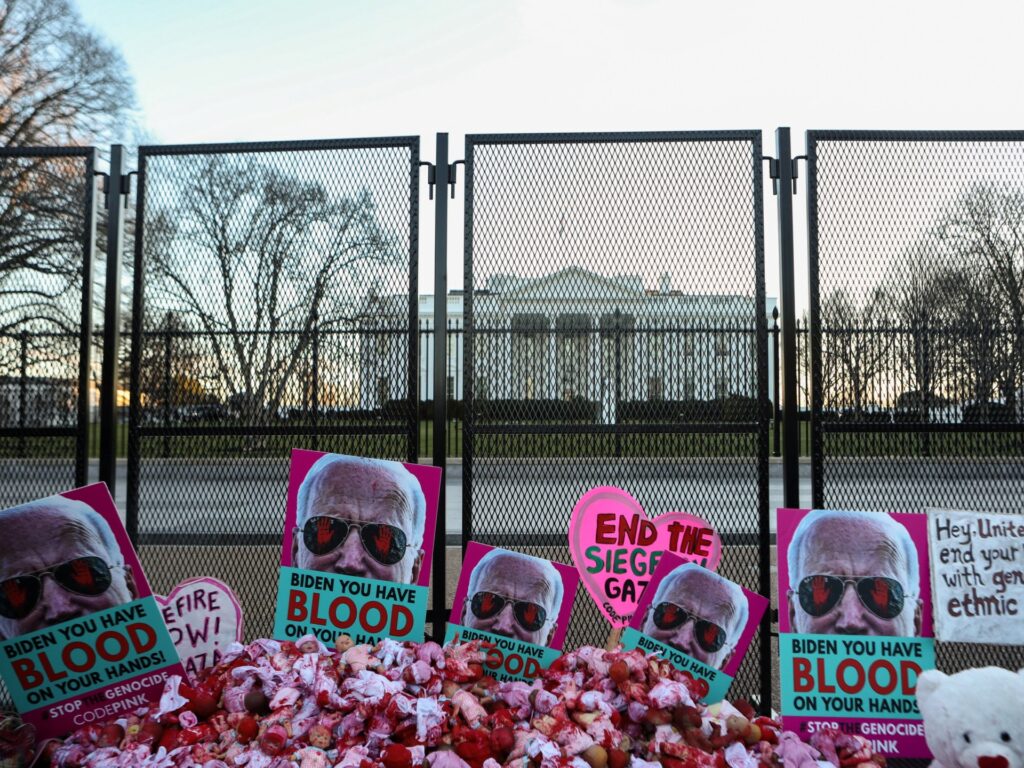
Lily Greenberg Call says she cannot ‘in good conscience’ represent the US gov’t, condemns ‘disastrous’ Gaza policy. Another staffer in United States President Joe Biden’s administration has publicly resigned in protest of the US’s continued support for Israel amid its war on Gaza, The Associated Press news agency reported. Lily Greenberg Call, a special assistant to the chief of staff in the US Interior Department, wrote in her resignation letter that she could not “in good conscience continue to represent” the administration, AP reported on Wednesday. Call, who is Jewish, also condemned comments Biden has made since the Gaza war began in October, including one where he warned “there wouldn’t be a Jew in the world who was safe” without the existence of Israel. “He is making Jews the face of the American war machine. And that is so deeply wrong,” she told the news agency in an interview. A handful of Biden administration officials and appointees – including a former US Army officer – have publicly stepped down over the US’s Gaza policy since the conflict began on October 7. The resignations have come amid widespread anger in the country about Biden’s unequivocal support for Israel, despite the mounting death toll in the Gaza Strip and accusations that Israeli forces are committing genocide against Palestinians in the enclave. More than 35,000 Palestinians have been killed since the conflict began, and Israel’s continued assault and siege on the territory has created a dire humanitarian crisis. Hundreds of thousands have been internally displaced. But despite the dire toll of Israel’s military offensive, and a recent decision to pause one US weapons shipment to Israel, the Biden administration signalled this week that it plans to send another $1bn in military assistance to Israel. The news drew condemnation from rights advocates, who for months have urged Washington to suspend all weapons transfers to its top Middle East ally. A recent US Department of State report found that Israeli forces likely used US-supplied weapons in a manner “inconsistent” with international law. However, it stopped short of identifying violations that would put an end to Washington’s ongoing military aid. On Wednesday, Josh Paul – a former State Department official who resigned in October over the US’s Gaza policy – said the latest Biden administration resignation signalled that “the tide is turning”. Paul noted in a post on LinkedIn that US university students, Democratic Party voters, as well as Biden’s own staff and political appointees have all made clear they are opposed to his Middle East policy. The US president, who is seeking re-election in November, faces growing disapproval among key segments of his Democratic base over his Gaza stance. Young people, progressives, and voters of colour, among others, have said they would not vote for him in the upcoming elections if he does not change tack. “How many more Palestinian lives will it take before President Biden catches up to the American electorate and ceases American support to the war crimes being committed with our funding, with our arms, by Israel?” Paul wrote. Call, the staffer who resigned from the Interior Department, also said Israel’s Gaza war and US support for it were “disastrous”. “I think the president has to know that there are people in his administration who think this is disastrous,” Call told The Associated Press. “Not just for Palestinians, for Israelis, for Jews, for Americans, for his election prospects.” Adblock test (Why?)
What does Georgia’s foreign influence bill mean for its bid to join the EU?
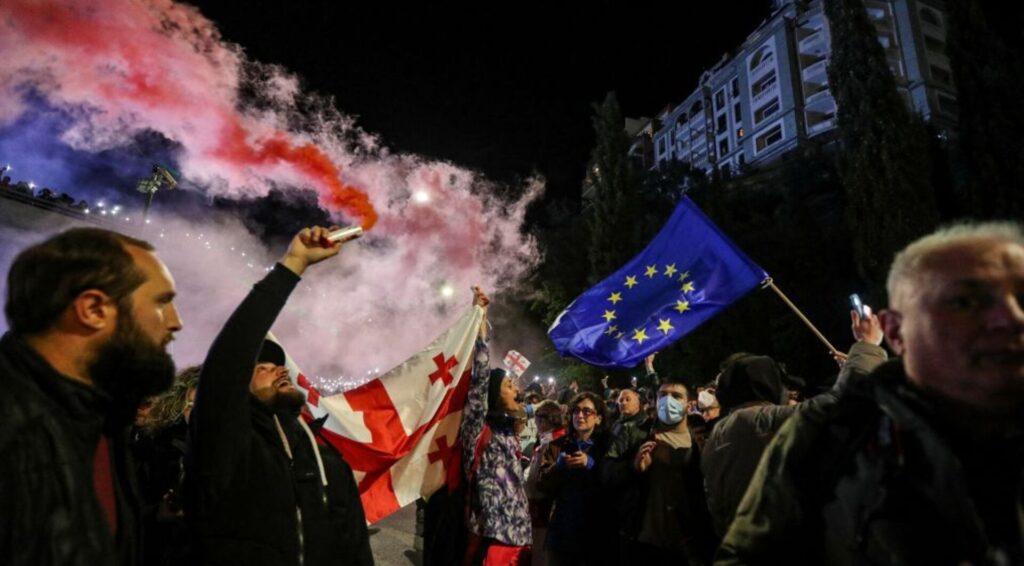
Protesters took to the streets in Tblisi after Georgia’s Parliament approved ‘foreign agents’ law. Georgia’s Parliament has signed off on a controversial bill, sparking outrage in the capital. In April, the government announced it was reviving legislation that would require media and nongovernmental organisations to register themselves as foreign agents if they receive more than 20 percent of their funding from abroad. That led to weeks of mass demonstrations. The government says the law is needed to promote transparency and preserve sovereignty. But critics say the bill drives Georgia closer to Russia. How will it affect the country’s hopes of joining the European Union? Presenter: Tom McRae Guests: Hans Gutbrod – professor of public policy, Illia State University, Georgia Ketevan Shoshiashvili – senior researcher, Transparency International Dachi Imedadze – campaign strategist, SHAME Movement Adblock test (Why?)
Is the US still shipping weapons to Israel tacit support for war on Gaza?
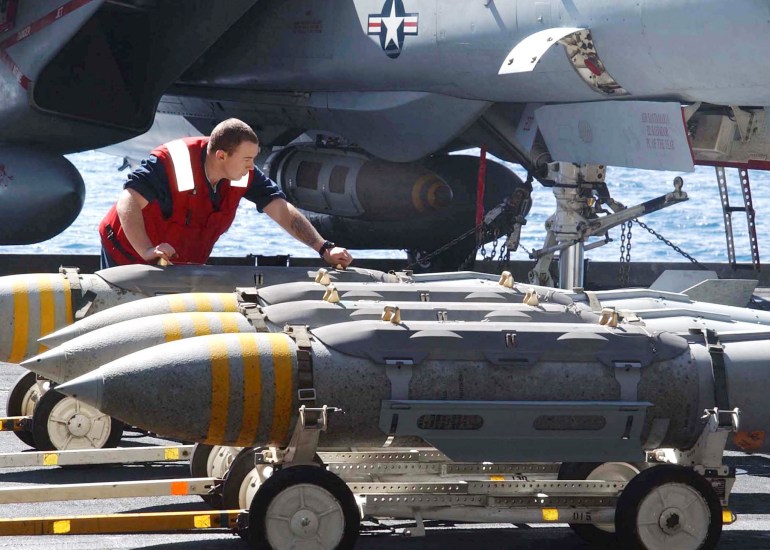
The idea that US President Joe Biden’s pausing heavy weapons shipments to Israel signalled some unhappiness with Tel Aviv would seem to be in question as two United States officials confirm that its latest weapons aid package, worth approximately $1bn, has been moved to the congressional review process. Biden had last week ordered the pause of a shipment, including 1,800 US-made 2,000-pound (907kg) bombs, over concerns that they would be deployed by Israel during a land invasion of the southern Gaza city of Rafah. The 2,000-pound bombs are among the heaviest in the US arsenal, with a blast radius of 365 metres (1,200ft), generating razor-sharp shrapnel capable of reducing the human body and unarmoured vehicles to shreds. A further weapons shipment, including dozens of Boeing F-15 fighter jets, is also on hold as Gregory Meeks, the senior Democrat on the House of Representatives Foreign Affairs Committee awaits further information on Israel’s planned use for the jets. Nevertheless, the approved shipment, which includes tank rounds, mortars and armoured tactical vehicles, appears to reinforce comments by US National Security Advisor Jake Sullivan on Monday, suggesting that US concern over the 2,000-pound bombs was more about their potential for significant fatalities rather than any concerns over Israel’s intent to launch a land assault on Rafah. [embedded content] Rafah As Israel’s assault on Gaza entered its eighth month, Rafah was the last Gaza city that had not yet been attacked by land. It was a refuge for some 1.5 million civilians – about half of them children – according to UNICEF, who had fled the destruction of other cities, like Gaza City and Khan Younis, that were levelled by Israeli forces. Aid organisations set up their bases in Rafah, which was considered the safest zone in Gaza, despite being under regular Israeli attack from the air. However, since Israel intensified its attacks on Rafah earlier this month – claiming it was a stronghold for Hamas’s remaining battalions – thousands of Palestinians fled eastern Rafah to an under-equipped “humanitarian zone” in al-Mawasi announced by the Israeli army. Israel’s attack on Rafah has been heavily criticised by some of its allies. However, the US pause on a single shipment of deadly ordnance has so far been the only practical expression of international disquiet. A US report into Israeli violations of international law during the war found it was “reasonable to assess” that US weapons had been involved in these breaches, given Israel’s extreme reliance on US-manufactured weapons. A report from the Stockholm International Peace Research Institute concluded that, over the nine years leading up to 2022, 68 percent of Israel’s weapons were provided by the US. US-made 2,000-pound bombs being moved onto an aircraft elevator on board the USS John F Kennedy, on March 2, 2002. [Jim Hampshire/US Navy photo/Handout HK/Reuters] The rest was provided by Germany and an array of Western allies. Contacted by Al Jazeera, the German Federal Ministry for Economic Affairs and Climate Action, which is responsible for weapons exports, said that it would continue to review export licences on a case-by-case basis. The US State Department has so far declined to comment. Blurred lines While Biden has declared the full invasion of Rafah as a diplomatic “red line”, some believe that it is designed to be one that he will not have to enforce. In an interview with Israeli media on Sunday, US Ambassador to Israel Jack Lew stressed that Israel’s assault on Rafah had yet to cross “over into the area where our disagreements lie”. “I’m hoping we don’t end up with real disagreements,” he said of the gradual assault on the city so far. Thus far, Israel is attacking sections of the city, issuing evacuation orders to specific neighbourhoods before entering them. “So far, Israel seems intent on carrying out a campaign on Rafah in the same, rather brutal, way it did in Khan Younis and Gaza City,” H A Hellyer, an authority on Middle East security at the Carnegie Endowment for International Peace and the Royal United Services Institute, said. [embedded content] “There’s nothing to say that Israel won’t just proceed with smaller munitions, anyway, and the [Israeli military] has been attacking Rafah before and after Biden’s speech,” Hellyer said. “To avoid embarrassing Joe Biden and his ‘red line’, however, the Israelis seem to be doing things more slowly, and with less reliance on massive weaponry, but the outcome is the same.” Israeli Prime Minister Benjamin Netanyahu may also have concerns closer to home as he tries to navigate between warnings from international allies and the urging of far-right members of his cabinet, who are pressing for an assault on Rafah, irrespective of ceasefire talks elsewhere. “My sense is that Netanyahu attaches far more importance to his government collapsing due to the far-right he’s included in his cabinet, than he does to losing Joe Biden’s support, which I still don’t see happening,” Hellyer said. Stockpiles Israel’s bombardment of Gaza – and its killing of more than 35,000 Palestinians – has been underpinned by its US weapons supply. A 10-year agreement, signed in 2016, allows for the export of military aid worth $3.3bn a year from 2018, plus a further $500m a year for air defence systems. Congress approved a further $26bn in aid to Israel last month, including $5bn to bolster air defences, as well as the “bundled” weapons shipments which fall beneath the threshold needed for congressional oversight. Palestinians wait for food aid in Rafah on November 8, 2023. Famine is imminent in northern Gaza, with hundreds of thousands struggling to avoid starvation [Hatem Ali/AP Photo] It all means that while Israel’s actions have now been openly linked to the suspension of some weapons shipments, the overall partnership remains strong. According to Senator Jim Risch, one of the senior Republicans sitting on the Senate Foreign Relations Committee, millions in military aid has been earmarked for Israel, including joint direct attack munitions (JDAMS), used to convert “dumb” bombs into precision weapons. Tank rounds, mortars and armoured tactical vehicles
Riots in French island territory New Caledonia over voting change
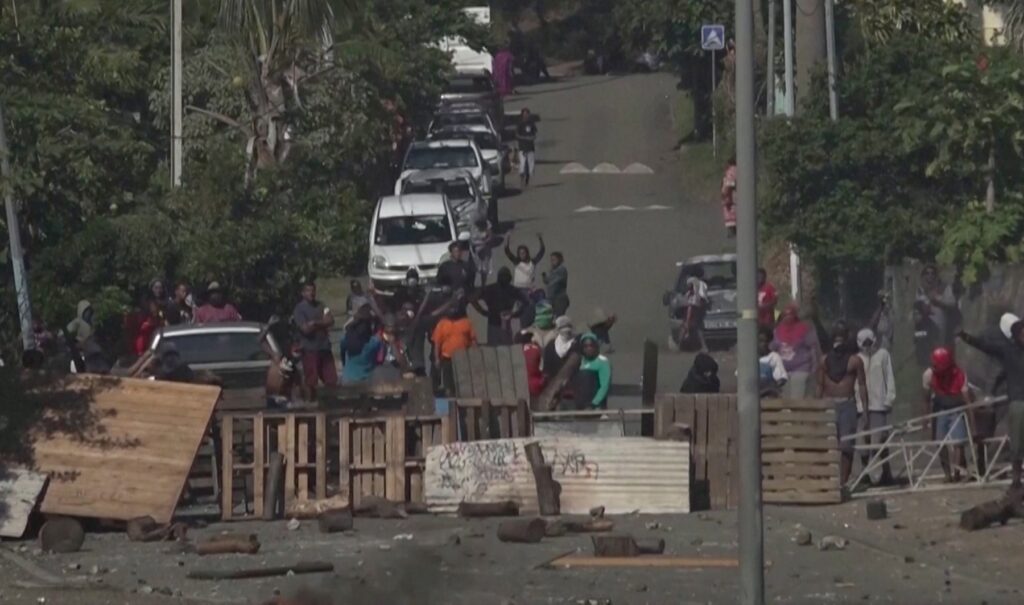
NewsFeed Several people have reportedly been killed in violent protests in the French Pacific territory of New Caledonia, after France’s parliament passed a new law granting voting rights to French residents there. Published On 15 May 202415 May 2024 Adblock test (Why?)
NATO warns Georgia ‘foreign agents’ bill is ‘step in wrong direction’
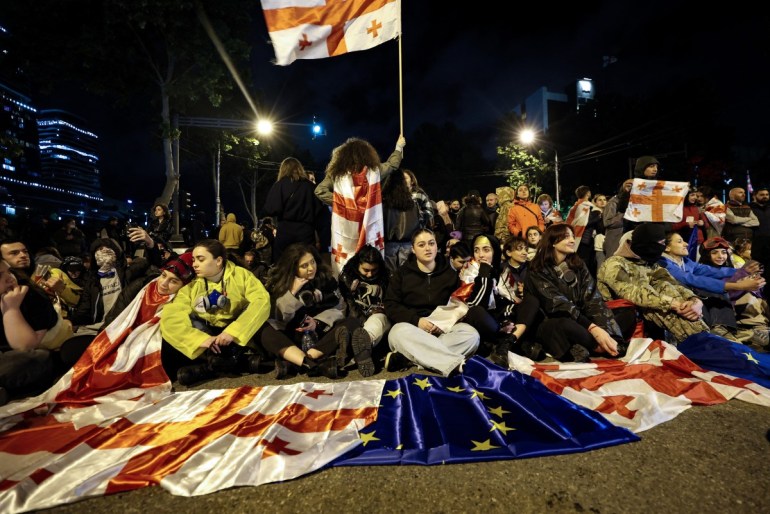
Protests set to continue as Western nations urge Georgian authorities against adopting ‘Kremlin-style’ measure. NATO has warned Georgia that its approval of new contentious legislation branding overseas-funded NGOs as “foreign agents” was a “step in the wrong direction”. It was also a move “away from European and Euro-Atlantic integration”, the military alliance that Georgia aspires to one day join said on Wednesday, a day after the United States warned that the “Kremlin-style” law would force it to reassess ties with the country. Tens of thousands of protesters, who have been demonstrating in the streets of the capital, Tbilisi, for weeks, are expected to rally against the bill outside parliament later on Wednesday. “We urge Georgia to change course and respect the right to peaceful protest,” said NATO spokeswoman Farah Dakhlallah. Protesters block a street during a rally against the controversial ‘foreign influence’ bill in Tbilisi [File: Giorgi Arjevanidze/AFP] The European Union urged Georgia to withdraw the legislation, which it said would set back the country’s ambitions to join the 27-nation bloc. “The adoption of this law negatively impacts Georgia’s progress on the EU path,” said a statement from EU foreign policy chief Josep Borrell and enlargement commissioner Oliver Varhelyi. “The choice on the way forward is in Georgia’s hands. We urge the Georgian authorities to withdraw the law,” they said. US Assistant Secretary of State James O’Brien, who visited Tbilisi on Tuesday, said Washington could impose financial and travel restrictions unless the bill underwent change or if security forces forcibly broke up protests as has occurred in recent weeks. ‘Russian law’ The law requires media and nongovernmental organisations (NGOs) and other nonprofit groups to register as “pursuing the interests of a foreign power” if they receive more than 20 percent of their funding from abroad. It has been dubbed “the Russian law” by opponents, who compare it with legislation used by the Kremlin for the past decade to crack down on its opponents. The ruling Georgian Dream party says it is needed to promote transparency, combat “pseudo-liberal values” promoted by foreigners and preserve the country’s sovereignty. A woman holds Georgian national and EU flags in front of riot police blocking a street in Tbilisi [File: Zurab Tsertsvadze/AP] President Salome Zourabichvili, who is increasingly at odds with the governing party, has promised to veto the bill, but Georgian Dream has a majority sufficient to override it. Zourabichvili has 14 days to act. On Tuesday, she met with the foreign ministers of Lithuania, Estonia, Latvia and Iceland who visited Tbilisi in connection with the controversial legislation. “We talked about what the next steps are. I very clearly explained to the representatives of friendly countries that with my veto, I would under no circumstances enter into some fake, artificial, deceitful negotiations. No and never!” she said after the meeting. “I will not betray the spirit that is in this country today and needs to open a path. I will be the opener of this path. This message will be delivered by our friends everywhere so that no one thinks that you can use the President of Georgia to save the image of this government,” Zourabichvili said. “Today, not this issue is on the agenda, Georgia’s survival is on the agenda,” she added. Gabrielius Landsbergis, the Lithuanian foreign minister, said the Georgian government was turning its back on the European direction and so it was important to show support for Georgia’s pro-Western society and its president. Adblock test (Why?)
What’s at stake in next month’s European elections?

Right-wing parties are expected to perform well, according to pre-election polls. Europe is getting ready for next month’s crucial parliamentary election. Ministers in Brussels have signed off a major overhaul of migration and asylum rules as the campaigning heats up. Pre-election polls are predicting right-wing parties to perform well. The election will shape the future of the institutions and reflect the political landscape of individual member states. It is also the first European Parliament vote since the UK left the bloc. So, what are the consequences of this year’s vote for the continent – and the world? Presenter: Folly Bah Thibault Guests: Pieter Cleppe – Editor-in-chief at BrusselsReport.eu Anna Maria Corazza Bildt – MEP candidate for the Renew Europe Group Aurelian Mondon – Lecturer in French and comparative politics at the University of Bath Adblock test (Why?)
Biden slaps new tariffs on Chinese imports, ratcheting trade war

President Joe Biden has slapped major new tariffs on Chinese electric vehicles, advanced batteries, solar cells, steel, aluminium and medical equipment, taking potshots at Donald Trump along the way as he embraced a strategy that’s increasing friction between the world’s two largest economies. The Democratic president said on Tuesday that Chinese government subsidies ensure the nation’s companies do not have to turn a profit, giving them an unfair advantage in global trade. “American workers can outwork and outcompete anyone as long as the competition is fair,” Biden said in the White House Rose Garden. “But for too long, it hasn’t been fair. For years, the Chinese government has poured state money into Chinese companies … it’s not competition, it’s cheating.” China immediately promised retaliation. Its Ministry of Commerce said Beijing was opposed to the tariff hikes by the United States and would take measures to defend its interests. Biden will keep tariffs put in place by his Republican predecessor Donald Trump while ratcheting up others, including a quadrupling of EV duties to more than 100 percent and doubling the duties on semiconductor tariffs to 50 percent. The new measures affect $18bn in imported Chinese goods including steel and aluminium, semiconductors, electric vehicles, critical minerals, solar cells and cranes, the White House said. The EV figure, while headline-grabbing, may have more political than practical impact in the US, which imports very few Chinese EVs. The US imported $427bn in goods from China in 2023 and exported $148bn to the world’s number-two economy, according to the US Census Bureau, a trade gap that has persisted for decades and become an ever more sensitive subject in Washington. US Trade Representative Katherine Tai said the revised tariffs were justified because China was stealing US intellectual property. But Tai recommended tariff exclusions for hundreds of industrial machinery import categories from China, including 19 for solar product manufacturing equipment. The tariffs come in the middle of a heated campaign between Biden and Trump, his Republican predecessor, to show who’s tougher on China. Asked to respond to Trump’s comments that China was eating the US’s lunch, Biden said of his rival, “He’s been feeding them a long time.” The Democrat said Trump had failed to crack down on Chinese trade abuses as he had pledged he would do during his presidency. Karoline Leavitt, the Trump campaign’s press secretary, called the new tariffs a “weak and futile attempt” to distract from Biden’s own support for EVs in the United States, which Trump says will lead to layoffs at car factories. Administration officials said their measures are combined with domestic investment in key industries and unlikely to worsen a bout of inflation that has already angered US voters. Trade tariff Biden has struggled to convince voters of the efficacy of his economic policies despite a backdrop of low unemployment and above-trend economic growth. A Reuters/Ipsos poll last month showed Trump had a seven percentage-point edge over Biden on the economy. China’s BYD overtook Tesla as the biggest seller of electric vehicles [File: VCG/VCG via Getty Images] Analysts have warned that a trade tiff could raise costs for EVs overall, hurting Biden’s climate goals and his aim to create manufacturing jobs. Biden has said he wants to win this era of competition with China but not to launch a trade war. He has worked in recent months to ease tensions in one-on-one talks with Chinese President Xi Jinping. Both 2024 US presidential candidates have departed from the free-trade consensus that once reigned in Washington, a period capped by China’s joining the World Trade Organization in 2001. Trump’s broader imposition of tariffs during his 2017-2021 presidency kicked off a tariff war with China. As part of the long-awaited tariff update, Biden will increase tariffs this year from 25 percent to 100 percent on EVs, bringing total duties to 102.5 percent, from 7.5 percent to 25 percent on lithium-ion EV batteries and other battery parts and from 25 percent to 50 percent on photovoltaic cells used to make solar panels. Some critical minerals will have their tariffs raised from nothing to 25 percent. More tariffs will follow in 2025 and 2026 on semiconductors, as well as lithium-ion batteries that are not used in electric vehicles, graphite and permanent magnets, as well as rubber medical and surgical gloves. A number of lawmakers have called for massive hikes on Chinese vehicle tariffs or an outright ban over data privacy concerns. There are relatively few Chinese-made light-duty vehicles being imported now. The United Auto Workers, a politically important union that endorsed Biden, said the tariff moves would ensure that “the transition to electric vehicles is a just transition.” Adblock test (Why?)
Key takeaways as Cohen faces more questioning on day 17 of Trump’s trial

Donald Trump’s erstwhile lawyer Michael Cohen has faced a tough cross-examination, as he delivered a second day of testimony in the former United States president’s hush-money trial in New York. Cohen is the prosecution’s star witness — and his testimony marks the pinnacle of Manhattan District Attorney Alvin Bragg’s case against the former president. On Tuesday, prosecutors also announced that Cohen will be the final witness they plan to call, as the first criminal trial against a US president nears its seeming conclusion. As he returned to the witness stand on Tuesday, Cohen sought to make the case that Trump, his former boss, orchestrated a hush-money payment to adult film star Stormy Daniels — and then covered it up by filing the charges as “legal expenses”. The former Republican president, who is seeking re-election in November, faces 34 felony counts of falsifying business records in the case. Cohen described a meeting with Trump at the White House in 2017 during which the pair allegedly discussed a repayment plan to reimburse Cohen for the hush-money payment. The former lawyer has maintained he made the $130,000 payment at the behest of Trump to prevent Daniels from going public with a sexual encounter she says she had with the former president. Trump has denied that any such encounter took place. Trump has also slammed the case as a politically motivated “witch-hunt”, and his legal team on Tuesday sought to portray Cohen as a liar who cannot be trusted. But prosecutors believe Trump tried to influence the outcome of the 2016 vote by engaging in a “catch-and-kill” scheme to stifle media coverage that could have negatively affected his campaign for the White House. Here are the key takeaways from day 17 of the trial: Cohen details Oval Office meeting Early on Tuesday, Cohen recounted an Oval Office meeting with Trump in February 2017, wherein the newly inaugurated president allegedly said Cohen would soon be receiving the first two installments of a bonus package. That package, Cohen said, included reimbursements for the Daniels payment. “I was sitting with President Trump, and he asked me if I was OK,” Cohen told the jurors. “He asked me if I needed money, and I said, ‘All good,’ because I can get a cheque.” Cohen testified that Trump then told him, “OK, make sure you deal with Allen,” a reference to Allen Weisselberg, the chief financial officer of the Trump Organization at the time. Prosecutor Susan Hoffinger also walked Cohen through a series of invoices and checks — some signed by Trump himself — that Cohen said were falsely marked as paying for retainer services. “There was no retainer agreement, was there?” Hoffinger asked. “No, ma’am,” Cohen replied. In the courtroom, Trump was seen to react at various points in Cohen’s testimony, leaning over to speak with his lawyer Emil Bove, seated to his left. Trump sits at the defendant’s table during his criminal trial in New York on May 14 [Justin Lane/Pool via Reuters] Cohen says he lied to protect Trump The 57-year-old former lawyer also testified on Tuesday that a February 2018 statement he released about the hush money-payment was purposely “misleading”. The statement declared, “Neither the Trump Organization nor the Trump campaign was a party to the transaction.” Cohen explained that the statement was “deceptive”, because it was neither the Trump Organization nor the campaign that was a part of the transaction. “It was Mr Donald J Trump himself,” Cohen said. He added that he made the statement “in order to protect Mr Trump, to stay on message”. Cohen also told the jurors that he helped craft a pair of statements purportedly from Daniels, the adult film star, denying her affair with Trump. The first came after The Wall Street Journal reported in 2018 that he arranged the $130,000 hush-money payment to Daniels. The second was written after Cohen said he heard Daniels was planning to go on comedian Jimmy Kimmel’s late-night TV show. Cohen explained he contacted Keith Davidson, the lawyer who represented the adult film star in the hush money deal, to put together the statement, which Daniels issued on the day of her appearance. It reiterated that she had not been paid “hush money” to deny the claim. Cohen testified that he knew the statements were false because he had helped craft them — and that he knew the payment had been made because he had paid it. He also said he regretted “lying, bullying people” during his many years working for Trump. “To keep the loyalty and to do the things that he asked me to do, I violated my moral compass. And I suffered the penalty, as has my family,” Cohen said. Defence presses Cohen on credibility Trump’s defence team pressed Cohen during cross-examination on Tuesday afternoon, seeking to poke holes in his testimony and present him to the jury as a serial liar seeking revenge against a former boss. Cohen served time in federal prison for various crimes, including some related the hush-money payment, and has admitted to lying under oath. He has also been vocal about his antipathy towards Trump, with whom he had a public falling-out. Under aggressive questioning from Trump lawyer Todd Blanche, Cohen acknowledged calling the former president a “dictator douchebag” on the social media platform TikTok. The defence also showed jurors pictures of Trump-themed merchandise for sale on Cohen’s website, including shirts with an illustration of the former president behind bars. Blanche pointed to statements Cohen made on his podcast as well, indicating the former lawyer would like to see Trump convicted. In one of several moments when Blanche asked Cohen if he wanted to see Trump found guilty, the former lawyer hedged: “I would like to see accountability. It’s not for me. It’s for the jury and this court.” Blanche pressed him: “I’m just asking you, yes or no: Do you want to see President Trump get convicted in this case?” “Sure,” Cohen replied. Cohen’s shorter answers under cross-examination marked a contrast with his