

North Korea fires ballistic missiles as Blinken visits Seoul

Launches come days after South Korea and the US wrapped up military drills Pyongyang sees as an invasion rehearsal. North Korea fired short-range ballistic missiles towards its eastern waters as United States Secretary of State Antony Blinken prepared to open a democracy summit in neighbouring South Korea, officials have said. “North Korea fired an unspecified ballistic missile toward the East Sea,” the US Joint Chiefs of Staff said on Monday, referring to the body of water also known as the Sea of Japan. Japan’s Coast Guard, which confirmed the launches, said the objects appeared to have already fallen. The launches come days after the US and South Korea wrapped up 11 days of so-called Freedom Shield joint military drills. North Korea has long condemned joint US-South Korea military drills, calling them rehearsals for an invasion. Pyongyang earlier this month warned that Seoul and Washington would pay a “dear price” for this year’s Freedom Shield drills, which involved twice as many troops as last year. About 27,000 US soldiers are stationed in South Korea, where the drills took place. South Korea recently wrapped up joint military drills with the United States [Kim Hong-Ji/Reuters] North Korea’s test on Monday was the latest in a series of weapons demonstrations this year, including a missile tipped with a manoeuvrable hypersonic warhead on January 14. Democracy Summit Shortly after the missile launches, Blinken and South Korean President Yoon Suk-yeol took to the stage at the opening of the Summit for Democracy, which is this year being hosted by South Korea. US Secretary of State Antony Blinken has warned of the risks technology poses to democracy [Evelyn Hockstein/Pool/Reuters] Both Blinken and Yoon spoke about how technology could be used to encourage democracy, but also to undermine it. Blinken’s comments came after the US House of Representatives last week passed a bill that could see the popular social media app TikTok, which is owned by Chinese developer ByteDance, banned. The democracy summit, an initiative of US President Joe Biden, has attracted criticism in past years due to its selective invitation list, with countries including Thailand and Turkey reportedly excluded. Adblock test (Why?)
Could Haiti be on the brink of collapse?

Gangs control the capital, aid is blocked, and a political transition has stalled. People in Haiti are bracing for more violence, weeks after powerful gangs launched an offensive to topple the government. Food is running out, essential goods are in short supply and nothing is coming in or out of the capital. The United Nations is warning that more than one million people are on the brink of famine. There’s essentially no government in place, and plans to establish a transitional governing council have caused disputes and controversy. So, how can Haiti overcome this crisis? Is foreign involvement helping or is it fuelling instability? Presenter: Hashem Ahelbarra Guests: Jean Eddy Saint Paul – Founding director of the City University of New York’s Haitian Studies Institute and a professor of sociology at Brooklyn College Emmanuela Douyon – Executive director of Haitian think-tank Policite and social justice activist John Packer – Director of Human Rights Research and Education Centre at Ottawa University; has advised the UN in numerous peace processes around the world, including in Haiti Adblock test (Why?)
Over 13,000 children killed in Gaza, others severely malnourished: UNICEF
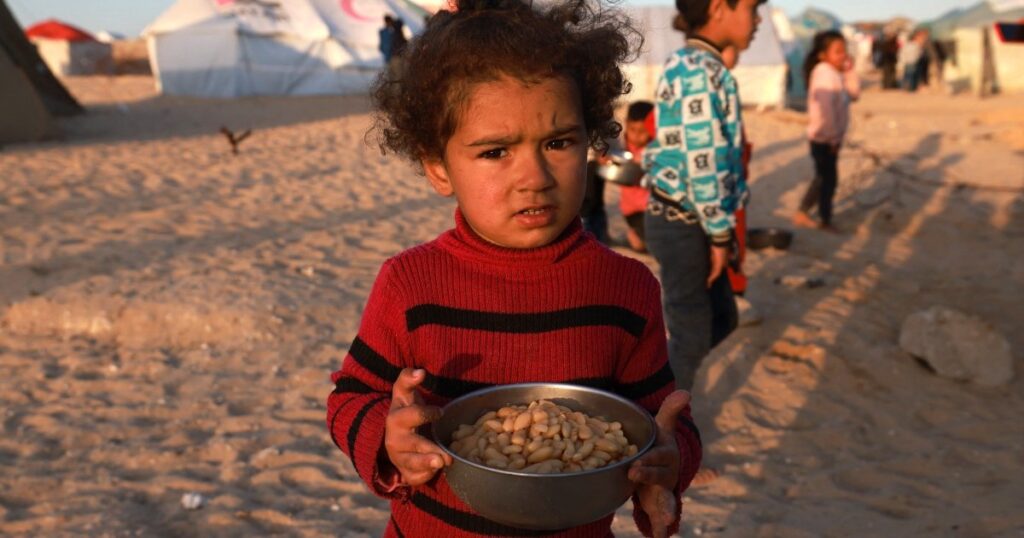
The UN agency says surviving children do not ‘even have the energy to cry’ as famine looms in the besieged enclave being bombarded for months. Israel has killed more than 13,000 children in Gaza since October 7 while others are suffering from severe malnutrition and do not “even have the energy to cry”, says the United Nations Children’s Fund (UNICEF). “Thousands more have been injured or we can’t even determine where they are. They may be stuck under rubble … We haven’t seen that rate of death among children in almost any other conflict in the world,” UNICEF Executive Director Catherine Russell told the CBS News network on Sunday. “I have been in wards of children who are suffering from severe anaemia malnutrition, the whole ward is absolutely quiet. Because the children, the babies … don’t even have the energy to cry.” Russell said there were “very great bureaucratic challenges” moving trucks into Gaza for aid and assistance as famine stalks more than two million Palestinians since Israel’s “genocidal” war began. Moreover, according to the UN Relief and Works Agency for Palestine Refugees (UNRWA), one in three children under the age of two in northern Gaza is now acutely malnourished. The agency also warned that famine is looming in the besieged enclave facing relentless Israeli bombing for more than five months. International criticism has mounted on Israel due to the death toll of the war, the starvation crisis in Gaza, and allegations of blocking aid deliveries into the enclave. On Sunday, Israeli Prime Minister Benjamin Netanyahu repeated his threat of a ground assault on Rafah, the town bordering Egypt where more than a million Palestinians have taken refuge. “No amount of international pressure will stop us from realising all the goals of the war: eliminating Hamas, releasing all our hostages and ensuring that Gaza will no longer pose a threat against Israel,” Netanyahu said in a video released by his office. “To do this, we will also operate in Rafah,” he said. Since October 7, Israel’s military campaign has killed at least 31,645 Palestinians in Gaza, mostly women and children, according to Gaza’s health ministry, and displaced nearly two million of its residents. The Israeli operation has also led to accusations of genocide, being probed at the UN’s International Court of Justice. Israel has repeatedly denied the genocide charges and stressed that it is acting in self-defence after the October 7 attack by Hamas that it says killed more than 1,130 people and took more than 200 as captives. Adblock test (Why?)
Putin poised to win Russian presidential election by a landslide
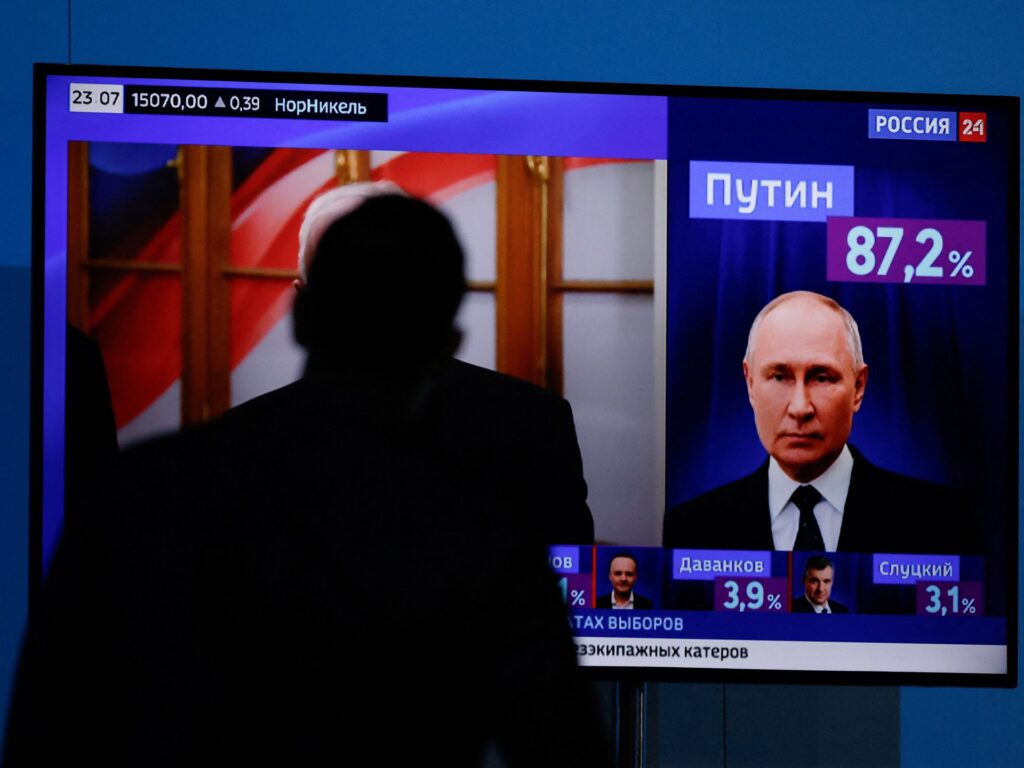
Early results show Putin winning some 87 percent of the vote, the highest-ever result in Russia’s post-Soviet history. President Vladimir Putin is set to win a record post-Soviet landslide victory in Russia’s election, cementing his grip on power, despite a large number of opponents staging a noon protest at polling stations. Shortly after the last polls closed on Sunday, early returns pointed to the conclusion everyone expected: that Putin would extend his nearly quarter-century rule for six more years. According to Russia’s Central Election Commission, he had some 87 percent of the vote with about 60 percent of precincts counted. The result means Putin, 71, will overtake Josef Stalin and become Russia’s longest-serving leader in more than 200 years. Communist candidate Nikolai Kharitonov came second with just under 4 percent, newcomer Vladislav Davankov third and ultra-nationalist Leonid Slutsky fourth, early results suggested. Nationwide turnout was 74.22 percent when polls closed, election officials said, surpassing 2018 levels of 67.5 percent. For Putin, a former KGB lieutenant colonel who first rose to power in 1999, the result is intended to underscore to the West that its leaders will have to reckon with an emboldened Russia, whether in war or in peace, for many more years to come. The United States said the vote was neither free nor fair. “The elections are obviously not free nor fair given how Mr. Putin has imprisoned political opponents and prevented others from running against him,” said the White House’s National Security Council spokesperson. In Ukraine, President Volodymyr Zelenskyy said “this election fraud has no legitimacy and cannot have any”. The election came more than two years after Putin’s February 2022 full-scale invasion of Ukraine, Europe’s deadliest conflict since World War II. On Sunday, thousands of Putin’s opponents staged a protest against him, although there was no independent tally of how many of Russia’s 114 million voters took part in the demonstrations. Supporters of Putin’s most prominent opponent, Alexey Navalny, who died in an Arctic prison last month, had called on Russians to come out to a “Noon against Putin” protest. Putin was first nominated as acting president when former Russian President Boris Yeltsin resigned. He then won his first presidential election in March 2000 and a second term in 2004. After two stints as president, Putin switched back to being prime minister in 2008 to circumvent a constitutional ban on holding more than two consecutive terms as head of state. But he returned to the presidency in 2012 and won a fourth term in 2018. Adblock test (Why?)
Schrödinger’s genocide
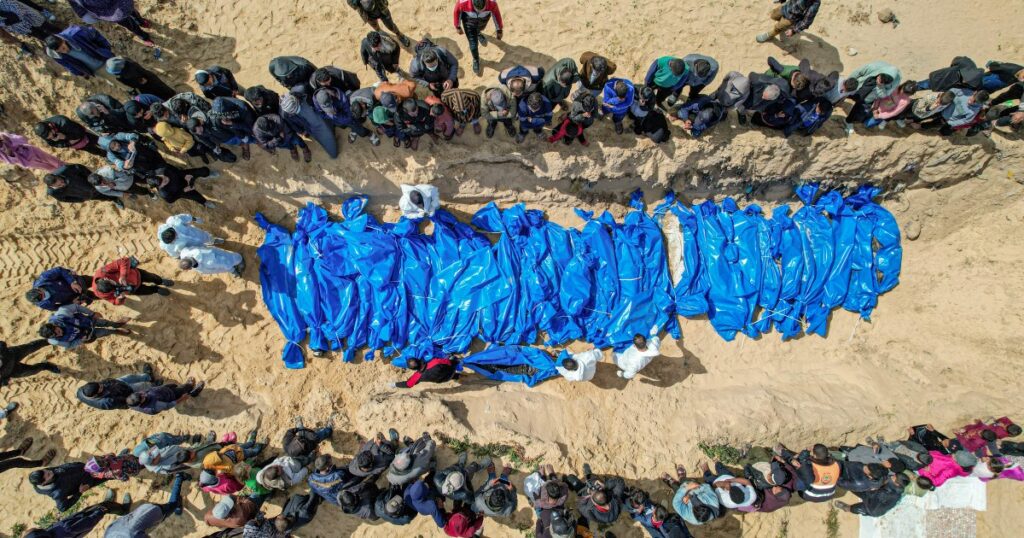
Bosnians have experience with genocide. Not just the signs of it coming. Not just the fact of it happening. But also this strange phenomenon we call “Schrödinger’s genocide”: the simultaneous glorification and denial of genocide. There is a cruel dance between the systematic relativisation of the legal qualification of genocide and the continuous pursuit of genocidal politics and its results. Despite the verdicts issued by the International Criminal Tribunal for the Former Yugoslavia (ICTY), we have not healed. The ethnically cleansed Republika Srpska still stands as the triumph of the Serb genocidal project. Bosnian history has demonstrated the futility of the “never again” mantra and Gaza is now confirming it. The genocide of my people was accompanied by the same rhetoric that Israeli officials now espouse: a genocidal army is the only thing standing between Europe and “Muslim barbarians”, they claim. I have often lamented how the Jews, who struggled for years after World War II to globalise the knowledge about the Holocaust, started facing serious Holocaust denial as the number of living survivors started to dwindle. Swedish survivors Hédi Fried (98) and Emerich Roth (97) died recently – a major loss for the Jewish community and those working to uphold the “never again” vow. By contrast, Bosnians are experiencing genocide denial while most of us, survivors, are still alive. Genocide scholar Gregory Stanton argued there are 10 stages of genocide, the last one being denial, but we are effectively experiencing the 11th phase: glorification and triumphalism. There are people who not only invest resources into historical revisionism of the genocide they committed in the 1990s, but are de facto threatening to repeat it. The Bosnian “final solution” was not properly finalised, they often say. In my home city, Banja Luka, the administrative capital of Republika Srpska, you can buy T-shirts with the faces of war criminals Radovan Karadžić, Ratko Mladić, Biljana Plavšić, and Slobodan Milošević. And Russian President Vladimir Putin, too. In the case of the Israeli onslaught on Gaza, which the International Court of Justice (ICJ) has already characterised as a plausible genocide, we see denial among Israeli politicians and propagandists while it is still going on. There is even more denial in Western countries with histories of horrific genocides, especially Germany. Western governments and media are engaged in a systematic cover-up of Israeli war crimes and bullying of those who try to expose them. Laws are proposed on short notice that aim to criminalise free speech and criticism of Israel. At the same time, the glorification of this genocide is broadcast in real time on social media. Accounts with thousands of followers post footage of Israeli soldiers committing war crimes. People want credit even for discrediting content. The Palestinians have been dehumanised to such an extent that their executioners are deeply convinced that their violent acts are not just morally justified but also noble, and they must take pride in their “good work”. The Serb authorities did much to hide the concentration camps from foreign journalists. They tried to cover up massacres, moving mass graves multiple times. By contrast, the hubris of Israeli soldiers drives them to produce countless images and videos of their work: endearing messages to loved ones from sites of destruction, the mocking of everything Palestinian, proud repetitions of the genocidal discourse. French philosopher Jean Baudrillard was right: We postmodern humans want to broadcast ourselves to the world whatever we do. I am not surprised that the Israeli army is broadcasting its war crimes as I was not surprised that Hamas had cameras on on October 7. We have seen attempts to whitewash Hamas’s crimes, but we have also seen propaganda campaigns aimed at making them look even more horrible as a way of justifying the crimes of the Israeli army. Meanwhile, Palestinians have felt compelled to report in detail the atrocities they face. It is perverse that people suffering so much are forced to record and broadcast unimaginable slaughter to be believed, to be humanised, to be pitied enough so their cry for help is heard. We think we live in a different time, but Israeli Prime Minister Benjamin Netanyahu’s government has shown the world that the old rules still apply. Though Israeli historian Yuval Noah Harari is correct that since World War II fewer people have died in wars, Israel keeps confirming the fact that nations are built through violence. In Gaza, the old world order came back with a vengeance. Western powers are doing the exact opposite of acting in the spirit of the civilisation they have bragged about building. They have armed the aggressor and aided his indiscriminate slaughter of civilians, their starvation, and culturicide. They encouraged the media to dehumanise the victims and cover up the crimes. And finally, despite the explicit ruling by the ICJ, they cut aid. Let us note here that even the Israeli judge in the ICJ hearing on Gaza voted in favour of the provision of humanitarian assistance to Palestinian civilians. As a Holocaust survivor, of course, he did at least that. Despite the staggering effort by Western media to suppress information, there has been a significant shift in public opinion in the West. This means that the timing is bad for Israel. Netanyahu and his predecessors should have finished their genocidal project decades ago. Back then, there were fewer avenues for the truth to surface. Places were ethnically cleansed and mass graves were buried under parking lots. As the Israeli interviewees in a 2022 documentary about a massacre in the Palestinian village of Tantura made clear, they got away with it because no one was watching. But people across the whole world are watching now and there is no excuse not to act to stop it. Once a genocide happens, history shows, there is no going back. Six million Jews and millions of their unborn descendants are missing in Germany and other nations. Many are missing from countries across Asia and Africa. They will never return. Germans may have apologised, built memorial
Netanyahu repeats Rafah assault threat, says civilians won’t be ‘locked in’
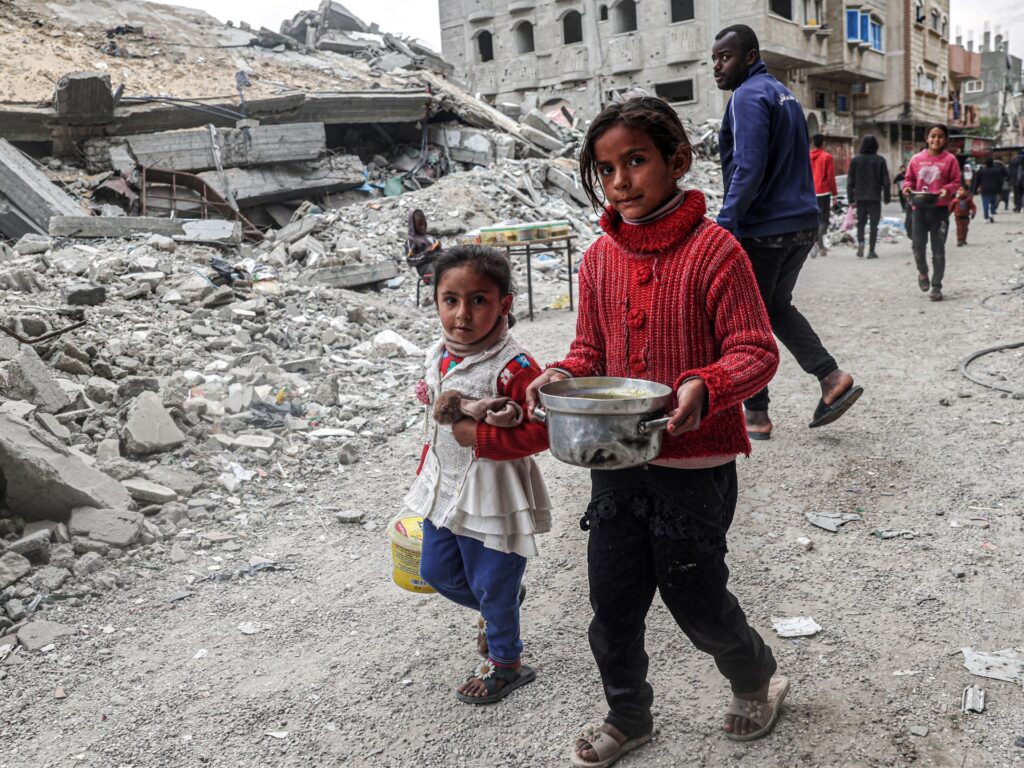
Israeli Prime Minister Benjamin Netanyahu says Israel will not leave civilians trapped in Rafah when its forces begin a long-feared assault on the southern Gaza city where more than a million Palestinians have taken shelter. “Our goal in eliminating the remaining terrorist battalions in Rafah goes hand in hand with enabling the civilian population to leave Rafah. It’s not something we will do while keeping the population locked in place. In fact, we’ll do the very opposite, we will enable them to leave,” Netanyahu said during a press statement in Jerusalem with German Chancellor Olaf Scholz. The German leader said an Israeli assault on Rafah – where a majority of Gaza’s 2.3 million people have sought refuge from relentless Israeli bombardment – would make regional peace “very difficult”. Netanyahu’s statement came hours after he told a cabinet meeting that Israeli troops would pursue the planned ground offensive in Rafah despite fears of mass civilian casualties. “No amount of international pressure will stop us from realising all the goals of the war: eliminating Hamas, releasing all our hostages and ensuring that Gaza will no longer pose a threat against Israel,” Netanyahu said in a video released by his office. “To do this, we will also operate in Rafah.” Netanyahu’s comments came as talks were expected to resume in Qatar towards a truce in Gaza, where Israel has pursued a military campaign against Hamas for more than five months. ‘Threat looming in the horizon’ Al Jazeera’s Tareq Abu Azzoum, reporting from Rafah, said the Palestinians are “closely following” Netanyahu repeatedly saying he plans to invade “this very densely populated area”. “From the Palestinian perspective, under such threat looming in the horizon, they are completely feeling unsafe, wondering about the next destination,” he said. US President Joe Biden, whose continued support for Israel’s war despite widespread allegations of genocide, has said an Israeli invasion of Rafah would be a “red line” without credible civilian protection plans in place. On Friday, US Secretary of State Antony Blinken said Washington wanted a “clear and implementable plan” for Rafah to ensure civilians are “out of harm’s way”. World Health Organization chief Tedros Adhanom Ghebreyesus also on Friday appealed to Israel “in the name of humanity” not to launch an assault on Rafah – the last major population centre in Gaza yet to face a ground assault in the war triggered by Hamas’s unprecedented October 7 attack in southern Israel. The attack resulted in the deaths of about 1,160 people, mostly civilians, as Hamas took about 250 Israeli and foreign hostages. Israel believes about 130 of those remain in Gaza, including 32 presumed dead. Since October 7, Israel’s military campaign has killed at least 31,645 Palestinians in Gaza, mostly women and children, according to Gaza’s health ministry, and displaced nearly 2 million of its residents. Elections would ‘paralyse’ Israel Netanyahu said any Gaza peace deal that weakens Israel and leaves it unable to defend itself against hostile neighbours would be unacceptable. A potential peace agreement “that makes Israel so weak and unable to defend itself” would “set peace backwards and not forward”, he said during his joint press appearance with Scholz. Netanyahu also criticised “those in the international community who are trying to stop the war now” by “making false accusations” against Israel and its military. Israel has faced consistent criticism for civilian casualties in Gaza as well as stark aid shortages that have fueled fears of famine. On Thursday, US Senate leader Chuck Schumer called for Israel to hold new elections, sparking angry pushback from Netanyahu’s Likud Party, which said Israel “is not a banana republic”. Netanyahu said new elections would “stop the war and paralyse the country for at least six months”. “If we stop the war now, before all of its goals are achieved, it means that Israel has lost the war, and we will not allow that.” Meanwhile, there has been no let-up in the fighting, and at least 92 people were killed over the previous 24 hours, Gaza’s health ministry said on Sunday. The dead included 12 members of the same family whose house was hit in Deir el-Balah, central Gaza. Palestinian girl Leen Thabit, retrieving a white dress from under the rubble of her family’s flattened house, cried as she said her cousin was killed in the strike. “She’s dead. Only her dress is left,” Thabit said. “What do they want from us?” Adblock test (Why?)
EU announces $8bn package for Egypt as part of deal to check migrant flows
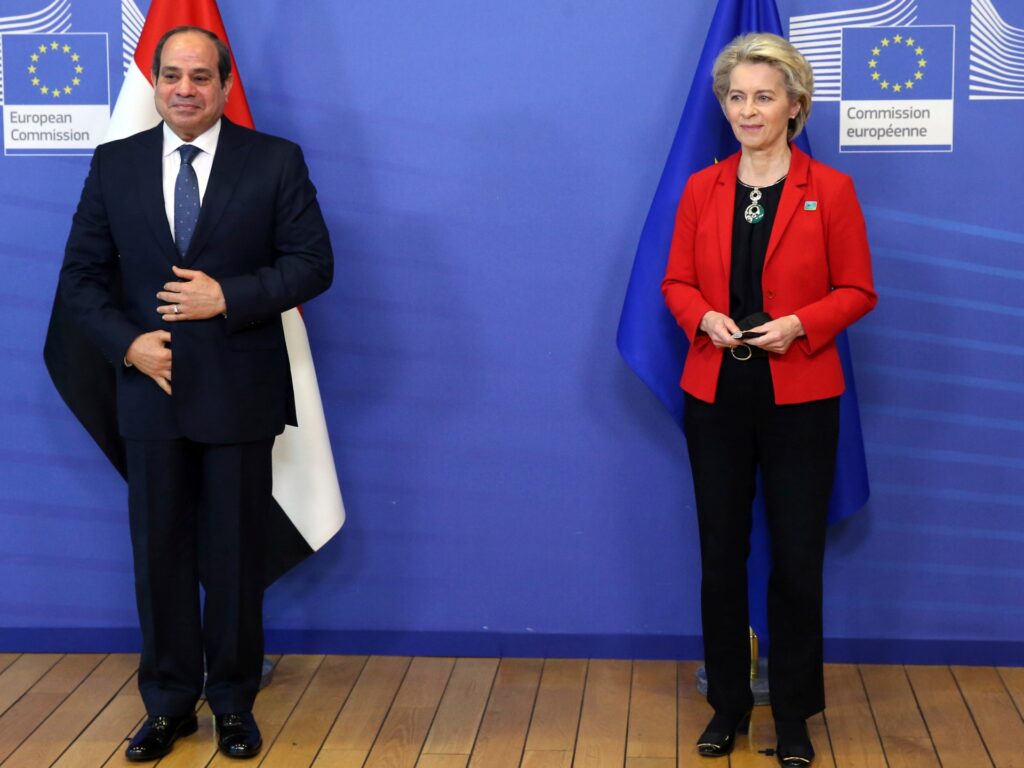
The agreement, which lifts the EU’s relationship with Egypt to a ‘strategic partnership’, has drawn criticism from rights groups. The European Union has announced a 7.4 billion-euro ($8.06bn) aid package and an upgraded relationship with Egypt, part of a new deal to stem migrant flows to Europe that has been criticised by rights groups. The deal is scheduled to be signed during a visit on Sunday by European Commission President Ursula von der Leyen and leaders of Belgium, Italy, Austria, Cyprus and Greece, according to officials. Egyptian President Abdel Fattah el-Sisi met separately with von der Leyen and other European leaders before the signing ceremony. The aid package includes both grants and loans over the next three years, with the EU saying it is upgrading its relationship with the Arab world’s most populous country to a “strategic partnership”. The proposed funding includes 5 billion euros ($5.45bn) in concessional loans and 1.8 billion euros ($1.96bn) of investments, according to a summary of the plan published by the EU. An additional 600 million euros ($654m) would be provided in grants, including 200 million euros ($218m) for managing migration issues. El-Sisi’s office said in a statement that the deal with the EU aims to achieve “a significant leap in cooperation and coordination between the two sides and to achieve common interests”. Egypt’s economic uncertainty has pushed many to migrate from the Arab nation, with Europe interested in curbing migration from Egypt and elsewhere in North Africa. But European governments are worried about the fallout from growing instability in Egypt, which has been struggling to raise foreign currency and has inflation running close to record highs. Earlier this month, however, the country struck a record deal for Emirati investment, expanded its loan programme with the International Monetary Fund (IMF), and sharply devalued its currency. ‘Flawed blueprint’ The deal comes amid growing concerns that Israel’s looming ground offensive on Gaza’s southernmost town of Rafah could force hundreds of thousands of Palestinians to break into Egypt’s Sinai Peninsula. The Israeli war on Gaza, now in its sixth month, has pushed more than a million people to Rafah. Egypt says there are nine million migrants, including about 480,000 who are registered refugees and asylum seekers with the United Nations’ refugee agency. Many of those migrants have established their own businesses, while others work in the huge informal economy as street vendors and house cleaners. But Egyptian officials say Cairo deserves recognition for largely shutting off irregular migration from its north coast since 2016 although there has been a surge in Egyptians trying to cross to Europe via Libya, and the EU is already providing support aimed at reducing those flows. In recent months, the Greek islands of Crete and Gavdos have seen a steep rise in migrant arrivals – mostly from Egypt, Bangladesh and Pakistan – raising concerns about a new Mediterranean smuggling route. Activists have criticised Western backing for el-Sisi, who came to power a decade ago after leading the overthrow of Egypt’s first democratically elected leader. A crackdown has swept up dissidents from across the political spectrum, while the state and the army have extended their grip on the economy, which businessmen and analysts say has impeded structural reforms demanded by the IMF. El-Sisi’s backers say security measures were needed to stabilise Egypt and pave the way for providing social rights such as housing and jobs. The EU says its expanded partnership with Egypt is meant to promote democracy and freedoms, but its moves to offer financing in return for migration curbs have run up against obstacles and criticism. “The blueprint is the same as the flawed EU deals with Tunisia and Mauritania: stop migrants, ignore abuses,” Human Rights Watch said of the plan to enhance ties with Egypt and provide new financing. Amnesty International also urged the European leaders not to be complicit with rights violations taking place in Egypt. “EU leaders must ensure that the Egyptian authorities adopt clear benchmarks for human rights,” said Eve Geddie, the head of Amnesty International’s European institutions office. Adblock test (Why?)
Aid reaches north Gaza for first time in months

NewsFeed For the first time in months, a trickle of aid has arrived in northern Gaza. 13 trucks drove from the Rafah border crossing in the south to deliver desperately needed flour, a day after the first sea delivery was unloaded. Published On 17 Mar 202417 Mar 2024 Adblock test (Why?)
‘He’s lost my vote’: Many Irish Americans turn against Biden over Gaza war

One evening in 2004, when John Francis Mulligan, a US-born Irish citizen, was in the West Bank, a stranger asked him to walk her to a funeral. It was after curfew in Nablus, and Palestinians weren’t allowed out on the streets. A young man had been killed earlier that day, and because of religious beliefs, his family needed to bury him within 24 hours, Mulligan recalls. But if they went outside, the Israel armed forces “would open fire on them for violating curfew”. The dead man’s mother asked Mulligan: “Can you march with us? Can you stand at the front with our family? Because they’re not gonna shoot you, you’re white … I just need someone, literally, to stand with me.’” This moment – the struggle to bury the dead in peace – hit home for Mulligan, 54, who went to primary school in Northern Ireland during the Troubles in the late 1970s. “It felt, to me, very much like going into political funerals in the north of Ireland, where helicopters would be overhead – in that case, it was the British Army. And here it was the Israeli army,” he says. “It really resonated.” Mulligan points to these parallels as part of the reason he is rallying with other Irish Americans in the US to support Gaza. Leaders from the Republic of Ireland and Northern Ireland are meeting Biden this weekend. First Minister Michelle O’Neill met Biden on Friday, telling him “the world watches on in horror at the genocide of the Palestinian people,” and urging him to work towards an immediate ceasefire and sovereign Palestinian state. But only Taoiseach (Prime Minister) Leo Varadkar will attend the St Patrick’s Day White House ceremony on March 17, where he will present President Biden with a bowl of shamrocks, in a token of friendship, as per the decades-long tradition. But the annual ceremony and meeting between the taoiseach and Biden promises to be unusually tense this year, as a growing chorus of voters – both within Ireland, and among the Irish American diaspora – voice outrage over Biden’s support for the war on Gaza. “I can recognise colonial oppression, colonial state violence,” because of a childhood in Ireland, says Mulligan. Now, in Palestine, “they’re dehumanising people. They’re criminalising resistance, criminalising the complete population,” and using “starvation as a tactic” as the British did in Ireland during the Great Famine. “It’s the same exact playbook happening in Palestine.” John Francis Mulligan says that after spending his formative years in Northern Ireland during the Troubles, ‘the starvation of Gaza, the blocking of aid – it’s something I really recognise’ [Courtesy of John Mulligan] A ‘jaw-dropping’ network forms Cuán McCann, an Irish stick fighting coach in Baltimore whose family emigrated through Ellis Island, New York, generations ago, says he’s been stunned by how rapidly a network of Irish Americans has connected around support for Palestine. “Some folks are in touch with organisers in Ireland, others are chatting through social media, many are talking to friends and siblings,” explains McCann, who has almost 20 years of experience organising for advocacy and protests. He calls the rapid and organic nature of the network-building “jaw-dropping”, adding that “every time I have a conversation, it leads to three more with three other people.” Ireland has long been one of Palestine’s foremost Western supporters: The country was the first EU member to endorse a Palestinian state, and after October 7, Irish lawmakers were among the first in the West to call for a ceasefire. The Irish public’s support is even more robust than their politicians: About 80 percent of Irish people believe Israel is committing genocide in Gaza, and many have called for a boycott of the White House meeting. In light of this fierce support, an Israeli minister recently told Palestinians to “go to Ireland or the desert”. And so as Biden continues to support Israel’s military campaign, the Irish public has largely turned on him. In November, a mural of Biden in his ancestor’s hometown was spattered over with red paint along with the words “Genocide Joe”. Irish Member of European Parliament (MEP) Clare Daly addressed recent remarks directly to “Butcher Biden” in a fiery speech, thundering, “The ancestors of the Ireland that you claim to be from disown you. Keep our country out of your mouth.” Now, Alison O’Connell, a lead organiser with Irish Americans for Palestine, says her group has a chance to be effective “because Biden talks so much about his Irish heritage”. Last week, O’Connell delivered a letter in person to the Irish embassy, asking them not to meet Biden as usual. “The energy that comes up to St Patrick’s Day – people know this is our moment to at least make some kind of statement,” O’Connell adds. This week, protests against the White House meeting are planned in at least seven states and in multiple cities, including New York, St Louis, Washington-DC, Minneapolis and Albuquerque. Alison O’Connell, lead organiser with Irish Americans for Palestine, protests for Palestine during the St Patrick’s Day March in Washington, DC [Courtesy of Alison O’Connell] Trouble at the polls On March 3, Mike Doyle, a teacher in Brooklyn who is fourth-generation Irish, marched in the “St Pat’s for All Parade” in Queens, New York, a long-running alternative to the official New York City parade, the oldest and largest St Patrick’s Parade in the world. Some groups hoisted signs and banners for a ceasefire in Gaza, and Doyle recalls that as they walked through the historically Irish neighbourhood of Sunnyside neighbourhood, “pretty much the whole street was cheering for us and shouting, ‘Ceasefire’!” As the election approaches, Irish Americans who object to Biden’s support of Israel have said the plan is to make their voices heard not only at protests, but also at the polls. McCann voted for Biden in 2020, but says he will vote for “uncommitted” in Maryland’s primary, a vote held in May to choose the state’s Democratic presidential candidate. O’Connell notes that her
Israel’s war on Gaza: List of key events, day 163

Aid trucks moving from the south have arrived safely in the northern Gaza Strip without incident. Here’s how things stand on Sunday, March 17, 2024: Fighting and humanitarian crisis At least 92 Palestinians have been killed in Israeli air strikes in Gaza in the last 24 hours, according to the Wafa news agency. Shelling on Sunday morning targeted areas in the south and northeast of Khan Younis as well as in the north of Rafah city. Late Saturday evening attacks in Deir el-Balah in central Gaza killed at least 12 people and wounded many more, including children, according to videos and witnesses. Several aid trucks arrived safely in Jabalia and Gaza City, marking the first convoys to travel from the south to the north of the Gaza Strip without incident in four months. Flour is now being distributed from at least six trucks secured at camps run by the United Nations Relief and Works Agency for Palestine Refugees (UNRWA) A second aid ship will soon leave Cyprus for Gaza with tonnes of aid to join the Open Arms vessel which has started unloading 200 tonnes of aid cargo in Gaza. Diplomacy and regional tensions Israeli Prime Minister Benjamin Netanyahu said on Sunday that Israeli troops would pursue a planned ground offensive in southern Gaza’s Rafah that has spurred fears of mass civilian casualties. Ceasefire talks could resume in Qatar as early as Sunday, with an Israeli delegation led by Mossad’s spy chief expected in Doha to discuss Hamas’s proposal for a three-stage plan to end the war. Amnesty International called on US President Joe Biden to call for a ceasefire and stop arms sales to Israel, saying that US-made munitions have killed many of the more than 30,000 fatalities in Gaza. Human Rights Watch called on the the international community to impose sanctions on Israel for its failure to comply with the International Court of Justice’s order to take provisional measures in Gaza to prevent genocide of the Palestinian people. Violence in the occupied West Bank Israeli forces detained at least 25 Palestinians from the West Bank in overnight and early Sunday raids. A Gazan female awaiting cancer treatment, a child, and former prisoners were among those arrested in Hebron, Qalqilya, Bethlehem, Jenin, Tulkarem, Ramallah, and Jerusalem, Wafa reports. An Israeli rights group, Public Committee Against Torture in Israel (PCATI) has called on the international community to sanction Israel over its abuse and torture of Palestinian detainees. Adblock test (Why?)