

Haley’s campaign a giant step for GOP women, but bigger still for Trump

With polls showing Nikki Haley trailing Donald Trump by a wide margin heading into this weekend’s South Carolina Republican primary, many political analysts characterise the vote as Haley’s last stand in her quixotic bid to win the party’s 2024 presidential nomination. Regardless of the result, however, scholars have said that Haley’s campaign is a historic one. By outdistancing a field dominated by men to effectively challenge the immensely popular Trump, she has moved women one step closer to political parity in electoral politics. Polls indicate that Trump is leading Haley by as many as 36 percentage points heading into Saturday’s South Carolina primary, even though Haley is a native and former governor of the Palmetto State. And while winning the South Carolina primary would open the door for Trump to capture the party’s nomination outright when 15 states hold their primaries simultaneously next month, Haley’s campaign has, at least in theory, charted a path to remain in the race until Super Tuesday, which could give the former United Nations ambassador an advantage in the 2028 presidential ballot. Haley, for her part, has pledged to remain in the race despite the odds. Speaking at her alma mater, Clemson University, on Tuesday, she said, “Some of you — perhaps a few of you in the media — came here today to see if I’m dropping out of the race,” she said. “Well, I’m not. Far from it.” Haley’s emergence as the last woman standing in what was a crowded race stands in stark contrast to candidates like former New Jersey Governor Chris Christie and ex-Arkansas Governor Asa Hutchinson, who styled themselves as “anti-Trump” candidates. Conversely, Florida Governor Ron DeSantis hewed close to Trump in both style and substance before dropping out in January, after failing to distinguish himself from the frontrunner and presumptive nominee. Haley, on the other hand, has staked out a middle ground, portraying herself as a would-be “accountant” in the White House, and consequently a calming alternative to Trump’s four years of “chaos”. Initially circumspect in her criticism, Haley has turned up the heat as the GOP field has narrowed, attacking Trump’s efforts to insert loyalists in the Republican National Convention, highlighting his rising stack of legal troubles, and taking more direct aim at Trump’s “insecurity” and temper tantrums. Her policy proposals, however, are not substantively different from her former boss, and as recently as this month, Haley told reporters in South Carolina that her campaign is not an “anti-Trump movement”, according to the Washington Post. Part of Haley’s strategy is to walk a tightrope when it comes to addressing her gender and Indian ancestry in a modern Republican party that is slow to change, Kelly Dittmar, director of research at the Center for American Women and Politics at Rutgers University, told Al Jazeera. For instance, Dittmar said that Haley has, in many ways, leaned into her role as the rare woman in a Republican presidential race, but she has not necessarily portrayed gender as a “point of merit”, underscoring the conservative “idea that somehow hearing about gender and racial identity is anti-meritocratic … and [Republicans] don’t play into identity politics.” “If you go back to Hillary Clinton in 2016, she used to say, ‘I’m not asking you to vote for me because I’m a woman, I’m asking you to vote for me on the merits. But one of those merits is I’m a woman,’” Dittmar said. In contrast, Haley has used gendered imagery to boost “masculine credentials” and an image of male toughness that still resonates in the party, repeatedly referring to her high-heeled shoes as “ammunition”. In the advertisement launching her campaign, she proclaimed, “When you kick back, it hurts them more if you’re wearing heels.” Moreover, on the issue of race, Haley has tacked to the right, consistent with Trump’s own views, sparking controversy by failing to cite slavery as a reason for the US Civil War. And she has repeated a regular Republican line, most recently in an interview in late January. “I don’t think America’s racist,” she said. “I think we have racism in America.” A historical benchmark In turn, Trump’s attacks on Haley suggest that there remains a tolerance – if not appetite – for racism and sexism among his supporters, Dittmar said. In January, Trump referred to Haley as “birdbrained” and “not presidential timber”. Trump has amplified the conspiracy that Haley, who is of Indian descent, was not born in the US, redolent of a tactic known as “birtherism” which he championed during Barack Obama’s 2008 presidential campaign, falsely alleging that the nation’s first African American president was born in Kenya, and was therefore ineligible to run for president. The former president has also referred to Haley as “Nimbra”, an apparent debasement of her first name, Nimarata (Nikki, the name she uses, is her middle name). Many have said that Trump’s remarks are hardly surprising for a candidate who had previously bragged about sexually assaulting women, derided his 2016 Democratic opponent Hillary Clinton as a “nasty woman” who did not look presidential and suggested in 2015 that a female debate moderator had “blood coming out of her whatever”. While such attacks have come to be seen as part and parcel of a Trump campaign, Dittmar noted that studies have regularly indicated high measures of “hostile sexism” and “racial resentment” among his supporters. “It is not surprising that Trump would use sexist or racist language or strategies, because that’s actually been beneficial for him to mobilise a lot of these voters,” Dittmar told Al Jazeera. “[Nikki Haley] brings that out, but perhaps to his advantage, at least among his base”. Haley has fought back, launching the National Women for Nikki Coalition, a 50-state effort that many see as a last-ditch effort to energise the voting bloc. And while it may ultimately be a matter of too little, too late, Haley’s staying power in the race represents a historical benchmark for a political party that has traditionally been dominated by white men. And
US lawyers urge UK court to block Julian Assange extradition appeal bid

London court deciding if WikiLeaks founder should have further opportunities to argue his case before a UK court. Lawyers for the United States have urged a London court to block a last-ditch bid by WikiLeaks founder Julian Assange to appeal his extradition from the United Kingdom to face espionage charges. On the second and final day of a hearing at London’s High Court on Wednesday, lawyers representing the US said Assange is being prosecuted for publishing sources’ names and not for his political opinions. The US is seeking to put Assange on trial for WikiLeaks’ release of vast troves of confidential US military records and diplomatic cables. They argue the leaks imperilled the lives of their agents. Assange’s supporters, however, hail him as a hero who is being persecuted for exposing US wrongdoing, while rights groups are concerned that his prosecution could curb press freedom more broadly. On Tuesday, Assange’s lawyers told the court the case was politically motivated, arguing their client was targeted for his exposure of “state-level crimes” and that Donald Trump had requested “detailed options” on how to kill him. But, on Wednesday, lawyers for the US said Assange’s prosecution was “based on the rule of law and evidence”. Assange “indiscriminately and knowingly published to the world the names of individuals who acted as sources of information to the US”, lawyer Clair Dobbin said. “It is these core facts which distinguish the position of the appellant from the New York Times and other media outlets,” she added. “It is this which forms the objective basis for his prosecution. It is these facts which distinguish him, not his political opinions.” Assange himself was again not in court on Wednesday nor watching remotely because he was unwell. ‘Protect press freedom’ Assange, 52, has been indicted in the US on 17 charges of espionage and one charge of computer misuse over WikiLeaks’ publication of classified US documents some 15 years ago. The UK government approved Assange’s extradition to the US in June 2022, after a judge initially blocked it. The High Court in London is now determining whether Assange will have further opportunities to argue his case before a UK court, or whether he has exhausted all appeals in the country and must therefore enter the process of extradition. If Assange loses permission to appeal, he will be at risk of prosecution in the US under the Espionage Act of 1917 and could face a sentence of up to 175 years. But his supporters say an extradition would be an inadvertent death sentence. “His life is at risk every single day he stays in prison, and if he’s extradited, he will die,” his wife Stella Assange recently told reporters. Jameel Jaffer, a professor of law and journalism at Columbia University, said the case is the first in which the US government has relied on the 1917 Espionage Act as the basis for the prosecution of a publisher. “A successful prosecution of Assange on the basis of this indictment would criminalise a great deal of the investigative journalism that is absolutely crucial to democracy,” he told Al Jazeera. Rights groups have expressed similar concerns. “If Julian Assange is extradited, it will establish a dangerous precedent wherein the US government could target publishers and journalists around the world for extradition and prosecution,” Rose Kulak, Amnesty International’s Australia campaigner, said in a statement this week. Reporters Without Borders called on the US government to cease Assange’s “endless persecution” and drop the case. “No one should face such treatment for publishing information in the public interest,” said Rebecca Vincent, the media watchdog’s director of campaigns. “It’s time to protect journalism, press freedom, and all of our right to know. It’s time to free Assange now.” The two justices hearing the case in London could deliver a verdict today or at a later date. If it is in Assange’s favour, a full appeal hearing will be held to again consider his challenge. But if the WikiLeaks founder loses, his only remaining option would be at the European Court of Human Rights. Adblock test (Why?)
Photos: Greek farmers drive tractors to parliament to demand financial help

Scores of brightly coloured tractors have been parked outside Greece’s parliament, horns blaring, as thousands of farmers angry at high production costs protested in Athens. “Without us, you don’t eat,” one banner at Tuesday’s rally said. Some farmers carried mock coffins and funeral garlands as symbols of their plight. The farmers, whose demands are similar to those at farmer protests elsewhere in Europe, have spent weeks staging sporadic blockades along highways and in rural towns. Farmers in central Greece are also still reeling from floods last year. The centre-right government has expressed sympathy with the farmers but said budgetary constraints prevent it from meeting all their demands beyond substantial electricity cost reductions. Protesters say that’s not enough. They want tax-free fuel, debt forgiveness, measures against foreign competition and speedier compensation for damage from natural disasters. Farmers also criticise the substantial markup in shelf prices compared with what wholesalers pay them for their produce. Manolis Liakis, a farmer from the southern island of Crete, singled out fuel costs. He said farmers pay more than three times as much for petrol as shipping companies due to tax disparities. Farmers can’t sell their products “for ridiculously low prices while the consumer buys them at extremely high prices”, he said. The rally ended peacefully. Some farmers stayed outside parliament all night and left with their tractors on Wednesday. In a show of solidarity, hundreds of students joined the farmers and protested against government plans to end the state monopoly on university education. The government took back a previous threat to block Tuesday’s protest. Police were deployed to help divert highway traffic, and much of central Athens was blocked to motorists and public transport. Prime Minister Kyriakos Mitsotakis said on Monday that he could not support additional tax breaks and concessions but wanted to continue discussions with protesters. Adblock test (Why?)
US congressman tells pro-Palestine activist ‘we should kill ’em all’

NewsFeed US Congressman Andy Ogles was filmed telling pro-Palestinian activists, “I think we should kill them all” when talking about Hamas in Gaza. Published On 21 Feb 202421 Feb 2024 Adblock test (Why?)
Julian Assange’s last stand?
[unable to retrieve full-text content] WikiLeaks founder fights extradition to US in what’s been called ‘the most important press freedom case in the world’.
Occupied Jerusalem: ‘There is no Palestinian male that hasn’t been beaten’
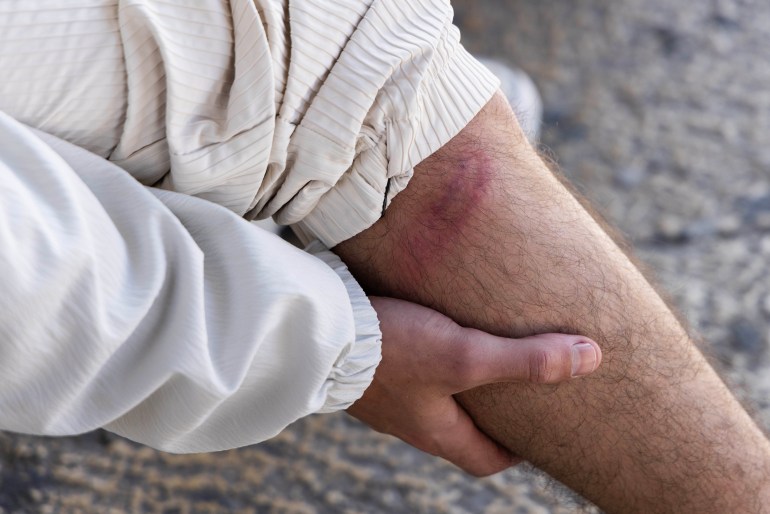
Damascus Gate, occupied East Jerusalem – Samer and Omar* woke up early on Friday morning, hoping to make it to noon prayers at the Al-Aqsa Mosque Compound in the Old City of Jerusalem. Located just 15 minutes away from their homes in the Palestinian neighbourhood of Issawiya in occupied East Jerusalem, the two young friends are among the tens of thousands of Palestinians in the city who attend Friday prayers at the mosque – one of the holiest in Islam. But when the two arrived at Damascus Gate – the main entrance used by Palestinians to the Old City – they were stopped by Israeli forces. “Where are you from?” the officer asked Samer and Omar, aged 22 and 28 respectively. “Issawiya,” they replied. “Go back to Issawiya and pray there,” the officer told them – a response that multiple Palestinian men said they received as they tried to enter that Friday. While Israeli forces had imposed a strict closure on the Old City since October 7, they have loosened the restrictions slightly the past two Fridays, allowing more people to enter. The two men, feeling antagonised, turned away and went to grab something to drink from a kiosk opposite the Israeli forces checkpoint. Shortly after, the Israeli officers approached them and told them to leave the area – the most central area for Palestinians in the city – without offering any explanation. “They started pushing us and then beat my friend with the baton,” Samer told Al Jazeera after the incident. “We tried to say ‘don’t touch us.’” Omar cursed at the officers, before the latter chased the two men for a distance of about 500 meters (1,640 feet) and beat them with batons. As the officers ran after the two men, Al Jazeera’s reporter – who was present at the scene – heard one of the Israeli officers say, “Break their legs so that they don’t come back.” Omar, the 28-year-old, suffered heavier blows than his friend. A strip of the skin on his leg looked as though it had been burned; he was in pain and was not able to walk. Omar’s leg after he was beaten by Israeli forces on Friday, February 9, after he tried to enter the Old City [Faiz Abu Rmeleh/Al Jazeera] “They don’t want us here. They want us out of this country, and to forget about the homeland,” said Samer, still frazzled by the beating. “To be a male in Jerusalem – it’s not a life,” he said. “Just simply existing as a Palestinian male in Jerusalem – that bothers them.” Yet, the young men say they have no option but to stay strong. “This is at the end of the day, a military occupation. We will never leave here, no matter what they do,” Samer said, before the two jumped on a bus going back home. ‘Beatings, provocative searches, cursing’ Since October 7, life for Palestinians living under the 57-year Israeli military occupation in Jerusalem has become much more difficult than it already was. That day, Hamas fighters attacked southern Israel, killing nearly 1,200 people and taking more than 200 others captive. Israel responded with a brutal military campaign, first by air and then on the ground as well, killing more than 29,000 people — mostly women and children — in Gaza, less than 80km (48 miles) away from Jerusalem, over the past four months. Thousands of others are buried under the rubble and presumed dead. Shortly after the Hamas attack, Israeli forces were deployed in the thousands in the Old City of Jerusalem as well as the dozens of neighbourhoods surrounding it. They imposed strict closures and restrictions on movement, in addition to the further isolation of Jerusalem by cancelling all military permits to enter the city for Palestinians in the occupied West Bank. Israeli forces running after Samer and Omar to beat them on February 9, 2024 [Faiz Abu Rmeleh/Al Jazeera] Young Palestinian men have, in particular, borne the brunt of increased violence and harassment by Israeli soldiers in Jerusalem. Abu Mohammad*, who runs a store and lives inside the Old City, said that after October 7 – especially during the first few days and weeks – Israeli forces imposed a strict curfew after 5pm. “No one was allowed to stand in the street after 5pm, even if we live in the Old City. If we did, they would attack us with beatings, provocative searches, cursing at us,” the 30-year-old told Al Jazeera. Describing the situation today and how violence by Israeli forces unfolds, Abu Mohammad said, “Anytime a male wants to enter the Old City, they get searched. “A group of soldiers will search this one man. While they are searching you, they hit you with their elbows, with their knees, to provoke you to say something. “If you say anything, you find them all on top of you, punching you on the head and all over your body. All of a sudden, you need a hospital,” explained Abu Mohammad. He noted that the Israeli officers “don’t differentiate between older and younger men.” “I have seen them push elderly men. They don’t care,” he said. “There is no Palestinian male here that hasn’t been beaten,” the father-of-three continued. ‘They went crazy after October 7’ Attacks by Israeli forces on Palestinians in Jerusalem have not only targeted residents and passersby. They have also targeted journalists trying to do their jobs. Mustafa Kharouf, a 36-year-old resident of the city and a photojournalist with the Turkish Anadolu Agency, was severely beaten by Israeli paramilitary officers while reporting on December 15. Along with a group of journalists, Kharouf had been stationed in the Palestinian neighbourhood of Wadi Joz, which lies close to the Old City. Due to the Israeli ban on Palestinians from entering the Old City and the Al-Aqsa Mosque Compound, residents have been gathering to pray on the streets of the Wadi Joz on Fridays as an alternative. On many Fridays, Israeli forces fired live ammunition and large
What’s troubling Brazil-Israel ties? Unpacking a love-hate relationship

Brazil has recalled its ambassador to Israel and said it would not retract statements that the Israeli government calls “anti-Semitic” as a spat between the two countries escalated this week. On Sunday, Brazilian President Luiz Inacio Lula da Silva compared Israel’s war on Gaza, in which nearly 30,000 Palestinians have been killed, to the Holocaust, sparking outrage from Israel. Israel declared Lula persona non grata on Monday, summoning the Brazilian ambassador and demanding that Brasilia retract the statements. In return, Brazil summoned the Israeli ambassador in Brasilia for a dressing-down on Monday while also recalling its envoy to Tel Aviv. The tensions mark the latest chapter in a relationship between two countries more than 10,000km (6,200 miles) apart but bound by history dating back to the creation of Israel. Brazilian President Luiz Inacio Lula da Silva compared israel’s war in Gaza to the Holocaust at an African Union summit in Addis Ababa, Ethiopia [Reuters] What has Brazil’s position been on the war so far? Brazil denounced the October 7 attacks on Israel, led by the Palestinian armed group Hamas, in which 1,139 people were killed and more than 200 people taken hostage. However, the country has also been vocal about the war on Gaza, condemning Israel’s indiscriminate attacks on civilians and on crucial infrastructure. Lula said last year that the death of thousands of children “is particularly shocking”. At the United Nations Security Council, where it is a non-permanent member, Brazil has backed every single resolution calling for a ceasefire in Gaza although the United States has vetoed these moves. In November after Israel eventually allowed a select number of foreigners, dual nationals and Palestinian patients to leave Gaza through the Rafah crossing with Egypt, Brazilians were initially missing from the daily lists, sparking speculation that Israel was punishing Brazil for its diplomatic postures. Israel denied those suggestions. When repatriation flights to Brazil finally started, Lula was at the airport tarmac in Brasilia to welcome Palestinian Brazilians as they landed. For decades, Brazil has called for a Palestinian state to be created on the borders that existed before the 1967 Arab-Israeli War, in which Israel seized the Gaza Strip, West Bank and East Jerusalem. Have Brazil and Israel always had tense ties? Not really. In fact, Brazil had a role in the creation of Israel. Brazil was the president of the UN General Assembly in November 1947 when the UN Partition Plan for Palestine was first presented to the body, and it played a significant role in seeing the plan adopted. The partition plan recommended the creation of a Jewish state in British-administered Mandatory Palestine. Oswaldo Aranha, a one-time foreign minister of Brazil who was head of the country’s UN delegation, chaired the General Assembly and played a vital role in discussions of the partition plan. According to Gerson Menandro Garcia de Freitas, former Brazilian ambassador to Israel, Aranha realised on the day of the initial vote that the plan didn’t have enough support, so he cajoled speakers to prolong their addresses and run the clock out, eventually delaying the vote by two days, by which time, enough votes had been secured for the creation of Israel. Today, Tel Aviv and Beersheba have streets named after Aranha, and Jerusalem has a public square named in the Brazilian diplomat’s honour. Brazil was also one of the first countries to formally recognise the state of Israel in 1949. More than 100,000 Jewish people live in Brazil, making it the second largest Jewish community in Latin America. Relations between Brazil and Israel soared to new heights under former Brazilian President Jair Bolsonaro, who proclaimed Brazil as Israel’s best friend. When Israeli Prime Minister Benjamin Netanyahu visited Bolsonaro when he was president-elect in 2018, the Israeli leader was awarded a national prize previously presented to Queen Elizabeth II and US President Dwight Eisenhower. Bolsonaro later sparked controversy when he signalled he might move the Brazilian embassy in Israel from Tel Aviv to Jerusalem after a similar move by the US. In his 2019 trip to Israel, Bolsonaro visited the Western Wall of the Temple Mount, the holiest site in Judaism, with Netanyahu. It is in Israeli-occupied territory in Jerusalem and is also known as the Al-Aqsa Mosque compound, the third holiest site in Islam. During that trip, Bolsonaro chose to announce a non-diplomatic trade mission in the city rather than a full embassy. What other dips have there been in relations? The current crisis isn’t the first time that Brazil and Israel have seen their relations spiral downwards. In 2014, Brazil — then under Lula’s protege, President Dilma Roussef — criticised Israel’s violence against Palestinians and recalled its ambassador for diplomatic talks. Israel’s Ministry of Foreign Affairs spokesperson responded by describing Brazil as a “diplomatic dwarf”, escalating tensions further. That wasn’t all. The spokesperson taunted Brazil over its embarrassing 7-1 thrashing at the hands — or feet, rather — of Germany in the 2014 World Cup semifinals, which Brazil was hosting. Israel’s assault on Gaza that year, he said, was “proportionate”. What was “disproportionate”, he said, was the semifinal score. Brazil, alongside 28 other countries, voted for a UN Human Rights Council investigation into allegations of Israeli human rights violations in that offensive. An estimated 2,000 civilians were killed in that war. In November last year, Israel irked Brazilian authorities when its foreign intelligence agency, Mossad, publicly said it helped Brasilia bust a Hezbollah ring planning attacks in the South American country. Mossad linked the planned attacks to the ongoing Gaza war, suggesting that Jewish lives in Brazil were under threat. Brazilian Justice Minister Flavio Dino did not deny the assistance but responded in an apparent rebuke that “Brazil is a sovereign country,” and “no foreign force orders around the Brazilian Federal Police”. Adblock test (Why?)
Pakistan parties agree deal to form coalition government

NewsFeed Two major Pakistan political parties that are rivals of jailed ex-PM Imran Khan have agreed to a coalition and say they’re ready to form a government, after elections overshadowed by allegations of vote-rigging. Published On 21 Feb 202421 Feb 2024 Adblock test (Why?)
The Indian cafe that employs acid attack survivors

NewsFeed A cafe in India employs acid attack survivors to help them rebuild their confidence and return to society. Published On 21 Feb 202421 Feb 2024 Adblock test (Why?)
UK imposes sanctions on heads of penal colony where Russia’s Navalny died

Cameron promises to hold those responsible accountable, as Navalny’s mother takes legal action to recover his body. The United Kingdom has imposed sanctions on six officials overseeing the Arctic penal colony where Russian opposition leader Alexey Navalny died. The sanctions, announced by British Foreign Secretary David Cameron on Wednesday, target the head and five deputy heads of the IK-3 penal colony in Kharp in Russia’s Yamal-Nenets region, who now face a ban on entering the UK and will have their assets frozen. “Those responsible for Navalny’s brutal treatment should be under no illusion – we will hold them accountable,” Cameron said. “It’s clear that the Russian authorities saw Navalny as a threat and they tried repeatedly to silence him.” The UK is the first country to impose sanctions in response to Navalny’s death, the Foreign Office said as it described him as “a political prisoner who dedicated his life to exposing the corruption of the Russian system, calling for free and open politics, and holding the Kremlin to account”. 🔴 SANCTIONED: heads of Arctic penal colony where Alexei Navalny was killed. pic.twitter.com/2FZn0W5b73 — Foreign, Commonwealth & Development Office (@FCDOGovUK) February 21, 2024 The sanctioned individuals include Vadim Konstantinovich Kalinin, who oversaw the prison where Navalny was kept in solitary confinement for up to two weeks at a time, it added. The penal colony about 1,900km (1,200 miles) northeast of Moscow is considered one of the toughest in Russia. Its inmates are convicted of grave crimes. Russian authorities have said the cause of 47-year-old Navalny’s sudden death on February 16 at the colony, called “Polar Wolf”, is still unknown and have refused to release his body for the next two weeks, pending a preliminary inquest. On Wednesday, Navalny’s mother, Lyudmila Navalnaya, filed a lawsuit at a court in the town of Salekhard near the penal colony, contesting officials’ refusal to release her son’s body so she could bury him with dignity. A closed-door hearing has been scheduled for March 4, Russia’s state news agency TASS reported. Navalny’s widow, Yulia Navalnaya, released a video on Monday claiming the authorities had not yet handed over his body because they were waiting for traces of the Novichok nerve agent to disappear. Kremlin spokesperson Dmitry Peskov has rejected allegations of a cover-up and President Vladimir Putin’s alleged involvement as “unfounded, insolent accusations about the head of the Russian state”. The UK’s decision to take targeted punitive action against the prison heads coincided with plans by the United States to impose sanctions against Russia over the Putin critic’s death and the two-year war in Ukraine, set to be announced on Friday. Cameron will attend the G20 foreign ministers’ meeting in Brazil later on Wednesday and the Foreign Office said “he will use the opportunity to call out Russia’s aggression and its global impact directly to Russian Foreign Minister Sergey Lavrov.” Adblock test (Why?)