

How is satire being used to highlight Israel’s war on Gaza?

They say laughter is the best medicine. But in the face of Israel’s attacks on Gaza, can satire heal the wounds of war? Israel’s war on Gaza is far from a laughing matter, but some comedians are addressing the story head-on in their stand-up shows. It’s not because they think the destruction or deaths of thousands of Palestinians are funny or worthy of ridicule, but because they believe in the power of satire – comedy’s ability to challenge narratives, build bridges, and even help people heal through humour. Presenter: Anelise Borges Guests:Nasser Al Rayess – Comedian and creator, Habiiibi NightsJess Salomon – Comedian and former war crimes lawyerNina Kharoufeh – Stand-up comedian Adblock test (Why?)
Israel’s war on Gaza: List of key events, day 130

Israel continues to face growing international pressure to agree to a ceasefire amid mounting humanitarian crisis in Gaza. Here’s how things stand on Tuesday, February 13, 2024: Humanitarian crisis in Gaza On Tuesday, at least five people were killed in the Nuseirat camp in central Gaza, while four more were killed by an Israeli bomb in the Brazil neighbourhood of Rafah. A growing international chorus is calling for a ceasefire as Israel plans an assault on Rafah – home to 1.4 million people, most of whom were displaced from other parts of Gaza. Meanwhile, on the Israeli side, three soldiers were killed and two others were injured during the fighting. They were part of the 630th Battalion deployed in southern Gaza. Hala Mekdad, a 10-year-old girl, has died in the intensive care room of Nasser Hospital after electricity at the hospital was cut off overnight, according to a video shared on social media by a doctor at the hospital and verified by Al Jazeera. Nasser Hospital in Khan Younis in the Gaza Strip has been under siege for weeks, with Ashraf al-Qudra, the spokesman for the Ministry of Health in Gaza, saying that Israeli snipers have fired at and killed people in the hospital’s yard. The bodies of several people killed near Nasser Hospital have reportedly been lying on the ground for several days as it is too unsafe to reach them, the United Nations humanitarian agency OCHA said. Israel has described Rafah as the last remaining Hamas stronghold in the territory and signalled that its ground offensive may soon target the town on the southern edge of the Gaza Strip. At least 63 Palestinians were killed in Israeli strikes in Rafah on Sunday overnight, ahead of the impending ground offensive. Palestinian health authorities say more than 28,000 people have been killed. More than 85 percent of Gazan residents have become homeless due to the destruction of residential buildings in Israeli strikes. A UN survey found that nearly one in 10 children under five is acutely malnourished. Regional tensions and diplomacy Israel is facing growing international pressure to agree to a ceasefire with Hamas. Pakistan’s Ministry of Foreign Affairs has issued a statement “strongly” condemning “Israel’s military aggression against Rafah city in Gaza and the resulting destruction and massacre of the Palestinian people”. More than 100 people were killed in intense Israeli bombardments on Sunday overnight through to Monday. Meanwhile, United States President Joe Biden and King Abdullah II of Jordan discussed strategies to end the war in a meeting in Washington, DC. Biden and Netanyahu also spoke after two Egyptian officials and a Western diplomat said Cairo threatened to suspend its peace treaty with Israel if troops were sent into Rafah. Separately, a cargo ship that Yemen’s Houthis struck in the Red Sea was bound for a port in Iran, the US Central Command (CENTCOM) said. The ship was struck by two missiles but is “seaworthy with minor damage and no injuries to the crew”, CENTCOM added. Houthi Attack in Bab al-Mandeb On Feb. 12 from 3:30 to 3:45 a.m. (Sanaa time), Iranian-backed Houthi militants fired two missiles from Houthi-controlled areas of Yemen toward the Bab al-Mandeb. Both missiles were launched toward MV Star Iris, a Greek-owned, Marshall… pic.twitter.com/vfihRaw0rr — U.S. Central Command (@CENTCOM) February 13, 2024 Occupied West Bank According to reports by Palestinian news agency Wafa, Israel set a Palestinian truck ablaze overnight in the town of Huwara, in the occupied West Bank. Meanwhile, Wafa also said that about 9,000 Palestinian prisoners are subjected to “unprecedented retaliatory measures”. “The Israeli Prison Service has further stripped the detainees of basic tools and means of communication with the outside world, such as television and family visits,” Wafa said. The number of settlers in the West Bank now stands at 517,407, up from 502,991 a year earlier. Additionally, the United Kingdom has also announced sanctions on four Israeli settlers accused of committing human rights abuses against Palestinians in the West Bank after a similar move by the US this month. Announcing the asset freezes and travel and visa bans against the settlers, British Foreign Secretary David Cameron said: “Israel must also take stronger action and put a stop to settler violence.” Adblock test (Why?)
UAE, Azerbaijan, Brazil join forces to limit global warming to 1.5C
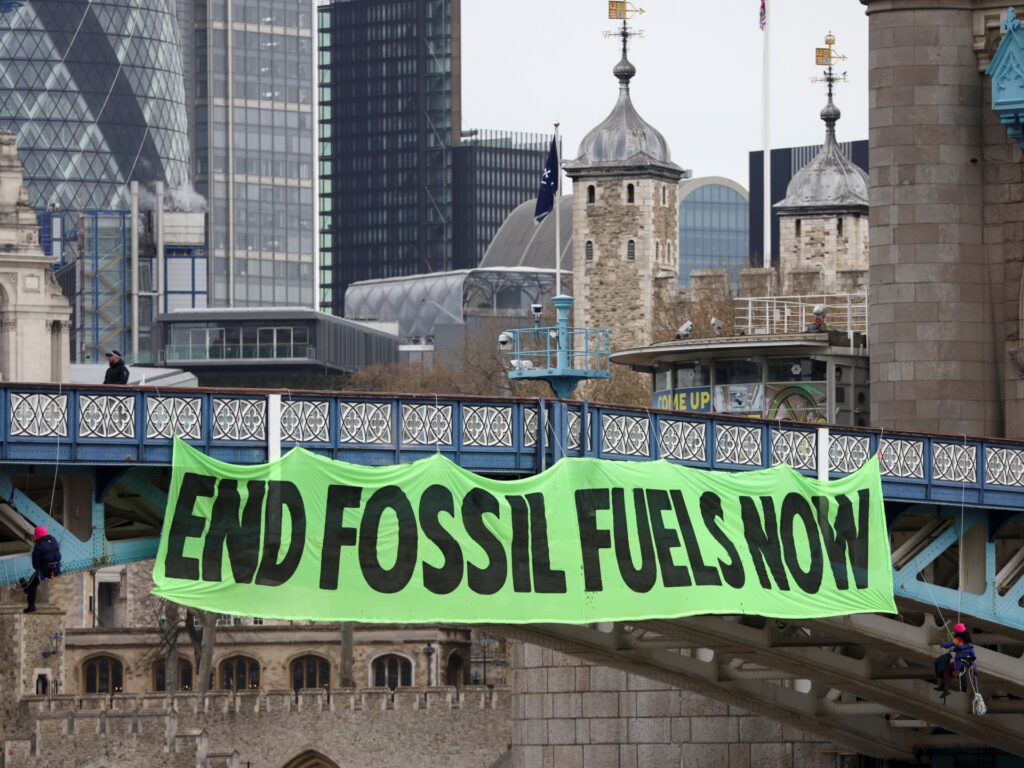
Three former and future UN climate summit hosts will form a ‘troika’ to to limit global warming to 1.5 degrees Celsius. The United Arab Emirates, Azerbaijan and Brazil, former and future hosts of UN climate summits, are joining forces to push for an international agreement to limit global warming to 1.5 degrees Celsius (2.7 degrees Fahrenheit). On Tuesday, the UAE’s Conference of the Parties (COP28) presidency said that it would form a “troika” to focus on ensuring that more ambitious CO2-cutting pledges are made ahead of a deadline at the COP30 summit to be held in 2025 in Belem, Brazil. Azerbaijan will host this year’s United Nations climate event in November. “We cannot afford to lose momentum, we must do everything we can to keep 1.5 C within reach,” said Sultan Al Jaber, the Emirati president of last year’s negotiations. In 2015, almost 200 governments signed the unprecedented Paris climate agreement to phase out fossil fuels in favour of renewable energy in the second half of the century by capping global warming at 1.5C. That target is fast slipping out of reach, as global greenhouse gas emissions continue to soar. The next round of countries’ climate targets is seen as a crucial last chance to prevent global warming exceeding the 1.5C limit. The troika partnership should “significantly enhance international cooperation and the international enabling environment to stimulate ambition in the next round of nationally determined contributions”, read the final agreement reached at COP28. Last week European climate monitors reported that for the first time global warming had exceeded temperatures of 1.5C over a 12-month period, in what scientists called a “warning to humanity”. Storms, drought and fires lashed the planet as climate change, as well as the El Nino weather phenomenon that warms the surface waters in the eastern Pacific Ocean, made 2023 the planet’s hottest year in global records going back to 1850. “The troika helps ensure we have the collaboration and continuity required to keep the North Star of 1.5C in sight – from Baku to Belem and beyond,” Al Jaber said in a statement. Taking into account current climate pledges, the world is still on track to warm between 2.5 and 2.9 degrees Celsius over this century, according to UN estimates. The 1.5C limit will probably be reached between 2030 and 2035, according to the Intergovernmental Panel on Climate Change. Little progress At COP28, the world agreed to “transition away” from fossil fuels, but there was no progress on unblocking financial flows to developing countries, a major sticking point in negotiations. This issue is set to be a central theme of COP29 in Baku, Azerbaijan, where a new target is expected to be set for the financial support provided by developed countries for climate change. According to the Organisation for Economic Co-operation and Development, rich countries are about two years late in meeting their initial pledge of $100bn in annual climate funding by 2022. The UN’s high-level expert group on climate finance said in 2022 that developing nations, excluding China, need to spend some $2.4 trillion a year on clean energy and climate resilience by 2030 – four times current levels. “We are committed to leveraging our strength as a bridge builder between the developed and developing world as host of COP29, to accelerate efforts to keep 1.5 in reach,” said COP29 President-Designate Mukhtar Babayev, who is Azerbaijan’s minister of ecology and natural resources. “Key to that will be establishing a new climate finance goal that reflects the scale and urgency of the climate challenge.” Adblock test (Why?)
Tight security and barricades as Indian farmers march to New Delhi
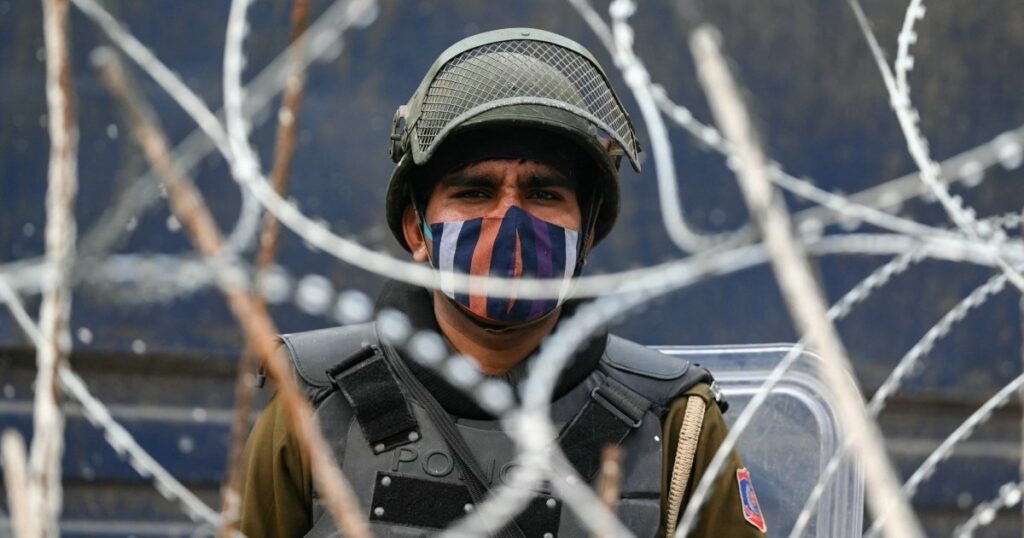
Indian authorities have deployed heavy security to stop thousands of protesting farmers who were marching towards New Delhi to renew their demands for assured crop prices in a repeat of 2021 protests when they camped on the capital’s outskirts for more than a year. Police sealed multiple entry points into New Delhi on Tuesday by erecting barriers of barbed wire, spikes and cement blocks. Large gatherings in the capital were banned and internet services were suspended in some districts of the neighbouring state of Haryana. The renewed protests come more than two years after Prime Minister Narendra Modi withdrew controversial agriculture laws that had triggered the demonstrations in which tens of thousands of farmers hunkered outside the capital through a harsh winter and a devastating COVID-19 surge. The farmers, who began their march from the northern states of Haryana and Punjab, are asking for a guaranteed minimum support price for all farm produce. The government protects agricultural producers against any sharp fall in farm prices by announcing a minimum purchase price on certain essential crops at the beginning of the sowing season, taking into account the cost of production. Farmers are also pressing the government to meet its promise to double their income. The withdrawal of the agricultural laws in November 2021 was seen as a major retreat by the Modi government. The government at that time said it would set up a panel of farmers and government officials to find ways to ensure support prices for all farm produce. Multiple meetings since then have made no progress. The march comes just months before national elections in India, in which Modi is widely expected to win a third term. Farmers form the most influential voting bloc in India and politicians have long considered it unwise to alienate them. Some farmer and trade unions have also announced a countrywide rural strike on Friday. Adblock test (Why?)
‘There will be massacres’: Palestinians in Rafah speak of their fears

Rafah, Gaza Strip – About 1.5 million Palestinians, most of them displaced, are squeezed into the small city of Rafah in the southern Gaza Strip. They have been expelled from their homes in other parts of Gaza during Israel’s assault on the besieged enclave, which has killed more than 28,000 people. Israel had designated Rafah a “safe zone”, but now, it is threatening a ground invasion, leaving more than a million people trapped there, terrified, with nowhere else to go. Rafah is the latest in a series of areas that Israel has said would be “safe zones” for civilians to shelter in from what is now four months of attacks, but Israel has attacked one after the other, forcing people out again and again. There have been international condemnations of Israel’s plan to invade Rafah but Israeli Prime Minister Benjamin Netanyahu says he is determined to continue, claiming that it would “finish Hamas”, which is the declared intent behind the assault on Gaza. Um el-Abed Fayyad and her family have been displaced four times so far [Sanad Agency/Al Jazeera] Senior Hamas leaders have said that such a move on Israel’s part would end any possibility of negotiations between the two sides. Against this backdrop, the fear and panic that has taken hold of people in Rafah continues to build. Al Jazeera spoke to several Palestinians who ended up in Rafah because of the war, some of whom had been displaced many times over. ‘Nowhere else to go’ Umm al-Abed Fayyad said she and her family have been displaced four times so far. “We are in a different area every month. The last place we were in was Khan Younis, and now we are in Rafah,” she explained. When asked how she feels about the possibility of an Israeli invasion, Umm al-Abed Fayyad said she has “nowhere else to go”. “The Israelis are everywhere. Where are we going to go?” she asked, noting that people all around them are “hungry and homeless”. Assaad Hassan is not well, and his only wish in life is to go home [Sanad Agency/Al Jazeera] Like others in the area, she says: “No matter how much they threaten, we will not move again, and God willing, we will be victorious. We will persevere and remain patient.” Asaad Hassan, another Palestinian displaced from Gaza City to Rafah, is unwell. His only wish, he says, is “to return to my home and for the aggression to stop”. “We have nowhere else to go but to the grave, if they carry out their threats to invade Rafah,” Hassan told Al Jazeera. Israel’s war on the besieged Gaza Strip began on October 7. That day, the Qassam Brigades, the armed wing of Hamas, which governs Gaza, launched attacks on southern Israel, killing 1,139 people and taking about 240 back into Gaza. Israel immediately responded with a bombardment campaign followed by a land invasion of northern Gaza. Umm Badr Abu Salme is certain massacres are about to happen in Rafah [Sanad Agency/Al Jazeera] At least 28,340 Palestinians have been killed in Gaza, the majority of them women and children, while 67,984 have been wounded in the past four months. The majority of Gaza’s 2.3 million residents have been forced out of their homes, and more than 60 percent of all infrastructure in the strip has been demolished. ‘There will be massacres’ Umm Badr Abu Salme said she moved with her family to Rafah based on orders from the Israeli army that it would be safer. “We came to Rafah, and now they are telling us to leave,” she told Al Jazeera. “There will be massacres. There is no other place to go. Rafah is our last refuge. This war must stop.” “Anyone who moves is killed,” Abu Salme said. “We have no safe place to go to.” Mohammed Madi, who is a medic, has been displaced several times since he was forced to leave his home in Gaza City. ‘I’ll die here before I leave,’ Mohammed Madi told Al Jazeera [Sanad Agency/Al Jazeera] “If the occupation follows through with its threats to invade Rafah, it will be a disaster,” Madi told Al Jazeera. “Still, I won’t leave Rafah because where will we go? The rest of Gaza is destroyed. I’ll die here before I leave,” he said. “We call on the Arab countries … to take a decision and end this genocidal war against Gaza,” Madi said. On December 29, South Africa filed a case against Israel at the International Court of Justice, arguing that it is carrying out genocide against the Palestinian people, a term many have used to describe Israel’s war on Gaza. Journalist Alaa Salameh, a resident of Rafah who has covered the war all over the Strip, said he will remain to report from the city despite the Israeli threats. “The Israeli army carried out countless massacres across the Gaza Strip. If it invades Rafah, it will do the same,” Salameh told Al Jazeera. Journalist Alaa Salameh is from Rafah but has moved up and down the Gaza Strip to cover the war [Sanad Agency/Al Jazeera] “The occupation does not follow international law. If they invade Rafah, there will be no safe place,” he continued. “There needs to be global pressure to prevent this potential crime from happening.” He noted that Israel has already killed thousands of Palestinians in air strikes on Rafah over the past few months. Haifaa Mohammad Abdelhamid Saleh was forced to leave her home in Gaza City and came to Rafah. “We left on October 14. We didn’t want to leave Gaza City or our homes, but the Israeli occupation told us that we would be safe if we did.” “We hope they don’t invade Rafah. If they do, there will be a humanitarian disaster – not just among refugees but also for the residents of the city,” Saleh said. “They burned down everything in Gaza. They want to take out their revenge on the resistance in Gaza.” Haifaa Mohammad fears a
Elon Musk denies selling Starlink to Russia after Ukraine claims use in war

Moscow says SpaceX’s internet service ‘cannot be officially used here in any way’. Elon Musk has denied selling his Starlink internet service to Russia after Ukraine claimed the terminals were being used by Russian troops on the front lines of the war. “A number of false news reports claim that SpaceX is selling Starlink terminals to Russia. This is categorically false,” Musk, who leads SpaceX and several other companies including Tesla, said in the post on X on Monday. “To the best of our knowledge, no Starlinks have been sold directly or indirectly to Russia.” Moscow also rejected Kyiv’s claim that Starlink terminals had been smuggled into Russia and were being used on a “systematic” basis in Russian-occupied Donetsk. Kremlin spokesman Dmitry Peskov said Starlink is not certified for use in Russia. “It cannot be officially supplied here and is not officially supplied here,” Peskov told reporters on Monday. On Sunday, Ukraine’s military intelligence agency GUR said that intercepted conversations among Russian forces revealed that Starlink terminals had been deployed among troops operating near the towns of Klishchiivka and Andriivka. GUR spokesman Andriy Yusov said on state TV that Starlink terminals were entering Russia through parallel importing, not official channels. Starlink said in a post on X last week that it “does not do business of any kind with the Russian Government or its military” and the service “will not work” in the country. Ukraine’s military has credited Starlink for allowing its forces to communicate, gather intelligence and coordinate attacks more quickly and securely than would be possible using radio or phone communications. Last year, Musk came under scrutiny after it emerged that he had refused a request by Ukraine to activate Starlink to assist in a surprise attack on Russia’s fleet in Crimea’s port of Sevastopol. Musk said he had refused the request, which was first reported in extracts of Walter Isaacson’s biography about the billionaire because it would have made him “explicitly complicit in a major act of war and conflict escalation”. Adblock test (Why?)
US House speaker blasts Israel, Ukraine aid package as Senate advances bill

Republican Mike Johnson says the bill does not address the ‘most pressing’ issue of security at the US-Mexico border. United States House of Representatives Speaker Mike Johnson has cast doubt on the fate of a $95.3bn aid package for countries including Ukraine and Israel as the Senate voted to advance the legislation aimed at reassuring Washington’s allies. Johnson, the top Republican in the House, said the Senate had “failed to meet the moment” by not addressing security on the US-Mexico border, which he described as the “most pressing issue facing our country”. “The mandate of national security supplemental legislation was to secure America’s own border before sending additional foreign aid around the world,” Johnson said in a statement on Monday. “It is what the American people demand and deserve.” Johnson previously said that an earlier version of the bill would be “dead on arrival” as curbs it placed on unauthorised migration did not go far enough. Last week, a majority of Senate Republicans voted to kill a bipartisan bill that included the most comprehensive immigration reforms in years amid opposition by former President Donald Trump, who has led his party to adopt more sceptical stances towards immigration and intervention overseas. After stripping out the immigration provisions from the legislation, the Democratic-led Senate on Monday voted 66-33 to bring the military aid package closer to a final vote that could come as soon as Wednesday. Democratic Senate leader Chuck Schumer said the deal reflected “our security, our values, our democracy” and would be a “down payment for the survival of Western democracy and the survival of Western values”. “The entire world is going to remember what the Senate does in the next few days,” Schumer said. US President Joe Biden has urged Congress to quickly approve additional military aid for Ukraine, Israel and Asia Pacific allies including Taiwan. Conservative Republicans in the House have resisted Biden’s calls, insisting on measures to tackle “illegal” immigration at the southern border and questioning the need to continue support for Ukraine. Senator JD Vance, an Ohio Republican, on Monday blasted the push to support Ukraine as a “fetish”. “There are some Republicans for whom Ukraine is the most important issue confronting the country,” Vance said in an interview with former Trump adviser Steve Bannon. “And I just say, even if you’re pro Ukraine funding, and obviously I’m not, don’t we have 10 more important issues confronting this nation, between the border problem, the debt problem? Why are we so obsessed with this?” Adblock test (Why?)
Families of detained Palestinian Americans decry US government’s silence

Washington, DC – “Confirmed receipt.” That is the only message Yasmeen Elagha received from the United States government after two of her cousins — both Palestinian Americans — were detained by Israeli forces as they sheltered near Khan Younis in southern Gaza. Now, she is calling on the administration of US President Joe Biden to do more to assure their safety and secure their release. Elagha said her two cousins, 18-year-old Borak Alagha and 20-year-old Hashem Alagha, are being held without charge. “We’ve pleaded with the US government,” Elagha, a law student at Northwestern University in Chicago, explained. “The administration is fully failing in its duty.” Hers is one of several families pushing for the protection of Palestinian Americans taken into Israeli custody, as the war on Gaza stretches on. They gathered in Washington, DC, for a news conference on Monday to press for action. From the podium, Elagha explained that she learned of her cousins’ abduction in a February 7 phone call with her aunt in Gaza. Through tears, her aunt recounted how Israeli soldiers broke into their shelter in al-Mowasi, near Khan Younis, and tied up the women and children. The men met a different fate. Elagha’s aunt described how the two cousins, along with their father, their uncle and two other male relatives were all taken away. The soldiers left the shelter trashed and the family’s car tyres slashed, according to Elagha’s aunt. None of the men have been heard from since. In the days since, Elagha has sent a flurry of emails, to US embassies in Jerusalem, Tel Aviv and Cairo, as well as a US task force on Gaza. She has received only the one reply confirming her appeal had been received. The wait for information has been excruciating, she said. “The minutes feel like hours, so it feels like it’s been already a month since they’ve been gone.” Allegations of trumped-up charges Suliman Hamed, a Louisiana resident, shared a similar experience at the event, hosted by the Council on American-Islamic Relations (CAIR). He said his Palestinian American mother, 46-year-old Samaher Esmail, was taken into Israeli custody in the occupied West Bank last Monday, and he has not been able to speak with her since. He explained he has only received one call from an embassy official in the aftermath of her detention. Days have passed, but still, consular staff have not visited her where she is being held at the Damon prison in Haifa, Hamed explained. “Monday, Tuesday, Wednesday, Thursday, Friday, Saturday, Sunday and now Monday again. Nobody from the US embassy has visited or spoken with my mother, a US citizen,” he said. While she waits in prison, Hamed worries about his mother’s health. Her lawyer told him that she has not received her medication since she was arrested. “It’s been seven days and she still has not received a single medication. This has resulted in her condition worsening greatly,” Hamad said. “We have repeatedly asked the US embassy to send a consular officer to my mom, so we can get an update on her condition.” His mother was arrested on allegations of “incitement on social media”, he explained. Hamed and his brother Ibrahim fear she was targeted in retaliation for a lawsuit she filed against the Israeli military, after allegedly being beaten during a traffic stop in 2022. Rights groups have long accused Israeli authorities of using trumped-up charges of “incitement” to crack down on Palestinians and suppress free speech. But arrests overall in the occupied West Bank have surged since the start of the war on October 7. The Palestinian Prisoners Club, an advocacy organisation, has documented 6,870 detentions as of last week. “Israel is trying to use my mother as an example,” said Hamed. “They’re trying to scare Palestinians and Palestinian Americans. If this can happen to a Palestinian American woman, this could happen to you.” Ibrahim Hamed and Suliman Hamed, the sons of American Samaher Esmail, speak about her ongoing detention in Israeli prison [Joseph Stepansky/Al Jazeera] Reports of beatings, humiliating treatment Since the start of the war in Gaza on October 7, allegations of enforced disappearances, abuses and torture at the hands of Israeli forces have also been rampant. In January, Ajith Sunghay, the head of the United Nations Human Rights office for the occupied Palestinian territories, published a report where he collected accounts of detainees being “beaten, humiliated, subjected to ill-treatment and to what may amount to torture”. Many were held between 35 and 55 days, Sunghay wrote. His report, and others, have sparked fears among the families of those in custody. “With everything we’ve learned happens to Palestinian men when they’re detained by Israel, especially since October 7, we’re just imagining the torture that they are facing,” Elagha said of her cousins. Hamed, meanwhile, recalled how his mother’s lawyer described bruises on her arms and back. He and his brother believe she was beaten by Israeli forces. The lawyer told them that Esmail even lost consciousness twice during a prison interview. Not following protocols When asked about the US citizens detained overseas, the State Department said it is working to ensure their fair and humane treatment. “As you know, we have no higher priority than the safety and security of American citizens overseas,” spokesman Vedant Patel told reporters on February 8. But Maria Kari, an immigration lawyer, told Al Jazeera the State Department’s stance does not go far enough. She is working with the family of Borak and Hashem Alagha to file a lawsuit against the government. She told Al Jazeera the Biden administration appears to have not followed the proper protocol for situations where a US citizen is taken hostage or forcibly disappeared, either by a non-state or state actor. “Here, we have Israeli soldiers having wrongly detained [the Alagha siblings] in an enforced disappearance, all very illegal and in direct contravention of both domestic US laws and international laws,” she said. That situation should “require consular access right away”, she explained. “The president’s
Thailand’s former Prime Minister Thaksin Shinawatra to be freed: Reports

Justice minister says Thaksin was one of 930 inmates given parole on Tuesday with release expected after February 17. Thailand’s jailed former Prime Minister Thaksin Shinawatra is set to be freed, according to local media reports. Thaksin, 74, who was jailed for eight years for abuse of power before a royal pardon reduced the term to one year, was granted release on the basis of his age and health, Thai media reported on Tuesday, citing Justice Minister Tawee Sodsong. The politician and business tycoon was transferred to hospital after a single night in jail as a result of high blood pressure and has been there ever since. He was among 930 inmates given parole on Tuesday, Tawee told reporters, and is expected to be released after February 17. Thailand returned to Thailand last August following more than 14 years in exile. Thaksin swept to power in 2001 on a populist platform that appealed to rural Thais who had long been neglected by the country’s ruling elites. He was returned in a landslide five years later but, in September 2006, when Thaksin was in New York preparing to address the United Nations, the military seized power in a coup. Thaksin – who was also accused of serious human rights abuses amid a violent conflict in the country’s mostly Muslim southern provinces and a “drugs war”, which left thousands dead – was later convicted of abuse of power and went into exile, mostly in Dubai. Adblock test (Why?)
One person killed, five injured in New York subway shooting

DEVELOPING STORYDEVELOPING STORY, 34-year-old man killed after gunfire breaks out following argument between groups of teenagers at station in the Bronx. One person has been killed and five others injured in a shooting at a subway station in New York City, authorities in the United States’s biggest city have said. Gunfire broke out after an argument between two groups of teenagers at a train platform in the Bronx on Monday as office workers and students were beginning their evening commute, according to authorities. Police said a 34-year-old man was killed, with the wounded including a 14-year-old girl, a 15-year-old boy and a 71-year-old. Police said they were searching for at least one shooter, although they had not ruled out the possibility that more than one person was involved. “We don’t believe this was a random shooting. We don’t believe this was just an individual shooting indiscriminately onto a train. We believe this shooting all stemmed from a dispute between two groups that started on a train,” police transit chief Michael Kemper said during a news conference. Television news earlier showed a major emergency response at the elevated Mount Eden Avenue subway station, about 14km (9 miles) north of Manhattan’s Times Square, and a subway train stopped at the station. Witness Efrain Feliciano, 61, told Daily News there were “bullets flying everywhere”. “I saw sparkles as the bullets hit the wall,” Feliciano was quoted as saying. “A woman was holding a child screaming.” Gun violence is common in the US compared with other developed countries, although New York City is safer than other major urban centres and shootings on the city’s subway system are rare. Adblock test (Why?)