

Israel strikes Rafah, says two captives freed

Air raids come as Palestinians in Rafah brace for offensive that aid agencies fear would cause massive casualties. Israel has carried out air strikes in southern Gaza’s Rafah, killing dozens, according to health officials, as Palestinians brace for a major offensive on the densely crowded city. There were conflicting reports of the death toll following the predawn strikes on Monday. The AFP news agency reported that the strikes killed 52 people, while Reuters reported that 37 had been killed. Both outlets quoted health officials in Gaza. The Israeli strikes hit 14 houses and three mosques in Rafah, according to Palestinian officials. However, Al Jazeera Arabic colleagues have reported that at least 63 people were killed in the strikes on the mosques. A press statement from Hamas asserted that more than 100 had been killed in the city. Israel’s military said it had struck a number of “terror targets” in the Shaboura district of Rafah and the strikes had concluded. Israel’s military also said it had rescued two captives taken by Hamas in an overnight operation in Rafah. Military officials said the captives, named as Fernando Simon Marman and Louis Har, were in good condition. Hamas has warned that an Israeli ground assault in Rafah would “blow up” negotiations to release the group’s remaining captives in Gaza. The strikes on Rafah come as Israel is preparing to launch a major offensive that aid agencies fear would result in significant civilian casualties in the last relatively safe area of Gaza. About 1.4 million Palestinians, or more than half the population of Gaza, have crowded into Rafah to escape Israeli bombardment, which has reduced much of the rest of the enclave to ruins. Hamas has condemned Israel for the attacks, saying they represent an “expansion of the scope of the massacres it is committing against our people”. “The Nazi occupation army’s attack on the city of Rafah tonight… which [has] claimed the lives of more than a hundred martyrs so far, is considered a continuation of the genocidal war and the attempts at forced displacement it is waging against our Palestinian people,” the group said in a press release. United States President Joe Biden on Sunday warned Israeli Prime Minister Benjamin Netanyahu not to launch an offensive on Rafah without a “credible and executable plan” to ensure the safety of people sheltering in the city. Netanyahu has promised “safe passage” for Palestinians in Rafah, but the lack of clarity about evacuation plans has prompted fears that they may be pushed into Egypt’s Sinai Peninsula, stoking tensions with Cairo. Netanyahu on Sunday told Fox News that “there’s plenty of room” north of Rafah and that is “where we’re going to direct them”, without specifying which part of Gaza would be safe to evacuate to. Adblock test (Why?)
Kansas Chiefs beat 49ers in Super Bowl eclipsed by Taylor Swift mania

Kansas City Chiefs wide receiver Mecole Hardman scores winning touchdown with three seconds left in overtime. The Kansas City Chiefs have defeated the San Francisco 49ers 25-22 to become back-to-back Super Bowl champions. Kansas City Chiefs wide receiver Mecole Hardman scored a touchdown with three seconds left in overtime to nab the title, after a 3-yard pass from quarterback Patrick Mahomes at the Allegiant Stadium in Las Vegas. The victory makes the Kansas City Chiefs the first team to win the Super Bowl back-to-back in nearly two decades. For much of the game, Kansas City looked like they would be denied glory by San Francisco, who went into half-time leading 10-3. “With all the adversity we’ve been through this season to come through tonight. … I’m proud of the guys,” Mahomes said after the game. “This is awesome. Legendary.” The Super Bowl, the biggest event on the United States’s sporting calendar, drew particular attention this year thanks to the attendance of global pop sensation Taylor Swift, whose relationship with Kansas City Chiefs tight end Travis Kelce has been the focus of a media and pop culture frenzy. The 14-time Grammy winner on Saturday wrapped up the Japan leg of her Eras Tour with a sold-out show in Tokyo to dash back to the US on a private jet so she could cheer on Kelce. As the winning touchdown was scored, TV cameras panned to Swift to see her smothered by a mob of people at the viewing box she was sharing with Kelce’s family and her celebrity friends Blake Lively and Ice Spice. During the post-game celebrations on the side of the field, Swift and Kelce embraced and kissed in view of the crowd and the assembled media. Swift has attended numerous NFL games to watch Kelce play since they began dating last year, with NFL officials crediting her with driving a sudden surge in the popularity of the sport among young women. Adblock test (Why?)
How AI is used to resurrect dead Indian politicians as elections loom

Bengaluru, India – On January 23, an icon of Indian cinema and politics, M Karunanidhi appeared before a live audience on a large projected screen, to congratulate his 82-year-old friend and fellow politician TR Baalu on the launch of his autobiographical book. Dressed in his trademark black sunglasses, white shirt, and a yellow shawl around his shoulders — Karunanidhi’s style was spot on. In his eight-minute speech, the veteran poet-turned-politician congratulated the book’s author but was also effusive in his praise for the able leadership of MK Stalin, his son and the current leader of the state. Karunanidhi has been dead since 2018. This was the third time, in the past six months, that the iconic leader of the Dravida Munnetra Kazhagam (DMK) party was resurrected using artificial intelligence (AI) for such public events. “When the COVID pandemic ravaged the world, our Chief Minister ran in the direction of panicked voices of people,” Karunanidhi said. “The nation knows the way you fought to save the lives of people, and so do I.” Senthil Nayagam, founder of Muonium, the AI media tech firm that made the deepfake Karunanidhi video, told Al Jazeera that “there is a market opening up [for such deepfakes]…. You can attribute some statements to a particular person and that kind of gives more value to it”. AI Karunanidhi’s first public appearance was at a local media event last year in September, which was followed up by another for a campaign by his party members. The resurrected leader often felicitates party workers and specifically praises the leadership of his son MK Stalin — with the aim of boosting his popularity. At the January book launch, AI Karunanidhi recounted everything from pardoning student debt and cash giveaways for the poor, to female-friendly policies and roping in investments — a list of his son’s achievements over the years that had propelled the state forward. Karunanidhi’s last public interview was in 2016, before his voice turned coarse, and his body frail. Nayagam used publicly available data of Karunanidhi to train a speech model and recreated the 1990s likeness of the leader when he was much younger. The script for the prerecorded AI speech, he said, was supplied by the local DMK cadre, and was vetted by party personnel. TR Baalu, whose team sanctioned the creation of AI Karunanidhi, did not respond to Al Jazeera’s request for comment. Karunanidhi was one of India’s longest-serving legislators who helmed the state of Tamil Nadu for nearly two decades, serving a total of five terms as chief minister. The poet-turned-politician wrote screenplays about lower caste emancipation and continues to hold sway among older voters. As per local media reports, the reaction to these AI videos has prompted the DMK party leadership to think of creating AI Karunanidhi campaign speeches in the upcoming 2024 parliamentary election campaign. An ethical and legal quandary Even as policymakers evaluate instances of the types of AI communication that should be regulated, in a first-of-its-kind use, a political party used AI to resurrect a yesteryear political stalwart to promote today’s leader. But it has also raised some troubling ethical and legal questions: “The use of AI to create synthetic audio and video by a living person who has signed off on the content is one thing. It is quite another to resurrect a dead person and ascribe opinions to them,” said Amber Sinha, senior fellow for Trustworthy AI at Mozilla Foundation. But the genie is already out of the bottle. According to Diggaj Mogra, director of Jarvis Consulting, one of India’s largest political consultancies, AI-facilitated content marketing for elections campaigns, including outbound voice calls and SMS, avatar creation, personalised media outreach, and AI-created multilingual creatives on social media is an estimated $60m market opportunity in India this election year. “In Tamil Nadu, all the big leaders of each party are no more,” Nayagam said, referring to former actors-turned-politicians Jayalalitha, MG Ramachandran, and Vijayakanth. Nayagam said he has been in touch with several low-level functionaries across party lines interested in leveraging AI for similar deepfakes. Interest in such applications ballooned, he said, after he shared last year on X in September a four-minute audio clip of Prime Minister Narendra Modi’s Mann Ki Baat program that his firm had cloned in eight languages. Those inquiries of interest have given Nayagam and other consultants the idea of a business opportunity in AI electioneering. Globally, over 60 countries are set to hold national elections in 2024, and the possible misuse of artificial intelligence to influence public opinion has caused a moral panic, turning into a global hot-button issue. Ahead of the Indonesian presidential campaign, Prabowo Subianto, a former military general accused of committing atrocities against pro-democracy activists, is using generative AI to reimagine himself as a chubby-cheeked AI avatar, to attract young voters. In South Asia, AI’s use for campaigning and instances of misuse has gained prominence. In Bangladesh, pro-government accounts have used deepfakes to target opposition parties. In Pakistan, former Prime Minister Imran Khan has been campaigning from inside his prison cell by passing on written notes to his lawyers, which are being turned into AI audio speeches using software from US-based start-up ElevenLabs. “This particular use of AI in campaigns seems to be taking off in South Asia in a big way,” said Sinha of Mozilla Foundation. On January 21, the DMK party organised its second annual youth wing conference in the temple town of Salem. The mega event hosted in an open arena drew a crowd of 500,000 supporters and marked the official launch of the 2024 election campaign of the DMK. Party leaders offered rousing speeches challenging the Hindu nationalist Bharatiya Janata Party (BJP), and criticised its policies including the dilution of the powers of the states by the BJP-ruled centre. At this campaign, AI Karunanidhi made a surprise video reappearance. “Many hard-fought states’ rights have been lost in the 10-year BJP rule,” Karunanidhi said, elaborating on the continued hostility of the BJP towards Tamil Nadu. The three-minute video speech, accompanied
Russia-Ukraine war: List of key events, day 719

As the war enters its 719th day, these are the main developments. Here is the situation on Monday, February 12, 2024. Fighting Seven people were killed, including three small children, after a Russian drone attack on the northeastern city of Kharkiv on Saturday hit a petrol station burning half the street to the ground. Russia launched drone attacks on Kyiv and southern Ukraine, injuring at least one civilian and damaging a gas pipeline and residential buildings in the river and seaport of Mykolaiv, Ukraine’s military said on Sunday. The Air Force said air defence systems destroyed 40 out of the 45 Russian-launched Shahed drones. Ukrainian intelligence said it had evidence Russian forces were using Elon Musk’s satellite internet service Starlink on the battlefield in occupied areas in the east of the country. Musk said the system was not being sold to Russia. Ukrainian President Volodymyr Zelenskyy announced five senior military appointments after naming Colonel General Oleksandr Syrsky as the new Armed Forces chief earlier in the week. Colonel Vadym Sukharevskyi would take charge of uncrewed systems and the development of the use of drones by soldiers, while Colonel Andriy Lebedenko would focus on technological innovation of army and combat systems as deputy chiefs of staff to Syrsky, Zelenskyy said. Three brigadier generals were named deputies of the General Staff of the Armed Forces of Ukraine – Volodymyr Horbatyuk, who would run operations and management, Oleksiy Shevchenko, in charge of logistics, and Mykhailo Drapatyi on training. Firefighters working to put out the huge fire after a Russian attack on Kharkiv on Saturday [Yevhen Titov/AP] Politics and diplomacy A narrowly divided United States Senate moved closer to passing a $61bn aid package for Ukraine, despite mounting opposition from Republican hardliners and former US President Donald Trump who is running for election in November. Trump told a campaign rally that if elected president, he would not protect NATO members who had not met their financial obligations and would “encourage” Russia to attack them. The White House said the comments were “appalling and unhinged”. European Council President Charles Michel said the comments were “reckless”, while NATO chief Jens Stoltenberg warned against talk that “undermines security”. Alexander Stubb was elected Finland’s new president. The centre-right, pro-European Stubb is a strong supporter of Ukraine and has taken a tough stance towards Russia. Russian state news agency TASS said the registration of candidates for the March presidential election had closed, with the final list including President Vladimir Putin and three politicians who all support Moscow’s invasion of Ukraine. Antiwar candidate Boris Nadezhdin was not on the list. Human rights group Memorial said 71-year-old Ukrainian Viktor Demchenko had died in a Russian prison while on trial for espionage. Demchenko had been accused of spying, participation in a terrorist group and the illegal possession of weapons. TASS later reported that Demchenko died on December 31 as the result of a stroke several days earlier. Weapons In an interview with German media, NATO’s Stoltenberg called on Europe to increase its arms production to support Ukraine and prevent “potentially decades of confrontation” with Moscow. Adblock test (Why?)
US defence chief Austin hospitalised again, transfers duties to deputy

Pentagon says defence chief receiving care for ‘symptoms suggesting an emergent bladder issue’. United States Defence Secretary Lloyd Austin has been hospitalised for the second time in a month, the Pentagon has announced, after an earlier hospital stay that attracted criticism for lacking transparency. Austin, who underwent treatment for prostate cancer last year, was transported to Walter Reed National Military Medical Center over “symptoms suggesting an emergent bladder issue”, the Pentagon said in a statement on Sunday. Austin, 70, “transferred the functions and duties of the office” to Deputy Defence Secretary Kathleen Hicks, the statement said. Austin’s hospitalisation comes after he faced criticism from lawmakers on both sides of the aisle for failing to disclose his cancer diagnosis and subsequent hospital admissions to President Joe Biden, Congress or his deputy for weeks. Austin, whose absences coincided with security crises in the Middle East and Ukraine, apologised earlier this month for not being more transparent about his health issues. “I should have told the president about my cancer diagnosis,” he told journalists on February 1. Biden has rejected calls to fire Austin despite agreeing that the defence chief had a lapse of judgement. Austin, a former four-star general who led troops in Iraq, was hospitalised on January 1 after suffering complications from cancer surgery he underwent a week earlier. He stayed in hospital for two weeks and worked from home for another two weeks as he continued his recovery. Austin’s handling of the situation is the subject of three investigations, including one by the office of the Pentagon’s Inspector General. Austin was scheduled to leave for Brussels on Tuesday to hold a meeting of an alliance established to coordinate military support for Ukraine as it fights back against Russia’s invasion. It was not immediately clear if Austin’s trip would go ahead following his hospitalisation. Adblock test (Why?)
A kidney for votes: Candidates struggle with Indonesian election costs

Bali, Indonesia – For the last few months, 47-year-old Erfin Dewi Sudanto has been trying to sell his kidney. One of thousands of candidates running in Indonesia’s regional legislative council elections on February 14, he had hoped to raise $20,000 to help fund his political campaign. “This is not just a sensation. I am serious. I am minus, no property. The only way [to fund my campaign] is selling my kidney,” Erfin, standing for the National Mandate Party in Banyuwangi in East Java, told Al Jazeera after his social media appeal went viral. With campaigning continuing for two months, the cost of running in Indonesia’s election is expected to be higher than ever this year. While political parties usually provide some support for logistics and witnesses to oversee the count, candidates must find money for the rest – from stump speeches to campaign T-shirts and memorabilia. Erfin estimates he needs as much as $50,000 and reveals that much of that will go to providing what he describes as “tips” to secure the support of potential voters. In other words, vote buying. Vote buying is illegal under Indonesian law. The penalty is a maximum fine of $3,000 and three years in jail. But the practice remains pervasive. “I personally don’t want to buy the vote. [But] it’s rooted in our society. At least [a candidate] prepares 50,000 rupiah to 100,000 rupiah ($3-7) for each voter [to win],” Erfin said. He says vote buying continues due to the lack of monitoring by officials and that he has been left with no choice but to join in. “No one is enforcing the law. The General Election Supervisory Agency (BAWASLU) seems to fall on deaf ears,” he said. BASWALU did not respond to Al Jazeera’s request for comment on the allegations. Burhanuddin Muhtadi, a leading researcher and executive director of Indikator Politik Indonesia, told Al Jazeera that, based on his research, at least a third of Indonesian voters had been offered voting incentives, such as money, or food like rice or cooking oil, either ‘very often’, ‘often’ or ‘rarely’. Supporters of presidential candidate Prabowo Subianto and vice presidential candidate Gibran Rakabuming Raka get free eggs following an election campaign rally on Saturday [Adek Berry/AFP] During the last two elections in 2014 and 2019, Burhanuddin conducted nationwide surveys on vote buying in relation to the campaign for the national legislature. In the 2019 election, the number of voters affected in that way would have been equivalent to 63.5 million out of the total 192 million voters. “For the legislative candidate, the rate is around 20,000-50,000 rupiah (up to $4) per vote,” he said. As a result, some candidates, particularly in densely-populated islands like Java, might have to prepare as much as 10 billion rupiah, or about $683,000, just to buy votes. The price is even higher in oil and gas-rich regions. One vote in those places can cost $150, according to Burhanuddin. The figures place Indonesia third in the world in terms of money politics after Uganda and Benin, which is double the average of money politics globally. “It is like a new normal,” Burhanuddin said in his report. Burhan believes part of the reason for continued vote buying is the change of a proportional representation system from closed to open-list. Under the closed-list system, which was in place before 2008, the party determined who would get the seats it had won. With open-list, candidates win seats according to the number of votes they get. “Before the system was applied, there was only limited money in political practice. But after it applies, every candidate competes to win the personal vote. Even between them in the same party,” he said. ‘Win at any cost’ Rian Ernest Tanudjaja, 36, a legislative candidate from the Golkar Party, spent $83,000 on his campaign in 2019. “I needed the budget mostly for canvassing door to door, volunteers’ incentives, printing calendars and ballot samples,” he said. Ernest is opposed to vote buying but says the reasons it persists are not related to the voting system. “We cannot only blame the proportional open-list system. Although we change the system, the mentality of the candidates still wants to win at any cost. The vote buying will still be carried out,” he said. He says eradicating the practice is not only about enforcing the law but also about educating voters. “People should not vote for a candidate who gives [money] staple food, because this person will only focus on earning the money back through corruption [once he is elected],” he said. Habiburokhman, the deputy chairman of the Great Indonesia Movement Party (Gerindra), said in December that the cost of campaigning this year could reach as much as $1.5 million in some seats. Most of the money will go towards campaign props and souvenirs to “guard and gather” the voters, he was reported as saying by the Kompas daily, Indonesia’s most respected daily newspaper. The same month, Indonesia’s anticorruption agency said it was investigating reports from the Indonesian Financial Transaction Reports and Analysis Center (INTRACT) on dubious transactions worth more than $63m allegedly sourced from illegal mining and gambling activities ahead of the 2024 elections. Last month, it said it was investigating suspicious transactions related to about 100 legislative candidates. With the high cost of campaigning, some have tried crowdfunding, but it is an uphill battle. Manik Marganamahendra, a legislative candidate from the Perindo Party in Jakarta, has secured $12,700 through crowdfunding. “I invited my former classmate in campus, high school and colleague in office to an event, where I pitched them my campaign [budget plan] and eventually, they donated,” said the former chief of the student executive board of University Indonesia, who once called the parliament a “Council of Traitors”. He has used the money mostly to print banners. On the campaign trail, Manik openly discusses money politics. While some voters were aware it was wrong, most still asked for the “tip”. “For them, elections are only a momentum to earn money,” he said. Adiguna Daniel
Hamas warns Israeli invasion of Rafah will ‘torpedo’ truce talks

Palestinian group issues warning as Biden says Israel shouldn’t invade without ‘credible’ plan to protect civilians. Hamas has warned Israel that a ground offensive in Rafah would imperil negotiations on a truce and the exchange of captives and prisoners, as United States President Joe Biden said an assault should not go ahead without a “credible” plan to protect civilians in the city. Aid groups and foreign governments, including Israel’s key ally the US, have voiced deep concern over Israeli Prime Minister Benjamin Netanyahu’s pledge to extend ground military operations into the far-southern Gaza city. Rafah, on the border with Egypt, is the last refuge for Palestinians fleeing Israel’s relentless bombardment elsewhere in the Gaza Strip in its four-month war against Hamas, triggered by the Palestinian group’s October 7 attack. “Any attack by the occupation army on the city of Rafah would torpedo the exchange negotiations,” a Hamas leader told the AFP news agency on condition of anonymity. Netanyahu has told troops to prepare to enter the city that now hosts more than half of Gaza’s total population, spurring concern about the impact on displaced civilians. A senior Biden administration official said on Sunday that negotiators working on a phased framework deal to release the remaining hostages have made “real progress” over the last few weeks. The hostage release deal was the main focus of a 45-minute telephone call between Biden and Netanyahu on Sunday, although there were still some “significant” gaps to close, the official said, adding, “It’s pretty much there.” Biden told Netanyahu the Gaza advance should not go ahead in the absence of a “credible” plan to ensure “the safety” of people sheltering there, the White House said. Some 1.4 million Palestinians have crowded into Rafah, with many living in tents while food, water and medicine are becoming increasingly scarce. Netanyahu had told US broadcaster ABC News that the Rafah operation would go ahead until Hamas is eliminated, adding Israel would provide “safe passage” to civilians wishing to leave. When pressed about where they could go, Netanyahu said: “You know, the areas that we’ve cleared north of Rafah, plenty of areas there. But we are working out a detailed plan.” ‘Targeted raids’ Mediators held new talks in Cairo for a pause in the fighting and the release of some of the 132 hostages Israel says are still in Gaza, including 29 thought to be dead. Hamas seized around 240 hostages on October 7, according to Israeli authorities . Dozens were released during a one-week truce in November. Hamas’s military wing on Sunday said two hostages had been killed and eight others seriously wounded in Israeli bombardment in recent days. Netanyahu has faced calls for early elections and mounting protests over his administration’s failure to bring home the hostages. North of Rafah on Sunday, Israel’s military said troops were conducting “targeted raids” in the west of Khan Younis, southern Gaza’s main city, while Hamas reported violent clashes and said air strikes also hit Rafah. Hamas’s unprecedented October 7 attack on southern Israel resulted in the deaths of about 1,139 people, mostly civilians, according to an Al Jazeera tally based on official Israeli figures. Israel has responded with a relentless offensive in the Hamas-ruled Gaza Strip that the territory’s health ministry says has killed at least 28,176 people, mostly women and children. The Israeli assault has left much of the territory in ruins and displaced more than 80 percent of the population. Adblock test (Why?)
Is Israel in breach of the ruling by the International Court of Justice?
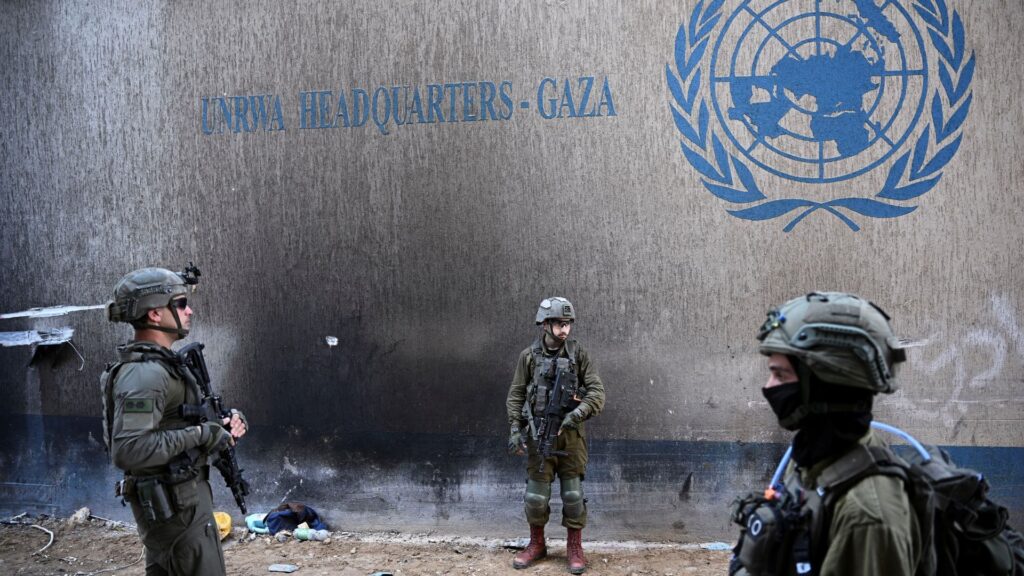
The military offensive in Gaza has persisted despite a United Nations court order to end plausible acts of genocide. The United Nations’ top court has ordered Israel to prevent and punish actions that could lead to or incite genocide in Gaza. But in the weeks that followed this ruling, Israeli forces have continued the devastating assault on Gaza. Now Israeli Prime Minister Benjamin Netanyahu is threatening a possible ground offensive in Rafah, where more than half of Gaza’s population has fled to seek shelter. Palestinians are trapped, with nowhere to go. So, what can be done to end the Israeli assault? Presenter: Adrian Finighan Guests: Yousef Hammash – advocacy officer for the Norwegian Refugee Council Mouin Rabbani – Co-editor of Jadaliyya, an online news website, and non-resident fellow at the Center for Conflict and Humanitarian Studies Neve Gordon – Professor of international law and human rights at Queen Mary University of London Adblock test (Why?)
Taylor Swift cheers on boyfriend Travis Kelce at Super Bowl
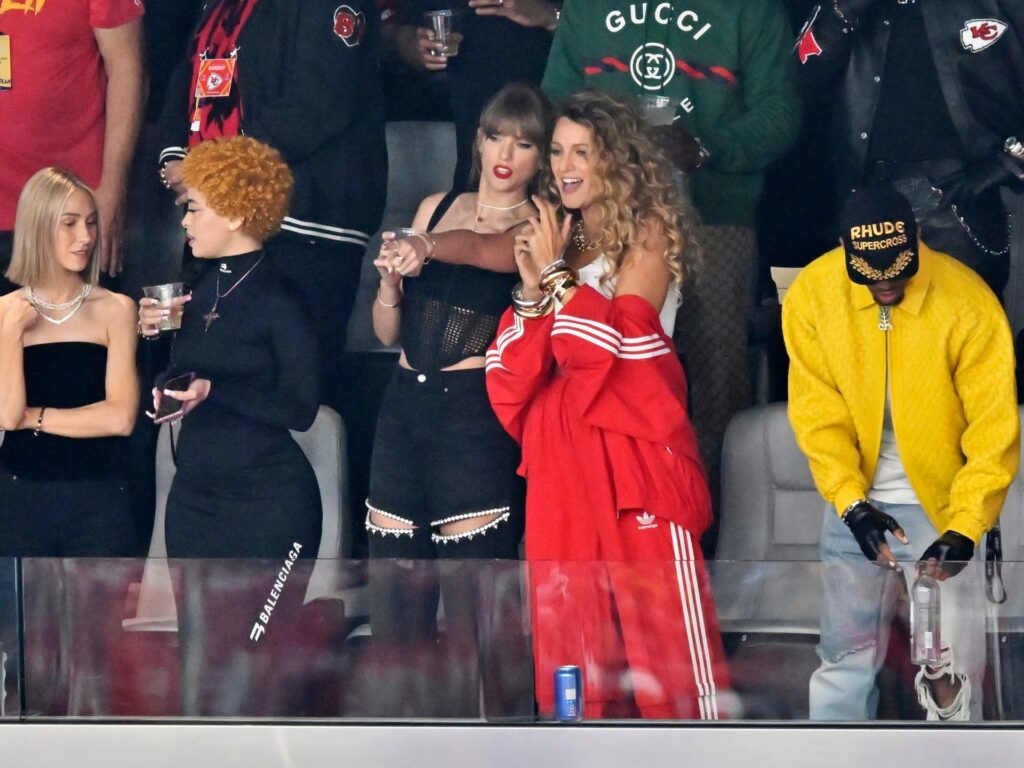
The 14-time Grammy-winner completed the Japan leg of her Eras Tour on Saturday before returning to the US on a private jet. Global pop sensation Taylor Swift has made it to the Super Bowl to cheer on her boyfriend Travis Kelce after days of breathless speculation about whether she would attend the biggest event in the United States’s sporting calendar. Swift arrived at Allegiant Stadium in Las Vegas more than an hour before kickoff to watch Kelce kit out for the Kansas City Chiefs against the San Francisco 49ers. After the game got under way, Swift, wearing a gold necklace bearing Travis Kelce’s number, 87, could be seen watching the action from a luxury suite accompanied by Blake Lively and rapper Ice Spice. Some San Francisco 49ers fans jeered after Swift was flashed on the big screens in the stadium during the first half of the game, prompting the pop star to grab a drink and chug it down. The 14-time Grammy winner on Saturday wrapped up the Japan leg of her Eras Tour with a sold-out show in Tokyo, before dashing back to the US on a private jet to attend the game. Swift, who began dating Kelce last year, has attended 12 American football games to watch the Kansas City Chiefs tight end play. Swift’s relationship with Kelce has been at the centre of a media and pop culture frenzy for months, with NFL officials crediting her presence at the games with driving a sudden surge in the popularity of the sport among young women. “Obviously, it creates a buzz, it creates another group of young fans, particularly young women, that are interested in seeing, ‘Why is she going to this game? Why is she interested in this game?’” National Football League (NFL) Commissioner Roger Goodell told reporters earlier this week. “Besides Travis, she’s a football fan and I think that’s great for us.” Kelce joked earlier this week that he feels under pressure to win after Swift on Sunday picked up a record fourth Grammy for album of the year for Midnights. “She’s rewriting the history books herself,” Kelce said at a news conference on Monday. “I told her I would have to hold up my end of the bargain and come home with some hardware, too.” Swift’s appearance at the 58th edition Super Bowl, which regularly attracts more than 100 million viewers, could help drive the audience for the NFL showcase to new heights. The defending champion Chiefs are taking on the San Francisco 49ers in the 58th edition of the NFL’s title game at Allegiant Stadium. The Kansas City Chiefs are the defending Super Bowl champions, and a win on Sunday would deliver their third title in five years. The San Francisco 49ers, who were leading 10-3 at halftime, are vying for their first title since 1994 for a record-tying sixth Super Bowl win. Adblock test (Why?)
Week in pictures: From turmoil in DR Congo to a climate protest in Jakarta
[unable to retrieve full-text content] A roundup of some of last week’s events.