

Why have BBC bosses resigned over a Trump speech edit?
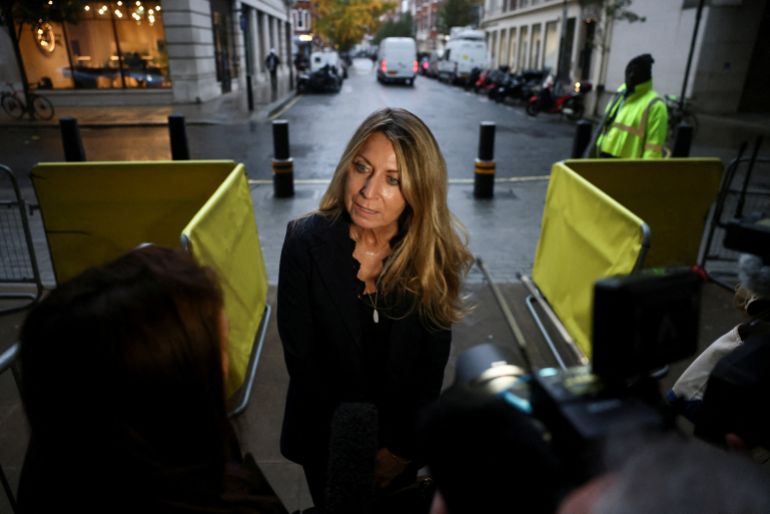
The head of the UK’s British Broadcasting Corporation (BBC) and a top news executive resigned from the organisation on Sunday after a memo criticising the editing of a 2021 speech by US President Donald Trump shortly before protesters stormed the US Capitol in Washington on January 6, 2021, was leaked. The BBC said Director-General Tim Davie and news CEO Deborah Turness had chosen to step down after the memo became public. The memo was from ex-adviser Michael Prescott, a former journalist who was an independent consultant to the BBC’s Editorial Guidelines and Standards Board for three years before leaving in June. He claimed that editors of a 2024 BBC Panorama documentary had spliced two parts of Trump’s speech together so it appeared that he had actively encouraged the Capitol Hill riots of January 6, 2021, which followed his 2020 election defeat. Trump responded to the pair’s resignation on Sunday night, calling Davie and Turness “very dishonest people who tried to step on the scales of a presidential election”, in a post on his Truth Social platform. Davie said he took “ultimate responsibility” for mistakes made, and had decided to resign after “reflecting on the very intense personal and professional demands of managing this role over many years in these febrile times”. What is at the centre of this? The resignations of Davie and Turness followed controversy over a BBC Panorama documentary called “Trump: A Second Chance?”, which was broadcast one week before the 2024 US presidential election. Advertisement A clip from the programme appears to show two different parts of Trump’s January 6, 2021 speech joined together into one sequence. In the episode, Trump is shown as saying: “We’re going to walk down to the Capitol and I’ll be there with you. And we fight. We fight like hell.” But according to a transcript from Trump’s comments that day, he said: “We’re going to walk down to the Capitol, and we’re going to cheer on our brave senators and congressmen and women, and we’re probably not going to be cheering so much for some of them.” Nearly an hour later, Trump then used the phrase “we fight like hell”, but not in reference to the protesters at the Capitol. “We fight like hell. And if you don’t fight like hell, you’re not going to have a country anymore,” he said. Who are Tim Davie and Deborah Turness? Tim Davie became director-general of the BBC in September 2020. He was responsible for overseeing the organisation’s editorial, operational and creative work. He previously led BBC Studios for seven years and worked at companies including Procter & Gamble and PepsiCo. In an email to staff on Sunday, Davie said quitting the job after five years “is entirely my decision”. He said he was “working through exact timings with the Board to allow for an orderly transition to a successor over the coming months”. Meanwhile, Deborah Turness had been the CEO of BBC News since 2022, leading a team of around 6,000 employees broadcasting to almost half a billion people around the world. She was previously CEO of ITN and president of NBC News. Over the weekend, Turness said that the controversy over the Trump documentary “has reached a stage where it is causing damage to the BBC – an institution that I love. As the CEO of BBC News and Current Affairs, the buck stops with me”. “In public life, leaders need to be fully accountable, and that is why I am stepping down,” she said in a note to staff. “While mistakes have been made, I want to be absolutely clear recent allegations that BBC News is institutionally biased are wrong.” David Yelland, former editor of the Sun newspaper, told the BBC Radio 4 Today programme on Monday that Davie and Turness were the victims of a “coup”. However, both they and the BBC deny this. The chief executive of BBC News, Deborah Turness, speaks to the media outside BBC Broadcasting House after she and Director-General Tim Davie resigned following accusations of bias at the British broadcaster, including in the way it edited a speech by US President Donald Trump, in London, UK, on November 10, 2025 [Jack Taylor/Reuters] How has the White House responded? The incident prompted criticism of the BBC by Karoline Leavitt, Trump’s press secretary, who described the corporation over the weekend as “100 percent fake news” and a “propaganda machine”. Advertisement For his part, Trump posted on his Truth Social platform: “The TOP people in the BBC, including TIM DAVIE, the BOSS, are all quitting/FIRED, because they were caught “doctoring” my very good (PERFECT!) speech of January 6th”. He added that “very dishonest people” had “tried to step on the scales of a Presidential Election… On top of everything else, they are from a Foreign Country, one that many consider our Number One Ally. What a terrible thing for democracy!” What else has the BBC been accused of? Prescott’s leaked memo did not only refer to the Panorama editing of Trump’s speech. It also focused criticism on a number of other areas of the BBC’s work, such as its coverage of transgender issues and racism – which he said were “one-sided” and “ill-researched” – but most notably its coverage of Israel’s war on Gaza. Prescott accused the BBC of anti-Israel bias within the BBC Arabic service, claiming that contributors over-emphasised stories that were critical of Israel. He also accused the wider corporation of “misrepresenting” the number of women and children killed in Gaza and the issue of Palestinian starvation in the besieged enclave. The former BBC adviser said he had sent the memo in “despair at inaction by the BBC Executive” over these and other issues. Charles Moore, former editor of the Daily Telegraph, a right-wing broadsheet newspaper in the UK, accused the BBC of “the most extraordinary degree of systemic bias, particularly in BBC Arabic” in its coverage of Israel’s war on Gaza. On general news, he told the Today programme, “it’s always [reporting] from a sort
US claims it hit two boats ‘carrying narcotics’ in Pacific, killing six
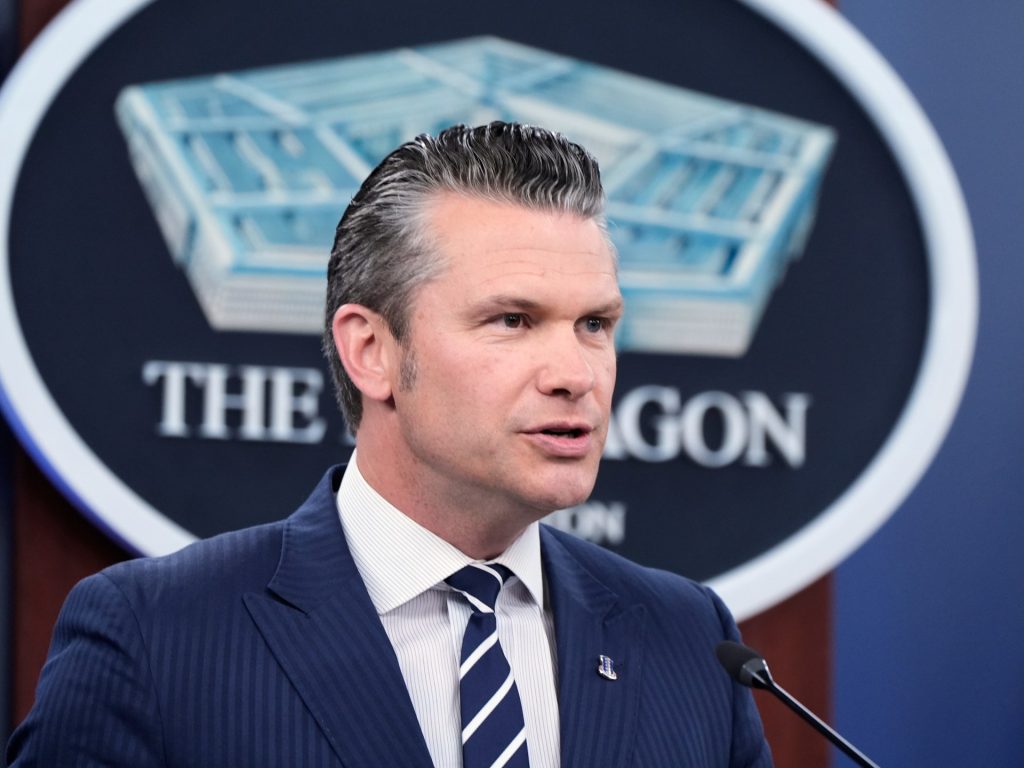
Pentagon chief Pete Hegseth says attacks take place in international waters amid mounting criticism against US campaign. Published On 10 Nov 202510 Nov 2025 Click here to share on social media share2 Share The United States has carried out another set of military strikes against what it says are drug boats in international waters headed to the country. Pentagon chief Pete Hegseth said on Monday that the US military targeted two vessels in the eastern Pacific Ocean on Sunday, killing six people. Recommended Stories list of 3 itemsend of list “These vessels were known by our intelligence to be associated with illicit narcotics smuggling, were carrying narcotics, and were transiting along a known narco-trafficking transit route in the Eastern Pacific,” he wrote in a social media post. “Both strikes were conducted in international waters, and three male narco-terrorists were aboard each vessel. All six were killed. No US forces were harmed.” The administration of President Donald Trump has faced mounting criticism over such attacks, including accusations of violating domestic and international law. But Washington appears to be stepping up the campaign. Sunday’s deadly double attack was the fourth this month. Previous strikes in the Pacific and Caribbean Sea killed at least eight people, according to US authorities. The Trump administration started targeting boats in the Caribbean in September and later expanded its military push to the Pacific Ocean. The US has carried out 18 strikes on vessels so far, killing dozens of people. Last month, United Nations rights chief Volker Turk said the US attacks have no justification under international law. “These attacks – and their mounting human cost – are unacceptable,” Turk said. “The US must halt such attacks and take all measures necessary to prevent the extrajudicial killing of people aboard these boats, whatever the criminal conduct alleged against them.” Advertisement The US has described the attacks as “counterterrorism” operations after having designated drug cartels as “terrorists”. “Under President Trump, we are protecting the homeland and killing these cartel terrorists who wish to harm our country and its people,” Hegseth said on Monday. Other than grainy footage showing the strikes, the Trump administration has not provided concrete proof that the vessels targeted were carrying drugs. Trump himself has previously joked that fishermen are now afraid to operate in the Caribbean off the coast of Venezuela. Critics have questioned why US authorities would not monitor the boats and intercept them when they enter the country’s territorial waters instead of extrajudicially executing the suspects. The strikes have sparked regional tensions, particularly with Venezuela, with Trump accusing its president, Nicolas Maduro, of links to “narcoterrorists”. The ramped-up US military campaign near Venezuela has raised speculation that Washington may be preparing for conflict in the oil-rich South American country. This month, Trump suggested that war with Venezuela is unlikely but said Maduro’s days are numbered. Adblock test (Why?)
Airlines cancel 3,300 US flights amid fears travel could ‘slow to trickle’
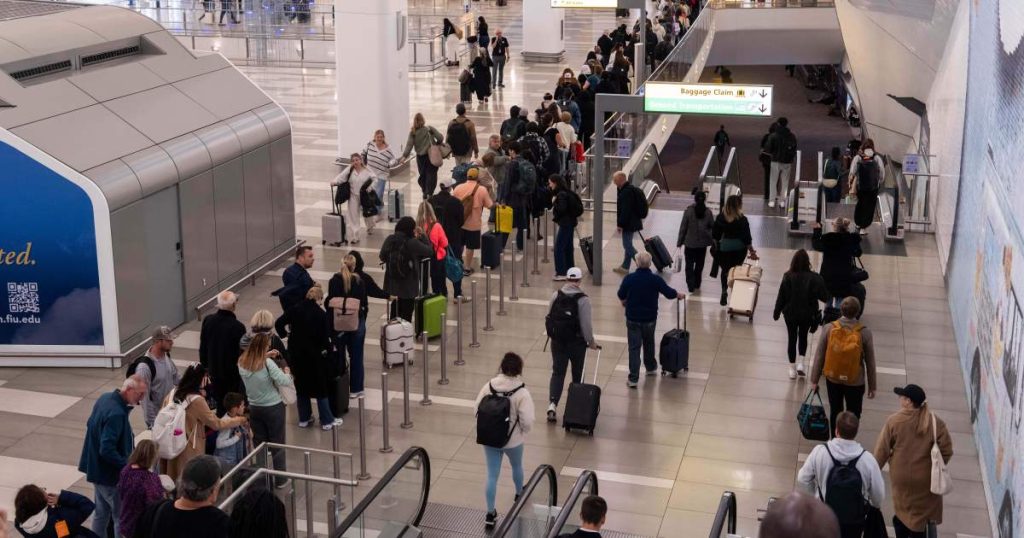
US senators reach stopgap deal to end government shutdown, raising hopes for end to six-week-long impasse. Airlines in the United States have cancelled more than 3,300 flights amid a top transport official’s warning that air travel could “slow to a trickle” due to the ongoing government shutdown. The cancellations on Sunday came as Republicans and Democrats reached a stopgap deal on ending the shutdown after the impasse over the passage of a funding bill dragged into its 40th day. Recommended Stories list of 4 itemsend of list Travel disruption has been mounting since the Federal Aviation Administration (FAA) last week ordered reductions in air traffic amid reports of air traffic controllers exhibiting fatigue and refusing to turn up for work. Some 13,000 air traffic controllers, who are deemed “essential” employees under US government rules, have been forced to work without pay since the start of the shutdown on October 1. A total of 3,304 US flights were cancelled and more than 10,000 flights were delayed on Sunday, according to data from flight-tracking website FlightAware. More than 1,500 flights were cancelled on Saturday, following the cancellation of about 1,000 flights on Friday. Under the FAA’s phased-in reduction in air traffic, airlines were ordered to reduce domestic flights by 4 percent from 6am Eastern Standard Time (11:00 GMT) on Friday. Flights are set to be reduced by 6 percent from Monday, 8 percent by Thursday, and 10 percent by Friday. In media interviews on Sunday, US Secretary of Transportation Sean Duffy warned that air travel could grind to a standstill in the run-up to the Thanksgiving holiday on November 27. Advertisement “As we get closer to Thanksgiving travel, I think what’s going to happen is you’re going to have air travel slow to a trickle, as everyone wants to travel to see their families,” Duffy told Fox News. “It doesn’t get better,” Duffy added. “It gets worse until these air traffic controllers are going to be paid.” The period around Thanksgiving is one of the busiest times for travel in the US calendar. An estimated 80 million Americans travelled during the Thanksgiving period in 2024, with airports screening a record 3.09 million passengers on the Sunday after the holiday alone. As fears of travel chaos mounted on Sunday, US senators said they had reached a compromise agreement to restore funding for government operations through the end of January. In a late night session, the Senate voted 60-to-40 to break the filibuster and advance the funding package after a group of moderate Democrats joined Republicans to support the resumption of government funding. The funding plan still needs to be approved by the Senate and the US House of Representatives, and then signed into law by US President Donald Trump, before the shutdown ends. It is also unclear whether travel disruption could persist after the government reopens. The FAA said last week that decisions on lifting its flight reductions would be “informed by safety data”. Al Jazeera has contacted the FAA for comment. Richard Aboulafia, managing director at the consultancy AeroDynamic Advisory, said that if air traffic controllers have been skipping work due to pay, the disruptions should quickly dissipate once the shutdown ends. But there are also suspicions among aviation analysts that the flight restrictions are an “arbitrary” measure designed to raise political pressure for an end to the government shutdown, Aboulafia said. “The decision to restrict capacity was understandable if the facts and data support it,” Aboulafia told Al Jazeera. “Secretary Duffy says the data does indeed support it, but he has not shared any of that data. People are right to be suspicious, particularly in light of other unnecessary cuts by the administration.” Adblock test (Why?)
Norris wins Brazil GP to extend F1 championship lead over Piastri
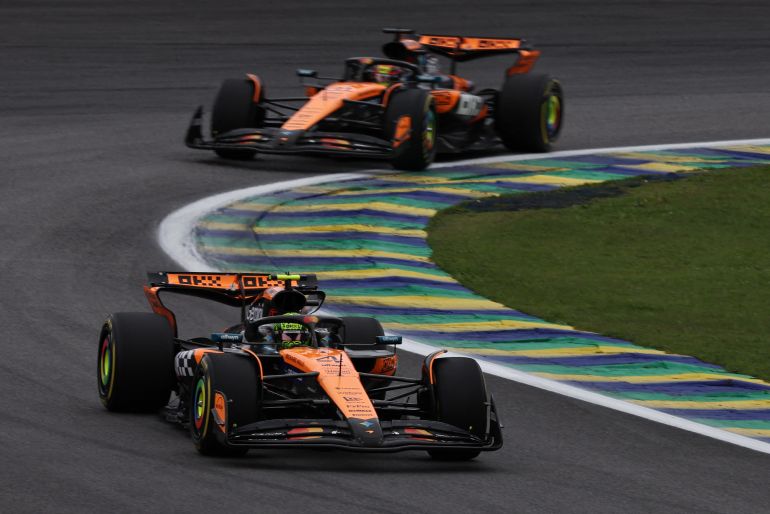
McLaren’s Lando Norris won the Sao Paulo Grand Prix to surge 24 points clear in the Formula One championship on Sunday, while teammate and title rival Oscar Piastri finished fifth after being penalised for causing a collision. Mercedes’s teenage rookie Kimi Antonelli hung on for a career-best second place, with Max Verstappen an astonishing third for Red Bull after starting from the pit lane. Recommended Stories list of 3 itemsend of list Verstappen’s performance was all the more impressive after the four-time world champion, who won from 17th at Interlagos last year, suffered an early slow puncture and had to fight back from 18th. “Crazy race,” said Norris of his second successive win and seventh of the season after snatching the championship lead from Piastri in Mexico last month. “To be honest, I don’t think we were the quickest today, but I’m glad to take home the win. “It’s a great win. But seeing how quick Max was, it’s disappointing we were not quicker.” Norris leads McLaren teammate Oscar Piastri during the race [Amanda Perobelli/Reuters] Piastri penalised for causing collision Piastri, who started fourth with Norris on pole, served a 10-second penalty for an early clash with Antonelli, which put Ferrari’s Charles Leclerc out of the race after they went three-abreast. It was another massive blow for the Australian, who crashed out of the Saturday sprint that Norris won on a perfect weekend for the Briton, who has moved up a gear and is now the clear title favourite. George Russell was fourth for Mercedes, who consolidated second place overall in a constructors’ championship already won by McLaren. Advertisement With three races and a Saturday sprint remaining, Norris has 390 points to Piastri’s 366, with Verstappen falling further behind on 341 and his hopes looking slim despite his superlative drive in Sao Paulo. Oliver Bearman was sixth for Haas, another fine performance from the British rookie after his fourth in Mexico, with Liam Lawson seventh for Racing Bulls ahead of teammate Isack Hadjar. Nico Hulkenberg finished ninth for Sauber, and Pierre Gasly completed the points positions for Renault-owned Alpine, a year on from the team’s double podium in Brazil. Sauber’s Gabriel Bortoleto completed a miserable weekend for Brazil’s only driver, spinning into the wall on the opening lap after being squeezed by Aston Martin’s Lance Stroll as Norris led cleanly away. The crash brought out the safety car, with Ferrari’s Lewis Hamilton pitting for a new front wing after he collided with Williams’s Carlos Sainz and Alpine’s Franco Colapinto. The seven-time world champion and honorary Brazilian continued with a damaged floor but was given a five-second penalty for causing a collision, and then retired. The double driver retirement was Ferrari’s third of the season and dropped them down to fourth in the constructors’ championship, behind Red Bull in third. Red Bull’s Max Verstappen, right, finished the Brazil Grand Prix in third place after beginning the race in the pit lane [Jean Carniel/Pool via Reuters] Not all Piastri’s fault The safety car came in at the end of lap five, and Piastri locked up and made contact with Antonelli, who was pushed into Leclerc at the restart. The Ferrari lost a tyre and stopped, triggering a virtual safety car. “He [Antonelli] left me no space,” the Australian said over the team radio, but stewards disagreed in what some pundits and even rivals felt was a harsh decision. “I wouldn’t go as far as saying that it’s all Oscar’s fault. I don’t think it is,” said Leclerc. Verstappen, who had a new engine and plenty of other changed parts after qualifying 16th, suffered a slow front-right puncture on lap eight after climbing to 13th. He was up to fourth after 24 of the 71 laps, setting fastest laps, and on lap 51, he took the lead when Norris made his second and final stop. Verstappen pitted again on lap 54, dropping to fourth and lighting the touch paper on a thrilling chase for the podium. He passed Russell around the outside at turn one on lap 63, and Antonelli was in his sights four laps later, but the tyres then dropped off and the Italian made no mistakes. “To be on the podium, I did not expect that at all,” said Verstappen. “To finish only 10 seconds from the lead is incredible.” Advertisement His teammate, Yuki Tsunoda, was the final driver classified after two 10-second penalties, the second for not serving the first correctly. The next race is Las Vegas on November 22, the first of a final triple header ending in Abu Dhabi on December 7. A marshal waves the checkered flag as Norris crosses the finish line to win the Brazil Grand Prix [Jean Carniel/ Pool via AFP] Adblock test (Why?)
US senators advance bill to end record government shutdown
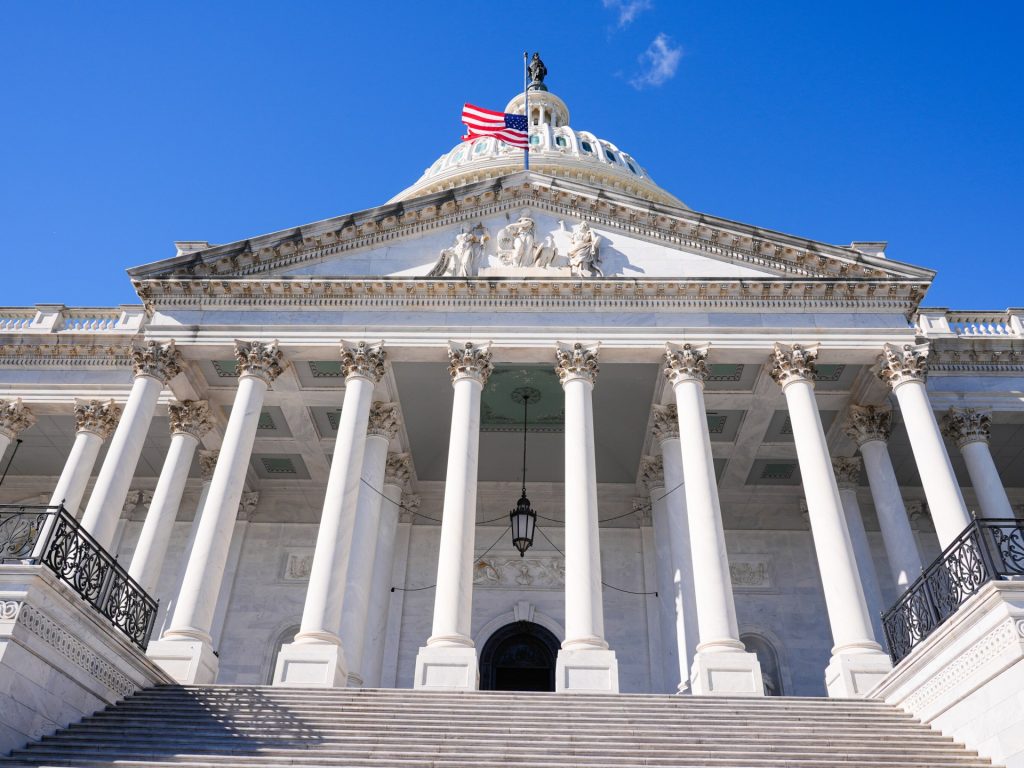
Senators in the United States have voted to move forward with a stopgap funding package aimed at ending the longest government shutdown in the country’s history. In a procedural vote on Sunday, some eight Democrats broke rank and voted in favour of advancing a Republican measure that will keep the government reopen into January 30. Recommended Stories list of 4 itemsend of list The measure would also fund some parts of the government, including food aid and the legislative branch, for the next year. But there was no guarantee of an extension of healthcare subsidies under the Affordable Care Act (ACA). Instead, the deal struck between the centrist Democrats and the Republicans promises a vote on the issue by December. The subsidies have been a Democratic priority during the funding battle. Al Jazeera’s Mike Hanna, reporting from Washington, DC, said the procedural vote passed with 60 in favour and 40 against. “Now, this is what is called a cloture vote – a procedure by which the Senate agrees to continue the debate about the legislation and begin introducing and passing the bills aimed at ending the shutdown,” Hanna said. “The important thing about the cloture vote is that once it is passed, at that 60 percent majority, every subsequent vote is by a simple majority. So it would appear to be plain sailing in the Senate to pass this bill and the continuing resolution to refund the government and ending the closure,” he added. If the Senate eventually passes the amended bill, the package still must be approved by the House of Representatives and sent to President Donald Trump for his signature, a process that could take several days. Advertisement The Democratic senators who voted in favour of advancing the measure include Dick Durbin of Illinois, Jeanne Shaheen and Maggie Hassan of New Hampshire and Tim Kaine of Virginia. Angus King of Maine, an independent who causes with the Democrats, also voted in favour of the measure. Democrats, John Fetterman of Pennsylvania, Catherine Cortez Masto and Jacky Rosen of Nevada, also voted yes. Ahead of the vote, Senate Democratic leader Chuck Schumer of New York said he could not “in good faith” support the proposal. Schumer, who received blowback from his party in March when he voted to keep the government open, said that Democrats have now “sounded the alarm” on health care. “We will not give up the fight,” he said. Independent Senator Bernie Sanders of Vermont, who caucuses with the Democrats, said giving up the fight was a “horrific mistake.” Senator Chris Murphy, a Democrat, also agreed, saying that in last week’s elections people voted overwhelmingly Democratic “to urge Democrats to hold firm”. Since the shutdown began on October 1, Democrats had voted 14 times not to reopen the government as they demanded the extension of tax credits that make coverage more affordable under the ACA. Republicans, however, have maintained they are open to addressing the issue only after government funding is restored. The bipartisan agreement on Sunday includes bills worked out by the Senate Appropriations Committee to fund parts of government – food aid, veterans programs and the legislative branch, among other things – for next year. All other funding would be extended until the end of January, giving legislators more than two months to finish additional spending bills. The deal would reinstate federal workers who had received reduction in force, or layoff, notices and reimburse states that spent their own funds to keep federal programs running during the shutdown. It would also protect against future reductions in force through January and guarantee federal workers would be paid once the shutdown is over. Niall Stanage, a political analyst and the White House columnist for The Hill, said the eight Democrats who voted in favour of the package have caused an uproar within the party. “The critics within the Democratic Party note that the party won a number of significant elections just last Tuesday. They believe they had the upper hand and they have been effectively sold out by these eight who have voted to open the government,” he told Al Jazeera. It was unclear whether the two parties would be able to find any common ground on the health care subsidies before the promised December vote in the Senate. House Speaker Mike Johnson has said he will not commit to bring it up in his chamber. Advertisement Some Republicans have said they are open to extending the tax credits as premiums could skyrocket for millions of people, but they also want new limits on who can receive the subsidies and argue that the tax dollars for the plans should be routed through individuals. Other Republicans, including Trump, have used the debate to renew their yearslong criticism of the law and called for it to be scrapped or overhauled. Meanwhile, the consequences of the 40-day shutdown have been compounding. US airlines canceled more than 2,000 flights on Sunday for the first time since the shutdown began, and there were more than 7,000 flight delays, according to FlightAware, a website that tracks air travel disruptions. Treasury Secretary Sean Duffy said on CNN’s “State of the Union” that air travel ahead of the Thanksgiving holiday will be “reduced to a trickle” if the government does not reopen. At the same time, food aid was delayed for tens of millions of people as Supplemental Nutrition Assistance Program benefits were caught up in legal battles related to the shutdown. And in Washington, DC, home to tens of thousands of federal workers who have gone unpaid, the Capital Area Food Bank said it is providing 8 million more meals ahead of the holidays than it had prepared for this budget year – a nearly 20 percent increase. Adblock test (Why?)
Syria’s al-Sharaa arrives in US for official visit
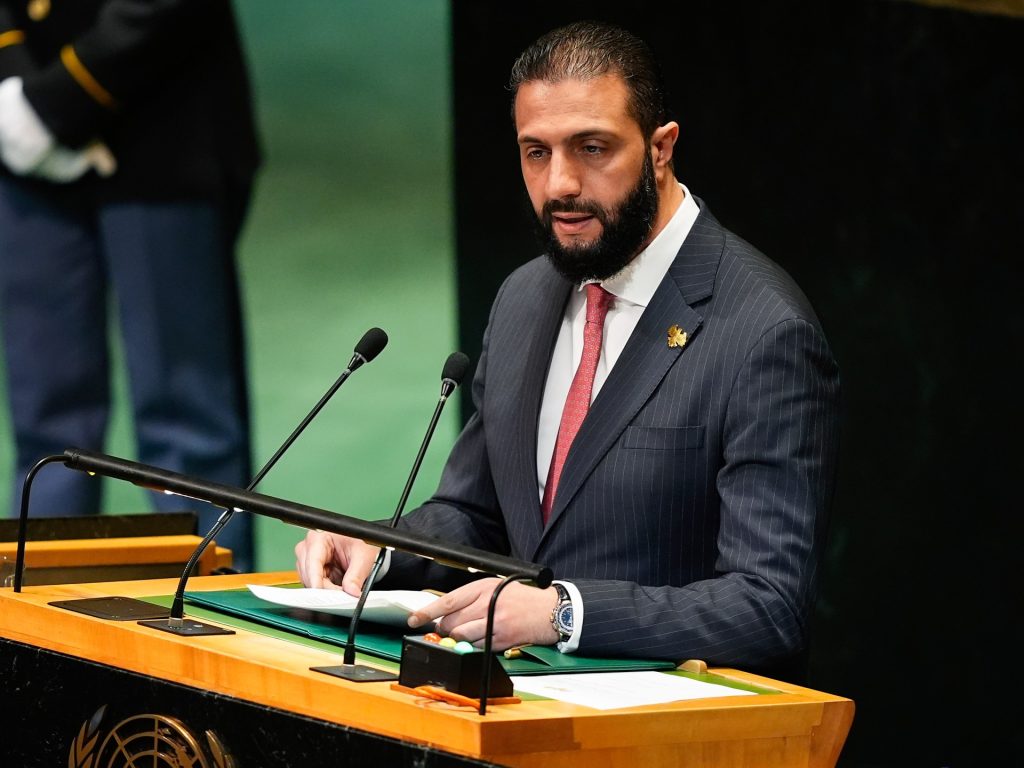
Visit comes as Syria announces launching a ‘large-scale operation’ targeting ISIL cells across the country. By News Agencies Published On 9 Nov 20259 Nov 2025 Click here to share on social media share2 Share Syrian President Ahmed al-Sharaa has arrived in the United States for an official visit, according to state media, during which Washington hopes to enlist Damascus in its global coalition against ISIL, or ISIS. Al-Sharaa’s arrival in the US capital came late on Saturday as Syria’s Ministry of Interior announced launching a “large-scale security operation” across the country, targeting ISIL cells. Recommended Stories list of 4 itemsend of list Al-Sharaa, whose rebel forces ousted longtime ruler Bashar al-Assad late last year, is due to meet US President Donald Trump at the White House on Monday. It is the first such visit by a Syrian president since the country’s independence in 1946, according to analysts. Al-Sharaa, who had met Trump for the first time in Riyadh in May, was removed from a US “terrorist” sanctions list on Friday. US envoy to Syria Tom Barrack said earlier this month that al-Sharaa would “hopefully” sign an agreement to join the international US-led alliance against ISIL. Washington is also preparing to establish a military presence at an airbase in Damascus to help enable a security pact that the US is brokering between Syria and Israel, according to the Reuters and AFP news agencies. For his part, al-Sharaa is expected to seek funds for Syria, which faces significant challenges in rebuilding after 13 years of brutal civil war. The World Bank has estimated that the cost of reconstruction could take at least $216bn, a figure that it described as a “conservative best estimate”. Al-Sharaa once led Syria’s offshoot of al-Qaeda, but his anti-Assad group broke away from the network a decade ago and later clashed with ISIL. Al-Sharaa’s group, Hayat Tahrir al-Sham (HTS), was delisted as a terrorist group by Washington in July. Advertisement Al-Sharaa’s trip to Washington, DC, comes after his landmark visit to the United Nations in September, his first time on US soil, where he became the first Syrian president in decades to address the UN General Assembly in New York. On Thursday, the US led a vote by the UN Security Council to remove sanctions against him. In Damascus on Saturday, state media reported that Syrian security forces had carried out 61 raids across the country targeting ISIL cells. A spokesperson for the Syrian Interior Ministry said at least 71 people were arrested, while explosives and weapons were seized. Syria’s SANA news agency, citing the ministry, said the operations were carried out in the Aleppo, Idlib, Hama, Homs and Damascus countrysides, and that the campaign was part of “ongoing nation efforts to combat terrorism and protect public safety”. Adblock test (Why?)
Powerful tornado wrecks Brazil town, killing six and injuring hundreds

Tornado flattens homes in Rio Bonito do Iguana, with one official describing the destruction as akin to a ‘war zone’. At least six people have been killed and 750 others injured in Brazil after a tornado ripped through the southern state of Parana, with powerful winds of up to 250km/hour (155 mph). Local authorities said on Saturday that the twister, which struck late on Friday, lasted less than a minute, but destroyed about 90 percent of the town of Rio Bonito do Iguacu. Recommended Stories list of 4 itemsend of list The town is home to 14,000 people. Aerial photographs show scores of buildings in Rio Bonito do Iguacu without roofs, while parts of the town appear completely flattened. Nearby, green farmland and trees outside of the tornado’s path appear to be largely untouched. The destructive weather pattern hit Brazil as it prepared to host the United Nations Climate Change Conference COP30 in Belem on Monday. Experts say climate change can contribute to frequent and more intense tornadoes as warmer temperatures and increasing moisture in the air can increase atmospheric instability and wind shear – the factors that give rise to such twisters. An aerial view shows destruction after a tornado hit the city of Rio Bonito do Iguaçu, in Brazil’s Paraná State, on November 8, 2025 [Photo by Daniel Castellano/AFP] ‘War zone’ Fernando Schunig, head of the Parana Civil Defence agency, described the town as a “war zone” in an interview with local news outlet G1. “When these events hit an urban area, the damage is major. It is very lethal,” he said. Gilberto Brecailo, a resident of Rio Bonito do Iguacu, said his mechanic shop was one of the buildings destroyed by the tornado. Advertisement “There’s not much we can do… All we have left are our clothes and our documents. My livelihood, my mechanic shop, is gone, and my son worked with me,” he said, standing near a pile of support beams and building rubble. Marileia Chagas, another resident, said she was thrown against a structure by the high winds but was able to hide under a bench until it passed. “When I came out, everything was destroyed. My daughter and my wheelchair-bound mother were inside. My father was inside too. I was devastated,” she said. “In two minutes, everything was on the ground; some people lost family, but we must thank God everyone is alive.” Authorities say five of the people killed were from Rio Bonito do Iguacu, while another victim was from the nearby town of Guarapuava. At least one person is missing. Towns near Rio Bonito do Iguacu were also hit by winds, storms and hail, but none suffered the same level of damage, according to the local government. Heavy machinery cleans up the debris caused by the tornado, with winds of up to 250km/hour, which hit the city of Rio Bonito do Iguaçu, Paraná State, Brazil on November 8, 2025 [Daniel Castellano/AFP] Mourning State Governor Carlos Massa Ratinho Jr declared three days of mourning to honour the dead. Officials say the casualty rate may rise as search and rescue operations are still under way. At least 750 people were also injured by the tornado, of whom 10 have undergone surgery and nine are in serious condition, according to health authorities. Cinthia Kelly Somariva, the director of a nearby hospital, said they were still evaluating the fallout from the tornado. “It was a very sad and intense night. There were lives lost,” she said. On social media, President Luiz Inacio Lula da Silva expressed solidarity with the victims. Members of his Cabinet announced the dispatching of emergency assistance to the area. Officials said that food, hygiene products, tarps, mattresses and several other items will be available to victims. Adblock test (Why?)
Djokovic withdraws from ATP Finals after record-setting Athens win
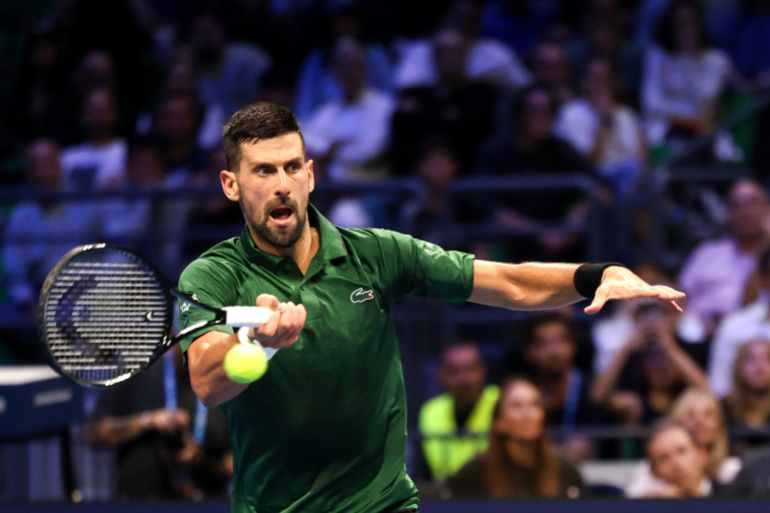
Novak Djokovic has pulled out of ATP Finals after beating Lorenzo Musetti, but not before setting new hardcourt mark. By News Agencies Published On 9 Nov 20259 Nov 2025 Click here to share on social media share2 Share Novak Djokovic has withdrawn from the ATP Finals for the second year in a row, shortly after beating Lorenzo Musetti in a near three-hour final to win the Hellenic Championship on Saturday. Djokovic said a shoulder injury would prevent him from playing in the season-ending event for the top eight men’s players that starts on Sunday in Turin, Italy. Recommended Stories list of 4 itemsend of list “I was really looking forward to competing in Turin and giving my best,” Djokovic posted on social media. “But after today’s final in Athens, I’m sad to share that I need to withdraw due to an ongoing injury.” The decision means that Musetti will take his place, even though his loss to Djokovic initially handed the final qualifying spot to Felix Auger-Aliassime. The 24-time Grand Slam champion said he had been dealing with the injury throughout the tournament in Athens. Djokovic, who has won the ATP Finals seven times, also missed the tournament last year because of an injury. “That’s the reason why I decided not to make a call: would I go to Turin or not earlier, because I wanted to see how the matches go, how I react,” he told reporters. “After yesterday’s [Friday] match, I was hoping that it was not going to flare up. But then today, even before the match, it was not great. I had to take all the strong medications to be able to play the match. “I felt there’s no chance for me to go through the entire tournament in Turin with the required level of tennis when you’re playing the best eight in the world.” Djokovic plays a shot against Lorenzo Musetti during the Hellenic Championship final [Yorgos Karahalis/AP] Djokovic passes Federer on key milestone On Saturday, the Serb rallied for a 4-6, 6-3, 7-5 victory over Musetti to clinch his 101st career title. Advertisement “An incredible battle,” Djokovic said after the match. “Three hours of a grueling match, physically… I’m just very proud of myself to get through this one.” The last set featured five breaks before Djokovic clinched the victory with a service winner. Musetti has now lost his last six tour-level finals. Djokovic is one of just three men to have racked up a century of titles. He still needs two to equal Roger Federer’s 103, while Jimmy Connors heads the list with 109. The 38-year-old’s victory against Musetti set a men’s record with his 72nd title on hard courts, one more than Federer. Djokovic, left, poses with the trophy after winning the final match, alongside runner up Lorenzo Musetti [Louiza Vradi/Reuters] Adblock test (Why?)
Tottenham and Manchester United both score stoppage-time goals in 2-2 draw
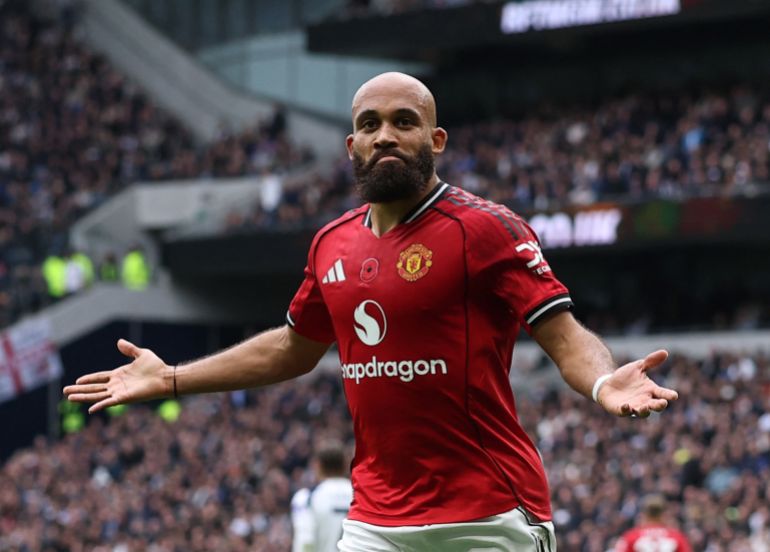
Matthijs de Ligt equalised in the sixth minute of a dramatic period of stoppage time to earn Manchester United a 2-2 draw at Tottenham Hotspur in the Premier League. Tottenham looked like claiming all three points on Sunday when Richarlison glanced in a header in the first minute of added-on time, completing a Spurs comeback from a goal down. Recommended Stories list of 4 itemsend of list There was still time for de Ligt to find space at the back post at a corner to direct a header goalwards and over the line before Tottenham goalkeeper Guglielmo Vicario clawed the ball away. Trailing to Bryan Mbeumo’s 32nd-minute header, Tottenham dominated the second half and grabbed an equaliser in the 84th through substitute Mathys Tel’s shot that deflected in off de Ligt. De Ligt said United deserved more from the game than a point. “I’m proud of the team for how we fought back and got a point in a really difficult stadium,” he said. “You can see that we still have the fire in our belly to get a goal, to get a point – even with 10 men,” he added, as United played the last few minutes a man down as Benjamin Sesko was forced off injured after United had made all their five substitutions. However, Tel said he felt Spurs merited all three points. “We are feeling 50-50, we conceded a goal, but our reaction in the second half was top,” Tel said. “We changed the game, but we are mad because we have to win today. The subs brought energy to change the game, and we showed great mentality; we deserved to win.” United extended their unbeaten run in the league to five games – three wins followed by two draws – while Tottenham have only won one of their six home games so far. Advertisement However, the Red Devils have now failed to beat Spurs in their previous eight meetings, but it was the most recent of these that will live long in the memory of the Tottenham support. Spurs ended their 17-year trophy drought thanks to a scrappy 1-0 win in the Europa League final in May, which also took them into the Champions League while United missed out on European football altogether. Despite the huge blow to United’s finances and prestige, Ruben Amorim is making the most of having more time on the training field to finally build some momentum after a tough first year at Old Trafford. Unlike most of United’s big-money signings in recent years, Bryan Mbeumo has proved his worth since a 65-million-pound ($86m) move from Brentford in July. The Cameroonian was named Premier League player of the month for October and took his tally to four goals in as many games when he headed in from Amad Diallo’s cross on 32 minutes. Mbeumo celebrates scoring United’s opener [Toby Melville/Reuters] Spurs were booed off after a woeful attacking display in losing a London derby 1-0 to Chelsea last weekend. After another dreary first 45 minutes, the hosts came to life early in the second period. Senne Lammens produced a brilliant stop to turn Cristian Romero’s flick behind. The Belgian goalkeeper was quickly called into action again to parry Joao Palhinha’s effort. Brennan Johnston, who scored the winner when the sides last met in Bilbao, was then denied an equaliser by the offside flag. Tottenham’s burst of attacking threat quickly fizzled out, though, and discontent among the home fans with manager Thomas Frank showed when his decision to replace Xavi Simons was roundly booed. However, the Spurs boss can claim his changes turned the game around. Destiny Udogie crossed for fellow substitute Tel to turn and fire into the top corner via a deflection off de Ligt. Tel equalises for Spurs [Toby Melville/Reuters] Wilson Odobert, introduced off the bench at half-time, then curled a shot towards the far corner that Richarlison flicked in to leave Lammens helpless. The Brazilian tore off his shirt and was reduced to tears in his celebration. Yet, it still was not enough to earn Tottenham a first home league win since the opening weekend of the season. De Ligt was offered too much space at the back post from Bruno Fernandes’s corner, and his header was too powerful for Vicario. Later, Arsenal take a six-point lead into a match at Sunderland, while Chelsea host Wolverhampton in one of three other games. Adblock test (Why?)
Irish football body overwhelmingly backs call for Israel’s ban from UEFA
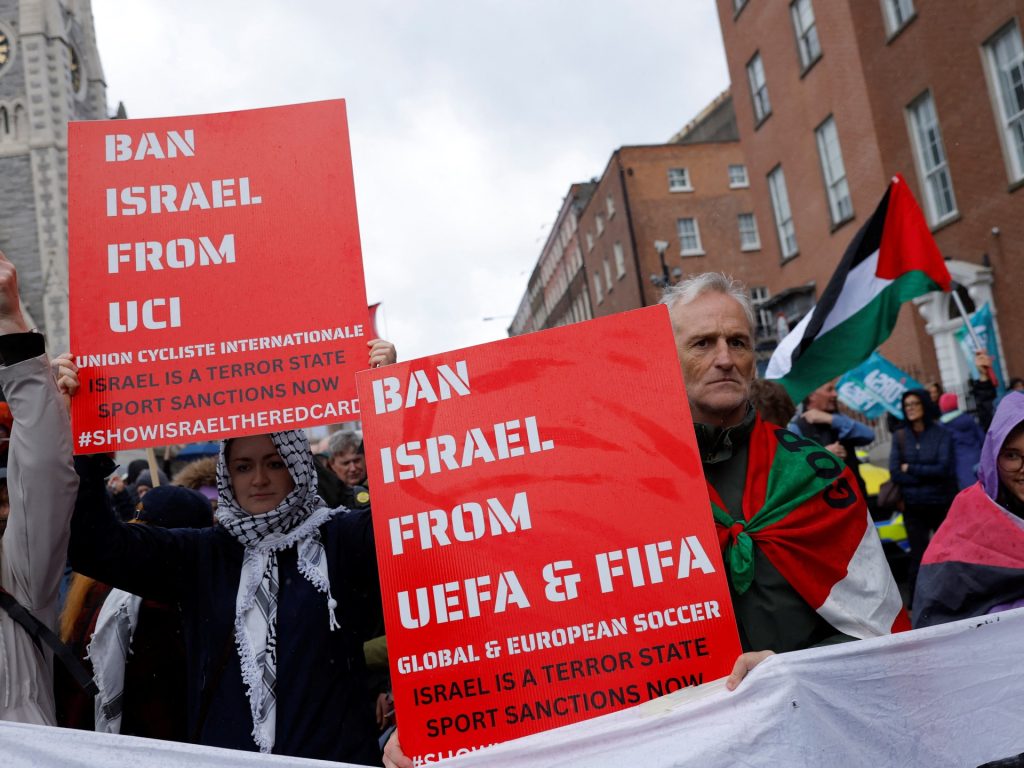
The Football Association of Ireland has called for Israel’s immediate suspension over the Israeli FA’s violation of UEFA’s statutes in occupied Palestinian territory. Published On 8 Nov 20258 Nov 2025 Click here to share on social media share2 Share Members of Irish football’s governing body have approved a resolution instructing its board to submit a formal motion to UEFA requesting the immediate suspension of Israel from European competitions, the Football Association of Ireland (FAI) said. The resolution passed by the FAI members on Saturday cites violations by Israel’s Football Association of two provisions of UEFA statutes: its failure to implement and enforce an effective antiracism policy and the playing by Israeli clubs in occupied Palestinian territory without the consent of the Palestinian Football Association. The resolution was backed by 74 votes, with seven opposed and two abstentions, the FAI said in a statement. UEFA considered holding a vote early last month on whether to suspend Israel from European competitions over its genocide in Gaza, but the voting did not take place after a US-brokered ceasefire took effect on October 10. The Irish resolution follows calls in September from the heads of the Turkish and Norwegian football governing bodies for Israel to be suspended from international competition. Those requests came after United Nations experts appealed to FIFA and UEFA to suspend Israel from international football, citing a UN Commission of Inquiry report that said Israel had committed genocide during the war in Gaza. ‘Israel is allowed to operate with total impunity’ In October, more than 30 legal experts called on UEFA to bar Israel and its clubs. The letter highlighted the damage that Israel is inflicting on the sport in Gaza. At least 421 Palestinian footballers have been killed since Israel began its military offensive in October 2023, and the letter explained that Israel’s bombing campaign is “systematically destroying Gaza’s football infrastructure”. Advertisement FIFA President Gianni Infantino brushed aside the calls by indirectly addressing it as a “geopolitical issue” at the FIFA Council on October 2. “We are committed to using the power of football to bring people together in a divided world,” Infantino said. The apparently preferential treatment given to Israel’s football team was an extension of the “total impunity” the country has enjoyed amid the two-year war, according to Abdullah Al-Arian, associate professor of history at Georgetown University in Qatar. “Sporting bodies often mirror the broader power politics that are at play [in the world] and so they’re only doing what we’ve seen happen across all walks of political life, in which Israel has not been held to account,” Al-Arian told Al Jazeera. “It [Israel] has been allowed to operate with total impunity throughout this genocide and has enjoyed this impunity for many decades.” In 2024, the Palestinian Football Association (PFA) presented arguments accusing the Israel Football Association (IFA) of violating FIFA statutes with its war on Gaza and the inclusion of clubs located in illegal settlements on Palestinian territory in its domestic football league. The PFA wanted FIFA to adopt “appropriate sanctions” against Israel’s national side and club teams, including an international ban. It called on FIFA to ban Israel, but the world body postponed its decision by delegating the matter to its disciplinary committee for review. Al-Arian termed that “a move to keep the bureaucratic machinery moving without making any real progress”. “Ultimately, it’s a political decision being made at the highest levels of the organisation,” he said. Adblock test (Why?)