

Pakistan’s Imran Khan is in political ruin. He’s partly to blame

Pakistan’s fractured politics is in overdrive as the country heads into general elections next week after nearly two years of tumult and strife. At stake is not just who forms the next government but what shape of democratic governance emerges in the weeks and months ahead. Former Prime Minister Imran Khan, hailed as one of the most popular politicians in the country, has already been knocked out of the contest. This week a local court handed down two jail sentences that also mean that he is barred from holding any public office for a decade. He can still appeal to the higher courts but as far as the February 8 elections are concerned, his name is already off the ballot. There are, however, bigger issues at play in Pakistani politics today than the holding of an election. In fact, this electoral outcome may not fully reflect the multiple fault lines that have developed within the political and social fabric of the country. These fault lines had started to emerge almost a decade ago when Khan and his party Pakistan Tehreek-e-Insaaf (Justice Party) had found traction among the voters and formed a government in the province of Khyber Pakhtunkhwa in 2013. After years of twists and turns in which Khan first found favour with the military establishment and then fell afoul of it, the real rupture happened on May 9, 2023. The events that transpired on this date – hundreds of Khan’s followers attacking, torching and ransacking military buildings across the country – have reshaped the politics of Pakistan. The tremors are reverberating to this day. Since then, Khan and his supporters have faced the brunt of the law as well as a volley of desertions. The empire has struck back hard. The political colossus that was once the PTI today lies in shambles. Its supporters are crying foul and bemoaning the lack of the proverbial level playing field. Few are however willing to admit that the blunders their leadership committed before and after the May 9 events have contributed in large part to their political ruination. Their black-and-white narrative of victimhood conveniently glosses over the varied shades of grey that paved the road to the party’s political Waterloo. At the heart of Khan’s political misjudgements lay a misreading of the military establishment and its foundational role within the state. Civil-military relations in Pakistan may be a worn-out subject for public discussions and published dissertations but its practical manifestations, in many ways, continue to define how power is shared and exercised in the country. Khan leveraged the power of the establishment to ride into power. He then used the same power to browbeat his opponents in a futile attempt to cripple their politics. But instead of further cementing this relationship, Khan committed the mistake of turning on his benefactor. The first schism opened over the key appointment of the head of the country’s premier intelligence agency. It never got repaired. In fact, it widened after Khan was ousted from government in a vote of no-confidence and decided to take on the military publicly. It was, as it turns out, an ill-advised move that betrayed a shallow understanding of the established power dynamics. In other words, Khan dangerously overestimated his power as a popular leader and attempted to convert this popularity into a quasi-rebellion against the established state structure. The initial response of his support base to his harangue against military officials was rapturous. In every speech in front of adoring crowds, he would cross a red line and name generals as being responsible for the so-called conspiracy against him. Emboldened by a lack of pushback by the military, he kept upping the ante. His advisors egged him on by arguing he was the only politician with enough public heft to take on the military and win. But at some point, during the course of this dangerous brinkmanship, Khan lost his political moorings. There is a thin line between attacking the military leadership and the institution itself. There is an even thinner line between drumming up a conspiracy theory about the US government plotting with the military to overthrow him and accusing the military of actual treason. Not only were Khan’s accusations inflammatory — they were also, as it turned out later, not backed by any evidence. The May 9, 2023 events were therefore waiting to happen. When his followers attacked military headquarters in Rawalpindi and set aflame a three-star general’s home in Lahore, they were acting upon what was deemed by the party leadership as a final push to topple the military high command and decisively convert the country’s power matrix in Khan’s favour. For all practical purposes, it was a coup attempt. Parallels drawn with Donald Trump supporters storming the Capitol building in Washington, DC are not far-fetched. The law took its course – often erring on the side of harshness – and Khan’s hubris brought his entire edifice down. For now. In consequence, has democratic space shrunk in Pakistan? In many ways, yes. Has the establishment’s footprint enlarged? Yes, it has. Have Khan’s political rivals, whom he refused to acknowledge as legitimate stakeholders, taken advantage of his downfall despite the shrinkage of political space? Certainly so. But is Khan really the victim his supporters are painting him as? Not really. Have he and his supporters acknowledged the grave blunder they committed on May 9? No, they have not. Have they acknowledged their misjudgements and missteps? They certainly have not. Pakistan may not be enjoying its ideal democratic moment, but if the elections can herald a new chapter, howsoever short-lived, that moves politics beyond the hate-filled, us-against-them, vitriolic brand epitomised by Imran Khan, we may find the breather that we so desperately need to start a process of national healing. The views expressed in this article are the author’s own and do not necessarily reflect Al Jazeera’s editorial stance. Adblock test (Why?)
‘Dining table amputation’: How an Israeli bomb took Ahed Bseiso’s leg

Ahed Bseiso was disoriented, shocked, and numb to the immense pain that would soon take over after she was wounded by Israeli shelling on her family home in northern Gaza. “All I could see was white fog … For a second, I thought I was dead,” Ahed told Al Jazeera, reliving the events of December 19. That day, following her routine since October 7, when Israel launched its most brutal assault on Gaza to date, the 17-year-old university student and her older sister Mona climbed to the sixth floor of their building at 10:30am. They went up there to call their father, who lives overseas. They tried to talk to him daily to tell him they were still alive amid a siege, intense bombardment, and a severe lack of essential supplies. Repeated telecommunication blackouts and jamming in Gaza mean many have to climb onto a roof to catch a signal, find signal boosters, or use eSIM cards connected to any regional telecom carrier. Ahed said she noticed an unusually large Israeli tank outside the building, but she did not give it much thought as their home had been encircled by army vehicles after a truce between Israel and Hamas came to an end in November. Ahed wants to live a ‘normal life’ and hopes to be evacuated from Gaza for treatment [Courtesy of Ahed Bseiso] She sat down and got ready to dial her father’s number. ‘I managed to say “I’m alive”‘ “I crossed my legs and all of a sudden, I was upside down,” she said. Ahed had lost a limb – almost her entire right calf – and was bleeding profusely. Her shock was so severe that she was silent, and so was her sister – she later realised “Mona was afraid to call out for me in case I didn’t respond”. “Eventually, as I gathered what had just happened, I managed to say: ‘I’m alive’.” Ahed’s male cousins rushed to carry her downstairs. She remembers looking down and shouting, asking her cousins if her leg was still there because she could not see it. “All my cousin did was cover my eyes,” she recalled. The only place they could set Ahed down was on the dining table, where her mother had been kneading bread dough earlier, a common sight in Gaza homes as Israel’s complete siege made food and basic commodities scarce. Someone ran to get her uncle, Hani, an orthopedist and the only doctor among the 30 relatives staying in the family’s building. Hani had sent his wife and four children out of the enclave at the beginning of the offensive, while he stayed. [embedded content] And so, he found himself looking down at his niece’s severed leg and knowing he had to save her, without medical supplies, anaesthesia, or even clean gauze. In Gaza today, medics have to carry out procedures with nothing, not even pain control, as a result of the severe shortages imposed by the siege. Hani needed to act on a difficult, yet obvious choice: amputate what was left of the lower leg and quickly stitch up the artery so his niece would not bleed to death. “I had nothing. I remembered my briefcase was in my room, so I asked my nephews to grab it … There was nothing in there except for some unsterilised gauze,” Hani said. ‘I stayed so Ahed can live’ Hani did not know how he would clean the wound or control the bleeding, a seemingly impossible task without sutures. All the while, Gaza’s largest medical facility, al-Shifa Hospital, was “five minutes away by car” but was both unreachable and out of service due to the fighting, Hani said. Hani Bseiso is an orthopaedic doctor who used to work at al-Shifa Hospital [Courtesy of Hani Bseiso] Like most hospitals across the enclave, al-Shifa had been attacked and raided in November, forcing thousands of wounded and displaced Palestinians there to flee and putting the hospital out of service. Hani looked around the room desperately, seeking anything to make the dreadful process a bit more manageable. At the kitchen sink, he saw a sponge and container filled with dish soap. “I started to clean the wound but felt Ahed’s eyes piercing me. She begged me not to cut the rest of her leg off,” Hani said. His heart was breaking and tears poured down his face, knowing what he had to do while Ahed was fully conscious. “I wondered what person could bear the pain of an amputation without anaesthesia,” Hani said. And so he operated on his niece with a kitchen knife and used a needle and thread from a sewing kit to stitch together the largest artery. When asked how she was able to bear the pain, Ahed said a strange feeling of calm took over. “I was just reciting verses from the holy Quran the entire time,” she said. To redress her wounds, the family had to wash the gauze in hot water and lay it out to dry so her uncle could put it back on her leg. In Gaza, a generation of child amputees is emerging as the vicious Israeli assault continues [Arafat Barbakh/Reuters] Knowing Ahed was prone to infection, Hani said he took “every antibiotic pill and painkiller in the house,” and rationed it out to her, mostly on an empty stomach because there was no food. It wasn’t until five days later that Hani was able to move her to a medical facility – one day after Israeli tanks withdrew from the area. There, Ahed underwent several surgeries, including one to mend her broken left leg. But it is still not enough, Hani said. “She needs so much more … cosmetic repair surgery for her amputated leg, an artificial limb,” Hani said. “I could have left with my wife and kids, but God made me stay. I stayed so Ahed can live.” Ahed is one of a generation of young amputees emerging from the enclave as a result of relentless Israeli
In Pakistan’s elections, the Lord of the Rings is showing his wrath

First, the fundamentals: In Pakistan, the election cycle is not the only process to be watched when determining the future political direction of the country; the cycle of the appointments of, and extensions granted to, the army chief is of equal and sometimes greater importance. That is because Pakistan’s chequered political history is the tale of a push and pull between civilian politicians and the military establishment; ground is gained and ceded and relations span the spectrum of cooperation, co-optation and confrontation – sometimes within the same tenure – and all depending on who is the current face of the civilian regime and who is heading the establishment. Nothing is a monolith, after all. But inevitably, a falling-out does tend to take place and that is because, in Pakistan, much as in Tolkien’s Middle-earth, there is only one Lord of the Rings, and he does not like to share power. His influence may ebb at times, and he may even go into hibernation for years, but eventually, the true lord always returns. To shift fictional universes for a moment, one could say that the empire always strikes back, and usually with a vengeance. Right now, that vengeance is on full, naked, display with just about every trick in the book, traditional and brand-new, being used to decimate the former governing party, the Pakistan Tehreek-e-Insaf (PTI). It is not quite the death of a thousand cuts – more like a dozen or so – and it is designed to whittle the party down to nothing before the elections. This week, former Prime Minister Imran Khan was sentenced to 10 years and 14 years in jail in two consecutive cases and has been barred from holding public office for a decade. Many legal experts have called the proceedings hasty and in violation of due process, while also pointing out that the sentences are draconian and disproportionate. However, the very questionable conduct of these cases also allows for the convictions and sentences to be struck down during the appeal process, leaving the door open for a “redeemed” and “acceptable” Khan to rejoin the political fray once it becomes convenient for the state to allow this. Whether he will play ball at any time in the future is an open question, but we have seen this particular drama unfold a few times before, with today’s villains becoming tomorrow’s heroes; the script tends to remain the same even if the actors change. Many other PTI leaders have also been imprisoned along with a host of party workers, most of whom were arrested in the aftermath of the events of May 9, 2023, when military installations were attacked during protests against the army that turned violent. The PTI claims it was a false flag event while the establishment — as the military in Pakistan is euphemistically known — and its allies insist it was an attempt to cause a mutiny in the ranks of the military. The truth, as usual, likely lies somewhere in the middle. In any case, PTI leaders and workers are facing several cases at a time, with acquittal in one leading to detention or imprisonment in another; it is a virtual revolving door of justice, as it were, designed to break the will and prevent said leaders from campaigning and mobilising their voters. Those who bend the knee are forgiven after confessional news conferences or clearly staged interviews and are then usually inducted into other parties or bow out of politics entirely. It is near impossible for the PTI to mobilise in large numbers, staging the kind of rallies and corner meetings that are a feature of any election. Moreover, PTI flags, posters and banners are largely missing from the streets of Pakistan, and credible reports indicate that this is at least in part because printers have been instructed not to cater to such orders. With Khan unable to conduct his signature daily speeches, one important link to the voters is cut off, and the very display of his image on television is also banned. But the PTI adapted by doing what they do best: leveraging social media and technology, a game in which they are light years ahead of the opposition. In this case, from notes provided by Khan himself, they created an artificial intelligence-generated voice to address a virtual rally, a first not only in Pakistan but perhaps anywhere in the world. Then begins the digital cat-and-mouse game, with Pakistan’s internet experiencing a mysterious slowdown just about every time the PTI decides to hold an online rally. The authorities explain this away as a “technical” fault due to an unexplained “upgradation” of software, but if you believe that you may as well believe that there is a terribly persistent shark loose somewhere in the Arabian Sea which, due to a personal grudge against the PTI, decides to chew the undersea internet cable right before any such rally. Yet, the real arterial wound to the PTI was the controversial decision to take away the party’s election symbol: the cricket bat. This works on many levels. PTI candidates will now have to contest as independents, which means that the party will not be able to avail the 70 National Assembly seats reserved for women and minorities that are proportionally distributed among all parties that manage to get more than 5 percent of the vote. Then there is the confusion: PTI nominees are contesting the elections with a host of symbols and if even 10 percent of PTI voters are uncertain who their actual candidate is, well then, that is another cut right there. To counter this, the PTI launched an app in which one can enter the constituency name and find out who the party is fielding, and to counter a possible chewing on the internet cable by the aforementioned shark, an offline version was also created, along with a website. But to counter that countermove, a fake website was created with almost the same name as the actual website but
‘Blood and sweat’: Myanmar resistance fights to overturn military coup

On February 1, 2021, a military coup in Myanmar sparked widespread nonviolent protests that quickly turned into an armed uprising after the military responded with brutal force. Ethnic armed organisations fighting for autonomy along the country’s borders also joined the anti-coup groups in a war, which has since reached an unprecedented scale in Myanmar’s history. Resistance forces share not only a common enemy but also a desire to overturn Myanmar’s military-dominated political system and establish a federal democracy that grants the right to self-determination for its ethnic minorities. Al Jazeera spoke with four people who are part of the armed resistance. They come from different backgrounds and are serving with different groups, but nonetheless share the same broad political goals, as well as a will to advance a more just and equitable society. They are using their noms de guerre to protect their families from military reprisals. Ma Wai, 32, Bamar People’s Liberation Army The BPLA, established in April 2021 by activist and poet Maung Saungkha, is the country’s only armed resistance group identifying with the ethnic Bamar majority, and which specifically seeks to combat the dominant role of Bamar people in Myanmar society. Since late October, it has taken an active role in Operation 1027, a joint offensive that has brought major gains for anti-coup forces. Ma Wai returned to her village in the Bago region from Dubai during the pandemic, with a plan to go back and resume her job as a chef at a four-star hotel once travel restrictions eased. Then the coup happened, and she joined street demonstrations instead. Ma Wai, previously a chef in Dubai, joined the forces fighting to remove the military in May 2021 [Supplied] Weeks later, soldiers and police were firing live rounds, and Ma Wai was tending to a wounded protester. “I saw the blood flowing with my own eyes,” she said. “The incident was so vivid and devastating that it will haunt me for the rest of my life.” Soon, her peers were taking up arms in the jungle, but Ma Wai initially hesitated to join them. Her job in Dubai had provided the main source of income for her widowed mother and two younger brothers, who are both in their 20s, and she worried about how they would get by if she didn’t go back. Still, her commitment to resisting the military won out, and she confided her decision to her brother the day before her planned departure for the jungle. “He told me, ‘Sister, you’re a girl, so don’t go. As a boy. I can do more, so I’m supposed to go,’” she recalled. Ultimately, however, their mother gave them both her blessing. “[She] decided, ‘You both should go as you made this decision for the people,’” said Ma Wai. In May of 2021, she and her brother enlisted in one of thousands of groups forming across the country at the time, commonly known as people’s defence forces (PDFs). Like many PDFs, theirs was based in the territory of the Karen National Union, Myanmar’s oldest ethnic armed organisation. Although it signed a ceasefire with the military in 2012, it has resumed its fight for self-determination since the coup, while also participating in the country’s wider pro-democracy struggle. Ma Wai joined the resistance intending to fight until the end, but her plans soon began to falter. Her PDF’s leaders seemed not to have a clear plan for its recruits, who began returning to their towns and villages after completing the group’s 10-day military training. “I knew that the training wasn’t enough for me to fight against the military, but when I thought about returning home, I didn’t want to go back either,” said Ma Wai. “I really wanted to connect with a group that could provide weapons and train us well.” The opportunity came that August, through a chance encounter with BPLA leader Maung Saungkha. As he spoke about the group’s philosophy and approach, as well as its equal treatment of women and men, Ma Wai’s direction became clear. “I felt that he wasn’t talking like an election campaign, but expressing his determination, vision and mission,” she said. “I realised that this was the kind of group I wanted to join.” Her brother came to the same decision, and soon after, they were climbing rugged mountains in the heavy rain and linking arms with their new comrades to cross rushing streams. When they reached their new camp, they underwent a training programme far more rigorous than the first – so much so that Ma Wai’s legs became stiff and swollen, and her trainers told her to seek medical attention. Realising her limitations, she said, was even harder than enduring the ache in her legs. “The trainers didn’t allow me to continue even though I straightened up and tried to force myself,” she said. “It was the most painful moment for me.” A fighter from the anti-coup People’s Liberation Army forces engaged in a battle with the military government in the Sagaing region in November [Reuters] She later completed the training after receiving treatment for vitamin B12 deficiency and began serving in a logistical role to manage the distribution of rations to BPLA soldiers. A year later, she was transferred to the finance and support department, and now supervises the BPLA’s administration office. Ma Wai estimates that while one-tenth of the BPLA’s members are female, women make up about a third of people serving in leadership roles. While Ma Wai said she hasn’t faced any discrimination as a woman, she acknowledged that she initially had to work extra hard to demonstrate her capabilities, especially to some of her male comrades. “Sometimes … they looked at me as if I didn’t know anything, but that was in the early days,” she said. “When we worked together, they came to understand me more and appreciate my talent.” She has also undergone a personal transformation, as she learns about the Myanmar military’s brutal history against the country’s ethnic minorities and reflects on
Russia-Ukraine war: List of key events, day 708

As the war enters its 708th day, these are the main developments. Here is the situation on Thursday, February 1, 2024. Fighting A Russian bomb hit a hospital in northeastern Ukraine, forcing the evacuation of dozens of patients, smashing windows and damaging equipment. Volodymyr Tymoshko, head of the Kharkiv regional branch of the national police, said the bomb made a direct hit on the hospital in the town of Velykyi Burluk, northeast of Kharkiv, and a second bomb landed nearby. Four people were slightly injured. Ukraine’s air defences shot down 14 out of 20 drones launched by Russia in an overnight attack that injured one person and damaged commercial buildings. The air force said the Iranian-made Shahed drones and three Iskander missiles targeted five Ukrainian regions in the south and the east. Russia said it destroyed 20 missiles launched by Ukraine over the Black Sea and the Crimean peninsula, which Moscow invaded in 2014 and then annexed. Ukraine’s air force commander Mykola Oleshchuk said its forces struck the Belbek military airfield in Crimea. He did not go into detail. Politics and diplomacy Russia and Ukraine exchanged hundreds of prisoners of war. Russia’s Defence Ministry said 195 of its soldiers were freed, while Ukrainian President Volodymyr Zelenskyy said 207 people, including some civilians, had been returned to Ukraine. German Chancellor Olaf Scholz told his country’s parliament that he would rally European partners to deliver support for Ukraine that was “so huge” it would weigh on Russian President Vladimir Putin. His comments came ahead of a key European Union summit on 50 billion euros ($54bn) of funding for Ukraine that is being blocked by Hungary. Victoria Nuland, the United States acting deputy secretary of state, visited Kyiv and said she was encouraged by Ukraine’s strengthening defences and that Moscow should expect some “surprises” on the battlefield. A US military aid package for Ukraine is being held up in Congress by Republicans who want to link it to policy changes at the US border. Nuland said she was confident it would be adopted. The International Court of Justice (ICJ) rejected much of a case filed by Ukraine that accused Russia of bankrolling separatist rebels in eastern Ukraine a decade ago, saying only that Moscow had failed to investigate alleged breaches. Boris Nadezhdin submitted his bid to run for the Russian presidency in March’s election after delivering 105,000 signatures backing his campaign to the Central Election Commission (CEC). The 60-year-old has emerged as a prominent critic of the Kremlin and promised to end the war in Ukraine. Weapons The EU’s foreign policy chief Josep Borrell admitted that the EU’s promise to supply Ukraine with one million artillery shells by March would fall short, with just over half that number expected to be delivered by that deadline. The remaining 155-mm artillery shells are likely to be delivered by the end of the year, Borrell said. Adblock test (Why?)
Argentina lawmakers debate Milei’s ‘omnibus’ economic reform bill
Opposition has pledged to block the president’s mega-bill to reform the economy, politics and even some aspects of private life. Argentina’s lower house of Congress has begun what is expected to be a marathon debate on libertarian President Javier Milei’s mega-bill to reform the economy, politics and even some aspects of private life. The government raced to secure votes for the key “omnibus” reform bill on Wednesday, even as the left-leaning opposition pledged to block it. The bill initially contained 664 articles, but has lost almost half of these in tough negotiations with the opposition, which largely outnumbers Milei’s Libertad Avanza party that has just 38 of the 257 seats in the lower house of Congress. The bill is one the main planks in Milei’s reform push to tackle the South American country’s worst economic crisis in decades, with inflation over 200 percent and state coffers running dry. It marks the president’s first major test since the self-described “anarchocapitalist” took office in December after a shock election win in which he campaigned with a chainsaw pledging to slash spending and the size of the state. Milei, 53, faces a challenge to win over allies and push the bill through. His government yanked a divisive fiscal section from the bill last week to boost support. “Today, politicians have the chance to start reversing the damage they’ve caused the Argentine people,” Milei’s office said, urging lawmakers to support the bill. In a sign of the challenge ahead, the main Peronist opposition bloc Union por la Patria, which is the largest single grouping in the National Congress of Argentina, said it would reject the bill, posting a picture with a slogan: “No to the Omnibus bill” on X. “We reject the Omnibus bill because it puts fuel in Milei’s chainsaw to hurt the daily lives of Argentines,” wrote Peronist politician and former Foreign Minister Santiago Cafiero, a reference to his austerity plans to undo a deep fiscal deficit. Milei began his term in office by devaluing the peso by more than 50 percent, cutting state subsidies for fuel and transport, reducing the number of ministries by half, and scrapping hundreds of rules so as to deregulate the economy. His massive reform package touches on all areas of public and private life, from privatisations to cultural issues, the penal code, and divorce, to the status of football clubs. On Wednesday, outside the legislature, hundreds of protesters gathered to express their unhappiness with the reform bill, the AFP news agency reported. Moderate opposition lawmakers have warned they will seek further changes to the bill, in particular on the touchy issue of the delegation of special powers to the executive in an economic emergency, and on the scope and extent of privatisations. If the law is approved in the lower chamber – a debate that will likely extend beyond Wednesday – it would move next week to the Senate. Adblock test (Why?)
Explorers believe sonar image shows Amelia Earhart’s missing plane

NewsFeed A group of deep-sea explorers say they may have located the wreckage of Amelia Earhart’s plane that went missing over the Pacific Ocean nine decades ago. They hope to prove their sonar image is the key to a mystery that has puzzled aviation experts and adventurers for decades. Published On 31 Jan 202431 Jan 2024 Adblock test (Why?)
Heartbreak for Syria as Iran win nail-biting Asian Cup clash on penalties
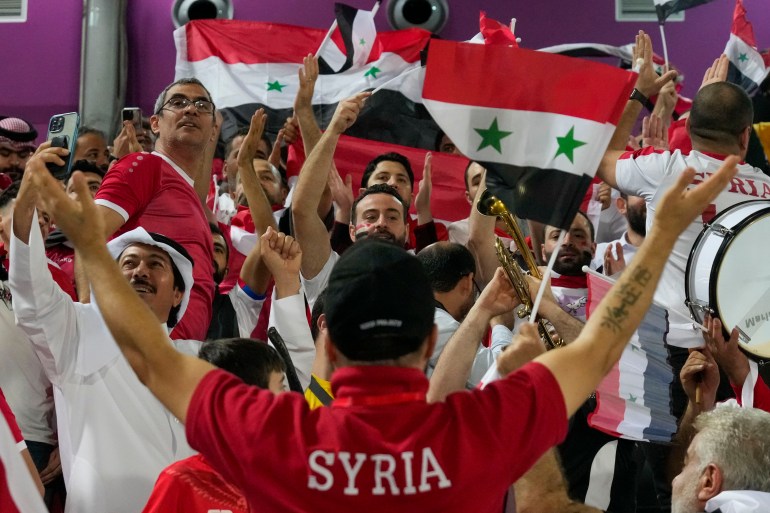
Iran scrape past underdogs Syria in a penalty shootout to set up a quarterfinal blockbuster against Japan. Abdullah bin Khalifa Stadium, Qatar – What do you get when you take two football-mad countries, pit them against each other in a compact stadium and put a championship knockout berth on the line? Iran vs Syria at the Abdullah bin Khalifa Stadium on Wednesday night – fighting for the last remaining quarterfinal spot in the AFC Asian Cup 2023. Iran emerged the winner after a penalty shootout was needed to separate the teams following a 1-1 result at the end of extra time. It was an end-to-end contest that captivated the spectators for more than two hours and the underdog’s fight that Syria showed. Iran started the game as favourites on many counts. Higher ranking: Iran are second in Asia and 21st in the world in FIFA’s men’s rankings, compared with Syria’s 91st position in the world and 13th in Asia. Past glory: Iran have won the Asian Cup three times – although the last time they triumphed was 48 years ago – while Syria had never previously gone past the group stage. Tournament run: Iran topped their group with three wins and a goal difference of five. Syria snuck into the knockouts as one of the four best third-place teams on the back of a 1-0 win over hapless India and a goalless draw with Uzbekistan. And finally, reputation: Iran were one of the title contenders alongside the likes of Japan, South Korea, Saudi Arabia and Australia. Syria were rated as one of the teams that would do wonders by qualifying for the knockouts. Syrian fans chant at Abdullah Bin Khalifa Stadium in Doha, Qatar [Aijaz Rahi/AP Photo] Their progress thrilled Syrian fans as it gave them a chance to see their team in action one more time, especially at a stadium that kept them very close to the action. Both sets of fans loved every minute of the action. The intensity of the on-field action was closely matched by the singing and chanting off it. The 10,000-capacity venue was evenly packed with supporters of both teams. They came prepared with drums, trumpets, flags of various sizes and powerful vocal cords. Once the action was under way, each wave of attack on the pitch was matched by a crescendo of noise off it. An Iranian fan cheers on his team [Aijaz Rahi/AP Photo] Iran took the lead when their star forward Mehdi Taremi converted a penalty in the 34th minute, but Syria kept mounting pressure on the Iranian goal. Their efforts paid off when they were awarded a penalty in the second half and Omar Khribin stepped up to convert it and send Syria’s fans into dreamland. And when Taremi was sent off in injury time, Syria felt the one-man advantage could help them sneak a winner. But somehow Iran managed to fend off the Syrian attacks, which Team Melli’s coach Amir Ghalenoei credited to a “compact and disciplined performance” in his post-match comments. Iran’s Ramin Rezaeian celebrates with teammates after the match [Molly Darlington/Reuters] In the end, what separated them on the field after more than two hours of action was one saved penalty kick. When Ehsan Hajsafi successfully converted Iran’s last penalty to make it 5-3 in the shootout, Syrian players dropped to the ground in disbelief. In the stands, their fans wore a look of shock. Children with their faces painted with the Syrian flags sobbed but some fans, like Adnan Yazbek, said they were immensely proud of the team. “Our team defied expectations to come this far and give Iran such a fight, so I’m heartbroken but I have a smile on my face because they made me feel proud of being Syrian,” Yazbek told Al Jazeera. Mohammed Abdullah, a Syrian fan, said the team has overcome many off-field challenges due to the ongoing war in the country and consequential complications. “Football is loved by everyone in Syria and this team is loved by all Syrians around the world,” Abdullah said. “Me and my little sister are heartbroken, but this is football and as long as we know our players gave everything, we are going to continue supporting them.” The Syrian team and their travelling fans return home to shift their focus on the 2026 World Cup qualification. Meanwhile, Iran face the Samurai Blue in an afternoon kickoff in the third quarterfinal on Saturday. Adblock test (Why?)
What is Elon Musk’s Neuralink brain chip, now being tested on humans?

A year after being cleared for the test, billionaire Elon Musk’s Neuralink has implanted its wireless brain chip in a human for the first time. Musk announced that the patient received the implant on Sunday and “is recovering well”. The device is meant to have several applications, from restoring motor functionality within people to enabling a brain-computer interface. There was no independent verification of Musk’s claims, and Neuralink did not offer too many details. Musk has touted Neuralink as the future of technology and medicine, but ethical concerns have been raised around the chip and its testing. Here is what you need to know about Neuralink and its human testing. What is Neuralink, and what does it do? Neuralink is a brain-chip startup founded by Musk in 2016. A device the size of a coin is surgically implanted in the skull, with ultra-thin wires going into the brain and developing a brain-computer interface (BCI). The disk would register brain activity and send it over to a device, such as smartphone, through a common Bluetooth connection. The first product, called Telepathy, would allow people to control their phones or computers “just by thinking”, said Musk. Planting the chip in the part of the brain that controls motor function would also enable people to overcome neurological disorders, the company claims. Musk said that initial users would be those who have lost the use of their limbs. What is the human trial phase of Neuralink? The human testing phase will collect data on safety and effectiveness, while helping improve the device. Musk said on X on Monday that the “initial results show promising neuron spike detection”. This means that neurons are sending electrical and chemical signals to each other around the body. Such activity allows us to carry out our everyday functions from eating to talking. When Neuralink initially started searching for trial participants in September, it was looking for individuals with diseases of the spinal cord, a key part of the body’s nervous system. The US Food and Drug Administration approved human trials in May 2023 amid federal probes into the safety of its trials on animals. The first human received an implant from @Neuralink yesterday and is recovering well. Initial results show promising neuron spike detection. — Elon Musk (@elonmusk) January 29, 2024 What testing has Neuralink carried out in the past? Neuralink has tested out its chip on monkeys and pigs. The company showed several monkeys “playing” basic video games or moving a cursor on a screen through their Neuralink implants. Although Neuralink says no monkeys died as a result of their implants, there have been reports of issues with the implants on monkeys, including paralysis, seizures and brain swelling. Are any other companies involved in such projects? There are some 40 brain-computer interface trials under way, according to an online database of active clinical trials in the United States. Australia-based company Synchron implanted its device in a US patient in July 2022. Synchron’s implant does not require cutting into the skull for installation. Other trials target medical needs while Musk’s company goes beyond that, aiming to allow people to control their smartphones and devices. What are the ethical concerns around Neuralink? Experts have raised concerns around the experimentation of Neuralink’s brain chip on animals, as well as potential risks associated with brain surgery, such as brain haemorrhage or seizures. They add that Musk’s vision of implants raises privacy and surveillance concerns. Scant details have been available on users’ ability to retain control of their personal data and neural activity. Earlier this year, the US Department of Transportation fined Neuralink for failing to register itself as a transporter of hazardous material — implants from the brains of primates — according to records from the federal agency reviewed by Reuters. Adblock test (Why?)
Two women wearing hijabs denied entry to Democratic campaign event

NewsFeed Two women wearing hijabs say they were barred from entering a campaign event with US Vice President Kamala Harris in Las Vegas. Published On 31 Jan 202431 Jan 2024 Adblock test (Why?)