

Stories of ‘beating the odds’ in China draw dark responses from wary public
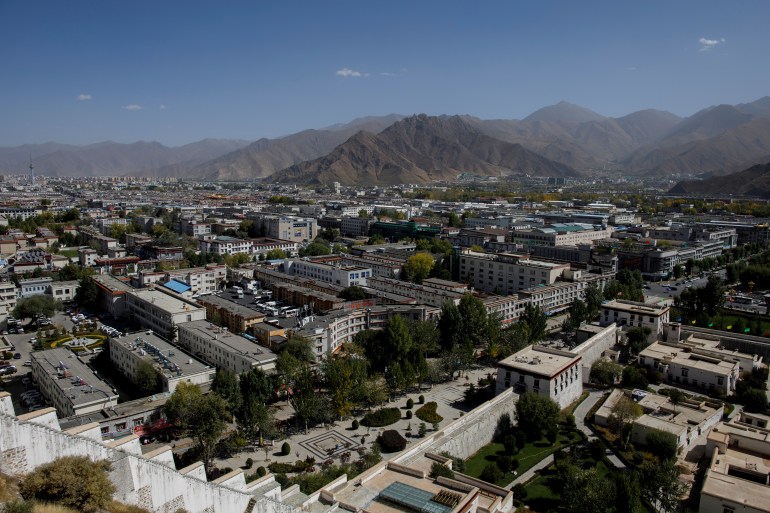
A honeymoon in Western Tibet came to a tragic end in October when the newlyweds crashed their car on a mountain road after suffering altitude sickness. Sitting in the passenger seat, 27-year-old Yu Yanyan from Shanghai was badly injured. Despite being transferred to a local hospital, rapid haemorrhaging and a lack of adequate blood stocks meant that she was unlikely to make it. But drawing on the couple’s network and connections, Yu’s husband was able to secure blood donations from local civil servants and members of the public in that area of Tibet that helped to stabilise his bride. Yu’s father then arranged a chartered plane to fly her to a larger hospital for more advanced surgery. The operation to save Yu’s life was a remarkable effort in China – where many lack access to quality healthcare – especially in remote regions, such as Tibet. Some also said it was unbelievable. Success stories meet a sceptical Chinese public Bai Xinhui, who is also from Shanghai like Yu, began to follow the story after a now-recovering Yu posted a video about her near-death experience. “It was really beautiful to hear how so many people worked together and contributed to saving her life,” Bai, a 26-year-old UX designer, told Al Jazeera. At the same time though, Bai was left wondering whether ”a regular person could get so much help”. “Maybe her husband and her have very good connections or come from very rich families,” Bai said. “Maybe it’s all true, maybe it’s only half true,” she said, suspicious that some of the details of the rescue might have been altered to make public officials appear in a more positive light. “It is sometimes difficult to know what to believe and who to believe in China these days,” she added. Bai is not the only one who has pondered the circumstances and details of Yu’s ordeal. When the story gained national media attention and went viral on Chinese social media in November and December, people started to ask questions. “How were they able to involve so many people to help her and how were they able to do it so fast?” asked Li Xueqing, a 31-year-old marketing specialist from Suzhou. “Chinese healthcare is very bad in many places, so I don’t think Yu’s story shows how patients in her situation are normally treated,” Li said to Al Jazeera. Yu’s survival has shifted from the story of a dramatic rescue to symbolising entitlement and privilege in contemporary China, with some referring to her as the “Shanghai princess” in Tibet. Lhasa in the Tibet Autonomous Region, China, in 2020 [File: Thomas Peter/Reuters] The story became so prominent that it resulted in Chinese authorities and media looking into signs of wrongdoing regarding the resources mobilised to save Yu. So far, there is little evidence suggesting that any abuse of positions or power played a role. Around the same time that Yu’s rescue was being dissected by a sceptical online community in China, another story about overcoming incredible odds began trending on Chinese social media. It too was met by equally cheerless responses. A lottery player in the central Chinese city of Nanchang won the equivalent of almost $31m from the state-run Welfare Lottery in early December. The winner had reportedly spent a sum of $14,000 on nearly 50,000 sets of identical lottery numbers that each won him approximately $625. Additionally, his total winnings were tax-free due to the relatively small prize money on each individual bet. The circumstances instantly raised suspicions. “He probably had help from someone on the inside,” one user on the Chinese social media platform, Weibo, speculated. Both China’s healthcare sector and the state lottery have previously been plagued by stories of embezzlement and corruption. “There is a lot of money taken and bribes given in many sectors in China, so of course we are suspicious,” Li from Suzhou said about the incredulous effort to rescue Yu in Tibet and the unprecedented lottery win in Nanchang. The outpouring of public scepticism also suggests a lack of alignment between successes in life and the experiences of everyday Chinese people, said Jodie Peng, a high school teacher from Shenzhen. “Most people haven’t won big in the lottery or experienced a whole community helping them during a medical emergency,” she told Al Jazeera. People buy scratch cards at an outlet of the China Welfare Lottery in Beijing, China [File Adrian Bradshaw/EPA] Peng also had her own faith in China’s healthcare system tested in recent years. Her grandfather died last year from COVID-19 in a crowded public hospital before overworked medical staff had a chance to properly tend to him. Peng also fell victim to medical fraud in connection with post-surgery treatment she received a few years back. “So, of course, it was nice to hear about the lottery winner in Nanchang and the successful rescue of the Shanghai woman in Tibet. But those things don’t happen in the Chinese world that I live in,” she said. China’s party-approved ‘positive energy’ stories According to associate professor Yao-Yuan Yeh, who teaches Chinese studies at the University of St Thomas in the United States, stories that circulate in China’s media and online often reflect the desired narratives of the ruling Chinese Communist Party (CCP) more so than the lived experiences of the public. “The Chinese internet is filled with stories backed by the Chinese state,” Yeh told Al Jazeera. China’s leaders have repeatedly called for the media to disseminate stories with “positive energy” to lift up and inspire people. With the internet heavily surveilled and regulated in China, stories and commentary that do not support the mandates of the government can be quickly removed by censors without warning or explanation. So, when public data showed that Chinese youth unemployment was hitting a record 21.3 percent in June, China’s censors shut down critical discussions about the figures online and removed negative comments about the state of the Chinese economy. The following month, the publication of China’s youth jobless data was suspended. Combatting ”negativity” has also resulted
Boeing woes spark painful memories for families of Indonesian crash victims
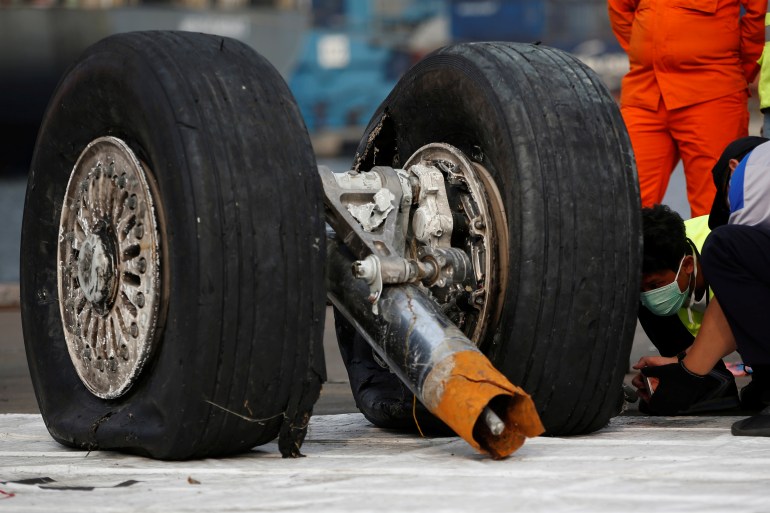
Medan, Indonesia – For Neuis Marfuah, the recent near-catastrophe involving a 737 Max plane flown by Alaska Airlines brought back painful memories and anger. Her daughter, 23-year-old Vivian Hasna Afifa, was killed when Lion Air Flight 610 crashed into the Java Sea in Indonesia on October 29, 2018, killing all 189 people on board. “How could this have happened? I can’t stop thinking about it,” Marfuah told Al Jazeera. On Thursday, the US Federal Aviation Administration (FAA) said that it had approved the Boeing 737 Max 9 to return to service after more than 170 of the aircraft were grounded on January 6, the day after a panel on Alaska Airlines Flight 1282 blew out at 14,000 feet with 177 people on board. The FAA’s “exhaustive” review gave the watchdog the confidence to “proceed to the inspection and maintenance phase”, FAA administrator Mike Whitaker said in a statement that outlined “unacceptable” quality assurance issues. No one was killed or injured in the incident, but for Marfuah, the news of the near-disaster was hard to bear. “It should have been enough after the events in Indonesia and Ethiopia to decide to stop operating the Max 737 aircraft once and for all,” Marfuah said. Less than five months after the Lion Air crash in Indonesia, Ethiopian Airlines Flight 302 crashed six minutes after takeoff from Addis Ababa Airport en route to Kenya, killing all 157 people on board. Following the Lion Air and Ethiopian Airlines crashes, a US congressional report found that Boeing operated a “culture of concealment” and that the 737 Max planes were “marred by technical design failures”, including issues with the Maneuvering Characteristics Augmentation System (MCAS). MCAS is a flight-stabilisation programme on newer 737 Max models that is designed to automatically stop a plane from going into a stall, although this was not clearly communicated to pilots flying the planes. On Lion Air Flight 610, a sensor on the outside of the plane malfunctioned and indicated that the nose of the plane was too high and that the aircraft was at risk of stalling, causing the MCAS to automatically force the plane down to avoid a potential stall and crash into the sea. MCAS also malfunctioned on Ethiopian Airlines Flight 302, prompting Boeing to make changes so that it now “operates in unusual flight conditions only and now relies on two sensors, activates only once and never overrides pilots’ ability to control the airplane”. 189 people died on Lion Air Flight 610 [File: Willy Kurniawan?Reuters] After an investigation into the near-miss involving Alaska Airlines Flight 1282, the airline found that the panel that blew off had been removed, repaired and reattached by Boeing mechanics. Alaska Airlines CEO Ben Minicucci said in an interview aired by NBC News on Wednesday that an in-house inspection found that “many” of the 737 Max 9 aircraft had loose bolts. “Really, an airplane exploded in mid-air in one section,” Dennis Tajer, spokesperson for the Allied Pilots Association union and a 737 Max 8 pilot with more than three decades of experience, told Al Jazeera. “It was an explosive depressurisation of the plane, which is all-encompassing and terrifying. This has taken trust in Boeing and absolutely crushed it again.” In the three weeks since the Alaska Airlines incident, Boeing has lost nearly one-fifth of its market capitalisation. After a meeting with US senators on Wednesday, Boeing CEO Dave Calhoun told reporters that the company does not “put airplanes in the air that we don’t have 100 percent confidence in”. Anton Sahadi, whose wife lost her two 24-year-old cousins, Riyan Aryandi and Ravi Andrian, on Lion Air Flight 610, described the latest incident involving the Boeing 737 Max incident as “saddening”. “As a family member of and spokesperson for the victims of the Lion Air plane crash, I was very concerned to hear the Alaska Airlines news, remembering that 189 people were victims of the Lion Air crash in Indonesia,” Sahadi told Al Jazeera. The Boeing 737 Max 8 was involved in fatal crashes in 2018 and 2019 [File: Tiksa Negeri/Reuters] Like Tajer, Sahadi said the latest incident had shaken his trust in Boeing’s planes. “I am increasingly doubtful about the 737 Max planes and I think there must be serious action taken by the aircraft certifier before they are ready to be sold and used commercially,” he said. “It is playing with people’s lives and safety. It should be a serious concern for operators and Boeing passengers.” In a statement provided to Al Jazeera on Tuesday, Stan Deal, president and CEO of Boeing Commercial Airplanes, said: “We have let down our airline customers and are deeply sorry for the significant disruption to them, their employees and their passengers.” On Wednesday, Boeing released another statement in which it said it would “continue to cooperate fully and transparently with the FAA and follow their direction as we take action to strengthen safety and quality at Boeing”. But Tajer, the Allied Pilots Association spokesperson, said that “trust in Boeing continues to erode” despite the planes being cleared to fly. “This is not just a case of everyone waking up, people have been watching Boeing closely for some time and they built an airplane based on executive excuses and exemptions,” he said. It is not just the 737 Max that has been in the spotlight following the Alaska Airlines incident. On January 18, a Boeing cargo plane made an emergency landing in Florida after the engine caught fire and, on January 20, a nose wheel fell off a Delta Air Lines Boeing 757 flight that was about to take off from Atlanta’s international airport. “If I had made as many mistakes as Boeing, I would not have a pilot’s licence,” Tajer said. “We are watching closely and we are not happy. We are going to get through this and we will keep people safe, but we are being asked to cover for Boeing’s failures. Enough is enough. Engineer your planes like lives depend on it, because they do.” Adblock
Trump walks out of court during closing arguments in defamation trial

The unexpected walkout occurred when lawyer for E Jean Carroll asked jurors to decide how much Trump owes the plaintiff. Former United States President Donald Trump stormed out of closing arguments at his defamation trial as a lawyer for E Jean Carroll urged a jury to award at least $24m in damages for the “storm of hate” caused by Trump. Carroll, 80, is seeking at least $10m for Trump’s having defamed her in June 2019, when he was in the White House, by denying her claim that he had raped her in the mid-1990s. She said Trump’s comments caused her to be subjected to four and a half years of continuous attacks, including death threats. In her closing arguments at the Manhattan federal court on Friday, Carroll’s lawyer Roberta Kaplan urged jurors to punish Trump for persistently lying about her client, and destroying her reputation as a truth-telling journalist. “We all have to follow the law,” Kaplan said. “Donald Trump, however, acts as if these rules and laws just do not apply to him. “This trial is about getting him to stop, once and for all,” she added. “Now is the time to make him pay for it dearly.” Just minutes after Kaplan began her argument, Trump suddenly rose from his seat at the defence table and walked toward the exit, pausing to scan the packed courtroom as members of the Secret Service leaped up to follow him out. His unexpected departure prompted Judge Lewis A Kaplan, not related to Carroll’s lawyer, to speak up, briefly interrupting the closing argument to note: “The record will reflect that Mr Trump just rose and walked out of the courtroom.” Later, Trump returned to the courtroom to hear his lawyer Alina Habba argue that Trump should not be made to pay Carroll for comments that set off hate messages from strangers. Habba showed the jury a video in which Trump said a jury’s verdict last year finding that he had sexually abused Carroll was “a disgrace” and “a continuation of the greatest witch hunt of all time”. “You know why he has not wavered?” Habba asked the jury. “Because it’s the truth.” The jury will now consider what level, if any, to award compensatory damages and punitive damages, intended to deter repeat defamation. [embedded content] ‘Trump is not a victim’ Trump, a Republican, is seeking to retake the White House in the November election in a likely showdown against Democrat and current President Joe Biden, who beat him in 2020. The race is expected to be close even though Trump faces 91 felony counts in four criminal indictments, including two cases accusing him of trying to illegally overturn his 2020 election loss. He has tried to make his legal travails a campaign asset, calling himself a victim of biased prosecutors and an unfair judicial system. Carroll’s legal team urged jurors to ignore that. “This isn’t a campaign rally,” Shawn Crowley, another lawyer for Carroll, said after Habba spoke. “Donald Trump is not the victim. This is her [Carroll’s] life. Help her take it back.” Jurors in the current trial will decide only how much Trump owes Carroll for harming her reputation, and whether to impose punitive damages to stop him from defaming her again. A damages expert testified that the reputational harm alone was $7.3m to $12.1m. Lawyer Roberta Kaplan added that an “unusually high” punitive damages award might also be needed to deter Trump, a billionaire. “While Donald Trump may not care about the law, while he certainly does not care about truth, he does care about money,” she said. Adblock test (Why?)
What risk is there of India turning into a Hindu nation?

Prime Minister Narendra Modi’s agenda is under scrutiny after consecration of highly controversial temple. India’s Prime Minister Narendra Modi has inaugurated a controversial Hindu temple in the northern city of Ayodhya. The shrine was built on grounds where a mosque from the Mughal-era stood for centuries, until it was destroyed by Hindu activists in 1992. In elections in 2014, Modi campaigned with a promise to build a temple dedicated to the Hindu god Lord Ram, on the very site of the demolished mosque. With the temple’s consecration coming only months ahead of a national election, opposition leaders accuse him of exploiting religion to win political favour. And as Modi seeks a third consecutive term, concerns are growing that he is building a legacy as a leader able to transform India into a Hindu nationalist state. So, what does this mean for the future of secularism in the country? Presenter: Neave Barker Guests: Shazia Ilmi – National spokesperson for the governing BJP Party Sharat Pradhan – Political analyst and independent journalist Nilanjan Mookuhpadyey – Journalist and author of, The Demolition and The Verdict, a book on the Ram Temple controversy Adblock test (Why?)
US court hears civil case accusing Biden of ‘complicity’ in Gaza ‘genocide’

Plaintiffs want the federal court to urge the US to use its influence to get Israel to end its hostilities in Gaza. A civil case accusing United States President Joe Biden and other senior US officials of being complicit in Israel’s “genocide” in Gaza has begun at a federal court in California. Lawyers representing Biden, Secretary of State Antony Blinken and Secretary of Defense Lloyd Austin, attended Friday’s proceedings along with the plaintiffs who accuse them of “failure to prevent and complicity in the Israeli government’s unfolding genocide”. The Center for Constitutional Rights (CCR), a US civil liberties group, filed the lawsuit on behalf of the human rights organisation, Defence for Children – Palestine; Al-Haq, a Palestinian human rights group based in the occupied West Bank; and eight Palestinians and US citizens with relatives in Gaza. During Friday’s hearing, the court heard from lawyers, activists and organisers, including doctors in Gaza, about the situation that Palestinians have been facing for nearly four months. I’m inside the US federal court where Palestinian plaintiffs are suing Biden, Blinken & Austin for failure to prevent -& complicity in – Israel’s ongoing genocide in Gaza It’s unprecedented that the case made it this far. Palestinians w family in Gaza will testify soon @ajplus pic.twitter.com/F5CUNAKGUD — Dena Takruri (@Dena) January 26, 2024 Since the war began on October 7, more than 26,000 Palestinians have been killed in Israel’s bombardment of Gaza following a Hamas attack on Israel that killed about 1,100 people there. The CCR complaint was first filed in November last year and said Biden, Blinken and Austin “have not only been failing to uphold the country’s obligation to prevent a genocide but have enabled the conditions for its development by providing unconditional military and diplomatic support [to Israel]”. The CCR is asking the court to “declare that defendants have violated their duty under customary international law, as part of federal common law, to take all measures within their power to prevent Israel from committing genocide against the Palestinian people of Gaza”. The group is also calling for the US to use its influence over Israel to end the hostilities against Palestinians in Gaza. ‘Political doctrine’ Al Jazeera’s Rob Reynolds, reporting from the court in Oakland on Friday, said the CCR is arguing that by providing weapons to Israel, the US’s support violates the 1948 Genocide Convention. In response, the lawyers for the Biden administration “are focusing on a very narrow legal argument”, he said. “They are saying the court does not have the authority to rule on this. They’re citing what is called the political doctrine, and it has to do with the separation of powers in the United States,” Reynolds said. He explained that lawyers are arguing that the conduct of foreign policy, diplomacy, military activities and the relations between allies are in the “political purview of the executive branch, in other words, the president and the cabinet” and, therefore, not amenable to judicial action by other branches of power that make up the US government. The judge appeared to also question his authority in the case, Reynolds said. “This is really the fundamental question, whether he’s got the authority to rule on this, but the judge did open the proceedings by a litany of just describing the plight of Palestinians in Gaza,” our correspondent said. Earlier on Friday, the International Court of Justice (ICJ) ordered Israel to take all measures possible to prevent acts of genocide against Gaza and to do more to help civilians. Still, it failed to call for a ceasefire, which South Africa, who presented the case to the ICJ, had called for. Adblock test (Why?)
‘Propaganda, provocation’: Did Ukraine down a plane with its POWs aboard?

Kyiv, Ukraine – Two days after a Russian military cargo plane was shot down near the Ukrainian border, unanswered questions loom as Moscow and Kyiv offer starkly conflicting versions – and insufficient proof. Moscow claimed the Il-76, with 65 Ukrainian war prisoners on board, was about to land in the western city of Belgorod on Wednesday in advance of a swap later that day. It purported that Ukrainian air defence forces in the nearby Kharkiv region shot the plane down with two missiles. Russian lawmaker Andrey Kartapolov claimed three missiles were shot either from a US-made Patriot air defence complex or from a German-made Iris T system. “Ukrainian leaders knew very well about the swap, were informed how they prisoners would be delivered, but the Il-76 plane was shot down by three missiles,” he reportedly said. Moscow alleged that all the Ukrainian prisoners, three Russian guards that escorted them, and six crew members had been killed when the plane crashed near the village of Yablonova. The Ukrainska Pravda news website quoted an unnamed military official saying that the downed plane was “their job”, but the laconic report was soon removed. Ukrainian President Volodymyr Zelenskyy did not say who or what could have downed the plane, but called for an internal investigation and accused Russia of “playing with the lives of Ukrainian prisoners”. Kremlin spokesperson Dmitry Peskov retorted by saying that “if [Zelenksyy] means an international investigation into the criminal actions of the Kyiv regime – then one is indeed needed”. Margarita Simonyan, one of the main Kremlin backers who heads the media network Russia Today, posted the alleged list of 65 POWs on her Telegram channel. [Al Jazeera] Kyiv said that it had planned a prisoner exchange that day, It did not confirm the authenticity of the list shared by Simonyan, but said that one person on it had already been swapped earlier this month. Ukraine insisted Russia provided no information about the plane that in fact had been carrying missiles for S-300 air defence systems. Mobile phone videos presumably shot near the crash site showed the burning plane and traces of smoke allegedly left by a Ukrainian missile. Another video of the plane’s alleged debris showed no traces of bodies. Meanwhile, allegations abounded that Russia would kill captured Ukrainian servicemen kept in Russian prisons and place their remnants in the downed plane’s debris to “provide” proof of Kyiv’s war crime. “They have the prisoners on the ground and would have to kill them, mess up their bodies and mix the remnants with the plane’s debris,” a Ukrainian military official told Al Jazeera on condition of anonymity. A top Ukrainian military expert agreed. “To prove their point, Russians may go very far, including the liquidation of these war prisoners and the dismemberment of their bodies,” Lieutenant General Ihor Romanenko, former deputy chief of Ukraine’s general staff of armed forces, told Al Jazeera. He said that there is a “high probability” that Ukrainian air defence forces downed the plane, but there was too little evidence to prove it – and to say for sure who and what was on board the plane before it was shot down. But Romanenko, who spent decades in in air defence forces, said that he had personally seen how two missiles from an S-200 or S-300 complex can fit into an Il-76 cargo plane, a seasoned Soviet warhorse that can carry up to 40 tonnes. He said that Moscow staged a “provocation” with the plane and will hardly agree to conduct an independent investigation. The incident reminded him of the July 17, 2014, downing of the Malaysian MH-17 plane with 298 passengers and crew on board by pro-Moscow separatists in the Donbas region. The separatists and pro-Russian residents in the area said days after the disaster that the CIA “loaded” hundreds of dead and “pre-frozen” bodies onto the plane to “frame” Moscow. An international investigation based on the analysis of wreckage and intercepted phone calls concluded that the plane was destroyed by the Russia-supplied BUK surface-to-air missile. Investigators said later that there were “strong indications” that Russian President Vladimir Putin approved the delivery of the BUK complex to the separatists. ‘Russian propaganda statements’ Another Ukrainian analyst said that after losing the plane this week, Russia decided to start a propaganda “campaign” while hiding evidence of what really had happened. “What we see is Russian propaganda statements, an obvious information-psychological campaign against Ukraine and a lack of proof of the Russian version,” Volodymyr Fesenko, head of the Penta think tank in Kyiv, told Al Jazeera. Russia did not present the bodies of the 65 POWs, and Ukrainian intelligence official Andiry Yusov said that only five bodies had been delivered to the Belgorod morgue. Moscow also said that only three guards escorted five dozen war prisoners, something that contradicts information about earlier prisoner swaps when each Russian guard escorted three or four Ukrainians. “There are way too many inconsistencies,” Fesenko said. To him and other observers, Russia’s claim were reminiscent of the July 2022 incident in the Olinivka camp for war prisoners near the Moscow-occupied city of Donetsk. Moscow claimed that Ukraine launched a US-made HIMARS missile that hit the camp killing 62 and wounding 130 Ukrainians. Pro-Kremlin media claimed that Kyiv deliberately killed the POWs who could have testified about the war crimes they had allegedly committed during the 2022 siege of Mariupol. But Moscow refused to allow finding missions sent by the United Nations and the International Red Cross to enter the facility. Meanwhile, media analyses based on satellite imagery and post-explosion photos and videos of the prison indicated that Russia’s claims were fabricated and the building was destroyed by a bomb blown up inside the building. However, an international observer offered a sobering explanation of how the latest disaster could have been caused by a dire lack of coordination between Ukrainian military agencies. “One military agency was preparing the usually-secret prisoner swap. Another military agency in a no-less-secret mode moved a Patriot or something
World reacts to ICJ ruling on South Africa’s genocide case against Israel

The International Court of Justice (ICJ) has delivered its ruling on the emergency measures requested by South Africa in its genocide case against Israel over its war on the Gaza Strip. The World Court on Friday did not order a ceasefire in Gaza but told Israel to take measures to prevent and punish direct incitement of genocide in the besieged strip. ICJ President Joan Donoghue noted that the court had found sufficient evidence of dispute for the genocide case and said it will not throw it out. Israel has also been ordered to allow humanitarian aid into Gaza and has been asked to report back to the court within a month about how it is upholding the court’s orders. Here are some global reactions to the pivotal ruling: Palestine Palestine’s Ministry of Foreign Affairs and Expatriates welcomed the ICJ’s ruling, saying in a statement it is an “important reminder” that no state is above the law. Foreign Minister Riyadh Maliki noted that Israel failed to persuade the court that it is not violating the 1948 Genocide Convention. In a statement he said: “The ICJ judges saw through Israel’s politicisation, deflection, and outright lies. They assessed the facts and the law and ordered provisional measures that recognised the gravity of the situation on the ground and the veracity of South Africa’s application. … Palestine calls on all states to ensure respect for the order of the International Court of Justice, including by Israel.” Israel Israeli Prime Minister Benjamin Netanyahu slammed the ruling as “outrageous”. In a video message shortly after the court order, he said Israel is fighting a “just war like no other”. He added that Israel will continue to defend itself and its citizens while adhering to international law. Meanwhile, far-right National Security Minister Itamar Ben-Gvir mocked the ICJ after the court issued its interim ruling. “Hague shmague,” the minister wrote on the social media platform X. South Africa The South African government called the ICJ ruling a “decisive victory” for international law. In a statement, the government said it welcomed the provisional measures and said it sincerely hoped Israel would not act to frustrate the application of the court’s orders. It further said the ruling marked a significant milestone in the search for justice for the Palestinian people and added that South Africa will continue to act within global institutions to protect the rights of the Palestinians in Gaza. Outside the ICJ headquarters in The Hague, Naledi Pandor, South Africa’s minister of international relations, told reporters that Israel will have to halt fighting in Gaza if it wants to adhere to the orders of the UN’s top court. “How do you provide aid and water without a ceasefire?” Pandor asked. “If you read the order, by implication, a ceasefire must happen.” Hamas Hamas hailed the court’s “important” ruling, saying it “contributes to isolating Israel”. “The [International] Court of Justice’s decision is an important development which contributes to isolating Israel and exposing its crimes in Gaza,” it said in a statement. United States The United States said the ruling of the ICJ was consistent with Washington’s view that Israel has the right to take action, in accordance with international law, to ensure the October 7 attack cannot be repeated. “We continue to believe that allegations of genocide are unfounded and note the court did not make a finding about genocide or call for a ceasefire in its ruling and that it called for the unconditional, immediate release of all hostages being held by Hamas,” a State Department spokesperson said. Qatar In a statement the government of Qatar has welcomed the ICJ’s ruling to impose emergency measures against Israel over its war in Gaza. Egypt Egypt welcomed the ruling on implementing emergency measures. A Ministry of Foreign Affairs statement also said Egypt “was looking forward to the International Court of Justice demanding an immediate ceasefire in Gaza, as the court ruled in similar cases”, stressing the need to respect and implement the ICJ’s decisions. Turkey Turkish President Recep Tayyip Erdogan welcomed the ruling, saying he hoped it would halt attacks against civilians. “We hope that Israel’s attacks against women, children and the elderly will come to an end,” Erdogan said in a social media statement, called the ICJ ruling “valuable”. Iran Iranian Foreign Minister Hossein Amirabdollahian called for Israeli authorities to be “brought to justice” after the ICJ ruling, according to Iranian state media reports. Amirabdollahian also congratulated South Africa and the Palestinian people on “success” at the ICJ. “Today, the officials of the fake Israeli regime are the most hated people in the world’s public opinion who must be brought to justice immediately for committing genocide and unprecedented war crimes against Palestinians,” he wrote on X. “I must emphasise that the White House’s all-around support for the crimes of the Zionists will also never be forgotten and is considered and followed up by public opinion,” Amirabdollahian added. Spain Spanish Prime Minister Pedro Sanchez welcomed the ICJ decision and called on the parties to implement the interim measures the court decreed. “We will continue to advocate for peace and an end to the war, the release of hostages, access to humanitarian aid and the establishment of a Palestinian state alongside Israel, so that both nations can coexist in peace and security,” Sanchez said in a post on X. Spain’s Ministry of Foreign Affairs, European Union and Cooperation said: “Once again, Spain reiterates its call for an immediate ceasefire, the unconditional release of the hostages, immediate and regular humanitarian access and the need to move towards establishing the two-state solution.” Ireland Micheal Martin, the Irish minister for foreign affairs, welcomed the court’s orders, which he said were “final and binding. He added that Ireland expects Israel to implement the court’s orders “in good faith and as a matter of urgency”. “Bringing about an end to this conflict and to the death and destruction in Gaza is a priority that must be pursued on all fronts – political, diplomatic, humanitarian and legal,”
Israel’s Netanyahu reacts to ICJ ruling

NewsFeed Israeli Prime Minister Benjamin Netanyahu rejects the ruling by the International Court of Justice and says Israel will continue to defend itself and its citizens while adhering to international law. Published On 26 Jan 202426 Jan 2024 Adblock test (Why?)
‘Voters are looking for a mini-Niinisto’: Finland braces for new president

When Sauli Niinisto became Finland’s president 12 years ago, he looked forward to developing a European defence policy, pursuing “opportunities” in China, and preserving “an operating environment as predictable as possible with Russia”, which, he said, “remains at the centre of our foreign policy”. All of that has changed, as the Nordic nation braces for a presidential vote that begins on Sunday to determine Niinisto’s successor. Russia has become highly unpredictable and a European deterrent has yet to emerge. The US, not the European Union, replaced Russia at the centre of Finnish foreign and defence policy last year as Finns abandoned seven decades of non-alignment to join NATO. Relations with China are fraught with suspicion after a Chinese cargo vessel’s anchor damaged the Baltic Connector gas pipeline and data cables in the Gulf of Finland last October. It may have been the same ship that damaged undersea data cables to Taiwan earlier last year. There has been suspicion of Russian-Chinese collusion. Finland has traditionally based its security on a careful relationship with Russia. Finnish presidents have cultivated Russian leaders as few Westerners have done, and Niinisto had a very long personal experience of dealing with Putin. Finland’s defence budget remained measuredly below 1.5 percent of GDP throughout the Cold War and until 2020, according to figures from the Stockholm International Peace Research Institute (SIPRI). Finland even lent its name to this pragmatic self-containment – Finlandisation. ‘Look in the mirror’ Russia’s invasion of east Ukraine and Crimea in 2014 put the country on alert. Niinisto told parliament this demanded an investment in defence that is “perhaps greater than we have so far discussed” to protect its 1000km (621-mile) long land border with Russia, now NATO’s longest. The turning point was Russian President Vladimir Putin’s ultimatum to NATO in December 2021 – to expel former Warsaw Pact members from the alliance and cauterise NATO expansion into eastern Europe. That, Niinisto told Bloomberg, “was a real game changer in Finnish thinking”. When Russia invaded Ukraine the following February, Finnish public opinion changed overnight. Asked by an Yle survey in the first week of the invasion if they favoured NATO membership, 53 percent of Finns said yes. If the president supported it, the majority rose to 63 percent. Following a border crisis in which Russia attempted to send asylum seekers en masse to Finland last autumn, approval for NATO membership rose to over 80 percent. Niinisto and Putin spoke for the last time in May 2022. “Niinisto only called Putin to inform him Finland is joining NATO, and that was this famous call where he said, ‘Look in the mirror… this is your doing’,” Minna Alander, a research fellow at the Finnish Institute of International Affairs, told Al Jazeera. “After that he was asked, ‘What do you think about [German chancellor Olaf] Scholz and [French President Emmanuel] Macron calling [Putin] and why are you not calling Putin? Do you think you should call?’ – he was like, ‘Well I have nothing to say.’” Boosted defence strategies for a new era Finland’s defence posture has changed dramatically since then. This year defence spending is to reach 2.3 percent of GDP, surpassing NATO’s two percent recommended minimum for the first time. This will help pay for a “smart fence” along Finland’s border equipped with sensors and drones, a new set of corvettes for the navy and new howitzers for the army. Finland bought 64 F-35 Lightning II fighter-bombers from the US’s Lockheed Martin for $9.4bn in February 2022. These are fifth-generation stealth planes. In them, the Finns could in theory fly to Moscow undetected. Last November Finland sparked controversy when it bought the David’s Sling medium-range (40-300km, or 20-250 miles) air defence system from Israel’s Rafael. The system is designed to intercept antiballistic missiles, used to deliver nuclear bombs. Some strategists believe that undermines reciprocal nuclear deterrence. It was a similar move by US President George W Bush to place ballistic missile interceptors in front-line NATO states that sparked Russia’s ire in 2009. Beyond the capabilities Finland is developing on its own, it has signed a Defense Co-operation Agreement with the US that allows US forces to operate from its soil. In other words, Russia’s invasion of Ukraine brought the full might of the Pentagon to its doorstep. Niinisto was already the only Finnish president to be elected with an outright majority (62.7 percent) in a first voting round, in 2018. His shepherding of Finnish sentiment into concrete policy increased his stature, because the Finnish president is commander in chief of the armed forces and constitutionally leads defence and foreign policy. Since 2021 his popularity ratings have been over 90 percent. A citizens’ movement even tried to bend the rules to allow Niinisto to stand for a third term, a campaign he was not interested in. Unsurprisingly, the two frontrunners, former premier Alexander Stubb and former Foreign Minister Pekka Haavisto have been trying to emulate him. “There is a sense that voters are looking for a mini-Niinisto,” said Alander. Nuclear weapons, future challenges and NATO politics Niinisto will now bequeath a presidency that is increased not only in stature but also in complexity. “Without a doubt, the Finnish presidency is becoming a stronger institution because of the president’s role in foreign policy,” SM Amadae, programme director for global politics and communication at the University of Helsinki, told Al Jazeera. About two-thirds of Finns are against reducing the president’s powers, which are largely discretionary and shaped by the force of each president’s personality and popularity. “The next president will play an important, precedent-setting, role in how Finland’s relationship with NATO will be conducted,” she said. Finland’s special relationship with and understanding of Russia has been its selling point in the EU and NATO until now. Its vantage point from which to spy on Russia, its cutting-edge 5G telecommunications industry and AI industry may now replace that as strategic advantages. For these reasons, the all-important relationship with the US is likely to flourish. “We can expect further
ICJ orders Israel to take steps to prevent killings in Gaza

NewsFeed Judges at the International Court of Justice have ordered Israel to take steps to limit killings and acts of genocide in Gaza and to allow in humanitarian aid, but the court did not insist on a ceasefire. Published On 26 Jan 202426 Jan 2024 Adblock test (Why?)