

This 9-year-old is reporting the war on Gaza

NewsFeed Meet Lama Abu Jamous, a 9-year-old girl who has gathered a social following as an aspiring journalist covering Israel’s war on Gaza. Published On 25 Jan 202425 Jan 2024 Adblock test (Why?)
Burkina Faso army strikes killed dozens of civilians, says HRW

The army’s fight against rebels has been criticised as heavy-handed, with the HRW report being the latest instance of that criticism. International watchdog Human Rights Watch (HRW) on Thursday accused the Burkina Faso army of killing at least 60 civilians in drone strikes which the government said targeted armed groups. The deaths occurred in three military drone strikes since August, two at crowded markets and another at a funeral, the rights group said in a new report. Since becoming head of state after a 2022 coup, Captain Ibrahim Traore has focused on a strong security response in reclaiming swathes of territory controlled by armed groups affiliated with al-Qaeda and the ISIS (ISIL) group. But those efforts have often been criticised as heavy-handed, with the HRW report being the latest instance of that criticism. HRW said it interviewed dozens of witnesses between September and November 2023 and analysed photographs, videos and satellite images. “The Burkina Faso military used one of the most accurate weapons in its arsenal to attack large groups of people, causing the loss of numerous civilian lives in violation of the laws of war,” the New York-based group said in its report. The drone strikes “violated laws-of-war prohibitions against attacks that do not discriminate between civilians and military targets and were apparent war crimes,” it added. A series of drone attacks On August 3, Burkina’s government-run Radiodiffusion Television du Burkina (RTB) channel reported a “successful” air operation against a group of armed fighters in the northern town of Bouro. RTB showed a video of a guided munition striking dozens of people and animals in a glade. Locals told HRW that 28 men were killed and many wounded in a packed market. They added that the al-Qaeda-affiliated Group to Support Islam and Muslims (GSIM) controlled Bouro and surrounding areas. Three survivors said four motorbikes ridden by rebels, entered the market at the moment of the strike, when hundreds of civilians were present. On November 18, a military drone hit another crowded market, across the border in Mali, near the town of Boulkessi, according to the report. It said at least seven men were killed and at least five others injured. An RTB reporter described the target as a “logistics base” for rebel fighters. But a 69-year-old man, who lost two sons aged 20 and 40 in the strike, told HRW: “My sons had gone to the market to sell their products. They were traders, civilians, not fighters.” Three days later, in the northern Burkinabe town of Bidi, a drone strike reportedly hit a tent where around a hundred people had gathered for a funeral, killing 24 men and a boy. In its report, HRW says that residents are sometimes forced to collaborate with the rebels who control the areas. The rights group said in the report that the Burkina government should “urgently and impartially investigate these apparent war crimes, hold those responsible to account, and provide adequate support for the victims and their families”. Beyond the drone attacks, there have also been other instances of government forces acting with impunity in counterinsurgency operations. In April 2023, 136 people including women and infants in the northern village of Karma were killed by security personnel, as reported by the NGO the Collective against Impunity and Stigmatisation of Communities (CISC). Adblock test (Why?)
Victims of Rwandan genocide still being found 30 years on

With shovels and garden hoes, villagers stood this January digging where a house once stood in Rwanda to reveal a mass grave filled with bones – victims of the genocide still being found 30 years on. Around 100 volunteers, many wearing face masks and rubber gloves turn over the red soil in Ngoma village in the country’s south, with a sombre determination as a crowd watches on from a slope above. Skulls, teeth and other shards of bone are placed carefully into plastic bags while shoes and tattered clothing – possible clues to identify loved ones never found – are collected elsewhere. The remains of 119 people had been unearthed over three days, said Napthali Ahishakiye, president of the genocide survivors’ group Ibuka. Andre Kamana, deputy mayor of the wider Huye district in the country’s south, said there was no telling how many more might be found. “Every time they dig deeper, they find more layers of soil with remains,” he said grimly. Discoveries of mass graves are remarkably frequent even three decades after the 1994 slaughter instigated by the Hutu extremist regime in Rwanda at the time. The United Nations estimates that around 800,000 people, mostly from the Tutsi minority, were killed over 100 days in an ethnic pogrom that turned neighbours against each other in the tiny East African nation. Villagers and volunteers looking for human remains under the foundations of a house in Ngoma [Guillem Sartorio/AFP] ‘Family secret’ In Ngoma, a three-hour drive from the capital Kigali, roadblocks were erected and Tutsis dragged from their cars and murdered, said Goreth Uwonkunda, a 52-year-old who has lived her entire life in the village. “The history here is terrible… this is clearly one of the mass graves where they were dumped,” she told AFP. “The killers buried victims on top of others. We found big bones, some intact, even whole skulls.” The mass grave was discovered beneath a family home. Five of the family members have been arrested on suspicion of complicity in genocide and concealment of evidence. The investigation began last October when a whistleblower tipped off the authorities about the likelihood of a mass grave on the unremarkable rural property on a hillside off a main road. “It is suspected that those who lived in that house knew what was underneath them, and it was a family secret,” Ibuka’s Ahishakiye said. The appalling discovery has horrified those living near the graves all these years. “I knew the people who lived in this house, and I am quite shocked that they comfortably slept on top of bodies every night and were alright with it. It is shameful and shocking,” said Uwonkunda. The remains of 119 people have been found in Ngoma since January 21, 2024 [Guillem Sartorio/AFP] ‘Decent burial’ But such graves are still being found across the country with grim regularity, underscoring the sheer scale of the slaughter between April and July 1994. Last April, in the western district of Rusizi, 1,100 bodies were discovered in mass graves located on a plantation belonging to a Catholic parish. Three years earlier, in April 2020, a pit believed to contain as many as 30,000 bodies was exhumed near a dam in the east of the country. Six months later, 5,000 bodies were discovered in Gatsibo district. Ibuka says the remains of more than 100,000 genocide victims have been unearthed across Rwanda in the past five years alone. “We suspect that similar mass graves remain undiscovered across the country, because there are survivors looking for their loved ones, 30 years after the genocide,” said Ahishakiye. “The biggest challenge is that vital information about the location of these mass graves is held by people who took part in the killings, or relatives of the killers, and are adamant against revealing such information.” One still searching for answers is Celestin Kambanda, a 70-year-old farmer who has found none of the seven children he lost in the genocide. In Ngoma, he keeps vigil and waits for any sign among the scraps of cloth and bone being prised from the mud. “I came here to see if I could recognise any of my children, maybe from the clothing they wore when they disappeared,” he told AFP. “I would hope to give them a decent burial one day.” Adblock test (Why?)
Woman rescued from flood after 15 hours on overturned car

NewsFeed A helicopter crew rescued a woman in California who spent 15 hours on top of her car waiting for help, after it overturned as she tried to get through a flooded creek. Local officials said the woman was unharmed. Published On 25 Jan 202425 Jan 2024 Adblock test (Why?)
Palestinians collecting aid in Gaza flee gunfire

NewsFeed Palestinians say Israeli forces fired on them as they collected aid in northern Gaza. Video shows hundreds of people fleeing as gunfire is heard. Published On 25 Jan 202425 Jan 2024 Adblock test (Why?)
Japan sentences man to death for Kyoto anime studio fire that killed 36
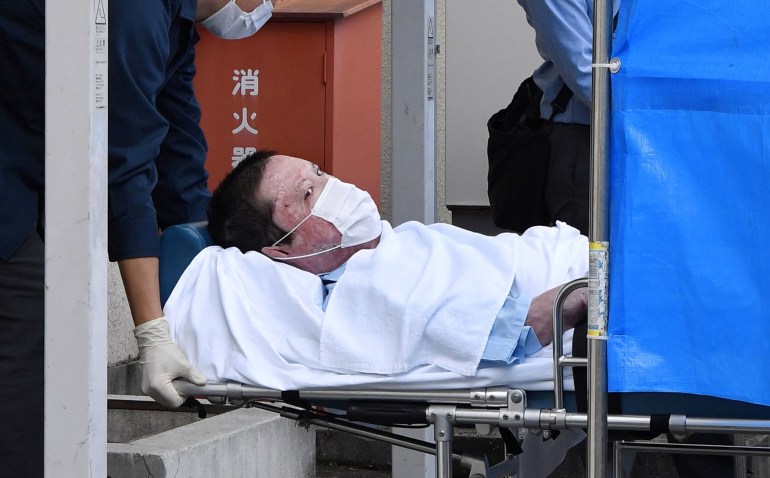
Judge says attack on renowned Kyoto Animation by Shinji Aoba, 45, ‘instantly turned the studio into hell’. A court in Japan has sentenced a man to death after he was convicted of murdering 36 people in an arson attack on a Kyoto animation studio in 2019. The Kyoto District Court on Thursday said it found Shinji Aoba, 45, mentally capable of facing punishment for murder, arson and other crimes in the attack on Kyoto Animation’s Studio 1 on July 18 that year which shocked Japan and drew an outpouring of grief from anime fans worldwide. Prosecutors said Aoba had been motivated by a grudge against the studio, which he claimed had stolen his ideas after rejecting his novels in an annual contest. The court found no evidence the studio had plagiarised his work. NHK national TV, quoted Judge Keisuke Masuda, as saying: “The attack that instantly turned the studio into hell and took the precious lives of 36 people, caused them indescribable pain.” Survivors reported that on the morning of the attack, Aoba had broken into the building, spreading petrol on the ground floor and lighting it while shouting “drop dead”. Reeling The anime industry was left reeling by the crime, which killed young artists working in the three-storey building. About 70 people had been working on the premises at the time. Many of the victims were believed to have died of carbon monoxide poisoning. More than 30 other people were badly injured. One of the survivors said he saw a black cloud rising from downstairs, then he felt scorching heat and jumped from a window, gasping for air. A number of victims were found on a spiral stairwell leading to the roof, suggesting they were overcome as they desperately tried to escape. Mentally fit The arsonist appeared in court in a wheelchair. He had himself been left severely burned after his attack and spent 10 months in hospital before his arrest in May 2020. Shinji Aoba, sentenced to death for killing 36 people at Kyoto Animation in July 2019, is seen on a stretcher as he is carried to Fushimi police station after being arrested in Kyoto, western Japan, on May 27, 2020 [File: Kyodo via Reuters] His lawyers argued he was mentally unfit to be held criminally responsible, unable to distinguish between good and bad. However, the judge ruled that Aoba was “neither insane nor suffering diminished mental capacity at the time of the crime”, NHK reported. “I didn’t think so many people would die, and now I think I went too far,” Aoba told the court when the trial opened in September, reports said at the time. Studio ‘spread joy’ The fire was Japan’s deadliest since 2001, when a blaze in Tokyo’s congested Kabukicho entertainment district killed 44 people. Firefighters called the incident “unprecedented” and said rescuing people trapped inside was “extremely difficult”. After the attack, there was an outpouring of shock and grief around the world, with Apple CEO Tim Cook tweeting that the studio’s artists “spread joy all over the world and across generations with their masterpieces”. A US animation company raised $2.4m via crowdfunding to help the firm get back on its feet. Known as KyoAni, the studio was founded in 1981 by a couple. It is known for popular TV series, including The Melancholy of Haruhi Suzumiya and K-ON!. A man prays after placing flowers near the torched Kyoto Animation building to mourn the victims of the arson attack, in Kyoto, Japan, July 19, 2019 [File: Kim Kyung-Hoon/Reuters] For families of the deceased, the pain of their loss remains excruciating to this day. “I should have told her not to go to work that morning,” the mother of 49-year-old Naomi Ishida told the Mainichi Shimbun daily this week. “Even if he gets the death penalty, Naomi and others won’t come back. I feel empty,” she said. Criticism Polls show public support is high for capital punishment, which has been criticised by rights groups. Japan is one of the few developed countries meting out the punishment, typically in murder cases with more than one victim. Inmates are often informed of their execution on the morning of the day they are to be hanged. The highest-profile executions in recent years were in 2018, when Japan hanged 13 people – including the guru of a doomsday cult – responsible for the 1995 sarin attacks on Tokyo’s underground railway. The last execution was in 2022 and, as of December, 107 people were on death row. Adblock test (Why?)
Israel’s war on Gaza: List of key events, day 111

EXPLAINER The ICJ is set to deliver its response to South Africa’s lawsuit against Israel on Friday, while intense strikes continue in Khan Younis. Here’s how things stand on Thursday, January 25, 2024: Latest updates The International Court of Justice announced that it will deliver its response to South Africa’s request for emergency measures to protect Palestinians from “irreparable harm” on Friday, January 26 at 1pm local time in The Hague (12:00 GMT). On Wednesday, hundreds of protesters called on the government of Prime Minister Benjamin Netanyahu to secure the immediate release of captives held in the Gaza Strip. They blocked Tel Aviv’s main Ayalon Highway before they rallied outside the nearby headquarters of the Israeli military and Ministry of Defense, reported The Associated Press news agency. A reported Israeli tank fire killed at least nine people at a United Nations shelter in Khan Younis on Wednesday, and wounded dozens, sparking international outrage. Israel’s military said it investigating the incident and has so far “ruled out” that it was the result of an “aerial or artillery strike” from its forces. Human impact and fighting The UN Office for the Coordination of Humanitarian Affairs (OCHA) reported on Wednesday that “no one can enter or exit” Nasser Hospital due to bombardments nearby, including 400 dialysis patients who are in “need of support”. Al-Amal Hospital, Al-Aqsa Hospital, and the Palestine Red Crescent Society (PRCS) ambulance headquarters in Khan Younis are also surrounded by heavy fighting, OCHA said in its daily situation update on Wednesday. Four children were killed when Israeli warplanes bombed a residential area in the Nuseirat refugee camp overnight, reported Palestinian news agency Wafa. Israeli forces have arrested more than 6,225 Palestinians in the occupied West Bank since October 7, according to statistics released by the Palestinian Commission of Detainees and Ex-Detainees Affairs and the Palestinian Prisoner’s Society on Tuesday. Diplomacy In a post on X on Wednesday, Qatar’s Ministry of Foreign Affairs spokesperson Majed al-Ansari, said Doha was “appalled” by Netanyahu allegedly calling Qatari mediation efforts to secure the return of captives in Gaza “problematic”. Netanyahu has reportedly also said he is “very angry” with the fact the United States has renewed their military presence for an additional 10 years at the US base in Qatar, reported Al Jazeera correspondent Hamdah Salhut. On Wednesday, 49 of the 51 members of the US Senate Democratic caucus backed a statement reiterating support for a two-state solution to the Israeli-Palestinian conflict, according to Reuters. South Africa’s Foreign Minister Naledi Pandor will travel to The Hague to hear the ICJ ruling on her country’s request for emergency measures against Israel over alleged genocide in Gaza, according to spokesperson Clayson Monyela. Turkish President Recep Tayyip Erdogan said that he and Iranian counterpart Ebrahim Raisi agreed at a meeting on Wednesday on the need to avoid steps that could threaten Middle East stability. Adblock test (Why?)
In India, an algorithm declares them dead; they have to prove they’re alive

This story was produced with support from the Pulitzer Center’s AI Accountability Network. Rohtak and New Delhi, India: Dhuli Chand was 102 years old on September 8, 2022, when he led a wedding procession in Rohtak, a district town in the north Indian state of Haryana. As is customary in north Indian weddings, he sat on a chariot in his wedding finery, wearing garlands of Indian rupee notes, while a band played celebratory music and family members and villagers accompanied him. But instead of a bride, Chand was on his way to meet government officials. Chand resorted to the antic to prove to officials that he was not only alive but also lively. A placard he held proclaimed, in the local dialect: “thara foofa zinda hai”, which literally translates to “your uncle is alive”. Six months prior, his monthly pension was suddenly stopped because he was declared “dead” in government records. Under Haryana’s Old Age Samman Allowance scheme, people aged 60 years and above, whose income together with that of their spouse doesn’t exceed 300,000 rupees ($3,600) per annum, are eligible for a monthly pension of 2,750 rupees ($33). In June 2020, the state started using a newly built algorithmic system – the Family Identity Data Repository or the Parivar Pehchan Patra (PPP) database – to determine the eligibility of welfare claimants. The PPP is an eight-digit unique ID provided to each family in the state and has details of birth and death, marriage, employment, property, and income tax, among other data, of the family members. It maps every family’s demographic and socioeconomic information by linking several government databases to check their eligibility for welfare schemes. The state said that the PPP created “authentic, verified and reliable data of all families”, and made it mandatory for citizens to access all welfare schemes. But in practice, the PPP wrongly marked Chand as “dead”, denying him his pension for several months. Worse, the authorities did not change his “dead” status even when he repeatedly met them in person. “We went to the district offices at least 10 times, out of which five times he [Chand] also accompanied us,” said Naresh, Chand’s grandson. “Even after several attempts to get this anomaly corrected at the government offices, and after filing a grievance complaint on the chief minister’s portal, nothing happened.” It was only after Chand carried out the parody of a marriage procession and met a local politician that the authorities finally admitted their mistake and released Chand’s pension. Chand is not an isolated instance of algorithm failure. According to data presented by the government in the state assembly in August last year, it stopped the pensions of 277,115 elderly citizens and 52,479 widows in a span of three years because they were “dead”. However, several thousands of these beneficiaries were actually alive and had been wrongfully declared dead either due to incorrect data fed into the PPP database or wrong predictions made by the algorithm. Such anomalies were not restricted to old-age pensions alone. Beneficiaries of disability and widow pensions, and other welfare schemes such as subsidised food, have also been excluded because the PPP algorithm made wrong predictions about their incomes or employment, excluding them from the eligibility criteria. When people who had been wrongfully erased by the algorithm went to government officials to get the records corrected, they faced red tape. Many were shunted from one office to another, and made to file endless applications to prove the obvious – that they were in fact alive. The ordeal faced by hundreds of thousands of citizens in getting their data corrected has made PPP one of the most controversial government plans of the Haryana government in recent years. The opposition party has termed it ‘Permanent Pareshani Patra’ (permanent inconvenience document) and promised that it will scrap the programme if it comes to power in the next assembly elections, due in 2024. Haryana Chief Minister Manohar Lal Khattar (pictured) made the controversial PPP mandatory for all welfare schemes [File photo by Sonu Mehta/Hindustan Times via Getty Images] The state, however, continues to not just defend but even expand the programme. Sofia Dahiya, secretary of the Citizen Resources Information Department that handles the functioning of PPP, in September 2022 told Al Jazeera: “PPP was easing and improving the delivery of services to the right beneficiaries and preventing leakages through the use of artificial intelligence and machine learning. The interlinking of different databases was done to get an integrated database which was the ‘single source of truth’.” India spends roughly 13 percent of its gross domestic product, or close to $256bn, on providing welfare benefits to about half the country’s population. Worried that such benefits were being usurped by ineligible claimants, the federal and several state governments have increasingly relied on technology to eliminate welfare fraud. In the past few years, at least half a dozen states have adopted algorithmic systems to predict the eligibility of citizens for welfare schemes. Over the past year Al Jazeera, in partnership with the Pulitzer Center’s Artificial Intelligence (AI) Accountability Network, investigated the use and impact of such welfare algorithms. Profiling families Haryana Chief Minister Manohar Lal Khattar launched the PPP programme in July 2019 and a year later made it mandatory for all welfare benefits. In the absence of privacy laws, the opposition parties contested the move to gather the personal data of citizens for building out the PPP. The government argued that it allowed “proactive” delivery of welfare without the claimants having to show any documents or needing a field verification. In September 2021, it gave legal sanction to the programme by passing the Haryana Parivar Pehchan Act. Within a year, however, massive problems with the PPP data started cropping up. After Chand’s ‘wedding procession’ stunt hit the headlines, thousands of poor thronged the district offices of the social welfare department, complaining about their exclusion from the schemes. The public outcry forced the government to launch grievance redressal camps across the state to review PPP data.
North Korea says tested new type of cruise missile with nuclear capability

State news agency says Pulhwasal-3-31 cruise missile is still in its development phase. North Korea has said it conducted its first test of a new-generation cruise missile, as it continues to expand its military capabilities. The official Korean Central News Agency reported on Thursday that the Pulhwasal-3-31 missile was still in its development phase and described the missile as “strategic”, implying an intent to arm it with nuclear weapons. KCNA did not specify how many missiles were fired. “The test-fire had no impact on the security of neighbouring countries and has nothing to do with the regional situation,” it said. South Korea’s Joint Chiefs of Staff said on Wednesday morning it had detected the launch of “several” cruise missiles from North Korea’s western coast. The JCS said it was analysing the launch, which followed the January 19 test of a nuclear-capable underwater attack drone, and the test-firing of Pyongyang’s first solid-fuel intermediate-range ballistic missile five days earlier. On Thursday, it said it thought the launch was a test of upgrades to existing missiles’ capabilities. North Korea carried out its first test of a strategic cruise missile in September 2021. Tensions on the Korean peninsula have increased in recent months as North Korean leader Kim Jong Un continues to move ahead with his weapons development programme and issue provocative threats of nuclear conflict with the United States and its allies in the region. North Korea’s cruise missiles, which tend to be jet-propelled and fly at a lower altitude, are harder to detect and intercept than ballistic missiles and are among a growing arsenal aimed at overwhelming missile defences in South Korea and Japan. North Korea claims they are nuclear-capable and have a range of up to 2,000 kilometres (1,242 miles), a distance that would include US military bases in Japan. Cruise missile tests are not banned under long-running United Nations sanctions imposed over North Korea’s nuclear programme. The latest launch took place as South Korean special forces staged a drill off the country’s east coast, “in light of serious security situations” with North Korea. The 10-day exercise concludes on Thursday, according to the South’s navy. “We will achieve our mission to infiltrate deep into the enemy’s territory and neutralise them completely under any circumstances,” the drill’s commander said in a statement. Adblock test (Why?)
More than 70 dead in artisanal mine collapse in Mali

Despite the dangers, small-scale unregulated mines continue to flourish and attract thousands of gold miners. More than 70 people have died in southwest Mali after an artisanal gold mine collapsed last week, officials have said, the latest disaster in a region prone to mining accidents. Karim Bethe, a senior National Geology and Mining Directorate official, shared the details with The Associated Press on Wednesday, calling it an accident. Oumar Sidibe, an official for gold miners in the southwestern town of Kangaba, as well as a local councillor, confirmed the death toll to the AFP news agency. “It started with a noise. The earth started to shake,” Sidibe said. “There were over 200 gold miners in the field.” While it was not clear what caused the mine collapse that occurred on Friday, the Ministry of Mines said in a statement on Tuesday that it estimated “several” miners had been killed in the Kangaba district in southwestern Koulikoro region. The ministry said it “deeply regretted” the collapse and urged miners and communities in the area to “comply with safety requirements”. A spokesperson for the ministry, Baye Coulibaly, also told the Reuters news agency on Wednesday that the gold panners dug galleries “without complying with the required standards”. “We have advised them against it on several occasions in vain,” Coulibaly said. [Al Jazeera] Mali’s government offered its “deepest condolences to the grieving families and to the Malian people”. It also called on “communities living near mining sites and gold miners to scrupulously respect safety requirements and to work only within the perimeters dedicated to gold panning”. Small-scale, informal artisanal miners are often accused of ignoring safety measures, especially in remote areas, and accidents like these are common in Mali, Africa’s third-largest gold producer. “The state must bring order to this artisanal mining sector to avoid these kinds of accidents in the future,” Berthe told AP. While Mali’s mining sector is dominated by foreign groups, including Canada’s Barrick Gold and B2Gold, Australia’s Resolute Mining and Britain’s Hummingbird Resources, artisanal mines continue to flourish and attract thousands of gold miners. “Gold is by far Mali’s most important export, comprising more than 80 percent of total exports in 2021,” according to the International Trade Administration within the US Department of Commerce. It added that more than two million people, or over 10 percent of Mali’s population, depend on the mining sector for income. Mali produced 72.2 tonnes of gold in 2022 and the metal contributed 25 percent of the national budget, 75 percent of export earnings and 10 percent of gross domestic product, former Minister of Mines Lamine Seydou Traore said last year. But gold mining in the Sahel region is dangerous, and human rights organisations have repeatedly condemned the use of child labour in artisanal mining operations. Adblock test (Why?)