

UNHCR: 569 Rohingya died at sea in 2023, highest in nine years

People from the mostly Muslim Myanmar minority continue to make perilous journeys across the sea in search of safety. Some 569 Rohingya people died or went missing at sea last year – the most since 2014 – as they embarked on dangerous boat journeys to Southeast Asia, according to the United Nations refugee agency. The UN High Commissioner for Refugees (UNHCR) said nearly 4,500 Rohingya people took boats across the Andaman Sea and Bay of Bengal in 2023, fleeing crowded refugee camps in Bangladesh or persecution in their native Myanmar. “Estimates show one Rohingya was reported to have died or gone missing for every eight people attempting the journey in 2023,” UNHCR spokesperson Matthew Saltmarsh said in a statement. “This makes the Andaman Sea and Bay of Bengal one of the deadliest stretches of water in the world.” Hundreds of thousands of Rohingya live in crowded refugee camps in Bangladesh after a brutal crackdown by the Myanmar military in 2017 that is the subject of a genocide case at the International Court of Justice (ICJ). Those who remain in Myanmar, where the military seized power in a coup nearly three years ago, are mainly confined to camps in their native Rakhine State with strict curbs on their movement and daily lives. More than 1,500 Rohingya landed on the northern tip of Indonesia’s Sumatra island on barely seaworthy wooden boats in November and December last year, a period when waters are generally calmer. But while people there have previously welcomed the refugees, this time villagers and the military pushed boats back out to sea and told their passengers they could not come ashore despite the dreadful conditions on board. In one incident, some 200 people were feared to have drowned after their boat sank in the Andaman Sea. Others remained at sea for days longer as they sought a place to land. In December, a mob of students stormed a community hall in Banda Aceh where dozens of Rohingya had been given shelter, demanding that the group be deported. The UNHCR urged governments to take steps to avoid a repeat of such tragedies. “Saving lives and rescuing those in distress at sea is a humanitarian imperative and a longstanding duty under international maritime law,” the statement said, adding that the UNHCR was working to develop a “comprehensive regional response” to the boat journeys. Many of the Rohingya who flee Bangladesh and Myanmar hope to make it to Malaysia, a majority-Muslim country that is currently home to nearly 108,000 Rohingya refugees. Like Indonesia, Malaysia is not a signatory to the UN Convention on Refugees, and those who live in the country are considered undocumented migrants at risk of harassment, detention or deportation. Adblock test (Why?)
Is North Korea’s Kim planning war? Experts have conflicting theories

For North Korea, threats and aggressive rhetoric are nothing new. Even so, North Korean leader Kim Jong Un’s bellicose statements and policy moves in recent weeks have prompted a flurry of commentary about his intentions – including warnings that he could be preparing for war. While divining Kim’s next steps is impossible, longtime observers of North Korea have been closely watching his behaviour for clues as to what he might have planned. The result has been conflicting – and ultimately speculative – theories about the machinations of power inside one of the world’s most secretive states. Why are people worried about what Kim might do next? Kim has taken a number of provocative steps recently that have attracted attention. Most notably, he announced that peaceful reunification with South Korea was no longer possible – a move some observers see as an unprecedented break with decades of policy advocating the reunion of North and South. In a speech to North Korea’s rubber-stamp parliament last week, Kim said the constitution should be amended to define South Korea as the “primary foe and invariable principal enemy” and that three agencies tasked with promoting inter-Korean reconciliation would be closed. At a meeting of the Korean Workers’ Party several weeks earlier, Kim said peaceful reunification was impossible as the neighbours had become “two hostile countries” and war could “break out at any time”. Ruediger Frank, a professor of East Asian economy and society at the University of Vienna, said designating South Korea as a foreign country was “significant” as it theoretically opened the way to either conflict or the normalisation of relations. “An all-out war against a population that was regarded as ‘family’ was harder to defend ideologically, especially if we consider that North Korean nationalism was ethnic, with heavy racial subtones,” Frank told Al Jazeera. “Furthermore, the destruction and, in the worst case, nuclear contamination of land that was to be integrated into a unified Korea made little sense. By defining South Korea as just another country, these two barriers are now gone, at least on paper.” [embedded content] Meanwhile, Pyongyang has carried out numerous weapons tests, including the launches this month of what it described as a solid-fuel missile fitted with a hypersonic warhead and a nuclear-capable underwater attack drone. Some observers have suggested that Kim’s recent moves differ from the usual bluster emanating from Pyongyang. In a commentary published by the United States-based 38 North website before Kim’s speech on reunification, two prominent North Korea analysts warned that the situation on the Korean Peninsula was more dangerous than at any point since the lead-up to the 1950-53 Korean War and that Kim had made a “strategic decision to go to war.” “We do not know when or how Kim plans to pull the trigger, but the danger is already far beyond the routine warnings in Washington, Seoul and Tokyo about Pyongyang’s ‘provocations’,” Robert L Carlin and Siegfried S Hecker wrote in the analysis published on January 11. Carlin and Hecker said Kim may have decided on a “military solution” after concluding that decades of efforts to normalise relations with the US had been in vain. Gabriela Bernal, a PhD candidate at the University of North Korean Studies, argued in a South China Morning Post op-ed last week that the chances of conflict were “suddenly much higher” as Kim no longer viewed South Koreans as compatriots. Others have warned that even if Kim is not preparing for outright war, he could resort to lower-level provocations, such as weapons tests or a limited strike similar to Pyongyang’s shelling of the South Korean island of Yeonpyeong in 2010, which killed four South Koreans. Victor Cha, George W Bush’s top adviser on Korean affairs, said in a post on X, formerly Twitter, that North Korea was likely to become more belligerent in the year ahead and could do “many things short of war to rattle the cages”. “If anything, the remarks reinforce the notion that Kim will continue to seek nuclear weapons development and testing as a source of security, survival, and intimidation tool against the region, most proximately South Korea,” Soo Kim, a former CIA analyst of North Korea, told Al Jazeera. “What’s concerning is the current geopolitical climate, which Kim is fully aware of and likely took into consideration when making this recent policy decision. Perhaps, in assessing his decision, he judged that he had less to lose than gain by abandoning unification and going full-speed towards his goals.” Haven’t we been here before? There is considerable disagreement about how much the calculus in Pyongyang has changed – if at all. Brian R Myers, a professor at South Korea’s Dongseo University and author of The Cleanest Race: How North Koreans See Themselves and Why it Matters, has argued that there is little reason to believe that a state with a “multi-generational view” of policy has abandoned reunification. Kim’s apparent dismissal of reunification should instead be seen as an effort to deter the US from considering military action and push South Koreans to support politicians who are more sympathetic to North Korea in upcoming parliamentary elections, Myers wrote on his blog earlier this month. “North Korea’s safety still derives in large part from the Americans’ belief that an attack on its territory would result in the immediate devastation of Seoul. This belief is naturally undermined by the suspicion that North Korea is too nationalist, too intent on unification, to be serious about wiping out millions of fellow Koreans,” Myers wrote in a blog post published on January 3. “It’s therefore common for the regime in times of tension to make stern statements – in word or deed – of its readiness to stop at nothing.” Indeed, Pyongyang has threatened the US, South Korea and Japan on countless occasions over the years, from threatening to carry out “indiscriminate” nuclear strikes to announcing the nullification of the truce that halted fighting in the Korean War. [embedded content] Andrei Lankov, a North Korea expert at South Korea’s
Undeterred by Gaza war, thousands of Indians turn up for jobs in Israel

Rohtak, India – It’s a frigid January morning and the sun has not risen yet. A shivering Pramod Sharma queues up outside the main entrance of Maharshi Dayanand University (MDU) campus in Rohtak, a small town in the northern Indian state of Haryana, about 84km (52 miles) from New Delhi. Sharma, 43, is joined by hundreds of other men appearing for a skill test for the role of a shuttering carpenter in Israel – the first time the Israeli construction sector has opened up to Indians, who had previously found work there primarily as caregivers. Workers queue for construction jobs in Israel at a university in Rohtak [Md Meharban/Al Jazeera] After more than 100 days of Israel’s war on Gaza, a labour crisis has emerged in the country, rooted in its decision to block tens of thousands of Palestinians from working in Israel. In October, Israeli construction companies reportedly requested their government in Tel Aviv to allow them to hire up to 100,000 Indian workers to replace Palestinians whose work licenses were suspended after the Gaza offensive began. Over in India, Israel’s desperate search for labour has in turn exposed a gulf between claims of economic success by Prime Minister Narendra Modi’s government, which insists that a rising GDP is turning the nation into a global powerhouse, and the lived reality of millions of people. As India heads for national elections, the unemployment rate hovers around a high 8 percent. The Haryana government in December advertised 10,000 positions for construction workers in Israel, including 3,000 posts for carpenters and ironworkers, 2,000 for floor tile fitters, and 2,000 for plasterers. Its advertisement said the salary for the jobs would be around 6,100 shekels, or approximately $1,625, a month – in a state where the per capita income is around $300 a month. The same month, Uttar Pradesh, India’s most populous state, also released a similar advertisement for another 10,000 workers. Reports said the recruitment drive began in state capital, Lucknow, on Tuesday, drawing hundreds of applicants. This is the queue for recruitment drive to send labourers to work in Israel. The registration cum screening began at ITI Lucknow on January 23 is witnessing huge influx of job seekers from UP, Bihar and West Bengal. pic.twitter.com/jLsVogk7QC — Piyush Rai (@Benarasiyaa) January 24, 2024 Earlier this month, recruiters from Israel arrived in India to interview the workers. An official from Haryana Kaushal Rozgar Nigam Limited, one of the state government agencies overseeing the recruitment drive, told Al Jazeera an average of 500-600 applicants were interviewed every day during the weeklong recruitment drive in Rohtak that ended on Sunday. ‘Once-in-a-lifetime opportunity’ Sharma came to Rohtak with a group of about 40 other workers from Bihar, one of India’s poorest states, more than 1,000km (620 miles) east of Rohtak. He told Al Jazeera he initially took a verbal test by a recruitment agency in Bihar, which interviewed him about construction-related topics. “They told me I had cleared the first round, that an Israeli client will now come to Rohtak for a second round of interviews, and that I should come here,” he said. “We have been sleeping inside the bus in this cold for the last three days and using the washroom at a roadside eatery, waiting for our interview.” Workers from Bihar, one of India’s poorest states, wait to be interviewed [Md Meharban/Al Jazeera] Sharma, who lost his construction job in New Delhi during the COVID-19 pandemic in 2020, said working in Israel appears to be “a once-in-a-lifetime opportunity” to climb out of poverty. Since then, he has been working under a government employment scheme that pays him less than $3 a day for working for five hours in a field. But he still struggled to provide three square meals to his wife, two children and a dependent sister. “If I am able to get this job in Israel, I will be able to provide for my children and save up enough to get my sister married,” he said. Shiv Prakash, another construction worker from Bihar who returned from Saudi Arabia last year, said the salary offered by Israeli companies is three times what he previously made. “Who would want to miss such an opportunity?” asked the 39-year-old. A worker extends his hand with an orange band displaying his interview number [Md Meharban/Al Jazeera] Vikas Kumar, 32, from Haryana’s Panipat district also appeared for the skill test. He said Israeli officials set up multiple construction-related simulations, with applicants performing a live demo in the final round. Kumar works 12 hours a day as a plasterer and earns $120 (10,000 rupees) a month. He hopes to secure a job in Israel to support his family of six. Israeli citizens, foreign workers flee war Israel’s economy took a major hit on October 7 when Hamas launched an unprecedented attack inside its territory, killing nearly 1,200 people. Since then, Israeli forces have killed at least 24,620 Palestinians, including 16,000 women and children, in Gaza. The war also forced nearly 500,000 Israelis and more than 17,000 foreign workers to leave the country, according to data from the Israeli Population and Immigration Authority. Furthermore, around 764,000 Israelis, or nearly one-fifth of Israel’s workforce, are currently unemployed due to evacuations, school closures, or army reserve duty call-ups for the war. The Israeli construction sector mainly relies on foreign labour, a majority of whom are Palestinian. However, after the Gaza assault began, work licenses of more than 100,000 Palestinian workers were suspended by the Israeli government. While the ongoing war is being cited as the reason for Israel seeking workers from India, the Israeli government had been working on the plan for well over eight months. In May 2023, Israeli Foreign Minister Eli Cohen signed an agreement with his Indian counterpart, S Jaishankar, allowing 42,000 Indian construction workers to migrate for work. A job advertisement calling ‘only Hindu’ workers to apply for jobs in Israel [Md Meharban/Al Jazeera] But it is not just the labour class that desires to travel
At least 18 killed in wave of Russian missile attacks on Ukraine

At least 18 people have been killed and more than 130 injured after Russia hit Ukraine’s biggest cities with waves of missiles. Speaking in a sombre evening address, President Volodymyr Zelenskyy said Russia had launched some 40 missiles of varying types. More than 200 sites were hit, including 139 homes, with many deaths in “an ordinary high-rise apartment building”, Zelenskyy said. “Ordinary people lived there.” He promised a strong response. “The Russian war will inevitably be brought back home, back to where this evil came from, where it must be quelled,” he said. The northeastern city of Kharkiv suffered three waves of attacks. There were also attacks on the capital Kyiv and in central Ukraine while the southern region of Kherson was subject to constant shelling. Oleksandra Terekhovich ran into the corridor of her home in Kharkiv when she heard the first explosion. The second blast hit the building next door, shattering her windows and door, she said. “There are no more tears. Our country has been going through what has been happening for two years now. We live with horror inside of us,” she told the AFP news agency. Sappers load an unexploded missile warhead onto a truck after the Russian aerial attack on Kyiv [Efrem Lukatsky/AP Photo] The relentless Russian bombardment has kept Ukrainians on edge while the 1,500km (930 mile) front line, where soldiers are engaged in trench and artillery warfare, has barely moved. Analysts say Russia stockpiled missiles at the end of last year in preparation for the latest campaign that a US official said was an attempt to probe the weaknesses in Ukraine’s air defences. Kharkiv regional Governor Oleh Syniehubov said more than 100 high-rise apartment blocks had been damaged in the first two attacks on the city, with Russia using S-300, Kh-32 and hypersonic Iskander missiles. An attack later on Tuesday evening also hit a residential building and other infrastructure, causing more injuries. The city’s mayor, Ihor Terekhov, said people were trapped in the rubble with temperatures at -7C (19.4F). ‘All these buildings were on fire’ In Kyiv, emergency services said the destruction spread across four districts. At one site, rescuers tended to dazed and groaning residents as workers swept away debris and broken glass. “There was a very loud bang, and my mother was already running outside, shouting that we need to leave. We all went to the corridor,” 21-year-old Daniel Boliukh told the Reuters news agency. “Then, we went on the balcony to have a look and saw all these buildings were on fire.” Emergency services said apartment buildings as well as medical and educational institutions were damaged in the capital. Some of the damage occurred next to the United Nations office, resident coordinator Denise Brown said in a statement. Pavlohrad, an industrial city in the eastern Dnipro region, also came under attack. One person was killed and two schools and eight high-rise buildings were damaged, according to the presidential office. Ukrainian officials said the country was targeted with a variety of Russian missiles including S-300, Kh-32 and hypersonic Iskander missiles [Sofiia Gatilova/Reuters] Ukraine’s General Staff said the country’s armed forces had destroyed 22 of the missiles with nearly 20 shot down over Kyiv, the city’s military administration said. The recent Russian attacks represent “an alarming reversal” of a trend last year, which saw a drop in civilian casualties from Kremlin attacks, according to the UN. More than 10,000 civilians have been killed and nearly 20,000 injured since Russia’s full-scale invasion in February 2022, the UN said. The Kremlin denied it targeted civilians in Wednesday’s bombardment. The Russian defence ministry said the raids had struck companies producing missiles, explosives and ammunition. Adblock test (Why?)
Trump boosts hold on GOP nomination with decisive New Hampshire primary win

Former United States President Donald Trump is one step closer to an election rematch against Democrat Joe Biden, as he secured a decisive victory in New Hampshire’s first-in-the-nation primary on Tuesday. Within minutes of the state’s polling stations closing, US media announced Trump would beat his Republican rival Nikki Haley by a substantial margin, dealing a powerful blow to her campaign. The final results have not yet been announced, but projections showed Trump with a double-digit lead with about half of the votes counted. The ex-president’s resounding victory follows a similarly strong showing in the Iowa caucuses last week, cementing his lead in the race for the Republican presidential nomination ahead of November’s general election. No presidential candidate has ever won the first two contests on the presidential race calendar — as Trump has now done — and not emerged as their party’s nominee. New Hampshire had been framed as Haley’s last best chance to make a dent in Trump’s runaway lead. But despite her loss, the former United Nations envoy said in a speech on Tuesday night that she plans to continue her campaign. “This race is far from over. There are dozens of states left to go,” she told a crowd of supporters after the New Hampshire race was called for Trump. “Today we got close to half of the vote. We still have a ways to go, but we keep moving up.” Though she readily acknowledged her defeat in the New Hampshire primary, she also took aim at Trump’s fitness for office and his chances against Biden. “With Donald Trump, Republicans have lost almost every competitive election,” she said. “The worst-kept secret in politics is how badly the Democrats want to run against Donald Trump.” Trump responded with a fiery speech of his own later in the evening, at his campaign headquarters in Nashua, New Hampshire. The former president accused Haley of claiming victory even in defeat. “Who the hell was the impostor who went up on the stage before and claimed a victory?” Trump asked. While most of the attention was focused on Tuesday’s Republican primary results, President Biden also secured a resounding victory in his party’s primary race despite not appearing on the ballot. Biden did not participate in the New Hampshire contest due to a scheduling spat between state Democrats and the Democratic National Committee, but his supporters launched a successful campaign to urge voters to write the president’s name on the ballot anyway. He easily bested two distant Democratic challengers, Minnesota Representative Dean Phillips and author Marianne Williamson, who were on the ballot along with a host of little-known candidates. “Despite President Biden’s absence from the ballot, Granite Staters still turned out in robust numbers to show their support for the great work that the Biden-Harris Administration has done to grow the economy, protect reproductive freedoms, and defend our democracy,” the state’s Democratic Party chair, Raymond Buckley, said in a statement. Biden’s victory also came despite reports of a “deepfake” robocall targeted at New Hampshire’s Democratic residents: Using an imitation of Biden’s voice, the call discouraged voters from participating in Tuesday’s primary. Trump supporters cheer at a rally in Nashua, New Hampshire, on January 23 [David Goldman/AP] In a statement after the results were announced, Biden’s re-election campaign manager Julie Chavez Rodriguez indicated her attention was now focused on Trump, dismissing Haley’s prospects as a Republican contender in the general election. “Tonight’s results confirm Donald Trump has all but locked up the GOP nomination, and the election denying, anti-freedom MAGA movement has completed its takeover of the Republican Party,” Chavez Rodriguez said. “Donald Trump is headed straight into a general election matchup where he’ll face the only person to have ever beaten him at the ballot box: Joe Biden,” she added. Andrew Smith, a political science professor and president of the University of New Hampshire’s Survey Center, said the margin of victory in both the Republican and Democratic primaries was more or less what was expected heading into Tuesday. “Haley will likely have to drop out after this. She may stick around until South Carolina, but she is just playing out the string,” Smith told Al Jazeera in an email. Haley walks past members of the media on January 23, 2024, near a polling place at Winnacunnet High School in Hampton, New Hampshire [Steven Senne/AP] New Hampshire has held the first primary in the US since 1920. Experts predicted the state would be markedly more receptive to Haley than other states she will later face. Her next must-win stop will be her home state of South Carolina. Christopher Galdieri, a professor at New Hampshire’s Saint Anselm College, said Haley made a “smart move” by using her speech “not so much as a concession but as an opportunity to introduce herself to voters across the country”. But Galdieri said it was unclear if that would be enough to keep her campaign going amid Trump’s iron-clad grip on the Republican Party. “Republicans are so wedded to Donald Trump — they have so wrapped up being a good Republican with being a good Trump supporter — that it’s just really hard for them to shake out of that,” he said. Adblock test (Why?)
How an algorithm denied food to thousands of poor in India’s Telangana

This story was produced with support from the Pulitzer Center’s AI Accountability Network. Hyderabad and New Delhi, India – Bismillah Bee can’t conceive of owning a car. The 67-year-old widow and 12 members of her family live in a cramped three-room house in an urban slum in Hyderabad, the capital of the Indian state of Telangana. Since her rickshaw puller husband’s death two years ago of mouth cancer, Bee makes a living by peeling garlic for a local business. But an algorithmic system, which the Telangana government deploys to digitally profile its more than 30 million residents, tagged Bee’s husband as a car owner in 2021, when he was still alive. This deprived her of the subsidised food that the government must provide to the poor under the Indian food security law. Thus, when the COVID-19 pandemic was raging in India and her husband’s cancer had peaked, Bee was running between government authorities to convince them that she did not own a car and that she indeed was poor. The authorities did not trust her – they believed their algorithm. Her fight to get her rightful subsidised food supply reached the Supreme Court of India. Bee’s family is listed as being “below-poverty-line” in India’s census records. The classification allowed her and her husband access to the state’s welfare benefits, including up to 12 kilogrammes of rice at one rupee ($0.012) per kg as against the market price of about 40 rupees ($0.48). India runs one of the world’s largest food security programmes, which promises subsidised grains to about two-thirds of its 1.4 billion population. Historically, government officials verified and approved welfare applicants’ eligibility through field visits and physical verifications of documents. But in 2016, Telangana’s previous government, under the Bharat Rashtra Samithi party, started arming the officials with Samagra Vedika, an algorithmic system that consolidates citizens’ data from several government databases to create comprehensive digital profiles or “360-degree views”. Physical verification was still required, but under the new system, the officials were mandated to check whether the algorithmic system approved the eligibility of the applicant before making their own decision. They could either go with the algorithm’s prediction or provide their reasons and evidence to go against it. Officials were asked to ensure the eligibility of food security card applicants based on algorithmic decisions [Courtesy of The Reporters’ Collective] Initially deployed by the state police to identify criminals, the system is now widely used by the state government to ascertain the eligibility of welfare claimants and to catch welfare fraud. In Bee’s case, however, Samagra Vedika mistook her late husband Syed Ali, the rickshaw puller, for Syed Hyder Ali, a car owner – and the authorities accepted the algorithm’s word. Bee is not the only victim of such digital snafus. From 2014 to 2019, Telangana cancelled more than 1.86 million existing food security cards and rejected 142,086 fresh applications without any notice. The government initially claimed that these were all fraudulent claimants of subsidy and that being able to “weed out” the ineligible beneficiaries had saved it large sums of money. But our investigation reveals that several thousands of these exclusions were done wrongfully, owing to faulty data and bad algorithmic decisions by Samagra Vedika. Once excluded, the onus is on the removed beneficiaries to prove to government agencies that they were entitled to the subsidised food. Even when they did so, officials often favoured the decision of the algorithm. Rise of welfare algorithms Bismillah Bee with the old ‘Below Poverty Line’ card of the family issued in 2006 [Courtesy of The Reporters’ Collective] India spends roughly 13 percent of its gross domestic product (GDP) or close to $256bn on providing welfare benefits including subsidised food, fertilisers, cooking gas, crop insurance, housing, and pensions among others. But the welfare schemes have historically been plagued with complaints of “leakages”. In several instances, the government found, either corrupt officials diverted subsidies to non-eligible claimants, or fraudulent claimants misrepresented their identity or eligibility to claim benefits. In the past decade, the federal and several state governments have increasingly relied on technology to plug these leaks. First, to prevent identity fraud, they linked the schemes with Aadhaar, the controversial biometric-based unique identification number provided to every Indian. But Aadhaar doesn’t verify the eligibility of the claimants. And so, over the past few years, several states have adopted new technologies that use algorithms – opaque to the public – to verify this eligibility. Over the past year, Al Jazeera investigated the use and impact of such welfare algorithms in partnership with the Pulitzer Center’s Artificial Intelligence (AI) Accountability Network. The first part of our series reveals how the unfettered use of the opaque and unaccountable Samagra Vedika in Telangana has deprived thousands of poor people of their rightful subsidised food for years, further exacerbated by unhelpful government officials. Samagra Vedika has been criticised in the past for its potential misuse in mass surveillance and risk to citizens’ privacy as it tracks the lives of the state’s 30 million residents. But its efficacy in catching welfare frauds has not been investigated till now. In response to detailed questions sent by Al Jazeera, Jayesh Ranjan, principal secretary at the Department of Information Technology in Telangana, said that the earlier system of in-person verification was “based on the discretion of officials, opaque and misused and led to corruption. Samagra Vedika has brought in a transparent and accountable method of identifying beneficiaries which is appreciated by the Citizens.” Opaque and unaccountable Maher Bee, pictured, was also denied access to subsidised food grains because an algorithm tagged her family as owning a car even though they didn’t have one [Courtesy of The Reporters’ Collective] Telangana projects Samagra Vedika as the pioneering technology in automating welfare decisions. Posidex Technologies Private Limited, the company that developed Samagra Vedika, says on its website that “it can save a few hundred crores every year for the state government[s] by identifying the leakages”. Other states have hired it to develop similar platforms. But neither
UN expert warns of ‘severe’ crackdown on climate protestors in UK

Last year, British police were granted anti-protest powers following years of disruptive demonstrations by environmental activists. A UN expert has warned that environmental activists face a “severe crackdown” in the United Kingdom and that peaceful protestors are the targets of “toxic discourse”. The United Nations Special Rapporteur on Environmental Defenders Michel Forst said he had received “extremely worrying information” about “an increasingly severe crackdown” during a recent visit to the UK. “Regressive laws” were being used to give environmental and climate activists severe penalties, “including in relation to the exercise of the right to peaceful protest,” he warned in a statement on Tuesday. “The right to protest is a basic human right. It is also an essential part of a healthy democracy,” he added. Forst is an independent expert appointed under the UN’s Aarhus Convention, which provides for justice in environmental matters. The UK is a signatory of the convention. Activists of ‘Just Stop Oil’ glue their hands to the wall after throwing soup at Van Gogh’s painting, Sunflowers, at the National Gallery in London, UK, October 14, 2022 [File: Just Stop Oil/Handout via Reuters] Last year, British police were granted anti-protest powers by the government following years of disruptive demonstrations by environmental activists. But Forst said now peaceful protestors were being persecuted for the criminal offence of “public nuisance”, which is punishable by up to 10 years jail time. Last month, a peaceful climate protestor who took part in a slow march for about 30 minutes was sentenced to six months in prison. The expert stressed that before the arrival of these “regressive” laws “it had been almost unheard of since the 1930s for members of the public to be imprisoned for peaceful protest in the UK”. He added that it was impossible to understand that some judges had barred “environmental defenders from explaining to the jury their motivation” for protesting “or from mentioning climate change at all”. Forst also slammed the British government’s harsh bail conditions on environmental protestors. He said, “Environmental defenders may be on bail for up to two years from the date of arrest to their eventual criminal trial.” He pointed out that severe bail conditions could adversely affect personal lives and mental health. Forst warned that environmental activists were frequently publicly condemned in British media and by politicians, placing them at heightened risk of threats, abuse and physical attacks. This “toxic discourse”, he said, “may also be used by the state as justification for adopting increasingly severe and draconian measures against environmental defenders”. Adblock test (Why?)
Columbia Uni bars people accused of spraying pro-Palestine protesters

The US institution says it has banned attackers responsible for spraying a hazardous chemical on pro-Palestine rally. Columbia University has barred several individuals accused of spraying pro-Palestine protesters with a foul-smelling chemical during a demonstration, the New York-based institution has said. In a statement sent via email to Columbia students and faculty members on Monday night, interim provost Dennis A Mitchell said the alleged perpetrators had been banned from campus following “what appears to have been serious crimes, possibly hate crimes”. “The University received additional information Sunday night. As a result, the alleged perpetrators identified to the University were immediately banned from campus while the law enforcement investigation proceeds,” Mitchell wrote, according to the US media outlet Rolling Stone. Mitchell said the university condemned “in the strongest possible terms any threats or acts of violence” directed towards its community and described the incident as “deeply troubling”. Columbia has asked anyone in possession of photos, videos or any other evidence of the event to present it to the police department. The university did not clarify whether those banned were students, or how many individuals were involved. The Columbia Spectator, a student newspaper, reported that the protesters were attacked during a “divestment now” rally on the steps of Low Library on Friday. At least three students required medical attention while others reported physical symptoms such as burning eyes, headaches, and nausea. A police spokesman told The New York Times that no arrests had been made. According to 18-year-old freshman student Maryam Iqbal, interviewed by Rolling Stone, peaceful protesters were sprayed by at least two men with a foul-smelling liquid. Another student, Layla Saliba, a 24-year-old Palestinian American, said the two men called some of the protesters “terrorists.” She added that they were “especially aggressive” towards students holding up signs saying “Jews for cease-fire”, calling them “self-hating Jews.” Saliba told the American magazine that she kept vomiting and could still smell the odour on herself after a dozen showers. Tensions have surged at some American universities since the Palestinian group Hamas launched a surprise attack on Israel on October 7 and Israel responded with a declaration of war. Members of Jewish anti-Zionist organisation Jewish Voice for Peace have reported being spat on and witnessing harassment on campus for their views. Omar Shakir, the Israel and Palestine director for Human Rights Watch (HRW), said a speaking arrangement had been cancelled by the US university twice due to the lack of “security approvals”. The Ivy League institution in November suspended student groups Students for Justice in Palestine and Jewish Voice for Peace for allegedly violating school policies for “threatening rhetoric and intimidation”. Adblock test (Why?)
Poor quality control, race for profits behind Boeing’s troubles

When an Alaska Airlines Boeing 737-9 made an emergency landing in Portland on January 5 following a door plug blowing out shortly after departure, alarm bells began to ring. For Boeing, this was another incident on its 737 MAX series and one that it simply could not afford to happen. Across the last half-decade, the trust in the manufacturer from the flying public has dropped significantly. Boeing’s gap in market share with rival European aircraft manufacturer Airbus, a direct competitor, has widened considerably following fewer orders and deliveries per year. Boeing’s current position has been attributed to several factors, including poor quality control, a race to secure profits and more. Analysts and former employees that Al Jazeera spoke to pinned the decline on the company’s culture, which has created a schism between management and employees on the factory floor for some time – the 737-9 crisis being only the latest symptom of the continuing problem. The Alaska Airlines flight Flight AS1282, with service between Portland and Ontario, departed on January 5 like any other scheduled flight. However, shortly after departure, the aircraft, a 737-9 from the MAX family, suffered a pressurisation issue from the rear mid-cabin exit door plug separating. The aircraft departed Portland at 17:06:59 and reached a maximum altitude of 16,325 feet (4,976 metres) per Flightrdar24 data at 17:13:41, with a descent beginning shortly after. All on board the aircraft escaped safely, with minor injuries that were cleared by medical examiners. Dr William Bensinger, an aviation medical examiner, told The Seattle Times that had this happened at cruising altitude, more than double the altitude of when the blowout occurred, the results might have been dramatically different. That night, Alaska Airlines temporarily grounded its fleet of 65 737-9s, calling it a precautionary move. The next day the Federal Aviation Administration (FAA) issued an Emergency Airworthiness Directive (EAD) that ensured 171 737-9s across multiple airlines with plug doors were grounded for inspections and possible maintenance. The National Transportation Safety Board (NTSB) has launched an investigation to determine why an exit door that is meant to be locked in place was able to blow out. The fuselage plug area of Alaska Airlines Flight 1282 Boeing 737-9 MAX, which was forced to make an emergency landing with a gap in the fuselage, is seen during its investigation by the National Transportation Safety Board (NTSB) in Portland, Oregon [File: NTSB/Handout via Reuters] Loose bolts uncovered With the EAD issued, airline technicians began preliminary checks on their parked 737-9s. Highlighting that it was not exclusively an Alaska Airlines problem, Alaska Airlines was the second airline to identify loose bolts in the inspection. Hours before, United Airlines became the first to identify loose bolts, discovering them on up to five 737-9s, according to the Air Current. The two airlines identifying quality issues dealt a new blow to Boeing. Boeing’s CEO, Dave Calhoun, acknowledged mistakes made by the manufacturer and identified the incident as a “quality escape” when speaking to CNBC. Calhoun noted that this describes what was found in inspections, with the loose bolts and other issues being “something that escaped from the manufacturing process.” Following Caloun’s comments, the FAA launched a formal investigation into Boeing’s production practices and said it would look “to determine if Boeing failed to ensure completed products confirmed to its approved design and were in a condition for safe operation in compliance with FAA regulations”. Boeing is legally required to meet the safety standards laid out to them, and the FAA has expressed concerns about whether these are met on several occasions even before the January 5 incident. On January 13, Alaska Airlines announced its quality and audit team will do a thorough review of Boeing’s quality and control systems. Alaska remains the only airline to announce a formal review of Boeing’s internal processes. Inside Boeing, a culture change National Transportation Safety Board (NTSB) investigators examine the fuselage plug area of Alaska Airlines Flight 1282 Boeing 737-9 MAX, which was jettisoned [File: NTSB/Handout via Reuters] Internally, upper management across the last decade has prioritised delivering aircraft to customers as soon as possible. These targets, laid out by senior executives at Boeing, were deemed unrealistic by those working on the aircraft. As a result, employees felt pressured to meet deadlines that were not possible without corners being cut. Per a now-retired Boeing employee, who declined to be named and who worked with the 737 MAX and was on the floor, the immense pressure affected staff morale and work quality. Overtime was a regular occurrence across all teams to get the planes in the air as soon as possible. On several occasions, the former employee worked 10-12-hour days across a multi-year period in the mid to late 2010s, longer than the typical timeframe for his role of up to eight hours. These overtime shifts were followed by lengthy weekend shifts occurring for month-long periods. Before the latest quality lapses were identified, Boeing, in December 2023, requested the inspection of 737 MAX aircraft for potential loose bolts in the rudder control system. This followed an unnamed international operator reporting loose bolts during scheduled maintenance and Boeing discovering an improperly tightened nut on an undelivered jet in the same month. Quality issues also appeared in August 2023 when Boeing found an issue involving Spirit AeroSystems, one of its key suppliers. These quality drops were traced back to holes on the aft pressure bulkhead that were improperly drilled, as reported by The Air Current. Boeing’s drop in quality has been attributed to several factors. For the 737 MAX, a race to compete with Airbus and their A320neo saw this aircraft launched on a fuselage that analysts argued had reached its limitations. A culture already on the downturn only increased as the disconnect between staff on the floor and in the offices grew. Those building the aircraft and other similar roles, such as detailing, believed that senior executives lacked understanding of the importance and time associated with their work. This lack of understanding was often attributed
Israel’s rising use of drone strikes in the occupied West Bank
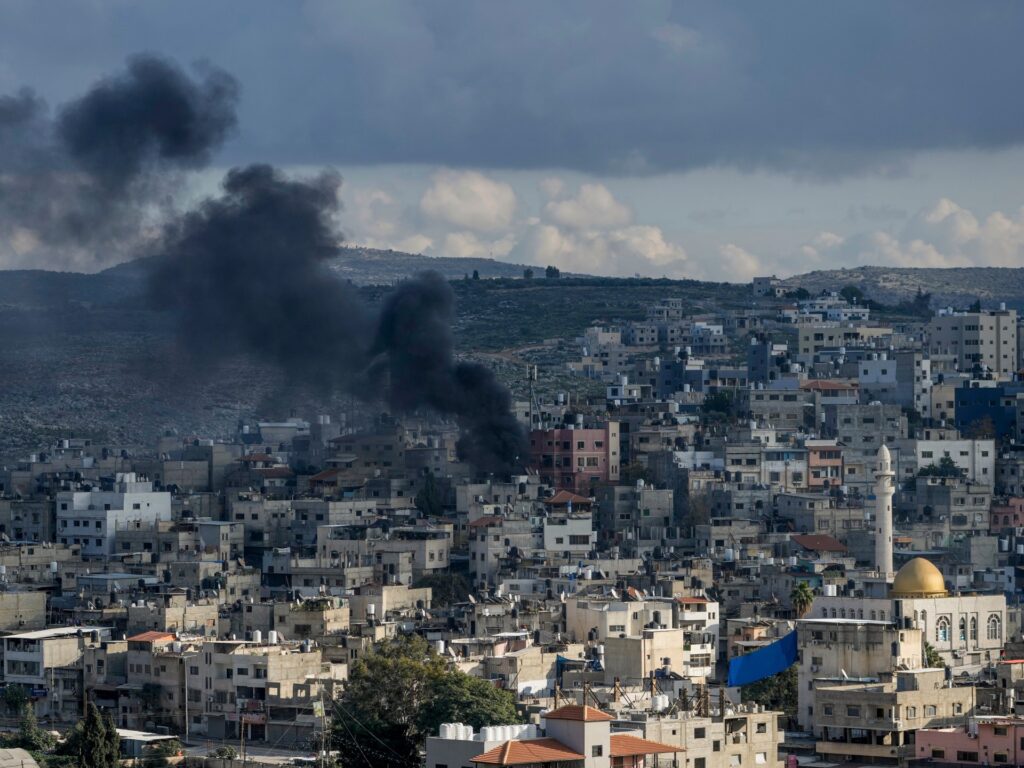
NewsFeed “It’s illegal, and the world should be holding Israel to account.” Israel’s increase in the use of drone warfare in the occupied West Bank is being condemned by lawyers and rights activists. Al Jazeera spoke to lawyer Diana Buttu about the concerns raised and what can be done to hold Israel accountable. Published On 23 Jan 202423 Jan 2024 Adblock test (Why?)