

Al-Shabab captures UN helicopter with 6 aid workers in central Somalia

BREAKINGBREAKING, This is a breaking news story, more details to follow. A helicopter belonging to the United Nations mission in Somalia has been captured by al-Shabab after accidentally landing on Wednesday afternoon in territory held by the armed group, according to multiple local reports. At least six aid workers who were on the plane are now being held by the al-Qaeda-linked armed group which has wreaked violence in the Horn of Africa for decades. The helicopter landed close to Gaboon village in the Galgaduud region due to a technical glitch, according to a UN memo seen by Al Jazeera. A UN official in Mogadishu also confirmed the incident to Al Jazeera. According to the memo, there were nine passengers on the plane including military personnel and a third-party contractor. Six of them were reportedly taken by the group while 2 passengers escaped and remain at large. “All UN flights have been temporarily suspended in the vicinity until further notice,” part of the memo read. Other details including the nationality of those on board, remain unclear. The Somali government is also yet to comment on the reports. More to come… Adblock test (Why?)
Preview: India vs Afghanistan – T20 cricket series
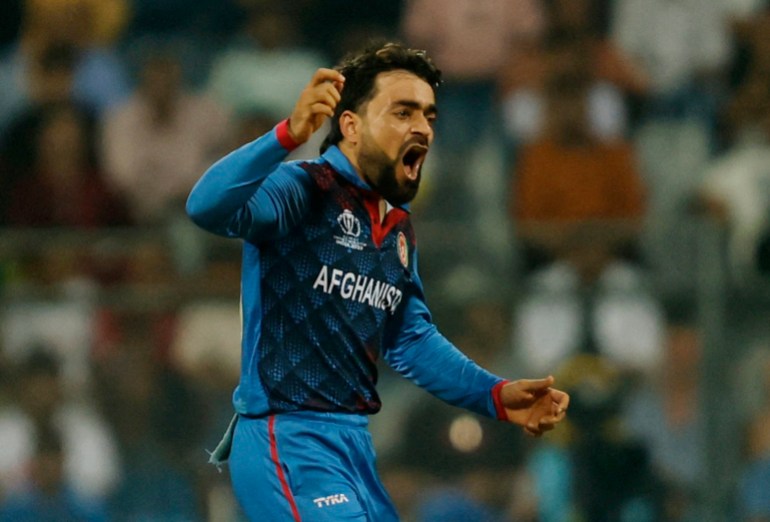
Who: India vs AfghanistanWhen: January 11, 14, 17Where: Mohali, Indore, Bengaluru India will rely on the services of their biggest batting stars Rohit Sharma and Virat Kohli to lead them to victory in a home Twenty20 cricket series against Afghanistan as the 2007 champions build up to the ICC Men’s T20 World Cup in June. However, Kohli will only play the second and third match as he sits out the first one due to “personal reasons,” Indias coach Rahul Dravid said. Sharma will captain the team in the three-match series starting on Thursday, less than two months after leading the cricket-mad nation’s unbeaten home run to the 50-over World Cup final, which they lost to Australia. Middle-order batter Suryakumar Yadav took over captaincy duties in both of India’s T20 series after the one-day international (ODI) World Cup, leading them to a 4-1 home win over Australia and a 1-1 draw in the three-match series away to South Africa, but Sharma will return to the helm after a long break from T20 internationals. Yadav is recovering from ankle surgery and will not be part of the squad, as well as India’s previous T20 captain Hardik Pandya, who continues his recovery from an injury he sustained during the World Cup. Both Sharma and Kohli last played a T20 international match in November 2022, when India lost to England in the semifinals of the T20 World Cup in Australia. Rashid Khan will not take part in the T20 series [File: Francis Mascarenhas/Reuters] Afghanistan will ‘struggle’ without Rashid Khan Meanwhile, Afghanistan will be without their biggest star, Rashid Khan, as he recovers from back surgery that has kept him from action since the World Cup in India. Afghanistan captain Ibrahim Zadran said Khan is “not totally fit” but is travelling with the team. Khan, 25, is one of the most successful Afghan players in T20 cricket. He has previously captained Afghanistan in T20 internationals and has featured in the Indian Premier League since 2017. “Without Rashid, we will struggle because his experience is crucial to all of us, but this is cricket and you need to be ready for any kind of situation,” Zadran added. Afghanistan put up an impressive show in the ODI World Cup, with victories over England, Pakistan, Sri Lanka and the Netherlands. Zadran, a 22-year-old opening batsman, said fans’ raised expectations will motivate the team to elevate their performance. “Not only Afghanistan people are expecting lots of things, but all around the people are expecting [a] lot of things from us nowadays because we played a wonderful World Cup,” he said. Zadran said the team hoped to “play positive cricket and show our skills on the field”. The T20 series opens in Mohali on January 11. The next match will be held in Indore on January 14 and the last one in Bengaluru on January 17. The series will be crucial for both teams as they build up to the 2024 T20 World Cup, which takes place in the West Indies and the United States in June. Head to head Both teams have previously met in five T20 internationals, with India winning four and one ending without a result. Squads India: Rohit Sharma (captain), Shubman Gill, Yashasvi Jaiswal, Virat Kohli, Tilak Varma, Rinku Singh, Jitesh Sharma (wicketkeeper), Sanju Samson (wk), Shivam Dube, Washington Sundar, Axar Patel, Ravi Bishnoi, Kuldeep Yadav, Arshdeep Singh, Avesh Khan, Mukesh Kumar Afghanistan: Ibrahim Zadran (captain), Hazratullah Zazai, Ikram Alikhil (wk), Najibullah Zadran, Rahmanullah Gurbaz (wk), Azmatullah Omarzai, Gulbadin Naib, Karim Janat, Mohammad Nabi, Rahmat Shah, Sharafuddin Ashraf, Fareed Ahmad, Fazalhaq Farooqi, Mohammad Saleem, Mujeeb Ur Rahman, Naveen-ul-Haq, Noor Ahmad, Qais Ahmad Adblock test (Why?)
Poland ex-minister on hunger strike as row between PM and president deepens

The former interior minister and his deputy were arrested at the Presidential Palace for abuse of power. Poland’s former Interior Minister Mariusz Kaminski says he has started a hunger strike as a “political prisoner”, a day after he was arrested and sent to prison on abuse of power charges. Kaminski made the announcement on Wednesday, following his arrest along with his deputy, Maciej Wasik, inside the Presidential Palace in Warsaw. “I declare that I treat my conviction … as an act of political revenge,” Kaminski said in the statement, read by his former deputy Blazej Pobozy at a news conference in front of the prime minister’s office. New Prime Minister Donald Tusk, of the Civic Platform party, has pledged to undo the policies of his predecessors – the government of the nationalist Law and Justice (PiS) party – and punish those accused of wrongdoing during their time in power. Kaminski and Wasik are members of PiS. “As a political prisoner, I started a hunger strike from the first day of my imprisonment,” Kaminski’s statement read. Deputy Justice Minister Maria Ejchart responded to the strike by saying the two former officials are not political prisoners and any prisoner has the right to refuse to eat and drink if they so choose. Police on Tuesday acted on a court order to take Kaminski and Wasik into custody, amid an ongoing dispute between the head of state and the new government. Hundreds of protesters gathered on Tuesday in front of the Presidential Palace in support of the PiS and in front of a police station where they were held. Polish President Andrzej Duda, meanwhile, said on Wednesday he was deeply shaken by the arrests and promised he would work to free them. Duda is closely aligned with PiS and has made clear that he will oppose Tusk’s agenda. Duda’s second and final term runs until mid-2025. However, Duda called for calm and said he would act legally and in line with the constitution. Tusk, a former European Council president, has said he plans to reposition Poland as a leader of the European Union and will remain a loyal ally of the United States and NATO, after eight years of of far-right nationalist rule. He has also pledged to win full Western support for Ukraine in its war against Russia and mediate past hurdles with the EU. Adblock test (Why?)
Man who stabbed SKorean leader didn’t want him to become president: Police
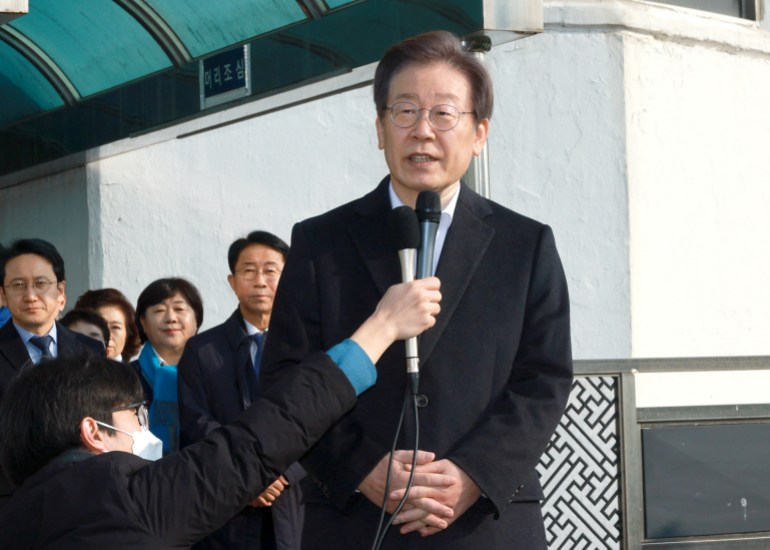
Opposition politician Lee Jae-myung was stabbed in the neck in a near-fatal attack on January 2 in southern Busan city. Police in South Korea have revealed that the man accused of stabbing opposition leader Lee Jae-myung in the neck wanted to kill him to prevent him from becoming the country’s president. “The suspect decided to kill Lee to prevent him from becoming president,” Busan police chief Woo Cheol-mun told reporters on Wednesday. Woo said the suspect said he was unsatisfied with what he believes were authorities’ failures to punish Lee over corruption allegations. On January 2, the 59-year-old leader was brutally attacked in southern Busan city. The assailant, posing as a supporter, pushed through a crowd to reach him and stabbed him in the neck, causing a near-fatal injury to his jugular vein. Following extensive emergency surgery, Lee recovered and was discharged from hospital on Wednesday. South Korea’s opposition Democratic Party leader Lee Jae-myung speaks after being discharged at Seoul National University Hospital [Yonhap via Reuters] Woo said the suspect left an eight-page note, adding that he bought an outdoor knife last April and followed Lee on five events since June. “It’s analysed that the suspect’s subjective political belief led to the extreme crime,” Woo said, noting that police had not found other accomplices. During police questioning, the suspect had no defence lawyer, according to Busan police. ‘End politics of hate’ Police handed over the suspect to prosecutors, who will determine whether to indict him and send him to a trial. If he is indicted but still has no lawyer, a court will appoint one. A Busan court earlier approved an arrest warrant for him on alleged attempted murder. “I feel sorry because I caused concerns to the people,” the suspect said in brief comments to reporters at the Busan prosecutors’ office. Asked by a reporter whether he plotted the attack alone, he said, “Yes. How could I plan this with someone else?” Police declined from identifying him by name and only said that he is about 67. After his discharge from hospital on Wednesday, Lee said he hoped his stabbing would mark the end of the “politics of hate”. “I hope this case, which shocked everyone, can serve as a milestone to end the politics of hate and confrontation and restore proper politics,” Lee told reporters and supporters. South Korean politics have become increasingly polarised and heated recently ahead of a general election in April, with President Yoon Suk-yeol’s conservative People Power Party and Lee’s Democratic Party neck and neck in the polls. Adblock test (Why?)
Ten killed, gangs unleash terror as Ecuador declares state of emergency
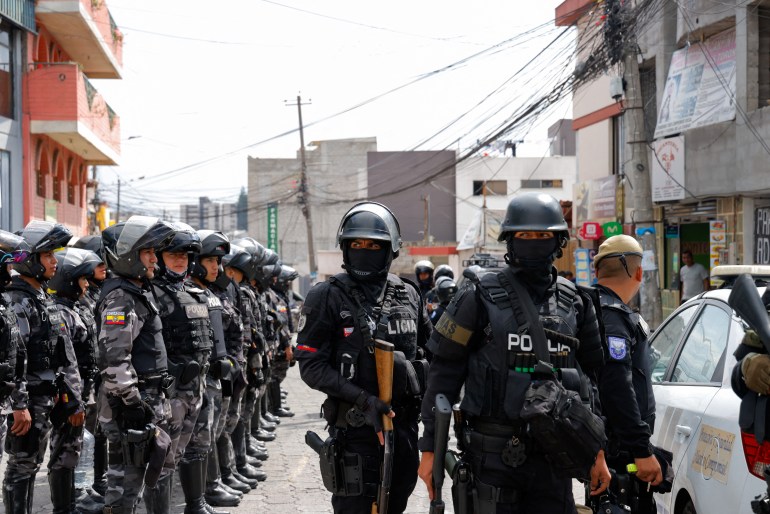
At least 10 people have been killed in Ecuador in a series of attacks blamed on armed gangs, as the country plunges into chaos in what the new president has called an “internal armed conflict”. President Daniel Noboa, 36, declared a 60-day state of emergency and nightly curfew on Monday following the escape of Jose Adolfo Macias, aka “Fito”, the leader of Ecuador’s biggest gang, Los Choneros. Macias was serving a 34-year sentence at the La Regional prison in the port city of Guayaquil. Gangsters unleashed a wave of terror across the country and in several overcrowded prisons after eight people were killed and three were injured in attacks in Guayaquil, while two officers were “viciously murdered by armed criminals” in the nearby town of Nobol, police said late on Tuesday. In retaliation, local gangs took several police officers hostage and set off explosions in several cities. Armed and hooded gang members stormed a studio of state-owned TC Television in Guayaquil with guns and explosives while cameras were rolling on Tuesday. The 13 gunmen were subsequently arrested. Police leave the El Inca prison after a security operation due to riots following the disappearance of Jose Adolfo Macias, alias ‘Fito’, leader of the Los Choneros criminal group, in Quito, Ecuador, on January 8, 2024 [Karen Toro/Reuters] Guayaquil, a coastal city that is Ecuador’s largest, is considered the country’s most dangerous, with its ports a hub for drug smuggling. “Authorities say there have been at least 23 different violent incidents in eight provinces, including a number of car bombs going off,” Al Jazeera’s Alessandro Rampietti reported from the capital, Quito. “A number of police cars were incinerated and at least seven police officers were kidnapped by gang members,” he added. This is the first big test for Noboa, a businessman who took office in November promising to crack down on soaring levels of violence in the South American country. “I have just signed a state of emergency decree so that the armed forces have all the political and legal support for their actions,” Noboa said. “The time is over when drug trafficking convicts, hitmen and organised crime dictate to the government what to do.” Violent deaths nationally rose to 8,008 in 2023, the government has said, nearly double the 2022 figure of more than 4,500. Drug violence has taken a heavy toll on the country since it became a key stop on the United States and Europe-bound cocaine trade. The murder rate quadrupled from 2018 to 2022 and a record 200 tonnes of drugs were seized last year. Security in Ecuador has been worsening since the COVID-19 pandemic, which also battered the economy. Ecuadorian political analyst Adrian Perez Salazar says structural problems have led to the country’s problems with gangs and insecurity. “The causes are multiple. What is particularly important to emphasise is that we are a dollarised economy, and so naturally it’s much easier for international crime to launder money in a place like Ecuador,” he told Al Jazeera. “This is something that has been building up for many years as policies that were very lax in terms of immigration, very lax in terms of allowing gang leaders to establish dominance in areas such as prisons … and now in the last couple of years we are seeing the results of these structural problems being exacerbated.” ‘Wave of violence’ Shortly after the attack on the TV station, Noboa in a decree said he recognised an “internal armed conflict” was ongoing in Ecuador, and identified several criminal gangs as terrorist groups and military targets – including Los Choneros. The decree ordered the armed forces to neutralise the groups. “Today’s events show that the actions and decisions taken by the national government are gravely affecting criminal structures, and as an answer, they have created a wave of violence to frighten the populace,” Admiral Jaime Vela, head of the joint command of the armed forces, said on Tuesday, after a security meeting with Noboa and other officials. The unrest led Peru’s government to declare an emergency along its border with Ecuador, while Brazil, Colombia and Chile expressed their support for the Ecuadorean government. Meanwhile, the Chinese embassy and consulates general in Ecuador will be temporarily closed from January 10 until further notice, according to a statement on Wednesday. “The reopening to the public will be announced in due course,” the embassy said in a statement shared on Chinese social media sites. In a post on X, the top US diplomat for Latin America Brian Nichols said Washington was “extremely concerned” by the uptick in violence, adding that the US was ready to assist Noboa’s administration. Adblock test (Why?)
Tshering Tobgay set to return as Bhutan PM after liberal PDP wins elections

Election commission says People’s Democratic Party, led by Tobgay, won 30 seats in the 47-member parliament. Bhutan’s liberal People’s Democratic Party (PDP) is set to form a new government after winning in parliamentary elections, according to results from the country’s electoral body. PDP leader Tshering Tobgay, 58, who was prime minister from 2013 to 2018, is set to become the new premier for a second five-year term. The Election Commission of Bhutan (ECB) released its provisional results on Wednesday, a day after the tiny Himalayan kingdom held elections, which showed the PDP winning its fourth free vote since democratic elections began 15 years ago. The PDP won 30 seats in the 47-member parliament, or National Assembly, with the rest of the seats going to the Bhutan Tendrel Party (BTP), according to the early tally by the ECB. The PDP was formed in 2007 by Tobgay. Bhutanese people in traditional attire queue up to cast their votes in the national elections in Deothang, Bhutan [Anupam Nath/AP] Tobgay campaigned on the promise of boosting the economy and reducing unemployment rates, despite the country’s constitutionally enshrined philosophy of measuring success in terms of “Gross National Happiness” instead of gross domestic product (GDP). Voter turnout was at 65.6 percent, with 326,775 people casting their ballot from the 498,135 eligible registered voters, according to the ECB. They chose members of parliament from a pool of 94 candidates presented by the BTP and the PDP. A first round of voting in November eliminated three other parties, including the governing centre-left Druk Nyamrup Tshogpa party. The picturesque nation nestled between China and India is still struggling to revive its aid and tourism dependent economy following the COVID-19 pandemic. India is Bhutan’s biggest donor, and while the Himalayan nation has no ties with China, it is in talks with Beijing to resolve border disputes. The negotiations are closely watched by India, which has its own border dispute with China. “Heartiest congratulations to my friend @tsheringtobgay and the People’s Democratic Party for winning the parliamentary elections in Bhutan,” Indian Prime Minister Narendra Modi said in a post on X. “Look forward to working together again to further strengthen our unique ties of friendship and cooperation.” Heartiest congratulations to my friend @tsheringtobgay and the People’s Democratic Party for winning the parliamentary elections in Bhutan. Look forward to working together again to further strengthen our unique ties of friendship and cooperation. — Narendra Modi (@narendramodi) January 9, 2024 In 2008, the country underwent a transformation from a traditional monarchy to a parliamentary form of government. Adblock test (Why?)
Can President Boakai deliver war crimes justice in Liberia?

Joseph Boakai, who secured a narrow victory against incumbent George Weah in a November run-off election, is set to be inaugurated as Liberia’s new president on January 22. The 78-year-old political veteran won the tightly contested race on a promise to address corruption, work towards societal “peace and reconciliation” and deliver justice to the many victims of Liberia’s civil wars (in 1989-1997 and 1999-2003), which killed more than 200,000 people and displaced millions of others. As two decades have passed since the end of the latest round of conflict, and as many accused of war crimes and crimes against humanity are now in their old age, Boakai’s upcoming six-year term as president may be Liberia’s last window for meaningful war crimes accountability and justice. The task at the hands of the new president, however, is neither straightforward nor easy. In the past 20 years, several attempts have been made to try and hold perpetrators of war crimes accountable, with little success. In 2005, following in the footsteps of neighbouring Sierra Leone, which was recovering from its own conflict (a conflict that was very much intertwined with that of Liberia), the Liberian parliament enacted a Truth and Reconciliation Commission (TRC). Four years later, in 2009, the TRC released its final recommendations, including reparations to victims of the civil wars, reforms to prevent atrocities from reoccurring, the establishment of a special court for war crimes, and the banning of certain implicated individuals from holding office until their names are cleared. The commission’s list of persons to be “barred from holding public offices” for “being associated with former warring factions” was extensive and even included then-President Ellen Johnson-Sirleaf. However, most of TRC’s ambitious recommendations, including the suggested political bans on prominent individuals and establishment of a war crimes tribunal, remain unimplemented to this day. Among other factors, this is largely because civil war actors who attained political power after the war have been using their positions to sabotage attempts at accountability and justice within Liberia. This is why, over the years, most survivors of the civil war who are looking for judicial justice have had to turn to foreign courts, which have on occasion tried former warlords who settled outside Liberia after the war. In certain cases, these warlords were tried directly for the crimes they committed in Liberia under the principle of universal jurisdiction. In others, they were prosecuted for “immigration fraud” for not declaring their history as a warlord during the immigration process. However, foreign courts managed to try only a small number of individuals to date, and in most cases, survivors of the crimes perpetrated by these individuals who remain in Liberia did not get to follow, and thus meaningfully contribute to and benefit from, these prosecutions. President-elect Boakai, who hails from Lofa, one of the counties most affected by the horrors of the civil war, has promised to end this reliance on foreign courts and bring justice and accountability back home by establishing a special war crimes tribunal in Liberia. Nevertheless, many are now questioning the reliability of this commitment because of Boakai’s all-important political alliance with former strongman Prince Yormie Johnson, who is the senator for Liberia’s second-most populous county, Nimba. Senator Johnson, whose support helped guarantee Boakai’s electoral victory, has always been vocal about his opposition to the establishment of a special war crimes tribunal. The only obstacle in front of the establishment of a tribunal is not Boakai’s problematic political alliances, either. In the past 20 years, Liberian authorities did very little to document war crimes, record eyewitness testimonies, and generally preserve evidence about the war. As a result, proving war crimes committed during Liberia’s civil wars has become harder and harder over the years. This lack of adequate record-keeping meant that trials of Liberian warlords taking place in other countries had to rely extensively on witness testimony, which made it increasingly difficult to secure convictions. After so many years, the witnesses to civil war atrocities may find it hard to accurately recall what they have seen and experienced during the war, as evidenced in some foreign trials. . This means if Boakai does not institute a war crimes tribunal now, and ensure that testimony from all living witnesses is securely recorded, Liberia may never get a chance to meaningfully prosecute war crimes committed during its bloody civil wars. While it remains uncertain whether Boakai would be able to hold his campaign promise of establishing a special tribunal, and whether such a tribunal would be successful in convicting perpetrators after all these years, there are other, much more straightforward steps the new president could take to deliver justice to survivors, encourage reconciliation, and increase social harmony. First, he could expand the scope of and increase funding for the few existing community justice and reconciliation mechanisms in the country, such as the Palava Hut Program. This programme, outlined in TRC’s final report in 2009, brings victims and perpetrators of lesser war-related crimes – such as arson, assault, forced displacement, forced labour, destruction, theft of properties, and looting – together in a safe space and allows for truth-telling, forgiveness, and reconciliation under the guidance of traditional elders. Currently, the programme visits only a few towns per year and help a very limited number of people. According to the United Nations, until August 2023, Liberia’s Palava Hut Program resolved only 277 cases that involved only 500 people inclusive of victims and perpetrators. This is despite the fact that hearings started in 2016. With many perpetrators living alongside victims within communities, the scaling up of the Palava Hut Program could deliver justice and foster forgiveness and reconciliation for lesser crimes of the civil wars at a community level. The non-retributive nature of this community justice mechanism also means that it can help address the issue of crimes committed by child soldiers, who cannot be held fully accountable and punished for the heinous acts they carried out under duress and often under the influence of drugs they were forced to
How counsellor-grandmothers of Zimbabwe are averting a mental health crisis
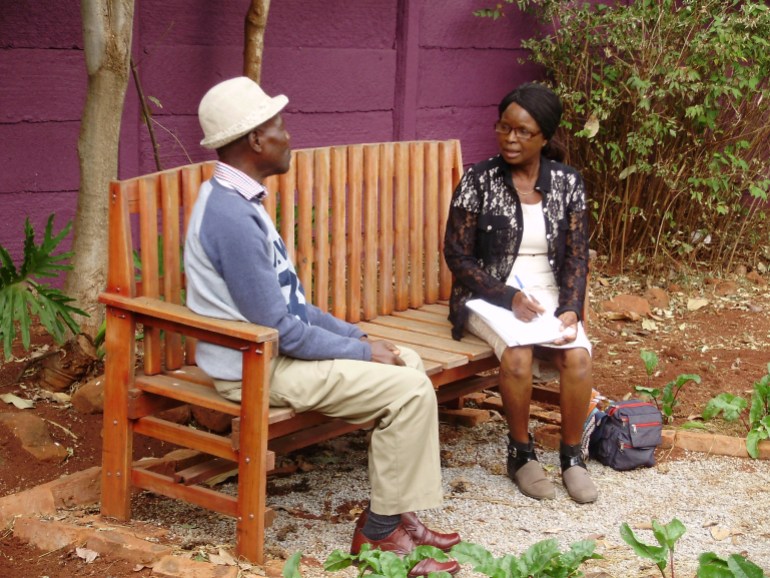
Harare, Zimbabwe – In Zimbabwe, a country of 15 million people, there are fewer than 20 psychiatrists. And mental health issues are rife, given a litany of trauma unaddressed for decades: first the horrors of British colonialism and the liberation struggle and then the Zimbabwean army’s killing of thousands of people in the southwestern region of Matabeleland for allegedly supporting ex-guerrillas who turned on the government after independence. Even today, the impact of socioeconomic hardships resulting from a faltering economy, high unemployment and the highest inflation rate in the world along with an ailing healthcare system have made the Southern African country fertile ground for depression, post-traumatic stress disorder, domestic violence and suicide. According to the World Health Organization (WHO), Zimbabwe has one of the highest suicide rates in Africa. Consequently, most people living with mental health issues, especially those who cannot afford the steep psychiatrist fees, do not get any help. It is against this backdrop that psychiatrist Dr Dixon Chibanda came up with the idea of training lay health workers to counsel those struggling with mental health problems. Two unrelated, tragic events prodded him into action. The first was the 2004 suicide of Erica, a patient he had been treating for three years, after she failed to raise the bus fare to travel to Harare for a follow-up session at the government hospital where he worked. The fare was less than $20. ”I was stunned, heartbroken and felt guilty when her mother called me to say she had taken her own life,” Chibanda says. A few months later, the government razed tens of thousands of unauthorised residential properties across the country. The exercise, called Murambatsvina, or Reject the Filth, created at least 700,000 homeless people. This inevitably led to an increase in the number of people in need of mental health support. After the much-criticized home demolitions, described by the United Nations as a violation of international law, the authorities decided there was a need for some psychological intervention. “But there was no money or trained personnel to implement a programme. Nurses and doctors in any primary health facility are always overworked,” an exasperated Chibanda says. A grandmother sits with a male patient during a Friendship Bench session [Ish Mafundikwa/Al Jazeera] The rise of the grandmothers The only people available were elderly female community health workers at Harare City Council clinics who were unskilled for psychosocial work. So Chibanda worked with the Ministry of Health and Child Care and the University of Zimbabwe to develop a pilot programme in 2006 that trained 14 lay health workers, popularly referred to as grandmothers, in evidence-based problem-solving therapy. The grandmothers on average are 50 years of age. “Grandmothers are rooted in communities, and they are the custodians of our culture and wisdom and already play a pivotal role in problem-solving in communities,” Chibanda says. Grandfathers have signed up as counsellors too, but he says they lack the commitment of the grandmothers. “They are unreliable and often leave because they have to get jobs or do other things.” The training aimed to enhance the grandmothers’ listening skills, empathy and abilities to help patients gain the confidence to find solutions to their problems. It equipped them with the tools to counsel patients with common mental health disorders such as depression and anxiety. Those with more severe problems are referred to mental health professionals. The initiative became known as The Friendship Bench because the counselling happens on made-for-purpose benches. One of the thousands of people who have benefitted from The Friendship Bench is Blessing (not her real name), a 45-year-old mother of two who started going to the bench in 2018. “I was down because my husband, who had relocated to South Africa to find a job, had taken another wife and had stopped sending money home,” she says. She is also HIV-positive. “I was reluctant to engage the grandmother who approached me when I went to the local clinic for treatment because I feared they would spread the word that I was on antiretrovirals.” “But I felt better after three sessions. They pointed me in the right direction. The grannies are now my friends.” Some of the HelpAge USA counsellors working on a similar Friendship Bench initiative [Courtesy of HelpAge USA] How it works The grandmothers make it clear to whomever they are counselling that The Friendship Bench does not give cash handouts. What they do is discuss possible solutions with their clients. ”Sometimes the solution is as easy as getting a loan from a relative or a friend, but because the client feels overwhelmed, they cannot think about those options,” says grandmother Ngabu, who counselled Blessing. She says it usually takes three or four sessions for a client to start to see some light. Blessing had a vending hustle going, but it was not making much money because she did not have the capital to order enough stock. That changed when 59-year-old Ngabu encouraged her to join a savings club in which women get together and save an agreed amount every week or month, and one of them gets paid out every month or week. “My business has grown, and I make enough to send my children to school,” Blessing tells Al Jazeera. “The oldest, a 22-year-old young man, finished high school and is now a plumbing apprentice. The girl, now 18, is in her final year of high school and wants to be a lawyer.” Her husband has stopped communicating with the family, but Blessing is not bothered, “My biggest worry was educating my children,” she says, “I am managing that, and we are happy.” Like many others in Zimbabwe, Blessing was unaware that she was suffering from depression. “I feared I was going insane,” she says. The Friendship Bench grandmother who approached her was trained to identify patients who came to the clinic with other ailments but also had mental health issues. The minute Blessing trusted the grandmother, she went through a process several others had gone through and
Putin critic Navalny says he’s in punishment cell at Russian Arctic prison

‘Polar Wolf’ colony is among the harshest in Russia’s prison system, whose inmates have been convicted for grave crimes. Jailed Russian opposition leader Alexey Navalny says he has been isolated in a small punishment cell for an alleged minor breach at a remote prison colony north of the Arctic Circle. “I got seven days in SHIZO,” Navalny said, referring to the punishment cell where he has to serve a week. Prison officials accused him of refusing to “introduce himself in line with protocol”, the Kremlin critic posted on Tuesday on X, with his account routinely updated via his allies. Navalny was recently tracked to the IK-3 penal colony in Kharp in the Yamal-Nenets region, about 1,900km (1,200 miles) northeast of Moscow, after he went missing in early December. The “special regime” or “Polar Wolf” colony is among the harshest in Russia’s prison system, located in a place with severe winters. Most inmates have been convicted of grave crimes. Kharp is about 100km (60 miles) from Vorkuta, whose coalmines were part of the Soviet gulag camp system. In his typical sardonic tone, Navalny said, the temperature of his prison yard walks had “never been colder” than -32 degrees Celsius (-25 degrees Fahrenheit), adding that “even at that temperature you can walk for more than half an hour, but only if you have time to grow a new nose, ears, and fingers”. This marks the 24th time in SHIZO for the opponent of President Vladimir Putin. His allies say Navalny has spent a total of 273 days under such conditions. “The idea that Putin is satisfied with the fact that he put me in a hut in the far north and that I am no longer being tortured in SHIZO was not only cowardly but also naive,” he posted. He shared a photo of the small space in his cell where he takes his daily walks: “11 steps from the wall and 3 to the wall — not much to walk, but at least there’s something, so I go for a walk.” 5/10 In the photo below, you can see my walking yard. 11 steps from the wall and 3 to the wall — not much to walk, but at least there’s something, so I go for a walk. pic.twitter.com/8VCUVEfbaJ — Alexey Navalny (@navalny) January 9, 2024 Navalny has been imprisoned since January 2021 when he returned to Moscow after recovering in Germany from nerve agent poisoning that he blamed on the Kremlin. Before he was arrested, he led massive campaigns against corruption and organised major anti-Kremlin protests. Jailed on charges of extremism, he saw his sentence extended to 19 years in 2023. From his cramped and freezing cell, Navalny mentioned a scene in the 2015 film, The Revenant, in which Leonardo DiCaprio shelters in the carcass of a horse. “I don’t think that would have worked here. A dead horse would freeze in 15 minutes,” Navalny said. “We need an elephant here, a hot elephant, a fried one.” “But where am I going to get a hot, roasted elephant in Yamal, especially at 6:30 in the morning? So I will continue to freeze,” he posted. Navalny’s chief strategist, Leonid Volkov, posted on X recently: “It is almost impossible to get to this colony; it is almost impossible to even send letters there. This is the highest possible level of isolation from the world.” Adblock test (Why?)
As West condemns Bangladesh election, China and Russia embrace Dhaka

Dhaka, Bangladesh — Hours after Bangladesh’s ruling Awami League was declared the landslide winner in Sunday’s election, which the opposition had boycotted, Prime Minister Sheikh Hasina hosted a queue of foreign diplomats, each coming to congratulate her. The envoys of India, the Philippines, Singapore and other nations were there. Also visiting the prime minister were the ambassadors of Russia and China. In Washington and London, meanwhile, the governments of the United Kingdom and the United States criticised the election as illegitimate. US State Department spokesperson Matthew Miller, in a statement, said that Washington believed the voting process was “not free and fair, and we regret that not all parties participated”. The UK criticised what it described as “acts of intimidation and violence” during the election. Bangladesh’s response? “We’re not bothered,” foreign minister AK Abdul Momen said on Tuesday, when asked about the comments from the US and the UK. That contrast between the West’s condemnation and the welcoming embrace of China and Russia is a window into potentially dramatic foreign policy consequences of Hasina’s return to power, say political analysts and economists. For the West, Hasina’s increasing ties with China and Russia, on top of Bangladesh’s rejection of its concerns over the election, could poison ties with Dhaka. But that in turn could end up pushing Dhaka even closer to Beijing and Moscow. Dhaka-based political analyst Zahed Ur Rahman said he believes there is a likelihood of the US imposing visa restrictions and targeted sanctions against individuals who played key roles in the conduct of the election, which independent monitors have criticised for violence and intimidation against the ruling party’s political opponents. In August, the US had declared a first set of constraints on visas for some Bangladeshi officials. But doing so, he said, could jeopardise US plans to rope Bangladesh into its strategy to balance the rise of China, especially with the deepening economic ties between Dhaka and Beijing. China has been Bangladesh’s top trading partner for more than a decade – a period during which Hasina has ruled uninterrupted. “The new government will find it very challenging to work deeply with the US’s Indo-Pacific strategy that actually is a policy to contain China,” Rahman said. Russia, meanwhile, has supported Bangladesh in opening the country’s first nuclear power plant. Dhaka received the first supply of uranium from Moscow in October. Russia is also a major supplier of three essential commodities – fuel, food grains and fertilisers – to Bangladesh at relatively affordable prices. “If the West led by the US goes very coercive with the new government, then Bangladesh ties with Russia will grow fast,” Rahman said. That geopolitical calculus poses challenges for the West, said experts. It will be difficult for the US and its allies to go about business as usual with Bangladesh. But it is unclear how far they might go in trying to hurt Hasina’s government. The West “will face a serious dilemma,” said Ali Riaz, professor and political scientist at Illinois State University. Yet, Bangladesh, too, faces tough choices. The country’s apparel industry, which employs four million workers, clocked exports worth $47bn in 2023 – 84 percent of the country’s total exports. The US is the single largest export destination for Bangladeshi garments. However, recently, eight US Congress members wrote to the American Apparel and Footwear Association to pressure Dhaka on fair wages and labour rights in Bangladesh. Several workers have been killed in clashes with security forces during street protests seeking a raise in minimum wages. Bangladesh’s embassy in Washington has cautioned its government in Dhaka that the country’s ready-made garments sector could become a target of Western measures. It’s a concern that economist Mustafizur Rahman shares. “If the US and the EU take any punitive measure in the form of additional tariff or sanctions, then there will of course be an adverse impact,” Rahman, a distinguished fellow at the Dhaka-based Centre for Policy Dialogue, told Al Jazeera. Bangladesh’s dependence on garment exports makes it particularly vulnerable to any such targeting, he said. And any resulting economic turmoil would only push Bangladesh even further towards China. “It is not because the Western countries may either put more pressure or recalibrate its policy, but because the ongoing economic crisis will require deep-pocket support and there will be increasing ideological affinity between these two countries’ leadership,” said Riaz at Illinois State University. In Dhaka, Awami League spokesperson Mahbubul Alam Hanif insisted that Sunday’s election would not affect the government’s relations with the West. “We have development partners and they often give suggestions, including to strengthen democracy, but I don’t think Sunday’s election affects US-Bangladesh ties,” Hanif said. How the re-elected Awami League government handles politics post-election could also determine the pressure on the US and its allies to act against Bangladesh. Since mid-August last year, more than 27,200 members of the main opposition Bangladesh Nationalist Party have been imprisoned and at least 104,000 have been sued on different charges, according to BNP figures. At least 27 BNP men also have been killed in political violence since October. With a supermajority in parliament – the Awami League won 222 of 300 seats, and many of the more than 60 independents who won are former members of the ruling party who were allegedly asked to contest to give a veneer of a fight – opposition leaders expect the government to target them even more. BNP leader Kayser Kamal said the “illegitimate” government would intensify its crackdown on opponents to divert attention from the “sham” election. Riaz agreed. “Bangladesh is becoming a de facto one-party state,” he said. The government, he said, would “adopt more repressive measures, try to decimate any kind of opposition through legal and extra-legal measures”. Adblock test (Why?)