

Is Democratic Republic of Congo on the path to renewed violence?
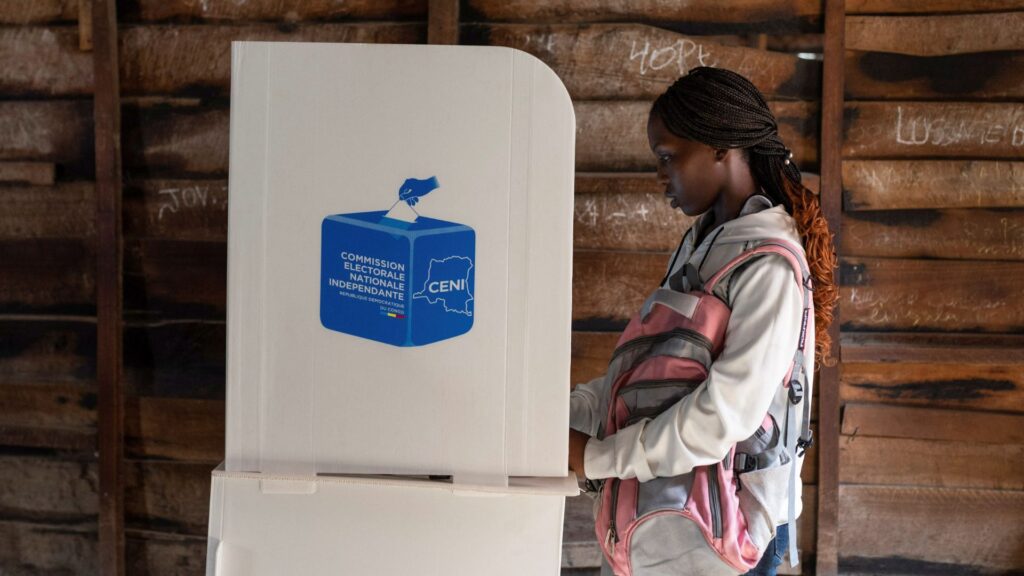
Opposition wants the presidential vote annulled and is planning mass protests. Almost a week on from elections in Democratic Republic of Congo (DRC), voters are waiting anxiously for the results. The presidential poll was marred by logistical problems and credibility concerns. The Electoral Commission says early results show President Felix Tshisekedi is in the lead. But opposition candidates are complaining of irregularities and ballot fraud. They want the vote annulled and are calling for protests this week. What happens if it’s not? Is this a recipe for yet another cycle of violence and turmoil in DRC? Presenter: Dareen Abughaida Guests: Patrick Muyaya – Democratic Republic of Congo government spokesperson Marie-Roger Biloa – African affairs analyst and editor of Africa International Media Group Jason Stearns – Founder and strategic adviser for the Congo Research Group at New York University Adblock test (Why?)
Ukraine says at least one killed in Russian attack on Kherson rail station
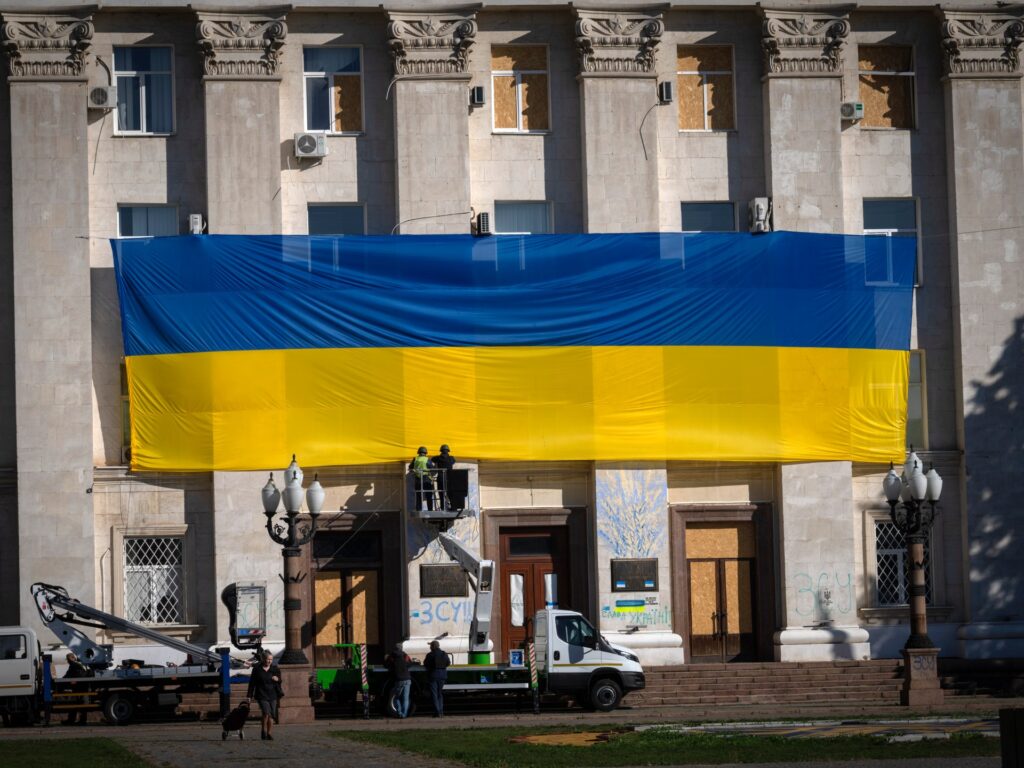
Ukrainian authorities say Russian shelling of a train station kills a police officer and injures four others. Ukrainian officials say at least one person has been killed and four others injured in a Russian attack on a rail station in the southern city of Kherson, as Russia’s invasion continues to take a heavy toll on Ukrainian civilians. Ukrainian Interior Minister Ihor Klymenk said the Russian shelling struck the rail station on Tuesday as about 140 people there were preparing for an evacuation, killing a policeman. “Thanks to the clear actions of the police, everyone was successfully taken to safe places,” Klymenko said on Telegram. “Unfortunately, a police lieutenant from the Kirovohrad region lost his life due to the shelling … Two more police officers are in the hospital with shrapnel wounds.” The city was captured by Russian forces after they first invaded Ukraine in February 2022, but were pushed out of the city by a Ukrainian counteroffensive in November of the same year. But Russian forces have continued to bombard the city. Ukrainian President Volodymyr Zelenskyy reported the shelling attack earlier on Tuesday, and two civilians are being treated at a hospital for shrapnel wounds alongside the two wounded police officers. The Ukrainian railway company Ukrzaliznytsya said in a message on Telegram that a train and the station were damaged but that “the situation is under control and the railway is ready to continue functioning.” Roman Mrochko, the head of the Kherson military administration, had said earlier on Tuesday that the city has been targeted for the last day by persistent Russian attacks. The war in Ukraine has continued to kill and injure many civilians, and the conflict has shown few signs of abating soon. Ukrainian fighters struck a Russian ship in the Black Sea on Tuesday, boosting the morale of Ukrainian forces that have faced difficult questions after a much-anticipated counteroffensive failed to win back substantial territory from Russia over the summer. “This latest destruction of Putin’s navy demonstrates that those who believe there’s a stalemate in the Ukraine war are wrong!” UK Defence Secretary Grant Shapps wrote in a post on X, formerly known as Twitter. Adblock test (Why?)
Gaza’s orphans: Pain without borders
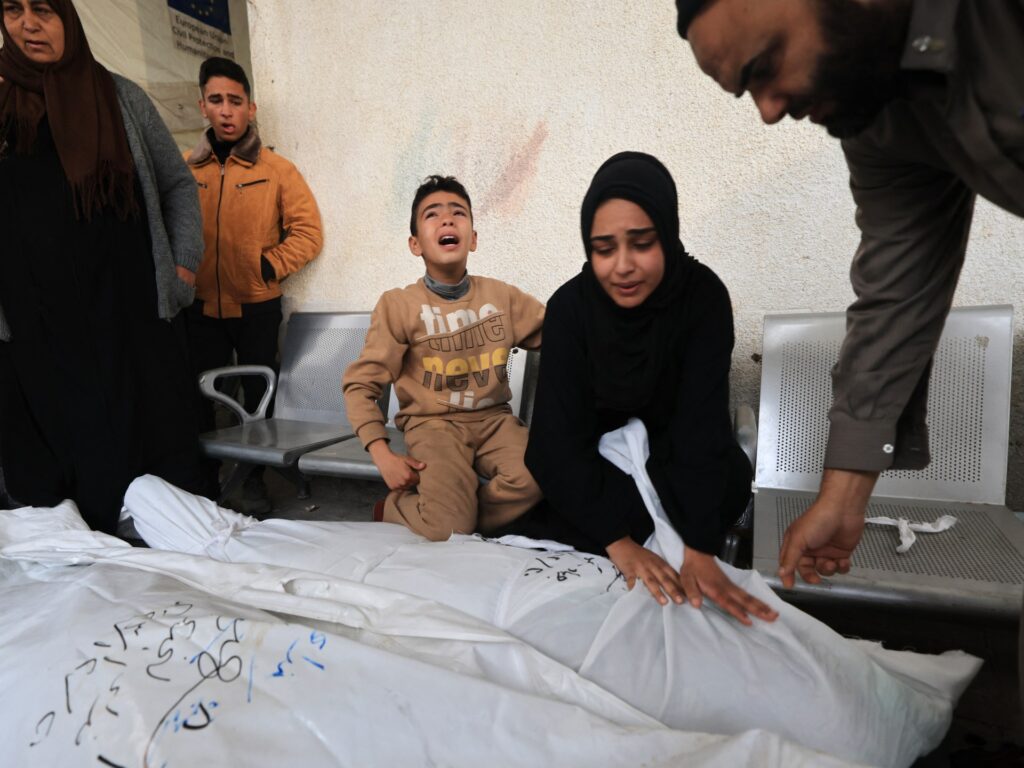
In Jabalia refugee camp, north of Gaza, the cries of an 11-year-old boy named Ahmad pierce the air. “I want my Baba, my Baba, Baba,” Ahmad sobs. His plea echoes through the camp, exposing the profound void left by the murder of his father at the hands of the Israeli occupation forces. “Where are you, Baba? Why did they murder you? What crime did he commit?” People attempt to console the grief-stricken boy but he is beyond consolation: “He promised me to stay alive and not to go. I’m tired. Leave me alone.” Meanwhile, a few thousand kilometres away in Belgium, another Palestinian boy, 15-year-old Zain, mourns the loss of his father, Al Jazeera cameraman Samer Abudaqa. Zain recounts the tragedy that unfolded on December 15, revealing the cruelty of his father’s murder by an Israeli drone. After being struck by shrapnel, Samer bled to death for five hours on the grounds of Farhanah, the high school I went to in Khan Younis. Three members of an ambulance team, including my friend, Rami Budeir, who attempted to rescue Samer, were also targeted and killed. The enormity of the atrocity is etched into Zain’s tearful eyes and face as he speaks about his father. He pledges to pray for him every day. His voice breaks as he sings a song he had written for his dad. “My heart is missing you. Separation tortures me. My heart, after you, is lost, and bitterness is the taste in my mouth.” Zain’s words in Belgium, Ahmad’s cries in Jabaliia reach me here in Edmonton, Canada. I find myself sobbing, unable to shake the images of their pain or grapple with the questions they evoke. My heart has shattered a thousand times in the past 80 days and it breaks once more. I am unable to escape the thoughts of these children, enduring the lasting trauma of being intentionally made orphans by a genocidal army. What makes the pain all the more unbearable is that Zain is the same age as my own son, Aziz, and strikingly resembles him in every aspect – facial features, height, body, voice, and even the choices of clothes and hairstyle. These uncanny similarities intensify the deep sorrow I feel towards Zain and the hundreds of thousands of children who have lost parents, relatives and friends in Gaza. As I think of Zain and his father who was targeted while wearing a press vest, my thoughts wander to another Palestinian orphan, 12-year-old Donia Abu Muhsen. Donia was recovering in Nasser hospital in Khan Younis, when Samer’s body was brought in and prepared for funeral. Israeli bombardment of a house where Donia and her family were taking shelter had killed her parents and two siblings and smashed her leg which necessitated an amputation. When Donia looks at the camera in a video shot a few days before her death, there has a faint smile on her face. Her will to live and dream are strong. She says she wants to study and become a doctor. “We are alone now without [my family]. I was very much connected to [them]. But I must continue,” she says. But the Israeli occupation forces did not allow her to. Two days after they murdered Samer, they killed Donia’s dream. They shelled Nasser hospital, murdering the orphaned girl in her hospital bed. I wonder about other children who survive but their hearts and bodies are broken, with no one left of their extended families to take care of them. Another young orphan, perhaps Donia’s age, shares her harrowing story in another video. She recounts the loss of 70 people, including her parents, siblings, grandparents, aunts, and uncles, while seeking refuge in a chalet on the beach after losing their home. Only she and her five-year-old brother Kanan survived. Unable to walk and in urgent need of an operation, she prays for the opening of the Rafah crossing, hoping for a chance to leave. She is one of the 55,000 wounded people who are currently abandoned by the world scattered across Gaza where a man-made medical collapse is taking place. Tearfully, and in a voice and with a facial expression that could break the hardest rock, the girl says, “If the border doesn’t open within 48 hours, I won’t be able to walk again. I’m in great pain, and I miss walking and my parents deeply.” In the face of the horror and pain the children of Gaza are experiencing, the cry for justice is not a mere plea, it is a global call to humanity, to its collective conscience, if it still exists. This comes at a time, when the powers that be, led by America, openly endorse this genocide and stand in the way of putting an end to it. They are making sure that more children will be orphaned, starved, made homeless, bombarded day and night, and denied access to healthcare, education, and parental love and care. Yet, there is also a growing chorus of voices of peace and hope as well. Russian-American activist Masha Gessen, upon receiving the Hannah Arendt Prize, highlighted the critical opportunity the world still possesses to intervene in Gaza. Gessen emphasised, “The biggest difference between Gaza and the Jewish ghettos in Nazi-occupied Europe is that many Gazans, most Gazans are still alive, and the world still has an opportunity to do something about it.” Though we couldn’t save Donia and the parents of Zain, Ahmad and the little orphaned girl, there remains a chance to save those who are still alive in Gaza. We need ceasefire now! The views expressed in this article are the author’s own and do not necessarily reflect Al Jazeera’s editorial stance. Adblock test (Why?)
New constitution, old playbook: Chad’s Deby continues power play in Sahel
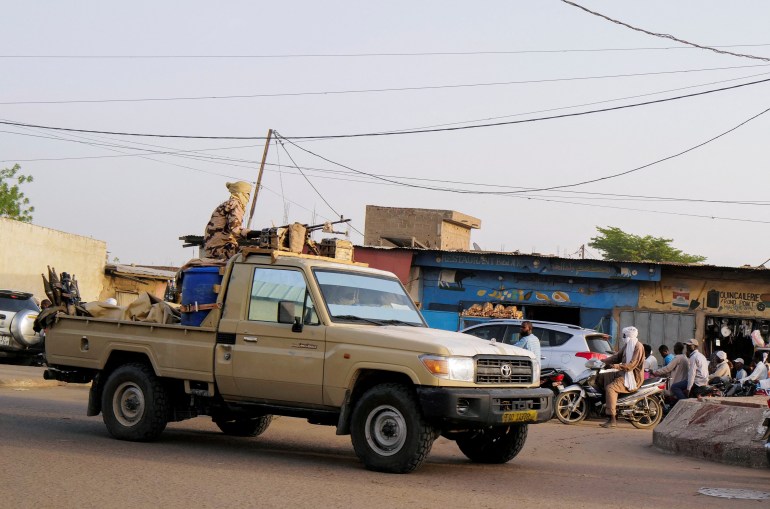
Millions of Chadians voted for a controversial new draft constitution last week, despite resistance from critics of the military government which accuse it of perpetuating itself in power. According to the National Commission Charged with the Organisation of the Constitutional Referendum (CONOREC), 86 percent of voters chose “yes”. The turnout for the December 17 referendum, in which 8 million people were eligible to vote, was 64 percent. The referendum is the second part of a three-step process for the return of the landlocked Central African country to democratic rule following the death of former long-term ruler Idriss Deby Itno who was succeeded by his son Mahmat Idriss Deby in 2021. The new constitution, like the one it replaced, entrenches a unitary system that has been in place since independence in 1960. Ahead of the referendum, opposition parties called for an outright boycott of the process, with a major point being the campaign for a federal system instead, to devolve powers from the centre. One party, Les Transformateurs, claimed removing the unitary system would allow for progressive democracy and spur economic development. But those in favour of retaining the old system – including supporters of the transitional government – say a federalist system will lead to disunity. Protests by the party led to its ban and mass arrest of its members. The transitional government made some concessions by inserting the creation of local governments and local legislatures in the new draft, with the people allowed to vote for their representatives. But the opposition said this was not enough. Experts say the referendum committee comprised mostly Deby allies and offered the opposition no real chance of success or a compromise. When the vote happened last Sunday, the options were simply “yes” or “no” for a unitary constitution. And the debate that began before the referendum, has continued within and outside the country. “When you look at how the referendum process has been conducted, there are a lot of signs that indicate the transition authority intends to keep hold on power as this has always been the case,” Remadji Hoinathy, a Chad-based expert at the Institute of Security Studies, told Al Jazeera. ‘Long-term play’ Upon assumption of power in an April 2021 coup, Deby, now 38, promised to return to democracy within 18 months. After that timeline expired, a national dialogue committee gave the military an extra 24 months and excised a constitutional provision precluding Deby’s participation in the 2024 elections. In October 2022, opposition parties and pro-democracy protesters took to the streets to demand elections but were shot at by the military. Dozens of people were killed, with several others wounded and arrested. Deby has not yet said if he will run or not, but that remains a possibility. Despite the Deby dynasty being in power for over three decades, there has not been a corresponding economic development in the Central African nation. According to the World Bank, extreme poverty has been on the rise yearly and 42.3 percent of the country’s 18 million people live below the national poverty line. The country is also beset by conflicts, primarily driven by multiple armed groups. Experts say the referendum had a predetermined outcome as part of a plan for Deby to stay longer in power. “Deby’s ‘long-term play’ … is to entrench himself at the top of an autocratic political system dominated by the military,” Chris Ogunmodede, a foreign affairs analyst who has worked in African diplomatic circles, told Al Jazeera. Ogunmodede says Deby is using the same playbook as his father, a wily ruler who changed the constitution twice to evade term limits while repressing dissent from opposition and civil society. Yet there remains opposition to his government from multiple rebel groups. Even during the older Deby’s rule, rebels using Libya and Sudan as their base had repeatedly challenged the government, raising possibilities of a bigger fallout from the referendum from aggrieved parties. “In any case, the current trajectory bodes poorly for the establishment of ‘peace’ in Chad, however, that word is defined. It is possible that this ‘referendum’, to the extent that it offers any real choices, might trigger a chain of events that creates another major dilemma in that country,” Ogunmodede said. Members of the security forces patrol Chad’s capital N’Djamena following the battlefield death of President Idriss Debyin N’Djamena, Chad April 26, 2021 [Zohra Bensemra/Reuters] France’s backing In recent years, there has been increased pushback against French influence in its former colonies. This has resulted in coups in Mali, Niger, Burkina Faso and Guinea. But unlike in those countries where relations between military governments and the French have deteriorated, Deby has embraced Paris and is helping repress any threat to France’s continued influence in the country. In 2021, Paris backed his rise to power and has been quiet about state tactics to stall a credible return to democracy, a different stance compared to its criticism of coups elsewhere in the Sahel Analysts like Hoinathy say due to Chad’s strategic position in regional security as the last bastion of France’s military presence in the Sahel, Deby is now seen as a key ally for Paris. In turn, France has helped prop up the Chadian elite. “The big difference is that the leaders in power are the ones leading on this anti-France movement [in Sahel],” Hoinathy said. “While in Chad, the leaders in power remain very strong partners with France and they know that this relationship with France is key for them to remain in power because they receive military and diplomatic support.” Double-faced Deby? Even as Deby continues to navigate the internal strife in Chad, attention is now turning to the geopolitical fireworks that some of his actions have sparked abroad. In neighbouring Sudan, the army and paramilitary Rapid Support Forces (RSF) have been at war since April. The former has accused Deby of allowing the use of the Amdjarass airport in its north for channelling weapons to the latter by the United Arab Emirates. Chad – which has
New video shows detainees stripped in Gaza
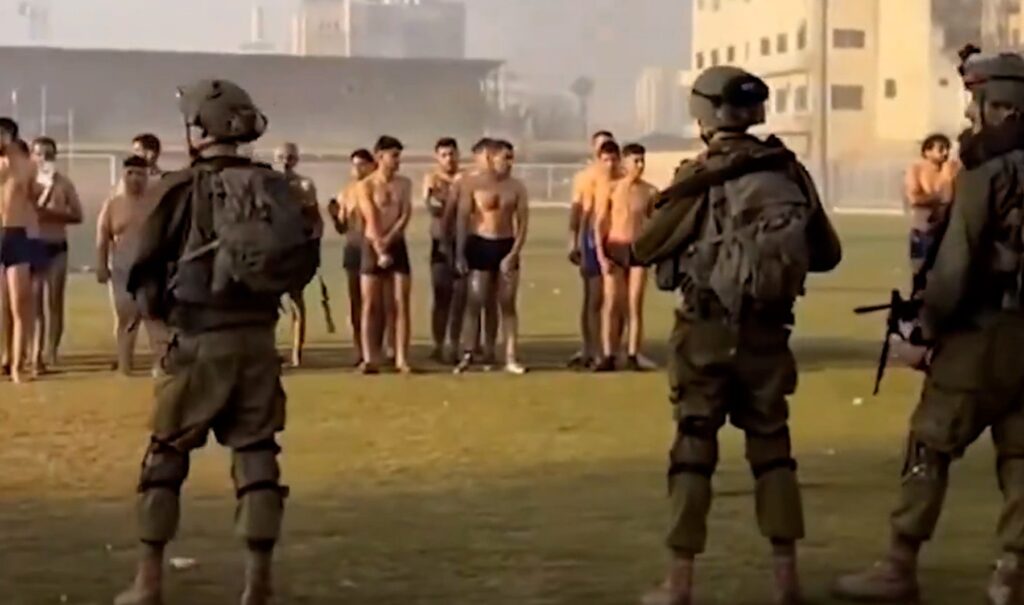
NewsFeed New video show Palestinians stripped and detained in Gaza by the Israeli army, as other freed detainees allege abuse and mistreatment. Published On 26 Dec 202326 Dec 2023 Adblock test (Why?)
Why has cricketer Khawaja been barred from showing solidarity with Gaza?
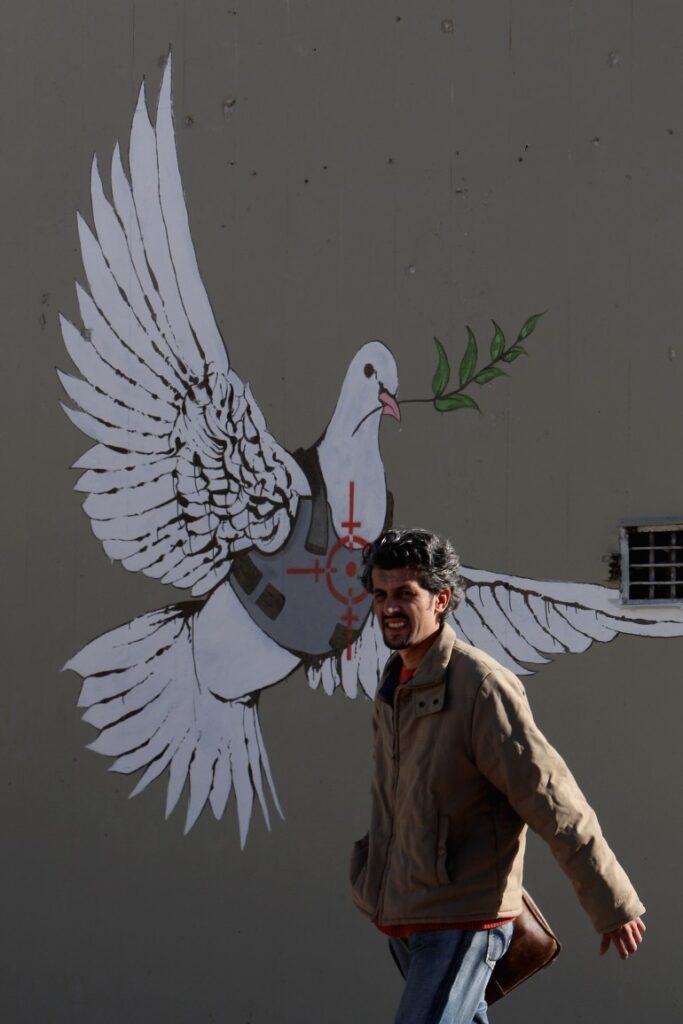
The Australian cricketer, Usman Khawaja, has accused the International Cricket Council (ICC) of double standards – this time after being denied permission to display the image of a dove of peace on his bat, in solidarity with Gaza. What happened between Khawaja and the ICC? Khawaja planned to show his support for Palestine by decorating his bat with the image of the dove accompanied by the message “01: UDHR”, a reference to the first article of the Universal Declaration of Human Rights, which states that human rights are universal and inalienable. According to The Australian newspaper, the ICC has refused to allow him to display this message on his bat. The ICC Code of Conduct forbids players from wearing, displaying or conveying messages through arm bands or other items on clothing or equipment without prior approval, especially for “political, religious or racial” causes. However, Khawaja and his supporters point out that this rule has not stopped other players from displaying such messages in the past. For example, West Indies players were permitted to wear “Black Lives Matter” logos on their shirts during a test series against England in 2020. In a video he posted on Instagram late on the eve of the second test against Pakistan at the Melbourne Cricket Ground (MCG) on Monday, Khawaja also posted pictures of other international players displaying religious symbols and messages on their bats. He captioned his post: “Merry Christmas everybody, sometimes you just gotta laugh … #inconsistent #doublestandards.” Khawaja’s case is not the only instance when the ICC has blocked a player from displaying such symbols. England’s Moeen Ali was banned from wearing wristbands with the messages, “Save Gaza” and “Free Palestine”, during a home test against India in 2014. Khawaja’s armband and shoes Pakistan-born Khawaja has made several attempts this month to show his solidarity and support for the people in Gaza, where more than 20,000 Palestinians have been killed in Israeli attacks. On Friday, he said he would contest ICC’s reprimand for wearing a black armband in the first test against Pakistan in Perth on December 14. He had originally intended to show his support by displaying the messages “Freedom is a human right” and “All lives are equal” on his shoes in the colours of the Palestinian flag. He wore these shoes during training and intended to wear them during the test match as well, but was prevented from doing so. He argued that his message was not political in a video posted on X on December 13. All Lives are Equal. Freedom is a Human right. I’m raising my voice for human rights. For a humanitarian appeal. If you see it any other way. That’s on you… pic.twitter.com/8eaPnBfUEb — Usman Khawaja (@Uz_Khawaja) December 13, 2023 Khawaja, 37, argued that the armband decision did not make sense. “I told them it was for a personal bereavement. I never ever stated it was for anything else. The shoes were a different matter, I’m happy to say that,” he said at Melbourne Cricket Ground. He did not specify details about the personal bereavement. Thank you to all those who supported and gave me love this week. It wasn’t unnoticed 💕. Nothing worthwhile is easy. History shows we are doomed to repeat the mistakes of our past. But together we can fight for a better future. 🙏🏾 #freedomisahumanright #alllivesareequal pic.twitter.com/HAhbebDbCT — Usman Khawaja (@Uz_Khawaja) December 18, 2023 What does the dove of peace represent? Doves have long been a symbol of peace in many cultures, including Palestinian culture. The separation wall that divides many communities including the Palestinian town of Bir Nabala in the occupied West Bank has several different graffiti symbols painted onto it including the dove of peace. A section of the wall runs through Bethlehem. British street artist Banksy’s armoured dove is particularly celebrated. It features a white dove wearing a bulletproof vest, carrying an olive branch in its beak. This dove can be seen in many spots in Palestine. Banksy’s armoured dove on a shop’s wall in Bethlehem in the occupied West Bank [David Silverman/Getty Images] How have others reacted? Australian skipper Pat Cummins defended Khawaja, arguing that there is no difference between Khawaja displaying the dove symbol and his teammate, Marnus Labuschagne, displaying an eagle on his bat as a religious symbol. The Australian team was sympathetic towards Khawaja’s desire to show his support, said Cummins on Monday. “I don’t know the ins and outs of the application, but I think it is pretty vanilla, a dove,” he told reporters. “We really support Uzzy, I think he’s standing up for what he believes and I think he’s doing it really respectfully,” he said. “He can hold his head high the way he’s gone about it, but there’s rules in place, so I believe the ICC have said they’re not going to approve that. They make up the rules and you’ve got to accept it.” Cricket Australia said in a statement that Khawaja had a right to express his opinion but they expected him to conform to the ICC rules banning displays on his playing equipment. Australia’s sports minister, Anika Wells, gave Khawaja her full backing. “Usman Khawaja is a great athlete and a great Australian. He should have every right to speak up on matters that are important to him,” she said. “He has done so in a peaceful and respectful way. He has done so as an individual and expressed an individual opinion that does not compromise the Australian cricket team’s obligations to the ICC.” Adblock test (Why?)
Will raising fuel and power bills make Malaysians go solar?
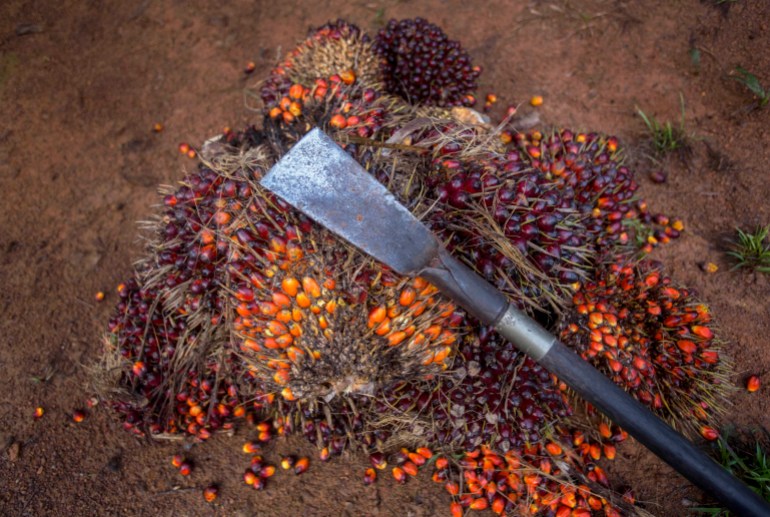
This year saw an increase in natural disasters the world over, from floods in Libya and New York and deadly wildfires in Hawaii and Greece – all very real effects of climate change. Globally, there have been twice as many days where temperatures exceed 50 degrees Celsius (122 degrees Fahrenheit) than 30 years ago, with this year being declared the hottest on record. Malaysia is just one country that has been facing its own set of climate issues. In recent years it’s faced an unprecedented rise in temperatures causing heat islands to devastating floods, like the ones in 2021, displacing thousands as homes submerged under water. Although the Southeast Asian state was once criticised for its contribution to global warming, caused by deforestation on land used for palm oil cultivation and more recently for its use of coal-fuelled power stations – it’s also been at the forefront of climate mitigation. But its new minister for natural resources and environmental sustainability, Nik Nazmi, has said more needs to be done. Since taking the helm of his country’s climate change measures last year, he’s already said no more new palm oil plantations and coal plants. Instead, he wants to increase electricity tariffs for the wealthy hoping to direct them towards alternative energy, while continuing to subsidise electricity and fuel for the less well-off. Ultimately, steering his country towards a more sustainable way of living, he says, cannot be achieved through governmental policies alone, but through changing mindsets and returning to shared human values. Here’s more from Al Jazeera’s conversation with Nik Nazmi, Malaysia’s minister for natural resources and environmental sustainability: Al Jazeera: Can you tell us more about Malaysia’s climate adaptation plan and when it’s expected to come into action? Nik Nazmi: Our target is for the National Adaptation Plan and the Climate Change Act to be ready by 2025. It’s a multifaceted approach that will deal with creating infrastructure. In recent years we’ve faced flooding, so we are trying to move away from impermeable surfaces like concrete and tarmac and towards other breathable materials. We also want to build more homes and services further inland – because Malaysia is a mountainous country overall, people tend to be pushed to live near the coast or the river basins, but that also means a lot of people are then exposed if there’s a major sea level rise. In the last few years, the level of heat has been much higher than usual. We noticed temperatures can be lower in green spaces compared to built-up areas – by as much as 6C (42.8F). We are planning our cities using a nature-based approach, by planting more greenery and parks. We are trying to slowly move and change so that ultimately we can overcome the urban heat island effect. Al Jazeera: Would you say Malaysia’s production of palm oil – the country’s top crop for three decades – is contributing to this rise in global temperatures, as a leading contributor to deforestation and greenhouse gas (GHG) emissions? Nazmi: It may have been at one time, but that isn’t the case now. In Malaysia, most of our plantations, [98 percent] are covered, even the smallholders are covered, under the Sustainable Palm Oil initiative. It’s a move that has been recognised, even by international studies, in significantly decreasing deforestation from palm oil. Yes, we have a very widespread sustainable palm oil industry, but there is a limit to the size of our palm oil plantations. Both the timber industry and the palm oil industry in Malaysia are very much regulated. There are no new plantations planned. Palm oil production is thought to be a leading contributor to the effects of climate change [Binsar Bakkara/AP Photo] Al Jazeera: But hasn’t the State of Kelantan been giving out concessions encouraging more palm oil production? Is the federal government trying to stop it? Nazmi: Under our Constitution, the state authority is in charge of land and forests, and the federal government regulates and coordinates it. If there has been an issue in Kelantan where the environmentally sensitive areas have been deconstructed, and this includes areas of permanent forest reserves which are going to be given to a palm plantation, then they will not get the Malaysian Sustainable Palm Oil certification. Our Sustainable Palm Oil initiative has been a major element in protecting the forest, and it’s something we don’t get enough recognition for. The Sustainable Palm Oil initiative has made a huge difference, but so has our Sustainable Forest Management Programme. This looks at ways to protect the forest and allow it to redevelop, to regrow. We are a federation with land and forests all under state control. We give state governments a certain amount of money for them to reserve their forests. The amount is based on how large the size of the forest that they continue to maintain is, whether they continue to add to forest reserves, or whether they do any other initiatives to improve that. We used to pay 70 million ringgit a year [$15m], but last year – 2022-2023 – we managed to increase it to 150 million ringgit [$32m]. And for 2024, the Prime Minister has already announced in the budget 200 million ringgit [$42.9m]. So that’s a massive amount. Is it enough? It’s not enough, but it’s a good start. We’ve also had a national Forestry Act, which was passed in 2022. This means that for state governments, they have to do public inquiries before they can work on any forests. They also have to instantly replace those forests, by replanting. Those are all the things that we tried to do in order to make sure that we protect our greatest asset – the forest. Al Jazeera: What about the wildlife within the forests? Al Jazeera has covered the near extinction of the Malayan Tiger before – there are now thought to now be less than 100. Nazmi: We have several measures in place here. First, it’s about dealing with the fragmentation of
‘Don’t worry about me. I’m fine’: Kremlin critic Navalny from Arctic jail
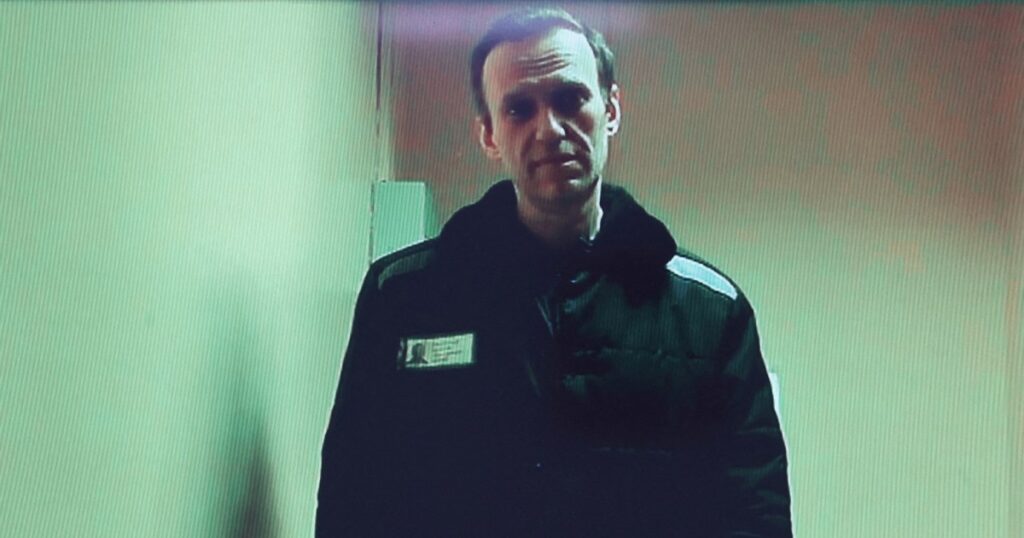
Russian opposition leader says he has seen his lawyer after 20 days travelling to penal colony above the Arctic Circle. Jailed Russian opposition politician Alexey Navalny has confirmed he is being held in a remote Arctic prison and has seen his lawyer after his spokespeople said they had lost touch with him for more than two weeks. Navalny on Tuesday said he was in good spirits after a “pretty exhausting” 20-day transfer from a prison in the Vladimir region, in a post on X, his account routinely updated via his allies. “I now live above the Arctic Circle. In the village of Kharp on Yamal. The nearest town has the beautiful name of Labytnangi,” he wrote, after announcing: “I am your new Santa Claus” and noting that he had grown a beard during the “20 days of my transportation”. His spokesperson, Kira Yarmysh, on Monday said Navalny had been tracked down and was in the IK-3 penal colony in Kharp in the Yamal-Nenets region, about 1,900km (1,200 miles) northeast of Moscow. The Kremlin critic’s whereabouts had not been known since December 6, triggering concern from his allies, rights groups and Western governments. “The 20 days of my transportation were pretty exhausting, but I’m still in a good mood,” Navalny said. “They brought me here on Saturday night. And I was transported with such precaution and on such a strange route (Vladimir – Moscow – Chelyabinsk – Ekaterinburg – Kirov – Vorkuta – Kharp) that I didn’t expect anyone to find me here before mid-January. “That’s why I was very surprised when the cell door was opened yesterday with the words: ‘A lawyer is here to see you.’” 1/9 I am your new Santa Claus. Well, I now have a sheepskin coat, an ushanka hat (a fur hat with ear-covering flaps), and soon I will get valenki (a traditional Russian winter footwear). I have grown a beard for the 20 days of my transportation. — Alexey Navalny (@navalny) December 26, 2023 Addressing his supporters, Navalny thanked them for being concerned about his wellbeing, adding: “Don’t worry about me. I’m fine. I’m totally relieved that I’ve finally made it.” While his whereabouts were unknown, there was speculation that he was undergoing a prison transfer, which can take weeks in Russia because prisoners are slowly moved by rail between far-flung facilities. Navalny’s lawyers and supporters had been preparing for his expected transfer to a “special regime” colony, the harshest grade in Russia’s prison system. His new home, known as the “Polar Wolf” colony, is considered one of the toughest prisons in Russia. Its inmates are convicted of grave crimes. Winters are harsh there with temperatures due to drop to about minus 28 degrees Celsius (minus 18 degrees Fahrenheit) over the next week. Navalny has been behind bars since January 2021 when he returned to Moscow after recuperating in Germany from nerve agent poisoning that he blamed on the Kremlin. Before his arrest, he campaigned against corruption and organised major anti-Kremlin protests. He has since received three prison terms and spent months in isolation in Penal Colony Number 6 for alleged minor infractions. A court extended Navalny’s sentence to 19 years on extremism charges and ruled that he be moved to a more secure, harsher prison. He has rejected all charges against him as politically motivated. “Since I’m Santa Claus, you’re probably wondering about the presents,” Navalny said on X. “But I am a special-regime Santa Claus, so only those who have behaved very badly get presents.” Adblock test (Why?)
Why do evangelical Christians support Israel?

Palestinian human rights activist Jonathan Kuttab explains how Christian Zionism affects US policy in the Middle East. In the evangelical Christian worldview, the 1948 creation of Israel was a fulfilment of Biblical prophecy and the Palestinians are either “non-existent” or “the enemies of God, because they are the enemies of the State of Israel”, explains Palestinian human rights defender Jonathan Kuttab. Kuttab tells host Steve Clemons that believers of this interpretation of holy scripture do not care about international law or catastrophic war in the region. “They say, ‘Bring it on. That’s the End Times. That’s the Second Coming. That’s wonderful.’” And if 30 percent of Americans hold these beliefs, what is the impact on US policy on Palestine and Israel? Adblock test (Why?)
Japan announces sanctions against three senior Hamas figures
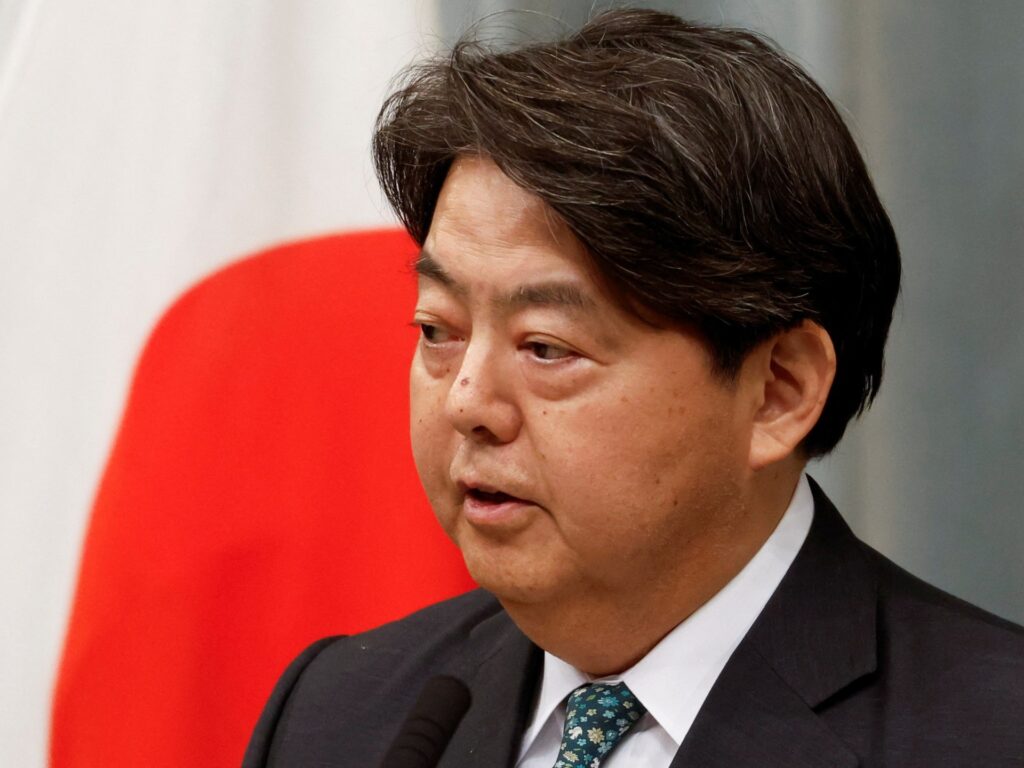
Chief Cabinet Secretary Hayashi Yoshimasa says three individuals believed to have participated in October 7 attacks. Japan has announced sanctions against three senior members of the Palestinian armed group Hamas. Tokyo will freeze assets belonging to the three individuals and impose sanctions on payments and capital transactions, Chief Cabinet Secretary Hayashi Yoshimasa said on Tuesday. The sanctioned individuals, who were not named, are believed to have been involved in Hamas’s October 7 attacks on Israel and be in a position to use funds to carry out similar attacks in future, Yoshimasa said. The move comes after Tokyo in October imposed sanctions on nine people and a company over their alleged links to Hamas. Tokyo has attempted to walk a fine line on the war in Gaza war, striving to balance relations with the United States, its closest ally, and its ties to energy-supplying partners in the Middle East. Japanese Prime Minister Kishida Fumio condemned the October 7 attacks on Israel and called for the immediate release of Hamas’s captives while expressing concern about civilian deaths and the deteriorating humanitarian situation in Gaza. Japan earlier this month supported a United Nations General Assembly resolution calling for an “immediate humanitarian ceasefire” in Gaza, after abstaining from a similar vote in October. Last week, Japanese container shipper Ocean Network Express announced it would reroute vessels away from the Red Sea to avoid being targeted by Yemen’s Houthi rebels, who have ramped up attacks on commercial shipping since the start of the war in Gaza. In November, the Houthis seized a British-owned vessel chartered by Tokyo-based Nippon Yusen, prompting the shipping line to stop accepting cargo bound for Israel. Adblock test (Why?)