

Where does the conflict in Sudan stand after eight months?
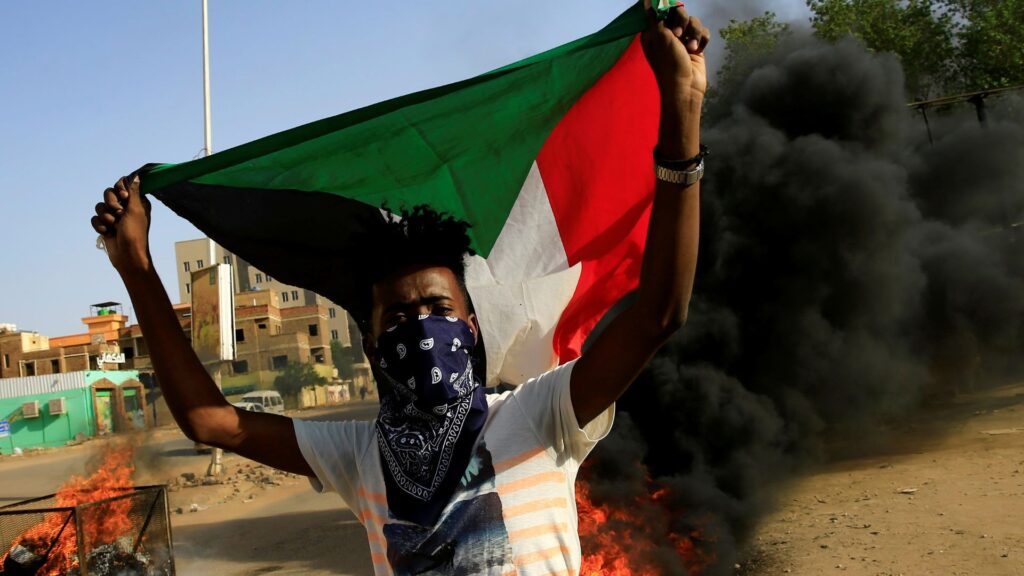
Fighting shows no sign of ending and no political settlement on the horizon. It’s been more than eight months since the lives of millions of Sudanese were plunged into conflict and uncertainty. The paramilitary group, Rapid Support Forces, has gained momentum in recent weeks, consolidating its grip on the vast Darfur region and seizing new territory, including the second-largest city, Wad Madani. It’s been a major hub for people displaced from their homes. The Intergovernmental Authority on Development (IGAD) – a regional body which has been trying to spearhead peace talks – said last week that had it secured a commitment from the rival sides to implement a ceasefire and hold dialogue. So how does this latest development in Wad Madani change the dynamics of the conflict? Presenter: Cyril Vanier Guests: Hamid Khalafallah – Researcher and policy analyst specialising on Sudan’s constitution building Alan Boswell – Horn of Africa project pirector at the International Crisis Group David Shinn – Former US chief of mission in Sudan Adblock test (Why?)
Roman Abramovich loses legal attempt to overturn EU sanctions
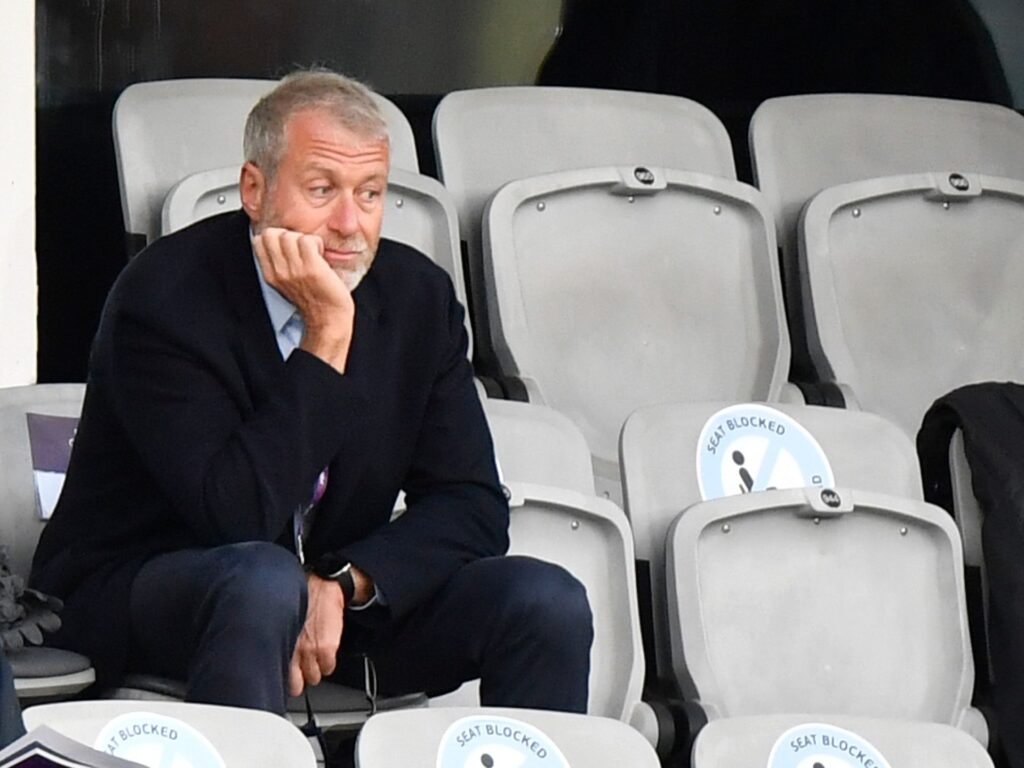
The EU imposed punishment on the oligarch in 2022 as part of measures targeting Russia and Putin’s close allies. Russian billionaire Roman Abramovich has lost a legal challenge aimed at overturning European Union sanctions imposed on him in the wake of Russia’s invasion of Ukraine. Abramovich had filed a lawsuit at the EU’s general court against the European Union Council, which imposed punitive sanctions on the 57-year-old in 2022 as part of measures targeting Russia and President Vladimir Putin’s close allies after Russia invaded Ukraine. The court in Brussels rejected the challenge and also dismissed his claims for compensation, noting his role in the Russian steel company Evraz and the fact that steel provided a major source of revenue to the Russian government. “The General Court dismisses the action brought by Mr Abramovich, thereby upholding the restrictive measures taken against him,” it said in its ruling on Wednesday. “The [European] Council did not in fact err in its assessment by deciding to include, then maintain, Mr Abramovich’s name on the lists at issue, in the light of his role in the Evraz group and, in particular, its parent company,” it added, referring to the sanctions lists. Chelsea sale Abramovich, who also holds Israeli citizenship and is a former owner of Premier League football club Chelsea, became one of the world’s most powerful businessmen after the 1991 break-up of the Soviet Union. Forbes estimates his net worth at $9.2bn. In a statement issued on his behalf, Abramovich said he was disappointed by the ruling, which he can appeal. He said the court had not considered some of the arguments used by the EU Council, including the proposition that Abramovich had benefitted from the Russian government – which he said was a false suggestion. “Mr Abramovich does not have the ability to influence the decision-making of any government, including Russia, and has in no way benefited from the [Ukraine] war,” the statement said. “The court’s decision to maintain the sanctions against Mr Abramovich was based purely on the court defining Mr Abramovich as a ‘Russian businessman’ which under today’s very broad EU regulations is sufficient to remain sanctioned, even if you are just a passive shareholder in a business sector with no connection to the war.” The businessman has also been punished in the United Kingdom and had his assets frozen in response to Russia’s invasion of Ukraine. Abramovich was forced to sell Chelsea after being sanctioned by the British government for what it called his enabling of Putin’s “brutal and barbaric invasion” of Ukraine. The sale of the Premier League club for 2.5 billion pounds ($3.2bn) — then the highest price ever paid for a sports team — was completed by a consortium fronted by Los Angeles Dodgers part-owner Todd Boehly. It marked the end of the trophy-filled, 19-year tenure of Abramovich. The EU has imposed 12 rounds of sanctions on Russia since Putin ordered his troops into Ukraine almost two years ago. The measures have targeted the energy sector, banks, companies and markets, and made more than 1,000 Russian officials subject to asset freezes and travel bans. Adblock test (Why?)
US charges alleged Hezbollah member over 1994 Buenos Aires bombing
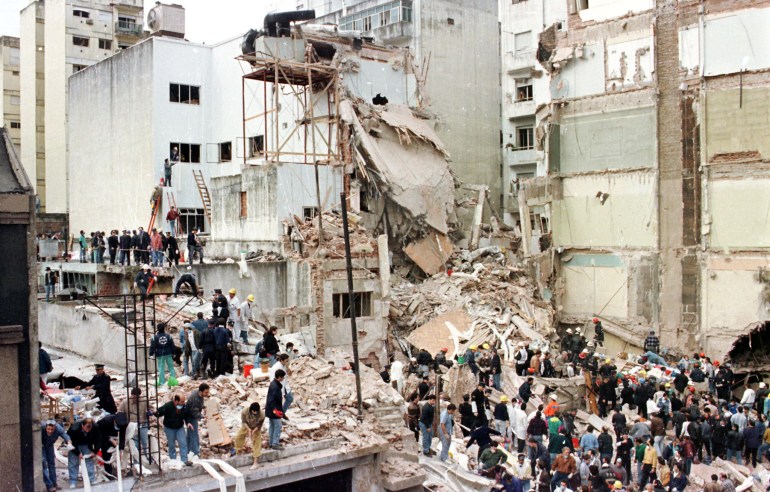
The bombing of a Jewish community centre killed 85 people, and Hezbollah has been accused of other attacks in Argentina. The United States has charged an alleged Hezbollah member, Samuel Salman El Reda, with giving material support to a “terrorist group”, accusing him of providing assistance for a 1994 bombing in Argentina. Federal prosecutors announced charges against the 58-year-old on Wednesday, linking El Reda to the truck bombing of the AMIA Jewish community centre in Buenos Aires, which killed 85 people. “This indictment serves as a message to those who engage in acts of terror: that the Justice Department’s memory is long, and we will not relent in our efforts to bring them to justice,” Assistant Attorney General Matthew Olsen of the US Department of Justice’s National Security Division said in a press release. Rescue workers search for survivors and victims in the rubble left when a car bomb destroyed the Buenos Aires headquarters of the Argentine-Israeli Mutual Association (AMIA) on July 18, 1994 [File: Enrique Marcarian/Reuters] The US has long characterised the 1994 bombing as an example of the far reach of the Iran-backed group Hezbollah, which at the time of the bombing was locked in a deadly battle with Israeli forces occupying southern Lebanon. Iran and Hezbollah denied responsibility for the attack, which sent shockwaves through the city’s Jewish community. Small commemorative tiles with the names of those killed can still be seen on sidewalks around Buenos Aires. US authorities said El Reda, a dual Lebanese-Colombian citizen, has helped coordinate the activities of Hezbollah’s Islamic Jihad Organization in South America, Asia and Lebanon since at least 1993. The statement from the Justice Department said El Reda is based in Lebanon and “remains at large”. The US Department of State sanctioned him in 2019 and offered $7m for information regarding his whereabouts. The bombing remains a source of controversy in Argentina, where former President Cristina Fernandez de Kirchner has been accused of working to shield the perpetrators of the attack through a joint investigation with Iran, which helped found and nurture Hezbollah. Argentina has also accused Hezbollah of carrying out a 1992 attack on the Israeli embassy in Buenos Aires, which killed 29 people. The country froze Hezbollah’s assets and branded it a “terrorist organisation” in 2019. Adblock test (Why?)
Venezeula, US reach prisoner swap deal
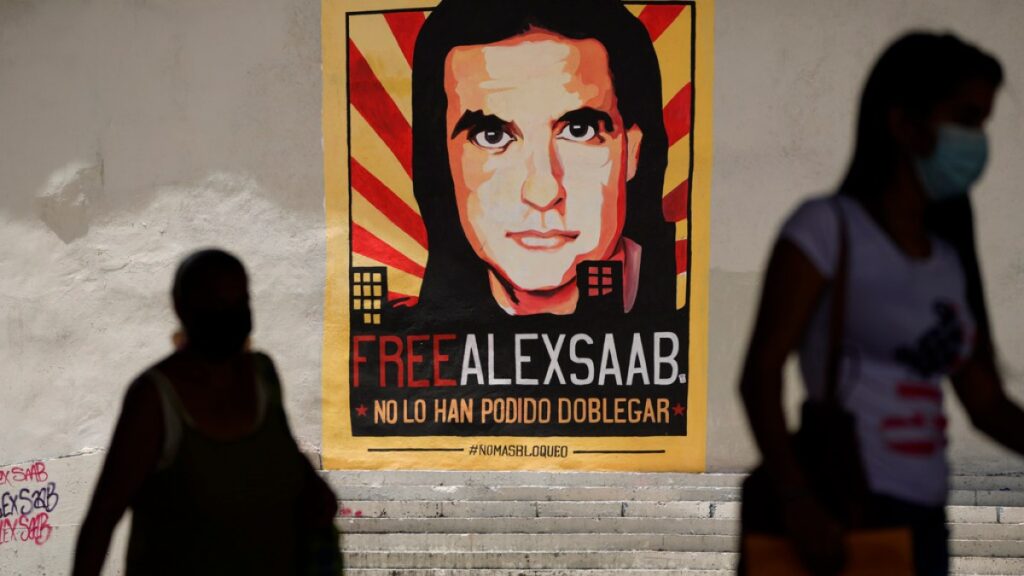
As part of the agreement, US President Joe Biden agreed to grant clemency to Alex Saab, an ally of Nicolas Maduro. The United States has reached a deal to secure the release of 10 citizens from Venezuela, including six people who it said had been wrongfully detained, according to the White House. As part of the agreement, US President Joe Biden agreed to grant clemency to Alex Saab, a Colombian businessman and ally of President Nicolas Maduro who was in a Miami jail awaiting trial on a charge of money laundering. “A statement from the White House talks about 10 US prisoners, six of them the US says were wrongfully detained by the Venezuelan regime. Another two were [former] members of US special forces that allegedly participated in a coup attempt back in 2019,” Al Jazeera’s Alessandro Rampietti reported from Bogota, Colombia. Saab, who was arrested on a US warrant for money laundering in 2020 – was released from custody and returned to Venezuela on Wednesday, the Venezuelan government said. “Alex Saab is a Colombian entrepreneur, a very close ally for Nicolas Maduro, a person who is seen here as a bag man for the Venezuelan regime,” Rampietti said. US prosecutors have accused Saab of siphoning off $350m from Venezuela via the United States in a scheme that involved bribing Venezuelan government officials. He has denied the charge. The White House said Venezeula had agreed to release at least 20 Venezuelan prisoners, including “political detainees”. The prisoner swap talks were facilitated by Qatar, the White House said. Qatar’s chief negotiator met Maduro last week. Six Venezuelan activists have already been freed, according to their lawyer and the wife of one of them. The longtime education campaigners were convicted on conspiracy charges this year and sentenced to 16 years but have proclaimed their innocence. The White House has said in recent weeks that it expected to see progress on prisoner releases if it were to continue with sanctions relief for Caracas, which was unveiled in October in response to an agreement by the Venezuelan government to hold fair elections in 2024. While relations between the US and Venezuela remain uneasy, the two nations have taken steps to ease tensions in recent months. In recent weeks, however, the White House had warned that it was considering an end to sanctions relief if more progress was not made on prisoner releases. Adblock test (Why?)
Excluding Hamas from the ‘day after’ in Gaza would be a mistake
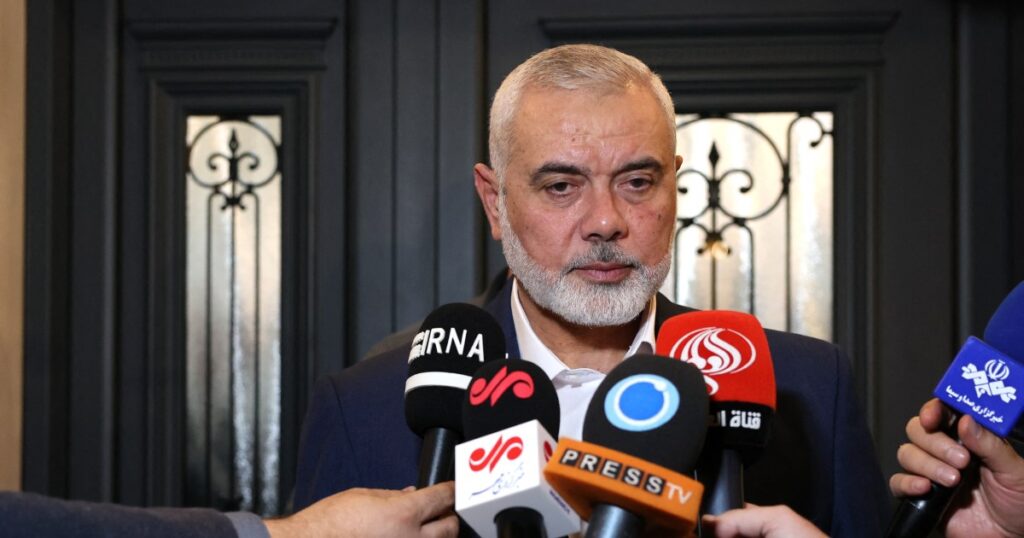
In the field of the social sciences, it is very common to say “history repeats itself”. However, there is nothing inevitable about how political events pan out and the choices that political actors make. In this sense, and in the current context of Israel’s war on Gaza, it is important to consider what foreign intervention in a country’s internal affairs and government can lead to. When foreign powers decide to eject a certain political player from power and impose an unelected provisional government, they create two problems. First, the population of the country is denied their voting rights and their right to voice their political opinions. A governing body that does not represent the people ignores their demands and complaints, which leads to precarious outcomes, including internal conflict. Second, the forced marginalisation of a political party could weaken and silence it, but it could also backfire. The denial of its right to political participation could push its members to reorganise, remobilise and return to the political scene with more hardline approaches or even violence. The example of Afghanistan is quite telling. In 2001, a US-led coalition invaded the country and dislodged the Taliban government from power. In the subsequent proceedings to form a government, the Taliban was excluded after being presented as an illegitimate actor. What followed was 20 years of political instability and war, which ended with the Taliban coming back to power. Today, as the international community mulls the fate of Gaza after Israel’s war on it ends, it is on its way to repeating its mistakes of the past. Of course, the history and current situation in Gaza are different from Afghanistan’s, but there is a similar desire to marginalise a legitimate political actor. Since Israel announced its war on Israel, it has repeatedly made clear that it wants to dismantle and eliminate Hamas, for which it has received backing from its ally, the US, and European countries. The Israeli military has claimed it is after Hamas’s fighters and military infrastructure, but over the past 75 days, it has become evident that it is also targeting its political structures, including ministries, institutions that provide civilian services, facilities responsible for basic utilities and so on. Worse than that, Israel has demonstrated its intentions to devastate the civilian infrastructure of the Gaza Strip and expel as many of its residents as possible. In a November 17 interview with NPR, Israeli Prime Minister Benjamin Netanyahu refused to say who should take over governing Gaza; he did insist that whoever it is, it “can’t be people committed to funding terrorism and inculcating terrorism”. He then went on to compare the Israeli invasion of Gaza to the Allies’ occupation of Germany and Japan after World War II. But the comparison Netanyahu drew between Germany, Japan and Gaza is inaccurate. Gaza, as well as the West Bank and East Jerusalem, has been under Israeli occupation since 1967. The Palestinians, unlike the Germans and the Japanese, do not have a state and have the status of an occupied population. As such, under international law, their acts of armed resistance are not equal or comparable to acts of aggression by an independent state with a national army. Resistance in Palestine under occupation has historically taken numerous forms and has been channelled by various political parties, both on the left and on the right. Yet, Israel has labelled all of them as “terrorist”, whether it was the Palestinian Liberation Organization (PLO), the Popular Front for the Liberation of Palestine, the Democratic Front for the Liberation of Palestine, or any other. If Hamas is dismantled, as Israel seeks to do, another resistance group would take its place. This is due to the fact that the culture of resistance is embedded in the Palestinian society on the religious, political, economic and social levels and it will require much more than the eradication of one party to change that. That is why, the plans of foreign powers to impose an unelected government on Gaza are likely to backfire. The US specifically has proposed the unification of the West Bank and Gaza under the rule of the Palestinian Authority as a step towards Palestinian statehood. Such a move would deny the right of the Palestinian people to choose who they want to be governed by. It is important to note that Hamas won the 2006 legislative elections in the occupied Palestinian territories and its government was democratically elected. Since then, it has become so embedded in the Palestinian society in general, and in Gaza specifically, that its marginalisation in any future Palestinian would create massive societal tensions. It would also create a political, social and security vacuum that would not spell any good for whoever takes over governance. How and when the war in Gaza will end and what follows next is still uncertain. But one thing is clear: If Western and regional powers repeat past mistakes of marginalising a major political actor and seek to impose their will on the Palestinian people, they would not get a different outcome than they have had in the past. The views expressed in this article are the author’s own and do not necessarily reflect Al Jazeera’s editorial stance. Adblock test (Why?)
Deadly floods in India leave hundreds stranded
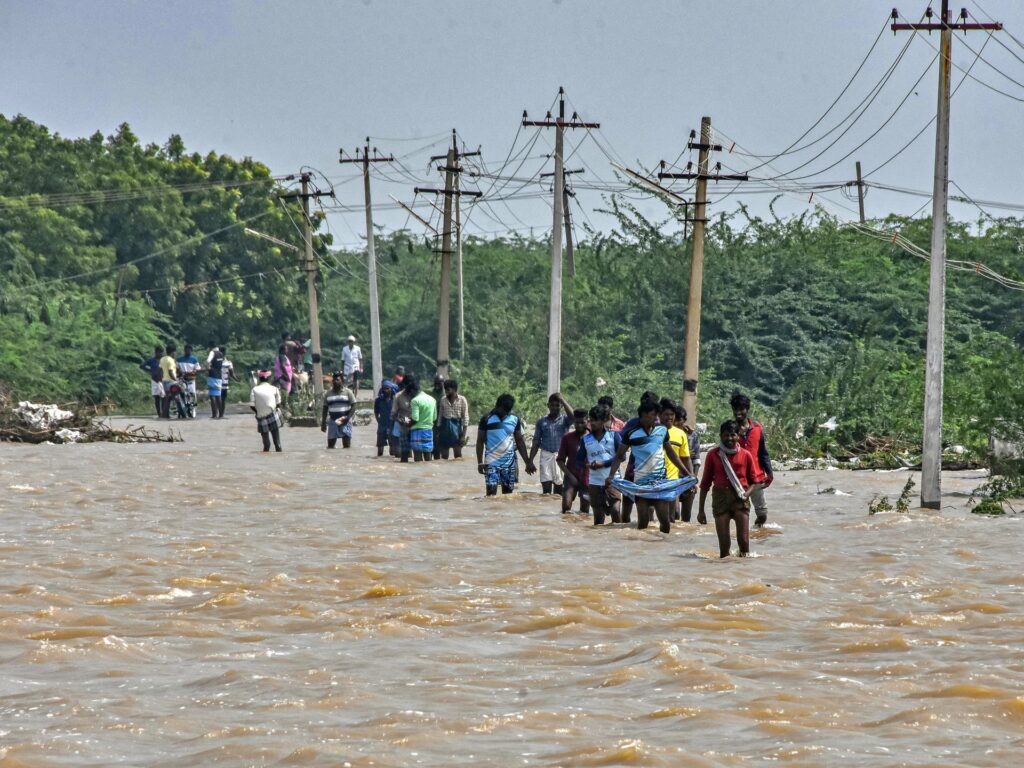
NewsFeed Major flooding has hit India’s southern state of Tamil Nadu, leaving hundreds of people stranded and forcing thousands from their homes. Media reports say at least 10 people have died. Published On 20 Dec 202320 Dec 2023 Adblock test (Why?)
’Everything is dead’: How record drought is wreaking havoc on the Amazon
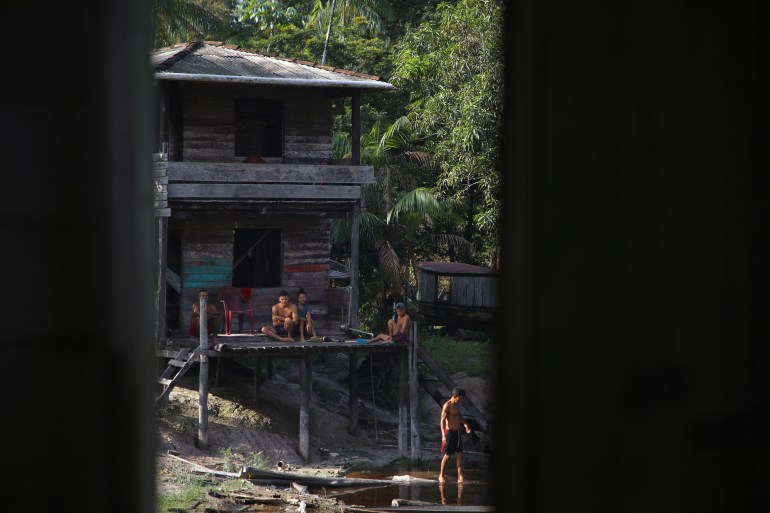
Curralinho, Brazil – For communities on the Brazilian island of Marajó, the ebb and flow of the Canaticu River marks the turn of the seasons. During the rainy months, the river is several metres deep, lapping below the wooden houses that rise from its shores on stilts. Residents rely on its water for drinking, cooking and washing. But when summer hits, the river dwindles to a stream. Still, its flow is normally sufficient for locals to meet their daily needs. This year, however, a severe drought has engulfed large swaths of Brazil’s Amazon rainforest. All that remains of the Canaticu River in some areas is a dark brown trickle, laden with bacteria and almost completely dried up. “Now we cannot use it for anything. It wasn’t like this before,” said 36-year-old Elizete Lima Nascimento, who has lived in one of the riverside communities, Serafina, for the past decade. The dry conditions have sparked a crisis in towns like Serafina — one that could transform their way of life for generations to come. Inhabitants in the community of Serafina use river water for washing and even drinking [Apolline Guillerot-Malick/Al Jazeera] Hundreds of thousands of people rely on the Amazon’s rivers and streams for food, transportation and income. But the historically low water levels have forced residents to reimagine their relationship to the environment. One tributary, the Rio Negro, plunged to levels not seen in 121 years. “We are completely dependent on nature,” Maria Vanessa Tavares de Souza, a 36-year-old teacher who lives in Serafina, said during a community meeting to discuss the problems caused by the drought. “Now that climate change has unbalanced everything, it’s going to be hard for us to survive here.” Already, one of the residents’ primary food sources is threatened: fish. Some have been left stranded as the river recedes — and in the water that remains, the corpses of other fish float to the surface. Abnormally warm temperatures are suspected in the mass die-off. Residents fear the dead fish could pollute the water as they decompose. Nine heatwaves have hit Brazil since the beginning of the year, with the heat index in Rio de Janeiro soaring to almost 60 degrees Celsius (140 degrees Fahrenheit) in November. Worldwide, 2023 is expected to be the hottest year on record. In Serafina’s community hall, residents gather to discuss problems posed by the drought [Apolline Guillerot-Malick/Al Jazeera] Scientists have blamed climate change, driven by the burning of fossil fuels, for the rising temperatures and extreme weather conditions. This year’s El Niño — a climate phenomenon that warms surface waters in the equatorial Pacific region — has been particularly intense, contributing to the Amazon’s drought. But the trend towards drier weather has been a long time coming. A string of harsh summers already led many Serafina residents to dig wells in their backyards to access subterranean water, instead of relying on the river. Others have called for the installation of a drinking water distribution system, a major infrastructure project that would consist of pipes and storage facilities. They argue the wells are unreliable and cannot stand in for a long-term solution. Still, well owners like Nascimento say their homemade water systems have been pivotal to withstanding the drought. “The well is extremely important. We use its water for everything — for drinking, cooking, making açai, washing both ourselves and our clothes,” she said, as she lifted the wooden planks in her garden to reveal the six-metre-deep hole. Not every family has a well, though, so residents that do own one share their water supplies with neighbours. Paula Lima, 43, brings home more than 50 litres (13 gallons) a day from a well at her cousin’s house on the other side of the community, just to meet her family’s needs. The trips have contributed to Lima’s back problems. But she has no choice. Consuming the river’s water when its level is so low triggers vomiting and diarrhoea — if not worse. Many households in Serafina now use wells for drinking water, particularly when the river water becomes too muddy to be consumed [Apolline Guillerot-Malick/Al Jazeera] Eleniuda Costa Paiva de Souza, a 30-year-old nurse, recently had to take her two-year-old daughter to the nearest hospital — a trip that required trekking across the jungle, then travelling five more hours by boat. Her child had become ill after ingesting the river’s sludge. De Souza said she intends to leave the community shortly. “Life here is only going to get worse. In town, things will be easier,” she explained. Isolation is part of life for riverine communities: Serafina hugs a serpentine bend in the river, surrounded by rainforest as far as the eye can see. But the weak flow of the Canaticu River has made Serafina even more secluded. To stock up on supplies, locals normally use the river to travel to nearby towns. But with the water so shallow, residents are forced to manoeuvre their small wooden boats at a snail’s pace to avoid logs and exposed roots. Many worry that, if a medical emergency were to occur, it would take too long to reach the closest town. Downriver, at the mouth of the Canaticu, the municipality of Curralinho has faced its own struggles amid the severe drought. Located on the southern coast of Marajó, the town and its population of nearly 34,000 saw fires tear through thousands of hectares of nearby rainforest in November. Curralinho was not alone in contending with raging flames. In the first two weeks of October, more than 2,900 blazes erupted in the state of Amazonas, a record number. The smoke was so thick that it choked the region’s biggest city, Manaus, complicating navigation and the delivery of essential supplies. Criminal enterprises have also taken advantage of the dry conditions to clear the rainforest with fire, as part of land-grab schemes. In the countryside of Curralinho, firefighters patrol a former açai plantation destroyed by fires [Apolline Guillerot-Malick/Al Jazeera] But in Curralinho, small-scale farmers were largely responsible for the
Kuwait’s new emir Sheikh Mishal takes oath of office
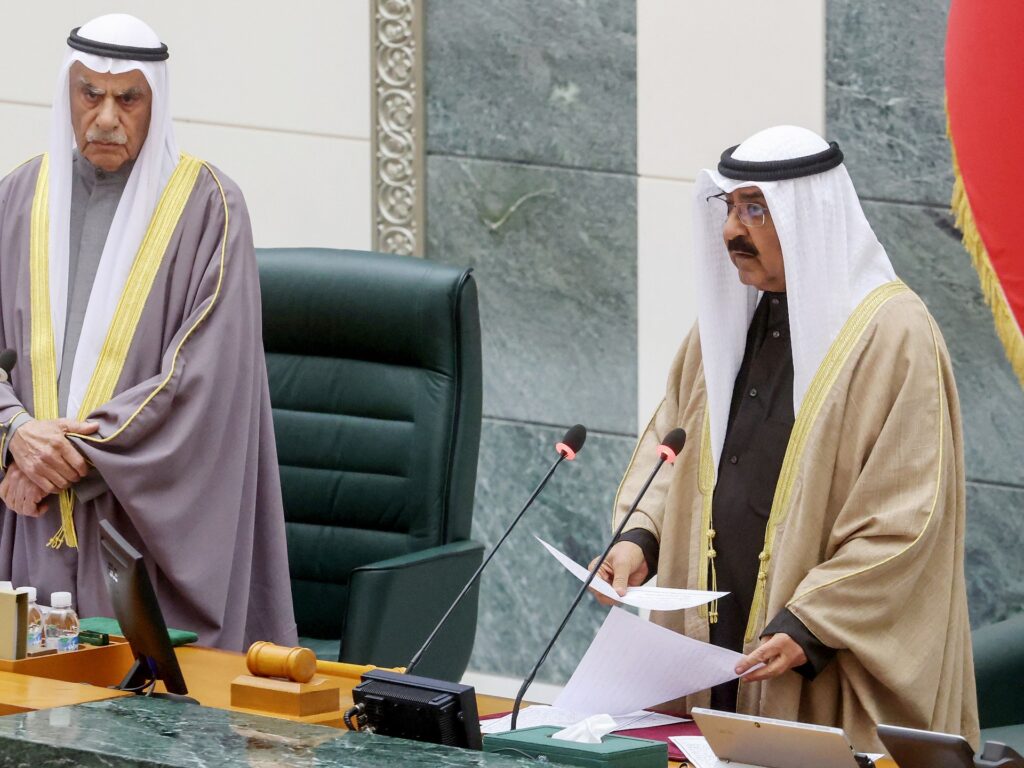
The new leader, seen as a reformist, pledged to adhere to constitutional principles and fight corruption. Kuwait’s new emir, Sheikh Mishal al-Ahmad al-Sabah, has been formally sworn in before parliament to begin his rule over the wealthy Gulf monarchy. The new emir, who took over after the passing of his half-brother, Sheikh Nawaf al-Ahmad al-Sabah, on Saturday, took the oath of office during a special session of the National Assembly on Wednesday morning. In his inaugural address, Sheikh Mishal pledged to safeguard the country and its people, adhere to constitutional principles and fight corruption. “I swear by Almighty Allah to respect the constitution and the laws of the state, to defend the liberties, interests and properties of the people and to safeguard the independence and territorial integrity of the country,” he declared. The 83-year-old Sheikh Mishal is Kuwait’s third ruler in just over three years. He has already been de facto leader since 2021 when the frail Sheikh Nawaf handed over most of his duties. Sheikh Mishal previously served as deputy chief of the National Guard from 2004 to 2020 and head of State Security for 13 years after joining the Ministry of Interior in the 1960s. As he takes the helm of the OPEC oil producer, he is expected to preserve key Kuwaiti foreign policies, including support for Gulf Arab unity and Western alliances. Good relations with Saudi Arabia are seen as one of his top priorities. The new emir may also look to expand ties to China as Beijing seeks a bigger role in the region. Political analyst Hussain Jamal told Al Jazeera that Kuwait’s foreign policy would likely “remain as it is” under the new emir. “Zero enemies and a lot of friends – regionally and internationally.” As leader, Sheikh Mishal will also have to grapple with long-running strains between the ruling family and its critics in the perpetually deadlocked and fractious parliament. Critics complain that the friction has hindered fiscal and economic reform. In 2022, Sheikh Mishal intervened in a protracted dispute between the government and parliament. He dissolved parliament, decreed new elections and replaced the prime minister, but declared no intention to interfere in the vote or the selection of parliament speaker. After being sworn in, Sheikh Mishal castigated authorities for having previously appointed people to positions “that are not consistent with the simplest rules of justice and fairness”. He also stressed “the importance of follow-up, responsible oversight, and objective accountability within the framework of the constitution and the law for negligence, dereliction and tampering with the interests of citizens”. Abdulaziz Mohammed Al-Anjeri, of the Kuwaiti think tank Reconnaissance Research, told Al Jazeera, Sheikh Mishal was likely to rule as a “reformist”. “He is someone who does not allow nepotism or favourtism to impact his decisions,” Al-Anjeri said. Adblock test (Why?)
Palestinian statues torn down by Israeli forces

NewsFeed Israeli forces are destroying statues and monuments of Palestinian resistance during raids in the occupied West Bank. Published On 20 Dec 202320 Dec 2023 Adblock test (Why?)
Can Trump still run for US presidency? What to know about Colorado ruling?
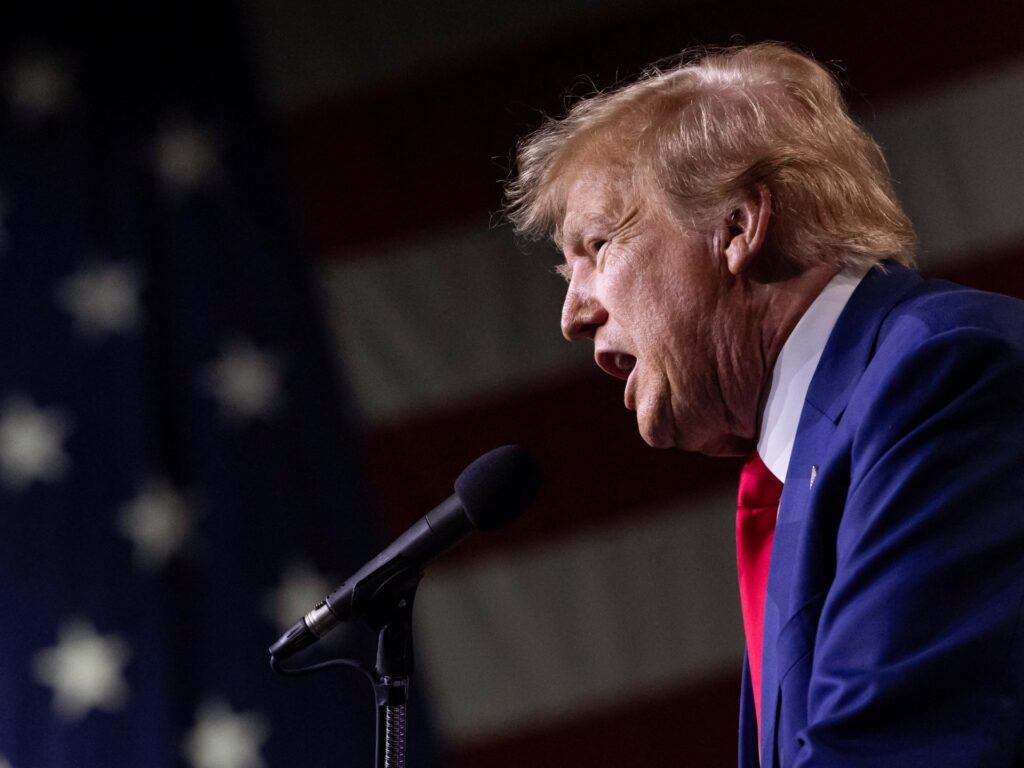
The top court in the US state of Colorado has ruled that former President Donald Trump is disqualified from holding office again over his role in the January 6, 2021 assault on the United States Capitol by his supporters. Tuesday’s verdict makes Trump the first presidential candidate in US history to be deemed ineligible for the White House under a rarely used provision of the US Constitution that bars officials who have engaged in “insurrection or rebellion” against the Constitution after taking oath to protect it. Trump’s campaign spokesperson dubbed the verdict “flawed” and promised to “swiftly” file an appeal in the United States Supreme Court. Here is more to know about the ruling and what it means for Trump’s 2024 presidential campaign. What did the Colorado court rule on Donald Trump on Tuesday? A slim majority of the Colorado Supreme Court ruled that the former president is ineligible to hold the US presidency and is to be disqualified from the state’s ballot under Section 3 of the 14th Amendment of the US Constitution, which bars anyone involved in insurrection or rebellion from running for federal office. “We do not reach these conclusions lightly,” the Colorado Supreme Court wrote in its four-three majority decision. “We are mindful of the magnitude and weight of the questions now before us,” the Colorado justices said. “We are likewise mindful of our solemn duty to apply the law, without fear or favor, and without being swayed by public reaction to the decisions that the law mandates we reach.” This is the first time a court has ruled on the basis of Section 3 of the 14th Amendment, which was ratified in 1868 in the aftermath of the Civil War. A lower court judge in the state previously ruled that Trump’s actions on January 6, 2021, amounted to insurrection but stopped short of disqualifying him, saying Section 3 does not apply to presidents. The Colorado Supreme Court paused its own ruling pending review by the US Supreme Court. The ruling was aligned with advocacy groups and activists who called for the disqualification of Trump from the presidential race following his involvement in the January 6, 2021, Capitol attack. Multiple lawsuits have been filed across several US states in efforts to disqualify Trump from running for president in those states. Similar lawsuits have previously been dismissed by courts in Michigan, Florida and New Hampshire. The Minnesota Supreme Court has also rejected a disqualification case. However, this ruling can influence other states to invoke similar rulings in competitive states that Trump needs to win. What happened on January 6, 2021? On January 6, 2021, a mob of Trump supporters stormed the US Capitol to prevent the Congress from certifying Joe Biden’s election victory. This was after Trump prematurely declared victory and alleged voter fraud. In a speech on the day of the riot, Trump urged his supporters to march on the Capitol. A US Congressional committee concluded that Trump was responsible for the Capitol riots. Can Trump still run for presidency and what does it mean for the 2024 election? Even if the ruling survives Supreme Court review, it could be inconsequential to the outcome of the November 2024 election because Trump does not need to win Colorado, which is a Democratic-leaning state. Colorado has nine of the 270 electoral votes required to win the presidency. Biden won the state by more than 13 percentage points in the 2020 election. But similar lawsuits could be filed in competitive states that Trump must win to prevail, and while none of those courts would be bound by the Colorado decision, judges will likely study it closely while reaching their own conclusions. How did Trump and Republicans react to Colorado’s ruling? Trump’s campaign called the court decision “undemocratic”. Trump and his allies have dubbed disqualification cases in Colorado and other states as part of a conspiracy by his political rivals to keep him out of office. “The Colorado Supreme Court issued a completely flawed decision tonight and we will swiftly file an appeal to the United States Supreme Court,” a campaign spokesperson said. Campaign spokesperson Steven Cheung said the “all-Democrat appointed” panel in Colorado was doing the bidding of a “[George] Soros-funded, left-wing group’s scheme to interfere in an election on behalf of Crooked Joe Biden”. Even after his absence from the Republican debates, Trump remains a frontrunner in the polls. “Democrat Party leaders are in a state of paranoia over the growing, dominant lead President Trump has amassed in the polls,” he added. Despite their exasperation with Trump, US Republican leaders joined in to call the ruling undemocratic and campaign for its appeal on X. This included Florida Governor Ron DeSantis, who is running against Trump for the 2024 Republican nomination. DeSantis said the US Supreme Court “should reverse” the Colorado ruling. “The Left invokes ‘democracy’ to justify its use of power, even if it means abusing judicial power to remove a candidate from the ballot based on spurious legal ground,” he wrote on X, What’s next? The ruling has been placed on hold by the Colorado Supreme Court until January 4, or until a review by the US Supreme Court, which Trump said he will immediately seek. Colorado officials have said the issue needs to be settled by January 5, which is when the state prints its presidential primary ballots. It is unclear how the Supreme Court would rule, but it is dominated by a conservative majority that includes three Trump appointees, some of whom are longtime sceptics of giving courts powers that are not clearly based in legislation. That was a top concern for the dissenting justices in the 4-3 Colorado decision, who said the majority’s ruling would strip Trump of one of his most basic rights without adequate due process. “Even if we are convinced that a candidate committed horrible acts in the past – dare I say, engaged in insurrection – there must be procedural due process before we can declare that individual disqualified